
Helsinki Cathedral & Senate Square: Complete Guide
Helsinki Cathedral and Senate Square form the architectural heart of Finland’s capital, representing one of Europe’s most cohesive examples of neoclassical urban planning. This extraordinary ensemble, designed by Carl Ludvig Engel between 1818 and 1852, showcases the vision of Russian imperial architecture adapted for Finnish national identity, creating a space that continues to serve as the ceremonial and cultural center of modern Helsinki.
Key Takeaways
- Architectural Masterpiece: Helsinki Cathedral exemplifies neoclassical architecture with its Greek cross plan, Corinthian columns, and distinctive green dome rising 80 meters above sea level, surrounded by twelve zinc Apostle statues
- Historical Transformation: Originally named St. Nicholas Church (1852) to honor Tsar Nicholas I, the cathedral was renamed Suurkirkko (Great Church) after Finnish independence in 1917, symbolizing the nation’s political evolution
- Senate Square Integration: The square represents a complete neoclassical ensemble featuring the Government Palace, University of Helsinki main building, and Sederholm House (1757), creating Helsinki’s oldest preserved urban center
- UNESCO Aspirations: While not currently designated, Senate Square aspires to World Heritage status, with only a single building preventing its nomination as a unique example of early 19th-century imperial urban planning
- Living Heritage: The cathedral hosts regular Lutheran services, national celebrations, and major events, maintaining its role as both architectural monument and active religious center serving half a million visitors annually
People Also Ask About Helsinki Cathedral & Senate Square
What architectural style is Helsinki Cathedral?
Helsinki Cathedral exemplifies the Empire style, a variant of neoclassical architecture popular in early 19th-century Russia. Carl Ludvig Engel designed the cathedral with a Greek cross plan, featuring six massive Corinthian columns supporting each pediment, creating perfect symmetry in all four cardinal directions. The central green dome rises to 80 meters above sea level, surrounded by four smaller domes, while the exterior walls display pilasters matching the columns and relief sculptures depicting scenes from Christ’s life. The twelve Apostle statues adorning the pediments comprise one of the world’s largest uniform collections of zinc sculptures, adding vertical drama to the horizontal neoclassical composition. This architectural approach reflected both Russian imperial ambitions and respect for Finnish Lutheran traditions, creating a building that balances imperial grandeur with Protestant simplicity.
Why is Senate Square important to Finnish history?
Senate Square represents the physical manifestation of Finland’s transformation from Swedish province to Russian Grand Duchy and eventually to independent nation. Designated in 1812 as the new capital’s main square by city planner Johan Albrecht Ehrenström, it housed the Senate of Finland until 1918, making it the administrative heart of the autonomous Grand Duchy. The square’s architecture deliberately expressed political hierarchy: the Senate Palace (Government Palace) with Corinthian columns symbolizing law and administration, the University building with Ionic columns representing science and learning, and the Lutheran cathedral demonstrating religious tolerance under Orthodox Russia. After independence, the square continued serving as Finland’s ceremonial center, hosting everything from state functions to popular celebrations including ice hockey championship victories and Eurovision Song Contest wins. The statue of Alexander II at the square’s center acknowledges the tsar who granted Finland significant autonomy, reflecting the complex relationship between Finnish identity and Russian rule.
How long did it take to build Helsinki Cathedral?
Helsinki Cathedral’s construction spanned 34 years from initial planning to consecration. Carl Ludvig Engel began the first drawings in 1818 and worked on the project until his death in 1840, making it his lengthiest architectural endeavor. Following Engel’s death, architect Ernst Bernhard Lohrmann continued the work, completing the cathedral in 1852, twelve years after Engel’s passing. Construction required demolishing the earlier Ulrika Eleonora Church (completed 1727) that had occupied the site, with its bell later installed in the cathedral’s central tower. The extended timeline reflected both the project’s ambitious scale and the careful attention to neoclassical proportions and details. Major modifications during construction included replacing the original Main Guard Post in front of the cathedral with the iconic 60-meter-wide steps by order of Nicholas I, creating the dramatic approach that defines the building’s relationship with Senate Square. The lengthy construction period allowed for refinements in design, including the addition of the Apostle statues and the optimization of interior acoustics.
What makes the Senate Square ensemble unique?
Senate Square achieves architectural unity through Carl Ludvig Engel’s comprehensive design controlling every building surrounding the central space, creating what he called “an allegory of political, religious, scientific and commercial powers.” Unlike most European squares that developed organically over centuries, Senate Square emerged from a single cohesive vision executed within four decades. The square’s uniqueness stems from its perfect neoclassical symmetry, uniform building heights, consistent use of yellow and white facades, and deliberate placement of structures expressing different aspects of governance: the cathedral (spiritual authority) dominating the north, the Government Palace (executive power) on the east, the University (intellectual pursuit) on the west, and later commercial buildings completing the southern edge. The Sederholm House (1757), predating Engel’s plan, provides historical continuity as central Helsinki’s oldest building. This integration of architecture, urban planning, and symbolic meaning within a Russian imperial context adapted for Finnish culture creates a ensemble without direct parallel in Nordic architecture, explaining the ongoing pursuit of UNESCO World Heritage designation.
Extended multi-day tours – 5+ days
Featured Helsinki Multi-Day Tour Packages

3 days
Helsinki 3-Day Discovery Tour
- ✓ Comprehensive Helsinki experience
- ✓ Expert local guides included
- ✓ All accommodation included
- ✓ Transportation provided

5 days
Helsinki 5-Day Highlights Experience
- ✓ Comprehensive Helsinki experience
- ✓ Expert local guides included
- ✓ All accommodation included
- ✓ Transportation provided
7 days
Helsinki 7-Day Cultural Journey
- ✓ Comprehensive Helsinki experience
- ✓ Expert local guides included
- ✓ All accommodation included
- ✓ Transportation provided
10 days
Helsinki 10-Day Complete Adventure
- ✓ Comprehensive Helsinki experience
- ✓ Expert local guides included
- ✓ All accommodation included
- ✓ Transportation provided
Multi-day tour packages powered by TourRadar. Prices and availability subject to change.
Introduction
Helsinki Cathedral and Senate Square stand as monuments to a unique moment in European history when Russian imperial ambitions, Finnish cultural identity, and neoclassical architectural ideals converged to create one of the continent’s most harmonious urban ensembles. Rising above the harbor that connects Finland to the wider Baltic world, the cathedral’s green dome has announced Helsinki’s presence to arriving ships for over 170 years, functioning simultaneously as religious sanctuary, national symbol, and architectural masterpiece.
The story of Senate Square begins in 1812, when Tsar Alexander I designated Helsinki as the new capital of the Grand Duchy of Finland, elevating a modest coastal town into a political center that required appropriate architectural expression. The decision reflected strategic thinking: moving the capital from Turku, closer to Sweden, to Helsinki, nearer to St. Petersburg, strengthened Russian control while the impressive neoclassical architecture would demonstrate imperial power and cultural sophistication. Yet the result transcended simple political calculation, creating a space that Finns would claim as their own after independence, transforming imperial symbols into national heritage.
Carl Ludvig Engel, a German architect working for the Russian Empire, received the commission to design both Helsinki Cathedral and the buildings surrounding Senate Square. His vision extended beyond individual structures to encompass urban planning at its most comprehensive, controlling building heights, facade treatments, color schemes, and spatial relationships to create what he termed “a complete work.” Working within the constraints of Lutheran theology, Orthodox imperial expectations, and the practical needs of a functioning capital, Engel produced architecture that balanced competing demands while maintaining aesthetic unity.
Today, half a million people visit Helsinki Cathedral annually, drawn by its architectural significance, historical importance, and continued role in Finnish public life. Senate Square hosts national celebrations, political demonstrations, Christmas markets, and impromptu gatherings, functioning as Helsinki’s outdoor living room where residents and visitors experience the city’s past and present simultaneously. The ensemble represents not just preserved history but active heritage, continually reinterpreted by each generation while maintaining the essential character Engel established nearly two centuries ago.
Historical Background: From Swedish Village to Imperial Capital
Pre-Imperial Helsinki
Before becoming Finland’s capital, Helsinki existed as a modest Swedish trading town founded in 1550 by King Gustav Vasa. The settlement occupied various locations near the mouth of the Vantaa River before establishing itself on the Vironniemi peninsula in 1640. By the early 19th century, Helsinki remained overshadowed by Turku, Finland’s traditional capital, cultural center, and seat of both secular and religious authority under Swedish rule.
The area that would become Senate Square featured the Ulrika Eleonora Church, completed in 1727 and dedicated to Queen Ulrika Eleonora of Sweden. This modest church served the growing Lutheran community, its foundation and outline still marked on the square’s pavement today. Surrounding the church, wooden houses, a guard post, and a small graveyard characterized the neighborhood, typical of 18th-century Scandinavian urban development. No one imagined this unremarkable district would transform into one of Europe’s most impressive neoclassical ensembles.
The 1808-1809 War and Political Transformation
The Finnish War between Sweden and Russia fundamentally altered Finland’s political status and Helsinki’s destiny. Russia’s victory resulted in the 1809 Treaty of Fredrikshamn, which ceded Finland to the Russian Empire while granting it autonomous status as the Grand Duchy of Finland. Tsar Alexander I, influenced by Enlightenment ideals and practical politics, allowed Finland to retain its Swedish legal system, Lutheran religion, and Finnish language, creating a buffer state with significant self-governance.
In 1812, Alexander I made the strategic decision to move Finland’s capital from Turku to Helsinki, both to distance it from Sweden and to bring it closer to St. Petersburg for easier administration and control. This decision, initially controversial among Finns who viewed Helsinki as provincial compared to ancient Turku, ultimately proved transformative. The new capital required appropriate architecture expressing its elevated status while demonstrating Russian imperial power and cultural sophistication to visiting diplomats and local citizens alike.
Planning the New Capital
Johan Albrecht Ehrenström, appointed city planner, developed Helsinki’s new urban structure, designating Senate Square as the ceremonial and administrative center. Ehrenström’s plan reflected neoclassical ideals of rational organization, creating a grid of streets radiating from the central square with building heights and setbacks carefully regulated to maintain visual harmony. The plan incorporated existing topography, using the rocky outcrop where the cathedral would rise to create dramatic vertical accent while keeping surrounding buildings at human scale.
Carl Ludvig Engel, born in Berlin and trained in classical architecture, arrived in Finland in 1816 after working in Tallinn and St. Petersburg. His appointment as Intendent of Public Buildings gave him extraordinary authority over Helsinki’s architectural development, allowing him to design not just individual structures but the entire visual character of the new capital. Engel’s classical education, experience with Russian imperial projects, and understanding of Lutheran architectural requirements uniquely qualified him for this comprehensive task.
Building the Cathedral: 1818-1852
Engel’s first drawings for the cathedral appeared in 1818, but construction began in earnest in 1830 following Russian approval and funding allocation. The decision to dedicate the church to St. Nicholas honored Tsar Nicholas I while maintaining Lutheran liturgical requirements, reflecting the delicate balance between Orthodox Russian rule and Protestant Finnish practice. Alexander I’s 1814 decree that 15 percent of salt import taxes would fund both Lutheran and Orthodox churches demonstrated this practical tolerance.
Construction proved challenging due to Helsinki’s bedrock foundation, limited skilled labor, and the ambitious scale of Engel’s vision. Workers excavated the rocky site, constructed massive granite foundations, and erected walls using local stone covered with stucco to achieve the smooth neoclassical surfaces Engel’s design required. The building’s symmetrical Greek cross plan, with four equal arms extending from a central square topped by the dominant dome, necessitated precise calculation to maintain structural stability while achieving the lightness neoclassical aesthetics demanded.
Engel’s death in 1840 left the cathedral unfinished, with Ernst Bernhard Lohrmann assuming responsibility for completing the project. Lohrmann generally followed Engel’s plans while making necessary adjustments, including designing the first organ’s facade and refining interior details. The cathedral’s consecration in 1852 marked the completion of Senate Square’s northern edge, fulfilling Engel’s vision of a unified architectural ensemble expressing spiritual, intellectual, and political authority.
Finnish Independence and Renamed Cathedral
Finland’s declaration of independence in 1917 transformed the cathedral’s symbolic meaning without altering its architecture. The name changed from St. Nicholas Church to Suurkirkko (Great Church in Finnish, Storkyrkan in Swedish), removing explicit reference to Russian imperial patronage while maintaining the building’s status as Helsinki’s principal Lutheran cathedral. This renaming exemplified how Finns claimed imperial architecture as national heritage, reinterpreting structures built under Russian rule as expressions of Finnish identity and cultural achievement.
The cathedral became the site of national celebrations, independence day ceremonies, and state funerals, its role expanding beyond religious functions to encompass national ritual. The Senate of Finland, meeting in the adjacent Government Palace, transformed into the independent Council of State in 1918, continuing to use Engel’s buildings for their intended governmental purposes while serving Finnish rather than Russian sovereignty. This architectural continuity through political transformation demonstrates how buildings acquire new meanings while maintaining physical form.
Architectural Significance: Neoclassical Mastery
Cathedral Design and Structure
Helsinki Cathedral represents the culmination of neoclassical church architecture, synthesizing influences from ancient Greece, Renaissance Italy, and contemporary Russian imperial projects into a distinctive statement of Lutheran religious expression. The Greek cross plan creates perfect symmetry, with each of the four equal arms terminating in a pedimented facade supported by six Corinthian columns. This repetition of identical elevations on all sides gives the cathedral visual consistency from any approach while allowing it to dominate Senate Square without overwhelming the surrounding buildings through sheer mass.
The central dome rises 80 meters above sea level, visible throughout central Helsinki and from ships approaching the harbor. The distinctive green copper cladding, oxidized to its current patina over decades, creates visual connection with the Baltic Sea while distinguishing the cathedral from St. Petersburg’s golden domes. Four smaller domes, positioned at the corners where the cross’s arms meet the central square, echo the main dome’s form while maintaining the composition’s hierarchical clarity. This five-dome arrangement became a signature element of Finnish ecclesiastical architecture, influencing subsequent church designs throughout the country.
The exterior walls, finished in smooth stucco over stone, achieve the refined surfaces neoclassical architecture demands. Pilasters between the columns maintain vertical rhythm while breaking the wall plane just enough to create shadow lines that animate the facades throughout the day as sunlight angles change. Reliefs depicting scenes from Christ’s life, executed by an unknown sculptor, ornament the exterior walls, providing narrative content within the austere neoclassical framework. Above the main entrance, the Hebrew word “Jahve” (God) appears as the only text on the building’s exterior, marking the sacred function without excessive decoration.
The Apostle Statues
The twelve Apostle statues adorning the cathedral’s pediments constitute one of the world’s largest unified collections of zinc sculptures. Positioned on the north, south, east, and west pediments, these figures rise dramatically against the sky, visible from throughout Senate Square and the surrounding streets. Each statue measures approximately 3.5 meters in height, their white zinc surfaces contrasting with the building’s yellow walls and green dome while echoing the white columns below.
Zinc, chosen for its durability in Helsinki’s harsh climate and ability to capture fine detail through casting, proved an innovative material for large-scale sculpture in the mid-19th century. The statues’ placement on the pediments rather than in niches or on pedestals creates dynamic silhouettes, making the Apostles appear as guardians watching over the city. This positioning, while following classical precedent for placing sculpture on temple pediments, adds vertical drama to the cathedral’s profile, drawing the eye upward from the columns through the pediment to the dome above.
The Apostles’ faces turn outward toward different compass points, symbolically extending the church’s mission in all directions. During construction, workers installed lightning rods through the statues’ hollow interiors, demonstrating how functional requirements integrated with decorative elements. The statues have become iconic symbols of Helsinki, appearing in countless photographs and serving as reference points for describing the cathedral’s distinctive profile.
Interior Space and Decoration
The cathedral’s interior demonstrates Lutheran preferences for spatial clarity and restrained decoration, creating an atmosphere of contemplative simplicity contrasting with Orthodox and Catholic baroque elaboration. The Greek cross plan produces a central square space beneath the dome, with four equal arms extending to create the cross shape. Natural light enters through the dome’s clerestory windows and through windows in each arm, creating even illumination that avoids dramatic chiaroscuro effects while emphasizing the architecture’s geometric clarity.
White walls and gilded details create a refined color scheme that enhances the space’s luminosity without overwhelming the senses. The altar occupies the eastern arm following traditional Christian orientation, with simple furnishings maintaining the Lutheran emphasis on Word and Sacrament over visual complexity. Statues of Martin Luther, Philipp Melanchthon, and Mikael Agricola (the reformer of Finland) remind visitors of the church’s Protestant heritage, commissioned for the 400th anniversary of Luther’s birth and executed as plaster copies of Ernst Rietschel’s figures from the Luther Monument in Worms, Germany.
The cathedral’s main organ, manufactured by Danish company Marcussen & Son in 1967, replaced E.F. Walcker’s original 1847 instrument. The current organ features 57 stops, with additional choir and crypt organs added in 2006 by Swedish and Finnish builders respectively. The organ’s placement and the space’s acoustics make the cathedral a favored venue for concerts, the music resonating through the crossing’s height and the arms’ length to create rich sound that fills the interior without overwhelming clarity.
Senate Square as Architectural Ensemble
Senate Square’s genius lies not in any single building but in the relationships between structures creating a unified whole. Engel controlled the design of all major buildings surrounding the square, ensuring consistency in height, color, fenestration patterns, and architectural vocabulary while differentiating each structure through subtle variations in column orders and decorative elements. This approach created unity within diversity, a coherent ensemble recognizable as the work of a single guiding intelligence while avoiding monotonous repetition.
The Government Palace on the square’s eastern edge employs Corinthian columns matching those of the cathedral, establishing visual dialogue between spiritual and secular authority. The building’s horizontal emphasis, achieved through continuous fenestration and a balustrade rather than a dome, creates appropriate contrast with the cathedral’s vertical thrust while maintaining scale compatibility. The central cupola, though smaller than the cathedral’s dome, provides vertical accent preventing the building from appearing purely horizontal. This balance of similarity and difference demonstrates Engel’s mastery of ensemble composition.
The University of Helsinki’s main building opposite the Government Palace uses Ionic columns, distinguishing it from the cathedral and palace while maintaining neoclassical coherence. This choice of column order reflected symbolic meaning: Ionic columns, associated with Greek science and philosophy, appropriately marked the building housing intellectual rather than religious or governmental functions. The building’s proportions and yellow-white color scheme echo the other square buildings while its central position on the western edge balances the Government Palace, creating east-west symmetry complementing the cathedral’s north-south axis.
Sederholm House, built in 1757 and predating Engel’s plan, anchors the square’s southern corner as central Helsinki’s oldest building. Its retention within the neoclassical ensemble demonstrates pragmatic adaptation to existing conditions while its relative modesty prevents it from competing with Engel’s grander structures. The building now houses the Helsinki City Museum, its survival and adaptive reuse connecting contemporary Helsinki to its pre-imperial past.
The Steps: Theatrical Approach
The 60-meter-wide steps rising from Senate Square to the cathedral’s terrace constitute one of Helsinki’s most dramatic architectural gestures. Originally, the Main Guard Post stood between the square and cathedral, but Nicholas I ordered its demolition in the 1840s, replaced by steps that transformed the cathedral’s relationship with the square from separation to engagement. The steps function as outdoor theater, amphitheater, meeting place, and vantage point, their generous width accommodating crowds during events while their gentle rise makes ascent comfortable even for those with limited mobility.
The steps’ design creates graduated transition between the square’s horizontal plane and the cathedral’s elevated position, the risers’ height calculated to create processional rhythm without requiring excessive effort. Landings interrupt the ascent at regular intervals, providing rest points and platforms for viewing both the cathedral above and the square below. During winter, the steps become a popular sledding site; in summer, they serve as outdoor seating for concerts and public gatherings; throughout the year, they function as Helsinki’s premier people-watching location.
From the cathedral terrace, the steps frame views of Senate Square and the harbor beyond, creating visual axis connecting spiritual, civic, and maritime elements of Helsinki’s identity. This carefully orchestrated sequence of experiences—approaching across the square, ascending the steps, turning to view the panorama, entering the cathedral—demonstrates how architecture structures movement and perception to create meaningful encounters with place and history.
Cultural and Political Significance
Symbol of Finnish National Identity
Helsinki Cathedral’s transformation from imperial monument to national symbol illustrates how architectural meaning depends on context and interpretation rather than fixed inherent qualities. Built to honor a Russian tsar and express Orthodox imperial power adapted for Lutheran subjects, the cathedral became after independence a symbol of Finnish cultural achievement and national sovereignty. This reinterpretation required no physical changes to the building itself; instead, Finns claimed the architecture as their own heritage, seeing in Engel’s neoclassical discipline a reflection of Finnish values of clarity, honesty, and restraint.
The cathedral appears on countless Finnish postcards, tourism materials, and media coverage of national events, functioning as shorthand for Helsinki and Finland itself. During the Cold War, when Finland maintained difficult neutrality between Soviet and Western spheres, the cathedral’s prominence in images of Helsinki reminded international audiences of Finland’s European cultural orientation and democratic traditions despite geographic proximity to the USSR. Post-Soviet, the cathedral continues representing Finland’s distinctive position as Nordic nation with complex Russian historical connections, architectural heritage reflecting both influences.
National celebrations at the cathedral and Senate Square emphasize the site’s role in civic ritual. Finland’s Independence Day (December 6) features ceremonies on the steps, Saint Lucia Day celebrations occur inside the cathedral, and victories in ice hockey world championships or Eurovision Song Contest prompt spontaneous gatherings in the square. These events, ranging from solemn to joyous, demonstrate how architecture provides stage for collective experience, the cathedral and square’s formal dignity accommodating diverse expressions of national feeling.
Religious Life and Practice
Despite its prominence as tourist attraction and national monument, Helsinki Cathedral functions primarily as active Lutheran parish church, hosting regular Sunday services at 10 AM and maintaining daily schedule of prayer, music, and pastoral care. This continued religious use distinguishes the cathedral from many European churches that function primarily as museums or concert halls, creating dynamic tension between sacred and secular functions that enriches both.
The cathedral serves as the seat of the Diocese of Helsinki, making it the bishop’s official church and the site of major ecclesiastical events including ordinations, synod meetings, and special liturgies. Its capacity of approximately 1,300 people allows it to host large congregations for important festivals like Christmas and Easter while maintaining intimate scale for regular Sunday worship. The Lutheran emphasis on preaching and sacraments rather than visual elaboration makes the cathedral’s restrained interior appropriate for contemporary practice, the architecture supporting rather than overwhelming liturgical action.
Weddings at Helsinki Cathedral attract both Finnish couples and international visitors seeking memorable settings, the cathedral’s combination of architectural beauty and religious significance creating powerful context for marriage vows. The church’s popularity for weddings requires advance booking, sometimes months ahead, testimony to its enduring importance in Finnish life beyond tourism and national symbolism. These weddings, whether for prominent public figures or private citizens, demonstrate the cathedral’s continuing role in marking life passages and maintaining community connections across generations.
Cultural Events and Concerts
Helsinki Cathedral’s acoustic properties, created by the dome’s height and the interior’s proportions, make it exceptional venue for classical music, particularly choral and organ works. The space’s reverberation time suits sacred music from Lutheran chorales to contemporary compositions, the sound filling the volume without excessive echo that would obscure musical detail. Regular concert series attracts both music enthusiasts and casual visitors, the cathedral’s beauty and acoustics creating memorable experiences that transcend denominational boundaries.
The annual Cathedral Concerts series presents organ recitals, chamber music, and choral performances throughout the year, with special programs during Advent and Lent connecting musical excellence with liturgical seasons. Guest organists from around the world perform on the Marcussen instrument, the cathedral’s international reputation drawing performers who consider it among Europe’s finest venues for organ music. These concerts demonstrate how architecture and music collaborate to create aesthetic and spiritual experiences, the cathedral’s interior amplifying sound while its visual beauty creates context enhancing musical appreciation.
Beyond regularly scheduled events, the cathedral occasionally hosts major cultural productions including opera performances, contemporary music premieres, and multimedia installations that use the space’s architectural drama for artistic purposes. While such events require careful planning to respect the building’s sacred function and architectural integrity, they demonstrate the cathedral’s versatility and continuing relevance for contemporary cultural expression. The most successful events recognize the cathedral as active collaborator rather than passive backdrop, allowing architecture and artistic content to engage in meaningful dialogue.
Senate Square as Public Forum
Senate Square’s role extends beyond formal ceremonies to encompass spontaneous public gathering, political demonstration, and everyday social interaction. The square’s generous dimensions accommodate crowds numbering tens of thousands for major events while maintaining human scale for smaller gatherings, its hard paving and lack of fixed seating allowing flexible use. This versatility makes it Helsinki’s premier public space, the outdoor living room where residents and visitors experience the city’s public life.
Political demonstrations and rallies choose Senate Square for its symbolic significance and practical capacity, the cathedral’s presence lending gravity to civic discourse while the square’s openness allows freedom of movement and expression. From workers’ demonstrations in the early 20th century to contemporary climate protests, the square has witnessed Finnish democracy in action, its architecture providing dignified setting for sometimes contentious political expression. The tolerance for diverse uses reflects Finnish democratic tradition and practical recognition that public space requires flexibility to remain vital.
The Total Balalaika Show in 1993, featuring the Leningrad Cowboys band and Red Army Choir, marked transformation of Senate Square into venue for popular cultural events, its success encouraging subsequent festivals, concerts, and celebrations. This democratization of the square, while respecting its historical and architectural significance, recognizes that heritage spaces must engage contemporary life to maintain relevance. Annual events like the Christmas market, samba carnival, and Helsinki Pride celebrations bring tens of thousands to the square, their diverse character demonstrating how historic architecture accommodates changing social values and practices.
Conservation and World Heritage Aspirations
Preservation Challenges
Maintaining Helsinki Cathedral and Senate Square requires balancing preservation of historic fabric with accommodation of contemporary use and climate impacts. The cathedral’s stucco surfaces deteriorate under freeze-thaw cycles, requiring periodic restoration to prevent water infiltration that would damage underlying masonry. The zinc Apostle statues need monitoring for structural stability and surface corrosion, their exposed positions subjecting them to harsh weather and pollution. These technical challenges demand specialized expertise and significant financial resources, the cathedral’s status as national monument ensuring government support while raising questions about appropriate intervention levels.
The square’s granite paving withstands heavy use but requires maintenance to prevent uneven settlement that could create tripping hazards or drainage problems. Winter salt used to melt ice corrodes metal elements and stains stone, necessitating careful cleaning without damaging historic materials. Underground utilities serving the cathedral and surrounding buildings require periodic replacement, operations that must occur without disrupting the square’s visual unity or damaging archaeological resources beneath the paving. These routine maintenance tasks, while less dramatic than major restoration campaigns, prove crucial for long-term preservation.
Climate change presents emerging challenges including increased precipitation, more intense freeze-thaw cycles, and temperature fluctuations affecting building materials and interior conditions. The cathedral’s lack of climate control, appropriate for historic building preservation, creates conservation challenges for artworks and furnishings sensitive to humidity variation. Balancing visitor comfort, material preservation, and energy efficiency requires careful monitoring and adaptive strategies as climate conditions evolve beyond those the original builders anticipated.
UNESCO World Heritage Nomination
Senate Square aspires to UNESCO World Heritage designation recognizing its outstanding universal value as example of neoclassical urban planning and imperial architecture adapted for national purposes. The nomination’s basis rests on the ensemble’s architectural coherence, historical significance in Finnish nation-building, and unique expression of Russian-Finnish cultural synthesis. Engel’s comprehensive design of both individual buildings and their spatial relationships creates integrated whole rarely achieved in European urban development, the square’s preservation allowing contemporary visitors to experience early 19th-century imperial urbanism largely intact.
One building on the square’s southwest corner prevents nomination, its architecture and scale incompatible with the ensemble’s neoclassical character. This structure’s presence demonstrates how single inappropriate intervention can compromise heritage value, its removal or replacement necessary for World Heritage designation. The challenge lies in achieving architectural consensus on appropriate intervention while respecting property rights and economic realities, preservation often requiring difficult negotiations between heritage protection and private interests.
World Heritage designation would bring international recognition and potentially increased tourism while imposing strict conservation requirements and oversight. The benefits include enhanced global awareness of Finnish architectural heritage, support for preservation funding, and integration into networks sharing best practices for heritage management. The obligations require maintaining the ensemble’s character, controlling development in buffer zones, and reporting to UNESCO on conservation measures. Finnish authorities carefully weigh these considerations, recognizing that World Heritage status represents commitment to long-term stewardship extending beyond national borders.
Visitor Experience and Practical Information
Approaching the Cathedral
Most visitors first glimpse Helsinki Cathedral while approaching from the harbor, its green dome rising above the cityscape exactly as Engel intended. This maritime arrival, though now more likely by cruise ship than sailing vessel, recreates the sequence Engel designed: distant landmark gradually revealing architectural details as approach distance decreases, culminating in the dramatic reveal of the full cathedral and square upon ascending from the waterfront. The experience demonstrates how architecture operates at multiple scales, from distant silhouette to immediate material presence.
Walking through central Helsinki toward Senate Square, visitors pass through streets Ehrenström and Engel planned as part of the larger urban composition, the grid pattern and building heights creating visual corridors directing attention toward the cathedral. Alexandersgatan leads directly to the square’s southern edge, the cathedral growing larger with each block until it dominates the view. This carefully orchestrated approach enhances the cathedral’s impact, the neoclassical discipline of surrounding streets preparing visitors for the ensemble’s full revelation.
Emerging into Senate Square creates powerful spatial experience, the sudden opening from enclosed streets to the square’s generous dimensions emphasizing the cathedral’s commanding presence. The statue of Alexander II in the square’s center provides human-scale reference point while the surrounding buildings’ uniform cornice lines establish horizontal datum against which the cathedral’s verticality reads dramatically. Visitors instinctively pause, taking photographs and absorbing the scene before mounting the steps toward the cathedral’s entrance.
Exploring the Interior
The cathedral’s interior opens daily from 9 AM to 6 PM, with extended hours to midnight during summer months allowing visitors to experience the space in changing light conditions. Entry is free, though donations support ongoing maintenance and ministry. Upon entering, visitors encounter the interior’s austere beauty, the white surfaces and minimal decoration creating contemplative atmosphere that contrasts with the exterior’s imposing grandeur. The Lutheran emphasis on simplicity finds architectural expression in this restrained approach, the space’s beauty arising from proportion and light rather than ornament and color.
The central crossing beneath the dome creates the interior’s most dramatic space, natural light from the clerestory windows creating changing patterns throughout the day. The dome’s height and the crossing’s perfect square plan produce spatial clarity that aids orientation while creating sense of vertical expansion beyond the building’s physical dimensions. Visitors often sit in the pews simply to absorb this spatial quality, the architecture encouraging stillness and reflection regardless of religious affiliation.
The statues of Luther, Melanchthon, and Agricola provide historical context for the building’s Lutheran identity, their presence reminding visitors of the Reformation’s importance in Nordic religious development. The main altar, simple compared to Catholic or Orthodox equivalents, maintains focus on Word and Sacrament through its understated design. The organs, though modern instruments, respect the interior’s aesthetic through sympathetic case design and placement that supports liturgical function without visual competition.
Events and Services
Sunday services at 10 AM welcome all visitors, providing opportunity to experience the cathedral as active place of worship rather than mere monument. The liturgy follows Lutheran tradition with hymn singing, scripture reading, sermon, and communion, the service typically conducted in Finnish with occasional English-language services announced on the cathedral’s website. Attending worship allows visitors to understand how architecture and liturgy interact, the building’s design supporting rather than overwhelming religious practice.
Special services throughout the year include Saint Lucia Day celebrations in December, a Nordic tradition honoring the saint of light with candles and choral music. National Independence Day services in December provide insight into the cathedral’s role in civic ritual, the combination of patriotic and religious elements reflecting Finland’s Lutheran heritage and national identity’s religious dimensions. Easter and Christmas services attract large congregations, the cathedral’s capacity and central location making it natural choice for major festivals.
Guided tours operate weekdays during summer months, providing architectural and historical interpretation that enriches visitor understanding beyond self-guided exploration. Tours typically last 30-45 minutes, covering the cathedral’s construction, architectural significance, and role in Finnish history. English-language tours accommodate international visitors, the guides’ expertise answering questions about details often overlooked during independent visits. Check the cathedral website for current tour schedules and any changes to regular visiting hours.
Photography and Documentation
Photography is permitted throughout the cathedral and square for personal use, the dramatic architecture and changing light conditions creating exceptional opportunities for architectural photography. The steps provide elevated vantage point for photographing the square and surrounding buildings, while the square offers multiple perspectives on the cathedral’s facades and dome. Professional photographers require permission for commercial work or use of tripods that might obstruct other visitors, requests directed to cathedral administration.
Optimal lighting occurs during morning hours when low-angle sun illuminates the cathedral’s western facade and creates long shadows across the square’s paving, the side lighting emphasizing architectural relief and material textures. Late afternoon sun from the west bathes the eastern Government Palace in warm light while the cathedral’s facade falls into shadow, creating dramatic contrast between illuminated and shaded building surfaces. Overcast conditions suit interior photography, the diffused natural light revealing the space’s proportions without harsh shadows that would complicate exposure.
Winter photography captures the cathedral emerging from snow-covered surroundings, the white surfaces and green dome creating striking color contrast while the square’s Christmas market adds human activity and seasonal atmosphere. Summer’s extended daylight allows photography during the “white nights” when sunset glow lingers for hours, the cathedral bathed in subtle pink and gold tones. Seasonal variation ensures that multiple visits at different times reveal new aspects of the architecture’s relationship with climate and light.
Connection to Nearby Suomenlinna UNESCO World Heritage Site
Complementary Heritage Narratives
While Helsinki Cathedral and Senate Square lack UNESCO designation, the nearby Suomenlinna sea fortress achieved World Heritage status in 1991 as unique monument to European military architecture. Located on islands just 15 minutes by ferry from Market Square, Suomenlinna represents 18th-century Swedish defensive strategy adapted through Russian and Finnish periods, its military function contrasting with the cathedral’s religious and civic purposes while sharing themes of architectural expression of political power and cultural identity.
Together, these sites tell comprehensive story of Helsinki’s development from Swedish fortification to Russian imperial capital to independent Finnish city. Suomenlinna’s bastions and barracks, built 1748-1772, preceded Engel’s Senate Square by decades, representing earlier phase of Baltic power competition when Sweden sought to defend Finland against Russian expansion. The fortress’s eventual Russian conquest in 1808 directly led to Finland’s incorporation into the Russian Empire and Helsinki’s designation as capital, creating historical connection between military defeat and architectural renaissance.
Visitors can easily experience both sites in single day, morning ferry to Suomenlinna providing perspective on Helsinki’s maritime setting before afternoon exploration of Senate Square and cathedral. This combination offers balanced understanding of how architecture serves both defensive and ceremonial purposes, military and religious functions, Swedish and Russian imperial ambitions. The contrast between Suomenlinna’s utilitarian military structures and the cathedral’s refined neoclassicism demonstrates architecture’s range of expression while their shared UNESCO heritage values (Suomenlinna designated, Senate Square aspiring) link them in broader narrative of European cultural achievement.
Shared Conservation Challenges
Both Suomenlinna and Senate Square face conservation challenges arising from high visitor numbers, climate impacts, and balancing heritage preservation with contemporary use. Suomenlinna hosts approximately 900,000 visitors annually while Helsinki Cathedral welcomes 500,000, these numbers creating wear on historic materials and necessitating careful visitor management to prevent damage while maintaining accessibility. Both sites require ongoing maintenance funded through public resources, their status as national monuments ensuring governmental support while raising questions about resource allocation among competing preservation needs.
Climate change affects both sites through increased precipitation, more intense storms, and rising sea levels (particularly significant for island fortress). The cathedral’s stucco and Suomenlinna’s masonry both deteriorate under freeze-thaw cycles, requiring similar conservation approaches despite different architectural scales and styles. Shared expertise in stone conservation, material analysis, and heritage management creates opportunities for collaboration between the two sites’ conservation teams, their complementary challenges and solutions enriching preservation practice.
Future Challenges and Opportunities
Urban Development Pressures
Helsinki’s growth as European capital creates development pressure around Senate Square, the demand for modern commercial and residential space sometimes conflicting with heritage conservation requirements. Managing building heights, facade treatments, and architectural character in blocks surrounding the square requires strong planning controls balancing preservation with accommodation of contemporary urban needs. The single incompatible building preventing UNESCO designation demonstrates how past planning failures create long-term heritage consequences, cautionary tale for current development decisions.
Underground development offers potential for adding modern facilities without compromising the square’s visual character, parking structures and service corridors beneath the paving providing functionality while preserving historic appearance. The cathedral’s basement houses existing utilities and limited storage, any expansion requiring careful engineering to avoid compromising structural stability or creating humidity problems. These technical solutions, while expensive, allow heritage sites to function in modern city while maintaining historic character essential to their significance.
Engaging Contemporary Audiences
Maintaining relevance for contemporary audiences, particularly younger Finns and international visitors with different cultural references, challenges heritage interpretation. Traditional approaches emphasizing architectural history and political significance may not resonate with audiences seeking personal connection and experiential understanding. Innovative interpretation strategies including augmented reality showing the square’s transformation over time, personal narratives from historic figures, and creative programming connecting heritage to contemporary issues can deepen engagement while respecting the site’s character.
The cathedral’s use for contemporary music performances, art installations, and interfaith dialogue demonstrates how historic buildings remain vital through adaptive programming that respects their character while expanding their relevance. These initiatives require careful balance between innovation and preservation, new uses acceptable only when they enhance rather than compromise heritage values. Success depends on understanding what makes the site significant and finding contemporary expressions that honor those qualities rather than work against them.
Climate Adaptation
Long-term planning must address climate change impacts including increased storm intensity, higher rainfall, and temperature extremes affecting building materials and visitor comfort. The cathedral’s passive heating and cooling, appropriate for historic building preservation, may require supplementation with carefully designed mechanical systems providing humidity control without visible impact on historic interiors. Monitoring systems tracking temperature, humidity, and material conditions allow early detection of problems before they cause irreversible damage, preventive conservation proving more effective and economical than crisis intervention.
The square’s paving system may require modification to improve drainage as rainfall intensification creates flooding risk, solutions potentially including permeable paving materials or enhanced subsurface drainage maintaining historic appearance while improving hydrological performance. These adaptations demonstrate how heritage conservation must evolve beyond simple preservation to active management addressing changing environmental conditions while maintaining essential character defining historic significance.
Frequently Asked Questions
Is Helsinki Cathedral a UNESCO World Heritage Site?
Helsinki Cathedral is not currently designated as a UNESCO World Heritage Site, though Senate Square aspires to this recognition. A single building on the square’s southwest corner, incompatible with the ensemble’s neoclassical character, prevents nomination. Nearby Suomenlinna sea fortress, accessible by ferry from Market Square, achieved UNESCO World Heritage designation in 1991 as exceptional example of European military architecture. If the incompatible building is removed or replaced, Senate Square could potentially achieve World Heritage status recognizing Engel’s comprehensive neoclassical urban planning and the site’s significance in Finnish national development.
Can I attend religious services at Helsinki Cathedral?
Helsinki Cathedral functions as active Lutheran parish church with regular Sunday services at 10 AM welcoming all visitors regardless of religious affiliation. The cathedral also hosts special services throughout the year including Saint Lucia Day celebrations in December, Independence Day ceremonies, and Easter and Christmas liturgies. English-language services occur occasionally, with schedules posted on the cathedral website. Attending worship provides insight into how Finns practice Lutheran faith and experience the cathedral as sacred space rather than merely tourist monument. The services combine traditional liturgy with contemporary relevance, the architecture supporting rather than overwhelming religious practice.
What is the best time to visit Helsinki Cathedral?
The cathedral opens daily from 9 AM to 6 PM, with extended hours to midnight during summer months (June-August). Morning visits between 9-11 AM typically see fewer crowds, allowing unhurried exploration and photography in natural light. Late afternoon between 4-6 PM offers beautiful light conditions and relative quiet before the cathedral closes. Summer visits benefit from extended hours and possibility of attending concerts or special events, while winter visits offer atmosphere of Helsinki Christmas market on Senate Square and potential for snow-enhanced photography. Checking the cathedral website before visiting reveals any service schedule changes or special events that might affect access or create exceptional visiting opportunities.
How long should I spend visiting the cathedral and square?
Allow 45-60 minutes for thorough cathedral interior exploration and Senate Square appreciation, including time to mount the steps, enjoy panoramic views, and photograph the ensemble from multiple perspectives. Guided tours during summer months last approximately 30-45 minutes, providing architectural and historical interpretation that enriches understanding beyond independent exploration. Visitors attending services or concerts should plan 60-90 minutes to experience the building’s sacred function and exceptional acoustics. Combining the cathedral visit with exploration of surrounding streets, Government Palace exterior, University main building, and Helsinki City Museum in Sederholm House creates half-day experience providing comprehensive understanding of Engel’s neoclassical vision and the area’s historical significance.
Are there concerts at Helsinki Cathedral?
Helsinki Cathedral hosts regular concert series featuring organ recitals, chamber music, and choral performances throughout the year, the building’s exceptional acoustics making it premier venue for sacred music. The Cathedral Concerts series presents performances most weeks, with special programs during Advent and Lent. Guest organists from around the world perform on the Marcussen instrument, while local choirs and chamber ensembles utilize the space’s acoustic properties. Concert schedules appear on the cathedral website, tickets often available at the door though popular performances may sell out in advance. Attending a concert allows visitors to experience how architecture and music collaborate to create powerful aesthetic experiences, the cathedral’s design amplifying sound while its visual beauty enhances musical appreciation.
What is the architectural style of Helsinki Cathedral?
Helsinki Cathedral exemplifies the Empire style, a variant of neoclassical architecture popular in early 19th-century Russia and adapted by architect Carl Ludvig Engel for Finnish Lutheran worship. The Greek cross plan, Corinthian columns, symmetrical elevations, and central dome derive from classical Greek and Roman temple architecture, reinterpreted for Christian liturgical purposes. The building’s proportions follow neoclassical principles of harmony, clarity, and rational organization, while the restrained decoration reflects both Lutheran theological preferences and neoclassical aesthetic discipline. The cathedral’s design synthesizes influences from ancient Greece, Renaissance Italy, and contemporary St. Petersburg architecture into distinctive statement balancing Russian imperial ambitions with Finnish religious identity.
Can I climb to the top of Helsinki Cathedral dome?
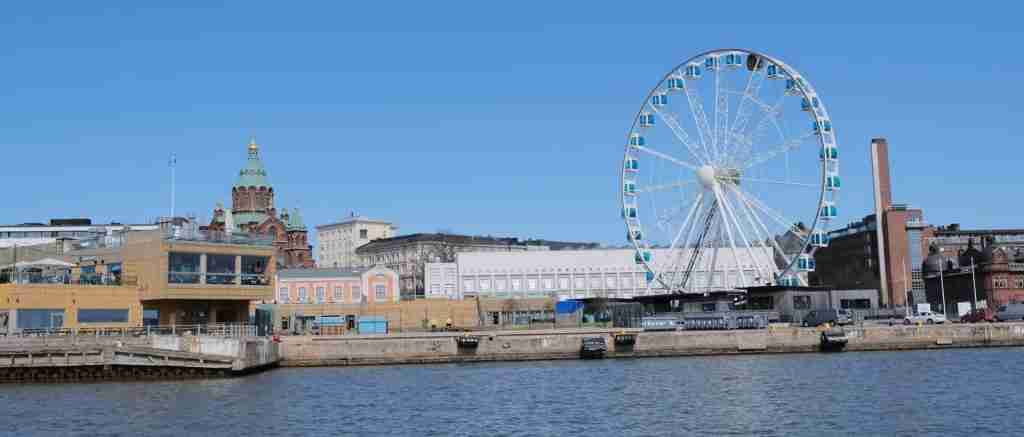
Helsinki Cathedral does not offer public access to the dome or roof, unlike some European cathedrals with observation galleries or tower climbs. The twelve Apostle statues adorning the pediments are visible from Senate Square and surrounding streets but cannot be approached closely. The cathedral’s viewing opportunities exist at ground level, from the steps providing elevated perspective on Senate Square and the harbor beyond, and from the square itself allowing appreciation of the cathedral’s facades and distinctive green dome. For panoramic views of Helsinki including the cathedral from above, visitors can ascend the nearby SkyWheel observation wheel or visit observation platforms at other central Helsinki locations that provide aerial perspectives showing the cathedral’s relationship to surrounding urban context.
Is Senate Square accessible for people with mobility limitations?
Senate Square’s flat paving provides full accessibility for wheelchair users and visitors with mobility limitations, the generous dimensions allowing easy navigation around the statue of Alexander II and other square elements. The cathedral steps present access challenge, but a ramped entrance on the building’s north side provides wheelchair access to the interior, though this entrance may require assistance from cathedral staff. The interior’s single level allows full exploration once inside, though the gallery level accessed by stairs remains unavailable to those unable to climb. Accessible restroom facilities exist in nearby buildings rather than within the cathedral itself. Visitors requiring accessibility accommodations should contact cathedral staff in advance to ensure smooth access and any necessary assistance.
What other buildings on Senate Square can I visit?
Sederholm House, Helsinki’s oldest central building dating from 1757, houses the Helsinki City Museum with exhibitions on urban history and development. The museum’s free admission provides insight into Helsinki’s transformation from modest Swedish town to Russian capital to modern European city, complementing the cathedral visit with social and cultural context. The Government Palace and University of Helsinki main building, while architecturally significant, function as active governmental and educational facilities with limited public access to interiors. However, their exteriors form integral parts of the Senate Square ensemble, and visitors can appreciate their facades, architectural details, and relationships with the cathedral creating Engel’s unified neoclassical composition. Special events occasionally provide interior access to these buildings, opportunities announced through local media and tourism information sources.
How does Helsinki Cathedral connect to Finnish national identity?
Helsinki Cathedral transformed from symbol of Russian imperial power to icon of Finnish national identity through the country’s independence in 1917. Originally built as St. Nicholas Church honoring Tsar Nicholas I, the cathedral was renamed Suurkirkko (Great Church) after independence, removing explicit Russian reference while maintaining the building’s status as Finland’s principal Lutheran cathedral. The transformation demonstrates how Finns claimed imperial architecture as national heritage, seeing in Engel’s neoclassical discipline reflection of Finnish values of honesty, clarity, and restraint. The cathedral now hosts national celebrations, independence ceremonies, and civic rituals, its architectural grandeur expressing Finnish cultural achievement and sovereignty. The building’s continued prominence in Finnish life, from appearing on postcards to serving as backdrop for national broadcasts, demonstrates how architecture acquires new meanings through changing political contexts while maintaining physical form connecting present to past.