Habsburg History at Schonbrunn Palace: Imperial Family Stories & Legacy
Schönbrunn Palace stands as the ultimate testament to Habsburg imperial power, embodying six centuries of European royal history within its baroque walls and magnificent gardens. The palace witnessed the rise and fall of one of Europe’s most influential dynasties, serving as summer residence to emperors and empresses whose decisions shaped continental politics, cultural development, and architectural achievement from medieval times through World War I.
🎯 Key Takeaways
- Maria Theresa transformed Schönbrunn (1740s-1750s) into baroque masterpiece during her 40-year reign
- Franz Joseph lived here 68 years as longest-reigning Austrian emperor (1848-1916)
- Empress Elisabeth (Sisi) used Schönbrunn as retreat from strict court protocol
- Mozart performed here aged 6 in Hall of Mirrors for Maria Theresa in 1762
- Napoleon occupied palace twice (1805, 1809) during Austrian campaigns
- Six centuries of Habsburg rule shaped European politics, culture, and architecture
The Habsburg story at Schönbrunn encompasses political intrigue, romantic drama, artistic patronage, and personal tragedies that humanize imperial grandeur while revealing the complex personalities behind European power. Understanding these historical layers transforms palace visits from architectural appreciation to intimate encounters with figures whose lives influenced millions across the former Austrian Empire.
The Habsburg Dynasty: European Powerhouse
The Habsburg family ruled Austria from 1282 to 1918, creating one of Europe’s longest-lasting and most influential imperial dynasties. Their motto “Bella gerant alii, tu felix Austria nube” (Let others wage war; you, happy Austria, marry) reflects their strategic approach to power through matrimonial alliances that expanded territories from Spain to Hungary without extensive military conquest.
Origins and Early Power
The Habsburg rise began in medieval Switzerland, where the family name derives from Habichtsburg (Hawk’s Castle), their ancestral seat. Rudolf I of Habsburg’s election as Holy Roman Emperor in 1273 established the family’s imperial credentials, though their Austrian focus developed later through strategic marriages and territorial acquisitions.
The family’s genius lay in combining political pragmatism with cultural sophistication, using artistic patronage, architectural grandeur, and court ceremony to legitimize power while maintaining flexibility in religious and political alliances that ensured dynastic survival through centuries of European upheaval.
The Spanish and Austrian Branches
Charles V’s 1521 division created separate Spanish and Austrian Habsburg lines, with the Austrian branch inheriting central European territories including Austria, Hungary, Bohemia, and various German states. This division concentrated Austrian Habsburg attention on central and eastern European affairs while maintaining family connections to Spanish imperial wealth.
The Austrian branch’s focus on central Europe shaped their relationship with Ottoman expansion, Protestant Reformation challenges, and eventually French revolutionary threats that required constant diplomatic and military attention throughout their reign.
Extended multi-day tours – 5+ days
Featured Vienna Multi-Day Tour Packages

3 days
Vienna 3-Day Discovery Tour
- ✓ Comprehensive Vienna experience
- ✓ Expert local guides included
- ✓ All accommodation included
- ✓ Transportation provided

5 days
Vienna 5-Day Highlights Experience
- ✓ Comprehensive Vienna experience
- ✓ Expert local guides included
- ✓ All accommodation included
- ✓ Transportation provided
7 days
Vienna 7-Day Cultural Journey
- ✓ Comprehensive Vienna experience
- ✓ Expert local guides included
- ✓ All accommodation included
- ✓ Transportation provided

10 days
Vienna 10-Day Complete Adventure
- ✓ Comprehensive Vienna experience
- ✓ Expert local guides included
- ✓ All accommodation included
- ✓ Transportation provided
Multi-day tour packages powered by TourRadar. Prices and availability subject to change.
Maria Theresa: The Great Empress (1717-1780)
Empress Maria Theresa represents the Habsburg dynasty at its cultural and political pinnacle, transforming both the Austrian Empire and Schönbrunn Palace during her remarkable 40-year reign. Her personality, political achievements, and cultural patronage created the Schönbrunn we experience today while establishing precedents for enlightened European governance.
Accession and Early Challenges
Maria Theresa inherited the throne in 1740 at age 23, immediately facing the War of Austrian Succession when multiple European powers challenged female succession rights. Her successful defense of Habsburg territories against Prussia, France, and Bavaria demonstrated exceptional political and military leadership that established her reputation as one of Europe’s most formidable rulers.
The young empress’s combination of political intelligence, personal charisma, and strategic marriages for her sixteen children created diplomatic networks that maintained Austrian influence even as Prussian military power challenged Habsburg dominance in German affairs.
Schönbrunn Transformation
Maria Theresa’s renovation of Schönbrunn from 1743-1749 created the baroque masterpiece visible today. Her architect Nikolaus Pacassi designed interiors that balanced imperial grandeur with family comfort, creating spaces that functioned for both state ceremony and private family life.
The empress’s personal apartments showcase her sophisticated taste in decorative arts, particularly the chinoiserie elements that demonstrate 18th-century European fascination with East Asian culture. Her famous Millions Room, with its precious rosewood paneling and Indo-Persian miniatures, cost sums equivalent to millions in today’s currency while creating intimate spaces for diplomatic negotiations.
Maria Theresa’s garden design emphasized family recreation alongside ceremonial functions, creating spaces where her numerous children could play and learn while providing impressive backgrounds for court entertainment. The maze, botanical collections, and educational areas demonstrate her advanced ideas about child development and royal education.
Political and Cultural Achievements
Beyond Schönbrunn’s transformation, Maria Theresa modernized Austrian government through administrative reforms, legal codification, and educational improvements that strengthened imperial efficiency while reducing regional autonomy. Her Theresian Cadastre created systematic tax assessment that improved governmental finances while reducing corruption.
Cultural patronage included support for music, architecture, and decorative arts that made Vienna a European cultural center. Her court attracted artists, musicians, and intellectuals who created the cultural foundation for Vienna’s later reputation as Europe’s musical capital.
Family Life and Personal Character
Maria Theresa’s marriage to Francis I of Lorraine produced sixteen children, creating a large, close-knit family that used Schönbrunn for informal recreation and education. Her correspondence reveals affectionate relationships with her children combined with strategic thinking about their marriage alliances and political roles.
The empress balanced strict Catholic religiosity with pragmatic political flexibility, maintaining religious orthodoxy while accommodating Protestant subjects and implementing administrative reforms that reduced clerical influence in governmental affairs. This complexity makes her one of European history’s most fascinating royal personalities.
Franz Joseph: The Last Great Emperor (1830-1916)
Emperor Franz Joseph’s 68-year reign represents both Habsburg imperial grandeur at its height and the dynasty’s eventual decline under pressure from nationalism, modernization, and military challenges. His deep personal connection to Schönbrunn, combined with his legendary work ethic and personal tragedies, creates compelling historical narratives that humanize imperial power.
Early Reign and Revolutionary Challenges
Franz Joseph ascended the throne in 1848 at age 18 during the revolutionary upheavals that challenged monarchical authority across Europe. His early reign required suppressing Hungarian independence movements, Italian nationalist revolts, and liberal constitutional demands while maintaining Austrian territorial integrity.
The young emperor’s authoritarian response to revolutionary challenges, including the execution of Hungarian independence leaders, established his reputation for inflexibility that would characterize his approach to political reform throughout his long reign.
Personal Life and Schönbrunn
Franz Joseph was born at Schönbrunn and maintained deep emotional connections to the palace throughout his life, preferring its informal atmosphere to the ceremonial requirements of Vienna’s Hofburg. His simple personal apartments reflect his austere lifestyle and legendary work schedule that began daily at 4 AM with state business.
The emperor’s marriage to Elisabeth of Bavaria (Sisi) in 1854 brought romantic glamour to the Habsburg court while creating personal tensions that played out in Schönbrunn’s rooms. Their relationship, marked by mutual affection combined with fundamental incompatibility, provides intimate insights into imperial family dynamics.
Franz Joseph’s study at Schönbrunn contains original documents and maps showing the vast territories under his rule, from Galicia in the east to Lombardy in the south. His methodical approach to administration is evident in the precisely organized workspace where he conducted daily business for nearly seven decades.
Military Defeats and Political Challenges
Franz Joseph’s reign included significant military defeats that reduced Habsburg power and territory. The 1859 loss of Lombardy to France and Piedmont, followed by the 1866 defeat by Prussia, ended Austrian dominance in German and Italian affairs while forcing accommodation with Hungarian demands for autonomy.
The 1867 Ausgleich (Compromise) created the Austro-Hungarian Dual Monarchy, sharing power with Hungarian nobility while maintaining Habsburg rule over diverse ethnic populations increasingly demanding national recognition and autonomy.
Personal Tragedies
Franz Joseph’s later years included devastating personal losses that affected his leadership and public image. Crown Prince Rudolf’s 1889 suicide at Mayerling ended Habsburg succession hopes while revealing the psychological pressures affecting imperial family members.
Empress Elisabeth’s 1898 assassination in Geneva by an Italian anarchist deepened Franz Joseph’s personal isolation while symbolizing the violent political tensions threatening monarchical authority across Europe.
Empress Elisabeth (Sisi): The Reluctant Empress (1837-1898)
Empress Elisabeth’s complex relationship with Habsburg court life, combined with her beauty, intelligence, and tragic fate, made her one of European history’s most fascinating royal figures. Her use of Schönbrunn as retreat from Vienna court protocol reveals the human costs of imperial grandeur while demonstrating individual resistance to institutional constraints.
Marriage and Early Court Life
Elisabeth’s 1854 marriage to Franz Joseph at age 16 brought Bavarian informality to the rigid Austrian court, creating immediate conflicts with Archduchess Sophie, the emperor’s formidable mother who controlled court protocol and child-rearing practices.
The young empress’s struggles with court ceremony, combined with her intelligence and independent spirit, created tensions that affected her relationship with both her husband and imperial responsibilities throughout her life.
Schönbrunn as Personal Refuge
Elisabeth used Schönbrunn’s informal atmosphere to escape Vienna court restrictions while pursuing personal interests including poetry, languages, and extensive travel. Her private apartments reveal sophisticated intellectual pursuits often overlooked in popular portrayals focused on beauty and fashion.
The empress’s dressing room demonstrates the elaborate beauty rituals that consumed hours daily, including complex hair care routines and exercise regimens that maintained her legendary beauty while providing refuge from court obligations.
Elisabeth’s salon contains personal artifacts revealing her intellectual achievements, including fluency in multiple languages, poetry composition, and correspondence with European intellectuals who appreciated her wit and cultural sophistication.
Travel and Personal Freedom
Elisabeth’s extensive travels throughout Europe and beyond represented both personal escape from court obligations and diplomatic missions that enhanced Austrian influence through her personal charm and cultural interests.
Her fascination with Hungary, including language study and political support for Hungarian autonomy, influenced Franz Joseph’s eventual acceptance of the 1867 Compromise while demonstrating her political intelligence and cultural sensitivity.
Tragic End and Legacy
Elisabeth’s 1898 assassination in Geneva by an Italian anarchist Luigi Lucheni shocked Europe while symbolizing the violent political tensions threatening traditional monarchical authority. Her death deepened Franz Joseph’s personal isolation while creating martyrdom that enhanced public sympathy for the Habsburg dynasty.
Crown Prince Rudolf: Lost Hopes (1858-1889)
Crown Prince Rudolf’s tragic story represents the psychological pressures affecting Habsburg heirs while revealing the dynasty’s struggle to adapt to modern political challenges and social changes that threatened traditional monarchical authority.
Education and Liberal Ideas
Rudolf’s education emphasized liberal political ideas and scientific thinking that conflicted with Franz Joseph’s authoritarian approach to governance. His intellectual curiosity and political flexibility might have modernized the Habsburg system if he had inherited the throne.
The crown prince’s writings reveal sophisticated understanding of Austria-Hungary’s ethnic and political challenges, proposing federalist solutions that might have prevented the nationalism that ultimately destroyed the empire.
Schönbrunn Childhood and Family Dynamics
Rudolf’s childhood at Schönbrunn included both privilege and pressure, with educational programs designed to prepare him for imperial responsibilities while providing family affection that contrasted with formal court requirements.
His relationship with both parents was complex, combining genuine affection with political disagreements that created psychological tensions affecting his personal relationships and mental health.
Political Frustration and Personal Problems
Rudolf’s exclusion from meaningful political roles despite his intelligence and liberal ideas created frustration that combined with personal relationship problems to produce the psychological crisis culminating in his Mayerling suicide.
His death ended Habsburg succession hopes while revealing the dynasty’s difficulty adapting to modern political requirements that demanded more flexible and responsive governmental approaches.
Cultural Patronage and Artistic Legacy
The Habsburg presence at Schönbrunn created cultural achievements that extended far beyond architectural grandeur, influencing European music, decorative arts, and cultural traditions that continue affecting Vienna’s international reputation.
Musical Patronage
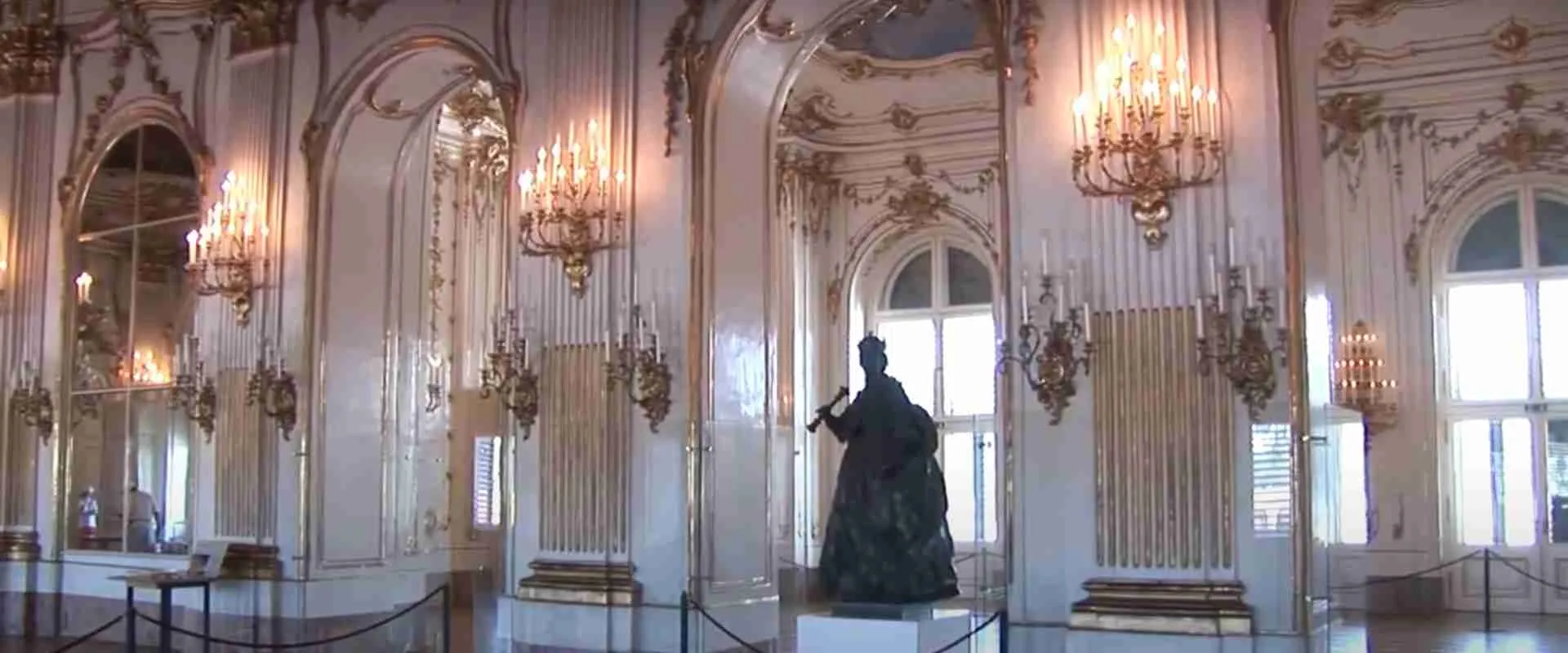
Schönbrunn’s musical history includes Wolfgang Amadeus Mozart’s childhood performances for Maria Theresa in the Hall of Mirrors when he was six years old. This famous 1762 concert began Mozart’s relationship with Viennese aristocracy while demonstrating Habsburg cultural patronage.
The palace’s concert traditions continue today through regular classical music performances in historic venues that provide authentic settings for experiencing the musical heritage associated with Habsburg cultural patronage.
Decorative Arts Excellence
Habsburg patronage at Schönbrunn promoted decorative arts including furniture making, textile production, and ceramic arts that set European standards for luxury goods while supporting local craft traditions that continue influencing Austrian cultural identity.
Maria Theresa’s apartments showcase the finest 18th-century European decorative arts, including chinoiserie elements that demonstrate cultural exchange between Europe and Asia through Habsburg diplomatic and trading networks.
Garden Design Innovation
Schönbrunn’s gardens represent baroque landscape architecture at its finest, influencing European garden design while providing educational and recreational spaces that demonstrate enlightened approaches to royal residence planning.
The integration of formal French garden elements with naturalistic English landscape features created innovative design approaches that balanced ceremonial requirements with family recreation and botanical education.
Political Significance and European Influence
Schönbrunn served as a crucial diplomatic center where Habsburg emperors conducted negotiations that shaped European political development for centuries.
Diplomatic Meetings
The palace hosted crucial diplomatic conferences including meetings between Kennedy and Khrushchev in 1961, demonstrating its continued symbolic importance for international relations long after Habsburg rule ended.
Earlier diplomatic activities included negotiations during the Napoleonic Wars, Congress of Vienna aftermath, and Austro-Hungarian compromise discussions that affected millions of people across central Europe.
Revolutionary and Wartime Events
Schönbrunn witnessed revolutionary events including Napoleon’s occupation in 1805 and 1809, when the French emperor used Habsburg imperial residence to demonstrate his conquest of Austrian power.
World War I marked the end of Habsburg rule, with Charles I’s 1918 abdication effectively ending six centuries of dynastic control over Austrian territories while transforming Schönbrunn from imperial residence to public museum.
The End of an Era: 1918 and Beyond
The Habsburg dynasty’s end in 1918 transformed Schönbrunn from living imperial residence to historical monument, preserving Habsburg legacy while adapting to republican government and modern cultural tourism.
Charles I: The Last Emperor
Emperor Charles I’s brief reign (1916-1918) included unsuccessful attempts to negotiate separate peace during World War I while managing the empire’s disintegration as ethnic populations demanded independence.
His 1918 abdication ended Habsburg rule while preserving Schönbrunn for public access that allows contemporary visitors to experience imperial grandeur without monarchical political context.
Republican Transformation
The Austrian Republic’s 1922 transformation of Schönbrunn into public museum preserved Habsburg cultural heritage while adapting imperial spaces for educational and cultural purposes that serve democratic rather than monarchical functions.
UNESCO World Heritage designation in 1996 recognized Schönbrunn’s universal cultural value while ensuring preservation standards that maintain historical authenticity for future generations.
Legacy and Modern Understanding
The Habsburg story at Schönbrunn provides insights into European political development, cultural achievement, and the human experiences behind imperial power that continue influencing contemporary understanding of leadership, cultural identity, and historical change.
Historical Lessons
Habsburg successes and failures offer insights into multi-ethnic governance, cultural integration, and the challenges facing traditional authority in modernizing societies.
Their emphasis on cultural patronage, architectural achievement, and diplomatic flexibility provides models for contemporary leadership while their ultimate failure demonstrates the importance of adapting to changing social and political requirements.
Cultural Continuity
Habsburg cultural achievements at Schönbrunn continue influencing Vienna’s international reputation as a center for classical music, decorative arts, and architectural excellence that attracts millions of visitors annually.
The palace’s preservation as cultural monument rather than private residence demonstrates successful adaptation of historical heritage to contemporary educational and cultural purposes.
❓ Frequently Asked Questions
Who was the most important Habsburg ruler at Schönbrunn Palace?
Empress Maria Theresa (1740-1780) was most significant, transforming Schönbrunn into its current baroque masterpiece while ruling for 40 years during the Habsburg golden age. Her renovations and cultural patronage created the palace we see today.
How long did the Habsburg family rule Austria?
The Habsburgs ruled Austria for 636 years, from 1282 when Rudolf I became Duke of Austria until 1918 when Emperor Charles I abdicated after World War I ended their empire.
What happened to Mozart at Schönbrunn Palace?
Six-year-old Wolfgang Amadeus Mozart performed for Empress Maria Theresa in the Hall of Mirrors in 1762. This performance launched his career and began his relationship with Viennese aristocracy, though stories of him proposing to Marie Antoinette are likely myths.
Why is Empress Elisabeth (Sisi) so famous?
Sisi became legendary for her beauty, intelligence, independent spirit, and tragic assassination in 1898. Her struggles with court protocol, extensive travels, and complex marriage to Franz Joseph created romantic narratives that continue fascinating people today.
Did Napoleon really live at Schönbrunn Palace?
Yes, Napoleon occupied Schönbrunn twice (1805 and 1809) during his Austrian campaigns, using the Habsburg imperial residence to demonstrate French victory over Austrian power. He stayed in rooms now part of the palace tour.
What was Franz Joseph’s connection to Schönbrunn?
Franz Joseph was born at Schönbrunn in 1830 and lived there for 68 years during his reign (1848-1916). He preferred its informal atmosphere to the Vienna Hofburg, conducting daily business from his simple study starting at 4 AM.
How many Habsburg emperors lived at Schönbrunn?
Multiple Habsburg rulers used Schönbrunn as their summer residence, but the most significant were Maria Theresa (who transformed it), Franz Joseph (who lived there longest), and their families including Empress Elisabeth and Crown Prince Rudolf.
What caused the end of Habsburg rule in Austria?
World War I defeat, ethnic nationalism within the empire, and democratic movements led to Emperor Charles I’s abdication in 1918. The empire dissolved into separate nations including Austria, Hungary, Czechoslovakia, and Yugoslavia.
Are there any Habsburg descendants alive today?
Yes, Habsburg descendants live throughout Europe, though they have no political power. The current head of the House of Habsburg-Lorraine is Karl von Habsburg, who works in politics and conservation while maintaining family historical interests.
What rooms at Schönbrunn show Habsburg family life best?
Franz Joseph and Elisabeth’s private apartments reveal intimate family life, while Maria Theresa’s rococo chambers show imperial grandeur. The nursery and children’s areas demonstrate royal childhood experiences, and the study shows daily work routines.