
Ha Long Bay Cultural Significance: Understanding Vietnam’s Sacred Seascape
This comprehensive cultural guide explores Ha Long Bay beyond visual splendor to reveal the human stories, beliefs, and traditions connected to this extraordinary seascape. From ancient myths explaining karst origins to contemporary challenges facing traditional maritime cultures, from archaeological discoveries documenting millennia of human presence to the bay’s role in Vietnamese national narratives, the cultural dimensions add depth and meaning that elevate Ha Long Bay from tourist destination to profound cultural landscape worthy of preservation and respect.
Key Takeaways
- The name “Ha Long” means “Descending Dragon” in Vietnamese, rooted in creation mythology where dragons carved the bay’s karst formations while defending Vietnam from invaders
- UNESCO designated Ha Long Bay as a World Heritage Site in 1994 for geological value, then expanded recognition in 2000 for biological significance, representing dual natural heritage status
- Floating villages preserve centuries-old maritime traditions where communities live entirely on water, maintaining ancestral fishing techniques and boat-building knowledge
- The bay served as strategic defensive position throughout Vietnamese history, from ancient conflicts to modern wars, making it culturally significant beyond natural beauty
- Cave sites contain archaeological evidence of prehistoric human habitation dating 18,000 years, demonstrating continuous human-landscape interaction across millennia
- Traditional wooden junk boats with distinctive rust-red sails symbolize Vietnamese maritime heritage, originally designed for fishing and trade throughout Southeast Asian waters
The Cultural Dimensions of Ha Long Bay
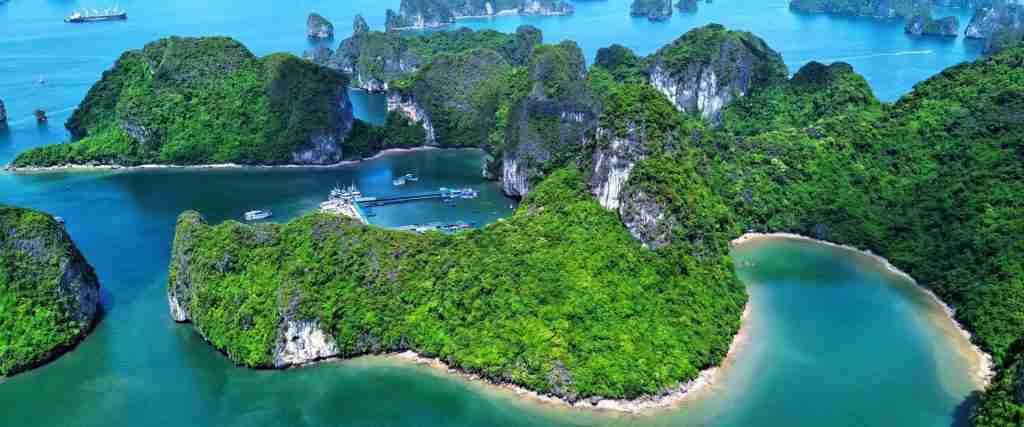
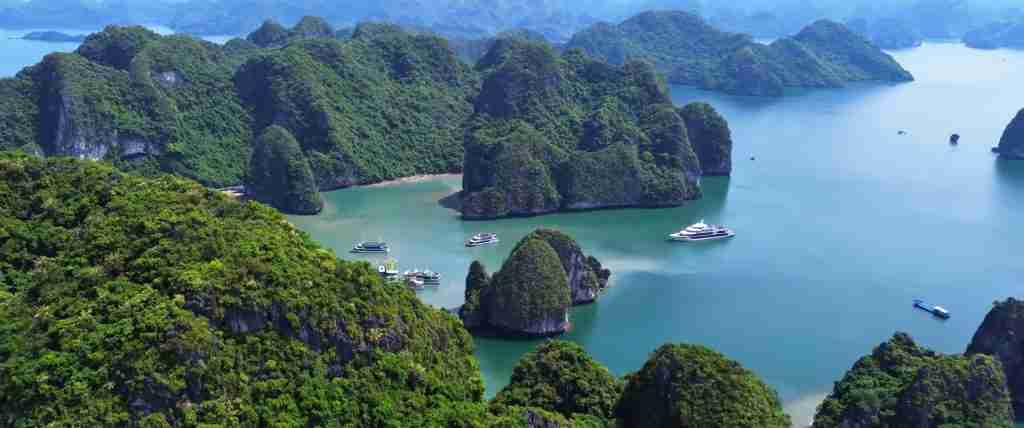
Ha Long Bay transcends pure geological spectacle to embody profound cultural meaning woven into Vietnamese national identity through mythology, history, and living traditions. The nearly 2,000 limestone karst towers rising from emerald waters represent more than dramatic scenery—they form a sacred landscape where legend merges with history, where natural beauty inspired creation myths, and where maritime communities maintained traditional lifeways for generations.
Understanding Ha Long Bay’s cultural significance requires examining multiple dimensions: the dragon legends that gave the bay its name and symbolic meaning, the prehistoric archaeological sites revealing ancient human occupation, the strategic military importance throughout Vietnamese conflicts, the living maritime cultures of floating villages, and the UNESCO recognition acknowledging both natural and cultural values. These layers create rich cultural tapestry transforming geological formations into meaningful landscape deeply embedded in Vietnamese consciousness.
People Also Ask About Ha Long Bay Cultural Significance
Why is Ha Long Bay culturally important to Vietnam?
Ha Long Bay holds profound cultural importance through its central role in Vietnamese creation mythology, strategic significance in national defense throughout history, and representation of traditional maritime culture. The dragon legends explaining the bay’s formation connect directly to Vietnamese national identity, with dragons symbolizing power, wisdom, and divine protection. The bay served as defensive barrier during Chinese invasions and French colonial resistance, embedding it in narratives of Vietnamese independence and resilience. Floating villages preserve traditional fishing cultures threatened by modernization, making the bay a living museum of maritime heritage. UNESCO World Heritage designation elevated Ha Long Bay to symbol of Vietnamese natural and cultural patrimony deserving international recognition and protection.
What is the legend of the dragons in Ha Long Bay?
The central creation myth describes how dragons descended from heaven to help Vietnamese people defend against invaders from the north. As enemies approached by sea, the dragons spit jade and jewels that transformed into thousands of limestone islands and karsts, creating the labyrinthine waterscape that trapped and destroyed invading fleets. After the victory, the dragons chose to remain in the bay rather than return to heaven, with “Ha Long” meaning “Descending Dragon” commemorating this divine intervention. Variations describe a dragon family—mother, father, and children—whose different descent locations created Ha Long Bay (mother dragon), Bai Tu Long Bay (children dragons), and nearby karst areas. This legend explains both the bay’s name and its unusual landscape while connecting natural features to Vietnamese historical narratives of foreign invasion and successful resistance.
How long have people lived in Ha Long Bay?
Archaeological evidence documents human presence in Ha Long Bay spanning at least 18,000 years through Paleolithic stone tools found in cave sites. The Soi Nhu culture flourished 18,000-7,000 years ago, followed by the Cai Beo culture 7,000-5,000 years ago, both leaving extensive archaeological remains including tools, pottery, and shell middens. These prehistoric inhabitants adapted to the karst landscape and marine environment, developing fishing technologies and sheltering in limestone caves. Continuous or intermittent human occupation persisted through subsequent millennia, with the bay’s strategic location attracting settlement despite challenging karst terrain. Modern floating villages represent the latest chapter in this long human history, maintaining maritime traditions while adapting to contemporary economic and social changes.
What makes Ha Long Bay a UNESCO World Heritage Site?
UNESCO designated Ha Long Bay as World Heritage Site in 1994 primarily for outstanding geological and geomorphological value, recognizing the karst landscape as exemplary of fengcong (clusters of conical peaks) and fenglin (isolated tower formations) karst development. The 2000 designation expansion added biological significance, acknowledging exceptional biodiversity including endemic species and important ecosystems. The bay meets UNESCO criteria for containing “superlative natural phenomena” and representing “significant on-going ecological and biological processes.” While originally designated for natural rather than cultural heritage, UNESCO recognizes cultural dimensions including traditional maritime communities, archaeological sites, and historical significance. The World Heritage status obligates Vietnam to protect and preserve the bay’s natural and cultural values for future generations.
Extended multi-day tours – 5+ days
Featured Vietnam Multi-Day Tour Packages
3 days
Vietnam 3-Day Discovery Tour
- ✓ Comprehensive Vietnam experience
- ✓ Expert local guides included
- ✓ All accommodation included
- ✓ Transportation provided
5 days
Vietnam 5-Day Highlights Experience
- ✓ Comprehensive Vietnam experience
- ✓ Expert local guides included
- ✓ All accommodation included
- ✓ Transportation provided
7 days
Vietnam 7-Day Cultural Journey
- ✓ Comprehensive Vietnam experience
- ✓ Expert local guides included
- ✓ All accommodation included
- ✓ Transportation provided
10 days
Vietnam 10-Day Complete Adventure
- ✓ Comprehensive Vietnam experience
- ✓ Expert local guides included
- ✓ All accommodation included
- ✓ Transportation provided
Multi-day tour packages powered by TourRadar. Prices and availability subject to change.
Dragon Mythology and Creation Legends
The Descending Dragon: Primary Creation Myth
The foundational Ha Long Bay legend describes the time when Vietnamese people faced invasion from northern enemies. The Jade Emperor sent a dragon family to help defend the young nation. The mother dragon descended first, landing in the area that became Ha Long Bay. As she descended, she spit jade and jewels that transformed into thousands of karst islands and limestone towers, creating an impenetrable maze that destroyed the invading fleet attempting to navigate the treacherous waters.
The dragon children descended next, creating Bai Tu Long Bay to the northeast, with “Bai Tu Long” meaning “children of the dragon.” Each member of the dragon family contributed to the defensive landscape, with their jewels forming different sections of the interconnected karst bay system. After successfully defending Vietnam, the dragons chose to remain rather than return to heaven, making Ha Long Bay their permanent home. Fishermen report occasional dragon sightings, and certain karst formations bear names referencing the dragons’ presence.
This mythology serves multiple cultural functions beyond entertainment. It explains the bay’s unusual landscape through divine intervention, connecting natural features to national narratives of resistance against foreign invasion. The dragons choosing to remain in Vietnam symbolize divine favor and protection, with the bay representing sacred landscape where heaven and earth merge. The legend reinforces Vietnamese identity as people blessed by dragons, with Ha Long Bay as tangible evidence of divine assistance in achieving independence.
Regional Variations and Related Myths
Alternative versions describe the mother dragon as protective deity specifically guarding Vietnamese waters against invaders. Some legends emphasize the dragons’ aggressive tail-lashing creating deep channels between karsts, explaining the bay’s intricate water passages. Certain stories describe dragons living within specific limestone caves, making particular karsts sacred sites where offerings ensure maritime safety and fishing success.
Related mythology connects Ha Long Bay to other Vietnamese dragon legends, creating a comprehensive supernatural geography. Dragons appear throughout Vietnamese folklore as beneficent protectors contrasting with the malevolent dragons of some other Asian cultures. Ha Long Bay’s dragon legends influenced place names throughout the region, with numerous karsts, islands, and features named after dragons or referencing the descent myth. This mythological landscape creates meaning layers beyond geological formations, with each named karst potentially connecting to specific legend variations.
Cultural Function of Dragon Mythology
The dragon legends serve crucial cultural-psychological functions for Vietnamese people. They explain mysterious landscape features through narratives consistent with Vietnamese cosmology and national identity. The stories provide moral lessons about divine protection rewarding worthy people while punishing invaders. The legends create emotional connections to the landscape, transforming impersonal geological formations into meaningful places tied to national history and identity.
Contemporary Vietnamese culture maintains these legends as living traditions rather than obsolete folklore. School curricula teach Ha Long Bay mythology alongside geological facts. Tourism materials emphasize legendary aspects, recognizing visitors’ interest in cultural meaning beyond natural beauty. Artists and writers continue reinterpreting dragon legends in contemporary works, demonstrating ongoing cultural vitality. The myths function as Vietnamese cultural property, with Ha Long Bay as tangible manifestation of national mythology.
Living Maritime Heritage: Floating Villages
Traditional Floating Village Cultures
Four major floating villages—Cua Van, Vung Vieng, Ba Hang, and Cong Dam—preserve traditional maritime cultures where entire communities live on water year-round. Houses float on bamboo and plastic barrel platforms, connected by small boats serving as primary transportation. These communities developed in response to the bay’s karst terrain offering minimal flat land for terrestrial settlement, creating unique adaptations to waterborne existence.
Floating village residents descended from fishing communities that gradually transitioned from land-based to water-based housing, finding advantages in being directly on fishing grounds and adapting to karst landscape constraints. Homes feature minimal furnishings with living spaces, sleeping areas, and kitchens compressed into compact floating structures. Extended families often moor homes together, maintaining kinship networks despite absent street addresses or fixed locations. Children paddle small boats to floating schools where teachers arrive daily from Cat Ba Island.
These communities developed sophisticated knowledge of tides, currents, weather patterns, and fish behavior essential for survival in demanding marine environment. Traditional fishing techniques passed between generations include various net types, bamboo fish traps, and seasonal fishing patterns following fish migrations through the karsts. Village social structures feature informal leadership, with experienced fishermen guiding community decisions about fishing grounds, weather responses, and interactions with tourism development.
Boat Building and Maritime Technologies
Traditional Vietnamese junk boats represent centuries of maritime engineering adapted to Southeast Asian waters. The distinctive rust-red sails derive from coating woven bamboo or canvas with natural preservatives including iron oxide and tree resins. The reddish-brown color became culturally iconic, instantly recognizable as Vietnamese maritime heritage. Junks feature flat bottoms enabling shallow water navigation through karst channels, large rudders providing precise control, and compartmentalized hulls preventing total sinking if damaged.
Floating village communities maintained boat-building expertise, constructing fishing vessels and homes using locally available materials including bamboo, specific hardwoods, and nowadays plastic and metal. Traditional knowledge includes wood selection, joinery techniques avoiding metal fasteners that corrode in salt water, and waterproofing methods using tree resins. Older craftsmen preserve techniques increasingly rare as manufactured boats replace traditional construction methods.
Pearl farming introduced in recent decades created new maritime technology as floating villages adapted traditional knowledge to aquaculture. Pearl farms consist of floating platforms suspending oyster cages underwater, requiring new expertise in oyster biology, water quality management, and pearl cultivation techniques. This adaptation demonstrates maritime culture’s continuing evolution rather than static tradition frozen in time.
Contemporary Challenges and Cultural Preservation
Floating village cultures face significant pressures from tourism development, environmental regulations, economic changes, and modernization. Government policies encourage floating village residents to relocate to terrestrial housing in Cat Ba Island settlements, viewing water-based housing as outdated and incompatible with modern education and healthcare access. Young people increasingly leave for urban opportunities, threatening cultural continuity as traditional knowledge dies with elderly generation.
Tourism creates complex impacts, providing income through floating village tours, restaurant meals, and pearl sales while disrupting traditional rhythms and commodifying culture. Some villages embrace tourism as economic opportunity, while others resist visitor intrusions into private lives. Environmental regulations restricting fishing in protected zones reduce traditional livelihoods, forcing cultural-economic adaptations that may erode distinctive maritime traditions.
Cultural preservation efforts include documentation of traditional knowledge, support for sustainable floating village tourism respecting community autonomy, and recognition of maritime culture as intangible cultural heritage deserving protection. The challenge lies in supporting these communities’ economic viability while respecting their choices about cultural continuity versus modernization, avoiding romanticized preservation that denies people contemporary opportunities while acknowledging unique cultural value worth maintaining.
Historical and Strategic Significance
Ancient and Medieval Conflicts
Ha Long Bay’s strategic location as maritime gateway to northern Vietnam made it crucial defensive position throughout history. The dragon legends reference actual historical pattern of Chinese invasions approaching from the north by sea, with the bay’s complex karst channels providing natural defensive advantages. Vietnamese forces familiar with local waters could ambush invaders struggling to navigate the limestone labyrinth, turning geographical features into military assets.
The 13th century witnessed the bay’s role in Vietnamese resistance against Mongol invasions. General Tran Hung Dao’s forces used Ha Long Bay’s geography to defeat much larger Mongol fleets in 1288, luring invaders into shallow channels where Vietnamese vessels with superior local knowledge destroyed the invasion force. This victory earned mythological status in Vietnamese history, with the bay itself credited as ally in achieving impossible victory through geography enabling strategy impossible elsewhere.
Colonial and Modern Warfare
French colonial forces recognized Ha Long Bay’s strategic value, establishing military installations and using the bay as naval base during colonial administration. The bay’s coal deposits attracted French commercial interest, adding economic to strategic importance. Resistance movements against French rule used the karst landscape’s countless hiding places for guerrilla operations, with limestone caves sheltering fighters and supplies throughout anti-colonial struggles.
During the American War (Vietnam War), Ha Long Bay again served strategic functions as supplies moved through the region supporting northern Vietnamese operations. American bombing targeted bridges and transportation infrastructure around the bay, though the karst formations themselves proved difficult to damage significantly. The bay’s symbolic importance as representing Vietnamese natural heritage made it focal point for wartime narratives about defending national patrimony from foreign destruction.
Contemporary Strategic Considerations
Modern Ha Long Bay faces different strategic considerations including territorial disputes in the South China Sea, with the bay’s location relevant to broader maritime claims. The area’s economic importance through tourism, fishing, and mineral extraction creates strategic value transcending military considerations. Environmental protection competes with development pressures, creating conflicts where “strategic” refers to economic development versus conservation priorities.
The bay’s UNESCO World Heritage status carries strategic weight in international relations, with Vietnam leveraging cultural and natural significance to strengthen diplomatic positions. Protection obligations require balancing national sovereignty with international heritage responsibilities, creating complex negotiations about development versus preservation. These contemporary strategic dimensions differ fundamentally from historical military considerations while maintaining Ha Long Bay’s importance to Vietnamese national interests.
Archaeological Sites and Prehistoric Occupation
Paleolithic and Neolithic Cultures
Archaeological excavations in Ha Long Bay caves documented extensive prehistoric occupation spanning multiple cultural periods. The Soi Nhu culture (18,000-7,000 years BP) left abundant stone tools, bone implements, and shell middens in cave sites throughout the karsts. These early inhabitants exploited marine resources while adapting to the distinctive karst environment, developing specialized technologies for fishing, shellfish collection, and cave dwelling.
The Cai Beo culture (7,000-5,000 years BP) showed technological advancement with refined pottery, more sophisticated stone tools, and evidence of permanent or semi-permanent cave settlements. Cai Beo archaeological sites revealed complex adaptation to Ha Long Bay’s unique ecology, with inhabitants exploiting terrestrial, marine, and tidal resources. The culture name derives from Cai Beo Island in Halong Bay where extensive excavations revealed this cultural sequence.
These prehistoric cultures demonstrate how humans adapted to and were shaped by Ha Long Bay’s distinctive landscape for millennia. The karst formations provided shelter, defense, and territorial markers while constraining settlement patterns and economic activities. Archaeological evidence shows continuous or intermittent occupation through subsequent Bronze and Iron Ages, documenting evolving human-landscape relationships as technologies and cultures changed.
Archaeological Preservation Challenges
Many archaeological sites face threats from tourism development, erosion, and inadequate protection. Caves containing archaeological deposits receive visitor traffic that damages sediments and artifacts. Looting removed artifacts from some sites before professional excavations occurred. Climate change threatens archaeological preservation through altered erosion rates and cave flooding patterns affecting delicate deposits.
Some archaeological sites received protective designation, restricting access and requiring permits for research. However, enforcement challenges and competing development pressures complicate preservation efforts. The tension between archaeological preservation and tourism access creates ongoing conflicts where cultural heritage protection competes with economic development through visitor experiences. Balancing these interests requires careful management recognizing archaeological sites’ irreplaceable cultural value while acknowledging legitimate tourism interests.
UNESCO World Heritage Recognition and Significance
The 1994 and 2000 Designations
UNESCO first designated Ha Long Bay as World Heritage Site in 1994 based on geological criteria, recognizing the karst landscape as outstanding example of fengcong (tower karst) and fenglin (peak cluster) formations. The designation acknowledged Ha Long Bay as one of world’s most spectacular karst landscapes, with nearly 2,000 limestone islands creating exceptional scenic beauty and geological significance. This recognition established international obligations to protect the bay’s natural values.
The 2000 designation expansion added biological criteria, acknowledging Ha Long Bay’s exceptional biodiversity and ecological importance. The expanded recognition documented the bay’s unique ecosystems, endemic species, and importance as habitat for threatened species including langurs and other primates inhabiting karst formations. This dual designation for both geological and biological significance positions Ha Long Bay among the world’s most comprehensively recognized natural heritage sites.
World Heritage Criteria and Values
Ha Long Bay meets UNESCO World Heritage Criterion VII for containing “superlative natural phenomena or areas of exceptional natural beauty and aesthetic importance.” The dramatic karst seascape creates visual spectacle recognized worldwide through tourism imagery and cultural representation. This aesthetic criterion acknowledges landscapes whose beauty transcends subjective judgment to achieve universal recognition as exceptional natural phenomena.
The site also meets Criterion VIII for being “outstanding examples representing major stages of Earth’s history” and “ongoing geological processes.” The karst formations demonstrate exceptional geomorphological development over millions of years, with the landscape continuing to evolve through erosion, sea level changes, and ongoing karst processes. This criterion recognizes scientific importance beyond aesthetic appeal, acknowledging Ha Long Bay as valuable natural laboratory for studying karst evolution.
World Heritage Obligations and Management
UNESCO designation creates obligations for Vietnam to protect Ha Long Bay’s Outstanding Universal Value—the qualities justifying World Heritage status. This requires balancing preservation with sustainable development, managing tourism impacts, controlling pollution, and maintaining natural and cultural values. Periodic UNESCO monitoring missions evaluate management effectiveness, with potential sanctions including World Heritage in Danger listing if protection proves inadequate.
Management challenges include controlling development pressures, managing mass tourism impacts, addressing pollution from vessels and coastal development, and protecting biodiversity while accommodating economic activities. The World Heritage Management Plan establishes zoning with strict protection in core areas and controlled development in buffer zones. Effective implementation requires coordination between multiple government agencies, local communities, tourism operators, and conservation organizations with sometimes competing interests.
Cultural Heritage Dimensions within Natural Designation
While designated as natural rather than cultural World Heritage, Ha Long Bay contains significant cultural values including floating villages, archaeological sites, and intangible heritage of maritime traditions and mythology. UNESCO increasingly recognizes cultural dimensions within natural World Heritage sites, acknowledging landscapes as cultural-natural hybrids rather than pure nature divorced from human meaning and presence.
Future recognition of Ha Long Bay’s cultural values could lead to “mixed” designation acknowledging both natural and cultural significance, though this would require demonstrating Outstanding Universal Value for cultural criteria. The challenge lies in documenting and protecting cultural heritage while maintaining focus on the geological and biological values justifying original designation. Integrated management recognizing cultural-natural relationships creates more holistic preservation approach than artificially separating nature from culture.
Ha Long Bay as Cultural Landscape
Naming Traditions and Place Significance
Individual karst formations bear names referencing their shapes, legends, or historical events, creating cultural landscape where natural features carry human meaning. “Fighting Cock Island” resembles two roosters facing each other, becoming iconic Ha Long Bay symbol. “Incense Burner Island” suggests religious paraphernalia, connecting natural form to spiritual practice. These naming traditions transform impersonal rock formations into meaningful places embedded in cultural consciousness.
Place names encode history, mythology, and cultural values. Some reference dragon legends directly, while others commemorate historical events or venerated figures. Fishing communities maintain their own naming systems for karsts and channels, creating local knowledge distinct from official names on tourist maps. These parallel naming systems demonstrate how different communities create meaning through landscape naming, with names functioning as cultural memory encoded in geography.
Artistic and Literary Representations
Ha Long Bay features prominently in Vietnamese art, literature, and cultural production. Traditional poetry describes the bay’s beauty and mythological significance. Contemporary artists interpret the karst landscape in paintings, photography, and multimedia works exploring natural beauty and cultural meaning. The bay appears in Vietnamese films, music videos, and popular culture as symbol of national beauty and identity.
International artistic representations increased Ha Long Bay’s global cultural profile, though sometimes emphasizing exotic otherness over Vietnamese perspectives. Tourist imagery commodifies the bay’s beauty, creating tension between authentic cultural representation and commercial promotion. These representations influence how Vietnamese and international audiences understand and value Ha Long Bay, making artistic portrayals culturally significant beyond aesthetic considerations.
Spiritual and Religious Dimensions
Some karsts contain shrines and temples where fishing communities make offerings for maritime safety and fishing success. Caves functioned as spiritual sites with religious and ritual significance beyond practical shelter. Certain locations attract pilgrims seeking spiritual connection with landscape believed to hold sacred power. These spiritual practices connect residents and visitors to the bay through religious rather than purely aesthetic or recreational relationships.
Buddhist and Taoist influences appear in Ha Long Bay’s spiritual geography, with some karsts associated with deities or spiritual beings. Folk religion incorporating ancestor veneration and nature spirits creates syncretic spiritual landscape where multiple belief systems coexist. Understanding these spiritual dimensions adds depth to cultural appreciation, revealing how people create and maintain sacred relationships with dramatic natural landscapes.
Frequently Asked Questions About Ha Long Bay Cultural Significance
What does “Ha Long” mean in Vietnamese?
“Ha Long” translates as “Descending Dragon” in Vietnamese, referring to the legend where dragons descended from heaven to create the bay’s karst formations. “Ha” means descending or coming down, while “Long” means dragon. The name connects directly to the central creation myth explaining both the bay’s formation and its significance in Vietnamese culture as place where divine dragons chose to remain after defending Vietnam from invaders. This name encodes mythology, history, and national identity in simple geographic designation.
Are the floating villages authentic or created for tourists?
Floating villages represent authentic communities with centuries of maritime tradition, not artificial tourist attractions. Residents live year-round on water, maintaining traditional fishing livelihoods alongside newer tourism income. While tourism influences contemporary village life, these communities existed long before tourist interest developed. Archaeological and historical records document floating and boat-based communities in Ha Long Bay dating back centuries. Tourism creates economic opportunities and challenges for authentic cultures adapting to contemporary conditions while maintaining traditional elements.
Can visitors respectfully experience Ha Long Bay’s cultural heritage?
Respectful cultural engagement requires recognizing floating villages as private communities rather than tourist attractions, requesting permission before photographing residents, purchasing crafts and services at fair prices supporting local economies, learning about legends and history beyond surface-level tourism narratives, and advocating for responsible tourism protecting cultural and natural values. Quality tour operators emphasize cultural respect and education over exploitation. Visitors demonstrate respect through curiosity about cultural dimensions beyond scenic photography, engagement with local communities as equals rather than exotic displays, and support for sustainable tourism protecting cultural heritage.
How has tourism affected Ha Long Bay’s cultural heritage?
Tourism creates mixed impacts on cultural heritage. Economic benefits provide income supporting floating villages and heritage preservation while incentivizing cultural commodification and disrupting traditional rhythms. Tourism raises awareness about Ha Long Bay’s cultural significance while sometimes reducing complex heritage to simplified tourist narratives. Development pressures threaten archaeological sites and traditional landscapes while funding conservation through entrance fees and tourism taxes. The challenge lies in maximizing tourism’s positive cultural impacts while mitigating negative effects through responsible management, equitable benefit distribution, and authentic cultural representation respecting community autonomy.
What role did Ha Long Bay play in Vietnamese wars?
Ha Long Bay served crucial defensive functions throughout Vietnamese history due to its strategic maritime location and complex karst geography providing natural defensive advantages. Ancient conflicts saw Vietnamese forces use local geographic knowledge to defeat larger invasion forces unfamiliar with the treacherous karst channels. The 13th century Mongol defeat and resistance against French colonial forces demonstrated the bay’s military significance. During the American War, the region supported northern Vietnamese operations and suffered bombing attempting to disrupt transportation. These military histories elevated Ha Long Bay beyond scenic beauty to symbol of Vietnamese resistance and national defense.
Are there any taboos or customs visitors should know about Ha Long Bay?
Respect caves as potentially sacred sites by not disturbing shrines or offerings found inside. Photograph floating village residents only with permission, recognizing homes as private spaces. Avoid loud noise disturbing wildlife or other visitors experiencing the landscape’s tranquility. Properly dispose of waste to protect the bay’s environment. Show respect for dragon legends and cultural stories rather than treating them as quaint superstitions. Remove shoes when entering temples or shrines on karsts. These practices demonstrate cultural respect enhancing visitor experiences while protecting heritage values for future generations.
What threats face Ha Long Bay’s cultural heritage?
Primary threats include development pressures prioritizing economic growth over heritage protection, mass tourism overwhelming cultural sites and traditional communities, environmental degradation from pollution and climate change, loss of traditional knowledge as young people leave maritime communities for urban opportunities, inadequate resources for archaeological site protection, and conflicting interests between conservation and development. Addressing these threats requires comprehensive management balancing preservation with sustainable development, adequate funding for heritage protection, community participation in management decisions, and recognition of cultural heritage’s intrinsic value beyond economic considerations.
How does Vietnamese mythology distinguish Ha Long Bay from other karst landscapes?
The specific dragon creation myths unique to Ha Long Bay distinguish it from other karst areas worldwide. While geological processes created similar karst landscapes elsewhere, the cultural meanings embedded in Ha Long Bay’s formations through mythology, naming traditions, and historical associations make it culturally unique despite geological similarity to other karst regions. This demonstrates how culture transforms physical geography into meaningful landscape, with same geological processes creating different cultural significance depending on human communities’ relationships with landforms. Ha Long Bay’s cultural uniqueness stems from Vietnamese mythology and history rather than geological uniqueness alone.
What happens to Ha Long Bay’s cultural heritage as floating villages relocate?
Floating village relocation to terrestrial housing risks losing maritime cultural knowledge, traditional boat-building expertise, distinctive social structures adapted to water-based living, and unique relationships with the karst marine environment. Documentation efforts attempt preserving traditional knowledge before it disappears with older generations. Some community members resist relocation, maintaining floating lifestyles as cultural choice despite pressures toward terrestrial settlement. The challenge lies in supporting communities’ well-being through improved services and opportunities while not forcing abandonment of distinctive cultural heritage. Cultural continuity depends partly on communities’ choices about maintaining traditions versus embracing modernization.
Can Ha Long Bay’s cultural significance be protected while allowing tourism?
Sustainable cultural tourism balances visitor access with heritage protection through visitor number controls, well-designed interpretation educating tourists about cultural values, revenue sharing with local communities incentivizing heritage protection, responsible tourism practices minimizing negative impacts, and participatory management including communities in tourism decisions. Quality matters more than quantity, with lower visitor numbers spending more on authentic experiences creating better outcomes than mass tourism maximizing numbers. Protection requires political will prioritizing long-term heritage preservation over short-term economic maximization, adequate management resources, and visitor cooperation respecting cultural values. Success depends on treating Ha Long Bay as living cultural landscape requiring active protection rather than indestructible resource tolerating unlimited exploitation.
Preserving Ha Long Bay’s Cultural Soul
Ha Long Bay’s cultural significance extends far beyond the geological marvel that first attracted UNESCO attention and tourism interest. The dragon legends connecting natural features to national mythology, the floating villages preserving centuries of maritime traditions, the archaeological sites documenting millennia of human presence, the strategic importance throughout Vietnamese conflicts, and the spiritual dimensions making certain karsts sacred—these cultural layers transform impersonal limestone into meaningful landscape deeply embedded in Vietnamese identity and heritage.
Understanding cultural significance enriches visitor experiences by revealing the human stories and meanings connected to dramatic natural beauty. The karst formations cease being merely photogenic rock formations to become places where mythology, history, and living cultures converge. This deeper appreciation creates motivation for heritage protection by demonstrating Ha Long Bay’s value transcends tourism aesthetics to encompass irreplaceable cultural heritage worthy of preservation for its own sake beyond economic considerations.
Contemporary challenges facing Ha Long Bay’s cultural heritage—development pressures, tourism impacts, environmental degradation, loss of traditional knowledge, and inadequate protection resources—require urgent attention if future generations are to inherit the bay’s cultural dimensions intact. Protection demands balancing preservation with sustainable development, respecting community autonomy while supporting cultural continuity, managing tourism to maximize positive while minimizing negative impacts, and recognizing cultural heritage as intrinsically valuable beyond commercial potential.
Ha Long Bay’s future as cultural landscape depends on choices made today about what kind of heritage we preserve and how we balance competing interests. Will the bay remain living cultural landscape where dragons still descend, maritime traditions continue, and natural beauty connects to profound cultural meaning? Or will it become merely scenic backdrop for selfies, its cultural soul lost to commercialization and neglect? These questions face not just Vietnamese authorities but global community sharing responsibility for World Heritage protection. The answers we provide through our actions determine whether Ha Long Bay’s cultural significance endures or fades into nostalgic memory of what once was.