
Greek Macedonia Travel Guide 2026: Ultimate Planning Resource
Greek Macedonia stands apart from the rest of Greece as a region where four UNESCO World Heritage Sites, the cradle of Alexander the Great, and one of Europe’s greatest food cities converge in a landscape that stretches from Aegean coastlines to snow-capped mountains. Thessaloniki, Greece’s second city and the beating heart of the region, rewards visitors with extraordinary museums, Byzantine monuments at every turn, and a culinary scene that many Greeks quietly consider superior to Athens. This guide covers everything you need to plan a 2026 visit to Greek Macedonia — from getting there and getting around to verified ticket prices, accommodation options, and day trips that unlock the full breadth of this magnificent region.
- Budget Range 2026: Budget travelers spend €50-90 per person daily (two sharing); mid-range visitors €110-180 per person daily; luxury travellers €240-415 per person daily (both sharing respective hotel tier).
- UNESCO Heritage: Greek Macedonia contains four UNESCO World Heritage Sites — the Paleochristian and Byzantine Monuments of Thessaloniki (1988), the Archaeological Site of Aigai at Vergina (1996), the Archaeological Site of Philippi (2016), and Mount Athos (1988).
- Getting There: Thessaloniki’s Macedonia International Airport (SKG) receives direct flights from across Europe. From Athens, the InterCity train takes approximately four hours; advance tickets start from €20 in second class.
- Best Time to Visit: April through June and September through October offer optimal weather, manageable crowds, and the full menu of outdoor experiences. July and August are hot and busy; winter is genuine and atmospheric with lower prices.
- How Many Days: A minimum of four days covers Thessaloniki’s highlights; seven to ten days allows meaningful exploration of the wider region including Vergina, Halkidiki, Philippi, and the mountain towns.
- Essential Practicalities: Greece uses the euro (EUR). EU citizens under 25 enter most state museums free. The Thessaloniki metro opened in late 2024; a single ride costs €0.60, and a day pass costs €2.50.
People Also Ask About Greek Macedonia 2026
How much does a trip to Greek Macedonia cost per day in 2026?
Daily costs in Greek Macedonia depend on travel style. Budget travelers sharing a budget hotel or hostel spend €50-90 per person daily, covering simple accommodation, gyros and taverna meals, public transport, and occasional free or low-cost attractions. Mid-range visitors in three-star hotels with restaurant lunches and dinners spend €110-180 per person daily. Luxury travellers staying in four- or five-star hotels with fine dining and private tours invest €240-415 per person daily. A seven-day mid-range trip for two people costs approximately €1,540-2,520 in total, assuming both share a double room throughout.
How do you get from Athens to Thessaloniki in 2026?
Three practical options connect Athens to Thessaloniki. The InterCity train operated by Hellenic Train is the most comfortable and scenic route, taking approximately four hours from Athens Central Station; standard second-class fares cost €45 bought on the day, while advance tickets book from around €20. Budget airlines including Aegean and Ryanair fly the route in under an hour, with prices from roughly €30 when booked ahead. KTEL intercity buses take approximately five and a half hours and cost around €42. The train offers the best balance of comfort, scenery past Mount Olympus, and reliability.
What are the UNESCO World Heritage Sites in Greek Macedonia in 2026?
Greek Macedonia contains four UNESCO World Heritage Sites. The Paleochristian and Byzantine Monuments of Thessaloniki (inscribed 1988) comprise fifteen monuments across the city including the Rotunda, the Arch of Galerius, and major Byzantine churches. The Archaeological Site of Aigai (modern Vergina, inscribed 1996) contains the royal tombs of Philip II and other Macedonian kings; the combined Polycentric Museum ticket costs €20. The Archaeological Site of Philippi (inscribed 2016), near Kavala, preserves a Roman city where the Apostle Paul preached Christianity’s first European sermon. Mount Athos (inscribed 1988) is an autonomous monastic peninsula accessible only to Orthodox Christian males with special permits.
What is the best time to visit Greek Macedonia in 2026?
The prime months for visiting Greek Macedonia are April to June and September to October. Spring brings pleasant temperatures of 15-22°C, blooming landscapes, and full museum and site operations without peak-season crowds. Early autumn offers warm days, the grape harvest in Naoussa wine country, and notably calmer museums and beaches. July and August are the hottest months, with Thessaloniki regularly reaching 36-38°C; Halkidiki beaches reach capacity and accommodation prices peak. Winter visits from November to March suit urban travellers focused on museums, food, and the authentic local atmosphere, with prices running 30-40 percent below summer levels.
Extended multi-day tours – 5+ days
Featured Northern Greece Multi-Day Tour Packages

3 days
Northern Greece 3-Day Discovery Tour
- ✓ Comprehensive Northern Greece experience
- ✓ Expert local guides included
- ✓ All accommodation included
- ✓ Transportation provided

5 days
Northern Greece 5-Day Highlights Experience
- ✓ Comprehensive Northern Greece experience
- ✓ Expert local guides included
- ✓ All accommodation included
- ✓ Transportation provided
7 days
Northern Greece 7-Day Cultural Journey
- ✓ Comprehensive Northern Greece experience
- ✓ Expert local guides included
- ✓ All accommodation included
- ✓ Transportation provided
10 days
Northern Greece 10-Day Complete Adventure
- ✓ Comprehensive Northern Greece experience
- ✓ Expert local guides included
- ✓ All accommodation included
- ✓ Transportation provided
Multi-day tour packages powered by TourRadar. Prices and availability subject to change.
Greek Macedonia in 2026: Europe’s Underrated Cultural Destination
Greek Macedonia is the largest administrative region of Greece, occupying the northern third of the country and stretching from the high peaks of the Pindus range in the west to the Aegean coast in the south and east. It encompasses three administrative regions — Central Macedonia, West Macedonia, and a portion of Eastern Macedonia and Thrace — covering over 34,000 square kilometres of extraordinarily varied terrain: alpine lakes, sandy Aegean peninsulas, fertile plains once walked by Alexander the Great, and a coastline that rivals the Greek islands.
The region’s capital, Thessaloniki, is Greece’s second city and one of the most historically layered urban centres in Europe. Founded in 315 BC by the Macedonian king Cassander, who named it after his wife Thessalonike (sister of Alexander the Great), the city has been continuously inhabited for over 2,300 years. Phoenicians, Greeks, Romans, Byzantines, Ottomans, Jews, Bulgarians, and modern Greeks have all left permanent marks on its architecture, cuisine, and culture. Walking through Thessaloniki is an exercise in compressed history: a Roman triumphal arch stands at a busy intersection, a fourth-century rotunda converted first to a church and then a mosque now functions as a museum a hundred metres away, and Byzantine churches older than Westminster Abbey shelter in narrow lanes between apartment buildings.
In 2026, Greek Macedonia has established itself as one of Europe’s most compelling travel destinations for culturally minded visitors — and one of its best-value ones. Where comparable itineraries in Italy or France routinely cost €200-plus per person daily, Greek Macedonia delivers equal or superior heritage depth at mid-range costs of €110-180 per person daily. The region’s four UNESCO World Heritage Sites represent just the headline; beyond them, a network of lesser-visited archaeological sites, Byzantine monasteries, Ottoman-era bazaars, and mountain villages rewards travellers willing to explore beyond Thessaloniki’s waterfront.
Greek Macedonia is also, unambiguously, the food capital of Greece. Thessaloniki’s culinary traditions draw on Anatolian, Sephardic Jewish, Ottoman, and Balkan influences that Athens simply cannot replicate. The city gave the world bougatsa (a warm custard or cheese pastry eaten at breakfast), trigona Panoramatos (triangular cream-filled pastries), and a distinctive style of souvlaki heavier with spices than its Athenian cousin. No serious visit to Greece is complete without eating in Thessaloniki.
Planning Your Greek Macedonia Trip in 2026
How Many Days Do You Need in 2026?
Four days represents the absolute minimum for Thessaloniki alone: one day for the White Tower, waterfront, and Byzantine churches; one day for the Archaeological Museum and Museum of Byzantine Culture; one day for Ano Poli (the upper town) and Ladadika; and one day for a day trip to either Vergina or Halkidiki. This leaves the experience feeling rushed.
Seven to ten days allows a genuinely satisfying exploration. With a week, a logical structure is three days in Thessaloniki for city highlights, one day at Vergina, one day at Pella, one day in Halkidiki, and one day for Edessa or Naoussa. Ten days opens the possibility of overnight stays at Kavala and Philippi, the mountain town of Kastoria, or the eastern Halkidiki peninsula near Mount Athos.
Travellers combining Greek Macedonia with Athens should allocate at least five days per city. The two destinations are distinct enough — ancient Athens versus Byzantine Thessaloniki; island-gateway Athens versus mainland Aegean Thessaloniki — that they complement rather than replicate each other.
Choosing a Base: Thessaloniki and Beyond
Thessaloniki serves as the natural and logical base for the entire region. Its central position provides access by bus, train, or car to virtually every destination in Greek Macedonia within two hours, accommodation options span all budgets, and the city itself offers enough content for three to four full days. The vast majority of visitors spend their entire Greek Macedonian trip here.
Secondary bases worth considering for extended visits include Kavala, a beautiful port city with a functioning Venetian aqueduct and direct access to Philippi; Naoussa for wine-country immersion in Central Macedonia; Kastoria for West Macedonia’s lake towns and Byzantine churches; and Halkidiki for beach-focused stays. All work as overnight additions during a longer Greek Macedonia itinerary but do not replace Thessaloniki as the primary hub.
Must-Know Facts Before You Go 2026
Greece operates on Eastern European Time (UTC+2 in winter, UTC+3 in summer). Thessaloniki is two to three hours ahead of Western Europe depending on the season. The Greek electrical system uses 230V/50Hz with Type F (Schuko) plugs; visitors from the US and Canada need voltage adapters. Pharmacies (identified by a green cross) are widespread and stock over-the-counter medications unavailable without prescription in other countries. Emergency services are reached on 112 (EU-wide). Drinking water from the tap is safe in Thessaloniki and most cities; in smaller villages, bottled water is advisable.
Getting to Greek Macedonia in 2026
Flying into Thessaloniki Airport (SKG) 2026
Thessaloniki Macedonia International Airport (IATA: SKG) sits approximately 16 kilometres southeast of the city centre. In 2026, the airport handles direct flights from over forty European cities, with particularly strong connections from London (Heathrow and Gatwick with British Airways, Stansted with Ryanair and Wizz Air), Amsterdam (KLM), Brussels (Brussels Airlines, Ryanair), Vienna (Austrian Airlines), Frankfurt (Lufthansa), Rome (Alitalia), and across the Balkans. Seasonal summer charters dramatically increase the number of direct connections from Northern and Central Europe.
From the airport to the city centre, two transportation options serve most travellers. The OASTH Airport Bus, running as lines 01X (daytime) and 01N (night service), operates 24 hours a day with departures approximately every 30 minutes during the day. The journey takes 40-55 minutes depending on traffic, and a one-way ticket costs €2, purchased from the driver or a machine at the stop outside arrivals. Taxis from the official rank outside the arrivals hall charge a fixed daytime rate of €25 to the historic centre, rising to €35 for night journeys between midnight and 05:00. Pre-booked transfers from companies such as Welcome Pickups offer fixed prices with the convenience of a named driver.
The Thessaloniki Metro Line 2 (Blue Line) extension to the airport is under construction and expected to complete in coming years; in 2026, public buses remain the primary public transport airport link.
Train from Athens to Thessaloniki 2026
The InterCity train operated by Hellenic Train (formerly TrainOSE) connects Athens Central Station (Larissa Station) with Thessaloniki Central Station in approximately four hours. In 2026, two InterCity services per day operate on the Athens-Larissa-Thessaloniki route, with the train passing through Larissa and following a route that offers spectacular views of Mount Olympus on the approach to Thessaloniki. Standard second-class (Class B) fares cost €45, and first-class (Class A) fares cost €55 when purchased on the day; advance bookings made 30-60 days ahead can secure seats from approximately €20 in second class. Book directly through Hellenic Train’s website (hellenictrain.gr) or through 12go.com for English-language convenience.
Bus and Overland Options 2026
KTEL intercity buses connect Thessaloniki with Athens in approximately five and a half hours. Buses depart from Thessaloniki’s Monastiriou Bus Station (centrally located near the main railway station) for the Athens Kifissos terminal, with departures roughly every two to three hours throughout the day and night. The standard one-way fare is approximately €42. KTEL buses are comfortable, air-conditioned, and reliable; the journey avoids the rail changeover at Larissa that currently affects some train timings.
Travellers driving from Western Europe enter Greece via the Evzonoi border crossing from North Macedonia on the E75 motorway, which flows directly into Thessaloniki. The drive from Skopje (North Macedonia’s capital) takes approximately 90 minutes. Visitors from Bulgaria enter via the Kulata-Promachonas crossing, about two hours northeast of Thessaloniki.
International Connections 2026
Turkish Airlines operates connecting flights from Istanbul Ataturk to Thessaloniki, useful for visitors combining Greece with Turkey. Wizz Air and Ryanair operate from multiple Eastern European hubs. For visitors travelling overland from Istanbul, regular KTEL buses connect Thessaloniki with Istanbul in approximately eight hours via the Via Egnatia highway, passing through the Turkish border at Kipi.
Getting Around Greek Macedonia 2026
Thessaloniki’s Metro and Bus Network 2026
Thessaloniki’s Metro Line 1 (Red Line) opened in November 2024 after nearly four decades of construction, transforming urban mobility in Greece’s second city. The line runs 9.6 kilometres through the heart of the city, with thirteen stations connecting key points including the Central Railway Station (Neos Sidirodromikos Stathmos), Aristotelous Square (Venizelou station), and the university district. Stations are modern, air-conditioned, and fully accessible; several — notably Dimokratias, Aghia Sofia, and Fleming — showcase archaeological finds uncovered during construction.
A single metro or bus ticket costs €0.60 and is valid for 70 minutes of unlimited transfers between metro and city buses within that window. A day pass valid on all metro and urban bus lines costs €2.50. The 10+1 ticket bundle (ten rides plus one free) costs €5.80 and represents the best value for visitors spending several days in the city. Monthly passes cost €16. Tickets are available from vending machines at metro stations, OASTH kiosks at major squares including Aristotelous, and from some newsstands. Note that cash payment is no longer accepted directly on urban buses — pay by contactless card or purchase tickets in advance.
Taxis and Rideshare Services 2026
Thessaloniki’s taxis are relatively affordable by European standards. A typical ride within the city centre costs €5-10; from the central railway station to Ano Poli (the upper town) runs approximately €8-12. Taxis accept card payment in most cases, though carrying some cash is advisable for journeys to smaller destinations. Beat (formerly Taxibeat) operates as the primary rideshare app in Thessaloniki and provides transparent fare estimates before booking; it is widely used and recommended over flagging down taxis on busy evenings.
Intercity Buses to Regional Destinations
The KTEL Makedonia Bus Station, located approximately three kilometres west of the city centre, serves all major regional destinations in Greek Macedonia and beyond. Key routes include Thessaloniki to Veria (for Vergina): 1 hour, approximately €5-7; Thessaloniki to Kavala (for Philippi): 2 hours, approximately €15-18; Thessaloniki to Katerini (for Mount Olympus): 1 hour, approximately €8-10; Thessaloniki to Kastoria: 3.5 hours, approximately €18-22; Thessaloniki to Halkidiki: buses depart from the separate Halkidiki Bus Terminal (KTEL Chalkidikis) reached via city bus lines 45A or 45B from Egnatia Street, with fares varying from €6 to €14 depending on the peninsula and destination.
Car Rental and Driving 2026
Renting a car significantly expands the range of destinations accessible from Thessaloniki, particularly for the mountain villages of West Macedonia, multiple Halkidiki beaches in a single day, and sites like Dion, Edessa, and Pella that lack convenient direct bus connections. Car hire from Thessaloniki Airport from major companies including Hertz, Budget, Sixt, and Europcar starts at approximately €35-55 per day for a small vehicle in shoulder season; summer rates are higher, ranging from €50-90 per day for economy cars. Greek roads are well-maintained on major routes; mountain roads require care but are passable year-round. Parking in central Thessaloniki is challenging and expensive (€1.50-2 per hour in paid zones); hotels outside the immediate waterfront area include parking facilities.
UNESCO World Heritage Sites in Greek Macedonia
Paleochristian and Byzantine Monuments of Thessaloniki (1988)
The inscription of Thessaloniki’s Paleochristian and Byzantine Monuments on the UNESCO World Heritage List in 1988 recognised fifteen monuments spanning a thousand years of continuous religious and civic history, from the fourth-century Roman Rotunda to fifteenth-century Byzantine churches. The property was inscribed under Criteria (i), (ii), and (iv), acknowledging Thessaloniki’s role as a creative genius of late antique and Byzantine art, its position as a crucible of exchange between Eastern and Western Christian traditions, and the outstanding quality of its architectural ensemble.
The monuments are not concentrated in a single zone but distributed across the city, making them discoverable as part of normal urban exploration. The most significant include the Rotunda (Hagios Georgios), a massive fourth-century domed structure built as a mausoleum for the Emperor Galerius and converted to a Christian church, then an Ottoman mosque, then back to a church — its interior mosaics rank among the finest surviving examples of early Christian art. Adjacent to it stands the Arch of Galerius (Kamara), a triumphal arch built around 305 AD to celebrate the Emperor’s victory over the Sassanid Persians, with detailed carved reliefs. The great Basilica of Hagios Demetrios, first built in the fourth century over the crypt of Thessaloniki’s patron saint, is the largest basilica in Greece and a working church still in use. Hagia Sophia, a domed church pre-dating its famous namesake in Istanbul, contains exceptional ninth-century mosaics in its apse. The monastery of Vlatadon, visible on the hillside above the upper town, is the only functioning Byzantine-era monastery within Thessaloniki’s walls.
Most of the UNESCO Byzantine monuments are free to enter or charge a nominal fee; the Rotunda interior costs approximately €4. The White Tower, while technically part of the property’s extended zone, charges €6 for adults (check the official Hellenic Ministry of Culture website for current rates, as prices were updated under the October 2025 Government Decision). The Archaeological Museum of Thessaloniki charges €10 for adults (reduced €5), with free entry for EU citizens under 25 on production of ID.
Archaeological Site of Aigai at Vergina (1996)
The Archaeological Site of Aigai — known today as Vergina — was inscribed on the UNESCO World Heritage List in 1996 under Criteria (i) and (iii), recognised as an outstanding example of early Macedonian civilisation and the site of extraordinary funerary monuments belonging to the Temenid kings of Macedon. Aigai served as the ceremonial and religious capital of the Macedonian Kingdom from its founding through the Hellenistic period, and it was here that Philip II — father of Alexander the Great — was assassinated in 336 BC in the theatre next to the palace.
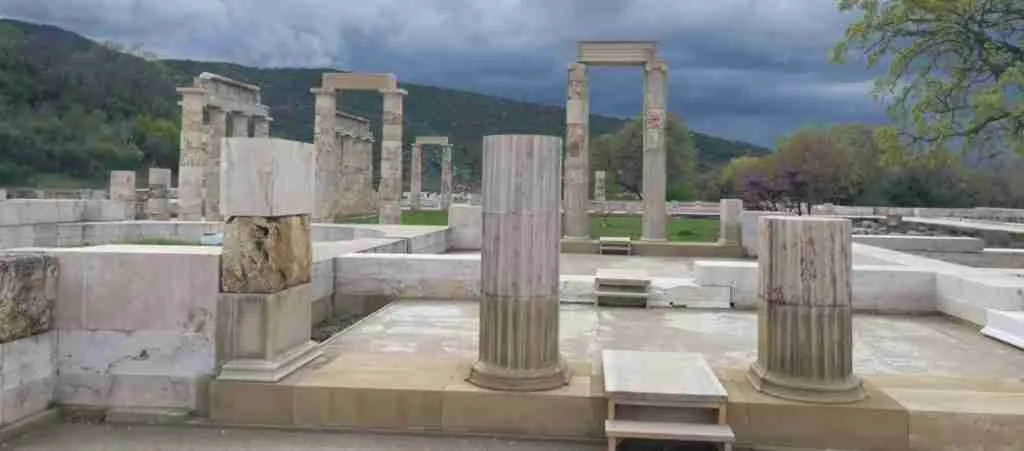
The site’s transformation in 2022 with the opening of the Polycentric Museum of Aigai brought together the underground Museum of the Royal Tombs with a new above-ground Central Museum Building, the Nekropolis, the ancient theatre, the palace complex, and the Church of Saint Demetrius Palatitsion into a single coherent archaeological park. The centrepiece remains the underground Royal Tombs chamber, where visitors descend beneath the Great Tumulus to see the royal tombs of Philip II and other Macedonian royals preserved precisely as archaeologist Manolis Andronikos discovered them in 1977. Philip’s tomb contains a spectacular gold larnax (burial chest) decorated with a sixteen-pointed star and weighing over eleven kilograms, along with gold oak wreaths, armour, ivory miniatures of the royal family, and the remains of the king himself.
The combined Polycentric Museum of Aigai ticket covers all components — Royal Tombs, Central Museum Building, palace, theatre, and nekropolis — and costs €20 for adults, €10 reduced (check the official aigai.gr website for current official rates). The site is approximately 75 kilometres southwest of Thessaloniki, most conveniently reached by private car or organised tour; public buses require a change in Veria.
Archaeological Site of Philippi (2016)
The most recent of Greek Macedonia’s UNESCO inscriptions, the Archaeological Site of Philippi received World Heritage status in 2016 under Criteria (iii) and (vi), recognising its significance as a remarkably complete example of an ancient city spanning multiple civilisations and its direct association with the origins of Christian Europe. The city was founded by Philip II in 356 BC, transformed into a Roman colony following the Battle of Philippi in 42 BC (where the forces of Octavian and Mark Antony defeated Brutus and Cassius), and in 49 or 50 AD received the Apostle Paul, who preached Christianity’s first sermon on European soil here.
The extensive archaeological site outside the modern town of Krinides, near Kavala, preserves a Roman forum, four Early Christian basilicas (the largest of which, Basilica B, is one of the most ambitious Early Christian building projects in the Balkans), a theatre expanded by the Romans, Roman baths, the Via Egnatia road, and the prison where Paul was briefly held. The site’s scale and layering — Greek foundations, Roman expansion, Early Christian proliferation — make it one of the most intellectually compelling ancient sites in Greece. The adjacent Archaeological Museum of Philippi provides essential context. Standard admission costs approximately €8 for adults (check the official etickets.tap.gr portal for current rates under the Greek Ministry of Culture’s new pricing structure). Philippi is approximately 165 kilometres east of Thessaloniki, reached via the E90 motorway.
Mount Athos (1988): The Holy Mountain
Mount Athos — Agion Oros (Holy Mountain) in Greek — occupies the easternmost of the three peninsulas extending from Halkidiki into the Aegean Sea. Inscribed as both a cultural and natural UNESCO World Heritage Site in 1988 under Criteria (i), (ii), (iv), (v), and (vi), it represents the most significant surviving complex of medieval Orthodox Christian monastic culture in the world. Twenty ruling monasteries, twelve sketes (smaller monastic communities), and numerous hermitages house approximately 2,000 monks following the Rule of Saint Basil in an environment that has remained essentially unchanged since the tenth century.
Access to Mount Athos is strictly regulated. Only males over the age of 18 may enter, and Orthodox Christian men receive priority for the diamonitirion (entry permit), which limits daily visitors to ten non-Orthodox and 100 Orthodox males. The permit must be applied for months in advance through the Holy Epistasia of Mount Athos. Women have been prohibited from the peninsula since an Imperial Byzantine edict of 1046, a restriction that remains in force and is part of Mount Athos’s UNESCO designation as a living monastic tradition.
For visitors who cannot enter — including the vast majority of female travellers and many non-Orthodox males — boat trips around the peninsula from Ouranoupoli offer views of the monasteries from the sea. The boats pass close enough to see the dramatic cliffside foundations of Simonopetra, the multi-towered profile of Vatopedi, and the rocky peak of Mount Athos itself (2,033 metres). Day cruises from Ouranoupoli run regularly during the tourist season and cost approximately €20-35 per person.
Thessaloniki’s Top Attractions and Experiences 2026
Archaeological Museum of Thessaloniki 2026
The Archaeological Museum of Thessaloniki houses one of the most important collections in Greece, spanning finds from the entire region of Macedonia from the Neolithic period through late antiquity. Its permanent exhibitions — particularly the “Prehistoric Macedonia” collection and the “Gold of Macedon” galleries — represent extraordinary concentrations of Macedonian royal art and craftsmanship. The gold treasures of the Macedonian kings, the intricate jewellery from Thessaloniki’s ancient cemeteries, and the astonishing collection of Hellenistic mosaics (including the famous “Dionysus on a Panther” mosaic from the House of Dionysus in Pella) give the museum a genuine claim to being one of the finest archaeological museums in Europe.
Located on Manoli Andronikou Street adjacent to the Museum of Byzantine Culture, the museum occupies a striking modern building designed by architect Patroklos Karantinos in 1962. The galleries are well-lit and organised thematically rather than chronologically, making it possible to focus on specific periods or themes. Allow at least two to three hours for a thorough visit. Admission costs €10 for adults (€5 reduced), with free entry for EU citizens under 25 with ID and on free access days including the first and third Sundays of each month from November to March, May 18 (International Museum Day), and October 28 (Greek National Holiday). Opening hours run 9:00-17:00 daily April through October (though some exhibitions extend to 22:00 on the first Thursday of the month in summer); closed Tuesdays from November to March.
Museum of Byzantine Culture 2026
Winner of the Council of Europe Museum Prize in 2005 — the first time a Greek museum received this honour — the Museum of Byzantine Culture sits beside the Archaeological Museum on Leoforos Stratou. Its purpose-built building by architect Kyriakos Krokos houses eleven rooms presenting aspects of Byzantine and post-Byzantine culture through over 2,000 genuine artefacts excavated primarily in Thessaloniki and Macedonia. The collection covers Byzantine daily life, religious practice, funerary traditions, decorative arts, and the monumental architecture of the era with exceptional clarity. The mosaics, icons, and early Christian liturgical objects here provide essential context for understanding the Byzantine monuments scattered across the city.
Admission costs €8 for adults from April 1 to October 31, reducing to €4 from November 1 to March 31 (reduced ticket €4 and €2 respectively; check the official mbp.gr website for current rates, as pricing may reflect updates under the Greek Ministry of Culture’s ongoing reform). Opening hours: April-October 8:00-20:00 daily; November-March 8:30-15:30, closed Tuesdays. The museum is fully accessible for visitors with mobility impairments, includes a café and gift shop, and offers audio guides for €3.
The White Tower and Waterfront Promenade 2026
The White Tower stands as the symbol of Thessaloniki — a cylindrical Ottoman-era tower on the seafront that now houses a permanent exhibition on the history of the city from its founding through the twentieth century. Built between the fifteenth and sixteenth centuries as part of the city’s sea fortifications, the tower served variously as a garrison, a prison (earning the name “Bloody Tower” during the Ottoman period), and a deterrent. In 1912, following the liberation of Thessaloniki during the First Balkan War, the tower was symbolically whitewashed, giving it its current name. The seven-floor exhibition inside combines multimedia installations, artefacts, and a panoramic top-floor terrace with views across the Thermaic Gulf and back over the city. Admission costs €6 for adults; under-18 visitors enter free. Opening hours are approximately 8:30-15:30 on most days except Tuesdays; confirm current times on the official archaeologicalmuseums.gr website before visiting.
The waterfront promenade stretching from the White Tower north towards the Nikis Avenue and east along the coastline is one of Thessaloniki’s great pleasures. The kilometre-long pedestrianised seafront, known as the Nea Paralia (New Waterfront), was redesigned with gardens, sculpture, and cafés following a major renovation. The Alexander the Great equestrian statue at the eastern end of the promenade and the garden areas make this the natural gathering point for Thessaloniki’s residents and visitors at all hours. Sunset from the waterfront looking across the gulf towards the shadow of Mount Olympus on clear evenings is one of the iconic sights of northern Greece.
The Rotunda and Roman Quarter 2026
Thessaloniki’s Roman Quarter, centred on the intersection of Egnatia Street and Dimitriou Gounari, contains the most remarkable concentration of ancient monuments in any functioning European city. The Rotunda (Agios Georgios) is a 30-metre diameter, 30-metre high domed Roman structure built around 306 AD as a mausoleum for the Emperor Galerius. Never used for its intended purpose, it was converted to a Christian church in the fourth century, becoming a mosque under Ottoman rule and then reconverted to a church in the nineteenth century. The interior mosaics, fragmentary but extraordinary, rank among the finest early Christian artworks in existence — gold-ground images of early saints against elaborate architectural backgrounds that anticipate the full development of Byzantine mosaic art. The Rotunda’s interior admission is approximately €4 (verify current pricing at the official portal).
Immediately adjacent, the Arch of Galerius (Kamara) spans Egnatia Street as a commemorative arch built around 298-305 AD. Its carved relief panels, depicting the wars of Galerius against the Sassanid Persians, survive on two of the original four piers and represent some of the most detailed Roman military relief sculpture outside Rome itself. The arch and the Rotunda formed part of the Galerian imperial palace complex; the remains of the audience hall (Octagon) are partially visible in an open-air excavation site nearby. Both the arch and the palace remains are freely accessible as outdoor monuments.
Ano Poli: The Enchanting Upper Town
Ano Poli, Thessaloniki’s walled upper town, occupies the hillside above Egnatia Street behind the city’s Byzantine walls and represents the most atmospheric neighbourhood in Greek Macedonia. The Byzantine Walls, stretching for six kilometres across the northern hills of the city, enclose a neighbourhood of Ottoman-era wooden houses, narrow cobbled lanes, Byzantine churches, and small squares largely unchanged since the nineteenth century. The area survived the devastating 1917 fire that destroyed much of Thessaloniki’s lower city, preserving its Ottoman-era character intact.
Within Ano Poli, the Eptapyrgio (Seven Towers) fortress at the highest point of the walls offers panoramic views over the entire city and Thermaic Gulf; it operated as a prison until 1989 and is now open as a historical site. The Byzantine churches of Osios David (containing a sixth-century mosaic of exceptional quality), Hagios Nikolaos Orfanos (remarkable fourteenth-century frescoes), and the Vlatadon Monastery (the only functioning Byzantine-era monastery within the walls) are all within walking distance of each other. Most charge a nominal entry of €1-3 or are freely open to respectful visitors. The neighbourhood is best explored on foot; the walk from the lower city takes approximately 20-25 minutes, or take city bus to Eptapyrgio.
Markets, Food Halls, and Ladadika 2026
The Modiano Market, a covered food market in the heart of the city built on the site of a former Sephardic Jewish quarter, is one of the great indoor markets of southern Europe. Its butchers, fishmongers, cheese sellers, olive vendors, and spice traders populate a handsome early-twentieth-century hall that also contains some of Thessaloniki’s most atmospheric tavernas. The adjacent Kapani (or Vlali) Market extends the covered market experience into an open-air warren of stalls selling everything from fresh herbs to religious icons. Both markets are free to wander and represent a genuine window into local food culture, busiest on weekend mornings.
Ladadika, the former olive-oil-merchants’ quarter between the port and the city centre, underwent a transformation in the 1990s from a derelict warehouse district to Thessaloniki’s primary nightlife and taverna zone. The low buildings and cobblestone streets preserve the neighbourhood’s industrial character while the ground floors now host an outstanding concentration of restaurants, ouzeries, and bars. Ladadika is best visited for dinner (arriving from 21:00 is the local rhythm) or late-night drinks; it is entirely free to explore and provides an immediate introduction to Thessaloniki’s legendary food scene.
Day Trips from Thessaloniki 2026
Vergina: Royal Tombs of Macedonia 2026
The day trip to Vergina (ancient Aigai) is the single most important excursion available from Thessaloniki, combining a UNESCO World Heritage Site with one of the greatest archaeological discoveries of the twentieth century. The 75-kilometre drive southwest from Thessaloniki takes approximately one hour by car; the underground Museum of the Royal Tombs deserves at least two to three hours, and the full Polycentric Museum park requires the better part of a day.
The combined Polycentric Museum of Aigai ticket costs €20 for adults, €10 reduced (current official price from aigai.gr; verify before visiting as pricing changes apply). The site opens at 8:00 from April through October (Tuesday from 12:00 only); winter hours are Wednesday-Monday 9:00-17:00 with Tuesday closed. Organised day tours from Thessaloniki to Vergina and Pella run approximately €55-70 per person including transport and entry fees, representing good value if you prefer not to drive. Without a car, take the KTEL bus from Thessaloniki to Veria (1 hour, ~€6) and a local Veria-to-Vergina connection (ask at the Veria bus station for current schedules, approximately 20 minutes and €2-3).
Pella: Birthplace of Alexander the Great 2026
Pella, 40 kilometres west of Thessaloniki, was the capital of the Macedonian Kingdom and the birthplace of Alexander the Great. The ancient city, destroyed by the Romans in 168 BC and never substantially rebuilt, preserves one of the most extensive in-situ mosaic floors surviving from antiquity — extraordinary pebble mosaics of mythological scenes, hunting parties, and the abduction of Helen, created around 300 BC with breathtaking skill. The adjacent Pella Museum houses further mosaics, sculpture, and Macedonian everyday objects excavated from the city.
Pella is easily reached by car in 30-40 minutes from Thessaloniki via the E86 motorway, or by KTEL bus with direct services running approximately hourly from the Makedonia Bus Station. Admission to both the archaeological site and museum costs approximately €8 (verify at etickets.tap.gr for current official rate). Combined day trips to both Pella and Vergina by organised tour from Thessaloniki are widely available and cost approximately €55-70 per person including transport.
Philippi and Kavala Day Trip 2026
The combination of Philippi and Kavala makes for one of the most historically and scenically rewarding full-day excursions from Thessaloniki. The 165-kilometre drive east via the E90 motorway takes approximately two hours; public buses connect Thessaloniki to Kavala in approximately two hours (€15-18), with Philippi 15 kilometres further by local bus or taxi.
Kavala itself is worth an hour or two: a beautiful port city built on a hillside above a natural harbour, with an intact Byzantine aqueduct (the Kamares) spanning the lower town, a well-preserved Byzantine castle (Acropolis of Kavala) above the harbour, and the atmospheric old quarter (Panagia) whose narrow streets tumble down to the sea around the former residence of Mehmet Ali, founder of modern Egypt, who was born here in 1769. The Archaeological Museum of Kavala complements the Philippi site with additional finds from the region. From Kavala, afternoon return to Thessaloniki allows arrival in time for dinner.
Halkidiki Peninsula 2026
Halkidiki is Greek Macedonia’s Riviera — a triple-fingered peninsula extending south from the mainland into the Aegean, offering some of the finest beaches in the Mediterranean within 60-80 kilometres of Thessaloniki. The first peninsula (Kassandra) and second peninsula (Sithonia) are the most accessible for beach tourism; the third (Athos) is largely occupied by the autonomous monastic territory.
Kassandra, the westernmost and most developed finger, hosts the largest resort infrastructure with long sandy beaches at Hanioti, Sani, and Nea Fokaia. Sithonia, more rugged and wooded, offers calmer coves including Vourvourou and Kavourotrypes (Blue Lagoon). The beaches of Sithonia in particular rank among the finest in Greece — clear turquoise water, pine trees reaching to the sand, and a more bohemian atmosphere than the package-resort character of Kassandra.
Day trips to Halkidiki from Thessaloniki are possible but limiting; the distance means arriving mid-morning and departing mid-afternoon. Overnight stays unlock the early morning and evening calm that makes the peninsula so special. KTEL Halkidiki buses depart from the dedicated Halkidiki Bus Terminal in Thessaloniki; fares range from €6 (Kassandra beaches) to €14 (Sithonia). In summer, services run every one to two hours to major resort towns.
Edessa Waterfalls and Mount Olympus
Edessa, 90 kilometres west of Thessaloniki via the E90 motorway, is a small town famous for its spectacular waterfalls — the largest in Greece — which tumble off a 70-metre cliff in multiple cascades, filling the valleys below with mist and the sound of rushing water. The waterfall park (Parko Karatadon) is freely accessible; a network of pathways, bridges, and tunnels allows close approach to the falls. The town itself is pleasant for lunch, and the surrounding highlands are known for peach orchards and apple production. The round trip by car from Thessaloniki takes approximately four hours including two hours at the waterfalls.
Mount Olympus, home of the Olympian gods in Greek mythology and at 2,917 metres the highest peak in Greece, lies approximately 95 kilometres south of Thessaloniki in the Pieria regional unit of Central Macedonia. The mountain is a national park and a UNESCO Biosphere Reserve (distinct from World Heritage status), with a network of hiking trails, mountain refuges, and the gateway town of Litochoro at its base. The trailhead for the most popular ascent route to the summit (Mytikas peak) is reached from Litochoro. Trains connect Thessaloniki to Katerini (one hour, ~€8-10 by KTEL bus) and local taxis reach Litochoro in 20 minutes from Katerini.
Greek Macedonia’s Regions Beyond Thessaloniki
Central Macedonia: Veria, Naoussa, and Wine Country
The region immediately southwest of Thessaloniki contains a concentration of historical and agricultural interest that rewards a day or two of exploration. Veria (ancient Beroea), 75 kilometres from Thessaloniki, is a historic town with an excellent Archaeological Museum and Byzantine Museum, a well-preserved old Jewish quarter (Barbouta), and the Bema of Saint Paul — a raised outdoor monument marking the spot where the Apostle Paul preached to the Bereans in approximately 50 AD. The Bema, with its striking mosaic depicting the scene, is freely accessible in a small park near the town centre.
Naoussa, 15 kilometres north of Veria in the foothills of the Vermio mountains, is the heart of Greek Macedonia’s wine region. The Xinomavro grape — grown in the thin soils around Naoussa at altitudes of 250-350 metres — produces wines of remarkable depth and ageing potential that have earned Naoussa a designation as one of Greece’s premier OPAP (Protected Designation of Origin) wine regions. Major estates including Boutari, Kir-Yianni, Thymiopoulos, and Alpha Estate all operate visitor facilities with tastings and cellar tours. Wine tourism has developed considerably in the past decade, and Naoussa’s combination of small-town architecture, mountain scenery, and serious wine culture makes it one of the most distinctive destinations in northern Greece. Budget €25-50 per person for tastings and a winery tour.
West Macedonia: Kastoria and the Mountain Lakes
Kastoria, 235 kilometres west of Thessaloniki in the mountains near the Albanian border, occupies a dramatic peninsula extending into a natural lake (Orestiada Lake) and preserves one of the most extraordinary concentrations of Byzantine churches in Greece — over fifty Byzantine and post-Byzantine churches dating from the ninth to the eighteenth centuries are scattered through the town and its immediate surroundings. Kastoria is also known as the fur trade capital of Greece and the Balkans; the fur industry’s long history has left the town with an unusual prosperity reflected in its merchant mansions (archontika) and elaborate church decoration.
Florina, further north near the North Macedonian border, is a small city serving as gateway to the mountain villages of the Prespa Lakes region — a remarkable wetland landscape shared between Greece, North Macedonia, and Albania that shelters Dalmatian pelicans and rare wetland birds. The Greek portion of the Prespa Lakes constitutes a national park and Natura 2000 site.
Eastern Macedonia: Kavala, Drama, and Thassos
The eastern extension of Greek Macedonia blurs into Eastern Macedonia and Thrace administratively, but Kavala and Drama fall within the cultural and logistical sphere of Thessaloniki-based travel. Drama is a pleasant city surrounded by the Xanthi tobacco-growing region, known for its carnival celebrations and the spectacular Aggitis Cave (Maara), one of the largest and most impressive cave systems in Greece with a navigable underground river. Thassos, an island just offshore from Kavala, offers excellent beaches, ancient Greek remains, and local honey and olive oil production; ferries from Keramoti (30 minutes from Kavala) run continuously and take 35 minutes to Prinos harbour. Thassos is the closest Aegean island to the mainland of Greek Macedonia.
Where to Stay in Greek Macedonia 2026
Thessaloniki’s Best Neighbourhoods for Visitors 2026
The waterfront and Aristotelous area — roughly corresponding to the blocks between Aristotelous Square, Tsimiski Street, and the seafront — is the most convenient neighbourhood for first-time visitors. Hotels here provide immediate walkable access to the White Tower, the Byzantine monuments of the lower city, and the main restaurant and café streets. This is also the most expensive area; mid-range hotels in prime waterfront positions command premium rates.
The Ladadika and Rotonda area, roughly between Egnatia Street and the port, offers proximity to the Roman Quarter monuments, the nightlife district, and the covered markets, at slightly lower prices than the waterfront strip. The Ano Poli neighbourhood suits travellers seeking authentic local atmosphere; the upper town has limited accommodation but what exists is characterful, and the neighbourhood gives easy access to the Byzantine walls and hilltop viewpoints. The university area (Aristotle University campus) has numerous affordable guesthouses and small hotels catering to a young, academic demographic.
Budget Accommodation in Thessaloniki 2026
Budget accommodation in Thessaloniki ranges from hostel dormitories to modest en-suite hotels. Hostel dorm beds cost €18-28 per night in well-located properties; the Zeus is Loose Hostel on Klisouras Street near the Rotunda and the Ippodromiou Hostel are consistently well-reviewed for central location and social atmosphere. Budget hotels — two-star or unclassified properties — charge €45-75 per room per night for a double; the Vergina Hotel near the railway station and the Orestias Kastorias Hotel offer good value without frills. At the lower end of budget hotels, per-person costs for two sharing work out to €22-38 per person per night.
Mid-Range Hotels in Thessaloniki 2026
Thessaloniki’s mid-range hotel market is well-developed, with a range of three-star properties and boutique hotels offering comfortable rooms, breakfast, and central locations for €80-130 per room per night in most of the year, rising to €130-180 in peak summer. The City Hotel on Komninon Street, the Colors Urban Hotel on Tsimiski Street, and the Antigon Urban Chic Hotel near Aristotelous Square represent reliable mid-range choices with good reviews and locations. For travellers wanting boutique character, properties in converted townhouses in the Rotunda area and near Ano Poli offer more personality at similar price points. At mid-range prices, two people sharing pay approximately €40-65 per person per night for accommodation.
Luxury Hotels in Thessaloniki 2026
Thessaloniki’s luxury hotel scene centres on the seafront. The Electra Palace on Aristotelous Square, a five-star property with a rooftop pool overlooking the bay and Mt Olympus, charges approximately €160-260 per room in peak season and represents the benchmark of the city’s luxury market. The Daios Luxury Living Thessaloniki, a design hotel on the waterfront, and the Makedonia Palace at the eastern end of the seafront (a classic five-star property with conference facilities) complete the top tier. Luxury rooms for two sharing cost €90-150 per person per night at these properties. For stays coinciding with the Thessaloniki International Film Festival (October-November) or the Thessaloniki International Trade Fair (September), booking three to four months ahead is essential; prices during these periods spike dramatically.
Accommodation Outside Thessaloniki 2026
Halkidiki’s accommodation ranges from large all-inclusive resorts (Sani Resort and Eagles Palace represent the luxury tier, charging €250-450 per room in peak season) to small family guesthouses on Sithonia charging €50-90 per room. The resorts on Kassandra’s coast are heavily booked in July-August; Sithonia is better for independent travellers seeking smaller-scale accommodation. Kavala has excellent mid-range hotels in the old town starting from €60-80 per room. In mountain destinations like Kastoria and Naoussa, traditional guesthouses (xenones) provide the most characterful accommodation, at €50-90 per room with breakfast.
Food and Dining in Greek Macedonia 2026
Thessaloniki’s Legendary Food Scene
Thessaloniki’s claim to be the culinary capital of Greece is not tourist marketing — it reflects a genuine and widely acknowledged reality among Greeks themselves. The city’s food culture draws on a uniquely rich history: the Sephardic Jewish community that dominated Thessaloniki for four centuries until the Second World War; the mass influx of Anatolian Greek refugees in 1922 bringing Central Anatolian cooking traditions; the Ottoman meze culture of the Levant; and the agricultural abundance of Central Macedonia’s plains. The result is a food scene of extraordinary variety and quality, centred on shared meze dining, charcoal-grilled meats, and an obsessive relationship with certain local specialities.
Must-Try Greek Macedonian Dishes and Street Food
Bougatsa is the quintessential Thessaloniki breakfast: warm flaky pastry filled with semolina cream custard or fresh cheese, dusted with icing sugar and cinnamon, served in squares wrapped in paper. The city’s bougatsa shops open from early morning; Bougatsa Bantis (opened 1910) and Bougatsa Giannis near the Modiano Market are institutions. Budget €3-5 for a generous portion. Trigona Panoramatos — triangular puff pastry cones filled with cream — were invented at the Café-Patisserie Trigona in the Panorama suburb above the city; the original charges approximately €2.50 per piece.
The Thessaloniki souvlaki differs from its Athenian counterpart in using larger, more heavily spiced skewers of pork or chicken. Kalamaki (the skewer without bread), served with a portion of french fries, costs approximately €1.80-2.50 per stick at street kiosks. Pastourma — heavily spiced cured beef with a distinctive aroma from the fenugreek coating — is a specialty of Greek Macedonian butchers and appears in sandwiches, eggs, and pasta. Loukoumades (deep-fried honey doughnuts) from street vendors near the markets cost approximately €3 for a generous portion. Thessaloniki’s meze culture centres on ouzeries and tavernas serving small plates of grilled octopus, fried courgette, white bean soup (fasolada), and various Greek salads alongside ouzo or tsipouro (Greek grappa).
Restaurants by Budget in Thessaloniki 2026
Budget dining in Thessaloniki: gyros and souvlaki wraps from street kiosks cost €2.50-3.50; a complete lunch at a simple taverna or working-class estiatorio (fixed-price lunch place) costs €8-14 including a dish, bread, and wine or beer. The market area around Kapani and Modiano has numerous affordable ouzeries where €15-20 per person covers multiple meze plates and drinks. Budget dinner at a basic but good taverna runs €10-18 per person including one drink.
Mid-range dining: Thessaloniki’s mainstream restaurant scene centres on the Ladadika district, the streets off Nikis Avenue along the waterfront, and the Aristotelous Square area. A full dinner with wine at a mid-range taverna or restaurant — two or three courses, shared meze, a carafe of house wine — costs approximately €22-35 per person. Well-regarded mid-range options include Mam (contemporary Greek cuisine near the Rotunda), Zythos (excellent seafood meze in Ladadika), and the Ouzeri Aristotelous for traditional Thessaloniki meze.
Fine dining: Thessaloniki’s top restaurants — Nea Folia, Manos, and the hotel restaurants at the Electra Palace and Makedonia Palace — charge approximately €45-80 per person for a full dinner with wine. The rooftop restaurant at the Daios Luxury Living offers spectacular views with prices to match.
Wine, Beer, and Nightlife 2026
Greek Macedonia produces some of the most interesting wine in the country, with Naoussa’s Xinomavro at the prestigious end and affordable house wines from Imathia and Pieria served in tavernas throughout the region. A half-litre carafe of house wine in a Thessaloniki taverna costs €5-8; bottles of quality local wine start from €12-15 in restaurants, considerably cheaper than comparable quality in Western European cities. Macedonian craft beer has developed rapidly since 2018, with local breweries including Bitter and the Thessaloniki Craft Beer Bar near Aristotelous Square.
Thessaloniki’s nightlife is serious. The city has the highest density of bars and cafés per capita in Greece, and a genuine late-night culture. The Ladadika district hosts the highest concentration of bars and tavernas in a compact walkable area; Valaoritou Street and the area near the Rotunda have a more craft-cocktail-oriented atmosphere; Mylos (a converted mill complex) hosts concerts and club nights in a large cultural space on the western waterfront. Greeks eat late (dinner from 21:00-22:00 is standard) and socialise until well past midnight; bar culture peaks between midnight and 04:00 on weekends.
Complete Budget Breakdown for Greek Macedonia 2026
Budget Daily Costs 2026
Budget travellers in Greek Macedonia — staying in hostel dormitories or the cheapest double hotels, eating gyros and market meals, and using public transport — spend approximately €50-90 per person daily, assuming two people sharing a budget hotel room (accommodation cost split equally between two).
- Accommodation: €22-35 per person (two sharing budget hotel €45-70/night)
- Meals: €22-38 (bakery breakfast €3-5, gyros lunch €6-10, taverna dinner €10-18, coffee/snack €3-5)
- Transport: €2-5 (day pass €2.50 or 2-3 metro/bus rides)
- Attractions: €5-10 (mix of free sites and one paid museum)
- Total: approximately €50-90 per person daily
A week in Greek Macedonia at budget level costs approximately €350-630 per person, covering seven nights’ accommodation, all meals, transport, and attraction entry. This assumes disciplined eating (street food and simple tavernas), use of public transport exclusively, and prioritising free sites. The substantial free attractions — the Byzantine walls, Ano Poli, the waterfront, the Arch of Galerius, multiple Byzantine churches — make budget travel in Thessaloniki particularly manageable.
Mid-Range Daily Costs 2026
Mid-range travellers — staying in three-star hotels, eating at proper tavernas for lunch and dinner, and making day trips — spend approximately €110-180 per person daily, assuming two sharing a mid-range hotel (accommodation cost split equally between two).
- Accommodation: €40-65 per person (two sharing mid-range hotel €80-130/night)
- Meals: €45-73 (café breakfast €6-10, restaurant lunch €12-20, taverna dinner €22-35, coffee/drinks €5-8)
- Transport: €8-15 (city transport plus occasional taxi or bus to day-trip destination)
- Attractions: €15-28 (two or three museums, one tour or day-trip entry)
- Total: approximately €110-180 per person daily
A seven-day mid-range Greek Macedonia trip costs approximately €770-1,260 per person. This covers comfortable hotels throughout, restaurant meals at all three daily sittings, all major museum admissions (Archaeological Museum €10, Museum of Byzantine Culture €8, Vergina €20, White Tower €6), and intercity transport to two or three day-trip destinations.
Luxury Daily Costs 2026
Luxury travellers — in four- or five-star hotels, with fine dining, private guides, and premium tours — spend approximately €240-415 per person daily, assuming two sharing a luxury hotel (accommodation cost split equally between two).
- Accommodation: €90-150 per person (two sharing luxury hotel €180-300/night)
- Meals: €95-157 (hotel breakfast €15-22, upscale lunch €25-40, fine dining dinner €45-80, drinks €10-15)
- Transport: €20-40 (taxis and private transfers)
- Attractions: €35-70 (private guides, premium tours, all major sites)
- Total: approximately €240-415 per person daily
A seven-day luxury Greek Macedonia trip costs approximately €1,680-2,905 per person, placing it at or below comparable luxury cultural itineraries in Italy, France, or Spain — a significant argument for Greek Macedonia’s value proposition even at the top end.
Sample 7-Day Budget: Mid-Range Itinerary 2026
A worked example for two people sharing throughout, mid-range style, illustrating how costs accumulate across a week-long visit.
- 7 nights in a mid-range Thessaloniki hotel: approximately €560-910 total (€80-130/night × 7)
- Per-person accommodation share: €280-455
- Meals over 7 days: approximately €315-510 per person (7 × €45-73)
- Transport (metro/bus daily + 3 intercity excursions to Vergina, Pella/Halkidiki, Kavala): approximately €80-120 per person
- Attractions (Vergina €20, Archaeological Museum €10, Byzantine Museum €8, White Tower €6, Philippi €8, additional sites): approximately €75-100 per person
- Seven-day mid-range total: approximately €750-1,185 per person
Figures shown per person; accommodation figures use shared-room calculation. Rounding applied to nearest €5. Budget for additional shopping, incidental coffees, and evenings out adds €100-200 per person over a week for most visitors.
Money-Saving Strategies for Greek Macedonia 2026
Free Attractions and Museum Discounts 2026
Greek Macedonia’s free attractions are genuinely excellent. The Byzantine Walls and towers, the Arch of Galerius, the Kamara monument, Ano Poli’s lanes, the New Waterfront, Hagios Demetrios Basilica (one of the UNESCO properties), and most Byzantine churches in the upper town cost nothing to visit. The total content available for free in Thessaloniki amounts to several full days of walking, exploring, and genuine historical engagement.
The Archaeological Museum of Thessaloniki and Museum of Byzantine Culture both offer free entry on the first and third Sundays of each month between November 1 and March 31, as well as on May 18 (International Museum Day), September’s last weekend (European Cultural Heritage Days), and October 28 (Greek National Holiday). Planning a winter visit around these free days can eliminate €20-30 per person in museum costs. EU citizens under 25 receive free entry to all Greek state museums and archaeological sites on production of an EU ID card — a major saving for younger travellers.
Eating Well on a Budget in 2026
The single most effective food strategy in Thessaloniki is to eat like a local. The city’s kiosks and bakeries sell koulouria (sesame-encrusted bread rings) for €0.30-0.50 — the classic Thessaloniki breakfast eaten on the move. Gyros wraps at street kiosks, particularly those on Egnatia Street and in the university area, cost €2.50-3.50 for a generous portion and represent some of the best-value eating in Greece. The covered markets (Kapani, Modiano) and their surrounding streets concentrate a cluster of simple but excellent ouzeries where a satisfying lunch with wine costs €10-15 per person. Many tavernas offer a fixed-price daily lunch menu (menú or diastasi) for €10-14 including a main dish, bread, and a drink — a structure identical to the French plat du jour and equally good value.
Smart Transport Choices 2026
The €2.50 day pass covering unlimited metro and city bus travel represents outstanding value for any day involving three or more rides. For day trips, KTEL buses are substantially cheaper than organised tours: the Thessaloniki-Vergina public bus journey costs approximately €9-10 in total (bus to Veria plus local connection), compared to €55-70 for an organised day tour. Car rental shared between two to four people makes previously inaccessible destinations (Edessa, Kastoria, Prespa Lakes) cost-effective; a shared rental car for a day trip can work out cheaper than two organised tour tickets while providing complete flexibility.
The airport bus (€2) versus taxi (€25) is a clear budget decision for independent travellers. The 45-50 minute journey on the 01X/01N bus delivers a substantial saving for little practical inconvenience, particularly if arriving with manageable luggage during daylight hours.
Booking Strategy and Seasonal Savings 2026
Greek Macedonia’s shoulder seasons — April through June and September through October — offer the best combination of good weather, full site openings, and prices 20-35 percent below July-August peaks. Hotel rates in Thessaloniki in June run approximately €70-110 per room for mid-range properties versus €100-150 in August for comparable rooms. Halkidiki beach accommodation in September costs 40-50 percent less than peak July rates while offering warm sea temperatures (24-26°C through early October) and dramatically reduced crowds.
The Thessaloniki International Trade Fair runs in early September and the Thessaloniki International Film Festival in October-November; both events fill the city’s hotels and drive prices to their annual peaks. Travellers can exploit these events for vibrant cultural programming or avoid them for better prices — a conscious decision worth making at the booking stage, which should be three to four months ahead for these dates.
For InterCity train tickets from Athens, the €20-25 advance fare represents a saving of €20-25 over the walk-up price. Booking 45-60 days ahead on hellenictrain.gr secures the best availability. Flight prices between Athens and Thessaloniki follow standard budget airline patterns; booking 6-8 weeks ahead on non-holiday weekdays delivers fares of €35-55 one way.
Best Time to Visit Greek Macedonia 2026: Seasonal Guide
Spring 2026 (April-June)
April through June represents the ideal time to visit Greek Macedonia for most travellers. Temperatures in Thessaloniki range from 14-22°C in April, rising to 18-28°C by June; the weather is reliably warm and dry with occasional rain, the landscapes are green and wildflower-rich, and the Halkidiki sea temperature reaches around 20°C by June — cool but swimmable. All sites and museums operate on full summer hours; the Naoussa vineyards are at their most lushly green in April and May before summer heat arrives. April and May see almost no tourist crowds in the city’s museums and sites compared to high summer. School holiday periods (Greek Orthodox Easter, which falls between April and May, and European school half-terms) create brief busy spells, but the overall atmosphere is relaxed.
Greek Orthodox Easter deserves special mention for visitors interested in cultural experience. The Holy Week processions and midnight Anastasi (Resurrection) services in Thessaloniki’s churches — particularly Hagios Demetrios and the cathedral of Agios Grigorios Palamas — are extraordinarily atmospheric. The Epitafios (Good Friday procession) through the streets of the city is one of the most beautiful religious ceremonies in Orthodox Christianity. Note that museums observe modified hours around Easter and some sites close on Easter Sunday.
Summer 2026 (July-August)
July and August are peak season for Halkidiki beach tourism and the busiest period in Thessaloniki. The city itself is genuinely hot — daily maxima regularly exceed 34-38°C in July, and the urban heat island effect makes the lower city uncomfortable for extended afternoon walking. Cultural sites are fully operational and highly visited; the Archaeological Museum and White Tower see their longest queues of the year. Accommodation prices peak, particularly on weekends and around the Greek national holiday of August 15 (Dormition of the Virgin), when domestic tourism is at its annual maximum and Thessaloniki’s hotels fill completely.
Despite the heat, summer has genuine attractions: the long days allow late evening exploration when temperatures become pleasant again; outdoor concerts and cultural events fill Thessaloniki’s calendar; the sea in Halkidiki reaches 26-28°C; and the summer social scene in the city’s waterfront bars and Ladadika restaurants is at its most vibrant. Travellers focused primarily on Halkidiki beaches for whom high temperatures are an attraction rather than a deterrent will find July-August optimal for that specific purpose.
Autumn 2026 (September-October)
September and early October match spring as the best overall visiting period. Sea temperatures remain warm (24-26°C through September, dropping to 20-22°C in October), inland temperatures are pleasant at 18-26°C, the grape harvest transforms Naoussa and Imathia into aromatic wine-country landscapes, and the crowds of August have dispersed. The Thessaloniki International Trade Fair in September (held in the first two weeks of September) and the Thessaloniki International Film Festival in October-November bring cultural energy to the city. Halkidiki beaches are at their most peaceful and photogenic in September: empty coves, warm clear water, and none of the summer-season noise.
Winter 2026 (November-March)
Winter in Thessaloniki is cool and sometimes wet — temperatures range from 4-12°C December through February — but rarely extreme. Snow falls occasionally in the city and more reliably in the highlands of West Macedonia, where ski resorts at Seli (near Naoussa) and Pisoderi (Florina) operate between December and March with ski passes from approximately €25-35 per day. Thessaloniki in winter is a genuine local-life experience: the museums are quiet and explorable without crowds; the tavernas are full of Greek families and students; the bougatsa shops and covered markets operate at their best in cool weather; and prices across the board run 25-40 percent below summer levels. The Thessaloniki International Film Festival (October-November, straddling the seasons) is one of the premier film events in the Balkans and draws a sophisticated international audience. Winter museum closures apply on some Tuesdays (AMTH, Museum of Byzantine Culture); verify hours before planning.
Practical Travel Tips for Greek Macedonia 2026
Visas and Entry Requirements 2026
Greece is a member of the EU Schengen Area. Citizens of EU and EEA member states require only a national identity card or passport and face no immigration formalities. Most non-EU Western Passport holders (US, Canada, Australia, UK, Japan) enter Greece without a visa for stays of up to 90 days within any 180-day period. UK citizens post-Brexit fall under this 90-day rule; it is no longer possible to move freely between the UK and Greece on an indefinite basis. Citizens of many other countries require a Schengen visa obtained in advance from a Greek consulate. Check the Hellenic Ministry of Foreign Affairs website (mfa.gr) for the current visa requirements applicable to your nationality.
Language and Communication
Greek is the official language, written in the Greek alphabet. In Thessaloniki and throughout tourist-facing Greek Macedonia, English is widely spoken in hotels, restaurants, museums, and at major attractions — the level of English proficiency among younger Greeks is high. English is less reliably spoken by older residents and in rural areas; learning a handful of Greek phrases (please: parakalo, thank you: efharisto, excuse me: sygnomi) generates substantial goodwill. Most menus in tourist-oriented restaurants are bilingual, and Google Translate handles modern Greek well for navigation and signs. The emergency number throughout Greece is 112.
Currency, Banking, and Tipping in Greece 2026
Greece uses the euro (EUR). ATMs are widely distributed throughout Thessaloniki and in most towns across Greek Macedonia; Euronet and domestic bank ATMs at major supermarkets and shopping centres charge lower fees than tourist-area ATMs. Card payment is widely accepted in hotels, restaurants, and most shops; contactless payment via phone or card is standard at urban businesses. Cash remains useful for smaller tavernas, market stalls, rural destinations, taxis (some drivers still prefer cash), and church and monastery entry.
Tipping in Greece is genuinely optional rather than socially obligatory as in the US. In restaurants, rounding up the bill or leaving 5-10 percent for good service is the local norm; leaving nothing after a meal is entirely acceptable without social penalty. Taxi drivers do not expect tips; rounding up the fare is common courtesy. Hotel housekeeping tips of €1-2 per night are appreciated but not expected.
Safety and Health 2026
Thessaloniki and Greek Macedonia are safe destinations for all travellers. The level of violent crime is low; the main risks are petty theft (pickpocketing in crowded areas around the market and during the White Tower busiest hours) and motorbike theft, which affects locals more than tourists. Solo female travellers report positive experiences throughout the region. The standard EU emergency number 112 connects to police, ambulance, and fire services. Greece’s public healthcare system is available to EU citizens with a European Health Insurance Card (EHIC); non-EU visitors should carry adequate travel health insurance. Pharmacies are abundant and can advise on and supply many medications that require prescription in other countries.
Internet and SIM Cards 2026
Free Wi-Fi is available in virtually all accommodation, most cafés and restaurants, and at Thessaloniki airport. For mobile data coverage during travel across Greek Macedonia — particularly essential for navigation between day-trip destinations — a Greek SIM card provides the most economical solution. Cosmote, Vodafone Greece, and Wind are the three main operators with good coverage in cities and on major roads; mountain and remote areas have spottier signal. Tourist SIM cards with 15-30GB of data plus calling allowances are available from airport kiosks and telephone shops throughout Thessaloniki for approximately €15-25. EU citizens travelling on a domestic EU SIM card do not pay roaming charges in Greece under EU roaming regulations.
Frequently Asked Questions About Greek Macedonia 2026
Is Greek Macedonia worth visiting beyond Thessaloniki?
Greek Macedonia beyond Thessaloniki offers a range of experiences that justify dedicated time: the Vergina royal tombs represent one of the most significant archaeological sites in the world; the Halkidiki beaches rival the Aegean islands; Naoussa wine country delivers world-class wine tourism; and the mountain town of Kastoria possesses a concentration of Byzantine churches unmatched in Greece outside Mystras. A Thessaloniki-only visit leaves the region’s depth unexplored; even two or three day trips substantially enrich the experience.
How does Greek Macedonia compare in cost to Athens or the Greek Islands?
Greek Macedonia is consistently more affordable than Athens for hotels and dining, and dramatically cheaper than the premium Aegean islands (Santorini, Mykonos, Rhodes in high season). Mid-range hotel rooms in Thessaloniki cost €80-130 per night, compared to €150-250 in central Athens and €250-500 on Santorini in summer. Restaurant meals are 15-25 percent cheaper than equivalent quality in Athens. The region combines UNESCO-level cultural depth with affordability that is genuinely unusual among Mediterranean destinations of comparable historical significance.
Can I visit Greek Macedonia without a car?
Thessaloniki itself is entirely manageable without a car — the metro, city buses, and walkability cover all major attractions. Day trips to Vergina require a car or organised tour (no direct bus); Pella and Kavala/Philippi are accessible by KTEL bus with minor effort. Halkidiki is reachable by bus from the dedicated Halkidiki terminal. A car becomes most valuable for combining multiple day-trip destinations in a single day, accessing mountain towns in West Macedonia, and reaching the more remote beaches of Sithonia. Five to seven days in Greek Macedonia with selective car rental (two or three days for day trips) represents the optimal balance.
What is the best way to experience Thessaloniki’s food scene in 2026?
Start mornings at a bougatsa shop (Bougatsa Bantis near Egnatia Street is the classic choice), followed by an afternoon coffee in one of the city’s legendary café-patisseries. Lunch in the covered market area around Modiano or Kapani at an ouzerie introduces the shared-plate meze culture at its most authentic. Dinner starts late by any non-Greek standard; arriving at a Ladadika taverna before 21:00 finds tables empty. Order multiple meze dishes to share, including the house grilled octopus, a local cheese plate, whatever fresh fish is available, and the inevitable Greek salad. For dedicated food exploration, the Sunday morning market at Modiano and the Bazaar area on Aristotelous Street provide the most concentrated food-culture experience available in Greek Macedonia.
Are EU citizens under 25 really free at Greek museums?
Yes. EU citizens (and EEA citizens) aged 24 and under are entitled to free admission at all Greek state museums and archaeological sites managed by the Ministry of Culture, including the Archaeological Museum of Thessaloniki, the Museum of Byzantine Culture, the White Tower exhibition, the Vergina Polycentric Museum, and Philippi. Proof of EU nationality (a national ID card or passport clearly showing date of birth and EU citizenship) is required; the benefit is not available to non-EU students regardless of where they study. This represents a significant financial benefit for younger travellers — Vergina alone would otherwise cost €20 per person.
How do I get to Mount Athos in 2026?
Access to Mount Athos requires advance planning and is restricted to male visitors only. Orthodox Christian men apply for a diamonitirion (permit) through the Pilgrim Bureau of Mount Athos in Thessaloniki (Egnatia 109; open Monday-Friday). Non-Orthodox males apply through the Ministry of Foreign Affairs website (mfa.gr). Daily visitor numbers are strictly limited: 10 non-Orthodox and 100 Orthodox visitors per day. Permits for peak seasons require booking months in advance; winter visits are considerably more accessible. Once permits are secured, visitors take the ferry from Ouranoupoli (approximately 90 kilometres east of Thessaloniki, reached by KTEL bus) to Dafni port on Athos.
What Greek food should I absolutely try in Thessaloniki?
The essential Thessaloniki food checklist: bougatsa (warm custard or cheese pastry) for breakfast; trigona (cream-filled triangular pastries) from Panorama; souvlaki kalamaki for a street meal; pastourma omelette at a market taverna; octopus with ouzo at an ouzerie in Ladadika; fresh meze plates at a Sunday lunchtime gathering; and whatever whole fish the daily catch offers at a seafront psarotaverna. Thessaloniki’s coffee culture is exceptional even by Greek standards; the city claims to have invented the frappe (iced instant coffee) at the Thessaloniki International Trade Fair in 1957, and Freddo espresso (cold espresso on ice) in every permutation is consumed in industrial quantities year-round.
Is Thessaloniki crowded with tourists in 2026?
Compared to Athens, Santorini, or Mykonos, Thessaloniki remains refreshingly uncrowded by over-tourism standards. The city receives approximately 1.5-2 million tourist arrivals annually — substantial but not the overwhelming numbers that have transformed the Greek islands. Outside July-August, the major museums rarely generate queues, Byzantine churches can be visited in near-solitude, and the waterfront maintains its local character. The past five years have seen rapid growth in cultural tourism to Thessaloniki, and the city is increasingly recognised internationally; the uncrowded advantage is real in 2026 but may not remain indefinitely.
What are the hidden gem destinations in Greek Macedonia?
Beyond the well-known sites, several destinations reward adventurous travellers. The village of Kastoria is startlingly unknown outside Greece given its extraordinary concentration of over fifty Byzantine churches. Naousa’s wine estates, particularly Thymiopoulos Vineyards and Alpha Estate, produce wines that compete with the best of Burgundy and Barossa at a fraction of the price. The Prespa Lakes in Florina prefecture — a remote wetland sanctuary shared between three countries and home to Dalmatian pelicans — is one of Europe’s least-visited major nature reserves. The Aggitis Cave near Drama is one of the most spectacular accessible cave systems in the Balkans. The beach coves of eastern Sithonia (Halkidiki) — Kavourotrypes, Karidi, Lagomandra — regularly feature in lists of the most beautiful beaches in the Mediterranean but remain unknown to most Western European visitors.
What is the best itinerary for 7 days in Greek Macedonia in 2026?
A strong seven-day itinerary: Day 1, arrive Thessaloniki, waterfront orientation and Ladadika dinner. Day 2, Archaeological Museum and Museum of Byzantine Culture, afternoon Ano Poli and Byzantine Walls. Day 3, Rotunda, Arch of Galerius, Hagios Demetrios, Modiano Market, Kapani — a full Byzantine city day. Day 4, full day Vergina (Polycentric Museum). Day 5, Pella morning, Naoussa wine estate afternoon. Day 6, Kavala and Philippi day trip. Day 7, Halkidiki — Sithonia peninsula beaches. This itinerary covers three UNESCO World Heritage Sites, the region’s top museums, wine country, and Mediterranean beaches within a single comfortable week, using Thessaloniki as the base throughout.