Greece Best Time Visit 2026: Seasonal Planning Guide
Greece welcomes visitors year-round with Mediterranean climate reliability, but optimal timing depends entirely on priorities: weather preferences, budget constraints, crowd tolerance, and activity interests. Spring shoulder months deliver wildflower-covered landscapes and comfortable sightseeing temperatures, summer peak season brings guaranteed sunshine alongside maximum crowds and prices, autumn provides warm seas with thinning visitor numbers, while winter offers authentic cultural immersion at lowest costs with operational trade-offs.
Key Takeaways
- Best overall balance in 2026: May, June, September, and October combine pleasant weather (23-28°C), manageable crowds, and moderate pricing
- Peak summer (July-August 2026) delivers hottest temperatures (30-32°C average) with highest accommodation costs and maximum visitor saturation across islands
- Shoulder seasons (April-May, September-October 2026) provide 20-40% lower accommodation costs compared to peak while maintaining excellent weather conditions
- Greek Orthodox Easter April 12, 2026 creates week-long cultural experience but requires advance booking due to domestic travel surge
- Winter months (November-March 2026) offer 50-60% accommodation savings but face reduced island operations and weather variability
- Island accessibility varies dramatically: full ferry schedules May-October 2026, severely reduced November-April with some routes suspended entirely
People Also Ask About Greece Best Time 2026
What is the best month to visit Greece in 2026?
May and September rank as optimal months for Greece in 2026, delivering ideal weather conditions (average 23-25°C), manageable tourist volumes, moderate accommodation pricing, and full operational access to islands and archaeological sites. May features spring wildflowers blooming across landscapes and seas warming to swimmable temperatures by month’s end, while September provides warmest seawater (23-24°C from summer heating) alongside harvest festivals and comfortable walking temperatures. Both months avoid July-August peak crowding and pricing while maintaining reliable sunshine and extended daylight hours for sightseeing.
How much cheaper is Greece in shoulder season 2026 versus peak summer?
Shoulder season months (April-May, September-October 2026) deliver accommodation costs 20-40% lower than July-August peak pricing across Greece. Mid-range Athens hotels averaging €120-180 nightly in shoulder season rise to €180-280 in peak summer, while popular islands like Santorini see budget hotel rates climb from €60-90 (shoulder) to €120-200+ (peak). Flight costs show similar patterns with shoulder season Athens flights €150-250 cheaper roundtrip compared to peak summer routes. Restaurant pricing remains relatively stable year-round, but tour operators and rental services typically discount shoulder season rates 15-30% below peak summer pricing.
Is Greece too cold to visit in winter 2026?
Winter Greece (November-March 2026) remains temperate compared to Northern Europe with Athens averaging 12-15°C and coastal regions maintaining 10-16°C daily temperatures. While too cool for beach activities and swimming, winter conditions suit archaeological site exploration, museum visits, and mainland cultural experiences without summer’s oppressive heat. Major limitations include reduced island ferry schedules (many routes suspended), closed seasonal businesses on smaller islands (hotels, restaurants, tour operators shuttered), increased rainfall probability (December-January wettest months), and shortened archaeological site hours (8 AM-3 PM versus 8 AM-8 PM summer). Athens, Thessaloniki, Crete, and Rhodes maintain year-round operations and make viable winter destinations for budget-conscious travelers accepting weather variability.
When is Greek Orthodox Easter 2026 and how does it affect travel?
Greek Orthodox Easter 2026 falls April 12 (one week after Western Easter April 5), with Holy Week beginning April 6 and extending through Easter Monday April 13 as public holiday. This period represents Greece’s most significant religious and cultural celebration, creating exceptional atmosphere with candlelit processions, midnight resurrection services, traditional lamb feasts, and red egg cracking ceremonies. Travel impact includes accommodation booking challenges (Greeks travel domestically during this period), ferry and transportation capacity constraints, restaurant reservations essential for Easter Sunday dining, and many businesses closing Holy Thursday through Easter Monday. Travelers seeking authentic cultural immersion should plan Easter week visits, while those prioritizing operational convenience should avoid April 6-13, 2026 entirely.
Extended multi-day tours – 5+ days
Featured Greece Multi-Day Tour Packages
3 days
Greece 3-Day Discovery Tour
- ✓ Comprehensive Greece experience
- ✓ Expert local guides included
- ✓ All accommodation included
- ✓ Transportation provided
5 days
Greece 5-Day Highlights Experience
- ✓ Comprehensive Greece experience
- ✓ Expert local guides included
- ✓ All accommodation included
- ✓ Transportation provided
7 days
Greece 7-Day Cultural Journey
- ✓ Comprehensive Greece experience
- ✓ Expert local guides included
- ✓ All accommodation included
- ✓ Transportation provided
10 days
Greece 10-Day Complete Adventure
- ✓ Comprehensive Greece experience
- ✓ Expert local guides included
- ✓ All accommodation included
- ✓ Transportation provided
Multi-day tour packages powered by TourRadar. Prices and availability subject to change.
Introduction
Greece’s seasonal planning complexity stems from dramatic variations in weather, crowd levels, pricing, and operational accessibility across its diverse geography spanning mainland archaeological sites, Cycladic island beaches, Ionian coastal retreats, and northern mountain regions. The Mediterranean climate provides reliability unavailable in many European destinations, with summer sunshine virtually guaranteed and winter rainfall moderate compared to Atlantic-influenced regions. However, this predictability has concentrated tourism into narrow peak windows creating infrastructure strain, astronomical pricing, and diminished experiences during July-August while leaving shoulder and low seasons underutilized despite excellent conditions.
The 2026 planning landscape reflects post-pandemic tourism normalization with visitor arrivals reaching 34 million annually, surpassing pre-2020 levels and straining capacity at iconic destinations like Santorini, Mykonos, and Rhodes during peak summer weeks. Pricing has adjusted upward across accommodation, transportation, and dining sectors, with inflation and sustained demand driving costs higher than historical averages. New tourism management initiatives including climate resilience taxes (€1.50-10 per night based on hotel class), sustainable tourism fees for cruise passengers (€5-20 per person at major ports), and ETIAS authorization requirements (expected late 2026) add administrative and financial considerations to planning.
Strategic timing decisions balance competing priorities: weather certainty versus crowd avoidance, budget constraints versus operational access, specific activity requirements versus general touring flexibility. Beach-focused itineraries demand May-October windows for swimmable temperatures and island accessibility, archaeological enthusiasts benefit from April-May and September-October shoulder seasons avoiding heat exhaustion at exposed ancient sites, budget travelers maximize value during November-March accepting operational limitations, while cultural immersion seekers target festival periods like Greek Orthodox Easter (April 12, 2026) or Athens Epidaurus Festival (June-August) despite higher costs and crowds.
This guide provides month-by-month analysis, seasonal cost breakdowns, regional timing variations, and activity-specific recommendations enabling informed decisions aligned with individual priorities, constraints, and travel styles for Greece visits throughout 2026.
Understanding Greece’s Climate Patterns 2026
Greece experiences classic Mediterranean climate characterized by hot, dry summers and mild, wetter winters with pronounced regional variations between coastal zones, mountainous interiors, and island microclimates. The Aegean islands including Cyclades (Santorini, Mykonos, Paros) and Dodecanese (Rhodes, Kos) receive maximum sunshine hours annually with minimal precipitation outside November-February window, while Ionian islands (Corfu, Kefalonia, Zakynthos) show slightly higher rainfall and cooler temperatures influenced by Adriatic weather patterns. Mainland regions experience more continental characteristics with Athens recording hotter summers than island destinations due to urban heat island effects and lack of coastal breezes.
Summer temperatures (June-August 2026) peak at 30-33°C average daily highs in Athens and mainland cities, 28-30°C across most islands, with occasional heatwaves pushing temperatures above 38-40°C particularly in July-August. Coastal areas benefit from meltemi winds—consistent northerly breezes providing natural air conditioning across Aegean islands but occasionally disrupting ferry schedules. Nighttime temperatures remain warm at 22-25°C enabling comfortable outdoor dining and evening activities without requiring layers. Rainfall during summer months essentially ceases with Athens recording less than 10mm total precipitation June-August combined, creating bone-dry landscapes but reducing wildfire risk management concerns.
Spring season (March-May 2026) brings progressive warming from cool 15-17°C March averages to pleasant 23-25°C May conditions ideal for active sightseeing and outdoor exploration. April marks transformation period with wildflowers covering hillsides and ancient ruins, agricultural landscapes showing vivid green before summer drying, and migratory bird activity peaking across wetland areas. May delivers near-perfect conditions combining warm air temperatures, seas warming to 19-21°C (swimmable for hardy swimmers), extended daylight hours, and minimal precipitation risk. Spring rainfall concentrates in March-early April with occasional showers refreshing landscapes but rarely disrupting travel plans significantly.
Autumn months (September-October 2026) reverse spring’s progression with September maintaining summer warmth (26-28°C averages) while October shows gentle cooling to comfortable 21-23°C temperatures. Seawater temperatures peak in September at 23-24°C after months of summer heating, providing optimal swimming conditions superior to early summer when seas remain cool from winter. October weather remains largely stable with increased but still moderate precipitation risk (averaging 5-7 rainy days monthly versus 1-2 in summer). November marks transition toward winter with temperatures dropping to 16-18°C and rainfall increasing substantially, though southern islands like Crete and Rhodes maintain milder conditions extending comfortable touring windows.
Winter season (December-February 2026) brings coolest temperatures averaging 10-15°C across most regions with Athens typically 12-14°C daily highs and nighttime lows around 6-8°C. Northern Greece including Thessaloniki experiences colder conditions with occasional frost and rare snowfall in mountain regions, while southern islands maintain relatively mild 12-16°C ranges. Rainfall peaks December-January with Athens averaging 9-10 wet days monthly, though precipitation totals remain modest by Northern European standards at 50-70mm monthly. Winter conditions suit cultural tourism, museum exploration, and archaeological site visits without summer’s oppressive heat, but beach activities and swimming become impractical with sea temperatures dropping to 14-16°C.
Peak vs Shoulder vs Low Season: Crowd Analysis 2026
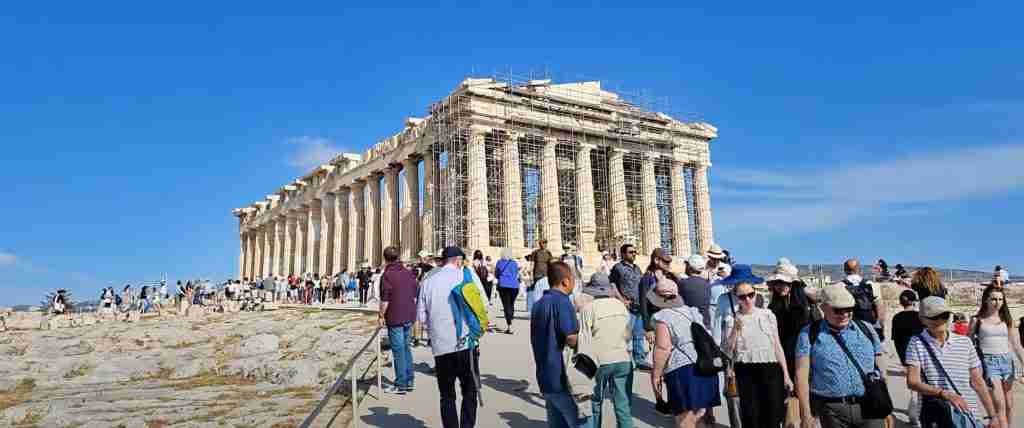
Peak season in Greece 2026 spans July 1 through August 31, with maximum intensity during the August 1-15 period coinciding with European summer holidays and Greek domestic vacation patterns. Major island destinations like Santorini, Mykonos, Rhodes, and Corfu experience severe crowding with daily visitor arrivals overwhelming infrastructure, creating hour-long queues at popular viewpoints, restaurant reservations essential days in advance, and beaches packed shoulder-to-shoulder at prime locations. Athens archaeological sites face similar congestion with Acropolis admissions exceeding 15,000 daily visitors, creating multi-hour wait times and diminished experience quality despite extended operating hours (8 AM-8 PM summer schedule).
Peak summer crowds manifest in ferry transportation challenges with popular routes (Athens-Santorini, Athens-Mykonos) selling out weeks in advance, rental car availability constrained requiring early reservations, and accommodation pricing reaching annual maximums with limited last-minute availability. The demographic shifts notably toward younger travelers, party-focused visitors (particularly Mykonos, Ios nightlife scenes), and cruise ship passengers (5,000+ daily arrivals at Santorini during peak weeks). While energy and atmosphere reach peak levels with beach clubs, rooftop bars, and nightlife venues operating at full capacity, cultural authenticity diminishes as local life retreats from tourist-saturated zones.
Shoulder season periods (April 15-June 15 and September 1-October 31, 2026) deliver optimal crowd-to-conditions balance with visitor numbers 40-60% below peak summer levels while maintaining excellent weather and full operational access. Early shoulder (April-May) sees gradual tourism ramp-up with Easter week (April 6-13) creating brief spike but otherwise manageable crowds at archaeological sites, available accommodation with reasonable advance booking (2-4 weeks typical), and locals having time for genuine interactions before summer onslaught. Late shoulder (September-October) provides arguably superior experience with warm seas, harvest festival atmosphere, and pleasant cooling after summer heat while crowds thin progressively through autumn.
Shoulder season demographics shift toward older travelers, cultural tourists prioritizing archaeological sites over beach clubs, photographers seeking ideal lighting conditions (particularly September-October), and locals regaining space in their communities. Restaurant reservations become optional except premium establishments, archaeological sites offer contemplative experiences without human traffic jams, and ferry bookings require only days of advance notice rather than weeks. The trade-off involves slightly less predictable weather (particularly October) and abbreviated operating hours at some seasonal businesses beginning closures in late October.
Low season (November 1-March 31, 2026) transforms Greece into essentially domestic destination with international visitor numbers dropping 70-80% below peak summer levels. Athens maintains steady tourism with museums, archaeological sites, and urban attractions operating year-round, while mainland destinations like Delphi, Meteora, and Thessaloniki remain accessible with reduced but functional tourism infrastructure. Island destinations experience dramatic operational reduction with smaller islands (Folegandros, Sifnos, Milos) essentially shuttering with hotels closed, restaurants limited to few year-round establishments, and ferry schedules reduced to 1-2 weekly services or suspended entirely.
Larger islands with substantial local populations (Crete, Rhodes, Corfu, Syros) maintain year-round viability with sufficient open hotels, functioning restaurants, and regular ferry connections, though visitor numbers remain minimal creating ghost town atmosphere in normally bustling beach zones. Archaeological sites operate abbreviated hours (8 AM-3 PM typical winter schedule) with skeleton staff and minimal visitor facilities. The benefits include radical pricing reductions (accommodation 50-60% below peak), authentic local life exposure without tourist overlay, and peaceful exploration of normally crowded sites. Limitations encompass weather unpredictability with increased rainfall, cool temperatures precluding beach activities, and potential isolation if selecting smaller island destinations.
Seasonal Cost Variations Greece 2026
Accommodation costs show most dramatic seasonal variation in Greece with peak summer (July-August 2026) rates typically double or triple shoulder season pricing across all categories. Athens mid-range hotels average €180-280 nightly during peak summer compared to €120-180 in shoulder seasons (April-May, September-October) and €80-140 in winter months (November-March). Popular island destinations demonstrate even more extreme swings with Santorini budget hotels ranging €120-200 nightly peak summer, €60-90 shoulder season, and many properties closed entirely in winter. Luxury and boutique properties command €300-600+ nightly during peak summer on islands like Mykonos and Santorini, dropping to €160-300 in shoulder periods.
Accommodation booking strategies significantly impact costs in 2026. Peak summer reservations made 3-6 months advance secure best availability but lock in highest rates, while shoulder season bookings 4-8 weeks ahead balance availability with competitive pricing. Last-minute bookings (within 2 weeks) rarely deliver savings during peak summer due to high occupancy rates, but can yield 20-30% discounts during shoulder periods if properties haven’t filled. Winter visits enable spontaneous booking with minimal advance notice due to low demand and aggressive discounting by operating hotels.
Transportation costs fluctuate moderately by season with peak summer flights from major European hubs to Athens commanding €100-200 premiums over shoulder season fares. Typical roundtrip costs from London, Paris, or Frankfurt range €250-400 shoulder season versus €350-600 peak summer, with budget carriers (Ryanair, easyJet, Wizz Air) offering lower base fares but comparable seasonal variations. Domestic flights within Greece (Athens-Santorini, Athens-Mykonos, Athens-Rhodes routes) show similar patterns with peak summer one-way fares €80-150 compared to €40-80 shoulder season. Ferry prices remain relatively stable year-round with high-speed catamaran Athens-Santorini route averaging €50-70 regardless of season, though availability and schedule frequency vary dramatically.
Dining and food costs demonstrate minimal seasonal variation with taverna meal prices, supermarket groceries, and street food (gyros €3-5, souvlaki €2-4) remaining consistent throughout 2026. Tourist-oriented restaurants in prime locations (Santorini caldera views, Mykonos waterfront) maintain premium pricing year-round when operating, though some establishments close entirely during low season. Budget daily food costs average €25-40 per person mixing supermarket purchases with taverna meals, mid-range dining runs €50-80 daily with regular restaurant meals and occasional upscale experiences, while luxury food budgets exceed €100-150 daily at high-end establishments.
Activity and attraction pricing shows moderate seasonal variation with archaeological sites implementing two-tier pricing: summer rates (April 1-October 31) at full price and winter rates (November 1-March 31) reduced 50% at major sites. Acropolis entry costs €20 summer, €10 winter (prices subject to change, check official sources), with similar reductions at Delphi, Ancient Olympia, and other major archaeological complexes. Guided tours and organized excursions typically discount 15-30% during shoulder and low seasons reflecting reduced demand and operator competition for limited visitor pools. Water sports, boat tours, and beach club access operate seasonally (May-October primarily) with peak pricing July-August and shoulder season discounts early and late in operating window.
Overall daily budget estimates for Greece 2026 vary substantially by season and travel style. Budget travelers achieve €40-70 daily in shoulder and low seasons combining hostel dormitories (€15-25), self-catered meals with occasional taverna dining (€20-30), and public transportation, though peak summer pushes this range to €60-100 daily due to accommodation costs. Mid-range comfort travelers require €100-180 daily shoulder season and €150-250 peak summer including private hotel rooms (€50-140 depending on season and location), regular restaurant meals (€50-80 daily), and moderate activity spending. Luxury travelers allocate €300-500+ daily year-round for high-end accommodation, fine dining, private tours, and premium experiences, with peak summer commanding upper range or exceeding it significantly in destinations like Mykonos and Santorini.
Month-by-Month Greece Planning Guide 2026
January 2026: Winter Low Season
January represents quietest tourism period in Greece with international visitor numbers at annual minimums and many island hotels and restaurants closed for winter repairs and staff holidays. Athens, Thessaloniki, and mainland destinations remain fully operational with museums, archaeological sites (8 AM-3 PM winter hours), and year-round restaurants providing cultural tourism options. Weather averages 10-14°C daily highs with 6-9 rainy days monthly, requiring layers and rain protection. Accommodation costs reach annual lows with Athens hotels €70-120 nightly for quality mid-range properties, though selection reduces as some establishments close seasonally. Larger islands like Crete and Rhodes maintain minimal tourism infrastructure with few open hotels concentrated in main towns. January suits budget-focused travelers comfortable with weather uncertainty, reduced operational hours, and authentic local life exposure without tourist overlay.
February 2026: Carnival Season Begins
February marks gradual tourism awakening with Carnival season (Apokries) bringing colorful celebrations, costume parades, and festive atmosphere particularly vibrant in Patras, Athens Plaka district, and island towns. Clean Monday (February 23, 2026) signals Carnival’s end and Great Lent’s beginning with kite-flying traditions and seafood feasts nationwide. Weather remains cool at 11-15°C averages with February typically recording 6-8 wet days monthly. Tourism infrastructure stays largely dormant on smaller islands but mainland destinations and Athens experience slight visitor increases for Carnival festivities. Accommodation pricing remains at winter lows (€75-130 nightly Athens mid-range), making February attractive for cultural tourists seeking festival experiences and budget optimization. Archaeological sites maintain winter hours and reduced admission pricing.
March 2026: Spring Awakening
March initiates spring transformation with wildflowers emerging across landscapes, temperatures rising to 15-18°C averages, and daylight hours extending. Tourism activity increases gradually with European spring break travelers arriving but crowds remaining manageable. Island ferry schedules begin expanding from minimal winter service toward full summer capacity, though many routes still operate reduced frequency. Weather variability persists with March recording 7-9 rainy days monthly and occasional cool spells, requiring flexible itineraries accommodating indoor alternatives. Accommodation costs begin rising from winter lows but remain 30-40% below summer peaks at €90-150 nightly for Athens mid-range hotels. March suits nature enthusiasts seeking wildflower displays, hikers enjoying comfortable temperatures without summer heat, and budget travelers accepting weather trade-offs for cost savings. Archaeological sites extend hours progressively through month transitioning toward summer schedule by month’s end.
April 2026: Peak Shoulder Season
April delivers ideal conditions for Greece touring with temperatures reaching comfortable 19-22°C, spring landscapes at maximum vibrancy, and archaeological sites becoming pleasant for extended exploration. Greek Orthodox Easter (April 12, 2026) dominates month’s character with Holy Week (April 6-13) creating exceptional cultural atmosphere through candlelit processions, midnight resurrection services, traditional feasts, and family celebrations nationwide. Accommodation booking challenges emerge during Easter week as Greeks travel domestically, requiring 2-3 month advance reservations for this specific period. Non-Easter weeks provide excellent shoulder season conditions with manageable crowds and moderate pricing (€100-170 nightly Athens mid-range hotels). Island destinations open progressively through April with hotels, restaurants, and tour operators beginning seasonal operations. Ferry schedules expand significantly enabling island hopping itineraries. Archaeological sites transition to summer hours (8 AM-8 PM) and full admission pricing by month’s end. April suits cultural tourists seeking Easter immersion, photographers capturing spring landscapes, and active travelers enjoying hiking and cycling at optimal temperatures.
May 2026: Optimal Balance Month
May ranks among Greece’s best months combining pleasant 23-25°C temperatures, reliable sunshine (8-9 hours daily average), warming seas approaching swimmable temperatures (19-21°C by month’s end), and pre-peak crowds enabling comfortable touring. Tourism infrastructure operates at full capacity with all hotels, restaurants, tours, and activities available but without July-August saturation. Accommodation costs remain moderate at €120-190 nightly for Athens mid-range properties, representing excellent value for conditions delivered. Island destinations buzz with activity but maintain manageable visitor levels allowing spontaneous dining without reservations and archaeological site exploration without overwhelming crowds. May Day (May 1) brings national holiday with labor celebrations and many Greeks enjoying long weekends, creating brief accommodation pressure but adding festive atmosphere. Ferry schedules run at near-peak frequency enabling flexible island hopping without advance booking stress. May suits virtually all traveler types: beach seekers enjoy emerging beach club scene and warming waters, cultural tourists appreciate comfortable sightseeing temperatures, photographers capture ideal spring lighting, and families benefit from school holiday avoidance keeping prices moderate.
June 2026: Summer Season Begins
June initiates peak summer conditions with temperatures rising to 27-29°C, seas reaching comfortable 21-23°C swimming temperatures, and tourist volumes increasing substantially as European summer holidays begin. First two weeks maintain excellent crowd-to-weather balance with June 1-15 delivering summer conditions without peak congestion, while final two weeks see sharp visitor increases anticipating July-August peak. Accommodation costs climb to €150-220 nightly for Athens mid-range hotels with popular island destinations showing even steeper increases. Athens Epidaurus Festival begins (June-August) bringing ancient Greek drama performances at historic amphitheater, requiring advance tickets for premier productions. Beach clubs, water sports operators, and boat tour companies operate full schedules with equipment rentals and organized excursions readily available. Ferry schedules reach maximum frequency with multiple daily departures on popular routes enabling flexible travel plans. June suits travelers seeking guaranteed beach weather and full operational access while avoiding worst peak summer crowds and pricing, though final two weeks approach peak conditions closely.
July 2026: Peak Summer Maximum
July represents peak summer intensity with hottest temperatures averaging 30-33°C (occasional 38-40°C heatwaves), maximum tourist volumes creating infrastructure strain, and highest pricing across accommodation, tours, and services. Popular islands like Santorini and Mykonos experience severe crowding with beaches packed, restaurants requiring advance reservations, and viewpoint photography complicated by human congestion. Accommodation costs peak at €200-350+ nightly for Athens mid-range properties, while island hotels command premium rates often double shoulder season pricing. Meltemi winds provide natural cooling across Aegean islands but occasionally disrupt ferry schedules causing delays or cancellations. Archaeological site visits require early morning timing (8-10 AM) to avoid midday heat exhaustion and peak crowds, with afternoon visits becoming uncomfortable due to sun exposure and temperatures. July suits travelers prioritizing guaranteed sunshine and maximum beach weather, nightlife enthusiasts seeking vibrant party atmosphere (particularly Mykonos and Ios), and families constrained by school holiday calendars, though budget-conscious visitors and crowd-averse tourists should avoid this period entirely.
August 2026: Peak Season Continues
August maintains July’s peak conditions with sustained high temperatures, maximum crowding, and premium pricing, with August 1-15 period representing absolute tourism peak coinciding with European holidays and Greek vacation traditions. Many Athens businesses close for August holidays as locals flee cities for islands and mountains, creating paradoxical situation where capital experiences slight tourism reduction while islands reach maximum saturation. Ferry transportation faces greatest capacity challenges with popular routes fully booked weeks in advance, rental cars scarce, and spontaneous travel plans largely impractical. Accommodation availability becomes critical issue requiring 2-3 month advance bookings for quality properties, with prices matching or exceeding July peaks. Beach destinations operate at maximum capacity with sunbed space limited, water sports equipment booked days ahead, and restaurants managing waitlists throughout dinner service. August suits only those travelers specifically seeking peak summer energy and accepting crowd/cost trade-offs, or those without calendar flexibility due to family/work constraints. Budget travelers and tranquility seekers should absolutely avoid August, as costs and congestion reach annual maximums simultaneously.
September 2026: Ideal Autumn Window
September rivals May as Greece’s optimal month with continued summer warmth (26-28°C averages), warmest seawater temperatures (23-24°C from summer heating), thinning crowds as peak season ends, and moderate pricing rebounds from August peaks. First two weeks maintain near-summer conditions with excellent beach weather and full operational capacity, while final two weeks show gentle cooling and progressive crowd reductions. Accommodation costs drop 20-30% from peak summer to €140-200 nightly for Athens mid-range hotels, delivering excellent value for maintained quality conditions. Archaeological sites become pleasant again without overwhelming crowds and oppressive heat, enabling comfortable all-day exploration. September suits beach enthusiasts seeking optimal swimming conditions, photographers capturing autumn lighting and harvest scenes, couples seeking romantic atmosphere without peak summer’s party energy, and active travelers enjoying comfortable temperatures for hiking and cycling. Ferry schedules maintain high frequency through month enabling flexible island hopping, though some seasonal businesses begin closing final week as operators wind down for winter.
October 2026: Extended Shoulder Season
October extends autumn shoulder season with pleasant 21-23°C temperatures, still-warm seas (20-22°C early month, cooling to 18-19°C by month’s end), further crowd reductions, and continued accommodation price declines. Tourism infrastructure operates fully through mid-October with hotels, restaurants, and tour operators maintaining summer schedules, while final two weeks see progressive seasonal closures particularly on smaller islands. Weather reliability decreases slightly compared to summer with October averaging 5-7 rainy days monthly versus 1-2 in peak season, though conditions generally remain favorable for outdoor activities. Accommodation costs settle to €110-170 nightly for Athens mid-range properties, representing strong value proposition. Archaeological sites transition toward winter hours by month’s end, shortening visiting windows. Ferry schedules begin seasonal reductions in final week with some routes reducing frequency or suspending service until spring. October suits travelers seeking optimal value-to-conditions ratio, preferring quieter atmosphere over guaranteed perfect weather, and interested in harvest festivals, wine tastings, and autumn cultural experiences unavailable during other periods.
November 2026: Low Season Transition
November marks definitive transition to low season with temperatures dropping to 16-18°C, increased rainfall frequency (averaging 8-10 wet days), and dramatic tourism infrastructure reductions particularly on islands. Many island hotels, restaurants, and tour operators close for winter by mid-November, with ferry schedules cutting to minimal service (1-2 weekly departures or complete suspension on smaller island routes). Larger islands (Crete, Rhodes, Corfu) and mainland destinations maintain functional tourism infrastructure with reduced but adequate hotel options, operating restaurants, and year-round attractions. Accommodation pricing drops 40-50% from shoulder season levels with Athens mid-range hotels averaging €80-130 nightly. Archaeological sites implement winter hours (8 AM-3 PM) and reduced admission pricing (typically 50% of summer rates). November suits budget-focused travelers accepting weather uncertainty and operational limitations, cultural tourists seeking authentic local life experiences, and visitors interested in Athens Marathon (November 9, 2026) following ancient route from Marathon to city center.
December 2026: Winter Cultural Season
December brings coolest temperatures (11-14°C averages) and highest rainfall probability (9-10 wet days monthly), transforming Greece into primarily domestic destination with international tourism minimal. Athens and Thessaloniki embrace festive season with Christmas markets (particularly vibrant Syntagma Square Athens), decorations, seasonal treats (melomakarona honey cookies, kourabiedes almond shortbread), and holiday atmosphere contrasting summer’s archaeological tourism focus. Island destinations except Crete and Rhodes essentially close with skeletal hotel availability, limited restaurant options, and minimal ferry service. Accommodation costs reach annual minimums at €70-120 nightly Athens mid-range hotels, delivering exceptional value for urban cultural experiences. Archaeological sites maintain abbreviated winter schedules with reduced visitor facilities but peaceful exploration opportunities. December suits budget travelers maximizing cost efficiency, winter holiday enthusiasts seeking European festive atmosphere in Mediterranean setting, and experienced travelers comfortable navigating reduced infrastructure and weather variability. ETIAS authorization system expected implementation late 2026 may affect December travelers, requiring online application before arrival.
Regional Timing Variations Across Greece 2026
Athens and Attica region function year-round with minimal seasonal operational variations beyond archaeological site hours and museum schedules. The capital delivers consistent urban tourism infrastructure regardless of season with hotels, restaurants, museums, and public transportation maintaining full service January-December. Summer heat (June-August) makes daytime archaeological site visits challenging at Acropolis and Ancient Agora, favoring early morning (8-10 AM) or evening (after 6 PM) visits when summer hours extend to 8 PM. Spring (April-May) and autumn (September-October) provide ideal Athens conditions with comfortable walking temperatures, manageable crowds, and pleasant outdoor dining atmosphere. Winter Athens offers authentic urban Greek life exposure, budget accommodation, and uncrowded museums and sites, accepting occasional rainfall and cooler temperatures.
Cyclades islands (Santorini, Mykonos, Paros, Naxos, Milos) demonstrate most extreme seasonal variations with May-October representing practical visiting window and November-April largely shuttered. Peak summer (July-August) brings overwhelming crowds particularly Santorini and Mykonos, premium pricing, and infrastructure strain despite maximum sunshine and beach conditions. Shoulder periods May-June and September-October deliver optimal Cyclades experiences with excellent weather, manageable visitor numbers, moderate costs, and full operational access. Smaller Cyclades islands (Folegandros, Sifnos, Koufonisia) operate even narrower windows with some establishments opening June-September only. Winter visits to Cyclades become impractical with ferry schedules reducing to 1-2 weekly services or suspending entirely, most hotels and restaurants closed, and limited services even in main towns.
Dodecanese islands (Rhodes, Kos, Patmos) enjoy longer operating seasons than Cyclades due to southern location and larger local populations. Rhodes and Kos maintain year-round tourism infrastructure with adequate hotel availability, functioning restaurants, and regular ferry connections even during winter months, though visitor numbers drop dramatically November-March. These islands extend practical visiting windows into November and begin ramping earlier in March compared to Cyclades counterparts. Peak summer crowding affects primarily Rhodes Town and Kos Town zones, while interior villages and quieter beaches maintain manageable visitor levels even July-August. Shoulder seasons deliver exceptional value on these islands with spring wildflower displays and autumn harvest atmosphere adding seasonal interest.
Ionian islands (Corfu, Kefalonia, Zakynthos, Lefkada) experience slightly different climate patterns with increased rainfall year-round and cooler temperatures compared to Aegean islands, but maintain lush green landscapes even summer months. Peak season timing aligns with Cyclades (July-August maximum crowds and costs), but shoulder seasons extend slightly later into November and begin earlier in April due to Adriatic climate influences. Corfu particularly functions year-round with substantial local population supporting winter hotel and restaurant operations, making it viable low-season destination. Zakynthos and Kefalonia show more seasonal operational patterns with many businesses closing November-March. These islands suit travelers seeking greener landscapes, slightly cooler summer temperatures, and Venetian architectural heritage contrasting Cycladic white-and-blue aesthetics.
Crete operates nearly year-round as Greece’s largest island with substantial local economy independent of tourism. Chania and Heraklion maintain active urban centers with operating hotels, restaurants, and museums throughout winter, while southern coastal zones show more seasonal patterns. Spring (April-May) delivers exceptional Crete experiences with Samaria Gorge hiking season opening, wildflower displays in White Mountains, and archaeological sites comfortable for extended exploration. Summer heat can be intense inland (temperatures often exceeding 35°C July-August), favoring coastal zones and mountain villages. Autumn brings harvest seasons with wine, olive, and produce festivals celebrating agricultural traditions. Winter Crete appeals to budget travelers and cultural tourists, though south coast beach zones largely close November-March.
Northern Greece including Thessaloniki, Halkidiki peninsula, and Meteora monasteries demonstrates more continental climate with colder winters (occasional snow in mountainous areas) and hotter summers than southern islands. Thessaloniki functions year-round as Greece’s second city with consistent urban tourism infrastructure, though summer heat (often exceeding Athens temperatures) makes June-August uncomfortable for intensive sightseeing. Spring and autumn deliver optimal northern Greece conditions with Meteora monasteries spectacular in April-May spring landscapes and September-October autumn colors. Halkidiki beaches operate seasonally (May-October primarily) with extreme summer saturation July-August when northern European and Balkan tourists flock to coastal resorts. Winter northern Greece appeals primarily to ski enthusiasts accessing mountain resorts near Albanian border, with limited tourism appeal for general visitors.
Activity-Specific Timing Recommendations 2026
Beach and Swimming: Late May-Early October 2026
Optimal beach experiences in Greece 2026 require May-October window when sea temperatures exceed 19°C threshold for comfortable swimming. Late May and June provide emerging beach season with seas 19-23°C, uncrowded beaches, and moderate pricing but slightly cool water for temperature-sensitive swimmers. July-August deliver peak beach conditions with 23-25°C seawater, maximum sunshine (10-11 hours daily), and full beach club operations including sunbeds, umbrellas, water sports, and beachside dining, but face overwhelming crowds and premium pricing at popular beaches. September ranks as absolute optimal beach month combining summer-warmed seas (23-24°C), thinning crowds, and pleasant air temperatures without July-August’s oppressive heat. Early October extends beach season with still-warm 20-22°C waters and minimal visitors, while late October sees cooling below comfortable swimming threshold for most travelers.
Archaeological Site Touring: April-May and September-October 2026
Archaeological site exploration achieves optimal conditions during shoulder seasons avoiding summer’s debilitating heat and peak crowds while maintaining excellent weather reliability. April-May delivers comfortable 19-25°C temperatures enabling hours-long site exploration without heat exhaustion risk, spring wildflowers adding color to ancient ruins, and manageable visitor volumes allowing contemplative experiences. Major sites like Acropolis, Delphi, and Ancient Olympia face moderate crowds during these months compared to July-August overwhelming saturation, with morning visits (8-10 AM) providing near-private experiences. September-October continues ideal touring conditions with similar temperature ranges, autumn lighting enhancing photography, and further crowd reductions as peak season ends. Summer archaeological visits require strict early morning timing (8-10 AM arrivals) before heat and crowds become oppressive, with afternoon visits impractical due to sun exposure on unshaded ancient sites.
Hiking and Outdoor Activities: April-June and September-October 2026
Hiking, cycling, and active outdoor pursuits demand moderate temperatures and reliable weather unavailable during summer heat or winter uncertainty. April-June window provides progressive warming from cool spring hiking conditions (15-20°C April) to warm but manageable late spring temperatures (23-27°C June), with spring landscapes showing maximum vegetation and wildflower displays. Samaria Gorge in Crete opens May-October with April-May and September-October delivering optimal hiking temperatures, while July-August heat makes full gorge traverse challenging despite being technically open. Coastal hiking trails in Peloponnese, Cyclades island circuits, and Meteora area paths become pleasant April-June before summer heat makes midday hiking impractical. September-October autumn window delivers excellent hiking conditions with comfortable temperatures, harvest season atmosphere, and autumn colors in northern regions, though October shows increased rainfall probability requiring weather monitoring and flexible itineraries.
Photography and Landscapes: September-October and April-May 2026
Photography enthusiasts seeking optimal lighting, atmospheric conditions, and landscape variety prioritize shoulder seasons when Mediterranean light achieves ideal qualities. September-October autumn window delivers golden hour lighting with lower sun angles creating longer shadow play, harvest season agricultural landscapes, potential morning mist in mountain regions, and autumn color transitions in northern Greece. These months provide uncrowded compositions at iconic viewpoints without July-August’s overwhelming human presence, enable sunrise and sunset photography without extreme heat between sessions, and feature traditional harvest activities adding human interest to agricultural landscapes. April-May spring photography captures wildflower displays transforming archaeological sites and hillsides, fresh green landscapes before summer drying, and dramatic storm light possibilities during transitional weather periods. Summer photography faces harsh midday lighting reducing shooting windows to early morning and evening hours, overwhelming crowds at popular viewpoints, and hazy atmospheric conditions from heat and humidity.
Cultural Festivals and Events: Variable 2026 Timing
Greek Orthodox Easter (April 12, 2026) represents pinnacle cultural experience combining religious significance with nationwide celebrations including Holy Week processions, midnight resurrection services, traditional lamb feasts, and red egg cracking ceremonies. Visiting April 6-13 provides immersive cultural exposure but requires advance accommodation booking and accepting transportation capacity constraints. Athens Epidaurus Festival (June-August) stages ancient Greek drama at historic amphitheater requiring specific timing for desired performances. Carnival season culminating Clean Monday (February 23, 2026) brings costume parades and festivities particularly vibrant in Patras. Wine harvest festivals concentrate September-October across wine regions including Santorini, Nemea, and Crete. Thessaloniki International Film Festival (November typically) attracts cinema enthusiasts to northern capital. Athens Marathon (November 9, 2026) follows ancient route from Marathon to city center for running enthusiasts and spectators. Festival timing determines specific visit windows for cultural immersion seekers.
Budget Travel: November-March 2026
Budget-focused travelers maximizing cost efficiency prioritize November-March low season when accommodation costs drop 40-60% from peak summer rates, archaeological sites implement winter pricing (typically 50% reductions), and overall daily expenses decline substantially. Athens delivers exceptional winter value with mid-range hotels €70-120 nightly (versus €200-280 peak summer), uncrowded museums and sites, and authentic urban Greek life exposure. Crete and Rhodes maintain functional winter tourism infrastructure with adequate hotel availability and operating restaurants, though smaller islands become impractical winter destinations. Trade-offs include increased rainfall probability (December-January wettest months), abbreviated archaeological site hours (8 AM-3 PM versus 8 AM-8 PM summer), closed seasonal businesses on islands, and cool temperatures precluding beach activities. Budget travelers accepting these limitations achieve Greece experiences at 40-50% overall cost reductions compared to peak summer visits.
Island Hopping Seasonal Considerations 2026
Island hopping feasibility in Greece varies dramatically by season due to ferry schedule fluctuations, operational accommodation availability, and weather-dependent sea conditions affecting transportation reliability. May-October represents practical island hopping window with ferry schedules operating at high frequency (multiple daily departures popular routes), full accommodation availability across islands, and minimal weather-related cancellations. Peak summer (July-August) provides maximum ferry frequency and guaranteed operational access but requires advance booking (2-4 weeks typical) as popular routes sell out and accommodation becomes scarce. Shoulder seasons (May-June, September-October) deliver optimal island hopping experiences with flexible ferry options, available accommodation with moderate advance notice (1-2 weeks), and pleasant weather without peak summer heat.
Ferry schedule patterns show seasonal concentration with winter months (November-March) experiencing dramatic service reductions or complete route suspensions particularly to smaller islands. Cyclades routes from Piraeus to Santorini, Mykonos, Paros, and Naxos maintain year-round service but reduce from 3-5 daily summer departures to 2-3 weekly winter sailings. Inter-island connections (Santorini-Mykonos, Paros-Naxos-Ios chains) reduce similarly with many routes suspending entirely November-March. Dodecanese islands maintain better winter connectivity due to larger local populations, though frequency drops substantially. Ionian islands face particular challenges with winter ferry disruptions due to Adriatic weather patterns creating rougher seas and higher cancellation rates.
Island hopping itinerary design requires seasonal awareness with ambitious multi-island circuits (5+ islands in 10-14 days) practical only May-October when daily ferry connections enable tight logistics. Three-island standard circuits (Athens-Santorini-Mykonos-Athens or Athens-Paros-Naxos-Athens patterns) function year-round with adjusted timing, though winter visits require 2-3 day island stays versus summer’s flexible 1-2 day hops due to reduced ferry frequency. Flexibility becomes crucial during shoulder and low seasons as weather-related cancellations occur more frequently, requiring backup plans and extra days buffer in itineraries.
Popular island hopping routes in 2026 include classic Cyclades circuit (Mykonos-Paros-Naxos-Santorini) best experienced May-June or September-October avoiding peak summer crowds while maintaining excellent conditions and ferry frequency. Dodecanese island chain (Rhodes-Symi-Kos-Patmos) operates comfortably June-September with Rhodes’ year-round infrastructure providing convenient base. Ionian island hopping (Corfu-Paxos-Kefalonia-Zakynthos) suits June-September window when weather patterns stabilize and ferry connections operate reliably. Less-traveled routes to Sporades (Skiathos-Skopelos-Alonnisos) or Northeastern Aegean islands (Lesvos-Chios-Samos) reward adventurous travelers with uncrowded experiences May-October but require careful schedule verification as service can be inconsistent.
Practical Planning Tips for Greece 2026
Booking Strategies by Season
Peak summer travel (July-August 2026) demands 3-6 month advance booking for accommodation, particularly popular islands like Santorini and Mykonos where quality properties sell out early. Ferry tickets for high-traffic routes require 2-4 week advance purchase during peak season as popular departure times reach capacity. Car rentals face similar constraints with advance reservations (4-8 weeks) essential for peak summer securing vehicles at reasonable rates. Shoulder season travel (April-June, September-October) allows more flexibility with 4-8 week accommodation booking typically sufficient, though Greek Orthodox Easter week (April 6-13) demands 2-3 month advance reservations matching peak summer requirements. Ferry bookings during shoulder periods need only 3-7 days advance notice except Easter week. Winter visits enable spontaneous planning with accommodation bookable days in advance due to low demand.
Packing Considerations by Season
Summer packing (June-August 2026) requires sun protection priority including high-SPF sunscreen, wide-brimmed hats, sunglasses, and lightweight long-sleeve shirts for archaeological site visits where shade is minimal. Light cotton or linen clothing suffices for daytime, with single light layer adequate for evening dining outdoors. Comfortable walking shoes essential for cobblestone streets and archaeological sites, though beach sandals serve many purposes. Shoulder season packing (April-May, September-October) adds light jacket or sweater for cooler evenings and occasional spring/autumn cool spells, with layering strategy enabling adaptation to variable conditions. Rain jacket or compact umbrella advisable particularly April and October when precipitation probability increases. Winter packing (November-March) demands proper layers including warm jacket, long pants, and rain protection as coastal winds and precipitation make conditions feel colder than raw temperatures suggest.
Health and Safety Seasonal Considerations
Summer heat (July-August) presents primary health risk requiring hydration discipline (2-3 liters water daily minimum), midday heat avoidance (seeking shade 12-4 PM), and recognition of heat exhaustion symptoms including dizziness, excessive sweating, and fatigue. Archaeological sites lack air conditioning and shade making summer visits potentially dangerous for elderly or health-compromised travelers. Sunburn risk peaks during summer months with Mediterranean sun intensity requiring diligent sunscreen application every 2 hours. Shoulder and winter seasons reduce heat-related risks but introduce different concerns including slippery conditions at archaeological sites during/after rain and increased respiratory illness exposure in crowded indoor spaces during cooler months. Year-round precautions include comprehensive travel insurance, prescription medication supply exceeding trip duration, and basic first aid kit.
Money and Budgeting by Season
Currency and payment infrastructure remains consistent year-round with euros as standard currency, credit cards widely accepted in tourist areas, and ATMs readily available in cities and main towns (less common on smaller islands). Tourist taxes now mandatory across Greece include climate resilience tax (€1.50-10 per night based on hotel class) collected at check-in or checkout, and cruise passenger sustainable tourism fee (€5-20 depending on port and season) for cruise arrivals. Budget contingency of €50-100 per traveler recommended for unexpected taxes and fees. Cash remains useful for smaller establishments, particularly tavernas outside main tourist zones, with €200-300 cash reserve advisable covering 2-3 days expenses. ATM withdrawal fees vary by bank (€2-5 typical) making larger withdrawals more efficient than multiple small transactions.
Communication and Connectivity
Mobile connectivity in Greece 2026 benefits from EU roaming agreements eliminating extra charges for European Union citizens, though travelers from other regions should verify roaming costs with home carriers or consider local SIM cards (€10-20 for tourist data packages 5-10GB typical). WiFi availability varies seasonally with summer months seeing tourist-oriented establishments providing free connectivity, while winter operations may offer more limited access. Major cities, airports, and popular tourist zones maintain reliable 4G coverage, though remote archaeological sites and smaller islands experience connectivity gaps. Mobile maps and translation apps prove invaluable for navigation and basic communication, though downloading offline maps advisable before visiting islands with spotty coverage.
Avoiding Common Seasonal Mistakes 2026
Peak Summer Overcrowding Underestimation
Travelers consistently underestimate July-August crowd intensity in Greece, arriving unprepared for hour-long queues at archaeological sites, fully booked restaurants requiring reservations days ahead, and beaches crowded beyond comfortable capacity. The mistake compounds when visiting highly saturated destinations (Santorini, Mykonos) during absolute peak (August 1-15) without acknowledging infrastructure simply cannot accommodate visitor volumes. Solution involves realistic crowd expectation setting when choosing peak summer timing, accepting advance planning requirements (3-6 month booking windows), targeting less-saturated destinations (Paros instead of Mykonos, Milos instead of Santorini), or simply avoiding July-August entirely in favor of shoulder seasons delivering 80% of weather benefits with 40% of crowds.
Winter Island Accessibility Assumptions
Significant traveler frustration stems from underestimating winter island operational reductions, arriving November-March expecting full summer services and discovering closed hotels, shuttered restaurants, and suspended ferry routes. Smaller islands particularly become essentially inaccessible December-February with no accommodation options and minimal transportation connections. Solution requires careful research verifying specific island winter operations before booking, focusing winter island visits on larger year-round destinations (Crete, Rhodes, Corfu), or redirecting winter travel to always-operational mainland destinations (Athens, Delphi, Meteora, Thessaloniki) accepting islands as fundamentally seasonal destinations.
Shoulder Season Weather Guarantees
Travelers sometimes expect shoulder season weather to match peak summer reliability, experiencing disappointment when April or October produces rainy days or cooler temperatures than anticipated. While shoulder seasons generally deliver excellent conditions, weather variability exceeds July-August’s near-perfect consistency. Solution involves maintaining realistic weather expectations for shoulder periods (90% excellent versus summer’s 98%), building flexible itineraries accommodating occasional rainy days with museum visits and covered activities, and packing appropriate layers rather than assuming summer clothing suffices year-round.
Greek Orthodox Easter Planning Oversights
International travelers unfamiliar with Greek Orthodox calendar sometimes overlook Easter period (April 6-13, 2026) impacts on accommodation availability, transportation capacity, and business operations. Arriving during Holy Week without advance bookings encounters sold-out hotels and packed ferries as Greeks travel domestically for family celebrations. Solution requires conscious Easter timing decision: either specifically plan Easter visit for cultural immersion (requiring 2-3 month advance booking), or deliberately avoid April 6-13 window entirely if preferring normal operational conditions.
Archaeological Site Summer Heat Neglect
Visitors underestimate summer heat impact on archaeological site visits, arriving midday July-August at Acropolis or Delphi facing 35-40°C temperatures with minimal shade and experiencing heat exhaustion or abandoning visits. The exposed nature of most ancient sites provides no cooling respite during peak heat hours (11 AM-5 PM). Solution demands strict summer timing discipline with archaeological visits scheduled early morning (8-10 AM arrivals) or late afternoon (after 5 PM when sites extend summer hours to 8 PM), proper sun protection including hats and sunscreen, aggressive hydration starting before site arrival, and realistic expectations about summer visit duration limits.
ETIAS and Entry Requirements 2026
European Travel Information and Authorization System (ETIAS) implementation expected late 2026 introduces new entry requirements for visa-exempt travelers from United States, Canada, United Kingdom, Australia, and numerous other countries entering Greece or any Schengen Zone nation. ETIAS functions as pre-travel authorization similar to US ESTA system, requiring online application completed before departure with approval typically granted within minutes to hours, though complex cases may take days. Application costs €7 per adult (children under 18 exempt) with authorization valid three years or until passport expiration, whichever comes first. Travelers should complete ETIAS applications at least 72 hours before departure avoiding last-minute complications.
Standard entry requirements continue alongside ETIAS including passport validity extending six months beyond intended departure from Schengen zone, proof of sufficient funds for stay duration, and return/onward travel documentation. Greece permits visa-exempt travelers 90 days within 180-day period across entire Schengen area (not 90 days per country), requiring careful calculation for travelers visiting multiple European destinations. Overstaying Schengen limits triggers serious consequences including entry bans, fines, and future visa complications. Travelers planning extended European trips should maintain careful day-count records ensuring compliance with 90/180 rule.
Frequently Asked Questions
Is Greece too hot in July and August 2026?
July-August temperatures in Greece average 30-33°C with occasional heatwaves exceeding 38-40°C, creating uncomfortable conditions for intensive sightseeing particularly at exposed archaeological sites lacking shade. Coastal areas benefit from sea breezes providing natural cooling, while inland cities like Athens experience oppressive urban heat island effects. Travelers comfortable with extreme heat and willing to adjust schedules (early morning archaeological visits, beach/pool midday hours, evening dining and activities) can successfully navigate July-August, but heat-sensitive individuals, elderly travelers, and families with young children should strongly consider May-June or September-October alternatives providing 90% of summer benefits without temperature extremes.
Can you swim in Greece in May or October 2026?
Sea temperatures in Greece reach 19-21°C by late May enabling swimming for cold-water tolerant individuals, though many swimmers find these temperatures uncomfortably cool preferring June onward when seas warm to 22-24°C. October maintains warm seawater particularly early month (20-22°C) from summer heating, with gradual cooling through month to 18-19°C by October 31. Swimming comfort varies by individual cold tolerance, with hardy swimmers enjoying May and October waters while temperature-sensitive bathers prefer peak summer June-September when seas stay consistently above 22°C. Indoor hotel pools typically heated enabling swimming regardless of sea temperature for accommodation guests.
How far in advance should I book Greece accommodation for 2026?
Peak summer accommodation (July-August 2026) requires 3-6 month advance booking for quality properties in popular destinations like Santorini, Mykonos, and Athens, with premium hotels and boutique properties selling out even earlier. Greek Orthodox Easter week (April 6-13, 2026) demands similar 2-3 month advance booking as Greeks travel domestically creating capacity constraints. Shoulder season visits (May-June, September-October) need 4-8 week booking windows securing good availability and competitive rates. Winter travel (November-March) enables spontaneous planning with accommodation bookable days or even hours in advance due to minimal demand, though selection reduces as many properties close seasonally.
What is the rainiest month in Greece 2026?
December and January represent Greece’s wettest months averaging 9-10 rainy days monthly with December typically recording highest precipitation totals (50-70mm Athens area). However, Greek rainfall remains modest by Northern European standards with brief showers rather than all-day downpours typical, and many days featuring partial cloud clearing enabling outdoor activities between rain periods. Summer months June-August receive essentially no rainfall with Athens recording less than 10mm total precipitation across three-month period. October shows moderate rainfall increasing (5-7 wet days) as autumn transitions toward winter, while April experiences final spring showers (6-8 wet days) before reliable summer weather establishes May onward.
Are Greek islands open in winter 2026?
Greek island winter operations vary dramatically by size and local population, with smaller tourism-dependent islands (Folegandros, Sifnos, Milos, Ios) essentially closing November-March with most hotels shuttered, restaurants limited to handful of year-round establishments, and ferry schedules severely reduced or suspended. Larger islands with substantial local economies (Crete, Rhodes, Corfu, Syros) maintain functional winter tourism infrastructure with adequate hotel availability, operating restaurants in main towns, and regular ferry connections, though visitor numbers remain minimal creating quiet atmosphere. Cyclades islands particularly shutdown winter months with limited exceptions, while Dodecanese and Ionian larger islands provide better winter accessibility for travelers accepting reduced services and weather uncertainty.
When is Greek Orthodox Easter 2026 and should I visit then?
Greek Orthodox Easter 2026 falls April 12 with Holy Week spanning April 6-13 including Good Friday April 10 and Easter Monday public holiday April 13. This period offers exceptional cultural immersion opportunities experiencing Greece’s most significant religious celebration through candlelit processions, midnight resurrection services, traditional lamb feasts, and nationwide festivities. However, accommodation booking becomes challenging as Greeks travel domestically for family gatherings, ferry and flight capacity constraints emerge, and many businesses close Holy Thursday through Easter Monday. Travelers specifically seeking cultural experiences should deliberately plan Easter week visits booking 2-3 months advance, while those prioritizing operational convenience should avoid April 6-13 entirely choosing earlier April or post-Easter April weeks.
What is cheapest month to visit Greece 2026?
January and February represent Greece’s cheapest months with accommodation costs 50-60% below peak summer rates, archaeological sites implementing winter pricing (typically 50% reductions), minimal tourist infrastructure competition, and overall daily expenses at annual minimums. Athens mid-range hotels average €70-120 nightly versus €200-280 peak summer, while operating island hotels (Crete, Rhodes primarily) show similar dramatic reductions. Trade-offs include highest rainfall probability (December-January wettest months), coolest temperatures (10-14°C averages), abbreviated operating hours at attractions (8 AM-3 PM archaeological sites), and severely reduced island accessibility with many destinations essentially closed. Budget-focused travelers comfortable accepting weather uncertainty and operational limitations achieve exceptional value January-February, while those seeking cheap prices with better conditions should target November or March shoulder edges of low season.
How many days do I need in Greece 2026?
Minimum viable Greece visit spans 7-10 days enabling Athens exploration (2-3 days) plus single island experience (3-4 days) with travel buffer days, though this timeline feels rushed and limits geographic coverage. Ideal first-time itinerary extends 12-16 days allowing Athens (3-4 days), two islands (3-4 days each), and possible mainland addition (Delphi or Meteora 1-2 days) with comfortable pacing and travel contingency. Ambitious multi-island hopping circuits require 14-21 days adequately experiencing 4-6 islands without constant packing/unpacking stress. Luxury travelers and slow travel enthusiasts benefit from 3-4 week durations enabling deep regional immersion, flexible scheduling around weather, and spontaneous discoveries. Season impacts optimal duration with winter visits benefiting from longer stays compensating occasional rainy days, while summer’s reliable weather enables efficient shorter trips.
Is Santorini worth visiting outside peak summer 2026?
Santorini delivers exceptional experiences May-June and September-October arguably superior to peak summer July-August period, combining iconic caldera views and volcanic landscapes with manageable crowds, moderate pricing, and comfortable temperatures. May features spring wildflowers, warming seas, and pre-peak tranquility enabling classic sunset photography without overwhelming human congestion. September provides warmest seawater from summer heating, harvest season wine activities, and thinning crowds as peak season ends. April and late October extend shoulder season with excellent value but cooler temperatures and some businesses beginning seasonal closures. November-March Santorini becomes impractical with severely limited hotel availability, closed restaurants and attractions, minimal ferry connections, and strong possibility of encountering completely shuttered caldera villages creating ghost town atmosphere rather than vibrant destination experience.
What should I avoid in Greece during summer 2026?
Peak summer Greece (July-August 2026) requires avoiding midday archaeological site visits (11 AM-5 PM) when temperatures exceed 35°C creating heat exhaustion risk, instead scheduling early morning (8-10 AM) or late afternoon (after 5 PM) visits. Avoid attempting spontaneous travel without advance bookings as accommodation, ferries, and rental cars sell out weeks ahead leaving last-minute travelers with limited expensive options or complete unavailability. Avoid popular beach destinations (Santorini, Mykonos) during absolute peak (August 1-15) when infrastructure simply cannot accommodate visitor volumes creating frustrating overcrowding. Avoid budget expectations as summer represents annual pricing peak across all categories. Avoid assuming restaurant walk-in availability at popular establishments requiring reservations days in advance during peak weeks. Summer visitors should avoid heat exposure between noon and 5 PM, last-minute planning approaches, overcrowded destinations during peak weeks, and unrealistic budget expectations.