
Grand Teton National Park Travel Guide 2026: Ultimate Planning Resource
Grand Teton National Park rises dramatically from the Wyoming valley floor in 13,770-foot granite peaks—an Alpine landscape preserved within America’s most accessible mountain wilderness. This comprehensive 2026 planning resource delivers current costs, seasonal strategies, and insider knowledge for experiencing one of North America’s premier outdoor destinations, from scenic Snake River floats beneath the Teton Range to challenging alpine hikes through pristine backcountry, plus gateway town Jackson as a base for exploring both Grand Teton and nearby Yellowstone National Park.
Key Takeaways: Grand Teton 2026 Planning Essentials
- Daily Budget Range Per Person 2026: Budget travelers need $125-200 per person daily (two sharing budget hotel), mid-range travelers spend $310-505 per person daily (two sharing mid-range hotel), luxury visitors invest $630-1,080+ per person daily (two sharing luxury hotel)
- Weekly Cost Estimates 2026: One-week Grand Teton trips cost approximately $875-1,400 per person for budget travel, $2,170-3,535 for mid-range comfort, $4,410-7,560+ for luxury experiences
- Optimal Visit Timing 2026: June and September deliver ideal conditions with wildflower meadows or golden aspens, moderate temperatures, manageable crowds, and full facility operations—July-August brings peak crowding and highest prices, while October-May sees road closures and limited services
- Park Entrance Costs 2026: $35 per vehicle (7-day pass) for U.S. residents, $80 America the Beautiful Annual Pass covering all U.S. national parks—international visitors pay standard fee plus $100 surcharge per person aged 16+ effective January 2026
- Accommodation Strategy 2026: Jackson accommodations range $95-180 nightly for budget properties, $220-450 for mid-range hotels, $500-900+ for luxury resorts—booking 3-6 months advance for June-September essential as properties fill completely during peak summer season
- Transportation Requirements 2026: Personal vehicle essential for Grand Teton exploration as public transit does not serve park interior—free START Bus connects Jackson town to Teton Village but rental cars ($35-50 daily) provide necessary flexibility for trailheads, scenic drives, and dawn/dusk wildlife viewing
People Also Ask About Grand Teton Travel 2026
How much does a Grand Teton trip cost per person in 2026?
Grand Teton daily costs range $125-200 per person for budget travelers (two sharing budget hotel), $310-505 per person for mid-range comfort (two sharing mid-range hotel), and $630-1,080+ per person for luxury experiences (two sharing luxury resort). These totals include accommodation as per-person share, meals, transportation, and activities. A five-day mid-range trip costs approximately $1,550-2,525 per person including lodging in Jackson, restaurant meals, rental car, park entrance, and guided activities like Snake River float trips.
What’s the best month to visit Grand Teton in 2026?
September represents Grand Teton’s optimal visiting month in 2026 for most travelers—golden aspen groves frame the Teton peaks, elk bugling echoes through valleys during mating season, daytime temperatures reach comfortable 60s-70s Fahrenheit, summer crowds dissipate after Labor Day weekend, and all park facilities remain fully operational through September. June runs a close second with wildflower-carpeted meadows, newborn wildlife, and longer daylight hours, though higher precipitation and lingering snowpack at elevation require flexibility. July-August delivers guaranteed weather and complete trail access but brings peak crowds requiring dawn starts for popular trailheads.
Do I need a car to visit Grand Teton National Park in 2026?
A personal vehicle is essential for experiencing Grand Teton National Park in 2026 as no public transportation serves the park interior, trailheads, or scenic viewpoints. The 42-mile Teton Park Road and connecting routes require private transportation to access Jenny Lake, Signal Mountain, Oxbow Bend, and dozens of trailheads scattered throughout the park. Rental cars from Jackson Hole Airport cost $35-50 daily including fuel for typical park touring. The free START Bus system connects Jackson town to Teton Village ski resort but does not serve Grand Teton National Park proper.
Can you visit Grand Teton and Yellowstone together in 2026?
Grand Teton and Yellowstone combine naturally for efficient multi-park itineraries in 2026 as the parks share a border with only seven miles separating Grand Teton’s northern boundary from Yellowstone’s south entrance. A single $35 vehicle entrance pass (or $80 America the Beautiful Annual Pass) grants seven-day access to both parks. Base yourself in Jackson for Grand Teton focus with Yellowstone day trips, or split lodging between Jackson (3-4 nights) and Yellowstone accommodations (3-4 nights) for thorough exploration of both parks’ highlights within a week-long trip.
Extended multi-day tours – 5+ days
Featured Park Yellowstone National Park Multi-Day Tour Packages
3 days
Park Yellowstone National Park 3-Day Discovery Tour
- ✓ Comprehensive Park Yellowstone National Park experience
- ✓ Expert local guides included
- ✓ All accommodation included
- ✓ Transportation provided

5 days
Park Yellowstone National Park 5-Day Highlights Experience
- ✓ Comprehensive Park Yellowstone National Park experience
- ✓ Expert local guides included
- ✓ All accommodation included
- ✓ Transportation provided

7 days
Park Yellowstone National Park 7-Day Cultural Journey
- ✓ Comprehensive Park Yellowstone National Park experience
- ✓ Expert local guides included
- ✓ All accommodation included
- ✓ Transportation provided

10 days
Park Yellowstone National Park 10-Day Complete Adventure
- ✓ Comprehensive Park Yellowstone National Park experience
- ✓ Expert local guides included
- ✓ All accommodation included
- ✓ Transportation provided
Multi-day tour packages powered by TourRadar. Prices and availability subject to change.
Introduction: Planning Your Grand Teton Adventure 2026
Grand Teton National Park preserves 310,000 acres of pristine mountain wilderness where the youngest range in the Rocky Mountains rises 7,000 vertical feet from the valley floor without intervening foothills—creating North America’s most dramatic mountain skyline. The Teton Range’s thirteen peaks exceeding 12,000 feet form a granite wall visible for 100 miles across the Wyoming plains, their abrupt elevation creating ecosystems ranging from sagebrush valleys at 6,400 feet to permanent snowfields crowning 13,770-foot Grand Teton. This extreme topography concentrates remarkable biodiversity including grizzly bears, wolves, moose, bison, elk, pronghorn, and over 300 bird species within easily accessible terrain that welcomes four million annual visitors without diminishing wilderness character.
The park’s geography divides naturally into distinct zones optimizing different visitor experiences. The Teton Range’s eastern escarpment anchors the park’s centerpiece—pristine alpine lakes including jewel-like Jenny Lake nestle against the peaks’ base, accessed by the scenic Teton Park Road running 20 miles from Moose to Jackson Lake Junction. The broad valley floor spreading east from the mountains encompasses historic Mormon Row’s weathered barns with Teton backdrop (photography’s most iconic Western scene), the meandering Snake River creating prime wildlife habitat along wooded corridors, and Antelope Flats’ sagebrush expanses where pronghorn herds graze beneath mountain vistas. Jackson Lake dominates the park’s northern section—this 15-mile-long reservoir offers boating, fishing, and marina services from Colter Bay Village and Signal Mountain Lodge, while the Snake River flowing south from Jackson Lake Dam provides the corridor for Grand Teton’s signature scenic float trips.
Grand Teton’s accessibility distinguishes it from more remote national parks—Jackson Hole Airport operates as the only commercial airport inside any U.S. national park, located just seven miles from the park’s southern boundary. Jackson town (population 10,000) serves as the primary gateway community offering full-service accommodations, dining, outfitters, and services within 12 miles of park entrances. This proximity to Jackson’s infrastructure creates strategic planning advantages as visitors access world-class outdoor recreation without wilderness camping requirements, though such convenience comes with premium pricing across all service categories during peak summer season. The geographic positioning also enables efficient multi-park itineraries combining Grand Teton and Yellowstone (seven miles north) within single week-long trips.
Understanding Grand Teton’s seasonal patterns proves essential for 2026 planning success. Summer (June through September) delivers the park’s primary visiting season when all roads open, facilities operate fully, and weather patterns favor outdoor activities—temperatures reach 70s-80s Fahrenheit at valley elevations with afternoon thunderstorms common July-August. Winter transforms the valley into a snow-covered landscape accessible only via US Highway 26/89/191 along the park’s eastern boundary, as Teton Park Road closes November through late April. Spring and fall shoulder seasons (May and October) present transitional periods with spectacular scenery but operational uncertainties as park facilities open gradually in spring and close progressively in autumn, while road conditions remain variable depending on snowfall timing.
Understanding Grand Teton Costs in 2026
Grand Teton trip costs in 2026 vary dramatically based on accommodation choices, dining preferences, and activity selections—budget-conscious travelers manage $125-200 per person daily while luxury seekers invest $630-1,080+ per person daily, with mid-range visitors falling into the $310-505 per person daily range. These totals assume two people sharing hotel rooms (accommodation costs divided by two before adding to individual expenses), with meals, transportation, park access, and activities included in daily calculations.
Accommodation represents the largest single expense category consuming 35-45% of total daily budgets. Budget hotels and motels in Jackson range $95-180 per room nightly during summer season, translating to $48-90 per person for two sharing. Mid-range properties including established hotel chains and boutique properties cost $220-450 per room nightly ($110-225 per person sharing), while luxury resorts and upscale properties reach $500-900+ per room nightly ($250-450+ per person sharing). These rates reflect June-September peak season pricing—shoulder seasons (May and October) deliver 30-40% savings, while winter ski season (December-March) commands premium rates comparable to or exceeding summer.
Dining costs follow Jackson Hole’s premium resort-town pricing structure. Budget travelers manage $48-72 daily per person through grocery shopping for breakfast ($6-10), food truck or packed lunches ($12-18), casual restaurant dinners ($22-32), plus coffee and snacks ($8-12). Mid-range diners spending $77-120 daily frequent Jackson’s local restaurants for sit-down meals—breakfast at cafes and hotel restaurants ($14-22), lunch at brewpubs and sandwich shops ($16-26), dinner at mid-range establishments ($35-55), with beverages and snacks ($12-18) bringing daily totals to realistic ranges. Luxury dining reaches $180-300+ daily per person when incorporating Jackson’s fine dining establishments ($100-180+ per person for dinner) plus upscale breakfast and lunch venues.
Transportation costs vary based on vehicle needs and usage patterns. Personal vehicle owners avoid rental expenses but pay fuel costs ($40-60 for a tank lasting 4-5 days of park touring). Rental cars from Jackson Hole Airport cost $280-350 weekly ($40-50 daily) including comprehensive insurance and fuel for typical 250-300 miles of driving. The park entrance fee of $35 per vehicle grants seven-day access, effectively costing $5 per day when amortized across a week-long trip. The $80 America the Beautiful Annual Pass becomes cost-effective for anyone visiting three or more fee-charging national parks within a year, or for trips exceeding 16 days across multiple visits.
Activity costs range from free (hiking Grand Teton’s 200+ miles of maintained trails) to $250+ for premium guided experiences. The park’s signature Snake River scenic float trips cost $75-95 per person for the classic 10-mile journey through Grand Teton, while whitewater rafting in Snake River Canyon runs $95-125 per person. Half-day guided wildlife tours cost $100-150 per person. Jenny Lake boat shuttle saves 2.5 miles of hiking for $15-20 per person roundtrip. Rock climbing instruction, fishing guide services, and horseback rides command $150-300+ per person for half-day experiences. Winter activities including Jackson Hole Mountain Resort lift tickets ($160-230 daily with advance purchase) add substantial costs to ski-focused trips.
Seasonal price variations significantly impact total trip costs. Summer high season (late June through August) commands peak rates across all categories. September maintains relatively high lodging costs despite smaller crowds as autumn scenery attracts visitors seeking golden aspens and elk rutting displays. October sees sharp drops in hotel rates (40-50% below summer peaks) as facilities begin closing for winter. Winter ski season (December-March) brings rates comparable to summer for lodging near Teton Village, while downtown Jackson properties offer moderate discounts. April-May represents the valley’s most affordable period with hotel rates 50-60% below peak season, though limited facility operations and variable weather conditions require flexibility.
Best Time to Visit Grand Teton in 2026
June through September constitutes Grand Teton’s primary visiting season when all park roads open, facilities operate completely, trails become snow-free at most elevations, and weather patterns favor outdoor recreation. Within this four-month window, distinct characteristics define each month’s experience—June brings wildflower-carpeted meadows, newborn wildlife, and longer daylight hours but maintains cooler temperatures and higher precipitation. July-August delivers guaranteed warm weather, complete trail access including high-elevation routes, and extended hours for photography, though peak crowds require advanced planning and dawn arrivals for popular destinations. September offers autumn’s golden aspens framing Teton peaks, elk bugling during mating season, comfortable temperatures without extreme heat, and diminished crowds after Labor Day weekend while facilities remain fully operational through month’s end.
September represents the optimal visiting month for most Grand Teton travelers in 2026. Aspen groves scattered throughout the valley floor transform into brilliant gold contrasting against dark evergreen forests and gray granite peaks, creating photography opportunities rivaling or exceeding spring wildflower displays. Bull elk bugle throughout valleys during rutting season (mid-September through early October), their distinctive calls echoing at dawn and dusk while massive six-point bulls gather harems and challenge rivals. Daytime temperatures reach comfortable 60s-70s Fahrenheit with crisp mornings requiring light jackets, while afternoon thunderstorms decrease compared to July-August. Most critically, summer crowds dissipate dramatically after Labor Day weekend (September 2, 2026) as families return to school schedules—parking lots that required 6 AM arrival in July offer midday availability in September, restaurants accept walk-ins rather than requiring reservations, and popular trails support contemplative hiking without constant passing groups.
June ranks as the second-best visiting month for travelers prioritizing wildflowers, newborn wildlife, and avoiding peak crowds. The valley floor explodes with wildflower color from late May through early July as balsamroot, lupine, larkspur, and dozens of other species carpet meadows in yellow, purple, and red displays. Moose calves, elk calves, and bear cubs accompany mothers throughout the park, providing wildlife viewing opportunities enhanced by animals’ relative tolerance before summer crowds arrive. June offers the longest daylight hours (sunset after 9 PM) extending evening activities and photography golden hours. However, June requires flexibility regarding higher-elevation trails as snowpack lingers at passes above 9,000 feet through mid-month, afternoon thunderstorms occur frequently, and some years see cool, wet weather patterns persisting into late June.
July-August caters to travelers requiring guaranteed weather, complete trail access, and extended facility hours despite accepting peak-season crowds and pricing. These two months deliver the warmest temperatures (80s Fahrenheit at valley elevations), lowest precipitation probability, and snow-free conditions even for the park’s most challenging high-country routes including Paintbrush-Cascade Canyon Loop and Death Canyon to Alaska Basin. All visitor centers, ranger programs, boat shuttles, and commercial services operate on extended summer schedules. Wildflowers transition to high elevations during July-August, with alpine meadows above 9,000 feet displaying peak color while valley flowers fade. The trade-off involves substantial crowding—popular trailheads including Jenny Lake, String Lake, and Taggart Lake require arrival before 8 AM for parking during July-August weekends, restaurants in Jackson book completely for dinner, and lodging rates reach annual peaks.
October represents Grand Teton’s most dramatic shoulder season offering spectacular scenery and significantly reduced costs in exchange for operational uncertainties. Aspen groves reach peak gold color typically during the first two weeks of October, while cottonwoods along rivers add yellow-orange contrast. Elk remain visible throughout the valley as rutting season concludes and herds begin migrating toward winter range at National Elk Refuge. Hotel rates drop 40-50% below summer peaks as Jackson transitions between summer tourism and winter ski season. However, October brings progressive facility closures—park campgrounds close by October 15, some visitor centers reduce hours, and Teton Park Road typically closes for winter by October 31 depending on snowfall. Weather variability increases substantially with warm sunny days alternating with winter storms bringing valley snow accumulations.
November through May encompasses Grand Teton’s off-season when most park roads close, limited facilities remain open, and snow blankets the valley floor. Teton Park Road closes from November through late April (typically reopening around May 1, snow conditions permitting), eliminating access to Jenny Lake, String Lake, and the park’s most popular hiking trailheads. Only US Highway 26/89/191 along the park’s eastern boundary remains open year-round, providing access to Oxbow Bend, Schwabacher Landing, and the Craig Thomas Discovery & Visitor Center near Moose. Winter (December-March) transforms the valley into a snow-covered landscape supporting cross-country skiing and snowshoeing, though temperatures frequently drop below zero Fahrenheit and services concentrate around Jackson town and Teton Village ski resort rather than the national park. Spring (April-May) presents transitional conditions with variable weather, progressive facility openings, and muddy trail conditions as snowmelt saturates valley soils.
Grand Teton Accommodation Guide 2026
Lodging strategy for Grand Teton 2026 requires understanding geographic options, seasonal pricing patterns, and booking timelines to secure appropriate accommodations during peak summer season when Jackson area properties fill completely. Three primary lodging zones serve Grand Teton visitors—Jackson town (12 miles south of park), in-park historic lodges (Jackson Lake Lodge, Jenny Lake Lodge, Colter Bay Village), and Teton Village (ski resort area 12 miles northwest of Jackson). Budget-conscious travelers gravitate toward Jackson town’s range of options from hostel beds to mid-range hotels, while those prioritizing convenience and immersion choose limited in-park accommodations despite premium pricing, and winter visitors concentrate around Teton Village for ski access.
Jackson town accommodations span the complete budget spectrum from $95 nightly hostel-style lodging to $900+ luxury resorts. Budget properties ($95-180 per room nightly) include established chains like Super 8, Days Inn, and Motel 6 offering clean, basic rooms with standard amenities—most budget properties sit along Broadway/US Highway 89 providing easy highway access but requiring vehicles for reaching downtown Jackson or park entrances. These properties fill quickly during summer as budget-conscious travelers and overflow crowds secure lowest-cost options, making reservations 3-4 months in advance essential for June-September dates. The Hostel X offers dormitory beds ($45-60 per person) and private rooms ($120-150) catering to budget travelers comfortable with shared facilities.
Mid-range Jackson accommodations ($220-450 per room nightly) concentrate in downtown Jackson and along Snow King Avenue, combining convenient locations with upgraded amenities. The Wort Hotel anchors downtown’s historic hospitality with Western-themed rooms, the Silver Dollar Bar featuring 2,032 inlaid silver dollars, and walking access to Town Square restaurants and shopping. Hotel Jackson delivers boutique luxury with rooftop hot tubs, mountain views, and contemporary Western design in a LEED-certified building. The Virginian Lodge near Town Square offers retro-modern rooms with mid-century design, on-site restaurant, and the Outbound Adventure Center for gear rentals. Properties in this tier typically include complimentary breakfast, parking, and Wi-Fi while providing more spacious rooms and better locations than budget options. Book 4-6 months ahead for summer season.
Luxury Jackson properties ($500-900+ per room nightly) cater to travelers seeking premium locations, upscale amenities, and refined mountain elegance. The Rusty Parrot Lodge and Spa near Town Square combines intimate boutique accommodations (32 rooms) with full-service spa, gourmet breakfast, evening wine receptions, and impeccable service. Amangani sits in the foothills above Jackson delivering minimalist luxury with floor-to-ceiling windows framing Teton views, 35-meter outdoor pool, world-class spa, and ultra-contemporary design—rooms start at $900 nightly during summer. Spring Creek Ranch occupies 1,000 acres atop East Gros Ventre Butte offering private setting, wildlife viewing, and panoramic Teton vistas from rooms and condominiums ranging $450-800 nightly. These properties require 6-12 months advance reservations for peak summer season.
In-park lodging provides unmatched convenience and wilderness immersion but requires earliest possible reservations (opening one year in advance) and acceptance of premium pricing. Jackson Lake Lodge dominates the park’s northern section with 385 rooms, massive windows framing Teton views across Jackson Lake, swimming pool, multiple restaurants, and central location for park touring—rooms range $300-450 nightly during summer for standard accommodations, $550-900 for suites and premium views. Jenny Lake Lodge represents the park’s most exclusive property offering 37 luxury cabins ($750-1,100 nightly) with rates including breakfast, five-course dinner, bicycle use, and access to the park’s most scenic location at Jenny Lake’s north shore. Colter Bay Village provides the park’s most affordable in-park lodging with rustic cabins ($200-280 nightly) plus tent cabins ($75-95) and an RV park, alongside marina, restaurants, and visitor center. Book in-park properties at gtlc.com starting exactly one year before intended arrival date.
Teton Village accommodations cluster around Jackson Hole Mountain Resort’s base area 12 miles northwest of Jackson, prioritizing ski access during winter and mountain activities during summer. Four Seasons Resort Jackson Hole delivers five-star luxury ($600-1,200+ nightly) with ski-in/ski-out access, spacious rooms, cowboy-craft design details, full-service spa, and heated outdoor pool. Teton Mountain Lodge and Spa ($350-650 nightly) offers slope-side location, full kitchens in suites, rooftop hot tubs, and ski valet service. Hotel Terra ($280-500 nightly) provides Wyoming’s first LEED Gold certified hotel with contemporary mountain design, rooftop pool, and immediate lift access. The Alpenhof Lodge ($220-380 nightly) brings Bavarian Alpine atmosphere with German restaurant, outdoor pool, and traditional European hospitality. Teton Village properties excel for winter ski trips but require vehicles for summer park touring as the village sits outside Grand Teton’s boundaries.
Seasonal pricing patterns dramatically affect accommodation costs across all properties. Summer high season (late June through August) commands peak rates with hotels often requiring 2-3 night minimum stays on weekends. September maintains relatively high rates despite smaller crowds as autumn colors attract visitors. October rates drop 40-50% as facilities transition to off-season operations. Winter (December-March) brings rates near summer levels for Teton Village properties during ski season, while Jackson town hotels offer 20-30% discounts compared to summer. April-May represents the valley’s most affordable lodging period with rates 50-60% below peak season, though visitors accept limited facility operations and variable weather.
Booking timelines prove critical for securing preferred accommodations during Grand Teton’s peak season. In-park properties open reservations one year in advance with Jackson Lake Lodge and Jenny Lake Lodge often filling for prime summer weeks (July-August) within hours of opening. Jackson town mid-range and luxury properties should be reserved 4-6 months ahead for June-September dates, while budget properties require 3-4 months as they serve as overflow accommodations when other options fill. September and June offer slightly more booking flexibility than July-August. Last-minute accommodations (within 30 days) during summer may require settling for properties 30+ miles from the park in Alpine, Wyoming or Driggs, Idaho, or accepting rates inflated 50-100% above standard pricing for remaining inventory.
Getting to Grand Teton National Park 2026
Jackson Hole Airport (JAC) serves as Grand Teton’s primary arrival point, uniquely operating as the only commercial airport located inside a U.S. national park—the terminal sits just seven miles from Grand Teton’s southern boundary and 12 miles from Jackson town. The airport handles direct flights from 12 cities during summer season including Denver, Salt Lake City, Dallas, Chicago, San Francisco, and Los Angeles, with winter adding seasonal ski traffic from additional markets. Flight costs vary dramatically by season and booking timing—summer flights from major hubs typically cost $350-600 roundtrip when booked 3-4 months in advance, though last-minute summer bookings or peak holiday periods can reach $800-1,200 roundtrip. September and June offer the best airfare values with midweek flights sometimes dropping to $250-400 roundtrip from Denver or Salt Lake City.
The airport’s location inside Grand Teton National Park creates unique arrival experiences as planes descend over the Teton Range before landing on the valley floor with mountain views from terminal windows. However, this prime location also means the airport closes during poor weather and experiences delays more frequently than major regional airports. The small terminal (one concourse, six gates) processes passengers efficiently but offers limited dining and shopping compared to larger airports. All major rental car companies operate on-site with counters in the baggage claim area, while hotel shuttles, taxis, and rideshare services provide transportation to Jackson (15-20 minutes, $40-60) or Teton Village (25-30 minutes, $60-80).
Salt Lake City International Airport represents the nearest major hub for travelers seeking cheaper flights, more schedule flexibility, or connections from markets not served by Jackson Hole Airport direct flights. SLC sits 275 miles south of Jackson via US Highway 89, requiring 4.5-5 hours driving time through scenic eastern Idaho. Rental cars from Salt Lake City typically cost $250-350 weekly compared to $350-450 weekly from Jackson Hole Airport—the $100+ savings partially offsets the 550-mile roundtrip driving (approximately $80-100 in fuel) while adding 9-10 hours total driving to the trip. This routing makes sense primarily for travelers visiting Jackson as part of longer road trips incorporating southern Utah or northern Colorado, or those finding airfare savings exceeding $200 per person from their origin city to Salt Lake City versus Jackson Hole.
Idaho Falls Regional Airport (90 miles west, 1.75-hour drive) and Bozeman Yellowstone International Airport (200 miles north, 4-hour drive) provide alternative arrival options worth considering based on specific routing and pricing. Idaho Falls serves primarily regional carriers with connections through Salt Lake City and Denver, occasionally offering cheaper fares than Jackson direct flights though total travel time increases when accounting for connections plus ground transportation. Bozeman makes sense for combined Grand Teton and Yellowstone itineraries when exploring both parks from northern Yellowstone (Mammoth, Tower, Lamar Valley) before heading south to Grand Teton, effectively treating the parks as a linear route rather than a hub-and-spoke pattern.
Driving to Grand Teton creates flexibility for multi-park road trips and eliminates rental car costs for vehicle owners, though distances from major population centers require realistic assessment. Denver sits 550 miles south via I-25 and US-26 (9-10 hours), Boise 340 miles west via US-20 (5.5-6 hours), Billings 355 miles northeast via US-212 and US-287 (6 hours), and Salt Lake City 275 miles south via US-89 (4.5-5 hours). These drive times assume good weather and minimal stops—winter conditions (November-March) can extend travel times substantially as mountain passes experience closures and chain requirements. Summer weekend traffic creates congestion through Teton Pass between Victor, Idaho and Jackson (adding 30-60 minutes), while construction projects regularly impact US-26 and US-89 corridors.
The scenic approach to Grand Teton from the south on US Highway 89/191 ranks among America’s most spectacular park entrances. The highway climbs gradually through the Hoback River Canyon before emerging into the broad Jackson Hole valley with the entire Teton Range suddenly visible ahead—dramatic mountain scenery begins 20 miles before reaching the park boundary. From the north, US-89/191/287 enters Grand Teton immediately after exiting Yellowstone National Park’s south entrance, creating seamless connection between the two parks. The western approach via Idaho Highway 33 over Teton Pass delivers stunning mountain panoramas during the climb to 8,431-foot summit before descending into Jackson, though winter weather closes or restricts this route with chain requirements common December-March.
Transportation Within Grand Teton 2026
Personal vehicle access proves essential for experiencing Grand Teton National Park in 2026 as no public transportation network serves the park interior, trailheads, scenic viewpoints, or major visitor facilities. The park’s geography spreads 30 miles north to south and 15 miles east to west with primary scenic routes and attractions scattered throughout—attempting Grand Teton without a vehicle severely limits access to the park’s highlights and forces reliance on expensive guided tours for basic sightseeing. Visitors arriving by air at Jackson Hole Airport should secure rental cars immediately as the airport sits seven miles from the park and 12 miles from Jackson town without practical public transit alternatives.
Rental cars from Jackson Hole Airport cost $280-350 weekly ($40-50 daily) during summer season for compact to midsize vehicles including comprehensive insurance but excluding fuel. Reserve rental cars simultaneously with flights (3-4 months ahead for summer) as the airport’s limited rental fleet depletes during peak season, forcing last-minute renters toward premium categories or off-site agencies charging higher rates plus shuttle time. Fuel costs add $40-60 for a tank lasting 4-5 days of typical park touring covering 250-300 miles including drives on Teton Park Road, US Highway 26/89/191, trips between Jackson and park entrances, and excursions to Signal Mountain summit or Oxbow Bend at dawn. Consider four-wheel-drive vehicles only for winter visits or if planning backcountry exploration on unpaved park roads.
The Teton Park Road serves as Grand Teton’s primary scenic drive and access corridor, running 20 miles from Moose Junction north to Jackson Lake Junction along the base of the Teton Range. This spectacular route passes Jenny Lake (the park’s most visited destination), String Lake, Leigh Lake, and provides access to dozens of trailheads including Cascade Canyon, Death Canyon, and Paintbrush Canyon. The road operates as a relatively narrow two-lane route with numerous turnouts for wildlife viewing and photography—allow 45-60 minutes to drive the full length without stops, though realistically 2-3 hours when pausing for photo opportunities and scenic overlooks. The road opens typically by May 1 (snow conditions permitting) and closes for winter by October 31.
US Highway 26/89/191 forms the park’s eastern boundary road, remaining open year-round and providing access to Oxbow Bend (iconic Teton reflection), Schwabacher Landing (another prime photography location), Cunningham Cabin (historic homestead), and the Craig Thomas Discovery & Visitor Center at Moose. This route serves as the main north-south corridor through Jackson Hole valley, connecting Jackson town to the park’s southern entrances and continuing north through the park toward Yellowstone. The 45-mile stretch from Jackson to Yellowstone’s south entrance requires 50-60 minutes under normal conditions, though wildlife jams (bison, elk, moose causing traffic stops) can extend travel times unpredictably.
Signal Mountain Summit Road climbs five miles from Teton Park Road to Signal Mountain’s 7,593-foot summit, delivering 360-degree panoramas encompassing the entire Teton Range, Jackson Lake, Jackson Hole valley, and surrounding mountains. The narrow, winding mountain road includes hairpin turns and requires 15-20 minutes to reach the summit (no trailers or RVs over 25 feet), with parking areas at the top often filling by midday during summer. Visit at dawn or sunset for dramatic lighting on the Tetons and minimal crowds. The road opens in May and closes for winter in October.
Jenny Lake Scenic Drive offers a quieter alternative to Teton Park Road’s main route, following Jenny Lake’s eastern and southern shores on a one-way loop (southbound only) with magnificent close-up views of the Cathedral Group peaks. The narrow route prohibits vehicles over 25 feet and RVs/trailers, keeping traffic manageable while providing intimate mountain scenery and trailhead access to Hidden Falls and Inspiration Point. The drive adds only 3-4 miles compared to staying on the main Teton Park Road but delivers superior photography opportunities and scenic grandeur.
Parking throughout Grand Teton requires strategic timing during summer season as popular destinations reach capacity by midmorning. Jenny Lake’s parking areas fill by 8-9 AM on July-August weekends, forcing late arrivals to parking lots 0.5-1 mile away with walking required. String Lake and Leigh Lake lots fill similarly early. Schwabacher Landing and Oxbow Bend accommodate more vehicles but reach capacity by 7-8 AM during peak autumn color season in late September. The Mormon Row historic area provides ample parking but fills midday. Arriving before 8 AM at any major destination ensures parking availability even during peak season, while after 5 PM parking reopens as day visitors depart.
The free START Bus operates between Jackson town and Teton Village ski resort, running every 15-30 minutes depending on season and time of day with extended hours during ski season. While useful for accessing Teton Village restaurants or ski area, the bus does not serve Grand Teton National Park and provides no value for park touring. The bus route follows Highway 390 (Teton Village Road) west from Jackson through Wilson to Teton Village without stopping at park entrances or facilities.
Bicycles serve as excellent park transportation for fit cyclists comfortable with long distances and elevation gain. The 20-mile Teton Park Road includes wide shoulders accommodating cyclists, though summer traffic creates constant vehicle passing. The relatively flat Multi-Use Pathway system connects Moose to Jenny Lake (8 miles one-way) paralleling Teton Park Road while separating cyclists from vehicle traffic—this paved trail provides family-friendly biking with magnificent mountain views. Bike rentals from shops in Jackson or at Colter Bay Village cost $40-60 daily for quality mountain or hybrid bikes. Attempting park touring solely by bicycle requires strong fitness and realistic assessment of distances—20+ mile days with 500-1,000 feet elevation gain challenge recreational cyclists.
Grand Teton Entrance Fees and Passes 2026
Grand Teton National Park entrance fees changed substantially in January 2026 with the implementation of new nonresident surcharges affecting international visitors. U.S. residents pay $35 per vehicle for a seven-day entrance pass (covering both Grand Teton and Yellowstone National Parks), $30 per motorcycle, or $20 per person for those entering on foot, bicycle, or as bus passengers. These rates remain consistent with previous years for U.S. citizens and permanent residents. However, effective January 1, 2026, international visitors (non-U.S. residents) pay the standard $35 vehicle entrance fee plus a $100 surcharge per person aged 16 and older in the vehicle, creating substantial cost differences based on citizenship.
The nonresident surcharge implementation requires verification at entrance stations. U.S. citizens and permanent residents present valid driver’s licenses or Permanent Resident Cards to receive standard rates. International visitors present passports with rangers assessing the $100 per person surcharge for each occupant aged 16+. A vehicle carrying two international adult visitors pays $35 vehicle fee plus $200 in per-person surcharges, totaling $235 compared to $35 for U.S. residents in the same vehicle. Families with teenagers face particularly high costs as the surcharge applies to everyone 16 and older—a family of four with 16- and 18-year-old children pays $435 total entrance fees.
The America the Beautiful Annual Pass provides significant value for U.S. residents visiting multiple national parks or returning to Grand Teton/Yellowstone throughout the year. The pass costs $80 for U.S. residents and covers entrance fees to all U.S. national parks and federal recreation areas for one year from purchase date. The pass holder plus all passengers in a private vehicle gain access at parks charging per-vehicle fees, while at parks charging per-person fees the pass covers the holder plus three additional adults. Purchase the annual pass at Grand Teton entrance stations, visitor centers, or online at Recreation.gov. The pass becomes cost-effective when visiting three or more national parks within a year, or for anyone planning 16+ days in Grand Teton and Yellowstone across multiple visits.
International visitors face substantially higher annual pass costs in 2026. The America the Beautiful Annual Pass for nonresidents costs $250 (compared to $80 for U.S. residents) and covers both the base entrance fee and the nonresident surcharge at the eleven parks implementing surcharges (Grand Teton, Yellowstone, Grand Canyon, Yosemite, Zion, Glacier, Rocky Mountain, Acadia, Bryce Canyon, Sequoia & Kings Canyon, and Everglades). For international visitors planning to visit two or more of these eleven parks, the $250 annual pass delivers savings compared to paying individual entrance fees plus surcharges. However, international visitors focusing solely on Grand Teton and Yellowstone pay $270 combined for per-person entrance fees ($35 base + $100 surcharge at Grand Teton, plus $35 base + $100 surcharge at Yellowstone) making the $250 annual pass essentially break-even for a single extended trip.
The seven-day entrance pass grants access to both Grand Teton and Yellowstone National Parks under a single fee, recognizing the parks’ proximity and visitors’ tendency to explore both during single trips. Present the entrance receipt at the second park within seven days to gain access without additional payment. This combined access represents significant value as individual park entry at comparable national parks typically requires separate fees—visiting both parks within a week under one $35 charge (for U.S. residents) equals $5 per day for two premier national parks.
Grand Teton participates in free entrance days benefiting U.S. citizens and residents. The 2026 free entrance days include National Park Week (April 19-27), Great Outdoors Month (June 1), National Public Lands Day (September 27), and Veterans Day (November 11). However, effective 2026, these free entrance days apply only to U.S. residents—international visitors must pay standard entrance fees plus nonresident surcharges even on designated free days. The free entrance days eliminate the $35 vehicle fee but do not waive fees for camping, guided programs, or activities like Jenny Lake boat shuttle.
Purchase entrance passes at any of Grand Teton’s entrance stations (Moose, Moran, Buffalo, Granite Canyon) or at visitor centers including Craig Thomas Discovery & Visitor Center at Moose. The automated pay stations at some entrance locations accept credit cards for self-service pass purchases during hours when ranger stations close. Keep the entrance receipt displayed on vehicle dashboard throughout your visit as rangers periodically check compliance. Digital passes purchased online print as physical documents requiring display—purely digital passes do not yet function at Grand Teton entrance stations.
Daily Budget Breakdown Grand Teton 2026
Budget travelers in Grand Teton and Jackson area manage $125-200 per person daily assuming two people sharing budget accommodations, strategic grocery shopping for most meals, free hiking as primary activity, and minimal paid experiences. Hotel costs dominate this budget tier at $48-90 per person sharing budget properties ($95-180 per room nightly)—the wide range reflects significant price differences between basic motels on Jackson’s outskirts ($95-130 per room) versus cleaner, better-located budget hotels near downtown ($150-180 per room). Budget travelers typically choose properties including free breakfast to reduce morning meal costs.
Meals in the budget tier cost $48-72 daily per person through strategic grocery shopping combined with selective restaurant visits. Breakfast from grocery purchases (yogurt, granola, fruit, bagels with peanut butter) costs $6-10 per person, while packed trail lunches from sandwiches, crackers, cheese, and fruit run $12-18 per person. Dinners at casual restaurants including pizza ($22-28), Thai food ($24-32), or burger joints ($20-26) provide sit-down meals without premium pricing. Coffee drinks and afternoon snacks add $8-12 daily. This meal pattern allows restaurant dinner experiences showcasing Jackson’s food culture while avoiding expensive breakfast and lunch restaurant bills that accumulate quickly.
Transportation costs remain modest in the budget tier through minimizing vehicle expenses. Budget travelers often arrive in personal vehicles eliminating rental costs, paying only fuel ($10-15 daily for typical park touring). For those renting cars, dividing weekly rental costs ($280-350) by seven days yields $40-50 daily including insurance and fuel. The $35 park entrance fee amortizes to $5 per day across a seven-day pass. Total daily transportation ranges $13-20 per person when splitting costs between two people.
Activities in the budget tier emphasize Grand Teton’s abundant free recreation. Hiking the park’s 200+ miles of maintained trails costs nothing beyond transportation to trailheads, with day hikes ranging from easy lakeshore strolls (Jenny Lake, String Lake) to strenuous alpine routes (Amphitheater Lake, Static Peak Divide). Wildlife viewing from roadside pullouts at Oxbow Bend, Schwabacher Landing, and Willow Flats requires only patience and binoculars. Photography throughout the park offers world-class subjects without fees. Free ranger programs including guided walks and evening talks at visitor centers provide educational experiences. The Jenny Lake boat shuttle ($15-20 roundtrip) represents the primary paid activity for budget travelers wanting to shorten the hike to Hidden Falls and Inspiration Point. Total activity costs: $15-20 daily.
Mid-range travelers spending $310-505 per person daily share comfortable mid-range hotels ($110-225 per person sharing $220-450 room rates), dine at Jackson’s local restaurants for most meals ($77-120 daily), rent vehicles for flexibility ($25-35 per person when shared), and incorporate guided activities like Snake River floats ($95-125) into park exploration. This tier delivers quality accommodations in convenient locations (downtown Jackson or near park entrances), sit-down restaurant meals including Jackson’s excellent brewpubs and bistros, and signature Grand Teton experiences like scenic float trips without luxury pricing.
Accommodation costs in the mid-range tier vary substantially between established chain hotels at the lower end ($220-280 per room, $110-140 per person sharing) and boutique properties or in-park lodges at the upper end ($350-450 per room, $175-225 per person sharing). The Wort Hotel downtown, Virginian Lodge, or quality chains near Town Square represent solid mid-range choices. Jackson Lake Lodge inside the park commands premium pricing within this tier but delivers unmatched convenience and views. All mid-range properties provide complimentary breakfast (reducing daily meal costs), parking, and comfortable rooms exceeding budget category quality.
Dining in the mid-range tier emphasizes Jackson’s local restaurant scene without venturing into fine dining. Breakfast at cafes like Cafe Genevieve or Pearl Street Bagels costs $14-22 per person for substantial meals. Lunch at Local Restaurant & Bar, Snake River Brewing, or Lotus Cafe runs $16-26 per person. Dinner at establishments like Glorietta Trattoria, Thai Me Up, or Bistro costs $35-55 per person including appetizers or desserts to share but before alcoholic beverages. Wine by the glass ($12-18) or single cocktails ($14-18) add moderately to dinner bills. Total daily meals: $77-120 per person.
Transportation in the mid-range tier includes rental car flexibility for spontaneous wildlife viewing, sunrise photography excursions, and exploring beyond primary park roads. Weekly rental costs of $280-350 translate to $40-50 daily including comprehensive insurance. Fuel for 250-300 miles of driving over 4-5 days costs $40-60 total ($10-15 daily). Park entrance fees ($35 vehicle pass, $5 daily when amortized) complete basic transportation. Dividing these costs between two people yields $25-35 per person daily for complete vehicle access.
Activities in the mid-range tier incorporate Grand Teton’s signature guided experiences. The classic Snake River scenic float costs $75-95 per person for the 10-mile journey through the park with naturalist guides, wildlife spotting, and Teton mountain views. Alternative activities include half-day wildlife tours ($100-150), horseback rides ($70-90 for 1-2 hours), Jenny Lake boat shuttle and hiking combination ($15-20), and ranger-guided programs (free). Mid-range travelers typically select one or two guided activities during a 3-4 day Grand Teton visit, averaging $95-125 per person daily when calculated across trip length.
Luxury travelers investing $630-1,080+ per person daily share upscale hotels or resorts ($250-450+ per person sharing $500-900+ room rates), dine at Jackson’s finest restaurants ($180-300+ daily), utilize private transportation or premium rentals ($50-80+ daily), and book private guides or premium experiences ($150-250+ daily). This tier delivers exceptional accommodations with spa facilities and mountain views, comprehensive meals at James Beard-recognized restaurants, flexible private transportation, and exclusive outdoor experiences.
Luxury accommodations include boutique properties like Amangani ($900+ per room, $450+ per person sharing), Rusty Parrot Lodge and Spa ($600-800 per room, $300-400 per person sharing), Four Seasons Resort Jackson Hole ($600-1,200+ per room, $300-600+ per person sharing), or Jenny Lake Lodge inside the park ($750-1,100 per room, $375-550 per person sharing, including meals). These properties feature spacious rooms or suites, premium bedding, spa services, concierge assistance, and architectural elegance reflecting mountain luxury.
Dining in the luxury tier emphasizes Jackson’s nationally recognized fine dining establishments. Snake River Grill, The Kitchen, and Gather represent premium dinner destinations charging $100-180+ per person for multi-course meals including wine, appetizers, entrees, and desserts. Breakfast at hotel restaurants or upscale cafes costs $25-35 per person. Lunch at elevated casual venues like Palate or Il Villaggio Osteria runs $40-60 per person. Total luxury dining: $180-300+ daily per person.
Transportation in the luxury tier includes premium vehicle rentals (SUVs, luxury sedans) costing $60-90 daily, private guides with vehicles ($400-600 daily divided among party size), or helicopter tours ($350-800 per person). Private transportation eliminates parking concerns, provides maximum wildlife viewing flexibility, and includes expert guiding. Daily transportation costs range $50-80+ per person depending on services selected.
Luxury activities feature private guides, exclusive experiences, and premium outdoor adventures. Private Snake River float trips cost $400-600 for 2-4 people with exclusive raft and personalized guiding. Private wildlife photography tours run $500-800 for half-day experiences. Fly-fishing with guides costs $450-600 for full days. Helicopter tours over the Tetons range $350-800 per person. Rock climbing instruction, mountaineering guides, and backcountry adventures with private guides cost $500-800 daily. Luxury travelers typically book one major guided activity daily, averaging $150-250+ per person when calculated across multi-day trips.
Sample Grand Teton Itineraries 2026
Budget-Conscious Three-Day Grand Teton Itinerary
Day One focuses on the park’s southern highlights and iconic Mormon Row photography. Begin at Craig Thomas Discovery & Visitor Center at Moose to obtain maps, check trail conditions, and view exhibits explaining Teton geology and wildlife. Drive to Mormon Row historic area where weathered barns frame Teton peaks in photography’s most famous Western composition—arrive before 9 AM for optimal lighting and minimal crowds. Pack lunch from grocery stores for trail consumption. Hike the Taggart Lake trail (3.5 miles roundtrip, moderate) through sagebrush and aspen groves to a pristine mountain lake with Teton reflections. Return to Jackson for dinner at Snake River Brewing Company. Daily costs: accommodation $48-90 per person sharing budget hotel, meals $48-72 (grocery breakfast and lunch, casual dinner), fuel $12-15, no activity fees beyond park entrance. Total approximately $110-175 per person.
Day Two explores Jenny Lake and Cascade Canyon, the park’s most popular destination. Arrive at Jenny Lake parking by 7:30 AM to secure space before crowds arrive. Take the Jenny Lake boat shuttle ($15-20 roundtrip) to the western shore, then hike to Hidden Falls (0.5 miles) and Inspiration Point (1 mile total from boat dock). Strong hikers can continue into Cascade Canyon (6.2 miles roundtrip from boat dock to first meadows) for spectacular alpine scenery. Pack lunch from groceries. Afternoon drive Teton Park Road north to Jackson Lake Dam and Oxbow Bend for wildlife viewing—moose, beavers, and numerous bird species frequent this area. Dinner in Jackson at a Thai restaurant or pizza place. Daily costs: accommodation $48-90 per person sharing, meals $48-72, fuel $12-15, Jenny Lake boat $15-20. Total approximately $125-195 per person.
Day Three covers the northern park areas and wildlife viewing. Early morning (6-7 AM) visit to Oxbow Bend for prime wildlife activity when moose feed in willows and birds are most active—bring binoculars. Drive Signal Mountain Summit Road (allow one hour total) for panoramic views encompassing the entire Teton Range and Jackson Hole valley. Hike String Lake shoreline trail (3.8 miles loop, easy) through forest and along crystal-clear water. Pack lunch. Afternoon visit to Colter Bay Visitor Center to see Indian Arts Museum’s remarkable collection. Stop at Willow Flats Overlook for elk and possible grizzly bear viewing in distant meadows. Return to Jackson for final dinner at Local Restaurant & Bar. Depart following morning. Daily costs: accommodation $48-90 per person sharing, meals $48-72, fuel $12-15, no activity fees. Total approximately $110-175 per person.
Three-day budget trip total: accommodation $145-270, meals $145-215, transportation $40-50, activities $15-20, park entrance $35 vehicle pass. Grand total approximately $380-590 per person for three days.
Mid-Range Five-Day Grand Teton Comprehensive Itinerary
Day One begins with arrival at Jackson Hole Airport, rental car pickup, and hotel check-in at downtown Jackson property. Afternoon orientation drive through Grand Teton on Teton Park Road, stopping at scenic overlooks including Snake River Overlook (Ansel Adams’ famous vantage point) and Jenny Lake. Visit Craig Thomas Discovery & Visitor Center at Moose. Dinner at Glorietta Trattoria for wood-fired pizzas and pasta. Daily costs: accommodation $110-225 per person sharing mid-range hotel, meals $77-120, rental car/fuel $25-35, park entrance $35. Total approximately $250-415 per person.
Day Two features the classic Snake River scenic float trip. Morning booking (8:30 AM departure) with Barker-Ewing or National Park Float Trips provides the 10-mile float through prime wildlife habitat with naturalist guides explaining Teton geology, flora, fauna, and history—the three-hour experience including shuttle costs $75-95 per person. Afternoon hike Taggart Lake trail or relax at hotel pool. Evening wildlife viewing at Oxbow Bend. Dinner at Cafe Genevieve downtown. Daily costs: accommodation $110-225 per person sharing, meals $77-120, rental car/fuel $25-35, Snake River float $75-95. Total approximately $290-475 per person.
Day Three centers on Jenny Lake and Cascade Canyon exploration. Early arrival (7:30 AM) at Jenny Lake secures parking. Jenny Lake boat shuttle to western shore, then hike into Cascade Canyon—strong hikers continue 6-7 miles roundtrip from boat dock to Cascade Canyon meadows for spectacular alpine scenery and potential moose encounters. Moderate hikers stop at Inspiration Point and Hidden Falls. Pack lunch on trail. Afternoon drive to Jackson Lake area, visit Jackson Lake Lodge for iconic window views, and explore Colter Bay. Dinner at Snake River Grill. Daily costs: accommodation $110-225 per person sharing, meals $77-120, rental car/fuel $25-35, Jenny Lake boat $15-20. Total approximately $230-400 per person.
Day Four explores the park’s northern section and includes a dawn wildlife excursion. Rise before dawn for 6:30 AM arrival at Oxbow Bend during prime wildlife activity—moose, beavers, otters, and numerous bird species concentrate here at sunrise. Breakfast at Jackson Lake Lodge. Drive Signal Mountain Summit Road for 360-degree panoramas. Hike Hermitage Point trail (9.5 miles roundtrip, moderate) through forest and meadows with Jackson Lake views, or substitute shorter String Lake loop (3.8 miles). Afternoon visit to National Museum of Wildlife Art in Jackson to view Charlie Russell and George Catlin paintings. Dinner at Thai Me Up. Daily costs: accommodation $110-225 per person sharing, meals $77-120, rental car/fuel $25-35, museum admission $20. Total approximately $235-400 per person.
Day Five includes Mormon Row photography, final hiking, and preparation for departure. Morning visit to Mormon Row for iconic barn photos with Teton backdrop—lighting excels in early morning. Hike Schwabacher Landing trail (1 mile roundtrip, easy) along the Snake River to beaver ponds and Teton reflections. Lunch in Jackson at Local Restaurant & Bar. Afternoon return rental car and depart from Jackson Hole Airport. Daily costs: accommodation $110-225 per person sharing, meals $77-120, rental car/fuel $25-35. Total approximately $215-380 per person.
Five-day mid-range trip total: accommodation $550-1,125, meals $385-600, transportation $125-175, activities $90-115, park entrance $35. Grand total approximately $1,185-2,050 per person for five days.
Luxury Three-Day Grand Teton Experience
Day One begins with private vehicle pickup at Jackson Hole Airport and transfer to Amangani or Four Seasons Resort. Afternoon private wildlife photography tour with expert guide in custom vehicle equipped with spotting scopes—three-hour experience explores optimal locations for moose, elk, and bison photography while teaching composition and animal behavior ($400-500 total divided among guests). Evening sunset viewing from hotel terraces. Dinner at Snake River Grill with wine pairings. Daily costs: accommodation $250-450 per person sharing luxury resort, meals $180-300, private transport $50-80, private wildlife tour $150-200 per person. Total approximately $630-1,030 per person.
Day Two features private Snake River float. Morning departure on exclusive raft with private guide customized to group’s interests—wildlife observation, fly-fishing instruction, or photography focus ($400-600 for 2-4 people). The three-hour float maintains flexibility without adhering to commercial trip schedules. Afternoon spa treatment at resort. Evening horseback ride in national forest adjacent to park ($100-150 per person including guide). Dinner at The Kitchen with chef’s tasting menu. Daily costs: accommodation $250-450 per person sharing, meals $180-300, private float $150-200 per person, horseback ride $100-150, transport $50-80. Total approximately $730-1,180 per person.
Day Three includes helicopter tour and alpine hiking. Morning helicopter tour over the Teton Range flying above the peaks to see glaciers, cirques, and panoramic views impossible from ground level—45-minute flight costs $400-600 per person. Afternoon private guided hike into Cascade Canyon with naturalist explaining alpine ecology and geology. Final evening at hotel. Dinner at Gather featuring locally-sourced ingredients and wine cellar selections. Depart following morning. Daily costs: accommodation $250-450 per person sharing, meals $180-300, helicopter tour $400-600, private hiking guide $80-120 per person, transport $50-80. Total approximately $960-1,550 per person.
Three-day luxury trip total: accommodation $750-1,350, meals $540-900, transportation $150-240, activities $480-820, park entrance $35. Grand total approximately $1,955-3,345 per person for three days.
Grand Teton Activities and Experiences 2026
Grand Teton’s 310,000 acres support recreation spanning easy lakeshore walks to technical mountaineering, with hiking dominating visitor activities as 200+ miles of maintained trails access alpine lakes, mountain passes, river corridors, and wildlife habitat. Day hiking requires no permits, costs nothing beyond transportation to trailheads, and ranges from accessible 1-2 mile walks suitable for families to strenuous all-day alpine routes challenging experienced hikers. The park’s vertical relief creates dramatic elevation gain on many popular trails—Amphitheater Lake gains 3,000 feet in 5 miles, Paintbrush Divide climbs 3,800 feet to 10,700 feet, and Static Peak Divide ascends 3,400 feet through wildflower meadows to tundra.
Jenny Lake area trails dominate visitor hiking as the Jenny Lake boat shuttle ($15-20 roundtrip) shortens the approach to Hidden Falls and Inspiration Point, creating accessible half-day outings. The boat cuts 2.5 miles of shoreline hiking each direction, depositing passengers on the lake’s western shore with just 0.5 miles to Hidden Falls and 1 mile to Inspiration Point’s view platform 400 feet above Jenny Lake. Strong hikers continue from Inspiration Point into Cascade Canyon, where the maintained trail extends 6 miles one-way into spectacular alpine scenery—glacier-carved canyon walls rise 2,000 feet on both sides, moose frequent the canyon floor, and wildflowers carpet meadows July-August. The first major meadow 3.1 miles from the boat dock makes a realistic turnaround for moderate hikers (6.2 miles roundtrip from boat dock), while continuing to the canyon’s forks adds another 4 miles to the day.
String Lake and Leigh Lake trails provide easier hiking options when Jenny Lake crowds feel overwhelming. The String Lake loop (3.8 miles, easy) follows the shoreline through forest with frequent lake views and swimming access from sandy beaches. The trail continues north from String Lake to Leigh Lake (add 2 miles one-way) where fewer visitors explore the larger lake’s southern shores beneath Mount Moran’s north face. These trails remain relatively flat (under 200 feet total elevation gain) making them accessible for families with young children, though the full Leigh Lake loop (7+ miles) requires several hours.
Taggart Lake trail (3.5 miles roundtrip, moderate) offers classic Teton scenery with 400 feet elevation gain leading to a pristine mountain lake surrounded by aspen groves and evergreen forest. The trail traverses open sagebrush providing Teton Range views before entering forests burned in the 1985 wildfire—regenerating aspens create brilliant gold displays in September. Bradley Lake lies 2 miles beyond Taggart (total 7.4 miles roundtrip) for those wanting extended hiking through similar terrain. Both lakes reflect the Teton peaks when wind conditions cooperate, offering photography opportunities rivaling more crowded locations.
Amphitheater Lake trail (9.8 miles roundtrip, strenuous) ranks as Grand Teton’s most popular challenging day hike, climbing 3,000 feet from Lupine Meadows trailhead through forests and alpine meadows to a stunning cirque lake at 9,698 feet elevation. The trail’s latter half opens above treeline with increasingly dramatic views back toward Jackson Hole valley and forward toward the lake cradled below 11,590-foot Disappointment Peak. Snow lingers into July most years, requiring careful footing when crossing snowfields. The full-day hike requires 6-8 hours for most hikers with elevation and distance challenging physical conditioning—start before 7 AM to allow adequate time for descent before afternoon thunderstorms.
Paintbrush Canyon-Cascade Canyon Loop creates Grand Teton’s premier overnight backpacking circuit or ultra-long day hike for very fit hikers. The 19-mile loop crosses 10,700-foot Paintbrush Divide with 3,800 feet elevation gain from Paintbrush Canyon and 2,800 feet descent into Cascade Canyon, linking the park’s two major alpine drainages. Backpackers split the distance across two days (permits required, allocated by lottery), while trail runners and ultra-fit hikers complete the full loop in 8-12 hours as a day hike. Snow covers Paintbrush Divide through mid-July most years, with ice axes and route-finding skills required for early-season attempts.
The Snake River scenic float trip represents Grand Teton’s signature guided activity, combining remarkable Teton Range views with wildlife observation and natural history interpretation. The classic 10-mile float follows the Snake River from Deadman’s Bar to Moose Landing, taking 1.5-2 hours on the water plus transportation time. Multiple authorized concessioners operate this route including Barker-Ewing (the original outfitter since 1963), National Park Float Trips, and Grand Teton Lodge Company, with trips costing $75-95 per adult. The journey emphasizes wildlife spotting as bald eagles, ospreys, moose, elk, beavers, and otters frequent the river corridor—guides use spotting scopes to provide close views while explaining animal behavior and ecology.
The Snake River floats operate as calm scenic experiences rather than whitewater adventures, with no rapids or significant obstacles requiring paddling participation. Guests sit on raft benches while guides row and narrate, maintaining relaxed atmosphere appropriate for all ages (typically 5+ years for most outfitters). The experience peaks during morning departures (8-10 AM) when wildlife activity remains high and lighting favors photography. Bring binoculars, cameras, and layers as morning temperatures on the river run 10-15 degrees cooler than valley temperatures. Book 2-3 days in advance during peak summer season as popular departure times fill completely.
Jackson Lake boat cruises operated by Grand Teton Lodge Company provide 90-minute narrated tours departing from Colter Bay Marina. The cruises explore Jackson Lake’s southern portion with Teton Range views across the water, stopping at Elk Island for short walks and historical interpretation. Standard cruises cost $40-50 per adult with breakfast and dinner options including meals ($60-80 per adult). The breakfast cruise (8 AM departure) pairs continental breakfast with sunrise Teton lighting, while dinner cruises (6:30 PM) feature Western cookout meals on Elk Island. Book through gtlc.com or at Colter Bay Marina—advance reservations recommended for meal cruises.
Wildlife viewing throughout Grand Teton requires no guides or fees beyond park entrance, with roadside pullouts providing excellent observation points. Oxbow Bend ranks as the park’s premier wildlife location where the Snake River’s slow-flowing meander creates rich habitat attracting moose, beavers, otters, trumpeter swans, great blue herons, and numerous duck species. Visit between 6-9 AM or 5-8 PM when animals are most active. Willow Flats Overlook along US Highway 89/191 offers distant views across meadows where elk herds graze and occasional grizzly bears feed on bison carcasses. Antelope Flats Road crossing the eastern valley floor provides pronghorn viewing guaranteed during summer months. Mormon Row’s historic barn area concentrates bison herds utilizing the open grasslands.
Mountain biking on Grand Teton’s Multi-Use Pathway system provides paved cycling access through spectacular scenery without competing with vehicle traffic. The primary path runs 8 miles from Moose to Jenny Lake paralleling Teton Park Road with elevation gain under 400 feet—the moderately rolling route suits families and recreational cyclists comfortable with steady pedaling for 1-2 hours. The pathway extends north from Jenny Lake to Signal Mountain (add 6 miles) and south from Moose toward the park’s southern boundary (add 4 miles to Antelope Flats Road junction). Bikes rent from shops in Jackson or at Colter Bay Village for $40-60 daily with comfortable hybrids and mountain bikes available.
Fishing in Grand Teton’s lakes and rivers requires Wyoming fishing license ($15 daily nonresident, $24 for 5 consecutive days) available at sporting goods stores in Jackson or at Colter Bay Marina. Snake River below Jackson Lake Dam produces cutthroat trout and whitefish on flies and lures, with public access points at Cattlemans Bridge and Schwabacher Landing. Jackson Lake supports lake trout and cutthroat trout caught from boats or shoreline. Jenny Lake, Leigh Lake, and String Lake offer alpine lake fishing for cutthroat trout. Guided fly fishing trips with experienced outfitters cost $450-600 for full-day experiences teaching techniques, providing equipment, and accessing productive locations—guides from Jackson Hole fly shops know current conditions and hatches optimizing success.
Ranger programs throughout Grand Teton provide free educational experiences led by park naturalists. Evening campfire programs at Colter Bay, Gros Ventre, and Signal Mountain campgrounds cover topics ranging from wildlife ecology to mountaineering history. Guided hikes departing from visitor centers explore specific themes like wildflowers, geology, or photography. Junior Ranger programs at visitor centers engage children ages 5-12 with activity booklets and badge ceremonies. Check current schedules at visitor centers or on the park website as programs change weekly and vary by season.
Rock climbing and mountaineering represent Grand Teton’s most technical activities, requiring specialized skills and equipment. The Grand Teton summit (13,770 feet) attracts experienced climbers via the Owen-Spalding route (two-day climb, 5.4 difficulty) or more challenging routes on the mountain’s faces and ridges. Exum Mountain Guides and Jackson Hole Mountain Guides offer instruction ranging from introductory rock climbing ($200-300 per person daily) to guided Grand Teton summit attempts ($1,400-1,800 per person for two-day climbs). Beginner and intermediate climbers can access single-pitch rock climbing at designated areas near Jenny Lake with instruction from guide services.
Seasonal Considerations for Grand Teton 2026
Summer season from June through September encompasses Grand Teton’s primary visiting period when all park roads open, facilities operate fully, trails become accessible, and weather patterns favor outdoor activities. June marks the transition from spring to summer with progressive trail opening as snowmelt recedes—valley elevation trails (under 7,500 feet) typically clear by early June, while high passes and alpine routes above 9,500 feet remain snow-covered into late June or early July. Wildflowers dominate June scenery as balsamroot, lupine, and larkspur carpet valley meadows in yellow, purple, and blue displays peaking mid-month. Newborn wildlife including moose calves, elk calves, and occasional bear cubs provide enhanced wildlife viewing opportunities. Temperatures reach 70s Fahrenheit at valley elevations with overnight lows in 40s, though afternoon thunderstorms bring frequent precipitation requiring rain gear and flexible hiking plans.
July delivers Grand Teton’s most reliable weather with warm temperatures, minimal precipitation, and complete trail access even for the park’s highest routes. Daytime highs reach 80s Fahrenheit at valley elevations (6,400 feet) with overnight lows in 50s creating comfortable conditions for camping and extended outdoor activities. High-elevation trails above 9,000 feet achieve summer warmth with daytime temperatures in 60s-70s and snow-free conditions by mid-month. Wildflowers transition from valley meadows to alpine zones during July, with the most dramatic displays occurring above treeline (10,000+ feet) where tundra wildflowers bloom through August. The trade-off for July’s optimal weather involves peak crowding—Jenny Lake parking fills by 8 AM, popular trails see constant traffic, Jackson restaurants require reservations, and lodging rates reach annual peaks.
August maintains July’s favorable weather patterns while seeing slightly diminished crowds after the first week as many families conclude summer vacations. Temperatures remain warm with afternoon thunderstorms less frequent than June-July, though lightning risk persists on exposed ridges and summits requiring early starts for high-elevation hikes. Wildflowers persist in alpine zones through August while valley flowers fade by mid-month. Late August brings the first signs of autumn as aspen leaves begin transitioning from green to gold in higher elevation groves, cottonwoods along rivers show yellow tinges, and temperatures cool slightly with overnight lows dropping into 40s and occasional 30s by month’s end.
September represents Grand Teton’s autumn glory month when golden aspen groves frame the Teton peaks in photographer’s paradise conditions. Aspens reach peak color typically during the second and third weeks of September, though elevation creates staggered timing—higher elevation groves (8,000-9,000 feet) peak first, followed by mid-elevation aspens (7,000-7,500 feet), and finally valley floor cottonwoods turning latest. The annual elk rut (mating season) occurs mid-September through early October, with bull elk bugling their distinctive calls throughout valleys during dawn and dusk. Mature bulls gather harems and challenge rivals in dramatic displays best observed at Willow Flats, Antelope Flats, and near park lodges. Weather remains generally favorable with daytime temperatures in 60s-70s and overnight lows in 30s-40s requiring warmer layers than summer but avoiding extreme cold.
September crowds diminish dramatically after Labor Day weekend (September 2, 2026) as families return to school schedules, creating peaceful park conditions compared to summer chaos. Jenny Lake parking becomes available throughout morning hours, trails support contemplative hiking without constant passing groups, and restaurants in Jackson accept walk-ins for dinner. All park facilities remain fully operational through September including visitor centers, campgrounds, and ranger programs. The combination of spectacular scenery, pleasant weather, wildlife activity, and reduced crowds makes September the optimal visiting month for many Grand Teton travelers willing to accept slightly cooler temperatures than mid-summer.
October initiates Grand Teton’s shoulder season when aspen colors fade, elk complete migration to winter ranges, and facilities begin progressive closures. Early October maintains favorable conditions with lingering autumn colors and operational services, though overnight temperatures drop into 20s creating frost on cold mornings. By mid-October, park campgrounds close except Gros Ventre (remains open until early November), some lodges conclude seasonal operations, and restaurant hours reduce in Jackson as the valley transitions between summer tourism and winter ski season. Teton Park Road typically closes for winter by October 31 (exact date varies based on snowfall), eliminating vehicle access to Jenny Lake, String Lake, and the primary Teton Range viewpoints. Weather becomes increasingly variable during October with warm sunny days alternating with winter storms bringing valley snow accumulations and rapid temperature drops.
November through April encompasses Grand Teton’s winter season when deep snow blankets the valley floor, most park roads close, and only US Highway 26/89/191 along the park’s eastern boundary remains open year-round. Teton Park Road remains closed from November through late April, eliminating vehicle access to the park’s primary destinations. Jackson Lake Lodge, Colter Bay Village, and Signal Mountain Lodge close for winter with only the Craig Thomas Discovery & Visitor Center at Moose remaining open daily. Winter recreation shifts to cross-country skiing and snowshoeing on unplowed roads and designated winter trails, though temperatures frequently drop below zero Fahrenheit limiting comfortable outdoor activity. The park transforms into pristine white landscape offering spectacular but challenging conditions for hardy visitors equipped with proper cold-weather gear and winter camping experience.
Spring from May through early June represents Grand Teton’s least predictable season with progressive facility openings, variable weather patterns, and transitional snow conditions. Teton Park Road typically opens around May 1 (weather permitting) restoring vehicle access to Jenny Lake and park interior, though exact opening dates vary annually based on snowpack and plowing progress. Valley elevation trails become hikeable during May as snowmelt recedes, though higher trails remain snow-covered and many creek crossings run high with meltwater creating challenging ford conditions. Temperatures warm gradually through May with daytime highs reaching 50s-60s Fahrenheit but overnight lows remaining below freezing into late May. Wildlife viewing excels during spring as elk, moose, and other animals concentrate on lower slopes with lingering snow forcing them into valleys and roadsides. Wildflower displays begin in late May accelerating into spectacular June shows.
Jackson Town as Grand Teton Gateway 2026
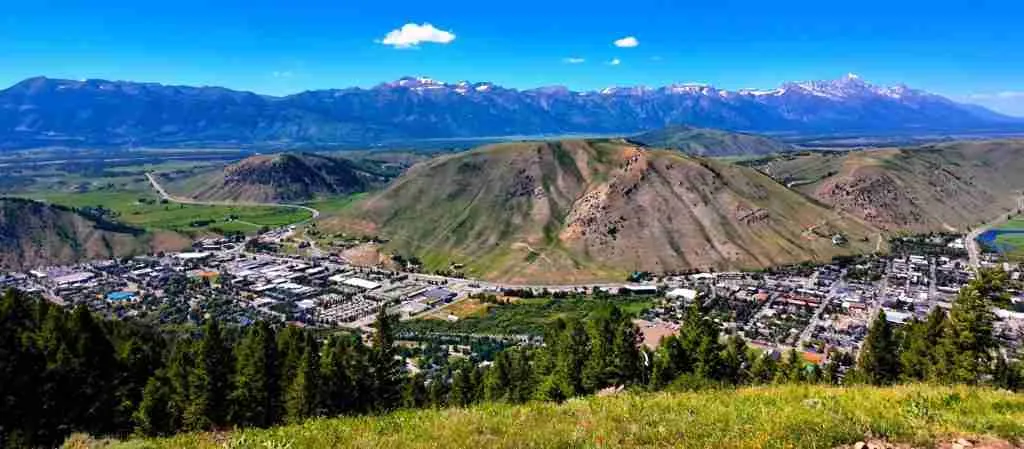
Jackson (population 10,000) serves as Grand Teton’s primary gateway community, providing full-service lodging, dining, shopping, and outfitting within 12 miles of park entrances. The town’s downtown core centers on the iconic Town Square where four elk antler arches mark the corners of a landscaped plaza surrounded by galleries, restaurants, and western-themed boutiques. Jackson functions simultaneously as authentic ranching community, outdoor recreation hub, and upscale resort town—cowboys mix with skiers, local ranchers share restaurants with tourists, and weathered pickup trucks park alongside Range Rovers reflecting the valley’s complex demographics.
The Town Square (officially George Washington Memorial Park) serves as Jackson’s literal and symbolic center, hosting summer evening concerts, winter holiday lighting, and year-round gathering space. The four elk antler arches constructed from thousands of naturally shed antlers collected annually at National Elk Refuge frame photo opportunities that define Jackson’s aesthetic. Boardwalk-style sidewalks surrounding the square evoke Old West atmosphere while galleries showcase Western art, wildlife paintings, and bronze sculptures by regional artists. The square sits at the junction of Broadway (US Highway 89 running north-south) and Cache Street, with most restaurants, shops, and services concentrated within three blocks of this intersection.
Downtown Jackson dining ranges from casual breakfast joints to James Beard-recognized fine dining. Snake River Grill maintains its position as Jackson’s most celebrated restaurant with 25-year history, extensive wine list, and refined American cuisine featuring locally-sourced ingredients—entrees cost $40-65 with complete dinners reaching $100-150 per person including wine. The Kitchen offers modern American cuisine with artistic presentation in a refined casual atmosphere. Gather delivers farm-to-table dining emphasizing Wyoming-raised meats and organic produce. Casual options include Snake River Brewing Company (Jackson’s original brewery with pub fare and house-brewed beers), Cafe Genevieve (elevated comfort food in a historic log cabin), and Local Restaurant & Bar (contemporary American cuisine with reasonable pricing).
Outdoor gear shops line Broadway and side streets providing equipment sales and rentals for Grand Teton activities. Teton Mountaineering stocks technical climbing gear, backpacking equipment, and expert advice from experienced staff who climb the Tetons regularly. Skinny Skis caters to Nordic skiing and light touring with cross-country ski equipment, trail information, and accessory sales. Jackson Hole Mountain Guides serves as the valley’s premier guiding service for climbing, mountaineering, and backcountry skiing with retail shop selling technical gear. Hoback Sports and Wilderness Sports offer general outdoor equipment from day packs to camping supplies. Most shops provide daily rental options for hiking boots, backpacks, trekking poles, and camping gear at rates of $10-30 per item daily.
The National Museum of Wildlife Art occupies a stone castle-like building on a bluff overlooking National Elk Refuge just north of Jackson. The museum houses over 5,000 artworks depicting wildlife from ancient cave paintings to contemporary pieces, with particular strength in Western American wildlife artists including Charlie Russell, George Catlin, and Carl Rungius. Admission costs $20 for adults ($18 seniors, $6 students, children under 5 free) with the museum open daily except Thanksgiving and Christmas. The on-site Palate restaurant serves creative lunch dishes ($14-22) with views across the Elk Refuge toward the Teton Range. Plan 1.5-2 hours to tour the galleries, longer if engaging with guided tours or educational programs.
Jackson nightlife centers on western-themed bars and live music venues. The Million Dollar Cowboy Bar features saddle barstools, dollar bills covering the walls and ceiling, and live country bands most nights during summer season—the honky-tonk atmosphere represents Jackson’s most iconic bar experience. The Silver Dollar Bar at the Wort Hotel displays 2,032 uncirculated 1921 silver dollars inlaid in the bar top, serving classic cocktails in a more refined Western setting. The Rose brings contemporary bar culture with craft cocktails and DJ nights. Snake River Brewing Company’s tap room offers locally-brewed beers in casual brewery atmosphere. Town Square Tavern serves as local hangout with beer selection, bar food, and sports on multiple screens.
Shopping in Jackson spans from tacky tourist souvenirs to serious Western art galleries. Dozens of galleries along Broadway and around Town Square showcase original paintings, bronze sculptures, and photography with prices ranging from hundreds to hundreds of thousands of dollars. The Wyoming Woolen Mill Company offers blankets, throws, and textiles manufactured in Wyoming. Jackson Hole Hat Company custom-fits cowboy hats using traditional techniques. Local artwork including photography, pottery, and jewelry appears in shops like Made and Mountain Dandy. Budget-conscious visitors find T-shirts, postcards, and mass-produced souvenirs at numerous gift shops, though quality varies dramatically and premium pricing applies even for basic items.
National Elk Refuge borders Jackson’s northern edge, providing winter habitat for 5,000-7,000 elk migrating from summer ranges in Grand Teton and surrounding mountains. The elk concentrate on the refuge’s 25,000 acres from November through April, feeding on natural forage supplemented by pellet feeding operations. Winter sleigh rides operated by the refuge ($40 adults, $30 children) transport visitors among the elk herds for close-up viewing and photography—the experience runs late December through March when snow depth allows sleigh operations. Summer visitors see the refuge as open grassland without elk present, though bison, pronghorn, and numerous bird species utilize the habitat year-round.
The Start Bus system provides free public transportation between Jackson town and Teton Village ski resort, operating every 15-30 minutes depending on season and time of day. The Southern Teton Area Rapid Transit service runs from 6 AM to 11 PM daily with extended hours during ski season, following Highway 390 through Wilson to Teton Village. While excellent for accessing Teton Village restaurants or ski area, the bus provides no value for Grand Teton National Park touring as routes do not serve park entrances or destinations. Bus stops marked with distinctive green signs appear at multiple downtown Jackson locations including Town Square, Albertsons grocery, and various hotels.
Jackson’s geographic setting in the broad Jackson Hole valley creates scenic beauty even within town boundaries. The Teton Range dominates western horizons with dramatic granite peaks visible from downtown streets, restaurants, and hotel windows. Snow King Mountain rises immediately south of downtown, housing the local ski area (much smaller than Jackson Hole Mountain Resort) with summer operations including alpine slide and scenic chairlift rides. The Gros Ventre River and Flat Creek flow through Jackson providing riparian corridors attracting wildlife into town—moose occasionally wander Jackson streets, deer graze on lawns, and elk frequent residential areas especially during spring and fall migration periods.
Food and Dining Strategies Grand Teton 2026
Jackson Hole dining commands premium resort town pricing across all categories, with casual dinners for two easily reaching $100-150 including drinks and fine dining exceeding $200-400 for comprehensive meals. This pricing structure reflects the valley’s isolation, short operating season requiring year-round income compression, high employee housing costs, and tourist demographic willing to pay elevated prices during vacation. Budget-conscious travelers must implement strategic approaches balancing restaurant experiences with grocery shopping for most meals, while mid-range diners benefit from understanding timing patterns and local favorites offering better value than tourist-focused establishments.
Grocery shopping in Jackson provides the most effective cost control for travelers comfortable preparing breakfast and lunch in hotel rooms with microwaves and mini-refrigerators or packing trail lunches. Albertsons on Broadway serves as Jackson’s primary full-service supermarket with standard selection at prices running 15-25% above national averages—expect $6-10 for breakfast supplies per person (yogurt, granola, fruit, bagels, coffee), $12-18 for packed lunch ingredients (sandwich materials, chips, fruit, trail mix, energy bars), and $8-12 for snacks and beverages daily. Whole Foods at Aspens Shopping Center offers organic and specialty items at premium pricing 30-40% above Albertsons. Jackson Whole Grocer downtown provides natural foods, prepared foods, and deli items in smaller format convenient for those without vehicles. Smith’s on West Broadway offers similar pricing to Albertsons with typical chain supermarket selection.
Budget breakfast options in Jackson include Persephone Bakery (pastries and coffee $8-12), Pearl Street Bagels (bagels with cream cheese or sandwiches $6-10), and Cowboy Coffee Company (espresso drinks and breakfast burritos $8-14). These quick-service spots provide substantial morning meals without sit-down restaurant pricing, though limited seating means many customers eat on-the-go. Budget travelers often combine grocery breakfast in hotel rooms with occasional restaurant breakfast as treats, maintaining average breakfast costs around $6-12 per person daily.
Casual lunch venues deliver the best restaurant value in Jackson as midday menus typically offer lower pricing than dinner for comparable quality. Local Restaurant & Bar serves sandwiches and salads ($16-26) in a contemporary casual atmosphere popular with locals. Pearl Street Bagels expands beyond breakfast into lunch sandwiches and soups ($12-18). Snake River Brewing Company offers burgers, sandwiches, and brewery plates ($15-24) with house-brewed beers ($7-9). Lotus Cafe provides health-focused organic plates including smoothie bowls, salads, and grain bowls ($14-22). Thai Me Up delivers authentic Thai cuisine in casual setting with lunch specials ($14-20). These establishments represent Jackson’s better lunch values compared to touristy restaurants along Town Square.
Mid-range dinner restaurants balance quality dining with reasonable pricing by Jackson standards. Glorietta Trattoria offers wood-fired pizzas ($18-26) and pasta dishes ($22-32) in rustic Italian atmosphere—sharing pizzas and pasta across two people reduces per-person costs while sampling multiple dishes. Snake River Brewing Company maintains consistent quality for dinner with entrees ($18-28) and rotating seasonal beers. Thai Me Up serves dinner with expanded menu from lunch including curry dishes, pad Thai, and noodle bowls ($18-28 per entree). The Rose combines bar atmosphere with elevated American cuisine including steaks, seafood, and creative entrees ($28-42). Pinky G’s Pizzeria delivers New York-style slices and whole pies in casual sports-bar setting with more affordable pricing than sit-down restaurants. These mid-range options allow restaurant dinner experiences without fine-dining expense, maintaining realistic budgets of $35-55 per person for dinner including appetizers but before alcoholic beverages.
Fine dining establishments showcase Jackson’s evolution into culinary destination with James Beard-recognized chefs and sophisticated wine programs. Snake River Grill remains Jackson’s most celebrated restaurant with 25-year history, extensive wine list (300+ selections), and refined American cuisine featuring wild game, locally-raised meats, and seasonal ingredients—entrees range $40-65 with complete dinners including wine reaching $100-150+ per person. The Kitchen delivers modern American cuisine with artistic presentation, farm-to-table philosophy, and intimate dining room—expect $45-70 for entrees, $120-180+ per person for comprehensive meals. Gather emphasizes Wyoming-sourced ingredients including heritage meats from regional ranches and organic produce from local farms, with entrees $40-60 and full dinners $100-150+ per person including wine. These premium establishments merit reservations weeks in advance for summer season, require business-casual attire minimum (though Mountain West interpretations remain relaxed), and deliver memorable culinary experiences justifying luxury-tier pricing.
Breakfast timing significantly affects restaurant wait times and dining experience. Popular spots like Cafe Genevieve, Persephone Bakery, and Pearl Street Bagels see lines forming by 8:30 AM on summer weekends, with 45-60 minute waits common during peak breakfast hours (8:30-10 AM). Arriving before 8 AM or after 10:30 AM avoids worst crowding. Many hotels include continental or full breakfast reducing restaurant breakfast necessity and associated costs.
Lunch patterns remain more relaxed than breakfast or dinner with most restaurants accepting walk-ins throughout service hours (11:30 AM-2:30 PM). However, prime locations along Town Square fill by noon during summer season requiring 15-30 minute waits or settling for less convenient seating. Restaurants outside the immediate Town Square area (Snake River Brewing Company, Thai Me Up, Lotus Cafe) maintain better availability. Many visitors pack trail lunches for full-day park exploration, making restaurant lunch an occasional town-based activity rather than daily necessity.
Dinner reservations prove essential for popular restaurants during June-September. Snake River Grill, The Kitchen, and Gather book completely for prime dinner hours (6:30-8 PM) often requiring reservations 1-2 weeks ahead during peak summer season. Mid-range restaurants increasingly accept online reservations through OpenTable or Resy, though walk-ins remain possible with flexible timing (eating before 6 PM or after 8:30 PM). The 6:30-8 PM rush represents Jackson’s peak dinner window when restaurants fill completely—eating earlier or later significantly improves walk-in availability while reducing wait times.
Beverage costs escalate quickly at Jackson restaurants. Wine by the glass ranges $12-18 at mid-range establishments, $16-24 at fine-dining restaurants, with bottles starting around $45 and extending to $200+ for premium selections. Cocktails cost $14-18 at most bars and restaurants. Local craft beers range $7-9 for pints. Splitting a bottle of wine between two people ($45-80) often provides better value than ordering individual glasses across appetizers, entrees, and desserts. Some restaurants offer happy hour pricing on select drinks and appetizers, typically 4-6 PM daily—check specific restaurant schedules as policies vary.
Tipping customs in Jackson follow standard American practices with 18-20% considered appropriate for good service at sit-down restaurants, 20-25% for exceptional service or at fine-dining establishments. Many restaurants add automatic gratuity (18-20%) for parties of six or more—check bills carefully to avoid double-tipping. Quick-service counters and coffee shops typically display tip jars or electronic payment screens suggesting 15-20% gratuities even for counter service, though these remain discretionary compared to full-service restaurant tipping.
Wildlife Viewing Grand Teton 2026
Grand Teton National Park concentrates remarkable wildlife diversity in accessible locations, with the relatively open valley floor and abundant roadside viewing areas allowing observation of large mammals, birds, and smaller species without extensive hiking. The park supports healthy populations of grizzly bears, black bears, wolves, moose, elk, bison, pronghorn, mule deer, and bighorn sheep, plus over 300 bird species ranging from trumpeter swans to golden eagles. Strategic timing and location selection dramatically increase wildlife encounter probability—dawn and dusk represent peak activity periods when mammals feed and move most actively, while seasonal patterns concentrate certain species during specific months.
Oxbow Bend ranks as Grand Teton’s premier wildlife viewing location where the Snake River’s slow-flowing meander creates rich riparian habitat visible from a large pullout on US Highway 89/191. Visit between 6-9 AM when morning light illuminates Mount Moran’s reflection in the river and wildlife activity peaks. Moose feed on aquatic vegetation in shallow water and browse willows along the bank—at least one moose appears during morning visits 70-80% of days May-September. Beavers work in the river cutting branches and maintaining lodges. River otters hunt fish with multiple family members working cooperatively. Trumpeter swans nest and raise cygnets along protected shoreline areas. Great blue herons stalk fish in shallows. Osprey and bald eagles fish from perches and dive for catches. Bring binoculars and spotting scope if available as much wildlife activity occurs 100-200 yards from the pullout—vehicles serve as effective blinds allowing close observation without disturbing animals.
Willow Flats Overlook along US Highway 89/191 provides distant views across meadows where elk herds graze throughout summer and early autumn. Stop at the signed pullout to scan the flat valley floor spreading west toward the Teton Range—elk appear as light-colored dots in green meadows, requiring binoculars or spotting scopes for detailed viewing. The area occasionally hosts grizzly bears, particularly during spring when bears feed on elk carcasses from winter mortality. Male grizzlies and black bears also dig for roots and ground squirrels in the meadows. Viewing distances typically exceed 400-800 yards maintaining safe separation while allowing observation of natural behavior. Early morning and evening produce best wildlife activity, though elk remain visible throughout daylight hours during summer.
Antelope Flats Road crossing the valley floor east of park headquarters delivers guaranteed pronghorn viewing during summer months. This 8-mile unpaved road (suitable for passenger cars) traverses open sagebrush habitat where pronghorn herds feed on vegetation and rest in scattered groups—seeing 20-50 pronghorn during a slow drive occurs routinely June-September. Pronghorn as North America’s fastest land mammal (capable of 55 mph sustained running) remain alert but relatively tolerant of vehicles when approached slowly. The road also provides access to Mormon Row historic area where bison herds utilize the grasslands surrounding weathered barns, creating classic Western photography compositions of massive animals in front of wooden structures with Teton backdrop.
Mormon Row historic area concentrates bison throughout summer as the broad grasslands provide preferred grazing habitat. The weathered Moulton Barns and nearby T.A. Moulton Barn serve as photography icons, and bison wandering through the scenes add wildlife elements to landscape compositions. Bison remain large, powerful, and potentially dangerous animals despite appearing docile—maintain 25-yard minimum distance (the length of two full-size buses) and never position yourself between bison and their calves or between bison and vehicles/structures that could trap you. Bison can sprint 35 mph and frequently charge when feeling threatened by close human approach. The Mormon Row area remains accessible year-round via US Highway 89/191 and Antelope Flats Road.
Schwabacher Landing on the Snake River delivers moose viewing in classic setting. The short 0.5-mile trail to the river crosses willow-lined channels where moose browse aquatic vegetation and woody shrubs—encounter probability exceeds 50% during morning hours May-September. The area also provides photography opportunities combining moose, the Snake River, and Teton reflections in backwater channels. Access Schwabacher Landing via a signed 1-mile dirt road (suitable for passenger cars) off US Highway 89/191 approximately 5 miles north of Moose Junction. Park in the lot and walk the easy trail to the river.
Black bears and grizzly bears range throughout Grand Teton with sighting locations varying based on seasonal food availability. Spring (May-June) concentrates bears in valley bottoms where they feed on winter-killed elk and deer carcasses, dig for roots and ground squirrels, and graze on emerging vegetation. Summer finds bears at higher elevations harvesting whitebark pine nuts (grizzlies) and foraging for berries, insects, and occasional elk calves. Autumn (September-October) brings bears back to lower elevations seeking late-season berries and preparing for hibernation. Roadside bear sightings occur unpredictably but most frequently in the Willow Flats and Spread Creek areas, with grizzlies also appearing regularly near Jackson Lake Lodge. Always maintain 100-yard distance from bears (roughly the length of a football field) and never approach for photographs or viewing—use telephoto lenses and binoculars for observation.
Wolves recolonized Grand Teton naturally after Yellowstone reintroduction in 1995, establishing territories in the northern park areas. Wolf viewing remains challenging in Grand Teton compared to Yellowstone’s Lamar Valley as Grand Teton’s wolves range widely, hunt primarily elk in remote areas, and avoid human concentrations. Occasional sightings occur in Willow Flats, along the highway north of Jackson Lake Junction, and in remote backcountry valleys. Wolves appear as coyote-sized canids from distance but display distinctly longer legs, blockier heads, and different movement patterns—binoculars or spotting scopes prove essential for confirming identification from safe viewing distances.
Bird watching throughout Grand Teton encompasses over 300 documented species from massive trumpeter swans to tiny calliope hummingbirds. Bald eagles and ospreys fish along the Snake River with active nests visible from roadside pullouts—both species tolerate vehicle-based observation when nests sit 100+ yards from roads. Great gray owls hunt rodents in meadows near forest edges, occasionally visible during daylight hours in the Phelps Lake and Death Canyon areas. Sandhill cranes nest in wetlands and feed in meadows, their distinctive calls echoing across valleys. Numerous waterfowl species including mallards, goldeneyes, mergansers, and Canada geese utilize lakes, rivers, and wetlands. Songbirds fill forests with species diversity peaking May-July. The park’s varied elevations and habitats support everything from valley-floor sagebrush specialists to alpine tundra species above treeline.
Bighorn sheep inhabit rocky terrain in isolated locations throughout the park, with roadside viewing possible along the final miles of Teton Park Road approaching Jackson Lake Dam where sheep frequent the rocky slopes. Scan cliffsides and talus fields with binoculars looking for sheep on ledges or crossing open slopes. The sheep’s tan coloration camouflages them against rock, requiring careful observation to spot animals against the background. Morning and evening provide best viewing as sheep feed more actively during cooler hours. Other viewing locations include Signal Mountain Road’s rocky sections and the slopes above Death Canyon trailhead.
Wildlife viewing etiquette and safety regulations require minimum approach distances: 100 yards for bears and wolves, 25 yards for all other wildlife including elk, bison, moose, and pronghorn. These distances represent legal requirements enforced by rangers, not suggestions—violations result in citations with substantial fines. Use telephoto lenses (300mm+ focal length) for wildlife photography rather than approaching animals closely. Remain in or near vehicles when observing wildlife from roadside pullouts as vehicles serve as effective blinds allowing close observation without disturbing natural behavior. Never feed wildlife as feeding creates dangerous habituation to humans, alters natural behavior patterns, and often leads to animals being euthanized after becoming aggressive seeking food. Report aggressive wildlife or unusual behavior to rangers immediately.
Photography Locations Grand Teton 2026
Grand Teton National Park ranks among North America’s most photographed landscapes, with the dramatic Teton Range creating instantly recognizable mountain scenery appearing in countless calendars, books, and travel publications. The park’s photography advantage stems from the peaks’ abrupt rise from the valley floor without intervening foothills—the entire mountain range remains visible from numerous accessible locations rather than requiring difficult approaches or specific viewing angles. Prime photography locations concentrate along easily accessible roads and short trails, with optimal lighting typically occurring during the first two hours after dawn and final two hours before sunset when low-angle sunlight illuminates the peaks’ east and west faces.
Schwabacher Landing provides Grand Teton’s most iconic reflection photography when calm morning conditions allow the Snake River’s backwater channels to mirror the Cathedral Group peaks. Access via a signed 1-mile dirt road off US Highway 89/191 approximately 5 miles north of Moose Junction, then walk the easy 0.5-mile trail to beaver ponds and river channels. Arrive 30 minutes before sunrise to secure position along the bank and capture alpenglow (pink/orange light) illuminating the peaks before direct sunlight reaches the valley floor. Wind destroys reflection photography—even 5 mph breeze creates ripples preventing mirror-smooth water. This location works exclusively in morning as afternoon light places the mountains in shadow. Autumn colors add golden aspens to foreground compositions, though spring wildflowers and summer green cottonwoods also provide seasonal interest.
Oxbow Bend delivers another premier reflection opportunity with Mount Moran rising 12,605 feet above the Snake River’s slow-flowing meander. Park at the large pullout on US Highway 89/191 and shoot from the roadside or walk to the river’s edge for lower angles placing more water in the frame. Morning light illuminates Mount Moran’s face and creates reflections, while calm conditions occur most reliably at dawn before valley winds develop. The location excels across all seasons—spring and summer for wildlife combined with mountains, autumn for golden cottonwoods framing the peak, winter for frosted trees against snowy mountains. A 70-200mm or 100-400mm lens allows isolating Mount Moran’s reflection while compressed perspective emphasizes the peak’s height.
Mormon Row historic area combines the most photographed barn in America with Teton backdrop in Grand Teton’s signature landscape composition. The weathered T.A. Moulton Barn appears in countless photographs with the Cathedral Group peaks rising behind the wooden structure—this single scene defines Western American landscape imagery. Arrive at dawn for optimal lighting with no other photographers present, as midday brings tourist crowds and harsh overhead light. A second historic barn (the John Moulton Barn) sits 0.5 miles north along the same road providing alternative composition with different peak alignment. Wide-angle lenses (16-35mm) capture the full scene including barn and mountains, while telephoto lenses compress perspective emphasizing peak height. Summer often includes bison grazing near the barns, autumn adds golden light and dramatic clouds, winter creates monochromatic scenes with snow-covered everything. Access Mormon Row via Antelope Flats Road off US Highway 89/191.
Snake River Overlook (also called Ansel Adams Point) sits along US Highway 89/191 approximately 7 miles north of Moose Junction where Ansel Adams captured his famous 1942 image “The Tetons and the Snake River.” A bronze plaque marks the exact location at the overlook’s northern end. Photograph from the elevated viewpoint showing the Snake River winding through cottonwood and spruce forests with the Cathedral Group rising in the distance. Morning light works well, while afternoon creates flat lighting. Autumn provides the most dramatic seasonal color with golden cottonwoods contrasting against dark evergreens and gray granite peaks. A 70-200mm or similar telephoto lens captures Adams’s classic composition, though wider angles allow including more river and forest. The original Adams photograph was taken from the rocks above the current overlook (off-limits today), creating slightly different perspective than modern photographs taken from the platform.
Jenny Lake’s southern and eastern shores provide intimate mountain compositions with the lake’s turquoise water leading to peaks rising directly above. Walk the String Lake trail from the String Lake trailhead or access Jenny Lake shoreline from the east shore parking area. Low-angle morning or evening light illuminates the Cathedral Group including Grand Teton, Mount Owen, and Teewinot while highlighting the lake’s remarkable color. A 24-70mm or 24-105mm covers most compositions from shoreline positions, while telephoto lenses isolate specific peaks reflected in the lake. Hidden Falls and Inspiration Point (accessed via Jenny Lake boat shuttle or shoreline trail) offer elevated perspectives looking down on Jenny Lake with the valley beyond, though photography from Inspiration Point requires managing crowds on the small viewing platform.
Jackson Lake Dam area delivers Mount Moran photographs from relatively close range with the dam’s infrastructure providing foreground interest. Park at the dam viewing area and walk onto the dam’s pedestrian path for different angles along the massive concrete structure. Morning light illuminates Mount Moran’s 12,605-foot summit and north face, while the dam’s geometric lines contrast with organic mountain forms. A 70-200mm lens works well for compositions emphasizing Mount Moran isolated against sky, while wider angles include more of the dam and Jackson Lake. The location remains accessible year-round as US Highway 89/191 stays open through winter.
Taggart Lake trail delivers subalpine lake photography with Teton peaks reflected in calm water and wildflower-filled meadows in foreground. The 3.5-mile roundtrip hike gains 400 feet to the lake, requiring 2-2.5 hours total with time for photography. Morning light works well though afternoon can be acceptable depending on season. Wildflowers peak July-August in meadows approaching the lake. A wide-angle zoom (16-35mm or 24-70mm) captures scenes including wildflowers, lake, and mountains, while telephoto lenses isolate reflections and mountain details. The trail’s relatively easy access and shorter length compared to other lake hikes makes Taggart a practical destination for photographers carrying heavy camera bags and tripods.
Cathedral Group Turnout along Teton Park Road provides the closest roadside views of Grand Teton, Mount Owen, and Teewinot. Park at the signed pullout approximately 2 miles north of Jenny Lake Junction and photograph from roadside or walk a short distance into the sagebrush for cleaner foreground. The location works in both morning and evening light with direct illumination on the peak faces, though extreme morning or evening may create excessive contrast. A telephoto zoom (70-200mm or 100-400mm) isolates the three main peaks filling the frame with granite faces and snowfields. This location sees heavy tourist traffic throughout summer days but remains remarkably quiet at dawn and dusk.
Photography equipment recommendations for Grand Teton include wide-angle zoom (16-35mm or 24-70mm) for landscape scenes incorporating foreground elements and full mountain range, telephoto zoom (70-200mm or 100-400mm) for isolating peaks and compressing perspective, and sturdy tripod essential for dawn/dusk low-light work and reflection photography requiring long exposures. Circular polarizing filters reduce atmospheric haze, deepen blue skies, and manage water reflections. Neutral density graduated filters help balance bright sky against darker foreground, particularly for sunrise/sunset photography. A reliable camera backpack distributes weight comfortably for hiking to more remote locations with full photography kit.
Seasonal photography considerations include spring (May-June) for wildflowers at valley elevations, moose with calves, and dramatic storm clouds; summer (July-August) for high-elevation wildflowers above treeline, complete trail access, and extended golden hour timing; autumn (mid-September-early October) for golden aspen groves, elk rut activity, and dramatic early-winter storms; and winter (December-March) for snow-covered landscapes, minimal crowds, and stark monochromatic compositions. Each season presents distinct advantages and challenges—summer offers easiest access and most reliable weather, autumn delivers most dramatic color, winter creates pristine scenes requiring serious cold-weather preparation.
Money-Saving Strategies Grand Teton 2026
Budget optimization for Grand Teton trips requires strategic timing, accommodation flexibility, meal planning, and activity prioritization to reduce costs while preserving essential experiences. The most impactful savings come from shoulder season visits (June and September) when lodging rates drop 20-30% below peak July-August pricing while weather and trail conditions remain generally favorable. June delivers wildflower displays, newborn wildlife, and longer daylight hours despite slightly higher precipitation probability. September offers golden aspen colors, elk bugling, comfortable temperatures, and dramatically reduced crowds after Labor Day weekend while all facilities remain operational through month’s end.
Accommodation savings start with booking timing—reserving Jackson hotels 3-4 months ahead for summer season secures standard rates before remaining inventory forces premium pricing on last-minute bookers. Budget properties ($95-180 per room nightly) along Broadway and US Highway 89 provide clean basic rooms with free breakfast included, effectively saving $15-25 per person daily compared to paying restaurant breakfast rates. Choosing properties with microwaves and mini-refrigerators enables grocery breakfast and lunch preparation, delivering 50-60% meal cost savings compared to restaurant dining for all meals. Vacation rental apartments and condos accommodate larger groups with full kitchens, making multi-family trips or group travel more economical than individual hotel rooms.
The America the Beautiful Annual Pass delivers significant value for travelers visiting multiple national parks or returning to Grand Teton/Yellowstone during the year. The $80 pass (U.S. residents) covers entrance fees to all U.S. national parks for one year—visiting just three fee-charging parks makes the pass cost-effective compared to individual entrance fees. For Grand Teton focused trips, the pass becomes worthwhile only when spending 16+ days across multiple visits or when combining with Yellowstone and other regional parks within the same year.
Grocery shopping for breakfast and lunch represents the single most effective ongoing cost reduction during Grand Teton trips. Albertsons on Broadway or Smith’s on West Broadway stock standard groceries at prices 15-25% above national averages—still dramatically cheaper than restaurant meals. Spend $40-60 at the grocery store for 3-4 days of breakfast and lunch supplies for two people: yogurt, granola, fruit, bagels, peanut butter, sandwich bread, deli meat, cheese, crackers, trail mix, energy bars, and beverages. Pack trail lunches daily and enjoy restaurant dinners showcasing Jackson’s food culture without accumulating expensive breakfast and lunch bills. This pattern maintains daily meal costs at $55-75 per person (two people sharing grocery purchases plus one casual restaurant dinner daily) compared to $95-135 per person for three restaurant meals.
Free activities dominate Grand Teton recreation with hiking the park’s 200+ miles of maintained trails costing nothing beyond transportation to trailheads. Day hikes range from easy lakeside strolls at String Lake and Leigh Lake to challenging alpine routes climbing to Amphitheater Lake or crossing Paintbrush Divide—every difficulty level offers spectacular scenery without fees. Wildlife viewing from roadside pullouts at Oxbow Bend, Schwabacher Landing, and Willow Flats requires only binoculars and patience. Photography throughout the park provides world-class subjects without cost. Free ranger programs including guided walks and evening campfire talks at visitor centers deliver educational experiences led by expert naturalists. These free activities create full-day experiences comparable or superior to paid guided tours.
Selective guided activity participation allows experiencing Grand Teton’s signature Snake River float trip ($75-95 per person) without booking multiple guided experiences. One carefully chosen guided activity during a 3-4 day visit provides professional interpretation and access to specialized experiences while keeping overall activity costs reasonable. The Snake River float represents Grand Teton’s most worthwhile guided activity as independent floating requires private raft, river knowledge, and parking logistics challenging for most visitors—the commercial floats deliver exceptional value combining wildlife viewing, mountain scenery, and expert naturalist guiding.
Vehicle-based wildlife viewing provides morning and evening activity without fees. Drive to Oxbow Bend for dawn moose observation (6:30-8 AM), return to Jackson for breakfast and midday activities, then visit Willow Flats or Antelope Flats Road for evening elk and pronghorn viewing (5:30-7:30 PM). This pattern fills the day’s bookends with prime wildlife hours while leaving midday for hiking, photography, or town-based activities. The vehicle serves as effective wildlife blind allowing close observation without disturbing animals.
Camping alternatives to hotel accommodations reduce lodging costs dramatically. Grand Teton’s six developed campgrounds charge $35-45 per site nightly compared to $95-180 for budget hotels—the $50-135 nightly savings accumulates significantly across multi-day trips. Gros Ventre Campground (350 sites) and Colter Bay Campground (335 sites) offer the best availability for non-reservation sites, accepting first-come first-served arrivals. Jenny Lake Campground (49 sites) and Signal Mountain Campground (81 sites) fill by 8-9 AM during summer requiring early arrival. Lizard Creek Campground (60 sites) at Jackson Lake’s north end sees lighter pressure. All campgrounds provide restrooms, drinking water, bear-proof food storage, and access to park hiking. Camping requires owning or renting equipment (tents, sleeping bags, cooking gear) making it most practical for those already equipped or willing to invest in gear for multiple trips.
Avoiding peak holiday periods saves substantially on lodging and dining. Independence Day week (June 28-July 7, 2026), Labor Day weekend (August 30-September 2), and any three-day holiday weekends command premium pricing across Jackson accommodations—rates inflate 40-60% above standard summer pricing, minimum night stays increase to 3-4 nights, and availability disappears months in advance. Visiting the week before or after major holidays captures summer weather and operations without holiday premium pricing.
Pack essential supplies from home rather than purchasing in Jackson where resort town pricing inflates costs 30-50% above normal retail. Bring sunscreen, insect repellent, basic first aid supplies, batteries, memory cards, and any specialty items needed for planned activities. Jackson’s outdoor shops stock comprehensive gear but charge premium prices reflecting limited competition and tourist demographic. Rent specialized equipment like bear spray ($8-12 per day) or trekking poles ($8-10 per day) only when needed rather than purchasing items used briefly.
Fuel strategy for rental cars includes filling the tank before returning to Jackson Hole Airport as the airport’s immediate vicinity lacks gas stations—the nearest stations sit 3-4 miles away in Jackson. Filling in town saves the rental company’s inflated refueling fees (typically $8-10 per gallon) assessed when returning cars empty. One tank fill ($40-60) covers 250-300 miles of typical Grand Teton park touring over 4-5 days, making fuel costs relatively modest compared to other trip expenses.
Practical Tips and Insider Knowledge Grand Teton 2026
Cell phone coverage throughout Grand Teton remains limited with Verizon providing the most reliable service, AT&T offering moderate coverage, and T-Mobile/Sprint delivering minimal connectivity. Expect service in Jackson town, near Craig Thomas Discovery & Visitor Center at Moose, at Colter Bay Village, and near Jackson Lake Lodge, but plan on no coverage along much of Teton Park Road, at most trailheads, and throughout backcountry areas. Download offline maps before entering the park and inform trip contacts of your planned itinerary and expected return time as emergency communication becomes impossible in many locations. The park headquarters at Moose provides phone and Wi-Fi access for urgent communications.
Altitude effects require awareness and gradual acclimatization for visitors arriving from sea level. Jackson sits at 6,200 feet elevation with park trailheads ranging 6,700-7,000 feet and popular hiking destinations reaching 9,000-10,700 feet. Reduced oxygen at elevation causes increased fatigue, shortness of breath during exertion, headaches, and decreased alcohol tolerance. Allow 24-48 hours for initial acclimatization before attempting strenuous hikes, drink extra water (4-5 liters daily when hiking), avoid excessive alcohol consumption during first days at altitude, and recognize altitude sickness symptoms (severe headache, nausea, dizziness) requiring descent to lower elevation. Most visitors adapt within 2-3 days though some individuals remain altitude-sensitive requiring medical consultation.
Weather patterns in Grand Teton change rapidly with afternoon thunderstorms common July-August. Morning typically provides clearest conditions with storms developing after noon as valley heating creates convective activity—plan alpine hikes and high-elevation activities for morning completion, descending to lower elevations before afternoon storm arrival. Lightning poses serious danger on exposed ridges, mountain summits, and open terrain—immediately descend from high points when hearing thunder or seeing storm development, avoiding isolated trees and metal objects. Temperatures drop 3-5 degrees Fahrenheit per 1,000 feet elevation gain, requiring layered clothing even for summer hiking. A 75-degree valley floor temperature translates to 50-55 degrees at 10,000 feet plus wind chill from mountain breezes.
Bear safety protocols apply throughout Grand Teton as both black bears and grizzly bears range across all park elevations. Carry bear spray in accessible holster on chest or hip belt, not buried in backpack—multiple documented cases show bear spray effectively deterring aggressive bear charges when deployed properly. Hike in groups of 3+ people as bears rarely approach larger parties. Make noise on trails through forest and brushy areas where visibility is limited—talking loudly or clapping periodically alerts bears to human presence allowing them to avoid encounters. Store all food and scented items in bear-proof food storage lockers provided at trailheads and campgrounds—never leave food in vehicles as bears break windows accessing food odors. Report bear sightings to rangers providing location, time, behavior, and bear characteristics (color, size, cubs present) to help track bear movements.
Moose encounters require caution as these 1,000-pound ungulates become aggressive when surprised or protecting calves. Moose frequent roadside areas throughout Grand Teton, particularly at Oxbow Bend, Schwabacher Landing, and along Willow Flats—maintain 25-yard minimum distance and never position yourself between moose and calves or between moose and thick brush where they may feel trapped. Moose stomp and kick with front hooves when feeling threatened, capable of inflicting severe injuries. If a moose displays aggressive behavior (laid-back ears, raised hair on neck and shoulders, licking lips), back away slowly without turning your back and seek cover behind trees or vehicles.
Drinking water requires treatment when obtained from backcountry sources as giardia parasites contaminate many streams and lakes throughout the park. Carry sufficient water for day hikes (2-3 liters per person minimum, more for longer/harder hikes) or bring filtration system or chemical treatment tablets for backcountry water sources. The parks’ developed areas (visitor centers, campgrounds, lodges) provide treated drinking water from taps. Dehydration occurs easily at altitude combined with dry mountain air—drink water consistently throughout the day rather than waiting until feeling thirsty.
Parking strategies during peak summer season make or break daily plans as popular destinations fill completely by early morning. Jenny Lake parking areas reach capacity by 8 AM on July-August weekends, forcing late arrivals to lots 0.5-1 mile away requiring walking to trailheads. String Lake and Leigh Lake parking fills similarly early. Arriving before 8 AM at any major destination ensures parking availability even during peak season, while after 5 PM parking reopens as day visitors depart. Alternative strategy involves hiking less popular trails during midday (Taggart Lake, Death Canyon, Cascade Canyon from String Lake) that maintain parking availability due to longer approaches or perceived difficulty.
Restrooms throughout Grand Teton concentrate at visitor centers, developed campgrounds, and picnic areas—trailheads typically provide vault toilets (non-flush facilities) or no facilities at all. Plan restroom stops at Craig Thomas Discovery & Visitor Center at Moose, Jenny Lake Visitor Center, Jackson Lake Lodge, Colter Bay Village, or Signal Mountain Lodge before hiking. Many popular trailheads (String Lake, Leigh Lake, Taggart Lake) have vault toilets in parking areas. Bring toilet paper for backcountry use as toilet paper often depletes at vault toilets during busy periods.
Laundry facilities exist at Colter Bay Village and Signal Mountain Lodge within the park, or in Jackson at commercial laundromats on West Broadway. Most hotels lack in-room laundry and charge premium fees for laundry services—packing adequate clothing for trip length or planning midweek laundry stop avoids service charges or insufficient clothing.
Medical services in Jackson include St. John’s Medical Center providing emergency room, urgent care, and full hospital services. The hospital sits on the eastern edge of Jackson off South Redmond Street. Urgent care clinics downtown handle non-emergency medical issues with shorter wait times than emergency room. Pharmacies include Walgreens and Smith’s Pharmacy. No medical facilities exist inside Grand Teton National Park proper—serious medical emergencies require ambulance transport to Jackson (15-25 minutes from most park locations) or helicopter evacuation for critical situations. Travel insurance covering medical evacuation proves worthwhile for international visitors and those with pre-existing conditions.
ATMs and banking services concentrate in Jackson with ATMs at most grocery stores, gas stations, and bank branches downtown. Credit cards work throughout Jackson and at park visitor centers, lodges, and tour operators, though small cash amounts prove useful for tips, roadside produce stands, and any locations experiencing electronic payment system issues. Inside the park, Jackson Lake Lodge and Colter Bay Village provide limited banking services.
Combining Grand Teton and Yellowstone 2026
Grand Teton and Yellowstone National Parks connect seamlessly with just seven miles separating Grand Teton’s northern boundary from Yellowstone’s south entrance along US Highway 89/191/287, creating natural opportunities for combined two-park itineraries. A single $35 vehicle entrance pass (or $80 America the Beautiful Annual Pass) grants seven-day access to both parks under one fee, recognizing their proximity and visitors’ tendency to explore both during single trips. The parks’ distinct characters complement each other—Grand Teton emphasizes dramatic mountain scenery and intimate valley ecosystems, while Yellowstone showcases geothermal features, expansive plateau landscapes, and concentrated wildlife in broad valleys.
Geographic positioning influences combined itinerary logistics significantly. Grand Teton’s compact 30-mile length allows thorough exploration in 3-4 days covering all major destinations, scenic drives, and hiking highlights. Yellowstone spans 63 miles north-south and 54 miles east-west with attractions scattered throughout—comprehensive touring requires 4-5 days minimum. Most travelers find 7-8 days optimal for experiencing both parks’ highlights without constant driving: 3 days Grand Teton, 4-5 days Yellowstone.
Base location strategies for combined trips include Jackson-based with Yellowstone day trips (realistic for southern Yellowstone only), split lodging between Jackson and Yellowstone accommodations (3-4 nights each), or Yellowstone-based with Grand Teton day trips (less common but workable for northern Yellowstone lodging). Jackson-based itineraries maintain consistent accommodation and eliminate packing/moving but involve substantial daily driving—Jackson to Old Faithful requires 2 hours one-way (125 miles), making midday Yellowstone visits feasible but limiting dawn/dusk activity timing. Split lodging reduces daily driving substantially and allows experiencing both parks during optimal morning/evening hours when wildlife activity peaks and lighting excels for photography.
Jackson-based approach works best for travelers prioritizing Grand Teton with limited Yellowstone sampling. Dedicate days 1-3 to Grand Teton covering Jenny Lake, Cascade Canyon, Snake River float, Mormon Row, Oxbow Bend, and primary hiking destinations. Day 4 ventures to Yellowstone’s geyser basins (Old Faithful, Grand Prismatic Spring, Norris) requiring full-day commitment with 2-hour drive each direction. Day 5 explores Yellowstone’s Grand Canyon and Hayden Valley returning to Jackson by evening. This pattern delivers Grand Teton depth plus Yellowstone highlights without accommodation changes, though extensive Yellowstone driving limits wildlife viewing during prime early/late hours.
Split lodging strategy optimizes both parks’ experiences by reducing daily driving and enabling full-day exploration from centrally-located bases. Spend nights 1-3 in Jackson focusing exclusively on Grand Teton—complete all major Grand Teton activities including hiking, Snake River float, wildlife viewing at Oxbow Bend and Willow Flats, photography at Mormon Row and Schwabacher Landing, and Jackson town dining. Day 4 morning involves final Grand Teton activities (String Lake, Signal Mountain drive) before departing midday for Yellowstone. Check into Yellowstone lodging (Lake area, Canyon area, or Old Faithful area) and begin Yellowstone touring. Nights 4-7 based in Yellowstone allow thorough exploration of geyser basins, Grand Canyon of the Yellowstone, Lamar Valley wildlife viewing, and Mammoth Hot Springs without returning to Jackson. This approach adds packing/moving logistics but dramatically improves both parks’ experiences by positioning you near attractions during optimal hours.
Yellowstone lodging reservations open one year in advance at yellowstonenationalparklodges.com with Lake Hotel, Old Faithful Inn, and Canyon Lodge representing the most popular properties filling within hours or days of reservation opening. Book simultaneously with Grand Teton planning (6-12 months ahead) to secure preferred Yellowstone accommodations. Yellowstone lodging costs $200-450 per room nightly for park lodges, comparable to Jackson mid-range properties but with less selection and amenities. West Yellowstone, Gardiner, and Cooke City gateway towns provide additional lodging options outside park boundaries.
Suggested combined itinerary for first-time visitors allocating 7 days: Day 1 Jackson arrival, afternoon orientation drive on Grand Teton’s Teton Park Road. Day 2 Grand Teton’s Jenny Lake, Cascade Canyon hiking, Jenny Lake boat shuttle. Day 3 Snake River scenic float morning, Mormon Row photography, Oxbow Bend wildlife evening. Day 4 Grand Teton morning (String Lake, Signal Mountain), midday drive to Yellowstone, check into Old Faithful area lodging, evening geyser viewing. Day 5 Yellowstone geyser basins (Old Faithful, Grand Prismatic, Norris). Day 6 Yellowstone Grand Canyon, Hayden Valley wildlife, Yellowstone Lake. Day 7 Yellowstone Lamar Valley dawn wildlife viewing, Mammoth Hot Springs, depart via north entrance or return to Jackson. This pattern delivers both parks’ essential highlights with manageable daily driving and logical geographic progression.
Alternative approach for those unable to secure Yellowstone lodging involves staying in West Yellowstone (gateway town at Yellowstone’s west entrance) or Gardiner (gateway town at north entrance) rather than in-park accommodations. West Yellowstone sits 90 miles from Jackson (2 hours drive) via Idaho Highway 20 over Teton Pass, providing abundant hotels, restaurants, and services while maintaining access to Yellowstone’s western attractions (Old Faithful, Madison, Norris). Gardiner at Yellowstone’s north entrance offers year-round access (only entrance remaining open in winter) with numerous hotels and restaurants, though 160 miles from Jackson (3+ hours) making combined visits less practical from this base.
Frequently Asked Questions Grand Teton 2026
How many days do you need in Grand Teton National Park?
Most first-time visitors find 3-4 days ideal for experiencing Grand Teton’s highlights including major scenic drives, signature hikes to Jenny Lake and Cascade Canyon, Snake River float trip, wildlife viewing at Oxbow Bend and Willow Flats, and photography at iconic locations like Mormon Row. This duration allows hiking 2-3 major trails, completing one guided activity, dedicating time to wildlife observation during peak dawn/dusk hours, and exploring Jackson town without constant rushing. Ambitious travelers comfortable with long days can cover essential highlights in 2 days by hiking Jenny Lake/Cascade Canyon one day and combining scenic drives with Snake River float the second day, though this pace sacrifices wildlife viewing opportunities and forces skipping many worthwhile locations. Outdoor enthusiasts who enjoy extensive hiking, wildlife photography, and thorough backcountry exploration easily spend 5-7 days exploring the park’s 200+ miles of trails and countless photography locations while maintaining relaxed pace.
What is the best entrance to use for Grand Teton?
The Moose Entrance at the park’s southern boundary serves as the optimal entry point for most visitors arriving from Jackson Hole Airport or Jackson town as it provides immediate access to Craig Thomas Discovery & Visitor Center (essential first stop for maps, information, and orientation), positions you at the start of Teton Park Road running north along the mountain base, and places you closest to Jenny Lake, Cascade Canyon, and the park’s most popular hiking destinations. From Moose, Teton Park Road leads north past all major attractions in logical sequence: Mormon Row historic area accessed via Antelope Flats Road, Taggart Lake trailhead, Jenny Lake, String Lake and Leigh Lake, and eventually Jackson Lake Lodge and Colter Bay Village. The Moran Entrance at the park’s eastern boundary serves travelers arriving from the east via US Highway 26/287, while the relatively minor Buffalo Entrance near Moran provides access for those approaching from Togwotee Pass. All entrance stations charge identical fees and issue the same seven-day pass covering both Grand Teton and Yellowstone.
What should I pack for Grand Teton in summer?
Essential summer packing for Grand Teton includes layered clothing system for variable mountain weather (base layers, insulating mid-layer fleece or light puffy jacket, waterproof rain jacket), sturdy hiking boots or trail shoes with ankle support, sun protection (wide-brimmed hat, sunglasses with UV protection, SPF 50+ sunscreen), hydration system (reusable water bottles or hydration bladder holding 2-3 liters), daypack for carrying layers and supplies on hikes, basic first aid kit with blister treatment and pain relievers, bear spray in accessible holster for hiking, headlamp or flashlight with extra batteries, insect repellent for mosquitoes (worse in June-July), camera and extra batteries/memory cards, binoculars for wildlife viewing (8×42 or 10×42 recommended), trail snacks and lunch supplies for day hikes, and toiletries including lip balm with SPF. Optional but valuable items include trekking poles for knee support on steep descents, telephoto lens for wildlife photography (300mm+ focal length), spotting scope for distant wildlife observation, field guide books for bird and wildflower identification, and portable phone charger as battery drains quickly in areas with weak signal. Pack all layers regardless of forecast as mountain weather changes rapidly—75-degree valley temperatures can become 50 degrees at elevation plus wind chill.
Are there grizzly bears in Grand Teton?
Grand Teton supports healthy grizzly bear population as part of the Greater Yellowstone Ecosystem, with approximately 70-100 grizzlies ranging throughout the park alongside larger numbers of black bears. Grizzly sightings occur regularly though unpredictably, with Willow Flats, areas around Jackson Lake Lodge, Spread Creek, and high-elevation regions seeing most activity. Both black bears and grizzlies appear similar from distance—distinguishing features include grizzlies’ prominent shoulder hump (absent on black bears), dish-shaped face profile (black bears have straight face profiles), and longer claws. All hikers should carry bear spray in accessible holster, hike in groups of three or more people, make noise when traveling through areas with limited visibility, and maintain 100-yard minimum distance from any bear. Store all food in bear-proof lockers at trailheads and campgrounds as bears can smell food from miles away. Most bear encounters occur when bears are surprised at close range—making noise and hiking in groups prevents most dangerous encounters by alerting bears to human presence allowing them to avoid contact.
Can you swim in the lakes at Grand Teton?
Swimming is permitted in Grand Teton’s lakes though water temperatures remain cold throughout summer ranging 55-65 degrees Fahrenheit even during August—these glacier-fed alpine lakes rarely warm enough for comfortable extended swimming. String Lake offers the best swimming access with shallow sandy beaches along the eastern shore, calmer water than other lakes due to protected setting, and family-friendly atmosphere. Leigh Lake’s southern shore provides additional swimming areas though water stays colder than String Lake. Jenny Lake allows swimming though steep drop-offs and deeper water create less ideal conditions compared to String Lake. Jackson Lake’s size creates wind and waves making swimming less appealing except in protected bays. Most swimmers tolerate the cold water for brief periods (15-30 minutes) during hot afternoon hours (80+ degree temperatures) when the contrast feels refreshing. No lifeguards patrol any park lakes—swimming occurs at own risk with cold water increasing fatigue and reducing endurance significantly compared to temperate water.
What is the best hike in Grand Teton National Park?
Cascade Canyon trail from Jenny Lake ranks as Grand Teton’s most rewarding hike for most visitors, combining spectacular alpine scenery with manageable distance when using the Jenny Lake boat shuttle ($15-20 roundtrip). The boat cuts 2.5 miles each direction from the approach, leaving 6.2 miles roundtrip from boat dock to the canyon’s first major meadow 3.1 miles up-canyon—manageable for moderately fit hikers in 3-4 hours. The hike ascends gradually through glacier-carved canyon with walls rising 2,000 feet on both sides, passes multiple waterfalls and cascades, crosses wildflower meadows (July-August), and offers potential moose encounters in willow areas. Strong hikers continue deeper into Cascade Canyon to the forks at 6.8 miles from boat dock (13.6 miles roundtrip total), though the first meadow at 3.1 miles provides sufficient dramatic scenery for most visitors to feel satisfied. Amphitheater Lake trail (9.8 miles roundtrip, 3,000 feet elevation gain) represents the best challenging option for experienced hikers seeking high-alpine environment and spectacular cirque lake views, while Taggart Lake (3.5 miles roundtrip, 400 feet gain) excels as easier option delivering classic Teton scenery with lake reflections and aspen groves.
What time of day are animals most active in Grand Teton?
Wildlife activity peaks during the first 2-3 hours after dawn (6-9 AM depending on season) and the final 2-3 hours before dark (5-8 PM in summer, earlier as days shorten in autumn) when cooler temperatures and low-angle lighting encourage animals to feed, move between habitat areas, and engage in social behaviors. Moose feed on aquatic vegetation during morning hours in willow-lined waterways at Oxbow Bend, Schwabacher Landing, and along river corridors—arriving before 7 AM significantly increases moose encounter probability. Elk graze actively in meadows at Willow Flats and Antelope Flats during dawn and dusk while resting in shade during midday heat. Bears forage most actively at dawn and dusk, with afternoon hours seeing reduced activity as bears rest in cool forest cover. Birds including raptors hunt primarily during morning hours when thermals begin developing and small mammals become active. The 10 AM-4 PM midday window represents the least productive wildlife viewing period as most large mammals seek shade and rest during warmest hours, though patient observers occasionally spot animals even during midday. Serious wildlife photographers and observers plan early morning excursions departing hotel by 6-6:30 AM, return for midday break, then head back out for evening viewing 5-7:30 PM.
Do you need reservations for Grand Teton National Park?
Grand Teton National Park requires no advance reservations for park entry, day hiking, or general visitation—simply arrive at entrance stations, pay the $35 vehicle fee (or present annual pass), and proceed into the park. However, several specific activities and services do require reservations: overnight backcountry camping permits (required for all backcountry camping, obtained through advance reservation system or at visitor centers), in-park lodging at Jackson Lake Lodge, Jenny Lake Lodge, Colter Bay Village, and Signal Mountain Lodge (book one year ahead at gtlc.com), Snake River float trips with commercial outfitters during peak season (book 2-3 days ahead minimum), and any guided tours or activities offered by private companies. The Jenny Lake boat shuttle operates first-come first-served without reservations—during peak summer season this means arriving at Jenny Lake by 7:30-8 AM to secure boat passage before afternoon shuttles fill. Developed campgrounds within the park accept reservations for Jenny Lake Campground, Signal Mountain Campground, Colter Bay Campground, and Headwaters Campground, while Gros Ventre Campground operates first-come first-served.
What should I do if I encounter a bear in Grand Teton?
If you encounter a bear at distance (100+ yards), maintain that distance while slowly backing away and speaking calmly to identify yourself as human—never run as running triggers chase response. If the bear approaches or you encounter a bear at close range (under 100 yards), stop immediately, speak calmly in a normal voice, slowly raise your arms to appear larger, and avoid direct eye contact which bears interpret as aggression. If the bear continues approaching or displays aggressive behavior, deploy bear spray when the bear reaches 30-40 feet distance—aim slightly downward to create a cloud between you and the bear, spray in 2-3 second bursts, and be prepared for temporary spray effects on yourself including respiratory irritation and reduced visibility. If a bear makes contact, play dead by lying flat on your stomach with hands clasped behind neck, legs spread to prevent being rolled over, and remain motionless until the bear leaves the area completely—most grizzly attacks involve defensive behavior when bears feel threatened, and playing dead removes the perceived threat. The exception involves predatory attacks (extremely rare) where the bear treats humans as prey—in this case fight back aggressively using any available weapons including rocks, sticks, and fists targeting the bear’s face and muzzle. Never attempt to retrieve bear spray from backpack during encounter—carry spray in accessible holster on hip belt or chest where you can draw it in under 2 seconds. Report all bear encounters to rangers regardless of outcome to help track bear movements and prevent future dangerous situations.
How much does a Snake River float trip cost in Grand Teton?
Snake River scenic float trips in Grand Teton cost $75-95 per adult for the standard 10-mile journey from Deadman’s Bar to Moose Landing taking approximately 1.5-2 hours on the water plus 45 minutes for shuttle transportation, bringing total experience to 3 hours. Children’s rates range $50-70 depending on age (typically reduced pricing for ages 6-15, free for children under 6 at many outfitters). Private raft charters for exclusive family or small group experiences cost $400-600 total for 2-4 people, providing personalized guiding and flexible timing without sharing the raft with other guests. Multiple authorized concessioners operate this route including Barker-Ewing Scenic Float Trips (the original outfitter since 1963), National Park Float Trips, Grand Teton Lodge Company, and several Jackson-based companies. All companies float the identical designated 10-mile “wild and scenic” stretch inside the park, use similar 10-passenger rafts, and provide naturalist guides—differences involve guide quality, departure timing options, and advance booking requirements. Book 2-3 days ahead during peak summer season (July-August) as popular morning departure times (8-10 AM optimal for wildlife viewing) fill completely, or reserve weeks ahead if visiting during holiday periods.