Granada 3-Day Itinerary 2027: Alhambra, Albaicín & Sacromonte
Granada rewards those who plan. The city packs three of Spain’s most compelling heritage landscapes — the Alhambra palace complex, the Moorish labyrinth of the Albaicín, and the cave-riddled hillsides of Sacromonte — into a walkable radius that makes a three-day visit genuinely transformative rather than breathless. This guide gives you a day-by-day 2027 itinerary built around the correct visiting sequence, advance booking strategy for Alhambra tickets, and complete cost breakdowns across every budget tier so you arrive knowing exactly what to expect.
Key Takeaways
- Book Alhambra tickets 6–8 weeks before arrival in 2027 — timed-entry slots for the Nasrid Palaces sell out months ahead in peak season; same-day tickets at the gate do not exist.
- Budget travelers need approximately €65–100 per person daily (two sharing a budget room), mid-range travelers €125–200, and luxury travelers €290–510; a complete 3-day trip runs approximately €195–300 at the budget end and €375–600 at mid-range.
- The Alhambra, Generalife, and Albaicín form a single UNESCO World Heritage Site, inscribed in 1984 and extended to include the Albaicín in 1994 — giving Granada’s two great Moorish hills a shared designation unique in Spain.
- Granada’s free tapas tradition means most traditional bars bring an unsolicited tapa with every drink ordered, substantially reducing food costs below what comparable Spanish cities charge.
- Follow the Day 1–2–3 sequence in this guide: Alhambra on your freshest day, Albaicín and Sacromonte on Day 2, city center on Day 3 — this avoids doubling back and matches energy levels to terrain difficulty.
- Avoid midsummer if possible — July and August temperatures on the Alhambra’s exposed hilltop regularly exceed 38°C; spring (April–May) and autumn (September–October) offer the most comfortable conditions.
People Also Ask About Granada 3-Day Itinerary 2027
How much does a 3-day trip to Granada cost in 2027?
A 3-day Granada trip runs approximately €195–300 per person for budget travelers sharing a room (using Granada’s free tapas tradition for most meals, walking and using the bus, and spending roughly €19–20 on Alhambra admission). Mid-range travelers — comfortable hotel, sit-down restaurant lunches, one evening flamenco show — should plan for €375–600 per person over three days. Luxury visitors staying in a historic parador or boutique carmen with private Alhambra guiding typically spend €870–1,530 per person. Day 1 is consistently the most expensive day regardless of tier, because the Alhambra admission falls there; Days 2 and 3 cost progressively less on admissions.
How far in advance should I book Alhambra tickets for 2027?
Book at least 6–8 weeks before your arrival for off-peak months (November through March, excluding Christmas week and Holy Week); 2–3 months ahead for April through October. The Alhambra operates a daily visitor cap of around 6,600 tickets and the timed-entry slots for the Nasrid Palaces — the most significant architectural interior in the complex — are the first to fill. Book directly through alhambra-patronato.es, the official platform, to avoid third-party markups of €5–15 per ticket. Once your Nasrid Palace slot is secured, structure your Day 1 around it: book the earliest available session (8:30 AM or 9:00 AM) so the rest of the complex — the Alcazaba and the Generalife — fills your afternoon without time pressure.
What is the best way to see Granada’s highlights in 3 days in 2027?
Devote Day 1 entirely to the Alhambra complex, arriving at opening with your pre-booked Nasrid Palace slot confirmed. Day 2 splits between the Albaicín in the morning — a UNESCO-inscribed Moorish residential quarter with the best external Alhambra viewpoint in the city — and Sacromonte in the afternoon and evening, ending with a flamenco performance in one of the hillside cave venues where the zambra tradition originated. Day 3 covers the Christian heritage of the city center: Granada Cathedral, the Royal Chapel containing the tombs of Ferdinand and Isabella, and the Alcaicería silk market, followed by an afternoon at San Jerónimo Monastery. This sequence avoids retracing routes, matches terrain difficulty to the order visitors have energy for, and pairs the most visually intensive experiences with the days they work best.
Is 3 days enough time to see Granada in 2027?
Three days is well-matched to Granada’s core heritage circuit. The Alhambra fills an entire day for most visitors; the Albaicín and Sacromonte together fill another; and the Cathedral, Royal Chapel, and city center fill a third at a relaxed pace. Granada also offers extensions worth planning for a fourth or fifth day: Sierra Nevada day trips (ski resort in winter, hiking in summer), the Alpujarras mountain villages (Órgiva, Capileira, Trevélez) accessible by bus, or a day trip to Córdoba (the Mosque-Cathedral and old quarter, about 2 hours by train). Three days covers the UNESCO core completely at depth; extra days serve those who want the surrounding province.
Extended multi-day tours – 5+ days
Featured Granada Spain Multi-Day Tour Packages

3 days
Granada Spain 3-Day Discovery Tour
- ✓ Comprehensive Granada Spain experience
- ✓ Expert local guides included
- ✓ All accommodation included
- ✓ Transportation provided

5 days
Granada Spain 5-Day Highlights Experience
- ✓ Comprehensive Granada Spain experience
- ✓ Expert local guides included
- ✓ All accommodation included
- ✓ Transportation provided
7 days
Granada Spain 7-Day Cultural Journey
- ✓ Comprehensive Granada Spain experience
- ✓ Expert local guides included
- ✓ All accommodation included
- ✓ Transportation provided
10 days
Granada Spain 10-Day Complete Adventure
- ✓ Comprehensive Granada Spain experience
- ✓ Expert local guides included
- ✓ All accommodation included
- ✓ Transportation provided
Multi-day tour packages powered by TourRadar. Prices and availability subject to change.
Introduction: Why Granada Rewards Three Full Days in 2027
Granada sits at around 680 metres above sea level in the foothills of the Sierra Nevada, at the confluence of the Darro and Genil rivers. Its position gave the city strategic importance, and as the last Nasrid sultanate to hold against the Reconquista, Granada accumulated an extraordinary inheritance of Moorish architecture, urban fabric, and cultural practice across three centuries of relative stability before 1492. The fall of Granada to the Catholic Monarchs in January of that year — the same year Columbus sailed from the south coast of the same kingdom — ended Moorish political sovereignty in Spain, but it did not erase the city’s Islamic heritage in the way that happened elsewhere. The Alhambra survived intact because Ferdinand and Isabella found it beautiful enough to claim as a royal residence rather than demolish.
Eight centuries after the first Nasrid walls went up on the hill, Granada presents a built environment where the Islamic, the Renaissance, and the Baroque coexist within a few hundred metres of each other and where the density of historical significance in the old quarter rewards any slowdown. The Albaicín, the medieval Moorish residential district on the hillside opposite the Alhambra, remained structurally intact through the centuries of Christian rule and still presents a landscape of whitewashed carmen houses (garden villas walled off from the street), steep cobbled callejones, and the repurposed towers of converted mosques now functioning as church belfries. Sacromonte, the adjacent hillside long settled by the Roma community, developed a distinct cave-dwelling culture and deep-song flamenco tradition that remain living practices — not heritage reconstructions — in the neighborhood’s cave venues.
For 2027 visitors, advance planning matters more than it did a decade ago. The Alhambra’s booking system has tightened; the Albaicín’s profile has risen with international tourism; accommodation in the historic center has become more competitive. This itinerary addresses each of those realities with specific timing, consistent budget ranges, and enough historical context to make each stop meaningful rather than merely photographed. The reward for that preparation is access to one of the only surviving medieval Islamic palace complexes in Europe in near-original form, a vernacular urban landscape the UNESCO committee judged worthy of the same inscription, and a flamenco style performed in the caves where it developed — not in a purpose-built tourist theatre downtown.
Booking the Alhambra for 2027: Critical Advance Planning
The Alhambra is the only major European heritage site that routinely sells out its timed-entry slots two to three months in advance during peak season. This is an operational reality, not a marketing exaggeration, and it has stranded thousands of visitors who assumed tickets would be available the day before or the morning of their visit. Understanding the booking system before you set travel dates is the single most important planning step for a 2027 Granada visit.
How the Alhambra Ticket System Works in 2027
The Alhambra complex is administered by the Patronato de la Alhambra y Generalife, whose official booking platform is alhambra-patronato.es. The standard adult general admission ticket (Alhambra General) covers the Nasrid Palaces, the Alcazaba, the Generalife gardens, and the Palace of Charles V. General admission runs approximately €19–20 for adults in 2027; verify current rates at alhambra-patronato.es before budgeting, as prices have increased modestly in recent years. Children aged 3–12 pay approximately half the adult rate; children under 3 enter free.
The critical planning variable is the Nasrid Palaces timed-entry slot. When you book the general ticket, you select a specific 30-minute entry window for the palaces, and you must present yourself at the Nasrid Palace entrance within that window. Miss it and you forfeit access to the palaces even with a valid ticket in hand. The rest of the complex — the Alcazaba fortress, the Generalife gardens, and the Palace of Charles V — can be visited in any order and at any time during the ticket’s day-long validity. This structure gives you flexibility to organize your day around the anchor of the Nasrid Palace appointment.
A separate night-visit ticket to the Nasrid Palaces (approximately €10 in the period immediately before this guide’s publication) offers an atmospheric alternative under artificial lighting, with substantially smaller crowds. Night sessions typically run Tuesday through Saturday in the main season; dates and hours vary — check the official site. If you are spending three days in Granada, pairing a daytime general ticket on Day 1 with a night visit on Day 3 gives you two full encounters with the Nasrid interiors in different light conditions, which is one of the stronger uses of the entry system for visitors who can book far enough in advance.
How to Book Alhambra Tickets for 2027
Purchase directly through alhambra-patronato.es — this is the only authorized advance-ticket channel and it is available in English. Third-party resellers (GetYourGuide, Viator, and various hotel concierge platforms) legally sell Alhambra access but charge markups of €5–15 per ticket with no additional benefit over the official platform. The booking flow asks you to select a date, choose between ticket types, and then select your Nasrid Palaces entry slot from available windows. Book the earliest available morning slot — 8:30 AM or 9:00 AM — so the rest of the complex can be visited unhurried through the afternoon before the Generalife closes.
If the general ticket for your preferred dates is fully booked, two contingencies exist. The Partial Visit ticket (Visita Parcial) covers the Alcazaba, the Generalife, and the Palace of Charles V without a Nasrid Palace entry; it runs at a considerably lower price, requires no timed slot, and delivers a genuinely worthwhile visit — the Alcazaba tower views of Granada and the Sierra Nevada are among the most dramatic in Andalusia. Second, a small number of slots are sometimes released on the official site at midnight Granada time for the following day; checking at that hour during your stay occasionally yields an unexpected availability. The Partial Visit is the reliable fallback; midnight monitoring is a reasonable supplement for the highly motivated.
For 2027, book as soon as travel dates are confirmed. Six to eight weeks is a minimum for November through March outside holiday periods; two to three months is the safer target from April through October, and especially for Holy Week and July–August.
Day 1 Itinerary 2027 — The Alhambra, Alcazaba, and Generalife
Dedicate your first full day entirely to the Alhambra complex. There is enough for five to six unhurried hours here, and arriving on Day 1 — before city sightseeing fatigue accumulates — is the right frame for the site’s demands on attention. Aim to be at the Alhambra entrance no later than 9:00 AM, or earlier if your Nasrid Palace slot is at 8:30 AM.
Getting to the Alhambra in 2027
The Alhambra sits on a forested hill 15–20 minutes’ walk from the city center, or 10–12 minutes by bus. The LAC (Lanzadera Alhambra Catedral) bus runs a dedicated circuit from near the Cathedral and stops at both the lower gardens entry (Puerta de las Granadas) and the main ticket office level. The standard city bus fare applies — approximately €1.40 per ride in 2027, though verify with the current operator before travel. Taxis from Plaza Nueva cost approximately €6–8 and drop you at the ticket office gate. Walking up through the Bosque de la Alhambra via the Cuesta de Gomérez from Plaza Nueva takes 20–25 minutes on a pleasant shaded forest path, and is the recommended approach in cool-weather months.
Morning (8:30 AM–12:00 PM): The Nasrid Palaces
The Nasrid Palaces are the heart of the Alhambra complex and the reason the site is regarded as one of the finest surviving examples of medieval Islamic architecture anywhere. Built primarily between the late 13th and mid-14th centuries under a sequence of Nasrid sultans — Ismail I, Yusuf I, and Muhammad V among the most active builders — the palaces present a dense sequence of rooms, courtyards, and water features whose refinement in carved stucco, tilework mosaic (azulejo), and wooden muqarnas ceilings was not surpassed elsewhere in the western Mediterranean world of their period.
The route through the palaces begins in the Mexuar, the oldest surviving section, which served as a council chamber and anteroom for petitioners approaching the sultan. The tile wainscoting along the lower walls is original; the ceiling was significantly modified in the 16th century after Christian occupation. From the Mexuar, the route leads into the Patio de Comares (Court of the Myrtles), whose long central reflecting pool mirrors the crenellated north wall and the base of the Tower of Comares. Inside the tower, the Salón de los Embajadores (Throne Room) is the architecturally most elaborate single room in the complex: tile-clad walls rising to carved stucco bands, and above them a 16-metre-high wooden dome of interlocking cedar stars structurally and symbolically representing the seven heavens of Islamic cosmology. The throne stood against the south wall, so the seated sultan was framed by three windows with the Albaicín hillside behind — a deliberate staging of authority within landscape.
The Patio de los Leones (Court of the Lions) lies adjacent to the east. Its central alabaster fountain, supported by twelve carved stone lions, is dated by most historians to the 14th century, though the precise origin of the lions themselves has been a matter of scholarly debate that remains unsettled; the standard attribution places them within the Muhammad V period, roughly mid-to-late 14th century. The courtyard’s 124 marble columns with gilded capitals and the delicate muqarnas canopies on the two projecting pavilions make this the most photographed space in Moorish Spain. Around it: the Hall of the Abencerrages (named for a rival clan associated with the palace in local tradition, though the historical connection is treated by scholars as legend rather than documented fact) with its remarkable muqarnas stalactite ceiling above a hexagonal fountain; and the Hall of the Two Sisters, whose dome of over 5,000 individual carved cells is the most technically complex muqarnas work in the Alhambra.
Allow 90–120 minutes in the Nasrid Palaces. Morning light before 11:00 AM enters the courtyards at an angle that emphasizes the relief of the stucco; by midday, overhead light flattens the carving. Photography is permitted throughout most of the palaces; tripods are not allowed inside.
Late Morning (12:00 PM–1:30 PM): The Alcazaba and Palace of Charles V
The Alcazaba is the military fortress at the western tip of the Alhambra hill, predating the main palace development and incorporating earlier defensive structures from the period of Moorish occupation before the Nasrids. Its curtain walls and towers are largely original, and the Torre de la Vela (Watchtower) provides the most complete panoramic view of the visit: the Albaicín directly opposite, the Sierra Nevada behind and above, and the city spread below. In clear winter and spring conditions the Sierra Nevada snowfields dominate the skyline east of the palace; the contrast of white mountain, honeyed stone, and green valley is among the defining images of Andalusia.
The Palace of Charles V occupies the center of the Alhambra plateau between the Nasrid Palaces and the Alcazaba. It was commissioned in 1527 by Charles I of Spain (who was also Holy Roman Emperor Charles V) and designed by Pedro Machuca, a Spanish painter and architect who had worked in Italy and was thoroughly formed by the Bramante-Raphael tradition of High Renaissance design. The building’s celebrated circular courtyard inscribed within a square exterior plan is one of the most rigorous applications of Italian Renaissance principles to a Spanish building of the 16th century and was recognized as such by the architectural culture of its time. The lower floor of the courtyard now houses the Alhambra Museum; the upper floor the Fine Arts Museum of Granada. Both are included in the general ticket.
Afternoon (1:30 PM–5:00 PM): The Generalife
The Generalife was the Nasrid sultans’ summer palace and country estate, set on the Cerro del Sol (Hill of the Sun) adjacent to and slightly above the main Alhambra complex. The name derives from the Arabic “Yannat al-Arif,” a phrase variously interpreted as “garden of the architect” or “garden of the noble” — the exact translation remains discussed by scholars rather than definitively settled. The gardens were fed by a sophisticated aqueduct system that brought water from the Darro River via a 7-kilometre channel cut along the hillside contour, demonstrating hydraulic engineering of notable sophistication for the 14th-century context.
The Patio de la Acequia (Court of the Water Channel) is the architectural centerpiece: a long central channel with vertical water jets, flanked by flower beds, rose plantings, and carefully trimmed hedges. The gardens underwent replanting and partial redesign during 20th-century conservation work after a period of neglect, so the current landscape is a layered accumulation rather than a frozen 14th-century original; the hydraulic infrastructure and the terraced sequence of enclosures are medieval in structure, while some planting schemes reflect later periods. This is a well-documented aspect of the Generalife’s conservation history, not a hidden compromise. The upper terraces above the Patio de la Acequia give views back over the Alhambra complex in one direction and, in the other, toward Sacromonte’s cave-pocked hillside — an excellent spatial orientation before Day 2.
Day 1 Evening: Tapas Around Plaza Nueva
Descend from the Alhambra along the Cuesta de Gomérez and emerge into Plaza Nueva as the bars begin filling from 7:00 PM. Calle Navas, running south from the plaza, and the surrounding streets around the Cathedral hold the city’s densest concentration of traditional tapas bars. Order a caña (small draft beer, approximately €2–2.50), a copa de vino (glass of wine, approximately €2–3), or a refresco (approximately €1.80–2.50) and most bars bring a free tapa without being asked. The tapa upgrades with each subsequent round at traditional establishments; three or four rounds often constitute a full dinner for under €12 per person in drinks.
Day 1 Budget Summary
Day 1 is the most expensive of the three due to the Alhambra admission. Budget travelers sharing a room: hotel per person €25–40, Alhambra approximately €19, LAC bus €1.40–3, meals using the tapas strategy €22–35. Day 1 budget total: approximately €70–100 per person. Mid-range travelers: hotel share €50–75, Alhambra €19 plus optional private guide add-on €20–30, taxi €7, sit-down lunch and tapas evening €65–90. Day 1 mid-range total: approximately €161–221 per person, rounded to €160–220.
Day 2 Itinerary 2027 — Albaicín District and Sacromonte
Day 2 moves through the two hillside neighborhoods directly facing the Alhambra. The Albaicín rewards a slow morning — its network of callejones and carmenes does not yield its character quickly — and Sacromonte rewards an afternoon that extends into the evening for the flamenco program. Wear flat-soled shoes with grip; the cobblestone ascents in both neighborhoods are steep and can be slippery when wet.
Morning (9:00 AM–1:00 PM): The Albaicín District
The Albaicín (also written Albayzín — the Castilian and Arabic spellings remain in parallel use) is the medieval Moorish residential quarter on the hillside directly facing the Alhambra across the Darro valley. It was added to the UNESCO World Heritage inscription in 1994, extending the original 1984 designation of the Alhambra and Generalife to encompass the residential landscape that gave the palace complex its urban context. The Albaicín’s street pattern, its plot sizes, and the structure of many of its carmen houses trace back to the Nasrid period; the neighborhood was inhabited continuously through the Reconquista, and its physical form survived in ways that few other medieval Moorish residential quarters in Spain did.
Begin at Plaza Nueva and walk up the Carrera del Darro, a narrow cobbled road that follows the Darro River between the Alhambra hill on the left and the Albaicín on the right. The sequence of medieval bridges crossing the river here — some partially preserved — and the Alhambra walls visible above the tree line make this among the more atmospheric 10-minute walks in Andalusia. At number 31 Carrera del Darro, El Bañuelo Arab Baths occupy a 11th-century hammam structure widely considered the best-preserved Moorish public bath in Spain. The vaulted brick ceilings, the star-shaped skylights originally glazed with colored glass, and the three-chamber plan (cold, warm, and hot rooms) convey the social infrastructure of a functioning Islamic city more directly than most architectural remains. The building is believed to date from the Zirid period preceding the Nasrid sultanate, which would place its construction in the 11th century, though the exact dating depends on interpretations that scholars handle with some caution; the broad 11th-century attribution is widely accepted. Admission runs approximately €2.50–3.50 (verify hours and current rates with the city of Granada, as opening times vary seasonally).
Continue up the Cuesta del Chapiz toward the upper Albaicín. Dar Al-Horra Palace, set slightly off the main route, is one of the best-preserved examples of Nasrid civil domestic architecture in the city outside the Alhambra itself. The building dates from the 15th century and retains its original courtyard with arcaded gallery and ornamental pool. It is associated by local tradition with Aixa, mother of the last Nasrid sultan Boabdil, though the documentary basis for this specific identification is limited; what is certain is the building’s 15th-century Nasrid date and the quality of its surviving courtyard. Admission is approximately €2–3 (verify at the gate). From Dar Al-Horra, the Albaicín’s narrow upper streets reward aimless wandering: any path upward delivers small plazas (Plaza Larga hosts a market on weekend mornings), unexpected views, and carmenes with bougainvillea over whitewashed walls.
Late Morning: San Nicolás Viewpoint
The San Nicolás Viewpoint (Mirador de San Nicolás) is the highest accessible viewpoint in the Albaicín and frames the most reproduced image of Granada: the full length of the Alhambra palace complex set against the Sierra Nevada, with the Generalife visible on the right and the Albaicín neighborhood descending toward the Darro in the foreground. Arriving at 10:00–10:30 AM gives you a position before the crowds peak. The viewpoint is on the square in front of the Church of San Nicolás, a 16th-century church built on the site of the Albaicín’s principal mosque after the Reconquista repurposing of the site — the original minaret’s base is visible incorporated into the church tower.
Sunset at the San Nicolás Viewpoint is a Granada ritual that many visitors prioritize over the morning visit: the Alhambra’s honey-coloured stone turns deep amber in the last light, and the Sierra Nevada behind it provides a theatrical backdrop that is visually exceptional. If your schedule allows, return here on Day 2 evening before heading to Sacromonte rather than visiting in the morning, securing a position 45 minutes before sunset during peak season.
Afternoon (2:00 PM–6:00 PM): Sacromonte
Sacromonte occupies the hillside northeast of the Albaicín, following the upper Valparaíso valley. Its character differs entirely from the Albaicín’s: where the Albaicín is dense, vertical, and stone-built, Sacromonte is honeyed with cave dwellings carved into the soft tufa hillside. The caves provide natural insulation — cool in summer, warm in winter — and the Roma community that settled here from around the 15th century onward developed them into a distinct urban form that has been studied as a cultural landscape of significance within Granada’s broader heritage framework.
Walk from the upper Albaicín along the Camino del Sacromonte toward the hill. The Sacromonte Cave Museum (Museo Cuevas del Sacromonte), set on the hillside below the abbey, presents the history of cave dwelling in the neighborhood with period-furnished cave interiors and exhibits on Romani and gitano cultural history in Andalusia. Admission runs approximately €5–7 (verify for 2027). It is a compact but well-organized visit that adds essential context before encountering the live cave culture of the surrounding lanes.
The Sacromonte Abbey (Abadía del Sacromonte) sits at the top of the hill and was founded in the early 17th century, with a small museum presenting the site’s documentary and artistic heritage. The terrace at the abbey offers a less-visited but equally dramatic viewpoint across the Valparaíso valley to the Alhambra and Albaicín — significantly less crowded than the San Nicolás Viewpoint despite a comparable visual scope. Admission to the abbey museum is approximately €5 (verify for 2027).
Evening (8:00 PM–Late): Flamenco in Sacromonte’s Caves
Sacromonte is the origin point of zambra flamenco — the specific Romani-Andalusian style that developed in the Granada caves and differs from the traditions of Seville and Cádiz in its particular integration of dance, deep song, and guitar within a low-ceilinged cave interior with minimal staging. A small number of family-run cave venues have operated across multiple generations and continue to offer live performances nightly. Shows typically begin between 9:00 and 10:00 PM and run 60–75 minutes.
Cave flamenco show prices in Sacromonte run approximately €25–35 per person for most established venues, some of which include a drink. Booking directly through the venue is strongly recommended for Friday and Saturday evenings, when the small caves (typically 20–40 seats) sell out. Most venues have their own online booking or can be reached by phone; direct booking also ensures the performing family receives the full fee rather than a commission-split share. The performance quality is most consistently high at smaller venues where the family does the singing, dancing, and guitar rather than rotating commercial casts.
Day 2 Budget Summary
Budget travelers sharing a room: hotel per person €25–40, El Bañuelo €3, Dar Al-Horra €3, Sacromonte Cave Museum €6, flamenco show €25–30, transport (one bus ride) €2, meals using the tapas strategy for lunch and light snacks before the show €22–32. Day 2 budget total: approximately €86–116 per person. Note that Day 2 is the flamenco day; removing the show reduces total to approximately €56–80. Mid-range travelers: hotel share €50–75, meals €65–90, admissions plus flamenco (premium venue) €40–50, transport €5–8. Day 2 mid-range total: approximately €160–223 per person, rounded to €160–225.
Day 3 Itinerary 2027 — Cathedral, Royal Chapel, and the City Center
Day 3 covers Granada’s Christian heritage — the monumental Cathedral and adjacent Royal Chapel that visually announced the Catholic Monarchs’ completion of the Reconquista, the Alcaicería silk market district preserved from the Islamic city, and San Jerónimo Monastery, one of the finest Renaissance interiors in Andalusia. The day is almost entirely flat and walkable within a compact radius; it is the least physically demanding of the three.
Morning (9:30 AM–12:30 PM): Granada Cathedral and the Royal Chapel
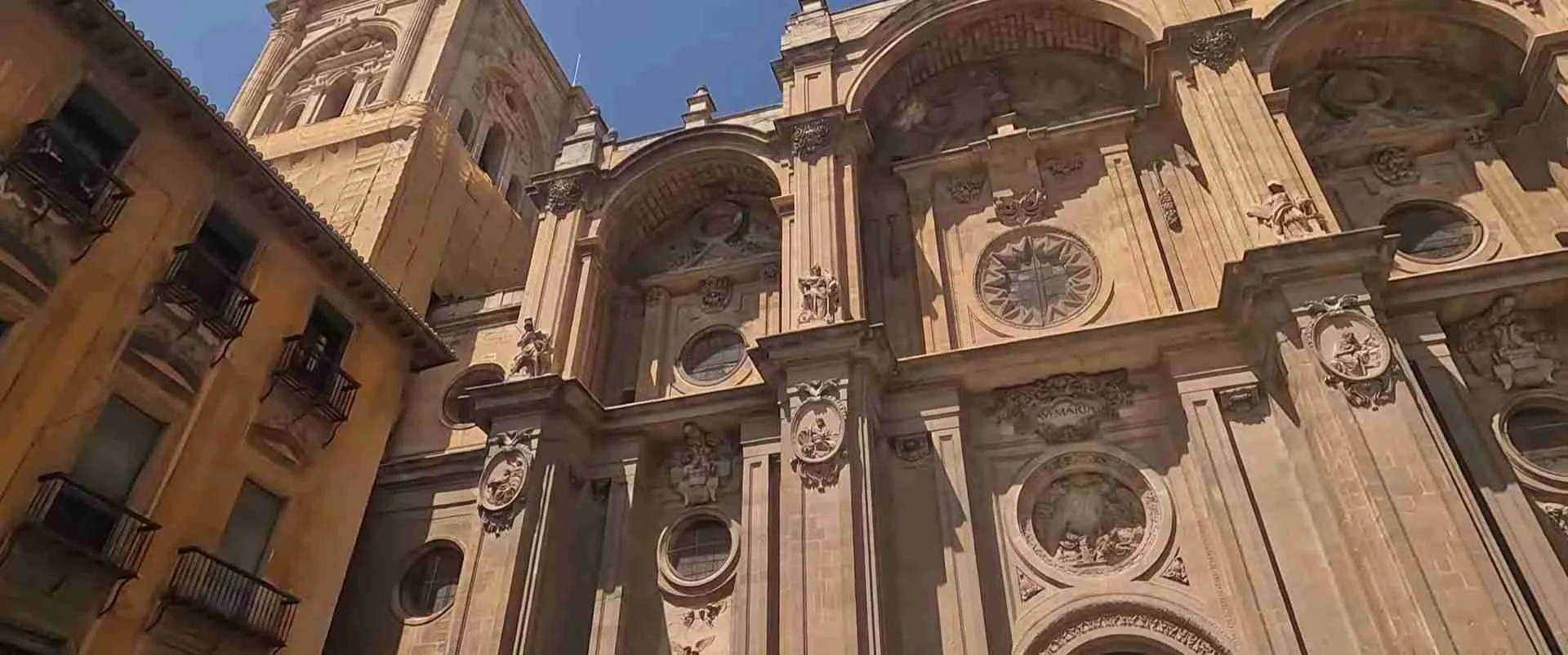
Granada Cathedral was begun in 1523 on the site of the city’s principal mosque, following the conversion of that building into a temporary cathedral after 1492. The initial design drawn up under master builder Enrique Egas was Gothic; the decisive transition to a Renaissance building began when Diego de Siloé took charge of the project in 1528, reorienting the plan around a circular Capilla Mayor (high altar chapel) that drew on Roman centrally planned models rather than the longitudinal tradition of Gothic cathedral planning. The nave was consecrated in stages through the 16th and 17th centuries; the west facade was completed in the 18th century by Alonso Cano. Art historians have described Granada Cathedral as among the earliest large-scale realizations of Renaissance spatial planning in a Spanish cathedral context, though the exact nature and degree of Italian influence on Siloé’s design continues to be discussed in the specialist literature. Admission runs approximately €5 for adults (check the official site for 2027 rates).
The Royal Chapel (Capilla Real) is accessed from a separate entrance on Calle Oficios, adjacent to but administratively independent of the Cathedral. It was commissioned in 1504 by Ferdinand and Isabella — the Catholic Monarchs who completed the Reconquista — as their dynastic mausoleum, completed under their grandson Charles I around 1521. The architectural style is Isabelline Gothic, the ornate late-Gothic mode characterized by profuse heraldic and naturalistic carving; it represents one of the highest expressions of that style in Spain. The interior contains: the gilded wrought-iron reja (grille) credited to Maestro Bartolomé de Jaén, one of the great examples of Renaissance Spanish ironwork; the alabaster tomb effigies of Ferdinand and Isabella (and adjacent tombs of their daughter Juana and her husband Philip the Handsome); a small collection of royal devotional art including works attributed to Flemish masters, notably panels associated with Rogier van der Weyden and Hans Memling from the royal collections of Isabella; and the sacristy, which displays liturgical objects and personal items from the monarchs’ possession. Royal Chapel admission runs approximately €5 for adults (verify for 2027).
The Cathedral’s interior morning light between 9:30 and 11:30 AM, entering through the high nave windows, is at its most effective before midday overhead sun. Allow 45–60 minutes for the Cathedral and 45 minutes for the Royal Chapel; taken together they constitute a full morning of exceptional Renaissance and late Gothic material concentrated in a single block.
Mid-Morning (12:30 PM–1:30 PM): The Alcaicería and Madraza Palace
The Alcaicería occupies a block immediately south of the Cathedral and was the royal silk market of Islamic Granada — a covered bazaar system modeled on the North African qaysariyya. The original 15th-century structure burned in the 19th century; what stands today is a post-fire reconstruction in broadly Moorish Revival style, built to approximate the plan and atmosphere of the original market. It houses shops selling ceramics, leather goods, textiles, spices, and crafts of varying quality and authenticity. It is a commercial space rather than a heritage monument in the strict conservation sense, but it preserves the footprint, the covered alley network, and the trading intensity of the original market, and is worth walking through both for the atmosphere and for the handful of quality craft workshops mixed among the more tourist-oriented stalls.
Across Calle Oficios from the Cathedral’s south facade, the Madraza Palace was the main Arab university of the Nasrid sultanate — among the oldest surviving purpose-built university structures in western Europe. The building was repurposed as the city hall after 1492 and has since served various institutional functions; the original Nasrid oratory, with its mihrab prayer niche pointing toward Mecca and substantial carved stucco decoration, survives inside and can usually be accessed during administrative opening hours. Access varies by day; check at the entrance.
Afternoon (2:30 PM–6:00 PM): San Jerónimo Monastery and Carmen de los Mártires
San Jerónimo Monastery is a 10-minute walk west of the Cathedral through the university district. Founded in 1496 by the Catholic Monarchs and assigned as the burial site of Gonzalo de Córdoba, the “Gran Capitán” (Great Captain) whose Italian campaigns established Spanish military dominance in the early 16th century, it was the first Christian monastery built in Granada after the Reconquista. The monastic church’s interior is one of the most completely preserved examples of 16th-century Spanish Renaissance painted decoration: the high nave walls above the arcading are covered with gilded figures, heraldic devices, and narrative scenes that represent a complete painted programme rather than isolated surviving fragments. The tomb of Gonzalo de Córdoba is within the church, well-documented by contemporary and modern historical sources. Admission is approximately €4–5 (verify for 2027 rates).
Carmen de los Mártires Gardens occupy a terraced hillside immediately behind the Alhambra’s outer walls, accessible from the Alhambra hill road by a short walk from the Puerta de las Granadas. The gardens surround a 19th-century romantic garden villa and include formal geometric terraces, a small lake with waterfowl, a rose garden timed to peak in May, and a section of grotto and English landscape garden typical of the Romantic garden tradition. They are free to enter, generally uncrowded through the afternoon, and provide one of the few public viewpoints at near-Alhambra elevation looking back toward the city rather than toward the palace. Allow 40–60 minutes.
Day 3 Evening: Paseo de los Tristes and Farewell Tapas
Return to the lower Albaicín for an evening walk along the Paseo de los Tristes, the riverside promenade that follows the Darro beneath the Alhambra’s north wall. The Alhambra illuminated above the tree line, the restaurant terraces along the paseo, and the sound of the Darro below combine to make this one of the most atmospheric evening settings in Granada. The bars here are slightly more tourist-oriented than Calle Navas but quality tapas bars remain on the approach streets. A final round of free tapas under the Alhambra’s lit towers, three days after your morning booking at the ticket office, is a satisfying way to close the visit.
Day 3 Budget Summary
Budget travelers sharing a room: hotel per person €25–40, Granada Cathedral €5, Royal Chapel €5, San Jerónimo Monastery €4–5, transport (walking throughout, one optional bus) €0–2, meals using the tapas strategy €22–32. Day 3 budget total: approximately €61–84 per person, rounded to €60–85. This makes Day 3 the least expensive day of the three, reflecting lower admissions and the absence of a major attraction ticket or evening flamenco expense.
Complete Budget Breakdown for 3 Days in Granada 2027
The figures below cover all three days per person, assuming two travelers sharing accommodation at each tier. Hotel rates are divided by two before being added to other per-person expenses. All daily figures are expressed as ranges; the 3-day totals represent the sum of three daily ranges, rounded to the nearest €5.
Budget Tier: Daily Costs in Granada 2027
For two travelers sharing a budget hostel or guesthouse double room (€50–80 per room per night): hotel per person €25–40, breakfast (café con leche and tostada) €3–5, lunch (menú del día at a local bar) €10–14, dinner using the free tapas strategy €9–16, transport (primarily walking with the occasional LAC bus or city bus) €2–5, attractions averaged across three days (Alhambra €19 on Day 1, El Bañuelo and other minor admissions on Day 2, Cathedral and Royal Chapel on Day 3) €8–15.
Budget daily average: €65–100 per person (two sharing). Day 1 sits at the high end of this range due to the Alhambra admission; Day 3 at the low end. Day 2 falls in the middle unless a flamenco show is added (which pushes it above the daily average). Total 3-day budget trip: approximately €195–300 per person. Free tapas for dinner rather than a restaurant saves €10–20 per person per evening, compounding to €30–60 across three days — a significant budget lever unique to Granada.
Mid-Range Tier: Daily Costs in Granada 2027
For two travelers sharing a mid-range hotel room (€100–150 per room per night): hotel per person €50–75, breakfast at the hotel or a quality café €8–14, lunch at a sit-down restaurant €18–28, dinner with a full tapas round plus a restaurant course €35–50, transport including some taxi use €5–12, attractions averaged across three days (Alhambra plus optional private guide, Cave Museum, one flamenco show, cathedral and chapel admissions) €15–30.
Mid-range daily average: €125–200 per person (two sharing). Day 2 sits at the high end due to the flamenco show cost (€25–35); Day 3 at the low end. Total 3-day mid-range trip: approximately €375–600 per person. Staying in the Realejo district rather than the Albaicín for the same accommodation quality typically reduces room costs by €20–30 per night without meaningful sacrifice of access.
Luxury Tier: Daily Costs in Granada 2027
For two travelers sharing a luxury hotel, boutique carmen, or parador room (€200–400 per room per night): hotel per person €100–200, breakfast (hotel buffet or parador breakfast) €20–30, lunch at a quality restaurant €40–65, dinner at an upscale Andalusian restaurant €65–100, drinks and coffees €12–22, private transport (taxis, private guide vehicle) €30–55, premium attractions and experiences (private Alhambra guide, premium flamenco cave evening with dinner) €40–80.
Luxury daily average: €290–510 per person (two sharing). Total 3-day luxury trip: approximately €870–1,530 per person. The Parador de Granada — the only hotel inside the Alhambra complex, in a converted 15th-century monastery — represents the peak of this tier; rooms run approximately €250–450 per night and book 6–9 months ahead for peak season. Alternatives for luxury travelers include boutique carmens in the Albaicín with Alhambra-facing terraces, which offer comparable privacy and views at somewhat lower cost.
What Is Not in the Numbers
The budget ranges above cover accommodation, meals, local transport, and major site admissions within the three-day itinerary. They do not include: international or domestic flights or trains to and from Granada; travel insurance; optional guided tours beyond the private guide options cited; souvenirs or shopping; and any day-trip costs (Sierra Nevada, Alpujarras, or other) that extend beyond the three days covered.
Where to Stay for Your 3-Day Granada Itinerary 2027
Location matters considerably in Granada because the Alhambra and Albaicín are on a hill that requires either a 20–25 minute walk or a bus ride from the central plain. Staying in the Albaicín itself puts you adjacent to Day 2’s sites but means multiple steep ascents per day when returning home. Staying near Plaza Nueva or in the Realejo district gives the best all-round access to all three days’ itinerary without penalizing any particular day.
Budget Accommodation in Granada 2027
Granada has a functioning hostel and guesthouse (hostal) market around the university district, the Realejo, and the streets between the Cathedral and the Gran Vía de Colón. Budget double rooms in privately run hostales or well-run boutique hostels run approximately €50–80 per room per night. The Realejo district — the old Jewish quarter, now a quiet residential neighborhood immediately southwest of the Cathedral — offers the best combination of price, walkability, and local atmosphere at the budget end. Book 4–6 weeks in advance even for budget properties; Granada accommodation has tightened with increased demand since 2020.
Mid-Range Hotels in Granada 2027
Mid-range hotels (€100–150/room/night) concentrate in the historic center around Plaza de Trinidad, the Realejo, and the streets between the Cathedral and the university. Several 16th- and 17th-century townhouses have been converted into boutique hotels with 10–20 rooms, air conditioning (essential in summer), small patios, and in some cases partial Alhambra views from upper floors or rooftop terraces. These typically offer better character and value than chain hotels at the same price point. Book 6–8 weeks ahead for the April–October peak; Holy Week requires 3–4 months.
Luxury Accommodation in Granada 2027
The Parador de Granada occupies a 15th-century monastery building inside the Alhambra complex, making it the only hotel in Spain located within a UNESCO World Heritage palace site. Availability is limited and peak-season bookings fill 6–9 months ahead; check paradores.es for current 2027 availability. Alternative luxury options include boutique carmens in the Albaicín — private villas with walled gardens available as full-property rentals or as individual suites — and design hotels near the Gran Vía. Rates for the latter run €200–350 per room; the Albaicín carmens vary from €180 to well above €400 depending on size and view quality.
Getting to Granada in 2027
By High-Speed Train in 2027
The Granada AVE station opened in 2019, connecting the city to Spain’s high-speed rail network via Antequera-Santa Ana. From Madrid Atocha, the fastest services run approximately 3 hours 30 minutes to 4 hours 30 minutes depending on the specific routing. From Seville Santa Justa, approximately 2 hours to 2 hours 45 minutes. From Barcelona Sants, typically 5–6 hours via the Antequera junction. Book through renfe.com as far in advance as possible — advance fares can run 40–60% below walk-up prices on high-demand routes. Granada station is approximately 15 minutes from the city center by taxi (around €8–10).
By Bus in 2027
ALSA (alsa.es) operates long-distance coaches to Granada from Madrid (4–5 hours, approximately €20–35), Seville (3 hours, approximately €15–25), and Málaga (approximately 1 hour 30 minutes, approximately €10–18), as well as most major Andalusian cities. The bus station is adjacent to the train station. Buses are often the more economical option for short-notice travel and offer good frequency on the Seville and Málaga corridors that are heavily used as tourist routes.
By Air in 2027
Federico García Lorca Granada-Jaén Airport (IATA: GRX) is approximately 18 kilometres west of the city and handles a limited range of routes: domestic connections to Madrid and a small number of European routes including some UK and German cities, primarily operated by low-cost carriers. Most international travelers connect via Madrid Barajas or Málaga Costa del Sol and continue by train or bus. An airport bus to the city center runs approximately €3–5 and takes 45–50 minutes; taxis cost approximately €25–35.
By Car in 2027
The A-44 from Jaén and the A-92 from Seville and Málaga provide straightforward road access to Granada. However, driving within the historic center is strongly inadvisable: the Albaicín and much of the city center operate under ZTL (limited traffic zone) restrictions, and the medieval street network was not designed for cars. Leave the car at a hotel parking facility (approximately €20–25 per day in the historic center) and walk or use public transport for the entire itinerary.
Getting Around Granada During Your 2027 Itinerary
The large majority of this three-day itinerary is covered on foot. The notable exception is the Alhambra on Day 1, which requires either a 20–25 minute uphill walk or a bus ride.
The LAC Alhambra Bus in 2027
The LAC (Lanzadera Alhambra Catedral) is a small dedicated bus running a circuit from near the Cathedral to the Alhambra main ticket office and back, at approximately 10-minute intervals during operating hours. The standard city bus fare applies (approximately €1.40 in 2027; verify with the current operator before travel). It stops at both the lower forest gardens entry and the main ticket-office level. For Day 1, the LAC is the most practical transport choice for the morning departure when you want to conserve energy before a full day of walking inside the complex.
Albaicín Minibuses in 2027
The C1 and C2 city minibuses navigate some of the wider Albaicín streets and are useful for the return from the San Nicolás Viewpoint area to the city center without retracing the full ascent. The standard city fare applies. Wait times are typically 10–20 minutes at the stops, which can be difficult to locate without an offline map downloaded in advance. Maps.me and Google Maps both cover the Albaicín minibus network well.
Taxis in 2027
Taxis are readily available at ranks near Plaza Nueva and the Cathedral. A ride from the city center to the Alhambra ticket office runs approximately €6–8; from the Albaicín’s lower streets to Sacromonte, approximately €5–7. Note that taxis cannot enter the Albaicín’s upper narrow streets — agree on a pick-up point at the edge of the accessible road before any ride originating in the upper neighborhood.
Granada’s Free Tapas Culture in 2027: How It Works and What It Saves
Granada is one of the last Spanish cities where the free tapas tradition is genuinely widespread rather than limited to a handful of old-fashioned bars. The practice is operationally simple: order any drink — a caña (small draft beer, approximately €2–2.50), a copa de vino (approximately €2–3), or a refresco (approximately €1.80–2.50) — and the bar brings a free tapa on a small plate, unrequested and without selection on your part. The bar chooses the tapa. At most traditional Granada establishments, the tapa upgrades in substance with each subsequent round: the first round might bring olives or a few potato crisps; the fourth round might deliver a small bocadillo (bread roll with filling), a serving of fried squid, or a portion of stewed meat.
The tradition is most reliably intact away from the heavily touristed zones around the Cathedral and the Alhambra approach road, where some bars have quietly replaced the free tapa with very small token portions. The best areas for traditional tapas culture: Calle Navas and its parallel streets south of Plaza Nueva; the Realejo district (particularly Calle Doctor Mora and Campo del Príncipe); the university area around Calle Pedro Antonio de Alarcón; and some of the older bars in the lower Albaicín around Calle Elvira. Individual bar quality shifts over time; current food blogs and resident community forums specific to Granada are the most reliable guides to specific venues close to your visit date.
The budget implication is significant and consistent. A traveler using the free tapas strategy for both lunch (3–4 drink rounds, approximately €7–10 total) and dinner (4–5 rounds, approximately €9–14 total) can cover two solid meals for approximately €16–24 per person, without any food spending beyond the drink prices. This is roughly 35–45% less than the equivalent calories at a mid-price sit-down restaurant in the same city. The comparison is even stronger against Seville or Málaga, where the free tapas tradition is weaker or absent. For a budget traveler, the tapas strategy reduces the 3-day food cost by €60–80 per person relative to conventional restaurant dining — enough to cover one night’s accommodation or the flamenco show.
Seasonal Considerations for Your 2027 Granada Visit
Spring (April–May) 2027: Optimal
April and May offer the most comfortable visiting conditions: temperatures between 18–25°C, manageable crowds outside Holy Week, and the Generalife gardens at their most fully planted — roses and wisteria in May particularly. Holy Week (Semana Santa, check the 2027 calendar for exact dates) brings large crowds, elevated accommodation prices, and processions of remarkable cultural depth that pass through the city center; if you can align your visit, the processions are worth experiencing, but book accommodation 3–4 months ahead and expect the Alhambra to be at near-maximum capacity.
Summer (June–August) 2027: Challenging on the Hill
Granada in summer presents a specific physical challenge at the Alhambra: the Alcazaba and Generalife are largely exposed hilltop environments with minimal shade, and temperatures on the hill regularly reach 38–42°C in July and August. Heat exhaustion is a documented risk for unprepared visitors. If visiting in summer, book the earliest possible Nasrid Palace slot (8:30 AM), carry at least one litre of water per person, wear a hat, and plan to be off the hill by 1:00 PM. The Albaicín’s narrow streets offer substantially more shade; the Sacromonte caves are naturally cool. Accommodation prices peak in July and August; book 3–4 months ahead.
Autumn (September–October) 2027: Excellent
Autumn is the second optimal season. Temperatures drop to 20–28°C by mid-September; the Alhambra crowds thin noticeably after the summer peak; and the Sierra Nevada begins showing first snow on the highest peaks in October, providing an early preview of the winter backdrop. October is arguably the single most comfortable month for a first visit when schedule flexibility allows.
Winter (November–March) 2027: Quiet and Atmospheric
Granada in winter is cool (5–14°C) and occasionally wet, but the Alhambra is at its least crowded and the Sierra Nevada snow cover provides one of the more visually dramatic backgrounds for a heritage city in Europe. The ski resort on the Sierra Nevada (approximately 30 kilometres from the city, served by a dedicated bus service from Granada) operates approximately December through April, adding a day-trip option not available in other seasons. Christmas and New Year’s decorations in the city center and the reduced-crowd Alhambra experience make late December to mid-January a genuinely rewarding time to visit despite the cold. Some smaller Albaicín and Sacromonte venues reduce hours in winter; verify before visiting.
Practical Tips for Your 3-Day Granada Itinerary in 2027
Footwear
This itinerary involves approximately 12–16 kilometres of walking across three days, predominantly on cobblestone gradients and hillside paths. Days 1 and 2 in particular — the Alhambra paths and the Albaicín’s steep callejones — demand footwear with a firm, non-slip sole and adequate ankle support. Fashion sneakers and sandals work adequately in the flat city center on Day 3 but are inadvisable for the first two days. Lightweight hiking shoes or sturdy leather walking shoes are the practical standard for this itinerary.
Photography at the Alhambra
Tripods and monopods are not permitted inside the Nasrid Palaces. Photography is allowed throughout most of the complex except in a small number of specifically marked rooms. The best interior light in the Nasrid Palaces is in the morning before 11:00 AM; afternoon sun from the west creates strong backlight in the Court of the Lions that makes the carved pavilions difficult to expose correctly. A wide-angle lens or the wide mode on a smartphone handles the courtyard interiors better than a standard lens; a telephoto is useful for the Sierra Nevada horizon from the Alcazaba tower. The Generalife’s water channels photograph best when the jets are off and the surface is still — early morning before the complex opens to crowds.
Language
Spanish (Castilian) is the working language throughout Granada. At the Alhambra, the Cathedral, and most major tourist sites, English is spoken at the ticket desk and by official guide operators. In traditional Albaicín tapas bars, older Sacromonte venues, and local restaurants away from the tourist center, Spanish is the expected communication language. A few key phrases — “un caña, por favor” (a beer please), “¿tiene menú del día?” (do you have a set lunch menu?), “la cuenta, por favor” (the bill, please), and “¿cuánto cuesta?” (how much does it cost?) — are sufficient for the practical transactions of the three days and are genuinely appreciated by local bar staff.
Currency and Payment
Spain uses the euro. Credit and debit cards are accepted at the Alhambra ticket office (where advance online booking makes cash largely irrelevant on the day), at all hotels, and at most restaurants. Smaller tapas bars, cave flamenco venues, and some street vendors operate on a cash-preferred or cash-only basis. Carry approximately €50–80 in cash for each day to cover meals, small admission fees, and bars. ATMs are plentiful in the city center; the Cathedral and Plaza Nueva areas have multiple machines within a 5-minute radius.
Pickpocket Awareness
The San Nicolás Viewpoint during sunset and the Alhambra entrance area during peak crowd moments are the two highest-risk locations in the city for pickpocket activity — both are high-density tourist concentrations. Use a front-facing bag or inside jacket pocket for your phone and passport when at the viewpoint. The rest of the Albaicín, Sacromonte, and city center are generally comfortable and low-risk for independent travelers. The cave flamenco venues in Sacromonte are private performance spaces rather than public areas; they do not present a meaningful security concern.
Accessibility
The Alhambra offers a dedicated accessible route through the Nasrid Palaces via ramps and lifts; the Generalife is partially accessible but the upper terraced gardens require steps. The Albaicín and Sacromonte are substantially inaccessible to wheelchair users due to the steep cobblestone gradient and step-heavy street network; the C2 minibus can reach the San Nicolás Viewpoint plaza, which is the main viewpoint accessible without navigating the interior streets. Granada Cathedral and the Royal Chapel are both step-accessible at their main entrances with reasonable interior accessibility; confirm with each site directly for current 2027 provision.
Frequently Asked Questions: Granada 3-Day Itinerary 2027
Can I visit the Alhambra without booking in advance in 2027?
For the Nasrid Palaces, no. Timed entry slots for the palaces are only available through advance booking on alhambra-patronato.es; there are no walk-up same-day tickets at the gate for the main general admission. A small number of slots are occasionally released online at midnight Granada time for the following day, and some visitors successfully book a day or two ahead during very off-peak periods in midwinter; but this is not a reliable planning strategy. The Partial Visit ticket (Visita Parcial), covering the Alcazaba, Generalife, and Palace of Charles V without the Nasrid Palaces, does not require advance booking and is available on the day — worth knowing as a genuine fallback if general tickets are sold out.
How should I structure Day 1 around my Nasrid Palace entry time?
If you have an 8:30 AM or 9:00 AM Nasrid Palace slot, begin at the Nasrid Palaces entrance directly on arrival, allow 90–120 minutes inside, then walk west to the Alcazaba. Spend 30–45 minutes in the Alcazaba and have a coffee at the kiosk near the Torre de la Vela before continuing to the Palace of Charles V (30–45 minutes including the museum). Take lunch either at the Parador terrace (expensive but unique) or pack your own food for the Generalife gardens. Visit the Generalife in the afternoon when the crowds from morning sessions have dispersed. The afternoon light on the water channels is softer and less contrasty than morning. Return to the city via the LAC bus or walk down through the Bosque de la Alhambra to Plaza Nueva for evening tapas.
Is the Albaicín safe for solo travelers in 2027?
The Albaicín is a residential neighborhood and generally safe for solo travelers during daytime. The main practical consideration is getting disoriented in the upper street network, which is not well-signed and feels remote from the city when you are in it; download an offline map before ascending. At night, the lower Albaicín streets (Carrera del Darro, the streets around Plaza Nueva) are lively and safe; the upper Albaicín and Sacromonte above the main cave lane are quieter and less populated after 10:00 PM. Solo travelers returning from a flamenco show in Sacromonte after 11:00 PM should use a taxi rather than walking back through the dark upper lanes.
What should I not miss inside the Nasrid Palaces?
Prioritize the Salón de los Embajadores (Throne Room) inside the Tower of Comares — the 16-metre cedar dome ceiling represents the most technically accomplished wooden work in the complex and is best appreciated by standing directly beneath it and allowing your eyes to adjust to the depth. The Patio de los Leones (Court of the Lions) with its central fountain is the most photographed, but many visitors rush through it; spend time in the surrounding halls, particularly the Hall of the Two Sisters with its muqarnas dome overhead and the adjacent Lindaraja Garden mirador with its latticed windows framing the Albaicín. The upper Lindaraja section is usually less crowded than the central court and gives a quieter encounter with the stucco’s detail.
How authentic is the flamenco experience in Sacromonte in 2027?
Zambra flamenco in Sacromonte is a living tradition, not a reconstruction imported from elsewhere. The cave venues in the upper Camino del Sacromonte are owned and operated by Roma families with multi-generational connections to the specific zambra style — a style distinct from Seville’s flamenco in its particular relationship between dance and deep song and in the low-ceiling cave staging that forces an intimacy between performers and audience unavailable in any theatre. Individual show quality varies by night and season: a quiet weekday performance with a family audience and an informal atmosphere will feel more immediate than a peak Saturday show running multiple back-to-back sessions for tour groups. Research which venues are currently receiving strong reviews from independent travelers in Granada expat communities close to your visit date, and book directly with the venue rather than through aggregator platforms wherever possible.
What is the best time of day to visit the San Nicolás Viewpoint?
The San Nicolás Viewpoint is worth visiting twice if your schedule allows: once in the morning (arrive before 10:00 AM to secure a position before peak crowds and tour groups arrive) for clear views of the Alhambra detail in morning light, and once at sunset for the amber hour that is one of Granada’s defining visual experiences. In peak summer the viewpoint fills 45–60 minutes before sunset with locals, visitors, and musicians; arrive early and stay for the full dusk transition. In winter the sunset viewpoint is dramatically less crowded and the Sierra Nevada snow behind the Alhambra provides a quality of backdrop unavailable in summer.
What is the Royal Chapel and why does it matter?
The Royal Chapel is the mausoleum commissioned in 1504 by Ferdinand and Isabella, the Catholic Monarchs who unified Spain and concluded the Reconquista with the 1492 fall of Granada. It contains their alabaster tomb effigies and those of their daughter Juana and her husband Philip the Handsome, all four lying in close proximity in the small chapel nave. The building is significant historically because it was deliberately sited in Granada — the last Moorish capital — as a dynastic declaration; and art-historically because its Isabelline Gothic style and the wrought-iron reja are among the finest examples of late Gothic decorative craft in Spain. The small sacristy collection of Flemish devotional paintings from Isabella’s personal possession is an unexpected art-historical bonus that many visitors discover without anticipating it.
Can I do a day trip from Granada to the Sierra Nevada in 2027?
Yes. The Sierra Nevada ski resort (Pradollano village) is approximately 30 kilometres from Granada and served by dedicated resort buses from the city center, with the journey taking approximately 45–50 minutes. In winter and spring (typically December through April depending on snow conditions) the resort operates full ski infrastructure. In summer (June through September), the ski lifts open for mountain hiking access to the high plateau above 3,000 metres — the Veleta summit at 3,398 metres is accessible on foot from the top station, making it the most accessible summit above 3,000 metres in Europe by public transport. A Sierra Nevada day trip fits naturally onto a fourth day beyond this three-day itinerary.
What are the best streets for traditional tapas bars in Granada in 2027?
Calle Navas and its parallel streets south of Plaza Nueva offer the most accessible concentration for first-time visitors, with a mix of traditional tapas bars and quality restaurants along one compact pedestrian street. The Realejo district — particularly around Campo del Príncipe and Calle Doctor Mora — has a higher proportion of bars used by locals and university residents rather than tourists, and the free tapa tradition is more reliably maintained. Calle Calderería Nueva, the “calle de las teterías” (street of the teahouses) climbing from Plaza Nueva into the Albaicín, offers a different experience: Moroccan-style mint tea houses, hookah cafés, and pastry stalls reflecting the neighborhood’s continuing North African cultural connections — a distinct register from the tapas tradition of the lower city streets.
Is it worth paying for a private guided tour of the Alhambra in 2027?
A private Alhambra guide significantly changes the quality of the Nasrid Palaces visit: the Arabic inscriptions covering the walls (largely Nasrid poetry and Quranic texts in Naskh script) become meaningful with translation; the architectural sequence and its symbolic programme become legible rather than overwhelming; and the historical context of individual rooms connects the physical space to the political events that shaped it. The cost for a private guide typically runs €60–120 for a 2–3 hour Nasrid Palaces session booked through authorized guide agencies (verify current rates as these shift). Official guides must be registered with the Patronato; authorization is worth confirming before booking. For budget travelers, the Alhambra’s official audio guide (€5–7, available at the ticket office) is a solid alternative that covers most of the major rooms with verified historical commentary.