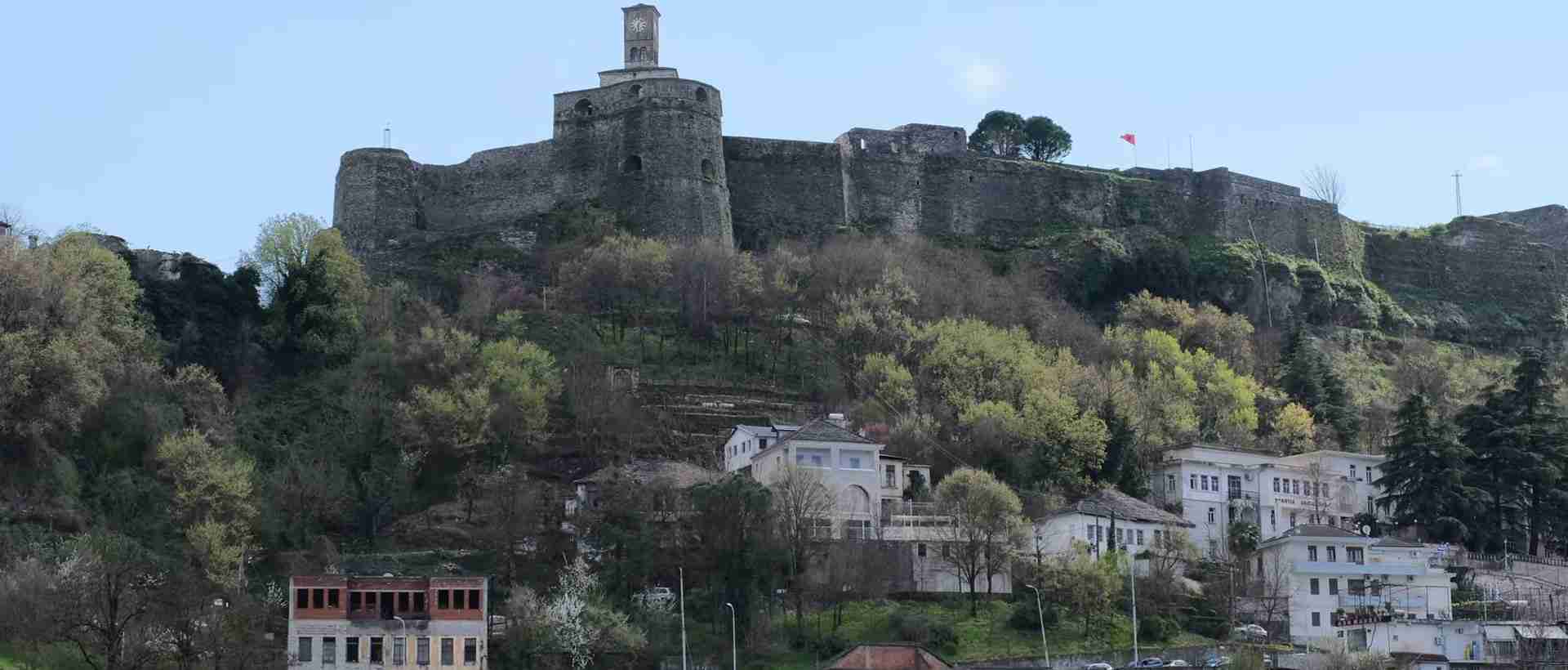
Gjirokaster Castle & Old Bazaar: UNESCO Complete Visitor Guide
Gjirokaster’s UNESCO World Heritage designation in 2005 recognized one of the Balkans’ most intact Ottoman-era urban landscapes, where a massive hilltop fortress dominates a warren of stone houses cascading down steep slopes. The castle and historic bazaar district form the heart of this “City of Stone,” preserving architectural traditions and defensive structures spanning from the 4th century BC through Ottoman occupation to modern Albania. This guide explores both the military architecture of the castle complex and the commercial vitality of the old bazaar, examining how these interconnected spaces shaped Gjirokaster’s unique character.
Key Takeaways About Gjirokaster Castle & Old Bazaar
- UNESCO World Heritage Site Since 2005: Gjirokaster earned inscription for its rare preservation of Ottoman-period architectural character, with the castle and bazaar representing complementary military and commercial functions. The site was extended in 2008 to include Berat, creating the joint designation “Historic Centres of Berat and Gjirokastra” under criteria iii and iv.
- Castle Foundations Date to 4th Century BC: While the visible structure primarily reflects 13th-century construction and Ottoman expansion, archaeological evidence traces defensive fortifications on this strategic hilltop to ancient Illyrian settlements. The castle witnessed continuous modification through Byzantine, medieval Albanian, and Ottoman periods, culminating in its use as a political prison during Albania’s communist era.
- Old Bazaar Preserves 17th-18th Century Commercial Architecture: The bazaar district (Pazari i Vjetër) centers on the Qafa intersection, where Ottoman-era stone houses with characteristic slate roofs line cobblestone streets. Originally hosting 13 mosques, only the 1757 Bazaar Mosque survived Albania’s atheist campaign, making it a rare surviving example of religious architecture from this period.
- Fortified Houses Define “City of Stone” Character: Gjirokaster’s distinctive kulla tower-houses employ local limestone in massive walls, with ground floors serving defensive and storage functions while upper levels feature elaborate wooden interiors. These fortified residences reflect the region’s volatile history, combining military architecture with domestic living spaces.
- Castle Museums Include Military Collections and Prison Exhibits: The fortress complex houses the National Museum of Armaments, displaying weapons from WWI and WWII including rare pieces from German, Italian, Soviet, and British forces. Separate prison museum sections preserve cells and exhibits from the site’s use as a political detention facility, offering sobering insights into Albania’s authoritarian past.
- Traditional Crafts Continue in Bazaar Workshops: Artisans maintain Ottoman-era practices in pottery, woodcarving, textile weaving, and metalwork along the bazaar’s narrow lanes. While tourist-oriented shops proliferate, authentic craftspeople continue production methods passed through generations, particularly in handwoven textiles and carved wooden objects.
People Also Ask About Gjirokaster Castle & Old Bazaar
What Makes Gjirokaster a UNESCO World Heritage Site?
Gjirokaster earned UNESCO inscription in 2005 as a rare example of well-preserved Ottoman-period architectural character typical of Balkan fortified commercial towns. The site satisfies criterion iii by bearing witness to the wealth and diversity of urban heritage in southern Albania through its continuously inhabited historic center, and criterion iv by representing an outstanding example of fortified residential architecture from the Ottoman period. The castle and old bazaar together demonstrate the complementary relationship between military defensive structures and commercial urban development, with vernacular buildings showing exceptional preservation of traditional construction techniques. The designation recognizes both tangible heritage—the physical structures of stone houses, the fortress complex, and bazaar buildings—and intangible cultural continuity, as the historic center remains a living community rather than a museumified monument.
How Old Is Gjirokaster Castle?
Gjirokaster Castle’s visible structure primarily dates to the 13th century, when it was built during the Kingdom of Epirus, though archaeological evidence places fortifications on this strategic hilltop as early as the 4th century BC during the Illyrian period. The fortress underwent major expansion during Ottoman occupation beginning in the 14th century, particularly under Sultan Bayezid II, with significant additions continuing through 1811 including the eastern bell tower, reinforced cliff fortifications, and water cistern systems. The castle was converted into a prison by Italian occupying forces after 1930 and continued serving as a detention facility for political prisoners during Albania’s communist regime until 1968, adding 20th-century structures to the ancient complex. This layered construction history makes the castle a palimpsest of Albanian military architecture, with Byzantine, medieval Albanian, Ottoman, and modern Albanian elements coexisting within the fortification walls.
What Can Visitors See Inside the Castle Complex?
The castle complex encompasses five defensive towers, the National Museum of Armaments with extensive WWI and WWII weapons collections, a clock tower offering panoramic valley views, Byzantine-era church remains, water cisterns, prison museum sections displaying political detention facilities, and the permanent National Folk Festival stage. The Arms Museum presents one of the world’s most accessible collections of infantry weapons from German, Italian, Soviet, and British forces, with artifacts displayed in open arrangements unusual for Western museums. Prison sections preserve cells, interrogation rooms, and exhibits documenting Albania’s authoritarian period, while the ramparts provide sweeping vistas across the Drino Valley and the stone-roofed old town cascading down the hillside. A U.S. Air Force reconnaissance plane shot down during the communist era remains on display, symbolizing Cold War tensions, and various artillery pieces populate outdoor exhibition spaces throughout the fortress grounds.
What Traditional Crafts Are Sold in the Old Bazaar?
The Old Bazaar specializes in handwoven textiles including traditional Albanian carpets and kilims, carved wooden furniture and decorative objects, hand-thrown pottery and ceramics with regional designs, copperwork items crafted using Ottoman-era techniques, and embroidered textiles reflecting southern Albanian patterns. Authentic artisan shops intermingle with tourist-oriented souvenir vendors, requiring discerning visitors to distinguish between locally crafted items and mass-produced imports from China and Turkey. Genuine crafts demonstrate traditional methods: weavers use heritage looms to create textiles with geometric patterns specific to the Gjirokaster region, potters employ local clay in painted plates and decorative vessels, and woodcarvers produce intricate designs in walnut and other hardwoods. Beyond crafts, the bazaar offers local culinary products including mountain honey, fruit preserves, olive oil, traditional cheeses, and raki (grape brandy), all reflecting the agricultural traditions of southern Albania’s mountain valleys.
Extended multi-day tours – 5+ days
Featured Albania Multi-Day Tour Packages
3 days
Albania 3-Day Discovery Tour
- ✓ Comprehensive Albania experience
- ✓ Expert local guides included
- ✓ All accommodation included
- ✓ Transportation provided
5 days
Albania 5-Day Highlights Experience
- ✓ Comprehensive Albania experience
- ✓ Expert local guides included
- ✓ All accommodation included
- ✓ Transportation provided
7 days
Albania 7-Day Cultural Journey
- ✓ Comprehensive Albania experience
- ✓ Expert local guides included
- ✓ All accommodation included
- ✓ Transportation provided
10 days
Albania 10-Day Complete Adventure
- ✓ Comprehensive Albania experience
- ✓ Expert local guides included
- ✓ All accommodation included
- ✓ Transportation provided
Multi-day tour packages powered by TourRadar. Prices and availability subject to change.
Introduction: Understanding Gjirokaster’s UNESCO Heritage
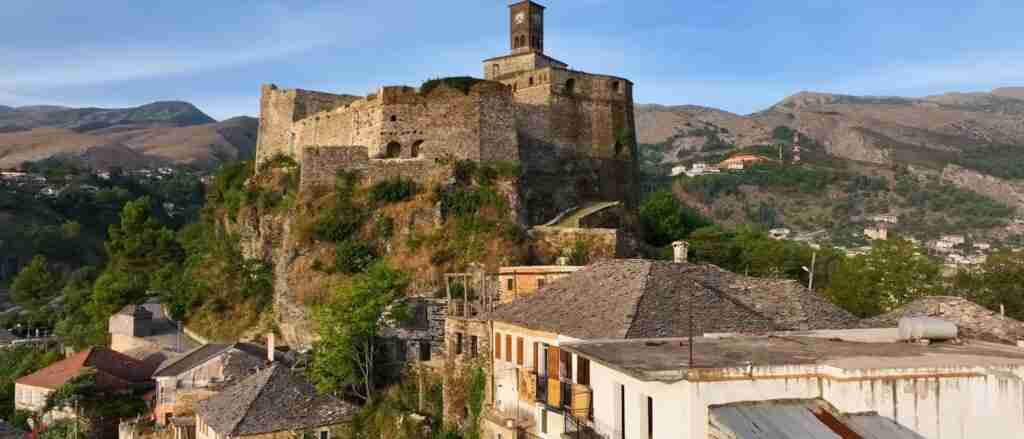
Gjirokaster occupies a dramatic hillside in southern Albania’s Drino River valley, where the massive stone fortress known as the Castle of Argjiro dominates a cascade of slate-roofed houses tumbling down precipitous slopes. This “City of Stone” earned UNESCO World Heritage status in 2005 for preserving one of the Balkans’ most complete examples of Ottoman-period urban architecture, where military, residential, and commercial functions coalesced into a distinctive fortified town. The castle and old bazaar represent complementary aspects of this heritage: the fortress embodies centuries of strategic military importance, while the bazaar district reflects the commercial vitality that sustained the urban community through successive empires and political transformations.
The site’s significance extends beyond architectural preservation to encompass continuous cultural habitation from ancient times to the present day. Unlike many UNESCO properties that function primarily as tourist attractions, Gjirokaster remains a living city where residents occupy historic houses, craftspeople maintain traditional workshops in the bazaar, and the castle serves simultaneously as heritage site and community focal point. This continuity distinguishes Gjirokaster from abandoned or heavily touristed heritage sites, demonstrating how Ottoman-era urban patterns can accommodate modern life while preserving historical character.
The castle and bazaar developed symbiotically over centuries. The fortress provided security and administrative authority, enabling the commercial district to flourish at its base. Merchants and craftspeople clustered along routes connecting the castle gates to the valley floor, creating the dense network of shops and workshops that became the old bazaar. This relationship between defensive height and commercial activity shaped the town’s vertical organization, with the castle crowning the summit, residential zones occupying midslope terraces, and the bazaar forming a transitional zone between fortified heights and agricultural lowlands.
Understanding Gjirokaster requires recognizing how Albanian, Byzantine, Ottoman, and modern Albanian influences layered upon each other without erasing previous traditions. The castle’s foundations are Illyrian; its towers Byzantine and medieval Albanian; its expansion Ottoman; and its prison function a product of Italian occupation and communist rule. Similarly, the bazaar preserves Ottoman commercial architecture while housing contemporary businesses, and the stone houses blend defensive medieval requirements with Ottoman domestic refinement. This palimpsest quality—where multiple historical periods remain visible simultaneously—defines Gjirokaster’s UNESCO value as a living document of Balkan urban evolution.
The harsh local limestone that gives Gjirokaster its “City of Stone” nickname also determined its architectural character. The abundance of easily quarried stone led to construction techniques emphasizing massive walls, creating both the castle’s imposing fortifications and the town’s characteristic kulla tower-houses. Stone roofing tiles, extracted from the same formations, produce the distinctive gray slate covering that unifies the townscape. This geological determinism—where available building materials shape architectural solutions—created visual coherence across centuries of construction, as all builders drew from the same limestone deposits visible in the surrounding mountains.
UNESCO World Heritage Designation Details
Gjirokaster received UNESCO World Heritage inscription in 2005 as an individual site under the designation “Museum-City of Gjirokastra,” covering 67.8 hectares of core heritage zone and 94.7 hectares of buffer zone. The inscription recognized the site’s satisfaction of criteria iii and iv: criterion iii for bearing witness to the exceptional testimony of Balkan urban heritage through its fortified commercial town structure, and criterion iv for representing an outstanding example of Ottoman-period architectural character in a continuously inhabited historic center. In 2008, UNESCO extended the property to include Berat, creating the joint designation “Historic Centres of Berat and Gjirokastra” and expanding the total protected area to 126.7 hectares of core zones with 230.9 hectares of buffer zones.
The inscription’s Outstanding Universal Value statement emphasizes three interrelated aspects: the remarkable preservation of vernacular buildings showing architectural character typical of the Ottoman period, the continuous habitation of the historic center from ancient times to the present day, and the testimony to wealth and diversity in Balkan urban architectural heritage. UNESCO’s evaluation particularly noted the fortified houses (kulla) as exceptional examples of defensive domestic architecture, the integration of military (castle), religious (mosques and churches), and commercial (bazaar) functions within a compact urban area, and the survival of traditional construction techniques in both monumental and residential buildings.
The designation process began in 1998 when Gjirokaster’s municipal government sought international assistance to halt deterioration caused by political instability and economic crisis during Albania’s transition from communism. The French Ministry of Culture provided initial support, recognizing the site’s exceptional character and endangered status. A decade-long documentation and conservation effort preceded inscription, establishing the management frameworks and protective regulations that enabled UNESCO recognition. The 2008 extension to include Berat reflected UNESCO’s assessment that the two cities demonstrated complementary aspects of Ottoman-period urban heritage: Berat as a religious and administrative center, Gjirokaster as a fortified commercial town.
Conservation challenges identified in UNESCO’s State of Conservation reports include illegal construction pressure, fire risk in the dense historic center with narrow streets limiting emergency vehicle access, lack of comprehensive risk management planning, and maintenance issues related to economic constraints. A Coordination Committee for the Management of the Historic Centres of Gjirokastra and Berat, established in 2014, brings together national authorities, regional cultural heritage directorates, and municipal governments to address these challenges through coordinated planning. The committee’s work includes developing monitoring indicators related to Outstanding Universal Value, updating conservation reports for all protected monuments, implementing fire prevention infrastructure, and regulating new construction through strict permitting requirements.
The buffer zone surrounding the core heritage area protects viewsheds and the historic setting of the castle and old town. Regulations prohibit high-rise construction visible from the historic center, require traditional materials and techniques for any new building within sightlines of UNESCO-protected monuments, and restrict development that would alter the topographical relationship between the castle, residential zones, and valley floor. These controls preserve the dramatic visual impact of the stone town cascading down hillside beneath the fortress crown, maintaining the landscape character essential to understanding Gjirokaster’s historical development as a fortified settlement exploiting natural defensive topography.
Gjirokaster Castle: Comprehensive Historical Overview
Gjirokaster Castle occupies a rocky outcrop commanding views across the Drino River valley, positioned at the confluence of routes connecting the Adriatic coast with interior Greek territories. Archaeological evidence places fortifications on this strategic height from the 4th century BC, when Illyrian tribes controlled the region and exploited the natural defensive advantages of the elevated position. These ancient foundations supported successive fortification phases as Byzantines, medieval Albanians, and Ottomans each recognized the site’s military value, layering new construction upon earlier remains without fully obliterating predecessor structures.
The visible castle structure primarily reflects 13th-century construction during the Kingdom of Epirus, when the fortress assumed its basic configuration of five defensive towers connected by curtain walls following the irregular hilltop contours. This medieval Albanian phase established the castle’s fundamental role as a regional administrative and military center, controlling trade routes and projecting authority across surrounding territories. The fortress enclosed living quarters for garrison soldiers, administrative buildings for regional governance, arsenal storage, water cisterns to sustain siege conditions, and a small Orthodox church serving the military community.
Ottoman conquest in the late 14th century transformed the castle from a frontier fortress in Christian territories to a provincial administrative center within the expanding empire. Sultan Bayezid II’s reign (1481-1512) saw major expansion projects that strengthened fortifications, enlarged garrison capacity, and added structures reflecting Ottoman military architecture. The distinctive clock tower at the eastern corner dates to 1811 and represents the late Ottoman emphasis on accurate timekeeping for coordinating military and commercial activities. Ottoman engineers also improved water infrastructure by digging deep cisterns into bedrock and creating collection systems to channel rainfall, enabling the fortress to withstand extended sieges.
The castle’s most infamous modern chapter began with Italian occupation in 1930, when military authorities converted portions of the fortress into a prison facility. This function expanded dramatically during Albania’s communist period (1944-1991), when the castle housed political prisoners deemed threats to the authoritarian regime. The prison sections, preserved today as museum exhibits, reveal harsh conditions and the extensive security apparatus deployed to contain dissidents. Cells, interrogation rooms, and isolation chambers occupy multiple fortress buildings, demonstrating how the defensive architecture that once protected residents instead confined prisoners after political transformation.
The name “Castle of Argjiro” commemorates a tragic Albanian legend from the Ottoman conquest period. Princess Argjiro, sister of local ruler Gjin Zenebishi, chose death over surrender when Ottoman forces besieged the fortress in the 15th century. According to legend, she leapt from the castle walls holding her infant son, dying on impact while the child miraculously survived. This narrative embodies Albanian resistance themes and became central to national identity construction, transforming the castle from a simple military structure into a symbol of defiant Albanian spirit against foreign domination. The legend’s prominence reflects how heritage sites acquire layered meanings beyond architectural or historical significance, becoming vessels for collective memory and national mythology.
Post-communist Albania converted the castle into a heritage site and tourism destination while preserving the prison sections as historical evidence of authoritarian rule. This dual function—celebration of Albanian history alongside acknowledgment of oppression—creates complex interpretation challenges. Visitors simultaneously encounter ancient foundations, medieval fortifications, Ottoman additions, and communist-era prison structures, each layer demanding different contextual understanding. The castle’s evolution from defensive fortress to administrative center to political prison to heritage site traces Albania’s turbulent historical trajectory, making it a compressed spatial archive of the nation’s experience with foreign empires, authoritarian rule, and contemporary efforts to preserve and interpret a difficult past.
Castle Architecture and Defensive Features
The castle’s architectural organization follows the irregular hilltop topography, with five major defensive towers positioned to command approaches from different directions and curtain walls connecting towers along routes exploiting natural cliff faces. This layout maximizes defensive efficiency by requiring attackers to expose themselves while approaching from the valley floor, climb steep slopes under fire from multiple tower positions, and overcome successive defensive barriers even after breaching outer walls. The natural limestone foundation provides stable footing for massive stone construction while creating nearly vertical drops on several sides, eliminating the need for elaborate defensive ditches or earthworks common in lowland fortifications.
The towers vary in height and configuration based on their specific defensive functions. The tallest structures command the most vulnerable approaches where gentler slopes permitted siege equipment positioning, while shorter towers protect routes where cliff faces already provide substantial natural defense. Internal tower spaces housed garrison soldiers, stored weapons and ammunition, and provided firing positions at multiple levels covering different ranges and angles. Arrow slits and later gun ports pierce thick stone walls at carefully calculated positions, allowing defenders to maintain overlapping fields of fire across approaches while remaining protected from counterfire.
The main entrance gate incorporates multiple defensive features: a strong wooden door reinforced with iron strapping, an overhead murder hole allowing defenders to drop projectiles on attackers forcing the gate, and a sharp turn immediately inside requiring invaders to expose their shield-hand side to defender positions. This entrance architecture reflects centuries of accumulated defensive knowledge, combining psychological intimidation through the massive stonework with practical measures to channel and delay attackers. Ottoman modifications added gun platforms flanking the entrance, introducing firepower advantages as gunpowder weapons replaced arrows and crossbows as primary armaments.
Water cisterns carved into bedrock beneath the castle courtyard demonstrate the engineering sophistication required to sustain fortress communities during sieges. These deep reservoirs, some descending 15 meters into solid stone, collected rainwater from courtyard surfaces through channels directing runoff into filtered collection systems. The cisterns maintain relatively constant temperatures and darkness that prevented water spoilage, ensuring drinkable supplies months after capture. Guides mark several cistern mouths with protective railings, though most remain sealed for safety reasons. The cistern system’s capacity determined garrison size limits and siege endurance, making water infrastructure as critical as walls and towers to defensive capability.
The clock tower, added in 1811 during late Ottoman rule, serves as the castle’s most recognizable architectural feature. Its prominent position at the eastern fortress corner makes it visible across the valley and from the old town streets, functioning as both timekeeping device and symbol of Ottoman administrative control. The tower’s construction techniques differ from earlier medieval work: more regular stone courses, tighter mortar joints, and decorative details reflecting Ottoman architectural preferences. The clock mechanism itself was imported from Europe, representing the Ottoman Empire’s engagement with Western technology even as political and military power declined. Today the tower provides the highest accessible viewing platform in the castle complex, with panoramic vistas encompassing the Drino Valley, surrounding mountains, and the stone town cascading down hillside beneath the fortress.
The fortress grounds include an unusual open-air stage constructed for Albania’s National Folk Festival, transforming the castle courtyard into a performance venue during festival years. This 20th-century addition demonstrates how heritage sites adapt to contemporary uses, with the castle serving simultaneously as historical monument, tourism attraction, and cultural venue. The stage’s modern construction contrasts sharply with surrounding medieval and Ottoman architecture, creating visual dissonance some critics view as inappropriate within a UNESCO-protected fortress. However, the festival tradition links the castle to living cultural practices rather than freezing it as a static museum, maintaining its relevance to contemporary Albanian identity.
Castle Museums and Exhibition Spaces
The National Museum of Armaments occupies several fortress buildings, displaying one of Europe’s most extensive collections of infantry weapons from WWI and WWII. The museum’s distinctive character derives from its open display philosophy: most weapons lie accessible on tables, shelves, and floors rather than behind glass cases or protective barriers, allowing close examination of details impossible in conventional museums. This approach reflects both limited conservation budgets and a different relationship to military heritage, treating weapons as functional objects worthy of study rather than sacred artifacts requiring reverential distance.
The collection encompasses German, Italian, Soviet, British, and American weapons captured or acquired through various means during Albania’s turbulent 20th century. German pieces include Mauser rifles, MP40 submachine guns, and MG42 machine guns left behind during World War II occupation. Italian weapons represent both the 1930s occupation period and equipment supplied to Albania during Mussolini’s regime. Soviet armaments document the period of close Soviet-Albanian relations before the 1961 split that left Albania isolated from both Warsaw Pact and Western alliances. British and American pieces arrived through complex trade networks and battlefield recoveries, creating an eclectic collection representing global military technology from the World Wars era.
Artillery pieces populate outdoor exhibition areas throughout the castle grounds, including field guns, anti-tank weapons, and a Soviet T-34 tank that saw service with Albanian forces. These heavy weapons present substantial conservation challenges due to weather exposure, with rust and deterioration visible on many pieces despite periodic maintenance efforts. The outdoor artillery display creates dramatic visual impact, particularly photographed against mountain backdrops or framed by medieval stone walls. Information placards provide basic technical specifications and historical context in Albanian and English, though detail levels vary considerably across exhibits.
The castle’s most controversial exhibit remains the American reconnaissance aircraft displayed prominently near the main entrance. This U.S. Air Force plane was shot down during the Cold War, captured, and installed as a propaganda trophy demonstrating Albania’s military prowess and defiance of American imperialism. Post-communist interpretation presents the aircraft with more nuanced context, acknowledging both the international tensions that led to reconnaissance flights and Albania’s isolated position during Hoxha’s regime. The plane’s presence raises ethical questions about displaying equipment associated with international incidents and deceased personnel, issues the museum addresses through interpretive panels explaining historical context rather than celebrating military victory.
The prison museum sections preserve cells, interrogation rooms, and isolation chambers used during the communist period when the castle housed political detainees. These spaces convey the harsh conditions faced by prisoners: small cells with minimal light and ventilation, crude sanitation facilities, isolation chambers designed to break prisoners psychologically, and interrogation rooms where state security forces extracted confessions. Exhibits include prisoner testimonials, photographs documenting detention conditions, recovered personal items, and official documents authorizing detention without trial. This dark tourism element confronts visitors with Albania’s authoritarian past, refusing to sanitize history in service of comfortable heritage narratives.
The prison exhibits generate complex emotional responses and interpretation challenges. Some visitors find the preserved cells and testimonials essential for understanding Albania’s recent history and honoring those who suffered political persecution. Others question whether traumatic spaces should be tourist attractions, arguing that commodifying suffering through entrance fees and photography opportunities diminishes the gravity of historical crimes. The museum’s approach balances these concerns by maintaining somber presentation without sensationalizing suffering, providing substantial historical context, and emphasizing educational value over entertainment. The preservation decision itself reflects contemporary Albania’s efforts to acknowledge authoritarian past honestly rather than suppressing uncomfortable historical truths.
Old Bazaar: Historical Development and Urban Structure
The Old Bazaar (Pazari i Vjetër) developed organically along routes connecting the castle gates to the valley floor, growing from medieval market grounds into the dense commercial district visible today. Ottoman urban planning principles shaped the bazaar’s configuration: narrow streets providing shade and channeling cooling breezes, compact building footprints maximizing commercial frontage, and functional zoning that grouped similar trades together. Metalworkers, textile merchants, food vendors, and craft specialists each occupied distinct quarters, creating the specialized commercial geography characteristic of Ottoman market towns.
The bazaar’s central intersection, known locally as the Qafa (meaning “pass” or “crossing”), functions as the district’s heart and most photographed location. Stone-paved lanes converge at this junction, where three-story Ottoman houses with characteristic overhanging upper floors create an enclosed plaza effect. The Qafa served as the primary commercial node where merchants met clients, goods were displayed, prices negotiated, and news exchanged. Its central position between castle heights and valley floor made it the natural meeting point for diverse social groups: garrison soldiers from the fortress, urban residents from stone houses on surrounding slopes, rural farmers bringing produce from valley farmlands, and traveling merchants connecting Gjirokaster to broader trade networks.
The Bazaar Mosque, constructed in 1757, stands near the Qafa and represents the sole survivor among Gjirokaster’s original 13 mosques. Albania’s communist regime pursued aggressive atheism campaigns beginning in the 1960s, declaring Albania the world’s first officially atheist state and systematically destroying religious buildings. Most of Gjirokaster’s mosques were demolished or converted to secular uses, but the Bazaar Mosque survived through its integration into the commercial district’s architectural fabric and possibly the intervention of preservation-minded officials. The mosque’s modest scale and traditional Albanian architectural elements distinguish it from grander Ottoman imperial mosques, reflecting its function as a neighborhood prayer space rather than a statement of imperial power.
Ottoman-era houses lining bazaar streets demonstrate the characteristic two- to three-story configuration developed during the 17th and 18th centuries. Ground floors feature thick stone walls with small windows and heavy doors, providing security for goods storage and commercial functions. Upper floors cantilever outward beyond ground-floor footprints, creating additional interior space without consuming scarce ground area and providing covered arcades along street level. Elaborate wooden balconies (çardak) project from upper floors, offering outdoor living space with views across the valley while carved wooden screens maintain family privacy. Slate roofing tiles cut from local limestone complete these structures, creating the unified gray roofscape that gives Gjirokaster its distinctive appearance from castle viewpoints.
The bazaar’s street network follows medieval patterns predating wheeled traffic, with narrow lanes barely accommodating two pedestrians walking abreast. These dimensions reflect the era when donkeys and human porters moved goods rather than carts, and compact urban form maximized defensibility while minimizing winter heating requirements in Albania’s cold mountain climate. Modern vehicles cannot access most bazaar streets, preserving the pedestrian character while creating logistical challenges for businesses requiring deliveries and maintenance access. This transportation limitation actually enhances visitor experience by eliminating automobile intrusion, though local residents and business owners face daily inconveniences navigating steep cobblestones with goods and supplies.
The Clock Tower near the bazaar’s upper edge marks temporal transitions and provided timekeeping services essential for coordinating commercial activities, religious observances, and administrative functions. Multiple clock towers punctuate Gjirokaster’s skyline, each serving specific districts. The bazaar tower’s bells announced market opening and closing times, prayer calls, and emergency warnings. Today these towers function primarily as orientation landmarks and heritage features, though some maintain working clock mechanisms. Their prominence in the townscape reflects the Ottoman period’s increasing emphasis on precise timekeeping as commercial and administrative activities grew more complex and coordinated.
Traditional Crafts and Bazaar Commerce
Gjirokaster’s craft traditions trace lineage through Ottoman guild systems that regulated quality, pricing, training, and market access. Guilds organized artisans by specialty—weavers, potters, metalworkers, woodcarvers—and controlled production standards through master-apprentice relationships that transmitted technical knowledge across generations. While formal guilds dissolved during communist reorganization of economic life, craft knowledge survived through family transmission and small workshop production. Post-communist economic liberalization revived traditional crafts, both as authentic cultural expressions and income sources targeting tourist markets.
Textile weaving represents one of Gjirokaster’s most developed craft traditions. Weavers employ large wooden looms to create traditional Albanian carpets and kilims (flat-weave rugs) using geometric patterns specific to southern Albanian design vocabulary. These patterns encode cultural meanings: specific motifs signify hospitality, protection, fertility, or family identity, creating visual language comprehensible within regional communities. Natural dyes extracted from plants, minerals, and insects produce the characteristic red, black, white, and gold color schemes, though contemporary weavers increasingly employ synthetic dyes for cost efficiency and colorfastness. Authentic handwoven textiles require weeks or months of labor for single pieces, distinguishing them from machine-made imitations flooding tourist markets.
Pottery workshops in the bazaar maintain traditions of hand-thrown ceramics using local clay deposits. Potters work on kick wheels, forming plates, bowls, vessels, and decorative objects that are then painted with traditional designs before kiln firing. Characteristic patterns include floral motifs, geometric borders, and Arabic calligraphy-inspired decorative elements reflecting the region’s Ottoman heritage. Glazing techniques produce the glossy surfaces associated with Balkan ceramics, though some potters also create unglazed terracotta pieces in historical styles. The pottery’s distinctive aesthetic—bold colors, stylized patterns, and forms balancing utility with decoration—makes it recognizable as Gjirokaster work within broader Albanian craft traditions.
Woodcarving produces furniture, architectural elements, and decorative objects from walnut, oak, and other hardwoods sourced from surrounding mountains. Traditional forms include low sitting platforms (divan), carved window screens providing privacy while admitting light and air, decorative ceiling elements featuring geometric patterns, and smaller items like jewelry boxes and serving implements. Carvers employ both relief techniques that create dimensional designs projecting from flat surfaces and pierced carving that cuts entirely through wood to create lace-like screens. The finest work requires years of practice to achieve the precision and decorative sophistication valued in traditional pieces, though simplified versions targeting tourist markets require less skill and sell at lower price points.
Metalwork traditions encompass both decorative copper items and functional iron pieces. Coppersmiths hammer sheet copper into traditional coffee pots (džezva), serving trays, and decorative vessels, employing techniques including repoussé (hammering from reverse to create relief designs) and engraving. Iron workers produce architectural elements like door hardware, balcony railings, and decorative grilles, plus functional tools and implements. Some workshops maintain traditional forge equipment, though contemporary metalworkers increasingly employ modern torches and welding equipment. The distinction between authentic craft-produced metalwork and factory-made replicas requires expertise: genuine pieces show hammer marks, slight irregularities, and construction details impossible to replicate through industrial processes.
Distinguishing authentic crafts from mass-produced souvenirs presents challenges for visitors lacking specialized knowledge. Genuine handcrafted items display characteristic irregularities: slight variations in weaving tension, asymmetries in pottery walls, individual tool marks in woodcarving, hammer facets in metalwork. These “imperfections” actually constitute evidence of hand production, while machine-made items show suspiciously perfect uniformity. Price serves as an imperfect indicator: authentic pieces command prices reflecting weeks of skilled labor, while cheap items suggest factory production. However, some vendors price industrial goods at inflated “handmade” rates, exploiting tourist ignorance. Building relationships with artisans, visiting workshops to observe production processes, and requesting provenance information help verify authenticity, though bargaining remains expected in the bazaar’s commercial culture.
Stone Houses and Residential Architecture
Gjirokaster’s fortified houses, locally termed kulla (towers), represent the distinctive residential architecture that earned UNESCO recognition. These structures combine defensive requirements with domestic living needs, producing buildings that functioned simultaneously as family dwellings and miniature fortresses during periods of insecurity. The typical kulla features massive ground-floor walls of limestone masonry, small defensive windows, reinforced doors, and internal provisions for withstanding siege conditions. Upper floors expand outward through corbeled construction, creating additional living space while maintaining strong ground-level defensive perimeters.
Ground floors served primarily as storage and livestock shelter, with minimal fenestration and thick walls providing security for valuable goods and animals. Stone stairs, either internal or external depending on building configuration, connected ground levels to primary living spaces on upper floors. This vertical organization isolated family living areas from potential intruders and elevated domestic spaces above ground-level dampness, cold, and security threats. Some houses included underground storage chambers or cisterns carved into bedrock beneath foundations, providing additional secure storage and water resources.
Upper floors demonstrate remarkable contrast to austere ground levels, featuring elaborate wooden interiors that showcase Ottoman-era craftsmanship. Carved wooden ceilings employ geometric patterns and floral motifs, with the finest examples incorporating mother-of-pearl inlay and painted details. Wall panels (lambris) protect lower wall sections while providing decorative surfaces, often featuring built-in storage niches and display alcoves. Large windows with carved wooden screens (çardak) open upper floors to light and air while maintaining privacy through intricate lattice patterns. Wealthy families commissioned particularly elaborate woodwork as status displays, creating interiors that contrasted dramatically with the fortress-like external appearance.
The çardak (projecting wooden balcony) represents the most distinctive element of Gjirokaster houses. These cantilevered structures extend living space beyond stone walls while creating covered arcades at street level. Wooden screens carved in geometric patterns enclose the çardak, allowing family members (particularly women observing traditional seclusion practices) to observe street activity while remaining visually protected from passersby. The screens also modulate light and airflow, creating comfortable outdoor living spaces during hot summer months. Structurally, the çardak’s cantilever construction transmits weight back into the building through elaborate timber framing systems that distribute loads without requiring vertical supports at the street level.
Roofing employs slate tiles split from the same limestone that provides building stone, creating the unified gray roofscape visible from castle viewpoints. These heavy stone tiles require substantial timber framing to support their weight but provide superior durability compared to ceramic or wooden alternatives. The stone roofs shed rain efficiently, resist fire better than flammable materials, and maintain structural integrity for decades with minimal maintenance. Extracting, splitting, and installing stone roofing required specialized skills traditionally passed through craft families, though contemporary restoration projects face labor shortages as younger generations abandon physically demanding traditional trades for less strenuous employment.
Interior spatial organization reflects Ottoman-era social customs regulating gender separation and family hierarchy. Ground-floor spaces provided public or semi-public zones where male householders conducted business and entertained guests. Upper floors divided into family quarters (harem) and male reception spaces (selamlık), with separate access routes maintaining gender segregation. The most elaborate room in wealthy houses, typically called the odë (guest room), received architectural emphasis through superior decoration, prominent positioning, and careful furnishing. This room hosted important visitors and demonstrated family status through the quality of its woodwork, textiles, and other appointments.
Many stone houses have deteriorated due to emigration, maintenance costs, and incompatibility with modern living expectations. UNESCO’s State of Conservation reports identify this residential deterioration as a primary threat to the site’s Outstanding Universal Value, as the fortified houses constitute the property’s most significant architectural feature. Conservation efforts face challenges including ownership disputes in properties abandoned during communist-era appropriations, lack of craftspeople skilled in traditional building techniques, economic inability of current residents to fund expensive traditional repairs, and preference among younger residents for modern apartments over historic but inconvenient stone houses requiring constant maintenance.
Cultural Significance and Living Heritage
Gjirokaster functions as a living community rather than a museum-piece heritage site, with residents occupying historic houses, businesses operating in bazaar shops, and cultural practices continuing in public spaces. This living heritage character distinguishes the site from depopulated or entirely touristic historic centers, demonstrating how Ottoman-era urban patterns accommodate contemporary Albanian life. Markets still operate in bazaar streets, craftspeople maintain workshops, residents navigate steep stone lanes to homes in historic houses, and children play in cobblestoned squares—activities that sustain the site’s cultural authenticity beyond physical preservation.
The town’s designation as a “Museum-City” in 1961 during Albania’s communist period reflected state recognition of historical significance but also imposed restrictions that complicated residents’ lives. The designation protected buildings from demolition and regulated architectural modifications, preserving heritage fabric while constraining residents’ ability to adapt properties to changing needs. This tension between preservation requirements and residential functionality persists today, as UNESCO protections limit property alterations residents might prefer: expanding living spaces, installing modern windows and doors, adding bathrooms in buildings originally lacking indoor plumbing, or improving energy efficiency through insulation incompatible with traditional construction techniques.
Gjirokaster’s National Folk Festival, held periodically in the castle, represents Albania’s most significant folkloric event and maintains connections between heritage spaces and living cultural practices. The festival showcases traditional music, dance, costumes, and crafts from across Albania, with the castle serving as dramatic backdrop for performances. This cultural programming animates the fortress beyond its historical and military significance, demonstrating how heritage sites can host contemporary cultural expression while preserving architectural fabric. However, the festival’s infrastructure needs—staging, lighting, seating, sound systems—create conservation tensions as modern equipment impacts medieval spaces.
Albanian language and cultural identity find expression in Gjirokaster’s heritage sites through interpretive materials, guided tours emphasizing Albanian historical narratives, and the prominence given to figures like Princess Argjiro whose legend embodies resistance to foreign domination. This nationalist interpretation reflects broader patterns in Albanian heritage presentation following decades of communist international isolation and subsequent nation-building efforts in democratic Albania. The approach prioritizes Albanian agency and cultural continuity over contextualizing the town within broader Ottoman imperial systems or emphasizing cross-cultural exchange, though this emphasis has softened somewhat as Albania pursues European Union integration.
The site’s relationship to the communist period creates interpretive complexities, as the regime simultaneously promoted Gjirokaster’s heritage (emphasizing pre-Ottoman Albanian history) and repurposed heritage structures for political control (converting the castle into a prison). Contemporary interpretation navigates between celebrating historical architecture and acknowledging authoritarian misuse. The preserved prison sections exemplify this balanced approach: they honor political prisoners without suppressing evidence of persecution, present historical facts without explicit political judgments about contemporary debates, and position Albania’s communist experience as historical period requiring honest documentation rather than triumphalist or condemning narratives.
Tourism development threatens to transform living heritage into theme-park simulation, a concern UNESCO’s monitoring mechanisms address through recommendations balancing economic benefits against cultural authenticity. The proliferation of tourist-oriented businesses, conversion of residential properties into hotels and restaurants, displacement of traditional crafts by souvenir shops, and infrastructure modifications to accommodate tourism (parking areas, signage, facilities) all risk degrading the authentic character that attracted UNESCO designation. Management plans emphasize maintaining residential populations, supporting traditional economic activities, regulating tourist accommodations, and ensuring tourism serves heritage preservation rather than undermining it through inappropriate commercialization.
Exploring Gjirokaster: Practical Visitor Strategies
Navigating Gjirokaster’s steep topography requires physical fitness and appropriate footwear, as much of the UNESCO heritage zone consists of stone stairs and steep cobblestone lanes challenging even for healthy visitors. The elevation gain from the valley floor to the castle summit exceeds 200 meters, traversed via paths that served pedestrians and pack animals rather than wheeled vehicles. Visitors should anticipate 30-40 minutes of uphill walking from the modern lower town to the bazaar district, plus an additional 15-20 minutes climbing from the bazaar to the castle gates. Elderly visitors and those with mobility limitations may prefer hiring taxis that navigate as far as vehicle access permits, reducing but not eliminating walking requirements.
The castle admission of 400 Albanian Lek ($4) covers access to fortress grounds, ramparts, clock tower, and outdoor artillery exhibits, but excludes entry to the National Museum of Armaments and prison museum sections, which each require separate tickets. The comprehensive visitor experience including all museum sections totals approximately 600-800 Lek ($6-8). These modest fees reflect Albanian heritage site pricing structures that prioritize accessibility over revenue generation, contrasting sharply with Western European heritage sites commanding premium admission prices. Children under 12 enter free, and students receive reduced rates of approximately 120 Lek upon presenting valid identification.
Opening hours vary seasonally, with summer (May-October) operations typically running 9 AM to 7 PM and winter (November-April) reducing hours to 9 AM to 4 PM. These schedules respond to visitor traffic patterns and daylight availability but should be verified before visiting, as Albanian heritage sites occasionally adjust hours without advance notice for maintenance, staffing constraints, or special events. The castle complex requires 2-3 hours for thorough exploration including museum sections, rampart walks, and tower ascents for viewpoint photography. Budget additional time for the bazaar district, where shops, cafes, and architectural details easily absorb several hours of unhurried exploration.
Morning visits offer optimal conditions: cooler temperatures for the steep climb to the castle, better lighting for photography before harsh midday sun creates excessive contrast, and fewer crowds before tour buses arrive from Tirana and coastal resorts. Early morning atmospheric conditions often produce mist in the Drino Valley, creating dramatic photographic opportunities as the stone town emerges from fog banks while mountain peaks catch first light. Afternoon visits face intense summer heat reflecting off stone surfaces, crowded conditions during peak tourism months, and strong backlighting that complicates photography. However, afternoon and evening light produces warm tones on the stone architecture particularly valued by photographers willing to work with challenging lighting conditions.
The bazaar operates as a commercial district rather than a heritage site with fixed hours, meaning shops open according to individual proprietors’ schedules, typically mid-morning to evening with midday closures during hot summer months following traditional Mediterranean business patterns. Restaurant and cafe operations extend into evening hours, particularly during summer when locals and tourists alike occupy outdoor seating areas as temperatures moderate. The bazaar’s commercial character means visiting experiences vary throughout the day: quiet mornings allow architectural appreciation without crowds, midday brings maximum activity and commercial energy, evenings create social atmospheres as dining establishments fill and families promenade along cobblestone lanes.
Guided tours offered by local companies and independent guides provide historical context, architectural interpretation, and access to house museums not otherwise open to casual visitors. English-speaking guides vary in knowledge depth and linguistic proficiency, from certified professionals with university training in history or archaeology to opportunistic entrepreneurs offering superficial commentary. Rates range 3,000-8,000 Lek ($30-80) for half-day tours depending on group size, guide qualifications, and included sites. Group tours from Tirana, Saranda, or other Albanian cities typically include Gjirokaster as part of multi-destination itineraries combined with the Blue Eye spring or ancient Antigonea archaeological site, offering logistical convenience at the cost of limited time in each location.
Photography Guide: Capturing Gjirokaster’s UNESCO Heritage
Gjirokaster presents exceptional photographic opportunities through its dramatic topography, monumental castle architecture, and dense stone townscape. The vertical relationship between fortress heights and cascading residential zones creates layered compositions impossible in flat urban environments, while the unified gray stone palette produces tonal harmonies particularly effective in black-and-white photography. The challenge lies not in finding photographic subjects but managing harsh Mediterranean light, navigating physical access constraints in the steep historic center, and capturing the UNESCO site’s character beyond obvious tourist viewpoints.
The castle ramparts provide the classic panoramic viewpoint over Gjirokaster’s roofscape, with the stone-tiled houses spreading downslope in organic patterns contrasting with the geometric valley floor agricultural plots beyond. Early morning and late afternoon offer optimal lighting conditions, avoiding midday’s harsh overhead sun that flattens three-dimensional relief into high-contrast scenes lacking subtlety. Dawn photography requires pre-positioning in the castle, arriving before gates open through coordination with staff or remaining overnight in Gjirokaster to access the fortress at sunrise. The effort rewards photographers with mist-filled valleys, warm light raking across stone surfaces to emphasize texture, and solitary conditions before tour group arrivals.
The bazaar’s narrow lanes create challenging lighting situations with strong contrast between sunlit areas and deep shadows. Photographers must either embrace this contrast as compositional element or time visits for optimal natural light when sun angles illuminate lane depths. Midday overhead light penetrates narrow streets better than low-angle morning or afternoon sun blocked by tall buildings, though the quality of this light creates harsh highlights and dense shadows requiring careful exposure management. Modern cameras’ dynamic range capabilities handle these contrast ratios better than earlier technology, though extreme situations still benefit from HDR techniques combining multiple exposures or careful post-processing to recover shadow and highlight detail.
Architectural detail photography reveals Gjirokaster’s craft traditions: carved wooden çardak screens casting geometric shadow patterns, weathered stone surfaces showing centuries of wear, slate roof tiles installed in overlapping courses, ironwork balcony railings demonstrating traditional smithing techniques, and decorative elements including carved lintels, painted shutters, and ceramic tile accents. Macro and close-up photography isolates these details from chaotic urban contexts, creating graphic compositions that convey heritage site character through representative elements. This approach requires slow exploration, visual alertness to small-scale features, and willingness to photograph architectural fragments rather than only complete buildings.
Human presence adds scale, activity, and cultural context to architectural photography while raising ethical considerations about photographing local residents and visitors. Candid street photography captures authentic moments—children playing in cobblestone lanes, elderly residents navigating stone stairs, craftspeople working in bazaar shops, families gathering in public squares—but requires sensitivity to privacy expectations and cultural norms. Albanian culture generally accepts public photography, though obtaining permission before photographing individuals, particularly women and children, demonstrates respect and often leads to more cooperative subjects willing to engage with photographers. Including people in heritage site photographs creates living community documentation rather than depopulated architectural records, though finding the balance between authentic activity and staged tourist scenes requires judgment and timing.
The castle’s museums present documentation challenges, as photography policies vary: exterior and rampart photography is universally permitted, the artillery exhibits allow photography, but interior museum sections may restrict or prohibit cameras to protect artifacts and control image reproduction. Signs at museum entrances indicate current policies, though inconsistent enforcement means some visitors photograph despite restrictions while others comply with rules. Flash photography typically faces prohibition in all museum spaces to prevent artifact deterioration, requiring photographers to employ high ISO settings, image stabilization, or tripods (where permitted) to achieve adequate exposure in dim interior lighting conditions.
Sunrise and sunset photography transforms familiar scenes through dramatic lighting that reveals the stone architecture’s texture and warmth. The castle silhouetted against dawn skies creates powerful images emphasizing fortress monumentality, while golden hour light washing across the town’s roofscape produces warmth contrasting with gray stone’s normally cool tonality. However, accessing optimal viewpoints during these brief lighting windows requires planning: photographers must identify positions during daylight reconnaissance, ensure access during non-standard hours, and arrive with sufficient time to set up before optimal lighting passes. The castle’s elevated position offers flexibility, as photographers can move across ramparts following changing light, while street-level positions require precise timing and positioning.
Responsible Heritage Tourism Practices
Visiting Gjirokaster’s UNESCO heritage site carries responsibilities extending beyond payment of admission fees and following basic visitor rules. Heritage tourism generates both preservation benefits and degradation threats: tourism revenue funds conservation while tourist pressure accelerates wear, tourist interest motivates preservation while commercialization risks transforming authentic places into themed entertainment. Responsible visitors recognize these tensions and adjust behavior to support positive outcomes: contributing economically to heritage protection, respecting living community needs, minimizing physical and cultural impact, and engaging heritage beyond superficial consumption.
Supporting authentic local businesses rather than international chains or exploitative operators directs tourism revenue toward community members whose livelihoods depend on heritage preservation. Patronizing artisan workshops selling genuine handcrafted goods, dining in family-run restaurants serving traditional Albanian cuisine, hiring local guides from community cooperatives, and purchasing accommodations in locally-owned guesthouses rather than foreign-controlled hotels ensures tourism spending benefits residents. However, distinguishing authentic local operations from businesses fronting for external ownership or selling imported products requires investigation: asking about ownership, examining merchandise provenance, observing whether staff speak with local accents, and seeking recommendations from trusted sources.
Physical impact on heritage fabric accumulates through millions of footsteps on cobblestones and stairs, hands touching stone walls and wooden railings, bodies crowding narrow spaces, and accidental contacts damaging fragile elements. Individual visitors cause negligible damage, but aggregate tourist traffic erodes surfaces, smooths architectural details, and stresses structural elements designed for pre-tourism visitor loads. Responsible visitors minimize contact with heritage fabric: staying on designated paths, avoiding climbing or sitting on walls and monuments not intended for such use, refraining from touching decorative elements, and exercising care in narrow spaces where backpacks or camera equipment might strike vulnerable features. These small behavioral modifications compound across thousands of visitors to significantly reduce wear rates.
Respecting residential privacy recognizes that Gjirokaster’s heritage zone remains a living neighborhood where tourism intrudes upon residents’ daily lives. Photographing building exteriors from public spaces raises no concerns, but entering residential courtyards, photographing private interiors visible through windows, creating noise disturbances, blocking doorways or access routes, and treating residential areas as theme parks rather than homes demonstrates disrespect for residents who tolerate substantial inconvenience from tourism presence. Visitors should imagine their own reactions if tour groups wandered through their neighborhoods photographing houses, peering in windows, and treating personal space as public entertainment venue, then extend equivalent courtesy to Gjirokaster’s residents.
Environmental impact extends beyond the heritage site to surrounding regions providing tourism services, food, water, waste disposal, and transportation. Responsible visitors minimize resource consumption and waste generation: carrying reusable water bottles rather than purchasing disposable plastic containers, declining unnecessary packaging, properly disposing of trash in designated receptacles, conserving water in a region facing seasonal shortages, and supporting businesses demonstrating environmental awareness through recycling programs, energy efficiency, and sustainable sourcing practices. Albania’s developing economy means environmental infrastructure lags behind Western European standards, requiring visitors to exercise greater personal responsibility for environmental impacts rather than relying on comprehensive municipal systems.
Cultural sensitivity governs interactions with local communities, recognizing that visitors enter spaces with established social norms, religious practices, and behavioral expectations different from visitors’ home cultures. Conservative dress respects Albania’s Muslim heritage and traditional communities, though Gjirokaster’s tourism-accustomed population tolerates varied clothing choices. Photography always requires consent when capturing identifiable individuals, with particular sensitivity toward women, children, religious contexts, and private spaces. Learning basic Albanian phrases demonstrates respect and facilitates positive interactions, while attempting complex conversations without language skills or cultural knowledge creates frustration and misunderstanding. Recognizing Albania’s complex history—Ottoman rule, Italian occupation, fascist collaboration, communist isolation, difficult democratic transition—means avoiding thoughtless comments about political topics or making comparisons between Albania and more developed countries in ways that sound condescending or dismissive of Albanian achievements.
Gjirokaster in Albanian National Identity
Gjirokaster occupies prominent symbolic space in Albanian national consciousness through its preservation of architectural traditions, its association with Albanian resistance narratives, and its role as birthplace of Enver Hoxha, the communist dictator who ruled Albania from 1944 to 1985. This layered symbolic significance means the UNESCO heritage site functions simultaneously as tourist destination, national monument, and contested memory space where different groups project competing interpretations of Albanian history and identity. Understanding Gjirokaster requires recognizing how heritage sites encode political meanings beyond their architectural and historical significance.
The castle’s Princess Argjiro legend epitomizes Albanian resistance narratives central to national identity formation. The story of a princess choosing death over surrender to Ottoman conquerors became foundational mythology for Albanian nationalism during the 19th and 20th centuries, when intellectuals constructed nationalist narratives to unite Albania’s religiously and linguistically diverse population around shared historical grievances and heroic ancestry. The legend’s historicity matters less than its symbolic function: providing an emotionally resonant story of Albanian defiance that could inspire contemporary resistance to foreign domination, whether Ottoman, Italian, Yugoslav, or other external pressures. The castle’s designation as “Castle of Argjiro” rather than using its medieval Albanian or Ottoman Turkish names reflects this nationalist interpretation’s dominance in contemporary heritage presentation.
Enver Hoxha’s birth in Gjirokaster complicates the town’s heritage interpretation, as the dictator’s legacy remains deeply divisive in Albanian society. Hoxha promoted Gjirokaster’s heritage, designating it a museum-city and directing resources toward preservation projects that served both cultural protection and propaganda purposes by demonstrating the communist regime’s respect for Albanian traditions. However, his authoritarian rule also converted the castle into a political prison, repressed religious practice (destroying most of the town’s mosques), and enforced isolation that left Albania Europe’s poorest country at communism’s end. Post-communist governments vacillate between acknowledging Hoxha’s Gjirokaster connection as historical fact and minimizing his presence to avoid celebrating dictatorship, producing awkward silences where comprehensive historical interpretation would acknowledge both preservation benefits and authoritarian repression.
The UNESCO designation in 2005 occurred during Albania’s transition toward European integration, when heritage site status served both cultural preservation and geopolitical signaling. Achieving UNESCO recognition demonstrated Albania’s alignment with international cultural standards, its willingness to adopt Western institutional frameworks like heritage protection regimes, and its possession of cultural resources worthy of global recognition. This soft power dimension made UNESCO inscription particularly valuable for a country emerging from decades of isolation and seeking acceptance in European political and economic structures. Heritage sites thus function as diplomatic tools alongside their cultural preservation purposes.
Albanian language preservation connects directly to heritage site interpretation, as the communist regime promoted Albanian language and pre-Ottoman history to construct national identity distinct from both Ottoman Islamic heritage and Greek Orthodox influences. Gjirokaster’s medieval Albanian period receives interpretive emphasis over Ottoman centuries, and Albanian language predominates in heritage signage despite the historical reality that Ottoman Turkish served as the town’s administrative and commercial language for centuries. This linguistic nationalism reflects broader patterns in Balkan heritage presentation, where contemporary nation-states project modern national identities backward onto multi-ethnic imperial pasts, simplifying complex historical realities to serve contemporary political purposes.
Tourism development creates tension between preserving authentic cultural traditions and performing staged “traditional” culture for visitor consumption. Folk festivals, traditional music performances, craft demonstrations, and other cultural programming simultaneously maintain living practices and commodify them for tourist entertainment. Albanian cultural activists debate whether tourism revives threatened traditions by creating economic incentives for their continuation or transforms them into hollow performances stripped of authentic meaning. This debate applies across heritage tourism globally but carries particular urgency in Albania, where rapid tourism growth follows decades of isolation that both preserved traditional practices from modern influence and created economic desperation that makes cultural commodification tempting despite its risks to authenticity.
Frequently Asked Questions
Is Gjirokaster Castle Worth Visiting?
Gjirokaster Castle merits visitation for multiple reasons: exceptional panoramic views across the Drino Valley and old town roofscape, extensive military architecture spanning medieval Albanian through Ottoman to modern Albanian periods, the unusual National Museum of Armaments with its accessible weapons collections from World Wars I and II, preserved prison sections documenting Albania’s communist-era political repression, and the castle’s prominent role in Albanian national consciousness. The 400 Lek ($4) admission represents exceptional value for the site’s scale and historical significance. Visitors interested in military history, Balkan political development, Ottoman fortification architecture, or simply dramatic hilltop citadels will find substantial reward. However, visitors seeking polished museum presentation with extensive English interpretation and Western-standard facilities should adjust expectations, as Gjirokaster Castle maintains a more rustic character reflecting Albania’s developing heritage tourism infrastructure.
How Long Does It Take to Visit Gjirokaster?
A comprehensive Gjirokaster visit requires a full day: 2-3 hours exploring the castle including museum sections and rampart walks, 2-3 hours wandering the old bazaar district with time for shopping and cafe stops, 1-2 hours visiting a house museum (the Ethnographic Museum in Enver Hoxha’s birthplace or Skenduli House both offer insights into traditional domestic architecture), plus time for meals and rest breaks on the steep terrain. Day-trippers from Tirana, Saranda, or other Albanian cities should expect 7-8 hours including travel time, providing sufficient exposure to major sites while necessarily limiting depth of exploration. Overnight visitors gain advantages of evening and morning atmospheric conditions, more relaxed exploration pace, and opportunities to experience the historic center when day-trippers depart. Two-night stays allow thorough site coverage including peripheral attractions like the Cold War tunnel, Antigonea archaeological site, or excursions to the Blue Eye spring.
When Is the Best Time to Visit Gjirokaster?
Spring (April-May) and autumn (September-October) offer optimal visiting conditions: moderate temperatures for navigating steep terrain, fewer crowds than summer peak season, comfortable conditions for outdoor exploration without excessive heat, and generally stable weather with lower rainfall probability than winter months. July-August brings extreme heat exceeding 35°C (95°F), intense sun reflecting off stone surfaces, and maximum tourist crowds including tour buses from coastal resorts. However, summer also features longer daylight hours, guaranteed dry weather for photography, and full operation of tourism services. Winter (November-March) presents challenges including cold temperatures, reduced daylight hours, possible snow affecting access, and limited tourism services with some restaurants and shops closing seasonally. However, winter visitors enjoy solitary conditions, dramatic weather producing atmospheric photography opportunities, and authentic glimpses of local life unmediated by tourism presence.
What Should I Wear When Visiting Gjirokaster?
Comfortable, broken-in walking shoes with good traction constitute essential equipment for Gjirokaster’s steep cobblestone streets and stone staircases. Fashion footwear or new shoes cause blisters and provide inadequate support for sustained climbing on irregular surfaces. Lightweight, breathable clothing suits summer visits, with sun protection including hats and sunscreen essential due to intense Mediterranean sun and limited shade in exposed areas like castle ramparts. Modest clothing respecting Albania’s Muslim heritage and traditional communities demonstrates cultural sensitivity, though tourism-accustomed Gjirokaster accepts varied dress standards. Layered clothing accommodates temperature variations between shaded bazaar lanes and sun-exposed castle areas, plus evening cooling requiring light jackets even in summer. Winter visitors need substantial cold-weather gear including waterproof outerwear for rain and occasional snow. Backpacks or daypacks carry water, snacks, cameras, and purchases while keeping hands free for navigating steep terrain and stairs.
Are There Restaurants in the Old Bazaar?
The old bazaar hosts numerous restaurants and cafes ranging from traditional Albanian establishments serving local specialties to tourist-oriented venues with international menus. Traditional restaurants offer Albanian staples including qifqi (rice balls), byrek (savory pastry), tavë kosi (lamb with yogurt), fërgesë (pepper and cheese dish), grilled meats, and mountain cheeses. Many establishments occupy historic buildings with traditional interiors or outdoor terraces overlooking the valley. Quality varies considerably from excellent family-run operations to mediocre tourist traps; seeking local recommendations, observing where Albanian families dine, and checking recent online reviews helps identify better options. Prices remain modest by Western European standards, with substantial meals typically 1,000-2,000 Lek ($10-20) per person including drinks. Vegetarian options exist though Albanian cuisine emphasizes meat, requiring vegetarians to specifically request meatless preparations. Cafes throughout the bazaar serve Turkish coffee, espresso, fruit juices, and local beer and raki, providing rest stops during exploration.
Can I Stay Overnight in a Historic Gjirokaster House?
Multiple guesthouses and small hotels occupy restored Ottoman-era houses in the old town, offering guests the experience of sleeping within UNESCO World Heritage architecture. These accommodations range from basic rooms in family-run guesthouses to upscale boutique hotels with professionally restored interiors preserving traditional woodwork, stone walls, and architectural details while adding modern amenities. Staying in historic houses provides immersive heritage experiences: sleeping in rooms with carved wooden ceilings, experiencing the vertical organization of kulla architecture with public spaces on lower floors and private quarters above, waking to morning light filtered through çardak screens, and residing within the bazaar district’s living community. However, historic buildings present challenges including steep internal stairs sometimes lacking handrails, limited bathroom facilities in buildings designed before indoor plumbing, temperature control difficulties in thick-walled stone structures, and potential noise from narrow streets where sound carries easily. Booking well in advance secures the most desirable properties, as the finest historic house accommodations have limited capacity.
Is Gjirokaster Safe for Solo Travelers?
Gjirokaster presents minimal safety concerns for solo travelers of any gender, with low rates of violent crime, harassment, or theft targeting tourists. Albanian culture emphasizes hospitality toward guests, and local residents generally assist lost or confused visitors. Standard urban precautions apply: securing valuables, maintaining awareness in crowded areas, avoiding isolated areas after dark, and not displaying excessive wealth through expensive cameras, jewelry, or electronics. Solo female travelers report generally positive experiences, though conservative dress and confident demeanor minimize unwanted attention. The steep terrain presents the primary safety challenge rather than crime: narrow cobblestone streets with poor lighting after dark, irregular stone stairs sometimes lacking handrails, and the exhausting physical demands of navigating extreme topography. Solo travelers should inform their accommodation of daily plans, carry charged mobile phones with local emergency contacts, and avoid overextending physical limits on steep terrain that could result in falls or injuries far from assistance.
What Languages Are Spoken in Gjirokaster?
Albanian serves as the universal language in Gjirokaster, with most tourism industry workers speaking functional English allowing basic communication about bookings, directions, and transactions. English proficiency varies widely: younger people and those in tourist-facing businesses generally communicate adequately, while older residents and those in non-tourism sectors may speak little or no English. Greek is spoken as a second language by some residents due to Albania’s proximity to Greece and historical population movement, while Italian appears occasionally among older residents who learned it during Italy’s influence in Albania. German emerges occasionally due to Albanian emigration patterns to Germany. Learning basic Albanian phrases enhances interactions and demonstrates cultural respect: “faleminderit” (thank you), “ju lutem” (please), “mirëdita” (good day), and numbers for transactions. Most restaurant menus include English translations, and major signage at heritage sites appears in English alongside Albanian, though detailed interpretive information remains predominantly Albanian-language.
How Do I Get to Gjirokaster From Tirana?
Direct buses connect Tirana and Gjirokaster multiple times daily, with departures from Tirana’s main bus terminal beginning around 5:00 AM and continuing through early evening. The journey requires approximately 4-5 hours depending on traffic and road conditions, covering roughly 230 kilometers through mountainous terrain on roads of variable quality. Bus tickets cost approximately 1,200 Lek ($12) and can be purchased at the terminal or occasionally directly on the bus. Buses make brief stops at intermediate towns, providing opportunities for refreshments and restroom breaks. Private taxis or hired cars offer more comfort and flexibility at substantially higher costs around 14,000-15,000 Lek ($140-150), allowing travelers to set departure times and make stops at attractions like Berat en route. Organized day tours from Tirana to Gjirokaster, sometimes combined with visits to the Blue Eye spring or other regional attractions, handle transportation logistics while limiting time at each destination to fit single-day itineraries.
What Other Attractions Are Near Gjirokaster?
The Blue Eye (Syri i Kaltër) natural spring, located approximately 30 kilometers from Gjirokaster, attracts visitors with its brilliant blue waters emerging from an underground aquifer. The spring’s intense color results from light refraction in deep, clear water, creating dramatic photographic opportunities in the surrounding forested setting. Antigonea archaeological site preserves remains of an ancient Greek city including fortification walls, residential structures, and a theater, offering insights into the region’s pre-Roman history and complementing Gjirokaster’s medieval and Ottoman heritage. Butrint National Park, further south near Saranda, contains exceptionally well-preserved archaeological remains spanning Greek, Roman, Byzantine, and Venetian periods within a UNESCO World Heritage Site. The Albanian Riviera’s beaches lie roughly 60 kilometers from Gjirokaster, providing coastal relaxation options for visitors combining heritage tourism with beach destinations. These regional attractions support multi-day itineraries exploring southern Albania’s diverse offerings from UNESCO heritage sites to natural beauty to archaeological treasures.