Gaztelugatxe: Game of Thrones Dragonstone Complete Guide
Key Takeaways
- San Juan de Gaztelugatxe served as the primary filming location for Dragonstone in Game of Thrones Season 7, where Daenerys Targaryen returned to her ancestral home and first met Jon Snow
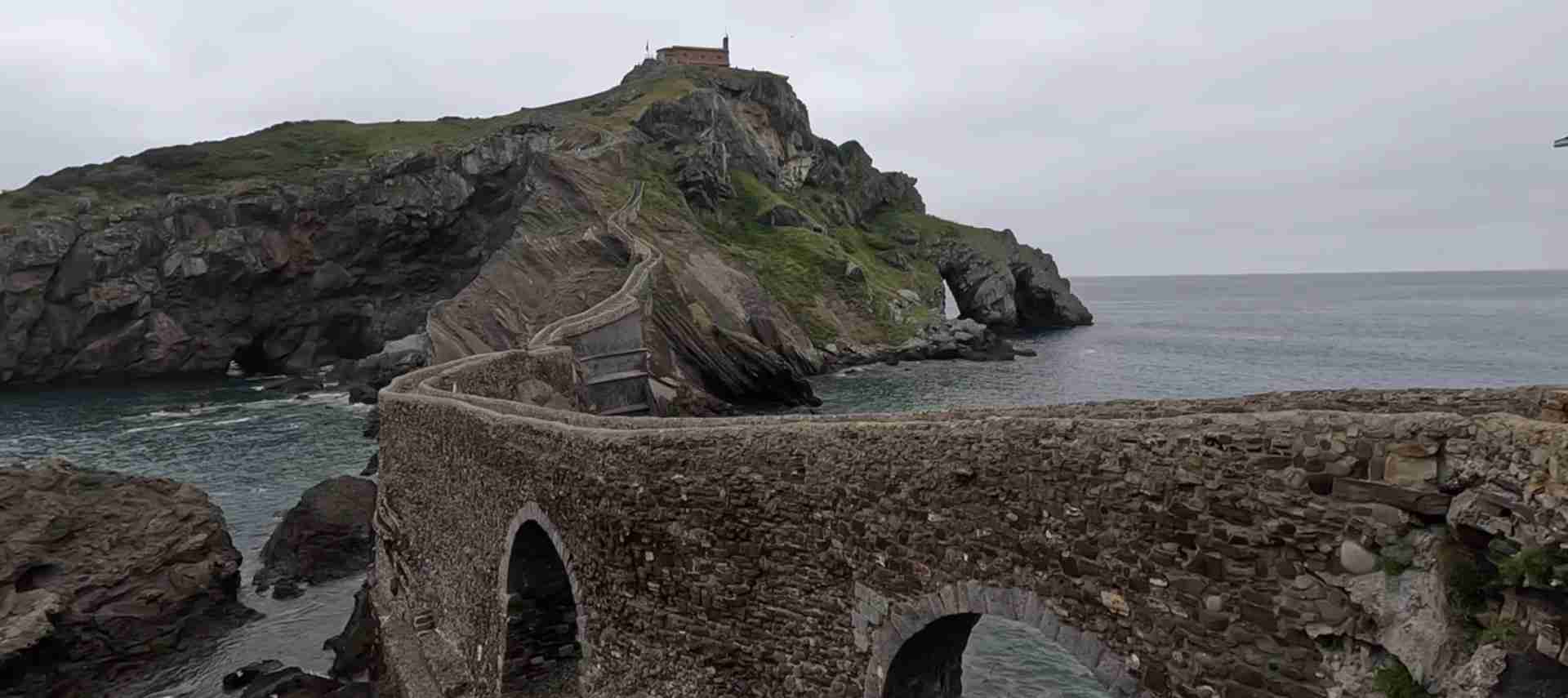
- The dramatic rocky islet features a 10th-century hermitage dedicated to Saint John the Baptist, connected to mainland by stone bridge and 241-step zigzagging staircase ascending 100 meters
- Basque name “Gaztelugatxe” derives from gaztelu (castle) and gatxe (difficult/harsh), literally meaning “difficult castle” or “harsh fortress,” reflecting the treacherous coastal location
- The site carries deep Basque maritime traditions—local legend claims Saint John the Baptist left his footprint on the final step, which visitors touch for good luck before ringing the hermitage bell three times to ward off evil spirits
- Itzurun Beach in nearby Zumaia served as the Dragonstone beach landing location, showcasing dramatic 500-foot flysch limestone cliffs resembling dragon scales that date back 60 million years
- The hermitage houses votive offerings from sailors rescued from shipwrecks, including model ships and religious paintings commemorating maritime perils and miraculous survivals throughout centuries
Introduction: Where Fantasy Meets Basque Reality
Few locations capture imagination quite like San Juan de Gaztelugatxe, the dramatic rocky islet rising from the Bay of Biscay along Spain’s Basque coast. This natural fortress topped by a modest hermitage represents centuries of maritime tradition, religious pilgrimage, military conflict, and cultural identity. When HBO’s production team sought the perfect location for Dragonstone—House Targaryen’s ancestral home in Game of Thrones—Gaztelugatxe’s otherworldly landscape provided exactly the dramatic coastal fortress the story demanded.
The islet juts from turbulent Atlantic waters near the fishing town of Bermeo in Vizcaya province, connected to mainland by a graceful stone bridge and serpentine staircase comprising 241 steps. This distinctive approach, zigzagging up rugged cliffs to the hermitage summit 80 meters above sea level, creates one of Spain’s most photographed coastal landscapes. The combination of crashing waves, weathered stone steps, medieval hermitage, and sweeping Bay of Biscay panoramas generates cinematic atmosphere that translated seamlessly to television screens worldwide.
Game of Thrones’ seventh season introduced Gaztelugatxe to global audiences as Dragonstone, the volcanic island fortress where Daenerys Targaryen was born and to which she returned after years of exile. While computer-generated imagery added the imposing castle structure, the dramatic coastal setting, distinctive staircase, and surrounding cliffs appeared authentically. Scenes of Daenerys and Tyrion ascending the winding steps, Jon Snow’s arrival seeking alliance, and the dragon queen surveying her domain from fortress heights all utilized Gaztelugatxe’s natural drama. The nearby Itzurun Beach in Zumaia, with its striking layered flysch formations, served as the landing beach where Daenerys first touched Westerosi soil.
The series’ global popularity transformed this already-beloved Basque landmark into an international phenomenon. Visitor numbers increased dramatically following the show’s airing, with pilgrims from dozens of countries making the climb. Yet beyond its screen fame, Gaztelugatxe carries profound cultural significance for Basque communities. The hermitage represents nearly a millennium of devotion, the island witnessed numerous military conflicts, and maritime traditions tie generations of fishermen to this sacred promontory. Legends speak of Saint John the Baptist’s miraculous visit, pirate attacks, heroic hermit defenders, and countless sailors saved from Atlantic storms through divine intervention.
The name “Gaztelugatxe” itself reveals the location’s character. Basque language constructs words through agglutination, combining gaztelu (castle) with gatxe (difficult, harsh, or rough), creating a name meaning “difficult castle” or “harsh fortress.” This linguistic heritage reflects the site’s challenging accessibility, treacherous surrounding waters, and formidable defensive position. The Basque language, Europe’s oldest surviving language isolate with no relation to Indo-European languages, preserves these ancient place names, connecting modern visitors to pre-Roman inhabitants who first recognized this location’s unique character.
Understanding Gaztelugatxe requires appreciating the convergence of natural wonder, human ambition, spiritual devotion, and cultural identity that transforms an isolated rocky outcrop into a place of profound meaning. The hermitage may be small and simple, but its setting creates grandeur no human construction could rival. The staircase demands physical effort, rewarding climbers with expanding vistas at each switchback. The waves crash with Atlantic power, reminding visitors of nature’s indifferent force. And the bell tolls from the summit, echoing across water and stone, carrying prayers and wishes from centuries of pilgrims who climbed before.
People Also Ask About Gaztelugatxe
Why was Gaztelugatxe chosen for Game of Thrones Dragonstone?
HBO’s location scouts selected Gaztelugatxe for its dramatic natural setting perfectly embodying Dragonstone’s fictional character. The distinctive serpentine staircase zigzagging up coastal cliffs provided the iconic approach to House Targaryen’s fortress. The rocky islet’s isolation surrounded by turbulent Atlantic waters created appropriate fortress atmosphere. Basque coast geology features jagged cliffs, sea caves, and natural arches formed through millions of years of erosion—visual elements reinforcing Dragonstone’s volcanic island setting. The hermitage’s position 80 meters above sea level offered commanding views suitable for a strategic stronghold. Nearby Itzurun Beach’s layered flysch formations resembled dragon scales, perfect for Daenerys’s beach landing scenes. The location’s existing legendary status—pirates, shipwrecks, medieval conflicts—aligned with Dragonstone’s fictional history as seat of power and strategic importance.
How difficult is climbing the 241 steps to Gaztelugatxe hermitage?
The 241-step climb presents moderate challenge requiring reasonable fitness but remaining accessible to most visitors including children and seniors. Steps divide into five ascending sections with small plateaus enabling rest between segments. The total elevation gain exceeds 100 meters from bridge to hermitage summit. Uneven stone steps vary in height and depth—some sections feature steep gradients while others provide gentler ascents. Metal handrails assist on steeper portions. Weather conditions significantly impact difficulty—wet stones become slippery requiring careful footing, while strong Atlantic winds necessitate firm handholds. Most visitors complete the climb in 20-30 minutes ascending, 15-20 minutes descending. The journey rewards effort with expanding coastal panoramas at each switchback, culminating in spectacular 360-degree Bay of Biscay views from summit. Visitors with mobility limitations can enjoy impressive vistas from mainland viewpoint without climbing.
What is the legend of Saint John the Baptist at Gaztelugatxe?
Basque legend narrates Saint John the Baptist’s miraculous visit to Gaztelugatxe, traveling from the Holy Land across seas. After disembarking at Bermeo port, the saint reached Gaztelugatxe in three giant steps, leaving footprints in stone marking his passage. These legendary footprints appear at four locations: the Arch of San Juan in Bermeo, Itsasalde hamlet in Arane neighborhood, the summit of Burgoa, and the final step ascending to the hermitage. Pilgrims touch the footprint impression on the last stair step believing it brings good fortune and divine protection. The hermitage dedication to Saint John the Baptist derives from this legendary visit. Maritime communities particularly venerate the saint as protector of sailors and fishermen. The tradition of ringing the hermitage bell three times after completing the ascent connects to this legend—believers hold that three peals banish evil spirits, ensure safe maritime journeys, and grant wishes. This ritual, combined with the footprint touching, creates layered pilgrimage experience blending Christian devotion with local maritime superstition.
What other Game of Thrones locations exist in Basque Country?
Multiple Basque coastal locations served Game of Thrones production. Itzurun Beach in Zumaia, 35 kilometers east of Gaztelugatxe, portrayed the Dragonstone beach where Daenerys makes landfall in Season 7’s opening episode. This location’s extraordinary flysch formations—layered limestone and sandstone cliffs revealing 60 million years of geological history—provided naturally dramatic backdrop resembling dragon scales. The same beach appeared in Season 7 Episode 3 cave scenes where Jon Snow and Daenerys discover dragonglass deposits and ancient carvings. Muriola Beach in Barrika served additional Dragonstone coastal scenes, particularly sections where Tyrion and Ser Davos meet secretly. The entire Basque coast from Bilbao to San Sebastián features similar geological formations—sea caves, natural arches, and stratified cliffs—creating cohesive visual vocabulary for Dragonstone’s fictional landscape. These locations earned Location Managers Guild International award in 2018 for Outstanding Locations in Period Television Series, recognizing their contribution to the show’s visual storytelling.
Extended multi-day tours – 5+ days
Featured Basque Country Multi-Day Tour Packages
3 days
Basque Country 3-Day Discovery Tour
- ✓ Comprehensive Basque Country experience
- ✓ Expert local guides included
- ✓ All accommodation included
- ✓ Transportation provided
5 days
Basque Country 5-Day Highlights Experience
- ✓ Comprehensive Basque Country experience
- ✓ Expert local guides included
- ✓ All accommodation included
- ✓ Transportation provided
7 days
Basque Country 7-Day Cultural Journey
- ✓ Comprehensive Basque Country experience
- ✓ Expert local guides included
- ✓ All accommodation included
- ✓ Transportation provided
10 days
Basque Country 10-Day Complete Adventure
- ✓ Comprehensive Basque Country experience
- ✓ Expert local guides included
- ✓ All accommodation included
- ✓ Transportation provided
Multi-day tour packages powered by TourRadar. Prices and availability subject to change.
Historical Background: From Medieval Hermitage to Cultural Icon
Origins and Early History
The hermitage origins trace to the 9th or 10th century, though exact founding date remains historically uncertain. Archaeological evidence including medieval burials discovered both on the esplanade and within the church structure suggests continuous religious presence since the 9th century. Some historians propose Knights Templar involvement in the original hermitage construction, citing the military order’s documented presence in northern Spain during this period and the site’s strategic defensive value. However, definitive Templar connection lacks conclusive documentation, remaining speculative despite local tradition asserting this prestigious association.
The first reliable historical documentation appears in 1053 when Don Íñigo López, Lord of Biscay, and his wife Doña Tota Ortiz donated the hermitage to the Monastery of San Juan de la Peña near Jaca in Huesca province. This Aragonese monastery, one of medieval Spain’s most influential religious institutions, gained control of numerous properties across northern Spain through noble patronage. The donation document refers to the hermitage as “Sancti Johannis de Castiello,” revealing the site’s dedication to Saint John the Baptist and its castle-like character even in Latin nomenclature.
During the 12th century, the hermitage evolved into a small convent housing a community of monks maintaining the site and serving pilgrims. This monastic period lasted approximately two centuries before the friars departed in the 14th century, taking valuable religious artifacts and treasury items with them. The reasons for abandonment remain unclear—possibilities include maritime dangers making permanent residence impractical, declining pilgrim traffic during political upheavals, or simply the isolated location’s unsuitability for sustained monastic community life.
Medieval Conflicts and Military Significance
Gaztelugatxe’s strategic position overlooking the Bay of Biscay attracted military attention throughout medieval period. The islet offered unparalleled surveillance of coastal approaches to Bermeo and the Urdaibai estuary, making it valuable as early warning post and defensive position. Its narrow access via single bridge and staircase created natural fortification requiring minimal garrison to defend against larger forces.
The most documented military engagement occurred in 1334 during conflicts between the Lord of Biscay and the King of Castile. Seven Biscayan fighters, supporting the Lordship of Biscay’s independence from Castilian royal authority, barricaded themselves in the hermitage to resist King Alfonso XI’s troops. The islet’s natural defenses enabled this small force to withstand siege for over one month. Lacking easy access for assault and facing determined defenders who could rain stones down the single staircase approach, royal forces eventually withdrew without capturing the position. This successful resistance enhanced Gaztelugatxe’s reputation as impregnable fortress and symbol of Basque resistance to external authority.
Pirate Attacks and Maritime Violence
The hermitage suffered numerous pirate raids exploiting its isolation and modest defenses. The most infamous attack occurred in 1593 when ships from the French Huguenot port of La Rochelle raided Bermeo and surrounding coast. These Protestant vessels, operating with tacit French royal approval during Franco-Spanish religious wars, targeted Catholic religious sites with particular ferocity. The raiders reached Gaztelugatxe where a solitary hermit maintained the chapel. According to historical accounts, the invaders murdered the hermit by forcing him off the cliff to his death on the rocks below—a brutal act exemplifying the religious violence characterizing 16th-century European conflicts.
Additional raids by various corsairs and pirates punctuated the hermitage’s history. The English privateer Francis Drake, operating with Queen Elizabeth I’s authorization against Spanish interests, allegedly attacked Gaztelugatxe in 1596 during his campaign along the northern Spanish coast. Drake’s fleet raided Bilbao and surrounding areas, with Gaztelugatxe’s religious significance and exposed position making it logical target for English Protestant forces seeking to intimidate Catholic Spain.
These violent episodes shaped local memory and maritime traditions. Fishermen and sailors regarded Gaztelugatxe with special reverence, believing Saint John’s protection extended to those who honored the hermitage with offerings and pilgrimages. The votive tradition—placing ex-votos (devotional objects) inside the chapel—intensified as mariners attributed survival of storms and pirate encounters to saintly intervention.
Reconstruction and Modern Challenges
The hermitage structure visible today represents multiple reconstructions necessitated by natural disasters and human destruction. The original medieval building deteriorated through centuries of Atlantic weather exposure—salt spray corrodes stone, fierce winds damage roofing, and waves occasionally reached the structure during exceptional storms. By the late 19th century, the building required complete reconstruction.
In 1886, authorities demolished the deteriorated medieval structure and constructed a new hermitage. This rebuild altered the building’s orientation and simplified architectural elements while maintaining dedication to Saint John the Baptist. The rectangular masonry structure with two-slope roof represented pragmatic design prioritizing durability over ornamental elaboration. A small belfry housing the traditional bell topped the entrance, preserving the iconic element essential to pilgrimage ritual.
Fire destroyed the 1886 hermitage completely on November 10, 1978. The devastating blaze consumed the wooden interior elements, damaged stone walls, and destroyed accumulated religious artifacts and votive offerings spanning centuries. The cause remains disputed—some sources suggest arson while others attribute it to electrical fault or unattended candles. Regardless of origin, the loss shocked Basque communities who regarded Gaztelugatxe as irreplaceable cultural patrimony.
Reconstruction began immediately with inauguration occurring June 24, 1980—Saint John the Baptist’s feast day—maintaining symbolic continuity despite structural renewal. The current hermitage replicates the 1886 design while incorporating modern fire safety measures and structural reinforcements. Interior decoration reflects maritime themes with model ships, paintings depicting naval battles and storms, and photographs of local fishermen honoring the site’s protective function for those facing Atlantic dangers.
Architectural and Natural Features
The Iconic Staircase
Gaztelugatxe’s most distinctive architectural feature remains the serpentine staircase connecting mainland to hermitage summit. This engineering marvel comprises 241 stone steps arranged in five ascending segments, each section ending at small platforms enabling rest and perspective shifts. The precise step count holds significance in local tradition—pilgrims often count steps during ascent as meditative practice, with the 241st step marking arrival at the legendary Saint John footprint.
The staircase follows natural rock contours, zigzagging up the islet’s steep flanks to minimize gradient while maximizing stability. Medieval builders recognized that straight ascent would create impossibly steep incline, so they developed the switchback design enabling manageable climb while creating defensive advantage—attacking forces ascending single-file on narrow steps facing defenders above possessed minimal tactical options. This dual function as pilgrimage path and defensive barrier exemplifies medieval practical ingenuity.
Construction required extraordinary effort given the location’s challenges. Workers had to transport stones from mainland, often during narrow weather windows between Atlantic storms. No machinery assisted the medieval builders—human labor, possibly supplemented by donkeys and pulleys, created every element. The steps vary in height and depth, reflecting both natural rock variations and manual construction methods. Metal handrails added in modern times provide safety assistance on steeper sections, though they compromise historical authenticity.
The bridge connecting mainland to islet precedes the staircase, featuring two graceful stone arches spanning a narrow channel where waves surge with tidal rhythms. This bridge, built to withstand Atlantic violence, anchors solidly into bedrock on both sides. During extreme storms, waves occasionally wash completely over the bridge, demonstrating the raw power this structure must resist. The bridge approach includes a final mainland section traversing rocky terrain, ensuring the entire journey from parking areas to hermitage presents varied topographical challenges.
The Hermitage Structure
The hermitage itself presents modest architectural ambitions—a simple rectangular building measuring approximately 10 by 6 meters with masonry walls and gabled roof. No architectural ornament decorates the exterior beyond the small belfry containing the ceremonial bell. This simplicity reflects both practical concerns—elaborate decoration would require expensive maintenance in harsh coastal conditions—and spiritual priorities emphasizing devotion over display.
The single-nave interior features a modest altar displaying religious statuary centered on Saint John the Baptist representations. Wooden benches accommodate worshippers during occasional masses celebrated on feast days. The walls display a remarkable collection of maritime votive offerings accumulated over decades. Model ships in various sizes commemorate successful voyages or miraculous rescues. Paintings depict storms, shipwrecks, and divine interventions. Photographs of local fishermen lost at sea create powerful memorials. Religious medals, candles, and handwritten prayers cover available surfaces, each representing individual acts of devotion or thanksgiving.
The votive tradition connects directly to maritime communities’ relationship with Gaztelugatxe. Fishermen facing Atlantic dangers sought Saint John’s protection through prayers and offerings. When storms threatened or catches failed, they vowed specific offerings if granted safe return. Survivors of shipwrecks attributed survival to saintly intervention, commissioning model ships or paintings depicting their ordeal. This tradition continues today with modern mariners maintaining customs their ancestors established centuries ago.
The belfry bell serves both liturgical and symbolic functions. Its tone carries across water and land, calling pilgrims to mass on feast days while announcing religious ceremonies. The tradition of ringing three times after completing the climb combines Christian symbolism (Trinity) with pre-Christian maritime superstitions about warding off evil spirits. Pilgrims pull the rope, creating distinctive peals that echo off surrounding cliffs—a sound that has marked this location for centuries and continues connecting modern visitors to historical continuity.
Geological and Coastal Features
Gaztelugatxe exemplifies the Basque coast’s distinctive geology formed through millions of years of tectonic activity and marine erosion. The islet consists primarily of sedimentary rock layers tilted and folded by ancient geological forces. This stratification creates the horizontal banding visible in cliff faces—layers of harder limestone alternating with softer sandstone and shale. Differential erosion wearing away softer layers faster creates the characteristic ledges, caves, and natural platforms punctuating the coastal profile.
The Bay of Biscay’s powerful wave action continuously reshapes these formations. Atlantic storms generate enormous wave energy focused by underwater topography onto exposed coastline. This relentless hydraulic force exploits rock weaknesses, gradually enlarging cracks into fissures, fissures into caves, and caves into arches. Eventually arches collapse, creating isolated stacks and islets like Gaztelugatxe itself—the island represents an advanced stage in coastal erosion where former mainland connection eroded away, leaving only the hardest rock formation standing as isolated remnant.
Surrounding waters feature additional natural wonders. Sea caves penetrate the cliffs, accessible only at low tide or by boat. Natural arches frame distant views, creating photographic compositions that change with tides and lighting. The small neighboring islet of Aketze forms part of the same protected biotope, providing seabird nesting sites. The entire coastal area from Bakio to Cape Matxitxako represents one of northern Spain’s most dramatic geological landscapes, with Gaztelugatxe serving as its most iconic feature.
Marine biodiversity thrives in waters surrounding the islet. Rocky substrates provide attachment points for kelp forests and other algae communities. These primary producers support invertebrate populations including the prized gooseneck barnacles (percebes) harvested by skilled collectors risking their lives on wave-battered rocks. Fish species including sea bass, bream, and various wrasse inhabit kelp forest zones. Seabirds including cormorants, gulls, and occasional rare species nest on cliff ledges and nearby Aketze islet. This biological richness earned the area protected biotope status, balancing tourism pressures with conservation requirements.
Cultural and Religious Significance
Maritime Traditions and Fishing Communities
Basque maritime culture defines coastal communities from Bilbao to the French border. Fishing represents not merely economic activity but cultural identity deeply woven into language, traditions, festivals, and social structures. Gaztelugatxe occupies central position in this maritime culture as sacred protector of those facing oceanic dangers. Fishermen departing for extended Atlantic fishing campaigns traditionally made pilgrimage to the hermitage seeking Saint John’s blessing and promising offerings upon safe return.
The fishing ports of Bermeo, Bakio, and surrounding villages maintained special relationships with Gaztelugatxe. Bermeo, one of the Basque Country’s principal fishing harbors, organized annual pilgrimages bringing entire communities to the hermitage. These collective devotions strengthened communal bonds while reinforcing shared identity as people depending on sea’s bounty and mercy. During particularly dangerous periods—severe storm seasons, wartime blockades, or following major maritime disasters—special masses at the hermitage drew hundreds seeking divine intervention or offering thanksgiving for survival.
Traditional Basque fishing methods, language, and customs connected intrinsically to religious observances. Fishing boats carried religious medals blessed at Gaztelugatxe. Nets received ceremonial blessings invoking Saint John’s protection. First catches of seasonal species prompted offering small portions to the hermitage or donations for candles and maintenance. These practices created reciprocal relationship between human communities and sacred site—protection exchanged for devotion, survival acknowledged through offerings.
Modern fishing communities maintain these traditions despite technological advances and declining religiosity. Even fishermen who don’t actively practice Christianity often follow customary observances—touching the Saint John footprint, ringing the bell—viewing these acts as cultural heritage rather than purely religious devotion. The votive offerings accumulating in the hermitage represent unbroken chain connecting contemporary mariners to ancestors who faced identical Atlantic dangers with fewer technological protections.
Pilgrimage and Religious Festivals
Gaztelugatxe functions as active pilgrimage destination hosting several annual celebrations drawing thousands of participants. The principal feast occurs June 24th, Saint John the Baptist’s nativity, when Bermeo’s residents organize traditional pilgrimage. Participants walk from Bermeo center through countryside paths to Gaztelugatxe, maintaining ancient route connecting town to hermitage. The procession includes traditional music, Basque folk dancing, and communal prayers. Mass celebrated at the hermitage summit culminates the day, followed by socializing and traditional foods shared among pilgrims.
July 31st brings pilgrims from Arrieta celebrating Saint Ignatius of Loyola, the Basque-born founder of the Jesuit order. This secondary feast honors the regional saint while maintaining Gaztelugatxe’s broader significance beyond Saint John the Baptist devotion. The connection between Ignatius and the site reflects Basque cultural identity more than specific religious history—Basque communities claim local saints as their own, integrating various devotions into regional pilgrimage traditions.
August 29th marks the feast of Saint John the Baptist’s beheading, drawing pilgrims from Bakio who combine religious observance with unique underwater ceremony. Participants place floral offerings to the Virgin of Begoña statue positioned in the bay waters near Gaztelugatxe. This maritime ceremony directly addresses fishing communities’ relationship with sea—flowers cast on waves symbolize prayers for those lost at sea and thanksgiving for those safely returned. The combination of land-based hermitage pilgrimage with ocean-based ritual perfectly captures the dual nature of coastal Basque spirituality.
Individual pilgrims visit throughout the year, particularly during summer months when weather permits easier access. Many fulfill personal vows made during illness, crisis, or danger. Others seek spiritual renewal through the physical challenge and dramatic setting. The climb itself functions as embodied prayer—physical effort becoming meditative practice as ascending pilgrims contemplate life circumstances with each step. The expanding vistas at each switchback metaphorically represent broader perspectives gained through spiritual journey. Arriving at the summit, touching the footprint, and ringing the bell three times completes the ritual sequence connecting personal devotion to centuries of pilgrims who performed identical acts.
Basque Language and Cultural Identity
The Basque language (Euskara) represents one of Europe’s oldest surviving languages and its only language isolate—meaning it has no known relationship to any other language family. Basque predates Indo-European languages including Spanish, existing in this region for thousands of years before Roman conquest. The language preservation represents core element of Basque cultural identity and political consciousness. Place names throughout the region, including Gaztelugatxe, derive from Euskara, maintaining linguistic continuity with pre-Roman inhabitants.
Understanding “Gaztelugatxe” requires grasping Euskara’s agglutinative nature—the language constructs words by combining smaller elements. “Gaztelu” derives from Latin “castellum” (castle), adopted into Euskara during Roman period but modified according to Basque phonological patterns. “Gatxe” represents indigenous Basque root meaning difficult, harsh, rough, or dangerous. The combined “Gaztelugatxe” therefore translates as “difficult castle,” “harsh fortress,” or “treacherous stronghold”—all appropriate descriptions for this isolated, wave-battered islet requiring dangerous approach.
Alternative interpretations split the word differently as “gaztelu-aitz” (castle rock), emphasizing the rocky prominence rather than difficulty. Linguistic scholars debate the precise etymology, though both interpretations remain plausible within Euskara’s complex morphology. What remains clear is that the Basque name preserves ancient perceptions of this location—whether emphasizing its rocky nature, defensive character, or dangerous accessibility, the name captures elements that defined the site for pre-modern inhabitants.
Modern Basque cultural revitalization strongly emphasizes language preservation. Euskara enjoys co-official status with Spanish throughout the Basque Autonomous Community, appearing on all signage, government documents, and public communications. Younger generations increasingly learn Euskara as first language through immersion education programs. This linguistic revival connects to broader Basque nationalism and cultural preservation movements. Gaztelugatxe functions as cultural symbol within this context—the name itself, the legends associated with the site, and its role in maritime traditions all reinforce distinctively Basque identity separate from broader Spanish national culture.
Game of Thrones Connection and Pop Culture Impact
Dragonstone in Westeros Mythology
Understanding Gaztelugatxe’s role in Game of Thrones requires comprehending Dragonstone’s significance within the series’ fictional geography and political landscape. Dragonstone serves as House Targaryen’s ancestral seat—the western-most outpost of the ancient Valyrian Freehold where Targaryen ancestors settled centuries before conquering Westeros. The island fortress became birthplace of multiple Targaryen monarchs and represented the family’s connection to their dragon-riding heritage.
In the series’ mythology, Dragonstone sits in Blackwater Bay east of King’s Landing, the capital city. The fortress contains vast deposits of dragonglass (obsidian)—one of the few substances capable of killing White Walkers, the undead threat advancing from the far north. This strategic resource becomes crucial in Season 7 when Daenerys Targaryen returns to her birthplace after years of exile in Essos. The series depicts Dragonstone as volcanic island with fortress built using advanced Valyrian architectural techniques, featuring dragon-shaped gargoyles and towers carved to resemble dragons.
Daenerys’s Season 7 return to Dragonstone marked pivotal narrative moment. After conquering cities across the Narrow Sea and gathering armies, dragons, and advisors, she finally crossed to Westeros claiming her family’s ancient seat. The Gaztelugatxe staircase appears in the iconic scene where Daenerys and Tyrion ascend to the fortress gates, with Daenerys touching the ancient stones of her ancestral home for the first time. Later episodes show Jon Snow arriving seeking alliance against the White Walker threat, leading to the famous “dragonglass cave” scene revealing ancient carvings and establishing reluctant cooperation between the two protagonists.
Filming Locations and Production Details
HBO’s production team scouted numerous European coastal locations before selecting Basque Country locations for Dragonstone exterior sequences. The decision balanced practical filming requirements—accessibility, local infrastructure, cooperation from regional authorities—with aesthetic demands for dramatic, otherworldly landscapes matching the books’ descriptions and series’ established visual style.
Gaztelugatxe offered multiple advantages. The distinctive serpentine staircase provided instantly recognizable visual signature for Dragonstone approaches. The hermitage’s elevated position enabled sweeping shots showing characters silhouetted against sky and sea. The rugged coastal setting communicated isolation, strategic defensibility, and ancient heritage without requiring extensive set construction. The Basque government’s enthusiasm for the economic benefits of hosting major international production facilitated necessary permits and local support.
Actual filming occurred over several days during September 2016, with strict limitations protecting the site’s cultural heritage status. Production crews couldn’t permanently alter structures or landscapes. The small hermitage building couldn’t accommodate filming equipment, cameras, or crew, so most interior “Dragonstone” scenes filmed on soundstages in Northern Ireland. What audiences see are careful combinations—characters filmed at real Gaztelugatxe locations with computer-generated castle elements added digitally, creating composite images blending reality and fantasy.
The production employed approximately 500 extras during beach landing scenes filmed at nearby Itzurun Beach. These sequences showing Daenerys’s fleet arriving and her army disembarking required extensive coordination. The beach’s dramatic flysch formations—stratified limestone cliffs with distinctive horizontal banding—needed no digital enhancement to appear suitably dramatic. The geological layers, formed over 60 million years, genuinely resemble dragon scales as numerous commentators noted, creating fortuitous visual parallel between geological reality and fantasy narrative.
Tourism Impact and Cultural Consequences
Game of Thrones’ global popularity transformed Gaztelugatxe’s visitor patterns dramatically. Pre-2016, the site attracted primarily regional tourists, Basque pilgrims, and hiking enthusiasts—perhaps several hundred daily visitors during peak summer season. Post-broadcast, visitor numbers increased exponentially. Spanish media reported 300% growth in annual visitors, with international tourists comprising growing percentage. Asian tourists, particularly from markets where Game of Thrones achieved massive popularity, began appearing in significant numbers. Social media amplified the effect as Instagram and other platforms spread images of the dramatic staircase with hashtags referencing Dragonstone.
This surge created both economic benefits and conservation challenges. Local restaurants, hotels, tour operators, and shops benefited from increased spending. The fishing town of Bermeo, previously receiving minimal international tourism, suddenly hosted visitors from dozens of countries seeking the “real Dragonstone.” Regional government recognized economic opportunity, promoting Basque Country as “Game of Thrones Land” in international marketing campaigns. The Location Managers Guild International honored the Basque filming locations with 2018 awards, providing official recognition validating the production value of these natural settings.
However, the heritage site faced unprecedented visitation pressures. Parking areas proved inadequate for demand, creating traffic congestion on narrow coastal roads. The 241 steps, designed for pilgrims ascending reverently, now accommodated hundreds daily rushing up and down for photos. Erosion accelerated on heavily-trafficked stone steps. Local residents complained about crowding, noise, and disruption of traditional pilgrimage experiences. Environmental concerns arose regarding impact on surrounding biotope—protected seabird nesting areas, vegetation trampling, and waste management issues.
Authorities implemented access management systems requiring free timed-entry reservations during peak periods. These reservations, bookable online weeks in advance, limit simultaneous visitors to sustainable numbers protecting both site integrity and visitor experience quality. The system balances conservation with access, though controversy continues regarding appropriate visitor capacity and whether tourism income justifies impacts on cultural and natural heritage. Debate centers on whether Gaztelugatxe’s identity should prioritize its historical role as Basque maritime heritage site or embrace new identity as international pop culture destination.
Photography Guide: Capturing Gaztelugatxe’s Drama
Optimal Lighting and Weather Conditions
Gaztelugatxe presents exceptional photographic opportunities across various lighting conditions, though specific goals determine ideal circumstances. Golden hour light—the hour following sunrise or preceding sunset—creates warm illumination enhancing stone textures and producing long dramatic shadows emphasizing the staircase’s serpentine geometry. Summer sunrise occurs approximately 6:30 AM, sunset around 9:30 PM, while winter sunrise arrives 8:30 AM with sunset 5:30 PM. These extreme seasonal variations affect planning significantly.
Morning light approaching from the east illuminates the hermitage and upper staircase sections while casting the bridge area into shadow, creating strong contrast. This direction suits capturing the hermitage as dominant subject with backlighting ocean. Evening light from the west produces opposite effect—bridge and lower staircase receive direct illumination while hermitage falls into silhouette, emphasizing the coastal approach rather than summit destination. Neither orientation proves objectively superior—choice depends on intended narrative emphasis.
Overcast conditions, while seeming less dramatic, offer distinct advantages. Cloud cover creates soft, even lighting eliminating harsh shadows and reducing extreme contrast. This enables capturing detail throughout the tonal range—stone textures, vegetation, water movement—without losing information in deep shadows or blown highlights. Overcast light particularly suits color photography emphasizing the green vegetation, grey stone, and blue-grey sea without overwhelming sun creating color casts or extreme brightness.
Storm conditions produce the most dramatic atmospheres though presenting technical and safety challenges. Approaching storms create moody skies with dark clouds contrasting against illuminated foreground elements when sun breaks through gaps. Waves crash with exceptional power during storms, sending spray high against rocks and bridge. However, safety becomes paramount—strong winds make climbing stairs dangerous, rain creates slippery surfaces, and salt spray damages camera equipment. Photographers pursuing storm imagery must prioritize safety while protecting gear with weatherproof housings.
Essential Viewpoints and Compositions
Multiple vantage points enable varied compositional approaches. The mainland viewpoint accessible without climbing provides elevated perspective overlooking the entire site. This location enables capturing the complete scene—bridge, staircase, hermitage, surrounding cliffs—within single frame. Wide-angle lenses (16-24mm full-frame equivalent) incorporate expansive context showing Gaztelugatxe within broader coastal landscape. Telephoto lenses (70-200mm) compress perspective, making the staircase appear steeper and more dramatic while isolating details against simplified backgrounds.
Descending to the bridge level provides intimate perspectives emphasizing the journey rather than overview. Shooting from the bridge looking up the staircase creates strong leading lines drawing viewer’s eye from foreground through multiple switchbacks to the hermitage summit. This composition emphasizes the pilgrim’s experience—the daunting climb ahead, the unknown summit beyond view. Including human figures ascending creates scale reference and narrative element—lone climbers suggest spiritual quest while groups indicate communal experience.
Climbing to intermediate platforms enables varied perspectives. Each switchback offers changing angles on both the path already traversed and the remaining ascent. Looking backward down the stairs shows the distinctive zigzag pattern against ocean background—the pattern that made the location instantly recognizable in Game of Thrones. These intermediate positions also enable photographing other climbers ascending or descending, capturing shared experience and physical challenge inherent to the location.
Summit positions provide the reward shots—panoramic views across the Bay of Biscay, looking down on the completed path, and intimate hermitage details. Wide-angle lenses capture the expansive vistas with dramatic foreground elements—the hermitage wall, bell tower, or rocky outcrops. Portrait-oriented vertical compositions emphasize the dramatic height, showing vertical drop from summit to sea below. Detail shots of the hermitage bell, votive offerings visible through windows, and the legendary footprint on the final step complete the documentary record.
Technical Considerations and Equipment
Lens selection depends on intended imagery. Wide-angle zoom (16-35mm full-frame equivalent) handles landscapes, contextual shots, and confined interior spaces. Standard zoom (24-70mm) provides versatility for varied subjects without constant lens changes. Telephoto zoom (70-200mm) isolates details, compresses perspective, and enables photographing distant elements like seabirds or wave action. Prime lenses offer superior optical quality and wider maximum apertures but require more carrying weight and frequent changes—acceptable tradeoff for photographers prioritizing ultimate image quality.
Tripods prove challenging due to crowding and stairs unsuitable for stable tripod positioning. Monopods provide compromise—stability assistance without consuming excessive space or requiring level surface. Image stabilization (in-lens or in-body) enables handheld shooting in marginal lighting. High ISO performance matters significantly—modern cameras maintaining acceptable image quality at ISO 3200-6400 enable handheld shooting during overcast conditions or inside the dimly-lit hermitage.
Filters serve specific purposes. Circular polarizing filters reduce glare from water surfaces, deepen blue skies, and enhance color saturation—particularly effective on bright days. Neutral density filters enable long exposures smoothing water movement into misty effects even in bright conditions—six-stop ND allows 20-30 second exposures creating ethereal wave motion. Graduated neutral density filters balance exposure between bright sky and darker foreground, though many photographers prefer bracketing exposures and blending in post-processing for greater control.
Weather protection matters in coastal environments. Salt spray corrodes electronics and optics. Protective UV filters shield front lens elements. Camera rain covers or even simple plastic bags with rubber bands protect gear during unexpected showers. Lens cloths remove salt deposits before they solidify. After shooting sessions, wipe down all equipment removing any salt residue. This maintenance prevents long-term corrosion damage particularly in humid coastal conditions where salt remains airborne even without direct wave spray.
Visiting Information: Practical Planning
Access and Transportation
Reaching Gaztelugatxe requires ground transportation from major cities. The site lies approximately 35 kilometers northeast of Bilbao and 80 kilometers west of San Sebastián. No direct public transportation serves the site—visitors must combine buses with walking or arrange private transportation. From Bilbao, Bizkaibus A3518 operates hourly service to Bakio village, continuing to San Pelaio. Request stop at Gaztelugatxe access road junction. From there, walking paths cover approximately 1.7 kilometers to the bridge—allow 20-25 minutes. Alternative approach uses PESA buses from Bilbao Termibus station to Bermeo, then local bus or taxi to Gaztelugatxe access points.
Private vehicles offer greater flexibility. From Bilbao, take BI-631 coastal road through Mungia toward Bermeo, following signs to Gaztelugatxe. Parking areas exist at two locations: Urizarreta access point and Ermu access point, both offering free parking. Spaces fill quickly during summer weekends and holidays—arrival before 9 AM recommended. During peak season, parking enforcement may direct vehicles to overflow areas farther from access trails. Respect parking regulations—illegal parking blocks emergency vehicle access and risks fines.
From either parking area, two walking routes descend to the islet. Urizarreta route covers 0.75 miles with steep 35% gradient including stairs—shortest but most strenuous approach. Ermu route extends 1.2 miles along gentler path avoiding stairs until final descent—longer but easier on knees. Both routes converge on the old paved service road leading to the bridge. Walking times vary by fitness level—budget 20-30 minutes descent from parking to bridge, slightly longer returning uphill. The approach paths offer excellent coastal views and photographic opportunities, transforming the access walk from necessity to experience.
Seasonal Considerations and Crowd Management
Access regulations vary seasonally balancing heritage protection with visitor accommodation. Outside peak season (late September through mid-March), Gaztelugatxe operates without capacity restrictions—visitors arrive freely without advance reservations. These quieter months provide optimal conditions for visitors preferring solitude and reflective experience. However, winter weather brings increased rainfall, stronger winds, and rougher seas. The dramatic storm conditions create spectacular photography but reduce access comfort and safety.
Peak season spanning Easter week through mid-September implements timed-entry reservation system limiting simultaneous visitors. Reservations book through official Bizkaia provincial government website weeks ahead for summer weekends. The free reservation system assigns specific entry times controlling flow and preventing overcrowding. Arrive at assigned time window—early or late arrival may result in denied entry if other time slots already filled to capacity. The system enables authorities monitoring visitor numbers, managing environmental impact, and ensuring quality experience without overwhelming infrastructure.
Weekday visits provide less crowded alternatives even during summer months. Tuesday-Thursday typically experience lowest visitor density while Saturday-Sunday see maximum crowds. Early morning or late afternoon arrivals encounter fewer people than midday rushes. Photography enthusiasts particularly benefit from early arrivals—morning light combines with minimal crowds creating ideal conditions. Evening visits enable sunset photography though require planning transportation back to parking areas as light diminishes.
Physical Requirements and Accessibility
The 241-step climb demands reasonable physical fitness. Total elevation gain exceeds 100 meters from bridge to hermitage summit. Steps vary in height and depth—some sections feature steep gradients while others provide gentler ascents. Uneven stone surfaces require attention to footing, particularly when wet. Metal handrails assist on steeper portions. Most healthy adults complete the climb without difficulty, though stops for rest and photos prove common. Children as young as 5-6 accompany parents successfully, while active seniors reach the summit regularly.
However, significant accessibility limitations exist. The site cannot accommodate wheelchairs or mobility scooters—no adapted paths reach the hermitage. Visitors with mobility impairments can access the mainland viewpoint providing partial site experience without climbing. The viewpoint enables appreciating the dramatic setting and photographing the iconic staircase from elevated perspective. For many visitors, this viewpoint proves sufficient, particularly when combined with other Basque coastal attractions accessible with less physical demand.
Weather conditions significantly impact climbing difficulty. Wet stones become slippery requiring careful footing and slower pace. Strong winds, common along this exposed coast, necessitate firm handholds and low center of gravity. Summer heat rarely poses problems given Atlantic moderation, but adequate hydration remains important. Winter cold combines with wind chill creating uncomfortable conditions—appropriate layered clothing essential. Check weather forecasts before departure and adjust plans if conditions appear dangerous.
Visitor Etiquette and Heritage Protection
Gaztelugatxe functions simultaneously as tourist attraction, religious site, and protected natural area—each status carries responsibilities for respectful visitation. The hermitage remains consecrated space where religious ceremonies occur and pilgrims worship. Visitors should maintain appropriate reverence inside the chapel—quiet voices, modest behavior, refraining from eating or drinking. Photography inside the hermitage requires sensitivity—avoid flash photography during religious services, don’t obstruct worshippers, and respect “no photography” signs if posted for specific events.
Environmental protection requires following basic principles. Stay on established paths avoiding vegetation trampling. Carry out all trash—no receptacles exist on the islet or approach paths. Don’t disturb wildlife, particularly nesting seabirds on cliff ledges and nearby Aketze islet. Feeding birds or other animals disrupts natural behaviors and creates dependency. Graffiti, carving names in stone, or any other vandalism damages irreplaceable heritage and remains strictly prohibited with legal consequences.
The bell-ringing tradition requires moderation. While the custom involves three peals, excessive ringing creates noise pollution affecting other visitors and disturbs wildlife. Ring firmly but briefly, allowing others their turn. During religious ceremonies or masses, defer to clergy regarding bell use. The footprint on the final step, worn smooth by centuries of touching, continues eroding—gentle touching preserves the feature while still honoring tradition. Aggressive rubbing or attempts photographing feet in the footprint accelerate deterioration.
Drone usage faces significant restrictions. The protected biotope status prohibits drone flights without special permits issued rarely and only for scientific research or professional filming with appropriate authorization. Unauthorized drone operation risks substantial fines and equipment confiscation. Additionally, drones disturb nesting seabirds, create annoyance for other visitors, and pose collision risks in confined spaces. Commercial photography and filming requires advance permits from Bizkaia provincial authorities—spontaneous filming for personal use remains acceptable but commercial exploitation without permission violates regulations.
Nearby Attractions and Combined Itineraries
Bermeo: Basque Fishing Port
The fishing town of Bermeo serves as natural base for Gaztelugatxe visits, offering accommodation, dining, and maritime heritage attractions. This historic port maintains active fishing fleet alongside tourism development. The harbor showcases traditional Basque fishing boats and modern trawlers, with fish auction house conducting daily sales of fresh Atlantic catches. Old Town preserves medieval street patterns, colorful Basque architecture with wooden balconies, and Gothic church of Santa María de la Asunción.
Museo del Pescador (Fisherman’s Museum) documents Basque maritime traditions through fishing equipment displays, model boats, historical photographs, and audiovisual presentations. The museum occupies restored waterfront building near harbor, charging modest admission. Exhibits explain traditional fishing methods, boat construction techniques, and social organization of fishing communities. English-language information enables international visitors understanding Bermeo’s maritime heritage significance. Allow 60-90 minutes for thorough exploration.
Bermeo’s restaurants specialize in fresh seafood and traditional Basque cuisine. Harbor-front establishments serve daily catches—grilled fish, seafood stews, salt cod preparations, and local specialties like kokotxas (hake throats). Pintxos bars in Old Town offer miniature culinary creations showcasing Basque gastronomic innovation. Market days (Tuesday, Friday, Saturday) fill Plaza Sabino Arana with stalls selling regional products—cheese, vegetables, cured meats, preserved fish. Experiencing Bermeo’s daily rhythms provides authentic Basque cultural immersion beyond the tourist circuit.
Mundaka: Surf Culture and Urdaibai Biosphere
Mundaka, 10 kilometers southeast of Bermeo, combines world-class surfing with environmental significance. The town sits on the Urdaibai estuary, designated UNESCO Biosphere Reserve for exceptional biodiversity. The river mouth creates one of Europe’s longest left-hand breaking waves—Mundaka’s legendary surf break attracting professional surfers and enthusiasts worldwide. Autumn and winter months produce optimal swells with waves reaching 3-4 meters creating exhilarating rides exceeding 400 meters length.
Beyond surfing, Mundaka offers relaxed coastal village atmosphere. Colorful houses cluster on hillside overlooking harbor and estuary. The small beach provides safe swimming during calm conditions, though primary appeal lies in the natural setting rather than extensive sand. Walking paths follow the estuary enabling bird watching—migratory species use Urdaibai as stopover point, with herons, egrets, and various waterfowl visible throughout year. The Urdaibai Bird Center, located outside Mundaka, provides interpretation and observation facilities for ornithology enthusiasts.
Dining options focus on seafood and traditional Basque fare. Restaurants overlook the harbor and breaking waves, providing entertainment alongside cuisine. Typical dishes include grilled fish, seafood rice, and marmitako (tuna stew). Casual bars serve pintxos and local Txakoli wine. The town maintains authentic character despite surf tourism—fishing boats share harbor with surf-related vessels, and local residents outnumber visitors outside peak surf season. This balance creates accessible destination combining natural beauty, sporting appeal, and cultural authenticity.
Urdaibai Biosphere Reserve
The Urdaibai estuary system encompasses 220 square kilometers of marshlands, forests, beaches, and cultural landscapes earning UNESCO Biosphere Reserve designation. This recognition acknowledges the area’s exceptional biodiversity, sustainable resource management, and integration of human communities with natural systems. The reserve combines strict conservation zones with areas where traditional activities—fishing, agriculture, forestry—continue under sustainable practices.
Tidal marshlands provide critical habitat for migratory birds following East Atlantic Flyway. Seasonal migrations bring thousands of waterfowl, waders, and seabirds. Observation platforms and marked trails enable wildlife viewing without disturbing sensitive habitats. The Urdaibai Bird Center near Gautegiz Arteaga offers guided tours, educational exhibits, and observation towers overlooking prime wetland areas. Spring and autumn migrations provide spectacular viewing opportunities, though year-round populations maintain interest across seasons.
Cultural heritage sites throughout the reserve include medieval churches, traditional farmhouses, and archaeological remains. The Cave of Santimamiñe contains Paleolithic paintings and carvings dating approximately 14,000 years—among the Iberian Peninsula’s most significant prehistoric art sites. Guided tours (advance reservation required) reveal artistic masterpieces created by hunter-gatherer communities documenting extinct megafauna and symbolic imagery. The cave entrance provides views across the Oka River valley, connecting ancient human presence to contemporary landscapes.
Multiple hiking and cycling routes traverse the reserve. Coastal paths connect Bermeo, Mundaka, and surrounding villages showcasing cliffs, beaches, and ocean vistas. Interior routes follow river valleys through oak forests and agricultural lands. The Urdaibai Interpretation Center in Busturi provides maps, route descriptions, and environmental information. Kayaking on the estuary enables water-level perspectives of marshlands and observation of bird colonies. Local outfitters offer rentals and guided tours suitable for various skill levels.
Legends and Local Folklore
The Three Giant Steps of Saint John
The most enduring Gaztelugatxe legend narrates Saint John the Baptist’s miraculous journey from the Holy Land to the Basque coast. According to tradition, after his execution in Judea, the saint’s spirit traveled across seas reaching Bermeo. Landing at the port, he proceeded to Gaztelugatxe covering the distance in exactly three giant steps, each stride spanning several kilometers. His supernatural footprints remain impressed in stone at four locations marking this legendary passage.
The first footprint appears in Bermeo’s Arch of San Juan near the Old Port—a stone indentation interpreted as the saint’s initial landing point. The second manifests in Itsasalde hamlet in the Arane neighborhood, several kilometers toward Gaztelugatxe. The third marks the summit of Burgoa, the coastal peak overlooking the islet. The fourth and most sacred footprint—the one pilgrims touch—appears on the 241st step immediately before reaching the hermitage entrance. This final impression allegedly formed as Saint John’s foot touched down completing his miraculous journey to bless this promontory.
The legend served multiple cultural functions for Basque coastal communities. It established sacred geography connecting specific locations through divine presence. It justified the hermitage’s importance by grounding its origins in miraculous visitation rather than mundane human construction. It provided narrative explaining the site’s dedication to Saint John rather than other saints—the footprint “proved” his personal blessing of this particular location. And it created tangible objects of devotion—the stone footprints—enabling physical connection to spiritual narrative through touch and pilgrimage.
Modern interpretation recognizes the legend as typical hagiographic construction—the mixing of historical religious figures with local geography to create sacred landscapes. Similar “saint’s footprint” traditions exist throughout Christian Europe, Mediterranean regions, and beyond. The specific three-step structure echoes folkloric patterns where magical numbers (particularly three) structure supernatural narratives. Yet the legend’s persistence across centuries demonstrates its resonance with communities who maintain the tradition even as literal belief diminishes. The footprint touching continues not necessarily as faith in miraculous origin but as participation in centuries-old cultural practice connecting contemporary visitors to historical continuity.
Pirates, Hermits, and Maritime Perils
Gaztelugatxe’s exposed position and religious significance attracted pirates and corsairs throughout maritime history. These attacks generated legends emphasizing the hermit-guardians’ courage against overwhelming odds. The most dramatic narrative involves the 1593 Huguenot raid when Protestant ships from La Rochelle terrorized the Basque coast. When raiders reached Gaztelugatxe, the solitary hermit responsible for maintaining the chapel refused to abandon his post despite facing armed men. The attackers, frustrated by his resistance and inflamed by religious hatred, cast him from the cliff to his death on rocks below.
This martyrdom narrative functions on multiple levels. It demonstrates religious devotion transcending self-preservation—the hermit chose death over abandoning his sacred duty. It vilifies Protestant enemies as murderers willing to kill unarmed holy men. It sanctifies Gaztelugatxe through martyrdom, adding the hermit’s blood to the site’s sacred associations. And it creates moral imperative for defending the location against future threats. Whether the incident occurred exactly as narrated remains uncertain—the dramatic details bear hallmarks of embellished storytelling. Yet some violent confrontation clearly occurred, providing historical kernel around which legend accreted.
Additional pirate narratives describe various raids and the hermitage’s use as lookout post warning Bermeo of approaching hostile vessels. The strategic sightlines from the summit enabled observers spotting ships hours before reaching port, providing crucial warning time for defensive preparations or evacuation. Some legends describe signal fires lit atop Gaztelugatxe communicating specific threats—number of ships, direction of approach, identified flags. This early warning system protected not just Bermeo but the entire coast, making Gaztelugatxe’s defense vital to regional security.
Shipwreck narratives form the largest category of Gaztelugatxe legends. The Bay of Biscay’s reputation for fierce storms and treacherous waters generated countless maritime disasters. Survivors attributed rescue to Saint John’s intervention, reinforcing devotion to the hermitage. Tales describe sailors praying to Saint John as ships foundered, promising pilgrimages and offerings if granted survival. When wreckage washed ashore near Gaztelugatxe, survivors believed proximity to the holy site caused their salvation. These accumulated survival stories created the votive tradition—model ships, paintings of storms, and thanksgiving plaques filling the hermitage interior as physical evidence of miracles granted.
Conservation and Future Challenges
Environmental Pressures and Management Responses
The dramatic increase in visitation following Game of Thrones broadcast created unprecedented environmental pressures. The 241 stone steps, originally constructed for modest pilgrim traffic, now accommodate hundreds daily wearing down surfaces and accelerating erosion. Vegetation alongside approach paths suffers trampling as visitors step off trails for photographs or shortcuts. The biotope designation protecting seabird colonies faces threats from human activity—noise disturbance, egg predation by domestic animals accompanying visitors, and habitat destruction from trail widening or unofficial path creation.
Authorities implemented multiple conservation measures. The timed-entry reservation system during peak season limits simultaneous visitors preventing overcrowding that damages infrastructure and degrades experience quality. Mandatory guided tours during certain periods enable controlled access while providing educational content about heritage significance and appropriate behavior. Regular monitoring assesses visitor impacts through vegetation surveys, erosion measurements, and wildlife population studies. Maintenance work including step repairs, handrail reinforcement, and drainage improvements occurs during winter low season minimizing disruption.
Parking management addresses traffic impacts. Limited spaces prevent unlimited vehicle access overwhelming narrow coastal roads. Park-and-ride systems connect larger parking areas to the site via shuttle buses during peak demand. This reduces local congestion while maintaining access. However, controversy continues regarding appropriate capacity—some advocate severely restricting access preserving the site’s integrity, while others argue public access to cultural patrimony justifies higher visitation levels despite impacts.
Educational initiatives attempt modifying visitor behavior reducing harmful impacts. Signage explains the site’s cultural and natural significance, emphasizing conservation needs. Rangers patrol during peak times providing guidance and enforcing regulations. Social media campaigns promote responsible visitation—stay on paths, carry out trash, respect quiet zones, follow photography restrictions. These “soft” management approaches complement “hard” capacity limits, seeking to cultivate environmental ethic among visitors rather than relying solely on enforcement.
Balancing Heritage Preservation with Tourism Access
Fundamental tensions exist between preserving Gaztelugatxe’s heritage character and accommodating mass tourism. The site’s identity as Basque maritime sanctuary dedicated to Saint John the Baptist conflicts with its new identity as Game of Thrones filming location. Traditional pilgrims seeking spiritual experience resent crowds rushing for selfies. Local communities appreciate tourism revenue but lament loss of tranquil access to culturally significant site. Environmental advocates prioritize biotope protection over visitor accommodation.
Multiple stakeholder groups hold competing interests. Regional tourism authorities promote visitation generating economic activity. Heritage conservators prioritize protecting historical structures and cultural practices. Environmental agencies focus on biotope integrity and wildlife protection. Local residents desire access while limiting disruption to daily life. Religious communities want to maintain sacred character. National and international visitors expect access to public heritage sites. Finding equilibrium satisfying all parties proves impossible—management requires compromise accepting that each constituency sacrifices something.
International examples provide models. Machu Picchu limits daily visitors and requires guided tours. Venice implements day-visitor charges. Popular hiking trails use permit systems. These precedents demonstrate feasibility of restricting access to culturally significant sites without eliminating public benefit. However, each situation differs—what works for one location may fail elsewhere. Gaztelugatxe’s relatively small scale makes it vulnerable to visitor pressure, yet its cultural significance argues for maintaining access. Solutions likely involve continued refinement of reservation systems, possible future admission charges funding conservation, and ongoing dialogue among stakeholders.
Climate Change and Long-term Threats
Climate change poses long-term threats to Gaztelugatxe’s physical integrity and ecological systems. Sea level rise increases wave action against the stone bridge and lower staircase sections. Storm intensity increases accelerate erosion. Temperature changes shift ecological communities affecting biotope composition. These gradual changes compound visitor impacts, creating cumulative pressures requiring proactive management.
Engineering assessments evaluate structural vulnerabilities. The medieval stone bridge withstood centuries of Atlantic storms, but accelerating erosion may eventually require reinforcement or even replacement. Replacement decisions face ethical dilemmas—using modern materials (concrete, steel) ensures durability but compromises historical authenticity. Replicating traditional construction maintains aesthetic continuity but may prove inadequate against intensified storms. These decisions require balancing engineering necessity against heritage preservation principles.
Ecological monitoring documents climate impacts on biotope species. Some seabird populations benefit from warming while others decline as prey species shift distribution. Vegetation communities change as drought-tolerant species replace moisture-dependent ones. Invasive species establish more easily as warming reduces barriers to establishment. These ecological shifts occur gradually but irreversibly, transforming the natural systems that justified protected status. Management responses remain limited—protecting against human impacts proves possible, but stopping climate change requires global action beyond regional authorities’ control.
Long-term planning scenarios consider various futures. Optimistic projections assume moderate climate impacts, controlled visitation, and successful conservation funding maintaining site integrity indefinitely. Pessimistic scenarios envision accelerating degradation, potential access restrictions or closures, and fundamental transformation of the site’s character. Middle-ground projections anticipate ongoing adaptation—structural reinforcements, modified access systems, ecosystem management—enabling continued appreciation while acknowledging permanent changes. Which future materializes depends on choices made now regarding conservation priorities, resource allocation, and willingness to accept difficult compromises.
Frequently Asked Questions About Gaztelugatxe
How long does visiting Gaztelugatxe take?
Complete visit including parking area walk, staircase climb, hermitage exploration, and return journey requires approximately 2-3 hours minimum. Break down: parking to bridge 20-30 minutes, bridge to hermitage 20-30 minutes climbing, summit time 20-40 minutes, descent 15-20 minutes, bridge to parking 20-25 minutes. This assumes moderate pace with photo stops. Visitors seeking extensive photography or desiring reflection at summit should allocate 3-4 hours. Combining Gaztelugatxe with Bermeo exploration or other coastal sites creates half-day or full-day excursion.
Can I visit Gaztelugatxe with young children?
Children as young as 5-6 successfully complete the climb with parent supervision. The staircase presents no technical climbing challenges, though the uneven steps require attention to footing. Younger children tire midway—plan frequent rest stops and bring snacks and water. Strollers and baby carriers prove impractical on stairs—front-carrying baby carriers work better than back carriers for balance. Very young children (under 3) may require carrying significant portions—gauge your physical capability accordingly. The hermitage summit provides safe flat area where children can rest while parents enjoy views. Overall, active families with school-age children find Gaztelugatxe achievable and rewarding.
Is there a charge to visit Gaztelugatxe?
Gaztelugatxe access remains free. No admission charges apply to approaching the site, climbing the stairs, or entering the hermitage (when open). However, timed-entry reservations during peak season (Easter through mid-September) require advance booking through official Bizkaia provincial website. These reservations remain free but limit visitor numbers during specific time slots. Outside peak season, no reservations necessary—visitors arrive freely. Parking areas are also free, though spaces fill quickly during summer requiring early arrival. Donations accepted inside hermitage for maintenance and religious purposes, but entirely voluntary.
When is the hermitage open for interior visits?
The hermitage interior operates limited opening hours. During high season (roughly June-September), the chapel opens Tuesday-Saturday 11 AM-6 PM, and Sundays 11 AM-3 PM. During low season (October-May), the hermitage remains closed most days except religious celebrations and special masses. The exterior remains accessible regardless of hermitage opening hours—visitors can complete the climb and explore the summit even when the interior is closed. Major feast days (June 24, July 31, August 29) feature special masses and extended hours. Check current schedules before visiting if interior access is important to your plans.
What should I bring for Gaztelugatxe visit?
Essential items include comfortable walking shoes with good traction (hiking boots or trail runners preferred over fashion sneakers), water bottles (no facilities on site), sun protection (hat, sunglasses, sunscreen), light rain jacket (weather changes quickly), and camera/phone for photography. Optional items: walking stick for stability on uneven steps, small backpack for hands-free climbing, snacks for energy, binoculars for seabird watching. Wear layers enabling temperature adjustment—coastal breezes feel cool even on warm days. Avoid loose hats susceptible to blowing away in strong winds. Leave valuables in locked vehicle as no secure storage exists at the site.
Are there restaurants or facilities at Gaztelugatxe?
No restaurants, cafés, or commercial facilities exist at Gaztelugatxe. The site maintains completely natural character without development. No restrooms, drinking water, food vendors, or shops operate on-site or at parking areas. Visitors must bring all necessary supplies including water and snacks. Nearest facilities locate in Bermeo (10 kilometers) or Bakio (6 kilometers)—plan accordingly. This lack of infrastructure preserves the hermitage’s remote character but requires preparation. Pack adequate provisions, use restrooms before leaving town, and expect no services during visit.
Can I bring my dog to Gaztelugatxe?
Dogs may accompany owners to Gaztelugatxe but must remain on leash throughout visit. The biotope protected status requires controlling pets to prevent wildlife disturbance, particularly regarding seabird nesting areas. Clean up after pets—carry waste bags and pack out all waste as no disposal facilities exist. Consider whether your dog possesses fitness for the 241-step climb and whether crowding during peak season creates stress for animal or other visitors. During summer, hot stone steps may burn paw pads—early morning or evening visits recommended. Many visitors successfully bring dogs, but responsible pet ownership requires assessing individual circumstances.
What is the best season to visit Gaztelugatxe?
Late spring (May) and early fall (September) provide optimal conditions balancing weather, crowds, and accessibility. These shoulder seasons deliver comfortable temperatures, reduced visitor density compared to summer peaks, and reliable access without peak-season reservation requirements. Summer months (June-August) offer warmest weather and longest daylight hours but bring maximum crowds requiring timed-entry reservations. Autumn (October-November) provides dramatic storm photography opportunities but unpredictable weather. Winter (December-February) ensures solitude and free access but frequently experiences rain and strong winds. Each season offers distinct advantages—choose based on priorities regarding crowds, weather, and reservation flexibility.
How does Gaztelugatxe compare to other Game of Thrones filming locations?
Gaztelugatxe stands among the most dramatic and accessible Game of Thrones filming locations. Unlike Northern Ireland locations requiring tours or difficult access, Gaztelugatxe permits independent visitation and climbing the actual stairs featured on screen. Croatia’s Dubrovnik (King’s Landing) offers more developed tourism infrastructure but less wilderness character. Iceland’s landscape locations provide spectacular scenery but involve long distances and challenging terrain. Spain’s other sites (Seville, Córdoba, Cáceres) showcase architecture but lack Gaztelugatxe’s natural drama. For fans seeking combination of screen recognition, physical immersion, and manageable logistics, Gaztelugatxe represents outstanding choice. The ability to walk Daenerys’s path creates tangible connection impossible with computer-generated locations.
What other Game of Thrones locations can I visit nearby?
Itzurun Beach in Zumaia (35 kilometers from Gaztelugatxe) served as Dragonstone beach landing location where Daenerys first stepped ashore in Westeros. The dramatic flysch formations (layered limestone cliffs) create naturally cinematic setting requiring no digital enhancement. Muriola Beach in Barrika (25 kilometers) appeared in scenes with Tyrion and Ser Davos. These three Basque locations combine to create full-day Game of Thrones coastal tour. Consider renting car for flexibility visiting all three, or join organized tours departing Bilbao covering multiple locations with guide providing production stories and site context. This Basque coast concentration makes comprehensive Dragonstone experience possible within single day.