
Galápagos Islands Complete History Guide
The Galápagos Islands stand as Earth’s most extraordinary natural laboratory, where isolation and time created ecosystems found nowhere else on the planet. Located 1,000 kilometers off Ecuador’s coast, this volcanic archipelago emerged from the Pacific Ocean millions of years ago, setting the stage for evolutionary processes that would fundamentally change humanity’s understanding of life itself
Key Takeaways
- The Galápagos Islands formed 5-10 million years ago through volcanic activity, creating isolated ecosystems that drove unique evolutionary adaptations
- Charles Darwin’s 1835 visit revolutionized biology, with his observations forming the foundation of evolutionary theory published in “On the Origin of Species”
- Ecuador claimed the islands in 1832, transforming them from a pirate refuge and whaling station into a protected national treasure
- UNESCO designated the Galápagos as a World Heritage Site in 1978, recognizing their unparalleled scientific and ecological significance
- Conservation efforts evolved from early protective measures in 1959 to comprehensive marine reserves and sustainable tourism management
- Human settlement history spans from indigenous visitors to modern conservation-focused communities balancing preservation with sustainable development
Introduction: The Living Laboratory of Evolution
The islands’ history interweaves geological forces, biological innovation, human discovery, and conservation pioneering, creating a narrative that extends from the planet’s fiery core to the forefront of modern environmental protection.
Understanding the Galápagos requires examining multiple timelines: the geological history spanning millions of years, the biological evolution of unique species, the human encounters from pirates to scientists, and the modern conservation era that protects this irreplaceable heritage. Each chapter reveals how forces combined to create, discover, and preserve one of Earth’s most significant natural treasures.
People Also Ask About Galápagos Islands History
How did the Galápagos Islands form and when?
The Galápagos Islands formed through volcanic activity along the Nazca Plate, beginning approximately 5-10 million years ago. The archipelago sits on a geological hotspot where magma from Earth’s mantle breaks through the ocean floor, creating volcanic islands. As the Nazca Plate moves eastward at 5-7 centimeters per year over this stationary hotspot, new volcanic activity creates younger islands in the west while older islands in the east gradually erode and move away from the hotspot. Fernandina and Isabela remain the most volcanically active islands, with Fernandina erupting as recently as 2020, while eastern islands like Española show greater erosion from their age of 3-5 million years.
What role did Charles Darwin play in Galápagos history?
Charles Darwin’s five-week visit in September-October 1835 aboard HMS Beagle transformed both science and the islands’ significance. Darwin collected specimens and observations that later proved crucial to developing his theory of evolution by natural selection. His careful documentation of mockingbird variations between islands, finch adaptations, and giant tortoise shell differences provided empirical evidence for species adaptation. Darwin spent only 19 days ashore across four islands, yet these observations combined with his global voyage data became the foundation for “On the Origin of Species” published in 1859, revolutionizing biology and establishing the Galápagos as evolution’s premier showcase.
When did humans first discover the Galápagos Islands?
The official European discovery occurred on March 10, 1535, when Tomás de Berlanga, Bishop of Panama, drifted to the islands after his ship encountered calm winds sailing from Panama to Peru. Indigenous South American peoples likely visited earlier, with archaeological evidence suggesting pre-Columbian contact, though no permanent settlements existed. Berlanga’s crew spent several days searching for fresh water, documenting the islands’ harsh conditions and unusual wildlife in reports that introduced the Galápagos to European knowledge, sparking centuries of exploration and exploitation before conservation efforts began.
Why are the Galápagos Islands considered historically significant for science?
The Galápagos Islands revolutionized scientific understanding of biology, geology, and ecology through their role in demonstrating evolution. The islands provide isolated environments where species adapted to specific conditions, creating living evidence of evolutionary processes. Darwin’s work here challenged prevailing creation theories and established biology as an empirical science. Beyond evolution, the islands contributed to volcanology, oceanography, and conservation biology. Scientists continue discoveries here, from new species identification to climate change research, maintaining the archipelago’s position as Earth’s premier natural laboratory for understanding life’s diversity and adaptation mechanisms.
Extended multi-day tours – 5+ days
Featured Galapagos Islands Multi-Day Tour Packages
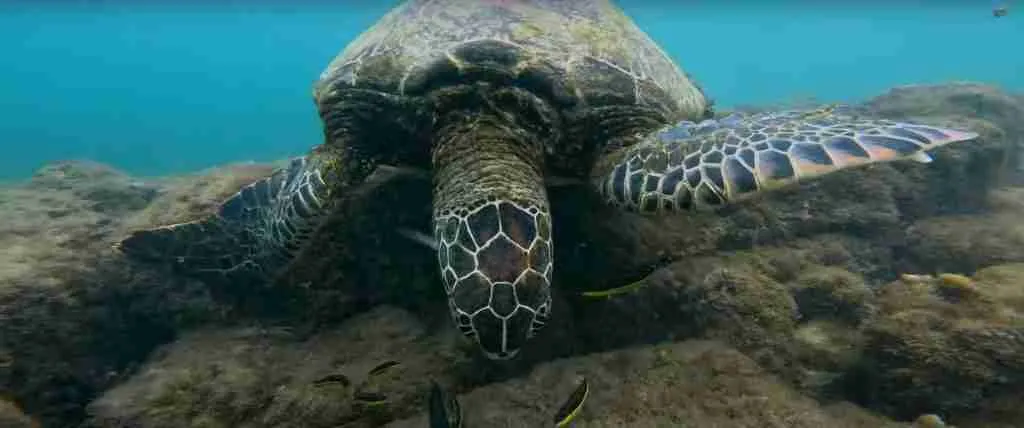
3 days
Galapagos Islands 3-Day Discovery Tour
- ✓ Comprehensive Galapagos Islands experience
- ✓ Expert local guides included
- ✓ All accommodation included
- ✓ Transportation provided

5 days
Galapagos Islands 5-Day Highlights Experience
- ✓ Comprehensive Galapagos Islands experience
- ✓ Expert local guides included
- ✓ All accommodation included
- ✓ Transportation provided
7 days
Galapagos Islands 7-Day Cultural Journey
- ✓ Comprehensive Galapagos Islands experience
- ✓ Expert local guides included
- ✓ All accommodation included
- ✓ Transportation provided

10 days
Galapagos Islands 10-Day Complete Adventure
- ✓ Comprehensive Galapagos Islands experience
- ✓ Expert local guides included
- ✓ All accommodation included
- ✓ Transportation provided
Multi-day tour packages powered by TourRadar. Prices and availability subject to change.
Geological Formation: Birth of the Archipelago
Volcanic Origins and Hotspot Theory
The Galápagos archipelago owes its existence to one of Earth’s most powerful geological phenomena: a mantle plume hotspot beneath the Nazca Plate. This hotspot, where exceptionally hot rock rises from deep within Earth’s mantle, created volcanic activity that punched through the ocean floor to form islands. The process began 5-10 million years ago, though some underwater seamounts indicate volcanic activity extends back 14-20 million years.
The geological structure follows a clear age progression from east to west. Española and San Cristóbal in the east, the oldest islands at 3-5 million years, show significant erosion with rounded contours and reduced volcanic features. Central islands like Santa Cruz and Santiago demonstrate intermediate ages of 1-2 million years with mixed volcanic and erosion features. Western islands Fernandina and Isabela remain geologically young, with active volcanoes, sharp calderas, and fresh lava flows dating to recent centuries and even recent years.
Tectonic Plate Movement and Island Formation
The Nazca Plate moves eastward at 5-7 centimeters annually, carrying islands away from the stationary hotspot that created them. This movement explains why western islands demonstrate active volcanism while eastern islands show extinction and erosion. The hotspot continuously creates new volcanic material, with Fernandina representing the archipelago’s youngest major island, positioned directly above the hotspot’s most intense activity.
Isabela Island, the largest in the archipelago, formed through the coalescence of six shield volcanoes that merged as lava flows connected separate volcanic centers. This process created the distinctive seahorse shape visible from aerial views. Each volcano maintains its individual caldera, with Wolf Volcano rising to 1,707 meters as the archipelago’s highest point. The volcanic activity continues, with eruptions occurring every few years on Fernandina and Sierra Negra on Isabela, demonstrating the ongoing geological processes that built the islands.
Submarine Features and Seamount History
The Galápagos platform extends far beyond visible islands, with numerous submarine seamounts revealing earlier volcanic activity. The Carnegie Ridge, an underwater mountain range extending eastward toward Ecuador, formed from the same hotspot millions of years before the current islands emerged. These seamounts, now submerged under hundreds of meters of water, demonstrate the hotspot’s long-term activity and the eventual fate awaiting current islands as plate movement carries them eastward and volcanic activity ceases.
Marine terraces on several islands record changing sea levels over geological time, with raised beaches indicating tectonic uplift countering the general subsidence expected from volcanic island aging. Underwater surveys reveal extensive lava formations, collapsed calderas, and submarine canyons that shaped ocean currents and marine ecosystems surrounding the islands.
Biological Evolution: Darwin’s Laboratory
Species Colonization and Adaptive Radiation
The Galápagos Islands’ biological history began with chance colonization events spanning millions of years. Organisms arrived through three mechanisms: flight for birds and bats, ocean rafting on vegetation mats for reptiles and small mammals, and ocean currents carrying marine species. Each successful colonization established founder populations in environments lacking predators and competitors, creating evolutionary opportunities unavailable on continental landmasses.
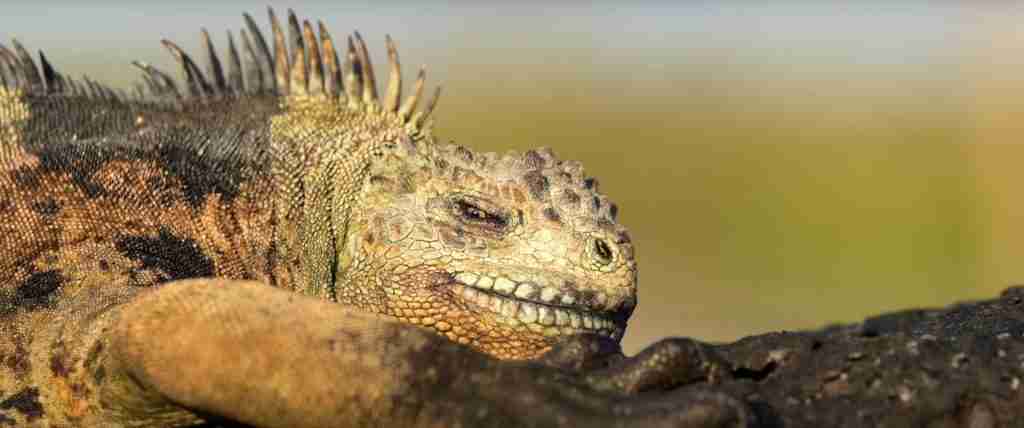
Adaptive radiation, the process where one ancestral species diversifies into multiple specialized forms, occurred repeatedly across the archipelago. Darwin’s finches exemplify this process most famously, with 18 species evolving from a single ancestral finch species through beak adaptations for different food sources. Giant tortoises developed distinct shell shapes on different islands, with dome shells on humid highlands and saddle-back shells on dry lowlands, reflecting dietary and environmental pressures. Marine iguanas, the world’s only sea-going lizards, evolved from land iguana ancestors, developing specialized adaptations for underwater feeding.
Charles Darwin’s 1835 Visit
HMS Beagle arrived at the Galápagos on September 15, 1835, as part of a five-year global survey expedition. Charles Darwin, serving as the ship’s naturalist, spent five weeks in the archipelago, though only 19 days ashore across San Cristóbal, Floreana, Isabela, and Santiago islands. His initial observations focused on geological features, with biological specimens collected somewhat casually without always recording specific island origins.
Darwin’s most significant observations came from conversations with Vice Governor Nicholas Lawson on Floreana, who mentioned the ability to identify a tortoise’s home island from its shell shape. This revelation, combined with later analysis of mockingbird specimens showing distinct island populations, sparked Darwin’s thinking about species mutability. The finch specimens, later analyzed by ornithologist John Gould in London, revealed distinct species where Darwin initially assumed varieties, providing crucial evidence for natural selection.
Darwin’s published account in “Voyage of the Beagle” (1839) described the Galápagos as “a little world within itself,” noting the paradox of species closely allied to South American forms yet specifically adapted to island conditions. His synthesis of Galápagos observations with global voyage data required two decades, culminating in “On the Origin of Species” (1859), which cited Galápagos evidence throughout its arguments for evolution through natural selection.
Post-Darwin Scientific Expeditions
Following Darwin’s work, scientific interest in the Galápagos intensified. The California Academy of Sciences conducted a major expedition in 1905-1906, collecting 78,000 specimens including 86 giant tortoises, devastating several populations while documenting species distribution. William Beebe’s 1923 expedition combined scientific research with popular writing, introducing the islands to broader audiences through his best-selling books.
Modern scientific research accelerated after 1959 with the establishment of the Charles Darwin Research Station. Peter and Rosemary Grant’s decades-long finch studies beginning in 1973 documented evolution in real-time, showing measurable changes in beak size and shape during drought and rainfall cycles. Their work transformed the Galápagos from historical evidence of evolution to an active laboratory demonstrating ongoing evolutionary processes.
Human History: From Pirates to Conservationists
Pre-Columbian and Early European Contact
Archaeological evidence, including ceramic shards and stone tools on Floreana and Santiago, suggests pre-Columbian visits by indigenous South Americans, possibly from coastal Peru or Ecuador. These visits likely involved temporary fishing or exploration expeditions rather than permanent settlements, with the islands’ lack of fresh water preventing sustained habitation.
Tomás de Berlanga’s 1535 accidental discovery brought the islands to European attention. His reports described “very big tortoises” and birds so tame they could be caught by hand, characteristics that would later prove both scientifically valuable and exploitatively vulnerable. Spanish explorers named the islands “Islas Encantadas” (Enchanted Islands) due to strong currents creating navigation difficulties and making islands appear to move or disappear.
Pirate Era and Whaling Period
The 17th and 18th centuries saw the Galápagos become a pirate refuge, with buccaneers using the islands as bases for attacking Spanish treasure ships sailing between Peru and Panama. Pirates established hideouts in protected anchorages, with Post Office Bay on Floreana serving as an informal mail drop where crews left letters in barrels for homeward-bound ships to collect and deliver.
The 19th century brought intensive whaling exploitation. American and British whaling ships hunted sperm whales in productive waters surrounding the islands, while crews collected giant tortoises as a fresh meat source. Ships stored live tortoises in holds, where they survived months without food or water, providing protein for long voyages. This exploitation devastated tortoise populations, with an estimated 100,000-200,000 individuals taken between 1811 and 1844, driving several subspecies to extinction and reducing others to critically low numbers.
Ecuadorian Annexation and Early Settlement
Ecuador claimed the Galápagos Islands on February 12, 1832, establishing sovereignty over the archipelago. General José de Villamil founded the first permanent settlement on Floreana, bringing convicts and soldiers to establish a colony that struggled with water scarcity and isolation. Early attempts at agriculture and livestock ranching introduced invasive species including goats, pigs, rats, and cats that devastated native ecosystems.
The Ecuadorian government used the islands as a penal colony through the late 19th and early 20th centuries, with prisoners enduring harsh conditions in remote settlements. The most notorious facility operated on Isabela from 1946-1959, where political prisoners and criminals labored in volcanic sulfur mines. These dark chapters ended with Ecuador’s recognition of the islands’ scientific value and conservation potential.
Early Conservation Efforts
Scientific concerns about species decline emerged early in the 20th century. The California Academy expedition’s massive collecting spree ironically helped document the conservation crisis while contributing to it. Rollo Beck, leading the expedition, noted several tortoise populations appeared extinct or near extinction, spurring initial conservation discussions.
Ecuador declared the Galápagos a wildlife sanctuary in 1934, prohibiting hunting and collecting without permits. This early legislation lacked enforcement mechanisms but established conservation precedent. UNESCO’s 1959 International Scientific Project for the Galápagos marked a turning point, coinciding with Charles Darwin’s centennial. The project established the Charles Darwin Foundation as an international scientific organization dedicated to research and conservation, with the Charles Darwin Research Station opening on Santa Cruz in 1964.
Modern Conservation Era: Protection and Challenges
National Park Establishment
Ecuador created Galápagos National Park on July 4, 1959, protecting 97% of the archipelago’s land area. The remaining 3% consists of settled zones on Santa Cruz, San Cristóbal, Isabela, and Floreana. The National Park Service, established in 1968, implemented regulations controlling visitor access, establishing designated trails and visitor sites, and beginning invasive species control programs.
Park regulations evolved to balance protection with scientific research and tourism. The initial permit system limiting visitor numbers and activities expanded into comprehensive management plans addressing ecosystem threats. Park authorities introduced strict biosecurity protocols to prevent new species introductions, quarantine systems for agricultural products, and penalties for violations.
UNESCO World Heritage Designation
UNESCO inscribed the Galápagos Islands as a World Heritage Site in 1978, recognizing their “outstanding universal value” as a natural laboratory of evolution. The designation covered the national park area, with marine reserves added to the World Heritage listing in 2001 after their establishment in 1998.
UNESCO placed the Galápagos on the World Heritage in Danger List from 2007-2010 due to threats from invasive species, uncontrolled tourism growth, and illegal fishing. Ecuador’s response with strengthened conservation measures, improved governance, and enhanced biosecurity led to the removal from the danger list, demonstrating the islands’ ongoing conservation challenges and successes.
Marine Conservation and Special Law
The Galápagos Marine Reserve, established in 1998, protects 133,000 square kilometers of ocean surrounding the islands. This creation addressed the critical need to protect marine ecosystems as integral to the archipelago’s ecological integrity. The reserve bans industrial fishing and restricts artisanal fishing to licensed local fishermen using traditional methods.
Ecuador’s Special Law for Galápagos, enacted in 1998 and reformed in 2015, provides comprehensive legal framework for conservation and sustainable development. The law strictly controls immigration, requiring special residence permits for Ecuadorians settling in the islands. It mandates environmental impact assessments for development projects, establishes biosecurity protocols, and directs tourism revenues toward conservation funding.
Restoration Programs and Species Recovery
The giant tortoise breeding program, launched in the 1960s, represents conservation success. Scientists collect eggs from wild populations, incubate them at the breeding center, and raise hatchlings for 5-6 years until large enough to survive predation. The program has released over 7,000 tortoises, bringing species back from near-extinction. Española tortoises recovered from 14 individuals to a self-sustaining population exceeding 1,000.
Project Isabela (2001-2006) removed over 140,000 introduced goats from northern Isabela and Santiago through intensive hunting operations using helicopters, trained dogs, and GPS tracking. This ambitious eradication effort, combined with pig and donkey removal programs, allowed native vegetation recovery and improved nesting success for tortoises and land iguanas.
Contemporary History: Tourism and Sustainable Development
Tourism Growth and Management
Tourist visits increased from 1,000 annually in 1960 to over 270,000 in 2019, creating economic benefits and conservation challenges. The National Park Service implements strict visitor management through designated sites, licensed naturalist guides, and group size limits of 16 visitors per guide. Visitors follow marked trails, maintain 2-meter distances from wildlife, and observe no-touching policies.
Tourism revenues fund conservation through park entrance fees ($100 per international visitor), supporting research stations, ranger operations, and community development. The system channels tourism’s economic power toward conservation while controlling impacts through regulations and education.
Climate Change and Modern Threats
Climate change emerged as a contemporary threat, with El Niño events causing dramatic ecosystem shifts. The 1982-83 and 1997-98 El Niño events brought massive marine ecosystem disruptions, with warming waters reducing food availability for marine iguanas, fur seals, and seabirds. Some marine iguana populations declined 70% during these events, though recovery occurred during normal conditions.
Ocean acidification threatens coral reefs and calcium-dependent marine species. Rising sea levels endanger nesting beaches for sea turtles and marine iguanas. The National Park Service monitors climate indicators, adjusts management strategies, and participates in global climate research networks to understand and mitigate impacts.
Scientific Legacy and Ongoing Research
Darwin’s Continuing Influence
The Galápagos maintain their position as evolution’s premier showcase, with ongoing research refining and expanding Darwin’s initial insights. Modern genetics reveals the molecular basis of adaptations Darwin observed, while long-term population studies document evolutionary change in real-time. The islands inspire scientific careers, with hundreds of researchers conducting projects annually across disciplines from ecology to geology.
Charles Darwin Research Station and Scientific Contributions
The Charles Darwin Research Station, headquartered in Puerto Ayora, coordinates scientific research and conservation programs. The station operates breeding centers, conducts ecological monitoring, and provides scientific advice to park management. Research projects address invasive species control, disease monitoring, climate change impacts, and marine ecosystem dynamics.
Scientific discoveries continue at a remarkable pace. Researchers identified new species in recent decades, including pink land iguanas on Isabela (2009) and various marine invertebrates. Studies of marine ecosystems revealed the islands’ role as critical habitat for migratory species including whale sharks, sea turtles, and oceanic manta rays. The Galápagos produce more peer-reviewed scientific papers per square kilometer than virtually any other place on Earth.
Cultural Impact and Global Significance
Darwin’s Theory and Cultural Change
The Galápagos’s historical role in developing evolutionary theory transformed human self-understanding. Darwin’s conclusions challenged prevailing religious and philosophical assumptions about humanity’s place in nature, sparking debates that continue across science, philosophy, and theology. The islands symbolize the power of observation and evidence in advancing human knowledge.
Conservation Philosophy and Environmental Movement
Galápagos conservation efforts pioneered approaches now standard worldwide. The islands demonstrated that protecting ecosystems requires addressing interconnected threats from invasive species, human activity, and climate change. Conservation successes, particularly species recovery programs, showed that intensive management can reverse decline and restore ecosystems.
The archipelago influenced the modern environmental movement by providing tangible evidence that human activity impacts remote ecosystems and that conservation requires sustained commitment and resources. The Galápagos model of combining scientific research, protected areas, regulated tourism, and community engagement spread to conservation projects globally.
Legacy and Future Directions
The Galápagos Islands’ history interweaves geological processes spanning millions of years, biological evolution creating unique species, human discovery and exploitation, and modern conservation efforts protecting irreplaceable natural heritage. From volcanic origins to Darwin’s revolutionary insights to contemporary conservation challenges, the archipelago demonstrates the interconnection of Earth’s physical processes, biological diversity, and human responsibility.
The islands’ future depends on balancing human presence with ecosystem protection, managing tourism growth sustainably, controlling invasive species, and adapting to climate change. Ecuador’s commitment to conservation, international scientific cooperation, and growing environmental awareness provide foundations for protecting the Galápagos for future generations.
Understanding the islands’ complete history reveals why they matter beyond scientific importance. The Galápagos represent humanity’s capacity to learn from nature, recognize our impacts, and commit to preservation. They remind us that protecting Earth’s biodiversity requires understanding ecological processes, respecting natural systems, and accepting responsibility for maintaining the evolutionary laboratory that transformed our understanding of life itself.
FAQ: Galápagos Islands History
When were the Galápagos Islands first permanently settled?
Ecuador established the first permanent settlement in 1832 on Floreana Island under General José de Villamil. Earlier visits by indigenous peoples, pirates, and whalers were temporary. The settlement struggled initially due to water scarcity and isolation, but permanent human presence continued from 1832 onward, expanding to other islands through the 19th and 20th centuries.
What caused the decline of Galápagos giant tortoises?
Giant tortoise populations crashed due to intensive harvesting by whaling ships from 1811-1844, with 100,000-200,000 individuals taken for food. Additional impacts came from introduced species including goats, pigs, and rats that destroyed tortoise habitat and eggs. Several subspecies went extinct before conservation efforts began in the 1960s. Modern breeding programs successfully restored populations from critically low numbers.
How did the Galápagos influence Charles Darwin’s theory?
Galápagos observations provided crucial evidence for evolution through natural selection. Darwin noted species similar to South American forms but uniquely adapted to island conditions. Mockingbird variations between islands and finch beak adaptations demonstrated species change in response to environmental pressures. Combined with global voyage observations, Galápagos evidence became foundational to “On the Origin of Species,” though Darwin took 24 years after his visit to publish his theory.
What happened during the pirate era in the Galápagos?
Pirates used the Galápagos as hideouts from the 1600s-1700s, establishing bases in protected anchorages for attacking Spanish treasure ships. They created Post Office Bay on Floreana as an informal mail drop system using barrels. Pirates survived by hunting tortoises and introduced goats for food supplies. Their presence remained temporary, with no permanent settlements established during the pirate era.
When did conservation efforts begin in the Galápagos?
Ecuador declared the islands a wildlife sanctuary in 1934, though enforcement remained minimal. Serious conservation began with the 1959 creation of Galápagos National Park protecting 97% of land area. The Charles Darwin Research Station, established in 1964, initiated scientific research and breeding programs. Modern comprehensive protection including marine reserves and strict regulations developed through the 1990s-2000s.
How have volcanic eruptions affected human history in the Galápagos?
Active volcanism shaped settlement patterns and scientific interest. Eruptions deterred early settlement attempts on volcanically active western islands. The 19th-century penal colony on Isabela used prisoners for sulfur mining in volcanic areas. Modern eruptions attract scientific observation, with the 2005 Sierra Negra eruption threatening Puerto Villamil and requiring evacuations. Ongoing volcanic activity demonstrates the geological processes that created the islands.
What role did Ecuador play in protecting the Galápagos?
Ecuador claimed the islands in 1832, eventually recognizing their scientific value over extractive use. The government created the National Park in 1959, established the marine reserve in 1998, and enacted the Special Law for Galápagos providing comprehensive protection frameworks. Ecuador invested in park infrastructure, biosecurity systems, and sustainable tourism management, demonstrating national commitment to conservation.
How did scientific expeditions impact the islands?
Early expeditions paradoxically documented biodiversity while depleting it. The 1905-06 California Academy expedition collected 78,000 specimens including 86 tortoises, devastating populations. These collections provided scientific knowledge but sparked conservation concerns. Modern expeditions follow strict protocols, collecting minimally while contributing research that informs management. The shift from extractive collecting to non-invasive study reflects changed scientific ethics.
What is the significance of the Charles Darwin Research Station?
Established in 1964, the Research Station coordinates scientific research, operates tortoise breeding programs, and advises park management. The station’s work restored tortoise populations from near-extinction, developed invasive species control methods, and monitored ecosystem health. It serves as headquarters for international researchers and symbol of scientific commitment to conservation, maintaining the Galápagos’s role as a living laboratory.
How has tourism history shaped the modern Galápagos?
Tourism evolved from exclusive scientific expeditions to a major industry, growing from 1,000 annual visitors in 1960 to over 270,000 in 2019. This growth created economic benefits funding conservation but required strict management to prevent ecosystem damage. The National Park Service developed the naturalist guide system, visitor sites, and regulations that became models for sustainable tourism in protected areas worldwide.