Free Things to Do in Juneau 2026: Budget-Friendly Activities & Attractions
Alaska’s capital city offers remarkable experiences without requiring significant spending, from viewing the dramatic Mendenhall Glacier to exploring historic downtown streets rich with gold rush heritage. Visitors discover that Juneau’s most compelling attractions—pristine wilderness trails, cultural landmarks, and wildlife viewing opportunities—remain accessible to budget-conscious travelers seeking authentic Alaskan adventures in 2026.
Key Takeaways for Free Juneau Activities 2026
- Mendenhall Glacier Access 2026: The visitor center charges $5 for ages 16 and older May-September, but multiple trails including the spectacular Nugget Falls Trail remain completely free year-round, offering glacier views without admission fees
- Winter Free Admission Period: Both Mendenhall Glacier Visitor Center and Juneau-Douglas City Museum offer free admission October through April 2026, allowing substantial savings for shoulder-season visitors
- Historic Downtown District: Alaska State Capitol tours, St. Nicholas Orthodox Church, Governor’s Mansion viewing, and self-guided walking tours through gold rush heritage sites cost nothing and provide comprehensive cultural immersion
- Extensive Trail Network 2026: Juneau maintains 250 miles of free hiking trails ranging from easy waterfront paths to challenging mountain summits, with trailheads accessible from downtown or via public transit
- Wildlife Viewing Locations: Free opportunities to observe bald eagles, spawning salmon, black bears, mountain goats, and seals exist throughout the city at Steep Creek, Sandy Beach, and various coastal viewpoints without tour costs
- Community Cultural Events: First Friday art walks, summer festivals including Celebration (biennial), and year-round performances at community venues provide free or donation-based cultural experiences throughout 2026
People Also Ask About Free Things to Do in Juneau 2026
Can You See Mendenhall Glacier for Free in 2026?
The Mendenhall Glacier remains visible from multiple free vantage points in 2026. While the visitor center building charges $5 admission for ages 16 and older from May through September, the surrounding recreation area provides free access to several trails offering spectacular glacier views. The Nugget Falls Trail, a 2-mile round-trip hike leading to a 377-foot waterfall with glacier backdrop, costs nothing to access. Photo Point Trail delivers glacier overlooks from the parking area without requiring visitor center entry. The grounds surrounding Mendenhall Lake open 6:00 AM to midnight year-round at no charge, allowing visitors to experience the glacier landscape without paying admission fees. Between October and April, even the visitor center building offers free admission, eliminating all costs for winter visitors seeking indoor glacier viewing and educational exhibits.
What Downtown Juneau Attractions Are Completely Free in 2026?
Downtown Juneau’s historic core provides extensive free exploration opportunities in 2026. The Alaska State Capitol Building welcomes visitors for complimentary self-guided tours on weekdays, allowing access to legislative chambers, historical murals, and the governor’s formal office without reservations or fees. St. Nicholas Orthodox Church, constructed in 1893-94 with its distinctive gold onion-shaped dome, remains open for free visits with donations appreciated but not required. The Governor’s Mansion exterior and grounds offer photo opportunities on Capital Hill. The Juneau-Douglas City Museum in the Veterans Memorial Building provides free winter admission October through April. Self-guided walking tours through downtown require no fees—visitors obtain free maps from the cruise terminals or visitor center showing routes past the Windfall Fisherman bronze bear statue, Liberty Bell replica, historic Red Dog Saloon, and numerous gold rush era buildings. The waterfront promenade along Gastineau Channel includes interpretive signs explaining Juneau’s history at no cost.
Are There Free Hiking Trails in Juneau Accessible Without a Car in 2026?
Several free hiking trails begin directly from downtown Juneau, requiring no vehicle access in 2026. The Flume Trail starts minutes from the cruise docks, following an historic wooden water flume above Gold Creek through temperate rainforest on a flat, easy path suitable for all fitness levels. Perseverance Trail, accessible from Basin Road a short walk from downtown, traces gold mining history through the forested valley with remnants of historic mining operations. Mount Roberts Trail begins near the downtown area, ascending 3,800 feet over 4.5 miles to summit views—the most challenging downtown-accessible option. The Treadwell Mine Historic Trail on Douglas Island sits approximately 3 miles from downtown via the bridge, reachable on foot or bicycle, showcasing one of the world’s largest historic gold mine sites with self-guided interpretive signs. Public transit routes serve trailheads outside downtown including those near Mendenhall Glacier and Auke Lake, expanding free trail access for visitors without rental cars willing to combine modest bus fares with hiking.
What’s the Best Time for Free Wildlife Viewing in Juneau in 2026?
Free wildlife viewing opportunities in Juneau peak during specific seasonal windows in 2026. Late July through early September offers optimal salmon spawning observation at Steep Creek near Mendenhall Glacier, where wild sockeye salmon attract black bears to the creek—visible from elevated viewing platforms at no cost. Bald eagles concentrate near salmon runs during this period, with 30-50 eagles often visible simultaneously at productive streams. Spring (April-May) brings migrating waterfowl and shorebirds to wetland areas including Brotherhood Bridge wetlands accessible via walkways. Mountain goats on Mount Bullard near Mendenhall Glacier appear most visible May through September when they descend to lower elevations—spotted through visitor center scopes or binoculars. Harbor seals frequent Gastineau Channel year-round, easily observed from downtown waterfront areas. Winter (November-March) concentrates bald eagles in old-growth trees near open water where fish remain available. Black bears emerge from denning in April and remain active through October, though summer salmon season produces most reliable free viewing opportunities without joining paid bear-watching tours.
Extended multi-day tours – 5+ days
Featured Alaska Multi-Day Tour Packages

3 days
Alaska 3-Day Discovery Tour
- ✓ Comprehensive Alaska experience
- ✓ Expert local guides included
- ✓ All accommodation included
- ✓ Transportation provided
5 days
Alaska 5-Day Highlights Experience
- ✓ Comprehensive Alaska experience
- ✓ Expert local guides included
- ✓ All accommodation included
- ✓ Transportation provided

7 days
Alaska 7-Day Cultural Journey
- ✓ Comprehensive Alaska experience
- ✓ Expert local guides included
- ✓ All accommodation included
- ✓ Transportation provided
10 days
Alaska 10-Day Complete Adventure
- ✓ Comprehensive Alaska experience
- ✓ Expert local guides included
- ✓ All accommodation included
- ✓ Transportation provided
Multi-day tour packages powered by TourRadar. Prices and availability subject to change.
Introduction to Free Activities in Juneau 2026
Juneau defies expectations of Alaska as an exclusively expensive destination. The state capital, accessible only by air or sea with no connecting highways, paradoxically offers extensive cost-free experiences rivaling those requiring substantial tour expenditures. The city’s unique geography—wedged between the Gastineau Channel and towering Coast Mountains, surrounded by Tongass National Forest wilderness—creates natural circumstances where premier attractions exist as public resources rather than commercial enterprises.
Budget-conscious travelers discover that Juneau’s defining characteristics remain freely accessible in 2026. The Mendenhall Glacier, retreating monument to climate change and the city’s most photographed landmark, looms visible from free hiking trails. Downtown’s gold rush architecture and Native heritage sites require no admission charges. Hundreds of miles of wilderness trails traverse ecosystems from coastal temperate rainforest to alpine tundra without entrance fees. Wildlife viewing opportunities—black bears fishing for salmon, bald eagles roosting in old-growth Sitka spruce, mountain goats scaling impossible cliffs—occur at publicly accessible locations throughout the region.
The Tongass National Forest, America’s largest national forest encompassing 17 million acres, surrounds Juneau with public lands managed for free access. This federal designation ensures that wilderness experiences remain democratized rather than commercialized. Trailheads begin at downtown sidewalks. Beaches and waterfront parks line the channel. Historic buildings constructed during the 1880s gold rush now serve as free museums during winter months. Cultural institutions offer donation-based admission or schedule free community events throughout the year.
This abundance of complimentary activities stems from Juneau’s evolution as a government capital rather than purely tourist economy. The city developed infrastructure serving 32,000 residents long before cruise tourism dominated summer months. Extensive trail systems, public parks, cultural venues, and educational facilities were established for local use and remain freely available to visitors. State and federal management of key attractions like the Capitol Building and Mendenhall Glacier Recreation Area prioritizes public access over profit maximization.
Understanding which attractions genuinely cost nothing versus those requiring fees proves essential for budget planning in 2026. Some venues charge summer admission but open free during winter. Others maintain separate fee structures for visitor centers versus surrounding lands. Certain experiences genuinely require no expenditure while competing commercial alternatives market similar access. This guide identifies authentic zero-cost opportunities, clarifies seasonal pricing variations, and maps free alternatives to expensive tours.
The following sections detail free activities organized by geographic area and experience type. Each category provides sufficient options for multi-day itineraries without purchasing tours or paying admission fees. Combined with budget accommodation and meal planning, these free attractions enable meaningful Juneau exploration on minimal daily expenditures throughout 2026.
Mendenhall Glacier Recreation Area Free Access 2026
Mendenhall Glacier, Juneau’s premier natural attraction, offers extensive free access despite common misconceptions about admission requirements in 2026. The 13-mile river of ice flowing from the massive Juneau Icefield terminates at Mendenhall Lake twelve miles northwest of downtown, creating Alaska’s most accessible glacier landscape. While the visitor center building charges $5 admission for ages 16 and older from May 1 through September 30, the vast majority of glacier viewing and hiking opportunities cost nothing.
The recreation area grounds open 6:00 AM to midnight year-round without admission fees. Parking lots provide free vehicle access, though spaces fill rapidly during cruise ship days in summer. The critical distinction travelers must understand: the small visitor center building itself requires paid entry during summer months, but the surrounding trails, viewpoints, and glacier access remain completely free regardless of season.
Free Mendenhall Trails and Viewpoints 2026
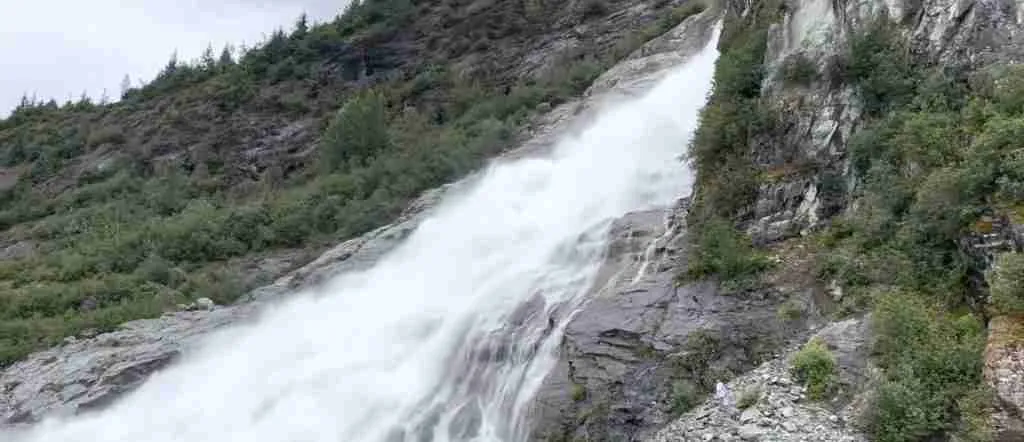
Nugget Falls Trail ranks as the most popular free glacier experience, traversing 2 miles round-trip from the visitor center parking area to the base of a thundering 377-foot waterfall. The trail maintains relatively level grade through temperate rainforest, crosses several wooden boardwalks over wetlands, and emerges at the falls with Mendenhall Glacier as dramatic backdrop. Hikers stand within 100 yards of the glacier face, observing ice calving events and floating icebergs in Mendenhall Lake. The trail costs nothing to access and requires no special permits or reservations.
Photo Point Trail delivers optimal glacier photography angles via a short 0.3-mile round-trip paved path from the parking area. This accessible route climbs gently to an elevated viewpoint overlooking both the glacier and lake, providing classic postcard perspectives without entering the visitor center. Interpretive signs explain glacial processes and climate change impacts. The trail accommodates wheelchairs and strollers, making it Juneau’s most accessible free glacier viewpoint.
Trail of Time creates a unique educational walk demonstrating ecological succession as the glacier retreats. The 0.9-mile loop begins near the visitor center, traversing landscapes where ice coverage ended at different time periods over the past 250 years. Vegetation progresses from bare rock and pioneering plants to mature Sitka spruce forest, illustrating how ecosystems develop in the glacier’s wake. All access remains free, with interpretive panels explaining the timeline without requiring visitor center admission.
East Glacier Trail provides the most challenging free glacier trek, looping 3.5 miles around the eastern edge of Mendenhall Lake through dense rainforest and across rocky moraine. The route gains minimal elevation but traverses rugged terrain including stream crossings and boulder fields. Hikers reach close-proximity glacier viewpoints from angles invisible from the visitor center area. The trail sees fewer visitors than Nugget Falls, offering solitude despite its free accessibility.
Moraine Ecology Trail circles through the area where historical glacier coverage ended roughly 160 years ago, demonstrating mid-stage forest succession. The flat 1.5-mile loop costs nothing and connects to other free trail networks. Winter access to all these trails remains open, though snow and ice create challenging conditions November through March without specialized equipment.
Free Wildlife Viewing at Mendenhall 2026
Steep Creek, located within Mendenhall Recreation Area, ranks among Alaska’s premier free wildlife viewing locations. The creek drains directly into Mendenhall Lake and serves as spawning habitat for wild sockeye salmon from late July through early September. Elevated viewing platforms and boardwalks line the creek, allowing observers to watch salmon struggling upstream while black bears fish from rocky pools below. Rangers monitor bear activity and close trails temporarily when bears approach too closely, but viewing platform access remains free during open hours.
Black bears concentrate at Steep Creek during peak salmon runs, with 2-4 bears often visible simultaneously from the platforms. Observation remains completely free, providing alternatives to $200-300 paid bear viewing flights to remote locations. Photography opportunities from the platforms produce professional-quality images without requiring expensive lenses or tour packages.
Mountain goats inhabit the cliffs of Mount Bullard immediately adjacent to Mendenhall Glacier. The white specks on seemingly vertical rock faces resolve into these remarkable climbers when viewed through binoculars from free vantage points around Mendenhall Lake. The visitor center maintains a spotting scope aimed at goat habitat, accessible to all visitors regardless of whether they pay building admission. Patient observers from parking areas and trails spot goats May through September when they descend to lower elevations.
Bald eagles nest throughout the recreation area, with active nests visible from various trails. Eagles concentrate near Steep Creek during salmon season, perching in Sitka spruce while waiting to scavenge salmon remains. Visitors routinely observe 10-20 eagles from free vantage points during peak salmon periods. Beaver activity occurs along Mendenhall Lake shore, with active lodges visible from Photo Point Trail and dam structures along creek drainages. Beavers appear most active during dawn and dusk hours.
Winter Free Admission Benefits 2026
The visitor center building itself becomes completely free October 1 through April 30, eliminating even the modest $5 summer charge. Winter visitors access all indoor exhibits, the 15-minute glacier documentary film, ranger presentations, Discovery Southeast bookstore, and panoramic lake views through floor-to-ceiling windows without any admission costs. Federal holiday closures apply, but Friday-Sunday operations November through March provide weekend access.
Winter glacier viewing offers unique advantages despite challenging weather. The lake often freezes partially, creating stunning ice formations. Snow coverage transforms the landscape into pristine white wilderness. Tourist crowds disappear entirely, leaving trails empty and visitor center uncrowded. Winter admission savings amount to $5 per person per visit, though families and groups realize the greatest benefit from seasonal free access.
Historic Downtown Juneau Walking Tour 2026
Downtown Juneau preserves remarkably intact gold rush era character through buildings, monuments, and streetscapes dating to the 1880s-1930s when mining dominated the local economy. The compact historic district spans approximately 10 blocks, entirely walkable from cruise ship docks or downtown hotels without transportation costs. Self-guided exploration costs nothing, with free walking tour maps available at the visitor center, cruise terminals, and online downloads.
The Alaska State Capitol Building anchors downtown’s government district at 4th and Main Streets. Constructed in 1931 during the territory period, the simple Art Deco structure houses Alaska’s legislature and governor’s formal office. Free self-guided tours operate weekdays during business hours without reservations. Visitors explore legislative chambers where state business occurs, admire historical murals depicting Alaska’s diverse regions, view the governor’s office, and examine marble columns throughout the building. The tours require no fees, though security screening at entrance applies.
Capitol tours last 20-30 minutes for casual visitors, though those interested in legislative proceedings may observe sessions from public galleries when legislature convenes January through April. The building’s understated exterior contrasts with opulent capitals in other states, reflecting Alaska’s limited territorial budget during construction. Interior spaces showcase Alaskan marble, locally sourced wood, and historical artwork acquired over nine decades of statehood preparation and governance.
Religious and Cultural Heritage Sites 2026
St. Nicholas Orthodox Church represents Juneau’s oldest surviving religious structure and one of Alaska’s most historically significant Orthodox buildings. Founded in 1893 at the request of the local Tlingit community, the church was constructed by Tlingit people and Serbian miners in 1893-94. The distinctive octagonal design topped with a gold onion-shaped dome creates instantly recognizable architecture inspired by Russian Orthodox traditions. The church stands at 5th and Gold Streets, a short uphill walk from downtown’s waterfront core.
Interior visits reveal historic icons, ornate religious artifacts, and the unique octagonal worship space. While the church operates as an active congregation, visitors respectfully entering during non-service hours find it open for viewing. No admission charges apply, though donation boxes accept contributions toward building maintenance. The National Register of Historic Places designation recognizes the church’s architectural and cultural significance to Alaska’s Russian colonial heritage and Native Christian community development.
The exterior alone justifies the uphill walk—the gold dome gleams against the forest-covered mountains, creating Juneau’s most photogenic historic building. Photography from public streets costs nothing and produces imagery representative of Alaska’s multicultural heritage blending Russian, European, and Native influences.
Governor’s Mansion and Government Buildings 2026
The Alaska Governor’s Mansion occupies prominent position on Capital Hill overlooking Gastineau Channel. Built in 1912, the Colonial Revival style residence serves as official home for Alaska’s governor and hosts state functions. Public interior tours do not occur, but exterior viewing from the street provides photography opportunities and architectural appreciation at no cost. The mansion’s formal facade, manicured grounds, and commanding hilltop location exemplify territorial-era government architecture.
A totem pole standing near the mansion grounds depicts traditional Tlingit stories, adding Native cultural elements to the government precinct. The walk to the mansion from downtown requires a moderately steep 10-minute climb but costs nothing and delivers panoramic views across Juneau’s waterfront and channel.
Gold Rush Era Historic Markers 2026
The Windfall Fisherman sculpture honors Juneau’s fishing heritage through a life-sized bronze brown bear statue positioned downtown. The bear holds a salmon in its mouth, representing both the wildlife abundance and commercial fishing economy sustaining the region. Located in Marine Park near the cruise ship docks, the sculpture requires no admission and serves as popular photography location.
A Liberty Bell replica stands outside the State Capitol, one of 53 replicas distributed to states and territories during the 1950s Savings Bonds campaign. The bell, though not original, carries historical significance as symbol of Alaska’s journey to statehood in 1959. Public viewing and photography cost nothing.
The Red Dog Saloon, though operating as a commercial bar and restaurant today, preserves authentic Gold Rush atmosphere with sawdust-covered floors, historical photographs, and period decor. Visitors enter freely to photograph the interior without purchasing drinks or food, though the establishment appreciates paying customers. The building itself dates to mining boom era and maintains original architectural features.
Self-Guided Walking Route Strategies 2026
Free walking tour maps from the visitor center outline a 90-minute historic loop covering 15-20 significant sites. The route begins at cruise terminals or Centennial Hall, proceeds up South Franklin Street past Russian Orthodox Church, climbs to Governor’s Mansion and Capitol Building, returns via Willoughby Avenue past Juneau-Douglas City Museum, and concludes at waterfront parks. Total walking distance spans approximately 2 miles with moderate elevation gain on Capitol Hill segments.
Interpretive signs throughout downtown explain historical context at no charge. Buildings display plaques identifying construction dates, original functions, and architectural significance. The compact geography allows visitors to create custom routes emphasizing particular interests—gold mining history, Native heritage, government operations, or architectural styles—without structured tour fees.
Optimal timing targets early morning or late afternoon when cruise ship crowds disperse. Downtown businesses open daytime hours, but exterior architectural viewing remains accessible 24 hours. Photography benefits from morning light illuminating building facades, while afternoon sun highlights the mountains behind the city.
Free Hiking Trails Across Juneau 2026
Juneau maintains approximately 250 miles of hiking trails ranging from easy waterfront paths to extreme alpine scrambles, with the vast majority requiring no permits, fees, or reservations in 2026. The trail network spans diverse ecosystems including coastal temperate rainforest, muskeg wetlands, alpine tundra, and rocky summits reaching 3,500 feet elevation. Most trailheads offer free parking, though some require roadside parking on public streets at no cost.
Trail maps and condition reports are available free from the Juneau Convention and Visitors Bureau, U.S. Forest Service offices, and online resources. The trails function as community infrastructure for local residents rather than purely tourist amenities, ensuring year-round maintenance and clear signage without admission charges.
Downtown-Accessible Free Trails 2026
The Flume Trail begins just minutes walk from cruise ship docks, following an historic wooden water flume above Gold Creek. The 2-mile out-and-back trail maintains flat grade suitable for casual walkers, traversing temperate rainforest with interpretive signs explaining the 1880s water delivery system to mining operations. The trail delivers immediate rainforest immersion without transportation costs or difficult terrain. Creek sounds, moss-covered boulders, and towering Sitka spruce create quintessential Southeast Alaska atmosphere.
Perseverance Trail extends 4 miles into the mountains from Basin Road trailhead, accessible via a 20-minute walk from downtown. The historic route follows the valley where gold prospectors discovered the deposits founding Juneau in 1880. Remnants of mining operations—rusted equipment, collapsed structures, tailings piles—dot the trail route. The first 2 miles maintain relatively easy grade before steeper sections ascend toward alpine zones. Most visitors complete the initial 2-mile section as an out-and-back hike, enjoying forest scenery and mining history without summit objectives.
Mount Roberts Trail ascends directly from downtown to summit views, gaining 3,800 feet over 4.5 miles of continuous climbing. This extremely challenging free trail serves serious hikers willing to endure steep grades, muddy switchbacks, and loose rock sections. The route passes through forest, subalpine, and alpine ecological zones, delivering panoramic views across Gastineau Channel to Douglas Island and Admiralty Island beyond. Summit weather often differs dramatically from downtown conditions—sun at sea level may coincide with clouds, wind, and cold temperatures above treeline.
The Mount Roberts Tramway provides paid alternative transportation to 1,760 feet, but the free trail option costs nothing and delivers superior fitness workout and backcountry experience. Strong hikers complete the ascent in 2-3 hours, with similar descent time. The trail demands proper footwear, rain gear, and physical conditioning but requires no technical equipment or permits.
Auke Bay and Outer Areas Free Trails 2026
Auke Lake Trail circles 4 miles around Auke Lake near the University of Alaska Southeast campus, approximately 12 miles from downtown. The flat lakeside path traverses forest and wetland habitats with opportunities to observe spawning salmon in Auke Creek, waterfowl on the lake, and river otters along the shoreline. Public transit serves the area during summer months at minimal cost, or free roadside parking accommodates visitors with vehicles.
Point Bridge Trail and Brotherhood Bridge Trail provide wetland boardwalk experiences, allowing observers to explore muskeg ecosystems without trail fees. These short paths (under 1 mile each) feature elevated wooden boardwalks protecting fragile vegetation while enabling close examination of carnivorous sundew plants, stunted shore pine, and sphagnum moss. Spring migration brings hundreds of shorebirds and waterfowl to these wetlands—birdwatching costs nothing and rivals paid wildlife tours for species diversity.
Douglas Island Free Trails 2026
Treadwell Mine Historic Trail explores ruins of one of the world’s largest gold mines, operational 1882-1922 before catastrophic flooding ended production. The self-guided interpretive trail spans 2 miles through forest where industrial structures slowly decompose into the landscape. Concrete foundations, collapsed buildings, rusted machinery, and informational signs explain the mine’s technological innovations and social history. The trail begins near Sandy Beach on Douglas Island, accessible via the Juneau-Douglas Bridge—a 3-4 mile walk or bike ride from downtown, or brief drive with free parking.
The trail costs nothing to access and receives minimal visitor traffic compared to Mendenhall Glacier trails, offering solitude and historical immersion. The mine employed thousands during peak operations, processing millions of dollars in gold through advanced stamp mills and mining techniques. Walking the grounds while reading interpretive panels reconstructs the industrial landscape that shaped early Juneau economy and society.
Trail Safety and Seasonal Considerations 2026
Bear encounters occur on Juneau trails, particularly those near salmon streams July through September. Hikers carry bear spray, make noise while walking, and remain alert to wildlife signs. U.S. Forest Service offices distribute free bear safety information and trail condition updates. No fees apply for accessing this educational material.
Weather variability demands preparation even for short hikes. Southeast Alaska receives over 90 inches of annual precipitation, with rain possible any day. Trails become muddy and slippery, wooden boardwalks turn hazardous when wet, and elevation gains compound weather exposure. Proper rain gear, layered clothing, and sturdy waterproof footwear prevent misery without requiring expensive outdoor equipment purchases—thrift stores in Juneau sell used gear at minimal cost.
Winter trail conditions vary dramatically by elevation and exposure. Low-elevation trails like Flume Trail and Treadwell remain accessible year-round without specialized equipment, though mud and ice create challenging footing. Higher trails including Mount Roberts accumulate significant snow and become dangerous without mountaineering skills and equipment. The free access continues year-round, but winter use demands experience and preparation beyond casual hiking abilities.
Museums and Cultural Sites 2026
Juneau’s museums and cultural institutions balance paid summer admission with free winter access and donation-based community programs throughout 2026. Understanding seasonal pricing variations enables budget travelers to plan visits during complimentary access periods or take advantage of reduced-cost options.
Juneau-Douglas City Museum Free Winter Admission 2026
The Juneau-Douglas City Museum occupies the Veterans Memorial Building at 4th and Main Streets downtown, adjacent to the State Capitol. The museum preserves and interprets local history from Tlingit inhabitation through gold rush settlement, World War II impacts, and modern capital development. Exhibits feature artifacts, photographs, mining equipment, and interactive displays explaining how a remote mining camp evolved into Alaska’s seat of government.
Summer admission charges apply May through September, but October through April the museum offers completely free entry. Winter visitors access identical exhibits, view the award-winning documentary about Juneau’s development, and consult volunteer docents—many longtime residents who share personal historical knowledge—at no cost. The seasonal free admission policy serves local community during winter months while generating summer revenue from cruise tourists.
The museum’s signature exhibit reconstructs a working stamp mill, demonstrating the technology that processed tons of gold ore through massive mechanical crushers. Interactive elements allow visitors to understand the industrial processes driving early economy. Mining tools, photographs of vanished buildings, Tlingit cultural items, and territorial government documents create comprehensive local history resource.
The museum also organizes periodic free historic walking tours during summer, typically charging nominal fees ($10-15) but occasionally offering complimentary community tours. Their website and visitor center information provide scheduling details. These guided tours add context impossible to obtain from self-guided map exploration, sharing anecdotes and historical details about specific buildings and locations.
Sealaska Heritage Institute Free Exterior Viewing 2026
Sealaska Heritage Institute, located at 105 South Seward Street, serves as cultural center and archive for Southeast Alaska Native communities. While interior exhibits charge admission, the building’s exterior displays beautifully carved totem poles visible from public sidewalks at no cost. These poles represent contemporary Native artistry and traditional storytelling methods, with detailed carving and vibrant paint creating powerful cultural statements.
Visitors photograph the poles, read interpretive panels explaining symbolic meanings, and appreciate the artistic craftsmanship without paying entrance fees. The exterior viewing costs nothing and contributes to understanding Tlingit, Haida, and Tsimshian cultural traditions that predate European contact by millennia. The institute also hosts occasional free community events including performances, demonstrations, and cultural celebrations—check their website for 2026 scheduling.
Additional Free Cultural Viewing Locations 2026
Mayor Bill Overstreet Park near the cruise ship docks features a spectacular bronze humpback whale sculpture (Tahku) in a large fountain, creating the illusion of a breaching whale surrounded by water. This public art installation costs nothing to view and ranks among Juneau’s most photographed downtown features. Additional totem poles stand near the fountain, combining cultural and artistic elements in a single free location.
Thunder Mountain High School displays a striking contemporary totem pole outside the building on Glacier Highway. The pole demonstrates how traditional carving techniques continue through modern Native artists. Public viewing from the street requires no permission or fees. Multiple other totem poles appear throughout Juneau at various parks, public buildings, and outdoor spaces—the visitor center provides free maps showing locations.
The Alaska State Library building downtown offers free public access to Alaska historical collections, though most visitors focus on outdoor activities rather than archival research. The library maintains specialized collections documenting Alaska history, Native cultures, and territorial development available for consultation at no charge.
Waterfront, Parks, and Beaches 2026
Juneau’s waterfront areas and public parks provide free outdoor recreation and scenic viewing opportunities along Gastineau Channel and at outlying locations throughout 2026. These spaces function as community gathering places accessible to all without admission charges.
Downtown Waterfront Promenade 2026
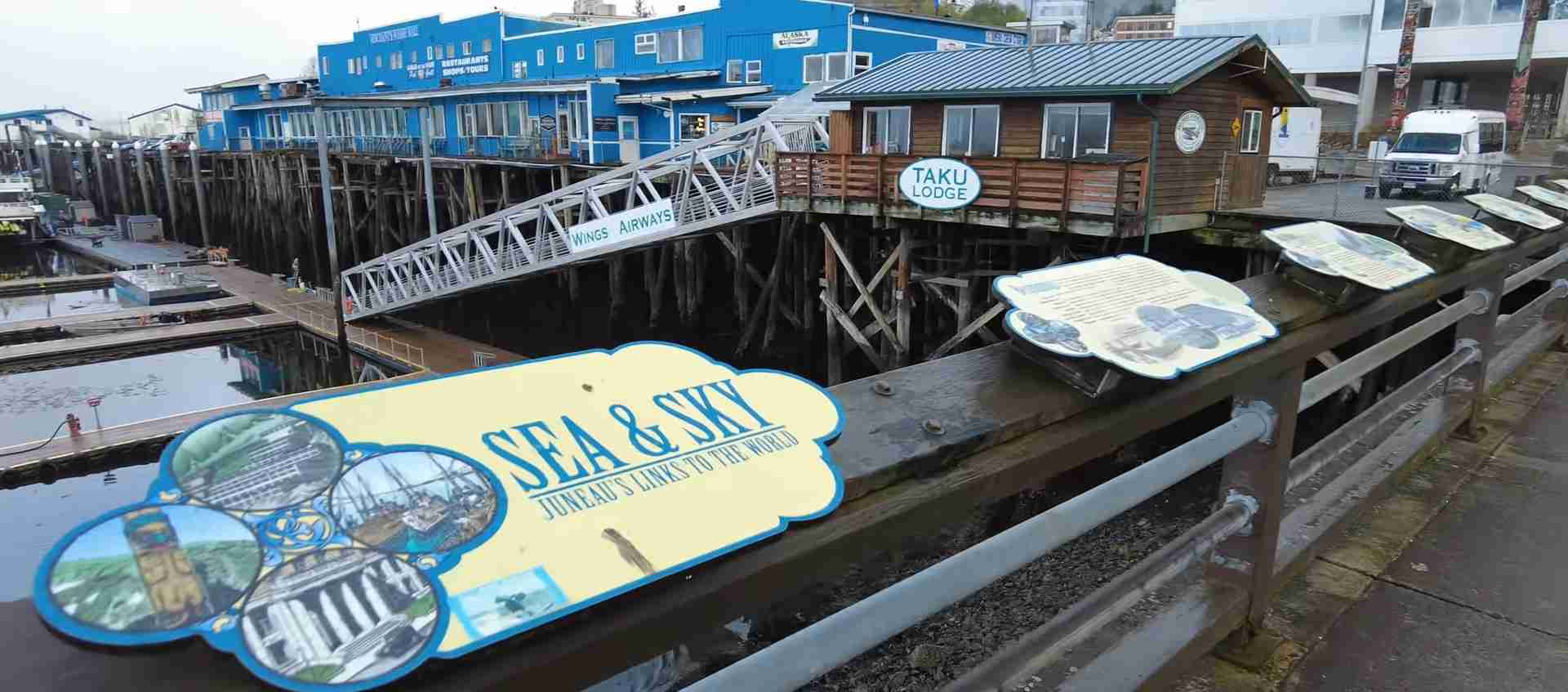
The waterfront walkway extending from cruise ship docks through Marine Park and beyond offers flat, paved pathway with interpretive signs explaining Juneau’s maritime history, Tlingit heritage, and natural ecosystems. The promenade provides views across Gastineau Channel to Douglas Island, with opportunities to observe floatplanes taking off and landing in the channel—a quintessential Southeast Alaska sight. The walkway costs nothing to access and connects multiple downtown attractions including the Windfall Fisherman statue, Patsy Ann dog statue (honoring Juneau’s famous 1930s “greeter” dog), and various historical markers.
Marine Park hosts free community events during summer including outdoor concerts, festivals, and gatherings. When no events occur, the park provides picnic areas, benches with channel views, and green space for casual relaxation. The entire waterfront area remains accessible 24 hours without fees, though most activity concentrates during daytime hours.
Sandy Beach and Douglas Island Waterfront 2026
Sandy Beach on Douglas Island offers the region’s closest approximation to traditional beach recreation, though Southeast Alaska’s cold water temperatures limit swimming to the extremely hardy. The beach provides walking, beachcombing, picnicking, and photography opportunities with views back toward downtown Juneau and surrounding mountains. Low tide expands the beach significantly, revealing tide pools with marine life including sea stars, anemones, and small crabs.
The beach connects to Treadwell Mine Historic Trail, allowing combined beach and history exploration. Free parking serves the area, and the location sits approximately 3-4 miles from downtown—walkable for fit visitors, easily bikeable, or brief drive. No admission fees apply, and the beach remains accessible year-round though winter weather limits appeal.
Harbor seals frequently haul out on offshore rocks visible from the beach. Patient observers watch these marine mammals resting, socializing, and entering the water. The seal viewing costs nothing and occurs year-round with variable numbers depending on season and tide conditions.
Cope Park and Gold Creek Area 2026
Cope Park nestles along Gold Creek banks in downtown Juneau, providing playground equipment, picnic facilities, and green space surrounded by forest. The park serves local families but welcomes all visitors at no charge. The location marks where Joe Juneau and Richard Harris discovered gold in 1880, initiating the gold rush that founded the city. The creek itself flows through downtown, accessible via various vantage points along its course.
Gold Creek Trail follows the creek upstream from downtown into the mountains, connecting to various trail networks. The lower creek sections remain easily accessible for casual walking without committing to longer hikes. Salmon spawn in Gold Creek during fall, attracting eagles and providing free wildlife observation opportunities within downtown boundaries.
Floatplane Watching Free Locations 2026
Juneau’s extensive floatplane operations create constant aerial activity throughout daylight hours. The Gastineau Channel serves as primary runway for floatplanes connecting Juneau to outlying communities, remote lodges, and backcountry destinations. Watching planes take off and land costs nothing from various waterfront vantage points, particularly near Seadrome Dock and the cruise ship terminals.
The floatplanes represent Southeast Alaska’s bush plane culture adapted to water-based operations. Observing pilots navigate the channel, coordinate with boat traffic, and execute takeoffs creates free entertainment showcasing Alaska aviation heritage. Photography of floatplane operations produces distinctly Alaskan imagery without requiring tour participation or special access.
Wildlife Viewing Opportunities Beyond Mendenhall 2026
While Mendenhall Glacier’s Steep Creek provides premier free bear and salmon viewing, additional no-cost wildlife locations exist throughout Juneau in 2026. Understanding where and when to observe specific species enables effective wildlife experiences without purchasing expensive tours.
Bald Eagle Concentrations 2026
Bald eagles appear throughout Juneau year-round, but concentrations occur at predictable locations during specific seasons. Gold Creek, flowing through downtown, attracts eagles during fall salmon runs when fish carcasses provide easy scavenging. Eagles perch in large Sitka spruce along the creek, often 5-10 visible simultaneously from downtown streets and bridges. This free urban eagle viewing rivals remote location experiences.
Winter months concentrate eagles near ice-free water where fish remain accessible. The Gastineau Channel waterfront, particularly near creek mouths and fish processing facilities, hosts eagles scavenging fish waste. Cold weather brings eagles from dispersed summer territories into town, creating paradoxical situation where winter offers superior free eagle viewing compared to summer.
The eagles tolerate human presence at reasonable distances, allowing photography without specialized lenses. Nesting season (March through July) sees adult eagles tending massive stick nests in old-growth trees throughout the region. Active nests appear visible from various trails and roads, with eagles soaring overhead while hunting or defending territories. No fees apply for eagle observation from public lands and rights-of-way.
Harbor Seal and Marine Mammal Viewing 2026
Harbor seals inhabit Gastineau Channel and surrounding waters year-round. The seals frequently haul out on buoys, floating docks, and rocks throughout the channel, visible from shore at downtown locations, Douglas Island waterfront, and various coastal access points. Low tide exposes preferred hauling rocks where seals congregate in groups of 5-20 individuals.
The seals feed on fish and invertebrates, diving for extended periods before surfacing near shore. Patient observers watch hunting behavior, social interactions, and pupping season activities (spring through early summer) at no cost from public vantage points. Binoculars enhance viewing, though seals often approach close enough for naked eye observation.
Occasional humpback whales enter Gastineau Channel during summer, visible from downtown waterfront when feeding occurs near shore. While not predictable or reliable free whale watching, the possibility exists that whales surface within downtown view, eliminating need for boat tours. More consistent whale viewing requires vessel access, but the chance of free downtown sightings persists through summer months.
Spawning Salmon Runs 2026
Multiple streams throughout Juneau host salmon spawning runs during specific seasonal windows in 2026. Steep Creek near Mendenhall Glacier receives most visitor attention, but Gold Creek downtown, Brotherhood Bridge streams, and various other waterways provide free salmon viewing opportunities. Sockeye salmon spawn July through September, pink salmon spawn mid-summer in odd-numbered years (2025, 2027, not 2026), and coho salmon spawn September through October.
Observing salmon struggle upstream, dig spawning nests, and eventually die after reproduction creates powerful wildlife experience accessible from public trails, bridges, and creek-side paths. The salmon runs attract eagles, ravens, gulls, and occasionally bears to urban and suburban streams, concentrating wildlife in accessible locations at predictable times.
Creek water clarity varies—heavy rain muddles streams while stable weather allows clear observation of underwater fish activity. Early morning and late evening offer optimal viewing when fish actively move upstream. Midday salmon rest in pools, though still visible from shore. No permits or fees apply for observing salmon from public access points.
Cultural Events and Community Activities 2026
Juneau’s year-round cultural calendar includes numerous free or donation-based events in 2026, providing opportunities to engage with local arts, music, and cultural traditions without purchasing tickets to commercial performances.
First Friday Art Walks 2026
First Friday events occur monthly in downtown Juneau, when galleries, studios, and arts venues open for extended evening hours with free admission and refreshments. Local and regional artists display paintings, photographs, sculptures, jewelry, and mixed media works, with many pieces available for purchase but no obligation to buy. The monthly art walk creates social atmosphere as community members and visitors circulate among venues, encountering diverse artistic perspectives from contemporary Native art to landscape photography to abstract experimental works.
Participating venues vary monthly, but typically include 8-12 locations spanning downtown’s compact gallery district. Free printed guides or online information map the month’s participants. The art walk functions as social event rather than purely gallery viewing—conversations with artists, complimentary wine or snacks at venues, and casual atmosphere welcome visitors. First Friday timing remains consistent throughout 2026: first Friday of each month, 5:00-8:00 PM.
Celebration Festival (Biennial) 2026
Celebration, Southeast Alaska’s largest gathering of Tlingit, Haida, and Tsimshian people, occurs every two years in even-numbered years including 2026. The multi-day June festival brings together Native communities from throughout Alaska and Pacific Northwest for cultural celebration including dance performances, art markets, traditional food vendors, and educational programming. Many Celebration events occur free or donation-based, allowing visitors to experience Native cultural traditions without purchasing expensive tickets.
The festival’s Grand Entrance parade through downtown Juneau requires no admission. Dance performances in multiple venues include both ticketed formal shows and free community performances. Art vendors display traditional and contemporary Native arts at the juried art market—browsing costs nothing, with purchasing optional. Traditional food vendors offer salmon, halibut, seal, and other Native foods at individual purchase prices rather than event admission fees.
Celebration represents authentic cultural gathering rather than tourist entertainment, though visitors receive warm welcome when observing respectfully. The 2026 festival schedule will be announced in advance on Sealaska Heritage Institute’s website, allowing visitors to align travel dates with this remarkable free cultural experience.
Community Concerts and Performances 2026
Juneau supports active music community with free outdoor summer concerts in Marine Park and other downtown venues. Local bands, visiting musicians, and community ensembles perform Friday evenings through summer, with performances ranging from folk and bluegrass to jazz and rock. The concerts require no tickets or admission fees—audiences bring blankets or lawn chairs, enjoy music against backdrop of mountains and channel, and participate in community gathering.
The Alaska Folk Festival, occurring annually in April, includes numerous free performances alongside ticketed evening concerts. Daytime workshops, jam sessions, and informal performances welcome all participants at no charge. The week-long festival attracts musicians from throughout Alaska and beyond, creating concentrated period of free musical immersion.
Perseverance Theatre, Alaska’s largest professional theater company, occasionally offers free community performances, preview showings, or outdoor events, though most productions charge admission. Checking their 2026 schedule reveals which performances include free access opportunities. Juneau Symphony and Juneau Lyric Opera similarly provide some free community concerts alongside ticketed performances.
Photography Spots and Scenic Viewpoints 2026
Juneau’s dramatic geography creates exceptional photography opportunities accessible without fees at numerous locations throughout the region in 2026. Understanding optimal viewpoints and timing improves photographic results while maintaining zero-cost access.
Mount Roberts Overlook Free Alternative 2026
The Mount Roberts Tramway charges $40 for round-trip tickets to mountaintop views, but the free hiking trail delivers identical destinations without payment. Hikers ascending via the trail access all scenic overlooks, the nature center, and ridgeline views available to tram passengers. The 4.5-mile, 3,800-foot elevation gain requires serious physical effort, but photography results equal or exceed tram-based images due to additional vantage points along the trail.
The trail provides multiple stopping points at different elevations, each offering distinct photographic perspectives. Forest understory shots, mid-elevation views across the channel, and alpine tundra landscapes appear sequentially during ascent. Summit photography captures panoramic views spanning Gastineau Channel, Douglas Island, downtown Juneau, and surrounding peaks extending to distant horizons.
Downtown Skyline Photography Locations 2026
Douglas Island provides optimal vantage points for photographing downtown Juneau skyline backed by mountain backdrop. Savikko Park on Douglas offers clear views across the channel to downtown with Mount Juneau and Mount Roberts rising behind the city. Sunset lighting illuminates building facades while mountains retain shadow detail, creating dramatic contrast. The park requires no admission and provides parking at no cost.
The Juneau-Douglas Bridge itself offers elevated channel views during the crossing, though stopping for photography requires caution given traffic. Pedestrian walkways allow foot traffic across the bridge, creating opportunities for mid-channel photography perspectives without vessel access.
Glacier and Waterfall Photography Access 2026
Multiple free vantage points beyond Mendenhall Glacier provide alternative ice photography opportunities. Herbert Glacier Trail, starting 27 miles north of downtown, leads 4.6 miles to views of Herbert Glacier descending from the same icefield feeding Mendenhall. The trailhead requires vehicle access but no admission fees or parking costs apply. Few visitors make the drive, leaving Herbert Glacier relatively isolated compared to Mendenhall’s crowds.
Numerous waterfalls along Juneau road system provide free photography subjects. Steep Creek Falls appears in views from Mendenhall area trails. Various unnamed waterfalls cascade down cliffs along Glacier Highway and other routes, visible from roadside pullouts without hiking requirements. Spring runoff (May-June) and heavy rain periods maximize waterfall volume, though these conditions also reduce lighting quality for photography.
Aurora Borealis Viewing Locations 2026
Winter aurora viewing requires dark skies away from downtown light pollution. Sandy Beach on Douglas Island provides accessible dark sky location with northward water views ideal for aurora observation. The beach remains open 24 hours at no cost, though winter temperatures demand extreme cold weather preparation. Aurora activity occurs unpredictably September through April, peaking during equinox periods (September-October, March) when geomagnetic activity increases.
Free aurora forecast apps and websites predict viewing potential days in advance based on solar activity. Clear weather combined with aurora forecast creates optimal free aurora photography conditions at multiple Juneau locations away from artificial lighting. The phenomenon costs nothing to observe but requires patience, late hours, and appropriate weather conditions aligning with aurora activity.
Additional Budget-Friendly Resources and Tips 2026
Beyond specific free attractions, understanding broader budget strategies maximizes free activity benefits while minimizing unavoidable costs in Juneau during 2026.
Public Transit and Transportation Savings 2026
Capital Transit operates bus routes throughout Juneau at modest fares, enabling access to outlying attractions without rental car costs. Individual rides cost $2 cash exact change, with day passes available at minimal price increases. The bus system serves Mendenhall Valley (including stops near glacier access), Auke Bay, Douglas Island, and downtown, though routes do not directly reach some trailheads.
Bicycling provides free transportation after initial bicycle rental or purchase. Several bike shops rent by the day, though weekly rates prove more economical for extended visits. Juneau’s compact geography and relatively flat waterfront routes make cycling viable for reaching many free attractions. Douglas Island, Treadwell Historic Trail, Sandy Beach, and various trailheads become accessible via bicycle without vehicle expenses.
Walking remains completely free and practical for exploring downtown, accessing nearby trails, and reaching attractions within 2-3 miles of cruise terminals or downtown hotels. Juneau’s pedestrian infrastructure includes sidewalks, crosswalks, and trail connections enabling foot-based exploration without transport costs for centrally located destinations.
Visitor Information Centers and Free Resources 2026
The Juneau Convention and Visitors Bureau operates information centers downtown and at the airport, providing free maps, trail guides, event calendars, and advice from knowledgeable staff. These resources eliminate need for purchasing guidebooks or map packages. Staff answer questions about current conditions, seasonal events, and activity recommendations specific to visitor interests and abilities.
U.S. Forest Service offices provide specialized information about trails, wildlife viewing, and wilderness safety at no charge. Free brochures explain bear safety, Leave No Trace principles, and ecological features of the Tongass National Forest. Ranger talks at Mendenhall Glacier and other locations share expertise without requiring paid guided tours.
Free WiFi and Communication Access 2026
Public libraries, visitor centers, and many downtown businesses offer free WiFi access. The Alaska State Library downtown provides computers and internet access at no charge, enabling communication without incurring international roaming charges or WiFi fees. Various cafes and restaurants offer WiFi to customers, though even non-purchasing visitors often access networks from public spaces.
Free WiFi enables real-time trail condition checks, weather forecasting, activity research, and communication while exploring Juneau without mobile data charges. Downloading offline maps and information before losing connectivity ensures navigation capabilities on trails and remote locations.
Timing Strategies for Maximum Free Access 2026
Shoulder season visits (May, September) avoid peak summer crowds while maintaining reasonable weather and full activity access. Spring and fall also align with Mendenhall Glacier Visitor Center’s free admission transition periods—late April potentially includes free days, while early October begins winter free admission.
Winter visits (October-April) maximize free admission benefits at indoor venues, though weather challenges and reduced service hours limit some outdoor activities. The tradeoff balances free museum access and empty trails against cold temperatures, short daylight, and frequent precipitation. Budget-conscious visitors with flexible schedules and appropriate gear find winter offers substantial cost advantages.
Weekday visits when possible reduce crowds at popular locations. Monday through Thursday see fewer visitors than Friday-Sunday, particularly at places like Mendenhall Glacier. Less crowded conditions improve photography opportunities, increase wildlife observation success, and enhance overall experience quality at no additional cost.
Planning Your Free Juneau Itinerary 2026
Combining multiple free activities into cohesive daily itineraries maximizes experience value while maintaining zero or minimal daily activity costs. The following sample itineraries demonstrate how free attractions provide full-day schedules without paying admission fees or tour costs.
One-Day Free Juneau Itinerary 2026
Morning begins with downtown historic walking tour (free), 90 minutes exploring Alaska State Capitol, St. Nicholas Orthodox Church, and waterfront promenade. Mid-morning transition to Mendenhall Glacier via public bus or vehicle (parking free), hiking Nugget Falls Trail (free, 2 hours round-trip). Packed lunch at Mendenhall Lake picnic areas (bring own food) before afternoon Steep Creek wildlife viewing (free, 1-2 hours depending on bear activity). Return downtown late afternoon for First Friday Art Walk if scheduling aligns (free, first Friday monthly 5:00-8:00 PM), otherwise explore additional downtown sites or waterfront until departure.
This itinerary costs $0 in admission fees, though public transit adds $4-6 in bus fares if not walking/biking. Packed meals eliminate restaurant expenses. Total essential costs approach zero, with full day of glacier viewing, hiking, wildlife observation, cultural exploration, and downtown discovery accomplished free.
Multi-Day Free Activity Schedule 2026
Day 1: Downtown exploration including Capitol, churches, museums (winter: free admission), waterfront, and self-guided historic walking tour. Evening community event if available (check local calendars for concerts, performances, art openings).
Day 2: Full day at Mendenhall Glacier—Nugget Falls Trail morning, Photo Point and Trail of Time midday, Steep Creek wildlife viewing afternoon during optimal salmon/bear activity periods.
Day 3: Douglas Island exploration including Treadwell Mine Historic Trail, Sandy Beach waterfront, and seal viewing. Return via downtown for additional sites missed Day 1.
Day 4: Challenging mountain hike (Mount Roberts Trail or Perseverance Trail upper sections) for physically fit visitors, or combination of easier trails (Flume Trail, Auke Lake Trail, wetland boardwalks) for moderate-intensity preference.
This four-day schedule provides comprehensive Juneau experience covering natural landmarks, wildlife viewing, cultural sites, and outdoor recreation without paying activity admission costs beyond potential modest public transit fares.
Frequently Asked Questions About Free Juneau Activities 2026
Do I Need to Pay to See Mendenhall Glacier?
You do not need to pay to see Mendenhall Glacier itself in 2026. The visitor center building charges $5 admission for ages 16 and older from May 1 through September 30, but this fee is not required to view the glacier. Multiple free trails including Nugget Falls Trail, Photo Point Trail, and East Glacier Trail provide excellent glacier views and access without any admission costs. The parking areas, trails, and surrounding Mendenhall Lake recreation area remain free to access year-round. Additionally, the visitor center building becomes completely free October through April, eliminating even that modest cost during winter months. The majority of visitors can experience Mendenhall Glacier fully without paying any admission fees by utilizing the extensive free trail network.
Are There Free Alternatives to Expensive Whale Watching Tours in Juneau?
While dedicated whale watching tours costing $150-300 provide best opportunities for close whale encounters, free alternatives exist with lower reliability. Humpback whales occasionally enter Gastineau Channel during summer, visible from downtown waterfront locations when they surface near shore. These sightings cannot be predicted or guaranteed, but patient observers along the waterfront promenade sometimes witness whale activity visible from land. Point Retreat Lighthouse area on the northern tip of Douglas Island offers another free whale watching location, though it requires significant driving from downtown. The coastline along Glacier Highway north of Auke Bay provides additional vantage points where whales may appear offshore during summer months. While free whale watching cannot match tour boat success rates or proximity, the possibility of shore-based sightings exists throughout summer at zero cost for visitors willing to invest time watching the water.
What Free Activities Are Available During Rainy Weather in Juneau?
Rain occurs frequently in Southeast Alaska, but numerous free indoor and covered activities function well during wet weather in 2026. The Alaska State Capitol Building provides indoor tours regardless of weather, allowing exploration of government chambers and historical exhibits. St. Nicholas Orthodox Church offers covered viewing of the interior space with religious artifacts and architecture. During October through April, Juneau-Douglas City Museum provides completely free indoor admission with comprehensive exhibits about local history. The downtown covered walkways and storefront overhangs allow window shopping and architectural viewing while staying relatively dry. Public library provides free indoor space with Alaska history books, magazines, and WiFi access. The Mendenhall Glacier Visitor Center, when charging summer admission, still provides indoor glacier viewing through large windows—though the $5 cost makes this less attractive during the free admission winter period. Many visitors embrace rain as authentic Southeast Alaska experience, hiking trails while properly dressed in rain gear since most significant free attractions involve outdoor activities regardless of precipitation.
Can I Access Free Activities Without a Rental Car in Juneau?
Yes, extensive free activities remain accessible without rental car, though having a vehicle expands options considerably. Downtown walking tours, Capitol Building, St. Nicholas Orthodox Church, waterfront promenade, Flume Trail, Perseverance Trail, and numerous other attractions sit within walking distance of cruise terminals and downtown hotels. Capital Transit public bus routes serve Mendenhall Valley for glacier access, Douglas Island for Treadwell Trail and Sandy Beach, and Auke Bay area for additional trails. Individual bus fares cost $2, making public transit economical for budget travelers. Walking and biking reach many locations, with bike rentals available downtown. Some free attractions including Herbert Glacier Trail and certain remote trailheads effectively require vehicle access, but the majority of significant free activities concentrate in downtown or along bus routes. Cruise ship passengers on port days can accomplish comprehensive free activity schedules entirely on foot, using downtown as base for walking tours, nearby trails, and waterfront exploration. Multi-day visitors without vehicles utilize bus system plus walking to access 70-80% of free attractions covered in this guide.
What Wildlife Can I Realistically Expect to See for Free in Juneau?
Bald eagles appear virtually guaranteed for any Juneau visitor spending several hours outdoors—the birds perch throughout the city in obvious locations. Harbor seals in Gastineau Channel can be observed from multiple waterfront locations with high success rates, particularly at low tide when they haul out on rocks. Spawning salmon runs occur predictably during specific seasonal windows (late July through September for sockeye, September-October for coho), visible in multiple free locations including Steep Creek, Gold Creek, and various other streams. Black bears concentrate at salmon streams during spawning season, with free viewing platforms at Steep Creek near Mendenhall Glacier providing relatively reliable bear observation opportunities—though bear presence varies daily and cannot be guaranteed. Mountain goats on Mount Bullard near Mendenhall Glacier appear as white specks on cliff faces, visible through binoculars or visitor center spotting scopes during summer months. Ravens, crows, gulls, and various songbirds occur abundantly. Less common but possible free sightings include black-tailed deer on roadsides, river otters in streams and shorelines, beavers at dawn/dusk near water bodies, porcupines in forest areas, and occasional humpback whales entering the channel. No wildlife observation can be absolutely guaranteed, but eagles, seals, and salmon appear highly probable for visitors timing visits appropriately and visiting proven locations.
Are Juneau’s Free Hiking Trails Safe for Solo Visitors in 2026?
Juneau trails generally maintain good safety records, though precautions apply for all wilderness hiking. Bear encounters pose the primary wildlife concern—black bears inhabit forested areas throughout the region, with brown bears occasionally crossing from Admiralty Island. Carrying bear spray, making noise while hiking, and remaining alert significantly reduce encounter risks. Solo hikers face slightly elevated risk compared to groups, though thousands hike alone successfully each season. Trail conditions including mud, slippery boardwalks, stream crossings, and steep terrain create injury risks more common than wildlife dangers. Weather changes rapidly, with hypothermia risk during cold rain even in summer. Cell phone coverage exists in some areas but fails in remote locations, limiting emergency communication. Injuries on remote trails could require self-rescue or extended wait for assistance. Despite these hazards, the free trail network sees heavy use without serious incidents for most users. Solo hikers choosing appropriate trails for their fitness level, preparing properly with rain gear and bear spray, informing others of plans, and starting early enough to complete hikes during daylight maintain reasonable safety margins. Beginning with shorter, more popular trails like Flume Trail or Nugget Falls provides safe introduction to Juneau trail system before advancing to more challenging or remote routes.
What’s the Best Free Way to Learn About Tlingit Culture in Juneau?
Multiple free resources provide Tlingit cultural education throughout Juneau in 2026. Totem poles appearing at various locations throughout the city—Sealaska Heritage Institute exterior, Mayor Bill Overstreet Park, Thunder Mountain High School, and other public spaces—display traditional carving artistry with interpretive panels explaining symbolic meanings and stories. The Alaska State Capitol Building includes displays about Alaska Native governance and cultural heritage accessible during free building tours. St. Nicholas Orthodox Church represents the intersection of Russian colonial influence and Native Christian adoption, with historical context about Tlingit community role in establishing the church. First Friday art walks frequently feature Native artists displaying contemporary and traditional works, with opportunities to speak directly with artists about cultural significance and techniques. Celebration Festival during even-numbered years (including 2026) provides the most intensive free cultural immersion, with dance performances, traditional food, and community gathering showcasing living Tlingit culture. The winter free admission period at Juneau-Douglas City Museum includes exhibits on Tlingit history and cultural practices prior to and following European contact. Various downtown interpretive signs and plaques explain Tlingit place names, historical sites, and traditional uses of local resources. While paid experiences like Sealaska Heritage Institute’s interior exhibits provide additional depth, substantial Tlingit cultural education remains accessible at zero cost through these combined free resources.
Do Free Activities in Juneau Require Advance Reservations in 2026?
The vast majority of free Juneau activities require no advance reservations, permitting spontaneous scheduling based on weather and personal preference. Hiking trails operate first-come, first-served without permit requirements or capacity limits—visitors simply arrive at trailheads and begin hiking. Mendenhall Glacier grounds and free trails similarly require no reservations, though parking lots fill during busy cruise ship days in summer, potentially requiring visitors to wait for departing vehicles to free spaces. Alaska State Capitol tours operate on walk-in basis during weekday business hours without advance booking. Museums, churches, and cultural sites allow unscheduled visits during open hours. Waterfront areas, parks, beaches, and viewpoints maintain 24-hour access without any reservation systems. The only exceptions to this open-access pattern involve rare special events with limited capacity—certain community performances, workshops, or programs might require advance registration when capacity constraints exist, but these represent exceptions rather than rules. Seasonal events like Celebration Festival require no reservations for most activities, though specific performances or workshops within the festival might fill. The consistent pattern across Juneau’s free activity landscape emphasizes accessibility and spontaneity, allowing visitors to construct flexible itineraries responding to weather conditions, energy levels, and emerging interests without advance planning complications or reservation requirements.
Can I See the Northern Lights for Free in Juneau During Winter 2026?
Yes, aurora borealis viewing requires no fees when viewing from public locations during winter months in Juneau, though actually seeing auroras depends on multiple uncontrollable factors. Aurora activity occurs most commonly September through April when darkness prevails, peaking during equinox periods (September-October, March) when geomagnetic conditions favor aurora generation. Viewing requires dark skies away from city light pollution—locations like Sandy Beach on Douglas Island, Auke Bay area, or other outlying locations with northward water views provide suitable dark conditions. Cloud coverage represents the primary obstacle in Southeast Alaska, where frequent precipitation and overcast skies obscure potential aurora displays. Successful aurora viewing requires the confluence of aurora activity (predicted via free online forecasts and apps), clear skies (unpredictable in Juneau’s maritime climate), and visitor presence during dark hours (challenging given cold winter temperatures). Visitors specifically timing trips for aurora viewing should expect multiple failed attempts before conditions align. However, when auroras do appear, viewing from these free public locations costs nothing and potentially provides spectacular displays equal to expensive aurora tourism operations in interior Alaska. Winter visitors increase aurora chances simply through extended dark hour availability compared to summer’s near-continuous daylight, though weather challenges intensify simultaneously.
What Free Photography Opportunities Exist in Juneau Beyond Standard Tourist Sites?
While Mendenhall Glacier and downtown constitute primary photography destinations, numerous lesser-known free locations offer exceptional imagery. Gold Creek Trail produces intimate forest landscapes with mossy boulders, old-growth Sitka spruce, and historic mining remnants as subjects. Treadwell Mine Historic Trail combines industrial archaeology with nature reclamation—rusted machinery, collapsing concrete structures, and forest gradually consuming abandoned infrastructure. The Flume Trail’s wooden water delivery system creates unique architectural elements within forest context. Sandy Beach tide pools during low tide reveal macro photography opportunities with colorful sea anemones, starfish, and algae. Floatplane operations in Gastineau Channel provide dynamic aviation photography without airport restrictions—planes taking off and landing on water with mountain backdrops. Winter frost formations on plants near streams, ice patterns in freezing waterfalls, and snow-laden forest create seasonal imagery distinct from typical Alaska summer glacier photography. Sunrise and sunset lighting on Mount Juneau and Mount Roberts from Douglas Island vantage points produces dramatic alpine alpenglow absent from standard downtown perspectives. Abstract photography opportunities exist in reflected mountain images on calm channel water, salmon spawning stream details, and temperate rainforest textures. All these locations maintain free public access, requiring only photography equipment and timing knowledge to capture imagery differentiating personal work from standard tourist shots dominating Juneau photography galleries.