Florence 4-Day Itinerary 2026: Best Excursions & Planning
Four days in Florence provides the ideal duration to absorb the Renaissance masterpieces, architectural marvels, and Tuscan atmosphere without rushing through the world’s densest concentration of art treasures. This carefully structured itinerary balances the essential museums and monuments with authentic neighborhood experiences, strategic booking windows, and realistic walking distances designed for first-time visitors experiencing Florence’s unique scale and intensity in 2026.
Key Takeaways for Your Florence 4-Day Visit 2026
- Budget Planning 2026: Expect €280-480 total per person for four days including attractions (€80-140), meals (€160-280), and minimal transport (€5-15 for occasional buses), excluding accommodation which ranges €360-720 for three nights in central Florence
- Advance Booking Critical 2026: Uffizi Gallery and Accademia Gallery require timed-entry tickets booked 2-8 weeks ahead, with walk-up entry essentially impossible March through October and severely limited even in winter months
- Walking City Reality 2026: Florence’s compact historic center measures just 2 kilometers across, making nearly all major attractions reachable on foot within 10-25 minutes, with public transport needed only for Piazzale Michelangelo and airport transfers
- Museum Pass Value 2026: The 5-day PassePartout at €40 covers Uffizi, Pitti Palace, and Boboli Gardens, saving €12 versus individual tickets when visiting all three, though most visitors benefit more from selective ticket purchasing
- Peak Season Strategy 2026: April through October brings intense crowds requiring morning museum entries (8:15-9:30 AM) to avoid 90-minute midday queues even with timed tickets, while November through March offers comfortable touring with 60-70% fewer visitors
- Duomo Complex Priority 2026: The Brunelleschi Pass at €30-35 provides three-day access to cathedral dome climb, bell tower, baptistery, crypt, and museum, with dome climb requiring separate advance reservation beyond pass purchase
People Also Ask About Florence 4-Day Itineraries 2026
Is 4 Days Enough Time to See Florence in 2026?
Four days covers Florence’s essential Renaissance highlights while allowing comfortable pacing that accommodates museum fatigue, meal breaks, and spontaneous neighborhood wandering without constant schedule pressure. This duration provides thorough visits to the Uffizi Gallery, Accademia Gallery, Duomo complex, and Pitti Palace, plus exploration of 4-5 distinct neighborhoods including Oltrarno artisan quarters, Santa Croce leather markets, and San Lorenzo food stalls. First-time visitors accomplish their core objectives—Michelangelo’s David, Botticelli’s Birth of Venus, Duomo dome climb, and Ponte Vecchio sunset photography—while maintaining energy and enthusiasm across all four days rather than burning out by day three. The compact historic center means you cover more ground per day than Rome or Venice despite similar timeframes, with walking distances between major sites rarely exceeding 20 minutes. Four days also permits one half-day excursion to Tuscan hill towns like San Gimignano or Siena if that interests you, though most visitors find Florence itself fully occupying without day trips.
What is the Best Area to Stay in Florence for 4 Days in 2026?
First-time visitors benefit most from accommodation within the historic center bordered by the Arno River south, the train station northwest, and Piazza della Libertà northeast, positioning major attractions within 5-15 minute walks while avoiding transport complications and time waste. The Santa Maria Novella district near the train station offers excellent value at €100-180 nightly for 3-star hotels, with easy orientation and immediate access to San Lorenzo market, the Duomo, and direct walking routes to everything else. The Duomo-San Lorenzo zone places you at Florence’s geographic heart at €120-200 nightly, though street noise and tourist density create atmosphere trade-offs. The Oltrarno district south of Ponte Vecchio delivers authentic residential character at €110-190 nightly with artisan workshops, neighborhood trattorias, and Pitti Palace literally outside your door, though this requires crossing bridges for Uffizi and Accademia access. Avoid accommodations beyond the historic center perimeter—Florence’s compact scale means “5 minutes from center” actually translates to 20-25 minute walks that compound across multiple daily trips.
How Much Does a 4-Day Trip to Florence Cost in 2026?
A four-day Florence visit for one person costs €640-1,200 total in 2026. Accommodation £360-720 for three nights in mid-range central hotels. Attractions €80-140 depending on museum choices and pass usage. Meals €160-280 based on trattoria lunches, supermarket breakfasts, and sit-down dinners. Transport €5-15 for occasional buses or trams and airport connection. Miscellaneous €35-65 for gelato, coffee, snacks, and incidentals. Budget-conscious travelers at €640-850 stay in hostels or budget hotels at €80-120 nightly, cook breakfast at accommodation, eat one daily supermarket meal, visit only essential museums without passes, and walk everywhere. Mid-range visitors at €900-1,050 book 3-star hotels at €120-180 nightly, dine at neighborhood trattorias for lunch and dinner, visit 4-5 major museums, enjoy daily gelato, and don’t stress over transport decisions. Luxury travelers exceeding €1,200 stay in boutique hotels at €240+ nightly, dine at destination restaurants, hire private museum guides, add wine tastings and cooking classes, and maximize comfort over budget considerations.
Do I Need to Book Florence Museums in Advance for 2026?
Yes, advance booking proves absolutely essential for Uffizi Gallery and Accademia Gallery year-round, with timed-entry systems creating hard capacity limits that sell out days or weeks ahead depending on season. Peak season (April-October) requires booking 3-8 weeks ahead for preferred morning time slots, while shoulder season (November-March) still demands 1-2 weeks advance purchase for weekend visits. Walk-up ticket availability at these two museums ranges from non-existent in summer to severely limited in winter, with same-day purchase forcing afternoon entry slots after 3:00 PM when available at all. The Uffizi and Accademia represent non-negotiable advance bookings for any serious Florence visit. Other major attractions including Palazzo Vecchio, Bargello Museum, and Medici Chapels offer reservations but rarely sell out except holiday weekends, making 2-3 day advance booking sufficient. The Duomo complex operates on a different system—you purchase multi-day passes rather than specific entry times, though the dome climb within that pass requires separate advance time-slot reservation that fills 1-2 weeks ahead in peak season. Free churches including Santa Croce, Santa Maria Novella, and San Miniato al Monte accept walk-ins with no booking required.
Extended multi-day tours – 5+ days
Featured Florence Multi-Day Tour Packages
3 days
Florence & Tuscany City Break – 3 Days/2 Nights
- ✓ Comprehensive Florence tour
- ✓ Expert local guides included
- ✓ All accommodation arranged
- ✓ Transportation provided

3 days
The Essence of Tuscany: Florence & Tuscany in 3 Days
- ✓ Comprehensive Florence tour
- ✓ Expert local guides included
- ✓ All accommodation arranged
- ✓ Transportation provided
5 days
5 Day Florence Including Chianti Region,Pisa and Cinque Terre
- ✓ Comprehensive Florence tour
- ✓ Expert local guides included
- ✓ All accommodation arranged
- ✓ Transportation provided
3 days
3-Day Tuscany Highlights Tour: Explore Pisa, San Gimignano, Siena, and Florence
- ✓ Booking needs min. 2 travelers
Multi-day tour packages powered by TourRadar. Prices and availability subject to change.
Introduction: Planning Your Perfect Florence 4-Day Experience 2026
Florence demands different planning approaches than Rome, Venice, or other Italian destinations due to its unique combination of extreme attraction density, compact walkable scale, and intense seasonal crowding concentrated around a handful of must-see museums. The city measures just 102 square kilometers total, with the historic center occupying barely 3 square kilometers—you can walk from the Duomo to Pitti Palace in 20 minutes, from Accademia to Uffizi in 15 minutes, and circumnavigate the entire tourist core in 45 minutes. This compressed geography creates both advantages and challenges: advantages in eliminating transport planning and maximizing sightseeing time, challenges in managing museum queues where thousands of daily visitors funnel into the same three buildings.
This four-day framework recognizes those Florence-specific realities. Day 1 concentrates on the Duomo complex and northern historic center, establishing spatial orientation while tackling dome climbs and baptistery visits when your energy peaks. Day 2 focuses on the Accademia Gallery and San Marco district, dedicating morning hours to Michelangelo’s David before afternoon neighborhood exploration. Day 3 belongs to the Uffizi Gallery and Oltrarno, balancing Renaissance masterpieces with artisan workshops and panoramic viewpoints. Day 4 provides flexibility for Pitti Palace, secondary museums, shopping districts, or personal interest pursuits, acknowledging that visitor preferences and energy levels vary significantly by day four of intensive art immersion.
Each day assumes 8:00-8:30 AM start times with breakfast completed, though Florence’s generous museum hours (many opening 8:15 AM) reward even earlier starts during peak season when securing uncrowded museum experiences requires first-entry timing. The pacing accounts for Florence’s unique intensity where world-famous artworks appear in such density that genuine engagement requires deliberate pacing rather than rushed box-checking. The Uffizi alone houses enough masterpieces to justify 4-6 hours of careful viewing, while even “minor” churches like Santa Croce contain so many significant works that thorough visits consume 75-90 minutes. This itinerary therefore builds in adequate time allocations, frequent breaks, and realistic daily limits acknowledging that museum fatigue undermines experience quality more than missed secondary attractions.
Florence’s 2026 museum landscape retains pandemic-era timed-entry requirements across major attractions, transforming advance planning from optional to mandatory. You cannot simply arrive at the Uffizi or Accademia and expect entry—you must book specific time slots days or weeks ahead depending on season. This system benefits visitors who plan carefully by eliminating the notorious multi-hour queues that plagued pre-pandemic Florence, but punishes spontaneous travelers who arrive without reservations. The advance booking requirement extends beyond tickets to the dome climb reservation system within the Duomo pass, creating layered planning requirements where you book passes, then separately book time slots, then coordinate those bookings with accommodation and other daily activities.
Budget planning requires understanding Florence’s unique cost structure where attraction entrance fees remain remarkably reasonable (€16-29 for world-class museums) while meal costs vary 400% between tourist-trap restaurants and authentic neighborhood trattorias serving identical pasta dishes. This itinerary emphasizes strategic dining location selection more than any other Italian destination given Florence’s extreme tourist-local restaurant divide, with specific neighborhood recommendations guiding you toward the €12-18 trattoria lunches that locals enjoy rather than the €25-40 tourist menu meals proliferating around major monuments.
The following sections detail each day comprehensively, followed by practical information on accommodation, dining, transport, and money-saving strategies specific to Florence’s 2026 operational realities.
Day 1 — Duomo Complex and Northern Historic Center 2026
Day 1 establishes your Florence orientation by concentrating on the Duomo complex and surrounding northern historic center, tackling the city’s most recognizable monument while your physical energy peaks for the 463-step dome climb. This area contains Florence’s highest tourist density, making morning timing essential for manageable crowds before 10:00 AM when tour groups and day-trippers flood the streets. The day requires one advance booking (Brunelleschi dome climb time slot) with all other sites accessible through the pass system or walk-up entry.
Morning: Duomo Complex and Cathedral Exploration 2026
Start at Piazza del Duomo arriving by 8:00 AM if climbing the dome, or 9:00 AM if focusing on other complex elements first. The Duomo complex encompasses six attractions requiring the Brunelleschi Pass (€30-35 depending on season, valid three consecutive days including Monday closures, check official Opera di Santa Maria del Fiore website for current rates). The pass covers cathedral entry via crypt, the crypt itself, baptistery, bell tower, opera museum, and the dome climb—though the dome climb requires separate advance time slot reservation beyond pass purchase, booked through the same website 1-2 weeks ahead in peak season.
The dome climb opens at 8:30 AM with first entry slots departing every 15 minutes. Book the 8:30 AM or 8:45 AM slot to experience the climb before crowds, requiring arrival 15 minutes early for security screening and ticket validation. The climb totals 463 steps on narrow Renaissance staircases with no elevator option and no turning back once started—assess physical capability honestly before attempting. The ascent requires 25-35 minutes depending on pace and photo stops, with the interior walkway providing close-up views of Vasari’s Last Judgment frescoes before the final steep ladderway to the exterior lantern. Summit views span 360 degrees across Florence and surrounding Tuscan hills, with morning light favoring photography toward the east.
Descend by 9:45-10:00 AM and proceed directly to the cathedral interior, entering through the designated pass-holder entrance on the north side (avoiding the massive general entry queue at the front facade). The cathedral interior surprises visitors with its relative austerity compared to ornate exteriors, reflecting Florence’s Renaissance aesthetic prioritizing proportion and light over decorative excess. Focus on the Vasari frescoes inside the dome visible from ground level, the massive nave’s geometric marble patterning, and the crypt’s archaeological excavations revealing earlier church foundations. Cathedral visits require 20-30 minutes for thorough exploration given the interior’s surprising simplicity.
Exit the cathedral and walk to the baptistery 50 meters west of the cathedral facade. The octagonal baptistery represents Florence’s oldest standing building, dating from the 11th-12th centuries, with Ghiberti’s famous bronze “Gates of Paradise” (now replicas, with originals in the opera museum) adorning the east doors facing the cathedral. Interior mosaics spanning the octagonal dome rank among Italy’s finest medieval artworks, requiring 20-25 minutes for careful viewing. The baptistery operates on pass-holder entry without time slots, meaning you can visit anytime within pass validity.
Walk south from the baptistery to the Museo dell’Opera del Duomo at Piazza del Duomo 9, opened in 2015 after extensive renovation and reorganization. This museum houses original artworks removed from the cathedral, baptistery, and bell tower over centuries, including the original Gates of Paradise, Michelangelo’s Pietà, and Donatello’s sculptures. The museum deserves 90-120 minutes for highlights, making it suitable for later afternoon Day 1 timing or incorporating into Day 4 flexible scheduling depending on your morning pacing.
Afternoon: San Lorenzo, Medici Chapels, and Market Quarter 2026
Walk northwest from Piazza del Duomo 400 meters to San Lorenzo church and the surrounding market district, arriving by 12:30-1:00 PM after morning Duomo activities. This neighborhood combines Medici family history with Florence’s most authentic food and leather markets, offering lunch opportunities and afternoon exploration distinct from morning monument concentration.
San Lorenzo Basilica operates as a working parish church with free entry to the nave, though the Medici Chapels attached to the church rear require separate paid admission. The basilica interior houses Brunelleschi’s proportionally perfect Old Sacristy, demonstrating Renaissance architectural principles through mathematical harmony and classical references. The church functions as an active religious site, requiring respectful behavior and modest dress. Visit duration 20-30 minutes for nave exploration.
The Medici Chapels entrance sits on Piazza di Madonna degli Aldobrandini behind San Lorenzo, operating on timed-entry tickets booked through B-Ticket website at €9-12 plus booking fee (check official pricing). The chapels divide into two sections: the New Sacristy designed by Michelangelo housing his Dawn, Dusk, Day, and Night sculptures on Medici tombs, and the Chapel of the Princes covered in pietra dura inlaid colored stone creating overwhelming decorative excess. The New Sacristy alone justifies the visit, requiring 45-60 minutes for both chapel sections.
The San Lorenzo market surrounding the basilica operates two distinct zones: the outdoor stalls selling leather goods, scarves, souvenirs, and tourist merchandise at negotiable prices, and the Mercato Centrale two blocks north housing Florence’s premier food market. The outdoor leather market provides genuine product at 30-50% below retail store pricing for equivalent quality, though aggressive vendor approaches and variable quality demand careful assessment. Dedicate 20-30 minutes to browsing if interested in leather purchases.
Mercato Centrale occupies a two-story 19th-century iron-and-glass structure at Via dell’Ariento. The ground floor traditional market sells produce, meat, fish, pasta, and specialty foods Tuesday-Saturday 7:00 AM-2:00 PM, representing authentic Florence food culture where locals shop. The upstairs food hall opened in 2014 operates daily 10:00 AM-midnight with artisan food stalls offering pizza, pasta, steak, seafood, and wine at counter service stations with communal seating. This upper level provides excellent lunch or early dinner in casual atmosphere at €10-18 for substantial portions, though quality varies by stall.
Evening Options and Day 1 Cost Summary 2026
Evening options include dinner in the Santa Maria Novella district northwest of San Lorenzo, Piazza della Repubblica’s historic cafés for aperitivo, or returning to your accommodation area for neighborhood dining. The Santa Maria Novella church (€7.50 entry) opens until 5:30 PM if afternoon timing permits, with its Masaccio Trinity and Ghirlandaio frescoes justifying 30-40 minute visits. Piazza della Repubblica’s elegant 19th-century arcade houses overpriced tourist cafés charging €8-12 for coffee, though the sunset atmosphere on the square rewards splurging once if that appeals.
Brunelleschi Pass €32, Medici Chapels €10, lunch San Lorenzo market €12-16, dinner €15-25, gelato €3-5, transport €0 (walked). Total day cost: €72-88 per person excluding accommodation. Optional additions: Opera Museum included in Brunelleschi Pass if visited this day, San Lorenzo church free, Santa Maria Novella church €7.50.
Day 2 — Accademia Gallery, San Marco, and Central Neighborhoods 2026
Day 2 focuses on the Accademia Gallery housing Michelangelo’s David, the San Marco monastery and museum, and exploration of Florence’s artisan and residential quarters offering authentic atmosphere beyond tourist monument concentration. This day requires one essential advance booking (Accademia entry time) and operates on moderate walking distances across central neighborhoods.
Morning: Accademia Gallery and Michelangelo’s David 2026
Arrive at the Accademia Gallery at Via Ricasoli 58 for your pre-booked entry time, ideally scheduled for 8:15-9:00 AM opening slots to experience David before crowds compress the gallery. Entry costs €16 base admission plus €4 booking fee totaling €20 through official B-Ticket system, though third-party vendors charge €22-27 including booking fees (check B-Ticket first for availability at official pricing). Book 2-8 weeks ahead depending on season—April through October requires maximum advance booking, while November through March allows 1-2 week windows though weekends still sell out.
The Accademia Gallery houses Michelangelo’s David (1501-1504) in a purpose-built tribune at the gallery’s end, designed by architect Emilio De Fabris in 1873 when the statue moved indoors from Piazza della Signoria for preservation. David stands 5.17 meters tall, representing the biblical hero before his battle with Goliath through idealized Renaissance anatomical precision and psychological intensity conveyed through facial expression and body tension. The statue’s positioning at the gallery’s culminating point means you’ll see it at the end of the chronological viewing route, building anticipation through the approach gallery lined with Michelangelo’s unfinished “Prisoners” sculptures.
Beyond David, the Accademia contains important Florentine painting collections from the 13th-16th centuries, early Renaissance altarpieces, and the Hall of the Colossus housing Lorenzo Bartolini’s plaster statue model. The museum’s musical instruments collection on the first floor displays Stradivari violins and other historic instruments from Medici and Lorraine collections. Allocate 90-120 minutes total for the Accademia including David contemplation time, painting galleries, and the musical instruments room if that interests you.
The David viewing experience varies dramatically by crowd density—morning entry before 10:00 AM provides relatively intimate encounters allowing circular viewing and detailed observation, while midday entry after 11:00 AM creates dense crowds where you’re shuffled past the statue with limited viewing angles. The €16-20 admission represents extraordinary value given the statue’s global significance, though many visitors report the surrounding Accademia collections disappointing after David’s impact.
Afternoon: San Marco Museum, Santissima Annunziata, and Northern Quarters 2026
Exit the Accademia and walk northeast 300 meters on Via Cesare Battisti to Piazza San Marco, arriving by 11:30 AM-12:00 PM. Piazza San Marco anchors Florence’s university district with the San Marco Museum occupying a former Dominican monastery containing Fra Angelico’s most important fresco cycles. Entry costs €8-10 with reservations available but rarely necessary except peak season weekends. The museum deserves 60-75 minutes for Fra Angelico’s Annunciation frescoes, the monks’ cells each containing individual devotional frescoes, and the library room with its Renaissance vaulted ceiling.
Lunch options concentrate around Piazza San Marco and the university area northeast toward Piazza della Libertà. This neighborhood serves local students and residents rather than tourists, meaning trattoria quality improves while prices decrease compared to Duomo-area establishments. Neighborhood trattorias charge €12-18 for pasta primi, €15-22 for meat secondi, with house wine at €8-12 per liter. The Mercato Centrale’s upstairs food hall also remains within 10-minute walk if you prefer that casual atmosphere.
Piazza Santissima Annunziata sits 200 meters east of San Marco, representing one of Florence’s most harmonious Renaissance squares with Brunelleschi’s colonnade and the Innocenti orphanage. The Santissima Annunziata basilica operates as a working church with free entry, housing elaborate baroque interior decoration contrasting with Renaissance architectural restraint. The Hospital of the Innocents (Spedale degli Innocenti) on the piazza’s east side now functions as a museum dedicated to Renaissance childhood and foundling care, though most visitors admire Brunelleschi’s facade colonnade without entering. Budget 20-30 minutes for the piazza and basilica walk-through.
The afternoon allows flexible options based on interests and energy: the Bargello Museum 10 minutes south houses medieval and Renaissance sculpture collections second only to the Uffizi; Santa Croce basilica 15 minutes southeast contains Giotto frescoes and tombs of Michelangelo, Galileo, and Machiavelli; or simply wandering the residential quarters between San Marco and Santa Croce reveals authentic Florence street life, artisan workshops, and neighborhood cafés without monument obligations.
Evening Options and Day 2 Cost Summary 2026
Evening options include aperitivo at wine bars in the Sant’Ambrogio quarter (east of Santa Croce), dinner in the Santa Croce area, or returning to Piazza della Signoria and surrounding streets for evening atmosphere as street performers and artists populate the squares after tourist groups depart. The Sant’Ambrogio neighborhood offers Florence’s most authentic aperitivo culture at €8-12 for drinks with substantial free food spreads, representing excellent value for early evening socializing.
Accademia Gallery €20, San Marco Museum €9, lunch university quarter €14-20, aperitivo Sant’Ambrogio €10, dinner €16-28, transport €0 (walked). Total day cost: €69-87 per person excluding accommodation (calculation: 20 + 9 + 14 + 10 + 16 + 0 = €69 low; 20 + 9 + 20 + 10 + 28 + 0 = €87 high). Optional additions: Bargello Museum €10-12 if visited, Santa Croce basilica €8-10, Innocenti Museum €7-9.
Day 3 — Uffizi Gallery, Oltrarno, and Panoramic Florence 2026
Day 3 concentrates on the Uffizi Gallery’s Renaissance masterpieces and the Oltrarno district south of the Arno River, balancing intensive museum immersion with artisan workshops, panoramic viewpoints, and neighborhood exploration. This day requires one essential advance booking (Uffizi entry time) and involves moderate hills when accessing Piazzale Michelangelo viewpoints.
Morning: Uffizi Gallery Deep Dive 2026
Arrive at the Uffizi Gallery at Piazzale degli Uffizi 6 for your pre-booked entry time, ideally scheduled for 8:15-9:30 AM to maximize uncrowded viewing of the museum’s most famous works. Entry costs €25 base admission plus €4 booking fee totaling €29 through official B-Ticket system, with third-party vendors charging €30-35 (check official pricing first for current rates as fees may vary). From January 1, 2026, afternoon entry after 4:00 PM costs just €16 plus fees, creating budget savings though limiting available viewing time before 6:50 PM closing. Book 3-8 weeks ahead for morning slots in peak season, 1-2 weeks for shoulder season.
The Uffizi Gallery ranks among Europe’s most important art museums, housing the world’s finest Renaissance painting collection spanning Giotto’s medieval altarpieces through Caravaggio’s baroque drama. The 50-room chronological arrangement allows systematic progress through artistic development, with highlights including Botticelli’s “Birth of Venus” and “Primavera” in Rooms 10-14, Leonardo da Vinci’s “Annunciation” in Room 35, Michelangelo’s “Doni Tondo” in Room 35, Raphael’s portraits in Room 41, Titian’s “Venus of Urbino” in Room 58, and Caravaggio’s “Medusa” in Room 69.
Allocate minimum 3 hours for Uffizi highlights, with 4-5 hours justified for art enthusiasts seeking thorough engagement. The museum’s U-shaped layout with 50 chronological rooms creates physical and mental fatigue around the 2.5-3 hour mark regardless of initial enthusiasm, making strategic pacing essential. Focus intensive attention on Rooms 10-14 (Botticelli), 35 (Leonardo and Michelangelo), 41 (Raphael), and 58-69 (Venetian and baroque works), treating other rooms as valuable context rather than equally intensive viewing. The third-floor terrace café provides break opportunities with Arno River views, though prices reflect captive audience positioning.
Audio guides cost €6 rental providing detailed commentary on 100+ works, worthwhile for first-time visitors seeking historical and artistic context. Free paper maps distributed at entry outline room numbers and major works. The museum’s overwhelming density means you cannot possibly absorb everything—attempting comprehensive viewing guarantees burnout and reduces enjoyment. Select 15-20 must-see works in advance (easily researched online), focus intensive attention on those, and treat everything else as serendipitous discovery rather than obligations.
Afternoon: Oltrarno Artisan Quarter and Pitti Palace 2026
Exit the Uffizi by 12:30-1:00 PM and walk south 200 meters to Ponte Vecchio, Florence’s medieval bridge lined with jewelry shops. Cross to the Oltrarno district (literally “beyond the Arno”), Florence’s traditional artisan quarter retaining workshop culture and residential authenticity despite increasing gentrification. Lunch options concentrate along Via Santo Spirito and the surrounding streets, where neighborhood trattorias serve locals rather than tourists at €12-18 for pasta, €16-24 for secondi.
The Oltrarno’s appeal lies more in atmosphere than specific monuments—narrow medieval streets house woodworkers, frame makers, leather artisans, and restoration workshops continuing centuries-old craft traditions. Via Santo Spirito and Via di Santo Spirito parallel each other running west from Ponte Santa Trinità, lined with artisan botteghe (workshops), vintage shops, and neighborhood bars. Budget 45-60 minutes for Oltrarno wandering, though many visitors spend entire afternoons exploring this district’s hidden courtyards and unexpected workshops.
Pitti Palace sits 400 meters west of Ponte Vecchio at Piazza de’ Pitti, the Renaissance palace housing six museums and the Boboli Gardens. The Palatine Gallery contains the palace’s most important paintings including Raphael and Titian masterworks, requiring 90-120 minutes for thorough viewing. Entry costs €19 for palace museums (including Palatine Gallery, Royal Apartments, Gallery of Modern Art) plus €10 for Boboli Gardens if purchased separately, or €29 combined. The 5-day PassePartout at €40 covers Uffizi, Pitti Palace, and Boboli Gardens, saving €12 versus individual tickets when visiting all three (calculation: 29 + 19 + 10 = 58; PassePartout saves 58 – 40 = €18, though only €12 after deducting booking fees). Most visitors entering Pitti Palace do so as selective interest rather than must-see, given morning Uffizi exhaustion.
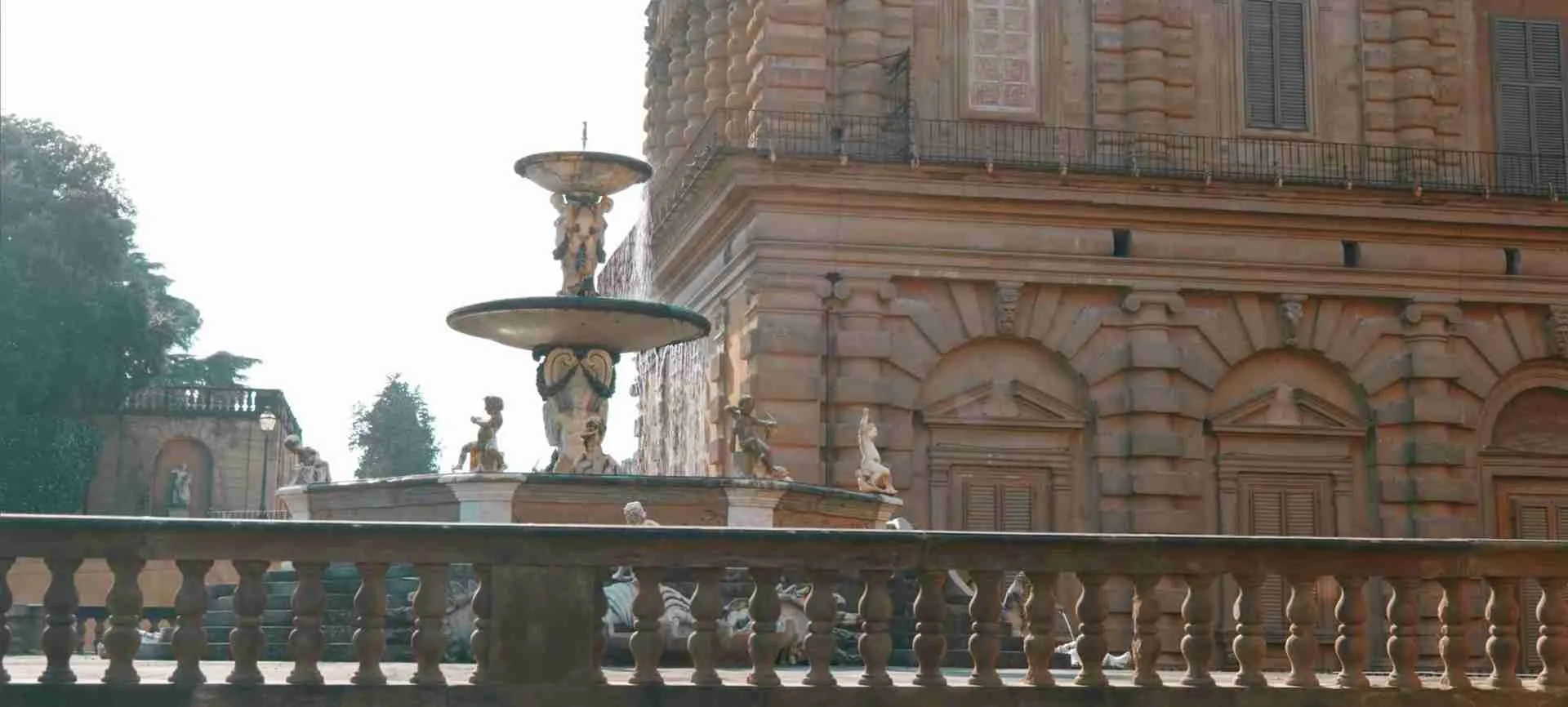
The Boboli Gardens behind Pitti Palace extend up steep hills creating terraced Renaissance landscape design with grottos, fountains, and sculptures across 45,000 square meters. The gardens require 60-90 minutes for main routes including the Amphitheatre, Neptune’s Fountain, and the Kaffeehaus terrace viewpoint. Garden entry operates on separate tickets from Pitti Palace museums, though the combination makes sense only for those with genuine garden interest beyond monument collecting.
Late Afternoon: Piazzale Michelangelo and San Miniato al Monte 2026
Piazzale Michelangelo provides Florence’s most famous panoramic viewpoint from hills immediately south of the Arno, positioned 90 meters above river level. Reach the piazzale by bus #12 or #13 from Santa Maria Novella or Santa Croce areas (€1.70 single ticket, 15-20 minutes), or walk uphill from Porta San Niccolò in 20-25 minutes on stepped paths. The walking route starts near Ponte alle Grazie, following Via di San Niccolò east then turning uphill on Rampe del Poggi or Via Monte alle Croci—both routes steep but manageable for reasonable fitness levels.
The piazzale plaza houses a bronze David copy at its center (the original’s original outdoor location was Piazza della Signoria), cafés, souvenir vendors, and the replica Romanesque church facade. The primary attraction remains the view itself: 180-degree panorama spanning the Duomo, Palazzo Vecchio’s tower, the Arno bridges, and surrounding Tuscan hills. Sunset timing (verify on weather apps) attracts maximum crowds with residents and tourists equally represented, creating vibrant social atmosphere though compromising photography with dense crowds. Arrive 30-45 minutes before sunset for positioning.
San Miniato al Monte basilica sits 200 meters uphill from Piazzale Michelangelo, reached by continuing the walking path or taking bus #12 one additional stop. This Romanesque church ranks among Florence’s finest medieval buildings, with its geometric marble facade, mosaic-decorated apse, and Michelozzo’s Renaissance chapel. Entry remains free with opening hours 8:00 AM-7:00 PM summer, 8:00 AM-6:00 PM winter. Monks chant Gregorian vespers at 5:30 PM daily, creating atmospheric ending to afternoon explorations. Budget 25-35 minutes for church interior and adjacent cemetery.
Evening Options and Day 3 Cost Summary 2026
Evening options include dinner in the Oltrarno district’s Santo Spirito area, returning north across Ponte Vecchio for Piazza della Signoria evening atmosphere, or aperitivo at riverside bars along Lungarno. Santo Spirito’s piazza hosts evening social scene with al fresco dining at surrounding restaurants charging €16-28 for mains, creating authentic neighborhood ambiance contrasting with tourist-focused dining in northern Florence.
Uffizi Gallery €29, lunch Oltrarno €14-20, bus round trip Piazzale Michelangelo €3.40, gelato €3-5, dinner Santo Spirito €18-30. Total day cost: €68-88 per person excluding accommodation (calculation: 29 + 14 + 3.40 + 3 + 18 = €67.40 low, rounds to €68; 29 + 20 + 3.40 + 5 + 30 = €87.40 high, rounds to €88). Optional additions: Pitti Palace €19, Boboli Gardens €10, or PassePartout €40 if visiting all three major museums (calculation: Uffizi €29 + Pitti €19 + Boboli €10 = €58; PassePartout €40 saves €18, or €12-15 accounting for additional booking fees).
Day 4 — Flexible Options and Personal Interests 2026
Day 4 provides structured morning recommendations while leaving afternoon hours flexible for personal interests, shopping, return museum visits, or Tuscan countryside excursions. This approach acknowledges visitor fatigue and varying preferences after three intensive sightseeing days while ensuring you don’t miss accessible highlights if energy permits.
Morning: Palazzo Vecchio and Piazza della Signoria 2026
Start at Palazzo Vecchio in Piazza della Signoria, Florence’s civic heart and government palace since medieval times. The palazzo functions as active city hall while opening historic rooms to visitors via two tour options: the Museum Route (€12.50-15 entry, self-guided access to ceremonial halls and private apartments), or the Secret Passages Tour (€4-6 additional, guided access to hidden passages, secret staircases, and architectural spaces). Book Secret Passages slots 1-2 weeks ahead through Palazzo Vecchio’s official website as daily quotas limit capacity.
The palazzo’s Salone dei Cinquecento represents Florence’s largest room, created by Savonarola in 1494 and decorated with Vasari’s massive frescoes celebrating Medici military victories. The room’s scale alone justifies the visit, with 54-meter length and 23-meter height creating overwhelming spatial drama. The private apartments on upper floors contain period furnishings, frescoed ceilings, and surprising intimacy contrasting with the Salone’s grandeur. Allocate 75-90 minutes for palazzo visit including both routes.
Piazza della Signoria functions as Florence’s outdoor sculpture gallery with the Loggia dei Lanzi housing bronze and marble works including Cellini’s Perseus and Giambologna’s Rape of the Sabine Women. The piazza itself contains the replica David at the palazzo entrance (original moved to Accademia in 1873), Neptune fountain, and numerous other sculptures making it impossible to cross the square without encountering Renaissance art. Budget 20-30 minutes for piazza exploration plus café or gelato time if desired—cafés here charge premium pricing (€6-10 for coffee, €5-8 for gelato) for the location.
Afternoon: Flexible Options Based on Interests 2026
Afternoon choices depend entirely on personal preferences and energy levels after three full days:
Option A — Santa Croce and Leather Quarter: Visit Santa Croce basilica (€8-10 entry, 45-60 minutes) containing Giotto frescoes and tombs of Michelangelo, Galileo, Machiavelli, and Rossini. The surrounding Piazza Santa Croce and Via dei Benci area houses Florence’s leather market and schools, with the Scuola del Cuoio (Leather School) operating inside the Santa Croce monastery offering demonstrations and direct-price leather goods. This option combines major monument with shopping district, requiring 2-3 hours total.
Option B — Bargello Museum and Medieval Florence: The Bargello Museum (€10-12 entry) houses Italy’s premier sculpture collection second only to the Uffizi, including Donatello’s David (the first free-standing nude since antiquity), Michelangelo’s Bacchus, and Verrocchio’s David. The medieval palace architecture and courtyard justify visits beyond sculpture collections. Combine with medieval quarter exploration between Bargello and Santa Croce, discovering narrow streets, hidden piazzas, and artisan workshops. Budget 2-3 hours total.
Option C — Shopping and Modern Florence: Dedicate afternoon to Via de’ Tornabuoni’s luxury boutiques, Via Roma’s department stores, or San Lorenzo market’s leather goods. Florence ranks among Italy’s premier shopping destinations for leather, gold jewelry, and fashion. The Santa Maria Novella Pharmacy (Farmacia di Santa Maria Novella) dating from 1612 sells herbal preparations, perfumes, and soaps in historic Gothic rooms, functioning as shopping-as-experience attraction. Allow 2-3 hours for leisure shopping.
Option D — Return Museum Visits: Return to the Uffizi, Accademia, or any Day 1-3 museum for deeper exploration. Timed-entry systems typically allow single-entry only, though afternoon Uffizi tickets at €16 (versus €25 morning) create budget opportunity for second visits if that interests you. Alternatively visit museums missed in earlier days: the Opera del Duomo Museum (included in Brunelleschi Pass), Medici Riccardi Palace (€10 entry, €7 for Magi Chapel frescoes alone), or the Stibbert Museum (€8 entry) housing armor and costume collections in eccentric villa setting.
Option E — Tuscan Hill Town Day Trip: Depart Florence for San Gimignano (1.5 hours by bus, €7-10 each way, advance booking recommended) or Siena (1.5 hours by bus, €8-12 each way, frequent departures). Both towns offer medieval architecture, hilltop views, and escape from Florence’s intensity. San Gimignano’s tower skyline and Siena’s Piazza del Campo justify the journey, though day-trip logistics consume 3-4 hours in transit leaving 4-5 hours in destination. Depart Florence by 9:00 AM for comfortable timing.
Evening Options and Day 4 Cost Summary 2026
Evening options mirror previous days with dinner in remaining unexplored neighborhoods, final gelato at favored shops, or sunset returns to Ponte Vecchio and Piazzale Michelangelo. Many visitors reserve final evening for upscale dining at destination restaurants not prioritized earlier, splurging on Tuscan specialties and wine pairings as culminating experience.
Palazzo Vecchio €14, lunch €12-20, afternoon Santa Croce €9 or Bargello €11 or shopping variable or day trip €16-28 transport, dinner €20-40. Total day cost: €55-102 per person excluding accommodation depending on afternoon choice (calculation: minimum 14 + 12 + 9 + 20 = €55 with Santa Croce; maximum 14 + 20 + 28 + 40 = €102 with day trip). San Gimignano or Siena day trips increase costs to approximately €68-88 for the day including transport and destination meals.
Getting Around Florence 2026: Transport Strategy
Florence operates as one of Europe’s most walkable cities, with public transport needed only for specific destinations beyond the compact historic center. Understanding when transport proves necessary versus optional shapes both daily logistics and budget planning.
Walking as Primary Transportation 2026
Florence’s historic center measures approximately 2 kilometers north-south and 2 kilometers east-west, creating a 15-25 minute maximum walking distance between any two major attractions. The Duomo to Uffizi walk requires 10 minutes, Accademia to Duomo 12 minutes, Uffizi to Pitti Palace 8 minutes, and complete center circumnavigation roughly 45 minutes. These short distances combined with pedestrian-only zones throughout the core make walking faster than bus connections for center-to-center movement once you factor in waiting, boarding, and navigation time.
The historic center’s layout follows medieval street patterns with landmark navigation (always orient yourself relative to the Duomo’s dome, visible from most center locations) rather than grid-based addressing. Major thoroughfares including Via Roma, Via Calzaiuoli, and Via de’ Tornabuoni connect key squares, while narrow medieval side streets create the famous Florentine urban texture. Getting “lost” in these streets represents intentional exploration rather than problematic disorientation given the small scale—you’re never more than 10 minutes from recognizable landmarks.
Walking challenges include cobblestone streets (wear appropriate footwear), zero sidewalks on many narrow streets (share road space with vehicles and bikes), frequent crowds in high season (Ponte Vecchio and Via Calzaiuoli become human traffic jams), and Oltrarno hillside grades (moderate slopes, occasionally steep near Piazzale Michelangelo). Despite these minor inconveniences, walking remains by far the optimal Florence transport mode for efficiency, flexibility, and authentic experience.
Public Transport When Needed 2026
Florence’s public transport operated by Autolinee Toscane combines buses and trams under unified ticketing, with services running 5:30 AM-12:30 AM daily and reduced schedules Sundays. The T2 tram line provides the single most useful visitor service, connecting Florence Airport to Santa Maria Novella train station in 20 minutes, then extending through central areas to Piazza San Marco. Buses including routes #12 and #13 serve Piazzale Michelangelo and San Miniato al Monte, the main destinations requiring transport from central Florence.
Single tickets cost €1.70 valid 90 minutes from validation, purchased from tobacco shops (tabacchi), newsstands, automated machines at major stops, or the AT Bus mobile app before boarding. Purchasing on-board from drivers costs €3.00, making advance purchase worthwhile whenever possible. Validate tickets in yellow machines immediately upon boarding—controllers impose €50 fines for unvalidated tickets regardless of purchase. Multi-trip tickets including 10-journey carnets (€15) and 3-day passes (€18) exist but rarely justify costs given most visitors’ minimal transport needs.
The airport T2 tram from Peretola Airport costs €1.70 for the 20-minute journey to Santa Maria Novella station, making it the cheapest and often fastest airport transfer method versus taxis (€25-30, 20 minutes) or private transfers (€40-60, 15 minutes). The tram operates 5:00 AM-12:30 AM with 5-8 minute frequencies, departing the airport terminal’s ground level. Standard luggage (50x44x20cm, 10kg maximum) travels free, with additional €1.70 tickets required for oversized bags.
Taxis and Alternative Options 2026
Taxis in Florence operate on meters with regulated rates: €3.30 base fare plus €1.60 per kilometer within city limits, €2.10 per kilometer outside city limits, with various surcharges (€1 evening 10 PM-6 AM, €2 Sundays and holidays, €1 luggage per piece). Central Florence taxi rides typically cost €8-15 for cross-center journeys that take 8-12 minutes driving (often longer than walking in pedestrian zones). Major taxi stands include Piazza Santa Maria Novella, Piazza della Repubblica, and Piazza San Marco, with phone booking at +39 055 4390 or +39 055 4242 adding €2-3 to metered fares.
Bicycle rental exists but proves impractical in the pedestrianized historic center where walking provides equivalent speed without navigation challenges or theft risk. Electric scooters populate streets but face the same limitations. Vespa rentals appeal to those seeking romantic Italian transportation imagery, though city center traffic and parking challenges outweigh scenic benefits for most visitors.
Where to Stay in Florence 2026: Accommodation Strategy
Accommodation location determines daily walking distances, neighborhood atmosphere, and overall Florence experience beyond purely budgetary considerations. The historic center’s small size creates less geographic variation than larger cities, though subtle neighborhood differences impact your stay significantly.
Historic Center Core Options 2026
The Santa Maria Novella district northwest of the Duomo offers the best value-location combination for first-time visitors, with 3-star hotels at €100-180 nightly, easy train station access (400-600 meter walks), and central positioning for all major attractions. This area includes genuine Florentine residential streets mixed with tourist density, neighborhood trattorias operating alongside tourist restaurants, and the Santa Maria Novella church and cloisters providing architectural interest. The district’s proximity to the train station means frequent ambient noise from rolling luggage on cobblestones, particularly early morning and late evening.
The Duomo-San Lorenzo zone places you at Florence’s geographic heart at €120-200 nightly for mid-range hotels, with the cathedral literally dominating your window views in some properties. This maximally central location minimizes walking to any attraction while maximizing tourist density, street noise, and restaurant pricing in immediate surroundings. The advantage of rolling out your door directly into Florence’s core justifies the premium for some visitors, while others find the constant tourist crowds and lack of residential authenticity undermining the Florence experience.
The Santa Croce district east of the Duomo provides authentic neighborhood character at €110-190 nightly, with the leather market quarter, Sant’Ambrogio food market, and numerous artisan workshops creating local atmosphere. This area sits slightly removed from maximum tourist concentration while maintaining 10-15 minute walks to major monuments. The trade-off involves fewer immediately adjacent restaurants and shops catering specifically to visitors, requiring slightly more initiative to discover neighborhood favorites.
Oltrarno and River Areas 2026
The Oltrarno district south of Ponte Vecchio delivers Florence’s most distinctive neighborhood character at €110-190 nightly, with artisan workshops, restoration studios, and residential streets creating authentic atmosphere lacking in northern Florence’s tourist core. Accommodation here positions Pitti Palace literally outside your door while requiring 5-10 minute bridge crossings to reach Uffizi, Accademia, and Duomo areas. The Via Santo Spirito and Piazza Santo Spirito neighborhoods offer excellent restaurants at local pricing, aperitivo bars, and evening social scenes where residents outnumber tourists.
Properties directly on the Arno’s banks via Lungarno addresses command premium rates (€180-350 nightly) for river views, though actual location advantages over nearby parallel streets rarely justify 40-80% price premiums. River-view hotel marketing emphasizes romantic imagery that reality partially delivers—the Arno itself flows brown with minimal scenic appeal, though bridge views and distant hillsides provide compensation.
Budget and Extended Stay Options 2026
Hostels concentrate around the train station and Santa Maria Novella areas at €30-65 for dormitory beds, €80-140 for private rooms, providing central location and social atmosphere while sacrificing privacy and quiet. Generator Hostel, Plus Florence, and Hostel Archi Rossi rank among better-reviewed options offering both dorm and private accommodations. These appeal primarily to under-30 travelers seeking budget maximization and social interaction over comfort and privacy.
Budget hotels including chain properties (B&B Hotels, Ibis Styles) charge €80-140 nightly for basic double rooms with ensuite bathrooms, offering predictable quality without charm. These suit visitors prioritizing clean beds and strategic location over authentic Florentine accommodation character. Book 2-3 months ahead for best availability at lowest rates, particularly for April-October travel when prices escalate 30-50% from winter levels and properties fill weeks in advance.
Where to Eat in Florence 2026: Dining Strategy
Florence’s dining landscape creates more dramatic price-quality variation than perhaps any Italian city, with tourist-trap restaurants charging triple authentic trattoria rates for inferior food within 100 meters of each other. Understanding neighborhood distinctions and local dining culture directly impacts both budget and experience quality.
The Tourist Trap Reality 2026
Restaurants immediately surrounding major monuments (Piazza del Duomo, Piazza della Signoria, Ponte Vecchio approaches) primarily serve one-time visitors with no repeat business incentive, resulting in inflated prices (€18-30 for pasta that costs €12-16 elsewhere) and mediocre quality. These establishments display multilingual menus, aggressive sidewalk solicitation, and “tourist menus” claiming value while delivering frozen food and minimal portions. The “Tuscan Menu €25” signs proliferate around the Duomo and Uffizi, universally indicating restaurants to avoid.
Authentic neighborhood trattorias located 3-4 blocks from major monuments serve primarily locals and informed visitors, charging €12-18 for primi (pasta/risotto), €16-26 for secondi (meat/fish), with house wine at €8-14 per liter. These establishments display Italian-only handwritten menus (sometimes translated grudgingly upon request), no sidewalk solicitation, and often require reservations for prime dinner hours. The price differential versus tourist traps reaches 40-60% for equivalent food quality—or stated differently, authentic restaurants provide superior food at significantly lower prices.
Strategic Dining Location Selection 2026
The San Lorenzo, Sant’Ambrogio, and Santo Spirito neighborhoods contain Florence’s highest concentrations of authentic trattorias serving locals rather than tourists. San Lorenzo’s market periphery houses worker-oriented lunch spots offering €10-15 complete meals (primo, secondo, side, water) aimed at market vendors and manual laborers. Sant’Ambrogio east of Santa Croce functions as genuine residential neighborhood with trattorias where English menus don’t exist and dinner reservations prove essential. Santo Spirito in Oltrarno balances authentic atmosphere with tourist awareness, creating accessible authentic dining without language barriers.
Lunch strategy differs from dinner: Mercato Centrale’s upstairs food hall provides excellent €10-18 lunch options in casual atmosphere, though dinner service (open until midnight) attracts tourist crowds. The ground-floor market stalls sell panini materials allowing €5-8 DIY lunch assembly. Neighborhood bar-cafés throughout the center offer simple pasta dishes at €8-12 lunchtime, primarily serving office workers and locals on quick breaks. These unnamed establishments with locals streaming through at 1:00 PM provide authentic experience and budget pricing despite lack of English menus or tourist amenities.
Florentine Specialties and Pricing 2026
Florentine cuisine emphasizes simplicity, quality ingredients, and Renaissance-era recipes surprisingly unchanged across centuries. Signature dishes including bistecca alla Fiorentina (massive T-bone steak, minimum 800 grams, €45-70 depending on weight and restaurant), lampredotto (tripe sandwich, €5-8 from street vendors), ribollita (hearty vegetable-bread soup, €8-12), pappa al pomodoro (tomato-bread porridge, €8-12), and pappardelle al cinghiale (wide pasta with wild boar sauce, €14-18) define traditional Florentine menus.
The bistecca alla Fiorentina deserves special mention given its iconic status and pricing structure: restaurants charge by weight (typically €45-60 per kilogram) with steaks rarely under 800 grams (serving 1-2 people), creating €36-50 individual costs. Order this only at quality restaurants specializing in meat rather than generic trattorias—Trattoria Mario, Il Latini, and Trattoria Za Za (touristy but reliable) rank among established steak destinations. Budget travelers skip the bistecca entirely given cost and portion size, while others splurge once as signature Florence experience.
Breakfast, Coffee, and Gelato Culture 2026
Italian breakfast consists of cappuccino and cornetto (croissant) consumed standing at bars, costing €3-5 total. Tourist-oriented hotels often charge €10-15 for buffet breakfasts providing identical items available at any bar for one-third the cost—decline hotel breakfast and visit neighborhood bars instead unless included in room rate. Remember the Italian social rule: cappuccino only before 11:00 AM, espresso thereafter. Standing at the bar costs 40-60% less than table service for identical beverages.
Gelato quality varies dramatically despite universal availability. Authentic artisan gelato uses natural ingredients, displays muted natural colors (bright neon hues indicate artificial coloring), and sits in covered metal tins rather than mounded display cases. Gelato della Passera, Gelateria dei Neri, and Vivoli rank among Florence’s finest artisan gelaterias, charging €2.50-5 for cones depending on size. Budget €3-5 daily for gelato—attempting Florence without frequent gelato represents missed opportunity.
Money-Saving Strategies for Florence 2026
Florence’s compact scale and museum-intensive attractions create cost structures favoring strategic planning over default tourist spending patterns, with informed visitors reducing expenses 35-45% without compromising experience quality.
Museum and Attraction Pass Analysis 2026
The 5-day PassePartout at €40 covers Uffizi Gallery, Pitti Palace, and Boboli Gardens with one entry per venue over five consecutive days. The pass provides value only if visiting all three attractions. Individual tickets total: Uffizi €29, Pitti Palace €19, Boboli Gardens €10, summing to €58. The PassePartout saves €18 gross, though booking fees for individual tickets (€4 each) reduce actual savings to approximately €12-15. Most visitors focusing on core Renaissance masterpieces visit only Uffizi and Accademia, making the pass irrelevant. Purchase the PassePartout only if genuinely planning Pitti Palace and Boboli Gardens visits beyond Uffizi requirements.
The Brunelleschi Pass at €30-35 for three-day access to the Duomo complex (cathedral, dome climb, baptistery, bell tower, museum, crypt) offers exceptional value given individual element pricing would exceed €50 if purchased separately. This pass represents the single best Florence museum value, though remember the dome climb requires separate advance time-slot booking beyond pass purchase. First-time visitors should default to purchasing this pass unless consciously skipping dome climb or bell tower ascents.
The Firenze Card at €85 for 72-hour access to 60+ museums and villas theoretically provides value for intensive museum visitors, though practical limitations undermine the theoretical savings. The card requires visiting 6-7 major museums in three days to break even versus individual tickets, creating rushed pacing that reduces enjoyment. Most visitors benefit more from selective ticket purchasing focused on 4-5 priority museums with thorough engagement versus attempting comprehensive museum coverage to justify expensive passes.
Accommodation Cost Reduction 2026
Booking 2-3 months ahead secures lowest rates for April-October peak season, with prices escalating 25-40% as availability tightens. Shoulder season (November-March) allows 1-2 week advance booking with minimal rate penalties, though Christmas and New Year weeks require earlier planning. Properties on side streets parallel to main thoroughfares (Via Roma, Via de’ Tornabuoni, Lungarno) charge 20-30% less than prime addresses while maintaining identical walking distances to attractions—Via dei Banchi versus Via de’ Tornabuoni exemplifies this pattern.
Apartment rentals through platforms (Airbnb, VRBO, Booking.com) provide better value than hotels for groups of 3-4+ people or stays exceeding four nights, with kitchen access enabling breakfast and light meal preparation reducing dining costs. Central Florence apartments range €80-180 nightly depending on size and exact location, with cleaning fees (€40-80) and platform fees (12-15%) adding to base rates. Compare total costs including all fees when evaluating apartment value versus hotels.
Dining Cost Management 2026
The 3-4 block rule delivers maximum dining savings: walk 3-4 blocks from any major monument before selecting restaurants, instantly reducing menu prices 30-50% while improving food quality. Lunch represents the optimal meal for restaurant dining, with many establishments offering €12-18 complete meals (primo or secondo plus side and water) versus €25-40 dinner equivalents. Reserve dinner for picnic assembly from market purchases, Mercato Centrale food hall grazing, or pizza-by-the-slice from neighborhood bakeries charging €3-5 for substantial portions.
Aperitivo culture provides the single best food value in Florence: €8-12 drinks at bars come with substantial free food spreads (pasta, pizza, vegetables, cheese, meats) from approximately 6:00-9:00 PM, effectively replacing dinner at drink-only pricing. Sant’Ambrogio neighborhood bars excel at generous aperitivo spreads, while tourist-area bars offer minimal accompaniments at inflated prices. Strategic aperitivo timing allows substantial evening meal for €10-15 per person versus €25-40 sit-down dinner costs.
Best Time to Visit Florence 2026
Florence’s appeal spans all seasons, though weather patterns, tourist crowds, and pricing variations create dramatic experience differences month by month that significantly impact visit quality beyond simple temperature preferences.
Spring and Fall Optimal Windows 2026
April through May delivers Florence’s most pleasant weather (15-23°C daily averages), blooming gardens, and manageable crowds before summer peaks, with hotel rates 20-30% below July-August while restaurants and museums operate full schedules. Easter week (March 28-April 6, 2026) brings intense crowds requiring peak-season advance booking and patience with queues, though shoulder weeks before and after provide ideal conditions. Late May transitions toward summer heat and crowd levels, maintaining pleasant conditions with increasing tourist density.
September through early November provides Florence’s second optimal window with warm temperatures (16-25°C September, 10-18°C October), autumn colors in Boboli Gardens and surrounding Tuscan countryside, and post-summer crowd reductions. The vendemmia (grape harvest) occurs late September through early October, creating wine country activity and special events. Hotel rates drop 25-35% after the last week of August, with restaurants reverting to easier availability and locals returning from August holidays.
Summer Trade-offs 2026
June through August brings peak crowds, highest accommodation costs, and intense heat (25-35°C with occasional 38°C+ heatwaves) that test visitor endurance in un-air-conditioned museums and churches. Museums implement summer hours (often opening 8:15 AM, closing 6:50 PM) maximizing daylight but creating all-day tourist density. The advantage of summer lies in longest daylight hours (sunset after 9:00 PM in June), guaranteed weather for outdoor dining and evening strolls, and full cultural calendar with outdoor concerts and events.
August traditionally sees Florentines departing for beach holidays, with many neighborhood restaurants closing for 2-4 weeks (particularly mid-August around Ferragosto holiday August 15). This creates paradoxical conditions where tourist-oriented businesses operate fully while authentic neighborhood establishments close, somewhat undermining Florence’s residential character. Book major museums 4-8 weeks ahead for summer visits, accommodation 2-3 months ahead, and expect queues at popular restaurants even with reservations.
Winter and Holiday Seasons 2026
November through February offers lowest prices (hotel rates 40-60% below summer peaks) and smallest crowds, with genuine local atmosphere as tourism recedes to sustainable levels. Temperatures hover 5-12°C with frequent drizzle and occasional cold snaps, though Florence’s primarily indoor-museum focus minimizes weather impact compared to outdoor-oriented destinations. Museums operate reduced hours (typically 8:15 AM-5:00 PM) with last entries 30-45 minutes before closing, compressing sightseeing windows but eliminating crowding that plagues peak season.
Christmas markets and decorations partially compensate for grey weather during December, with illuminations along Via de’ Tornabuoni and Piazza della Repubblica creating festive atmosphere. The December 20-January 6 Christmas holiday period brings increased visitor numbers and pricing, though still below summer levels. January-February represents Florence’s aesthetic low point with minimal tourists, closed restaurants, and melancholy grey skies testing visitor morale across extended periods. These months suit museum-intensive itineraries where outdoor activities play minimal roles and budget maximization outweighs weather concerns.
Practical Tips for First-Time Florence Visitors 2026
Florence’s unique characteristics as a Renaissance city transformed into mass-tourism destination create operational quirks and cultural expectations that insiders navigate unconsciously while confusing first-time visitors. These specific recommendations address common friction points.
Museum Booking and Entry Procedures 2026
Timed-entry tickets specify exact 15-minute windows when you must arrive at museum entrances—arriving late forfeits your entry with no refunds. Arrive 10-15 minutes before your time slot to account for security screening, ticket validation, and orientation. Security procedures vary by venue: the Uffizi conducts airport-style screening including metal detectors and bag X-rays, while smaller museums employ visual bag inspection only. Large backpacks and umbrellas require checking at free cloakrooms, with small bags and purses permitted inside galleries.
Photography policies permit non-flash photography in most museums including Uffizi and Accademia, though temporary exhibitions often prohibit all photography. Video recording typically faces stricter restrictions. Selfie sticks remain banned universally. Church photography policies vary unpredictably—some permit all photography, others ban it entirely, while most occupy grey zones where enforcement depends on individual guard discretion. When uncertain, observe other visitors’ behavior or ask staff directly rather than assuming.
Italian Cultural Expectations 2026
Church dress codes require covered shoulders and knees for entry at major basilicas including Santa Croce, Santa Maria Novella, and the cathedral, with guards stationed at entrances turning away inappropriately dressed visitors. Carry a light scarf or wrap for shoulder coverage if wearing sleeveless tops—this simple addition prevents entry denial at multiple daily destinations. The modest dress requirement applies regardless of summer heat, with no exceptions for tourists pleading ignorance.
Restaurant service timing follows Italian rather than American patterns: arrival and seating occur quickly, but order-taking may require 15-20 minutes as staff expects you to review menus and converse before deciding. After placing orders, meals arrive at leisurely Italian pace with 15-20 minutes between courses considered normal rather than slow service. Bills arrive only when explicitly requested—Italian custom assumes diners wish to linger over coffee and conversation rather than rushing to vacate tables. Request the check (“Il conto, per favore”) when ready to leave rather than waiting for unprompted bill delivery.
Safety and Practical Concerns 2026
Florence rates as safe for tourists, with violent crime virtually non-existent in central areas and pickpocketing representing the primary concern concentrated around Duomo, Uffizi, and Ponte Vecchio during peak hours. Keep valuables in front pockets or interior jacket pockets rather than backpack exterior pockets or rear pants pockets. Women carrying purses should wear them cross-body with bags positioned front rather than behind. Street hustlers attempting bracelet scams (forcing friendship bracelets onto tourists’ wrists then demanding payment) operate around Ponte Vecchio and Piazza della Repubblica—firmly decline all interactions and keep walking.
Pharmacies operate normally for minor health concerns including upset stomachs, headaches, and cold/flu symptoms, with pharmacists providing knowledgeable consultation often including medication recommendations without physician visits. After-hours pharmacy rotation ensures 24-hour access through posted schedules listing which pharmacies remain open nights and Sundays. Emergency services use 112 (European emergency number equivalent to 911), with English-speaking operators directing appropriate response.
Wi-Fi and Connectivity 2026
Free Wi-Fi operates throughout Florence’s historic center through the City Wi-Fi network requiring simple registration with email and phone number. Most cafés, restaurants, and hotels provide free Wi-Fi with passwords posted or available upon request. International visitors benefit from purchasing Italian SIM cards (€10-20 for 7-30 day data packages from TIM, Vodafone, Wind) at airport or train station shops, providing reliable data connectivity for navigation and communication without Wi-Fi dependence. EU residents traveling under roaming agreements use their home plans without additional costs.
Frequently Asked Questions About Florence 4-Day Itineraries 2026
Can I visit the main Florence attractions in 4 days?
Yes, four days covers all essential Florence attractions including Uffizi Gallery, Accademia Gallery, Duomo complex, Pitti Palace, Ponte Vecchio, major churches, and 3-4 distinct neighborhoods with comfortable pacing that prevents museum burnout. Florence’s compact scale means you’ll cover more ground per day than Rome or Venice despite similar timeframes, with walking distances between major sites rarely exceeding 20 minutes. The concentration of world-famous artworks within 2-3 museums means you’ll encounter more Renaissance masterpieces in four Florence days than a week in most European capitals. Four days also permits one half-day Tuscan countryside excursion if that interests you, though most visitors find Florence itself fully occupying. The primary limitation involves lesser-known museums and churches that genuinely deserve visits but fall outside four-day realistic schedules—Bargello sculpture collection, Brancacci Chapel frescoes, and Medici villas require five-plus day itineraries for inclusion without rushed pacing.
Is the Uffizi Gallery worth visiting in 2026?
The Uffizi Gallery remains absolutely essential for any serious Florence visit, housing the world’s finest Renaissance painting collection including Botticelli’s “Birth of Venus” and “Primavera,” Leonardo da Vinci’s “Annunciation,” Michelangelo’s “Doni Tondo,” and masterworks by Raphael, Titian, and Caravaggio. The concentration of globally significant artworks within a single building creates unparalleled cultural density—you’ll encounter more museum-textbook images in three Uffizi hours than most museums contain in their entire collections. The question isn’t whether to visit but rather how much time to allocate: minimum 3 hours for highlights allows meaningful engagement with major works, while 4-5 hours permits thorough viewing without rushing. Book timed-entry tickets 3-8 weeks ahead depending on season to secure morning slots before crowds intensify. The €25-29 entry fee represents extraordinary value given collection quality, though the physical and mental intensity of sustained masterpiece viewing creates genuine fatigue requiring strategic pacing with breaks rather than attempting comprehensive viewing in single marathon sessions.
How do I book Florence museum tickets in 2026?
Book Florence museum tickets through official channels to avoid third-party markup: Uffizi, Accademia, Pitti Palace, and minor state museums use the B-Ticket system at b-ticket.com/musei with €4 booking fees on top of base admission, while the Duomo complex uses the Opera di Santa Maria del Fiore website at operaduomo.firenze.it for Brunelleschi Pass and dome climb reservations. Create accounts on these websites 4-8 weeks before your visit for peak season (April-October) or 1-2 weeks for shoulder season (November-March), selecting specific date and time slots that become your guaranteed entry windows. Print confirmations or save to mobile devices as both paper and digital tickets scan at entrances. Third-party vendors including Viator, GetYourGuide, and Florence-specific tour operators charge €22-35 for Uffizi and Accademia versus €20-29 official pricing, providing value only when official slots sell out—always check official channels first. Phone booking through Firenze Musei (+39 055 294883) offers alternative to online booking with same pricing plus international call costs, suitable for those uncomfortable with Italian website navigation or lacking credit cards accepted by Italian systems.
What should I wear in Florence in different seasons in 2026?
Florence’s seasonal temperature ranges require different clothing strategies while maintaining consistent church dress code requirements year-round. Spring (April-May) demands layering systems with light sweater or cardigan over t-shirts for 15-23°C temperatures, rain jacket for frequent showers, and comfortable walking shoes for 6-10 kilometers daily. Summer (June-August) requires breathable fabrics handling 25-35°C heat, sun protection including hat and sunglasses, and crucial shoulder-covering layer (scarf or light cardigan) for church entries maintaining dress code compliance. Autumn (September-November) mirrors spring layering with slightly warmer initial temperatures transitioning toward cooler conditions requiring medium-weight jackets by late October. Winter (December-February) needs warm jacket or coat for 5-12°C temperatures, umbrella for frequent drizzle, and layers accommodating indoor-outdoor temperature swings when museums and churches provide warmth escapes. All seasons require broken-in walking shoes with arch support handling cobblestones and 8-12 kilometer daily distances—new shoes guarantee blisters by day two. Avoid heels and open-toe shoes navigating cobblestones, with athletic walking shoes or supportive sneakers optimal. Bring small daypack for water bottles, layers, purchases, and camera equipment rather than shoulder bags that stress one side during extended walking.
Can I visit Pisa as a day trip from Florence in 2026?
Yes, Pisa sits 85 kilometers west of Florence with frequent trains departing Florence Santa Maria Novella station hourly throughout the day, reaching Pisa Centrale in 50-80 minutes depending on train type. Regional trains cost €9.60-12 each way with flexible tickets valid any train that day, while high-speed Frecciarossa trains cost €15-18 each way with advance-booked assigned seats. The Leaning Tower and cathedral square (Campo dei Miracoli) sits 20 minutes walking or 10 minutes by bus from Pisa Centrale station. Leaning Tower climb requires advance timed-entry tickets booked through opapisa.it at €25-30, with slots filling 2-4 weeks ahead in peak season—book this simultaneously with Florence museums rather than hoping for same-day availability. Budget 3-4 hours in Pisa for tower climb, cathedral visit, baptistery exploration, and square photography, creating 6-7 hour total day trip including travel time. The half-day absence from Florence fits Day 4’s flexible afternoon structure, though most visitors find Florence itself providing four full days of compelling content without needing Pisa excursions. Pisa appeals primarily to those wanting iconic Leaning Tower photos or seeking variety beyond intense Florence art immersion, with the tower climb’s unique perspective justifying the journey for architecture enthusiasts.
How much does food cost per day in Florence in 2026?
Daily food costs in Florence range €40-70 per person depending on meal choices, dining locations, and budget consciousness. Budget approach at €40-45 daily: supermarket breakfast €3-5 (yogurt, fruit, pastries from Conad or Carrefour), trattoria lunch €12-16 in neighborhood locations away from monuments, afternoon gelato €3-5, picnic dinner assembled from Mercato Centrale purchases €8-12, coffee/snacks €3-5. Mid-range approach at €50-60 daily: bar breakfast €4-6 (cappuccino and cornetto), sit-down trattoria lunch €15-20, gelato €4-6, restaurant dinner €22-32 including wine by glass, coffee €3-4. Comfortable approach at €60-70 daily: hotel breakfast €8-12 if not included in room rate, casual restaurant lunch €18-25, afternoon coffee and pastry €5-7, quality restaurant dinner €28-38 including half-bottle wine, gelato €4-6. These figures assume tap water at meals rather than bottled water adding €2-4 per meal, house wine rather than premium bottles adding €15-30, and one rather than multiple courses when appropriate. The bistecca alla Fiorentina (€45-70 for 800-1000 gram portions) represents splurge addition to any day’s budget rather than standard daily expense. Alcohol significantly impacts daily costs: wine by carafe at dinner adds €8-14, cocktails/craft beer at bars €8-12 per drink, with aperitivo culture providing best value by combining drinks with substantial free food spreads effectively replacing dinner.
Is Florence walkable or do I need public transport in 2026?
Florence ranks among Europe’s most walkable cities, with public transport needed only for airport transfers and the Piazzale Michelangelo hill access. The historic center measures approximately 2 kilometers across in any direction, creating maximum 25-minute walking distances between attractions. Duomo to Uffizi requires 10 minutes walking, Accademia to Duomo 12 minutes, Uffizi to Pitti Palace 8 minutes across Ponte Vecchio. Most daily sightseeing occurs entirely on foot with zero public transport usage—you’ll walk 6-10 kilometers daily (8,000-12,000 steps) naturally moving between museums, churches, restaurants, and neighborhoods. Public transport becomes relevant for three specific situations: T2 tram from airport to Santa Maria Novella station (€1.70, 20 minutes), bus #12 or #13 to Piazzale Michelangelo viewpoint (€1.70, 15 minutes), and any accommodation beyond historic center perimeter requiring bus connections to central areas. The historic center’s pedestrian-only zones mean buses cannot access many areas anyway, forcing walking regardless. Cars prove entirely unnecessary and actually problematic given Florence’s ZTL (Limited Traffic Zone) restrictions prohibiting most vehicles from center streets with hefty automated fines for violations. Taxis serve only early-morning airport departures or late-night returns when trams cease operating, costing €25-35 for airport transfers versus €1.70 tram fares. Your primary navigation tool becomes the Duomo’s dome visible from most center locations, providing constant orientation reference supplementing smartphone maps.
What are the best viewpoints for Florence photos in 2026?
Piazzale Michelangelo provides Florence’s most famous panoramic viewpoint from hills 90 meters above the Arno, offering 180-degree vistas spanning the Duomo, Palazzo Vecchio’s tower, Ponte Vecchio, and surrounding Tuscan hills. Sunset timing (verify on weather apps) attracts maximum crowds creating vibrant atmosphere though compromising photography with dense crowds—arrive 45-60 minutes before sunset for positioning and capturing multiple light conditions. The bronze David replica centered on the piazza provides foreground interest for compositions. Access via bus #12 or #13 (€1.70) or 20-25 minute uphill walks from Porta San Niccolò creating exercise trade-off for sunset photography. The Duomo dome summit reached via 463-step climb (included in Brunelleschi Pass, requires advance time-slot reservation) provides 360-degree Florence views from 114 meters height, with morning light favoring eastern views toward Fiesole hills while afternoon light benefits western perspectives toward Prato and Pistoia. Ponte Vecchio photographs best from Ponte Santa Trinità upstream (sunset light) or Ponte alle Grazie downstream (morning light), with riverside Lungarno paths providing unobstructed shooting angles avoiding bridge crowds. The Uffizi Gallery’s third-floor terrace provides Arno River and Ponte Vecchio views accessible only to museum visitors, creating exclusive photography opportunities without external crowds. Bardini Gardens on Oltrarno hillsides offer alternative panoramic viewpoints with fewer tourists, accessed via Costa San Giorgio climb from Ponte Vecchio or bus connections, though less dramatic than Piazzale Michelangelo perspectives.
Should I learn Italian before visiting Florence in 2026?
Basic Italian phrases enhance Florence experiences significantly though English works adequately in tourist-oriented businesses. Learn essential greetings (buongiorno/buonasera for good morning/evening, grazie for thank you, per favore for please), restaurant terms (il conto for the check, acqua naturale/frizzante for still/sparkling water, un caffè for espresso), and navigation words (destra/sinistra for right/left, vicino for nearby). These minimal phrases demonstrate respect for Italian culture and often improve service quality as locals appreciate effort regardless of pronunciation accuracy. Major museums including Uffizi and Accademia operate entirely in English with multilingual audio guides, signage, and staff. Hotels catering to international visitors speak English universally. Restaurants around major monuments offer English menus and English-speaking staff, while authentic neighborhood trattorias may require pointing at menu items and hand gestures without translation services. Public transport apps and ticket machines include English options. The language barrier creates genuine challenges only in medical emergencies requiring detailed symptom descriptions, police reports needing precise information, or deep conversations with artisans and locals exploring topics beyond basic transactions. Google Translate’s camera function instantly translates Italian text by photographing menus, signs, and product labels, functioning adequately for real-time translation needs. Florence’s extreme tourist orientation means you’ll navigate successfully with zero Italian, though learning 20-30 basic phrases transforms functional transactions into warmer cultural exchanges demonstrating respect for Italian hospitality traditions.
Can I visit Florence wineries and Chianti from the city in 2026?
Tuscany’s Chianti wine region surrounds Florence 15-40 kilometers south, with numerous wineries offering tours and tastings accessible through organized tours, rental cars, or dedicated wine-tour services. Organized half-day or full-day Chianti tours departing Florence cost €65-120 per person including transport, 2-3 winery visits, tastings, lunch at one location, and English-speaking guides, operating daily with advance booking through Viator, GetYourGuide, or Florence tour companies. These tours handle all logistics including winery reservations that individual visitors struggle arranging, pickup/return to Florence accommodations, and rural navigation eliminating rental car requirements. Full-day tours (9 AM-6 PM) visit 3 wineries with substantial tastings and lunch, while half-day tours (9 AM-1 PM or 2 PM-6 PM) cover 2 wineries with lighter tastings. Rental car self-drive requires international driving licenses, confidence navigating Italian traffic and narrow rural roads, and designated driver accepting zero alcohol consumption while companions enjoy tastings—creating practical challenges despite romantic imagery. Most Chianti wineries require advance reservations even for individual visitors, rarely accepting walk-ins, with English-language tours scheduled at fixed times rather than on-demand. The logistics favor organized tours over independent visits unless you’re passionate about specific wineries justifying the rental car and advance coordination effort. Wine tours fit Day 4’s flexible afternoon structure as half-day options, or can replace entire Day 4 for wine enthusiasts prioritizing Tuscan countryside over additional Florence museums.