
Florence 5-Day Itinerary 2026: Complete Planning Guide
Florence offers five days of Renaissance masterpieces, world-class museums, architectural wonders, and Tuscan culinary excellence concentrated within a walkable historic center. This itinerary balances iconic attractions like the Uffizi Gallery and Michelangelo’s David with hidden neighborhood gems, day trip possibilities to the Tuscan countryside, and strategic timing to maximize experiences while managing crowds and costs in 2026.
Key Takeaways for Florence 5-Day Planning 2026
- Budget Planning 2026: Expect €750-1,400 for accommodation (€120-180 nightly mid-range for 6 nights), €300-450 for meals, €85-130 for attractions, and €20-35 for local transport, totaling €1,155-2,015 per person for the complete trip excluding flights
- Essential Advance Bookings: Reserve Uffizi Gallery and Accademia Gallery tickets 2-4 weeks ahead as timed slots sell out rapidly, with Duomo dome climb requiring similar advance planning in spring and summer 2026
- Strategic Museum Pass Investment: The €40 Uffizi-Pitti-Boboli combined 5-day pass saves money versus individual tickets (€16 + €16 + €10 = €42) while the Brunelleschi Pass at €30-35 provides 72-hour access to the entire Duomo complex
- Walkability Advantage: Florence’s compact 2-kilometer historic center allows walking between major sites in 10-20 minutes, minimizing transportation costs to occasional €1.50-1.70 bus tickets for outlying destinations like Piazzale Michelangelo
- Seasonal Pricing Impact 2026: Summer accommodation costs run 40-50% higher (€150-250 nightly mid-range) versus shoulder seasons April-May and September-October (€120-180), affecting total trip costs by €180-420 for six nights
- Day Trip Opportunities: Day 5 provides flexibility for Tuscan countryside excursions to Siena, San Gimignano, Chianti wineries, or Pisa, each accessible within 60-90 minutes by regional train or organized tour
People Also Ask About Florence 5-Day Itinerary 2026
Is 5 Days in Florence Too Long in 2026?
Five days in Florence provides ideal timing to experience the city’s depth beyond surface-level tourism. Days 1-3 cover essential Renaissance masterpieces including the Uffizi Gallery, Accademia Gallery housing Michelangelo’s David, and the Duomo complex, while Days 4-5 allow exploration of secondary museums like Bargello and Palazzo Pitti, neighborhood discovery in Oltrarno and San Frediano, and day trip possibilities to the Tuscan countryside. Visitors consistently report that five days feels balanced rather than rushed, allowing time to linger in lesser-known churches, enjoy multi-course Tuscan dinners without time pressure, and revisit favorite sites. The compact historic center prevents boredom despite the extended stay, as each neighborhood reveals distinct character from artisan workshops in Santo Spirito to leather markets near San Lorenzo.
How Much Money Do I Need for 5 Days in Florence 2026?
Budget €1,155-2,015 per person for five full days in Florence 2026, covering accommodation €750-1,400 for six nights (arrival evening through departure morning), meals €300-450, attractions €85-130, and local transport €20-35. Mid-range travelers staying in three-star hotels and dining at quality trattorias calculate €1,400-1,700 total. Budget-conscious visitors using hostels or budget hotels (€350-480 accommodation), market lunches, and free attractions manage €700-900. Luxury travelers at four-star hotels with fine dining and private tours require €2,500-4,000. The Florence Card at €85 provides cost-effective access to 60+ museums versus €61 for individual Uffizi, Accademia, and Pitti Palace entries alone. These figures exclude international flights but include all in-city expenses from breakfast through evening activities.
What Is the Best Area to Stay in Florence for a 5-Day Visit in 2026?
Santa Croce and Sant’Ambrogio districts provide optimal value for five-day Florence visits in 2026, combining proximity to major sites with authentic neighborhood character and accommodation costs 20-30% below Centro Storico rates. Three-star hotels in these areas cost €120-150 nightly versus €180-220 near the Duomo, saving €360-420 over six nights while maintaining 10-15 minute walks to the Uffizi and Accademia. The neighborhoods host local markets at Sant’Ambrogio, artisan leather workshops, and traditional trattorias frequented by Florentines rather than tourists. Alternatively, Oltrarno across the Arno River offers similar advantages with immediate access to Pitti Palace and Boboli Gardens, though slightly farther from the Duomo and Accademia. Avoid areas beyond the historic center unless budget constraints dictate, as daily commute time accumulates significantly over five days despite Florence’s efficient public transport.
Can You Do Florence and Tuscany in 5 Days in 2026?
Five days allows comprehensive Florence exploration with one or two Tuscan day trips, though dedicating all five days solely to Florence provides deeper immersion in the city’s museums, neighborhoods, and cultural experiences. The recommended allocation dedicates Days 1-3 to essential Florence sites including major museums and the Duomo complex, Day 4 to secondary attractions and neighborhood exploration, and Day 5 to either a full-day Tuscan excursion or half-day trip combined with final Florence activities. Popular day trips reach Siena (90 minutes by bus), San Gimignano (75 minutes), Chianti wine region (60-90 minutes), or Pisa (60 minutes by train). Organized tours typically depart 8:00-9:00 AM and return 6:00-7:00 PM, consuming the entire day. Self-guided train trips to Siena or Pisa allow more flexibility with departures every 1-2 hours. Attempting multiple Tuscan destinations across 2-3 days reduces Florence depth significantly, better suited to week-long itineraries splitting time between city and countryside.
Extended multi-day tours – 5+ days
Featured Florence Multi-Day Tour Packages
3 days
Florence 3-Day Discovery Tour
- ✓ Comprehensive Florence experience
- ✓ Expert local guides included
- ✓ All accommodation included
- ✓ Transportation provided

5 days
Florence 5-Day Highlights Experience
- ✓ Comprehensive Florence experience
- ✓ Expert local guides included
- ✓ All accommodation included
- ✓ Transportation provided

7 days
Florence 7-Day Cultural Journey
- ✓ Comprehensive Florence experience
- ✓ Expert local guides included
- ✓ All accommodation included
- ✓ Transportation provided

10 days
Florence 10-Day Complete Adventure
- ✓ Comprehensive Florence experience
- ✓ Expert local guides included
- ✓ All accommodation included
- ✓ Transportation provided
Multi-day tour packages powered by TourRadar. Prices and availability subject to change.
Introduction to Planning Your Florence 5-Day Experience 2026
Florence transforms five days from a rushed museum sprint into a comprehensive Renaissance immersion allowing time to appreciate artistic masterpieces, architectural innovations, culinary traditions, and neighborhood character that define this Tuscan capital. The compact historic center concentrating the Uffizi Gallery, Accademia Gallery, Duomo complex, Ponte Vecchio, Palazzo Pitti, and dozens of significant churches within a 2-kilometer radius makes extended stays remarkably efficient, with walking serving as primary transportation between attractions while revealing hidden piazzas, artisan workshops, and local markets invisible to day-trippers rushing between headline sites.
Planning a five-day Florence itinerary for 2026 requires balancing advance reservations for time-slot-restricted museums with flexibility for spontaneous discoveries, understanding seasonal pricing variations affecting accommodation costs by 40-50% between summer peaks and shoulder seasons, and strategically allocating days to prevent museum fatigue while maintaining momentum through the city’s extraordinary concentration of artistic and architectural treasures. The extended timeframe permits deeper engagement with secondary museums like the Bargello housing Renaissance sculptures, exploration of authentic neighborhoods including Oltrarno’s artisan quarter and San Lorenzo’s market district, and consideration of day trips to Tuscan destinations from Chianti vineyards to medieval Siena.
This 2026 itinerary provides day-by-day guidance through Florence’s essential experiences beginning with Renaissance art foundations at the Uffizi and Accademia, progressing through architectural marvels including Brunelleschi’s revolutionary dome and medieval Palazzo Vecchio, advancing to neighborhood discoveries in authentically Florentine districts, and culminating with optional Tuscan countryside exploration. Each day includes specific site recommendations with current 2026 admission prices and booking requirements, strategic timing suggestions to manage crowds and maximize light conditions for photography, dining recommendations balancing tourist-area convenience with local authenticity, and realistic daily budget breakdowns accounting for accommodation, meals, attractions, and incidental expenses. The itinerary accommodates mid-range travelers staying in three-star hotels and dining at quality trattorias while noting budget and luxury alternatives, with flexibility built into Days 4-5 allowing customization based on individual interests from additional museum time to expanded countryside exploration.
Day 1 in Florence 2026: Renaissance Art Foundations and Historic Center Introduction
Begin your Florence experience with the Uffizi Gallery, requiring advance reservation to access the world’s finest Renaissance art collection without multi-hour queue delays. The museum opens 8:15 AM with morning slots offering optimal lighting conditions for viewing Botticelli’s Birth of Venus and Primavera, Leonardo da Vinci’s Annunciation, and Michelangelo’s Doni Tondo. Reserve entry for 9:00-10:00 AM, allowing time for hotel breakfast before the 15-minute walk from most historic center accommodations. Entry costs €16 for standard admission or €20-25 through third-party skip-the-line services (check official site for current rates as pricing may vary). Alternatively, purchase the €40 combined Uffizi-Pitti Palace-Boboli Gardens 5-day pass providing access to all three sites valid for five consecutive days, optimal for this itinerary’s Day 3 Pitti Palace visit.
Allocate 2.5-3 hours for the Uffizi, focusing on galleries 1-45 housing medieval through High Renaissance masterpieces rather than attempting comprehensive coverage of all 50+ rooms. Essential stops include Room 8 for Filippo Lippi’s Madonna and Child, Rooms 10-14 for Botticelli’s complete works including the iconic Birth of Venus and Primavera, Room 15 for Leonardo da Vinci’s early Annunciation and unfinished Adoration of the Magi, Room 35 for Michelangelo’s Doni Tondo (his only panel painting), and Room 41 for Caravaggio’s dramatic Bacchus and Medusa. The chronological arrangement from Room 1 forward traces artistic evolution from Byzantine gold backgrounds through Renaissance naturalism and perspective innovations, providing educational context enhancing appreciation of individual masterpieces. Exit through the museum shop to the Arno River terrace offering Ponte Vecchio views, then proceed to the Loggia dei Lanzi in adjacent Piazza della Signoria for outdoor Renaissance sculpture viewing.
Lunch at nearby Mercato Centrale’s ground floor food stalls provides authentic Florentine specialties at fair prices, with panini €5-8, pasta dishes €8-12, and lampredotto (traditional tripe sandwich) €5. The covered market operates 7 AM-2 PM daily with vendors offering fresh produce, cheeses, cured meats, and prepared foods popular with locals. Alternatively, All’Antico Vinaio near the Uffizi serves massive Tuscan sandwiches €7-10 with waits exceeding 20-30 minutes during peak lunch hours 12:30-2:00 PM. Budget an hour for lunch including market exploration or sandwich waiting, then walk 10 minutes north to Piazza del Duomo for afternoon cathedral complex exploration.
The Florence Cathedral (Duomo) interior provides free admission to the vast nave featuring Giorgio Vasari’s Last Judgment fresco covering the interior dome, Uccello’s clock face, and Lorenzo Ghiberti’s stained glass windows. Expect 20-30 minute entry lines during summer 2026, shorter in shoulder seasons. The Brunelleschi Pass (€30-35, check official duomo.firenze.it for current rates) grants 72-hour access to Brunelleschi’s Dome climb, Giotto’s Bell Tower, the Baptistery, Santa Reparata Crypt, and Opera del Duomo Museum. Purchase this pass for Day 2 morning dome climb, but complete the Opera del Duomo Museum this afternoon to understand dome construction history and view original Ghiberti’s Gates of Paradise bronze panels before seeing their replicas on the Baptistery tomorrow. The museum, located behind the cathedral apse, displays Michelangelo’s unfinished Pietà, Donatello’s wooden Mary Magdalene, and original sculptures from the cathedral facade, requiring 60-90 minutes for thorough exploration.
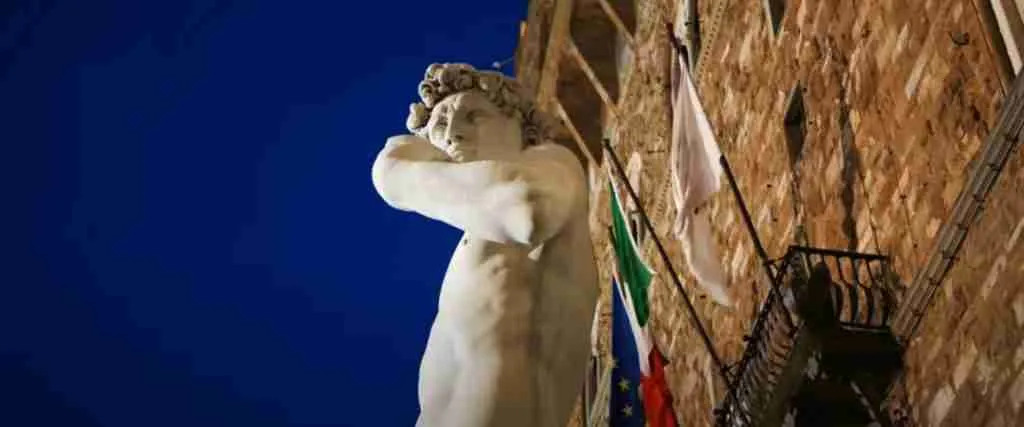
Late afternoon from 5:00-6:00 PM allows Piazza della Signoria exploration including the free-admission Loggia dei Lanzi’s Renaissance sculptures (Cellini’s Perseus with the Head of Medusa, Giambologna’s Rape of the Sabine Women) and Palazzo Vecchio’s exterior featuring the Arnolfo Tower and David replica marking Michelangelo’s original statue location before its 1873 Accademia Gallery transfer. The piazza’s outdoor cafe seating invites aperitivo hour observation of street performers and tourists, though prices run high at €8-12 per drink versus €4-6 at neighborhood bars. Walk across Ponte Vecchio at sunset for golden-hour photography of the medieval bridge’s jewelry shops and Arno River reflections, then explore the Oltrarno district’s artisan workshops along Via Maggio and Via Santo Spirito before dinner reservations.
Dinner in Oltrarno at traditional trattorias like Trattoria 4 Leoni (€15-25 mains, reservations recommended) or Il Santo Bevitore (€18-28 mains, modern Tuscan cuisine) provides authentic dining away from tourist-center crowds. A complete meal costs €35-50 per person including antipasto, primo (pasta), secondo (meat), and house wine. Budget alternatives include pizza by the slice near Santo Spirito (€3-5) or casual restaurants offering fixed-price menus €15-20. Return to your accommodation by 10:00 PM or enjoy evening passeggiata (stroll) through illuminated Piazza della Repubblica and Via de’ Tornabuoni’s luxury boutiques before retiring.
Day 1 Budget Summary: Uffizi Gallery €16 (or €40 for 5-day combined pass), lunch €10-15, gelato/coffee €5-8, Opera del Duomo Museum included in Brunelleschi Pass (purchased for Day 2), aperitivo €6-10, dinner €35-50. Total day cost €72-99 per person excluding accommodation.
Day 2 in Florence 2026: Architectural Marvels and Neighborhood Discovery
Reserve 8:00-8:30 AM entry time for Brunelleschi’s Dome climb, beating crowds that accumulate by mid-morning and enjoying cooler temperatures for the 463-step ascent without elevator access. The climb begins at the cathedral’s north side entrance, ascending narrow passages through the dome’s double-shell structure with intermediate stops at the frescoed interior gallery offering close views of Vasari’s Last Judgment before final steep stairs to the outdoor platform. The 360-degree panorama encompassing terracotta rooftops, the Arno River, Tuscan hills, and distant Apennine mountains rewards the physical effort, with early morning light providing optimal photography conditions. Allocate 60-75 minutes total including the climb, viewing time, and descent, then proceed to the adjacent Baptistery using your Brunelleschi Pass.
The Baptistery of San Giovanni showcases Byzantine mosaics covering the octagonal ceiling in elaborate biblical scenes centered on a massive Christ Pantocrator figure, with Lorenzo Ghiberti’s bronze east doors (the Gates of Paradise replicas, originals in yesterday’s museum visit) depicting Old Testament scenes in revolutionary Renaissance perspective. The interior’s geometric marble patterns and gilt mosaics create an otherworldly atmosphere contrasting with the exterior’s Romanesque green and white marble facade. Spend 20-30 minutes absorbing the mosaics’ details before walking to nearby San Lorenzo complex for late morning exploration.
The Basilica di San Lorenzo, the Medici family’s parish church, contains Brunelleschi’s Old Sacristy with Donatello decorations and tombs of Cosimo de’ Medici and family members under the nave floor marked by simple marble slabs. Admission costs €9 (check official site for current rates) for the basilica proper, with separate tickets for the Medici Chapels accessible from Piazza Madonna degli Aldobrandini. The Medici Chapels complex (€11, increased from €9 in 2026) includes the Cappella dei Principi’s impressive octagonal mausoleum with semi-precious stone inlays and Michelangelo’s New Sacristy housing three sculptural groups including the allegorical Night and Day, Dawn and Dusk figures on the Medici tombs. Combined, these sites require 90 minutes including the outdoor San Lorenzo leather market browsing along surrounding streets, though vendors expect negotiation with opening offers 30-40% above final prices.
Lunch at Mercato Centrale’s second-floor food hall (opened in 2014) provides diverse options from traditional Tuscan fare to international cuisine at casual counters with communal seating. Meals cost €12-18 per person with wine or beer adding €4-6, operating 10 AM-midnight daily. The ground floor traditional market visited yesterday operates mornings only, while upstairs accommodates lunch and dinner crowds. Post-lunch, walk 15 minutes northeast to Piazza della Santissima Annunziata, Florence’s most harmonious Renaissance square featuring Brunelleschi’s portico and the Ospedale degli Innocenti (Foundling Hospital) with Della Robbia ceramic roundels decorating the arcade.
Afternoon museum options include the Museo Nazionale del Bargello housing the world’s finest Renaissance sculpture collection in a medieval fortress setting. Admission costs €12 (combined with Accademia €26 for 48 hours starting March 15, 2026). Essential works include Donatello’s bronze David (art history’s first free-standing nude since antiquity), Michelangelo’s early Bacchus and Brutus, multiple Della Robbia glazed terracotta pieces, and the competition panels by Brunelleschi and Ghiberti that launched the Renaissance when competing for the Baptistery doors commission in 1401. Allocate 90 minutes for the Bargello’s three floors organized by artist and medium, then walk 10 minutes to Santa Croce basilica for late afternoon exploration.
The Basilica di Santa Croce functions as Florence’s Westminster Abbey, housing tombs of Michelangelo, Galileo, Machiavelli, and Rossini among monumental frescoes by Giotto in the Bardi and Peruzzi chapels. Admission €8 includes the cloisters, Pazzi Chapel (Brunelleschi’s architectural gem), and leather school accessible through the sacristy. The vast interior’s frescoed chapels and Gothic architecture require 60 minutes for comprehensive viewing before the 5:00 PM closing. Exit to Piazza Santa Croce for aperitivo at outdoor cafes or continue to nearby Vivoli gelateria (Via dell’Isola delle Stinche) for artisanal gelato €3-5 before dinner.
Evening dining in the Santa Croce district at Enoteca Pinchiorri (Michelin three-star, €200+ per person, reservations essential weeks ahead) represents Florence’s peak dining, while mid-range alternatives like Brac (€15-22 mains, vegetarian-friendly) or Cibrèo Trattoria (€12-18 pastas, €20-28 secondi) provide quality local cuisine at accessible prices. Complete the evening with a walk to Piazzale Michelangelo for nighttime city panoramas, accessible via steep uphill paths from Porta San Niccolò (25-30 minutes) or bus 12 or 13 from Santa Croce (€1.70 ticket). The illuminated Duomo and cityscape justify the effort, with the piazza’s replica David statue and San Miniato al Monte church visible uphill though likely closed by evening arrival.
Day 2 Budget Summary: Brunelleschi Pass €30-35 (includes Dome, Baptistery, and tomorrow’s Bell Tower), Medici Chapels €11, Bargello €12, Santa Croce €8, lunch €12-18, gelato/coffee €5-8, dinner €25-45. Total day cost €103-137 per person excluding accommodation.
Day 3 in Florence 2026: Oltrarno Palaces, Gardens, and Artisan Quarter
Cross Ponte Vecchio by 9:00 AM to reach Palazzo Pitti before tour group arrivals, using your €40 Uffizi-Pitti-Boboli combined pass purchased on Day 1 or purchasing separate Pitti Palace admission €16 at the ticket office. The palace complex houses five museums with the Palatine Gallery requiring priority attention for its Raphael collection (multiple Madonnas and portraits), Titian works including the sensuous Venus of Urbino, and Caravaggio’s Sleeping Cupid among baroque masterpiece-filled state apartments. The Gallery spreads across the piano nobile (noble floor) in rooms decorated with frescoed ceilings, silk wall coverings, and gilded stucco, organized by patron and period rather than artist, requiring 90-120 minutes for comprehensive viewing of the 500+ paintings displayed salon-style covering walls floor to ceiling.
The Boboli Gardens behind Palazzo Pitti extend across 45,000 square meters of Renaissance landscaping featuring geometric hedges, classical statuary, elaborate fountains including the Fountain of Neptune and Fountain of Bacchus, and the Kaffeehaus pavilion offering Duomo views from elevated terraces. Entry includes access to the Porcelain Museum in the gardens’ highest section and the Costume Gallery in the Pitti Palace basement (if time permits). The gardens’ amphitheater, originally hosting Medici theatrical performances, now stages occasional outdoor concerts during summer 2026. Allocate 90 minutes for gardens exploration, bringing water bottles as refreshment options exist only at the Kaffeehaus with €5-8 drinks. Exit through the Annalena gate to Via Romana for lunch options in the Santo Spirito district.
Lunch at neighborhood trattorias around Piazza Santo Spirito including Tamero (€10-15 mains, outdoor seating) or Gustapanino (gourmet sandwiches €6-9) provides authentic Oltrarno dining at reasonable prices. The piazza’s afternoon ambiance attracts local students and families rather than tourist crowds, with the Santo Spirito Basilica’s Brunelleschi-designed interior (€6 admission) accessible post-lunch for those interested in Renaissance architecture. The basilica’s harmonious proportions and lateral chapels each containing altarpieces by period masters demonstrate Brunelleschi’s mathematical approach to sacred space, requiring 30 minutes for thorough viewing.
Afternoon artisan workshop exploration along Via Santo Spirito, Via Maggio, and Borgo San Jacopo reveals Oltrarno’s living craft traditions in leather goods, bookbinding, gold leaf application, and furniture restoration. Many workshops welcome visitors to observe craftspeople at work, with purchases optional but quality significantly exceeding tourist-market goods at commensurate prices. The Brancacci Chapel in Santa Maria del Carmine church (€10 admission, limited capacity requiring timed entry often bookable same-day) houses Masaccio’s revolutionary Tribute Money and Expulsion from the Garden of Eden frescoes that influenced every subsequent Renaissance painter from Michelangelo to Raphael with their unprecedented naturalism and emotional intensity. Viewing requires 20 minutes in the small chapel with explanatory panels providing artistic and historical context.
Late afternoon walk through the Oltrarno backstreets along Via Sant’Agostino and Via Toscanella leads to the Ponte Santa Trinita for alternative Ponte Vecchio views and golden hour photography of the Arno’s bridges. The less-touristed streets reveal neighborhood life including children’s soccer games in small squares, elderly residents socializing on benches, and laundry hanging between medieval buildings, contrasting sharply with the tourist-saturated historic center across the river. Consider climbing to the Forte di Belvedere if open (seasonal hours, free admission when accessible) for elevated garden terraces overlooking the city and surrounding Tuscan hills.
Evening dining options concentrate around Piazza Santo Spirito with choices from casual pizzerias €10-15 per person to quality restaurants €30-50 for complete meals. Il Santo Bevitore (Via Santo Spirito 64/r, €18-28 mains, reservations recommended) serves creative Tuscan dishes in a contemporary setting, while Gusta Pizza (Via Maggio 46/r, €7-12 pizzas) attracts lines for wood-fired Neapolitan-style pies. Post-dinner gelato at Gelateria La Carraia (Piazza Nazario Sauro, €2.50-4) provides Arno-side indulgence before returning across Ponte Santa Trinita or Ponte Vecchio to your accommodation.
Day 3 Budget Summary: Palazzo Pitti and Boboli Gardens included in Day 1’s €40 combined pass or €16 separate admission, Santo Spirito Basilica €6, Brancacci Chapel €10, lunch €10-18, gelato/coffee €5-8, dinner €25-45. Total day cost €56-87 per person excluding accommodation (€72-103 if purchasing separate Pitti admission).
Day 4 in Florence 2026: Accademia Gallery, Lesser-Known Museums, and San Lorenzo District
Reserve 8:15 AM entry for the Accademia Gallery to see Michelangelo’s David before crowds obscure the sculpture’s viewing lines. Admission costs €20 as of February 1, 2026 (increased from €16) plus €4 booking fee when reserving online through the official system, totaling €24. Consider the new €26 combined Accademia-Bargello 48-hour ticket or €38 combined pass covering the entire Accademia and Bargello museum group for 72 hours, available from March 15, 2026. The David stands at the Tribune’s terminus of a corridor lined with Michelangelo’s unfinished Prisoners sculptures, with most visitors spending 30-45 minutes photographing the David from multiple angles and studying the Prisoners’ emergence from raw marble blocks demonstrating non-finito technique.
Beyond the David, the Accademia houses important collections including the Museum of Musical Instruments displaying rare Stradivarius specimens, Bartolomeo Cristofori’s original pianofortes, and antique instruments once owned by the Medici and Lorraine families. The Florentine paintings gallery on the upper floor features 13th-15th century works including Lorenzo Monaco’s Annunciation and various Madonna panels demonstrating the transition from Byzantine gold backgrounds to Renaissance naturalism. Allocate 75-90 minutes total for comprehensive gallery exploration before exiting to Via Ricasoli for the 5-minute walk to Piazza San Marco.
The Museo di San Marco occupies a former Dominican monastery with cells frescoed by Fra Angelico, including the iconic Annunciation at the stairway landing and individual devotional images in each monk’s cell accessible via the dormitory corridor. The ground floor’s Pilgrims’ Hospice displays Fra Angelico altarpieces with jewel-tone colors and gold-leaf details characteristic of International Gothic style, while the Chapter Room contains the massive Crucifixion fresco with attending saints. Admission €8 (or free first Sunday monthly) requires 60 minutes for the complete circuit including Savonarola’s cells and the library designed by Michelozzo. Exit to adjacent Piazza San Marco for lunch options around the Accademia area.
Lunch at casual restaurants near San Marco including Pugi bakery (Via Ricasoli, focaccia slices €3-5), Za-Za (Piazza del Mercato Centrale, €12-18 mains, tourist-oriented but reliable), or sandwiches from Semel (Piazza San Lorenzo, gourmet sandwiches €7-10) provides convenient refueling before afternoon museum exploration. Budget €10-18 for lunch depending on venue choice, then return to San Lorenzo area for the afternoon’s architecture and market wandering.
Giotto’s Bell Tower climb using your Brunelleschi Pass provides alternative aerial perspectives to yesterday’s dome ascent, with 414 steps ascending the campanile’s Gothic structure through five levels offering progressively wider views as the tower’s decorative details transition from close-range appreciation to distant cityscape framing. The climb requires 45 minutes including descent, with less crowding than the dome and similar panoramic rewards. Complete this climb mid-afternoon around 2:00-3:00 PM when light angles favor photography, then explore the Laurentian Library adjacent to San Lorenzo basilica.
The Biblioteca Medicea Laurenziana, designed by Michelangelo, features a revolutionary entrance staircase flowing like lava between the vestibule’s compressed walls before opening into the serene reading room with walnut reading desks and a painted wooden ceiling. The library houses the Medici manuscript collection including illuminated volumes and classical texts, though most remain in archives with rotating exhibitions displaying selected treasures. Admission €5 (combined sometimes with Medici Chapels, verify current arrangements) allows 30 minutes for the architectural experience even without manuscript access. Return to San Lorenzo’s leather market for late afternoon shopping or final souvenir purchases, negotiating prices down 30-40% from initial offers for quality leather goods.
Evening options include attending a classical concert at one of Florence’s churches (Santa Monaca, Orsanmichele, or Santo Stefano commonly host performances, €20-30 tickets), taking a sunset walking tour (€25-35 per person for 2-hour guided walks), or simply wandering the illuminated historic center from Piazza della Repubblica through Via de’ Tornabuoni’s luxury boutiques to Piazza Santa Trinita. Dinner at mid-range restaurants in the San Lorenzo area like Trattoria Mario (Via Rosina 2/r, €12-18 mains, cash only, lunch-only service) requires lunch timing, while evening alternatives include Trattoria da Burde (Via Pistoiese 154, outside center, €15-22 mains, authentic local clientele) or return to previously enjoyed Oltrarno establishments.
Day 4 Budget Summary: Accademia Gallery €24 (€20 admission + €4 booking), Museo di San Marco €8, Giotto’s Bell Tower included in Day 2’s Brunelleschi Pass, Laurentian Library €5, lunch €10-18, gelato/coffee €5-8, dinner €25-45, optional concert/tour €20-35. Total day cost €77-108 per person excluding accommodation (€97-143 with optional evening activity).
Day 5 in Florence 2026: Tuscan Day Trip or Final Florence Exploration
Day 5 offers flexibility between organized Tuscan day trips, self-guided regional train excursions, or additional Florence museum time combined with neighborhood wandering. The choice depends on countryside interest versus urban saturation levels after four intensive Florence days. Those opting for Tuscan exploration should book organized tours in advance or verify regional train schedules, while city-focused visitors can pursue previously skipped museums, extended Boboli Gardens time, or the Piazzale Michelangelo panoramic walk.
Tuscan Day Trip Option 2026: Siena and San Gimignano
Organized bus tours combining Siena and San Gimignano cost €55-75 per person including transportation and guided visits, departing Florence 8:00-9:00 AM and returning 6:00-7:00 PM. Tours typically allocate 2-3 hours in Siena for cathedral viewing (€8 entry, reduced to €5 November-February), Piazza del Campo wandering, and lunch (not included, budget €15-25), plus 90 minutes in San Gimignano for tower-skyline photography and Medieval architecture appreciation. Wine tastings at Chianti estates often supplement these tours for €10-15 additional per person. Alternative self-guided approaches use Tiemme buses from Florence bus station to Siena (90 minutes, €8.80 each way) allowing independent exploration and flexible return timing, though requiring early departure to maximize Siena time.
Siena’s Gothic cathedral complex, the Duomo di Siena, showcases remarkable striped marble facades, Nicola Pisano’s carved pulpit, Pinturicchio’s Piccolomini Library frescoes, and the cathedral floor’s marble inlay narrative scenes uncovered seasonally August-October. The adjacent Museo dell’Opera displays Duccio’s massive Maestà altarpiece and provides roof access for panorama views across the red-tile roofed city to distant hills. Piazza del Campo, Italy’s finest medieval square, curves like a shell with the slender Mangia Tower (€10 climb, 400 steps) offering vertiginous views over the Campo and Tuscan countryside. Budget 4-5 hours minimum for substantive Siena exploration including lunch, more for comprehensive museum visiting.
San Gimignano, the medieval “Manhattan” with 14 surviving towers from an original 72, perches dramatically on a hilltop 30 kilometers northwest of Siena. The compact historic center allows thorough exploration in 90 minutes walking from Porta San Giovanni through Piazza della Cisterna to Piazza del Duomo, climbing at least one tower for rooftop-level views (Torre Grossa €9), and browsing ceramic shops and gelaterias. Combined Siena-San Gimignano days involve significant driving/transit time with limited deep engagement in either location, though providing satisfying countryside exposure and medieval city contrasts to Renaissance Florence.
Alternative Day Trip Option 2026: Pisa
Regional trains reach Pisa from Florence Santa Maria Novella station in 60 minutes at €9.30 each way with departures every hour throughout the day, allowing flexible independent scheduling. The Leaning Tower, Cathedral, Baptistery, and Camposanto (cemetery) constitute the Campo dei Miracoli complex with combined tickets €10-15 depending on elements included. Tower climb reservations cost €18-20 (check official site for current rates) with advance booking essential during busy periods, though same-day availability often exists off-season. A half-day trip departing Florence 9:00 AM returns by 3:00-4:00 PM after 3-4 hours in Pisa, leaving late afternoon for final Florence activities.
Final Florence Exploration Option 2026
Remaining in Florence allows pursuing missed priorities from previous days, extended time at favorite locations, or new discoveries in unexplored areas. Options include the Basilica di Santa Maria Novella (€7.50) with Masaccio’s Trinity fresco demonstrating perfect linear perspective, Orsanmichele’s exterior niches holding Renaissance sculpture masterpieces by Donatello and Ghiberti (though many are now replaced with copies, originals in museums), or the Stibbert Museum’s armor collection in an eccentric mansion setting outside the historic center. The Piazzale Michelangelo walk from Porta San Niccolò ascends through the Giardino delle Rose (Rose Garden, free admission) and continues to San Miniato al Monte, Florence’s finest Romanesque church, perched above the city with geometric marble facade and crypt containing San Miniato’s relics.
Alternatively, dedicate Day 5 to shopping for leather goods, gold jewelry, or artisan crafts in authentic workshops versus tourist markets, exploring the Sant’Ambrogio Market’s local produce and food stalls, or taking a cooking class learning Tuscan pasta preparation and traditional recipes. Cooking classes cost €65-95 per person for half-day sessions including market shopping, hands-on preparation, and sitting down to eat the prepared meal with wine. This provides cultural immersion and practical skills beyond passive museum viewing, appealing to hands-on learners and food enthusiasts.
Final evening in Florence merits celebratory dinner at a special restaurant previously avoided due to budget or availability, such as Osteria dell’Enoteca (€25-35 mains, creative Tuscan interpretations), La Giostra (€28-38 mains, romantic atmosphere, reservations essential), or Buca Lapi (€22-32 mains, Florence’s oldest restaurant in 1880 vintage setting). Alternatively, assemble a farewell aperitivo with local cheeses, cured meats, wine, and crusty bread purchased from neighborhood shops, enjoying it in a quiet piazza while reflecting on five days of Renaissance immersion before packing for departure.
Day 5 Budget Summary (Day Trip Option): Organized tour €55-75 or train €18.60 round-trip plus Siena attractions €20-30, lunch €15-25. Total day cost €73-130 per person excluding accommodation. (Florence Stay Option): Optional museum €7.50, lunch €12-20, cooking class €65-95 if chosen, dinner €40-60. Total day cost €59-175 per person depending on activities excluding accommodation.
Practical Florence Planning Information 2026
Transportation Within Florence 2026
Florence’s compact 2-kilometer historic center makes walking the primary transportation method, with most attractions accessible within 10-20 minute strolls from central accommodations. Comfortable walking shoes prove essential as cobblestone streets, uneven pavements, and occasional uphill sections characterize the urban landscape. The city’s flat geography except for Piazzale Michelangelo and San Miniato al Monte ascents facilitates pedestrian movement, with strategic route planning minimizing backtracking between concentrated attraction clusters.
Public buses operated by Autolinee Toscane serve outlying destinations and provide alternatives to walking for tired feet. Single tickets cost €1.50 via contactless credit card tap or €1.70 for paper tickets purchased at tobacco shops, newsstands, or ticket machines before boarding, valid 90 minutes for unlimited transfers. Buses 12 and 13 climb to Piazzale Michelangelo from the historic center, while electric mini-buses C1, C2, and C3 navigate the pedestrian-restricted core connecting major sites. The T2 tramway links Florence Airport to Santa Maria Novella station in 20 minutes for €1.70, the cheapest and most efficient airport transfer option.
Accommodation Recommendations 2026
Mid-range three-star hotels in Florence cost €120-180 nightly during shoulder seasons April-May and September-October, increasing to €150-250 in summer June-August. The Santa Croce and Sant’Ambrogio districts provide optimal value combining authentic neighborhood character with 10-15 minute walks to major sites and accommodation costs 20-30% below comparable Centro Storico hotels. Hotel Dali (Via dell’Oriuolo 17, from €130 shoulder season), Hotel Orchidea (Borgo degli Albizi 11, from €140), and Hotel Loggiato dei Serviti (Piazza Santissima Annunziata 3, from €160) represent quality mid-range options with breakfast included and central locations.
Budget travelers find hostel dorm beds €30-50 nightly at properties like Plus Florence (Via Santa Caterina d’Alessandria 15), Hostel Archi Rossi (Via Faenza 94/r), or Academy Hostel (Via Ricasoli 9), with private hostel rooms €70-90 offering hotel alternatives for couples. Budget hotels in the €80-120 range exist primarily outside the historic center requiring bus connections, though Florence’s efficient public transport makes these viable options for cost-conscious visitors willing to sacrifice walkability. Airbnb apartments range €80-200 nightly with cleaning fees €50-100 increasing costs for short stays, though weekly rentals often include discounts making them competitive for longer visits.
Dining Strategies and Cost Management 2026
Florence dining costs range dramatically based on location and restaurant type, with tourist-area establishments near the Duomo and Piazza della Signoria charging premium prices while neighborhood trattorias in Santo Spirito, San Frediano, and beyond Porta San Frediano offer authentic cuisine at fair rates. A mid-range restaurant meal costs €35-50 per person including antipasto, primo, secondo, and house wine, while budget options like pizza by the slice €3-5, market lunches €10-15, or casual trattorias €15-25 provide economical alternatives.
Avoiding classic tourist traps requires seeking restaurants where locals outnumber tourists, walking two blocks off main thoroughfares, and checking prices before sitting as per-person cover charges (coperto) €2-3 add to meal costs. Fixed-price lunch menus €12-18 offered by many restaurants Monday-Friday provide value including primo, secondo, side dish, water, and sometimes wine. Breakfast at cafes costs €3-4 for cappuccino and brioche, while hotel breakfasts range €6-15 depending on quality and inclusion in room rates. Gelato indulgences cost €2.50-5 for cups or cones with artisanal gelaterias charging €3.50-5 for quality scoops.
Best Time to Visit Florence in 2026
April-May and September-October shoulder seasons provide optimal Florence visiting conditions combining pleasant weather, manageable crowds, and moderate accommodation costs. Spring temperatures range 15-22°C with occasional rain, while autumn offers 16-24°C and stable weather patterns ideal for walking and outdoor dining. Summer June-August brings heat exceeding 30°C, maximum tourist crowds creating long museum lines despite advance reservations, and accommodation prices peaking 40-50% above shoulder season rates. Winter December-February delivers lowest crowds and accommodation costs 30-40% below summer, though weather proves unpredictable with temperatures 5-12°C and periodic rain requiring flexible indoor/outdoor planning.
Specific date considerations include avoiding Easter week and Italian school holidays when domestic tourism peaks, targeting September for optimal weather-crowd balance, and considering November-February for budget-focused visits accepting cooler temperatures and shorter daylight hours. Major events including Calcio Storico (historical football in June), Maggio Musicale Fiorentino (music festival May-June), and Florence Biennale (art event autumn odd years) draw crowds and increase accommodation demand, requiring advance planning when coinciding with visit dates.
Money-Saving Strategies for Florence 2026
The Florence Card at €85 provides 72-hour access to 60+ museums including the Uffizi, Accademia, Palazzo Pitti complex, and numerous secondary sites, eliminating individual ticket costs totaling far more for comprehensive museum visitors. The card proves cost-effective only when visiting 4+ major museums within three days, making it ideal for this five-day itinerary’s intensive Days 1-3 museum concentration. Calculate specific museum interest against the €85 cost versus individual tickets: Uffizi €16, Accademia €20, Pitti Palace €16, Duomo complex €30-35, Medici Chapels €11, Bargello €12 total €105-110 for the major sites alone.
Free attractions and experiences include the Duomo interior (free admission to the cathedral nave), Ponte Vecchio crossing and jewelry shop browsing, Piazzale Michelangelo views (free access except bus ticket if riding rather than walking), San Miniato al Monte church, Loggia dei Lanzi outdoor Renaissance sculptures, countless church interiors with significant artworks, and first Sunday monthly free admission at state museums. Walking the historic center streets reveals architectural treasures, neighborhood life, and artisan workshops without admission charges, making Florence remarkably accessible to budget-conscious visitors willing to prioritize outdoor experiences over comprehensive museum coverage.
Additional cost-reduction strategies include purchasing sandwiches from alimentari (grocery shops) rather than restaurants for some meals, drinking house wine rather than premium bottles, filling water bottles at public fountains rather than buying bottled water, booking accommodations with breakfast included, and using the €40 Uffizi-Pitti-Boboli combined pass maximizing value across multiple days. Shopping at Sant’Ambrogio or San Lorenzo ground-floor markets for produce, cheese, and cured meats enables assembling picnic meals at €8-12 per person versus restaurant costs, ideal for enjoying in gardens or piazzas during pleasant weather.
Frequently Asked Questions About Florence 5-Day Itinerary 2026
Should I Buy Skip-the-Line Tickets for Florence Museums in 2026?
Official advance reservations through museum websites cost €4 booking fee added to standard admission prices (€16 Uffizi, €20 Accademia, €16 Pitti Palace) and guarantee entry at specific times, effectively providing skip-the-line access by bypassing ticket purchase queues. Third-party skip-the-line services charge €25-35 per museum adding significant cost for minimal time savings beyond official reservations. The recommended approach books official timed entries 2-4 weeks ahead for major museums, arriving at reserved times to enter through priority lines. Walk-up same-day tickets exist occasionally during off-season but risk capacity closures and multi-hour waits during busy periods, making advance planning essential for April-October visits. The €4 official booking fee represents the best value for guaranteed access and reasonable wait times.
Is the Florence Card Worth It for a 5-Day Visit in 2026?
The Florence Card at €85 for 72 hours proves cost-effective only when visiting 5+ museums within three consecutive days. Calculate based on your specific museum interests: Uffizi €16, Accademia €20, Palazzo Pitti €16, Medici Chapels €11, Bargello €12, Santa Croce €8, Opera del Duomo Museum €10 (included in Brunelleschi Pass €30-35), totaling €93-98 without the Florence Card. The card provides value when adding secondary museums like Museo Novecento, Palazzo Vecchio, Capponi Chapel, and Stibbert Museum across three days, though visitors prioritizing major sites find individual tickets or the €40 Uffizi-Pitti-Boboli combined pass more economical. The Brunelleschi Pass requires separate purchase as Duomo complex museums remain independent from Florence Card coverage. Intensive museum visitors enjoying comprehensive coverage across many sites benefit from the Florence Card, while focused travelers visiting only headline attractions save money with individual reservations.
How Do I Get from Florence Airport to the City Center in 2026?
The T2 tramway provides the cheapest and most efficient airport transfer, departing from directly outside the terminal to Santa Maria Novella station in 20 minutes for €1.70 (same price as city buses, valid 90 minutes). Trams operate 5:00 AM-midnight with 5-8 minute frequency during peak hours, 10-15 minutes off-peak. Purchase tickets from machines at the airport tram stop using credit cards or cash before boarding, validating upon entry. From Santa Maria Novella station, most historic center accommodations lie within 10-15 minute walks or require short taxi rides €10-15 for luggage-heavy arrivals. Alternative options include airport buses (Volainbus to Santa Maria Novella €6, 25-30 minutes), taxis €22-30 fixed rate to city center (confirm fixed pricing before departure), or private transfers €35-50 pre-booked online for direct hotel delivery. The tram represents optimal value for solo and couple travelers, while groups of 3-4 find taxi costs competitive when split.
Can I Visit Florence Without Speaking Italian in 2026?
Florence accommodates English-speaking tourists extensively given its status as Italy’s top cultural destination receiving millions of international visitors annually. Hotel staff, museum ticketing personnel, and restaurant servers in tourist areas speak functional English, while menus at establishments near major sites offer English translations. Learning basic Italian courtesies (buongiorno/good morning, grazie/thank you, per favore/please) enhances interactions and demonstrates cultural respect, though conversational Italian proves unnecessary for navigating the city’s tourist infrastructure. Neighborhood trattorias beyond the historic center may have Italian-only menus and limited English-speaking staff, requiring pointing at menu items, using translation apps, or embracing the adventure of ordering dishes based on ingredient recognition. Overall, English suffices for practical communication while Italian phrases improve cultural exchange and local appreciation.
What Should I Pack for Florence in Spring 2026?
Spring Florence (April-May) weather varies between cool mornings around 12-15°C and warm afternoons reaching 22-25°C, requiring layered clothing including light sweaters or jackets for mornings and evenings, breathable shirts for midday warmth, and long pants acceptable at churches (shorts prohibited in religious sites). Comfortable broken-in walking shoes prove essential for cobblestone streets and extensive daily walking averaging 8-12 kilometers, with cushioned soles and ankle support preventing fatigue and blisters. A small day pack carries water bottles, sunscreen, sunglasses, and purchases from museums or markets, while a light rain jacket or compact umbrella prepares for spring showers occurring 6-8 days monthly. Modest attire respecting church dress codes (covered shoulders and knees) allows entry to cathedrals and basilicas, with lightweight scarves providing versatile coverage for women.
Are Florence Restaurants Open for Dinner at 6:00 PM in 2026?
Traditional Italian dining schedules begin dinner service 7:30-8:00 PM with restaurants opening around 7:00 PM at earliest, though tourist-area establishments increasingly accommodate earlier international dining preferences by opening 6:30-7:00 PM. Attempting dinner at 6:00 PM limits options to casual pizzerias, aperitivo bars serving light plates, or tourist-oriented restaurants actively courting early diners. Authentic trattorias favored by locals maintain traditional hours with kitchens often not firing until 7:30 PM, though aperitivo culture provides alternative early evening dining through small plates, charcuterie, and light bites accompanying drinks 6:00-8:00 PM at wine bars and cocktail lounges. Adjusting to Italian schedules enhances cultural immersion and restaurant quality, as the finest establishments serve peak hours 8:00-10:00 PM when Italian families and couples fill dining rooms.
How Much Walking Is Required for This 5-Day Florence Itinerary in 2026?
This itinerary involves substantial daily walking averaging 8-12 kilometers (5-7.5 miles) combining point-to-point transportation between attractions, museum interior wandering, neighborhood exploration, and optional evening strolls. Day 2 including dome and bell tower climbs plus extensive walking between San Lorenzo, Bargello, and Santa Croce reaches the higher end near 12 kilometers, while Day 3’s concentrated Pitti Palace and Oltrarno exploration remains closer to 8 kilometers. Comfortable walking shoes, gradual pacing, strategic rest breaks at cafes, and afternoon gelato stops mitigate fatigue, though visitors with mobility limitations should plan taxi use €10-15 per ride for longer distances and skip optional climbs requiring 400-460 steps without elevators. Breaking days into morning museum-focused sessions and afternoon neighborhood wandering prevents exhaustion while maintaining itinerary momentum. Public buses provide walking alternatives for €1.70 per journey when needed, though most attractions cluster within comfortable walking distances.
Can I Do Day Trips from Florence as a Solo Traveler in 2026?
Solo travelers execute Tuscan day trips easily using regional trains to Siena (90 minutes, €8.80), Pisa (60 minutes, €9.30), or Lucca (80 minutes, €7.70), eliminating the need for car rentals or expensive private tours while maintaining scheduling flexibility. Organized group tours €55-75 per person provide social interaction opportunities and guided commentary beneficial for first-time visitors, though solo travelers lose independence and fixed schedules. Train-based day trips allow independent exploration at individual paces, spontaneous lunch decisions, and flexible return timing matching personal energy levels and interest depths. Solo travel in Italian destinations proves remarkably accessible with pedestrian-friendly historic centers, extensive English in tourist zones, and welcoming atmospheres toward solo diners at cafes and trattorias. Women traveling alone encounter no significant safety concerns in Florence or day trip destinations beyond normal urban awareness applicable anywhere, with Italy’s tourism infrastructure well-developed for independent travelers.
What Are the Best Photography Opportunities in Florence in 2026?
Piazzale Michelangelo provides Florence’s signature panoramic views encompassing the Duomo, Palazzo Vecchio tower, Santa Croce, and the Arno River backed by Tuscan hills, optimal during golden hour 60-90 minutes before sunset when warm light illuminates the terracotta rooftops. Access via steep uphill walks from Porta San Niccolò or bus 12/13 for €1.70, arriving 30 minutes before sunset to secure viewing positions. Ponte Santa Trinita offers elevated Ponte Vecchio perspectives superior to the crowded bridge itself, best photographed early morning 7:00-8:00 AM when empty of tourists or late afternoon when sidelight emphasizes the bridge’s structure. The Duomo’s Baptistery doors, Giotto’s Bell Tower details, and cathedral facade reward close-range architectural photography during soft midday light reducing harsh shadows. Interior museum photography policies vary, with the Uffizi prohibiting flash but allowing photography of most works, while the Accademia restricts David photography to no-flash conditions. The Boboli Gardens’ formal landscaping, fountains, and Renaissance sculptures photograph beautifully across all day hours, with spring flowers April-May adding color accents.
Should I Visit Florence in August 2026?
August represents Florence’s most challenging visiting period combining peak heat exceeding 30-35°C, maximum tourist crowds creating long lines despite advance reservations, and accommodation costs at annual highs 40-50% above shoulder season rates. Many Florentines vacation during August, with some restaurants and shops closing for 2-3 weeks (ferragosto period mid-month), though major museums and tourist-oriented establishments remain operational. The advantages include lively summer atmosphere, extended daylight hours until 9:00 PM, outdoor dining comfort, and consistent weather without rain concerns, appealing to visitors tolerating heat and crowds. Disadvantages beyond those mentioned include reduced local authenticity when restaurants catering to tourists dominate available dining, extremely early museum arrivals necessary to beat crowds even with timed entries, and afternoon heat making comfortable walking difficult 1:00-5:00 PM. Consider April-May or September-October instead for optimal conditions, or embrace August prepared with early starts, afternoon museum/indoor time, evening activities, and acceptance of crowds as trade-off for summer travel timing.