
Norway in a Nutshell: Complete Guide to Norway’s Famous Fjord Tour
Norway in a Nutshell represents one of the world’s most celebrated scenic journeys, combining train travel, fjord cruises, and mountain roads into a single unforgettable experience. This iconic route showcases the dramatic landscapes that define Norway’s natural heritage, from cascading waterfalls and steep mountain valleys to the UNESCO-protected Nærøyfjord. Whether completed in a day or extended over several, this journey captures the essence of Norwegian nature at its most spectacular.
Key Takeaways
- Multi-Modal Journey: The route combines four distinct transportation modes—train, ferry, bus, and mountain railway—creating a comprehensive exploration of Western Norway’s most dramatic landscapes.
- UNESCO World Heritage: The journey includes passage through Nærøyfjord, part of the West Norwegian Fjords UNESCO World Heritage Site, recognized for its outstanding natural beauty and geological significance.
- Engineering Marvel: The Flåm Railway, climbing 863 meters over 20 kilometers, stands as one of the world’s steepest standard-gauge railways and showcases remarkable Norwegian engineering from the early 20th century.
- Flexible Itinerary: While traditionally completed as a circular route from Bergen or Oslo, the journey offers numerous variations and can be experienced in either direction, allowing travelers to customize their experience.
- Year-Round Operation: The route operates throughout the year, with each season offering distinct atmospheric qualities—from summer’s midnight sun illuminating the fjords to winter’s snow-draped mountains creating a Nordic wonderland.
- Cultural Immersion: Beyond natural beauty, the journey connects visitors with traditional Norwegian mountain villages, offering insights into the cultural adaptation to one of the world’s most challenging terrains.
People Also Ask About Norway in a Nutshell
What exactly is Norway in a Nutshell and why is it famous?
Norway in a Nutshell is a carefully designed scenic journey that connects Bergen and Oslo through Western Norway’s most spectacular landscapes. The route gains its fame from combining multiple transport modes—the Bergen Railway crossing the Hardangervidda plateau, the Flåm Railway descending through the Flåm Valley, fjord cruises through Nærøyfjord and Aurlandsfjord, and bus connections over mountain passes. This combination creates a concentrated experience of Norway’s defining natural features within a manageable timeframe, making it accessible to travelers with limited time while showcasing landscapes that would otherwise require weeks of independent exploration. The journey’s reputation stems not from any single element but from the seamless integration of engineering achievements, natural wonders, and cultural touchpoints into one continuous narrative.
How long does the complete Norway in a Nutshell journey take?
The classic Norway in a Nutshell route between Bergen and Oslo requires approximately 12 hours of travel time when completed in a single day, though this represents only transit time without accounting for exploration stops. Many travelers extend the journey to two or three days, allowing time to explore Flåm village, take additional fjord excursions, or hike in the surrounding mountains. The Flåm Railway segment alone consumes one hour each way, while the Nærøyfjord cruise typically spans two hours. Strategic overnight stops in Flåm, Voss, or Myrdal transform the journey from a pure transit experience into an immersive exploration. The route’s flexibility means duration varies significantly based on chosen variations, with some travelers spending a week exploring side valleys and optional extensions while others complete the core route in 8-10 hours during summer’s extended daylight.
Can Norway in a Nutshell be done in winter and how does the experience differ?
Norway in a Nutshell operates year-round with winter journeys offering dramatically different but equally compelling experiences compared to summer travel. Winter transforms the landscape into a Nordic fairy tale, with snow-covered mountains, frozen waterfalls, and the possibility of Northern Lights after dark. The Flåm Railway journey becomes particularly atmospheric as the train descends through snow-laden valleys, while heated fjord cruise boats provide comfortable viewing of ice-fringed cliffs and snow-dusted villages. However, winter travelers face reduced daylight hours—only 6-7 hours in December and January—which limits visibility during some segments. The Stalheimskleiva road section typically closes from October through May, requiring an alternative route. Ferry schedules operate less frequently, and weather can cause occasional delays or cancellations. Despite these considerations, winter journeys attract those seeking solitude and atmospheric conditions impossible during the busy summer months.
What makes the Flåm Railway portion so special compared to other scenic railways?
The Flåm Railway distinguishes itself through the combination of extreme gradient, engineering audacity, and concentrated scenic variety within a remarkably short distance. Climbing 863 meters over just 20 kilometers creates an average gradient of 5.5%, reaching 5.9% on the steepest sections—among the highest for any standard-gauge railway worldwide operating without rack-and-pinion systems. The line’s construction from 1923 to 1940 required hand-drilling 20 tunnels totaling 6 kilometers through solid rock, a testament to Norwegian determination and engineering skill. Unlike many scenic railways that traverse open landscapes, the Flåm Railway descends through an increasingly narrow valley, creating constantly changing perspectives as the train spirals through tunnels, crosses bridges over thundering waterfalls, and emerges onto ledges with vertiginous views. The journey’s brevity—just one hour—means the visual intensity never diminishes, maintaining dramatic interest throughout while showcasing the transition from alpine plateau to fjord-level valley in concentrated form.
Extended multi-day tours – 5+ days
Featured Norway Multi-Day Tour Packages
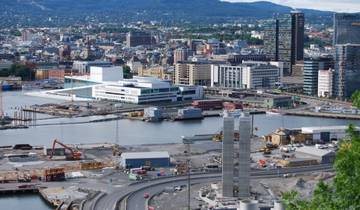
5 days
Norway in a Nutshell (Oslo to Bergen via Flam)
- ✓ Comprehensive Norway tour
- ✓ Expert local guides included
- ✓ All accommodation arranged
- ✓ Transportation provided
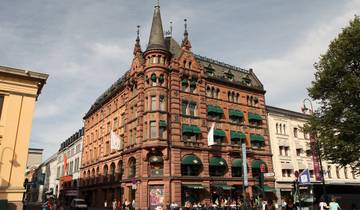
9 days
Best of Norway
- ✓ Comprehensive Norway tour
- ✓ Expert local guides included
- ✓ All accommodation arranged
- ✓ Transportation provided
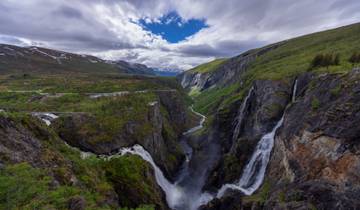
7 days
The beautiful Norway End Oslo
- ✓ Comprehensive Norway tour
- ✓ Expert local guides included
- ✓ All accommodation arranged
- ✓ Transportation provided
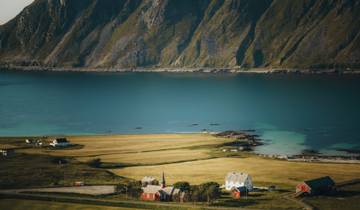
8 days
Trip Through the Lofoten Islands
- ✓ Booking needs min. 2 travelers
Multi-day tour packages powered by TourRadar. Prices and availability subject to change.
Introduction: Understanding Norway in a Nutshell
Norway in a Nutshell emerged not from ancient travel routes but from modern recognition of Norway’s unique geography and the transportation networks developed to navigate it. The concept crystallized in the 1990s when tourism authorities realized that various existing transport connections could be marketed as a single cohesive journey. Rather than inventing new infrastructure, the route cleverly links the Bergen Railway—Norway’s engineering triumph connecting the country’s two largest cities—with the Flåm Railway, regional ferries, and bus services to create a circular journey through landscapes that epitomize Norwegian nature.
The genius of the Norway in a Nutshell concept lies in its packaging of what might otherwise remain disconnected experiences. The Hardangervidda crossing, the Flåm Railway descent, the Nærøyfjord cruise, and the mountain bus journey each represent significant attractions individually. Combined into one flowing itinerary, they create a comprehensive introduction to Western Norway’s defining characteristics: the contrast between high plateaus and deep fjords, the engineering solutions required to connect communities across brutal terrain, and the cultural adaptations that allowed human settlement in one of the world’s most challenging environments.
While marketed primarily to international visitors, the route also serves practical transportation needs for local communities. The Flåm Railway, though now predominantly tourist-focused, was built to connect the isolated Flåm valley with the main Bergen-Oslo line. Ferry services across Aurlandsfjord and Nærøyfjord maintain connections between villages inaccessible by road. This dual function—serving both travelers seeking beauty and residents requiring transportation—adds authenticity to the journey, distinguishing it from purely touristic routes created solely for visitor consumption.
The name “Norway in a Nutshell” suggests a condensed essence, and indeed the route captures fundamental elements of Norwegian geography and culture. The journey moves through distinct landscape zones—from the windswept Hardangervidda plateau, across Europe’s highest mainland railroad, down through increasingly vegetated valleys, to the protected waters of the inner fjords. This vertical transect, compressed into hours rather than days, provides understanding of how topography shapes Norwegian life, from the isolated mountain farms clinging to valley sides to the fjord-side communities that historically connected only by boat.
The Route Components: A Journey in Four Acts
The complete Norway in a Nutshell experience divides into four distinct segments, each offering unique perspectives on Norwegian landscapes and each utilizing different transportation modes suited to the terrain being traversed.
The Bergen Railway: Crossing the Roof of Norway
The journey typically begins with the Bergen Railway, connecting Bergen on the western coast with Oslo in the east. This line, completed in 1909 after decades of construction challenges, represents one of Europe’s great railway achievements. The 496-kilometer route climbs from sea level in Bergen to 1,237 meters at Finse, crossing the Hardangervidda plateau before descending toward Oslo. For Norway in a Nutshell travelers, the western section from Bergen to Myrdal provides the essential experience.
The ascent from Bergen begins through valleys that quickly transition from coastal vegetation to subalpine forest. The train passes Voss, a regional center known for its lake and surrounding mountains, before beginning the serious climb toward Myrdal. This section showcases Norwegian railway engineering at its most impressive, with the line winding through valleys, crossing bridges over plunging gorges, and spiraling through tunnels to gain elevation. The landscape progressively opens, trees become stunted and sparse, and eventually give way entirely to the treeless expanse of the high plateau.
Near Finse, the train crosses the highest elevation on any railway line in Northern Europe. Here the landscape becomes genuinely arctic, with permanent snowfields, glacier-carved valleys, and a climate harsh enough that the railroad maintains heated switches and special snow-clearing equipment. On clear days, the Hardangerjøkulen glacier dominates the western horizon, its ice cap covering 73 square kilometers and feeding numerous outlet glaciers that flow into surrounding valleys.
The psychological impact of the Bergen Railway extends beyond mere scenery. Passengers experience the transition from populated coastal valleys to genuinely wild terrain where human presence becomes minimal. Small stations like Finse and Hallingskeid serve tiny communities and provide access to wilderness hiking areas. The plateau section, particularly, conveys the scale of Norwegian nature—a vast, treeless expanse where weather can shift rapidly from sunshine to blizzard even in summer, and where reindeer still migrate across traditional routes.
The Flåm Railway: Engineering Triumph and Scenic Wonder
At Myrdal station, 867 meters above sea level, passengers transfer to the Flåm Railway for the descent into Flåm valley. This 20-kilometer line, completed in 1940 after 17 years of construction, descends 863 meters through a landscape of increasing drama. The railway’s engineering challenges were formidable—hand-drilling 20 tunnels through solid rock, constructing the line on gradients that pushed the limits of adhesion railway technology, and creating a route that could operate safely in a valley prone to avalanches and rockfalls.
The descent begins through relatively open terrain, but as the train progresses, the valley walls close in and steepen. The track follows a serpentine course, frequently disappearing into tunnels that spiral inside the mountain to lose elevation, then emerging at lower levels to reveal transformed views. Waterfalls become increasingly prominent—the Rjoandefossen cascade plunges 140 meters in a series of steps, while countless smaller falls emerge from cliff faces and hanging valleys.
The railway’s most famous feature appears roughly halfway through the journey at Kjosfossen waterfall. Here the train makes a scheduled stop, allowing passengers to disembark and walk to viewing platforms where the waterfall plummets 93 meters in a thundering cascade. During summer, performers sometimes stage a presentation featuring the Huldra, a figure from Norwegian folklore said to inhabit these remote places. The stop, while tourist-oriented, provides genuine appreciation of the waterfall’s power and the valley’s acoustic properties—the roar of water reverberates from the enclosing walls, creating an immersive sound environment.
As the train continues its descent, the valley floor gradually widens. Vegetation changes from the sparse subalpine growth near Myrdal to increasingly lush forests and eventually to pastoral farmland. Historic mountain farms cling to valley sides, their buildings representing centuries of adaptation to steep terrain. The Otternes farm, visible from the railway, maintains traditional architecture and demonstrates how farmers created terraced fields and built stone walls to maximize usable land in vertical terrain.
The final approach to Flåm reveals the village nestled at the valley mouth where the Flåm River meets the Aurlandsfjord. The elevation change from Myrdal to Flåm—863 meters over just 20 kilometers—creates visual drama that builds throughout the hour-long journey. Passengers experience not just changing scenery but the sensation of descending into progressively different climate zones, from the exposed heights of Myrdal to the sheltered fjord environment of Flåm.
The Fjord Cruise: Navigating UNESCO Waters
From Flåm, ferries depart for the journey through Aurlandsfjord and Nærøyfjord to Gudvangen. This two-hour cruise represents the journey’s emotional centerpiece, offering intimate engagement with landscapes that define Norway’s global image. The vessels navigate narrow waterways flanked by mountains rising vertically from the water, creating corridors of dramatic proportions.
Aurlandsfjord, the initial segment, extends 29 kilometers from its junction with the main Sognefjord to Flåm. While impressive, it serves as a prelude to Nærøyfjord, considered by many as Norway’s most beautiful fjord branch. Nærøyfjord, designated a UNESCO World Heritage Site along with neighboring Geirangerfjord in 2005, narrows to just 250 meters at its tightest point, with mountains rising 1,400 meters directly from the water. This extreme verticality creates a sense of enclosure and scale difficult to comprehend from photographs.
The ferry’s slow pace—cruising at just 10-12 knots—allows detailed observation of the fjord environment. Waterfalls cascade from hanging valleys, some plunging directly into the fjord while others fracture against cliff faces in veils of spray. Historic farms perch on narrow ledges, accessible only by boat until relatively recently. The most famous, Bakka, sits on a terrace 50 meters above the water, its red buildings contrasting against the gray stone cliffs. These farms represent extraordinary human determination—families cultivated tiny fields, kept livestock, and maintained self-sufficient lives in locations that seem impossibly remote and challenging.
The fjord cruise offers perspective on geological processes that created this landscape. The fjords themselves are drowned glacial valleys, carved by ice sheet expansion during multiple glacial periods over the past 2.6 million years. The U-shaped valley profile, vertical walls, and extreme depth—Nærøyfjord reaches 500 meters in places—all reflect glacial erosion’s power. Hanging valleys, where smaller glaciers joined the main valley glacier, now host waterfalls cascading from heights that correspond to the difference in erosive power between the main and tributary glaciers.
Wildlife occasionally appears along the fjord cruise. White-tailed eagles nest on cliff ledges, and sharp-eyed passengers might spot these massive birds circling on updrafts. Seals haul out on rocky shores near Bakka. In the water, porpoises sometimes surface, though fjord conditions—cold, deep water with limited tidal movement—support less marine life than coastal areas. The predominant experience remains the relationship between water, stone, and sky—elements combined with such purity and scale that the fjord environment achieves almost abstract quality.
The cruise terminates at Gudvangen, a tiny village at the Nærøyfjord’s head. Situated where the Nærøy River enters the fjord, Gudvangen occupies one of few flat areas in the surrounding landscape. The village’s name derives from Old Norse and reflects its ancient role as a trading center—the fjord provided the only practical transportation route before modern road construction. Today Gudvangen serves primarily as a transfer point for Norway in a Nutshell travelers, though it also hosts a reconstructed Viking village that interprets the region’s early medieval history.
The Mountain Road: Conquering Stalheimskleiva
From Gudvangen, buses transport passengers toward Voss via one of Norway’s most dramatic road sections. The route climbs from the Nærøyfjord’s head through the Nærøy valley before tackling Stalheimskleiva, a road segment that achieves legendary status among driving enthusiasts and engineering historians.
Stalheimskleiva, constructed between 1842 and 1846, climbs 300 meters in just 1.5 kilometers through thirteen hairpin turns. The gradient reaches 18% in sections—steep enough that the road remained closed to motor traffic until 1955, when road improvements and better vehicle technology made regular bus service possible. Today the road operates only during summer months; winter snow and ice make it impassable, requiring a longer route through tunnels during colder months.
The ascent provides spectacular views back down the valley, with Stalheimsfossen and Sivlefossen waterfalls visible plunging from the cliffs above the road. At each hairpin turn, new perspectives emerge on the valley’s glacially-carved profile and the settlements below. The engineering challenges of maintaining this road remain significant—retaining walls support sections prone to collapse, and drainage systems prevent water from undermining the roadbed. The Norwegian Public Roads Administration considers Stalheimskleiva a cultural heritage monument, maintaining it with traditional techniques where possible while ensuring modern safety standards.
Beyond Stalheimskleiva, the road descends through increasingly populated landscapes toward Voss. This agricultural valley, protected somewhat from coastal weather, has supported farming communities for centuries. The landscape softens, with cultivated fields replacing the wild character of the fjord zones. Lake Vangsvatnet appears, its shores lined with farms and the town of Voss spreading across the valley floor.
From Voss, travelers complete the loop either by returning to Bergen via the Bergen Railway or continuing to Oslo. Voss itself warrants exploration—a regional center with a medieval stone church, adventure sports offerings, and museums interpreting local history and culture. The bus journey from Gudvangen to Voss typically includes a stop at Stalheim Hotel, where viewing platforms provide panoramic perspectives of the valley system and waterfall-streaked cliffs.
The UNESCO Heritage Context: Nærøyfjord and Geirangerfjord
Nærøyfjord’s inclusion in the Norway in a Nutshell itinerary carries significance beyond its dramatic beauty. The 2005 UNESCO World Heritage designation of the West Norwegian Fjords—comprising Nærøyfjord and Geirangerfjord along with their surrounding landscapes—recognized these areas as outstanding examples of fjord landscapes created by successive glaciations.
The UNESCO criteria cited for inscription emphasize the fjords’ exceptional natural beauty and their representation of ongoing geological processes. The designation specifically notes the “unique assemblage of fjord scenery,” characterized by narrow, cliff-walled waterways, numerous waterfalls, and free-flowing rivers. The fjords demonstrate earth’s climate history through their formation, with the current landscape representing a temporary stage in ongoing geological evolution.
Conservation challenges identified in the UNESCO nomination included balancing tourism development with landscape preservation, managing cruise ship impacts, and maintaining the agricultural character of historic farms. Nærøyfjord particularly faces pressure from increasing visitor numbers, with ferry traffic regulated to prevent environmental damage and maintain the experience quality that attracted World Heritage designation. The Norway in a Nutshell route, while contributing to visitor numbers, also provides economic justification for maintaining traditional ferry services and preserving the cultural landscape.
The UNESCO designation encompasses not just natural features but also the cultural landscape—the pattern of farms, paths, stone walls, and traditional buildings that document centuries of human adaptation to extreme terrain. These elements transform the fjords from merely geological features into landscapes shaped by the interaction between nature and human culture, adding interpretive depth to the visual spectacle.
Photography and Visual Documentation
Norway in a Nutshell presents exceptional photography opportunities, though capturing the landscape’s scale and drama challenges even experienced photographers. Each segment of the journey demands different approaches and techniques.
Railway Photography Techniques
The Bergen Railway and Flåm Railway offer window photography opportunities with distinct challenges. Train motion requires fast shutter speeds—1/500 second minimum—to avoid blur. Shooting through train windows introduces reflections and distortion; polarizing filters reduce reflections, while positioning the lens directly against the glass minimizes both issues. The Flåm Railway’s frequent tunnel passages create exposure challenges as light levels fluctuate dramatically. Setting cameras to manual exposure and choosing settings for exterior scenes prevents constant readjustment.
The Kjosfossen stop on the Flåm Railway allows tripod photography and longer compositions. The waterfall’s power, especially during spring melt, creates spray that can damage equipment; waterproof camera covers or plastic bags provide protection. Multiple exposures at different shutter speeds—from 1/500 second to freeze water motion to one second or longer to create silk-effect—offer creative options. Wide-angle lenses (16-35mm range) capture both waterfall and surrounding cliff context.
Fjord Cruise Photography
Ferry decks provide 360-degree access but also challenge photographers with vessel motion, spray, and variable lighting. Image stabilization becomes essential, either in-camera or through lenses. The bright sky relative to shadowed fjord walls creates dynamic range challenges—graduated neutral density filters or HDR techniques help balance exposures. Shooting in RAW format preserves maximum information for post-processing.
Compositional approaches should emphasize the fjord’s verticality and scale. Including foreground elements—the ferry’s railing, other passengers, or deck features—provides scale reference. The narrow fjord sections create natural framing, with mountains on both sides directing attention toward distant features. Waterfalls, farms, and villages punctuate the journey; telephoto lenses (70-200mm) allow isolating these elements against the expansive cliffs.
Light quality varies dramatically with weather and time of day. Summer’s extended daylight means the journey can occur during golden hour—the hours after sunrise or before sunset when light becomes warm and directional. Overcast conditions, while reducing contrast and color saturation, eliminate harsh shadows and can enhance waterfalls’ appearance. Fog and low clouds add atmospheric drama, though they obscure distant features.
Stalheimskleiva and Mountain Road Photography
The hairpin turns and elevated perspectives of Stalheimskleiva enable dramatic landscape compositions. Wide-angle lenses capture the road’s serpentine character in single frames, emphasizing the engineering achievement. Shooting from the bus proves difficult due to motion and window reflections; requesting stops at designated viewpoints provides better opportunities.
The valley views from Stalheimskleiva’s upper reaches reward careful composition. Telephoto lenses compress the stacked landscape layers—valley floor, waterfalls, and distant mountains—while wide-angles emphasize foreground elements and sky. Stalheimsfossen and Sivlefossen waterfalls appear small relative to the cliff scale; telephoto focal lengths (100-200mm) allow more prominent inclusion in compositions.
Seasonal Variations and Optimal Timing
Norway in a Nutshell operates year-round, but seasonal changes dramatically transform the experience. Understanding these variations helps travelers align their journey with specific interests and tolerance for weather variability.
Summer: Peak Season Excellence
June through August represents peak season, offering maximum daylight, warmest temperatures, and most frequent transportation connections. Summer’s extended daylight—24 hours at higher latitudes—means the journey from Bergen to Oslo can occur entirely in daylight even with early morning or late evening segments. Waterfalls achieve maximum volume during spring melt (May-June) but remain impressive throughout summer.
Weather stability, while better than other seasons, remains unpredictable in mountain areas. The Hardangervidda plateau can experience snow flurries even in July. Layered clothing and waterproof gear prove essential regardless of forecasts. Summer also brings maximum crowds—the Flåm Railway and fjord ferries fill to capacity, and popular viewpoints become congested. Advanced reservations become essential for preferred travel times.
Autumn: Color and Solitude
September and early October offer compelling alternatives to summer travel. Autumn colors transform the valleys—birch forests turn golden, mountain heather purples the high slopes, and the transition from summer to winter creates dramatic cloud formations. Crowds diminish substantially after mid-September, allowing more peaceful experiences. Waterfalls remain substantial from summer precipitation.
Daylight decreases rapidly during autumn—from 15 hours in early September to 10 hours by late October. This compression means some journey segments may occur in twilight or darkness, though modern lighting on trains and ferries maintains safety and some visibility. Weather becomes more variable, with increased precipitation and occasional early snow at higher elevations. The Stalheimskleiva road typically closes in late October, requiring the tunnel alternative route.
Winter: Nordic Wonderland
November through March transforms Norway in a Nutshell into a winter experience requiring different expectations and preparations. Snow covers mountains, valleys, and even occasionally the fjord edges. Frozen waterfalls create ice sculptures, and the landscape achieves austere beauty. Limited daylight—6-7 hours in December-January—means some segments occur in darkness, though the potential for Northern Lights adds unexpected drama.
Winter operations include heated ferries with interior seating, though viewing remains possible from enclosed deck areas. The Flåm Railway operates heated cars with good visibility. The Bergen Railway crosses snow-covered Hardangervidda with views of endless white plateau and distant glaciers. Transportation schedules reduce frequency, and weather can cause delays or cancellations. The Stalheimskleiva road remains closed, with buses using the longer tunnel route.
Winter travel rewards those seeking solitude and atmospheric conditions. Visitor numbers drop dramatically, creating opportunities for contemplative experiences. Snow-laden landscapes photograph beautifully, especially during the brief hours of low-angle winter light. However, travelers must accept reduced visibility, potential schedule disruptions, and weather that can range from crystalline clarity to blizzard conditions.
Spring: Awakening and Waterfalls
April and May mark transition from winter dormancy to summer growth. Snow melts at lower elevations while remaining deep in the mountains, creating maximum waterfall flow. The combination of melting snow and spring precipitation sends waterfalls thundering over cliffs at volumes several times their summer levels. Kjosfossen and the Nærøyfjord cascades achieve spectacular power.
Weather remains highly variable—sunny days alternate with rain, snow, and rapid transitions between conditions. Daylight increases rapidly, from 12 hours in early April to 17 hours by late May. Spring colors emerge gradually, with valleys greening while mountains remain winter-white. Crowds remain moderate through April, increasing as May progresses toward peak season. The Stalheimskleiva road typically reopens in late May, though the exact timing depends on snow conditions and maintenance needs.
Cultural and Historical Context
Understanding the cultural landscape enriches the Norway in a Nutshell journey beyond pure scenic appreciation. Each component of the route reflects specific aspects of Norwegian history, from ancient settlement patterns to 20th-century engineering ambitions.
The Railway Age in Norway
The Bergen Railway and Flåm Railway represent different phases of Norway’s railway development. The Bergen line, completed in 1909, embodied national ambitions to unite Norway’s two major cities despite the geographical barrier of the Hardangervidda plateau. The project required 20 years of construction, cost 65 million kroner—an enormous sum for the period—and overcame challenges that had made earlier engineers declare the route impossible.
The railway’s completion transformed Norwegian commerce and culture. Bergen, historically oriented toward maritime trade, gained direct connection to Oslo and continental Europe. Mountain communities like Finse, previously accessible only by difficult foot or ski routes, received year-round connection to the outside world. The symbolic importance matched the practical benefits—the railway demonstrated Norwegian engineering competence and national unity following independence from Sweden in 1905.
The Flåm Railway emerged from different motivations. Flåm valley remained isolated until the 1920s, accessible only by boat to Sognefjord or by strenuous mountain tracks. Local communities lobbied for connection to the national railway network. Construction began in 1923, employing techniques innovative for the era—including drilling tunnels that spiral inside mountains to lose elevation without excessive surface gradient. The line’s completion in 1940, just weeks before German invasion, came too late to serve its original purpose of improving valley economic connections. Instead, the Flåm Railway became predominantly tourist-oriented, achieving international fame for scenic and engineering qualities rather than practical transportation.
Fjord Settlement Patterns
The farms visible during the Nærøyfjord cruise represent centuries of human adaptation to extreme terrain. Settlement began during the Viking Age and Medieval period, when communities established farms on any terrain offering access to water, pasture, and cultivable land. The fjord farms typically operated on a three-tier system: waterfront buildings for boat access and fishing, mid-slope areas for crops and hay, and mountain summer farms (seter) where livestock grazed high pastures during summer months.
This vertical transhumance—moving livestock between elevations to exploit different growing seasons—characterized Norwegian mountain farming until the mid-20th century. Families spent winters at the main farm, then in late spring moved livestock and family members to mountain summer farms where alpine grasses provided rich grazing. Children often accompanied mothers to the seter, learning traditional dairy skills and experiencing the intense work of mountain summer farming. This practice largely ceased after World War II as younger generations moved to cities and modern farming techniques made lowland operations more productive.
Many fjord farms abandoned between 1900-1950 now operate as museums or tourist accommodations, preserving traditional buildings and demonstrating historical farming practices. The most accessible, Otternes farm in Flåm valley, maintains 27 buildings dating from the 1700s-1800s, showing the complete infrastructure of a prosperous mountain farm. These preserved farms provide tangible connection to the cultural landscape that UNESCO designation seeks to protect—not just scenery but evidence of how communities adapted to and shaped their environment.
The Tourism Evolution
Western Norway’s transformation from subsistence farming region to tourist destination began during the 19th century Romantic movement. European and British travelers “discovered” Norwegian fjords, writing accounts that emphasized the sublime—nature’s power to inspire awe and even fear. Early tourists traveled by coastal steamer to Bergen, then by smaller vessels into the fjords, experiencing journeys that required days and considerable physical hardship.
The Bergen Railway’s 1909 completion made Western Norway more accessible, though reaching the inner fjords still required boat connections. Flåm developed as a cruise ship destination after World War II, with vessels navigating Sognefjord to allow shore excursions up the Flåm Railway. The Norway in a Nutshell package emerged in the 1990s, synthesizing existing transportation into a marketed experience designed for international tourists unfamiliar with Norwegian geography.
This evolution raises questions about authenticity and preservation. The route’s success brings economic benefits to rural communities but also changes their character. Flåm transformed from a farming village of a few hundred to a tourist hub receiving hundreds of cruise ships annually. Balancing tourism’s economic importance with cultural preservation and environmental protection remains an ongoing challenge, reflected in debates about cruise ship limits, ferry regulations, and development restrictions in heritage areas.
Planning Variations and Extensions
While the classic Norway in a Nutshell route follows a defined path, numerous variations allow customization based on interests, time availability, and starting location.
Direction and Starting Points
The journey works equally well in either direction—Bergen to Oslo or Oslo to Bergen. Starting in Bergen allows experiencing the Flåm Railway’s descent during the journey’s first half, when energy and attention remain high. Beginning in Oslo means the Flåm descent becomes the climax rather than the opening act. Neither approach proves definitively superior; the choice often depends on other itinerary factors.
Some travelers begin and end in the same city, creating a true circular route. The Bergen-Bergen loop allows experiencing the entire journey in one long day (departing early morning, returning late evening) or over multiple days with overnight stops. This approach works well for those based in Bergen for several days who want to explore the fjord region without changing accommodations.
Overnight Stops and Extended Journeys
Single-day completion, while possible, creates a rushed experience. Adding one or more overnight stops transforms the journey into deeper exploration. Flåm serves as the most logical stop—positioned at the journey’s midpoint with accommodation options ranging from hostels to luxury hotels. A Flåm overnight allows evening walks through the valley, sunrise photography, and time for additional activities like kayaking or cycling the valley roads.
Aurland, located between Flåm and Gudvangen on the fjord, offers a quieter alternative. This small village provides access to the Stegastein viewpoint—a dramatic cantilevered platform projecting from the mountainside 650 meters above Aurlandsfjord—and the scenic Aurlandsfjellet mountain road. Voss attracts active travelers interested in paragliding, rafting, or winter sports.
Extended variations include side trips to additional fjord branches, glacier walks, or mountain hikes. The Sognefjord, Norway’s longest and deepest fjord, extends 204 kilometers from the coast to Skjolden. Exploring additional branches requires extra days but provides more comprehensive understanding of fjord geography and culture. The Jostedalsbreen glacier, Europe’s largest mainland glacier, lies within reach of the Norway in a Nutshell route with appropriate time allocation.
Active Additions
Adventure-oriented travelers incorporate active experiences into the Norway in a Nutshell framework. Hiking options range from gentle valley walks to challenging mountain routes. The Flåm valley offers multiple trails, including the Brekkefossen waterfall hike and routes to mountain farms. More ambitious hikers tackle the Aurlandsdalen valley, a 20-kilometer wilderness route that descends from the high plateau to Aurland.
Cycling the Flåm valley roads or the Rallarvegen—a historic navvy road following the Bergen Railway—appeals to those wanting self-propelled exploration. Kayaking on the fjords provides intimate water-level perspectives and access to quiet coves inaccessible to larger vessels. These active additions require additional days and different gear but reward with experiences unavailable to railway and ferry passengers.
Practical Considerations for International Travelers
Booking and Reservations
While walk-up tickets exist for most Norway in a Nutshell components, advance booking proves strongly advisable during peak season (June-August). The Flåm Railway sells out regularly during summer midday hours. Ferry services maintain capacity limits to manage UNESCO heritage protection requirements. Booking through the official Norway in a Nutshell operator (operated by Fjord Tours) or Norwegian State Railways (Vy) secures coordinated connections and reduces stress about missing transfers.
Package bookings include reserved seats on all segments and coordinated schedules ensuring reasonable connection times. Individual bookings require more careful planning—Norwegian train and ferry schedules sometimes change, and tight connections can create anxiety or force rushed transitions. The flexibility of independent booking appeals to experienced travelers comfortable with Norwegian transportation systems and willing to accept occasional schedule adjustments.
Luggage Management
The Norway in a Nutshell journey involves multiple transfers—from train to train, train to ferry, ferry to bus. Large luggage becomes burdensome, especially during short connection times. Pack as minimally as possible, ideally using carry-on sized bags. Some travelers completing multi-day versions ship luggage ahead to final destinations using Norwegian postal luggage services, traveling with only day packs.
Luggage storage exists at major stations (Bergen, Oslo, Voss) but not at smaller stops like Myrdal or Gudvangen. Planning overnight stops requires bringing luggage for those segments. The Flåm Railway accommodates luggage in designated areas, and ferries provide luggage space, but neither offers porter service—travelers manage their own bags throughout.
Weather Preparation
Norwegian mountain weather changes rapidly and often. Even summer journeys can experience rain, wind, and temperature variations from 5°C to 25°C depending on elevation. Layered clothing—base layers, insulating mid-layers, and waterproof outer layers—proves essential regardless of forecast. Good waterproof jackets and pants protect during ferry deck time and outdoor viewpoints.
Footwear should emphasize comfort and water resistance. Ferry decks can become wet from spray, and outdoor stops often involve walking on wet surfaces. Hiking boots prove unnecessary for the standard journey, but water-resistant walking shoes or trail runners serve well. Bring sun protection even on cloudy days—reflection from water and snow can cause sunburn at higher elevations despite overcast conditions.
Environmental Awareness and Sustainable Travel
Norway in a Nutshell’s popularity creates environmental pressures that travelers should understand and help mitigate. The UNESCO designation of Nærøyfjord reflects not just its beauty but its vulnerability to human impact.
Ferry Traffic Management
Nærøyfjord ferry traffic faces regulation to prevent environmental damage. Too many vessels create wakes that erode shorelines, disturb wildlife, and generate noise pollution in the narrow fjord environment. Authorities balance tourism economic benefits against environmental protection by limiting cruise ship entries, regulating ferry speeds, and setting emission standards.
The newer ferries operating on the Nærøyfjord route meet strict environmental standards, with some using hybrid electric-diesel systems that reduce emissions and noise. These vessels also feature waste management systems that prevent discharge into the fjord. As a passenger, support these efforts by choosing operators committed to environmental standards and avoiding behaviors like littering or disturbing wildlife.
Leave No Trace Principles
Norway operates under “allemannsretten”—the right to roam—which grants public access to nature regardless of land ownership. This traditional freedom comes with responsibility to leave places undisturbed. At stops like Kjosfossen or Stalheim viewpoints, stay on designated paths to prevent erosion. Carry out all trash, even organic waste like apple cores or banana peels that seem biodegradable but don’t belong in these ecosystems.
Photography, while encouraged, should never endanger yourself or disturb the environment. Resist the temptation to venture off safe viewing platforms for “better” shots—the landscape’s scale makes reaching different positions futile, and the risk of falls or environmental damage outweighs marginal photographic improvements.
Supporting Local Communities
Choose accommodations and services that benefit local communities rather than international chains. In Flåm and Aurland, family-run hotels, guesthouses, and restaurants provide authentic experiences while keeping tourism revenue within the region. Purchasing local crafts and foods supports traditional skills and agricultural practices that maintain the cultural landscape UNESCO seeks to preserve.
Respect the fact that while these areas serve tourism, they remain home to year-round residents. Farms visible from the ferry are working operations, not theme parks. Noise travels far in the fjord environment—loud conversations on ferry decks or train platforms disturb both locals and other travelers seeking peaceful nature experiences.
Frequently Asked Questions
Can the Norway in a Nutshell journey be done independently without a tour package?
The journey can absolutely be completed independently by booking individual train, ferry, and bus segments through Norwegian transportation providers. The Vy railway website offers Bergen Railway and Flåm Railway tickets, while ferry companies like The Fjords operate the cruise segments. Independent booking offers flexibility to adjust schedules and add side trips but requires more planning to coordinate connections. Package bookings through Fjord Tours or similar operators provide guaranteed coordinated schedules and sometimes cost savings through bundled tickets. Independent travelers should build connection buffers into schedules—Norwegian transportation runs reliably but delays can occur, especially in adverse weather. Research current schedules carefully, as some ferry and bus routes operate less frequently outside peak season. Independent booking works best for travelers comfortable with Norwegian language basics and willing to problem-solve if schedules change.
What is the most scenic section if time only allows experiencing part of the route?
If limited to a single segment, the Flåm Railway combined with the Nærøyfjord cruise provides the most concentrated scenic impact. These two segments can be experienced as a half-day trip from Bergen or as a day trip with an early start. The Flåm Railway’s descent captures the drama of Norway’s vertical landscape—the transition from plateau to fjord in 20 kilometers—while the Nærøyfjord cruise offers UNESCO-protected fjord scenery at its most impressive. Together, these segments require approximately four hours (one hour down on the railway, two hours on the fjord cruise, plus connection time). This combination works well for cruise ship passengers with Bergen port calls or travelers based in Bergen with limited time for fjord exploration. The Bergen Railway and Stalheimskleiva road, while scenic, offer experiences more similar to other mountain train routes and roads, whereas the Flåm Railway’s engineering uniqueness and Nærøyfjord’s extreme narrowness create truly distinctive encounters.
How does Norway in a Nutshell compare to other famous scenic railway journeys?
Norway in a Nutshell differs from classic scenic railways like the Glacier Express or Trans-Siberian Railway through its multi-modal nature and compressed geography. Rather than a single long train journey, it combines rail, water, and road transport to showcase landscape diversity within a compact distance. The Flåm Railway portion, while shorter than famous alpine routes, achieves extraordinary gradient and scenic concentration. Its engineering—completed without rack-and-pinion systems despite 5.5% average gradient—represents remarkable achievement. The fjord cruise component has no equivalent on traditional railway journeys, providing the water-level perspective that distinguishes Norwegian geography. Comparisons to routes like Switzerland’s Bernina Express or Glacier Express find similarities in mountain scenery but differences in scale—Norwegian landscapes emphasize vertical drama and water presence rather than Alpine routes’ emphasis on high-altitude panoramas and glacier views. The closest comparison might be the Scottish West Highland Line, which similarly combines mountain and water scenery, though Norway in a Nutshell’s engineered gradient changes exceed the Scottish route’s more gradual elevations.
Are there wheelchair accessible options for mobility-limited travelers?
Accessibility varies across the journey’s different segments. Modern Vy trains on the Bergen Railway feature wheelchair spaces, accessible toilets, and staff assistance for boarding. The Flåm Railway presents more challenges—the historic rolling stock, while maintaining authentic character, offers limited wheelchair access, with assistance required for boarding. However, several carriages include spaces for wheelchairs, and staff provide boarding help. Ferry services maintain wheelchair accessibility with ramps and designated viewing areas, though some outdoor deck access may prove difficult depending on mobility level. The bus segment from Gudvangen to Voss uses modern coaches with limited accessibility—wheelchair users may need to transfer to regular seats with assistance. Several tour operators offer specialized Norway in a Nutshell variations for mobility-limited travelers, with adapted vehicles and modified itineraries. Contact operators in advance to arrange assistance and verify current accessibility features. Some wheelchair users complete the journey successfully with advance planning and realistic expectations about challenges, while others choose modified routes emphasizing the most accessible segments.
What language barriers might English-speaking travelers encounter?
English speakers encounter minimal language barriers throughout Norway in a Nutshell. English proficiency in Norway ranks among the world’s highest, and tourism industry workers speak English fluently. Train announcements, ferry information, and signage appear in Norwegian and English. Station staff, ticket agents, and tour guides communicate effectively in English. Restaurant menus in tourist areas include English translations, and most Norwegian travelers speak English well enough to provide directions or assistance if needed. The main language challenge involves reading local timetables or understanding announcements during unexpected disruptions, though staff quickly shift to English when assisting international visitors. Learning basic Norwegian phrases—”takk” (thank you), “unnskyld” (excuse me), “hjelp” (help)—shows courtesy but isn’t necessary for successful travel. Norwegian language uses three additional letters (æ, ø, å) that sometimes confuse English speakers trying to pronounce place names, but pointing at written names or using English pronunciation usually works fine. Overall, English speakers can navigate the entire journey without serious communication difficulties, making Norway one of the world’s easiest non-English countries for travel.
How crowded does the journey become during peak summer season?
Peak season crowding (July-August particularly) affects different segments variably. The Flåm Railway reaches capacity regularly, with trains departing full during midday hours. Advanced reservations guarantee seats, but walk-up travelers during peak hours may face waits for later departures. The trains themselves, while full, maintain comfort—standing isn’t permitted, so capacity limits ensure all passengers have seats. Fjord ferries similarly fill during popular departure times, though multiple vessels operate and capacity somewhat exceeds the railway’s. Deck space can feel crowded at narrow fjord sections where passengers congregate for photography, but interior seating areas maintain comfort. Bus segments from Gudvangen typically match ferry arrivals, avoiding overflow situations. The most significant crowding occurs at specific viewpoints—Kjosfossen waterfall stop, Stalheim viewpoint, ferry photo positions—where hundreds of visitors may gather simultaneously for limited time. These moments of congestion prove temporary; once back aboard transport, personal space returns. Travelers seeking less crowded experiences should consider shoulder seasons (May-June, September) when visitor numbers drop by 30-40% while most scenic qualities remain excellent. Early morning or late afternoon departures during peak season also encounter fewer crowds than midday popular times.
What facilities exist for children and families traveling the route?
Norway in a Nutshell accommodates families well, though parents should consider children’s age and temperament before committing to the full journey. The 8-12 hour complete route challenges younger children’s attention spans, making overnight breaks advisable for families with children under 10. Trains and ferries provide restroom facilities, and most tourist stops include cafés or restaurants. However, extended segments between facilities require planning—the Flåm Railway and fjord cruise each span 1-2 hours without stops. Bring snacks and entertainment for children during these periods. The journey’s constant scenic changes help maintain children’s interest better than single-mode long-distance travel, and elements like the Kjosfossen waterfall stop provide breaks from seated travel. Family-specific concerns include safety on ferry decks—railings meet safety standards but supervise children near water. Station transfers sometimes involve stairs without elevators, making strollers potentially burdensome; baby carriers prove more practical. Many Norwegian families complete the journey with children, indicating it’s feasible with appropriate expectations. Consider abbreviated versions for younger children—perhaps just the Flåm Railway and fjord cruise—rather than forcing the complete route. Children interested in trains, boats, and natural scenery often find the journey fascinating, while those requiring constant stimulation or prone to motion sickness may struggle with extended water and rail travel.
Can the journey be combined with other Norwegian destinations and experiences?
Norway in a Nutshell integrates well into broader Norwegian itineraries. Bergen warrants 2-3 days exploration for its UNESCO Bryggen wharf, Hanseatic history, fish markets, and surrounding mountain access via Fløyen and Ulriken cable cars. From Bergen, the Sognefjord system extends far beyond the Norway in a Nutshell route—destinations like Balestrand, Luster, and Skjolden offer additional fjord experiences and access to the Jostedalsbreen glacier. Oslo combines with the journey through the Bergen Railway, allowing travelers to experience Norway’s capital before or after the fjord region. The Geirangerfjord, another UNESCO World Heritage Site, lies north of the Norway in a Nutshell route and can be reached via Stryn and the dramatic mountain road over Trollstigen. These combinations typically require 7-14 days for adequate pacing. Seasonal considerations affect combination possibilities—winter travel limits some mountain roads and reduces ferry services, while summer’s extended daylight and full transportation schedules enable more ambitious itineraries. Budget-conscious travelers might combine the journey with rural farmstay accommodations or camping, both popular in Norway. Adventure travelers add hiking sections like the Aurlandsdalen valley trek or cycling the Rallarvegen. The journey’s central Norwegian location makes it a logical midpoint in south-to-north itineraries combining Oslo, Bergen, and potentially Trondheim or Lofoten Islands for extended trips.
What wildlife might be observed during the journey?
Wildlife observations remain unpredictable but possible throughout Norway in a Nutshell. White-tailed eagles, reestablished in Norwegian coastal areas after near-extinction, nest along fjord cliffs and sometimes soar past ferries or perch on rocky outcrops visible from trains. These massive raptors, with wingspans reaching 2.5 meters, represent one of Europe’s most impressive birds of prey. Arctic terns dive for fish in fjord waters during summer, their aggressive defense of nesting areas occasionally directing swooping passes at humans near colonies. Harbor seals haul out on rocky shores near Bakka and other quiet fjord coves, though ferry noise typically causes them to slip into water before vessels approach closely. Red deer inhabit forested areas visible from train windows, especially during early morning or evening segments when they emerge from cover to feed. The Hardangervidda plateau supports wild reindeer herds—Europe’s largest—though seeing them requires luck as the vast open terrain allows animals to remain distant. Mountain hares, turning white in winter and brown in summer, sometimes appear near the railway at higher elevations. Marine mammals like porpoises occasionally surface in fjord waters, though their presence remains irregular. Bird diversity increases during migration seasons (April-May, August-September) when shorebirds and waterfowl move through Norwegian waterways. Midges and mosquitoes appear during summer, especially in calm evening conditions near water—insect repellent proves advisable despite these pests not transmitting diseases in Norway. Overall, the journey prioritizes landscape over wildlife, but alert observers with binoculars enjoy occasional memorable animal encounters.
How does weather typically affect the journey and what contingencies exist?
Weather impacts Norway in a Nutshell primarily through visibility reduction rather than service cancellations. Low clouds can obscure mountain peaks and high waterfalls, reducing scenic impact during the Flåm Railway and Bergen Railway segments. Heavy rain decreases ferry deck comfort, sending most passengers inside, though this doesn’t prevent fjord viewing through large windows. Summer thunderstorms occasionally delay departures briefly but rarely cancel services. Winter snow and wind create more significant challenges—the Stalheimskleiva road closes from October through May, requiring longer routing through tunnels. Severe winter storms occasionally delay or cancel ferries, though these events remain relatively rare. The Bergen Railway operates year-round despite crossing exposed high-elevation terrain, with extensive snow-clearing equipment and heated switches enabling service continuation during blizzards. Contingencies include flexible ticket policies allowing rebooking during severe weather disruptions, though minor delays or visibility reductions don’t qualify for compensation. Travelers should maintain realistic expectations—Norwegian weather changes rapidly, and perfect conditions cannot be guaranteed. Often fog or clouds part during the journey, revealing spectacular scenery as reward for patience. Waterproof clothing and adaptability prove more valuable than schedule rigidity. The journey’s multi-day variations provide buffers—if weather closes in on day one, day two might deliver spectacular conditions. Checking forecasts helps set expectations but shouldn’t dictate decisions, as Norwegian weather forecasts struggle with accuracy beyond 24-48 hours given complex topography and maritime influences.