Huayna Picchu is a famous mountain in Peru, part of the Machu Picchu site. It reaches 2,720 meters (8,920 feet) high, giving amazing views of the Inca Citadel and the mountains. It’s a top spot for hiking, with steep paths and old Inca ruins.
Only 400 people can visit Huayna Picchu each day. This makes it a very popular choice for those exploring Machu Picchu.
Key Takeaways
- Huayna Picchu stands at an elevation of 2,720 meters (8,920 feet) above sea level.
- The hike to the summit can take 1.5 to 3 hours, depending on fitness level.
- The trail consists of approximately 1,200 steps carved into the mountain’s steep side.
- The climb is recommended for travelers 12 years and older, not suitable for young children or those with a fear of heights.
- The dry season, from late April to August, is the best time to hike Huayna Picchu.
- Contact us for a comfortable and personalized itinerary (Free Service)
Historical Significance and Location
Huayna Picchu is a sacred site for the Inca civilization. It’s located north of the main Machu Picchu complex. It was a key religious and administrative center for the Incas.
Sacred Mountain of the Incas
The Andean mountains around Machu Picchu were sacred to the Incas. Huayna Picchu was no different. Its view of the Urubamba River valley made it vital for the Incas.
The mountain’s slopes have intricate stone structures and terraces. This shows its deep cultural importance.
Geographic Position in Machu Picchu
Huayna Picchu is just north of Machu Picchu, offering a stunning view. This spot allowed the Incas to use it for both administration and religion. It gave them a great view of the Peruvian archaeology and landscape.
Cultural Importance
The stone structures and terraces on Huayna Picchu show the Incas’ engineering skills. This heritage still fascinates visitors and scholars. It gives us a peek into the advanced civilization that once lived here.


The Young Mountain’s Name Origins and Meanings
Huayna Picchu, also known as Wayna Picchu, is a stunning part of the Andean landscape. It’s near the famous Inca citadel of Machu Picchu. The name Huayna Picchu comes from the Quechua language, used by the Inca Empire. It means “Young Peak” or “Young Mountain” in English.
This name contrasts with Machu Picchu, which means “Old Mountain” in Quechua. The Inca people chose these names to show their deep respect for nature. They saw Huayna Picchu as the “young” counterpart to Machu Picchu, showing a sense of hierarchy and cultural importance.
The term “Inca terminology” and “Andean cultural” perspective give us a glimpse into the Inca’s holistic view. They deeply appreciated the sacred mountains that shaped their homeland.
The spelling “Wayna Picchu” is also used, as it’s closer to the original Quechua pronunciation. Locals in Cusco prefer it. But, the name Huayna Picchu is well-known for the natural wonder it represents. It attracts many visitors to Peru’s Quechua language and Inca heritage.
“The Inca people saw the natural world as a living, breathing entity, and their language and culture reflected this profound connection to the land.”
Elevation and Physical Characteristics
Nestled in the stunning Andean topography of Peru, Huayna Picchu mountain reaches an impressive elevation of 2,720 meters (8,920 feet) above sea level. It stands about 360 meters (1,180 feet) above Machu Picchu, giving visitors a stunning view of Peru.
Topographical Features
The mountain’s terrain is rugged and steep, with rocky slopes and dense vegetation. Narrow paths, terraces, and stone stairs were built by Inca engineers. These paths offer both challenges and amazing views for hikers.
Surrounding Landscape
The scenery around Huayna Picchu is breathtaking. It’s set in a lush, green cloud forest. Below, the Urubamba River valley stretches out, and the Andes’ peaks rise in the distance. This makes Huayna Picchu a true gem of the Andean topography.
“Huayna Picchu’s steep, rocky slopes and dense vegetation, combined with its impressive mountain elevation, create a truly awe-inspiring and challenging hiking experience.”
What are some fun facts about the Huayna Picchu?
Huayna Picchu is a stunning mountain that overlooks Machu Picchu. It’s a wonder of nature and human skill. This mountain is full of interesting facts that excite those who love adventure. Let’s dive into some of the most amazing details about this Inca trail gem.
Deep in Huayna Picchu’s cliffs is the “Temple of the Moon.” It’s an Inca site carved into the cave walls. This place gives us a peek into the Inca’s sacred rituals and life.
The mountain’s paths include the famous “Death Stairs.” These steep stone steps look scary but are safe. Thanks to the Inca’s engineering and today’s visitors, no one has died on these stairs.
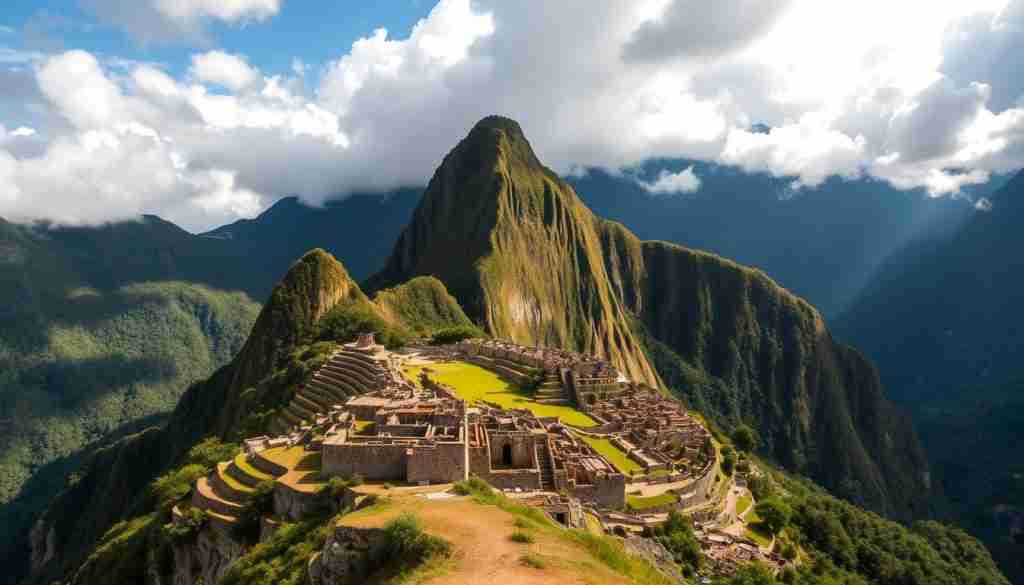
From Huayna Picchu’s top, you get a stunning view of Machu Picchu. Climbers are rewarded with a wide view of the ancient city. It shows the Inca’s amazing building and planning skills.
The path to Huayna Picchu’s summit was built by the Inca. It’s part of a network of trails. These Inca trails were for pilgrims and sacred processions. They helped the Inca keep their cultural and spiritual ties across their empire.
Huayna Picchu’s archaeological discoveries are still exciting today. They show us the Inca’s advanced mountain hiking and their love for nature.
The Famous Death Stairs Experience
Climbing the “Death Stairs” of Huayna Picchu is thrilling and challenging. This mountain, above Machu Picchu, is a marvel of Inca engineering. The stairs are steep and narrow, showing the Incas’ skill in building in tough terrain.
Safety Measures and Precautions
For safety, metal cables support the stairs’ toughest parts. Mountain safety is key. Visitors should be careful, wear good shoes, and get ready for the climb’s physical challenge.
Historical Construction
The Death Stairs show the Incas’ engineering skill. The builders made a path to Huayna Picchu’s summit. This path offers stunning views of the Andes.
Modern Climbing Challenges
Today, climbing the Death Stairs is a thrilling but tough task. The trail is steep and makes you feel like you’re on the edge. It’s a test of your endurance and courage.
The Huayna Picchu hike, including the Death Stairs, is a must for adventurers. With the right preparation and safety, you can reach the top. There, you’ll see amazing views of Machu Picchu and the Andes.
Temple of the Moon: Hidden Archaeological Wonder
The Temple of the Moon is hidden in Huayna Picchu’s stunning Inca architecture. It gives visitors a rare look into the Inca’s ancient rituals. This site is in a natural cave on the mountain’s northern face, showing the Inca’s skill in stone masonry and their bond with nature.
The temple’s name today is “Temple of the Moon,” but the Inca’s original name is unknown. To get there, you must take a tough trek from the main Huayna Picchu path. This offers a unique and mysterious experience with the Inca’s cave structures and ancient rituals.
“The Temple of the Moon is a testament to the Inca’s profound reverence for the natural world and their intricate understanding of the sacred geometry that underpinned their architectural and cultural practices.”
The Temple of the Moon is carved into the mountainside. It shows the Inca’s amazing Inca architecture, with detailed stone walls. It’s thought to have been used for ceremonies, maybe for important rituals or as a spiritual spot for the Inca.

The journey to the Temple of the Moon is a special experience. It lets visitors dive deep into Inca culture. This hidden site proves the Inca’s deep respect for nature and their complex understanding of sacred geometry in their buildings and culture.
Climbing Requirements and Restrictions
Many travelers dream of climbing Huayna Picchu mountain in Peru. But, there are specific rules and limits. The Peruvian government has a strict permit system to protect the site and keep visitors safe.
Daily Visitor Limitations
Only 400 people can climb Huayna Picchu each day. There are two groups of 200 climbers, with different start times. This rule helps keep the environment safe and makes the climb better for those who get a permit.
Physical Fitness Requirements
Climbing Huayna Picchu is tough and needs good physical shape. Climbers must be at least 12 and in good health. The trails are steep and narrow, so those afraid of heights or with health issues should think twice.
Age and Health Restrictions
Children under 12 can’t climb Huayna Picchu because it’s too hard. Everyone must check if they’re ready for the hike. It’s not for people with health problems or doubts about their fitness.
Booking Huayna Picchu permits in advance is key for a great mountain access experience. These rules might seem strict, but they help keep the site safe and enjoyable for all visitors.
Best Seasons for Climbing Huayna Picchu
Huayna Picchu mountain in Peru is a thrilling climb for adventurers. The Peruvian weather and hiking seasons are key to finding the best time to climb.
The dry season, from May to September, is the best time to climb Huayna Picchu. The Andean climate is dry, with clear skies and less rain. This makes the trails safer and offers stunning views of Machu Picchu from the top.
| Season | Conditions | Advantages | Drawbacks |
|---|---|---|---|
| Dry Season (May-September) | Drier weather, clearer skies | Safer hiking conditions, better visibility | Increased crowds and higher prices |
| Rainy Season (October-April) | Abundant rainfall, lush vegetation | Lower crowds, more affordable prices | Slippery trails, potential fog obscuring views |
The rainy season, from October to April, is more challenging. Rain makes trails slippery and fog can block views. But, the rainy season brings lush landscapes and a unique view.
It’s wise to start climbing Huayna Picchu early in the morning. The air is cooler, and visibility is better. With the right preparation, climbing this Inca marvel is possible in any season.
Spectacular Views from the Summit
Atop Huayna Picchu mountain, visitors find unmatched Andean vistas and amazing landscape photography spots. This young mountain, at 2,720 meters (8,920 feet) high, offers a special view of the mountain panoramas around Machu Picchu.
On clear days, the summit gives a 360-degree view. You can see Salkantay’s snowy peak, the Urubamba River, and Machu Picchu’s ruins. The light changes, making each photo unique, with the morning mist revealing the best views.
Panoramic Perspectives
From Huayna Picchu’s summit, you see Machu Picchu’s vast beauty. The view shows the entire site, surrounded by green Andean vistas and high peaks. This view is unlike anything seen from the valley floor.
Photography Opportunities
The summit of Huayna Picchu is perfect for landscape photography. It lets visitors capture Machu Picchu and its setting in stunning ways. The light and weather change, offering different photo opportunities from morning mist to afternoon sun.
“The views from Huayna Picchu are simply breathtaking, a true feast for the senses. It’s a photographer’s paradise, with endless opportunities to capture the timeless beauty of Machu Picchu and its surrounding landscapes.”
Ancient Inca Engineering Marvel
The stunning Huayna Picchu mountain in Peru shows the Inca civilization’s amazing engineering skills. It sits on steep slopes, with terraces, staircases, and buildings built without mortar. This proves the Incas’ skill in ancient technology and mountain architecture.
The Incas used a special method called ashlar masonry. They cut and fitted stones together without mortar. This method helped their Inca construction techniques last for centuries, even through harsh weather and earthquakes.
The Incas built their structures and farms to blend with the mountain. They also created a smart drainage system and placed buildings near water sources. This shows their deep respect for nature and their engineering skills.
| Key Engineering Feats | Notable Statistics |
|---|---|
| Ashlar masonry construction without mortar | Estimated population during construction: 750-1000 people |
| Terrace farming and irrigation systems | Machu Picchu receives approximately 76 inches of rain per year |
| Sophisticated urban drainage and water management | Machu Picchu had around 130 planned drainage holes |
| Strategic positioning of structures around natural elements | Inca stonework has endured for over 500 years |
The Inca’s Inca construction techniques and mountain architecture on Huayna Picchu are a lasting legacy. They show the Incas’ creativity, attention to detail, and love for nature. This ancient technology still amazes and inspires people today.
Conclusion
Huayna Picchu is a stunning example of the Inca civilization’s ingenuity and spiritual beliefs. Its climb is challenging, but the views and hidden treasures are worth it. It offers a special look into the Machu Picchu experience and the Andean heritage.
The mountain’s access is carefully managed to protect it for the future. Yet, it still lets adventurous travelers see one of Peru’s most amazing sights.
Climbing Huayna Picchu is a memorable experience for many. It mixes physical challenge with cultural and natural beauty. The hike takes 2 hours and reaches 2,693 meters, offering a rewarding journey.
Only 400 visitors are allowed each day to keep the site preserved. Planning ahead is key to get a spot and have a memorable trip.
Huayna Picchu is a lasting legacy of the Inca civilization. It gives travelers a chance to connect with the area’s history and beauty. Whether you reach the summit or view it from afar, Huayna Picchu will inspire and captivate you.
