
Faro Travel Tips 2026: Essential Planning & Local Insights
Faro, the sun-drenched capital of Portugal’s Algarve region, rewards visitors who venture beyond the airport arrivals hall with authentic Portuguese culture, medieval history, and natural beauty found nowhere else on the coast. This practical guide equips you with insider knowledge and strategic planning advice to navigate Faro’s compact historic center, reach pristine barrier islands, avoid common tourist pitfalls, and experience the city as locals do.
Key Takeaways: Faro Travel Essentials 2026
- Compact and Walkable: Faro’s historic Cidade Velha and main attractions sit within a 15-minute walking radius, making the city easily explorable on foot without relying on taxis or rental cars for sightseeing.
- Gateway Position: Faro Airport serves as the Algarve’s main international hub, with excellent train and bus connections east to Tavira (€3.60, 30 minutes) and west to Lagos (€8, 90 minutes), positioning Faro as either a base or strategic stopover.
- Authentic Portuguese Experience: Unlike tourism-saturated beach towns, Faro functions as a real working city with university students, government offices, and daily markets, offering genuine Portuguese culture without manufactured attractions.
- Natural Paradise Access: The Ria Formosa Natural Park lagoon system surrounds Faro’s southern edge, with ferry services departing daily to uninhabited barrier islands featuring 7-kilometer stretches of pristine beach (ferry tickets €10-12 return).
- Exceptional Value: Budget travelers easily maintain €25-35 daily costs excluding accommodation, mid-range visitors spend €60-85 daily, and luxury experiences remain significantly cheaper than Lisbon or Porto while delivering equal quality.
- Year-Round Viability: Faro’s 300 days of annual sunshine and mild Mediterranean climate make visiting comfortable in every season, with November through March offering the best value (hotel rates drop 40-50%) and fewer crowds while maintaining pleasant temperatures.
People Also Ask About Faro Travel 2026
How many days should I spend in Faro in 2026?
Two to three days provides sufficient time to explore Faro’s main attractions comprehensively in 2026. Allocate one full day to the Cidade Velha (Old Town), Sé Cathedral, Capela dos Ossos, and Museu Municipal. Reserve a second day for a Ria Formosa boat tour or ferry trip to Ilha Deserta or Ilha da Culatra. The third day works perfectly for day trips to nearby Tavira (40 minutes by train), the Roman ruins at Estoi (20 minutes by bus), or exploring Faro’s Marina neighborhood and Mercado Municipal. Travelers using Faro as an Algarve base often stay four to five days, taking day trips west to Albufeira, Benagil Cave, or Lagos while returning each evening to Faro’s authentic atmosphere and lower accommodation costs. Solo travelers frequently extend stays to six or seven days, appreciating Faro’s safe environment, walkable scale, and genuine local character absent from resort towns.
Is Faro expensive compared to other Portuguese cities in 2026?
Faro costs substantially less than Lisbon or Porto in 2026 while remaining slightly more expensive than smaller Alentejo towns. Mid-range restaurant meals cost €15-25 per person in Faro versus €20-35 in Lisbon. Hotel rates run €50-90 nightly for mid-range properties in Faro compared to €80-140 in Lisbon. Faro’s true value emerges in the combination of lower costs and proximity to beaches, natural parks, and historic sites that would require expensive day trips from other Portuguese cities. Budget-conscious travelers spending €95-130 daily per person (including accommodation) access experiences costing €140-180 daily in Lisbon. The University of Algarve’s student population maintains affordable café culture, with espresso at €0.80-1.20, pastéis de nata at €1.20-1.80, and local beer at €2-2.50, creating opportunities to stretch budgets further through casual dining rather than restaurants for every meal.
What’s the best way to get from Faro Airport to the city center in 2026?
The Próximo Route 16 bus offers the most economical transfer from Faro Airport to the city center in 2026, costing €2.25 per person and departing every 30-60 minutes from the stop directly outside the arrivals hall. The 20-minute journey terminates at Faro’s main bus station on Avenida da República, within 200 meters of the train station and 10 minutes’ walk from the marina and Old Town. Purchase tickets directly from the driver with exact change or small bills. Uber and Bolt provide convenient alternatives at approximately €7 for the 7-kilometer journey, though summer peak times create driver shortages and surge pricing. Traditional taxis cost €10-15 but should use the meter (politely insist if the driver suggests a flat rate). Private transfers arranged through accommodation run €15-25 and provide the smoothest experience for groups of three or more, especially valuable when arriving with heavy luggage or during late-night hours when public transport ceases operation.
Can I visit Faro without renting a car in 2026?
Faro functions excellently without a rental car in 2026 for visitors focused on the city itself and nearby destinations accessible by public transport. Faro’s compact size makes walking the primary transportation mode within city limits, while regional trains connect efficiently to eastern Algarve towns (Tavira, Monte Gordo, Vila Real de Santo António) and buses serve western destinations (Albufeira, Lagos, Portimão). Ferry services reach barrier island beaches, and organized boat tours explore the Ria Formosa without requiring personal vehicles. Budget €3-8 for single regional bus or train journeys. However, travelers planning extensive western Algarve exploration (multiple beach coves, Benagil Cave, Cape St. Vincent) benefit from rental car flexibility, as western train stations sit inconveniently far from tourist centers. Uber and Bolt supplement public transport gaps affordably, with typical city-to-beach trips costing €8-15. Car-free travel becomes most practical when booking accommodation within Faro’s historic center or marina district, placing restaurants, markets, and transport hubs within walking distance.
Extended multi-day tours – 5+ days
Featured Algarve Multi-Day Tour Packages
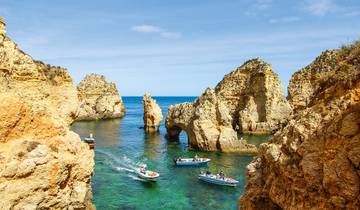
4 days
Algarve Discovery Tour
- ✓ Booking needs min. 2 travelers

8 days
Walking in Portugal – Remote Coastal Trails
- ✓ Comprehensive Algarve tour
- ✓ Expert local guides included
- ✓ All accommodation arranged
- ✓ Transportation provided
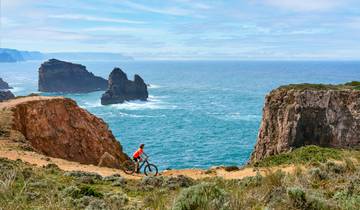
7 days
Costa Vicentina: Natural Park self-guided bike tour
- ✓ Comprehensive Algarve tour
- ✓ Expert local guides included
- ✓ All accommodation arranged
- ✓ Transportation provided
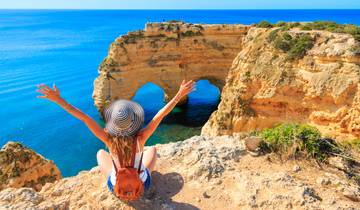
7 days
Algarve – a holiday full of wine
- ✓ Comprehensive Algarve tour
- ✓ Expert local guides included
- ✓ All accommodation arranged
- ✓ Transportation provided
Multi-day tour packages powered by TourRadar. Prices and availability subject to change.
Understanding Faro’s Geography and Layout in 2026
Faro occupies Portugal’s southern coast approximately 160 miles south of Lisbon, positioned in the central Algarve where the coastline forms a natural indentation. The Ria Formosa Natural Park lagoon system creates a protective barrier between Faro and the Atlantic Ocean, with tidal channels, saltwater marshes, and sandbar islands defining the city’s southern character. This unique geography shapes Faro’s identity as a working Portuguese city rather than a traditional beach resort.
The Cidade Velha (Old Town) forms Faro’s historic heart, fully enclosed within well-preserved medieval walls that the Moors originally constructed and Portuguese kings expanded. The Arco da Vila, a neoclassical arch featuring an elegant clock face and belfry, provides the main gateway into this pedestrian-only district of cobbled streets, whitewashed buildings, and hidden squares. The Sé Cathedral dominates Largo da Sé, the Old Town’s central plaza, while the Capela dos Ossos (Bone Chapel) sits northwest within Igreja do Carmo.
Modern Faro radiates outward from the Old Town’s defensive walls. Avenida da República runs parallel to the waterfront, connecting the train station, main bus terminal, and marina within a 400-meter stretch. The pedestrianized shopping district of Rua de Santo António extends northward from the Arco da Vila, lined with Portuguese chain stores, independent boutiques, and traditional cafés. The University of Algarve campus occupies Faro’s northern periphery, creating a student quarter with budget-friendly restaurants and bars.
Faro Airport (FAO) sits just 7 kilometers west of the city center, a convenience that makes Faro exceptionally accessible for quick city breaks or as a final Algarve destination before departure flights. The airport’s proximity means hotel guests hear occasional aircraft noise, though most modern properties feature soundproofing. The Marina de Faro underwent extensive renovation in 2011, transforming into a pleasant waterfront promenade with restaurants, yacht moorings, and departure points for Ria Formosa boat tours.
The barrier islands of Ilha Deserta, Ilha da Culatra, and Ilha de Faro protect Faro from Atlantic swells while offering pristine sandy beaches. Praia de Faro (Faro Beach) on Ilha de Faro represents the most accessible beach option, connected to the mainland by a road and served by city buses. Ilha Deserta remains completely uninhabited except for a single restaurant, offering 6 kilometers of undeveloped coastline. Ferry piers on Rua da Porta Nova provide access to these islands, with multiple daily departures during summer months and reduced winter schedules.
Best Time to Visit Faro: Weather and Seasonal Planning 2026
Faro enjoys approximately 300 days of sunshine annually, creating year-round visitation potential with distinct advantages in each season. The Mediterranean climate delivers mild, wet winters and warm, dry summers, with seasonal patterns significantly affecting accommodation costs, crowd levels, and activity availability.
Peak season (July-August 2026) brings maximum sunshine, highest temperatures (28-32°C daily), and crowded conditions throughout the Algarve. Faro experiences less congestion than beach resort towns, but popular restaurants require reservations, Ria Formosa boat tours fill quickly, and accommodation prices reach annual peaks. Hotel rates in July-August cost 60-80% more than winter months. Beach conditions reach perfection with calm seas and water temperatures around 22°C. However, afternoon heat makes Old Town exploration uncomfortable between 1pm-5pm, and ferry services to barrier islands become packed with day-trippers. Book all accommodation and transport at least 8-10 weeks ahead.
Shoulder season (April-June and September-October 2026) offers the ideal balance of excellent weather, manageable crowds, and reasonable prices. Spring temperatures range 18-24°C with occasional rainfall, while autumn maintains 20-26°C through October with minimal precipitation. These months deliver Faro’s best value proposition: accommodation costs drop 30-40% below peak summer rates while weather remains perfectly suitable for sightseeing and beach days. The Ria Formosa Natural Park displays exceptional beauty during spring migration season (late March-May) when birdwatching reaches its peak. Late September and October extend summer conditions without peak pricing, though Atlantic water temperatures begin declining below 20°C. Book accommodation 3-4 weeks ahead during shoulder months.
Winter season (November-March 2026) transforms Faro into a budget traveler’s paradise. Hotel rates plummet 40-50% below summer peaks, restaurants empty of tourist crowds, and locals reclaim their city. Daytime temperatures hover around 15-18°C with mild, pleasant conditions for walking and sightseeing, though evenings require light jackets. Rainfall occurs more frequently but rarely persists all day, and the Algarve remains one of Europe’s driest regions even in winter. Beach activities become impractical as water temperatures drop to 15-16°C and wind increases, but historic sightseeing, market exploration, restaurant dining, and cultural experiences suffer no weather-related limitations. Ferry services to barrier islands operate on reduced winter schedules with some routes suspended entirely. Winter visitors save substantially on accommodation while experiencing authentic Portuguese life without tourist overlay. Many northern European visitors specifically choose winter months for sunny escapes from harsh continental climates.
Special events punctuate Faro’s calendar throughout 2026. The Carnival celebrations in February feature parades and street parties citywide. Easter week (March-April depending on calendar) brings religious processions and traditional festivities. The Festa da Ria Formosa in August celebrates the natural park with boat races, seafood festivals, and environmental activities. The Alameda Beer Festival hosts craft brewery tastings in summer months. The Faro International Motorcycle Rally attracts enthusiasts in July. Winter months feature fewer organized events but maintain vibrant nightlife driven by university students.
Getting to Faro: Airport and Transportation Access 2026
Faro Airport (FAO) functions as the Algarve’s primary international gateway, serving over 9 million passengers annually with direct flights from major European cities. Budget carriers including Ryanair, easyJet, and Wizz Air dominate routes, while traditional airlines TAP Air Portugal, British Airways, and Lufthansa maintain scheduled service. Direct flights reach Faro from London (2.5 hours), Paris (2.5 hours), Amsterdam (3 hours), Dublin (2.75 hours), Frankfurt (3 hours), and Berlin (3.5 hours). Seasonal summer routes expand to include Scandinavian cities, Eastern European capitals, and additional UK regional airports.
The airport terminal features modern facilities including duty-free shopping, restaurants, currency exchange bureaus, and car rental desks from all major international companies. ATMs dispense euros at standard rates. Free WiFi operates throughout the terminal. The tourist information desk near arrivals provides maps, accommodation assistance, and transport advice during operating hours (typically 8am-8pm). Luggage storage facilities accommodate bags for short-term storage when coordinating early arrivals with late accommodation check-ins.
Ground transportation from Faro Airport presents multiple options at varying price points. The Próximo Route 16 bus provides the most economical choice at €2.25 per person, departing from the clearly marked stop outside the arrivals hall. Service operates approximately every 30-60 minutes from early morning through evening, with reduced frequency on weekends. The 20-minute journey passes through residential neighborhoods before terminating at the main bus station adjacent to the train station and within walking distance of most central accommodation. Purchase tickets directly from the driver, who provides change for small bills.
Uber and Bolt ride-sharing services offer convenience at approximately €7 for standard vehicles, though availability fluctuates significantly. During peak summer arrivals (late afternoon-evening flights), driver shortages create lengthy waits and surge pricing that can double costs. Download the app and configure payment methods before travel. Pickup occurs at the “Kiss and Fly” short-term parking area, well-signposted from arrivals. Traditional taxis queue outside arrivals and cost €10-15 for the 7-kilometer journey to central Faro, operating 24 hours daily. Insist on meter usage (taxímetro) rather than accepting quoted flat rates, which often exceed metered fares. Night rates (9pm-6am) add 20% surcharge. Four-passenger capacity is standard; seven-seater vehicles cost 20% more.
Pre-booked private transfers provide the smoothest airport experience, particularly valuable for families, late-night arrivals, or travelers with substantial luggage. Services like Yellowfish and Sunline Transfers charge €15-25 for airport-to-city transfers when booked online in advance. Drivers meet passengers in the arrivals hall holding name signs, assist with luggage, and provide direct hotel delivery. Group bookings (3-4 passengers) make private transfers cost-competitive with taxi fares while offering superior convenience.
The Aerobus (Route 56) provides limited service connecting Faro Airport directly to western Algarve destinations including Albufeira, Lagoa, Portimão, and Lagos. This service operates May through October with six daily departures, supplemented by Route 57 with additional evening service. Tickets cost €11 and can be purchased from the driver or at the small ticket office inside the airport. Winter months reduce frequency to just two daily journeys. Travelers heading to eastern Algarve towns or central Faro itself find the regular Route 16 more practical and significantly cheaper.
Arriving by train or long-distance bus provides alternative access for travelers already in Portugal. Express trains from Lisbon reach Faro in 3 hours 34 minutes, costing €24 for standard class with five daily departures. The scenic journey traverses the Alentejo countryside before descending into the Algarve. Regional trains connect Faro with all coastal Algarve towns, with eastbound service to Tavira (30 minutes, €3.60) and Vila Real de Santo António (1 hour, €5) running approximately hourly. Westbound trains serve Lagos (1.5 hours, €8) and intermediate stations, though stations west of Faro often sit inconveniently far from town centers except in Lagos.
Long-distance buses operated by Rede Expressos and FlixBus connect Faro with Lisbon (3-3.5 hours) and Porto (6-7 hours). FlixBus offers aggressive pricing with advance bookings as low as €7.99, while Rede Expressos typically costs €18-25. All intercity buses arrive at Faro’s main bus terminal on Avenida da República. The station features ticket offices, restrooms, cafés, and luggage storage lockers. Arrive 20 minutes before departure during summer months when ticket office queues extend significantly.
Driving to Faro from Lisbon follows the A2 expressway southward through the Alentejo for 277 kilometers, requiring approximately 2 hours 40 minutes of travel time. Tolls total €23.30 each direction. The route offers little scenic interest except the final descent into the Algarve. Parking in central Faro costs €1-1.50 per hour at metered street spaces, with free parking available in residential areas 10-15 minutes’ walk from the Old Town. Hotels often charge €5-12 daily for parking. Rental cars provide excellent value for exploring the broader Algarve but create complications within Faro’s compact, pedestrian-friendly center.
Navigating Faro: Getting Around the City 2026
Walking represents the optimal transportation method within Faro’s compact historic core. The distance from the train station to the far end of the Old Town measures approximately 1.2 kilometers (15 minutes’ walk), while the marina sits just 400 meters from the main bus terminal. Flat terrain and pedestrianized streets make walking pleasant year-round, though summer afternoon heat (1pm-5pm) encourages midday breaks. The Old Town’s cobblestone streets and occasional uneven surfaces require comfortable walking shoes rather than fashion footwear.
The Próximo municipal bus network operates multiple routes connecting Faro’s residential neighborhoods, beaches, and transport hubs. Route 16 provides the most tourist-relevant service, running between the airport, city center, train/bus stations, and Praia de Faro (Faro Beach) on Ilha de Faro. Buses depart every 30-60 minutes depending on time and day, operating approximately 7am-9pm with reduced weekend frequency. Single tickets cost €1.20-1.50 purchased from the driver, who provides change. The rechargeable Próximo card (available at kiosks and designated shops) reduces per-journey costs for frequent users but requires minimum €5 top-up, making single tickets more practical for short stays.
Taxis and ride-sharing apps provide convenient point-to-point transportation for longer distances or when carrying luggage. Standard taxi flagfall starts around €3 with metered rates of approximately €0.50 per kilometer during daytime hours. Night surcharges (9pm-6am) add 20% to metered fares. Uber and Bolt operate extensively in Faro with typical journeys costing €4-8 within the city limits. Trips to Praia de Faro cost €8-12, while rides to Estoi’s Roman ruins run €10-15. Summer peak times create driver shortages and surge pricing, particularly late afternoon when tourists return from beaches and evenings when restaurant-goers compete for limited vehicles.
Bicycle rentals offer an enjoyable way to explore Faro’s flat terrain and nearby areas, though limited dedicated cycling infrastructure requires sharing roads with motor traffic on some routes. Several shops near the marina rent bikes for €10-15 daily, providing locks and basic route maps. The 8-kilometer ride to Praia de Faro follows a relatively safe route with light traffic, while the waterfront promenade provides pleasant traffic-free cycling. Electric scooter sharing services appeared in Faro in recent years, offering €0.25 per minute rates with €1 unlock fees. Download the operator app and configure payment before attempting to rent. Scooters must not be ridden on pedestrian-only streets within the Old Town.
Ferry and boat services connect Faro with barrier islands and provide essential access to the Ria Formosa’s pristine beaches. Ferries depart from the pier on Rua da Porta Nova near the Old Town gateway. The Ilha Deserta ferry operates year-round with 6-8 daily departures in summer (reduced to 2-3 winter sailings), costing €10-12 return for the 30-minute journey to this completely uninhabited 7-kilometer beach. The Ilha da Culatra ferry serves the small fishing community on this barrier island, with similar pricing and frequency. Purchase tickets at waterfront kiosks near the departure pier. Private boat tours offer 2-3 hour guided excursions through the Ria Formosa lagoon system, including wildlife observation, oyster farm visits, and island stops. These tours cost €25-40 per person and depart multiple times daily during peak season.
Car rental makes sense primarily for travelers planning extensive western Algarve exploration, as Faro itself functions better without a vehicle. All major international rental companies (Hertz, Avis, Europcar, Budget) maintain airport desks, while local operators often provide better rates with advance online bookings. Expect €25-40 daily for economy vehicles, €40-65 for mid-size sedans. Add €12-18 daily for comprehensive insurance coverage unless your credit card provides collision damage waiver. Portuguese driving rules follow EU standards with right-hand traffic, seatbelts mandatory for all occupants, and blood alcohol limits at 0.05%. Speed limits default to 50 km/h in urban areas, 90 km/h on rural roads, 120 km/h on expressways. Parking in central Faro creates frustration with metered spaces (€1-1.50 hourly) filling quickly and residential permit zones prohibiting tourist parking. Hotels charging €5-12 daily parking fees often provide the most convenient solution.
Where to Stay in Faro: Accommodation Options 2026
Faro’s accommodation landscape ranges from €15 hostel dormitories to €200+ luxury hotels, with excellent mid-range options between €50-90 nightly. Location choice significantly affects the visitor experience, with historic center accommodation placing everything within walking distance while sacrificing beach proximity, and beachfront properties offering sand and surf while requiring transport for city sightseeing.
The Cidade Velha and Marina District represent the most convenient locations for first-time visitors, placing restaurants, attractions, and transport hubs within easy walking distance. This area features boutique hotels, renovated guesthouses, and modern apartment rentals. The charming cobbled streets create atmospheric evening strolls, though some sensitive sleepers may notice bar noise from the marina’s restaurant strip during summer weekends. Budget €60-85 for mid-range double rooms in this prime location, with breakfast often included. The compact scale means even budget properties sit just minutes from the Sé Cathedral and Old Town highlights.
Avenida da República and Train Station Area offer practical, often slightly cheaper accommodation (€50-75 for mid-range doubles) with immediate access to all regional transport. This busy commercial avenue features less historic charm than the Old Town but compensates with excellent restaurant variety, supermarket proximity, and straightforward orientation. Budget chain hotels (ibis, Stay Hotel) cluster here alongside independent Portuguese properties. The 5-10 minute walk to the Old Town presents no difficulty, while the train station’s immediate presence makes day trips completely effortless.
Praia de Faro (Faro Beach) accommodations sit directly on the barrier island’s sandy beach, offering the opposite experience from city-center properties. Beach hotels and guesthouses here cost €70-120 for mid-range options with balconies overlooking the ocean. The isolated location 8 kilometers from central Faro necessitates bus transport (€1.50, 25 minutes) or taxi rides (€10-15) for city sightseeing and restaurant access beyond the limited beachfront options. Summer months justify this location for beach-focused stays, while winter isolation feels pronounced as beach businesses close and bus frequency diminishes. Families with children often prefer beach accommodation for convenient sand access despite the transport trade-offs.
Budget travelers find excellent value in Faro’s growing hostel scene. Properties like Hostellicious, Baixa Terrace Hostel, and Chill Spot charge €18-25 for dormitory beds, providing social atmospheres with communal kitchens, organized activities, and helpful staff offering local recommendations. Private rooms in budget hostels cost €40-55 for doubles, offering hostel amenities at guesthouse prices. Most hostels occupy renovated historic buildings within the Old Town or immediate periphery, creating atmospheric accommodation at minimal cost. Several feature rooftop terraces with city views, communal dinner nights, and walking tour meetups.
Mid-range hotels and guesthouses dominate Faro’s accommodation market between €55-95 nightly. Properties like Faro Boutique Hotel, Hotel Sol Algarve by Kavia, and Casa Amarela deliver comfortable rooms with air conditioning, ensuite bathrooms, WiFi, and typically breakfast buffets. These hotels often occupy restored historic buildings featuring Portuguese tiles, period details, and charming courtyards. Staff provide knowledgeable local advice, arrange transport, and often speak excellent English. Mid-range accommodation in Faro matches or exceeds quality levels at similar prices in Lisbon while offering quieter, more personalized service.
Upscale and boutique options include properties like 3HB Faro, AP Eva Senses, and Faro Town House, charging €110-180 nightly for sophisticated design, premium bedding, spa facilities, and rooftop pools or terraces. These hotels cater to visitors seeking contemporary luxury with Portuguese character, often occupying waterfront positions with marina views. Services include concierge assistance, restaurant reservations, tour bookings, and sometimes beach club access with shuttle transport during summer months. Luxury travelers find Faro’s upscale hotels significantly more affordable than equivalent Lisbon properties while maintaining comparable quality standards.
Apartment rentals through platforms like Airbnb and Booking.com provide excellent value for groups, families, or longer stays of 4+ nights. One-bedroom apartments cost €50-75 nightly in central locations, while two-bedroom properties run €75-110. Full kitchens enable self-catering to reduce meal costs, particularly valuable when traveling with children or dietary restrictions. Historic center apartments often feature traditional Portuguese tiles, exposed stone walls, and charming courtyard access. Check carefully for stair access (many occupy upper floors of buildings without elevators) and ensure air conditioning during summer months when upper-floor properties become uncomfortably hot.
Booking timing significantly affects pricing and availability. Summer months (June-September) require advance reservations of 8-12 weeks to secure preferred properties at reasonable rates. Shoulder season (April-May, October) allows booking 4-6 weeks ahead. Winter travel offers flexibility with bookings possible just 1-2 weeks before arrival, often at discounted walk-in rates for extended stays. Consider booking refundable rates during shoulder and winter months when weather uncertainties might affect travel plans. Package deals bundling accommodation with flights sometimes provide better value than independent bookings, particularly for UK travelers using charter operators.
Eating and Drinking in Faro: Culinary Guide 2026
Faro’s dining scene balances traditional Portuguese cooking with contemporary innovation, offering exceptional seafood, hearty Algarvian specialties, and budget-friendly options that consistently outperform tourist-trap resort restaurants. The city’s working population and university students maintain authentic pricing and quality standards absent from coastal resort towns.
Traditional Portuguese cuisine centers on fresh seafood, simply prepared to showcase ingredient quality. Cataplana, the Algarve’s signature dish, combines clams, prawns, fish, chorizo, and vegetables in a hinged copper pot, creating intensely flavored one-pot meals. Most restaurants serve cataplana portions for two people at €30-45, providing generous portions. Arroz de marisco (seafood rice) offers a more casual alternative at €12-18 per person, featuring shrimp, mussels, and fish in saffron-scented rice. Grilled fish sold by weight allows diners to select from daily catches, with sea bream (dourada), sea bass (robalo), and sole (linguado) typically costing €18-28 per kilogram. Servers help calculate portion sizes and final costs before preparation.
Petiscos culture transforms dining into social tapas-style experiences with sharing plates of Portuguese specialties. Traditional tascas serve petiscos including presunto (cured ham), local cheeses, seafood preparations, and chorizo assado (flaming chorizo). Old Tavern and A Venda exemplify this style, charging €4-8 per petisco plate with 3-4 plates satisfying two diners. These informal restaurants encourage lingering over multiple small courses, creating affordable yet memorable meals. Budget €25-35 per person for petiscos dinners including wine or beer.
Budget dining thrives throughout Faro, particularly near the university district and Mercado Municipal. Pastelarias (pastry shops) serve breakfast essentials including pastel de nata (custard tart) at €1.20-1.80, pão com manteiga (bread and butter) at €0.60-1.00, and fresh-squeezed orange juice at €2-2.50. Cafés offer full meals during lunch hours, with prato do dia (dish of the day) typically €7-10 including soup, main course, dessert, and coffee. These workers’ lunches provide authentic Portuguese cooking at rock-bottom prices. Bifanas (pork sandwiches) at cervejarias cost €3-4, while francesinha (Portuguese sandwich with meat, cheese, and tomato-beer sauce) runs €8-10.
The Mercado Municipal operates Monday through Saturday mornings (7am-2pm), offering fresh produce, seafood, cheeses, and prepared foods. Grilled sardines served on fresh bread cost €5-6, while seafood salads and traditional sweets provide inexpensive market meals. Shopping the market for picnic supplies dramatically reduces daily food costs while introducing local specialties. Fresh figs, Algarvian almonds, artisan cheeses, and cured meats create memorable beach picnics or apartment meals. The market’s small restaurants serve workers’ lunches at €7-9, maintaining authentic pricing despite increasing tourist awareness.
Mid-range restaurants in the Old Town and marina district charge €15-30 for main courses, delivering quality seafood and Portuguese classics with attentive service and pleasant atmospheres. Tasca do Ricky, Sol e Jardim, and Centenário represent excellent traditional choices. Restaurants serving fresh fish display daily catches with prices marked per kilogram, while set tourist menus (€13-18 for three courses) provide good value though quality varies. Reservations become essential for popular restaurants during summer evenings and weekends, particularly at waterfront tables. Many restaurants close one day weekly (often Monday or Tuesday), so call ahead or check posted hours before walking to distant locations.
Fine dining reaches sophisticated heights at restaurants like Alameda, earning Michelin Guide recognition for creative interpretations of Algarvian cuisine. Eight-course tasting menus cost €115 without wine pairings, €200 with sommelier selections. These ambitious kitchens showcase regional products through contemporary techniques, creating memorable culinary experiences at prices substantially below equivalent Lisbon restaurants. À la carte dining costs €50-70 per person excluding wine. Reservations require several weeks’ advance booking during peak season. These restaurants maintain more casual dress codes than equivalent establishments in major cities, though smart casual attire remains appropriate.
International cuisine supplements Portuguese options, particularly near the university. Pizzeria Romana serves authentic Italian thin-crust pizzas (€10-18), A Fábrica creates gourmet burgers (€8-15), and Sushi Pearl offers modern Japanese dining (€25-40 per person). Vegetarian and vegan options have expanded significantly, with Outro Lado providing entirely plant-based Portuguese cuisine that convincingly replicates traditional dishes. Most restaurants offer at least 2-3 vegetarian options, while vegan requests require advance notice at traditional establishments.
Wine selection emphasizes Portuguese regions including Alentejo reds (€15-25 per bottle in restaurants), Douro Valley ports (€4-8 per glass), and Vinho Verde from the north (€12-18 per bottle). House wines cost €8-12 per bottle, providing drinkable accompaniment to casual meals. Super Bock and Sagres represent Portugal’s dominant beer brands, costing €2-2.50 for 330ml bottles. Craft beer culture grows slowly with small breweries emerging in the Algarve. Coffee culture thrives, with espresso (bica) costing €0.80-1.20, americano €1.20-1.80, and specialty coffee drinks €2.50-3.50.
Dining schedules follow Portuguese patterns with lunch typically served 12:30pm-3pm and dinner 7pm-10pm. Restaurants in tourist areas accommodate earlier dining, though kitchens often don’t open until 7pm. Reservations use WhatsApp in addition to phone calls, with many restaurants maintaining active social media presence for booking confirmations. Tipping remains discretionary with 5-10% considered generous for good service. Credit cards are widely accepted except at market vendors and small cafés, where cash remains king. Most restaurants add coperto (cover charge) of €1-2 per person for bread, butter, and olives placed at tables, which can be declined if unwanted.
Essential Practical Information for Visiting Faro 2026
Currency and Money: Portugal uses the euro (€) with coins in denominations of 1, 2, 5, 10, 20, and 50 cents plus €1 and €2, and banknotes in €5, €10, €20, €50, €100, €200, and €500 values (though €200 and €500 notes see limited circulation). ATMs (Multibanco machines) appear frequently throughout Faro, dispensing euros at competitive interbank exchange rates. Use ATMs affiliated with major Portuguese banks (Millennium BCP, Santander Totta, Caixa Geral) for lower fees. Decline currency conversion offers during card transactions, always selecting “charge in euros” to avoid unfavorable conversion rates applied by payment processors. Most establishments accept Visa and Mastercard, with American Express less universally accepted. Budget €20-30 daily cash for market purchases, small cafés, taxis, and tips.
Language: Portuguese serves as the official language, though English proficiency is excellent among younger residents, tourism industry workers, and educated professionals. Hotel staff, restaurant servers in tourist areas, and tour operators generally speak conversational to fluent English. Markets, traditional tascas, and businesses in residential neighborhoods may have limited English capability. Learning basic Portuguese courtesies (bom dia/good morning, obrigado/thank you, por favor/please, desculpe/excuse me) earns appreciative responses and smoother interactions. Pronunciation challenges arise from nasal vowels and unusual consonant sounds, though efforts receive warm encouragement. Spanish speakers find some mutual intelligibility in written text but pronunciation differs substantially. Translation apps on smartphones bridge communication gaps when needed.
Safety and Security: Faro maintains excellent safety standards with violent crime exceptionally rare. The primary concern involves pickpocketing in crowded areas including the marina during evening hours, the main bus station, and summer beach ferries. Keep valuables concealed in front pockets or cross-body bags, avoid displaying expensive jewelry or electronics unnecessarily, and remain alert in dense crowds. Car break-ins occur occasionally in remote beach parking areas, so never leave valuables visible in parked vehicles. Solo female travelers report feeling safe walking alone at night in well-lit central areas, though deserted streets merit normal urban caution. Police maintain a visible presence in tourist areas and respond quickly to concerns. Emergency number 112 connects to police, fire, and medical services with English-speaking operators available.
Health and Medical Services: EU citizens with European Health Insurance Cards (EHIC) receive reciprocal healthcare in Portuguese public facilities. Non-EU visitors should maintain comprehensive travel insurance including medical coverage. Hospital de Faro (Rua Leão Penedo) provides 24-hour emergency services with English-speaking staff. Pharmacies (farmácias) marked with green crosses operate throughout the city, dispensing prescription and over-counter medications. Rotating 24-hour pharmacy schedules post at all pharmacies. Portuguese pharmacists offer medical consultations for minor ailments and can recommend appropriate treatments. Tap water meets EU safety standards and is safe to drink throughout Faro. Summer sun exposure requires precautions including high-SPF sunscreen (€8-12 for 200ml), hats, and hydration. Heat exhaustion risks increase during peak afternoon temperatures (1pm-5pm) from June through August.
Internet and Communications: Free WiFi operates at most hotels, restaurants, cafés, and public spaces throughout Faro. The airport terminal, main bus station, and many plazas offer complimentary connections. Connection quality varies with busy restaurants often experiencing slow speeds during peak hours. EU citizens benefit from roaming regulation allowing domestic mobile plan usage throughout Portugal. Visitors from outside the EU should verify roaming charges with home carriers or purchase Portuguese SIM cards from MEO, Vodafone, or NOS shops. Prepaid data SIM cards cost €10-20 for 10-20GB monthly data with included calls. WhatsApp messaging works over WiFi and data connections, facilitating free communication. Public phone booths have essentially disappeared with mobile prevalence.
Electricity: Portugal uses standard European 220-240V electricity at 50Hz with Type C (two round pins) and Type F (two round pins with earth clips) outlets. Travelers from UK, North America, Australia, and New Zealand require plug adapters available at airport shops, electronics stores, and many hotels. Universal adapters cost €8-15 and accommodate multiple plug types. Some mid-range and all upscale hotels provide USB charging ports, though bringing a multi-port USB charger enables simultaneous device charging from a single outlet. Voltage converters (as opposed to plug adapters) are rarely necessary as most modern electronics automatically accommodate 110-240V input.
Business Hours: Most shops operate Monday through Friday 9am-7pm and Saturday 9am-1pm, with the traditional siesta (2pm-3pm closure) increasingly abandoned except at small family businesses. Shopping centers (Forum Algarve, Quinta do Lago Shopping) maintain continuous 10am-10pm hours daily. Restaurants typically open for lunch 12:30pm-3pm and dinner 7pm-10pm, with cafés serving throughout the day. Museums follow 10am-5pm schedules Tuesday through Sunday, closing Mondays. Churches allow visitor access outside mass times, generally 9am-noon and 3pm-6pm, though some close during services. Banks operate weekdays 8:30am-3pm, closed weekends. The Mercado Municipal trades Monday through Saturday 7am-2pm.
Accessibility: Faro’s historic Old Town presents challenges for wheelchair users and travelers with mobility limitations. Cobblestone streets, uneven surfaces, and steps complicate wheelchair navigation. The modern city center features better accessibility with paved sidewalks and curb cuts, though not all crossings include accessible ramps. Public buses include some low-floor vehicles with wheelchair access, though schedules don’t specify which buses offer this feature. Taxis and ride-sharing vehicles providing wheelchair-accessible transport require advance booking rather than spontaneous hailing. Museums and major attractions generally offer wheelchair access via ramps or elevators, with the Sé Cathedral providing lift access to upper levels. Many mid-range and upscale hotels feature accessible rooms with roll-in showers, though budget hostels rarely offer such facilities. Call ahead to verify specific accessibility needs before booking accommodation or tours.
Top Faro Attractions and Activities 2026
The Cidade Velha (Old Town) forms Faro’s most compelling attraction, where medieval walls enclose cobbled streets, whitewashed buildings, and historic monuments. Enter through the Arco da Vila, a neoclassical gateway with a clock tower where storks nest atop the cupola. The interior warren of pedestrian lanes rewards aimless wandering, revealing hidden plazas, traditional tile-covered facades, and glimpses of daily Portuguese life. The Largo da Sé serves as the Old Town’s social heart, where outdoor cafés occupy a charming cobbled plaza. Budget 2-3 hours for thorough Old Town exploration including cathedral visits and museum stops.
The Sé Cathedral (Faro Cathedral) dominates Largo da Sé with its Gothic, Renaissance, and Baroque architectural mix reflecting centuries of modifications. The original 13th-century structure rebuilt after the 1755 earthquake retains the Gothic tower, while later additions created the ornate interior featuring gilded woodwork, Portuguese tiles, and religious art. Admission costs €3-4, including access to the cathedral tower. The climb rewards with panoramic city views, Ria Formosa lagoon vistas, and Atlantic Ocean glimpses. Open Monday-Friday 10am-5pm, Saturday 10am-1pm, closed Sundays except for morning mass. The adjacent Bishop’s Palace houses government offices and cannot be toured.
Capela dos Ossos (Bone Chapel) within Igreja do Carmo presents one of Portugal’s most unusual attractions. This small chapel’s walls and pillars incorporate approximately 1,200 monk skeletons arranged in decorative patterns, creating a memento mori artistic statement. The bones came from the church’s overcrowded cemetery during 19th-century reorganization. Admission costs €2, with the chapel open weekdays 10am-1pm and 2:30pm-5pm, Saturday mornings only. The macabre display requires just 10-15 minutes to view but creates powerful impressions. Photography is permitted though flash disturbs the contemplative atmosphere. The adjacent Igreja do Carmo features ornate Baroque interior worth brief exploration.
The Museu Municipal de Faro (Municipal Archaeological Museum) occupies a former convent on Praça Afonso III in the Old Town. Collections span prehistoric periods through Roman occupation and Moorish rule, featuring mosaics, sculpture, ceramics, and architectural elements. The Roman mosaic depicting Neptune with seahorses represents the most significant artifact. The Renaissance cloister surrounding a central garden provides a peaceful retreat. Admission costs €2 with free entry Sunday mornings. Open Tuesday-Friday 10am-6pm, Saturday-Sunday 10:30am-5pm, closed Mondays. Budget 45-60 minutes for thorough exploration. Minimal English signage necessitates reading information sheets or using audio guides.
The Ria Formosa Natural Park protects 18,400 hectares of tidal lagoons, salt marshes, channels, and barrier islands extending 60 kilometers along the Algarve coast. This vital ecosystem supports flamingos, purple gallinules, and numerous migratory bird species while providing breeding grounds for seahorses and sea turtles. Boat tours departing from Faro explore channels inaccessible by foot, passing fishing villages, oyster farms, and wildlife observation points. Two-hour tours cost €25-35 per person with multiple operators providing daily departures during peak season. Guided tours include expert commentary on ecology, traditional fishing practices, and conservation efforts. Independent exploration involves ferry transport to barrier islands followed by beach walking and birdwatching. The park visitor center on Quinta do Lago offers information, trail maps, and environmental education exhibits.
Ilha Deserta stands out as the Ria Formosa’s most pristine destination, a completely uninhabited 7-kilometer sandbar featuring endless beach backed by dunes. A single restaurant (Estaminé) provides lunch and refreshments, while toilets and changing facilities accommodate day visitors. The island’s remote character guarantees uncrowded beaches even during peak summer. Ferry services (€10-12 return) depart multiple times daily from Faro’s waterfront pier, requiring 30 minutes crossing time. Bring sunscreen, hats, beach umbrellas (shade is minimal), and all necessary supplies. The exposed Atlantic position creates excellent swimming conditions with gentle waves and clear water. Beachcombing reveals shells, sea glass, and occasional fishing floats. Early morning or late afternoon visits capture the island’s most magical light.
Praia de Faro (Faro Beach) offers the most accessible beach option, connected to the mainland by a road bridge and served by regular city buses (Route 16, €1.50). This developed beach features restaurants, bars, water sports rentals, and lifeguard supervision during summer months. The wide sandy strand accommodates both calm lagoon swimming on the protected side and livelier Atlantic surf on the ocean-facing shore. Popularity creates crowds during peak season, particularly weekends when Faro residents escape urban heat. Bars host sunset beach parties through summer, creating social atmospheres. The beach settlement includes budget hotels, vacation apartments, and camping facilities for longer stays. Bus service operates approximately every 30-60 minutes with reduced winter frequency.
Day trips from Faro expand exploration throughout the eastern Algarve. Tavira, 30 minutes by train (€3.60), presents a charming riverside town with 37 churches, a Moorish castle ruins, Roman bridge, and ferry access to Ilha de Tavira beach. The town retains traditional character with fewer tourists than western Algarve destinations. Estoi, 20 minutes by bus, features remarkably well-preserved Roman ruins (Milreu) and the pink Rococo Palácio de Estoi, now operating as a luxury pousada (hotel) with public areas open for viewing. The palace gardens display Portuguese tiles, statuary, and baroque fountains. Olhão, 10 minutes by train (€1.80), maintains authentic fishing port atmosphere with an excellent morning market (Tuesday-Sunday) selling fresh seafood, produce, and traditional sweets. Ferry services reach pristine barrier islands from Olhão’s waterfront.
Shopping in Faro: Markets, Boutiques, and Souvenirs 2026
Faro’s shopping scene splits between traditional markets offering Portuguese products and modern shopping centers providing international brands. The pedestrianized Rua de Santo António forms the main commercial spine through central Faro, lined with Portuguese chains (Zara, Mango, Parfois), independent boutiques, bookshops, and souvenir stores. This street connects the Arco da Vila with the northern commercial district, creating a pleasant shopping promenade.
The Mercado Municipal represents Faro’s most authentic shopping experience, operating Monday through Saturday mornings (7am-2pm) in a purpose-built structure near the harbor. Fresh seafood occupies the ground floor with fishmongers displaying daily catches, while upper-level stalls sell fruits, vegetables, local cheeses, cured meats, honey, almonds, figs, and traditional sweets. Smaller vendors offer artisan crafts including ceramics, textiles, and cork products. Prices remain substantially lower than tourist shops while quality often exceeds commercial alternatives. Saturday mornings create the busiest, most atmospheric market sessions when locals conduct weekly shopping. Vendors expect some negotiation on non-food items, though prices already reflect fair value. Bring cash as card acceptance remains inconsistent.
Portuguese ceramics and tiles make popular souvenirs, with shops throughout the Old Town displaying hand-painted azulejos (decorative tiles), serving platters, bowls, and decorative pieces. Traditional patterns include geometric Moorish designs, nature motifs, and historical scenes. Prices range from €5 for small decorative tiles to €100+ for large hand-painted platters. Quality varies significantly, so examine glazing, painting precision, and finishing before purchasing. Some shops ship internationally though costs often exceed the items’ value for smaller pieces. Cork products represent uniquely Portuguese crafts with wallets, bags, place mats, and accessories made from sustainable cork harvested from local trees. Lightweight and durable, cork items pack easily and showcase Portuguese environmental consciousness.
Sardine tins featuring colorful retro designs have become trendy Portuguese souvenirs. Shops throughout Faro sell preserved fish in decorative tins (€3-6 each) that double as collectible art objects. These shelf-stable purchases travel easily though weight accumulates when buying multiple tins. Local honey, fig jam, almond sweets, and Algarve salt make excellent edible souvenirs reflecting regional products. The Mercado Municipal offers the best selection and prices, with vendors providing samples. Algarvian almonds (both raw and toasted) cost €8-12 per kilogram, representing excellent value for a product central to regional cuisine.
Ginjinha and medronho, traditional Portuguese spirits, tempt visitors seeking alcoholic souvenirs. Ginjinha (cherry liqueur) costs €8-15 for 750ml bottles, while medronho (strawberry tree fruit aguardente) runs €15-25 for artisanal versions. Airport duty-free offers convenience but limited selection compared to city liquor shops and markets. Portuguese wines represent better value than spirits, with excellent Alentejo reds (€8-15) and Douro Valley ports (€12-25) widely available. Supermarkets provide extensive wine selections at prices substantially below tourist shops.
Forum Algarve, the region’s largest shopping center located 8 kilometers north of Faro, houses 200+ stores including international fashion brands, electronics retailers, sporting goods shops, and a hypermarket. The mall features cinema multiplexes, food courts, and children’s play areas. Bus routes connect Forum Algarve with central Faro, or budget €12-15 for taxi transport. The mall provides air-conditioned shopping refuge during peak summer heat, though authentic Portuguese character is minimal.
Faro for Different Traveler Types 2026
Solo Travelers: Faro excels for independent travelers seeking safe, walkable cities with authentic culture and easy social opportunities. The compact scale prevents isolation while hostels facilitate meeting fellow travelers through communal spaces and organized activities. Walking tours, boat excursions, and bar scenes create natural interaction points. Portuguese hospitality extends warmly to solo diners, with restaurant staff never treating single guests as second-class. Women traveling alone report feeling completely comfortable walking the Old Town and marina district at night, though normal urban awareness remains sensible. The combination of affordability (€40-60 daily including accommodation for budget travelers), straightforward navigation, excellent English proficiency, and reliable public transport makes Faro ideal for first-time solo European travel. The thriving university population creates youthful energy and late-night venues where solo visitors integrate easily.
Couples and Romantic Getaways: Faro provides romantic settings while avoiding the clichéd overtourism of Venice or Paris. Sunset strolls along the marina, candlelit dinners in Old Town restaurants, private boat tours through the Ria Formosa, and beach picnics on Ilha Deserta create memorable experiences. Boutique hotels offer charming couple-oriented accommodations with romantic details absent from chain properties. The city balances activity options with relaxation, allowing couples to shift between cultural exploration and beach lounging. Portuguese wine culture encourages leisurely meals extending over multiple courses and bottles. Off-season visits (November-March) dramatically reduce crowds while maintaining pleasant weather, creating intimate atmosphere throughout normally busy attractions. Budget €120-180 daily for comfortable mid-range experiences including meals, accommodation, and occasional splurges.
Families with Children: Faro’s manageable size prevents child exhaustion from excessive walking while offering varied activities maintaining interest across age ranges. Praia de Faro’s calm lagoon-side beach provides safe swimming for young children, while the bone chapel delivers morbid fascination for teenagers. Boat tours engage all ages with wildlife spotting and island exploration. The compact Old Town allows easy afternoon returns to accommodation for naps and breaks. Portuguese restaurant culture welcomes children warmly with special menus, early dining accommodations, and high chairs provided without request. Family rooms and apartments with kitchens facilitate budget management and accommodate picky eaters. Public transport readily accepts strollers and child equipment. The lack of must-see attractions reduces pressure to complete rigid itineraries, allowing families to move at comfortable paces. Budget €160-220 daily for families of four including mid-range accommodation, meals, and activities.
Budget Travelers and Backpackers: Faro delivers exceptional value throughout the Algarve’s most expensive region. Hostel dormitories (€18-25 nightly), market meals (€6-10), free walking tours, accessible beaches, and affordable public transport enable €40-55 daily budgets including accommodation. The Mercado Municipal provides picnic supplies at local prices, while university-area cafés serve workers’ lunches. Free attractions include Old Town exploration, city wall walks, marina strolling, and beach access. Municipal buses reach Praia de Faro for €1.50, eliminating expensive taxi requirements. The combination of safety, English proficiency, and social hostel atmosphere makes Faro welcoming for inexperienced budget travelers. Shoulder and winter seasons extend budgets further with accommodation discounts of 30-50%.
Older and Senior Travelers: Faro’s relaxed pace, manageable scale, and excellent infrastructure suit senior travelers seeking comfortable exploration without tourist-trap pricing. The flat terrain minimizes physical demands while the compact center reduces walking distances. Mid-range hotels provide comfort and service at reasonable rates (€60-90), while taxis and Uber solve any mobility challenges affordably. Restaurant dining hours accommodate earlier preferences, and Portuguese cuisine emphasizes fresh, simply-prepared food without excessive spice. The authentic cultural experience appeals to travelers seeking genuine local life rather than contrived attractions. Guided tours provide structured exploration reducing planning stress, while the safe environment eliminates urban anxiety. Winter months attract significant numbers of northern European retirees escaping harsh climates, creating active social scenes and organized activities at many hotels.
Day Trips and Excursions from Faro 2026
Tavira (40 minutes by train, €3.60 each way) presents eastern Algarve’s most charming historic town, where traditional Portuguese life continues amid genuine beauty. The Rio Gilão bisects the town, spanned by a reconstructed Roman bridge connecting both banks. Moorish castle ruins overlook the town from a hilltop position, providing panoramic views across terracotta rooftops and church towers. Tavira claims 37 churches, creating architectural diversity from Gothic to Baroque styles. The town center features pedestrianized squares lined with cafés, while traditional restaurants serve exceptional seafood at prices below coastal resort towns. Ferry services reach Ilha de Tavira, a barrier island beach accessible only by boat, maintaining pristine conditions through limited development. The island’s 11-kilometer beach extends nearly empty even during summer peaks. Budget a full day for Tavira exploration including beach time, or visit as a half-day excursion focused on the historic center. Trains depart Faro hourly throughout the day.
Olhão (10 minutes by train, €1.80 each way) maintains authentic fishing port character largely undiscovered by international tourists. The morning fish market (Tuesday-Sunday 7am-1pm) displays the Algarve’s finest seafood selection with vendors expertly filleting catches amid animated Portuguese conversation. Traditional architecture features North African-influenced flat-roofed houses painted in pastels, creating photogenic neighborhoods around the harbor. Ferry services depart for Ilha da Armona and Ilha da Culatra, reaching pristine barrier islands with small fishing communities and restaurant-dotted waterfronts. These islands maintain traditional character absent from developed beach areas, with fishing boats outnumbering tourists even in summer. Olhão works perfectly for morning market visits combined with afternoon beach ferry trips, all accomplished within a single day trip from Faro.
Estoi (20 minutes by bus) offers two distinct attractions within a small Algarvian village north of Faro. The Palácio de Estoi, a pink Rococo palace built in the late 19th century, now operates as a luxury pousada (historic hotel) with public areas accessible for viewing. The palace gardens display Portuguese azulejo tiles, baroque statuary, ornate balustrades, and formal landscaping creating romantic atmosphere. Photography is encouraged in gardens and exterior areas. The nearby Milreu Roman ruins preserve remarkably complete mosaics, temple foundations, and thermal bath structures from a wealthy Roman villa dating to the 2nd-3rd centuries CE. The site charges €2 admission with free access Sunday mornings. The rural setting provides contrast to coastal tourism, revealing agricultural Algarve rarely experienced by beach-focused visitors.
Lagos (90 minutes by train, €8 each way) anchors the western Algarve with dramatic cliff-backed beaches, sea caves, and historic maritime significance. The town served as Portugal’s slave trade center in the 15th century, with the Mercado de Escravos (former slave market) now functioning as a museum confronting this dark history. The weathered city walls enclose an atmospheric old town featuring whitewashed buildings, traditional restaurants, and lively nightlife. Ponta da Piedade presents Lagos’s most spectacular natural feature, where golden limestone cliffs sculpted by Atlantic erosion create natural arches, grottoes, and pinnacles. Boat tours explore sea caves accessible only from water, while coastal paths provide walking routes with stunning vistas. The journey from Faro requires nearly 2 hours each direction on regional trains, making Lagos more suitable for overnight trips though determined day-trippers manage condensed visits. Consider combining Lagos exploration with the famous Benagil sea cave, located between Faro and Lagos though requiring separate boat tour arrangements from Carvoeiro or Benagil beach.
The Benagil Cave, Instagram’s most photographed Algarve destination, sits 50 kilometers west of Faro near the village of Benagil. This cathedral-like sea cave features a circular skylight opening above a turquoise pool, creating dramatic illumination impossible to replicate elsewhere. Recent regulations prohibit independent kayak access and swimming into the cave, restricting visits to licensed boat tours departing from Benagil beach or Carvoeiro (€25-40 per person for 1-2 hour excursions). July-August crowds create tour boat congestion with dozens of vessels jostling for position simultaneously inside the cave, diminishing the experience significantly. Shoulder season visits (May-June, September-October) balance access with manageable crowds. Combined tours explore multiple caves along the western coast including lesser-known grottoes without Benagil’s fame. No direct public transport serves Benagil, necessitating rental car, organized tour from Faro, or bus to Lagoa followed by taxi (€15-20) to the beach.
Common Mistakes and How to Avoid Them 2026
Rushing Through Faro: Many visitors treat Faro as an airport waypoint rather than a destination, immediately transferring to beach resorts without exploring the city. This mistake sacrifices Faro’s unique charms including authentic Portuguese culture, historic architecture, excellent restaurants, and natural park access. Allocate minimum two nights to experience Faro properly, discovering why locals value their capital over manufactured resort towns. The city rewards slower pacing and deeper exploration missed during rushed half-day stops between flights and resort check-ins.
Overpacking Summer Itineraries: Peak summer temperatures (28-32°C) make afternoon sightseeing uncomfortable, particularly in the Old Town where stone buildings and cobblestones radiate heat. Attempting to maintain northern European activity schedules results in exhaustion and diminished enjoyment. Adopt Portuguese rhythms by focusing activities on morning hours (8am-12pm), taking leisurely lunches with breaks during peak heat (1pm-5pm), then resuming evening exploration when temperatures moderate. Museums, indoor attractions, and beach time work best during afternoon hours when walking tours and outdoor sightseeing become oppressive. Many experienced visitors spend July-August entirely at beaches and pools, saving cultural exploration for more comfortable seasons.
Neglecting Advance Reservations: Summer’s popularity (June-September) creates genuine scarcity for accommodation, popular restaurants, and boat tours. Travelers arriving without bookings face limited availability, inflated walk-in rates, and disappointing alternatives. Book accommodation 8-12 weeks ahead for summer visits, secure dinner reservations at desired restaurants 1-2 weeks prior, and arrange boat tours several days in advance. Spontaneity works better during shoulder seasons (April-May, October) and winter months when availability remains plentiful. However, even off-season visitors should book highly-rated restaurants on weekends to avoid disappointment.
Underestimating Transit Times: Faro’s proximity to the airport creates false impressions about broader Algarve travel times. Western destinations like Albufeira (45 minutes), Lagos (90 minutes), and Benagil Cave (75 minutes) require substantial travel time each direction, consuming half the day for round-trip transport. Eastern towns (Tavira, Olhão) allow quicker access but still demand 1-2 hours daily for transport. Budget realistic time allocations rather than attempting overly ambitious multi-destination days. Consider basing in different Algarve locations for multi-week stays rather than using Faro as a single hub for the entire region.
Skipping the Ria Formosa: Some visitors fixate on sandy beaches while ignoring the Ria Formosa Natural Park’s ecological significance and beauty. This wetland ecosystem deserves exploration through boat tours or ferry trips to barrier islands, revealing landscapes, wildlife, and traditional fishing communities absent from typical beach experiences. The lagoon system’s protection creates calm waters, pristine environments, and educational opportunities showcasing Portuguese conservation efforts. Allocate at least one day to Ria Formosa exploration, choosing between guided boat tours emphasizing ecology or independent ferry trips prioritizing beach access.
Ignoring Local Dining Customs: Tourists often dine at 6pm when Portuguese restaurants have just opened kitchens, creating empty dining rooms and rushed service as staff prepare for local dinner crowds arriving 8pm-9pm. Dining alongside Portuguese residents rather than in tourist-only early sessions dramatically improves food quality, atmosphere, and service attentiveness. Similarly, lunch (almoço) represents the main meal for many Portuguese families, with midday restaurant offerings often superior to evening menus at the same establishments. Workers’ lunches at cervejarias and tascas provide authentic experiences at budget prices missed when focusing exclusively on dinner dining.
Over-relying on Taxis Without Price Clarity: While taxis remain affordable by northern European standards, failure to insist on meter usage creates opportunities for overcharging. Always confirm meter activation (taxímetro) before departure, decline fixed-price offers that exceed standard metered fares, and carry small bills for payment to avoid change-related disputes. Uber and Bolt provide fare transparency before journey commencement, though availability fluctuates during peak times. Save these apps for situations where traditional taxis might overcharge (late night, airport runs), while using metered taxis for straightforward city journeys.
Inadequate Sun Protection: Northern European and North American visitors frequently underestimate Algarve sun intensity, suffering severe burns that ruin subsequent vacation days. UV exposure reaches extreme levels during summer months, requiring SPF 50+ sunscreen applied every 2 hours, wide-brimmed hats, and midday shade seeking. Sunscreen costs substantially less purchased at supermarkets (€8-12 for 200ml) versus convenience stores or hotel shops (€15-20). The beach’s reflective surface and persistent breeze create deceptive conditions where burns develop without immediate awareness. Portuguese beaches lack the extensive umbrella rentals common in other Mediterranean destinations, requiring beachgoers to bring or rent shade equipment.
Sustainability and Responsible Tourism in Faro 2026
The Ria Formosa Natural Park faces pressure from tourism development, water sports activities, and visitor numbers threatening its delicate ecosystem. Responsible visitors support conservation by choosing licensed boat operators following environmental guidelines, avoiding littering on barrier islands, respecting wildlife observation distances, and learning about the lagoon’s ecological importance. Several operators offer eco-focused tours emphasizing education alongside recreation, directly contributing to conservation funding through ticket proceeds. Swimming in designated areas rather than sensitive seagrass beds protects crucial seahorse and shellfish habitat.
Faro’s authentic character benefits when visitors support locally-owned restaurants, shops, and services rather than international chains. The Mercado Municipal, independent cafés, family-run guesthouses, and traditional tascas preserve Portuguese culture while keeping tourism revenue within the local economy. Seeking restaurants where Portuguese families dine rather than tourist-focused establishments near the marina helps maintain authentic dining culture. Learning basic Portuguese phrases and attempting communication despite English availability earns respect and strengthens cultural exchange.
Water scarcity affects the Algarve during summer months despite the region’s beach abundance. Visitors help by taking shorter showers, reusing hotel towels, and reporting water leaks. The Mediterranean climate’s low rainfall and high evaporation create supply challenges exacerbated by tourism and agricultural demands. Some conscientious travelers carry reusable water bottles, refilling from taps rather than purchasing single-use plastic bottles. Portugal’s excellent tap water quality makes this practical throughout Faro.
Public transportation, walking, and bicycle use reduce traffic congestion and air pollution while improving personal experiences. Faro’s compact scale makes walking the natural choice for most city exploration, while buses and trains connect outlying destinations efficiently. Rental cars become unnecessary for visitors limiting exploration to Faro and easily accessible towns. When cars are genuinely needed, consider sharing rides with fellow travelers or choosing smaller, fuel-efficient vehicles over SUVs.
Overtourism remains less problematic in Faro than western Algarve beach towns, though summer congestion affects the Old Town and marina. Visiting during shoulder seasons (April-June, September-October) or winter months helps distribute tourist impact across the year, supporting businesses and employment during slower periods while reducing peak-season pressure. These alternatives benefit both destinations and travelers through better availability, lower prices, and more authentic experiences.
Beach cleanliness depends on visitor behavior regarding trash disposal, cigarette butts, and food waste. The barrier islands lack extensive infrastructure, making careful waste management crucial. Carry trash bags for picnic remains, extinguish and pack out cigarette butts, and leave beaches cleaner than found. Plastic pollution harms marine life in the Ria Formosa despite conservation efforts, so minimizing single-use plastic consumption helps protect the ecosystem visitors come to enjoy.
Frequently Asked Questions About Visiting Faro 2026
Do I need a visa to visit Faro as an American/British/Australian citizen in 2026?
American, British, Canadian, Australian, and New Zealand citizens do not require visas for tourist visits to Portugal up to 90 days within any 180-day period. Visitors need only a passport valid for at least six months beyond intended departure date. UK citizens post-Brexit follow the same 90-day rule as other non-EU nationals. EU/EEA citizens exercise freedom of movement rights with national ID cards or passports sufficient for entry. Starting late 2024 or 2025, the European Travel Information and Authorization System (ETIAS) will require advance online registration for visa-exempt nationals visiting the Schengen Area, including Portugal. ETIAS approval remains valid for three years and costs approximately €7, processed online before travel. Check current ETIAS implementation status before 2026 trips.
Is Faro worth visiting if I only have one day?
Faro rewards single-day visits despite deserving longer stays. A well-planned day covers the Old Town’s main attractions (Sé Cathedral, Capela dos Ossos, city walls), lunch at a traditional restaurant, afternoon Ria Formosa boat tour or beach visit, and evening marina stroll. However, this rushed pace sacrifices Faro’s relaxed charm and forces choices between competing attractions. Travelers changing flights at Faro Airport with 6-8 hour layovers can store luggage at the airport or accommodating hotels, take the 20-minute bus into the city (€2.25), explore the compact Old Town, enjoy a proper Portuguese meal, then return for departure flights. This provides meaningful Faro exposure without requiring overnight accommodation. Day-trippers based in Albufeira or Lagos make worthwhile excursions to Faro, experiencing authentic Portuguese culture absent from resort towns.
What’s the best neighborhood to stay in Faro?
The Cidade Velha (Old Town) and Marina District provide the most convenient and atmospheric accommodation locations, placing restaurants, attractions, and ambiance within immediate walking distance. First-time visitors benefit most from this central position, sacrificing direct beach access for cultural immersion and evening entertainment options. The Avenida da República corridor near the train station offers slightly cheaper mid-range hotels with excellent transport connections for day trips, though less historic charm than Old Town properties. Budget travelers find hostel concentration in these same central areas. Families prioritizing beach access over city sightseeing might prefer Praia de Faro (Faro Beach) accommodation despite requiring transport for city exploration. Solo travelers seeking social atmospheres choose hostels in the Old Town where communal spaces and organized activities facilitate meeting fellow travelers.
Can I drink tap water in Faro?
Portuguese tap water meets rigorous EU safety standards throughout Faro and is completely safe for drinking, tooth brushing, and cooking. The water occasionally tastes slightly chlorinated, particularly during summer months, though this indicates proper treatment rather than contamination. Many Portuguese residents drink tap water without hesitation, though some prefer bottled water for taste preferences. Restaurants provide tap water (água da torneira) upon request at no charge, though servers typically assume tourists want bottled water and may not offer the free alternative unless specifically asked. Carrying a reusable water bottle and refilling from taps reduces plastic waste and expense while staying properly hydrated during warm weather exploration. Sensitive stomachs occasionally react to unfamiliar mineral content during the first days of arrival, though this represents adjustment rather than safety concerns.
What should I pack for a trip to Faro in summer 2026?
Summer visits require extensive sun protection including SPF 50+ sunscreen, wide-brimmed hats, quality sunglasses with UV protection, and light long-sleeve cover-ups for beach use. Lightweight, breathable clothing in natural fabrics (cotton, linen) manages heat better than synthetic materials. Comfortable walking shoes with good support are essential for cobblestone Old Town exploration, while sandals suit beach and casual evening wear. Swimwear and beach towels (many mid-range hotels don’t provide beach towels) enable spontaneous swimming. Modest clothing for church visits (covered shoulders and knees) shows cultural respect, though enforcement remains relaxed at tourist-frequented sites. A light jacket or cardigan addresses over-air-conditioned restaurants and cooler evening breezes. Power adapters for European outlets (Type C/F), reusable water bottles, day packs for beach supplies and shopping, and basic first aid items round out essential packing. Portugal’s excellent pharmacy availability means forgotten toiletries and medications are easily replaced.
Is Faro safe for solo female travelers?
Faro maintains excellent safety standards for solo female travelers, with violent crime exceptionally rare and harassment uncommon. Women report feeling comfortable walking alone through the Old Town and marina district during evening hours, exploring attractions independently, and dining solo at restaurants without unwanted attention or awkward treatment. Portuguese culture generally respects personal boundaries and women traveling alone. Normal urban awareness remains sensible: avoid deserted streets late at night, keep valuable jewelry concealed, remain alert in crowded areas where pickpocketing occasionally occurs, and don’t accept drinks from strangers at bars. The active hostel scene and organized walking tours create natural opportunities to connect with other travelers while maintaining independence. Portuguese English proficiency and helpful attitudes toward tourists further enhance solo travel safety and comfort. Female travelers should anticipate occasional compliments or attempts at conversation from Portuguese men, though these typically remain respectful and cease when politely declined.
What are the best free things to do in Faro?
Walking the Old Town’s medieval streets, exploring city walls and ramparts, admiring architecture, and people-watching from plaza benches costs nothing while providing authentic Portuguese atmosphere. The Arco da Vila gateway, Largo da Sé square, and Porta Nova provide photogenic free attractions. The marina promenade offers pleasant waterfront strolling with yacht-watching and sunset views. The Mercado Municipal operates as a free attraction beyond actual purchases, where observing market life and Portuguese shopping traditions entertains for 30-45 minutes. Self-guided walking of Jardim Manuel Bivar and other public gardens provides green space respite from urban exploration. Beach access at Praia de Faro requires only the €1.50 bus fare, with ocean swimming, sunbathing, and beachcombing entirely free once there. People-watching at outdoor cafés over a single inexpensive coffee (€1) qualifies as free entertainment lasting hours. The University area’s student atmosphere and street life create free evening entertainment observing Portuguese youth culture. Sunday morning free admission at museums (Museu Municipal) provides cultural experiences without cost.
How much Portuguese do I need to know?
Zero Portuguese fluency is required for comfortable Faro travel thanks to excellent English proficiency among tourism industry workers, younger residents, and educated professionals. Hotels, restaurants in tourist areas, tour operators, and shops catering to visitors handle English-speaking guests expertly. However, learning basic courtesies (bom dia/good morning, obrigado or obrigada/thank you depending on speaker gender, por favor/please, desculpe/excuse me, fala inglês?/do you speak English?) earns warm appreciation and smoother interactions. Making genuine efforts despite guaranteed failure demonstrates respect for Portuguese culture and typically prompts enthusiastic assistance. Traditional markets, neighborhood tascas, and small family businesses may have limited English capability, though gesture-based communication and smartphone translation apps bridge gaps effectively. Spanish speakers find some written mutual intelligibility but Portuguese pronunciation differs substantially enough that attempting Spanish rarely provides communication advantages. Portuguese people generally respond kindly to language attempts rather than mocking mistakes, creating an encouraging environment for practice.
What’s the smoking situation in Faro?
Portuguese law prohibits smoking in enclosed public spaces including restaurants, bars (except those under 100 square meters that choose to permit smoking), hotels, shops, and public transport. Outdoor terraces, beaches, and open-air spaces allow smoking freely, though consideration for nearby non-smokers represents basic courtesy. Many restaurants maintain extensive outdoor seating where smokers gather, while non-smokers can request indoor tables to avoid exposure. Portugal’s smoking culture remains more prevalent than northern European countries but less pervasive than other southern European nations. Bars and nightlife venues often feature dedicated smoking areas or terraces where social smoking remains common. Cigarettes cost €5-6 per pack at tobacco shops (tabacarias) with limited availability outside designated retailers. Electronic cigarettes follow the same regulations as traditional smoking. The beach culture includes significant smoking with cigarette butt litter unfortunately common despite container availability. Visitors with strong smoke sensitivities should specifically request non-smoking hotel rooms (most mid-range and all upscale properties default to non-smoking) and indoor restaurant seating during meal times.
Should I rent a car for my Faro visit?
Car rental depends entirely on travel plans beyond Faro city limits. Visitors focusing exclusively on Faro, nearby Tavira and Olhão, and easily accessed beaches function perfectly without vehicles using walking, buses, trains, and occasional taxis. The compact city center actively discourages driving with one-way systems, limited parking, and pedestrian zones making cars more hindrance than help. However, travelers planning extensive western Algarve exploration including Benagil Cave, Cape St. Vincent, or multiple beach coves benefit significantly from rental car flexibility since western train stations sit inconveniently distant from tourist destinations. Similarly, inland Algarve villages, hiking areas, and scenic drives require personal transport. Evaluate specific destination plans: eastern Algarve and Faro itself need no car; western Algarve exploration rewards having one; staying exclusively in Faro renders a car unnecessary expense and complication. Daily rental costs (€25-40 for economy vehicles) plus fuel and parking fees add substantially to budgets while providing value only when accessing car-dependent destinations frequently. Many visitors rent cars for 2-3 day western Algarve excursions while relying on public transport for other travel, optimizing costs and convenience.