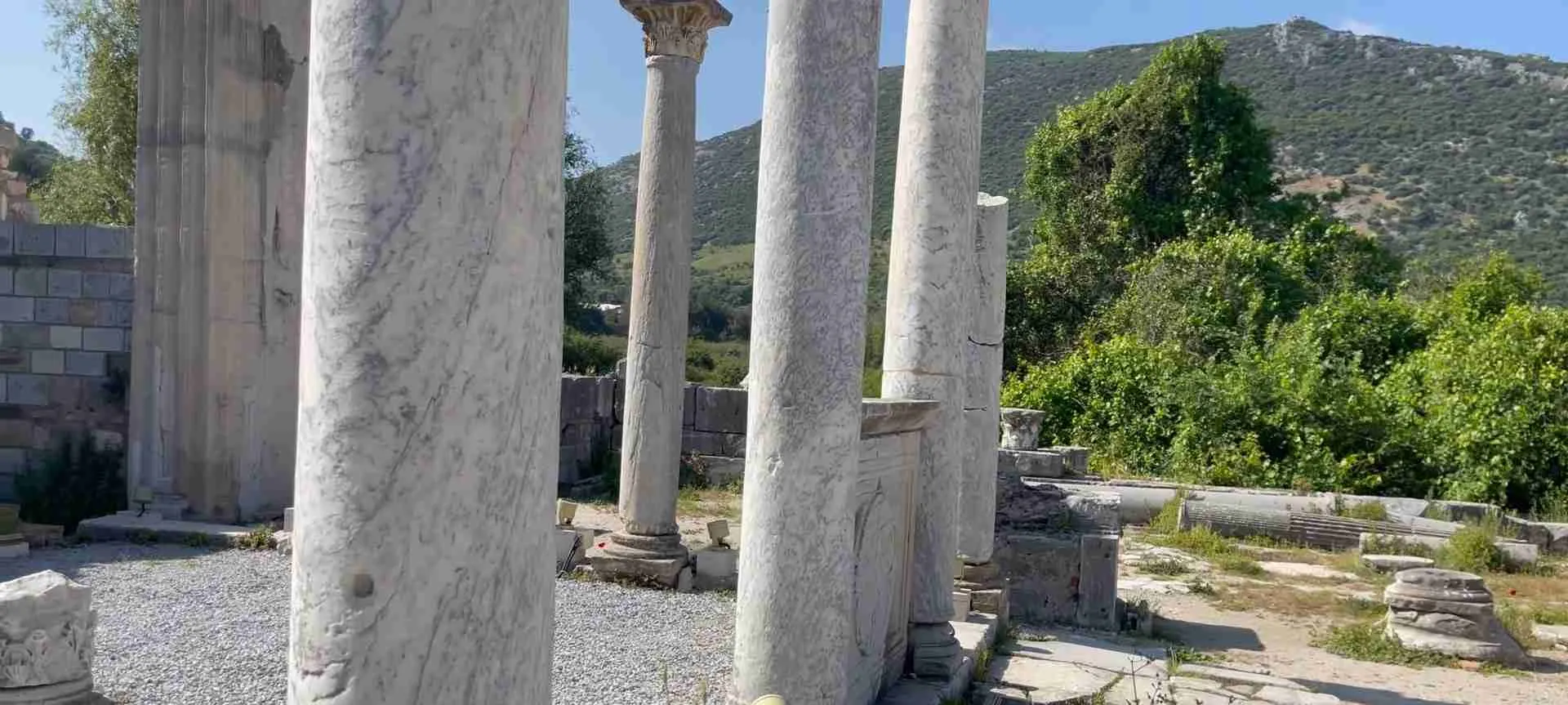
Ephesus Travel Guide 2026: Best-Preserved UNESCO Roman City
Ephesus stands as the Mediterranean world’s best-preserved classical city, where 2,000-year-old marble streets lead past the magnificent Library of Celsus, a 24,000-seat amphitheater, and intricate Terrace Houses showcasing Roman aristocratic life with stunning mosaics and frescoes. This UNESCO World Heritage Site offers travelers unprecedented access to Greco-Roman urban planning, early Christian heritage, and archaeological wonders just 80 kilometers from Izmir, making it Turkey’s most accessible and rewarding ancient city experience for 2026 visitors.
Key Takeaways
- Ephesus entrance costs €40 in 2026 (including the new Ephesus Experience Museum), with Terrace Houses requiring an additional €15 for access to exceptional Roman residential frescoes and mosaics
- The site opens 8:00 AM-7:00 PM summer (April-October) and 8:30 AM-5:30 PM winter (November-March), with early morning visits before 9:00 AM avoiding cruise ship crowds and midday heat
- Selçuk town provides budget-friendly accommodation ($40-110 nightly) within walking distance of Ephesus, Basilica of St. John, and the Ephesus Archaeological Museum
- Train travel from Izmir to Selçuk costs just €2-3 (90-100 TL) with hourly departures, making Ephesus an easy day trip from Turkey’s third-largest city
- A comprehensive Ephesus visit requires 3-4 hours minimum to explore major monuments including the Library of Celsus, Great Theatre, Terrace Houses, and Temple of Hadrian without rushing
- Ephesus combines exceptionally well with nearby UNESCO sites including the House of the Virgin Mary, Basilica of St. John, and Temple of Artemis (one of the Seven Wonders of the Ancient World) for multi-day cultural itineraries
People Also Ask About Ephesus 2026
How much does it cost to visit Ephesus in 2026?
Ephesus entrance costs €40 per adult in 2026, with this fee including access to both the main archaeological site and the newly opened Ephesus Experience Museum located near the Lower Gate. The famous Terrace Houses (luxury Roman residential complexes with exceptional frescoes and mosaics) require an additional €15 entrance fee paid separately at their dedicated entrance within the main site. Children under 8 enter free with passport proof of age. The combined €55 ticket (main site + Terrace Houses) delivers 3-4 hours of extraordinary archaeological exploration through the Mediterranean’s best-preserved Roman city, making it exceptional value compared to similar European heritage sites. Museum Pass Turkey (€65) or Museum Pass Aegean also provide Ephesus access alongside other regional museums, paying for itself when visiting 3-4 paid attractions across western Turkey.
What’s the best time to visit Ephesus in 2026?
The best time to visit Ephesus in 2026 combines early morning arrival (8:00-9:00 AM when gates open) with shoulder season months (April-May or September-October) avoiding both extreme summer heat and cruise ship crowds. Summer months (June-August) bring temperatures exceeding 35°C (95°F) with minimal shade across the ancient marble streets, while cruise ships from nearby Kusadasi port discharge thousands of tourists between 10:00 AM-2:00 PM creating congestion at major monuments. Early morning visits capture beautiful light for photography, comfortable temperatures for walking, and peaceful exploration before tour groups arrive. Winter visits (November-March) offer solitude and cooler weather but shorter opening hours (8:30 AM-5:30 PM) and occasional rain making marble surfaces slippery. Spring provides wildflowers blooming among ruins, while autumn delivers perfect weather without peak summer crowds or prices.
Can I visit Ephesus without a guide in 2026?
Independent Ephesus visits work perfectly well for travelers comfortable with self-guided exploration, as the main route through the site follows a clear downhill path from Upper Gate to Lower Gate with monuments appearing sequentially along Curetes Street and other major thoroughfares. Detailed information plaques in English mark major structures, while smartphone apps, downloaded PDF guides, and rental audio guides (available at entrances) provide historical context about monuments like the Library of Celsus, Great Theatre, and Temple of Hadrian. However, licensed professional guides significantly enhance the experience by explaining intricate details invisible to untrained eyes—identifying original versus reconstructed elements, interpreting relief carvings and inscriptions, revealing daily life stories from architectural features, and accessing restricted areas like the Terrace Houses where guides illuminate fresco meanings and Roman domestic customs. Group tours cost $40-80 per person including transportation from Izmir or Kusadasi, while private guides run $100-200 for personalized 3-4 hour tours delivering depth impossible through self-guided visits.
How do I get to Ephesus from Izmir in 2026?
Getting to Ephesus from Izmir combines affordable train travel to Selçuk town (90-100 TL or €2-3, approximately 80-90 minutes) with a short dolmuş minibus ride (25-40 TL or ~€1, 10 minutes) or taxi (100-200 TL or €5-10, 10 minutes) to the archaeological site entrance. Trains depart Izmir’s Basmane Station approximately every 2-4 hours throughout the day, requiring passport for ticket purchase at station counter or advance online booking through TCDD website. Upon arriving at Selçuk station, the dolmuş station sits 5 minutes walk away with frequent minibuses to Ephesus Lower Gate, while taxis wait outside the station offering direct transport to either Upper Gate (recommended for downhill walking through site) or Lower Gate. Alternative direct buses operate from Izmir’s main otogar (bus terminal) to Selçuk hourly at similar prices but longer journey times, while organized tours from Izmir include round-trip transportation, guide, and entrance fees at $60-120 per person for comprehensive day trips.
Extended multi-day tours – 5+ days
Featured Kusadasi Multi-Day Tour Packages

3 days
Kusadasi 3-Day Discovery Tour
- ✓ Comprehensive Kusadasi experience
- ✓ Expert local guides included
- ✓ All accommodation included
- ✓ Transportation provided

5 days
Kusadasi 5-Day Highlights Experience
- ✓ Comprehensive Kusadasi experience
- ✓ Expert local guides included
- ✓ All accommodation included
- ✓ Transportation provided

7 days
Kusadasi 7-Day Cultural Journey
- ✓ Comprehensive Kusadasi experience
- ✓ Expert local guides included
- ✓ All accommodation included
- ✓ Transportation provided

10 days
Kusadasi 10-Day Complete Adventure
- ✓ Comprehensive Kusadasi experience
- ✓ Expert local guides included
- ✓ All accommodation included
- ✓ Transportation provided
Multi-day tour packages powered by TourRadar. Prices and availability subject to change.
Introduction
Ephesus transforms ancient history from textbook abstraction into tangible reality through remarkably preserved marble streets, monumental facades, public latrines, brothel advertisements, and residential complexes revealing daily life in the Roman Empire’s third-largest city with 250,000 inhabitants at its 2nd-century peak. Unlike many archaeological sites requiring significant imagination to envision past grandeur, Ephesus presents near-complete monuments including the soaring Library of Celsus facade (reconstructed from thousands of original fragments), the 24,000-capacity Great Theatre still hosting concerts, and the Terrace Houses displaying vibrant frescoes and intricate mosaics in situ exactly where wealthy Romans enjoyed them 1,800 years ago.
The city’s extraordinary preservation stems from intentional abandonment rather than catastrophic destruction, as shifting coastlines and silting harbors forced Ephesus residents to relocate rather than rebuild after earthquakes, creating a time capsule buried under protective soil for centuries until systematic excavations beginning in the 1860s revealed structures surviving with unprecedented completeness. Walking through Ephesus means treading the same marble pavements where St. Paul preached to silversmiths, where Mark Antony and Cleopatra strolled, where gladiators entered the arena, and where thousands attended theatrical performances in venues acoustically engineered to project unamplified voices to the highest seats.
Beyond pure archaeological significance, Ephesus serves as early Christianity’s most important site after Jerusalem and Rome, with St. Paul establishing communities described in biblical epistles, St. John reportedly spending his final years here writing his gospel, and the Virgin Mary possibly residing nearby at the House of the Virgin Mary (a pilgrimage site drawing Pope visits). The nearby Temple of Artemis, one of the Seven Wonders of the Ancient World, once stood four times larger than the Parthenon, though only foundation remnants and a single reconstructed column mark this lost magnificence today.
UNESCO World Heritage inscription in 2015 recognized Ephesus as “an exceptional testimony to the cultural traditions of the Hellenistic, Roman, and early Christian periods” while highlighting threats from tourism pressure, environmental factors, and urban development requiring careful management. For 2026 travelers, this translates to professionally managed site access with conservation-focused regulations (no climbing on monuments, designated walking paths, restricted photography in Terrace Houses) ensuring this irreplaceable heritage survives for future generations while remaining accessible for meaningful contemporary exploration.
Planning Your Ephesus Visit for 2026
Strategic planning transforms Ephesus visits from rushed photo stops into comprehensive archaeological experiences capturing the site’s scale and significance. Most visitors underestimate both time requirements and environmental factors, arriving midday with inadequate water, inappropriate footwear, and unrealistic 90-minute schedules for a complex requiring minimum 3-4 hours for main monuments and 5-6 hours for thorough exploration including Terrace Houses, museum visits, and nearby Christian heritage sites.
The ideal Ephesus itinerary allocates 2-3 days in Selçuk town enabling comprehensive site coverage without exhaustion. Day one focuses on early morning Ephesus exploration (8:00 AM arrival, 4-5 hours including Terrace Houses), afternoon Ephesus Archaeological Museum visit showcasing artifacts removed from the site for preservation, and evening relaxation in Selçuk’s cafes and restaurants. Day two covers Basilica of St. John, Ayasoluk Castle, Temple of Artemis remnants, and optional House of the Virgin Mary pilgrimage site, with afternoon free for the charming village of Şirince (9 km from Selçuk) famous for fruit wines and traditional architecture. This pacing prevents the common mistake of attempting Ephesus as a rushed half-day excursion from Kusadasi or Izmir, missing both architectural details and contextual understanding that separate superficial tourism from meaningful cultural engagement.
Entry strategy significantly impacts experience quality. The site features two entrances: Upper Gate (Magnesia Gate) and Lower Gate near the Grand Theatre and Ephesus Experience Museum. Approaching from Upper Gate allows downhill progression through the archaeological complex, conserving energy and following the ancient city’s logical layout from residential areas through commercial districts to civic monuments—the recommended direction for comprehensive visits. However, most organized tours and cruise ship groups enter at Lower Gate, so independent travelers starting at Upper Gate avoid crowds by moving opposite to tour group flow. Taxi drivers expect explicit Upper Gate instructions, as default drop-offs go to the more accessible Lower Gate where tourist facilities concentrate.
Essential preparation items include comfortable closed-toe walking shoes (sandals risk blisters and twisted ankles on uneven marble), 2-3 liters water per person (minimal shade, hot temperatures, limited refreshment stands), sun protection (hat, sunscreen, light long sleeves), and small backpacks for water and purchased guidebooks or souvenirs. The site features minimal seating, so visitors with mobility limitations should consider shorter visits focusing on main monuments accessible without extensive walking. Summer visits demand very early arrival (opening time) plus midday break strategy, with some visitors touring 8:00-11:00 AM, breaking for lunch and museum visits, then returning 4:00-7:00 PM for golden hour photography and cooler temperatures.
Ephesus Entrance Fees and Tickets 2026
Ephesus entrance fees for 2026 follow Turkey’s standardized euro pricing for all national heritage sites, with main archaeological area admission set at €40 per adult including access to the newly opened Ephesus Experience Museum. This pricing represents the Turkish Ministry of Culture and Tourism’s response to persistent lira inflation, establishing stable euro rates rather than fluctuating lira amounts requiring constant adjustment. Children under 8 years enter free with passport or birth certificate proof of age, while students sometimes receive discounts with valid international student ID cards though this varies by season and policy changes.
The famous Terrace Houses require separate €15 entrance fee beyond main site admission, creating combined €55 total for comprehensive Ephesus exploration including both outdoor archaeological areas and covered residential museum spaces. This additional charge supports ongoing conservation of exceptionally fragile frescoes and mosaics requiring climate-controlled environments, specialized lighting, and restricted visitor numbers protecting these 2,000-year-old artworks from moisture, light damage, and physical contact. The Terrace Houses investment proves worthwhile for visitors interested in Roman daily life, as these six residential units reveal aristocratic luxury through elaborate heating systems, private baths, stunning wall paintings depicting mythological scenes, and geometric floor mosaics demonstrating wealth and artistic patronage impossible to experience elsewhere in the ancient world.
Ticket purchases occur at dedicated booths at both Upper and Lower Gate entrances, accepting credit cards (Visa, Mastercard) and cash (euros or Turkish lira at current exchange rates). Lines form quickly during cruise ship arrivals (typically 10:00 AM-12:00 PM), making early arrival or late afternoon visits strategic for minimal wait times. Audio guides rent for approximately €10 providing multilingual commentary synchronized to numbered monuments throughout the site, though quality varies and many visitors prefer professional licensed guides or smartphone apps delivering richer content.
Museum Pass Turkey (€65 valid 7 days) and Museum Pass Aegean (similar pricing, regional validity) provide Ephesus entrance alongside numerous other museums and archaeological sites across the country or Aegean region respectively. These passes pay for themselves when visiting 3-4 major attractions, with Ephesus (€40) + Terrace Houses (€15) nearly equaling the pass cost alone. Additional included sites like Basilica of St. John, Ephesus Archaeological Museum, and House of the Virgin Mary create substantial savings for multi-day cultural itineraries. Museum passes purchase at major site entrances or advance online through official Ministry websites, activating upon first use rather than purchase date allowing flexible timing within Turkish travels.
Getting to Ephesus in 2026
Ephesus sits 3.5 kilometers from Selçuk town in western Turkey’s Aegean region, positioned 80 kilometers south of Izmir (Turkey’s third-largest city), 18 kilometers from the cruise port of Kusadasi, and accessible via multiple transportation options ranging from budget-friendly public transit to private guided tours. Most international visitors approach through Izmir’s Adnan Menderes Airport (airport code ADB), Turkey’s primary Aegean gateway serving direct flights from European capitals and connecting domestic flights from Istanbul.
Train travel from Izmir represents the most economical Ephesus access method, with TCDD (Turkish State Railways) operating 4-6 daily trains between Izmir Basmane Station and Selçuk at 90-100 Turkish Lira (approximately €2-3) per journey requiring 80-90 minutes including intermediate stops. Trains provide comfortable, scenic travel through agricultural landscapes and small towns, with air-conditioned cars, assigned seating, and large windows offering countryside views impossible from highways. Passengers must present passports for ticket purchase (either at station counter or advance online booking through tcdd.gov.tr), with tickets stored as scannable QR codes on smartphones eliminating printing requirements. Basmane Station occupies central Izmir within walking distance of major hotels, connected to the metro network for airport arrivals requiring transfer.
Upon Selçuk arrival, the dolmuş (shared minibus) station sits 5 minutes walk from the train station following directional signs or asking locals “Ephesus dolmuş?” (Ephesus pronounced “Efes” in Turkish). Dolmuş minibuses depart when full (approximately every 15-30 minutes during daylight hours) charging 25-40 TL (~€1) for the 10-minute ride to Ephesus Lower Gate entrance. These shared vans function as flexible public transport, picking up and dropping passengers along fixed routes without strict schedules, representing authentic local transportation favored by budget travelers and cultural explorers. Alternatively, taxis wait outside Selçuk train station offering direct service to either Upper Gate or Lower Gate at negotiated rates of 100-200 TL (€5-10), beneficial for groups splitting costs or visitors with mobility limitations requiring door-to-door transport.
Direct intercity buses connect Izmir’s main otogar (bus terminal) to Selçuk hourly throughout the day at similar prices to trains but longer journey times (90-120 minutes) and less comfortable conditions compared to railway travel. These buses suit travelers staying near Izmir’s otogar or arriving from other Turkish cities with established bus networks like Bodrum, Pamukkale, or Antalya. From Kusadasi cruise port or resort hotels, frequent minibuses shuttle to Selçuk every 20 minutes during tourist season, passing Ephesus entrance approximately 4 minutes after Selçuk departure, allowing direct drop-off at archaeological site without town stop.
Organized tours eliminate transportation logistics entirely, with half-day and full-day Ephesus packages including round-trip hotel pickup, licensed guide commentary, entrance fees, and sometimes lunch in combined $60-150 per person rates depending on group size and itinerary comprehensiveness. Private tours offer customized scheduling and personalized attention at $200-400 per group, worthwhile for families or small friend groups seeking flexible timing and specific site emphasis. Shore excursions from Kusadasi cruise port represent the highest-priced option at $80-180 per person but guarantee ship departure synchronization critical for cruise passengers with strict boarding deadlines.
Where to Stay Near Ephesus 2026
Selçuk town provides Ephesus visitors with authentic Turkish atmosphere, excellent value accommodation, and walking access to multiple UNESCO sites including Basilica of St. John, Ayasoluk Castle, Temple of Artemis remnants, and the Ephesus Archaeological Museum, while positioning travelers just 3.5 kilometers from the ancient city entrance. This charming 35,000-population town operates at more relaxed pace than the resort atmosphere of nearby Kusadasi, offering genuine local culture alongside tourist infrastructure developed over decades hosting Ephesus visitors.
Budget accommodation ($30-50 per night) includes family-run pensions and hostels concentrated in Selçuk’s compact town center within 10-minute walking radius of the train station, dolmuş terminal, restaurants, and Basilica of St. John. Properties like Ephesus Hostel, Varder Pension, and Anz Guesthouse deliver clean private rooms or dormitory beds with shared facilities, included Turkish breakfast, and friendly hosts providing Ephesus touring advice and transportation arrangements. These establishments suit backpackers, solo travelers, and budget-conscious couples prioritizing savings over luxury amenities, though sacrificing private bathrooms, air conditioning consistency, and upscale furnishings characterizing higher-category properties.
Mid-range boutique hotels ($60-110 per night) represent Selçuk accommodation’s sweet spot, combining restored Ottoman architecture, swimming pools, garden courtyards, and complimentary Turkish breakfast in $80-100 nightly rates delivering exceptional value compared to equivalent European heritage town hotels. Properties like Akanthus Hotel Ephesus (consistently ranked Selçuk’s #1 hotel), Nilya Hotel, Celsus Boutique Hotel, and Ayasoluk Boutique Hotel feature air-conditioned rooms with private bathrooms, traditional décor incorporating local textiles and ceramics, rooftop terraces offering Basilica and castle views, and family ownership ensuring personalized service and local knowledge sharing. Many occupy restored historic buildings or new constructions mimicking traditional architectural styles, creating authentic Turkish atmosphere while providing modern comfort and amenities.
Luxury options ($120-185+ per night) include premium boutique hotels like Nisanyan Hotel (village setting 9 km from Selçuk in Şirince offering hilltop views and wine-focused restaurant) and select Selçuk properties featuring enhanced amenities like in-room Jacuzzis, private terraces, spa services, and elaborate breakfast spreads with local specialties. These establishments target travelers seeking upscale comfort and distinctive experiences, though price-to-value ratios generally favor mid-range categories unless luxury amenities prove essential for guest satisfaction.
Kusadasi, 18 kilometers from Ephesus, offers beachfront resort hotels ranging from all-inclusive mega-resorts to boutique beach hotels, serving travelers combining ancient site touring with Aegean coast relaxation. However, Kusadasi’s higher prices, cruise ship crowds, and tourist-trap atmosphere make it less appealing for culture-focused Ephesus visitors compared to authentic, affordable, and site-proximate Selçuk accommodations. Travelers choosing Kusadasi base themselves 20-30 minutes from Ephesus via dolmuş or taxi, adding daily transportation costs and logistics versus walking to sites from Selçuk hotels.
Accommodation booking timing significantly affects availability and pricing, with Easter week, summer peak (July-August), and cruise ship season (April-October) requiring advance reservations securing preferred properties at standard rates. Winter months (November-March) see dramatic price reductions (30-50% off summer rates) and immediate availability, as tourism declines following cruise season end. Booking platforms like Booking.com, Hotels.com, and Airbnb all feature Selçuk properties, though direct hotel booking sometimes yields better rates or upgraded rooms when availability permits.
Ephesus Major Monuments 2026
Ephesus sprawls across 663 acres containing hundreds of structures, though most visitors concentrate on a 2-kilometer core route connecting iconic monuments along Curetes Street and adjacent thoroughfares. Understanding key structures and their historical significance transforms archaeological ruins from photo backdrops into meaningful cultural experiences revealing daily life, religious practices, political systems, and social hierarchies defining Roman civilization at its peak.
Library of Celsus
The Library of Celsus stands as Ephesus’s most photographed monument and ancient world’s third-largest library after Alexandria and Pergamon, originally housing 12,000 scrolls in wall niches protecting manuscripts from humidity while honoring Roman Senator Tiberius Julius Celsus Polemaeanus through monumental architecture doubling as his mausoleum. The soaring two-story facade (reconstructed 1970-1978 from thousands of original marble fragments) features elaborate Corinthian columns, ornate entablature with decorative friezes, and four statue niches representing Wisdom, Knowledge, Intelligence, and Virtue—copies replacing originals now displayed in Vienna’s Ephesus Museum.
Architectural innovations include foundation construction on arched vaults creating air circulation spaces preventing manuscript-damaging moisture, while the facade’s clever proportional design makes the structure appear larger than actual dimensions through gradually widening column spacing and height increases toward center columns. The building functioned simultaneously as library, memorial monument, and statement of family wealth and cultural patronage, with Celsus’s elaborate sarcophagus preserved in underground crypt chamber beneath the reading room floor—rare Roman practice of burial within city limits granted only to exceptionally distinguished citizens.
Great Theatre
The Great Theatre dominates Ephesus’s lower slopes with its 24,000-seat capacity making it among the ancient world’s largest theatrical venues, used for dramatic performances, political assemblies, gladiatorial contests, and according to biblical accounts, the silversmith riot protesting St. Paul’s teachings against Artemis worship. The semicircular cavea (seating area) rises 30 meters across three tiers of marble benches, with exceptional acoustics allowing unamplified voices from the orchestra level to reach the highest back rows—a engineering achievement still functional today during concerts and performances occasionally hosted in the restored structure.
Construction spanned multiple Roman periods with Hellenistic foundations expanded under Emperors Claudius, Nero, and Trajan, creating the massive scale visitors encounter today. Original staging building facade featured elaborate marble decoration, statue niches, and painted architectural elements mostly lost to earthquakes and stone robbing, though lower levels preserve enough structural detail revealing the complex backstage areas, actor entrances, and mechanical systems operating scenery and stage effects. The theatre’s ongoing use for contemporary performances demonstrates ancient engineering’s enduring functionality while creating controversial conservation concerns about modern usage impacts on 2,000-year-old structures.
Terrace Houses
The Terrace Houses (additional €15 entrance beyond main ticket) present Roman aristocratic domestic life through six residential units built into hillside slopes, featuring elaborate frescoes, intricate mosaics, sophisticated heating systems, private baths, and luxury appointments demonstrating wealth concentration among Ephesus’s elite families. These multi-story domus (townhouses) occupied prime real estate on Curetes Street’s slopes, with rooms organized around central atriums (open courtyards) and peristyles (columned gardens) following classic Roman residential architecture adapted to Anatolian climate and topography.
Wall paintings rival Pompeii’s famous frescoes in quality and preservation, depicting mythological scenes, geometric patterns, architectural perspectives (trompe-l’oeil creating illusions of windows and columns), and decorative motifs revealing artistic trends and cultural influences across different rooms and construction periods. Floor mosaics demonstrate exceptional craftsmanship through geometric designs, figured scenes, and colored stone tessera (mosaic cubes) arranged in intricate patterns, while sophisticated hypocaust heating systems circulated hot air through underfloor channels warming rooms during cool months. Modern protective roofing and climate control preserve these fragile artworks while allowing visitor access via elevated walkways preventing physical contact with ancient surfaces.
Temple of Hadrian
The Temple of Hadrian presents exquisite Corinthian architecture on intimate scale contrasting with Ephesus’s monumental civic structures, honoring Emperor Hadrian through decorative facade featuring ornate entryway arch supported by elegant columns and elaborate relief carvings depicting mythological foundation scenes and imperial imagery. The semi-circular arch (tympanum) above the doorway contains bust of Tyche (city’s protective goddess) surrounded by acanthus leaf decoration, while inner walls once displayed relief friezes narrating Ephesus’s legendary founding by Amazons and later Roman takeover.
The temple’s relatively small size reflects private dedication rather than state-funded construction, likely commissioned by wealthy citizen seeking imperial favor through architectural homage. Current facade represents careful reconstruction using surviving original elements combined with replica pieces replacing lost components, with original reliefs removed to museum protection leaving copies in situ for visitors to appreciate architectural context. The structure demonstrates Ephesus’s sophisticated building techniques, artistic achievement, and political culture where emperor cult worship integrated seamlessly into religious and civic life.
Curetes Street
Curetes Street functioned as Ephesus’s main thoroughfare connecting the Library of Celsus to Upper Gate through 210-meter marble-paved route lined with columns, monuments, fountains, shops, public latrines, and aristocratic residences. Walking this ancient street provides tangible connection to daily Roman urban life, with worn marble paving stones showing ruts from countless chariot wheels, pedestrian walkways elevated above street level avoiding mud and waste, and colonnade protection providing shade for strolling citizens and shelter for shops occupying ground-floor spaces of multi-story insulae (apartment buildings).
Notable structures along Curetes Street include the elaborate Fountain of Trajan (monumental public water feature honoring Emperor Trajan), Scholastica Baths (public bathing complex with hot, warm, and cold rooms), the Brothel (identified by footprint symbol and female figure carved in pavement stones advertising services), and numerous shop facades showing retail organization along premium commercial frontage. The street demonstrates sophisticated Roman urban planning with water supply systems, drainage channels, mixed commercial-residential zoning, and hierarchical organization placing wealthy households in prominent locations while relegating lower-class housing and industrial activities to peripheral areas.
Ephesus Archaeological Museum 2026
The Ephesus Archaeological Museum in Selçuk town center (walking distance from train station and most hotels) houses artifacts removed from the ancient city for conservation and secure display, presenting sculptures, reliefs, coins, jewelry, household objects, and architectural fragments that contextualize the archaeological site’s monuments while protecting fragile pieces from environmental exposure and theft risks. The museum opened in 1929 has undergone multiple renovations and expansions, with current galleries organized chronologically and thematically showcasing finds from ongoing excavations alongside established collection highlights.
Star exhibits include the stunning Artemis of Ephesus statues displaying the goddess’s distinctive multi-breasted (or possibly egg-decorated) form representing fertility and abundance, found in the Prytaneion and demonstrating the Artemis cult’s central role in Ephesian religion and economy. Additional highlights feature the Eros and Dolphin sculpture group (Roman copy of Hellenistic original showing the love god riding a dolphin), elaborate sarcophagi demonstrating funerary art evolution, portrait busts of emperors and local dignitaries revealing individual personalities through realistic portraiture, and domestic items (pottery, glass vessels, cosmetic implements, oil lamps) illuminating daily life details invisible in archaeological ruins.
Entrance fees run approximately €3-5 (significantly less than main site), with Museum Pass Turkey providing free access alongside other included sites. Visit duration averages 60-90 minutes for comprehensive gallery review, making the museum ideal afternoon activity following morning Ephesus site exploration or as following-day cultural extension deepening archaeological understanding through artifact appreciation. The museum shop offers quality reproductions, illustrated guides, and scholarly publications unavailable at the archaeological site’s limited vendor stands.
House of the Virgin Mary 2026
The House of the Virgin Mary (Meryemana in Turkish) occupies forested hilltop 7 kilometers from Selçuk, revered as the Virgin Mary’s final residence based on visions of 19th-century mystic Anne Catherine Emmerich combined with archaeological evidence suggesting 1st-century habitation and early Christian pilgrimage traditions. The modest stone structure attracts Catholic pilgrims worldwide following papal visits by Paul VI (1967), John Paul II (1979), and Benedict XVI (2006) recognizing the site’s spiritual significance if not definitively establishing historical authenticity.
The current chapel preserves restored foundation walls and spring-fed fountain believed to possess healing properties, with adjacent areas designated for prayer, candle lighting, and leaving written petitions on “wishing wall” covered in cloths and prayers from global visitors. Entrance costs approximately €5-8, with dolmuş transport from Selçuk (when available) or taxi hire (€20-30 round-trip with waiting time) required for hilltop access on winding mountain roads unsuitable for walking. The serene mountaintop setting provides panoramic valley views alongside religious atmosphere markedly different from Ephesus’s archaeological tourism focus.
Theological debates continue regarding site authenticity, as no definitive proof establishes Mary’s residence here despite circumstantial evidence including St. John’s reported Ephesus presence (possibly accompanied by Mary per biblical tradition) and archaeological dating consistent with claimed time period. Regardless of historical certainty, the site’s spiritual importance to millions of believers worldwide justifies reverent visitation approaching the location as active pilgrimage destination rather than purely archaeological attraction, with appropriate modest dress and respectful behavior expected from all visitors regardless of religious affiliation.
Basilica of St. John 2026
The Basilica of St. John crowns Ayasoluk Hill in Selçuk town center, built by Emperor Justinian (527-565 CE) over the traditional tomb site of St. John the Apostle who reportedly spent his final years in Ephesus writing his gospel and epistles. The massive six-domed basilica once rivaled Constantinople’s Church of the Holy Apostles in scale and grandeur, functioning as major Christian pilgrimage destination throughout Byzantine period before earthquake damage and eventual abandonment left picturesque ruins commanding hilltop views over modern Selçuk and surrounding agricultural plains.
Current remains include restored columns marking the basilica’s cruciform floor plan, marble paving stones showing original layout, partial walls revealing construction techniques, and the traditional tomb site marked by marble canopy structure where St. John’s relics allegedly rested attracting medieval pilgrims from across Christendom. The site combines well with adjacent Ayasoluk Castle (medieval fortification incorporating Byzantine and Ottoman construction phases), İsa Bey Mosque (1375 Seljuk mosque demonstrating Islamic architectural transition period), and panoramic viewpoints overlooking Ephesus valley and distant Aegean Sea.
Entrance fees approximate €3-5, with Museum Pass Turkey providing included access alongside Ephesus and other regional sites. Walking from central Selçuk hotels requires 10-15 minutes moderate uphill climb through residential streets and gardens, rewarding visitors with comprehensive archaeological complex requiring 60-90 minutes for thorough exploration. The basilica’s historical significance extends beyond physical ruins to representing early Christianity’s expansion from Jerusalem into the Greek-speaking world, with St. John’s theological writings and evangelization efforts fundamentally shaping Christian doctrine and practice across subsequent centuries.
Temple of Artemis 2026
The Temple of Artemis (Artemision) once stood among the Seven Wonders of the Ancient World as the largest temple in the Greek world—four times the Parthenon’s size with 127 marble columns reaching 18 meters height—dedicated to Artemis of Ephesus, a goddess syncretizing Greek Artemis with indigenous Anatolian mother goddess attributes representing fertility, wild nature, and civic protection. The temple functioned simultaneously as religious sanctuary, treasury, economic center, and asylum offering protection to fugitives, generating enormous wealth through pilgrim offerings, banking activities, and property ownership throughout Ephesus’s territories.
Modern visitors encounter only foundation remnants, waterlogged excavation pit, and single reconstructed column marking this lost wonder’s location in marshy ground 2 kilometers from Selçuk town center. The temple’s destruction spans multiple catastrophic events: 356 BCE arson by Herostratus seeking fame, reconstruction completed 323 BCE, Gothic raids in 263 CE, Christian destruction of pagan temples in 401 CE, and subsequent stone robbing supplying building material for Byzantine construction projects. This complete loss renders the site underwhelming for visitors expecting substantial ruins comparable to Ephesus, though historical significance and imaginative reconstruction (aided by ancient descriptions and archaeological evidence) compensate for physical absence.
Access remains free with the site occupying open ground accessible during daylight hours, though reaching the location requires 30-minute walk from Selçuk center, bicycle rental, or dolmuş/taxi transport. Information panels provide historical context and reconstruction illustrations helping visitors visualize the vanished wonder’s scale and splendor, while contemplating the temple’s complete disappearance offers sobering reflection on cultural heritage fragility and historical change’s irreversible nature. Most comprehensive Ephesus itineraries include brief Temple of Artemis stop combining site visit with imagined appreciation of ancient world’s architectural achievements and religious significance.
Best Time to Visit Ephesus 2026
Ephesus visitation quality depends critically on timing optimization across multiple variables including seasonal weather, crowd levels, site operating hours, and complementary activities availability throughout the Aegean region. Strategic scheduling transforms potential challenges (extreme heat, overwhelming crowds, limited daylight) into opportunities for superior experiences through careful month selection, daily timing, and realistic expectations aligned with environmental conditions.
Shoulder season months (April-May and September-October) deliver optimal Ephesus conditions combining comfortable temperatures (20-28°C/68-82°F), extended daylight hours, manageable tourist numbers, and full service availability across hotels, restaurants, and tour operators. Spring visits (April-May) enjoy wildflowers blooming among ruins, green landscapes following winter rains, and moderate visitor density before peak summer tourist surge. Autumn visits (September-October) capture still-warm weather without summer’s intensity, golden agricultural landscapes during harvest season, and declining tourist numbers as European school holidays end while cruise season continues providing service infrastructure without overwhelming crowds.
Summer months (June-July-August) bring challenging conditions for Ephesus exploration, with temperatures regularly exceeding 35-40°C (95-104°F), intense Mediterranean sun creating heat exhaustion risks, minimal shade across ancient marble streets, and maximum tourist density from cruise ships, tour groups, and independent visitors converging simultaneously at major monuments. Summer visitors must adopt early morning strategies (site opening at 8:00 AM, completion before 11:00 AM) avoiding dangerous midday heat exposure, or split visits (morning 8:00-11:00 AM, evening 5:00-7:00 PM) around midday museum visits and indoor breaks. Despite difficulties, summer offers longest operating hours (8:00 AM-7:00 PM), fullest service availability, and guaranteed sunny weather for photography.
Winter months (November-March) appeal to solitude-seeking travelers and culture enthusiasts prioritizing uncrowded authentic experiences over weather perfection, with November-December showing moderate temperatures (15-20°C/59-68°F) and occasional rain, while January-February bring coolest conditions (10-15°C/50-59°F) and highest precipitation probability. Advantages include near-empty sites allowing contemplative exploration without crowds, dramatic lighting conditions for photography, lower accommodation and tour prices (30-50% discounts), and authentic local atmosphere as Selçuk returns to normal town rhythms without tourist season pressures. Disadvantages include reduced operating hours (8:30 AM-5:30 PM), some restaurant and shop closures, potential rain creating slippery marble surfaces, and limited tour operator availability requiring advance arrangement.
Frequently Asked Questions
How long does it take to see Ephesus in 2026?
Thorough Ephesus exploration requires minimum 3-4 hours covering main route from Upper Gate through Curetes Street to Library of Celsus and Great Theatre, including Terrace Houses visit (essential for comprehensive understanding), photography stops, and rest breaks avoiding heat exhaustion. Rushed cruise ship excursions often allocate just 90 minutes creating superficial site experience, while dedicated archaeology enthusiasts can spend 6-8 hours examining secondary monuments, reading informational plaques, sketching architectural details, and contemplating historical significance. Most independent travelers find 4-5 hours ideal, arriving at site opening (8:00 AM) for cool morning temperatures and uncrowded conditions, completing around 12:00-1:00 PM before heat peaks and cruise crowds arrive. Adding Ephesus Archaeological Museum (60-90 minutes), House of the Virgin Mary (60 minutes including transport), Basilica of St. John (60-90 minutes), and Temple of Artemis (30 minutes) creates full-day or 2-day comprehensive Ephesus cultural itinerary exceeding merely archaeological site visitation.
Can I visit Ephesus from a cruise ship in 2026?
Cruise ships dock at Kusadasi port 18 kilometers from Ephesus, with shore excursions ranging from ship-organized tours ($80-180 per person, guaranteed departure time accommodation) to independent taxi hiring ($40-60 round-trip, 30-40 minute journey each direction allowing flexible timing). Ship excursions provide convenient transportation, licensed guides, and punctual ship return guarantees eliminating missed departure risks, though higher costs, rigid schedules, and large tour groups compromise experience quality versus independent visits. Independent cruisers can taxi to Ephesus (negotiate round-trip fare including 3-4 hour waiting time), hire private guides meeting at site entrances, and control timing avoiding tour group congestion, though must carefully monitor return timing ensuring adequate buffer before ship’s all-aboard deadline. Dolmuş public transport from Kusadasi to Selçuk ($2-3, frequent departures) connects budget-conscious cruisers with Ephesus, though adds complexity and timing uncertainties unsuitable for travelers anxious about ship departures. Most cruise passengers choose ship-organized excursions valuing departure guarantee over cost savings or experience optimization, accepting compromises as reasonable trade-offs for worry-free touring.
Is Ephesus wheelchair accessible in 2026?
Ephesus presents significant accessibility challenges for wheelchair users and visitors with limited mobility due to ancient marble streets’ uneven surfaces, steep hillside slopes, numerous steps at monument entrances, and limited infrastructure modifications protecting archaeological integrity over accessibility enhancement. The main route from Upper Gate to Lower Gate follows continuous downhill grade manageable for some mobility-limited visitors using walking aids, though marble paving’s 2,000-year wear creates uneven surfaces, missing stones, and drainage grooves requiring careful navigation avoiding trips and falls. Major monuments like the Library of Celsus and Great Theatre offer viewing from street level or lower seating areas accessible without extensive stair climbing, while the Terrace Houses restrict entry through elevated walkway system with stairs preventing wheelchair access to these exceptional residential frescoes and mosaics. Visitors requiring full wheelchair accessibility should consider private tours with professional guides experienced in mobility-limited client needs, who identify accessible viewpoints, arrange vehicle positioning for reduced walking distances, and provide realistic expectations about achievable site coverage within mobility constraints. Some visitors with moderate limitations succeed using site-entrance wheelchairs (available through site management in limited numbers, advance inquiry recommended) assisted by companions navigating uneven terrain, while others prefer professional guided tours focusing on accessible highlights rather than comprehensive coverage attempted independently.
What should I wear to Ephesus in 2026?
Comfortable closed-toe walking shoes with good tread prove essential for Ephesus, where ancient marble streets create uneven surfaces, smooth stones become slippery when wet, and extensive walking across 2+ kilometers requires supportive footwear preventing blisters and twisted ankles. Lightweight, breathable clothing in light colors reflects heat during summer visits, with modest coverage (shoulders and knees) showing cultural respect though not technically required at this archaeological site versus active mosques. Wide-brimmed sun hats provide essential protection from intense Mediterranean sun with minimal site shade, while sunglasses reduce glare from white marble surfaces. Layering works best accommodating morning coolness and midday heat, with light long-sleeve shirts offering sun protection plus arm coverage against stone scrapes when touching walls or structures for balance. Small backpacks or crossbody bags carry essential water (2-3 liters minimum summer visits), sunscreen, camera equipment, and purchased souvenirs, while minimizing encumbrance during monument climbing and photography. Winter visits require light jacket or sweater for cool temperatures and wind exposure on hillside site, plus rain jacket or umbrella addressing occasional precipitation. Avoid fancy clothing or impractical footwear (sandals, flip-flops, heels) unsuitable for archaeological terrain, as Ephesus demands practical touring attire prioritizing comfort and safety over fashion considerations.
Can I take photos in Ephesus in 2026?
Photography remains permitted throughout most of Ephesus archaeological site for personal non-commercial use, with visitors freely capturing monuments, architectural details, landscapes, and travel companion images without fees or advance permission. The Library of Celsus, Great Theatre, Temple of Hadrian, Curetes Street, and public monuments all allow photography, making Ephesus exceptionally photo-friendly compared to some heritage sites restricting cameras. However, Terrace Houses impose photography restrictions protecting fragile frescoes and mosaics from flash damage and excessive light exposure, with signage indicating no-photography zones and security staff enforcing compliance. Some visitors successfully photograph these areas discreetly without flash when guards aren’t watching, though this violates stated policies and conservation ethics protecting irreplaceable 2,000-year-old artwork. Drone photography requires advance permission (difficult to obtain, rarely granted) due to safety concerns and heritage protection protocols, though ground-based photography on smartphones, tablets, and professional cameras operates without restrictions beyond flash limitations in sensitive areas. Tripods and selfie sticks face increasing regulation avoiding monument contact damage and interference with other visitors’ sightlines, though enforcement varies by season and visitor density. Commercial photography, film/video production, and professional shoots require formal permissions and fees arranged through site management, distinguishing between casual tourist photography and profit-motivated content creation.
Are there restaurants near Ephesus in 2026?
Ephesus archaeological site offers minimal dining facilities beyond basic snack bars at entrance gates selling bottled water, chips, ice cream, and simple sandwiches at inflated prices typical of captive-audience tourist locations. Serious meals require returning to Selçuk town 3.5 kilometers away, where numerous restaurants, cafes, and street food vendors serve traditional Turkish cuisine at reasonable prices. Budget options include döner kebab shops, pide restaurants serving Turkish flatbread pizza, and lokanta cafeterias offering daily specials with meat/vegetable stews, rice, salad, and bread for $5-10 per person. Mid-range restaurants around Selçuk’s main square and Basilica area charge $10-20 per person for sit-down meals featuring grilled meats, meze appetizer selections, fresh salads, and regional specialties like Selçuk’s famous şeftali kebab (peach-shaped ground meat with spices). Upscale dining appears limited in small-town Selçuk compared to resort areas, though several hotel restaurants and rooftop terraces offer romantic settings and elevated cuisine at $20-30+ per person. Many visitors optimize Ephesus day trips by packing picnic lunches or snacks from Selçuk bakeries and markets, finding shaded spots outside site boundaries for meal breaks, then returning to town for proper restaurant dinners after afternoon museum visits or relaxation time. This strategy avoids site exit-reentry complications (tickets don’t permit same-day return) while preventing overpriced captive-audience purchase at site facilities.
What’s the difference between Upper Gate and Lower Gate at Ephesus?
Ephesus features two main entrances serving visitors from different approach directions and offering distinct site exploration experiences. Upper Gate (also called Magnesia Gate) sits at the site’s uphill end near the Terrace Houses, accessed via winding road 4 kilometers from Selçuk passing countryside and scattered ruins. This entrance suits visitors arriving by taxi who can request “Upper Gate” drop-off, allowing downhill progression through the archaeological complex conserving energy while following the ancient city’s logical organization from residential districts through commercial zones to public monuments. Starting from Upper Gate provides crowd avoidance advantage, as most organized tours and cruise ship excursions enter at Lower Gate creating opposite-direction flow separating independent visitors from group bottlenecks at major photo stops. Lower Gate (also called North Gate) occupies the valley floor near the Great Theatre and Ephesus Experience Museum, directly accessible via dolmuş public transport from Selçuk and featuring larger parking area, more tourist facilities (shops, cafes, restrooms), and closer proximity to Library of Celsus and theatre highlights. This entrance suits cruise ship groups, walking arrivals from Selçuk, and visitors with mobility limitations preferring flat initial access before uphill climbing toward residential areas. Most guides recommend Upper Gate start for serious archaeology enthusiasts seeking comprehensive exploration, while Lower Gate serves time-constrained visitors prioritizing iconic monuments (Library, Theatre) over complete site coverage. Ticket prices remain identical regardless of chosen entrance, with admission valid for single entry without same-day return privileges.
Can I visit Ephesus independently without a tour in 2026?
Independent Ephesus visits work excellently for travelers comfortable with self-guided exploration, as the main route through the site follows clear downhill progression from Upper Gate to Lower Gate with monuments appearing logically along Curetes Street and connecting thoroughfares without confusing maze-like layouts requiring professional navigation. Detailed English-language information plaques mark major structures providing historical context, construction dates, architectural features, and functional purposes, while smartphone apps, downloadable PDF guides, and rental audio guides supplement signage with enhanced commentary. Independent advantages include flexible timing controlling photography stops, monument examination depth, and rest break frequency without group schedule constraints, plus cost savings eliminating guide fees ($40-80 group tours, $100-200+ private guides) for budget-conscious travelers. However, licensed professional guides significantly enhance understanding by explaining details invisible to untrained eyes—distinguishing original structures from reconstructions, interpreting relief carvings and inscriptions, revealing daily life stories from architectural features, accessing restricted areas like upper Theatre levels, and providing historical context transforming ruins from photo backdrops into meaningful cultural experiences. The ideal compromise combines independent exploration for major monuments with audio guide rental or smartphone app guidance, reserving professional guide services for complex areas like Terrace Houses where fresco interpretations and aristocratic life details benefit from expert explanation. Group tours suit time-constrained visitors (cruise passengers, travelers with tight schedules) valuing efficiency and comprehensive commentary over flexible independent timing, while private guides deliver optimal experiences for families, small groups, and serious archaeology enthusiasts seeking customized attention and specific interest emphasis.
What other sites combine well with Ephesus for multi-day trips in 2026?
Ephesus anchors diverse multi-day Aegean itineraries combining UNESCO World Heritage sites, coastal resorts, and cultural attractions throughout western Turkey. Pamukkale (180 kilometers, 3 hours drive) features stunning white travertine terraces formed by calcium-rich thermal waters cascading down hillside, plus the adjacent ancient city of Hierapolis with extensive Roman ruins including theater, necropolis, and Antique Pool allowing swimming among submerged marble columns. Priene, Miletus, and Didyma comprise the “PMD circuit” showcasing three exceptional archaeological sites (40-60 kilometers from Ephesus) typically toured together via organized excursions or rental car, with Priene demonstrating Hellenistic urban planning, Miletus featuring massive theater and Roman baths, and Didyma preserving monumental Temple of Apollo columns. The Greek island of Samos sits just offshore accessed via ferry from Kusadasi (90-minute crossing) offering beaches, mountain villages, and Pythagoreion archaeological site combining with Ephesus for cross-cultural ancient Mediterranean exploration. Şirince village (9 kilometers from Selçuk) provides charming Ottoman Greek architecture, fruit wine tastings, and handicraft shopping in relaxed hillside setting ideal for afternoon visits following morning Ephesus touring. Izmir (80 kilometers) offers urban culture, museums, waterfront dining, and archaeological sites like Agora and Kadifekale Castle worth 1-2 days exploration. Comprehensive 4-7 day Aegean itineraries typically include Ephesus (2 days), Pamukkale (1 day plus travel), PMD sites (1 day), and coastal relaxation time (1-2 days) in Kusadasi or Alaçatı, creating balanced cultural and leisure experiences showcasing Turkey’s ancient heritage and natural beauty.
Do I need Museum Pass Turkey for Ephesus in 2026?
Museum Pass Turkey (€65 valid 7 days, or Museum Pass Aegean at similar regional pricing) proves worthwhile for travelers planning visits to 3-4 major paid attractions across Turkish itineraries, with Ephesus alone (€40) plus Terrace Houses (€15) totaling €55 approaching the pass cost before adding other included sites. Additional Selçuk area attractions covered include Basilica of St. John, Ephesus Archaeological Museum, and House of the Virgin Mary, while broader Turkish travels encompass Istanbul’s major museums (Topkapi Palace, Hagia Sophia Mosque Museum, Archaeological Museums), Antalya’s sites, and hundreds of smaller museums nationwide. The pass pays for itself visiting just Ephesus + Terrace Houses + 2-3 other sites, while providing skip-the-line privileges at ticket offices during crowded periods saving significant waiting time. However, travelers focusing exclusively on Ephesus without extensive museum itineraries may find individual ticket purchases more economical, as unused pass coverage of distant sites provides no value. Purchase Museum Pass Turkey at major site entrances, Istanbul and Ankara airports, or advance online through Turkish Ministry of Culture website (muzepass.com), with activation occurring upon first site use rather than purchase date allowing flexible timing. The pass covers entrance fees only, excluding guided tours, audio guide rentals, transportation, or special exhibitions sometimes requiring supplemental payments. Budget calculation: Ephesus €40 + Terrace Houses €15 + Basilica of St. John €5 + Ephesus Museum €5 = €65 total, exactly equaling Museum Pass Turkey cost while providing access to hundreds of additional sites justifying purchase for multi-attraction itineraries.