Uçhisar Castle & Ortahisar: Cappadocia Fortress Towns
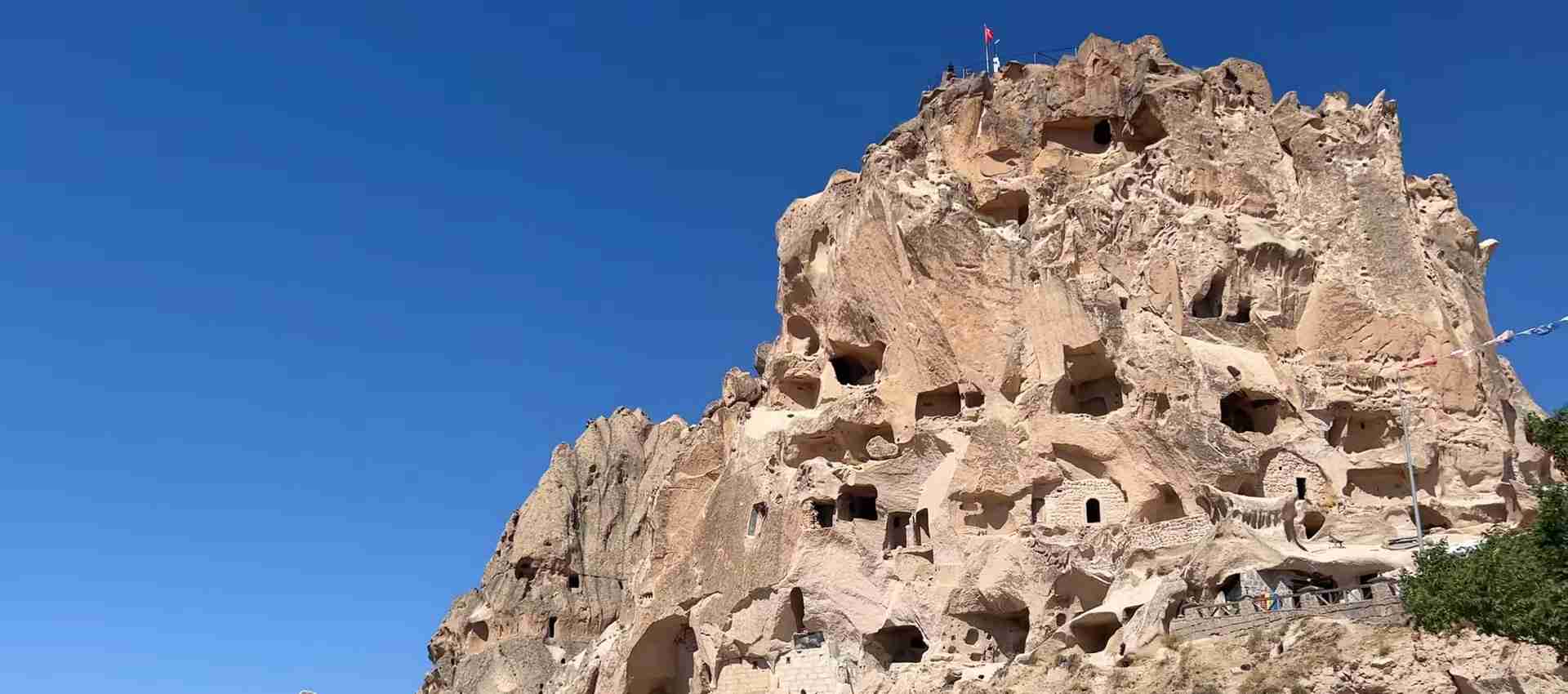
Uçhisar Castle and Ortahisar represent Cappadocia’s two most impressive rock-cut fortress settlements, where Byzantine and Ottoman civilizations carved defensive strongholds into massive fairy chimneys creating vertical villages that served as watchtowers, refuges, and residential complexes for centuries. Rising 60 meters and 86 meters respectively above their surrounding towns, these natural rock fortresses offer contrasting experiences: Uçhisar stands as Cappadocia’s highest point (1,350 meters elevation) attracting sunset-seeking crowds to its summit panoramas, while Ortahisar’s “biggest fairy chimney in Cappadocia” provides quieter exploration through steep ladders and narrow tunnels revealing authentic fortress architecture less modified for tourism, both accessible for modest entrance fees (€5-6 and €2 respectively) and offering windows into how Cappadocian communities adapted extraordinary geological formations into sophisticated defensive architecture that protected inhabitants across millennia of invasions and conflicts.
Key Takeaways
- Two Distinct Fortress Experiences: Uçhisar Castle offers the highest viewpoint in Cappadocia (1,350 meters elevation) with 360-degree panoramas across the entire region, modern infrastructure including safety railings and wide passages, and sunset crowds drawn by Instagram-famous vistas, while Ortahisar Castle delivers more authentic fortress exploration through steep vertical ladders, narrow Byzantine-era tunnels, and significantly fewer visitors creating intimate connection with historical architecture despite closing before sunset at 6:00 PM versus Uçhisar’s 7:00 PM-9:00 PM extended hours.
- Pricing and Museum Pass Status: Uçhisar Castle entrance costs €5-6 (approximately 250 Turkish Lira) and Ortahisar Castle charges €2 (50-100 Turkish Lira), with neither fortress accepting the Museum Pass Cappadocia unlike nearby attractions (Göreme, underground cities, Ihlara Valley), requiring separate ticket purchases at entrance booths operated by municipal authorities rather than national cultural ministry, making combined visits economically attractive totaling just €7-8 for both fortresses versus €65 museum pass covering different sites.
- Historical Significance and Architecture: Both fortresses date to Byzantine period (4th-12th centuries) with possible earlier Hittite foundations, serving as defensive watchtowers in Cappadocia’s three-fortress protective network alongside Ürgüp’s demolished Başhisar, featuring interconnected cave rooms carved into volcanic tuff accommodating hundreds of residents during invasions, with ventilation shafts ensuring air circulation, rolling stone doors sealing entrances against attackers, and strategic elevated positions providing surveillance across valleys and trade routes critical to regional security for centuries.
- Physical Demands and Accessibility: Climbing either fortress requires moderate fitness for steep stairs, narrow passages with low ceilings necessitating stooping, and vertical metal ladders (especially Ortahisar’s “exceptionally steep” final ascent), making both unsuitable for mobility-limited visitors, those with severe claustrophobia, or young children, though Uçhisar’s renovations created somewhat easier access compared to Ortahisar’s more challenging authentic Byzantine passages that reward adventurous climbers with less crowded exploration and dramatic interior architecture.
- Optimal Visiting Strategies: Visit Uçhisar Castle for sunset (arriving 60-90 minutes before to secure summit positions before crowds) taking advantage of extended summer hours until 9:00 PM, while scheduling Ortahisar Castle for morning or early afternoon given its 6:00 PM closing time that prevents sunset viewing but ensures golden hour photography of the fortress exterior from surrounding viewpoints, combining both fortresses in single day trip from Göreme (6 km and 5 km respectively) via rental car, dolmuş, or cycling for comprehensive comparison costing total €7-8 entrance fees plus minimal transport.
- Town Character and Accommodation: Uçhisar town offers upscale boutique cave hotels with premium pricing and sophisticated dining catering to luxury travelers seeking refined Cappadocian experience with spectacular castle and valley views, while Ortahisar maintains more authentic village atmosphere with traditional Turkish character, local markets, affordable accommodations, and fewer tourist-oriented businesses, making Ortahisar ideal for budget travelers or those seeking genuine village life versus Uçhisar’s polished resort-like ambiance attractive to couples and photographers.
People Also Ask About Uçhisar and Ortahisar Castles
Which is better Uçhisar or Ortahisar Castle?
Uçhisar Castle proves better for panoramic sunset photography, accessibility, and comprehensive regional views from Cappadocia’s highest point (1,350 meters elevation), while Ortahisar Castle excels for authentic fortress architecture, fewer crowds, lower entrance fees (€2 versus €5-6), and adventurous exploration through steeper Byzantine-era passages and tunnels. Uçhisar’s advantages include 360-degree panoramas encompassing Göreme, Rose Valley, Red Valley, Pigeon Valley, and Mount Erciyes volcano, wider passages with modern safety features making climbing easier for average fitness levels, extended evening hours until 7:00 PM-9:00 PM perfect for golden hour and sunset photography, and surrounding town amenities including numerous restaurants and cave hotels within walking distance. Ortahisar’s strengths center on more challenging authentic fortress experience via exceptionally steep vertical ladders and narrow Byzantine tunnels unmodified by extensive tourism development, significantly reduced visitor numbers creating peaceful exploration without tour group congestion, budget-friendly €2 entrance fee (60% less than Uçhisar), and surrounding traditional village atmosphere offering genuine Turkish character versus Uçhisar’s upscale boutique ambiance. Photography enthusiasts prioritize Uçhisar for its superior sunset vistas and comprehensive valley panoramas, while adventure travelers and history buffs prefer Ortahisar’s authentic architecture and intimate fortress atmosphere. Ideally, visit both fortresses for comprehensive comparison: they sit just 10 kilometers apart making combined exploration feasible in single afternoon, with total entrance fees of only €7-8 providing excellent value for experiencing Cappadocia’s two contrasting fortress styles and understanding how Byzantine defensive architecture adapted different geological formations to similar protective functions.
Can you climb inside Uçhisar and Ortahisar Castles?
Yes, both Uçhisar Castle and Ortahisar Castle permit interior climbing through interconnected cave rooms, tunnels, and passages carved into volcanic tuff rock, ascending via combination of carved stone stairs and modern metal ladders to viewing platforms offering panoramic vistas. Uçhisar Castle climbing involves moderate physical effort through widened passages and stairs enhanced by renovation projects, ascending approximately 60 meters vertical distance from entrance to summit viewing terrace, with modern metal railings installed along precipitous sections, improved lighting in darker passages, and multiple rest platforms allowing gradual ascent breaking the climb into manageable segments suitable for average fitness levels. The summit platform accommodates dozens of visitors simultaneously, with protective barriers preventing falls while preserving open views across all directions. Ortahisar Castle presents more challenging ascent through narrower Byzantine-era passages maintaining original architectural character, requiring climbers to navigate steep carved steps with irregular heights, stoop through low-ceiling tunnels where tall visitors must bend significantly, and conquer “exceptionally steep” vertical metal ladders near the summit that demand upper body strength and comfort with heights. The final ladder ascent proves particularly demanding, ascending nearly vertically with minimal handholds beyond the ladder itself. Both fortresses require sturdy closed-toe shoes with good grip preventing slips on smooth rock surfaces, long pants protecting legs from scraping against narrow passage walls, and flashlight or phone light illuminating darkest tunnel sections where natural light penetration remains limited. Neither fortress suits mobility-limited visitors, those with severe claustrophobia finding narrow tunnels distressing, or young children lacking coordination for safe ladder climbing. The physical demands reward climbers with spectacular panoramic views and intimate appreciation of how Byzantine engineers carved sophisticated defensive architecture into natural rock formations, transforming fairy chimneys into vertical fortress cities accommodating hundreds of residents across multiple levels interconnected by passages designed to confuse invaders while facilitating defender movement.
What is the history of Uçhisar and Ortahisar fortresses?
Uçhisar and Ortahisar fortresses formed two-thirds of Cappadocia’s Byzantine-era three-fortress defensive network protecting the region from Arab, Persian, and Seljuk invasions during the 4th-12th centuries, with each fortress serving as watchtower, refuge, and residential complex carved into prominent volcanic tuff peaks providing strategic surveillance across valleys and trade routes. The three-fortress system comprised Başhisar (“Main Castle”) in Ürgüp (since demolished leaving no remains), Ortahisar (“Middle Fortress”) positioned centrally between the others, and Uçhisar (“Edge Castle” or “Third Fortress”) marking the defensive perimeter’s western boundary, creating overlapping visual communication network where signal fires or flags transmitted warnings between fortresses alerting communities to approaching threats requiring retreat into underground cities or fortress strongholds. Archaeological evidence suggests possible earlier Hittite occupation of both sites dating to 1800-1200 BCE based on pottery fragments and construction techniques predating Byzantine stonework, though definitive dating proves difficult given continuous occupation and modification by successive civilizations including Romans, Byzantines, Seljuk Turks, and Ottomans each adapting existing structures to contemporary needs. Byzantine Christians expanded both fortresses significantly during 4th-12th centuries, excavating extensive cave church complexes, residential chambers, food storage rooms, water cisterns, and defensive features including rolling stone doors sealing passages against invaders, ventilation shafts circulating fresh air to deepest levels, and lookout positions monitoring approaching enemies across surrounding valleys. The fortresses served dual functions: during peacetime as residential communities where families occupied carved cave homes using fortress rooms for daily living, and during invasions as defensive refuges where populations from surrounding villages retreated bringing livestock, food supplies, and valuables to wait out sieges lasting weeks or months. Ortahisar’s legend attributes early settlement to Hibe Dede and eight siblings migrating from Uzbekistan in 12th century, establishing nine family compounds that grew into the modern town, though historical verification remains elusive. Both fortresses gradually lost military importance following Ottoman conquest in 15th century establishing regional stability, transitioning to pure residential use as families continued occupying cave dwellings into 20th century. Ortahisar castle closed to visitors in 2004 due to erosion dangers, undergoing extensive renovation 2004-2013 including seismic stabilization and crack filling before reopening as tourist attraction. Uçhisar remained continuously accessible but has undergone periodic maintenance reinforcing passages and installing modern safety features accommodating increasing tourism while preserving historical architecture.
How long does it take to visit Uçhisar and Ortahisar Castles?
Visiting Uçhisar Castle requires 60-90 minutes for thorough exploration including 30-40 minutes climbing from entrance to summit, 20-30 minutes at the top appreciating 360-degree panoramas and photographing valleys and fairy chimneys, and 20-30 minutes descending through different passages exploring side chambers and pigeon houses carved into surrounding rock faces. Sunset visits extend to 2 hours as visitors arrive early securing optimal viewing positions before crowds, wait for golden hour lighting transforming valleys into photogenic landscapes, witness actual sunset over distant Mount Erciyes and surrounding peaks, then descend through dim passages requiring careful footing after daylight fades. Ortahisar Castle visits prove quicker at 45-75 minutes total given the viewing platform sits halfway up the 86-meter rock rather than at the absolute summit, with 5-7 minutes climbing through steep tunnels and vertical ladders from entrance to midpoint terrace, 15-30 minutes appreciating panoramic views encompassing Göreme, Uçhisar, and Ürgüp with less extensive vistas than Uçhisar’s higher elevation but still impressive valley perspectives, and 10-15 minutes descending carefully through narrow passages and steep ladders requiring concentration preventing slips. Visiting both fortresses in combined trip spans 3-4 hours including 60-90 minutes at Uçhisar, 45-75 minutes at Ortahisar, and 30-45 minutes driving between sites (10 kilometers) with brief stops photographing exterior views and exploring surrounding town streets. The most efficient combined visit begins at Ortahisar in early-mid afternoon (2:00-3:00 PM arrival) allowing 1 hour exploration before 6:00 PM closing, then transfers to Uçhisar arriving 4:30-5:30 PM depending on season for sunset timing, spending 1.5-2 hours climbing to summit before or during sunset, and descending after dark using phone flashlights or castle’s minimal lighting. Alternative scheduling visits Uçhisar first for morning or midday climb avoiding sunset crowds and harsh midday lighting, then proceeds to Ortahisar for afternoon exploration when angled sunlight creates more interesting shadows and valley colors than harsh noon conditions. Budget minimum 1 hour per fortress for rushed visits hitting summit viewpoints only, or allocate 1.5-2 hours each for leisurely exploration photographing interior architecture, examining pigeon houses, and understanding defensive features beyond simple summit panoramas. Time requirements increase for photography enthusiasts seeking optimal lighting conditions, families with children requiring slower pace through challenging passages, or visitors thoroughly exploring side chambers and passages beyond main routes to summit viewpoints.
Extended multi-day tours – 5+ days
Featured Cappadocia Multi-Day Tour Packages
3 days
Cappadocia 3-Day Discovery Tour
- ✓ Comprehensive Cappadocia experience
- ✓ Expert local guides included
- ✓ All accommodation included
- ✓ Transportation provided
5 days
Cappadocia 5-Day Highlights Experience
- ✓ Comprehensive Cappadocia experience
- ✓ Expert local guides included
- ✓ All accommodation included
- ✓ Transportation provided
7 days
Cappadocia 7-Day Cultural Journey
- ✓ Comprehensive Cappadocia experience
- ✓ Expert local guides included
- ✓ All accommodation included
- ✓ Transportation provided
10 days
Cappadocia 10-Day Complete Adventure
- ✓ Comprehensive Cappadocia experience
- ✓ Expert local guides included
- ✓ All accommodation included
- ✓ Transportation provided
Multi-day tour packages powered by TourRadar. Prices and availability subject to change.
Understanding Cappadocia’s Three-Fortress Defensive System
Cappadocia’s strategic importance as crossroads connecting Anatolia, Persia, and the Mediterranean necessitated sophisticated defensive infrastructure protecting the region from continuous invasions by Arab Muslims, Persian armies, and nomadic raiders during the Byzantine period spanning 4th-12th centuries. The three-fortress network comprising Başhisar in Ürgüp, Ortahisar between Göreme and Ürgüp, and Uçhisar west of Göreme created overlapping surveillance coverage across valleys and trade routes, with fortress watchtowers positioned atop the highest natural rock formations providing visual communication through signal fires, flags, or smoke signals transmitting warnings about approaching armies across distances exceeding direct shouting or messenger delivery speeds.
This defensive triangle protected Göreme’s monastic communities, underground city networks at Derinkuyu and Kaymaklı, agricultural valleys producing grapes and grains feeding regional populations, and trade caravans traversing Silk Road branches connecting Mediterranean ports with Central Asian markets. Each fortress served triple functions: watchtower providing early invasion warnings through elevated observation posts commanding 20-30 kilometer sightlines across relatively flat Anatolian plateau, refuge accommodating populations from surrounding villages during sieges with food storage, water cisterns, and living quarters supporting months-long occupation, and residential community during peacetime when families occupied carved cave homes using fortress chambers for daily living and storage. The network’s effectiveness derived from positioning fortresses at strategic intervals allowing visual communication while creating defensive depth where invading armies could not bypass one fortress without exposing flanks to attacks from others, forcing costly sieges or withdrawals rather than easy passage through Cappadocia toward wealthier Byzantine heartlands.
Başhisar’s demolition in modern era leaves Uçhisar and Ortahisar as sole surviving members of this historical defensive network, with both fortresses preserving architectural features revealing Byzantine military engineering adapted to Cappadocia’s unique volcanic tuff geology. The soft rock permitted rapid excavation of rooms, tunnels, and defensive features impossible in harder granite or limestone requiring years of labor for equivalent volume, while the tuff’s surprising structural strength when properly shaped and supported prevented collapse despite creating multi-story vertical settlements. Understanding the three-fortress system provides essential context for appreciating Uçhisar and Ortahisar beyond simple scenic viewpoints, recognizing them as sophisticated military installations integral to Byzantine regional defense strategies protecting Christian communities from Islamic expansion for centuries before eventual Seljuk and Ottoman conquests ended the fortresses’ military relevance.
Uçhisar Castle: Cappadocia’s Highest Point and Premier Sunset Destination
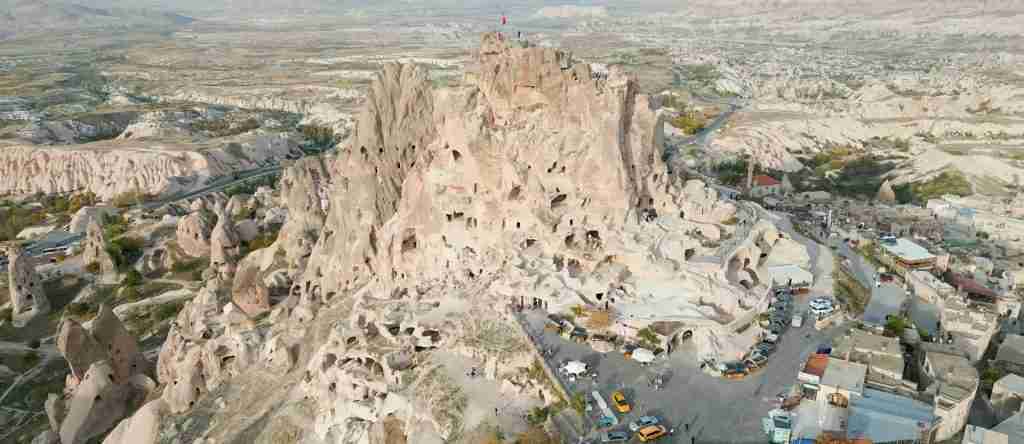
Uçhisar Castle dominates the western Cappadocian landscape as a 60-meter-high rock formation riddled with caves and passages, positioned atop a hill creating combined elevation of 1,350 meters above sea level making it the region’s highest accessible point visible from dozens of kilometers across surrounding valleys. This prominence made Uçhisar ideal for Byzantine watchtower functions, with summit observers surveying approaching caravans, armies, and travelers across trade routes converging near modern Nevşehir and Göreme, providing crucial early warning allowing communities to retreat into underground cities or prepare fortress defenses before invaders arrived.
Architectural Features and Interior Layout
The fortress interior comprises hundreds of interconnected rooms, tunnels, and passages carved across multiple levels, creating vertical village accommodating several hundred residents in tiered cave homes ascending the rock’s natural contours. Lower levels contain larger chambers serving communal functions including food storage rooms where grain, dried fruits, and preserved meats sustained fortress populations during sieges, water cisterns collecting rainfall and spring water ensuring drinking supplies when wells outside fortress walls became inaccessible, and gathering spaces where community meetings, religious services, and social activities occurred. Middle levels feature residential chambers where individual families occupied one or more cave rooms depending on household size and status, with wealthier families claiming larger spaces in premium positions offering better ventilation and views, while poorer residents accepted smaller chambers in less desirable locations. Upper levels served defensive purposes with narrow passages easily defended by small numbers against larger attacking forces, lookout positions with carved window openings providing surveillance across specific valleys or approaches, and summit platforms where signal fires communicated with Ortahisar and Başhisar fortresses completing the regional defensive network.
The passage network demonstrates Byzantine engineering sophistication through ventilation shafts ensuring fresh air circulation to deepest chambers, drainage channels directing water away from living spaces preventing dampness and mold accumulation, and defensive choke points where narrow tunnels and low ceilings forced attackers into single-file progression vulnerable to defenders dropping stones or pouring boiling liquids from murder holes carved in passage ceilings. Rolling stone doors at critical junctions sealed passages against intruders, with circular stones weighing hundreds of kilograms set in carved grooves allowing defenders to roll them across openings blocking access while remaining movable for legitimate passage during peacetime. Modern renovations installed metal stairs, handrails, and lighting enhancing visitor safety while preserving original architecture in most sections, allowing contemporary tourists to experience Byzantine fortress design through climbing authentic passages and chambers rather than sanitized museum reconstructions.
Summit Panoramas and Viewpoint Geography
Reaching Uçhisar’s summit rewards climbers with unobstructed 360-degree panoramas encompassing Cappadocia’s major attractions, geological features, and distant mountains creating comprehensive visual introduction to the region’s geography. Northward views span Göreme town, Göreme National Park’s fairy chimney concentrations, and the valleys radiating from the park including Rose Valley’s pink-hued rock formations and Red Valley’s iron oxide-stained cliffs visible as colored ribbons cutting through beige volcanic tuff. Eastern perspectives reveal Ortahisar Castle’s distinctive silhouette rising above its town, Ürgüp’s whitewashed buildings climbing hillsides, and the agricultural plateau extending toward Kayseri with vineyards and orchards creating geometric patterns across former volcanic ash fields. Southward vistas encompass the road toward Derinkuyu and Kaymaklı underground cities disappearing into rolling hills, with occasional glimpses of these southern settlements depending on atmospheric clarity. Western views stretch across Pigeon Valley’s cliff faces honeycombed with pigeon houses painted red attracting the birds whose droppings fertilized vineyards for centuries, with Love Valley’s phallic fairy chimneys creating surreal landscape contrasting with more conventional rocky terrain.
The most dramatic vista targets northeast where Mount Erciyes volcano rises 3,917 meters above sea level, its snow-capped peak visible year-round creating striking backdrop to Cappadocian fairy chimneys in foreground. The extinct volcano’s Pliocene-Pleistocene eruptions created the volcanic ash deposits that eroded into Cappadocia’s fairy chimneys, making Erciyes the geological parent of the landscape surrounding Uçhisar. Sunset photography captures Erciyes silhouetted against orange and pink skies while valleys below transform through progressive shadow patterns as angled light accentuates rock formations invisible during harsh midday illumination. Hot air balloon flotillas drifting across sunrise skies add additional photogenic element visible from Uçhisar summit when arriving early morning, though sunset remains more popular given Uçhisar’s western position creating sunset views over rather than against the castle.
Visiting Practicalities and Crowd Management
Uçhisar Castle operates 8:00 AM to 7:00 PM during winter season (November-March) and extends to 9:00 PM during summer season (April-October), with last entry permitted 30 minutes before official closing time ensuring visitors complete climbs before gates lock. The €5-6 entrance fee (approximately 250 Turkish Lira, subject to fluctuation given Turkish currency volatility) gets paid at ticket booth near parking area, with no advance reservations required or available making visit timing spontaneous rather than planned weeks ahead. The Museum Pass Cappadocia does not cover Uçhisar despite covering most major attractions including Göreme Open Air Museum, underground cities, and Ihlara Valley, requiring separate cash payment at entrance regardless of museum pass possession. This exclusion results from municipal rather than national government operation, with Uçhisar town authorities controlling the fortress and retaining revenues rather than sharing with national cultural ministry managing museum pass properties.
Sunset creates peak crowding as dozens of tourists converge seeking Instagram-worthy photographs, arriving 60-90 minutes before actual sunset to secure optimal summit positions before all viewpoints fill completely. Weekends and Turkish national holidays see amplified crowding as domestic tourists join international visitors, while weekdays especially Tuesday-Thursday maintain more moderate numbers permitting easier movement and less competitive positioning for photography. Sunrise presents alternative timing avoiding crowds entirely given most tourists prioritize hot air balloon flights during predawn hours rather than fortress climbing, though sunrise visits require waiting outside until 8:00 AM opening missing the actual sunrise moment but catching excellent early morning light illuminating valleys and fairy chimneys. Midday visits 11:00 AM-2:00 PM encounter fewer visitors than sunset but suffer harsh overhead lighting creating flat landscapes less photogenic than angled morning or evening illumination.
The climb takes 30-40 minutes ascending from entrance to summit for moderately fit adults maintaining steady pace, with slower climbers requiring 45-60 minutes and fit visitors completing ascent in 20-25 minutes. Passages vary in width and ceiling height, with some sections requiring stooping or careful sideways navigation while others accommodate upright walking, and modern metal stairs reducing difficulty compared to original carved stone steps worn smooth by centuries of foot traffic. The summit platform accommodates 30-40 people comfortably before feeling crowded, expanding to 60-80 during peak sunset when visitors accept tighter spacing for photographic opportunities. Descending takes 20-30 minutes choosing different routes than ascent revealing additional chambers and pigeon houses, with total visit duration of 60-90 minutes for thorough exploration or extending to 120 minutes for sunset watching including pre-sunset positioning and post-sunset descent.
Uçhisar Town Character and Accommodation Options
Uçhisar town radiates upscale boutique character catering to luxury travelers seeking refined Cappadocian experience with sophisticated cave hotels, gourmet restaurants, and art galleries creating polished resort atmosphere contrasting with Göreme’s budget backpacker hostels and Ortahisar’s authentic village simplicity. The town’s elevated position and castle prominence attract premium developments including Sultan Cave Suites, Museum Hotel, and Kayakapi Premium Caves offering elaborate cave suite accommodations at €200-€400 nightly with infinity pools carved into rock, rooftop terraces providing balloon viewing and valley panoramas, and gourmet restaurants serving creative Turkish cuisine using local ingredients. These properties target honeymooners, luxury travelers, and photographers willing to pay premium prices for exceptional ambiance, service, and Instagram-worthy settings frequently appearing in Cappadocia promotional photography and travel magazine features.
Mid-range cave hotels at €80-€150 nightly provide comfortable authentic cave architecture without luxury properties’ extensive amenities, offering smaller rooms, simpler breakfast spreads, and family-run hospitality rather than resort-style service but maintaining cleanliness, comfort, and convenient access to castle and restaurants. Budget accommodations remain limited in Uçhisar compared to Göreme’s extensive hostel networks, with few options below €60 nightly given the town’s luxury orientation and land values commanding higher rents. Restaurants similarly skew upscale with most establishments charging €20-€40 per person for dinner featuring atmospheric cave interiors or terrace seating with castle and valley views, while budget dining options serving quick meals at €8-€15 prove scarcer than Göreme’s concentrated street food vendors and local eateries.
The town’s character suits couples seeking romantic settings, luxury travelers prioritizing comfort and service over budget considerations, and photographers valuing premium viewpoints and sophisticated accommodations as base for intensive shooting schedules. Families and budget travelers generally prefer Göreme’s superior value and service concentration or Ortahisar’s authentic village atmosphere and lower costs, though Uçhisar’s proximity to both towns (6 kilometers from Göreme, 10 kilometers from Ortahisar) allows day visits for castle climbing and sunset viewing without accommodation commitment. Walking to Uçhisar Castle from town center takes 5-10 minutes through winding alleys lined with cave hotels and shops, creating pleasant stroll showcasing local architecture before fortress climbing begins.
Ortahisar Castle: Authentic Fortress Architecture and Village Charm
Ortahisar Castle rises 86 meters as Cappadocia’s tallest single rock formation, earning designation as the region’s “biggest fairy chimney” despite functioning as fortress rather than natural geological curiosity. This massive volcanic tuff peak dominates Ortahisar town center, visible from kilometers across surrounding valleys and creating distinctive silhouette distinguishing Ortahisar from other Cappadocian settlements. The castle’s sheer size dwarfs surrounding buildings and standard fairy chimneys, with its riddled surface covered in hundreds of cave openings creating honeycomb appearance where pigeon houses, storage rooms, and residential chambers once served fortress community.
Distinctive Architecture and Climbing Experience
Ortahisar Castle’s interior preserves more authentic Byzantine-era architecture than Uçhisar’s extensively renovated passages, with steep carved stone stairs worn smooth by centuries of use, narrow tunnels requiring stooping and sideways navigation, and vertical metal ladders replacing original wooden or rope ladders but maintaining the challenging ascent character. The approach from ticket booth involves 5-minute walk through caves, passages, and preliminary stairs reaching the main climbing route, then 5-7 minutes ascending through progressively steeper sections culminating in “exceptionally steep” final ladder nearly vertical requiring upper body strength pulling oneself up rungs rather than simply stepping up conventional stairs. This physical demand creates more selective visitor profile skewing toward younger, fitter, and more adventurous travelers compared to Uçhisar’s easier access attracting broader age ranges and fitness levels.
The viewing platform sits approximately halfway up the 86-meter rock rather than at absolute summit, positioned on natural terrace providing panoramic views while avoiding unstable upper sections too eroded for safe visitor access. This midpoint elevation still delivers impressive vistas spanning Göreme visible 5 kilometers northwest, Uçhisar Castle’s distinctive profile 10 kilometers west, Ürgüp’s hillside sprawl 6 kilometers southeast, and agricultural valleys extending between these towns patchworked with vineyards, orchards, and grain fields. The platform accommodates 15-20 people comfortably, rarely filling to capacity given Ortahisar’s lower visitor numbers compared to Uçhisar’s sunset crowds, creating peaceful appreciation opportunities without jostling for photography positions or waiting for others to clear viewpoints.
Interior chambers visible during climb reveal pigeon houses carved throughout the rock’s surface, with red-painted entrances attracting birds whose droppings provided valuable fertilizer for Ortahisar’s extensive vineyards surrounding the town. The pigeon keeping tradition dates to Byzantine era when Cappadocian farmers recognized pigeon guano’s nitrogen-rich composition improving grape yields and wine quality, intentionally creating thousands of pigeon houses in cliff faces throughout valleys and fortress walls. Ortahisar’s castle contains some of Cappadocia’s densest pigeon house concentrations, though most remain abandoned in modern era as chemical fertilizers replaced traditional organic methods. The chambers now serve as architectural curiosities and bird habitat rather than active agricultural infrastructure, though occasional pigeons still occupy traditional nests maintaining centuries-old patterns.
Historical Significance and Renovation History
Ortahisar’s name translates as “Middle Fortress” referencing its position between Başhisar in Ürgüp and Uçhisar to the west, forming the central component of Byzantine Cappadocia’s three-fortress defensive triangle. This middle position made Ortahisar critical communication relay point transmitting signals between the other fortresses when visual line-of-sight proved difficult due to weather, terrain, or atmospheric conditions affecting visibility. The fortress likely dates to Byzantine period (4th-12th centuries) based on architectural techniques and pottery fragments recovered during renovations, though local legend attributes founding to Hibe Dede and eight siblings migrating from Uzbekistan in 12th century establishing nine family compounds that grew into modern town. Archaeological evidence suggests possible earlier Hittite occupation given pottery styles and construction methods predating Byzantine stonework, though definitive dating remains elusive given continuous occupation and modification by successive civilizations.
The castle served residential and defensive functions simultaneously through Byzantine and Ottoman periods, with families occupying carved cave homes during peacetime and retreating to fortress interior during invasions or raids. The soft volcanic tuff permitted rapid excavation of new chambers as families expanded or new residents joined the community, creating organic growth pattern where rooms and passages developed according to need rather than predetermined master plan. This organic development contrasts with planned architecture characterizing Mediterranean stone castles, reflecting Cappadocian cave dwelling traditions where geological constraints and opportunities shaped construction more than abstract architectural theories. Continuous occupation extended into 20th century when families still lived in fortress caves, though most residents relocated to conventional houses by mid-1900s as modern amenities (electricity, plumbing, heating) proved difficult installing in ancient cave dwellings.
Erosion threatening structural collapse forced castle closure in 2004 despite continued tourist interest, with engineers conducting seismic studies revealing dangerous cracks and unstable sections requiring intervention preventing catastrophic collapse. The restoration project 2004-2013 filled cracks with specialized materials preventing further erosion, reinforced passages with discreet supports maintaining historical appearance while improving safety, and installed modern metal ladders and minimal lighting allowing tourist access while preserving authentic character. The reopening in 2013 attracted immediate attention with 4,000 visitors in first 23 days, though numbers subsequently stabilized at more moderate levels as novelty faded and Uçhisar’s superior accessibility and sunset views attracted majority of fortress-seeking tourists. This lower traffic benefits current visitors through uncrowded exploration and preserved authenticity less compromised by mass tourism modifications.
Ortahisar Town Atmosphere and Local Character
Ortahisar maintains traditional Turkish village atmosphere with local markets, authentic restaurants serving residents rather than tourists primarily, and cave dwellings still occupied by families preserving historical residential patterns. The town feels more lived-in and less staged than Göreme’s tourist-oriented hotel and restaurant concentration or Uçhisar’s boutique luxury developments, providing glimpse into contemporary Cappadocian village life where tourism supplements rather than dominates local economy. Walking town streets reveals elderly residents socializing in doorways, children playing in alleys, farmers transporting produce to markets, and daily rhythms continuing relatively unchanged despite nearby tourism developments in Göreme.
Accommodation options emphasize budget to mid-range properties at €30-€80 nightly offering authentic cave rooms in family-run guesthouses and small hotels, with limited luxury options compared to Uçhisar’s boutique concentration. This affordability attracts budget-conscious travelers, long-term visitors seeking reasonable monthly rates, and those prioritizing authentic local interaction over resort amenities. The town’s central location positions it 5 kilometers from Göreme, 10 kilometers from Uçhisar, 6 kilometers from Ürgüp, and reasonable distances to valleys and attractions making it practical base for comprehensive Cappadocia exploration without Göreme’s concentration of tourists. Restaurants serve traditional Turkish cuisine at €8-€15 per person with menus catering to local preferences rather than international tastes, creating opportunities for authentic dining experiences though requiring adventurous palates and tolerance for limited English menus and staff.
The Ortahisar Culture Museum near castle base displays traditional textiles, ceramics, agricultural implements, and historical photographs documenting village life across decades, providing context for understanding how Cappadocian communities adapted to harsh conditions through ingenious solutions like cave dwelling, pigeon fertilizer collection, and underground city refuges. The museum’s modest scale and local operation create intimate experience contrasting with larger museum complexes elsewhere in Cappadocia. Surrounding streets contain architectural interest through preserved cave houses, carved stone doorways, historic wine cellars converted to restaurants or galleries, and remnants of agricultural infrastructure including wine presses and grain storage facilities revealing past economic foundations before tourism’s emergence.
Comparing Uçhisar and Ortahisar: Which Fortress to Visit
Choosing between Uçhisar and Ortahisar fortresses depends on priorities balancing panoramic viewpoints versus authentic architecture, sunset photography versus budget consciousness, and accessible climbing versus adventurous exploration through steep passages. Most travelers find visiting both fortresses worthwhile given modest combined entrance fees (€7-8 total), close proximity (10 kilometers apart), and contrasting experiences providing comprehensive understanding of Cappadocian fortress architecture, though time-limited visitors prioritizing single fortress should consider specific factors favoring each option.
When Uçhisar Proves the Better Choice
Select Uçhisar Castle when prioritizing comprehensive panoramic photography from Cappadocia’s highest accessible point, with 360-degree views encompassing all major valleys, towns, and Mount Erciyes volcano providing visual introduction to regional geography superior to Ortahisar’s more limited vistas. Uçhisar’s supreme elevation at 1,350 meters above sea level creates unmatched perspectives impossible from lower vantage points, making it essential destination for serious landscape photographers documenting Cappadocian scenery. Sunset viewing represents another Uçhisar advantage with extended summer hours until 9:00 PM allowing complete sunset experience including pre-sunset golden hour, actual sunset moment, and post-sunset twilight colors, while Ortahisar’s 6:00 PM closing prevents sunset watching from the platform though external views remain possible.
Accessibility considerations favor Uçhisar for travelers with moderate rather than high fitness levels, families with children capable of climbing but challenged by extremely steep ladders, and older visitors maintaining reasonable mobility but avoiding most strenuous activities. Uçhisar’s renovated passages with modern stairs, handrails, and wider dimensions create less physically demanding ascent compared to Ortahisar’s steeper original architecture, though neither fortress suits mobility-limited visitors requiring wheelchair access or avoiding stairs entirely. The surrounding town’s upscale amenities including excellent restaurants, boutique shopping, and luxury accommodations appeal to travelers seeking sophisticated Cappadocian experience combining fortress visit with gourmet dining and premium lodging in single location.
When Ortahisar Becomes the Superior Option
Choose Ortahisar Castle for authentic Byzantine fortress architecture preserved in more original condition with minimal tourism modifications, allowing appreciation of actual defensive construction techniques and residential cave arrangements as built and used across centuries rather than renovated interpretations. The challenging climb through steep passages and vertical ladders rewards adventurous travelers seeking physical accomplishment alongside scenic viewpoints, creating more memorable achievement than Uçhisar’s easier accessible summit. Budget-conscious visitors benefit from Ortahisar’s €2 entrance fee representing 60% savings versus Uçhisar’s €5-6 charge, making combined visits economical while Ortahisar alone provides excellent value for travelers minimizing expenses.
Crowd avoidance strongly favors Ortahisar where lower visitor numbers create peaceful exploration opportunities photographing viewpoints without waiting for crowd clearance, climbing passages without tourist traffic congestion, and appreciating fortress atmosphere undisturbed by tour group chatter or selfie-stick wielding Instagram seekers. This tranquility proves particularly valuable for photographers requiring patience composing shots without time pressure from queuing tourists, contemplative visitors seeking connection with historical sites through quiet reflection, and those preferring intimate experiences over popular attractions crowded by mass tourism. The surrounding town’s authentic village character attracts travelers seeking genuine Turkish cultural immersion beyond resort-style accommodations and tourist-oriented restaurants, with opportunities for market visits, local restaurant dining, and observation of contemporary village life continuing traditional patterns.
Ideal Combined Visit Strategy
Visiting both fortresses in single trip provides comprehensive comparison revealing how Byzantine engineers adapted different geological formations to similar defensive functions, with combined 3-4 hours exploration and €7-8 entrance fees representing excellent value for understanding Cappadocian fortress architecture completely. The optimal sequence begins at Ortahisar in early afternoon (2:00-3:00 PM arrival) allowing 1 hour exploration before 6:00 PM closing, photographing the fortress exterior from surrounding viewpoints during golden hour after platform closes, then transferring to Uçhisar arriving by 5:00-5:30 PM depending on sunset timing for comprehensive sunset viewing experience extending into twilight.
Transportation between fortresses takes 15 minutes driving via paved roads connecting through Göreme or direct rural route, easily covered by rental car providing maximum flexibility, dolmuş minibus requiring schedule coordination but economical at €1-2 per ride, or cycling for fitness-oriented travelers enjoying 10-kilometer ride through scenic countryside. Starting at Uçhisar first for morning visit avoiding sunset crowds then proceeding to Ortahisar for afternoon exploration represents alternative sequencing, particularly suitable when weather forecasts suggest afternoon clouds affecting sunset quality or when departing Cappadocia late afternoon after Ortahisar visit eliminating return to accommodation between fortresses.
Practical Visitor Information for Both Fortresses
Successfully visiting Uçhisar and Ortahisar fortresses requires understanding entrance procedures, physical demands, photography considerations, and safety precautions ensuring enjoyable experiences while avoiding common mistakes diminishing visits or creating uncomfortable situations.
Entrance Fees and Museum Pass Policies
Uçhisar Castle charges €5-6 entrance fee (approximately 250 Turkish Lira subject to currency fluctuation) paid at ticket booth near parking area, while Ortahisar Castle costs €2 (50-100 Turkish Lira) at entrance ticket office. Both prices represent cash-only transactions in Turkish Lira, with some vendors accepting euros or dollars at unfavorable exchange rates making ATM withdrawal in Göreme, Ürgüp, or other major towns preferable to currency exchange at fortress ticket booths. Neither fortress accepts credit cards for entrance fee payment, requiring adequate cash reserves covering tickets plus contingency for additional expenses like parking fees (€1-2 at Uçhisar, nominal at Ortahisar) or refreshments at nearby cafes.
The Museum Pass Cappadocia covering Göreme Open Air Museum, underground cities (Derinkuyu, Kaymaklı), Ihlara Valley, and other major attractions does NOT include either Uçhisar or Ortahisar Castles, requiring separate ticket purchases regardless of museum pass possession. This exclusion results from municipal operation by town governments retaining revenues rather than national cultural ministry managing museum pass sites, creating administrative separation preventing pass integration. Travelers holding museum passes should not expect entrance fee waivers or discounts at either fortress, budgeting €7-8 additional beyond museum pass cost (€65 for 3-day coverage) when planning comprehensive Cappadocia itineraries including both castles.
Operating Hours and Optimal Visiting Times
Uçhisar Castle opens 8:00 AM with closing times varying seasonally: 7:00 PM during winter months (November-March) when sunset occurs 5:00-6:00 PM range, and 9:00 PM during summer season (April-October) when sunset extends to 7:30-8:30 PM depending on specific date. Last entry occurs 30 minutes before official closing time ensuring visitors complete climbs and descents before gates lock, making sunset visits require arrival at least 90 minutes pre-sunset securing summit positions before final entry cutoff. Religious holidays may alter hours with delayed opening until 1:00 PM common on major Islamic festivals, though this varies inconsistently making advance confirmation advisable for holiday period visits.
Ortahisar Castle maintains consistent 8:00 AM – 6:00 PM hours year-round regardless of season, with 6:00 PM closing preventing sunset viewing from the platform since sunset occurs after closing during most months April-September. This limitation makes Ortahisar better suited for morning or early afternoon visits rather than sunset timing, with golden hour exterior photography possible from surrounding viewpoints after platform closes but interior access restricted. The consistent schedule simplifies planning compared to Uçhisar’s seasonal variations requiring sunset time verification before visit timing.
Optimal visiting times balance lighting conditions, crowd levels, and temperature comfort. For Uçhisar, sunset draws maximum crowds necessitating 90-minute early arrival securing positions, while sunrise visits impossible given 8:00 AM opening, and midday suffers harsh overhead lighting creating flat landscapes. Early morning 8:00-10:00 AM provides excellent angled light, minimal crowds, and cool temperatures ideal for summer visits before afternoon heat intensifies. For Ortahisar, morning 9:00-11:00 AM or early afternoon 2:00-4:00 PM deliver good lighting and moderate crowds, avoiding midday heat while allowing afternoon golden hour exterior photography after 6:00 PM closure from surrounding vantage points.
Physical Requirements and Safety Considerations
Both fortresses require moderate to moderately-high fitness levels managing steep stairs, narrow passages, and significant vertical climbs, making them unsuitable for visitors with mobility limitations, severe claustrophobia, recent injuries affecting climbing ability, or heart conditions aggravated by physical exertion. Uçhisar’s 60-meter vertical ascent involves hundreds of steps and multiple ladder sections but maintains wider passages and modern handrails reducing difficulty, suitable for average fitness levels including older active adults and children age 8+ with coordination managing stairs safely. Ortahisar’s 86-meter rock creates steeper climb with exceptionally vertical final ladder requiring upper body strength pulling oneself up rather than simple step-climbing, targeting younger or fitter visitors comfortable with heights and physical challenge.
Essential safety equipment includes sturdy closed-toe shoes with good tread preventing slips on smooth rock surfaces worn by centuries of foot traffic, long pants protecting legs from scraping narrow passage walls, and flashlight or phone light illuminating darkest tunnel sections where natural light penetration remains minimal. Both fortresses feature sections with low ceilings requiring stooping or bending, making tall visitors (over 185cm/6’1″) particularly challenged by head clearance issues throughout passages. Pregnant women, elderly visitors with balance concerns, and anyone recovering from injuries should carefully evaluate whether fortress climbing suits their current physical condition, potentially skipping interior access in favor of exterior photography and town exploration.
Weather conditions significantly impact safety with rain creating slippery surfaces throughout passages and external stairs, strong winds creating dangerous conditions on summit platforms lacking protective barriers, and extreme heat or cold affecting stamina during extended climbing. Winter ice formation on external stairs and platforms creates additional hazards requiring extreme caution or visit cancellation during freezing conditions, while summer heat above 35°C causes dehydration risk during hour-long climbs necessitating substantial water supplies (1 liter minimum per person). The fortresses lack emergency medical facilities requiring serious injuries or medical emergencies evacuation to Göreme, Nevşehir, or Kayseri hospitals, making travel insurance with emergency medical coverage strongly recommended for all visitors.
Photography Tips and Equipment Recommendations
Photography at both fortresses benefits from wide-angle lenses (16-35mm or equivalent) capturing expansive panoramas and tight cave interior spaces, standard zooms (24-70mm) providing versatility for portraits and architectural details, and telephoto lenses (70-200mm) compressing distant valleys and fairy chimneys into layered compositions. Uçhisar’s superior elevation creates better opportunities for telephoto compression work highlighting geological formations across multiple valley layers, while Ortahisar’s tight passages favor wide-angle interior documentation. Tripods prove challenging given narrow passages, crowds occupying viewpoints, and regulations prohibiting tripod use in some fortress sections, making handheld shooting with image stabilization more practical despite limiting long exposure creative options.
Lighting conditions vary dramatically throughout day with harsh midday overhead sun creating minimal shadows and flat landscapes, golden hour (hour before sunset, hour after sunrise) producing warm tones and long shadows enhancing geological formations, and blue hour (twilight after sunset) creating subtle color gradations though challenging given limited ambient light and fortress closing times. Sunset photography at Uçhisar requires weather monitoring as clouds can enhance or ruin sunset colors, with scattered high clouds creating dramatic reds and oranges while overcast conditions produce gray uniformity. HDR techniques or graduated neutral density filters help balance bright sky with darker foreground valleys during golden hour, while post-processing flexibility benefits from RAW format capture preserving maximum highlight and shadow detail for recovery during editing.
Drone photography proves popular for exterior fortress documentation from aerial perspectives revealing architectural relationships impossible from ground level, though Turkish regulations require permits and restrict flying near crowds, archaeological sites, and military installations. Operating drones at either fortress without proper permits risks equipment confiscation and fines, while crowded conditions create safety concerns and annoyance for other visitors. Interior photography faces minimal restrictions beyond tripod limitations, allowing documentation of passages, chambers, and pigeon houses illustrating fortress architecture, though dim lighting necessitates high ISO settings (1600-6400) creating noise requiring post-processing reduction while maintaining detail.
Alternative Cappadocian Fortresses and Rock Formations
While Uçhisar and Ortahisar represent Cappadocia’s premier fortress destinations, the region contains additional rock-cut structures and defensive settlements providing alternative exploration opportunities for visitors seeking beyond standard tourist circuits or extending Cappadocia stays beyond typical 3-day itineraries.
Ürgüp’s Demolished Başhisar and Modern Town
Ürgüp once hosted Başhisar (“Main Castle”), the three-fortress network’s primary component commanding strategic position over trade routes and agricultural valleys, though modern development and erosion combined eliminating visible fortress remains leaving only Ürgüp’s contemporary town built partially over historical site. The town’s elevated position and commanding valley views suggest original fortress locations, with some cave dwellings in surrounding cliffs potentially representing fortress-era residential chambers though lacking definitive archaeological evidence connecting them to documented Başhisar structure. Ürgüp today serves as accommodation and service center with hotels, restaurants, shopping, and tourist infrastructure rivaling Göreme’s concentration while maintaining more authentic Turkish character and fewer backpacker-oriented budget facilities.
The town’s Temenni Tepesi (“Wishing Hill”) viewpoint at Ürgüp’s northern edge provides panoramic vistas across valleys, fairy chimneys, and agricultural lands approximating what Başhisar fortress observers might have surveyed, accessible via short uphill walk from town center and offering sunset viewing opportunities rivaling Uçhisar though lacking fortress architecture interest. The viewpoint’s free access and minimal crowds create budget-friendly alternative for travelers prioritizing panoramas over historical structures, with surrounding park area suitable for picnics and relaxation contrasting with fortress interiors’ confining passages and climbing demands.
Çavuşin Old Village and Castle Rock
Çavuşin village 4 kilometers north of Göreme contains Old Çavuşin cave settlement climbing cliff face in terraced layers resembling fortress architecture though serving purely residential rather than military functions. The abandoned cave dwellings evacuated in 1960s due to rockfall dangers create fascinating exploration opportunities through interconnected rooms, tunnels, and passages revealing how Cappadocian families adapted cave dwelling to family needs across generations, with chamber sizes, window placements, and internal connections illustrating domestic architecture contrasting with fortresses’ defensive designs. The cliff-top Church of St. John the Baptist ranks among Cappadocia’s oldest churches dated to 5th-6th centuries, featuring large nave carved into rock with partially preserved frescoes documenting early Christian artistic traditions predating Göreme Open Air Museum’s 10th-12th century decorations.
Exploring Old Çavuşin involves careful rock scrambling through unstable sections where erosion continues threatening collapse, requiring caution, sturdy footwear, and acceptance of minimal safety infrastructure compared to Uçhisar and Ortahisar’s renovated passages. The site’s free access attracts budget travelers and those seeking off-trail exploration beyond manicured tourist attractions, though visitors assume responsibility for personal safety given absent regulations, barriers, or warning signs marking dangerous zones. The village provides alternative perspective on Cappadocian cave dwelling demonstrating how ordinary families rather than military forces utilized volcanic tuff’s excavation ease creating multi-generational residential compounds achieving remarkable architectural sophistication through trial-and-error community building traditions.
Üzengi and Vekse Castle Ruins
Scattered throughout Cappadocia’s valleys, lesser-known fortress remnants including Üzengi near Mustafapaşa and Vekse outside Ürgüp preserve traces of smaller defensive installations protecting specific villages or valley entrances rather than commanding regional surveillance like the three-fortress network. These ruins demonstrate how Byzantine defensive strategy employed multiple scales simultaneously, combining major fortresses (Başhisar, Ortahisar, Uçhisar) providing regional coordination with local strongholds offering immediate protection for individual communities unable to reach major fortresses during sudden raids. The smaller scale creates intimate exploration opportunities revealing defensive construction details and residential arrangements visible at close range, though advanced erosion, vegetation overgrowth, and lack of tourist infrastructure require adventurous spirit, tolerance for unmarked access, and acceptance of minimal interpretation or historical context beyond personal research.
Reaching these alternative sites typically requires rental cars navigating rural roads, local guides familiar with locations invisible to independent travelers, or extended hiking through valleys discovering ruins incidentally during landscape exploration. The effort rewards with authentic discovery experiences unmediated by tour groups, ticket booths, or interpretive signage, appealing to travelers prioritizing adventure and solitude over convenience and comprehensive information. Combined with Uçhisar and Ortahisar visits, these alternative fortresses provide comprehensive understanding of Cappadocian defensive architecture’s full range from major regional command centers to village-scale refuges, illustrating how Byzantine communities adapted geological formations to security needs across multiple scales and contexts.
Combining Fortress Visits with Valley Hiking Routes
Both Uçhisar and Ortahisar serve as starting or ending points for valley hiking routes connecting fortresses with Göreme, other towns, and fairy chimney concentrations, allowing travelers to combine fortress visits with Cappadocia’s renowned hiking experiences in efficient single-day excursions maximizing exposure to geological and cultural attractions simultaneously.
Pigeon Valley Trail: Uçhisar to Göreme
Pigeon Valley Trail connects Uçhisar Castle with central Göreme across 4 kilometers of fairy chimney-lined valley floor, requiring 1-1.5 hours walking at leisurely pace with photography stops and pigeon house examination. The trail descends from Uçhisar through carved steps and paths into valley bottom, following relatively flat terrain past thousands of pigeon houses carved into cliff faces with distinctive red-painted entrances attracting birds whose droppings fertilized surrounding vineyards for centuries before chemical fertilizers replaced traditional methods. The valley name references this pigeon keeping tradition integral to Cappadocian agriculture, with some pigeon houses still occasionally occupied by birds maintaining centuries-old patterns though most remain abandoned following agricultural modernization.
The hiking route provides intimate fairy chimney encounters impossible from road-based tourism, passing through narrow sections between towering rock formations, entering some accessible pigeon houses revealing interior architecture, and discovering cave dwellings carved into valley walls illustrating how Cappadocian families occupied even remote valley locations. The trail’s gentle grade and well-worn path suit most fitness levels including families with children age 6+ capable of extended walking, though summer heat and minimal shade necessitate early morning or late afternoon timing avoiding midday temperatures exceeding 35°C. Starting at Uçhisar and walking to Göreme creates downhill-biased route easier than reverse direction, concluding in Göreme’s restaurant and hotel concentration providing refreshment and accommodation after hiking and fortress climbing.
White Valley and Love Valley Routes near Ortahisar
Ortahisar serves as access point for White Valley and Love Valley hiking routes exploring some of Cappadocia’s most distinctive fairy chimney formations including Love Valley’s phallic rock pillars creating surreal landscape popular for photography despite or perhaps because of obvious anatomical resemblance. White Valley connects to Love Valley creating 6-8 kilometer loop requiring 2-3 hours completing entire circuit or shorter 3-4 kilometer sections visiting either valley separately, with trails marked by cairns and occasional painted arrows though GPS devices or downloaded maps recommended preventing disorientation in complex valley networks with multiple intersecting routes.
The valleys feature different geological characteristics with White Valley’s lighter-colored volcanic ash layers creating pale fairy chimneys contrasting with Love Valley’s darker tuff producing more dramatic color variations, demonstrating how subtle compositional differences in original volcanic deposits created diverse erosion patterns across relatively small geographic areas. Both valleys contain scattered cave churches dating to Byzantine era, with faded frescoes still visible in some structures providing historical context beyond pure geological interest, and occasional cave dwellings illustrating residential use alongside religious functions. The hiking proves more strenuous than Pigeon Valley with significant elevation changes climbing valley walls, navigating rocky sections requiring careful footing, and limited shade making summer midday hiking uncomfortable despite spectacular scenery.
Combining Ortahisar Castle visit with valley hiking creates comprehensive half-day or full-day excursion beginning with morning castle climb followed by 2-3 hour valley exploration, or reverse sequencing starting with valley hiking while temperatures remain moderate then visiting castle during early afternoon when the climb’s physical exertion benefits from acclimatization from earlier hiking. The combined activities total 4-6 hours including hiking, castle exploration, rest breaks, and photography stops, representing excellent value from single €2 entrance fee plus free valley access delivering varied experiences showcasing both human-modified and natural Cappadocian landscapes.
Rose Valley and Red Valley Connections
Though not directly adjacent to either fortress, Rose Valley and Red Valley hiking networks position within reasonable distance allowing ambitious day trips combining fortress visits with valley exploration across 10-15 kilometers total hiking and driving. The valleys’ distinctive pink and red coloration from iron oxide content creates photogenic landscapes particularly dramatic during golden hour when angled sunlight enhances already vibrant hues, with multiple cave churches including Church of St. John and Columned Church containing well-preserved frescoes rivaling Göreme Open Air Museum’s examples. The free access and extensive trail networks create budget-friendly alternatives to paid attractions, appealing to outdoor enthusiasts prioritizing natural landscapes and hiking over architectural tourism.
Transportation logistics require rental car shuttling between valley trailheads and fortresses, taxi services at €10-€20 per transfer, or extensive walking connecting routes adding kilometers to already lengthy valley trails. Most visitors choose sequential days rather than combining valleys and fortresses simultaneously, dedicating one day to valley hiking networks based from Göreme and separate day to fortress tours visiting both Uçhisar and Ortahisar during afternoon focused on architectural rather than natural attractions. This separation prevents over-exertion from attempting 15+ kilometers hiking plus fortress climbing in single day while allowing focus on specific attraction types without rushed schedules compromising thorough exploration.
Frequently Asked Questions About Cappadocian Fortresses
Why are there so many caves and fortresses in Cappadocia?
Cappadocia’s volcanic geology created ideal conditions for cave dwelling and fortress construction through deposits of tuff, a soft volcanic ash rock that hardens sufficiently for structural stability while remaining easily carved with simple metal tools, unlike harder granite or limestone requiring years of labor for equivalent excavation volume. Volcanic eruptions from Mount Erciyes and Mount Hasan during Pliocene-Pleistocene periods (5 million – 10,000 years ago) blanketed the region with ash layers hundreds of meters thick, which compressed into tuff through geological pressure and time. Subsequent erosion by wind, rain, and Kızılırmak River tributaries carved valleys into the plateau exposing cliff faces ideal for cave excavation, while differential erosion rates between harder and softer tuff layers created fairy chimney formations providing natural defensive positions requiring minimal modification to serve fortress functions. The rock’s properties enabled rapid cave dwelling development as populations could excavate new chambers within days or weeks versus months or years for stone masonry construction, creating responsive shelter expansion matching community growth or refugee influxes during invasions. Cappadocia’s strategic position along Silk Road trade routes connecting Mediterranean ports with Central Asian markets made the region target for successive invasions by Persians, Arabs, Seljuks, and others, necessitating sophisticated defensive infrastructure including fortress networks and underground cities where populations could retreat during conflicts. The combination of easily carved rock, strategic geographic position, and continuous invasion pressure across millennia created unique conditions nowhere else duplicated globally, explaining why Cappadocia developed cave dwelling and fortress architecture to unprecedented sophistication becoming the region’s defining characteristic and primary tourist attraction.
Can you stay overnight in Uçhisar or Ortahisar fortresses?
No, overnight stays inside Uçhisar or Ortahisar fortress interiors are prohibited, with both castles operating as daytime tourist attractions closing evenings (7:00-9:00 PM Uçhisar, 6:00 PM Ortahisar) and requiring all visitors exit before gate closure. The fortresses lack modern amenities (electricity, plumbing, heating) necessary for safe comfortable overnight occupation, while structural concerns and preservation priorities prevent long-term visitor presence risking damage to fragile volcanic tuff architecture from cooking, sleeping activities, or unauthorized modifications. However, both Uçhisar and Ortahisar towns contain extensive cave hotel accommodations offering authentic cave dwelling experiences in modernized comfortable settings, with hundreds of rooms carved into surrounding cliffs outfitted with contemporary amenities replicating fortress architecture aesthetics while providing practical comfort. Uçhisar’s luxury cave hotels including Sultan Cave Suites, Museum Hotel, and boutique properties deliver premium fortress-adjacent stays with spectacular castle and valley views from terraces, often positioning rooms in historical cave structures once serving residential or storage functions connected to fortress complex though not within the central tourist-accessible castle itself. Ortahisar’s budget and mid-range cave hotels similarly occupy historical cave dwellings in town’s surrounding cliffs, some potentially connected via tunnels to main fortress rock though modern safety regulations seal these connections preventing unauthorized access. Staying in either town creates immersive fortress-adjacent experience with castle visible from hotel windows, short walks enabling predawn or late evening exterior photography when tourist crowds absent, and access to town amenities (restaurants, shops, cafes) creating comfortable bases for multi-day Cappadocia exploration centered on fortress towns versus Göreme’s tourism concentration or Ürgüp’s transit hub character.
What is the best time of year to visit Cappadocian fortresses?
Spring (April-May) and autumn (September-October) represent optimal seasons for visiting Uçhisar and Ortahisar fortresses, combining moderate temperatures ideal for climbing and hiking (15-25°C daytime), clear skies maximizing visibility from summit viewpoints, reduced tourist crowds compared to peak summer, and dramatic landscape colors with spring wildflowers or autumn foliage enhancing valley views from fortress platforms. These shoulder seasons avoid summer’s intense heat (30-35°C+ June-August) making midday climbing uncomfortable and necessitating substantial water supplies preventing dehydration, while escaping winter’s freezing temperatures (-5°C to 5°C December-February) creating icy stairs and platforms dangerous for ascending and offering limited daylight hours constraining visit timing. April-May specifically delivers wildflower blooms carpeting valleys in color visible from fortress viewpoints, pleasant temperatures for extended outdoor activities, and increasing daylight hours allowing both fortress visits and valley hiking in single day, though occasional spring rains create slippery passages requiring caution. September-October provides arguably superior conditions with autumn color transformations painting valleys in gold and orange hues, stable clear weather following summer’s heat, comfortable temperatures perfect for physical activities, and reduced crowds as summer peak season ends before winter closures begin. Summer (June-August) suits early morning or late afternoon fortress visits avoiding midday heat but accommodates extended evening hours at Uçhisar (open until 9:00 PM) perfect for sunset photography during longest days, while accepting intense heat during climbing and significant tourist crowds especially July-August peak. Winter (November-March) attracts minimal crowds and offers unique snow-covered landscape photography when weather cooperates, but brings 50%+ hot air balloon cancellation rates disappointing travelers coordinating fortress visits with balloon flights, short daylight hours limiting daily activity time, freezing conditions creating safety hazards on fortress passages, and potential closures during severe weather or ice formation. The fortresses remain accessible year-round barring extreme weather closures, making fortress visits possible regardless of seasonal choice though spring and autumn clearly provide optimal combinations of weather, crowds, photography conditions, and overall comfort maximizing visitor satisfaction.
Are there restaurants and facilities near the fortresses?
Yes, both Uçhisar and Ortahisar towns contain restaurants, cafes, shops, and basic facilities within 5-10 minute walks from fortress entrances, providing refreshment, meals, and amenities supporting half-day or full-day visits without requiring returns to Göreme for services. Uçhisar offers more upscale dining with numerous restaurants charging €20-€40 per person for atmospheric cave interiors or terrace seating with castle and valley views, serving Turkish and international cuisine targeting luxury travelers and couples seeking romantic settings, alongside several cafes offering lighter meals, Turkish breakfast, and refreshments at €8-€15. The town’s boutique character ensures high service standards and sophisticated menus but limited budget options compared to Göreme’s diverse price ranges. Ortahisar provides more traditional village dining with local restaurants serving Turkish cuisine at €8-€15 per person catering to residents and budget travelers, authentic village cafes offering tea, coffee, and simple snacks, and small markets selling water, snacks, and basic supplies for self-catering or picnic preparation. Both towns contain public restrooms near fortress entrances (minimal fees €0.50-€1), ATMs dispensing Turkish Lira for entrance fee payments and purchases, small shops selling souvenirs, postcards, and basic supplies, and tour agency offices arranging balloon flights, valley tours, and other activities. Parking facilities serve rental car visitors with Uçhisar charging €1-€2 (30-40 Turkish Lira) and Ortahisar maintaining nominal fees or free parking depending on specific lot location. The available facilities make fortress visits practical as standalone destinations rather than requiring Göreme returns between activities, enabling full-day exploration combining both fortresses with town wandering, restaurant meals, and shopping creating comprehensive cultural experiences beyond simple tourist attraction checklists. Neither fortress contains on-site facilities beyond basic ticket booths and restrooms at entrances, making town amenities essential for extended visits or travelers requiring specific services, though facilities prove adequate for typical 1-2 hour fortress explorations without extensive additional needs.
How do Cappadocian fortresses compare to European castles?
Cappadocian fortresses differ fundamentally from European medieval castles in construction methods, architectural forms, defensive strategies, and cultural contexts, representing distinct fortress-building traditions adapted to vastly different geological conditions and military requirements. European castles employed masonry construction stacking carefully shaped stones into walls, towers, and battlements creating recognizable fortress silhouettes with distinct architectural elements (keeps, curtain walls, gatehouses, moats), requiring years or decades of skilled labor assembling thousands of stone blocks according to sophisticated engineering plans balancing defensive needs with structural stability. Cappadocian fortresses utilized excavation rather than construction, carving passages, rooms, and defensive features directly into existing volcanic tuff rock formations, creating vertical fortress cities integrated into natural geology rather than imposed upon landscapes through external building, completing equivalent volumes in months versus years given tuff’s easy excavation properties but achieving comparable defensive effectiveness through different strategic approaches. The defensive differences reflect construction method variations: European castles relied on thick masonry walls resisting siege weapons, elevated towers providing archer positions overlooking attackers, and narrow entrances concentrated defensive forces at choke points, while Cappadocian fortresses exploited vertical rock geography creating natural barriers supplemented by rolling stone doors sealing passages, murder holes pouring boiling liquids on invaders climbing narrow corridors, and concealed passages confusing attackers attempting navigation. Cultural contexts diverged significantly with European feudal nobility constructing castles as personal strongholds demonstrating wealth and power while housing garrison troops loyal to individual lords, whereas Cappadocian fortresses served community defensive needs protecting civilian populations from regional invasions rather than projecting individual aristocratic authority, creating more democratic social functions where fortress access and protection extended across social classes rather than privileging nobility. The tourism experiences differ correspondingly: European castle visits emphasize architectural grandeur, historical narrative about noble families and battles, and often elaborate museum collections within preserved structures, while Cappadocian fortress tourism focuses on geological integration, cave dwelling authenticity, and panoramic viewpoints from elevated positions with minimal interpretation or museum-style presentations. Visitors expecting European castle experiences may initially disappoint at Cappadocian fortresses lacking conventional castle architecture (towers, battlements, stone walls), though understanding the distinct fortress traditions and appreciating unique geological integration transforms expectations enabling genuine appreciation of Byzantine defensive engineering sophistication adapted to Cappadocian conditions impossible replicating with conventional masonry construction methods.
Can children visit Uçhisar and Ortahisar fortresses safely?
Children age 8+ with reasonable coordination, physical fitness for stair climbing, and comfort following safety instructions can visit both fortresses safely under close parental supervision, though ages 12+ with greater maturity and caution awareness prove more appropriate for Ortahisar’s steeper passages and vertical ladders requiring upper body strength and height-comfort. Uçhisar’s renovated passages with modern stairs, handrails, and wider dimensions accommodate younger children (8-10 years) capable of extended stair climbing without fatigue or complaints, maintaining focus on safety instructions regarding staying away from drop-offs and following designated routes rather than exploring undesignated areas. Parents should maintain physical contact or immediate reach of children throughout fortress climbs preventing wandering toward dangerous edges, rushing ahead into unfamiliar passages, or lagging behind group in darker sections where visibility proves limited. The summit platforms’ open edges with minimal barriers create fall risks requiring constant vigilance preventing children from approaching precipices, leaning over railings, or engaging in roughhousing that could result in slips toward edges. Ortahisar’s exceptionally steep vertical ladder near summit proves particularly challenging for children under 12 years lacking upper body strength to pull themselves up rungs or height-comfort to ascend nearly vertical passage, with many families choosing to halt ascent before final ladder allowing children to experience majority of fortress while avoiding most dangerous section. The narrow passages at both fortresses create crowding concerns during peak visitation when other tourists need to pass, requiring children to press against walls allowing passage and remaining calm in confined spaces without claustrophobia reactions. Younger children under 8 years typically lack stamina for complete fortress climbs, coordination for safe stair navigation, or patience for extended tourism activities, making alternative activities like valley hiking at gentler grades, hot air balloon rides providing excitement without climbing demands, or Göreme Open Air Museum with shorter distances and easier terrain more appropriate age choices. Families visiting fortresses with children should time visits during less crowded periods (weekday mornings) allowing slower pace without pressure from tourist traffic, carry substantial water and snacks sustaining energy during climbs, and prepare for possibility of completing only partial ascents if children tire or passages prove too challenging, with fortress base areas providing sufficient scenic interest justifying visits even without summit access.