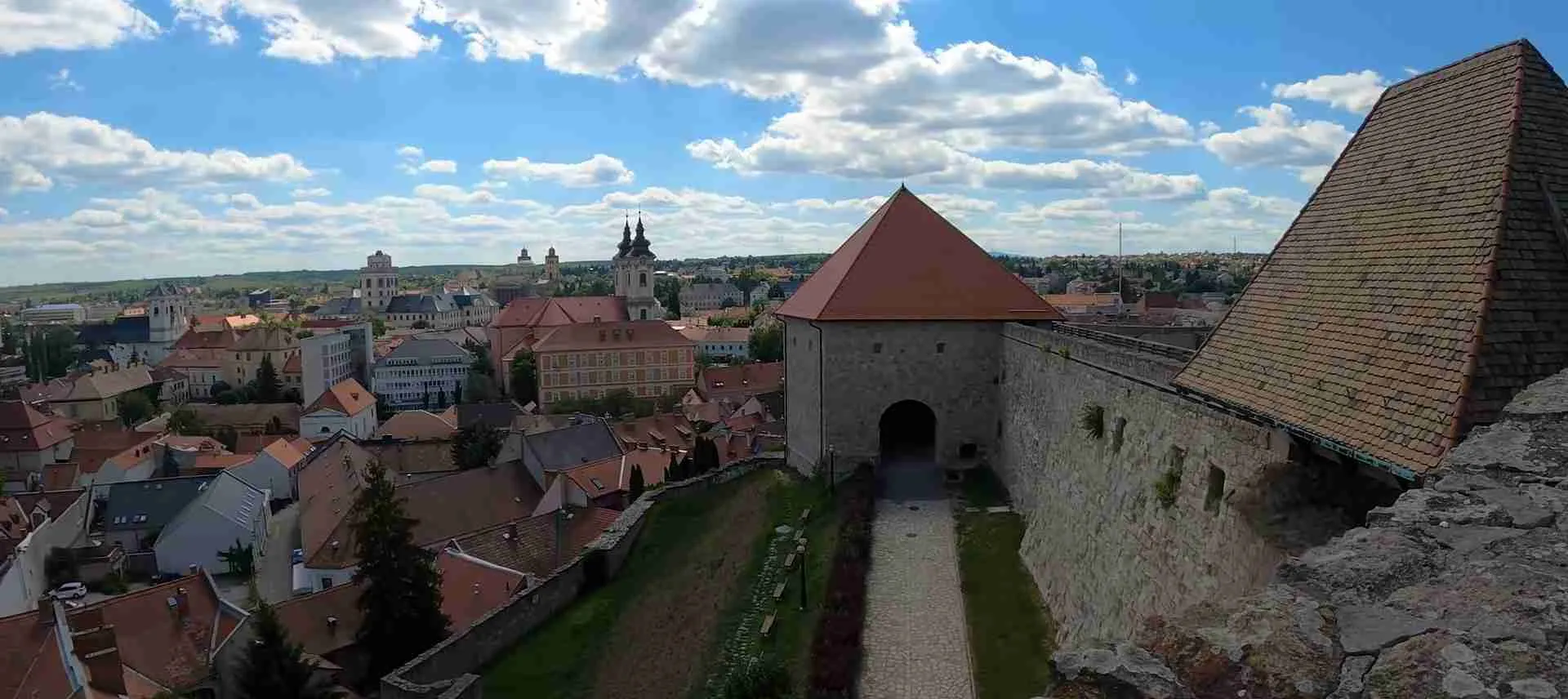
Eger Castle & Turkish Heritage from Budapest Day Trip 2026: Travel Guide
Eger offers one of Hungary’s most rewarding day trips from Budapest, combining a UNESCO-worthy castle fortress with authentic Ottoman-era thermal baths and world-famous wine cellars. Located just 130 kilometers northeast of the capital, this baroque gem delivers medieval history, Turkish heritage, and Hungarian wine culture in a compact, walkable town center perfect for a full-day excursion.
Key Takeaways: Eger Day Trip 2026
- Travel Time & Cost: Direct trains from Budapest-Keleti take 1h 50m-2h, costing €7-9 with hourly departures throughout the day
- Main Attractions: Eger Castle (€6-9 admission) showcases Hungary’s heroic 1552 defense against Ottoman forces, while the Turkish Bath (€5-6) offers authentic 17th-century thermal bathing
- Best Timing 2026: April-June and September-October provide optimal weather with fewer summer crowds; arrive by 9-10 AM for a full day of exploration
- Budget Planning: Expect €40-55 per person including transport, castle admission, lunch, wine tasting, and optional thermal bath (excluding dinner)
- Unique Experiences: Combine medieval fortress exploration with Ottoman-era bathing and wine tasting in the Valley of Beautiful Women cellars
- Castle Highlights: Gothic Bishop’s Palace, Heroes’ Hall, underground casemates, and panoramic views from the fortification walls
People Also Ask About Eger Day Trip 2026
How much does an Eger day trip from Budapest cost in 2026?
A complete Eger day trip costs €40-55 per person (check official websites for current rates). This includes round-trip train tickets (€7-9), Eger Castle admission (€6-9), lunch (€12-18), wine tasting (€8-12), and local transport (€2-3). The Turkish Bath adds €5-6 if you choose to include thermal bathing. Budget travelers can reduce costs by bringing snacks, skipping wine tasting, and focusing on free walking areas around the castle grounds.
Is Eger Castle worth visiting from Budapest in 2026?
Eger Castle ranks among Hungary’s most significant historical monuments, commemorating the legendary 1552 siege where 2,000 Hungarian defenders held off 40,000 Ottoman troops for 38 days. The castle offers Gothic architecture in the Bishop’s Palace, underground casemates showing 16th-century fortress life, Heroes’ Hall with statues and István Dobó’s symbolic tomb, and sweeping panoramic views of Eger and the surrounding Bükk Mountains. Combined with Eger’s baroque town center, Turkish Bath, and wine region, the castle anchors a rich full-day experience that reveals multiple layers of Hungarian history.
Can I visit Eger Castle and the Turkish Bath in one day from Budapest in 2026?
A well-planned day trip easily accommodates both attractions. Depart Budapest at 8-9 AM, reaching Eger by 10-11 AM. Spend 2-3 hours exploring Eger Castle and its museums, lunch in the baroque town center (1 hour), visit the Turkish Bath for 2-2.5 hours (maximum stay due to radon content), then explore Dobó Square and the Minaret before catching an evening train back to Budapest around 6-7 PM. This schedule provides comprehensive coverage without rushing, though you’ll need to choose between the Turkish Bath and extensive wine tasting in the Valley of Beautiful Women due to time constraints.
What’s the best way to reach Eger from Budapest in 2026?
Direct trains from Budapest-Keleti station offer the most convenient option, departing hourly throughout the day with 1h 50m-2h journey times. Tickets cost €7-9 and can be purchased online through the MÁV website or at the station. Buses from Stadion bus station provide a slightly cheaper alternative at €5-6 for a 1h 40m-2h journey, departing approximately every 15 minutes, but require navigating Budapest’s bus terminal and drop you at Eger’s central bus station. Trains deliver you closer to the castle (10-minute walk) and offer more comfortable, spacious seating with WiFi on modern double-decker trainsets.
Extended multi-day tours – 5+ days
Featured Budapest Multi-Day Tour Packages
3 days
Budapest 3-Day Discovery Tour
- ✓ Comprehensive Budapest experience
- ✓ Expert local guides included
- ✓ All accommodation included
- ✓ Transportation provided

5 days
Budapest 5-Day Highlights Experience
- ✓ Comprehensive Budapest experience
- ✓ Expert local guides included
- ✓ All accommodation included
- ✓ Transportation provided
7 days
Budapest 7-Day Cultural Journey
- ✓ Comprehensive Budapest experience
- ✓ Expert local guides included
- ✓ All accommodation included
- ✓ Transportation provided
10 days
Budapest 10-Day Complete Adventure
- ✓ Comprehensive Budapest experience
- ✓ Expert local guides included
- ✓ All accommodation included
- ✓ Transportation provided
Multi-day tour packages powered by TourRadar. Prices and availability subject to change.
Introduction: Discovering Eger’s Castle and Turkish Legacy
Eger stands as one of Hungary’s most historically significant provincial cities, its identity shaped by the legendary 1552 siege that became a defining moment in Hungarian national consciousness. The city offers day-trippers from Budapest an exceptionally rich combination of experiences: a medieval castle fortress with Gothic and Renaissance architecture, authentic Ottoman-era thermal baths built in 1610, baroque town squares lined with colorful buildings, and wine cellars producing the famous Egri Bikavér (Bull’s Blood) red wine.
The compact nature of Eger’s historic center makes it ideal for day visits. All major attractions lie within a 15-20 minute walk of each other, allowing visitors to experience castle battlements, thermal bathing, wine tasting, and baroque architecture without wasting time on local transport. The town’s manageable size—with a population of just 50,000—creates an intimate, welcoming atmosphere that contrasts pleasantly with Budapest’s metropolitan energy.
What distinguishes Eger from other Hungarian day trip destinations is its multilayered historical narrative. The castle tells the story of Hungarian resistance against Ottoman expansion, the Turkish Bath demonstrates centuries of peaceful coexistence following the siege, and the baroque rebuilding in the 18th century created the architectural beauty visible today. This historical depth, combined with Hungary’s wine culture and thermal bathing traditions, delivers an experience that satisfies both history enthusiasts and those seeking cultural immersion.
The 2026 visitor benefits from recent castle renovations that have reopened underground galleries, improved museum exhibitions with English-language information, and enhanced accessibility while preserving historical authenticity. The Turkish Bath maintains its original 17th-century architecture while offering modern amenities, creating an experience that feels genuinely connected to Eger’s Ottoman past.
Getting to Eger from Budapest 2026
Train Travel: The Recommended Option
Hungarian Railways (MÁV) operates direct trains from Budapest-Keleti station to Eger hourly throughout the day, with the earliest departure at 8:08 AM and the last train around 4:38 PM. The journey takes 1h 50m-2h on modern, comfortable double-decker Stadler trainsets equipped with WiFi, power outlets, and air conditioning. Tickets cost €7-9 and can be purchased online through the MÁV website (with a 5% discount) or at the station ticket office.
The trains travel through rural Hungarian countryside, offering views of farmland, small villages, and distant mountains as you approach Eger. Second-class seating provides comfortable 2+2 configuration with adequate legroom, tables-for-four ideal for families or groups, and large windows for enjoying the scenery. First-class costs only slightly more but offers limited additional benefits for this short journey.
Eger railway station sits approximately 1.5 kilometers from the town center and castle—a pleasant 15-20 minute walk through residential streets. Alternatively, local buses 11, 12, and 14 connect the station to the town center (single ticket 350 HUF/€1 purchased before boarding, 450 HUF/€1.20 from the driver). Taxis cost 600-1,000 HUF (€2-3) for the short journey to the castle or town center.
For return travel, plan to catch trains departing Eger between 5-7 PM, arriving back in Budapest by 7-9 PM. Later trains exist but become less frequent in the evening. Check the MÁV website for exact schedules on your travel date, as weekend and holiday timetables may differ slightly from weekday services.
Bus Travel: Budget Alternative
Direct buses from Budapest’s Stadion bus station (near Puskás Ferenc Stadium metro station) to Eger offer a cheaper alternative at €5-6 for tickets, with journey times of 1h 40m-2h. Buses depart approximately every 15 minutes throughout the day, providing flexible scheduling. Express buses with fewer stops complete the journey slightly faster than regional services.
The main disadvantage involves navigating Budapest’s Stadion bus terminal, which can confuse first-time visitors. You’ll need to take Metro Line 2 (red line) to Puskás Ferenc Stadium station, then locate the correct bus platform. Tickets can be purchased from the driver or in advance, but the process lacks the streamlined efficiency of train travel.
Eger’s central bus station sits in the heart of the old town, actually closer to major attractions than the railway station—just a 5-minute walk to Dobó Square and the Basilica. This central location represents the primary advantage of bus travel, eliminating the need for local transport upon arrival.
Bus interiors vary by operator but generally offer standard coach seating with air conditioning. The journey follows Highway M3, with less scenic views than the train route but still showcasing Hungarian countryside. For budget-conscious travelers willing to navigate bus terminals, this option saves €2-4 per person while delivering similar journey times.
Driving: Maximum Flexibility
Driving from Budapest to Eger takes 1h 20m-1h 40m covering 130 kilometers (81 miles) via Highway M3 and Route 25. Rental car costs range €20-32 per day depending on vehicle type and rental company, plus fuel costs of approximately €12-15 for the round trip. Parking in Eger costs 200-400 HUF (€0.50-1) per hour in the town center, with parking lots near the castle and thermal baths.
Driving offers advantages for visitors planning to explore the Valley of Beautiful Women wine region or nearby attractions like Egerszalók Salt Hill. The flexibility to set your own schedule and carry purchases (wine, local products) appeals to some travelers. However, wine tasting becomes problematic with driving, and navigating Eger’s narrow baroque streets can challenge unfamiliar drivers.
For most day-trippers, the train provides the optimal balance of cost, convenience, and stress-free travel. Save driving for multi-day visits when you plan to explore the wider region beyond Eger town center.
Eger Castle 2026: History & Highlights
The Legendary 1552 Siege
Eger Castle’s fame rests primarily on the heroic 1552 siege, when Captain István Dobó and approximately 2,000 defenders—including soldiers, townspeople, and women—held the fortress against an Ottoman army estimated at 35,000-40,000 troops for 38 days. This victory became a cornerstone of Hungarian national identity, celebrated in Géza Gárdonyi’s 1899 novel “Eclipse of the Crescent Moon” (English title) and taught to every Hungarian schoolchild.
The siege occurred during the Ottoman advance into Central Europe following their capture of Buda in 1541. Eger’s strategic position guarding the route to Slovakia and Poland made it a crucial target. The defenders’ success temporarily halted Ottoman expansion northward, though the Turks eventually captured Eger in 1596 after a second siege and held the city until 1687.
Walking the castle today, you experience the fortifications that made this defense possible: thick walls up to 3 meters wide, underground casemates where soldiers lived during bombardment, bastions providing overlapping fields of fire, and the commanding hilltop position offering views of approaching armies. The restoration work has recreated elements of the 16th-century fortress while incorporating archaeological findings from recent excavations.
Gothic Bishop’s Palace
The Gothic Bishop’s Palace, built in the late 15th century, represents the only structure within the castle walls that existed during the 1552 siege. This building served as István Dobó’s headquarters during the defense, where he coordinated the fortress’s resistance and planned defensive strategies. The palace combines Gothic and Renaissance architectural elements, with pointed arches, ribbed vaulting, and decorative stonework characteristic of late medieval Hungarian architecture.
The palace now houses the castle’s main museum exhibitions. The ground floor features Heroes’ Hall, formerly the chapel and later a prison (prisoners’ drawings remain visible on the walls). This impressive space centers on the symbolic tomb of István Dobó, surrounded by larger-than-life statues of defenders. Though Dobó was actually buried in Dobóruszka (now in Slovakia), this cenotaph honors his memory and leadership. The tomb’s relief provides the only verified portrait of the captain.
Upper floors display exhibitions on the castle’s history, the 1552 siege, Ottoman period, and archaeological findings. Interactive displays, period weapons and armor, models of the siege, and multimedia presentations (many with English subtitles) bring the history to life. The western windows offer views where defenders would have seen the Ottoman encampment spread across the valley—a chilling perspective on the siege’s reality.
Underground Casemates
The castle’s underground casemates provide the most atmospheric experience, transporting visitors into the daily reality of fortress life during the 16th century. These vaulted chambers served multiple purposes: troop quarters during sieges, storage for weapons and supplies, protection from artillery bombardment, and communication passages between different sections of the fortifications.
Recent restoration has reopened previously inaccessible galleries, including the Zárkándy Bastion reached through an underground passage. This network demonstrates the sophistication of Renaissance military engineering—the casemates allowed defenders to move safely between positions, protected from enemy fire, while maintaining communication and supply lines throughout the siege.
Exhibitions within the casemates recreate 16th-century fortress life with mannequins, period furnishings, weapons displays, and explanatory panels. You see where soldiers slept, how food was prepared and stored, the primitive conditions during extended sieges, and the defensive preparations that enabled 2,000 people to resist 40,000 attackers. The cool, dim atmosphere and stone passages create a tangible connection to the past.
Fortification Walls & Panoramic Views
Walking the restored fortification walls represents one of Eger Castle’s highlights, offering both historical understanding and spectacular panoramic views. The walls demonstrate Renaissance military architecture adapted to artillery warfare—thick, low walls difficult for cannonballs to breach, angled bastions providing overlapping fire coverage, and earthwork reinforcements absorbing impact better than stone alone.
From various points along the walls and towers, you enjoy 360-degree views encompassing Eger’s baroque town center with its colorful buildings and twin-spired basilica, the Turkish Minaret rising incongruously among Christian architecture, the Bükk Mountains forming a dramatic backdrop to the north, and the valley where the Ottoman army camped during the 1552 siege. These views help visualize the siege’s strategic situation and understand why this hilltop position was so valuable.
The Dobo Bastion terrace, reconstructed after collapsing in 1976, provides the best panoramic viewing platform. Explanatory panels identify landmarks and describe the siege from this vantage point. The experience of standing where defenders watched the Ottoman army approach remains powerful—the valley that once held enemy tents now contains peaceful residential neighborhoods, but the commanding position’s strategic value remains evident.
Additional Castle Attractions
Beyond the main historical sites, Eger Castle offers several supplementary attractions. The Panoptikum wax museum presents historical figures and scenes from the siege in somewhat dated but entertaining displays. A 3D cinema shows dramatized siege footage with sound effects and moving seats. The Eger Art Gallery displays works by Hungarian and international artists, including Canaletto and Ceruti.
Interactive experiences include archery demonstrations where visitors can try medieval weapons, living history presentations by costumed interpreters on summer weekends, and seasonal exhibitions showcasing recent archaeological discoveries. The gift shop sells siege-themed souvenirs, local wines, and historical books—useful for deeper reading on the castle’s fascinating story.
Periodic temporary exhibitions focus on specific aspects of castle history, Ottoman-era artifacts, or medieval life. Check the official website before visiting to see current special exhibitions and events, which can significantly enhance your visit beyond the permanent displays.
Planning Your Castle Visit 2026
Admission & Opening Hours
Eger Castle admission costs 2,400-3,600 HUF (€6-9) for a comprehensive ticket covering all exhibitions and museums within the fortress (check official website for current rates). This includes access to the Gothic Bishop’s Palace, Heroes’ Hall, casemates, fortification walls, art gallery, and temporary exhibitions. The ticket remains valid all day, allowing you to leave and return if needed.
Discounts apply to EU citizens with valid ID: children under 6 free, youth under 26 50% discount, seniors over 62 50% discount, and family tickets (2 adults + 2 children under 18) available. One weekend per month offers free admission to specific groups—check the calendar on the official website for these free entry days throughout 2026.
The castle grounds open at 8 AM year-round, but museum exhibitions operate on seasonal schedules. March-October opening hours extend from 10 AM to 6 PM (exhibitions close at 5:30 PM), while November-February hours reduce to 10 AM to 4 PM for exhibitions. The castle grounds remain open until dusk regardless of museum hours. Exhibitions close on Mondays, though the castle grounds stay accessible for walking and viewing from outside.
National holidays (March 15, August 20, October 23) provide free admission to all visitors. Plan accordingly, as these dates attract larger crowds of Hungarian visitors celebrating patriotic occasions connected to the castle’s historical significance.
Recommended Visit Duration
Allow 2-3 hours for a comprehensive castle visit. History enthusiasts reading all exhibition panels and watching the 3D film may need closer to 3-4 hours, while those focusing on highlights can complete the visit in 90 minutes. The optimal approach involves 30-45 minutes in the Gothic Bishop’s Palace and Heroes’ Hall, 45-60 minutes exploring the casemates and understanding fortress life, 30-45 minutes walking the walls and enjoying panoramic views, and 15-30 minutes for the gift shop, temporary exhibitions, or simply sitting on the bastions absorbing the atmosphere.
The castle attracts heaviest crowds between 10 AM-2 PM, particularly on summer weekends and Hungarian school holidays. Arriving at opening time (10 AM for exhibitions) or after 3 PM provides quieter exploration. The fortification walls and exterior grounds remain accessible and photogenic early morning or late afternoon when museums close but lighting enhances the baroque town views.
Accessibility & Visitor Facilities
Eger Castle presents accessibility challenges due to its medieval architecture—steep cobblestone paths, uneven surfaces, narrow passages in casemates, and stairs throughout. Wheelchair access covers only limited areas, primarily the outer courtyards and some ground-floor exhibition spaces. Visitors with mobility limitations should contact the castle in advance to discuss accessibility options and determine feasible routes.
Restrooms are available near the main entrance and within the exhibition areas. A small café operates during peak season, offering drinks, snacks, and ice cream, though more extensive dining options exist in Eger’s town center just a 5-minute walk away. Lockers or coat check services are not provided—travel light or be prepared to carry belongings throughout the visit.
Photography is permitted in most areas for personal use, though flash photography may be restricted in certain exhibition rooms to protect artifacts. The castle’s walls, bastions, and courtyards provide exceptional photo opportunities, especially for capturing Eger’s baroque town center and surrounding landscape.
Turkish Bath: Ottoman Heritage 2026
Historical Background
The Turkish Bath (Török Fürdő) in Eger represents the only surviving and functioning Ottoman-era bath in Hungary outside Budapest, built in 1610 during the Turkish occupation that lasted from 1596-1687. This authentic hammam demonstrates the sophisticated bathing culture the Ottomans brought to Central Europe, combining therapeutic thermal waters with social gathering spaces and architectural beauty reflecting Islamic design principles.
The bath’s oldest pool dates from 1610, making it over 400 years old and still in daily use—a remarkable testament to Ottoman engineering and the enduring appeal of thermal bathing in Hungarian culture. Unlike many historic baths heavily modernized or reconstructed, Eger’s Turkish Bath preserves its original architecture, including the characteristic dome over the main pool, ornamental details, and compact layout typical of Ottoman hammams.
Following the Habsburg recapture of Eger in 1687, the bath continued operation under Christian ownership, demonstrating how Turkish bathing culture became integrated into Hungarian tradition. The building survived wars, political upheavals, and modernization pressures that destroyed most Turkish architectural heritage in Hungary, making it an irreplaceable historical monument and living connection to Eger’s Ottoman past.
The Pools & Facilities
The Turkish Bath offers six pools of varying temperatures and mineral compositions, each fed by natural thermal springs with radon-rich medicinal water. The centerpiece is the Big Mirror Pool, set beneath a magnificent golden dome that reflects beautifully in the water’s surface. This pool maintains a comfortable warm temperature (34-36°C), and thermal water bubbles naturally from between stone tiles in the pool floor—a unique sensory experience watching the springs emerge from the ancient stonework.
The original Turkish Pool from 1610 offers slightly cooler water ideal for longer soaking sessions. Additional pools provide temperature variations from refreshing cool to hot therapeutic levels, allowing visitors to move between temperatures as in traditional Turkish bathing practice. The pools’ compact arrangement within the domed chambers creates an intimate, atmospheric environment distinctly different from large modern spa complexes.
Beyond the pools, the bath offers traditional hammam facilities: steam rooms, saunas (including infrared and aroma cabins), and a rest area with loungers. Massage services include traditional hammam massage, therapeutic treatments, and wellness options. The facility maintains the Ottoman bathing philosophy emphasizing gradual temperature changes, social interaction, and extended soaking rather than rushed visits.
Visiting the Turkish Bath 2026
Admission to the Turkish Bath costs 2,200 HUF (€5-6), allowing 2.5 hours of use due to the radon content in the thermal water (check official website for current rates). This time limit ensures safe exposure to the mildly radioactive radon, which provides therapeutic benefits but requires moderation. You can extend your bathing experience by using the connecting passage to the adjacent Eger Thermal Bath, a modern facility with 13 pools and water slides.
The bath operates daily with hours varying by season—typically 9 AM to 9 PM in summer, reduced hours in winter. Check the current schedule before visiting, as maintenance days or special events occasionally affect availability. Towel rental costs 300 HUF (€0.80) if you don’t bring your own; lockers are included in admission.
The atmosphere inside the Turkish Bath feels genuinely historical rather than tourist-oriented. Hungarian locals use the baths regularly for therapeutic and social purposes, creating an authentic cultural experience. The relatively small size and 2.5-hour time limit prevent overcrowding, maintaining a peaceful environment ideal for relaxation and contemplation.
Combining Castle & Bath Visits
The Turkish Bath sits within 5 minutes’ walk of Eger Castle and the baroque town center, making it easy to incorporate into a day trip itinerary. The recommended sequence involves visiting the castle in the morning when you have the most energy for walking and climbing, having lunch in the town center, then spending the afternoon relaxing in the Turkish Bath—a perfect counterpoint to the castle’s active exploration.
The 2.5-hour maximum stay in the Turkish Bath fits well within a day trip schedule. Arrive around 2-3 PM after castle visiting and lunch, enjoy 2-2.5 hours of bathing, and you’ll still have time to explore Dobó Square, visit the Minaret, or browse shops before catching an evening train back to Budapest. This schedule balances active sightseeing with therapeutic relaxation.
If choosing between the Turkish Bath and other Eger attractions due to time constraints, prioritize based on your interests: history and architecture enthusiasts should focus on the castle and town center; those seeking unique cultural experiences should definitely include the Turkish Bath; wine lovers might substitute bath time for visiting the Valley of Beautiful Women cellars. The compact geography allows flexible scheduling based on personal preferences.
Eger Town Center & Additional Sights 2026
Dobó Square
Dobó István Square forms the heart of Eger’s baroque town center, a spacious pedestrian plaza surrounded by colorful 18th-century buildings housing cafés, restaurants, shops, and the tourist information office. The square honors the 1552 siege commander with a central monument and fountain, creating a gathering place where locals and visitors converge throughout the day.
The square’s architecture showcases the baroque rebuilding that followed Turkish occupation, with pastel-painted facades, ornate window frames, and decorative details characteristic of 18th-century Hungarian provincial architecture. The Minorite Church dominates one side with its twin towers and rococo interior, while historic buildings house museums, galleries, and commercial establishments.
Dobó Square serves as Eger’s social center—morning markets spread across the plaza several times per week, outdoor café terraces fill during pleasant weather, and evening strolls around the illuminated monuments provide romantic atmosphere. The square connects all major attractions: the castle rises visibly to the north, the basilica towers appear to the east, and the Turkish Minaret stands just two blocks south.
The Basilica
Eger Basilica, completed in 1836, represents Hungary’s second-largest cathedral and a masterpiece of neoclassical architecture. The imposing twin-towered facade dominates Eger’s skyline, visible from the castle walls and surrounding countryside. The interior features impressive frescoes, ornate altars, and excellent acoustics that make it a popular concert venue.
Visitors can climb the basilica towers for panoramic views rivaling those from the castle, offering a different perspective on Eger’s layout and surroundings. The ascent involves steep stairs but rewards with 360-degree vistas encompassing the castle, town center, and distant Bükk Mountains. Tower access costs a small additional fee beyond the main basilica admission.
Turkish Minaret
The northernmost Ottoman minaret in Europe stands as a remarkable survivor of Eger’s Turkish period, built in the 17th century and capped with a Christian cross following the Habsburg reconquest. Only 26 minarets were ever built in Hungary, and just a handful survive today, making this slender 40-meter tower an architectural rarity.
Visitors can climb the 98 narrow, winding steps to the viewing balcony for spectacular views across Eger, though the tight spiral staircase challenges those with claustrophobia or vertigo. The climb provides an interesting counterpoint to the castle and basilica tower ascents, each offering unique perspectives on the town’s layered history and architecture.
Valley of Beautiful Women
Szépasszony-völgy (Valley of Beautiful Women) lies approximately 2 kilometers southwest of the town center, a hillside wine region with dozens of traditional cellars carved into the volcanic tuff. This is where you’ll find and taste Egri Bikavér (Bull’s Blood), the full-bodied red wine blend that made Eger internationally famous among wine enthusiasts.
The cellars operate as small family businesses, each with its own character and wine selection. Walk along the valley, peek into open cellars, and stop where you feel welcomed to taste wines directly from the winemakers. Tastings typically cost €8-12 for a selection of wines, often accompanied by cheese, bread, and friendly conversation about winemaking traditions.
Reaching the valley requires a 25-30 minute walk from the town center (uphill returning) or a short taxi ride (€3-5). The walk passes through residential areas and vineyards, pleasant in good weather but challenging in rain or extreme heat. Budget 1-2 hours for wine tasting and conversation with winemakers—one of Eger’s most authentic cultural experiences but requiring either careful moderation if driving back to Budapest or reliance on train/bus transportation.
Dining & Local Cuisine 2026
Traditional Hungarian Restaurants
Eger’s restaurant scene emphasizes traditional Hungarian cuisine with local ingredients and wine pairings. Expect dishes like chicken paprikash, beef goulash, wild game specialties, and fresh fish from nearby lakes and rivers. The baroque town center, especially around Dobó Square, concentrates most dining options with outdoor terraces offering pleasant people-watching during warm months.
Lunch costs €12-18 for a main course in tourist-oriented restaurants near major sights, €8-12 in local establishments slightly away from the center. Full three-course meals with wine range €25-35 per person. Many restaurants offer prix-fixe lunch menus (12-2 PM) providing good value: soup, main course, and dessert for €10-15.
Recommended dishes include Eger-style chicken (prepared with local wine), venison from the Bükk Mountains, and trout from local streams. Accompany meals with Egri Bikavér red wine or Egri Csillag white wine, both local specialties available by the glass or bottle at reasonable prices compared to Budapest restaurants.
Cafés & Bakeries
Eger’s baroque town center hosts numerous traditional cafés serving coffee, cakes, pastries, and light meals. These establishments occupy historic buildings with elegant interiors, outdoor terraces on pedestrian streets, and tempting pastry displays. Expect to pay €3-5 for coffee and cake, €6-10 for light lunch options like sandwiches or salads.
Hungarian cakes and pastries shine in Eger—try chimney cake (kürtőskalács) from street vendors, Eszterházy torte (almond cream cake), or traditional strudels. Marcipán Museum & Shop offers elaborate marzipan creations and confections, combining shopping with café service in a charming setting near the basilica.
Picnic & Market Options
Budget travelers can reduce costs by purchasing food at Eger’s markets and supermarkets. The morning market on Dobó Square (several days per week) sells fresh produce, cheese, bread, and local products ideal for assembling picnics. Small supermarkets near the town center offer wider selections including prepared foods, drinks, and snacks.
The castle grounds and surrounding parkland provide pleasant picnic spots with views, benches, and shade trees. Combine market purchases with bakery bread and local cheese for an economical lunch, saving restaurant budgets for a special dinner in the evening before returning to Budapest.
Sample Eger Day Trip Itinerary 2026
Full-Day Schedule (Recommended)
8:00 AM: Depart Budapest-Keleti station on early train to Eger (€7-9 round-trip)
10:00 AM: Arrive Eger railway station, walk or take local bus to castle (15-20 minutes, €1-2 local transport if needed)
10:30 AM – 1:00 PM: Explore Eger Castle—Gothic Bishop’s Palace and Heroes’ Hall (45 minutes), underground casemates (45 minutes), fortification walls and panoramic views (30-45 minutes), gift shop and temporary exhibitions (15-30 minutes). Castle admission €6-9.
1:00 PM – 2:00 PM: Lunch in baroque town center near Dobó Square—traditional Hungarian restaurant or café (€12-18)
2:00 PM – 2:30 PM: Walk to Turkish Bath, explore Dobó Square en route (5 minutes walking, 25 minutes exploring square and shops)
2:30 PM – 5:00 PM: Relax in Turkish Bath—2.5 hours of thermal bathing, pools, and steam rooms. Bath admission €5-6.
5:00 PM – 6:00 PM: Visit Turkish Minaret (15 minutes plus climb, €2-3) or browse town center shops, have coffee at Dobó Square café (€3-5)
6:30 PM – 7:00 PM: Walk to Eger railway station (15-20 minutes), catch evening train back to Budapest
8:30 PM – 9:00 PM: Arrive Budapest-Keleti station
Total Day Cost: Transport €7-9, castle €6-9, lunch €12-18, Turkish Bath €5-6, coffee/snacks €3-5, local transport €1-2 = €34-49 per person (excluding dinner)
Alternative Itinerary: Wine Focus
For wine enthusiasts, substitute the Turkish Bath with Valley of Beautiful Women wine tasting. After lunch, walk or taxi to the wine valley (2 km, 25 minutes walking uphill, €3-5 taxi). Spend 2-3 hours tasting wines in traditional cellars (€8-12 for tasting), then return to town center for coffee and exploration before the evening train. This version costs similarly but replaces bathing with wine culture immersion—appropriate for those less interested in thermal baths or seeking more active cultural engagement.
Half-Day Option: Castle Only
Time-constrained visitors can accomplish a focused half-day visit: depart Budapest at 10-11 AM, explore Eger Castle for 2-3 hours, have lunch, briefly explore Dobó Square, and return on an afternoon train (4-5 PM departure). This condensed version costs €25-35 per person and captures Eger’s essential historical experience, though missing the Turkish Bath and wine culture that make longer visits so rewarding.
Practical Tips for Your Visit 2026
Best Time to Visit Eger
April-June and September-October provide optimal conditions—pleasant temperatures (15-25°C), lower tourist crowds than summer peak, green landscapes and blooming flowers in spring, harvest atmosphere and autumn colors in fall. The castle and town center remain enjoyable without summer heat, and wine cellars offer seasonal specialties during harvest periods.
July-August brings peak crowds, higher temperatures (25-35°C), and fully booked accommodations if you’re considering an overnight stay. The thermal bath becomes especially appealing during summer heat, but expect more visitors at all attractions. Book train tickets in advance during this period to secure seats.
November-March presents quieter visiting with reduced crowds and lower prices, but cold temperatures (0-10°C), shorter daylight hours (exhibitions close at 4 PM), and potential rain or snow. The thermal bath offers particular appeal during cold months, providing warm refuge from winter weather. Christmas markets and winter atmosphere add charm to the baroque town center.
What to Bring
For castle visiting: comfortable walking shoes with good traction for cobblestones and castle paths, sun protection (hat, sunscreen) for summer visits when walking exposed fortification walls, water bottle (limited refreshment options inside castle), camera for capturing panoramic views and baroque architecture, and light jacket (casemates stay cool even in summer).
For Turkish Bath: swimsuit, towel (or rent for €0.80), flip-flops, plastic bag for wet items, small lock if you prefer to secure valuables in addition to provided lockers, and drinking water (bathing increases dehydration). Standard swimwear is required—nude bathing is not permitted in this facility.
General items: Hungarian Forint cash (while many places accept cards, smaller establishments and markets prefer cash), day backpack for carrying purchases and supplies, snacks if you have dietary restrictions (food options concentrate in tourist areas), and phone with translation app (English is understood in tourist areas but less common elsewhere).
Language & Currency
Hungarian is the local language, with English understood in tourist-focused businesses, restaurants near major sights, and by younger staff members. Older residents and local establishments may have limited English, making translation apps helpful for detailed communication. Basic Hungarian phrases (hello: sziasztok; thank you: köszönöm; please: kérem) are appreciated though not required.
Hungary uses the Hungarian Forint (HUF), with approximate exchange rate €1 = 385-395 HUF (rates fluctuate). ATMs are readily available in Eger’s town center, and credit cards are widely accepted in restaurants, shops, and major attractions. However, carry some cash for small purchases, markets, local buses, and traditional wine cellars where card payment may not be available.
Train tickets can be purchased in Euros on the MÁV website when booking online, but station ticket offices price in Forints. Check current exchange rates and decide whether to pay in Euros or Forints based on which offers better value at the time of purchase.
Photography Opportunities
Eger offers exceptional photography across multiple subjects. The castle provides panoramic town views, medieval architecture, atmospheric casemates, and historical exhibits. The baroque town center showcases colorful building facades, Dobó Square activity, the basilica’s twin towers, and the unique Turkish Minaret with its Christian cross. The Turkish Bath’s golden dome and historical interior (check photography policies before shooting inside) add unique architectural subjects.
Best lighting occurs early morning (7-9 AM) and late afternoon/golden hour (5-7 PM in summer, 3-5 PM in winter) for exterior architecture and landscapes. The castle’s elevated position allows panoramic shots throughout the day, though softer light enhances the baroque buildings’ pastel colors. Inside the castle museums, check flash photography restrictions to protect artifacts.
Combining with Other Destinations
Eger works well as part of multi-day Northern Hungary itineraries. Nearby attractions include Egerszalók with its terraced thermal hillside (15 km, 20 minutes by car), Hollókő UNESCO village preserving traditional architecture (80 km, 1.5 hours), Bükk National Park for hiking and caves (30 km, 40 minutes), and Tokaj wine region producing world-famous sweet wines (100 km, 1.5 hours).
For day trips from Budapest, Eger pairs well with other destinations on different days: Szentendre for art and Danube views, Visegrád for Renaissance palace ruins, Esztergom for Hungary’s largest basilica, or Gödöllő for Habsburg palace history. Each offers distinct experiences showcasing different aspects of Hungarian culture and history.
Frequently Asked Questions
Do I need to book Eger Castle tickets in advance for 2026?
Advance booking is not required for Eger Castle—tickets are purchased at the entrance upon arrival. The castle rarely sells out except on free admission days (national holidays) and occasional special events. Summer weekends see higher crowds but maintain capacity to admit all visitors. However, booking train tickets from Budapest in advance (especially during summer peak season) ensures seat availability and may provide small discounts through the MÁV website.
Can I visit Eger Castle in winter months?
The castle operates year-round with reduced exhibition hours November-February (10 AM-4 PM instead of 10 AM-6 PM). The castle grounds and fortification walls remain accessible even when museums close, offering winter visitors atmospheric experiences with fewer crowds. Cold weather (0-10°C) requires warm clothing, and snow or ice can make cobblestone paths slippery. The Turkish Bath provides particular appeal during winter as a warm refuge from cold weather. Winter visits offer authentic experiences without summer tourist crowds, though shorter daylight limits exploration time.
Is Eger suitable for families with children?
Eger works well for families, with the castle offering interactive elements appealing to children: climbing fortification walls, exploring underground casemates, archery demonstrations, and spacious grounds for running around safely. The town center’s pedestrian streets eliminate car traffic concerns, and numerous ice cream shops and cafés provide breaks. The Turkish Bath accepts children but requires adult supervision; the adjacent Thermal Bath offers more child-friendly facilities with slides and shallow pools. Castle exhibitions include some English-language information but may not fully engage very young children without adult interpretation. Family tickets provide cost savings at most attractions.
What if it rains during my Eger day trip?
Eger offers substantial indoor attractions making rain manageable. The castle’s museum exhibitions, underground casemates, and Gothic Bishop’s Palace provide hours of covered exploration. The Turkish Bath becomes especially appealing during rain, offering warm, dry bathing despite weather. The basilica, Minorite Church, and various museums around Dobó Square add indoor options. Restaurants and cafés provide shelter during heaviest downpours. However, walking the fortification walls and enjoying panoramic views—among Eger’s highlights—suffers significantly in rain. Check weather forecasts when planning and bring rain gear, or consider rescheduling if possible for better castle wall exploration.
Can I bring luggage to Eger Castle?
The castle does not provide luggage storage or lockers, making it impractical to visit with large bags or suitcases. If combining Eger with other destinations and traveling with luggage, use the luggage storage at Budapest-Keleti station before departing for Eger. Small daypacks and purses are fine to carry throughout the castle, but large backpacks or rolling luggage becomes cumbersome on castle paths and stairs. Plan your itinerary to avoid luggage complications, keeping belongings minimal for the day trip.
Are there guided tours of Eger Castle in English?
English-language guided tours operate on summer weekends and holidays, though not guaranteed daily. Check the castle website or inquire at the ticket office upon arrival for current tour schedules. Living history interpreters in period costumes offer demonstrations and explanations in Hungarian with limited English on busy days. Audio guides in English may be available for rent at the ticket office, providing self-guided tours with historical commentary. For guaranteed English guidance, consider booking private tours through Budapest-based tour operators offering Eger day trips with English-speaking guides, though these cost significantly more than independent travel.
What’s the difference between the Turkish Bath and Thermal Bath in Eger?
The Turkish Bath is a historic 17th-century Ottoman hammam with six pools in authentic period architecture, emphasizing traditional bathing culture and historical atmosphere. It’s smaller, more intimate, and limits visits to 2.5 hours due to radon content. The Thermal Bath is a modern spa complex with 13 pools, water slides, children’s areas, and contemporary amenities spread across 5 hectares. They connect via a passage allowing combined access, but serve different purposes: the Turkish Bath for historical experience and therapeutic quiet bathing, the Thermal Bath for family recreation and active water play. Day-trippers typically choose one based on interests and time constraints.
Can I taste wine at Eger Castle?
The castle itself does not operate wine tasting facilities, though the gift shop sells local wines. For wine tasting, visit the Valley of Beautiful Women (2 km from town center) where dozens of traditional cellars offer tastings directly from winemakers. Some restaurants in the town center also provide wine tasting menus featuring local wines with food pairings. The castle’s thematic connection to Egri Bikavér (“Bull’s Blood”) wine comes from legends about the 1552 siege, but actual tasting occurs in the wine valley or town establishments rather than at the fortress itself.
How much time should I spend at Eger Castle versus other attractions?
For a balanced day trip, allocate 2-3 hours to Eger Castle (the main historical attraction), 1 hour for lunch, 2-2.5 hours for the Turkish Bath OR wine tasting in the Valley of Beautiful Women (choose based on interests), and 30-60 minutes exploring Dobó Square, the basilica, and town center shops. This schedule fits comfortably within a day trip from Budapest, departing at 8-9 AM and returning by 7-8 PM. History-focused visitors might extend castle time to 3-4 hours and reduce other activities; those less interested in medieval history might spend just 90 minutes at the castle and more time wine tasting or bathing.
Is Eger crowded with tourists in 2026?
Eger receives moderate tourism compared to Budapest or Lake Balaton, making it pleasant for exploration without overwhelming crowds most of the year. July-August weekends see highest visitor numbers but rarely feel congested given the town’s size and distribution of attractions. Hungarian visitors predominate, especially during domestic school holidays and long weekends when the castle celebrates patriotic occasions. International tourists remain a minority except during peak summer months. Early morning and late afternoon visits avoid peak mid-day crowds at the castle and major sites. The relatively uncrowded character compared to major European destinations represents one of Eger’s appeals—you experience authentic Hungarian town life rather than tourist-oriented environments.