
Easter Island Moai Statues 2026: History, Meaning & Best Sites
Key Takeaways:
- Easter Island hosts 1,043 moai statues across the island, with Ahu Tongariki (15 moai) and Rano Raraku quarry (397 moai) being the most significant 2026 visitor sites
- National park entry costs $80 USD for international visitors in 2026 with 10-day validity covering all moai sites
- The moai represent ancestral chiefs and were carved between 1250-1500 CE by the Rapa Nui people using basalt tools from volcanic tuff
- Best viewing times in 2026: sunrise at Ahu Tongariki (6:30-7:30 AM) and afternoon light at Rano Raraku quarry (3:00-5:00 PM)
- Self-guided exploration combines with optional guided tours ($60-120 per person) for deeper cultural understanding of moai significance
- Rental vehicles ($50-80 daily) provide flexibility to visit multiple moai sites across the 164-square-kilometer island in 2026
Understanding the Moai Phenomenon in 2026
The moai statues of Easter Island stand as one of humanity’s most enigmatic archaeological achievements, and in 2026, these massive stone figures continue to captivate visitors from around the world. Carved from compressed volcanic ash at Rano Raraku quarry between 1250 and 1500 CE, the 1,043 documented moai represent the ancestral spirits of Rapa Nui’s chieftain lineages. These monolithic sculptures range from 2 to 10 meters tall, with the average moai weighing approximately 14 tons, though the largest completed statue weighs 82 tons.
The Rapa Nui people engineered these remarkable monuments using basalt hand tools called toki, carving directly into the soft volcanic tuff of Rano Raraku’s slopes. Each moai took a team of five to six carvers approximately one year to complete, representing an enormous investment of community resources and specialized knowledge. The statues feature distinctive characteristics: elongated heads with prominent brows, long noses, thin lips, and elongated earlobes. The bodies typically show stylized torsos with arms positioned along the sides and hands meeting at the abdomen.
What makes the moai phenomenon particularly fascinating is the transportation challenge. Archaeological evidence suggests the Rapa Nui moved these multi-ton statues using a “walking” technique, rocking them side to side with rope systems while teams coordinated the movement. This method allowed statues to travel up to 18 kilometers from the quarry to coastal platforms called ahu. The engineering sophistication required to transport and erect these massive monuments without metal tools or wheeled vehicles demonstrates remarkable problem-solving abilities and cultural organization.
In 2026, visitors can explore this incredible legacy across multiple archaeological sites, each offering unique perspectives on moai construction, transportation, and ceremonial significance. The island’s compact size (164 square kilometers) makes comprehensive exploration feasible within 3-5 days, allowing travelers to experience the full scope of Rapa Nui’s monumental sculpture tradition. Understanding the historical context, construction techniques, and cultural meaning enhances appreciation for these UNESCO World Heritage monuments that continue to inspire wonder nearly 800 years after their creation.
People Also Ask About Easter Island Moai 2026
How much does it cost to visit the moai statues in 2026?
Visiting Easter Island’s moai sites requires purchasing a Rapa Nui National Park ticket, which costs $80 USD for international visitors in 2026 (check conaf.cl for current official rates as pricing may vary). This single ticket provides 10-day access to all archaeological sites across the island, including Ahu Tongariki, Rano Raraku quarry, Orongo ceremonial village, and dozens of coastal ahu platforms. The park entry represents the primary access cost, with no additional fees required at individual moai sites.
Transportation adds to the overall cost. Vehicle rentals range $50-80 per day for compact cars or $70-100 for 4WD vehicles, providing flexibility to visit remote sites at your own pace. Alternatively, organized moai tours cost $60-120 per person for half-day excursions and $150-200 for full-day comprehensive tours that include transportation, guide services, and visits to multiple statue sites. Many visitors combine rental vehicles for independent exploration with one or two guided tours for deeper cultural context about moai significance and Rapa Nui history.
What is the best time to photograph the moai in 2026?
Sunrise at Ahu Tongariki (6:30-7:30 AM depending on season) provides the most iconic moai photography opportunity in 2026, with 15 restored statues silhouetted against the Pacific Ocean horizon as golden light gradually illuminates their faces. This timing offers dramatic backlighting that emphasizes the moai’s imposing scale and creates striking compositional opportunities. The site opens at 6:00 AM specifically to accommodate sunrise photographers, who gather along the viewing area 100 meters from the platform.
Afternoon light (3:00-5:00 PM) works exceptionally well at Rano Raraku quarry, where the sun angle highlights the texture and details of the 397 moai in various stages of completion scattered across the volcanic slopes. The warm directional light creates depth and dimension in photographs of the partially carved statues still embedded in the quarry walls. Late afternoon visits to coastal ahu platforms like Ahu Akivi (the seven moai facing the ocean) benefit from the setting sun illuminating the statues’ western faces while dramatic clouds often form over the Pacific backdrop.
How many moai can you visit in one day in 2026?
A well-planned single day allows visits to 5-8 major moai sites across Easter Island, covering the essential highlights while allowing adequate time for photography and cultural appreciation. The standard circuit includes Ahu Tongariki (15 moai), Rano Raraku quarry (397 moai, plan 2-3 hours), Ahu Te Pito Kura (largest transported moai), Anakena Beach (two restored ahu), and Ahu Akivi (seven inland moai). This represents approximately 8-10 hours of total touring time including driving between sites.
The island’s circular road system (Ruta 5) connects most major sites within 30-45 minute drives, making multi-site days logistically feasible with rental transportation. However, many visitors prefer spreading moai exploration across 2-3 days to avoid rushing, allowing time to absorb the archaeological significance, capture photographs under different lighting conditions, and include secondary sites like Ahu Vinapu (precision stonework) and Puna Pau (red topknot quarry). The 10-day park ticket validity supports this more relaxed exploration pace.
Do you need a guide to visit the moai sites in 2026?
Self-guided moai exploration is entirely feasible in 2026, as all major sites feature informational panels in Spanish and English explaining the archaeological significance, and the national park maintains clear trail systems with directional signage. Rental vehicles equipped with GPS navigation (included with most rentals) make site location straightforward, and the island’s compact geography prevents getting lost. Many independent travelers successfully visit all significant moai sites without guide services, using resources like the official Rapa Nui National Park map and archaeological guidebooks.
That said, guided tours provide substantial value for visitors seeking deeper cultural understanding of moai significance within Rapa Nui cosmology and social organization. Knowledgeable guides explain the oral histories, construction techniques, transportation theories, and ceremonial functions that aren’t fully captured by site panels. Tours typically include access to the guides’ specialized knowledge about lesser-known sites, ongoing archaeological research, and contemporary Rapa Nui perspectives on their ancestors’ achievements. The combination approach works well: use guides for 1-2 key sites (especially Rano Raraku and Orongo) while exploring other locations independently.
Extended multi-day tours – 5+ days
Featured Easter Island Multi-Day Tour Packages

3 days
Easter Island 3-Day Discovery Tour
- ✓ Comprehensive Easter Island experience
- ✓ Expert local guides included
- ✓ All accommodation included
- ✓ Transportation provided

5 days
Easter Island 5-Day Highlights Experience
- ✓ Comprehensive Easter Island experience
- ✓ Expert local guides included
- ✓ All accommodation included
- ✓ Transportation provided
7 days
Easter Island 7-Day Cultural Journey
- ✓ Comprehensive Easter Island experience
- ✓ Expert local guides included
- ✓ All accommodation included
- ✓ Transportation provided

10 days
Easter Island 10-Day Complete Adventure
- ✓ Comprehensive Easter Island experience
- ✓ Expert local guides included
- ✓ All accommodation included
- ✓ Transportation provided
Multi-day tour packages powered by TourRadar. Prices and availability subject to change.
Essential Planning Information 2026
National Park Access and Costs 2026
The Rapa Nui National Park ticket serves as the primary entry requirement for all moai sites across Easter Island. International visitors pay $80 USD in 2026 for 10-day validity covering unlimited access to all archaeological zones (check conaf.cl for current official rates). Chilean nationals receive discounted entry at $20 USD, while children under 12 enter free regardless of nationality. Tickets are available for purchase at Mataveri International Airport upon arrival (cash or credit card accepted) or at the CONAF office in Hanga Roa town.
The ticket covers all significant moai locations including Ahu Tongariki, Rano Raraku quarry, Orongo ceremonial village, Anakena Beach platforms, Ahu Akivi, and dozens of coastal ahu sites scattered around the island perimeter. Rangers conduct ticket checks at major sites, particularly Rano Raraku and Orongo, so keep the ticket accessible during site visits. The 10-day validity allows comprehensive exploration without feeling rushed, supporting multi-day itineraries that revisit key locations under different lighting conditions or weather scenarios.
No reservation system exists for general park access in 2026, meaning visitors can explore sites spontaneously based on weather conditions, personal energy levels, and photographic opportunities. However, the park enforces capacity limits at Rano Raraku (no more than 100 visitors simultaneously) during peak hours, occasionally requiring brief waits during high season (December-February). Arriving at popular sites early morning or late afternoon typically avoids any capacity issues while providing optimal lighting for photography.
Transportation Options for Moai Sites 2026
Rental vehicles provide the most flexible transportation solution for moai exploration in 2026, allowing visitors to create custom itineraries, adjust timing based on weather and lighting, and access remote sites beyond organized tour routes. Compact cars cost $50-80 per day, while 4WD vehicles (recommended for accessing rougher roads to sites like Ahu Akahanga) range $70-100 daily. Rental agencies including Insular, Oceanic, and Rent a Car Rangitahi operate from Mataveri Airport and Hanga Roa town, requiring valid driver’s licenses and major credit cards for vehicle insurance.
The island’s primary coastal road (Ruta 5) connects most major moai sites, with paved sections covering Ahu Tongariki, Rano Raraku, Anakena Beach, and the western sites near Hanga Roa. Interior roads leading to Ahu Akivi and Puna Pau feature gravel surfaces but remain accessible with standard vehicles during dry conditions. Gas stations in Hanga Roa charge $1.80-2.20 per liter ($6.80-8.30 per gallon) for fuel, with a full island circuit consuming approximately 20-25 liters ($36-50 in fuel costs).
Organized tours offer an alternative for visitors preferring guided experiences without driving responsibilities. Half-day moai tours ($60-120 per person) typically visit 3-4 major sites including Ahu Tongariki and Rano Raraku with 2-3 hours of total touring time. Full-day comprehensive tours ($150-200 per person) cover 6-8 sites around the complete island circuit, including lunch stops at Anakena Beach and detailed cultural explanations from knowledgeable guides. Small-group tours (maximum 10-12 participants) provide more personalized experiences compared to larger bus tours, though both options include pickup/dropoff from Hanga Roa accommodations.
Moai Site Operating Hours 2026
Rapa Nui National Park sites operate daily from 6:00 AM to 7:00 PM throughout 2026, providing 13 hours of access for moai exploration. The early opening time specifically accommodates sunrise photography at Ahu Tongariki, allowing visitors to witness the spectacular dawn light illuminating the 15 restored statues. Late opening hours support sunset photography at western-facing sites like Ahu Tahai near Hanga Roa, where moai silhouettes create dramatic evening compositions against Pacific Ocean horizons.
Rano Raraku quarry enforces specific entry hours from 9:00 AM to 5:30 PM with stricter capacity management due to the site’s archaeological sensitivity and the concentration of 397 moai across the volcanic slopes. Park rangers monitor visitor numbers to prevent crowding on the quarry trails, occasionally implementing brief entry delays during peak morning hours (10:00 AM-12:00 PM). Afternoon visits (2:00-4:00 PM) typically encounter fewer crowds while benefiting from excellent photography lighting that highlights the quarry’s dramatic landscape and the diverse states of moai completion.
Most coastal ahu platforms including Ahu Tongariki, Ahu Akivi, and Anakena remain accessible throughout the full 6:00 AM-7:00 PM window without capacity restrictions. These sites support flexible itinerary planning, allowing visitors to optimize visits around weather conditions, lighting preferences, and energy levels. The extended operating hours mean you can structure days to avoid midday heat (which can reach 28-30°C in summer) by focusing on indoor activities or beach time during peak sun intensity, then resuming moai exploration during the pleasant late afternoon period.
Major Moai Sites to Visit 2026
Ahu Tongariki – The Fifteen Giants 2026
Ahu Tongariki stands as Easter Island’s largest restored ahu platform, featuring 15 massive moai ranging from 5 to 9 meters tall that create the island’s most photographed and iconic vista. Located on the southeast coast 20 kilometers from Hanga Roa, the site underwent extensive restoration between 1992-1995 after a devastating 1960 tsunami scattered the statues across the landscape. Japanese crane company Tadano sponsored the reconstruction project, which carefully returned each multi-ton moai to its original position using modern engineering techniques that honored traditional Rapa Nui construction methods.
The platform measures 100 meters long and faces inland toward Rano Raraku quarry, the source of these and most other island moai. The statues stand with their backs to the Pacific Ocean following traditional ahu orientation, which positioned moai to watch over their communities rather than facing the sea. Several moai retain their distinctive topknots (pukao) carved from red scoria stone at Puna Pau quarry, demonstrating the complete ceremonial presentation that characterized these ancestral monuments during their active use period.
Sunrise visits (6:30-7:30 AM depending on season) provide the most dramatic photographic opportunities, with the moai silhouetted against the brightening eastern sky before golden light gradually illuminates their faces. The viewing area positions visitors approximately 100 meters from the platform, maintaining appropriate distance while allowing excellent photographic perspectives of the complete moai array. The site includes a small sheltered area with informational panels explaining the restoration process, tsunami damage, and the archaeological significance of Ahu Tongariki within Rapa Nui’s monumental sculpture tradition.
Plan to spend 45-90 minutes at Ahu Tongariki, allowing time for photography under changing light conditions, reading the interpretive information, and absorbing the powerful presence of these 15 ancestral figures standing together against the Pacific horizon. The site’s accessibility (paved road with designated parking area) and restored condition make it the ideal first moai encounter for many visitors, establishing context for understanding the island’s other statue sites.
Rano Raraku – The Moai Quarry 2026
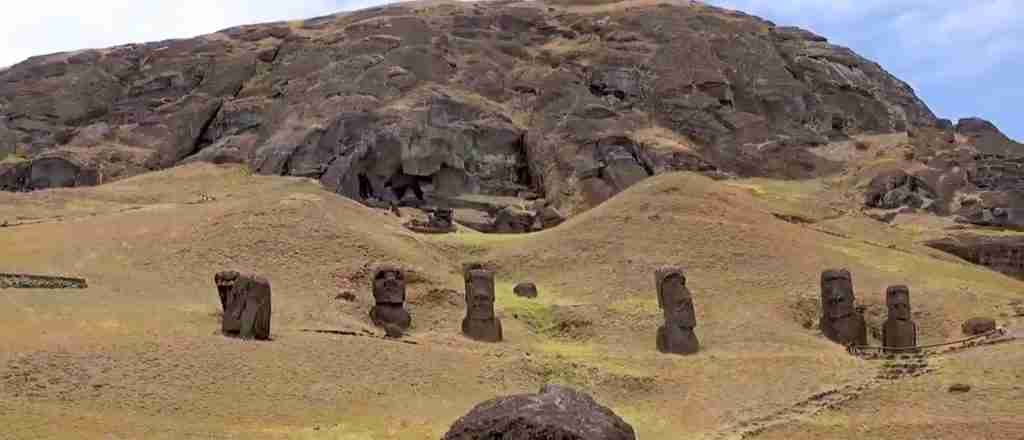
Rano Raraku volcanic crater serves as the birthplace of Easter Island’s moai, where Rapa Nui master carvers extracted and shaped 95% of the island’s monolithic statues from compressed volcanic tuff between 1250-1500 CE. This extraordinary archaeological site contains 397 moai in various stages of completion: some fully carved but not yet separated from the bedrock, others abandoned mid-transport down the crater slopes, and dozens standing partially buried around the crater’s exterior and interior walls. The concentration of statues at different construction phases provides unprecedented insight into moai carving techniques and the cultural disruption that ended production.
The crater rises 160 meters above the surrounding landscape, with moai scattered across both the external slopes facing the coast and the internal crater basin surrounding a freshwater reed lake. Visitors follow designated trails that wind through the quarry, passing moai up to 21 meters tall still attached to the rock face, carved backs awaiting final separation before the mysterious abandonment that left them frozen in time. The largest moai, known as “El Gigante,” measures 21.6 meters and would have weighed approximately 270 tons if completed—far exceeding the size of any transported statue.
The site visit begins at the information center where park rangers provide orientation and enforce the capacity limit (100 visitors maximum at any time). The main trail circuit takes 2-3 hours to complete, ascending to viewpoints overlooking the crater interior and descending into the basin where dozens of partially buried moai create one of archaeology’s most evocative landscapes. Each statue shows distinctive features carved by individual master carvers, revealing the diversity of artistic interpretation within the standardized moai form.
Photography opportunities at Rano Raraku are exceptional throughout the day, though afternoon light (3:00-5:00 PM) particularly enhances the texture and dimensionality of the carved figures against the volcanic landscape. The site’s archaeological richness demands adequate time for exploration—rushing through in less than 90 minutes means missing significant areas and the subtle details that distinguish individual moai. Many visitors return multiple times during their stay, discovering new perspectives and appreciating different aspects of this remarkable quarry that reveals so much about Rapa Nui’s sculptural tradition.
Ahu Akivi – The Seven Explorers 2026
Ahu Akivi presents a unique configuration among Easter Island’s moai platforms: seven nearly identical statues facing west toward the Pacific Ocean rather than the traditional inland orientation. Located 12 kilometers from Hanga Roa in the island’s interior uplands, this restored ahu stands as the only platform where moai face the sea, a distinction explained by Rapa Nui oral tradition as representing the seven explorers who first discovered the island. Archaeological research suggests the site served as an astronomical observatory, with the moai aligned to face the sunset during the spring equinox.
The seven moai stand approximately 4 meters tall with standardized features reflecting production from the same carving period and possibly the same workshop team. American archaeologist William Mulloy directed the platform’s restoration in 1960, carefully reconstructing the ahu to its pre-collapse state using archaeological evidence and traditional Rapa Nui construction knowledge. The restoration demonstrated that moai platforms were sophisticated engineered structures requiring precise stonework to support the multi-ton statues, not simple stone piles as earlier researchers had assumed.
The inland location provides a different landscape context compared to coastal ahu sites, with the moai standing against rolling grasslands and distant volcanic cones rather than ocean horizons. This setting emphasizes how Rapa Nui communities distributed ceremonial platforms across the entire island rather than concentrating them only along the coast. The surrounding area includes remains of ancient house foundations and agricultural terraces, suggesting Ahu Akivi served as the ceremonial center for a significant inland community.
Visit Ahu Akivi during late afternoon (4:00-6:00 PM) when the lowering sun illuminates the moai’s western faces and creates dramatic lighting across the upland landscape. The site receives fewer visitors than coastal platforms, providing a quieter, more contemplative moai experience. The gravel access road from Ruta 5 requires 15-20 minutes of careful driving but remains passable with standard rental vehicles during dry conditions. Plan 30-45 minutes at the site for photography and appreciation of this distinctive moai configuration.
Anakena Beach Platforms 2026
Anakena Beach combines Easter Island’s finest white sand beach with two significant restored ahu platforms, creating the island’s most picturesque moai setting where ancestral statues overlook turquoise Pacific waters and coconut palms. The beach served as the legendary landing site of the island’s first Polynesian settlers led by King Hotu Matu’a around 1200 CE, establishing Anakena as a location of profound cultural importance beyond its natural beauty.
Ahu Nau Nau features seven restored moai with several retaining their red topknots, positioned at the beach’s eastern end where they face inland toward the settlement area. The platform’s moai show exceptionally well-preserved carving details because they spent centuries buried in beach sand, protecting the soft volcanic tuff from weathering that eroded exposed statues. Restoration in the 1970s revealed intricate back carvings depicting ceremonial symbols and designs, features rarely preserved on other island moai.
Ahu Ature Huki stands at the beach’s opposite end with a single moai that played a significant role in modern archaeological understanding. In 1955-1956, explorer Thor Heyerdahl sponsored an experiment where a team of Rapa Nui descendants successfully raised this fallen moai using traditional oral history techniques and wooden lever systems. The demonstration proved that ancient Rapa Nui possessed the engineering knowledge to erect their massive statues without modern equipment, validating the cultural transmission of construction methods.
Anakena serves as an ideal mid-day stop during multi-site tours, offering swimming opportunities in protected waters, shaded picnic areas under planted coconut palms, and restaurant facilities serving local dishes. The combination of moai viewing with beach relaxation creates a balanced day of cultural exploration and leisure. Arrive early morning (8:00-10:00 AM) or late afternoon (4:00-6:00 PM) to avoid peak crowds and heat, when the beach and platforms see heaviest use from both tour groups and independent visitors.
Ahu Te Pito Kura – The Largest Transported Moai 2026
Ahu Te Pito Kura on the north coast holds the remains of “Paro,” the largest moai ever successfully transported from Rano Raraku quarry and erected on an ahu platform. This massive statue measures 10 meters tall and weighs approximately 82 tons, demonstrating the peak of Rapa Nui’s statue-moving capabilities before the cultural disruption that ended moai production. The moai now lies fallen face-down before its platform, toppled during the island’s turbulent period when rival clans systematically destroyed each other’s ancestral monuments.
The platform location on the remote north coast, 25 kilometers from Rano Raraku quarry, makes Paro’s transportation particularly impressive. The statue traveled this distance using the rope-and-rock technique that allowed teams to “walk” moai across the landscape, a method requiring extensive coordination, specialized knowledge, and substantial labor resources. The successful transport and erection of such a massive stone figure represented a tremendous achievement for the community that commissioned Paro, likely demonstrating their wealth, power, and organizational capabilities to rival clans.
Adjacent to the fallen moai sits Te Pito O Te Henua (“The Navel of the World”), a large spherical stone of different geological composition than the volcanic rock found elsewhere on Easter Island. Rapa Nui oral tradition claims the stone was brought by the island’s first settlers, and the site holds special spiritual significance in contemporary Rapa Nui culture. Visitors sometimes observe local residents conducting ceremonies at the stone, which is believed to possess mana (spiritual power) transmitted through direct contact.
The site’s remote location means fewer visitors compared to Ahu Tongariki or Rano Raraku, creating opportunities for quieter moai encounters with time for photography and contemplation. The fallen position allows close observation of carving details and construction features not visible on upright statues, including the distinctive back patterns and the mortise cavity where the topknot would have been secured. Plan 20-30 minutes for this site, which often combines with visits to nearby Anakena Beach as part of a north coast circuit.
Understanding Moai Construction 2026
Carving Techniques and Tools 2026
Rapa Nui master carvers created moai using basalt stone tools called toki, ranging from large hand axes for rough shaping to smaller implements for detailed work. The carvers selected appropriate basalt from specific locations around the island, choosing dense, fine-grained stone that could maintain sharp edges through extended use. These toki were not metal-tipped chisels but simple stone implements that required frequent resharpening and periodic replacement, explaining why thousands of discarded tools litter Rano Raraku’s slopes.
The carving process began by outlining the statue’s form on the crater face, then systematically removing material around the figure while it remained attached to the bedrock. Teams of 5-6 carvers worked from above, suspended on ropes or positioned on wooden platforms, pecking away at the volcanic tuff with their stone tools. The compressed volcanic ash proved ideal for carving—soft enough to shape relatively efficiently but hardening slightly upon exposure to air, creating durable finished surfaces.
Carvers shaped the moai front and sides first, leaving the back attached to the quarry face while they refined the facial features, torso proportions, and hand positions. Once the front carving reached completion, teams carefully separated the statue from the bedrock by undermining it, creating a gradually narrowing keel that eventually broke free. The detached moai then moved down the crater slopes to finishing areas where carvers completed the back surface and added decorative elements like the back belt and hand details.
Each moai required approximately one year of continuous work by a specialized carving team, representing enormous labor investment by the commissioning community. The master carvers possessed technical skills and cultural knowledge transmitted through apprenticeship systems, maintaining consistent moai forms while allowing individual artistic interpretation within the standardized design. Analysis of tool marks reveals that different carving teams worked on various quarry sectors, each with distinctive technical approaches and stylistic preferences visible in the finished statues.
Transportation Methods 2026
The transportation of multi-ton moai from Rano Raraku quarry to distant coastal platforms represents one of archaeology’s most debated questions, with researchers testing various theories about how Rapa Nui communities achieved this remarkable engineering feat without metal tools, wheeled vehicles, or draft animals. The most widely accepted theory, supported by experimental archaeology and oral tradition, proposes that teams “walked” the moai upright using rope systems that rocked the statues side to side in a controlled forward motion.
This walking technique required three rope teams: two side crews pulling alternately to rock the statue, and a rear crew preventing backward motion while controlling the forward lean angle. The moai’s design features—slightly convex bases, forward-tilting torsos, and center of gravity positioned to facilitate controlled rocking—suggest the statues were intentionally shaped for this transportation method. Experiments using concrete replicas demonstrated that teams of 70-90 people could successfully move a 10-ton moai several hundred meters per day using coordinated rope pulling and rhythmic chanting to synchronize the team’s efforts.
Archaeological evidence supports this method: roads from Rano Raraku show wear patterns consistent with upright statue movement, and numerous fallen moai along these transport routes lie face-down as if they toppled forward during walking, not as if they were dragged horizontally. The technique required extensive rope supplies (made from hauhau tree bark), cleared transport paths, and experienced leaders who understood the engineering principles and could coordinate large teams through precise rope tension and timing.
Alternative theories proposing horizontal transport on wooden sledges or rollers face practical challenges: the island’s limited tree resources couldn’t sustain the massive timber requirements for 1,000+ statue movements, and the volcanic terrain’s slopes and irregularities make sledge transport mechanically problematic. The walking method, while counterintuitive, represents an elegant engineering solution that matches the available evidence and respects Rapa Nui oral traditions describing statues that “walked” to their destinations through the ancestors’ spiritual power (mana).
Platform Construction and Statue Erection 2026
Ahu platforms required sophisticated engineering to support multi-ton moai, with construction involving carefully fitted stone foundations, earth fill, and precisely positioned supporting structures. Communities constructed these platforms over extended periods, often rebuilding and expanding them as their power and resources allowed larger moai commissions. The largest platforms like Ahu Tongariki measure over 100 meters long with foundations extending several meters deep, representing years of coordinated labor by the community and their allied clans.
Platform construction began by leveling and preparing the ground, often incorporating earlier burial structures or ceremonial features into the new ahu design. Builders laid a foundation of large stones fitted together without mortar, using the natural shapes to create stable interlocking structures. The platform face received carefully worked stones creating a smooth, slightly inward-leaning surface, while the inland side used rougher fill material contained by the foundation stones. Some platforms incorporated sophisticated features like ramps, internal chambers, and drainage systems to manage rainwater.
Erecting a moai onto its platform required additional engineering skill using wooden lever systems and stone props to gradually raise the statue from horizontal to vertical position. The process involved digging a ramp on the platform’s inland side, sliding the moai’s base into position, then incrementally raising the statue’s head using levers while supporting the rising weight with stones placed beneath. As the moai approached vertical, crews adjusted its position to align with mounting points in the platform, then secured the base before removing the supporting ramp structure.
The final stage involved adding the pukao (topknot) if the moai was to receive one. These massive cylindrical red stones, weighing 10-12 tons, were carved at Puna Pau quarry and transported to the ahu sites. Crews raised the pukao up the ramp system onto the platform, then carefully positioned it atop the moai’s head, where a mortise cavity secured the topknot in place. This completed the moai’s ceremonial presentation, transforming the carved stone into a fully realized representation of the ancestor’s power and prestige.
Cultural Meaning and Significance 2026
Ancestral Representation and Mana 2026
Moai functioned as physical manifestations of ancestral chiefs’ spiritual power (mana), creating a direct connection between living communities and their deified ancestors. Each statue represented a specific chief or important ancestor from the commissioning clan’s genealogy, not generic figures but named individuals whose mana protected and benefited their descendants. The statues’ placement on ahu platforms facing inland toward the community reflected this protective function—ancestors watching over their people, their lands, and their resources.
The concept of mana permeated Rapa Nui society, representing spiritual power that flowed from the gods through chiefs to their communities. Successful chiefs accumulated mana through proper conduct, military victories, successful harvests, and monumental construction projects like moai commissioning. The larger and more impressive a clan’s moai, the greater their ancestors’ mana and by extension the clan’s prestige and power within island society. This competitive mana accumulation drove the escalating moai production that characterized the 1250-1500 CE period.
When a moai stood on its platform with eyes inserted (the final activation ritual), the statue became a living conduit for ancestral power. The eyes, carved from white coral with black obsidian or red scoria pupils, allowed the ancestor to see and protect the community. Archaeological evidence of scattered eye fragments at various ahu sites suggests that eyes were ceremonially installed and removed for specific rituals, controlling when the ancestor’s gaze activated the statue’s spiritual function. The few surviving complete eyes, discovered through archaeological excavation, reveal the care invested in this crucial activation element.
The destruction of moai during the island’s turbulent 1680-1867 period reflected belief in the statues’ power. Rival clans toppled each other’s moai to destroy their enemies’ ancestral mana, deliberately breaking statues face-down to humiliate the ancestors and render them powerless. This systematic destruction during the “huri moai” (statue-toppling) period created the landscape of fallen statues that early European explorers encountered, fundamentally altering the island’s cultural trajectory and leaving only fragments of the sophisticated religious system that the moai represented.
Social Organization and Clan Identity 2026
Moai construction and platform building reinforced clan identity and hierarchical social organization across Easter Island’s multiple competing communities. The island’s population, estimated at 10,000-15,000 during peak moai production, divided into approximately ten major clans (mata) subdivided into smaller lineage groups. Each clan controlled specific territories with their associated resources, coastal platforms, and agricultural lands. The ahu platforms marked clan territorial boundaries and served as the ritual centers where communities gathered for ceremonies, burials, and social events.
Commissioning a moai represented a community investment requiring coordination of substantial resources and labor. The clan chief negotiated with the master carvers at Rano Raraku, providing food, materials, and other goods to support the carving team during the year-long statue creation. Meanwhile, community members prepared the transport route, gathered rope materials, and coordinated the dozens of workers needed to move the finished moai to its intended platform. This process created social bonds, reinforced clan identity, and demonstrated the chief’s organizational abilities and resource control.
The competitive aspect of moai construction drove increasingly ambitious projects as clans sought to surpass their rivals’ monuments. This cultural arms race led to larger statues, more elaborate platforms, and more numerous moai per ahu, reaching a peak with massive statues like the 21-meter “El Gigante” at Rano Raraku and the 15-moai platform at Ahu Tongariki. However, this competition placed unsustainable demands on the island’s resources, particularly the wood supplies needed for transportation and erection, contributing to environmental degradation and eventual cultural collapse.
When the moai-building society collapsed in the late 1600s due to resource depletion, clan warfare, and possible climate changes, the island underwent radical social reorganization. The new “Birdman” cult replaced ancestor worship as the primary religious system, with annual competitions at Orongo ceremonial village determining leadership rather than inherited chiefly status. This transformation rendered the moai obsolete as active religious objects, though they retained cultural significance as connections to the ancestors and symbols of Rapa Nui’s remarkable pre-contact achievements.
Contemporary Cultural Revival 2026
Modern Rapa Nui people maintain deep connections to the moai as symbols of their cultural identity and their ancestors’ extraordinary achievements. The restoration projects that began in the 1960s, initially led by outside archaeologists but increasingly controlled by Rapa Nui communities, represent more than archaeological preservation—they constitute cultural revival and assertion of indigenous rights over their heritage. Contemporary Rapa Nui actively participate in heritage management decisions, archaeological research, and the interpretation of their ancestors’ legacy for the growing tourism industry.
The Rapa Nui language, nearly lost during the catastrophic 19th century when the population declined to just 111 individuals by 1877, has experienced significant revival efforts supported by cultural pride in the moai heritage. Language instruction in schools, cultural festivals, and tourism interaction opportunities help maintain Rapa Nui as a living language spoken by younger generations. The moai serve as tangible connections to this linguistic and cultural heritage, representing the achievements of Rapa Nui-speaking ancestors whose language encodes unique knowledge about their monumental construction traditions.
Contemporary artistic traditions draw heavily on moai imagery, with Rapa Nui sculptors creating modern interpretations of ancestral forms using traditional carving techniques passed down through families. These artworks range from small wooden replicas sold to tourists to large-scale stone sculptures that continue the island’s monumental traditions. The tourism economy centered on moai visitation provides employment for many Rapa Nui families as guides, accommodation operators, and artisans, creating economic incentives for cultural preservation while raising questions about balancing heritage protection with economic development.
Annual cultural festivals like Tapati Rapa Nui (held in February) celebrate traditional arts including ancient dance forms, body painting, wood carving, and athletic competitions that demonstrate the physical capabilities required for moai construction and transportation. These festivals attract both tourists and researchers while serving primarily as community celebrations that reinforce Rapa Nui cultural identity and transmit traditional knowledge to younger generations. The festivals’ emphasis on pre-European traditions positions the moai era as a source of pride and inspiration, reclaiming the narrative from earlier interpretations that portrayed Rapa Nui as a failed society.
Photography Guide for Moai Sites 2026
Essential Equipment and Camera Settings 2026
Wide-angle lenses (16-35mm) prove essential for capturing moai within their landscape contexts, especially at sites like Ahu Tongariki where the 15-statue array requires broad framing to include the complete platform and Pacific Ocean backdrop. These focal lengths allow foreground-to-background compositions that emphasize both the moai’s imposing scale and their relationship to the dramatic Easter Island environment. However, pack a 70-200mm telephoto lens for isolating individual statue details, capturing the distinctive facial features, and compressing multiple moai into layered compositions where statues at different distances appear closer together.
Shoot in RAW format rather than JPEG to maximize post-processing flexibility, particularly important for challenging lighting situations like sunrise at Ahu Tongariki where the extreme dynamic range between the bright sky and shadowed moai requires exposure blending or graduated filters. Set your camera to aperture priority mode (f/8-f/11) for landscape work, ensuring adequate depth of field from foreground elements through distant moai. For sunrise and sunset photography, bracket your exposures (capture at -2, 0, +2 EV) to ensure you capture detail in both highlights and shadows regardless of which exposure you choose for final processing.
Bring a sturdy tripod for low-light situations including sunrise, sunset, and interior quarry shadows at Rano Raraku. The tripod enables longer exposures at base ISO settings (ISO 100-200), minimizing noise and maximizing image quality. It also supports precise composition adjustments and allows you to capture multiple exposures for blending or focus stacking when depth of field challenges exceed what a single aperture can resolve. However, verify that tripod use is permitted at specific sites, as Rano Raraku occasionally restricts tripods during crowded periods to prevent pathway obstruction.
Pack extra batteries and memory cards as Easter Island’s remote location makes replacements expensive if available at all. The island’s bright sun and dusty conditions require UV or protective filters on lenses, plus a lens cleaning cloth for frequent sensor spot and lens surface maintenance. Consider bringing a circular polarizing filter for enhancing sky contrast and reducing glare from the Pacific Ocean in coastal moai shots, though be aware that polarizers require careful rotation to avoid uneven sky darkening when using wide-angle lenses pointing toward the sun’s direction.
Optimal Lighting Conditions 2026
Golden hour light—the hour after sunrise and hour before sunset—provides the most flattering illumination for moai photography, creating warm color tones, long shadows that emphasize texture, and directional light that reveals the carved details of faces and torsos. At Ahu Tongariki, sunrise produces the iconic silhouette shot as statues backlit against the eastern sky gradually reveal their features as dawn light strengthens. The evolving light conditions during this 45-minute period allow multiple interpretations: pure silhouette, partial illumination, and full frontal lighting as the sun rises higher.
Afternoon light (3:00-5:00 PM) works exceptionally well at Rano Raraku quarry, where the sun angle illuminates the crater’s interior and highlights the textures of moai at various completion stages. The directional light creates dramatic shadows in the eye sockets, emphasizes the prominent brows and noses, and differentiates individual statues across the volcanic slopes. This timing also produces excellent light at Ahu Akivi where the setting sun illuminates the moai’s western faces while dramatic cloud formations often build over the Pacific backdrop.
Overcast conditions, while less dramatic than golden hour, provide advantages for detail photography and reducing harsh contrast. The diffused light allows you to capture subtle carving details without blown highlights or blocked shadows, works well for close-up studies of moai features, and permits comfortable midday photography when direct sun creates challenging exposure situations. Cloudy conditions prove particularly effective at Rano Raraku where the complex quarry topography creates extreme contrast between sun and shadow that overcast light naturally balances.
Avoid harsh midday sun (11:00 AM-2:00 PM) for primary moai photography as the overhead light creates unflattering shadows in eye sockets and beneath noses that emphasize the statues’ hollow-eyed appearance. However, this light works for aerial or elevated perspectives looking down on moai from above, and for capturing the brilliant colors of Anakena Beach where the turquoise water and white sand benefit from bright illumination. Plan midday for non-photography activities like lunch, museum visits in Hanga Roa, or swimming at Anakena, saving optimal light for dedicated shooting times.
Composition Strategies 2026
Foreground elements add depth and scale to moai compositions—position yourself to include volcanic rocks, native grasses, or coastal features in the bottom third of your frame, creating layered images that draw viewers’ eyes through the composition toward the statues. At Rano Raraku, partially buried moai make excellent foreground subjects for images that feature background statues on the crater slopes, creating storytelling compositions that show the quarry’s archaeological richness. These foreground-to-background layered shots benefit from small apertures (f/16-f/22) ensuring front-to-back sharpness.
Emphasize scale by including human figures in moai photographs when ethical and unobtrusive. A person standing near the base of a 7-meter statue immediately communicates the imposing size that wide-angle perspectives can diminish. Wait for other visitors to position themselves naturally at viewing areas, or work with a travel companion who can serve as a consistent scale reference throughout your moai portfolio. This technique proves particularly effective at Ahu Tongariki where the 15-statue array’s grand scale benefits from human elements for perspective.
Experiment with vertical orientations for single moai portraits that emphasize the statues’ height and commanding presence. These vertical compositions allow you to include the complete figure from base to topknot (if present) while incorporating sky or landscape context above, creating heroic portraits that capture individual moai character. At sites like Rano Raraku with dozens of distinct statues, the portrait approach allows you to build a diverse collection of individual moai studies showing the variation in carving styles, completion states, and positions.
Look for unique perspectives beyond the standard viewpoints—move to the sides of platforms for profiles that emphasize the moai’s distinctive forward-leaning posture, or find elevated positions that show the statues’ relationship to their ahu platforms and the surrounding landscape. At coastal sites, explore low viewpoints that position moai against the sky or ocean horizons, creating dramatic silhouettes. The designated viewing areas at most sites provide safe positions, but scout the perimeters (while respecting barriers) for alternate angles that produce less common perspectives.
Sample 2026 Moai Exploration Itineraries
Comprehensive One-Day Moai Circuit 2026
This intensive single-day itinerary covers the essential moai sites around Easter Island’s perimeter, requiring rental vehicle transportation and 10-12 hours of total time including driving, site visits, and meal breaks.
6:00 AM – Ahu Tongariki Sunrise: Depart Hanga Roa in darkness for the 30-minute drive to witness sunrise over the 15-moai platform. Arrive by 6:15 AM to secure viewing position and set up photography equipment. Spend 90 minutes photographing the evolving light as dawn illuminates the massive statues against the Pacific horizon. Park entry included in $80 national park ticket.
8:00 AM – Rano Raraku Quarry: Drive 5 minutes from Ahu Tongariki to the moai birthplace. Spend 2.5 hours exploring the interior and exterior quarry trails, observing the 397 statues in various completion stages. The morning light provides excellent photography conditions for the crater interior moai. Ranger station at entrance monitors capacity limits.
10:30 AM – Ahu Te Pito Kura: Continue along the north coast (20-minute drive) to see Paro, the largest transported moai. Spend 30 minutes photographing the fallen giant and visiting the Te Pito O Te Henua sacred stone. The site receives fewer visitors, offering quiet contemplation of Rapa Nui engineering achievements.
12:00 PM – Anakena Beach Lunch: Arrive at Easter Island’s prime beach location (15-minute drive from Ahu Te Pito Kura). Visit the two ahu platforms with restored moai overlooking the turquoise waters, then enjoy lunch at the beach restaurant. Swimming, shade under coconut palms, and restroom facilities available. Lunch $25-35 per person for local fish dishes or sandwiches. Allow 90 minutes total for moai viewing, eating, and beach relaxation.
1:30 PM – Ahu Akivi Return Journey: Begin return journey toward Hanga Roa with a stop at the interior platform featuring seven moai facing the ocean (40-minute drive from Anakena). Spend 45 minutes photographing these distinctive statues in their upland setting. The afternoon light illuminates the western-facing moai effectively.
3:00 PM – Hanga Roa Area Sites: Visit the Ahu Tahai complex near town, featuring multiple restored moai including the only one with restored eyes that demonstrate how statues appeared when ceremonially activated. Spend 45 minutes exploring the three platforms in this archaeological zone. Continue to nearby Ahu Vai Uri and the Anthropological Museum (optional, $2 entry) for cultural context.
5:00 PM – Puna Pau Topknot Quarry: Make the brief drive to the red scoria quarry where moai topknots were carved (15 minutes from Hanga Roa). Spend 30 minutes observing the cylindrical pukao in various stages of completion and learning about the separate production system for these crowning elements.
6:00 PM – Sunset at Ahu Tahai: Return to the coastal platforms near Hanga Roa to photograph sunset behind the moai silhouettes, a popular photography opportunity that mirrors the sunrise experience at Ahu Tongariki. Expect crowds of fellow photographers and tourists. Park closes at 7:00 PM.
National park entry $80, lunch $25-35, vehicle rental $50-80, fuel $36-50. Total day cost: $191-245 per person (excluding accommodation). This comprehensive circuit covers all major moai sites but requires physical stamina and tolerance for a long day of driving and walking across multiple archaeological zones.
Relaxed Three-Day Moai Exploration 2026
This paced itinerary distributes moai sites across three days, allowing adequate time for photography, avoiding rushing, and incorporating rest periods. Suitable for travelers preferring depth over breadth and those sensitive to fatigue from concentrated touring.
Day 1 – Southeast Coast Focus: Begin with Ahu Tongariki sunrise (6:00-7:30 AM), followed by comprehensive exploration of Rano Raraku quarry (8:00 AM-12:00 PM) when morning light illuminates the crater interior. Return to Hanga Roa for lunch and afternoon rest during the hot hours. Late afternoon (4:00-6:00 PM) visit Ahu Vinapu near the airport to study the precision-fitted stonework that sparked theories about South American cultural connections. Dinner in Hanga Roa. Vehicle rental $50-80, fuel $15-20, lunch $20-30, dinner $35-45. Total: $120-175 per person (excluding accommodation).
Day 2 – North Coast and Interior: Morning departure (8:00 AM) for the north coast circuit visiting Ahu Te Pito Kura and the surrounding smaller platforms that demonstrate the density of moai distribution in ancient times. Midday arrives at Anakena Beach for lunch, swimming, and relaxation (11:30 AM-2:30 PM). Afternoon continues to Ahu Akivi for the seven explorers (3:00-4:00 PM), then Puna Pau topknot quarry (4:30-5:30 PM). Return to Hanga Roa for dinner. Beach restaurant lunch $25-35, dinner $35-45, fuel $20-30. Total: $80-110 per person (excluding accommodation and continued vehicle rental).
Day 3 – Hanga Roa Area and Orongo: Morning visit to Ahu Tahai complex and nearby platforms (8:00-10:00 AM) when light illuminates the restored moai including the one with eyes. Visit the Anthropological Museum ($2 entry) for cultural context about moai construction and Rapa Nui society. Lunch in town. Afternoon excursion to Orongo ceremonial village (3:00-5:30 PM, $80 park entry included in original ticket) to learn about the Birdman cult that replaced moai worship, offering cultural context for understanding why statue production ended. Final evening (6:00-7:00 PM) return to Ahu Tahai for sunset photography. Museum $2, lunch $20-30, snacks $10-15, dinner $35-45, fuel $15-20. Total: $82-112 per person (excluding accommodation and continued vehicle rental).
Three-day total costs: $282-397 per person excluding accommodation ($120-180 per night for mid-range hotels) and continued vehicle rental ($50-80 daily). This paced approach provides comprehensive moai coverage without exhausting intensity, allowing time to absorb the archaeological significance and capture photographs under varied lighting conditions.
Practical Considerations 2026
Weather and Seasonal Timing 2026
Easter Island’s subtropical climate provides year-round moai visiting opportunities, though seasonal patterns influence conditions significantly. Summer months (December-February) bring warmest temperatures averaging 23-28°C with higher rainfall potential, increased humidity, and peak tourist crowds that intensify at popular sites like Ahu Tongariki and Rano Raraku. These months see particularly heavy pressure during the Christmas-New Year holiday period when advance accommodation bookings become essential and site visits require early arrival to avoid crowds.
Autumn (March-May) offers excellent visiting conditions with moderating temperatures (20-25°C), decreased rainfall compared to summer, and substantially reduced tourist numbers as the peak season concludes. The stable weather patterns support multi-day moai exploration without rain interruptions, while the lower visitor volumes create more contemplative experiences at archaeological sites. Photography benefits from autumn’s clear skies and less haze compared to summer’s humid conditions.
Winter (June-August) presents cooler temperatures (15-20°C) with increased rainfall and stronger winds, particularly affecting exposed coastal sites like Ahu Tongariki and Ahu Te Pito Kura. However, winter sees the lowest tourist numbers, providing nearly private experiences at many moai sites outside the brief holiday periods. Pack warmer clothing for early morning sunrise sessions and wind protection for coastal platform visits. Winter sunlight comes from a lower angle, creating dramatic shadows and theatrical lighting effects for moai photography that differ from summer’s higher sun positions.
Spring (September-November) mirrors autumn’s favorable conditions with increasing temperatures, moderate rainfall, and manageable visitor numbers. The weather stabilizes through October and November as summer approaches, while tourist crowds remain lighter than the December-February peak. Spring offers the advantage of longer days compared to winter, extending the available photography hours at both ends of the day while maintaining pleasant temperatures for extensive walking at sites like Rano Raraku quarry.
Physical Requirements and Accessibility 2026
Most major moai sites feature relatively accessible viewing areas suitable for visitors with moderate mobility, though the volcanic terrain and uneven surfaces require reasonable walking capability. Ahu Tongariki provides level viewing areas on compacted earth approximately 100 meters from the platform, accessible without significant climbing though the surface lacks paving. Ahu Akivi and Anakena platforms similarly offer straightforward access with minimal elevation changes from parking areas to viewing positions.
Rano Raraku quarry presents the most challenging terrain requiring 2-3 hours of walking on uneven volcanic slopes, climbing several hundred meters of elevation gain between the exterior quarry, crater rim, and interior basin. The designated trails feature steps carved into the slope, loose gravel sections, and narrow passages between moai requiring careful foot placement. Visitors with limited mobility can appreciate some quarry moai from the lower exterior trail, though accessing the crater interior and the most dramatic viewpoints demands physical capability for sustained uphill walking.
No wheelchair-accessible moai sites exist due to the archaeological landscape’s natural terrain and conservation requirements that prevent extensive infrastructure development. Visitors requiring mobility assistance should focus on sites with minimal walking requirements like Ahu Tongariki and Ahu Tahai, where parking areas position within 100-200 meters of viewpoints. Organized tours can sometimes arrange closer vehicle access for mobility-challenged visitors, though this requires advance arrangement with operators and depends on site-specific regulations.
The remote locations and exposure to sun, wind, and occasional rain require adequate physical preparation including sun protection, hydration (carry 2-3 liters of water per person for full-day tours), appropriate footwear (closed-toe shoes with ankle support), and layered clothing for changing conditions. The island’s limited emergency medical facilities mean visitors should assess their capabilities honestly before attempting challenging sites like Rano Raraku’s complete circuit. Consider split-day itineraries with morning and afternoon touring blocks separated by midday rest periods to manage energy levels across multi-day moai exploration.
Visitor Conduct and Conservation 2026
Strict regulations protect Easter Island’s moai sites from damage while ensuring archaeological preservation for future generations. Visitors must stay on designated trails and viewing areas, maintaining required distances from moai and ahu platforms. Physical contact with statues is prohibited—the soft volcanic tuff degrades from oils and acids in human skin contact, while intentional or accidental damage to these irreplaceable cultural treasures carries substantial penalties including fines and potential criminal charges under Chilean antiquities law.
Photography remains permitted at all sites for personal use without restrictions on tripods or equipment types (except during crowded periods at Rano Raraku when tripods may be temporarily prohibited). However, commercial photography and filming requiring substantial equipment or interfering with other visitors requires advance permits from CONAF park authorities. Drone usage over archaeological sites is prohibited without special permits, and enforcement has increased with rangers monitoring for unauthorized aerial photography that violates both park regulations and Chilean aviation law.
Environmental conservation extends beyond the statues themselves to the surrounding landscape and native vegetation. Visitors should pack out all trash, stay on marked trails to prevent erosion and vegetation damage, and avoid disturbing the archaeological context around moai sites where scattered artifacts like toki tools, obsidian flakes, and foundation stones remain in situ for research purposes. The Leave No Trace principles apply throughout the national park, with particular emphasis on preserving the archaeological landscape that provides scientific evidence about moai construction and use.
Respect for contemporary Rapa Nui culture includes acknowledging that moai represent sacred ancestral figures for the indigenous community, not merely tourist attractions or artistic curiosities. Avoid climbing on platforms or moai, posing inappropriately for photographs (such as mimicking statue poses directly against moai), or treating sites disrespectfully. When encountering Rapa Nui residents conducting ceremonies at sites like Te Pito O Te Henua, maintain respectful distance and refrain from photography unless permission is explicitly granted. This cultural sensitivity enhances your experience while supporting the contemporary Rapa Nui community’s stewardship of their ancestors’ legacy.
Frequently Asked Questions About Easter Island Moai 2026
Why were moai statues created?
Moai served as physical representations of deified ancestors, believed to channel spiritual power (mana) that protected and benefited living communities. Each statue represented a specific deceased chief from the commissioning clan’s genealogy, positioned on ahu platforms facing inland to watch over their descendants’ lands and activities. The construction and display of impressive moai demonstrated a clan’s wealth, power, and organizational capabilities while honoring their lineage and maintaining connection to ancestral spirits who influenced everything from agricultural success to warfare outcomes.
How long did it take to carve a moai?
A team of 5-6 specialized carvers required approximately one year of continuous work to complete an average moai statue at Rano Raraku quarry. Larger statues demanded proportionally more time, while smaller moai could be finished more quickly. The carving process involved roughing out the basic form while the statue remained attached to the quarry face, then gradually refining the features before the dangerous separation process that freed the statue from the bedrock. After transport to its intended ahu platform, additional finishing work completed the back surface and added decorative details.
Why did moai construction stop?
Moai production ended around 1680-1722 CE due to multiple interconnected factors including environmental resource depletion (particularly the wood needed for statue transportation and platform construction), increasing clan warfare that disrupted the social organization required for monument building, and possible climate changes affecting agricultural productivity. The society underwent radical transformation, abandoning ancestor worship centered on moai for a new Birdman cult focused on annual competitions at Orongo ceremonial village. This cultural shift rendered moai obsolete, and rival clans systematically toppled each other’s statues during the destructive “huri moai” period that lasted into the 1800s.
Why do moai statues not face the ocean?
Moai face inland toward their communities rather than outward to the sea because their function was protecting and overseeing their descendants’ activities, lands, and resources. As ancestral representatives, the statues needed to watch over the living clan members, not the empty ocean. This orientation reflects the moai’s role as guardians of the community and mediators between the living and spiritual realms. The only exceptions are Ahu Akivi’s seven moai facing west toward the sunset, explained in oral tradition as representing the original explorers who discovered the island, and possibly serving as astronomical markers.
What happened to the moai that were never finished?
Approximately 397 moai at various completion stages remain at Rano Raraku quarry, abandoned when statue production ceased. These include fully carved figures still attached to the quarry face awaiting final separation, partially completed statues showing only rough outlines, and finished moai lying on the crater slopes presumably waiting for transport. The largest unfinished moai, “El Gigante,” measures 21.6 meters and would have weighed 270 tons if completed—far exceeding any transported statue. These abandoned moai provide invaluable archaeological evidence about carving techniques, production sequences, and the sudden disruption that ended the monumental sculpture tradition.
How were moai moved across the island?
Archaeological evidence and experimental archaeology support the theory that Rapa Nui teams “walked” moai upright using coordinated rope systems that rocked the statues side to side in controlled forward motion. Three rope teams worked simultaneously: two side crews pulling alternately to create the rocking motion, and a rear crew preventing backward movement while managing the forward lean angle. This method required 70-90 people for a 10-ton statue, extensive rope supplies made from bark fiber, and cleared transport routes. The statues’ design features—convex bases, forward-leaning torsos, and carefully positioned centers of gravity—suggest they were intentionally shaped to facilitate this walking transportation technique.
Can you touch the moai statues?
Physical contact with moai is strictly prohibited to prevent damage to the soft volcanic tuff material that degrades from exposure to skin oils, acids, and mechanical abrasion. Park rangers enforce this regulation, and violations can result in substantial fines under Chilean antiquities protection laws. Visitors must stay on designated trails and maintain required distances from statues and platforms. The prohibition extends to all moai whether standing, fallen, or partially buried, as each represents an irreplaceable cultural treasure requiring preservation for future generations and ongoing archaeological research.
What are the red topknots on some moai?
The cylindrical red stone crowns called pukao represent the topknot hairstyle worn by Rapa Nui chiefs and high-status individuals. These massive elements, weighing 10-12 tons, were carved from red scoria stone at Puna Pau quarry and transported separately to ahu platforms where they were raised and positioned atop completed moai. The pukao addition represented the final stage in a moai’s ceremonial presentation, though not all statues received topknots—their presence likely indicated particularly important chiefs or reflected specific clan traditions. Approximately 100 pukao exist across the island, with examples visible at restored sites like Ahu Tongariki and Ahu Nau Nau.
How much time should I spend at Rano Raraku quarry?
Plan minimum 2-3 hours for comprehensive Rano Raraku exploration that includes both the exterior slopes and interior crater basin. Rushing through in less than 90 minutes means missing significant quarry areas and the subtle details that distinguish individual moai at various completion stages. Photography enthusiasts or archaeology-focused visitors often spend 3-4 hours, particularly when afternoon light (3:00-5:00 PM) creates optimal conditions for capturing the texture and dimensionality of the carved figures against the volcanic landscape. The site’s archaeological richness and the concentration of 397 statues reward extended visits that allow discovery of less-obvious moai partially buried in the crater slopes.
Are there guided moai tours available in 2026?
Numerous operators offer guided moai tours from Hanga Roa ranging from half-day excursions ($60-120 per person) visiting 3-4 major sites to comprehensive full-day circuits ($150-200 per person) covering 6-8 platforms and the quarry. Small-group tours (maximum 10-12 participants) provide more personalized experiences with opportunities for questions and flexibility in timing compared to larger bus tours. Guides typically speak Spanish and English, with some operators offering French, German, or other languages for international visitors. Tours include transportation, but verify whether national park entry fees ($80) are included in the tour price or constitute an additional cost. Private tours for couples or families cost $250-400 daily depending on itinerary complexity and group size.