
Easter Island 3-Day Itinerary 2026: First-Time Visitor Guide
Tags:
- Three days provides essential coverage of Easter Island’s main moai sites including Rano Raraku quarry, Ahu Tongariki, and Orongo ceremonial village with comfortable pacing
- National park admission costs $80 per adult for 10-day access in 2026, covering all major archaeological sites across the island
- Daily costs range $95-145 per person excluding accommodation, with total 3-day expenses reaching $285-435 plus $150-280 nightly for lodging
- Rental cars provide optimal flexibility for exploring remote sites at $60-90 daily, while guided tours offer cultural context for $70-120 per experience
- Early morning visits to Ahu Tongariki for sunrise and late afternoon sessions at Ahu Tahai maximize photographic opportunities and minimize midday heat exposure
- February through April and October through November deliver optimal conditions with moderate temperatures, lower rainfall, and smaller tourist crowds for enhanced site experiences
Introduction to Planning Your 2026 Easter Island Visit
Easter Island (Rapa Nui) represents one of the world’s most isolated inhabited territories, positioned 3,700 kilometers from mainland Chile in the southeastern Pacific Ocean. This UNESCO World Heritage site showcases extraordinary archaeological heritage through nearly 900 moai statues carved between 1250-1500 CE by Polynesian settlers. Three days allows first-time visitors comprehensive coverage of essential sites while maintaining comfortable exploration pacing across the island’s compact 163.6 square kilometer landscape.
The itinerary balances major moai complexes with cultural experiences, ceremonial sites, and natural landscapes. Planning for 2026 requires advance accommodation booking due to limited lodging capacity on the island, with approximately 3,500 permanent residents supporting tourism infrastructure primarily concentrated in Hanga Roa village. Transportation logistics favor rental vehicles for site access flexibility, though guided tours provide valuable cultural and historical context from local Rapa Nui guides.
Budget considerations for 2026 reflect Easter Island’s isolation economics, with costs exceeding mainland Chile by 40-60% for most services and provisions. Strategic planning around self-catering opportunities, advance tour bookings, and shoulder season timing delivers substantial savings while maintaining quality experiences across archaeological sites, cultural performances, and culinary encounters.
People Also Ask About Easter Island 3-Day Trips 2026
Is 3 days enough time to see Easter Island in 2026?
Three days provides sufficient time to visit all major moai sites including Rano Raraku quarry, Ahu Tongariki, Ahu Tahai, Orongo ceremonial village, and Anakena beach. This duration covers approximately 75% of significant archaeological locations across the island with comfortable pacing. Extended stays of 4-5 days allow deeper cultural immersion through additional hiking trails to remote moai, participation in traditional craft workshops, and exploration of coastal cave systems, but three days captures essential experiences for first-time visitors with efficient planning.
How much does a 3-day Easter Island trip cost in 2026?
A 3-day Easter Island trip costs $900-1,500 per person including round-trip flights from Santiago ($450-800), accommodation ($150-280 per night for three nights totaling $450-840), national park admission ($80), daily activity costs ($285-435 for three days), and rental car ($180-270 for three days). Budget-conscious travelers minimize costs through hostel accommodations, self-catering meals, and self-guided exploration, while mid-range visitors investing in guided tours, restaurant dining, and comfortable lodging reach the upper cost spectrum. These estimates exclude international flights to Chile.
What’s the best month to visit Easter Island in 2026?
October through November delivers optimal visiting conditions for 2026 with average temperatures of 18-22°C (64-72°F), minimal rainfall averaging 75mm monthly, and moderate tourist volumes following peak winter season crowds. This shoulder period balances comfortable weather, lower accommodation rates compared to January-February peaks, and uncrowded archaeological sites. February through April represents alternative excellent timing with warm temperatures and the annual Tapati Rapa Nui cultural festival in late January/early February, though accommodation costs increase during this peak season by 25-35% compared to shoulder months.
Do you need a rental car for Easter Island in 2026?
Rental cars provide optimal flexibility for Easter Island exploration in 2026, enabling independent scheduling at remote sites like Rano Raraku quarry, Ahu Akivi, and Te Pito Kura without tour group constraints. Cars cost $60-90 daily with manual transmissions predominating and roads consisting of paved highway circling the island plus unpaved access routes to archaeological sites. Alternative transportation includes bicycle rentals ($15-25 daily for sites within 10 kilometers of Hanga Roa), organized tours ($70-120 per day), and taxi services ($30-50 for major site visits), though rental vehicles deliver superior cost-efficiency and scheduling freedom for multi-site daily itineraries.
Extended multi-day tours – 5+ days
Featured Easter Island Multi-Day Tour Packages

3 days
Easter Island 3-Day Discovery Tour
- ✓ Comprehensive Easter Island experience
- ✓ Expert local guides included
- ✓ All accommodation included
- ✓ Transportation provided

5 days
Easter Island 5-Day Highlights Experience
- ✓ Comprehensive Easter Island experience
- ✓ Expert local guides included
- ✓ All accommodation included
- ✓ Transportation provided
7 days
Easter Island 7-Day Cultural Journey
- ✓ Comprehensive Easter Island experience
- ✓ Expert local guides included
- ✓ All accommodation included
- ✓ Transportation provided
10 days
Easter Island 10-Day Complete Adventure
- ✓ Comprehensive Easter Island experience
- ✓ Expert local guides included
- ✓ All accommodation included
- ✓ Transportation provided
Multi-day tour packages powered by TourRadar. Prices and availability subject to change.
Essential Planning Information for 2026
Understanding Easter Island Access and Entry Requirements
Easter Island access operates exclusively through LATAM Airlines from Santiago de Chile, with daily flights departing morning and afternoon covering the 3,700-kilometer distance in 5 hours 30 minutes. Round-trip fares range $450-800 in 2026 depending on booking timing, with advance purchases 3-4 months prior securing lower rates. Check LATAM’s official website for current schedules and promotional fares as pricing varies seasonally.
Entry requirements for 2026 include valid passport with minimum 6 months validity, Chilean entry visa if required for your nationality (Americans, Europeans, and most South Americans receive automatic 90-day tourist permits), and completion of online PDI (Policía de Investigaciones) entry form 48 hours before departure. No specific Easter Island entry permits exist beyond standard Chilean immigration procedures, with authorities conducting passport control upon arrival at Mataveri International Airport.
Travel insurance proves essential given the island’s isolation, with medical evacuation to mainland Chile costing $15,000-25,000 for serious emergencies. Comprehensive coverage including medical evacuation, trip cancellation, and emergency medical care costs $45-75 for 3-day trips. All visitors require cash reserves (Chilean pesos and US dollars accepted) as ATM availability remains limited to Hanga Roa village with frequent service interruptions.
2026 National Park Access and Admission Costs
Rapa Nui National Park encompasses all major archaeological sites across Easter Island, requiring paid admission for access to moai complexes, ceremonial villages, and protected areas. The standard admission costs $80 for adults and $40 for children ages 12-17 in 2026, providing 10-day access to all park sites including Rano Raraku, Ahu Tongariki, Orongo, Rano Kau, and coastal ahu platforms. Check the official Parque Nacional Rapa Nui website for current rates as pricing may vary.
Park tickets purchase occurs at Mataveri Airport upon arrival or at the CONAF office in Hanga Roa village, with payment accepted in Chilean pesos or major credit cards. The admission provides single entry to Orongo ceremonial village and Rano Raraku quarry (the two most sensitive sites), with unlimited access to all other locations during the 10-day validity period. Visitors receive a detailed park map and site information booklet with ticket purchase.
Free sites include Ahu Tahai complex adjacent to Hanga Roa, Anakena and Ovahe beaches, and the Hanga Roa anthropological museum charging separate $10 admission. Sunset viewing at Ahu Tahai requires no park admission and delivers exceptional photographic opportunities with moai silhouetted against Pacific Ocean horizons.
2026 Accommodation Strategy and Booking Timeline
Easter Island accommodation capacity remains limited with approximately 80 hotels, hostels, and guesthouses serving tourism demand concentrated in Hanga Roa village. Advance booking 3-4 months prior to 2026 travel secures preferred properties and competitive rates, with peak seasons (January-February, July-August) requiring 4-6 months advance reservations due to full capacity.
Budget accommodations including hostels and basic guesthouses cost $50-80 per night for dormitory beds or simple private rooms with shared bathrooms, offering kitchen facilities for self-catering. Mid-range hotels and boutique guesthouses range $150-220 per night providing private bathrooms, breakfast inclusion, and WiFi connectivity. Luxury properties and oceanfront resorts cost $250-400 per night featuring pools, restaurants, cultural programming, and premium amenities.
Location priorities favor central Hanga Roa positioning for walking access to restaurants, shops, ATMs, and Ahu Tahai sunset viewing site. Properties with kitchen facilities deliver significant savings through self-prepared meals, reducing daily food costs by 50-60% compared to restaurant dining exclusively. Book accommodations offering airport transfers (included or $15-25 fee) to simplify arrival logistics given limited taxi availability at flight times.
Best Time to Visit Easter Island in 2026
Seasonal Weather Patterns and Climate Considerations
Easter Island experiences subtropical maritime climate with year-round moderate temperatures and two distinct seasons. Summer (December-March) delivers warmest conditions with averages of 23-27°C (73-81°F), higher humidity levels, and increased rainfall concentrated in April-May transition months. Winter (June-September) brings cooler temperatures of 15-19°C (59-66°F), lower humidity, and stronger trade winds affecting coastal comfort but enabling clear photographic conditions.
Shoulder seasons (October-November and March-April) balance optimal conditions for 2026 visits with temperatures of 18-22°C (64-72°F), moderate rainfall (75-100mm monthly), and comfortable exploration conditions. These periods avoid peak summer heat and winter wind exposure while delivering reliable weather for outdoor archaeological site visits and cultural activities.
Rainfall patterns remain relatively consistent year-round averaging 1,100mm annually, with slightly drier conditions June-November (80-100mm monthly) compared to December-May (100-150mm monthly). Brief afternoon showers occur frequently but rarely impact full-day itineraries, with morning exploration typically proceeding under clear skies before clouds develop post-lunch.
2026 Crowd Management and Tourist Seasons
Peak tourist seasons for Easter Island concentrate during Southern Hemisphere summer (January-February) when Chilean domestic travelers maximize vacation periods, and mid-winter (July-August) when European and North American visitors escape northern summer crowds. These periods see accommodation at full capacity, tour groups filling daily programs, and popular sites like Ahu Tongariki and Rano Raraku experiencing 200-300 daily visitors.
Shoulder months (October-November, March-April) deliver 40-50% lower tourist volumes while maintaining excellent weather conditions and full service availability. Archaeological sites accommodate comfortable exploration with 50-100 daily visitors at major locations, enabling unobstructed photography and contemplative experiences at ceremonial platforms.
The Tapati Rapa Nui cultural festival occurs annually during the first two weeks of February, showcasing traditional competitions, music performances, dance presentations, and athletic contests. This period attracts maximum tourist interest with accommodation booking required 6-8 months in advance and premium pricing applied across all services. First-time visitors prioritizing cultural immersion benefit from February timing despite higher costs and crowds, while those focusing on archaeological exploration prefer shoulder season visits.
Optimal Months for 2026 Easter Island Visits
October and November 2026 represent ideal visiting months for first-time visitors balancing weather reliability, moderate crowds, and reasonable pricing. Temperatures range 18-22°C (64-72°F) with minimal rainfall, comfortable trade winds, and excellent visibility for photography. Accommodation rates remain 20-30% below peak season levels, rental cars maintain availability without advance booking pressure, and guided tours operate with smaller group sizes enhancing quality experiences.
March and April provide alternative excellent timing for 2026 trips, capturing late summer warmth (22-25°C/72-77°F) with decreasing tourist volumes as peak season concludes. These months balance comfortable temperatures for full-day exploration with lower accommodation costs compared to January-February peaks, though slight increases in rainfall probability (100-120mm monthly) require flexible scheduling for outdoor activities.
Avoid May-June transition months experiencing highest rainfall (120-150mm monthly) and September’s peak wind conditions exceeding 30 km/h that impact coastal site comfort. December through February delivers maximum crowds and accommodation pressure despite excellent weather, requiring 4-6 months advance planning and accepting 30-40% premium pricing across services.
Day 1: Southern Circuit and Rano Raraku Quarry
Morning: Rental Car Pick-Up and Ahu Vinapu
Begin your Easter Island adventure with 8:00 AM rental car collection from agencies in Hanga Roa village, allocating 30 minutes for vehicle inspection and paperwork completion. Manual transmission vehicles predominate with standard insurance costing $60-90 daily for compact models suitable for island roads. Familiarize yourself with the route to Ahu Vinapu located 5 kilometers south of town via paved road requiring 10 minutes driving.
Ahu Vinapu represents one of Easter Island’s most archaeologically significant platforms, notable for precisely fitted stone construction resembling Incan masonry at Cusco and Machu Picchu. The site features two ahu platforms with toppled moai displaying red scoria pukao (topknots) and exceptional stonework in platform foundations. Spend 45-60 minutes exploring the complex, examining construction techniques, and photographing the coastal setting with waves crashing against the southeastern shore. This location receives minimal tourist traffic, delivering peaceful introduction to moai architecture.
The adjacent airport runway reveals modern infrastructure juxtaposition with ancient heritage, while coastal views extend across the Pacific toward South America 3,700 kilometers distant. Morning light angles optimize photography of stone platform details and toppled moai positions, with interpretive signs providing context about pre-contact Rapa Nui civilization and collapse theories.
Mid-Morning: Rano Raraku Moai Quarry
Continue to Rano Raraku quarry located 18 kilometers northeast of Hanga Roa via the coastal road, requiring 25 minutes driving through grassland dotted with occasional moai silhouettes. Arrive 9:30-10:00 AM to maximize morning light and minimize midday heat for the extensive walking circuit. Park admission checkpoint requires ticket presentation purchased at airport or CONAF office prior to site visits.
Rano Raraku represents Easter Island’s moai factory where approximately 400 statues remain in various completion stages, from barely roughed outlines to fully carved figures awaiting transport. The volcanic tuff crater provided ideal carving material, with moai ranging 3-12 meters height embedded in slopes or lying prone awaiting erection. Allocate 2-3 hours for comprehensive exploration of the exterior slopes circuit (1.5 kilometers with moderate elevation changes) and optional crater lake trail (additional 1 kilometer).
Key viewing points include the towering 21-meter Te Tokanga moai still attached to bedrock, the kneeling Tukuturi statue displaying unique posture, and dozens of partially completed figures revealing carving techniques. The exterior circuit passes 150+ moai in various positions with interpretive signs explaining production processes, transport theories, and abandonment circumstances following societal collapse around 1680 CE.
Photography opportunities abound throughout Rano Raraku with dramatic perspectives of half-buried moai, distant Ahu Tongariki views, and crater lake reflections. Morning light illuminates eastern slopes while afternoon conditions favor western faces, though cloud cover delivers consistent soft light ideal for stone texture details. Bring water, sun protection, and comfortable walking shoes for uneven volcanic terrain.
Lunch: Picnic at Ahu Tongariki
Drive 2 kilometers north to Ahu Tongariki for midday break, combining meal time with initial views of Easter Island’s largest moai platform. Pack lunches purchased from Hanga Roa supermarkets (empanadas $4-6, sandwiches $6-8, fruit $3-5) provide budget-friendly dining while maximizing site exploration time. Designated picnic areas with basic facilities accommodate visitors, though no restaurants or cafes operate at this remote location.
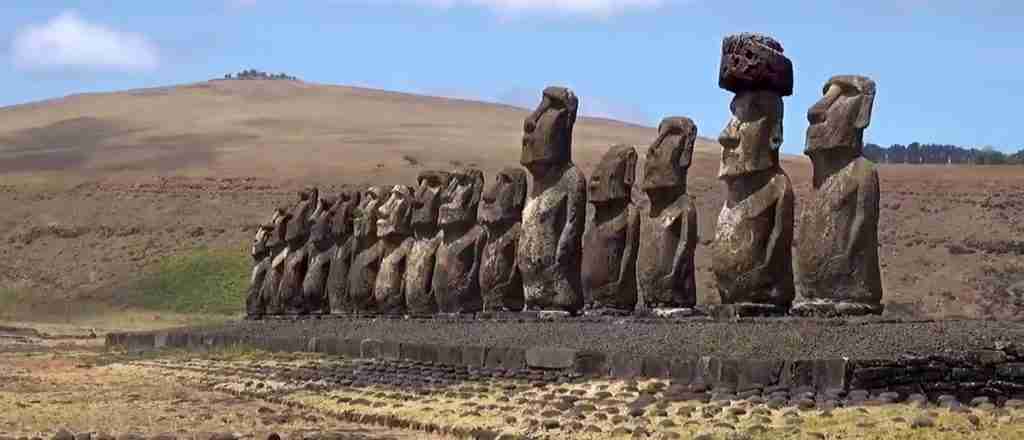
Ahu Tongariki showcases 15 restored moai standing 4-9 meters tall on a 220-meter platform, representing Easter Island’s most photographed archaeological site. The platform suffered tsunami damage in 1960 with Chilean earthquake-generated waves scattering moai across the landscape. Japanese crane equipment and Easter Island experts completed restoration 1992-1995, returning statues to their original positions facing inland toward Rano Raraku quarry.
Spend 45-60 minutes after lunch exploring the platform from multiple angles, walking the site perimeter, and examining individual moai characteristics including pukao topknots and coral eye insets on several figures. The solitary traveling moai positioned 100 meters from the main platform illustrates transport theories with the statue moved using traditional techniques during the 1990s restoration project.
Afternoon: Anakena Beach and Ahu Nau Nau
Continue 18 kilometers northeast to Anakena Beach via partially paved then dirt road requiring 30 minutes careful driving with attention to potholes and uneven surfaces. Anakena represents Easter Island’s premier beach destination featuring white coral sand, turquoise waters, coconut palm shade, and two important ahu platforms positioned directly on beach approaches.
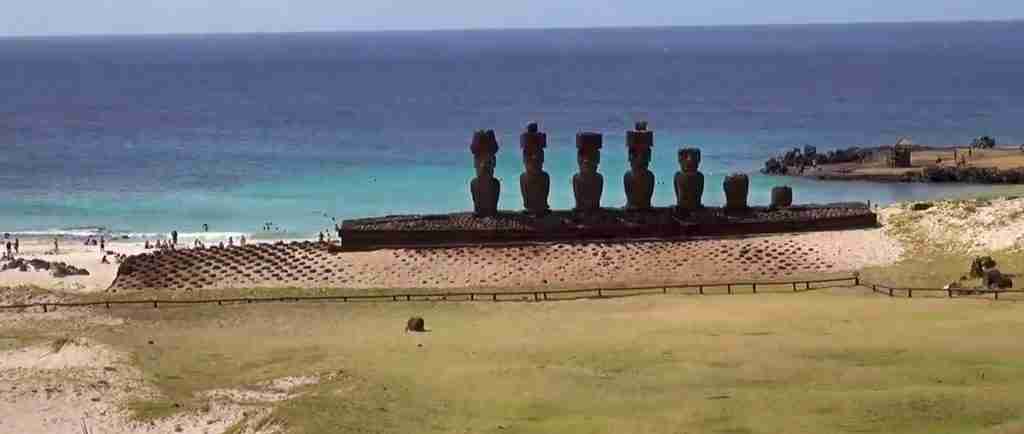
Ahu Nau Nau displays seven moai including five with restored coral eyes and red scoria pukao, creating Easter Island’s most photographically dramatic moai ensemble against beach backdrop. The platform’s beach location preserved exceptional moai condition through burial in protective sand until 20th century excavations. Spend 30-45 minutes examining the detailed carving work visible on these well-preserved statues, including back designs and anatomical features eroded on weathered moai elsewhere.
Beach time allows swimming in calm protected waters averaging 20-24°C (68-75°F) year-round, though currents require caution and no lifeguards patrol the area. Palm-shaded areas provide picnic facilities and basic bathroom amenities, while a snack stand operates during peak hours serving empanadas, beverages, and ice cream. Allocate 1-2 hours for combined moai viewing and beach relaxation before return drive to Hanga Roa.
Evening: Ahu Tahai Sunset and Hanga Roa Dining
Return to Hanga Roa by 6:00 PM allowing time for accommodation check-in and brief rest before sunset viewing at Ahu Tahai complex. This site positions walking distance (10-15 minutes) from most Hanga Roa accommodations and requires no park admission, making it ideal for evening visits. The complex features three ahu platforms with restored moai including Ko Te Riku, Easter Island’s only moai with restored coral eyes visible in their original position.
Arrive 45 minutes before sunset for optimal photography positions and platform exploration before crowds gather. Sunset timing varies seasonally (6:30-8:30 PM depending on month) with Pacific Ocean horizons providing dramatic backdrops for moai silhouettes. The site attracts 100-200 evening visitors during peak season but remains accessible with strategic positioning along the coastal path.
Dinner options in Hanga Roa range from casual cafes ($12-18 for entrees) to upscale restaurants ($25-45 per person). Te Moana restaurant delivers fresh seafood with ocean views, Tataku Vave specializes in tuna preparations with Polynesian influences, and La Kaleta offers casual dining near the harbor. Budget-conscious travelers utilize supermarket provisions for self-prepared meals at accommodations with kitchen facilities, reducing dinner costs to $6-10 per person.
Day 1 Cost Summary
Accommodation $150-280 per night (mid-range double occupancy, outside calculation). Rental car $60-90 for the day, national park admission $80, lunch supplies $8-12, snacks $5-8, Anakena beach refreshments $6-10, dinner $12-35. Total Day 1 cost: $171-235 per person (excluding accommodation).
Day 2: Northern Circuit and Orongo Ceremonial Village
Morning: Sunrise at Ahu Tongariki
Begin Day 2 with pre-dawn departure from Hanga Roa, driving 22 kilometers to Ahu Tongariki for sunrise photography. Depart accommodations 60-75 minutes before sunrise (timing varies seasonally: 6:00-7:30 AM depending on month) allowing travel time, parking, and position establishment for optimal viewing angles. Bring flashlights for navigation in darkness, warm layers for morning temperatures (14-18°C/57-64°F typical), and full photography equipment including tripod for long exposures.
Sunrise at Ahu Tongariki represents Easter Island’s premier photographic experience with 15 moai silhouetted against dramatic sky colors transitioning from deep blues through oranges and reds as the sun rises over the Pacific Ocean behind the statues. The inland-facing moai positioning creates backlighting effects as dawn progresses, with the sun appearing to emerge directly between central statues when timing and seasonal alignment coincide.
Arrive 45 minutes before sunrise for tripod setup and composition planning, testing various positions along the approach road and platform perimeter. Fellow photographers typically number 20-40 during peak season with courteous spacing ensuring unobstructed shots. The 30-minute sunrise window from first light to full daylight delivers constantly changing conditions requiring rapid adjustments and multiple exposures for optimal results. Post-sunrise morning light illuminates moai details invisible during midday harsh conditions, warranting additional 30-45 minutes for close-up photography before departing.
Mid-Morning: Ahu Akivi and Interior Moai
Return toward Hanga Roa, stopping midway at Ahu Akivi accessed via 3-kilometer unpaved road requiring careful driving at 20 km/h maximum. This inland platform displays seven restored moai representing the only Easter Island statues facing the ocean rather than inland toward ancestral communities. Archaeological evidence suggests astronomical alignment with equinox sunset, though practical purpose remains debated among researchers.
The seven identical moai stand 4 meters tall without pukao topknots, positioned on a carefully constructed platform amid grassland setting lacking the dramatic coastal backdrops of other ahu. Restoration occurred 1960 by American archaeologist William Mulloy, establishing protocols used in subsequent island-wide moai restoration projects. Spend 30-45 minutes exploring the platform, examining construction techniques visible in exposed stonework, and photographing the inland perspective unique to this location.
The surrounding area features additional archaeological sites including Ana Te Pahu lava tube cave system (500 meters west) where traditional agriculture occurred in sheltered microclimate conditions. The caves extend several hundred meters with accessible portions requiring flashlights for exploration. Allocate additional 30 minutes for cave visit if interested in traditional living sites and agricultural techniques employed by pre-contact Rapa Nui populations.
Lunch and Early Afternoon: Hanga Roa Cultural Experiences
Return to Hanga Roa for midday break, utilizing town facilities and cultural sites during the hottest part of the day. The Museo Antropológico Padre Sebastián Englert charges $10 admission and displays comprehensive Easter Island history, archaeological artifacts, moai construction analysis, and cultural heritage documentation through excellent exhibits. Allocate 90 minutes for thorough museum exploration, with English signage throughout and audioguide availability for enhanced interpretation.
Lunch venues in central Hanga Roa include empanada stands ($4-6 per empanada, two sufficient for filling meal), casual cafes ($12-18 for entrees), and local markets where fresh fish, tropical fruit, and prepared foods cost $8-15 for substantial meals. Budget-conscious travelers purchase supermarket provisions for self-prepared lunches at accommodation facilities, reducing costs to $5-8 per person while gaining break time.
Optional afternoon activities include artisan workshop visits (Rapa Nui craft demonstrations often free or low-cost), market browsing for local handicrafts (wood carvings $30-200 depending on size and detail), and church visit to Iglesia Hanga Roa featuring traditional Catholic-Polynesian cultural synthesis. Reserve energy for late afternoon Orongo visit requiring hiking and archaeological exploration.
Late Afternoon: Orongo Ceremonial Village and Rano Kau Crater
Depart Hanga Roa 3:00-3:30 PM for Orongo ceremonial village located 6 kilometers southwest via paved road ascending gradually to 324-meter summit. Orongo represents Easter Island’s Birdman cult ceremonial center where annual competitions determined tribal leadership following moai-building era collapse. The site operates 9:00 AM-6:00 PM daily with national park admission ticket allowing single entry during 10-day validity period.
Park at the designated lot and follow the walking path to Orongo village overlooking Rano Kau crater and three offshore islets. The ceremonial village features 53 restored stone houses with distinctive sod roofs, petroglyphs depicting Birdman motifs carved into coastal rocks, and dramatic clifftop positioning with 300-meter drops to the ocean below. Allocate 2 hours minimum for village exploration, petroglyph viewing, crater rim walking, and photographic opportunities.
Rano Kau crater represents Easter Island’s largest volcanic crater with 1.6-kilometer diameter, 200-meter depth, and reed-filled lake occupying the interior. The crater rim trail extends portions of the 6-kilometer circumference with spectacular views across the caldera, offshore islands, and distant moai silhouettes visible at Ahu Tahai from this elevated perspective. Late afternoon light enhances crater colors and reduces wind exposure compared to midday conditions.
The Birdman cult ceremonies occurred annually during September-October when competitors swam 1.5 kilometers to Motu Nui islet, collected the first sooty tern egg of the season, and returned to proclaim their sponsor the new Birdman leader with authority over resource distribution. This system replaced earlier moai-centered leadership following the 17th century societal transformation.
Evening: Cultural Performance and Traditional Dinner
Return to Hanga Roa by 6:30 PM allowing time to prepare for evening cultural performance and traditional dinner. Several venues offer combined dance performances and meals showcasing Rapa Nui traditions: Kari Kari Cultural Center ($60-80 per person for show and dinner), Te Ra’ai ($50-70 for performance and meal), and hotel-based shows at properties like Hanga Roa Eco Village & Spa ($55-75).
The 90-minute performances feature traditional Polynesian dance including women’s poi ball demonstrations, men’s warrior dances, historical narrative sequences explaining moai construction and Birdman ceremonies, and audience participation segments. Professional dancers in traditional costume deliver energetic shows combining education about Rapa Nui heritage with entertainment value. Dinner includes traditional preparations like umu pae (earth oven cooking), fresh seafood, and tropical fruits.
Alternative evening options include independent dining at restaurants (budget $25-45 per person for quality meals) followed by casual waterfront walks along the Hanga Piko harbor where fishing boats return with daily catches. Some restaurants offer fish purchased directly from boats at market rates, prepared to customer specifications for fresh dining experiences at moderate prices.
Day 2 Cost Summary
Accommodation $150-280 per night (mid-range double occupancy, outside calculation). Rental car $60-90, museum admission $10, lunch $8-18, snacks $5-8, cultural performance with dinner $50-80. Total Day 2 cost: $133-206 per person (excluding accommodation).
Day 3: Coastal Exploration and Departure Preparation
Morning: Northern Coastal Ahu and Te Pito Kura
Dedicate the final morning to less-visited coastal ahu along Easter Island’s northern shore, beginning with 8:00 AM departure from Hanga Roa. Drive northeast via the coastal road toward Te Pito Kura located 25 kilometers requiring 35 minutes travel time on partially paved surface transitioning to maintained dirt road.
Te Pito Kura features Easter Island’s largest transported moai measuring 9.8 meters length and weighing approximately 82 tons when complete with pukao. The toppled statue position reveals massive scale and construction ambition before societal collapse. Adjacent to the moai lies Te Pito O Te Henua (“Navel of the World”), a spherical stone associated with traditional legends about Easter Island’s founding by King Hotu Matu’a. Spend 30 minutes examining the site and capturing photographs of the massive prone moai with coastal backdrop.
Continue west along the coastal road visiting smaller ahu platforms including Ahu Te Peu and Ahu Hanga Tetenga, each featuring toppled moai and traditional foundations revealing construction techniques. These remote sites receive minimal tourist traffic, delivering solitary exploration opportunities and pristine archaeological contexts. Budget 15-20 minutes per ahu for photography and site examination, with rough walking paths connecting parking areas to platforms.
Mid-Morning: Puna Pau Quarry and Red Scoria Pukao
Return toward Hanga Roa via interior road, stopping at Puna Pau quarry located 4 kilometers northeast of town. This secondary quarry provided red scoria (volcanic rock) used for pukao topknots placed atop select moai across the island. Approximately 70 pukao remain at the quarry site in various completion stages, ranging from barely roughed cylinders to fully carved pieces abandoned awaiting transport.
The quarry occupies a small volcanic cone with walking paths ascending to the rim and crater floor where carving occurred. Allocate 45 minutes for site exploration, examining pukao carving techniques, photographing distinctive red scoria contrasted with green grass covering, and viewing distant Hanga Roa panoramas from the elevated position. Interpretive signs explain pukao production methods and transport theories to distant ahu platforms.
Pukao weights range 2-12 tons with cylindrical shapes averaging 2 meters diameter, carved from solid scoria blocks. Transport methods remain debated with theories including rolling techniques, wooden sledge systems, and levering mechanisms to elevate the topknots onto moai heads once statues stood erected on ahu platforms. Only approximately 100 pukao were carved for the island’s nearly 900 moai, reserved for the most important statues at premier ahu sites.
Late Morning: Final Beach Time at Ovahe or Anakena
Conclude site exploration with relaxation at either Ovahe or Anakena beach before afternoon departure preparations. Ovahe positions 1 kilometer north of Anakena via rough dirt track, offering tiny pink sand beach in protected cove with excellent swimming but no facilities. This remote location attracts minimal visitors, delivering tranquil beach experience with dramatic cliff backdrop and turquoise water colors.
Anakena provides more developed beach facilities including basic bathroom amenities, snack stand (operating limited hours), coconut palm shade, and the Ahu Nau Nau moai complex for final photography. Choose based on preference for solitude (Ovahe) versus convenience (Anakena), with swimming conditions excellent at both locations in calm weather and dangerous during southern swells exceeding 2 meters.
Allocate 60-90 minutes for beach time, swimming, and final moai viewing before returning to Hanga Roa by 1:00 PM for departure preparations. Bring lunch provisions purchased earlier or plan early lunch at Anakena snack stand serving empanadas, sandwiches, and beverages at moderate prices.
Afternoon: Departure Preparations and Rental Car Return
Return to Hanga Roa accommodations by 1:30 PM allowing time for showering, packing, and preparing for evening flight departure. Most flights to Santiago depart 6:00-8:00 PM requiring airport arrival 2 hours prior for check-in and security procedures. Rental car return occurs at agency offices 3-4 hours before flight (most agencies require return by 4:00 PM for 7:00 PM departures), allowing inspection time and potential cleaning if vehicles returned excessively dirty from unpaved road travel.
Final afternoon hours provide opportunities for last-minute shopping along Atamu Tekena Avenue where artisan shops, supermarkets, and souvenir vendors concentrate. Popular purchases include miniature moai carvings ($30-150), traditional Rapa Nui crafts ($25-200), locally produced cosmetics featuring endemic plants ($15-40), and Chilean wine selections ($12-35) available at supermarkets for better value than duty-free airport shops.
Budget optional final lunch at casual cafes ($12-18) or utilize accommodation facilities for self-prepared meals before checkout procedures. Most accommodations offer luggage storage if early checkout required, allowing final town exploration without hauling bags. Arrange airport transfer through accommodation ($15-25) or pre-booked taxi service ensuring reliable transportation given limited vehicle availability during flight departure windows.
Day 3 Cost Summary
Accommodation $150-280 per night (mid-range double occupancy, outside calculation). Rental car $60-90, lunch $8-15, beach snacks $5-8, souvenir shopping (optional) $30-100, airport transfer $15-25. Total Day 3 cost: $118-238 per person (excluding accommodation and optional shopping).
Budget Breakdown for 3-Day Easter Island Trip 2026
Essential Costs Per Person
Round-Trip Flights (Santiago-Easter Island): $450-800 depending on booking timing and seasonal demand. Advance purchases 3-4 months prior secure lower fares. LATAM Airlines operates exclusive service with daily departures.
Accommodation (3 nights): $150-840 total depending on category. Budget hostels $50-80 per night ($150-240 total), mid-range hotels $150-220 per night ($450-660 total), luxury properties $250-400 per night ($750-1,200 total). Rates include taxes, breakfast often included in mid-range and luxury options.
Rental Car (3 days): $180-270 total. Daily rates $60-90 with manual transmission standard. Insurance included in quoted rates, fuel costs approximately $30-40 additional for 3-day usage covering 150-200 kilometers total driving.
National Park Admission: $80 per adult providing 10-day access to all park sites. Single purchase covers entire 3-day visit.
Daily Activity Costs (3 days): $285-435 total. Day 1 costs $171-235, Day 2 costs $133-206, Day 3 costs $118-238. These totals exclude accommodation but include meals, activities, museum admission, and cultural performance.
Total 3-Day Easter Island Cost Summary
Budget Approach: $1,195-1,525 per person. Includes flights $450, hostel accommodation $150, rental car $180, park admission $80, minimal daily costs $285, fuel $40. Achievable through self-catering meals, basic accommodations, self-guided exploration.
Mid-Range Approach: $1,450-1,900 per person. Includes flights $600, mid-range hotel $450, rental car $225, park admission $80, moderate daily costs $360, fuel $35. Balances comfort with value through quality accommodations, mix of restaurant and self-prepared meals, selective guided experiences.
Comfortable Approach: $1,900-2,500 per person. Includes flights $750, quality hotel $660, rental car $270, park admission $80, enhanced daily costs $435, fuel $30. Prioritizes convenience through restaurant dining, cultural performances, comfortable lodging, guided tour options.
These estimates exclude international flights to Santiago, travel insurance ($45-75), discretionary shopping, and gratuities. Budget categories assume double occupancy with per-person costs calculated for shared accommodation and transportation expenses.
Transportation Guide for 2026 Easter Island Visits
Rental Car Options and Driving Considerations
Rental cars provide optimal flexibility for Easter Island exploration with approximately 15 agencies operating in Hanga Roa village. Standard offerings include manual transmission compact vehicles at $60-75 daily, small 4×4 options at $75-90 daily (unnecessary for most visitors as paved roads reach major sites), and automatic transmission vehicles at $85-100 daily with limited availability requiring advance booking.
Reservation timing for 2026 visits should occur 2-3 weeks prior during shoulder seasons, extending to 4-6 weeks during peak periods (January-February, July-August) when fleet capacity fills. Major operators include Insular Rent a Car, Oceanic Rent a Car, and Niza Rent a Car, all positioned within walking distance of central Hanga Roa accommodations. Credit cards provide required deposits with full coverage insurance included in standard rates.
Easter Island driving conditions include 48-kilometer paved circuit road circling the island with good surface quality, unpaved but maintained roads accessing Anakena Beach and interior sites like Ahu Akivi, and rough tracks to remote locations requiring careful navigation at 15-20 km/h maximum speeds. Total driving distances range 120-180 kilometers across a 3-day itinerary, consuming one tank of fuel ($30-40 total) available at two Hanga Roa gas stations operating limited hours.
Alternative Transportation: Tours, Bikes, and Taxis
Organized tours provide structured alternative to independent driving, with full-day programs costing $70-120 per person covering major sites in guided group format. Half-day tours focus on specific circuits (southern sites $55-75, northern areas $50-70) with English and Spanish language guides explaining archaeological and cultural contexts. Tour advantages include driver-guide combinations eliminating navigation concerns, cultural interpretation enhancing site understanding, and social opportunities connecting with fellow travelers.
Bicycle rentals offer budget-conscious option for relatively fit travelers, with standard bikes costing $15-20 daily and mountain bikes $20-25 daily. Cycling feasibility depends on wind conditions (often strong), temperature tolerance (minimal shade along roads), and distance comfort (Rano Raraku lies 22 kilometers from Hanga Roa requiring 2-3 hours each direction). Successful bike-based itineraries focus on closer sites like Ahu Vinapu (10 kilometers return), Orongo (12 kilometers return), and Ahu Tahai (walking distance), reserving rental cars or tours for distant locations.
Taxi services operate sporadically with approximately 30 vehicles serving the island, requiring advance arrangement through accommodations or direct driver contacts. Typical fares include Hanga Roa-Ahu Tongariki return $60-80 with waiting time, Hanga Roa-Anakena return $70-90, and airport transfers $15-25. Limited availability during peak flight times necessitates pre-booking, with most accommodations maintaining relationships with reliable drivers.
Accommodation Strategies for 2026 Visits
Budget Accommodation Options
Budget accommodations concentrate in Hanga Roa village with 20+ hostels and basic guesthouses serving cost-conscious travelers. Dormitory beds cost $25-40 per person per night with shared bathrooms, communal kitchen facilities, WiFi connectivity, and basic common areas. Private rooms in hostels range $50-80 per night for doubles with shared bathrooms, increasing to $70-95 for ensuite facilities.
Recommended budget properties include Camping Tiketan Rapa Nui offering tent sites ($15 per person) and simple cabins ($60 for two), Kona Tau Hostel providing dormitories ($30 per person) and private rooms ($75 double) with full kitchen, and Mana Nui Inn featuring basic rooms ($65-80 double) with breakfast included and friendly family management.
Budget accommodation advantages include significant cost savings (40-60% below mid-range hotels), kitchen facilities enabling self-catering meals reducing daily food costs $20-30 per person, and social atmosphere facilitating tour group formations and cost-sharing opportunities for rental cars. Disadvantages include shared facilities, variable hot water availability, and peripheral locations requiring 10-15 minute walks to central Hanga Roa businesses.
Mid-Range and Boutique Hotel Options
Mid-range accommodations deliver comfort balance between budget constraints and enhanced amenities, with 30+ properties offering private bathrooms, breakfast inclusion, WiFi, and often pools or gardens. Pricing ranges $150-220 per night for double rooms depending on season, specific property, and advance booking timing.
Recommended mid-range options include Altiplanico Easter Island featuring 21 stone cottages with architectural character and pool ($180-220 nightly), Taha Tai Hotel offering oceanfront positioning and sunset views ($170-210), and Hare Noi boutique hotel providing intimate 8-room property with personalized service ($160-200). These properties position within 5-10 minutes walking from central Hanga Roa while maintaining quiet residential character.
Mid-range advantages include reliable comfort levels, breakfast inclusion (value $12-18 per person daily), private bathrooms with consistent hot water, and often additional amenities like pools, gardens, or cultural programming. Properties in this category typically offer airport transfers (included or $15-25 fee), tourism information and tour booking assistance, and English-speaking staff.
Luxury and Resort Properties
Luxury accommodations provide premium experiences with comprehensive amenities, oceanfront positioning, restaurant dining, pools, spa services, and cultural programs. The island supports 5-8 properties in this category with nightly rates $250-400 during peak seasons.
Premier luxury options include explora Rapa Nui offering all-inclusive programs with guided excursions ($450-650 per person per night including meals and activities), Hanga Roa Eco Village & Spa featuring 75 rooms with full resort amenities ($280-380 nightly), and Hotel Hangaroa Eco Village & Spa combining sustainable design with complete services ($260-350).
Luxury property advantages include comprehensive service eliminating planning requirements, included cultural performances and traditional ceremonies, quality restaurant dining, tour programming with expert guides, and airport transfers. These properties particularly suit travelers prioritizing comfort and convenience over budget considerations or those unable to drive requiring organized excursion programs.
Money-Saving Strategies for 2026 Easter Island Visits
Advance Booking Benefits and Shoulder Season Timing
Advance booking for Easter Island 2026 visits delivers substantial savings across multiple expense categories. Flights booked 3-4 months prior cost 30-45% less than last-minute purchases, accommodation secured similarly early captures early-bird rates 20-30% below peak pricing, and rental cars booked ahead ensure availability avoiding premium rates charged when local fleet reaches capacity.
Shoulder season timing (October-November, March-April) reduces costs while maintaining excellent conditions. Accommodation rates drop 25-35% compared to peak summer months (January-February), flight demand decreases enabling better fare availability, and tour operators offer promotional pricing for group programs. A 3-day mid-range trip planned for November 2026 costs approximately $1,450-1,750 per person compared to $1,900-2,300 for identical experience during February peak season.
Self-Catering and Meal Cost Management
Restaurant dining represents significant expense on Easter Island with limited competition and import dependence driving prices 40-60% above mainland Chile levels. Strategic self-catering through accommodation kitchen facilities reduces daily food costs from $45-65 per person for three restaurant meals to $20-30 for self-prepared alternatives.
Effective meal strategies include Hanga Roa supermarket shopping upon arrival (two locations: Unimarc and SuperKEA) purchasing breakfast supplies ($15-25 for 3-day supply), lunch materials ($20-30 for sandwich makings, fruits, snacks), and simple dinner ingredients ($30-50 for pasta, vegetables, proteins). This approach delivers $65-105 total food costs across 3 days versus $135-195 for restaurant dining exclusively, saving $70-90 per person.
Balanced approach combines self-catering for 2 daily meals (breakfast and lunch) with one restaurant dinner nightly, reducing total food costs to $90-120 for 3 days while maintaining cultural dining experiences at quality local restaurants. This strategy delivers 40% savings compared to exclusive restaurant dining while avoiding fatigue from constant self-preparation.
Transportation Cost Optimization
Rental car sharing among multiple travelers delivers substantial per-person savings, with $225 three-day rental cost dividing to $112 per person for couples, $75 per person for three travelers, and $56 per person for four sharing. Solo travelers seeking partners often connect through hostel common areas or online Easter Island travel forums, forming groups for cost-sharing rental and fuel expenses.
Alternative budget transportation includes bicycle rental ($15-20 daily) for nearby sites combined with single organized tour ($70-90) to distant Rano Raraku and Ahu Tongariki, delivering total transportation cost $115-130 versus $225 for 3-day car rental. This approach requires physical fitness and favorable weather but achieves 40-50% savings while maintaining comprehensive site access.
Walking accessibility reaches several quality sites from Hanga Roa accommodations including Ahu Tahai (10-15 minute walk), Ahu Vinapu (one hour walk or 20-minute bike ride), and Orongo (90 minute uphill hike or 15-minute drive), enabling zero-cost transportation for partial itineraries. Combining walking for nearby locations with strategic paid transportation to distant sites optimizes budget allocation.
Practical Tips for 2026 Easter Island Visits
Essential Packing Considerations
Sun protection represents critical packing priority given Easter Island’s subtropical latitude (27°S), minimal shade at archaeological sites, and strong UV exposure year-round. Essential items include SPF 50+ sunscreen (limited availability and expensive on island), wide-brimmed hat, long-sleeve light shirts for extended outdoor exposure, and quality sunglasses with UV protection. Reusable water bottles prove essential with limited refreshment facilities at remote sites and strong sun creating dehydration risk.
Sturdy walking shoes suit Easter Island’s volcanic terrain with uneven surfaces, loose rocks, and coastal trail conditions. Athletic shoes or light hiking boots provide adequate support, while sandals suffice only for beach visits and town walking. Rain gear (compact rain jacket or poncho) covers brief afternoon shower possibilities occurring across all seasons.
Photography equipment should include wide-angle lens for moai platform compositions, telephoto for detail shots and distant subjects, polarizing filter for sky enhancement and ocean glare reduction, and adequate battery capacity as charging opportunities limited at remote sites. Tripod proves valuable for sunrise/sunset photography at Ahu Tongariki and Ahu Tahai, though optional for midday shooting.
Currency, ATMs, and Payment Considerations
Chilean pesos represent primary currency on Easter Island with US dollars accepted at many hotels and tour operators (though often at unfavorable exchange rates). Two ATMs operate in Hanga Roa (Banco Estado and Banco Santander) experiencing frequent service disruptions, long queues during peak seasons, and occasional cash supply shortages. Essential strategy involves withdrawing sufficient pesos immediately upon arrival or better yet, obtaining Chilean currency before flying from Santiago.
Credit cards see acceptance at hotels, established restaurants, car rental agencies, and some tour operators, though cash remains preferred and sometimes required at small businesses, markets, and certain attractions. Daily cash needs range $50-100 per person covering meals, incidental purchases, and backup for card payment failures. Bring mix of denominations as large bills (50,000 and 20,000 peso notes) create change difficulties at smaller vendors.
Budget allocation should include 15-20% contingency fund beyond planned expenses, covering potential car issues, unexpected weather requiring tour rebooking, medical needs, or extended meal costs if self-catering plans prove impractical. Emergency cash reserves ($200-300) provide security given limited financial services and island isolation during problems.
Health, Safety, and Emergency Considerations
Medical facilities on Easter Island remain limited to single hospital (Hospital Hanga Roa) providing basic emergency care, outpatient services, and stabilization for serious conditions requiring medical evacuation to Santiago. Travel insurance with medical evacuation coverage proves essential, costing $45-75 for 3-day trips but providing critical protection given $15,000-25,000 evacuation costs for serious illness or injury.
Common health issues include dehydration from sun exposure and insufficient water intake, sunburn from underestimating UV intensity, and minor injuries from volcanic rock terrain creating trip hazards. Prevention strategies include carrying 2+ liters water during full-day excursions, applying sunscreen every 2 hours, and watching footing carefully on uneven archaeological sites.
Ocean safety requires respect given absence of lifeguards, strong currents at many beaches, and variable wave conditions. Anakena and Ovahe provide safest swimming with protected waters, while other coastal areas present risks. Consult locals about current conditions and avoid swimming alone or in rough conditions. Brief afternoon rain showers occur frequently but rarely create danger, though lightning accompanies severe storms requiring shelter in vehicles or buildings.
Cultural Etiquette and Responsible Tourism
Respect for moai and archaeological sites proves fundamental to responsible Easter Island tourism. Visitors must remain on designated paths, avoid touching or climbing on moai (strictly prohibited with significant fines for violations), and refrain from removing stones or artifacts from any locations. These protocols protect fragile archaeological heritage suffering from natural weathering and tourist impact.
Photography proves welcome at all sites with appropriate respect shown. Avoid disrespectful poses with moai (sitting on platforms, mimicking statues in mocking ways), which local Rapa Nui populations find offensive given deep cultural significance of ancestral representations. Drone usage requires specific permissions from CONAF park authorities, with restrictions near archaeological sites protecting integrity and visitor experience.
Cultural engagement opportunities exist through attending traditional performances, purchasing authentic Rapa Nui crafts directly from artisans, and learning basic Rapa Nui phrases showing respect for indigenous language (Iorana = hello, Mauruuru = thank you). Supporting local guides and businesses rather than only international operators benefits the island economy and provides deeper cultural insights enhancing visitor understanding of this remarkable heritage destination.
Frequently Asked Questions About Easter Island 2026 Visits
What’s the best way to get to Easter Island from the United States in 2026?
Easter Island access requires connecting through Santiago, Chile, with LATAM Airlines operating exclusive service. From the United States, fly to Santiago de Chile (multiple daily departures from Miami, Dallas, Los Angeles, New York on LATAM, American, United) requiring 9-11 hours depending on origin city. Schedule minimum 3-hour connection in Santiago for domestic flight to Easter Island, accounting for immigration procedures and terminal changes. Same-day connections prove feasible but overnight Santiago stays provide security against flight delays. Round-trip US-Easter Island costs typically range $900-1,500 combining US-Santiago and Santiago-Easter Island segments.
Can you visit Easter Island without renting a car in 2026?
Easter Island visits remain possible without rental cars through organized tours, bicycle rentals, and strategic walking for nearby sites. Full-day tours ($70-120) cover major locations in guided format with transportation included. Bicycle rentals ($15-25 daily) reach sites within 10-15 kilometers of Hanga Roa including Ahu Vinapu, Orongo, and Ahu Tahai, though distant locations like Rano Raraku (22 kilometers) and Anakena (18 kilometers) require significant cycling effort. This approach costs $160-240 for 3-day coverage versus $180-270 for rental car, achieving modest savings while sacrificing flexibility and requiring greater physical effort. Rental cars provide superior value for most visitors prioritizing time efficiency and exploration freedom.
What language is spoken on Easter Island and will I need Spanish?
Spanish represents the primary language on Easter Island with traditional Rapa Nui spoken among indigenous populations. English proficiency exists among tourism professionals including hotel staff, tour guides, and established restaurant workers, though limited in shops, markets, and casual interactions. Basic Spanish phrases enhance experiences and prove essential for budget travelers utilizing local services, supermarkets, and less tourist-oriented establishments. Successful visits occur with English-only speakers through advance accommodation booking, organized tours with English guides, and translation apps for restaurant menus and basic communications. Learning basic Spanish courtesies (hola, gracias, por favor, cuánto cuesta) improves interactions and shows cultural respect.
How physically demanding are Easter Island archaeological site visits?
Physical demands vary significantly by site with most major locations requiring only minimal walking on relatively flat terrain. Ahu Tongariki, Ahu Tahai, Ahu Vinapu, and smaller coastal platforms involve short walks (200-500 meters) from parking areas on gentle paths suitable for most fitness levels. Rano Raraku quarry requires moderate fitness for the 1.5-kilometer exterior circuit with gentle elevation changes totaling 100 meters, achievable for most adults with frequent rest stops across the 1.5-2 hour visit. Orongo presents greater challenge with clifftop positioning requiring careful footing on uneven paths and 300-meter exposure to ocean below, though actual walking distances remain modest at 1-2 kilometers total. Anakena beach access involves flat walking only, suitable for all abilities. Overall, typical daily distances range 3-5 kilometers total walking across multiple sites with minimal continuous effort required.
What COVID-19 or health requirements apply for Easter Island in 2026?
Current entry requirements for Easter Island follow Chilean national policies with specific health protocols subject to change based on evolving conditions. Standard Chilean entry procedures typically require valid passports, routine immigration forms, and health insurance for international visitors. Specific vaccination requirements or testing protocols depend on 2026 Chilean health policies, which visitors should verify through official government sources 2-4 weeks before travel as requirements update periodically. The isolated island maintains capacity for managing health emergencies through limited medical facilities, making comprehensive travel insurance with medical evacuation coverage essential regardless of specific entry requirements. Verify current requirements through Chilean embassy websites or official tourism portals before finalizing 2026 travel plans.
Are there any sites on Easter Island that require advance booking in 2026?
National park admission provides access to all archaeological sites without additional specific reservations or time-slot bookings. The general park ticket ($80 for 10-day validity) allows visits to all locations during posted operating hours (typically sunrise to sunset, with Orongo 9 AM-6 PM). No capacity limitations or advance booking requirements apply to Rano Raraku, Ahu Tongariki, Orongo, or other park sites, enabling spontaneous scheduling flexibility throughout visits. Organized tours benefit from advance booking during peak seasons to ensure availability and preferred timing, though not absolutely required except during Tapati festival period (early February) when demand maximizes. Accommodation represents the critical advance booking priority given limited capacity and full occupancy during peak periods, requiring 3-4 months advance reservations for preferred properties and dates.
What’s the WiFi and phone connectivity situation on Easter Island?
Internet connectivity on Easter Island remains limited with WiFi available at most accommodations, established restaurants, and cafes, though speeds prove slower and less reliable than mainland standards. Hotels and hostels typically provide complimentary WiFi with variable performance depending on property infrastructure and simultaneous user loads. Archaeological sites lack connectivity entirely, requiring pre-downloaded maps, guides, and information for remote location visits.
Chilean cellular networks (Movistar, Claro, Entel) maintain 4G coverage in Hanga Roa with diminishing service approaching remote archaeological sites and coastal areas. International visitors with US or European phones should verify roaming costs or purchase Chilean SIM cards at Santiago airport for data access. SIM cards cost approximately $15-30 with data packages sufficient for 3-day stays. Recognize that reliable connectivity exists only in town with intermittent to absent service during remote site exploration, requiring offline navigation capabilities and pre-arranged meeting points for groups separating during visits.
What wildlife might I see on Easter Island?
Easter Island wildlife centers on marine and bird species with limited terrestrial fauna. Seabirds including frigatebirds, terns, and the endemic Juan Fernandez petrel frequent coastal areas and offshore islets visible from Orongo ceremonial village. The historically significant sooty tern (manutara) central to Birdman cult ceremonies nests on Motu Nui islet September-October, though viewing requires binoculars from Orongo clifftops as landing on the islets remains prohibited.
Marine life visible from shore includes occasional sea turtle sightings at Anakena Beach and Ovahe, plus dolphins visible from coastal roads during certain seasons. Snorkeling opportunities exist at Anakena though coral and fish diversity remains modest compared to tropical reef systems. Introduced horses graze freely across the island often visible near archaeological sites, descended from historical Chilean imports now semi-wild but generally docile. No dangerous wildlife exists on the island with snakes, large predators, and venomous species absent from the ecosystem.
Can you see Easter Island adequately during a cruise ship stop?
Cruise ship visits to Easter Island typically allow 8-12 hours ashore, sufficient for visiting 3-5 major sites in organized ship excursion format. Standard cruise programs cover Ahu Tongariki, Rano Raraku quarry, and Orongo ceremonial village as primary destinations, with possible additions of Ahu Tahai or Anakena Beach depending on ship timing. This condensed experience captures Easter Island’s essential archaeological highlights but precludes deeper exploration, cultural performances, museum visits, and sunrise/sunset photography opportunities that enhance understanding and appreciation.
Cruise stops deliver value for travelers unable to dedicate multi-day visits or those continuing broader South Pacific itineraries. However, the limited timeframe creates rushed experiences with large group sizes (100+ passengers sharing buses and sites), minimal flexibility for spontaneous exploration, and absence of quieter archaeological site encounters that overnight visitors enjoy during early morning or late afternoon periods. Dedicated 3-day Easter Island visits provide substantially superior experiences for travelers able to allocate time and budget to this remarkable destination.
What’s the local food like on Easter Island?
Easter Island cuisine blends Polynesian traditions with Chilean influences and modern international elements reflecting tourism economy. Fresh seafood dominates quality restaurant menus with tuna (central to traditional diet) prepared numerous ways including ceviche, grilled steaks, and poke bowls. Local fish like yellowfin tuna, mahi-mahi, and sierra showcase Pacific catches, while imported Chilean specialties include empanadas, pastel de choclo (corn casserole), and cazuela (stew).
Traditional Rapa Nui preparations appear in umu pae (earth oven cooking) featured in cultural performance dinners, incorporating sweet potatoes (staple crop), taro, and proteins slow-cooked in underground pits with hot stones. Po’e, a sweet banana flour pudding, represents authentic dessert connecting to pre-contact cuisine. Most restaurants emphasize fusion approaches combining island ingredients with contemporary techniques, while supermarkets stock primarily Chilean imports for self-catering travelers. Costs reflect import dependence with restaurant meals ranging $25-50 per person for quality dining, supermarket provisions cost 40-60% above mainland Chile prices, justifying strategic meal planning for budget-conscious visitors.