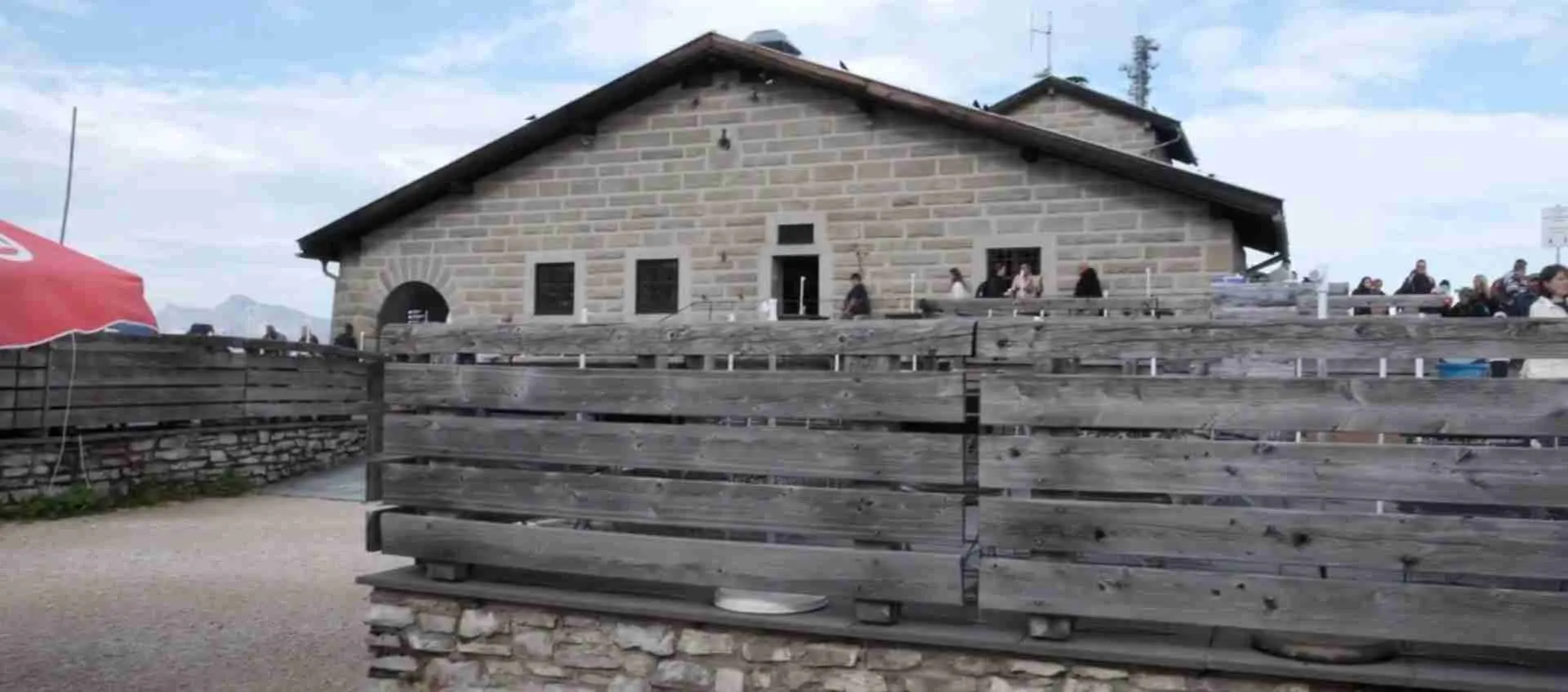
Eagle’s Nest History: Hitler’s Mountain Retreat
Key Takeaways
- The Eagle’s Nest (Kehlsteinhaus) was built between 1937-1938 as a 50th birthday gift to Adolf Hitler, representing the peak of Nazi architectural ambition with its dramatic mountaintop location at 1,834 meters elevation
- Construction required 13 months of intensive labor by 3,000 workers who blasted tunnels through solid rock, built a 6.5-kilometer mountain road with 27 hairpin turns, and installed a 124-meter brass-lined elevator through the mountain’s interior
- Hitler visited the Eagle’s Nest fewer than 15 times despite its elaborate construction, preferring his lower-elevation Berghof residence due to fears of heights, claustrophobia in the tunnel elevator, and concerns about mountain weather affecting his health
- The building survived World War II destruction that claimed most Obersalzberg structures because Allied bombing on April 25, 1945 focused on the valley complex, leaving the remote mountaintop retreat untouched above the target zone
- Post-war transformation converted the Nazi leadership retreat into public restaurant and historical site, with American occupation forces initially using the building before transferring ownership to Bavaria in 1960 for civilian tourism development
- The Eagle’s Nest serves as powerful example of how totalitarian regimes instrumentalize architecture for propaganda purposes, creating monumental structures conveying messages about power, permanence, and the regime’s claimed connection to eternal landscapes
Introduction: Understanding the Eagle’s Nest Historical Significance
The Eagle’s Nest stands as one of the most architecturally ambitious and historically complex structures from the Nazi era, perched dramatically on Kehlstein mountain’s summit overlooking the Bavarian Alps. This mountaintop retreat embodies the intersection of Nazi propaganda, engineering ambition, and the regime’s calculated use of landscape to project messages about power and permanence. The building’s dramatic setting—accessible only through tunnels blasted through solid rock and a brass-lined elevator rising through the mountain’s interior—created powerful visual symbolism aligning Nazi leadership with Germany’s romantic traditions of mountain mysticism while demonstrating technological prowess through audacious construction.
The structure’s origins as birthday gift to Adolf Hitler reveal much about Nazi political culture and the sycophantic competition among regime officials seeking the Führer’s favor. Martin Bormann, Hitler’s personal secretary and administrator of Nazi Party finances, conceived the Eagle’s Nest project as grand gesture securing his position within the leadership hierarchy. The gift’s extravagance—costing approximately 30 million Reichsmarks (equivalent to 150-200 million euros in contemporary value) and requiring displacement of mountain terrain through explosive force—demonstrated Bormann’s access to unlimited resources while showcasing the regime’s ability to reshape nature according to ideological vision.
The irony of Hitler’s minimal use of his elaborate birthday gift adds layers of complexity to the Eagle’s Nest story. Despite the massive investment and the building’s prominence in Nazi propaganda imagery, Hitler visited perhaps 10-15 times during the seven years between completion and war’s end. His documented fears of heights, discomfort with the tunnel elevator’s claustrophobic passage, and concerns that mountain air aggravated his health problems meant the Eagle’s Nest served propaganda functions more effectively than practical governmental purposes. This gap between propaganda image and reality characterizes much Nazi spectacle—elaborate theatrical staging creating impressions of power while the regime’s actual operations occurred through more mundane bureaucratic machinery.
The Eagle’s Nest’s survival when Allied bombing destroyed most Obersalzberg structures created unique preservation scenario, leaving one of the few intact Nazi leadership buildings available for contemporary examination. This survival resulted from geography rather than intent, as the building’s mountaintop location placed it above the April 1945 bombing run’s target zone. Post-war debates about the structure’s fate ultimately led to preservation and conversion into public space, transforming a symbol of totalitarian power into democratic historical education site. Today’s Eagle’s Nest functions simultaneously as tourist attraction, memorial site, and case study in how societies address “difficult heritage”—historic structures carrying uncomfortable associations yet possessing undeniable architectural and historical significance.
People Also Ask About Eagle’s Nest History
Why was the Eagle’s Nest built and who ordered its construction?
The Eagle’s Nest originated as elaborate 50th birthday gift to Adolf Hitler, conceived and executed by Martin Bormann, Hitler’s personal secretary and one of the most powerful figures in the Nazi hierarchy. Bormann proposed the project in 1937 as grand gesture demonstrating his loyalty and access to resources, while simultaneously creating propaganda monument celebrating Hitler’s leadership. The gift served multiple purposes within Nazi political culture: it satisfied the regime’s appetite for monumental architecture projecting power, provided dramatic setting for diplomatic entertaining and propaganda photography, and allowed Bormann to secure his position through demonstrating organizational capability managing complex construction in challenging mountain terrain.
The project fit within broader Nazi architectural programs transforming Germany’s physical landscape to reflect regime ideology. Hitler and his chief architect Albert Speer pursued grandiose building schemes including complete redesign of Berlin, construction of massive party rally grounds in Nuremberg, and creation of monumental government buildings throughout German territory. The Eagle’s Nest represented mountain complement to these urban projects, extending Nazi architectural ambition into alpine landscape while exploiting Germany’s romantic traditions associating mountains with national identity, spiritual renewal, and connection to eternal natural forces.
Bormann’s motivation combined genuine desire to honor Hitler with calculated political maneuvering. The gift’s success in securing Hitler’s gratitude would strengthen Bormann’s influence within the regime’s complex power dynamics, where officials constantly competed for access and favor. The enormous cost—30 million Reichsmarks drawn from Nazi Party funds Bormann controlled—demonstrated his financial power while the project’s completion despite enormous engineering challenges showcased his administrative competence. These qualities proved essential for survival and advancement within Nazi leadership culture, where perceived strength and success brought rewards while weakness or failure often meant elimination from power circles.
How did the construction process transform the mountain landscape?
The Eagle’s Nest construction fundamentally altered Kehlstein mountain through massive engineering intervention removing thousands of tons of rock, creating entirely new access infrastructure, and imposing geometric human construction onto organic alpine terrain. The project began with surveying and route planning for the access road, which required identifying a path up the mountain’s steep slopes that could accommodate vehicles while maintaining gradients and curves within technically feasible parameters. Engineers chose a route requiring extensive tunneling through rock outcroppings, with five tunnels totaling over 600 meters cutting through obstacles that surface roads could not navigate.
The 6.5-kilometer mountain road itself represented extraordinary engineering achievement, with workers using explosives to blast away rock, create level roadbed where steep slopes existed, and construct hairpin turns enabling vehicles to climb the severe gradients. The road features 27 major turns, many requiring construction of retaining walls and protective barriers preventing vehicles from sliding down the mountainside. The final approach road segment climbs at gradients reaching 24%, necessitating the special bus service still operating today since standard vehicles lack sufficient power and braking capability for safe mountain navigation.
The tunnel and elevator system required the most dramatic landscape transformation, with workers drilling a 124-meter vertical shaft through solid rock from the road terminus at 1,700 meters elevation to the building site at 1,834 meters. This shaft accommodated the brass-lined elevator car traveling through the mountain’s interior, eliminating the need for external cable car systems or staircases that would have been exposed to severe weather conditions. The horizontal entrance tunnel extending 124 meters from the bus terminus to the elevator shaft similarly required blasting through solid limestone, creating passages wide enough for groups of visitors while maintaining structural stability preventing collapse.
What architectural features make the Eagle’s Nest unique?
The Eagle’s Nest building employs traditional Bavarian alpine architecture vocabulary while incorporating scale and materials communicating regime power and permanence. The structure features stone walls constructed from local granite quarried from the mountain itself, creating visual connection between building and landscape while demonstrating that the construction literally emerged from the mountain rather than being imposed externally. The pitched roof uses traditional alpine forms adapted to extreme mountain conditions including heavy snow loads and hurricane-force winds, with reinforced timber trusses and stone load-bearing walls providing structural stability against environmental forces.
The great hall constitutes the building’s architectural centerpiece, featuring the massive red marble fireplace gifted by Italian dictator Benito Mussolini as diplomatic gesture between the Axis powers. This fireplace measures over 3 meters in height and weighs several tons, representing extraordinary effort to transport massive stone pieces up the mountain road during construction. The Italian marble’s blood-red color carried symbolic significance within Nazi aesthetics, while the fireplace’s scale communicated power and permanence appropriate for hosting diplomatic meetings and propaganda photography sessions.
The window design maximizes dramatic mountain views while protecting against extreme weather conditions. Large windows in the great hall and conference rooms provide panoramic vistas across the Alps, with the views extending over 100 kilometers on clear days to encompass peaks in Germany, Austria, and distant Switzerland. These windows employ thick glass able to withstand wind pressure at high elevation, while the building orientation positions major window walls facing south and west to capture optimal light and warmth in the thin mountain atmosphere. The architecture transforms landscape viewing into carefully staged experience, with window placement creating specific framed vistas rather than allowing random observation of surrounding terrain.
How was the Eagle’s Nest used during the Nazi period?
The Eagle’s Nest functioned primarily as propaganda showcase and diplomatic entertaining venue rather than working governmental facility, with its use limited by Hitler’s minimal personal visits and the building’s isolation from administrative infrastructure at the lower Berghof complex. When diplomatic events occurred, the dramatic mountaintop setting provided impressive backdrop for meetings with foreign dignitaries, creating experiences designed to awe visitors with both natural alpine grandeur and Nazi Germany’s technological capability to conquer challenging terrain. Propaganda photography exploited the location extensively, producing images of Hitler contemplating mountain vistas that reinforced carefully constructed image of the leader as solitary philosopher drawing wisdom from eternal natural landscapes.
Eva Braun, Hitler’s companion and eventual wife, used the Eagle’s Nest more frequently than Hitler himself, hosting social gatherings for Nazi officials’ wives and favored cultural figures. These events employed the building as exclusive mountain retreat, with the difficult access creating sense of privileged inclusion for invited guests. Braun’s home movies and photographs document leisure activities including afternoon teas on the terrace, sunbathing in the alpine environment, and social conversations against the dramatic mountain backdrop. These intimate uses of the space reveal how Nazi elite employed the mountaintop retreat for relationship building and network cultivation within the regime’s social circles.
The building occasionally hosted working meetings when Hitler visited, though the lack of extensive office facilities and communication infrastructure meant substantive governmental business occurred primarily at the Berghof lower on the mountain. The Eagle’s Nest served better as retreat space for contemplation, relaxation, and informal discussions rather than location for detailed policy work or military planning requiring extensive document access and staff support. This functional limitation reflected the building’s origins as birthday gift and propaganda monument rather than carefully planned governmental facility designed for operational efficiency.
Extended multi-day tours – 5+ days
Featured Bavaria Multi-Day Tour Packages
3 days
Bavaria 3-Day Discovery Tour
- ✓ Comprehensive Bavaria experience
- ✓ Expert local guides included
- ✓ All accommodation included
- ✓ Transportation provided

5 days
Bavaria 5-Day Highlights Experience
- ✓ Comprehensive Bavaria experience
- ✓ Expert local guides included
- ✓ All accommodation included
- ✓ Transportation provided

7 days
Bavaria 7-Day Cultural Journey
- ✓ Comprehensive Bavaria experience
- ✓ Expert local guides included
- ✓ All accommodation included
- ✓ Transportation provided
10 days
Bavaria 10-Day Complete Adventure
- ✓ Comprehensive Bavaria experience
- ✓ Expert local guides included
- ✓ All accommodation included
- ✓ Transportation provided
Multi-day tour packages powered by TourRadar. Prices and availability subject to change.
Construction History: Engineering Achievement and Human Cost
Planning and Design Phase 1937
Martin Bormann initiated the Eagle’s Nest project in early 1937 following Hitler’s announcement of his intention to spend his 50th birthday (April 20, 1939) at Obersalzberg. Bormann assembled design and engineering teams including architect Roderich Fick, who had worked on previous Obersalzberg construction projects, and civil engineers specializing in mountain road construction and tunnel excavation. The planning phase involved detailed topographical surveys of Kehlstein mountain, geological assessment of rock stability for tunneling, and careful route selection balancing engineering feasibility against dramatic visual impact.
The design brief specified creating mountaintop retreat accessible by motorized vehicles despite the challenging terrain, ruling out simpler options like hiking trails or cable car systems that would have required less dramatic landscape alteration. Bormann insisted on road access enabling automobile transport of guests and supplies, reflecting Nazi elite’s preference for modern mechanized transportation over traditional alpine climbing. This decision necessitated the complex road system with its tunnels, hairpin turns, and reinforced construction protecting against landslides and avalanches.
Geological surveys revealed both challenges and opportunities in the mountain’s limestone composition. The rock proved stable enough for tunnel excavation without extensive reinforcement, but required careful blasting techniques to prevent unintended fracturing that might compromise structural integrity. Engineers planned the vertical elevator shaft to follow natural rock planes where possible, minimizing resistance while ensuring the shaft’s walls would support themselves without extensive lining beyond the decorative brass panels visible to passengers. The mountain’s solid construction provided natural foundation for the building itself, requiring minimal additional foundation work since the structure literally sat on bedrock.
Road and Tunnel Construction 1937-1938
Construction began in June 1937 with workforce recruitment drawing laborers from throughout Bavaria and Austria. The project employed approximately 3,000 workers at peak construction periods, with labor organized into specialized teams handling road building, tunnel excavation, elevator installation, and building construction. Workers lived in temporary barracks near the construction site, with supply lines hauling building materials, explosives, and equipment up the mountain via the gradually advancing road as construction progressed upward.
Road construction proceeded from the valley upward, with each completed section enabling transport of materials for the next higher segment. Workers used explosives to blast away rock obstacles, create level roadbed surfaces, and carve out the five major tunnels cutting through ridges and outcroppings. The blasting work proved dangerous, with workers exposed to flying rock fragments, unstable surfaces following explosions, and the risk of premature detonations causing casualties. Safety standards remained rudimentary by contemporary measures, with accidents occurring regularly though precise casualty figures remain disputed among historians due to incomplete record-keeping.
The hairpin turns required particularly careful engineering, with workers constructing retaining walls and protective barriers while creating turning radii tight enough to navigate steep mountain slopes yet wide enough for vehicles to complete the turns safely. Each turn involved removing significant rock volume from the mountain’s upslope side while building up roadbed on the downslope side, creating level surface where natural terrain featured severe gradients. The finished road surface employed crushed stone providing traction in all weather conditions, with drainage systems preventing water accumulation that might freeze during winter months and damage the roadbed structure.
Elevator Shaft and Building Construction 1938
The vertical elevator shaft excavation represented the construction project’s most technically challenging component, requiring precision drilling and controlled blasting to create a straight vertical passage through 124 meters of solid limestone. Workers began from both top and bottom, drilling simultaneously to reduce construction time, with careful surveying ensuring the two shafts would meet precisely at mid-height. The drilling employed pneumatic equipment powered by diesel generators hauled up the partially completed road, with waste rock removed via the same route as workers gradually expanded the shaft to its final diameter.
The brass-lined elevator installation created the signature visual element distinguishing the Eagle’s Nest access from conventional mountain architecture. Craftsmen fabricated polished brass panels in Munich, transported them carefully up the mountain, and installed them along the elevator shaft’s interior walls. The brass served both aesthetic and practical purposes: its polished surface reflected light from the elevator car’s illumination, reducing the shaft’s claustrophobic atmosphere, while the material’s durability ensured long-term preservation without corrosion from moisture permeating the rock. The elevator machinery employed German Otis systems, with redundant safety features and powerful motors capable of lifting heavy loads through the vertical passage.
Building construction occurred simultaneously with the access infrastructure completion, with workers excavating the mountaintop site to create level building platform on the peak’s uneven natural surface. The structure’s foundation consisted of reinforced concrete piers anchored directly into bedrock, providing stability against the extreme wind forces affecting exposed mountaintop positions. Stone masons shaped granite blocks quarried from the mountain, creating walls up to one meter thick providing thermal mass stabilizing interior temperatures despite severe outdoor temperature swings. The construction timeline compressed into 13 months total from initial site survey to building completion in late 1938, an extraordinarily rapid pace given the project’s complexity and challenging mountain environment.
Labor Conditions and Human Cost
Construction workers endured harsh conditions including extreme weather, dangerous working conditions, and pressure to maintain rapid construction pace meeting Bormann’s deadline for Hitler’s birthday completion. The mountain environment created inherent hazards with workers exposed to temperature extremes, lightning during summer thunderstorms, early snowfall in autumn, and the constant risk of falls from exposed positions on steep terrain. Work continued regardless of weather conditions when schedules demanded, with only the most severe storms forcing temporary halts that created pressure to work longer hours compensating for lost time.
The project employed both voluntary paid workers and later included forced labor as construction deadlines approached and worker shortages developed. Voluntary workers received competitive wages attracting laborers willing to accept the dangerous conditions and remote location, though Bormann’s insistence on rapid completion created pressure for extended work hours and compressed rest periods. As the project progressed and deadlines tightened, authorities supplemented the workforce with conscripted labor and workers with limited choice about assignment to the challenging mountain construction site.
Historical estimates suggest between 12 and several dozen workers died during construction, though precise figures remain uncertain due to incomplete records and the regime’s tendency to minimize publicity about construction accidents. Deaths resulted from falls, blasting accidents, rockslides, and equipment failures inherent to dangerous mountain construction work. The Nazi regime’s general disregard for worker safety, combined with the political importance of completing Hitler’s birthday gift on schedule, created environment prioritizing deadline adherence over worker protection. The human cost of the Eagle’s Nest construction adds moral complexity to appreciation of the engineering achievement, requiring acknowledgment that the building’s dramatic presence resulted partly from workers’ suffering and death.
Hitler’s Limited Use and Personal Reactions
Initial Reception and Early Visits
Hitler first visited the completed Eagle’s Nest in September 1938, several months before his official 50th birthday celebration in April 1939. The initial visit included architectural inspection tour examining the building’s features, testing the elevator system, and experiencing the mountain views from various vantage points. Hitler expressed appreciation for the dramatic setting and acknowledged Bormann’s achievement in completing such ambitious construction project, though his reactions remained more measured than the effusive enthusiasm Bormann had hoped to inspire. The understated response foreshadowed Hitler’s minimal subsequent use of the elaborate birthday gift.
The official birthday celebration in April 1939 brought Hitler to the Eagle’s Nest for diplomatic entertaining and propaganda photography sessions. The events showcased the building to Nazi leadership and foreign dignitaries, with carefully staged photographs depicting Hitler contemplating alpine vistas in poses suggesting visionary leadership drawing inspiration from eternal natural landscapes. These propaganda images circulated widely through German media and international press coverage, establishing the Eagle’s Nest as symbol of Nazi power and Hitler’s supposed connection to German romantic traditions celebrating mountain mysticism and nature worship.
Early visits revealed practical limitations affecting Hitler’s comfort and the building’s utility. The journey required traveling from the Berghof up the winding mountain road, transferring to the special elevator through the claustrophobic tunnel passage, and acclimating to the thin air at 1,834 meters elevation. Hitler, already middle-aged and experiencing various health complaints, found the altitude uncomfortable and the journey taxing. The building’s isolation meant bringing extensive staff and security personnel for even brief visits, creating logistical complications disproportionate to the facility’s limited working capacity.
Documented Fears and Physical Discomfort
Hitler’s acrophobia—fear of heights—created significant psychological barrier to enjoying the Eagle’s Nest mountaintop position. Despite propaganda imagery suggesting the dictator confidently surveying his domain from alpine heights, private accounts from associates describe Hitler experiencing visible anxiety on the building’s terrace and near large windows overlooking vertical drops. The fear remained manageable during brief visits but prevented the relaxed occupation that would have made the Eagle’s Nest functional retreat space. Hitler could perform required propaganda activities including photo sessions and diplomatic receptions, but genuine comfort eluded him in the exposed mountain setting.
Claustrophobia affected Hitler’s experience of the tunnel and elevator passage, with the leader reportedly expressing discomfort during the brass-lined elevator’s 41-second ascent through solid rock. The tunnel’s length (124 meters) and the sense of mountain mass overhead created oppressive sensation conflicting with Hitler’s preference for open spaces and natural light. Associates noted his relief upon exiting the tunnel into open air, suggesting the access route created ongoing psychological stress discouraging frequent visits. The very features that made the Eagle’s Nest architecturally distinctive—its dramatic mountaintop isolation requiring passage through mountain’s interior—proved psychologically problematic for the building’s intended primary user.
Health concerns about mountain air affecting his cardiovascular system and sinuses provided additional rationale for avoiding the Eagle’s Nest. Hitler’s personal physicians discouraged extended stays at high elevation, arguing that the thin air and temperature extremes might aggravate various medical conditions. Whether these health warnings reflected genuine medical concerns or provided convenient excuse for avoiding a psychologically uncomfortable environment remains debatable, but the medical advice aligned with Hitler’s own preferences for the lower-elevation Berghof where most governmental activities occurred regardless of the Eagle’s Nest availability.
Eva Braun’s More Frequent Use
Eva Braun visited the Eagle’s Nest more regularly than Hitler, using the mountaintop retreat for social gatherings, photography sessions, and leisure activities with friends and associates’ wives. Braun’s home movies and photographs document these visits, showing relaxed social interactions including afternoon teas, sunbathing on the terrace, and casual conversations against the mountain backdrop. Her comfort with the location and enjoyment of the alpine setting contrasted markedly with Hitler’s reluctance, with Braun treating the Eagle’s Nest as exclusive mountain club rather than intimidating architectural monument.
Braun’s social use of the space created parallel purpose beyond the building’s official diplomatic and propaganda functions. Her gatherings cultivated relationships among Nazi elite women, maintained social networks important for her position as Hitler’s companion, and provided retreat from the more formal atmosphere at the Berghof where Hitler’s governmental activities dominated daily life. The Eagle’s Nest’s isolation created privacy enabling more relaxed social dynamics than would have been appropriate in more public Obersalzberg settings, with the difficult access ensuring gatherings included only invited guests rather than broader Nazi Party circles.
The contrast between Hitler’s minimal use and Braun’s regular visits highlights the Eagle’s Nest functioning more successfully as exclusive leisure space than as working governmental facility or propaganda stage. Braun’s activities aligned well with the building’s actual capabilities—hosting small social gatherings in dramatic natural setting—while Hitler’s role required extensive staff support and communication infrastructure better provided at the Berghof. The building’s design as birthday gift and architectural showpiece prioritized visual impact over functional governmental requirements, creating structure that succeeded as propaganda symbol while proving impractical for its ostensible primary user.
Propaganda Functions and Visual Mythology
Photographic Representation and Image Creation
Nazi propaganda apparatus exploited the Eagle’s Nest extensively through photography despite Hitler’s minimal actual presence, creating body of images suggesting much more regular use than occurred in reality. Official photographers including Heinrich Hoffmann produced carefully composed shots of Hitler standing on the terrace contemplating mountain vistas, seated in the great hall with the Mussolini fireplace as backdrop, or walking the access road with Alpine peaks framing the composition. These images circulated through illustrated magazines, newsreels, and international media coverage, establishing visual associations between Hitler, German romantic landscape traditions, and the regime’s technological capability to conquer nature.
The photographic compositions employed deliberate aesthetic strategies connecting Nazi ideology to German cultural traditions. Images of Hitler at mountain heights referenced 19th-century romantic paintings depicting solitary figures contemplating sublime natural landscapes, particularly Caspar David Friedrich’s iconic works showing individuals dwarfed by natural grandeur while achieving spiritual transcendence through nature communion. These artistic references positioned Hitler within German cultural lineage while suggesting his leadership drew inspiration from eternal natural forces rather than mundane political calculation.
The building itself became photographic subject independent of Hitler’s presence, with images emphasizing the dramatic engineering achievement and the structure’s integration with mountain terrain. Photographs captured the road’s hairpin turns clinging to steep slopes, the brass elevator’s gleaming interior, and the building’s stone walls seemingly emerging organically from mountain bedrock. These architectural images conveyed messages about German technical prowess, the regime’s ability to mobilize resources for grand projects, and Nazi ideology’s claim to have reunited German people with their authentic natural and cultural heritage through monumental construction projects.
Symbolic Meanings and Political Messages
The Eagle’s Nest name itself carried symbolic weight, referencing eagles as traditional symbols of power, sovereignty, and connection between earthly and celestial realms. The building’s mountaintop position reinforced these associations, placing Nazi leadership literally at heights suggesting dominance over surrounding territories and populations. The eagle motif appeared throughout Nazi iconography including party emblems and architectural decorations, with the Eagle’s Nest creating physical manifestation of these symbolic associations through its dramatic mountain position.
The structure communicated political messages about Nazi Germany’s relationship to nature and landscape. Romantic German nationalism had long celebrated mountains as essential German spaces, with Alpine regions representing authentic Germanness unspoiled by industrialization or foreign influence. The Eagle’s Nest construction simultaneously honored this tradition through employing traditional alpine architecture while demonstrating the regime’s technological modernity through the dramatic engineering required for access and construction. This combination of tradition and modernity reflected broader Nazi ideological claims about synthesizing Germany’s cultural heritage with progressive technological development.
The building’s permanence suggested regime stability and eternal duration, with the massive stone construction implying the Nazi state would endure as long as the mountains themselves. This architectural propaganda employed monumentality to convey political messages about inevitability and permanence, creating physical structures meant to outlast their creators while shaping how future generations would perceive the regime. The irony of these permanence claims became apparent with Nazi Germany’s collapse after only twelve years, though the Eagle’s Nest building itself did survive, serving different purposes than its creators intended.
International Reception and Diplomatic Use
Foreign visitors to the Eagle’s Nest included diplomats, international journalists, and Allied leaders before World War II’s outbreak, with their reactions ranging from architectural admiration to political unease about the regime the building represented. The British Prime Minister Neville Chamberlain visited in 1938 during Munich Conference negotiations, experiencing the carefully staged diplomatic hospitality designed to impress foreign leaders with German power and confidence. Such visits served Nazi diplomatic strategy by creating memorable experiences associating regime leadership with impressive settings, potentially influencing foreign politicians’ assessments of German strength and determination.
International media coverage of the Eagle’s Nest spread propaganda imagery beyond German borders, with architectural and travel publications featuring the building as engineering marvel and tourist attraction. These international representations often decontextualized the structure from its Nazi origins, presenting it as purely architectural achievement rather than propaganda monument. This coverage served Nazi interests by enhancing Germany’s international prestige while normalizing the regime through emphasizing cultural and technical achievements over political repression and militarism that characterized Nazi rule.
The diplomatic use of the Eagle’s Nest created problematic precedents where architectural grandeur potentially distracted from substantive political assessment. The impressive setting may have contributed to foreign leaders’ underestimation of Nazi aggression or overestimation of regime stability, with the building’s permanence suggesting political permanence that proved illusory. The Eagle’s Nest thus functioned as propaganda not merely through visual imagery but through creating physical experiences shaping foreign perceptions of German power and the Nazi regime’s legitimacy.
World War II and Survival Through Destruction
Wartime Use and Final Nazi Period
The Eagle’s Nest saw minimal use during World War II as Hitler’s attention focused on military operations and his time divided between various headquarters rather than leisure mountain retreats. The last documented Hitler visit occurred in July 1944, shortly after the failed assassination attempt at his East Prussian headquarters. Following this visit, Hitler never returned to Obersalzberg, remaining at various military headquarters until his final weeks in Berlin’s Reich Chancellery bunker where he committed suicide on April 30, 1945.
The building stood largely empty during the final war years, occasionally housing evacuated personnel or serving as storage for artworks and valuables removed from threatened locations. The remote mountaintop position that had made the Eagle’s Nest impressive during peacetime rendered it impractical during wartime when communication infrastructure, proximity to command centers, and security concerns dictated leadership location choices. The structure’s elaborate isolation became liability rather than asset as military requirements superseded propaganda considerations.
Local SS security forces maintained minimal presence at Obersalzberg during the war’s final phase, with most personnel redeployed to combat units as German military situation deteriorated. The Eagle’s Nest required little active protection given its isolated position and difficult access, with the primary security concerns focusing on the Berghof and other valley complex structures housing governmental functions. This reduced attention meant the Eagle’s Nest entered the war’s final weeks in relatively well-preserved condition, avoiding the damage and neglect affecting more actively used military or governmental facilities.
Allied Bombing and Miraculous Survival
Allied forces targeted the Obersalzberg complex on April 25, 1945, with RAF Lancaster bombers executing precision strike aimed at destroying Nazi leadership facilities before approaching Allied ground forces captured the area. The bombing raid dropped over 1,200 tons of high explosives on the valley complex, destroying the Berghof, SS barracks, administrative buildings, and most other structures. The destruction proved nearly complete at lower elevations, with only heavily reinforced bunker systems surviving the intense bombardment.
The Eagle’s Nest survived completely intact because its mountaintop position at 1,834 meters placed it above the bombing run’s target zone. Bombers focused on the complex’s operational centers clustered in the valley between 1,000-1,200 meters elevation, where the Berghof, governmental offices, and security facilities concentrated. The Eagle’s Nest’s isolation and lack of military significance meant it fell outside bombardment priorities, with Allied planners recognizing the building served primarily symbolic rather than operational functions and therefore represented lower priority target than facilities housing active command and control operations.
The survival created unique preservation scenario where one of the few intact Nazi leadership buildings remained available for post-war examination. Most comparable structures including the Berghof, Speer’s architectural offices, and Goebbels’ properties suffered complete destruction through bombing or deliberate post-war demolition. The Eagle’s Nest’s accidental preservation provided historical artifact demonstrating Nazi architectural propaganda while raising complex questions about how to address intact structures associated with criminal regime. The building’s dramatic setting and architectural merit complicated straightforward demolition approaches, requiring more nuanced consideration of how to memorialize while avoiding glorification.
American Occupation and Initial Post-War Use
American forces captured Obersalzberg in early May 1945, finding the valley complex destroyed but the Eagle’s Nest intact and largely undamaged. Officers of the U.S. 101st Airborne Division first accessed the building, discovering furnishings, artwork, and infrastructure preserved in functioning condition. Initial American reactions combined architectural appreciation with awareness of the building’s association with Nazi leadership, creating ambivalent responses ranging from admiration for engineering achievement to discomfort about occupying Hitler’s mountain retreat.
American occupation forces converted the Eagle’s Nest into officers’ club and recreation facility, with the dramatic mountain setting providing attractive leisure destination for troops stationed in southern Germany. The building’s restaurant facilities served American personnel, while the terrace and surrounding mountain terrain offered hiking and photography opportunities. This practical reuse established precedent for the building’s civilian function rather than treating it as memorial or demolishing it as Nazi monument, with American pragmatism prioritizing utility over symbolic considerations.
The occupation period saw gradual recognition of the Eagle’s Nest tourist potential, with American forces allowing limited civilian access and recognizing that the building’s dramatic setting and historical associations would attract visitors. Early tourism combined genuine historical interest with curiosity about Nazi leadership lifestyle, with visitors seeking to experience the mountain retreat where Hitler had (purportedly) spent significant time. The gap between propaganda imagery suggesting frequent Hitler presence and the reality of his minimal use remained poorly understood initially, with popular imagination assuming more extensive use than actually occurred.
Post-War Transformation and Contemporary Function
Bavarian Ownership and Tourism Development
Bavaria assumed ownership of the Eagle’s Nest in 1960 when American forces transferred the property as part of broader agreement returning Obersalzberg lands to German civilian control. Bavarian authorities faced decisions about the building’s appropriate use, balancing tourism potential against concerns about creating Nazi pilgrimage site or trivializing the regime’s crimes through commercial exploitation. The solution involved operating the facility as combination historical site and mountain restaurant, acknowledging both its architectural significance and its practical function as mountaintop building with dramatic views.
Tourism infrastructure development respected the building’s character while providing necessary visitor services. The special bus system established during Nazi era continued operation with enhanced safety features and modern vehicles, while the brass elevator received maintenance preserving its original appearance. The restaurant employed the great hall and terrace spaces for dining service, with menus featuring traditional Bavarian cuisine rather than attempting themed dining that might trivialize the historical associations. This approach treated the Eagle’s Nest as historical building with contemporary function rather than museum or memorial requiring radically different operational approach.
The development of interpretive materials evolved gradually, with early tourism providing minimal historical context and later additions incorporating educational elements about Nazi history and Obersalzberg’s broader significance. Information panels installed in subsequent decades explained construction history, Hitler’s minimal use, and the building’s role in Nazi propaganda. These interpretive additions transformed the Eagle’s Nest from pure tourist curiosity into educational site, though the balance between tourism and education remains subject to ongoing debate about appropriate historical site interpretation.
Conservation Challenges and Preservation Efforts
Maintaining the Eagle’s Nest presents unique conservation challenges given the extreme mountain environment and the building’s year-round exposure to severe weather. Annual temperature swings from summer heat to winter temperatures reaching -20°C create expansion and contraction stressing building materials, while wind speeds exceeding 150 km/h during storms test structural integrity and weather protection systems. Snow loads accumulating on the roof during winter months require careful engineering ensuring the structure can support extraordinary weight without damage.
Stone walls and traditional construction techniques provide inherent durability, with the massive granite blocks and reinforced concrete structure proving remarkably resilient to environmental stress. However, details including window seals, roof membranes, and elevator machinery require regular maintenance and periodic replacement using modern materials and techniques. Conservation philosophy balances preserving historical authenticity with ensuring visitor safety and building longevity, accepting that some original materials and systems require replacement while maintaining the structure’s overall historical character.
The brass elevator represents particular conservation concern, with the decorative brass panels requiring careful maintenance preventing corrosion while preserving the original polished surface creating the signature visual impression. Elevator machinery undergoes regular safety inspections and component replacement ensuring reliable operation despite the challenging environment including temperature extremes and moisture infiltration from the surrounding rock. These technical interventions remain invisible to visitors, maintaining the historical elevator experience while ensuring contemporary safety standards.
Memorial Culture and Educational Mission
The Eagle’s Nest functions within broader Obersalzberg memorial landscape including the documentation center, preserved bunker system, and marked locations of destroyed Nazi buildings. This contextual network transforms individual sites from isolated curiosities into comprehensive educational program examining Nazi leadership operations, propaganda techniques, and post-war memory politics. The Eagle’s Nest specifically illuminates how the regime employed architecture and landscape for propaganda purposes while demonstrating the gap between propaganda imagery and historical reality through documenting Hitler’s minimal actual use.
Educational programming employs the building as case study in critical historical analysis, challenging visitors to examine how they perceive historical sites and what assumptions they bring to Nazi-era locations. The dramatic architecture and spectacular setting create inherent fascination that educational programming must acknowledge while directing toward critical understanding rather than uncomplicated aesthetic appreciation. This approach recognizes that the building’s beauty and engineering achievement remain real while requiring contextualization within its origins as propaganda monument serving criminal regime.
The relationship between the Eagle’s Nest and nearby documentation center creates productive tension between different modes of historical encounter. The documentation center provides rigorous historical education through exhibitions, archives, and professional scholarship, while the Eagle’s Nest offers direct physical experience of historical site with its architecture, landscape setting, and material presence. These complementary approaches serve different learning styles and enable comprehensive engagement with Obersalzberg’s complex history, with neither approach sufficient alone but together creating powerful educational program.
Frequently Asked Questions
Did Hitler actually live at the Eagle’s Nest?
No, Hitler never lived at the Eagle’s Nest and visited the building fewer than 15 times during the seven years between its completion in 1938 and war’s end in 1945. This common misconception arises from propaganda imagery suggesting frequent Hitler presence and from confusion between the Eagle’s Nest and Hitler’s actual residence, the Berghof, located lower on the mountain at Obersalzberg. The Berghof functioned as Hitler’s primary mountain retreat where he spent approximately one-third of his time as dictator, conducting governmental business and hosting diplomatic meetings.
Hitler’s minimal Eagle’s Nest use resulted from documented fears of heights, claustrophobia regarding the tunnel elevator passage, and health concerns about mountain air affecting his cardiovascular system and sinuses. Associates’ memoirs and archival records confirm these limitations, with some accounts describing Hitler’s visible discomfort on the building’s terrace and his relief when departing via the elevator back to lower elevations. The building served propaganda and diplomatic entertaining functions more effectively than practical residential purposes given these psychological and physical barriers.
Eva Braun, Hitler’s companion, used the Eagle’s Nest more frequently for social gatherings and leisure activities. Her home movies and photographs document these visits, showing the building functioning as exclusive social club rather than working governmental facility. This usage pattern aligned better with the structure’s actual capabilities—hosting small groups in dramatic mountain setting—rather than serving as operational center for Nazi leadership activities requiring extensive administrative support and communication infrastructure available at the Berghof.
Why did the Eagle’s Nest survive when other Nazi buildings were destroyed?
The Eagle’s Nest survived because its mountaintop position at 1,834 meters placed it above the April 25, 1945 Allied bombing run that destroyed most Obersalzberg structures. RAF bombers focused on the valley complex between 1,000-1,200 meters elevation where the Berghof, SS barracks, and administrative buildings concentrated. The Eagle’s Nest’s isolation from operational facilities and its primarily symbolic rather than military function meant it fell outside bombardment priorities, with Allied planners targeting functionally significant structures housing command and control operations.
Post-war preservation decisions reflected both practical and symbolic considerations. The building’s dramatic architecture and spectacular mountain setting created arguments for preservation as cultural property despite Nazi associations, while demolition would have required significant effort and expense given the remote location and solid construction. American occupation forces’ decision to use the Eagle’s Nest as officers’ club established precedent for civilian function, avoiding both monument status and destruction through finding practical contemporary use for historical structure.
Bavarian authorities chose preservation when assuming ownership in 1960, recognizing tourism potential while implementing educational programming preventing the site from becoming uncritical Nazi glorification destination. This approach reflected evolving memorial culture recognizing that difficult historical sites require preservation with appropriate interpretation rather than erasure through demolition. The Eagle’s Nest thus survived through combination of geographical fortune, post-war pragmatism, and eventual recognition that preserved Nazi structures can serve educational purposes when properly contextualized within honest historical interpretation.
What happened to the original furnishings and decorations?
Most original Eagle’s Nest furnishings disappeared during the chaotic final weeks of World War II and the immediate post-war period, with furniture, artworks, and decorative objects removed by fleeing Nazi officials, looted by advancing troops, or claimed by occupation forces as war souvenirs. The Mussolini fireplace remains in place due to its massive size and integration with the building’s structure, representing the most significant preserved original interior element. Some furniture and decorative items appeared in private collections or museums over subsequent decades, though most original contents dispersed irretrievably.
American occupation forces removed various items for official purposes including documentation, war crimes evidence, or museum preservation, though distinguishing between legitimate seizure for historical preservation and personal souvenir taking proves difficult given incomplete records. Officers’ club conversion required furnishing the spaces for American use, with post-war furniture replacing Nazi-era originals. This practical reuse prioritized contemporary function over historical preservation, reflecting immediate post-war attitudes treating Nazi artifacts as spoils or curiosities rather than historical materials requiring careful conservation.
Contemporary Eagle’s Nest interiors feature mid-20th century furnishings appropriate for restaurant and visitor center functions, with no attempt to recreate Nazi-era appearance through period furnishings or decorative schemes. This approach avoids problematic reconstruction that might romanticize or trivialize the building’s historical associations while acknowledging that the structure now serves different purposes than its creators intended. The preserved architectural elements including the fireplace, brass elevator, and stone construction provide authentic historical fabric without requiring complete interior restoration to original Nazi-era condition.
How does the Eagle’s Nest relate to other Nazi architectural projects?
The Eagle’s Nest represents one component of the broader Nazi architectural program employing monumental building projects to communicate political messages about regime power, permanence, and ideological vision. Albert Speer, Hitler’s chief architect, designed massive governmental buildings, complete urban redesigns including the planned transformation of Berlin into “Germania,” and party rally grounds in Nuremberg. These projects shared emphasis on monumental scale, use of classical architectural references, and integration with landscape creating dramatic visual impact serving propaganda purposes.
The mountain setting distinguished the Eagle’s Nest from primarily urban Nazi construction, connecting regime ideology to German romantic landscape traditions celebrating nature as essential German cultural heritage. This alpine focus reflected Hitler’s personal affinity for mountain regions and the propaganda value of associating leadership with sublime natural landscapes suggesting transcendent vision beyond mundane political concerns. Other mountain projects included the Berghof expansion and the broader Obersalzberg complex transformation, with the Eagle’s Nest representing the most dramatic and isolated component of this alpine architectural program.
The project’s relatively small scale compared to planned megalomaniacal structures like Speer’s Great Hall (designed to accommodate 150,000 people under a dome over 200 meters high) reflected its origins as birthday gift rather than state commission. However, the engineering ambition creating access infrastructure through solid mountain demonstrated characteristic Nazi determination to impose ideological vision on natural landscape regardless of practical constraints. The Eagle’s Nest thus embodies broader patterns in Nazi architecture including propaganda function, monumental ambition, and disregard for human cost during construction, while its mountaintop isolation creates unique characteristics distinguishing it from urban party buildings or rally grounds.
What role does the Eagle’s Nest play in contemporary historical memory?
The Eagle’s Nest functions as complex site of historical memory, simultaneously serving as tourist attraction, educational resource, and symbol requiring ongoing interpretation preventing uncritical fascination with Nazi architectural achievement. The building attracts hundreds of thousands of annual visitors drawn by combination of spectacular mountain scenery, architectural interest, and historical associations with Hitler and Nazi leadership. This tourism creates both opportunities for historical education and risks of trivializing serious historical content through commercial exploitation or aesthetic appreciation divorced from ethical consideration.
Contemporary interpretation emphasizes critical engagement with the building’s history, origins, and role in Nazi propaganda rather than presenting it as purely architectural marvel or scenic viewpoint. Information materials explain Hitler’s minimal actual use, the construction’s human cost, and the building’s function within broader Nazi architectural propaganda program. This educational approach transforms the visitor experience from simple tourism into historical learning opportunity, though the effectiveness varies depending on individual visitor engagement with interpretive materials versus pure scenic appreciation.
The ongoing debate about appropriate use of Nazi heritage sites includes the Eagle’s Nest as case study in how societies address “difficult heritage”—significant historical structures carrying uncomfortable associations. Preservation advocates argue the building provides irreplaceable primary source material for understanding Nazi propaganda techniques and architectural ambitions, while critics worry that preservation enables continued fascination with Nazi aesthetics potentially contributing to historical glorification. The compromise involves preservation with rigorous educational interpretation, acknowledging both the building’s architectural significance and its problematic origins while using it as tool for teaching about totalitarianism’s mechanisms and consequences.
Can you see the Eagle’s Nest from the valley below?
Yes, the Eagle’s Nest is visible from various locations in Berchtesgaden valley and surrounding areas, appearing as small structure perched on Kehlstein mountain’s summit at 1,834 meters elevation. The building’s stone construction and traditional alpine architecture enable it to blend somewhat with the mountain terrain, though its position on the dramatic rocky peak makes it identifiable to observers knowing where to look. Binoculars or telephoto lenses provide clearer views, revealing the building’s mass and the surrounding terrace areas.
The visibility from below was intentional aspect of the building’s propaganda function, creating visual landmark associating Nazi leadership with commanding mountain heights. Observers throughout Berchtesgaden valley could see the Eagle’s Nest representing regime presence literally overlooking the landscape, with the difficult-to-access mountaintop position suggesting power and permanence. This visible-but-remote quality reinforced propaganda messages about leadership existing above ordinary concerns while remaining symbolically present watching over the territory and population.
Contemporary visitors often photograph the Eagle’s Nest from valley viewpoints before ascending the mountain, creating before-and-after visual narrative tracking their journey from distant observation to direct experience. This progression from external viewing to interior access mirrors historical dynamics where the building functioned as distant symbol for most Germans who never visited while serving as exclusive space for Nazi elite and privileged guests. The visibility patterns thus communicate historical information about the building’s symbolic function within Nazi political culture beyond its practical role as occasional retreat and entertaining venue.
What conservation challenges does the building face for long-term preservation?
The Eagle’s Nest faces ongoing conservation challenges from extreme mountain environment including temperature extremes ranging from summer heat to winter cold reaching -20°C, hurricane-force winds exceeding 150 km/h during storms, heavy snow loads requiring structural support, and moisture infiltration from precipitation and humidity. These environmental stresses create continuous deterioration requiring active maintenance and periodic component replacement ensuring structural stability and visitor safety.
Climate change introduces additional variables affecting preservation, with temperature pattern shifts potentially increasing freeze-thaw cycles damaging stone and concrete, altered precipitation patterns creating new water infiltration challenges, and changing snow accumulation affecting roof loads and structural stress. These evolving environmental conditions require adaptive conservation strategies monitoring changing conditions and responding to new preservation challenges emerging from shifting climate patterns affecting high-elevation Alpine environments.
Balancing preservation authenticity with contemporary safety requirements and building code compliance creates ongoing tension in conservation decision-making. Original materials and construction techniques provide historical authenticity but may not meet modern safety standards for public access, requiring interventions ranging from subtle reinforcement to visible modifications. Conservation philosophy generally favors minimal intervention preserving historical fabric while ensuring visitor safety, accepting that some compromises between perfect historical authenticity and practical contemporary use prove necessary for sustainable long-term preservation of actively used historical buildings.
How has historical interpretation of the Eagle’s Nest evolved over time?
Early post-war interpretation of the Eagle’s Nest remained minimal, with American occupation forces and early Bavarian tourism treating the building primarily as architectural curiosity and scenic viewpoint without extensive historical contextualization. This approach reflected immediate post-war German reluctance to confront Nazi history directly and American pragmatism treating the structure as practical facility rather than memorial site. Tourism materials emphasized mountain scenery and engineering achievement while minimizing discussion of Nazi origins and ideological purposes.
The 1960s-1980s saw gradual increase in historical interpretation as German memorial culture evolved toward more direct confrontation with Nazi past. Information panels installed during this period provided basic historical facts about construction dates, Hitler’s minimal use, and the building’s survival through World War II destruction. However, interpretation remained relatively superficial compared to contemporary standards, avoiding detailed examination of construction’s human cost, the building’s propaganda function, or critical analysis of how architectural aesthetics served totalitarian purposes.
Contemporary interpretation reflects sophisticated memorial culture approach developed through decades of German engagement with difficult historical sites. Current materials examine the Eagle’s Nest within comprehensive historical context including Nazi architectural propaganda programs, Obersalzberg complex’s role in regime operations, construction labor conditions, and post-war transformation into tourist site. This approach treats the building as educational resource for understanding totalitarianism’s mechanisms while acknowledging ongoing challenges balancing tourism, preservation, and historical education. The interpretation continues evolving as historical scholarship advances and memorial culture practices develop new approaches to addressing Nazi heritage sites.