
Eagle’s Nest Tour from Munich 2026: Complete Planning Guide
Key Takeaways
- Eagle’s Nest tours from Munich cost €85-155 in 2026 depending on group size and inclusions, with advance booking recommended 2-3 weeks ahead for peak summer months
- The journey from Munich takes 2 hours each way, making this a full-day excursion requiring 9-11 hours total including transit, guided portions, and free exploration time
- The Eagle’s Nest bus operates May through October only, with the site closed during winter months due to snow and ice conditions on the mountain road
- Organized tours eliminate parking challenges and provide expert historical context about the Third Reich period, Nazi architecture, and World War II significance
- Self-guided visits are possible but require advance research on bus schedules, parking reservations, and historical background to maximize the experience
- Combine Eagle’s Nest with Berchtesgaden town exploration, Königssee lake cruise, or salt mine visits to create comprehensive Bavarian Alps day trips in 2026
Introduction: Planning Your Eagle’s Nest Tour from Munich in 2026
The Eagle’s Nest stands as one of Bavaria’s most visited historical sites, drawing travelers from Munich who seek to understand the complex history of Hitler’s mountain retreat while experiencing breathtaking Alpine panoramas. Perched at 1,834 meters on Kehlstein mountain above Berchtesgaden, this remarkable structure serves as both a sobering historical monument and a testament to the engineering ambition of the 1930s. The journey from Munich transforms into an educational pilgrimage, combining world-class mountain scenery with profound historical reflection.
Planning your 2026 visit requires understanding the seasonal limitations of the site, the logistics of mountain access, and the value proposition of organized tours versus independent exploration. The Eagle’s Nest operates only from May through October, when snow conditions permit the special bus service up the 6.5-kilometer private mountain road. This narrow, winding route features hairpin turns and tunnels carved through solid rock, making it impassable during winter months and restricting access to specially equipped buses even in summer.
Tour operators from Munich have refined their offerings to provide comprehensive historical context while managing the complex logistics of mountain access. These excursions eliminate the stress of parking reservations at Obersalzberg documentation center, coordinate timing with the limited bus schedule to the summit, and provide expert commentary that transforms the physical journey into an educational experience. Independent travelers can certainly visit on their own, but must navigate multiple booking systems, transportation connections, and historical research to achieve similar depth of understanding.
The 2026 season brings enhanced visitor services including improved documentation center exhibits, expanded English-language guided tour options, and better coordination between Munich tour operators and Berchtesgaden mountain services. Digital booking systems streamline reservations, while new interpretation materials at the summit provide additional context about the site’s transformation from Nazi retreat to democratic memorial. Whether joining an organized tour or exploring independently, proper planning ensures you maximize your limited time at this extraordinary historical and natural landmark.
People Also Ask About Eagle’s Nest Tours from Munich 2026
How much does an Eagle’s Nest tour from Munich cost in 2026?
Organized Eagle’s Nest tours from Munich cost €85-155 in 2026 depending on group size, transportation method, and included services. Check tour operator websites for current official rates as pricing varies by season and demand. Standard full-day coach tours cost €85-110 per person and include round-trip transportation from Munich, mountain bus ticket to Eagle’s Nest, audio guide or live commentary, and 3-4 hours of free time for exploration. Small group tours in minivans cost €125-155 per person and offer more personalized attention, flexible timing, and additional stops at locations like Königssee lake or Berchtesgaden salt mines.
Independent visit costs break down as follows: Munich to Berchtesgaden train tickets cost €30-45 round trip for Bayern-Ticket group deals, parking at Obersalzberg documentation center costs €6 for all-day access, Eagle’s Nest special bus tickets cost €29.60 round trip including tunnel elevator access, and documentation center admission costs €6 if visiting exhibits. Budget €70-90 total for independent visits excluding meals, or €50-65 if traveling by car with multiple passengers sharing parking costs.
Combination tickets offer value when pairing Eagle’s Nest with other Berchtesgaden attractions. Salt mine entry costs €22, Königssee boat cruises cost €19.50-26.50 depending on route length, and Obersalzberg documentation center guided tours add €15 to basic admission. Many tour operators offer package deals combining 2-3 attractions for €110-140, representing savings over individual bookings while providing seamless logistics coordination.
When is the best time to visit Eagle’s Nest from Munich in 2026?
The Eagle’s Nest operates from mid-May through late October in 2026, with the mountain bus running daily 8:40 AM to 4:00 PM during peak season (June-September) and reduced hours in shoulder months. The site closes completely November through April due to snow and ice making the mountain road impassable. Within the operating season, weekday visits in June or September offer the best balance of favorable weather, manageable crowds, and comfortable temperatures for the mountain experience.
Peak summer months (July-August) bring maximum crowds with 3,000-5,000 daily visitors creating hour-long waits for the special bus to the summit. Tours departing Munich at 8:00-8:30 AM reach Berchtesgaden by 10:00-10:30 AM, securing earlier bus departure slots before midday crowds arrive. Afternoon visits (2:00-4:00 PM bus departures) experience reduced crowds as day-trippers return to Munich, though some restaurants and services close early in shoulder season.
Weather patterns show June offering the most stable conditions with 65% clear-day probability and comfortable temperatures of 18-22°C at summit elevation. July and August bring occasional afternoon thunderstorms requiring rain gear and potential bus service interruptions. September provides spectacular fall colors in the surrounding forests, though temperatures drop to 12-16°C at the Eagle’s Nest, requiring warm layers. Early May and late October shoulder season visits risk bus service cancellations due to late/early snow, though crowds thin dramatically for those willing to accept weather uncertainty.
Do you need advance bookings for Eagle’s Nest tours from Munich in 2026?
Organized tours from Munich require advance booking 2-3 weeks ahead for July and August peak season, with some popular operators selling out 4-6 weeks before departure dates. June and September shoulder season tours typically remain available 1-2 weeks before travel dates, while May and October require only 3-5 days advance booking due to lower demand and weather uncertainty. Tour operators use dynamic pricing with early booking discounts of 10-15% for reservations made 6+ weeks ahead, while last-minute availability (within 72 hours) sometimes offers reduced rates for unsold seats.
Independent visitors do not need advance reservations for the Eagle’s Nest mountain bus itself, as tickets are sold first-come, first-served at the Obersalzberg documentation center base station. However, parking at the documentation center requires advance reservation in 2026 during peak season to manage overcrowding, with online booking available through the Berchtesgaden tourism website. Expect parking to sell out by 9:00 AM on summer weekends, making pre-arrival reservation essential for drivers planning late morning or afternoon visits.
Tours combining Eagle’s Nest with other attractions like salt mine visits or Königssee boat cruises require advance booking for all components, as these additional sites use timed entry systems during peak season. Salt mine tours sell out 1-2 weeks ahead for English-language departures, while Königssee boats run continuously without reservations but experience 1-2 hour waits during midday peak hours. Organized tour operators coordinate all timing to minimize waits, representing significant value over independent coordination of multiple reservation systems.
What’s included in Eagle’s Nest tours from Munich in 2026?
Standard organized tours from Munich include round-trip coach transportation from central meeting points (typically Munich Hauptbahnhof or major hotels), Eagle’s Nest mountain bus tickets with tunnel elevator access, professional guide commentary during transit, and 3-4 hours of free exploration time at the summit and Berchtesgaden area. Audio guides in 8-12 languages are provided on larger coach tours, while small group tours offer live English-language commentary from expert historians specializing in Third Reich period and World War II Bavarian history.
Transportation components cover the entire journey: air-conditioned coaches for the 2-hour Munich to Berchtesgaden drive, special mountain buses for the 6.5-kilometer ascent on the private Eagle’s Nest road, and the brass-lined tunnel elevator rising 124 meters through solid rock to the summit. Tours coordinate timing to minimize waits between bus departures, with guides managing ticket collection and group organization to streamline the boarding process during busy periods.
Enhanced tour options add visits to Obersalzberg documentation center (€6 admission included), guided walks through the bunker system beneath the former SS barracks, stops at Königssee lake for boat cruises (boat ticket not included in standard tours), or visits to Berchtesgaden salt mines (mine admission not included). Premium small group tours include restaurant lunch reservations at the Eagle’s Nest summit or traditional Bavarian restaurants in Berchtesgaden town, eliminating the need to navigate meal planning during limited free time.
Extended multi-day tours – 5+ days
Featured Bavaria Multi-Day Tour Packages
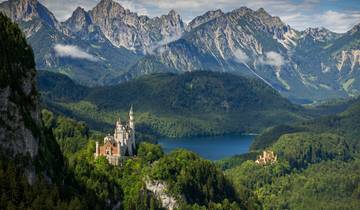
4 days
4 Day Munich Including Neuschwanstein Castle
- ✓ Comprehensive Bavaria tour
- ✓ Expert local guides included
- ✓ All accommodation arranged
- ✓ Transportation provided
5 days
5 Days Munich and Bavaria (Including Salzburg & Garmisch)
- ✓ Comprehensive Bavaria tour
- ✓ Expert local guides included
- ✓ All accommodation arranged
- ✓ Transportation provided
4 days
Springfest Munich (3-Star Hotel Senator)
- ✓ Booking needs min. 2 travelers
8 days
8 Day Munich including Nuremberg, Salzburg, Rothenburg & Neuschwanstein Linderhof
- ✓ Comprehensive Bavaria tour
- ✓ Expert local guides included
- ✓ All accommodation arranged
- ✓ Transportation provided
Multi-day tour packages powered by TourRadar. Prices and availability subject to change.
Essential Planning Information 2026
Understanding Eagle’s Nest Access and Logistics
The Eagle’s Nest sits at the end of a complex access system designed to manage the sensitive mountain environment while accommodating modern tourism. Private vehicles cannot drive the final 6.5 kilometers to the summit, as the original 1930s mountain road remains too narrow for two-way traffic and features gradients up to 24% with hairpin turns unsuitable for standard cars. The special bus system uses custom-built vehicles with enhanced braking systems and experienced drivers trained specifically for this challenging route.
Access begins at the Obersalzberg documentation center parking area, located 3 kilometers above Berchtesgaden town at 1,000 meters elevation. From this base, the special mountain buses depart every 25 minutes during peak hours (10:00 AM – 3:00 PM) and every 40-50 minutes during early morning and late afternoon periods. The 15-minute bus journey climbs 700 vertical meters through five tunnels and around 27 hairpin bends, arriving at the tunnel entrance at 1,700 meters elevation.
From the bus drop-off point, visitors enter a 124-meter tunnel cut through solid rock, leading to the famous brass-lined elevator that rises to the Eagle’s Nest building at 1,834 meters. The elevator operates continuously throughout the day, with wait times of 5-15 minutes during peak hours and minimal waits during early morning or late afternoon periods. The entire access sequence from parking lot to summit building takes 45-60 minutes during busy periods, or 30-40 minutes during quieter times.
Current Costs and Pricing Breakdown for 2026
Organized tours from Munich cost €85-155 depending on group size and inclusions. Check tour operator websites for current official rates as pricing varies. Standard full-day coach tours cost €85-110 and include transportation, mountain bus access, and guide services. Small group minivan tours cost €125-155 and offer enhanced flexibility with smaller participant numbers (8-12 people versus 40-50 on coaches) and additional stops at sites like Königssee or salt mines.
Independent visit costs include transportation, parking, and mountain access. Bayern-Ticket train passes cost €28-45 for groups of 1-5 people traveling together (€28 for one person, €8 for each additional traveler up to five total), valid for unlimited regional train travel throughout Bavaria. Driving from Munich requires approximately 25 liters of fuel costing €40-50 round trip. Parking at Obersalzberg costs €6 for all-day access with advance online reservation recommended.
Mountain access fees are collected at the Obersalzberg base: Eagle’s Nest special bus costs €29.60 round trip including tunnel elevator access to the summit building. This fee is mandatory for all visitors regardless of tour participation. Documentation center admission costs €6 for self-guided access to exhibits about Nazi history and the Obersalzberg complex, or €15 for guided tours in English departing at scheduled times. The documentation center visit is optional but highly recommended for historical context before ascending to Eagle’s Nest.
Meal costs vary by dining choice. The Eagle’s Nest summit restaurant serves traditional Bavarian dishes with main courses €18-28, soups and salads €8-12, and beverages €4-8. Berchtesgaden town offers more budget-friendly options with bakery sandwiches €5-8, casual restaurant meals €12-18, and traditional gasthaus dinners €15-25. Tours departing Munich at 8:00-8:30 AM allow lunch at the summit restaurant during the 12:30-1:30 PM window when seating is most available, while later departures may encounter full occupancy requiring alternative meal planning.
Best Time to Visit Eagle’s Nest from Munich in 2026
Seasonal Analysis for 2026 Planning
The Eagle’s Nest operates from mid-May through late October 2026, with the mountain bus beginning service once snow clears from the access road (typically around May 15-20) and continuing until early snowfall forces seasonal closure (typically late October). This 5.5-month operating window requires strategic timing to balance weather conditions, crowd levels, and daylight hours for the full Munich round-trip experience.
May (mid-month through end) offers shoulder season advantages with minimal crowds, fresh mountain wildflowers, and comfortable 15-20°C summit temperatures. Rain probability sits at 40-45% with occasional late-season snow at higher elevations, requiring flexible scheduling and rain gear. Tours depart Munich with 8-10 available spots typically bookable 1-2 weeks ahead rather than the 4-6 week advance required for peak summer. Alpine meadows showcase spring blooms, while longer daylight hours (sunset 8:30-9:00 PM) provide ample time for unhurried exploration.
June through August represents peak season with maximum 3,000-5,000 daily visitors creating substantial crowds at all access points. Summit temperatures reach 20-25°C on clear days with high UV exposure at 1,800+ meters elevation requiring sunscreen regardless of perceived temperature. July and August bring 50-55% clear day probability with afternoon thunderstorm risk peaking 2:00-5:00 PM. Morning tours departing Munich at 8:00-8:30 AM maximize clear weather windows, while afternoon thunderstorms occasionally force temporary bus service suspensions lasting 30-90 minutes.
September delivers optimal conditions for many visitors with stable weather (60% clear day probability), spectacular fall foliage transforming surrounding forests into gold and red tapestries, and significantly reduced crowds as summer vacations end. Summit temperatures drop to 12-18°C requiring warm layers, but crisp air creates exceptional visibility across the Alps. Tour availability improves with booking windows shortening to 1-2 weeks ahead rather than summer’s 4-6 week requirement. Early September maintains full summer operating hours, while late September sees earlier bus service endings (last departure 3:00 PM versus summer’s 4:00 PM).
October offers adventure-minded travelers dramatic alpine scenery with fall colors at peak intensity, though weather becomes increasingly unpredictable with 55% precipitation probability and occasional early snow above 1,500 meters. Summit temperatures drop to 5-12°C requiring winter layers and protection against wind chill. The bus operates on reduced schedule with last departures at 2:00-3:00 PM and potential service cancellations on days with ice or snow on the mountain road. Crowds thin to minimal levels with tour bookings available 3-5 days ahead, though many operators reduce October departure frequency or discontinue service entirely for the final weeks before winter closure.
Weather Patterns and Crowd Predictions for 2026
Alpine mountain weather creates microclimates requiring preparation for rapid temperature changes. The 800-meter elevation gain from Obersalzberg base (1,000m) to Eagle’s Nest summit (1,834m) produces temperature drops of 5-8°C, meaning a comfortable 22°C at the parking area translates to 14-17°C at the summit. Wind exposure at the exposed summit building adds further wind chill effect, making the perceived temperature 3-5°C colder than actual readings. Layers including windproof jackets prove essential even during warm summer days.
Clear morning weather from 8:00-11:00 AM provides optimal visibility across the Bavarian and Austrian Alps, with mountain peaks visible 100+ kilometers distant on exceptional clarity days. Afternoon cloud formation begins 12:00-1:00 PM during summer months, sometimes obscuring views by 2:00-3:00 PM though not necessarily bringing precipitation. Thunderstorm development follows predictable patterns with cumulus cloud buildup visible from noon onward, electrical activity typically beginning 2:00-3:00 PM, and storm dissipation 5:00-6:00 PM. Tours timing visits for 10:00 AM-2:00 PM summit windows maximize clear weather probability.
Crowd patterns follow predictable daily rhythms. First buses at 8:40-9:20 AM carry minimal passengers (50-150 people versus midday peaks of 400-600 per hour), offering near-empty summit experiences during the 9:30-11:00 AM window. Peak crowding occurs 11:30 AM-2:30 PM when organized tours converge with independent visitors, creating bottlenecks at the tunnel elevator (15-20 minute waits) and summit restaurant (full seating with 30-45 minute waits for tables). Post-2:30 PM crowds thin rapidly as tour groups depart, with 3:00-4:00 PM offering peaceful summit time though some restaurants begin closing at 3:30 PM in shoulder season.
Weekend versus weekday patterns show Saturday and Sunday crowds exceeding weekday levels by 40-60%, with German and Austrian visitors from nearby cities joining international tourists. Tuesday through Thursday represent optimal weekday choices with 30-40% lower visitor numbers than Monday or Friday. School holiday periods (German summer holidays rotate by state June-September) create localized crowd surges, while international tourist peaks occur mid-July through mid-August when North American and Asian group tours concentrate visits.
Transportation Guide 2026
Organized Tour Transportation Options
Coach tours from Munich depart from central meeting points including Munich Hauptbahnhof (main train station), major hotels in the city center, or dedicated tour company offices near Karlsplatz. Standard coaches accommodate 40-50 passengers in climate-controlled comfort with reclining seats, onboard restrooms, and WiFi service during the 2-hour drive to Berchtesgaden. Tour operators coordinate departure times for 8:00-9:00 AM starts, arriving at Obersalzberg 10:00-11:00 AM to catch morning bus departures before peak crowding.
The Munich to Berchtesgaden route follows the A8 Autobahn southeast past Rosenheim, then transitions to scenic mountain roads approaching Berchtesgaden. Coaches stop for 10-15 minute rest breaks at highway service areas approximately 1 hour into the journey, with facilities for restrooms, snacks, and beverages. Return journeys depart Berchtesgaden 4:00-5:00 PM, arriving back in Munich 6:00-7:00 PM accounting for afternoon traffic through Munich’s southern suburbs.
Small group minivan tours limit capacity to 8-12 participants, enabling flexible itineraries that standard coaches cannot accommodate. Minivans access narrower mountain roads for additional photo stops at viewpoints overlooking Berchtesgaden valley, Königssee lake, or Watzmann mountain. Door-to-door hotel pickup service is standard for small group tours (within Munich city center), eliminating the need for participants to navigate to central meeting points. Enhanced group dynamics with smaller numbers facilitate better interaction with guides and more personalized attention to individual questions and interests.
Independent Transportation Planning
Train connections from Munich Hauptbahnhof to Berchtesgaden Hauptbahnhof operate hourly throughout the day using Bayern-Ticket regional passes. The journey requires one transfer at Freilassing station, with total travel time 2.5-3 hours depending on connection timing. Departures at 6:30-7:30 AM arrive Berchtesgaden 9:00-10:00 AM, positioning travelers for early bus access to Eagle’s Nest. Return trains depart Berchtesgaden 4:00-6:00 PM, arriving Munich 6:30-9:00 PM. Bayern-Ticket passes cost €28 for one person or €36-45 for groups of 2-5 people traveling together, representing significant savings for pairs or families versus individual tickets.
From Berchtesgaden train station, local bus 838 operates every 30 minutes to Obersalzberg documentation center, with 15-minute travel time and €2.80 single fare or €5 day pass. Buses coordinate with incoming trains during peak season, though evening service reduces to hourly departures after 6:00 PM. Taxis from Berchtesgaden station to Obersalzberg cost €15-20 for the 4-kilometer journey, useful for groups of 3-4 sharing costs or travelers carrying significant luggage.
Driving from Munich follows the A8 Autobahn 150 kilometers to Berchtesgaden, with 2-hour travel time under normal traffic conditions. Weekend and holiday traffic extends drive times to 2.5-3 hours, particularly during summer months when recreational traffic to Bavarian lakes and mountains peaks. Fuel costs €40-50 round trip, while parking at Obersalzberg documentation center costs €6 with mandatory online reservation during peak season through the Berchtesgaden tourism website. The parking reservation system opens bookings 30 days in advance, with weekend slots filling within hours of becoming available during July and August.
Navigation from Munich follows clear autobahn signage to Salzburg, then exits at Bad Reichenhall toward Berchtesgaden. The final 12 kilometers wind through mountain scenery on well-maintained roads, though gradients and curves require attentive driving. Parking at Obersalzberg includes clearly marked spaces with shuttle bus service to the documentation center entrance. The parking area sits 200 meters lower than the main complex, with frequent shuttle buses (every 10 minutes) or a 5-minute uphill walk for those preferring exercise.
Sample 2026 Itineraries
Classic Full-Day Eagle’s Nest Tour from Munich
8:00 AM: Depart Munich Hauptbahnhof by organized tour coach or independent train. Coach tours provide onboard commentary about Bavarian history and Third Reich context during the 2-hour drive. Independent train travelers enjoy scenic views through the Bavarian countryside while using travel time to read historical background materials or documentation center preview information available through official websites.
10:00-10:30 AM: Arrive Obersalzberg documentation center area. Organized tours proceed directly to special bus queue with pre-arranged tickets, while independent visitors purchase mountain bus access (€29.60) at the ticket office. If time permits before scheduled bus departure, explore the documentation center grounds including outdoor memorial installations and viewpoints overlooking Berchtesgaden valley. The area features interpretive panels explaining the transformation of Obersalzberg from mountain village to Nazi complex.
10:30-11:00 AM: Board special mountain bus for the 15-minute ascent to Eagle’s Nest tunnel entrance. The dramatic journey showcases engineering prowess with tunnels blasted through solid rock and hairpin turns offering vertiginous views down the mountainside. Guides provide commentary about construction history, explaining how 3,000 workers spent 13 months building the 6.5-kilometer road between 1937-1938 using primitive equipment and dynamite.
11:00 AM-1:30 PM: Explore Eagle’s Nest summit building and surrounding mountain terrain. Begin with the brass-lined elevator ride through 124 meters of mountain interior, emerging into the restored historical building. The main hall showcases original architectural elements including the massive marble fireplace gifted by Mussolini, while interpretive displays explain the site’s transformation from Nazi retreat to memorial site. Walk the mountain ridge trails for panoramic views across the Alps, identifying peaks in Germany, Austria, and even distant Switzerland on clear days.
Lunch at the Eagle’s Nest restaurant provides traditional Bavarian cuisine with unprecedented views. Reserve window seating for optimal mountain vistas, though all tables offer spectacular alpine panoramas. Main courses €18-28 include Bavarian specialties like roast pork, schnitzel, or regional trout, while lighter options of soup and salad cost €8-12. The outdoor terrace operates during pleasant weather, offering alfresco dining at 1,834 meters elevation.
1:30-2:00 PM: Descend via special bus to Obersalzberg base. Return buses depart every 25-30 minutes, with flexible boarding allowing visitors to control their summit duration. The descent provides different perspectives of the mountain road, with afternoon light illuminating features obscured during morning ascent.
2:00-3:30 PM: Visit Obersalzberg documentation center for comprehensive historical context. The permanent exhibition “Obersalzberg: A Place of Forced Memory” traces the area’s transformation from peaceful mountain region to Nazi power center. English-language audio guides provide detailed commentary through chronological displays featuring photographs, documents, and artifacts. The bunker system beneath the former SS barracks offers guided tours (€15 including documentation center admission) exploring the underground complex built for air raid protection.
4:00 PM: Depart Berchtesgaden area. Organized tours board coaches for Munich return, while independent travelers catch trains from Berchtesgaden Hauptbahnhof. The return journey provides time to reflect on the day’s historical and natural experiences while the bus or train navigates back through mountain landscapes.
6:00-7:00 PM: Arrive Munich, concluding the full-day Eagle’s Nest experience. Evening hours allow for dinner at Munich restaurants or relaxation at accommodations, processing the profound historical and natural beauty encountered during the mountain visit.
Daily Cost Breakdown: Organized tour €85-155, documentation center admission €6 (included in some tours, separate for independent visits), lunch at Eagle’s Nest restaurant €20-35, beverages and snacks €8-12. Total day cost: €119-208 per person (excluding accommodation).
Enhanced Eagle’s Nest and Königssee Combination Tour 2026
7:30 AM: Early departure from Munich by small group minivan tour. Enhanced itineraries begin earlier to accommodate multiple destinations, with hotel pickup service eliminating the need for central meeting point navigation. The 2-hour drive provides preview commentary about the day’s dual focus: historical Eagle’s Nest visit and natural beauty exploration at Königssee lake.
9:30-10:00 AM: Stop at Königssee lake before Eagle’s Nest crowds peak. The early morning visit provides optimal light conditions for photography of the lake’s mirror-like surface reflecting surrounding mountain peaks. Optional 35-minute electric boat cruise to St. Bartholomä church (€19.50) showcases the iconic red-domed pilgrimage chapel against dramatic limestone cliffs rising directly from the water. The boat journey includes the famous echo demonstration where captains blow trumpets echoing off the Echowand cliff face.
Alternatively, walk the western shore path to Malerwinkel (Painter’s Corner) viewpoint for classic lake panoramas without the boat cruise cost. This 20-minute walk offers postcard-perfect views while saving time and money for visitors prioritizing Eagle’s Nest over lake activities. The viewpoint features interpretive panels explaining the geology of the Königssee basin, carved by glaciers during ice ages.
10:30-11:00 AM: Transit from Königssee to Obersalzberg documentation center, a 15-minute drive through scenic Berchtesgaden valley roads. Small group tours use this transit time for historical briefing about the Third Reich’s attraction to Berchtesgaden’s mountain setting and the construction of Hitler’s Berghof residence complex in the Obersalzberg area.
11:00 AM-2:00 PM: Eagle’s Nest visit following the standard sequence of special bus ascent, tunnel and elevator access, and summit exploration. The midday timing places visits during peak sunshine hours for optimal visibility across the Alps, though requiring tolerance for moderate crowds during lunch period. Small group tour guides navigate efficiently through bottlenecks, using local knowledge to access lesser-known viewpoints and photo angles around the summit area.
Lunch options include the Eagle’s Nest restaurant or packed picnic lunches provided by some tour operators for outdoor dining on the mountain trails. Picnic service saves €15-20 per person versus restaurant dining while enabling flexible meal timing avoiding restaurant peak crowds between 12:30-1:30 PM. Designated picnic areas with bench seating offer protected spots for outdoor dining regardless of weather conditions.
2:00-3:00 PM: Documentation center visit or Berchtesgaden town exploration depending on tour itinerary and participant interests. Some combination tours prioritize natural beauty with salt mine visits (€22 admission, 1-hour guided tour through underground chambers on wooden slides) over historical documentation center, while others focus historical emphasis through comprehensive documentation center exploration including bunker system tours.
3:30 PM: Begin return journey to Munich with optional photo stops at mountain viewpoints. Small group flexibility enables brief pauses at Hintersee lake or panoramic overlooks where coaches cannot stop, adding photographic variety to the day’s collection. Evening light provides different quality for landscape photography, with golden hour illumination of mountain peaks during the drive back.
5:30-6:00 PM: Arrive Munich with hotel drop-off service completing door-to-door transportation. The enhanced itinerary delivers comprehensive Berchtesgaden area experience combining historical education, natural beauty, and cultural immersion within a single well-paced day.
Daily Cost Breakdown: Small group combination tour €125-155, Königssee boat cruise €19.50 (optional), salt mine admission €22 (if included), beverages and snacks €10-15. Total day cost: €155-212 per person (excluding accommodation).
Booking and Reservations 2026
Tour Operator Selection and Booking Process
Major tour operators serving the Munich to Eagle’s Nest route include Gray Line Munich, Radius Tours, Munich Walk Tours, and Viator-listed providers. Each operator differentiates through group size, departure times, included extras, and guide expertise levels. Research operator reviews focusing on guide historical knowledge, time management efficiency, and flexibility handling unexpected circumstances like weather-related bus service interruptions or crowd-induced delays.
Booking windows for peak season (July-August) require 4-6 week advance reservations to secure preferred dates and optimal departure times. Early morning departures (8:00-8:30 AM) sell out first due to their advantages for weather windows and crowd avoidance, while late morning departures (9:30-10:00 AM) remain available closer to travel dates. Shoulder season booking (May-June, September-October) shortens to 1-3 weeks ahead, with occasional last-minute availability offering discounted rates for flexible travelers.
Online booking systems provide instant confirmation through email or mobile app tickets, eliminating paper voucher requirements. Payment processes accept major credit cards with secure processing, while some operators offer PayPal or bank transfer options for European customers. Cancellation policies typically allow full refunds for cancellations made 48-72 hours before departure, with reduced refunds or no refunds for last-minute cancellations within 24-48 hours. Travel insurance covering trip interruption and cancellation costs €15-25 for single-day coverage, providing protection against unexpected illness, flight delays, or family emergencies requiring trip abandonment.
Confirmation emails include essential logistics: meeting point location with GPS coordinates and landmark descriptions, departure time with recommended arrival window (typically 15 minutes before departure), contact information for same-day emergencies or late arrival communication, and what to bring (comfortable walking shoes, weather-appropriate layers, water bottle, camera). Read confirmation details carefully to avoid meeting point confusion in busy Munich Hauptbahnhof area where multiple tour companies operate from different platforms.
Independent Booking Coordination
Independent travelers coordinate four separate booking components: Munich to Berchtesgaden transportation, Obersalzberg parking reservation (if driving), Eagle’s Nest mountain bus tickets, and documentation center entry. Transportation booking begins with Deutsche Bahn website or app for train tickets, or rental car reservation through comparison sites like Check24 or Billiger-mietwagen for driving options. Bayern-Ticket purchases happen at Munich Hauptbahnhof ticket machines or online through the DB Navigator app, with digital tickets valid for immediate travel without printing requirements.
Parking reservations at Obersalzberg require advance booking through the Berchtesgaden tourism website (berchtesgaden.de) during peak season. The online system opens reservations 30 days in advance, with weekend July-August slots filling rapidly. Create user account in advance to streamline booking process when slots release, as system allows only 10-minute holds before releasing unbought reservations back to availability pool. Confirmation emails include QR codes for parking gate access, eliminating paper voucher requirements.
Eagle’s Nest mountain bus tickets are sold at Obersalzberg documentation center ticket office without advance reservations. Buses depart based on demand during peak hours with additional vehicles added to accommodate waiting visitors. However, arrival before 10:30 AM secures positions on earlier buses avoiding midday crowds. The ticket office opens 8:00 AM, with first bus departures 8:40-9:00 AM depending on season and demand levels.
Documentation center admission tickets are available without reservation through on-site purchase, though online booking through the Obersalzberg documentation center website allows visitors to bypass ticket lines. English-language guided tours depart at scheduled times (typically 11:00 AM and 2:00 PM during peak season) with reservation recommended to guarantee tour access. The bunker system tours operate on even more limited schedules requiring specific departure time planning.
Money-Saving Strategies 2026
Budget Optimization Techniques
Bayern-Ticket group passes represent the single largest savings opportunity for independent travelers. The ticket costs €28 for one person but only €36 for two people, €40 for three, €44 for four, and €48 for five people traveling together. A family of four saves €76-100 compared to individual ticket purchases while enjoying unlimited regional train travel throughout Bavaria. The ticket includes local bus connections in Berchtesgaden, eliminating the need for separate tickets between train station and Obersalzberg documentation center.
Combination tickets pairing Eagle’s Nest access with Obersalzberg documentation center admission save €3-5 versus separate purchases. The documentation center ticket office sells combined tickets for €33-35 (versus €29.60 + €6 = €35.60 separately), though savings are modest compared to the transportation optimization potential. However, every euro counts when managing family budgets, making combination tickets worthwhile for groups visiting both attractions.
Peak season avoidance delivers substantial value through reduced accommodation costs, lower tour prices, and better availability. September shoulder season tours cost €10-20 less than identical July-August departures due to dynamic pricing algorithms rewarding off-peak demand. Munich hotel rates drop 30-40% in September versus August, with savings of €50-80 per night for mid-range properties. Berchtesgaden area dining costs remain constant year-round, though some restaurants offer weekday lunch specials unavailable during summer weekends when demand peaks.
Packed lunch strategy eliminates €20-35 summit restaurant costs while providing meal flexibility. Munich bakeries and supermarkets offer excellent sandwich and snack options for €8-12, with specialized picnic supplies like fruit, cheese, and beverages adding €5-8 to total costs. The Eagle’s Nest provides no outdoor seating with mountain views but allows visitors to walk 5-10 minutes to ridge trail areas with bench seating and spectacular panoramas for picnic dining. This approach saves €15-25 per person while enabling longer summit exploration time uninterrupted by restaurant service waits.
Advanced Booking Benefits
Early booking discounts reward planning ahead with 10-15% savings for tours reserved 6+ weeks before departure dates. A €110 standard tour drops to €94-99 with early bird pricing, representing €11-16 savings per person or €44-64 for a family of four. Most operators publish early booking windows clearly on their websites, with discount codes applied automatically when booking within the eligible time frame or requiring manual entry of promotional codes during checkout.
Last-minute deals occasionally offer reverse savings opportunities for highly flexible travelers. Tours with unsold seats within 72 hours of departure sometimes discount by 20-30% to fill capacity, though availability is unpredictable and requires monitoring tour operator websites or third-party deal aggregators. This strategy works only for travelers with complete schedule flexibility and backup plans if preferred dates show no last-minute availability.
Group discount structures benefit private tour bookings for families or friend groups traveling together. Private tour costs of €600-900 for groups of 6-8 people translate to €75-150 per person, competitive with or better than standard coach tour pricing while delivering private vehicle comfort, flexible timing, and personalized guide attention. Private tours eliminate the constraint of fixed departure times and allow customization like extended Königssee visits or additional stops at Berchtesgaden town attractions based on group interests.
Planning Your 2026 Visit
What to Bring and Expect
Weather preparation requires layered clothing systems accounting for elevation change temperature differences. Start with moisture-wicking base layer, add insulating mid-layer (fleece or light down jacket), and finish with windproof outer layer. The 800-meter elevation gain from Obersalzberg to Eagle’s Nest summit creates 5-8°C temperature drops, while wind exposure adds further chill effect. Even summer days with 25°C at parking level can feel 14-18°C at the summit with wind chill, making the warm jacket essential rather than optional.
Comfortable walking shoes with good traction handle the various surfaces encountered during the visit. While the Eagle’s Nest building itself features paved floors, the surrounding mountain ridge trails use gravel paths with occasional rocky sections requiring sure footing. Low-top hiking shoes or supportive sneakers provide adequate grip and ankle support without the bulk of full hiking boots. Avoid fashion shoes or sandals that offer poor traction on potentially slippery surfaces after rain or morning dew.
Photography equipment recommendations balance the desire to capture spectacular scenery against practical carrying considerations. Wide-angle lenses (24-35mm) excel for mountain panoramas and architectural interiors, while telephoto lenses (70-200mm) compress distant peaks for dramatic landscape compositions. Smartphone cameras produce excellent results for casual photographers, with modern computational photography matching or exceeding basic compact cameras for standard tourist snapshots. Tripods are allowed but must be carried throughout the visit including bus rides, making lightweight travel tripods more practical than full-size studio versions.
Sun protection becomes critical at 1,800+ meter elevations where UV radiation intensifies significantly versus sea-level exposures. Apply SPF 30+ sunscreen even on cloudy days, as UV rays penetrate cloud cover effectively at high altitude. Sunglasses with UV400 protection prevent eye strain and protect against long-term UV damage, while wide-brimmed hats provide additional face and neck shading. The combination of high altitude, reflective snow (in shoulder season), and longer summit exposure times requires diligent sun protection to avoid painful burns.
Physical Requirements and Accessibility
The Eagle’s Nest visit requires moderate physical capability for full enjoyment, though most walking is optional beyond the essential access route. The brass elevator eliminates the need for stair climbing to reach the summit building, while interior spaces feature level flooring with wheelchair accessibility throughout the main halls and restaurant areas. The outdoor ridge trails involve uneven terrain unsuitable for wheelchairs or walkers, though paved areas immediately adjacent to the building provide some outdoor access without hiking capability.
Health considerations for heart conditions, respiratory issues, or pregnancy deserve consultation with medical professionals before booking. The rapid elevation change from Berchtesgaden (500m) to Eagle’s Nest summit (1,834m) can affect individuals with altitude sensitivity, though serious altitude sickness remains unlikely at these moderate elevations. Symptoms like mild headache, slight breathlessness, or elevated heart rate during exertion are normal responses to altitude change, typically resolving within 30-60 minutes as the body adjusts.
Claustrophobia concerns regarding the tunnel elevator passage should be evaluated honestly before committing to the visit. The brass-lined elevator car accommodates 15-20 people for the 41-second ascent through solid rock, creating tight quarters with limited escape options during the brief journey. However, the short duration and elegant brass interior reduce anxiety for most visitors with mild claustrophobia, while those with severe enclosed-space fears might find alternative mountain experiences like Zugspitze cable cars offering more open cabin designs.
2026 Updates and Current Information
Operational Changes for 2026 Season
The 2026 operating season introduces enhanced digital reservation systems for parking management, addressing persistent overcrowding issues that plagued previous summers. The mandatory online parking reservation system extends from May 1 through October 31, with no on-site parking available without advance booking during peak hours (8:00 AM – 4:00 PM). This change affects all independent drivers and requires adjustment to previous visit patterns where parking operated on first-come, first-served basis.
Documentation center exhibits undergo partial renovation during winter 2025-2026, with reopening scheduled for April 2026 featuring updated multimedia installations and expanded English-language interpretation materials. The permanent exhibition maintains its core narrative about Obersalzberg’s transformation but adds new sections about post-war memorial culture and contemporary historical education approaches. Audio guide systems upgrade to smartphone-based platforms eliminating dedicated audio device rentals in favor of personal device apps.
Electric bus service launches on the Obersalzberg to Eagle’s Nest route in 2026, replacing aging diesel buses with zero-emission vehicles. The new buses maintain the same passenger capacity and departure frequency while reducing noise pollution and exhaust emissions on the sensitive mountain road. Functionally identical to previous service from visitor perspective, the environmental upgrade positions Berchtesgaden as a leader in sustainable mountain tourism practices.
Safety and Visitor Guidelines
Weather-related service interruptions occur during thunderstorms when lightning poses safety risks on exposed mountain terrain. The special bus service suspends operations immediately when electrical storm activity approaches, with resumption typically occurring 30-60 minutes after storm passage. Visitors already at the summit shelter in the Eagle’s Nest building until conditions clear, while those at Obersalzberg base wait for service resumption or consider alternative plans if extended delays make summit visits impractical.
Crowd management protocols limit simultaneous visitors in certain areas during extreme peak periods. The tunnel elevator operates continuously but may implement temporary queuing during maximum demand hours (12:00-2:00 PM summer weekends), with wait times extending to 25-30 minutes during absolute peak conditions. The summit restaurant implements capacity limits to maintain fire code compliance, with hosts managing seating assignments and wait lists during busy lunch periods.
Historical site etiquette requires appropriate behavior given the Eagle’s Nest’s complicated legacy. While the spectacular mountain setting tempts pure tourist enjoyment, remembering the site’s origins as Hitler’s 50th birthday gift and Nazi propaganda symbol demands thoughtful conduct. Avoid celebratory or disrespectful behavior inappropriate for a memorial site, though photography and normal tourist activities remain entirely acceptable. The site functions as both historical monument and public space, requiring visitors to balance educational respect with practical mountain visit enjoyment.
Frequently Asked Questions
Is Eagle’s Nest worth visiting from Munich in 2026?
Yes, Eagle’s Nest provides exceptional value combining profound historical education with spectacular Alpine scenery unmatched elsewhere in Bavaria. The unique convergence of Nazi history, engineering achievement, and natural beauty creates experiences impossible to replicate through books or documentaries. The full-day commitment from Munich (9-11 hours total) rewards visitors with comprehensive understanding of Third Reich mountain culture while delivering postcard-worthy mountain panoramas across multiple countries.
Historical significance justifies the visit for anyone interested in World War II history, Nazi architecture, or 20th century political culture. The physical presence at Hitler’s mountain retreat provides context impossible to grasp from photographs or descriptions, while the transformation into memorial and democratic education site demonstrates Germany’s commitment to historical accountability. Pairing the Eagle’s Nest with Obersalzberg documentation center creates complete narrative from Nazi abuse of power through post-war reckoning and contemporary memorial culture.
Natural beauty alone merits the journey for outdoor enthusiasts and photography lovers. The 1,834-meter summit delivers 360-degree Alpine views spanning Bavaria, Austria, and distant peaks in Italy and Switzerland on clear days. The unique position above Berchtesgaden valley creates dramatic perspective showing how the Nazis strategically positioned their mountain complex for maximum scenic impact. Ridge trails around the summit building enable extended exploration of alpine terrain without technical climbing requirements.
Can you visit Eagle’s Nest independently without a tour in 2026?
Yes, independent visits are entirely feasible using public transportation or personal vehicles combined with the special mountain bus from Obersalzberg. The journey requires coordination of multiple components but offers flexibility in timing and reduced costs for groups using Bayern-Ticket passes. Success depends on advance research of bus schedules, parking reservation systems, and historical background to provide context lacking without professional guide commentary.
Transportation logistics involve Munich to Berchtesgaden train journey (2.5-3 hours with transfer at Freilassing), local bus 838 from Berchtesgaden station to Obersalzberg (15 minutes), special mountain bus to Eagle’s Nest tunnel entrance (15 minutes), and elevator to summit (1 minute). Each connection operates on fixed schedules requiring timing coordination, with gaps of 20-30 minutes during off-peak hours potentially extending total journey time. Arriving Berchtesgaden before 10:00 AM positions independent visitors for early mountain bus departures avoiding midday crowds.
Cost comparison shows independent visits saving €15-45 versus organized tours for solo travelers, with savings increasing to €30-70 per person for groups of 2-4 sharing Bayern-Ticket passes. However, organized tours provide historical commentary worth €20-30 in educational value, eliminate coordination stress, and include expert guides navigating crowds efficiently. Independent travelers gain flexibility to extend summit time beyond organized tour schedules, customize documentation center visit duration, or add side trips to Königssee or salt mines based on personal interests rather than fixed itineraries.
What’s the difference between Eagle’s Nest and Hitler’s Berghof?
Eagle’s Nest (Kehlsteinhaus) and Hitler’s Berghof represent distinct structures serving different purposes within the Obersalzberg complex. Eagle’s Nest sits at 1,834 meters atop Kehlstein mountain, built as a 50th birthday gift to Hitler for diplomatic entertaining and propaganda showcasing of mountain conquest. Hitler rarely used the building, visiting perhaps 10-15 times total due to his fear of heights and preference for lower elevation settings.
Hitler’s Berghof was his actual residence and working retreat, located at 1,000 meters elevation in the Obersalzberg area approximately 3 kilometers from Eagle’s Nest access point. He spent significant time at Berghof between 1933-1945, conducting government business and hosting diplomatic meetings with international leaders. Allied bombing destroyed Berghof in April 1945, with remaining ruins demolished by German authorities in 1952 to prevent neo-Nazi pilgrimage sites. Only foundation traces remain visible today, incorporated into the documentation center grounds with interpretive markers explaining the former building’s layout and historical significance.
Visitor confusion often arises because both structures occupied the same mountain area and shared association with Hitler’s mountain presence. Today, only Eagle’s Nest remains standing and accessible for tourism, while Berghof exists as archaeological remains and historical memory preserved through documentation center exhibits. The Eagle’s Nest survived demolition due to its difficult mountaintop location and the American Army’s decision to preserve the structure as mountain restaurant serving occupation forces and later German visitors.
How much time do you need at Eagle’s Nest summit in 2026?
Plan 2-3 hours at the summit for comprehensive exploration including the building interior, ridge trail walks, restaurant meal or refreshment stop, and photography of the panoramic Alpine views. This duration allows unhurried appreciation of the historical exhibits inside the building, 30-45 minute restaurant service if dining, and walks along the mountain ridge trails extending from the summit building.
Minimum visit time of 60-90 minutes suffices for visitors focusing solely on building interior and immediate summit area. This abbreviated schedule works for organized tours with fixed departure times or independent visitors coordinating tight train connections back to Munich. However, the extraordinary setting and rare mountain access opportunity argue for longer summit stays when schedule permits, as rushing through such unique historical and natural experiences diminishes overall value.
Extended summit time of 3-4 hours benefits photography enthusiasts waiting for optimal light conditions, history lovers reading all interpretive materials thoroughly, or outdoor enthusiasts hiking further along the ridge trails beyond the immediate summit area. The mountain environment changes dramatically with shifting weather and light, making longer stays rewarding for those appreciating subtle environmental variations. Later afternoon visits (2:00-4:00 PM bus departures) provide opportunities for evening light photography and reduced crowds as morning visitors depart.
Is Eagle’s Nest suitable for children and families in 2026?
Yes, Eagle’s Nest welcomes families with children though requires age-appropriate historical context about the site’s Nazi origins. Children ages 8-12 generally manage the physical requirements easily while beginning to understand the historical significance with parental explanation. Teenagers (13+) typically engage fully with both historical and natural aspects, though parent comfort with discussing Nazi history and Hitler’s role determines family suitability more than children’s capabilities.
Physical considerations include the elevator ride through solid rock (exciting rather than scary for most children), moderate walking on uneven trails (manageable for kids accustomed to outdoor activities), and summit crowds requiring adult supervision preventing children from wandering. Strollers prove impractical for the mountain environment, making baby carriers or child-carrying backpacks essential for children under 4-5 years unable to walk extended distances. The bus ride’s hairpin turns and tunnels thrill adventure-seeking children while potentially unsettling those prone to motion sickness.
Educational value varies by age with younger children (under 8) appreciating the mountain adventure more than historical significance, while older children and teenagers benefit from age-appropriate discussion about World War II, Nazi ideology, and the importance of remembering difficult history. The documentation center provides family-friendly exhibits suitable for children 10+ with parental guidance, though some wartime images and content require parental discretion about younger children’s exposure.
What language options are available for Eagle’s Nest tours from Munich in 2026?
English-language tours predominate among Munich operators targeting international visitors, with professional guides fluent in English and knowledgeable about Anglo-American perspectives on World War II history. Major operators like Gray Line, Radius Tours, and Mike’s Bike Tours conduct tours exclusively in English, while some international operators offer multilingual guides switching between languages based on group composition.
German-language tours serve domestic visitors and German-speaking travelers from Austria, Switzerland, and other European countries. These tours often provide deeper historical detail about domestic German perspectives on the Nazi period, post-war denazification, and contemporary memorial culture. Pricing typically matches English-language equivalents, with the same booking windows and departure logistics.
Audio guides at the documentation center support 12+ languages including English, German, French, Italian, Spanish, Chinese, Japanese, and Korean. The smartphone-based system launching in 2026 eliminates dedicated audio device rentals, allowing visitors to download the app before arrival and access content through personal devices with provided headphones or earbuds. The mountain bus and Eagle’s Nest building itself provide limited interpretation materials, making pre-visit research or organized tour commentary essential for non-German speakers seeking historical context.
Can you drive your own car all the way to Eagle’s Nest in 2026?
No, private vehicles cannot access the final 6.5 kilometers to Eagle’s Nest summit. The original 1930s mountain road remains restricted to special buses due to the road’s narrow width (single lane in many sections), steep gradients (up to 24%), tight hairpin turns (27 total), and limited passing areas. Environmental protection and visitor safety considerations reinforce this restriction, which has remained in effect since the site’s post-war opening to tourism.
Parking at Obersalzberg documentation center (3 kilometers above Berchtesgaden town) serves as the mandatory vehicle stopping point, with special buses providing the only public access up the mountain road. The parking area offers secure facilities with overflow areas during peak season, restroom facilities, and direct access to documentation center exhibits and mountain bus ticket office. Parking costs €6 for all-day access with mandatory online reservation required during peak season (May-October).
The restriction actually benefits visitors by eliminating parking stress at the summit (which has no parking facilities) and the challenge of navigating treacherous mountain road conditions requiring specialized driving skills. The special buses feature enhanced braking systems, experienced drivers trained specifically for this route, and passenger configurations optimizing the dramatic scenery views during ascent and descent. Attempting to bypass restrictions through off-road approaches or unauthorized routes risks substantial fines, vehicle impoundment, and safety hazards including rock falls and unstable terrain.
What’s the best weather for visiting Eagle’s Nest from Munich in 2026?
Clear, calm conditions with high-pressure weather systems create optimal Eagle’s Nest experiences with unlimited visibility across the Alps and comfortable summit temperatures. These conditions occur most reliably in June and September when seasonal weather patterns stabilize between spring volatility and late autumn deterioration. Morning visits (first bus departures 8:40-9:20 AM) maximize clear weather windows before afternoon cloud formation obscures mountain views.
Temperature considerations show June offering warmest summit conditions (18-22°C) with minimal precipitation (35-40% rain probability), while September brings slightly cooler temperatures (12-18°C) with similar precipitation levels. July and August feature higher temperatures but increased afternoon thunderstorm probability (50-55%) requiring morning visits for best weather odds. Monitor weather forecasts beginning 5 days before planned visits, with reliable updates available through mountain-specific services like Bergfex or Mountain-Forecast providing summit-level predictions more accurate than general Berchtesgaden forecasts.
Visibility ranges from 20 kilometers on hazy days to 150+ kilometers on exceptional clarity days following cold front passages that scrub atmospheric moisture from the air. Post-storm conditions often produce the most spectacular visibility, making visits 24-48 hours after weather system passage optimal for panoramic photography and peak identification. Winter-like storm systems occasionally penetrate into June or return in September, bringing temporary snow to the summit and exceptional post-storm clarity for adventurous visitors willing to tolerate cold conditions.
Are there age restrictions or fitness requirements for Eagle’s Nest tours in 2026?
No formal age restrictions or fitness requirements limit Eagle’s Nest access, though practical considerations about physical capability and historical content appropriateness guide family planning decisions. The elevator eliminates stair climbing requirements, while interior spaces feature level flooring accessible to visitors with limited mobility. However, the full experience including ridge trail exploration requires moderate walking capability on uneven surfaces.
Minimum age recommendations vary by tour operator, with most suggesting children 8+ for organized tours to ensure engagement with historical content and ability to manage the full-day schedule. Families with younger children (4-7 years) should consider independent visits offering more flexibility to abbreviate or extend components based on children’s energy levels and interest. Infants and toddlers present challenges due to multi-hour coach rides, mountain bus crowds, and lack of stroller accessibility on trails, though determined families successfully manage with baby carriers and patience.
Fitness requirements remain minimal for basic building access and interior exploration, suitable for elderly visitors, individuals with minor mobility limitations, or those preferring sedentary activities. The optional ridge trails present more demanding terrain requiring sure footing, basic cardiovascular fitness for gradual uphill sections, and comfort with exposed mountain environments. Visitors can self-select their activity level, choosing between staying near the building or extending hikes based on personal capabilities and comfort levels.
What happens if weather closes Eagle’s Nest during your tour in 2026?
Tour operators implement contingency plans when weather conditions prevent Eagle’s Nest access due to high winds, thunderstorms, snow, or ice on the mountain road. Standard protocols include substituting alternative Berchtesgaden area attractions like extended documentation center visits, Königssee boat cruises (weather permitting), salt mine tours, or Berchtesgaden town exploration. Operators maintain communication with mountain bus services monitoring weather conditions in real-time, making go/no-go decisions based on safety assessments.
Partial refunds or rebooking options apply when complete tour cancellations occur before departure from Munich. Most operators offer full refunds if canceling tours 24+ hours before departure due to forecast weather issues, or 50-75% refunds for weather-forced cancellations en route to Berchtesgaden. Read specific tour operator policies during booking, as terms vary significantly from generous full-refund approaches to restrictive no-refund positions requiring travel insurance coverage.
Weather delays during summit visits require patience and flexibility when thunderstorms temporarily suspend bus service during afternoon hours. Visitors already at the summit shelter in the Eagle’s Nest building until conditions clear, with bus service typically resuming 30-90 minutes after storm passage. Extended delays may compress available summit time as tours must depart Berchtesgaden by fixed times to reach Munich by evening, requiring rapid summit visits once weather clears. Independent visitors gain flexibility to wait out longer delays or modify return schedules based on actual weather clearing times.