Dublin Budget Guide 2026: Ultimate Travel Cost Breakdown
Dublin’s vibrant culture, historic landmarks, and legendary pub scene come with costs that range dramatically based on travel style—from budget backpackers spending under $160 daily to luxury travelers investing $600+ for premium experiences. Ireland’s capital rewards strategic planning with excellent public transport, numerous free attractions including world-class museums, and dining options spanning hostel kitchens to Michelin-starred restaurants. Understanding Dublin’s cost structure and implementing smart money-saving strategies transforms an expensive European capital into an accessible destination for every budget tier.
Key Takeaways: Dublin Travel Costs 2026
- Budget Travel 2026: Expect $98-156 per person daily (€84-133) for hostel dormitories or budget hotel rooms shared by two, casual dining mixing self-catering with pub meals, public transport via Leap Card, and free museums balanced with one paid attraction daily.
- Mid-Range Comfort 2026: Plan for $217-343 per person daily (€185-293) covering centrally located hotel accommodation for two sharing, restaurant meals including traditional Irish dinners and international cuisine, mixed public transport and occasional taxis, plus major attractions like Guinness Storehouse and Book of Kells.
- Luxury Experience 2026: Allocate $410-667 per person daily (€350-570) for boutique or five-star hotels, upscale dining featuring Ireland’s farm-to-fork culinary renaissance, private transportation or premium taxis, and exclusive experiences including whiskey tastings and private tours.
- Weekly Trip Costs 2026: Budget travelers need $686-1,092 (€588-931) weekly, mid-range visitors spend $1,519-2,401 (€1,295-2,051), and luxury travelers invest $2,870-4,669 (€2,450-3,990) for comprehensive Dublin exploration over seven days.
- Strategic Savings 2026: Leap Card reduces individual journey costs by 40% versus cash fares, early bird restaurant specials save €10-20 per meal between 5-7 PM, and advance booking of Guinness Storehouse and Kilmainham Gaol prevents sellouts while occasionally offering online discounts.
- Hidden Costs Dublin 2026: Service charges automatically added to restaurant bills for groups, €5 refundable Leap Card deposit, potential taxi pre-booking fees of €3, and higher prices in Temple Bar tourist district where pints cost €9-11 versus €6-7 elsewhere.
People Also Ask About Dublin Budget 2026
How much does Dublin cost per day in 2026?
Dublin costs $98-156 per person daily for budget travelers, $217-343 for mid-range comfort, and $410-667 for luxury experiences in 2026. Budget travelers staying in hostel dormitories at €26-35 ($30-40) per night or budget hotels divided between two people spend €35-55 ($41-64) on meals combining supermarket purchases with casual dining, €4-8 ($5-9) on public transport using Leap Card, and €10-20 ($12-24) on attractions mixing free museums with one paid entry. Mid-range visitors booking centrally located hotels at €160-250 ($187-293) per room divided by two allocate €65-98 ($76-115) for restaurant meals, €10-20 ($12-24) for mixed transport, and €30-50 ($35-59) for major attractions. Luxury travelers in boutique hotels at €350-600 ($410-702) per room divided by two invest €100-150 ($117-176) in upscale dining, €25-40 ($29-47) in private transportation, and €50-80 ($59-94) in premium experiences.
Is Dublin expensive compared to other European capitals in 2026?
Dublin ranks among Europe’s more expensive capitals in 2026, with daily costs exceeding Prague and Lisbon by 40-60% but remaining 15-25% below London’s premium pricing. Restaurant meals averaging €35-55 ($40-65) for mid-range three-course dinners significantly exceed Prague’s €20-30 range, while a Guinness pint at €6-7 ($7-8) in regular pubs costs triple Prague’s beer prices. However, Dublin’s accommodation provides better value than London’s comparable properties, with four-star hotels averaging €218 ($255) versus London’s €280+ for similar quality. Dublin’s excellent public transport caps at €6.42 daily versus London’s higher zone fares, and the abundance of free world-class museums including National Museum of Ireland Archaeology, National Gallery, and Natural History Museum delivers cultural experiences without admission costs that many European capitals charge €10-20 to access.
What are the biggest money-saving strategies for Dublin 2026?
The Leap Card delivers immediate 40% savings versus cash bus fares, transforming €2.65 single journeys into €2 rides with 90-minute transfers across bus, Luas tram, and DART rail within Zone 1. Early bird restaurant specials offered 5-7 PM reduce three-course meals from €35-55 to €25-30 at participating establishments throughout Dublin’s dining districts. Booking Guinness Storehouse, Book of Kells, and Kilmainham Gaol attractions online weeks ahead prevents sellouts during summer peak season and occasionally provides advance purchase discounts of €2-5 per ticket. Shopping at Tesco, Lidl, and Aldi supermarkets for breakfast supplies, picnic lunches, and evening snacks cuts meal costs by 50-60% compared to restaurant dining for every meal, while Dublin’s exceptional free museums and attractions including Phoenix Park, St. Stephen’s Green, National Museum complex, and National Gallery eliminate €80-120 in potential admission costs over a three-day visit.
How much should I budget weekly for Dublin in 2026?
Budget travelers require $686-1,092 (€588-931) weekly in Dublin 2026, mid-range visitors need $1,519-2,401 (€1,295-2,051), and luxury travelers allocate $2,870-4,669 (€2,450-3,990) for comprehensive seven-day exploration. Budget weekly costs include hostel dormitories or budget hotels €35-50 per person nightly totaling €245-350 ($287-410), meals combining supermarket self-catering with casual dining €245-385 ($287-451), Leap Card public transport €28-56 ($33-66), and attraction mix of free museums plus select paid entries €70-140 ($82-164). Mid-range weekly breakdown encompasses centrally located hotels €80-125 per person nightly totaling €560-875 ($656-1,024), restaurant dining €455-686 ($533-803), mixed public transport and taxis €70-140 ($82-164), and major attractions including Guinness Storehouse and tours €210-350 ($246-410). Luxury week involves boutique hotels €175-300 per person nightly totaling €1,225-2,100 ($1,434-2,457), upscale dining €700-1,050 ($819-1,229), private transportation €175-280 ($205-328), and premium experiences €350-560 ($410-656).
Extended multi-day tours – 5+ days
Featured Dublin Multi-Day Tour Packages
7 days
7 Day Dublin And Galway By Train
- ✓ Comprehensive Dublin tour
- ✓ Expert local guides included
- ✓ All accommodation arranged
- ✓ Transportation provided
1 days
Private Day Tour of Wicklow and Glendalough.
- ✓ Comprehensive Dublin tour
- ✓ Expert local guides included
- ✓ All accommodation arranged
- ✓ Transportation provided
6 days
6-Day Magical Southern Explorer Small Group Tour
- ✓ Comprehensive Dublin tour
- ✓ Expert local guides included
- ✓ All accommodation arranged
- ✓ Transportation provided

5 days
Ireland's Ultimate Whiskey & Beer Journey
- ✓ Booking needs min. 2 travelers
Multi-day tour packages powered by TourRadar. Prices and availability subject to change.
Introduction to Dublin Travel Costs 2026
Dublin’s cost structure reflects its position as Western Europe’s thriving tech hub and cultural capital, where medieval history intersects with modern prosperity. The city demands careful budget planning while rewarding informed travelers with experiences spanning free Georgian architecture walks through Merrion Square to €31 ($36) crown access climbing the Statue of Liberty of Ireland—the Spire. Understanding Dublin’s pricing landscape, seasonal variations, neighborhood cost differences, and strategic money-saving opportunities transforms a potentially expensive visit into accessible exploration regardless of budget tier.
Ireland’s capital presents a fascinating cost paradox. Restaurant dining and alcohol purchases command premium prices that shock visitors accustomed to Southern European economies—a mid-range dinner easily reaches €40-55 ($47-64) per person—yet Dublin counters with genuinely world-class free attractions that would cost €15-25 admission in Paris or London. The National Museum of Ireland’s archaeology collection rivals the British Museum’s treasures, the National Gallery houses Caravaggio and Vermeer masterworks, and the Victorian Natural History Museum offers frozen-in-time wonder, all without admission fees. This combination of selective splurges and strategic savings defines successful Dublin budget management.
Seasonal pricing fluctuations significantly impact Dublin travel costs in 2026. Summer months from June through August see hotel rates increase 40-70% as international tourism peaks, transforming €160 shoulder season properties into €250-280 summer bookings. However, September presents optimal value with temperatures remaining mild at 12-16°C (54-61°F), reduced crowds at major attractions, and hotel rates dropping 25-35% below summer peaks. Winter months November through February deliver lowest accommodation costs with rates falling 35-45% below summer, though shorter daylight hours and frequent rain require flexible indoor backup plans. Spring shoulder season April-May offers moderate pricing between winter lows and summer highs while delivering longer days perfect for outdoor exploration.
Neighborhood selection dramatically affects daily budget efficiency in Dublin 2026. Central Temple Bar commands tourist-premium pricing with pints reaching €9-11 ($11-13) and meals costing 20-30% above comparable quality elsewhere, yet offers unmatched proximity to major attractions within 10-minute walks. North inner city neighborhoods around Parnell Street and Capel Street deliver authentic local atmosphere with restaurant meals averaging €25-35 ($29-41) compared to Temple Bar’s €35-50, though requiring 15-20 minute walks or short Luas rides to southern attractions. Portobello and Rathmines south of Grand Canal combine residential character with excellent value dining—Indian restaurants offer early bird specials at €15 for three courses—while maintaining 20-minute bus or Luas connections to city center. Coastal villages Howth and Dalkey accessible via DART rail provide charming accommodation alternatives with nightly rates 15-25% below central Dublin, compensated by €3-6 daily rail costs and 30-40 minute commutes.
Dublin’s exceptional public transport infrastructure represents one of Europe’s best-value urban transit systems in 2026. The Leap Card’s €2 ($2.35) 90-minute fare permits unlimited transfers between Dublin Bus, Go-Ahead Ireland buses, Luas tram, and DART rail within Zone 1 covering entire city center and inner suburbs. This transformative pricing structure enables budget travelers to visit Trinity College, transfer to Luas for Kilmainham Gaol, connect via bus to Guinness Storehouse, and return downtown—four separate journeys spanning three hours—for a single €2 charge rather than €10+ paying individual cash fares. The system implements daily caps preventing excessive charges for heavy travel days, ensuring transport costs remain predictable and affordable even during intensive sightseeing itineraries.
Understanding Dublin’s tipping and service charge culture prevents budget surprises in 2026. Most restaurants automatically add 10-12.5% service charges to bills for groups of six or more, transforming a €50-per-person meal into €56-57 when service appears as a line item rather than optional gratuity. Irish pub culture maintains minimal tipping expectations—leaving €1-2 on a €20-25 pub meal tab suffices, with many locals simply rounding up to nearest €5—contrasting sharply with American 15-20% tipping norms. Taxi drivers appreciate 10% gratuities or rounding fares up to convenient amounts, while hotel porters expect €2-3 per bag and housekeeping appreciates €2-3 daily. Coffee shops and casual eateries include no tipping expectations, with counter service eliminating gratuity considerations entirely.
Accommodation Costs Dublin 2026
Dublin’s accommodation landscape spans hostel dormitories at €26 ($30) nightly to heritage luxury hotels exceeding €600 ($702) per room, with neighborhood selection, booking timing, and seasonal variations creating 50-70% pricing differentials between optimal and premium-cost scenarios. Understanding Dublin’s hotel geography, seasonal patterns, and booking strategies enables travelers to secure quality accommodation matching budget constraints while maintaining convenient access to major attractions and authentic local experiences.
Budget Accommodation Dublin 2026: Hostels and Guesthouses
Dublin’s budget accommodation sector offers exceptional value for cost-conscious travelers willing to sacrifice private bathrooms and luxury amenities. Hostel dormitories in central locations including Garden Lane Backpackers, Jacobs Inn, and Abbey Court Hostel charge €26-35 ($30-40) per bed in 6-8 person mixed or female-only rooms, providing secure lockers, shared bathrooms, communal kitchens enabling meal cost savings, and social common areas facilitating traveler connections. Strategic hostel booking focuses on Temple Bar periphery or Smithfield locations delivering 5-10 minute walks to major attractions while avoiding noisiest tourist epicenter blocks.
Private rooms in budget hotels and guesthouses accommodate travelers requiring more privacy without luxury pricing. Properties including Generator Dublin, Maldron Hotel Parnell Square, and north city guesthouses charge €70-100 ($82-117) per room nightly—equivalent to €35-50 ($41-59) per person when two share—providing private bathrooms, comfortable beds with quality linens, television, and WiFi. These budget hotels concentrate in north inner city neighborhoods near O’Connell Street and Parnell Square, offering authentic Dublin atmosphere beyond tourist corridors while maintaining 10-15 minute walking distance or single Luas ride to southern attractions including Trinity College and Dublin Castle.
Booking timing significantly impacts budget accommodation availability and pricing in Dublin 2026. Summer peak season June through August requires reservations 8-12 weeks ahead as affordable hostel beds and budget hotel rooms sell out, with last-minute bookings facing 30-40% price premiums or complete unavailability. Shoulder seasons April-May and September-October permit booking flexibility with 3-4 week advance reservations securing optimal rates, while winter months November-February often allow week-of bookings at lowest annual prices. Monday-Thursday bookings typically cost 15-20% less than Friday-Saturday regardless of season, with Sunday nights offering exceptional midweek-weekend transition value.
Mid-Range Hotels Dublin 2026
Dublin’s mid-range hotel sector delivers comfortable three and four-star properties balancing quality, location, and value. Centrally located hotels including Clayton Hotel Burlington Road, Temple Bar Townhouse, Maldron Hotel Kevin Street, and Jurys Inn Christchurch charge €160-250 ($187-293) per room nightly—€80-125 ($94-146) per person when two share—providing comfortable beds, private bathrooms, television, WiFi, often including breakfast buffets adding €10-15 daily value. These properties cluster near St. Stephen’s Green, Grand Canal Dock, and Christchurch Cathedral, situating guests within 10-15 minute walks of major attractions while avoiding Temple Bar’s tourist pricing premium.
Boutique mid-range properties including Number 31, The Wilder Hotel, and Marker Hotel periphery rooms offer distinctive character beyond chain hotel standardization. These design-forward establishments charge €200-290 ($234-339) per room, providing unique interiors, personalized service, often including artisanal breakfast, afternoon tea service, and curated local neighborhood guides. The premium over standard mid-range hotels—€40-60 nightly—delivers enhanced experience for travelers prioritizing authentic Dublin character over corporate hotel efficiency, particularly appealing for special occasions or extended stays where daily environment significantly impacts overall satisfaction.
Neighborhood pricing differentials create mid-range value opportunities in Dublin 2026. Properties in Portobello, Rathmines, and Ballsbridge residential neighborhoods 2-3 kilometers south of city center charge €140-200 ($164-234) for quality equivalent to €180-260 central Dublin hotels, delivering 20-30% savings compensated by 20-minute bus or Luas commutes. Docklands hotels including Clayton Hotel Cardiff Lane and surrounding Grand Canal properties offer modern four-star accommodation at €170-230 ($199-269), providing waterfront views and contemporary design while maintaining 15-minute walks or single Luas stops to Temple Bar and Trinity College core tourism zone.
Luxury Hotels Dublin 2026
Dublin’s luxury hotel category encompasses historic Georgian properties, contemporary design hotels, and international five-star brands delivering premium experiences through exceptional service, Michelin-quality dining, spa facilities, and coveted central locations. The Merrion Hotel, The Shelbourne, and The Westbury anchor Dublin’s traditional luxury sector at €400-550 ($468-644) per room, offering Georgian elegance, afternoon tea traditions, prime Grafton Street and St. Stephen’s Green positioning, and impeccable service standards established over decades or centuries of hospitality excellence.
Contemporary luxury properties including The Marker Hotel, Anantara The Marker Dublin, and The Dean Dublin redefine Irish hospitality through modern design, rooftop bars with panoramic city views, innovative restaurants showcasing Ireland’s culinary renaissance, and infinity pools or extensive spa facilities. These properties charge €350-500 ($410-585) per room, attracting design-conscious travelers seeking Instagram-worthy interiors and cutting-edge amenities over traditional Georgian formality. The Marker’s seventh-floor rooftop bar overlooking Grand Canal Dock and Dublin Bay has become a destination unto itself, while The Dean’s rooftop restaurant Sophie’s delivers exceptional value for luxury hotel dining.
Heritage castle hotels including Clontarf Castle and manor house properties within 30-minute drives of Dublin city center offer distinctive luxury alternatives. These atmospheric properties charge €300-450 ($351-527) per room, providing castle turrets, period furnishings, extensive grounds, and unique historical character impossible to replicate in urban hotels. The trade-off involves 20-40 minute drives or transit rides to central Dublin attractions, making these properties ideal for travelers with rental cars or those prioritizing romantic atmosphere over walking-distance convenience. Booking luxury accommodation 10-16 weeks ahead during summer peak season secures availability and occasionally captures early booking rates saving 10-15% versus last-minute reservations.
Food and Dining Costs Dublin 2026
Dublin’s culinary landscape has transformed dramatically over the past decade, evolving from meat-and-potatoes stereotype to legitimate food destination showcasing Ireland’s farm-to-fork ethos, innovative young chefs, and diverse international cuisines. Dining costs span supermarket self-catering at €8-12 ($9-14) daily to Michelin-starred tasting menus exceeding €100 ($117) per person, with strategic meal planning enabling budget travelers to experience Dublin’s food culture without luxury pricing.
Budget Dining Strategies Dublin 2026
Supermarket shopping at Tesco, Lidl, Aldi, and Dunnes Stores delivers exceptional value for budget-conscious travelers willing to prepare basic meals. Fresh bread €1.50-2.50 ($1.75-2.93), Irish cheese €3-5 ($3.51-5.85), quality butter €2-3 ($2.34-3.51), fresh produce €1-2 per item, and meal-ready options including salads, sandwiches, and prepared dishes €4-7 ($4.68-8.19) enable breakfast and lunch costs under €10 ($12) daily. Strategic supermarket shopping combined with hostel kitchen facilities or hotel room picnics reduces daily meal costs from €45-65 ($53-76) restaurant dining to €20-30 ($23-35) while maintaining nutritional quality and portion control.
Dublin’s casual dining scene provides affordable restaurant experiences without luxury pricing. Fish and chips from Leo Burdock’s, Beshoff’s, or neighborhood chippers costs €12-17 ($14-20) for generous portions including traditional mushy peas and curry sauce, delivering authentic Irish working-class cuisine. Indian restaurants concentrated around South William Street offer exceptional early bird specials €15-20 ($18-24) for three courses between 5-7 PM, with lunch specials providing similar value €12-15 ($14-18). Asian cuisine including Vietnamese pho €10-14 ($12-16), Korean bibimbap €12-16 ($14-19), and Japanese ramen €13-18 ($15-21) offers flavorful alternatives to pub fare while maintaining budget-friendly pricing.
Pub food represents Dublin’s dining sweet spot, balancing quality, atmosphere, and value. Traditional pub meals including fish and chips €15-20 ($18-24), burgers €16-22 ($19-26), Irish stew €17-24 ($20-28), and Sunday roast dinners €20-28 ($23-33) provide substantial portions in authentic settings with live music often included. Strategic pub dining focuses on neighborhood establishments beyond Temple Bar’s tourist pricing, where identical quality meals cost €20-30 ($23-35) versus Temple Bar’s €25-40 ($29-47). Pubs including The Cobblestone, O’Donoghue’s, and Grogan’s Castle Lounge deliver authentic atmosphere with local pricing rather than tourist premiums.
Mid-Range Restaurant Dining 2026
Dublin’s mid-range restaurant sector showcases Ireland’s culinary renaissance through talented young chefs, locally sourced ingredients, and creative menus balancing tradition and innovation. Three-course dinners at quality establishments including Hang Dai Chinese, Pickle Indian, The Fumbally vegetarian, and 777 Mexican range €35-55 ($40-65) per person excluding drinks, delivering restaurant-quality presentations, attentive service, and ingredient quality justifying premium over pub meal pricing. Reservations recommended for popular restaurants, particularly Thursday-Saturday evenings and any night during summer peak season.
Dublin’s international cuisine diversity provides mid-range value across cuisines. Italian restaurants deliver pasta mains €18-26 ($21-31) and pizza €15-22 ($18-26), Thai and Vietnamese establishments charge €17-25 ($20-29) for curries and noodle dishes, Korean restaurants price bibimbap and stews €16-24 ($19-28), and Middle Eastern spots offer mezze platters €14-22 ($16-26). Quality remains consistently high across price points, with ingredient sourcing, preparation skill, and service professionalism exceeding comparable pricing in many European capitals. Wine pairings add €25-40 ($29-47) to dinner bills, with house wines generally providing best value at €7-9 ($8-11) per 175ml glass.
Lunch represents optimal mid-range dining value in Dublin 2026. The same restaurants charging €35-55 for three-course dinners offer lunch menus €15-25 ($18-29) for two courses with smaller portions, lighter preparations, and faster service accommodating business lunch clientele. Temple Bar and Grafton Street lunch spots including Fade Street Social, Coppinger Row, and various Drury Street establishments provide €18-28 ($21-33) lunch experiences delivering dinner-quality ingredients and preparations at 30-40% reduced pricing. Strategic travelers book signature dinner restaurants for lunch, experiencing acclaimed cuisine and service while maintaining mid-range budgets.
Luxury Dining Dublin 2026
Dublin’s luxury dining category includes Michelin-starred restaurants, heritage hotel dining rooms, and celebrated chef establishments delivering exceptional culinary experiences. Restaurant Patrick Guilbaud’s two Michelin stars command €95-145 ($111-170) for multi-course lunch or dinner tasting menus, while Chapter One’s Michelin star offers pre-theatre menus €50-65 ($59-76) representing exceptional value for starred-restaurant quality. The Marker Hotel’s Brasserie, The Shelbourne’s Saddle Room, and InterContinental’s restaurants charge €60-95 ($70-111) for three-course dinners showcasing Ireland’s premium ingredients through classical French technique and contemporary Irish innovation.
Upscale casual dining fills the gap between mid-range restaurants and formal fine dining. Establishments including The Greenhouse, Variety Jones, and Bastible offer refined cooking, carefully curated wine lists, and polished service at €45-75 ($53-88) for three courses. These restaurants attract food-focused locals and discerning visitors seeking culinary excellence without Michelin formality, often providing more interesting dining experiences than conservative starred establishments. Booking weeks ahead essential for weekend dining, with weekday availability significantly better particularly Monday-Wednesday.
Whiskey and cocktail experiences add luxury beverage dimensions to Dublin visits. The Marker’s rooftop bar, The Shelbourne’s No. 27 Bar, and specialty cocktail bars including 9 Below, VCC, and The Vintage Cocktail Club charge €13-18 ($15-21) for craft cocktails showcasing Irish spirits and bartender creativity. Whiskey tastings at Irish Whiskey Museum €25-45 ($29-53), Jameson Distillery Bow Street €25-75 ($29-88) depending on experience level, and specialty whiskey bars including L. Mulligan Grocer offer flights €20-40 ($23-47) educating palates on Irish whiskey’s renaissance beyond Jameson ubiquity.
Transportation Costs Dublin 2026
Dublin’s compact city center coupled with excellent public transport infrastructure makes the Irish capital one of Europe’s most navigable cities without car rental expenses. The Leap Card’s revolutionary 90-minute transfer system, walkable distances between major attractions, and reliable bus, tram, and rail networks enable comprehensive exploration at minimal transport costs regardless of budget tier.
Leap Card Public Transport System 2026
The Leap Card represents Dublin transport’s game-changing innovation, delivering 40% savings versus cash fares while enabling seamless transfers across all public transport modes. The card costs €5 ($6) refundable deposit plus initial credit top-up €10-20 ($12-24), with the transformative €2 ($2.35) 90-minute fare permitting unlimited transfers between Dublin Bus, Go-Ahead Ireland city buses, Luas tram, DART rail, and Commuter Rail within Zone 1 covering entire city center and inner suburbs including Howth coastal village. This pricing structure enables travelers to board a bus from accommodation, transfer to Luas tram for Kilmainham Gaol, connect via different bus route to Guinness Storehouse, and return to central Dublin—four distinct vehicle boardings—for single €2 charge versus €10+ paying individual cash fares.
Daily usage patterns determine optimal Leap Card top-up amounts in Dublin 2026. Budget travelers making 2-4 journeys daily using 90-minute transfer windows spend €4-8 ($5-9) daily on public transport, suggesting €20-30 ($23-35) weekly top-ups suffice for comprehensive city exploration. The system implements daily caps preventing excessive charges during intensive travel days, though specific cap amounts vary by journey combinations and zones accessed. Leap Cards purchase at Dublin Airport arrivals hall, convenience stores displaying Leap agent signs, Luas ticket machines, and Irish Rail stations citywide, with online purchase and delivery requiring 5-7 business days unsuitable for short-notice visitors.
The Leap Visitor Card provides alternative convenience for tourists uncomfortable with pay-as-you-go credit management. These unlimited-travel cards cost €15 ($18) for 24 hours, €25 ($29) for 72 hours, or €40 ($47) for 7 days, offering predictable pricing and unlimited bus, Luas, and DART travel within Zone 1. Value analysis favors standard Leap Cards for most visitors—making 6-8 journeys over three days costs €12-16 using 90-minute fares versus €25 for Visitor Card—though travelers making 12+ journeys over 72 hours or preferring fixed budgeting benefit from Visitor Card simplicity. Neither card version includes hop-on-hop-off tourist buses, which operate separate commercial systems charging €25-40 ($29-47) for 24-48 hour access.
Walking Dublin’s Compact Center 2026
Dublin’s walkable geography represents the city’s most valuable transport asset, with Trinity College to Kilmainham Gaol measuring just 3 kilometers and Trinity to Guinness Storehouse spanning 2.5 kilometers—comfortable 25-35 minute walks for mobility-capable travelers. The compact medieval core concentrates attractions including Trinity College and Book of Kells, Dublin Castle, Christchurch Cathedral, Temple Bar nightlife district, and Georgian architecture squares within 1.5-kilometer radius, enabling full-day exploration covering 6-10 major sights entirely on foot without transport costs.
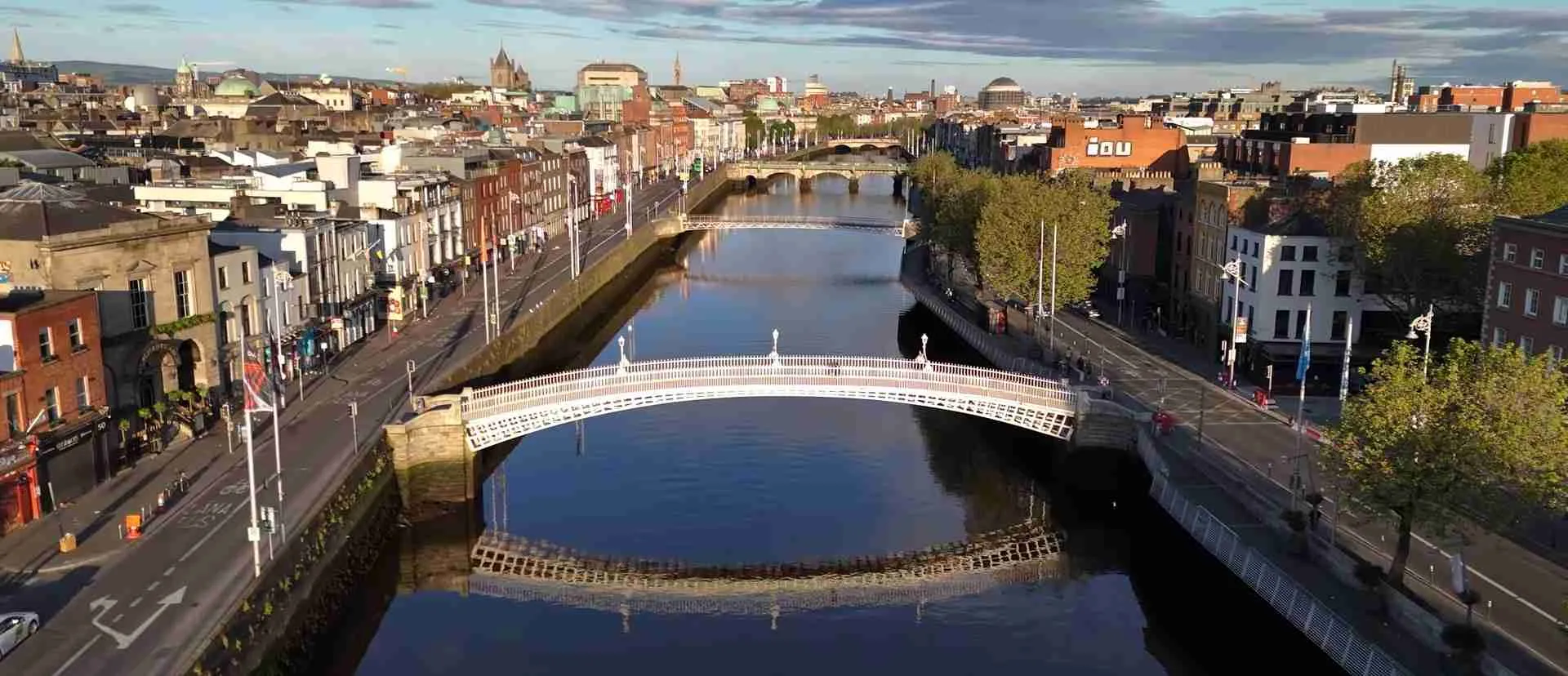
Strategic walking routes maximize sightseeing efficiency while minimizing backtracking and redundant mileage. The classic Trinity-to-Temple Bar-to-Dublin Castle-to-Christchurch loop covers 2 kilometers in 90 minutes including brief stops, with extension to St. Patrick’s Cathedral adding 600 meters. North-south routes connecting O’Connell Street’s Georgian width, Ha’penny Bridge iconic crossing, Temple Bar cultural quarter, and Trinity College span 1.2 kilometers, providing continuous architectural and cultural interest without boring transitional blocks. River Liffey walkways deliver pleasant east-west navigation, though Georgian squares south of river offer more historically significant architecture than docklands industrial conversion areas.
Walking limitations emerge for distance attractions and weather considerations. Phoenix Park’s 7-kilometer western position from Trinity College, Howth’s 15-kilometer northeastern coastal location, and Kilmainham Gaol’s 3-kilometer western distance all exceed comfortable walking ranges particularly when combined with other daily attractions. Dublin’s rainfall probability averaging one in three days necessitates waterproof jackets and backup indoor plans, with winter months November-February delivering 4-5 PM darkness limiting afternoon walking hours. Public transport integration via Leap Card enables optimal walking-transit combinations—walk Trinity to Temple Bar morning, Luas to Kilmainham early afternoon, bus to Guinness late afternoon, walk back to central accommodation evening.
Taxis and Rideshare Dublin 2026
Dublin taxis operate on regulated metered fares beginning €4.40 ($5) flag-fall plus €2 ($2.35) per kilometer, with typical cross-city journeys Temple Bar to Ballsbridge or Kilmainham costing €12-18 ($14-21). Airport taxis to city center charge €25-35 ($29-41) depending on destination and traffic, with pre-booking fees adding €3 ($3.50) when reserving advance pickups. Taxis become cost-effective for groups of three-four splitting fares—€15 taxi divided four ways costs €3.75 per person comparable to individual Leap Card fares while delivering door-to-door convenience and time savings.
Rideshare services including Uber and Bolt operate in Dublin 2026, generally matching traditional taxi pricing rather than undercutting as seen in other markets. The regulatory environment maintains level playing field between licensed taxis and rideshare drivers, eliminating price competition while offering app convenience for travelers preferring digital booking, upfront pricing clarity, and cashless payment. Late-night availability proves superior for rideshare apps, with traditional taxi ranks experiencing supply shortages Friday-Saturday after midnight while app-based services maintain better availability through surge pricing mechanisms.
Strategic taxi usage optimizes budget efficiency without eliminating public transport savings. Reserve taxis for heavy luggage transport between accommodation and airport, late-night returns from distant pubs or restaurants after public transport cessation, rainy days when multiple attraction visits would involve wet walking between Luas/bus stops, and specific scenarios where four-person groups make per-person taxi costs competitive with public transit. Avoid taxis for routine daytime attractions where Leap Card delivers 60-75% cost savings—€2 Luas journey versus €8-12 taxi for identical Trinity-to-Kilmainham route represents wasteful luxury rather than value-optimized spending.
Attraction Costs and Sightseeing Budget 2026
Dublin balances premium-priced commercial attractions including €26 ($30) Guinness Storehouse admission against genuinely world-class free museums, parks, and architectural walks that would command €15-25 entry fees in comparable European capitals. Strategic attraction selection and booking optimization enable comprehensive cultural experiences across all budget tiers without sacrificing quality or missing Dublin’s essential sights.
Major Paid Attractions Dublin 2026
Guinness Storehouse dominates Dublin’s paid attraction landscape as Ireland’s most-visited tourist site, charging €22-26 ($26-30) depending on booking method and visit timing. Advance online booking typically secures €22 ($26) rates, while walk-up admission reaches €26 ($30) subject to availability—summer weekends and St. Patrick’s season regularly sell out weeks ahead. The seven-floor self-guided experience culminates in Gravity Bar’s 360-degree panoramic views and complimentary pint, requiring 90-120 minutes for thorough exploration. Book earliest morning 9:30 AM slots to avoid crowds, particularly mid-June through August when afternoon queues extend 30-45 minutes despite timed entry system. Check the official Guinness Storehouse website for current rates as pricing updates seasonally.
Trinity College’s Book of Kells exhibition charges €18.50 ($22) for adults combining medieval manuscript viewing with access to stunning Long Room library housing 200,000 volumes beneath barrel-vaulted ceiling lined with marble busts. Online advance booking essential during summer peak season when walk-up queues reach 45-60 minutes, with early morning or late afternoon slots offering more relaxed viewing experiences. The 30-45 minute visit represents essential Dublin cultural experience despite premium pricing, with the Long Room alone justifying admission through atmospheric beauty impossible to replicate elsewhere in Ireland. Students with valid ID receive reduced rates €12 ($14), while under-12s enter free.
Kilmainham Gaol represents Ireland’s most emotionally powerful historical attraction at €10 ($12) for guided tours departing every 30 minutes. This former prison hosted leaders of every Irish rebellion from 1796 to 1924, with executed patriots’ cells and 1916 Easter Rising execution yard delivering profound historical impact. Tours require advance booking—summer availability extends just 5-7 days ahead as daily 400-person capacity sells out quickly. The 60-minute guided experience provides essential context for Irish independence struggle understanding, making €10 admission exceptional value for historically curious visitors. Free admission first Sunday monthly creates extended queues and diminished experience quality versus €10 weekday visit convenience.
Free Attractions and Museums Dublin 2026
National Museum of Ireland’s archaeology branch on Kildare Street houses treasures rivaling British Museum’s collection, including Tara Brooch, Ardagh Chalice, and preserved bog bodies spanning Iron Age to medieval periods. The free admission provides 90-120 minutes of world-class cultural immersion, with Derrynaflan Hoard and Viking Dublin galleries delivering comprehensive Irish history education without cost. Victorian architecture and careful curation match paid museum quality globally, making this Dublin’s single best cultural value. Natural History Museum nearby maintains Victorian presentation frozen since 1850s, offering quirky charm through floor-to-ceiling taxidermy displays in original wooden cases.
National Gallery of Ireland showcases European masterworks including Caravaggio’s “The Taking of Christ,” Vermeer paintings, extensive Irish art collection, and rotating special exhibitions. The free permanent collection delivers 60-90 minutes of quality art viewing, with recent renovations creating light-filled contemporary galleries contrasting beautifully with historic wings. Sunday afternoon classical music concerts in atrium provide bonus cultural experiences without admission charges. Special exhibitions occasionally require €8-15 ($9-18) tickets, though permanent collection alone justifies dedicated visit time.
St. Stephen’s Green and Phoenix Park deliver urban nature experiences without admission costs. St. Stephen’s Green’s 9-hectare Victorian garden provides peaceful respite 5-minute walk from Grafton Street shopping, with ornamental lake, flower gardens, and tree-shaded paths offering free picnic-lunch settings. Phoenix Park’s 707 hectares northwest of city center encompass wild deer herds, Dublin Zoo, Áras an Uachtaráin presidential residence viewable from gates, and vast meadows perfect for extended walks or jogs. The park’s scale—one of world’s largest urban parks—enables hours of exploration without cost, with free access year-round dawn to dusk.
Dublin Pass and Attraction Cards 2026
The Dublin Pass offers multi-attraction access through three formats—Essentials covering 3 attractions in guided format, Explorer permitting 3-7 attraction choices from 31 options valid 30 days, and All-Inclusive delivering 35 attractions over 1-5 consecutive days. Pricing varies by selection and duration, with All-Inclusive 2-day passes approximately €95-110 ($111-129) depending on seasonal promotions and booking channels. Value analysis requires careful calculation against actual intended visits, as the pass excludes Book of Kells (€18.50 standalone) yet includes Guinness Storehouse, EPIC Museum, Jameson Distillery, and various hop-on-hop-off bus options.
Strategic pass evaluation compares included attraction retail prices against pass costs plus excluded premium attractions. Travelers planning Guinness (€22-26), EPIC Museum (€16-20), Jameson Distillery (€25-30), Christ Church Cathedral (€8), and St. Patrick’s Cathedral (€8) reach €79-112 in standalone admissions, suggesting All-Inclusive 2-day pass around €95-110 delivers modest savings while adding hop-on-hop-off convenience and lesser-known attractions as bonus additions. However, visitors prioritizing free museums, limiting paid attractions to 2-3 essentials, or spreading visits across multiple days exceeding pass validity windows achieve better value through standalone ticket purchases.
Advance attraction booking independent of passes often provides flexibility advantages and occasional online discounts. Guinness Storehouse and Kilmainham Gaol require timed-entry reservations regardless of payment method, with direct booking enabling precise schedule control versus pass restrictions. EPIC Museum, Jameson Distillery, and various churches accept walk-in visitors outside peak season, reducing advance planning pressure. Budget-conscious travelers visiting primarily free attractions plus 1-2 premium paid sites maximize value through selective standalone purchases rather than pass commitments encouraging rushed visit pacing to justify sunk costs.
Dublin Neighborhood Cost Comparison 2026
Dublin’s neighborhood geography creates distinct cost tiers influencing accommodation prices, dining expenses, and overall budget efficiency. Understanding these geographic pricing variations enables travelers to select optimal base locations balancing convenience, authenticity, and value across budget categories.
Temple Bar and City Center Premium Pricing
Temple Bar commands Dublin’s highest tourist-density pricing, with restaurant meals averaging €35-50 ($41-59) for quality identical to €25-40 ($29-47) elsewhere and Guinness pints reaching €9-11 ($11-13) versus €6-7 ($7-8) in neighborhood pubs three blocks removed. The cobblestone cultural quarter delivers unmatched atmosphere through live music venues, street performers, and vibrant evening energy, though daytime crowds and premium costs reduce value for budget-conscious travelers. Strategic Temple Bar engagement limits presence to evening drinks and music while sourcing meals and daytime attractions in adjacent lower-cost neighborhoods.
Grafton Street and St. Stephen’s Green vicinity maintain premium pricing without Temple Bar’s tourist-trap reputation. Hotels charge €180-280 ($211-328) for quality commanding €140-220 ($164-258) in Rathmines or Portobello, while cafes and restaurants add 15-25% premiums for prime location rents. However, the concentration of luxury shopping, Georgian architecture, Trinity College proximity, and Luas tram access justifies premiums for travelers prioritizing convenience and cultural immersion over budget optimization. Parallel streets including Drury Street and South William Street offer better restaurant value while maintaining central positioning.
North Inner City Value Neighborhoods 2026
North inner city areas around Parnell Street, Capel Street, and Smithfield deliver authentic Dublin atmosphere with accommodation costs 20-30% below southside equivalents. Budget hotels charge €70-90 ($82-105) per room versus €90-120 ($105-140) in Temple Bar, while guesthouses and three-star properties offer €100-140 ($117-164) rates competing with €140-200 ($164-234) southside quality. The trade-off involves crossing River Liffey via Ha’penny Bridge or O’Connell Bridge for southern attractions, adding 10-15 minute walks or single Luas rides to Trinity College and Temple Bar core.
Dining value shines in north city ethnic restaurants and traditional pubs. Asian restaurants on Parnell Street serve authentic Chinese, Korean, and Thai meals €12-20 ($14-24), while neighborhood pubs including The Cobblestone and Ned O’Shea’s deliver traditional music sessions with €16-24 ($19-28) pub meals and €6-7 ($7-8) Guinness pints. Supermarkets including Tesco and Lidl provide convenient self-catering supplies, with Moore Street’s historic market stalls offering fresh produce at wholesale-adjacent pricing. Smithfield’s craft breweries and distilleries add contemporary appeal balancing traditional neighborhood character.
Rathmines and Portobello Residential Value 2026
Rathmines and Portobello residential neighborhoods 2-3 kilometers south of city center combine local authenticity with excellent value. Guesthouses and budget hotels charge €90-140 ($105-164) per room for quality matching €130-200 ($152-234) central properties, while mid-range hotels offer €140-200 ($164-234) rates competing with €180-260 ($211-304) downtown equivalents. The vibrant residential atmosphere delivers authentic Dublin experience beyond tourist corridors, with excellent independent cafes, restaurants, and pubs serving predominantly local clientele.
Indian restaurants along Richmond Street and Upper Rathmines Road provide exceptional dining value, with early bird specials €15-20 ($18-24) for three courses and lunch menus €12-15 ($14-18) delivering restaurant quality at casual pricing. Italian, Asian, and modern Irish restaurants maintain similar value positioning, offering €25-40 ($29-47) three-course dinners matching €35-55 ($41-64) central Dublin quality. The neighborhoods connect to city center via 20-minute bus routes or Luas Green Line, with public transport frequency every 10-15 minutes during daytime hours. Strategic accommodation here saves €25-50 ($29-59) nightly while adding €4-6 ($5-7) daily transport costs, delivering net savings €140-300 ($164-351) weekly.
Coastal Villages: Howth and Dun Laoghaire 2026
Howth and Dun Laoghaire coastal villages accessible via DART rail provide charming accommodation alternatives combining seaside atmosphere with convenient city access. Guesthouses and boutique hotels charge €100-180 ($117-211) per room, offering harbor views, seafood restaurants, cliff walks, and authentic fishing village character impossible to replicate in urban Dublin. The 30-40 minute DART journey costs €3-6 ($3.50-7) using Leap Card, with trains departing every 10-15 minutes during daytime hours ensuring flexible scheduling without car rental necessity.
Coastal dining emphasizes fresh seafood at reasonable prices compared to central Dublin. Howth’s harbor restaurants including Oar House and Octopussy’s serve fish and chips €14-20 ($16-24), seafood platters €25-40 ($29-47), and fresh catches €22-35 ($26-41), with harbor views and sea breezes adding atmospheric value. Dun Laoghaire’s Victorian pier, People’s Park, and Georgian terraces create distinctive ambiance separate from Dublin’s urban energy. The villages suit travelers seeking relaxed pace, nature access, and local Irish culture over 24-hour city intensity, particularly appealing for extended stays where daily city center visits prove unnecessary.
Seasonal Price Variations Dublin 2026
Understanding Dublin’s seasonal pricing fluctuations enables strategic visit timing maximizing value while optimizing weather probability and cultural event access. Price variations reach 50-70% differentials between peak summer and winter low season across accommodation, attractions, and some dining categories.
Summer Peak Season June-August 2026
Summer months deliver Dublin’s highest prices alongside optimal weather and longest daylight hours. Hotel rates increase 40-70% above shoulder season, transforming €160 May properties into €250-280 June-August bookings, while hostels raise dormitory beds from €26-30 to €32-40. The pricing reflects maximum international tourism demand, local Irish summer holiday patterns, and numerous festivals including Bloomsday June 16, Pride late June, and various music festivals throughout summer months. Advance booking 10-16 weeks ahead essential for securing preferred accommodation and avoiding last-minute availability shortages.
Major attractions experience maximum crowding during summer peak, with Guinness Storehouse selling out most days despite expanded capacity and Book of Kells implementing extended hours to accommodate demand. The authentic Dublin pub experience suffers somewhat during summer as tourist concentrations dilute local atmosphere, particularly in Temple Bar where summer crowds overwhelm neighborhood character. However, summer delivers reliably longest daylight hours—sunset past 10 PM in late June—enabling extended evening sightseeing and outdoor dining impossible during winter darkness.
Shoulder Seasons April-May and September-October 2026
September represents Dublin’s optimal value month, delivering mild temperatures 12-16°C (54-61°F), reduced crowds at major attractions, and hotel rates falling 25-35% below summer peaks. The same €250 summer hotel typically costs €160-185 in September, while attraction queues disappear and restaurant reservations become available days rather than weeks ahead. Early autumn weather remains generally favorable with lower rainfall probability than spring, though visitors should pack rain layers as Irish weather remains unpredictable regardless of season.
April-May spring shoulder season offers moderate pricing between winter lows and summer highs, with hotels charging €140-200 for properties reaching €250-280 in July. Attractions begin extending hours and increasing staffing for approaching summer demand, while Easter crowds create brief peak periods mid-April requiring advance planning. Spring delivers unpredictable weather mixing sunny days with rain and occasional chilly winds, though longer daylight hours compared to winter enable more comprehensive daily itineraries. May proves particularly appealing as temperatures warm toward summer levels while crowds remain manageable and pricing stays reasonable.
Winter Low Season November-February 2026
Winter months November through February deliver Dublin’s lowest accommodation pricing with rates falling 35-45% below summer peaks. The €250 July hotel drops to €140-170 during winter, while budget hostels reduce dormitory beds to €22-28 and mid-range properties offer €100-140 rates requiring €160-220 in summer. The dramatic savings appeal to budget-focused travelers willing to navigate short daylight hours—sunset 4-5 PM December-January—and elevated rainfall probability approaching 50% of days.
Christmas and New Year periods create brief winter peaks disrupting general low-season pricing, with December 23-January 2 commanding shoulder-season rates €160-220 for hotels typically €120-160 mid-November or mid-January. Temple Bar and major shopping districts transform with Christmas markets and lights, while St. Patrick’s Festival March 17 creates single-day peak requiring year-ahead accommodation booking at summer-equivalent pricing. Strategic winter visits target January-February for maximum savings and November for marginally better weather before deepest winter darkness, accepting indoor-heavy itineraries emphasizing museums, pubs, whiskey tastings, and cultural attractions over outdoor exploration.
Money-Saving Strategies Dublin 2026
Implementing strategic cost-reduction techniques across accommodation, dining, transport, and attractions enables significant budget savings without sacrificing experience quality or missing essential Dublin sights. These proven strategies deliver 30-50% cost reductions compared to unoptimized approach while maintaining comfortable travel standards.
Accommodation Booking Optimization 2026
Booking accommodation 8-16 weeks ahead during peak season secures optimal rates before demand-driven price increases, while shoulder season permits 3-4 week advance reservations and winter allows week-of bookings. Monday-Thursday bookings cost 15-20% less than Friday-Saturday regardless of season, with Sunday nights offering transition value between weekend and midweek pricing. Consider residential neighborhoods Rathmines, Portobello, and north inner city for 20-30% accommodation savings compensated by minimal €4-6 daily transport costs, delivering net weekly savings €140-300 over central Dublin premium locations.
Direct hotel booking occasionally provides better rates than third-party platforms, particularly for independent properties and boutique hotels offering best-price guarantees. However, comprehensive comparison across Booking.com, Hotels.com, Expedia, and direct websites remains essential as pricing varies by booking source and promotional periods. Loyalty program enrollment through major chains including Marriott, Hilton, and IHG occasionally delivers room upgrades or breakfast inclusion adding €10-20 daily value, while membership-only rates sometimes undercut public pricing by 10-15%.
Meal Cost Reduction Strategies 2026
Early bird restaurant specials offered 5-7 PM reduce three-course meals from €35-55 to €25-30 at participating establishments throughout Dublin’s dining districts. Indian restaurants around South William Street provide exceptional value with €15-20 three-course early bird and €12-15 lunch specials delivering restaurant quality at casual pricing. Strategic dining combines supermarket breakfast supplies and picnic lunches costing €8-15 daily with evening restaurant meals, reducing total daily food costs from €45-65 all-restaurant approach to €30-45 mixed strategy.
Pub lunch specials Monday-Friday offer €12-18 two-course meals including soup, sandwich, or hot main, delivering better value than evening dinner pricing while maintaining pub atmosphere. Tesco Meal Deal provides sandwich, snack, and drink €5-6 for convenient on-the-go lunches, while Lidl and Aldi supermarkets offer prepared salads, wraps, and hot food €4-7. Thermos containers enable morning coffee preparation in accommodation, saving €4-5 daily versus cafe purchases accumulating €28-35 weekly savings for couples. Water bottles filled from tap water eliminate €2-3 daily bottled water purchases, as Dublin’s municipal water quality equals or exceeds bottled options.
Attraction and Activity Savings 2026
Prioritizing free world-class attractions including National Museum of Ireland archaeology and natural history branches, National Gallery, St. Stephen’s Green, and Phoenix Park delivers comprehensive cultural experiences without admission costs. Budget one premium paid attraction daily—Guinness Storehouse, Book of Kells, or Kilmainham Gaol—rather than attempting multiple €15-26 admissions accumulating €50-80 daily attraction costs. First Sunday monthly free admission at certain attractions including Kilmainham Gaol creates crowding and diminished experience versus €10 weekday premium for comfortable touring conditions.
Walking tours provide free or tip-based cultural education, with companies including Sandeman’s New Europe and Dublin Free Walking Tours offering daily 2-3 hour guided experiences covering major sights and Irish history. Though technically free, appropriate tips €10-15 per participant represent fair compensation for quality guiding, still delivering better value than €25-40 paid tours offering comparable content. Self-guided walking routes using free maps from tourist offices or downloaded apps eliminate tour costs entirely while providing flexibility for spontaneous schedule changes and extended photo stops.
Transport Cost Minimization 2026
Leap Card immediately delivers 40% savings versus cash bus fares, transforming €2.65 single journeys into €2 rides with 90-minute transfer windows enabling multi-leg journeys on single charges. Strategic route planning maximizes transfer window efficiency—booking morning Luas to Kilmainham, walking 2 kilometers to Guinness Storehouse, returning via bus all within 90 minutes costs €2 total versus €6-8 paying individual fares. Walking whenever practical between attractions within 2-kilometer radius eliminates unnecessary transport costs, with Trinity-to-Temple Bar-to-Dublin Castle-to-Christchurch 2-kilometer loop entirely walkable in 90 minutes.
Airport transfer optimization saves €15-25 compared to taxi costs. Dublin Express bus charges €10 ($12) for direct 30-40 minute city center service, while Airlink 747 costs €8 ($9) with Leap Card providing equivalent service. Late-night arrivals outside bus operating hours require taxis €25-35, though strategic flight selection landing daytime enables bus savings. Bicycle rental through Dublin Bikes costs €5 ($6) for 3-day subscription plus free first 30 minutes each trip, enabling multiple short journeys perfect for Trinity-to-Phoenix Park or Docklands exploration while maintaining free pricing through 30-minute ride discipline.
Hidden Costs and Budget Surprises Dublin 2026
Understanding Dublin’s less-obvious expenses prevents budget overruns and financial surprises, with several categories of costs emerging beyond obvious accommodation, meals, and attraction admissions affecting overall trip expenses.
Restaurant Service Charges and Tipping 2026
Many Dublin restaurants automatically add 10-12.5% service charges to bills for groups of six or more, transforming €50-per-person meals into €56-57 when service appears as line item rather than optional gratuity. Always review bills carefully before adding additional tips, as service charge inclusion eliminates further tipping obligation. For parties under six, Irish custom suggests 10% tips for good service though no mandatory expectations exist, with many locals simply rounding bills to convenient amounts or leaving €5-10 on €40-60 meals.
Pub culture maintains minimal tipping expectations distinct from restaurant norms. Leaving €1-2 on €20-25 pub meal tabs suffices, with many regular patrons simply rounding up to nearest €5. Bar staff serving drinks expect no tips for simple pint pulls, though cocktail service or complex drink orders merit €1-2 appreciation per round. Coffee shops and casual eateries include no tipping expectations, with counter service eliminating gratuity considerations entirely. This relaxed tipping culture delivers cost advantages versus American or Asian markets where 15-20% gratuities significantly inflate meal expenses.
Leap Card Deposits and Tourist Taxes 2026
Leap Card requires €5 ($6) refundable deposit beyond initial credit purchase, though return procedures involve visiting specific locations rather than automatic refunds. Budget €5 as sunk cost unless specifically planning Leap Card return at airport or major train station before departure. Unused credit remains on cards indefinitely, enabling retention for future Dublin visits or gifting to other travelers rather than pursuing refund hassle for €10-15 remaining balances.
Dublin hotels impose no mandatory tourist taxes as implemented in many European cities, eliminating surprise €2-5 per person nightly charges common in Amsterdam, Paris, or Barcelona. However, resort-style properties occasionally add facilities fees or service charges €5-15 daily, appearing as separate line items beyond quoted room rates. Always verify final all-inclusive pricing during booking confirmation, reading fine print for facilities fees, parking charges, or mandatory breakfast additions that could add €10-30 daily to advertised rates.
Alcohol and Beverage Premium Pricing 2026
Ireland’s alcohol prices reflect high government excise duties alongside cultural acceptance of premium pricing, with Guinness pints €6-7 ($7-8) in neighborhood pubs and €9-11 ($11-13) in Temple Bar representing significant beverage budget impact. Two pints nightly across week-long visit costs €84-154 ($98-180), equivalent to two nights’ budget accommodation or 3-4 restaurant meals. Strategic pub selection focusing on north city and residential neighborhood establishments reduces per-pint costs €2-3, while limiting pub visits to 2-3 nights weekly rather than nightly rotation controls alcohol budget impact.
Wine pricing in restaurants applies significant markup percentages, with €12-18 retail bottles reaching €35-55 in restaurants despite quality equivalency. House wines generally provide best value at €7-9 ($8-11) per 175ml glass, with €25-35 bottles offering better per-glass economics for two people sharing compared to individual glass purchases. Cocktails €13-18 ($15-21) at upscale bars quickly accumulate costs—two cocktails each for couple reaches €52-72 ($61-84) equivalent to quality mid-range dinner. Pre-drinking in accommodation using supermarket purchases €8-15 per bottle before evening outings reduces bar spend while maintaining social lubrication benefits.
Parking and Vehicle Costs Dublin 2026
Street parking in central Dublin costs €2-4 per hour with 2-4 hour maximum stays depending on zone, making daily parking €10-20 unsuitable for multi-day visits compared to €2-8 daily public transport costs. Multi-story car parks charge €15-30 daily in city center, with overnight hotel parking adding €12-25 at properties without included parking. Rental cars prove economically unjustifiable for Dublin-only visits given excellent public transport, though become viable for exploring wider Ireland where rural areas lack comprehensive bus/rail networks.
Traffic congestion and limited parking availability compound cost inefficiencies, with central Dublin rush hour delays and scarce parking spaces creating frustration beyond financial considerations. Strategic approach eliminates car rental for Dublin portion of Irish trips, utilizing public transport and walking during capital city stay before collecting rental car for onward travel to Wicklow Mountains, Ring of Kerry, or Wild Atlantic Way. This hybrid approach delivers urban convenience and rural freedom while minimizing parking costs and congestion stress during Dublin exploration.
Sample Dublin Itineraries with Daily Costs 2026
These detailed multi-day itineraries demonstrate realistic daily spending across budget tiers, incorporating accommodation, meals, transport, and attractions while maintaining quality experiences appropriate to each category. All costs reflect per-person spending assuming two travelers sharing accommodation.
Budget 3-Day Dublin Itinerary 2026
Day 1 – Historic Dublin Core: Hostel dormitory €28, breakfast supermarket supplies €5, walking tour tip €12, pub lunch €18, Leap Card top-up €10 including 2 journeys, Kilmainham Gaol admission €10, casual dinner €22, evening pub pints €14. Daily total: €119 per person.
Day 2 – Museums and Georgian Dublin: Hostel dormitory €28, breakfast €5, National Museum of Ireland free, lunch sandwich and coffee €14, Leap Card €4 for 2 journeys, Trinity College and Book of Kells €18.50, St. Stephen’s Green free, early bird Indian dinner €20, evening drinks €10. Daily total: €99.50 per person.
Day 3 – Brewery and Coastal Day: Hostel dormitory €28, breakfast €5, Leap Card €6 including DART to Howth, Howth cliff walk free, fish and chips lunch €16, return to city €3 on Leap Card already purchased, Guinness Storehouse €22, casual dinner €20, departure evening. Daily total: €100 per person.
Three-Day Budget Total: Accommodation €84, meals €134, transport €23, attractions €50.50, drinks €24. Combined total: €315.50 per person for comprehensive Dublin weekend capturing major attractions, authentic dining, free museums, and coastal nature while maintaining hostel-budget accommodation standards.
Mid-Range 5-Day Dublin Itinerary 2026
Day 1 – Arrival and Temple Bar: Hotel €100 per person (€200 room divided by 2), breakfast included with hotel, Leap Card €10 initial purchase, lunch cafe €18, afternoon walking tour €15, dinner Temple Bar restaurant €45, evening pub music and drinks €20. Daily total: €208 per person.
Day 2 – Cultural Immersion: Hotel €100, breakfast included, Trinity College and Book of Kells €18.50, lunch Grafton Street €22, Leap Card €4, National Gallery free, dinner mid-range restaurant €50, theater or live music €25. Daily total: €219.50 per person.
Day 3 – Brewing Heritage: Hotel €100, breakfast included, Jameson Distillery tour €30, lunch pub meal €24, Leap Card €4, Guinness Storehouse €22, dinner upscale casual €55, evening cocktails €20. Daily total: €255 per person.
Day 4 – Day Trip and History: Hotel €100, breakfast included, DART to Howth €6, coastal walk and village free, seafood lunch Howth €35, return transport €6, Kilmainham Gaol €10, dinner Georgian district €48, evening drinks €15. Daily total: €220 per person.
Day 5 – Shopping and Departure: Hotel €100, breakfast included, Phoenix Park free, brunch €25, shopping and browsing free, late lunch €22, Leap Card €4 airport bus, departure afternoon. Daily total: €151 per person.
Five-Day Mid-Range Total: Accommodation €500, meals €449, transport €34, attractions €105.50, entertainment and drinks €80. Combined total: €1,168.50 per person for comprehensive Dublin week balancing quality accommodation, excellent dining, major attractions, day trip coastal scenery, and cultural immersion through museums, pubs, and live music.
Luxury 3-Day Dublin Experience 2026
Day 1 – Elegant Arrival: Boutique hotel €200 per person (€400 room divided by 2), breakfast €25, private airport transfer €18 per person, lunch elegant cafe €40, EPIC Museum €18, afternoon tea The Shelbourne €45, pre-theatre dinner Chapter One Michelin €65, Gate Theatre €40, nightcap cocktails €20. Daily total: €471 per person.
Day 2 – Culinary Excellence: Boutique hotel €200, breakfast €25, Trinity College Book of Kells €18.50, coffee and pastry €12, Guinness Storehouse Connoisseur Experience €75, taxi €8 per person, lunch Marker Hotel Brasserie €50, whiskey tasting Irish Whiskey Museum €45, Michelin-starred dinner €95, rooftop bar drinks €25. Daily total: €553.50 per person.
Day 3 – Heritage and Departure: Boutique hotel €200, breakfast €25, Kilmainham Gaol private tour €30, brunch elegant restaurant €45, Phoenix Park Victorian tea house €20, shopping Grafton Street, farewell dinner Irish gastropub premium €60, private airport transfer €18. Daily total: €398 per person.
Three-Day Luxury Total: Accommodation €600, meals €492, transport €44, attractions €186.50, entertainment and premium experiences €105. Combined total: €1,427.50 per person for refined Dublin weekend featuring five-star accommodation, Michelin dining, private transport, exclusive experiences, and premium cultural immersion impossible to replicate at lower budget tiers.
Dublin Budget by Traveler Type 2026
Different traveler demographics face distinct budget considerations and opportunities, with families, solo travelers, and senior visitors requiring tailored approaches optimizing value while addressing category-specific needs.
Family Travel Costs Dublin 2026
Family accommodation costs benefit from apartment rentals and family rooms reducing per-person expenses compared to multiple hotel rooms. Two-bedroom apartments €150-250 ($176-293) nightly accommodate four people at €37.50-62.50 ($44-73) per person, while family hotel rooms €200-300 ($234-351) provide €50-75 ($59-88) per-person rates including breakfast for children under 12 at many properties. Self-catering apartments deliver additional savings through breakfast and occasional dinner preparation, reducing €60-80 daily restaurant costs for family of four to €30-40 supermarket shopping plus €40-60 for one restaurant meal.
Children’s attraction admissions provide family budget relief, with under-12s entering Trinity College Book of Kells free, Guinness Storehouse free for under-13s, and most museums including National Museum and National Gallery maintaining free admission all ages. Dublin Zoo €22 ($26) adults and €16 ($19) children ages 3-15 represents primary paid family attraction beyond standard adult-focused sites. Transport costs benefit from children under 16 paying reduced Leap Card fares €1 versus €2 adults, though family groups of four still accumulate €8-12 daily transit costs versus €4-8 for couples.
Solo Traveler Budget Dublin 2026
Solo travelers face accommodation premium paying full room rates without splitting costs, transforming €160 hotel room into €160 per person versus €80 shared by couple. Hostel dormitories €28-40 provide solo-friendly accommodation avoiding single supplements, while some hotels offer genuine single rooms €100-140 rather than double-occupancy pricing. Strategic solo accommodation focuses on budget hotels in north inner city €80-110 for actual singles, boutique properties occasionally discounting singles €120-160, or premium hostels offering private pod beds €45-65 combining dormitory economics with privacy.
Solo dining encounters no built-in premiums beyond psychological discomfort some travelers experience eating alone, with lunch and casual dinner naturally accommodating single diners. Counter-service restaurants, pubs with bar seating, and cafes eliminate solo awkwardness while matching couple pricing per person. Group walking tours and pub music sessions provide social opportunities without forced interaction, enabling solo travelers to enjoy communal Dublin experiences while controlling engagement intensity. Solo transport costs match couples per person, with individual Leap Card usage €4-8 daily identical to paired traveler patterns.
Senior and Retired Traveler Considerations 2026
Senior travelers benefit from off-season flexibility avoiding summer crowds and premium pricing, with September or May visits delivering optimal weather-cost balance. Attraction discounts for over-65s vary by venue—some attractions including Kilmainham Gaol offer €1-2 senior reductions while others maintain single adult pricing. Trinity College and major paid attractions provide minimal senior concessions, though free museums deliver equal access regardless of age. DART and Luas offer free travel for Ireland residents over 66 though international visitors pay standard Leap Card rates.
Accommodation preferences often prioritize comfort over budget extremes, with mid-range hotels €160-220 offering elevator access, room service, and convenient locations reducing walking distances. Ground-floor rooms and properties with medical assistance protocols provide peace of mind for travelers with mobility or health considerations. Slower-paced itineraries visiting 2-3 attractions daily rather than rushed schedules accommodate energy levels while reducing transport costs through consolidated geographic focus. Many senior travelers appreciate Dublin’s compact walkability enabling full-day exploration without extensive transit, though Leap Card provides low-cost flexibility when weather or fatigue necessitates bus or tram assistance.
Frequently Asked Questions: Dublin Budget 2026
Is Dublin more expensive than London for tourists in 2026?
Dublin costs 15-25% less than London for most categories in 2026, with particularly significant savings in accommodation and public transport while restaurant dining shows smaller differentials. Four-star Dublin hotels averaging €218 ($255) nightly undercut London’s comparable €280+ properties, while Dublin’s daily public transport caps around €6.42 versus London’s higher zone fares deliver ongoing savings for visitors making multiple journeys daily. However, grocery prices and casual restaurant meals show narrower gaps, with Dublin mid-range dinners €35-55 ($40-65) comparing to London’s £35-60 (€40-68/$47-80 approximate equivalents). Dublin’s exceptional free museums including National Museum of Ireland and National Gallery match or exceed London’s British Museum and National Gallery quality without admission charges, creating value parity in cultural experiences.
What is the cheapest month to visit Dublin in 2026?
January and February represent Dublin’s absolute cheapest months in 2026, with hotel rates falling 35-45% below summer peaks and hostels reducing dormitory beds to €22-28 from summer’s €32-40. Mid-range hotels charge €100-140 in deep winter versus €180-250 July-August, while luxury properties drop to €300-400 from summer’s €450-600. The trade-offs involve 4-5 PM sunset limiting afternoon exploration, elevated rainfall probability approaching 50% of days, and some attractions reducing hours or closing certain days weekly. However, Dublin’s numerous indoor attractions including museums, whiskey distilleries, traditional pubs, and Victorian architecture walks remain fully accessible and atmospheric during winter months, making January-February viable for budget-focused visitors accepting weather compromises for dramatic cost savings.
Can you visit Dublin on €50 per day in 2026?
Visiting Dublin on €50 ($59) daily proves extremely challenging in 2026 though technically achievable through hostel dormitories €22-28, complete self-catering purchasing supermarket bread, cheese, and prepared foods €12-18 daily, walking all distances eliminating transport costs, and visiting only free attractions including National Museum, National Gallery, St. Stephen’s Green, and Phoenix Park. This bare-bones approach sacrifices Dublin’s renowned pub culture, essential paid attractions including Guinness Storehouse and Book of Kells, restaurant dining experiences, and social atmosphere making €50 daily budget insufficient for quality Dublin visit. Realistic minimum budget sits €85-95 ($99-111) daily enabling hostel accommodation €28-35, basic meal mix of supermarket and casual dining €35-45, minimal Leap Card transport €4-8, and one affordable attraction €10-15, delivering acceptable though still quite limited Dublin experience.
How much cash should I bring to Dublin in 2026?
Bring minimal cash €50-100 ($59-117) for Dublin 2026 as Ireland maintains near-universal card acceptance including contactless payments for transactions as small as €1-2. Credit cards and debit cards work seamlessly at hotels, restaurants, attractions, supermarkets, convenience stores, and public transport with Leap Card purchases and top-ups accepting cards at machines citywide. Small cash reserves cover occasional situations including farmers markets preferring cash, traditional pub tips for musicians €2-5, and rare technical card failures. ATMs throughout Dublin provide easy cash access when needed, dispensing €10-50 denominations though impose €3-5 withdrawal fees making larger €100-200 withdrawals more economical than multiple small transactions. American Express acceptance remains spottier than Visa and Mastercard, warranting backup card from different network.
Are Dublin restaurant prices negotiable or flexible in 2026?
Dublin restaurant prices remain firmly fixed with zero negotiation culture, though strategic timing and selection enable cost optimization without haggling. Early bird specials 5-7 PM reduce three-course meals from €35-55 to €25-30 at participating restaurants, lunch menus offer €15-25 two-course meals versus €35-55 dinner pricing at identical establishments, and pub meal deals Monday-Thursday sometimes include drink packages €18-22 combining food and pint. These represent structured discounts rather than negotiable pricing, with requesting price reductions or attempting bargaining considered inappropriate and culturally tone-deaf. Focus cost-control strategies on timing optimization, neighborhood selection avoiding Temple Bar premiums, and early bird special utilization rather than attempting negotiation approaches successful in markets with haggling traditions.
What does a week in Dublin cost for a couple in 2026?
A couple visiting Dublin for one week in 2026 spends $1,372-2,184 (€1,176-1,862) combined ($686-1,092/€588-931 per person) for budget travel, $3,038-4,802 (€2,590-4,102) combined ($1,519-2,401/€1,295-2,051 per person) for mid-range comfort, or $5,740-9,338 (€4,900-7,980) combined ($2,870-4,669/€2,450-3,990 per person) for luxury experiences. Budget week includes hostel dormitories or budget hotels €35-50 per person nightly totaling €490-700 ($574-820) combined, meals combining supermarket self-catering with casual dining €490-770 ($574-902) combined, Leap Card public transport €56-112 ($66-132) combined, and attraction mix of free museums plus select paid entries €140-280 ($164-328) combined. Mid-range week encompasses centrally located hotels €80-125 per person nightly totaling €1,120-1,750 ($1,312-2,048) combined, restaurant dining €910-1,372 ($1,066-1,606) combined, mixed public transport and taxis €140-280 ($164-328) combined, and major attractions €420-700 ($492-820) combined. Luxury week involves boutique hotels €175-300 per person nightly totaling €2,450-4,200 ($2,868-4,914) combined, upscale dining €1,400-2,100 ($1,638-2,458) combined, private transportation €350-560 ($410-656) combined, and premium experiences €700-1,120 ($820-1,312) combined.
Should I buy travel insurance for Dublin trip in 2026?
Travel insurance provides valuable protection for Dublin trips in 2026, covering trip cancellation if illness prevents travel, medical emergencies requiring hospital care, and lost luggage or delayed flights disrupting itineraries. EU citizens with European Health Insurance Card receive free emergency healthcare in Irish public hospitals, though non-EU visitors including Americans face full medical costs averaging €100-300 emergency room visits without insurance coverage. Comprehensive travel insurance €40-80 ($47-94) for week-long trip covers medical emergencies, trip interruption, lost luggage, and travel delays, delivering peace of mind for relatively modest cost compared to €1,000-3,000 total trip expenses. Evaluate existing credit card travel protections, employer benefits, and health insurance international coverage before purchasing redundant policies, though gap coverage remains advisable for visitors lacking comprehensive existing protection.
What costs more in Dublin than expected for first-time visitors?
Alcohol prices shock many first-time visitors to Dublin, with €6-7 ($7-8) Guinness pints in neighborhood pubs and €9-11 ($11-13) in Temple Bar significantly exceeding expectations based on beer prices in Southern or Eastern Europe where comparable pints cost €2-4. Restaurant wine markup percentages similarly surprise visitors, with €12-18 retail bottles reaching €35-55 in restaurants creating sticker shock for diners accustomed to more moderate markup ratios. Taxi costs catch visitors off-guard, with €12-18 cross-city journeys and €25-35 airport transfers substantially exceeding public transport’s €2 per journey Leap Card pricing, making taxis suitable only for specific situations rather than routine transport. Accommodation premiums in Temple Bar and immediate city center €200-300 nightly surprise budget-conscious travelers expecting European capital hostel availability €40-60, though north city and residential neighborhoods deliver better value €70-140 for travelers willing to walk or ride transit 15-25 minutes to major attractions.
How do Dublin prices compare to other Irish cities in 2026?
Dublin commands 25-40% price premiums across accommodation, dining, and some attractions compared to Cork, Galway, and Limerick in 2026, reflecting capital city status, higher living costs, and concentrated tourism demand. Cork and Galway mid-range hotels charge €100-160 versus Dublin’s €160-250 for equivalent quality, while restaurant dinners cost €25-40 in regional cities versus Dublin’s €35-55. However, major attractions including Guinness Storehouse, Book of Kells, and national museums concentrate in Dublin, making direct cost comparisons incomplete without considering experience availability. Rural Ireland beyond cities delivers even greater savings, with guesthouses €60-100 and local pub meals €15-25 providing authentic Irish experiences at significant discounts versus capital pricing, though requiring rental cars or tour packages for access without public transport infrastructure.
What free activities provide the best value in Dublin 2026?
National Museum of Ireland’s archaeology branch delivers world-class cultural experiences including Tara Brooch, Ardagh Chalice, and Viking Dublin galleries rivaling British Museum treasures without admission charges, providing 90-120 minutes of Irish history immersion representing €15-20 value if charged. Phoenix Park’s 707 hectares encompassing wild deer herds, Victorian gardens, and presidential residence grounds enables hours of nature exploration, jogging, picnicking, and photography completely free, offering experiences equivalent to €10-15 elsewhere. Georgian architecture walking tours through Merrion Square, Fitzwilliam Square, and surrounding streets showcase Dublin’s 18th-century elegance, ornate doorways, and preserved period houses free to explore, creating self-guided cultural education matching €15-25 paid walking tour content. National Gallery houses Caravaggio, Vermeer, and extensive Irish art collections without admission fees, delivering 60-90 minutes of quality art viewing worth €12-18 charged admission at comparable European galleries. These free experiences combined enable full Dublin days costing only €35-50 for hostel accommodation and basic meals while maintaining cultural richness matching €80-100 budgets incorporating paid attractions.