
Dodecanese Archipelago Travel Guide 2026: Ultimate Planning Resource
The Dodecanese archipelago comprises 163 islands scattered across the southeastern Aegean Sea between Greece and Turkey, with 26 inhabited islands offering everything from UNESCO World Heritage medieval towns to volcanic landscapes and pristine beaches. This comprehensive 2026 planning resource provides verified costs, ferry schedules, accommodation options, and island-hopping strategies for exploring Greece’s sunniest corner, where over 300 days of sunshine annually illuminate Byzantine monasteries, crusader castles, and crystalline waters.
Key Takeaways: Dodecanese Travel Planning 2026
- Island-Hopping Efficiency in 2026: Ferry connections between major islands (Rhodes, Kos, Patmos, Kalymnos) operate daily with tickets ranging €14.50-€64, while high-speed catamarans reduce journey times to 2-3 hours between Rhodes and Kos compared to 5-8 hours on conventional ferries
- Budget Accommodation Range 2026: Budget travelers find hotels from $38-44 per night in Rhodes and Kos, mid-range properties cost $80-150 nightly, while luxury resorts and boutique hotels in medieval Rhodes Old Town or Patmos command $200-400 per night
- Daily Costs Excluding Accommodation 2026: Traditional taverna meals cost €8-20 per main dish with local wine at €3-5 per glass, beach sunbeds rent for €20 per pair with umbrella, and major attractions like Rhodes’ Palace of the Grand Master charge €6 admission, creating daily budgets of €40-80 per person for food, transport, and activities
- Seasonal Timing Strategy 2026: May through early June and mid-September through mid-October deliver warm swimming temperatures (22-25°C), manageable crowds, and accommodation prices 30-50% lower than peak July-August rates when ferry frequencies reach maximum but prices peak
- Medieval Heritage Concentration: Rhodes Old Town’s UNESCO World Heritage medieval city contains the Palace of the Grand Master, Street of the Knights, and 4 kilometers of fortification walls, while Patmos’s UNESCO-listed Monastery of St. John the Theologian dominates the island’s spiritual character
- Transportation Hub Strategy 2026: Rhodes and Kos airports connect directly to Athens and major European cities, serving as arrival points for island-hopping journeys, while inter-island ferries operated by Blue Star Ferries, Dodekanisos Seaways, and Saos Ferries link all major islands with 2-5 daily departures in high season
People Also Ask About Dodecanese Archipelago 2026
How Many Days Should You Spend in the Dodecanese in 2026?
Seven to ten days allows exploration of 3-4 major islands in 2026. A typical first-time itinerary dedicates 3 days to Rhodes (UNESCO medieval town, ancient Lindos, Valley of the Butterflies), 2 days to Patmos (Monastery of St. John, Cave of the Apocalypse, beaches), 2 days to Kos (Asklepieion, castle, beaches), and 2-3 days divided between smaller islands like Symi (neoclassical harbor), Nisyros (volcanic crater), or Kalymnos (rock climbing, sponge diving heritage). Two weeks permits deeper exploration of 5-6 islands with time for hiking, water sports, and village immersion. Ferry schedules dictate timing — some smaller islands receive service only 2-3 times weekly, requiring overnight stays.
What Are Ferry Costs Between Dodecanese Islands in 2026?
Inter-island ferry tickets in 2026 range €14.50-€64 for major routes like Rhodes to Kos (2-7 hours depending on vessel type), with high-speed catamarans charging premium fares for faster journeys and conventional ferries offering economical alternatives. Rhodes to Symi costs around €95 for the 1 hour 20 minute crossing. Shorter routes between neighboring islands like Agathonisi to Lipsi drop to €9. Ferry companies including Blue Star Ferries, Dodekanisos Seaways, and Saos Ferries offer early booking discounts up to 50% when purchasing tickets 7+ days advance. Vehicle transport adds €40-80 depending on vehicle size. Athens Piraeus to Rhodes conventional ferry costs €45-75 for the 12-16 hour overnight journey.
Is Rhodes or Kos Better as a Base for Island-Hopping in 2026?
Rhodes serves as the superior island-hopping base in 2026 due to more frequent ferry connections (14-17 weekly departures to Kos alone), larger international airport with more flight options, and comprehensive infrastructure including car rentals, hotels across all budgets, and extensive dining options. Rhodes connects to all major Dodecanese islands plus Cyclades, Crete, and Turkey. Kos functions better for travelers prioritizing northern Dodecanese exploration (Kalymnos, Leros, Patmos) or Turkish day trips to Bodrum (30 minutes by ferry). Both islands offer sufficient services, but Rhodes’ central position and transportation frequency provide greater flexibility for spontaneous itinerary changes.
What’s the Cheapest Way to Travel Between Dodecanese Islands in 2026?
Conventional ferries operated by Blue Star Ferries and Dodekanisos Seaways provide the most economical island-hopping in 2026, with deck class tickets starting €14.50-€25 for major routes. Book directly through ferry company websites or Ferryhopper.com to avoid booking fees. Purchase tickets 7+ days advance for 30-50% early booking discounts. Travel during shoulder seasons (May-June, September-October) when ferry companies reduce fares to stimulate demand. Choose slower overnight routes that eliminate one night’s accommodation cost. Multi-island passes don’t exist, so compare individual route prices. Avoid July-August peak season when demand drives prices up 40-60%. Local passenger boats between nearby islands (Symi-Rhodes, Halki-Rhodes) sometimes offer cheaper alternatives at €15-30.
Extended multi-day tours – 5+ days
Featured Dodecanese Islands Multi-Day Tour Packages

3 days
Dodecanese Islands 3-Day Discovery Tour
- ✓ Comprehensive Dodecanese Islands experience
- ✓ Expert local guides included
- ✓ All accommodation included
- ✓ Transportation provided

5 days
Dodecanese Islands 5-Day Highlights Experience
- ✓ Comprehensive Dodecanese Islands experience
- ✓ Expert local guides included
- ✓ All accommodation included
- ✓ Transportation provided

7 days
Dodecanese Islands 7-Day Cultural Journey
- ✓ Comprehensive Dodecanese Islands experience
- ✓ Expert local guides included
- ✓ All accommodation included
- ✓ Transportation provided
10 days
Dodecanese Islands 10-Day Complete Adventure
- ✓ Comprehensive Dodecanese Islands experience
- ✓ Expert local guides included
- ✓ All accommodation included
- ✓ Transportation provided
Multi-day tour packages powered by TourRadar. Prices and availability subject to change.
Introduction to the Dodecanese Archipelago
The Dodecanese archipelago stretches across 163 islands and islets in the southeastern Aegean Sea, positioned between the Cyclades to the west, Crete to the south, Samos to the north, and Turkey’s Anatolian coast to the east. Despite its name meaning “twelve islands,” the island group encompasses far more than twelve, with 26 permanently inhabited islands and 15 major islands attracting tourists: Rhodes, Kos, Patmos, Kalymnos, Karpathos, Astypalaia, Leros, Nisyros, Tilos, Symi, Halki, Kasos, Lipsi, Agathonisi, and Kastellorizo.
This southeastern position places the Dodecanese as Greece’s furthest island group from the mainland, creating a distinctive cultural blend shaped by millennia of crossroads history. The islands served as naval strongholds for ancient Rhodes, Byzantine provinces, crusader kingdoms under the Knights of St. John (1309-1522), Ottoman territories (1522-1912), Italian colonial possessions (1912-1947), and finally reunited with Greece in 1947. Each occupying power left architectural and cultural imprints visible today in Gothic palaces, Ottoman mosques, Italian Art Deco buildings, and Greek Orthodox monasteries.
Geography varies dramatically across the archipelago. Rhodes and Kos feature extensive sandy beaches, fertile valleys, and developed tourism infrastructure. Karpathos and Tilos preserve mountainous terrain with traditional villages clinging to hillsides. Nisyros boasts an active volcanic crater accessible by foot. Patmos combines spiritual significance as the location where St. John wrote the Book of Revelation with serene beaches and whitewashed architecture reminiscent of Cycladic islands. Kalymnos draws rock climbers to its limestone cliffs while maintaining sponge-diving traditions. Astypalaia’s butterfly-shaped topography and Cycladic-style architecture distinguish it from neighboring islands.
Climate defines the Dodecanese experience. With over 300 days of annual sunshine and low rainfall concentrated November through March, the islands deliver reliably warm, dry weather. Summer temperatures reach 28-35°C, while spring and autumn offer comfortable 20-26°C conditions ideal for hiking and sightseeing. Sea temperatures climb from 18°C in May to 26°C in August-September, remaining swimmable through October. The meltemi winds cool July-August afternoons, particularly on northern-exposed coasts.
Tourism has replaced traditional agriculture and fishing as the primary economy on larger islands Rhodes and Kos, which developed extensive resort infrastructure from the 1970s onward. Smaller islands like Tilos, Halki, Lipsi, and Kastellorizo maintain quieter, more authentic atmospheres with limited development. Patmos balances religious tourism focused on its UNESCO-listed monastery with upscale boutique hotels. Kalymnos attracts specialized rock climbing tourism while preserving sponge-diving heritage. This diversity allows travelers to choose between cosmopolitan beach resorts (Rhodes, Kos), spiritual retreats (Patmos), adventure destinations (Kalymnos), or traditional Greek island life (Tilos, Halki).
Understanding Dodecanese Geography and Island Groups 2026
The Dodecanese archipelago organizes into distinct geographical clusters that influence travel planning and island-hopping routes in 2026. Understanding these natural groupings helps create efficient itineraries that minimize backtracking and maximize time on islands rather than ferries.
The Southern Dodecanese centers on Rhodes, the largest island at 1,401 square kilometers with 115,000 permanent residents. Rhodes serves as the archipelago’s transportation hub, hosting the busiest airport and ferry port. Nearby islands accessible by frequent short ferries include Symi (41 kilometers northwest, 1 hour 20 minutes by ferry), celebrated for its neoclassical harbor architecture painted in ochre, terracotta, and cream shades rising amphitheatrically from the waterfront. Halki lies 6 kilometers west of Rhodes, a tranquil island with one main settlement (Nimporio) and excellent beaches. Tilos positions itself between Rhodes and Kos, known for ecological significance with 400 plant species and 150 bird species protected in a nature reserve. Kastellorizo, the easternmost Greek territory only 2 kilometers from Turkey’s coast, features a picturesque harbor and the stunning Blue Cave.
The Central Dodecanese group revolves around Kos, the archipelago’s second-largest island (290 square kilometers, 33,000 residents). Kos combines extensive beaches along its southern and eastern coasts with fertile interior valleys producing vegetables and grains. The island’s flat terrain makes cycling popular for exploring ancient sites like the Asklepieion healing sanctuary and medieval Castle of the Knights. Nearby islands include Nisyros (16 kilometers south, 1 hour by ferry), where an active volcano crater accessible by foot dominates the landscape. The crater floor sits 260 meters in diameter with fumaroles releasing sulfurous steam. Pserimos, a tiny island between Kos and Kalymnos, attracts day-trippers to its sandy beach.
The Northern Dodecanese group includes Kalymnos, Leros, Patmos, and several smaller islands. Kalymnos (111 square kilometers) gained international recognition as a world-class rock climbing destination with over 3,400 bolted routes on limestone cliffs. The island maintains sponge-diving traditions dating to ancient times, with a sponge museum in Pothia town explaining techniques and history. Leros lies 11 kilometers northeast of Kalymnos, featuring deep natural harbors that attracted Italian naval bases in the 1930s. Art Deco Italian architecture distinguishes Lakki port. Patmos (34 square kilometers) holds profound Christian significance as the island where St. John the Divine received the visions recorded in the Book of Revelation around 95 AD. The UNESCO-listed Monastery of St. John the Theologian crowns Chora (the main town), while the Cave of the Apocalypse marks the exact location of the revelation. Patmos attracts religious pilgrims and upscale tourists seeking tranquility. Lipsi and Agathonisi offer even greater seclusion with populations under 1,000.
The Western Dodecanese group centers on Astypalaia, positioned furthest west toward the Cyclades. Astypalaia’s distinctive butterfly shape created by a narrow isthmus connects two sections called Mesa Nisi (inner island) and Exo Nisi (outer island). Whitewashed Cycladic-style architecture with blue-domed churches distinguishes Astypalaia from other Dodecanese islands. The Venetian castle overlooks Chora from a hilltop. Limited ferry connections (2-3 weekly from Piraeus, connections to nearby Dodecanese islands) make Astypalaia quieter than eastern islands.
The Southeastern Dodecanese encompasses Karpathos and Kasos. Karpathos (324 square kilometers) stretches 48 kilometers north-south as the second-largest Dodecanese island, though less developed than Rhodes or Kos. Northern Karpathos preserves traditional mountain villages including Olympos, where elderly women still wear traditional dress daily and speak a distinctive local dialect. Southern Karpathos offers windsurfing beaches and easier access from the airport near Pigadia town. Kasos (66 square kilometers) lies 11 kilometers southwest of Karpathos, maintaining maritime traditions with shipbuilding and a seafaring culture.
Total Dodecanese area covers 2,663 square kilometers. The highest elevations include Mount Attaviros on Rhodes (1,216 meters), Mount Kalolimni on Karpathos (1,215 meters), and Mount Dikeos on Kos (846 meters). Coastlines combine sandy beaches, pebble coves, and dramatic cliffs. Rhodes alone features over 40 beaches. Water clarity throughout the archipelago rivals anywhere in the Mediterranean, with visibility often exceeding 30 meters for snorkeling and diving.
Getting to the Dodecanese in 2026: Flights and Ferries
Three airports serve the Dodecanese archipelago in 2026. Rhodes International Airport “Diagoras” (RHO) operates as the primary gateway with year-round flights from Athens (1 hour, €50-150 depending on season and booking timing) operated by Aegean Airlines, Olympic Air, and Sky Express. European direct flights serve Rhodes from April through October from major cities including London, Amsterdam, Frankfurt, Paris, Rome, and Scandinavian capitals. Charter and budget carriers including Ryanair, easyJet, and Wizz Air expand summer schedules. Winter schedules reduce to primarily Athens connections with limited European routes.
Kos International Airport “Hippocrates” (KGS) ranks second in passenger volume with similar seasonal patterns. Athens flights operate year-round (1 hour, €45-140) while European routes concentrate May-October. The airport location 24 kilometers southwest of Kos Town requires taxi (€30-35, 25 minutes) or airport bus (€5, 35 minutes) transfers. Karpathos Island National Airport (AOK) offers limited service with daily Athens flights (1 hour 10 minutes, €60-180) and occasional summer European charters. The airport serves primarily Karpathos and provides access to nearby Kasos via short ferry.
Ferry connections from Athens Piraeus port provide economical alternatives to flying, though journey times exceed 12 hours. Blue Star Ferries operates conventional overnight ferries to Rhodes (12-16 hours, €45-75 deck class, €70-120 cabin) departing Piraeus late afternoon or evening and arriving Rhodes morning. Routes continue from Rhodes to smaller Dodecanese islands. Anek Lines and Dodekanisos Seaways provide supplementary services. Overnight cabins come in inside (no window), outside (window/porthole), and suite configurations with 2-4 berths. Economy deck class passengers access reclining seats in air-conditioned lounges. Onboard facilities include cafeterias, restaurants, shops, and Wi-Fi (fee-based). Vehicle transport costs €40-90 depending on size.
High-speed catamaran services operated by Dodekanisos Seaways reduce journey times on inter-island routes but don’t serve Athens-Dodecanese due to distance. Catamarans cut Rhodes-Kos to 2-3 hours versus 5-8 hours on conventional ferries, charging premium fares (€45-64 versus €14.50-30). Catamarans operate primarily May-October with reduced winter schedules. Weather sensitivity means rough seas cancel catamaran departures while conventional ferries continue operating.
International ferry connections link Kos to Bodrum, Turkey (30 minutes, €79 return) and Rhodes to Marmaris, Turkey (50 minutes, €85-95 return). These routes require passport stamping even for day trips. Turkish visa requirements apply for most nationalities (check current regulations before booking). Kastellorizo offers boat connections to Kaş, Turkey (20 minutes) due to its proximity to Turkish coast.
Inter-Island Ferry Network and Costs 2026
Inter-island ferry connections in the Dodecanese operate through three main companies in 2026. Blue Star Ferries runs conventional car ferries on major routes connecting Rhodes, Kos, Kalymnos, Leros, and Patmos with multiple weekly departures. Dodekanisos Seaways specializes in high-speed catamarans (HSC Dodekanisos Express, HSC Dodekanisos Pride) providing faster service between Rhodes and northern islands. Saos Ferries supplements the network with additional conventional ferry capacity. Small local boats operated by companies like Tilos Travel and Sky Marine provide connections to smaller islands.
Rhodes to Kos represents the busiest inter-island route with 14-31 weekly departures combining all operators. Journey times range 2 hours 10 minutes (fastest catamaran) to 8 hours 5 minutes (conventional ferry with multiple island stops). Ticket prices span €14.50-€64 with the lower fares requiring advance booking and slower vessels. Morning departures (08:00) and afternoon departures (16:00-17:00) dominate schedules. High-speed vessels complete direct journeys in 2-3 hours for €45-64, while conventional ferries making stops at Symi, Tilos, and Nisyros take 5-8 hours for €14.50-30. Reverse Kos to Rhodes routes follow similar patterns with 2-5 daily options.
Rhodes to Symi operates 5 times daily with up to 37 weekly crossings in summer. The 1 hour 20 minute journey costs approximately €95 on tourist catamarans designed for day trips. Early morning departures (08:00-09:00) allow full-day Symi exploration before evening return ferries (17:00-18:00). Small local boats supplement scheduled ferries with slightly lower fares (€70-85). Rhodes to Halki and Rhodes to Tilos follow similar day-trip patterns with morning outbound and evening return schedules.
Northern Dodecanese routes from Kos serve Kalymnos (1 hour, €20-35), Leros (2 hours, €25-40), and Patmos (3 hours, €30-50) with 7-14 weekly departures depending on season. These routes connect efficiently for multi-island northern itineraries. Kos-Kalymnos operates almost as a commuter route with frequent service. Kalymnos-Leros and Leros-Patmos connections allow progression northward with same-day or next-day connections.
Smaller island routes operate less frequently. Nisyros receives service from Kos (3-4 weekly, 1 hour, €18-25) and from Rhodes routes that stop at Nisyros before continuing to Kos. Kastellorizo connects to Rhodes (2-3 weekly, 3 hours, €40-55) with longer journey times due to distance. Astypalaia links to Piraeus directly (2-3 weekly, 9 hours) and to nearby Dodecanese islands weekly. Karpathos and Kasos connect to Rhodes and Crete services.
Booking strategies in 2026 prioritize advance purchases for savings. Ferry company websites (bluestarferries.com, dodekanisos.gr, saosferries.com) and third-party platforms (Ferryhopper.com, Direct Ferries) display real-time availability and prices. Early booking discounts of 30-50% apply when purchasing 7+ days advance. Peak summer months (July-August) require booking 2-4 weeks ahead as popular routes and times sell out. Shoulder seasons (May-June, September-October) offer more availability with discounted fares. Winter schedules (November-March) reduce frequencies significantly with some routes operating only 1-2 weekly.
Vehicle transport costs €40-80 extra depending on vehicle type. Motorcycles and scooters cost €15-25. Bicycles travel free or for minimal fees (€5). Luggage allowances permit 40-50 kilograms per passenger with oversized luggage fees applying to surfboards, diving equipment, and similar items. Pets travel in designated areas or kennels with advance notification recommended.
Schedules adapt to weather conditions, especially for high-speed catamarans that cancel in rough seas (winds exceeding Beaufort Force 6). Conventional ferries operate in rougher conditions but may delay departures or alter routes. Summer meltemi winds affecting northern routes typically strengthen afternoons, making morning departures more reliable. Port authorities announce cancellations 2-4 hours before scheduled departure. Travelers with tight connections should build buffer time and avoid booking same-day island-to-airport transfers.
Accommodation Options and Costs Across the Dodecanese 2026
Accommodation throughout the Dodecanese in 2026 ranges from budget hostels and family-run guesthouses to luxury resorts and boutique hotels converted from medieval mansions. Pricing, availability, and styles vary dramatically between major tourism centers (Rhodes, Kos) and smaller, quieter islands.
Budget accommodations in Rhodes and Kos start from $38-44 per night for basic hotels with air conditioning, private bathrooms, and breakfast included. Rhodes Old Town budget hotels occupy restored traditional buildings within medieval walls, offering atmospheric stays within walking distance of major attractions. Locations outside Old Town near Elli Beach or Mandraki harbor provide similar rates with easier parking and beach access. Kos Town budget hotels concentrate near the harbor and ancient agora, while beach resort areas like Kardamena and Tigaki offer budget resort hotels with pools. Hostels operate in Rhodes Town and Kos Town with dormitory beds €15-25 per night, private rooms €40-60. Family-run studios and apartments with kitchenettes cost €50-80 per night for two people, popular in residential neighborhoods and coastal villages.
Mid-range accommodations span €80-150 per night for 3-star and 4-star hotels with enhanced amenities including pools, breakfast buffets, and seafront locations. Rhodes mid-range hotels divide between Old Town boutique properties in restored buildings and beachfront resort hotels in Ixia, Ialyssos, and Faliraki. Kos mid-range hotels favor beach resort formats with large pools, entertainment programs, and beach access. These properties attract families and couples seeking comfort without luxury pricing. Apartment complexes with kitchens and multiple bedrooms suit families and longer stays at €100-140 per night sleeping 4-6 people.
Luxury accommodations in Rhodes exceed €200-400 per night for 5-star resorts, boutique hotels, and restored mansions. Rhodes Old Town boutique hotels like Spirit of the Knights, Avalon Boutique Hotel (within a medieval castle), and Kokkini Porta Rossa occupy medieval buildings with modern luxury fittings, rooftop terraces, and exclusive atmospheres. Beachfront luxury resorts including Sheraton Rhodes Resort, Mitsis Grand Hotel, and Atrium Palace provide comprehensive facilities with multiple pools, spa centers, gourmet dining, and extensive grounds. Lindos boutique hotels like Melenos Art Boutique Hotel and Casita Casita (adults-only) offer intimate luxury with sea views and designer interiors. Kos luxury resorts concentrate in Psalidi, Lambi, and Kefalos areas with properties like Aqua Blu (adults-only all-suite resort) and Michelangelo Resort & Spa delivering upscale beach resort experiences.
Smaller island accommodations maintain simpler styles with fewer luxury options but often better value and authentic character. Patmos boutique hotels and guesthouses in Chora and Skala range €80-250 per night depending on season, combining traditional architecture with modern comforts. The island attracts upscale visitors seeking tranquility, reflected in refined small hotels. Symi accommodations cluster around the neoclassical harbor in Gialos with restored captains’ mansions converted to boutique hotels (€100-200 per night) and simpler guesthouses (€60-90). Limited inventory requires advance booking for summer visits.
Kalymnos hotels serve the rock climbing market with climbing-friendly amenities including gear storage and outdoor equipment facilities. Prices range €50-100 per night for comfortable hotels. Massouri and Myrties areas host most accommodations near popular climbing sectors. Leros maintains authenticity with fewer tourist-oriented hotels, favoring family guesthouses and apartments €50-80 per night. Tilos, Halki, and smaller islands offer basic but clean accommodations €50-90 per night, often family-operated with personal service and home-cooked meals available.
Seasonal pricing fluctuations affect all categories. July-August peak season drives rates up 40-80% above shoulder season prices. Easter week sees premium pricing matching or exceeding summer levels. May-June and September-mid-October shoulder seasons deliver best value with rates 30-50% below peak while maintaining good weather. November-March winter rates drop 50-70% below peak but many hotels close entirely, especially on smaller islands and resort areas. Rhodes and Kos maintain year-round operations with winter pricing €30-70 per night for properties remaining open.
Booking strategies prioritize direct hotel websites for best rates and flexible cancellation policies. Third-party booking platforms (Booking.com, Agoda, Hotels.com) offer convenient comparison but may charge higher rates or restrictive cancellation terms. Early booking (3-6 months advance) secures preferred properties and better rates. Last-minute deals appear occasionally for unsold inventory 1-2 weeks before arrival. All-inclusive resorts in Rhodes and Kos (€100-250 per person per night) include meals, drinks, and activities, potentially offering value for families staying one location.
Daily Food and Dining Costs in the Dodecanese 2026
Dining costs across the Dodecanese in 2026 remain reasonable compared to northern European standards while delivering authentic Greek cuisine, fresh seafood, and local specialties. Prices vary between tourist-oriented restaurants in main towns and traditional tavernas in villages, with islands like Rhodes and Kos offering more dining diversity and price ranges than smaller islands.
Traditional taverna meals provide the best value throughout the archipelago. Main dishes including moussaka, stuffed vegetables (gemista), grilled meats (souvlaki, lamb chops, chicken), and local fish specialties cost €8-15 per dish. Starter dishes like Greek salad (horiatiki), tzatziki, melitzanosalata (eggplant dip), and grilled octopus range €4-8. A typical meal for two people sharing starter dishes, ordering two main courses, and drinking a half-liter carafe of local wine totals €35-40 including bread and service. House wine costs €5 per half-liter carafe, €3 per glass. Local beer (Mythos, Alpha) costs €3-3.50 per bottle. Water comes free from tap (potable throughout Greece) or bottled for €1-2.
Fish and seafood pricing operates differently from meat dishes. Restaurants price fresh fish by weight (kilograms) with daily catch displayed in refrigerated cases. Typical pricing runs €40-60 per kilogram for sea bream (tsipoura), sea bass (lavraki), and red mullet (barbouni). Restaurant staff weigh the fish and calculate charges before cooking. A 500-600 gram fish serves one person generously or two people as part of a multi-course meal. Grilled octopus, squid, and shrimp appear on menus at fixed prices €10-15 per portion. Lobster and larger fish command premium pricing €80-120 per kilogram.
Mezze-style dining where groups share multiple small plates offers economical variety. Ordering 4-5 mezze dishes for two people (€4-8 each) creates diverse meals for €20-30 total. This approach works well for sampling regional specialties like pitaroudia (chickpea fritters) in Rhodes, local cheeses, and seasonal vegetables. Adding bread, wine, and dessert brings total costs to €30-40 for two people.
Casual lunch options reduce costs further. Souvlaki shops and fast casual eateries throughout Rhodes Town, Kos Town, and other population centers serve gyros and souvlaki wraps €3-5 per portion, sufficient for lunch with a drink. Bakeries sell spanakopita (spinach pie), tyropita (cheese pie), and other savory pastries €2-3 each. These options allow budget-conscious travelers to eat lunch for €5-8 per person, reserving larger budgets for dinner.
Upscale restaurant meals in Rhodes Old Town, Lindos, and resort areas raise costs significantly. Fine dining establishments and restaurants targeting wealthy tourists charge €15-25 per main course with wine €25-40 per bottle. Full meals with appetizers, mains, dessert, and wine total €60-90 per person. Seafront restaurant locations command premiums for sunset views and ambiance. These establishments deliver polished service and presentation but not necessarily superior ingredients or cooking compared to traditional tavernas.
Coffee culture remains important throughout Greece. Espresso-based drinks (freddo espresso, freddo cappuccino) popular in summer cost €2.50-4 at cafes. Traditional Greek coffee runs €2-3. Cafes serving breakfast pastries, yogurt with honey, and fresh juice offer morning meals €5-10 per person. Evening cafe culture involves drinks and light snacks with beer €3-4, cocktails €7-10, and mezze plates €5-8.
Supermarket shopping reduces costs for travelers with kitchen facilities or preparing picnics. Local supermarkets and mini markets throughout the islands sell Greek yogurt €2-4 per container, fresh bread €1-2 per loaf, local cheese €8-12 per kilogram, tomatoes €1.50-2.50 per kilogram, olive oil €6-10 per liter, and wine €5-12 per bottle for decent local varieties. Preparing breakfasts and lunches from supermarket ingredients costs €8-12 per person daily.
Specific island variations affect costs minimally. Smaller islands like Halki, Tilos, and Lipsi with limited restaurant competition maintain similar pricing to larger islands due to importation costs. Patmos restaurants serving upscale visitors charge slight premiums (€10-18 main dishes versus €8-15 elsewhere). Symi harbor restaurants targeting day-trip tourists from Rhodes price higher (€12-20 mains) than neighborhood tavernas in inland Chorio village (€8-12). Rhodes and Kos offer greatest dining diversity with budget souvlaki shops, mid-range tavernas, and upscale restaurants covering all budgets.
Estimated daily food costs for different travel styles in 2026: Budget travelers eating street food lunches and taverna dinners spend €25-35 per person daily. Mid-range travelers combining cafe breakfasts, casual lunches, and traditional taverna dinners spend €40-60 per person daily. Upscale travelers patronizing quality restaurants for most meals spend €70-100+ per person daily. These estimates exclude alcohol consumption beyond modest house wine, which adds €10-25 daily depending on preferences.
Transportation Within the Dodecanese 2026: Buses, Taxis, Rentals
Transportation within individual Dodecanese islands varies from comprehensive public bus networks on Rhodes and Kos to minimal or nonexistent public transport on smaller islands where taxis and rental vehicles dominate. Understanding options on each island helps budget planning and time management in 2026.
Rhodes operates the archipelago’s most extensive public bus system through RODA (Rhodes Urban Transport). Two separate networks serve different areas. Urban RODA buses cover Rhodes Town and nearby suburbs with routes from City Bus Station near the New Market. Frequent service (every 15-30 minutes) operates 06:00-23:00 on main routes to Elli Beach, Aquarium, Rhodes Port, and suburban neighborhoods. Fares cost €1.80 per ride purchased from kiosks or drivers, with 10-ride cards offering slight discounts. Intercity KTEL buses depart from the KTEL Bus Station on Averof Street, serving destinations throughout Rhodes including Lindos (1 hour 15 minutes, €5.50), Faliraki (30 minutes, €2.40), Ancient Kamiros (45 minutes, €4), and airport (25 minutes, €2.40). Summer schedules increase frequencies to popular beach destinations with 6-8 daily departures. Timetables reduce November-March. Buses provide economical transport for travelers without vehicles, though schedules require planning and some villages receive limited service (2-3 buses daily).
Kos public buses operate through KTEL Kos with routes from Kos Town bus station near the harbor. Service reaches major beach areas including Tigaki (20 minutes, €2), Kardamena (45 minutes, €3.50), Kefalos (1 hour, €4.20), and Mastichari (40 minutes, €3). Airport buses coincide with flight arrivals and departures (€3.20, 30 minutes). Town circular routes serve hotels along beach roads. Frequency ranges 2-6 daily depending on destination with expanded summer schedules. The relatively flat terrain makes Kos ideal for bicycle exploration, and many visitors rent bikes (€8-12 daily) instead of relying on buses.
Smaller islands lack regular bus service. Patmos operates minimal bus connections between Skala port and Chora town coinciding with ferry arrivals (€2). Taxis serve most transportation needs (€8-12 for common trips). Kalymnos runs occasional buses from Pothia to Massouri and climbing areas (€2-3) with irregular schedules. Most visitors rent scooters or cars. Symi, Halki, Tilos, Leros, and other small islands provide no scheduled bus service, relying entirely on taxis and rentals. Water taxis supplement land transport on islands with multiple harbors or beach access points.
Taxi services operate on all inhabited islands with metered fares in larger towns and negotiated rates for longer trips or full-day excursions. Rhodes taxis charge starting fare €3.50 plus €1.20 per kilometer with minimum charge €5 for short trips. Airport to Rhodes Town costs €25-30 (25 minutes). Rhodes Town to Lindos runs €60-70 (1 hour) one-way. Taxis queue at designated ranks in town centers, ports, and airport. Pre-booking via phone (+30 22410 69800 Rhodes) recommended for early morning or late night. Kos taxi rates similar: airport to Kos Town €30-35, Kos Town to Kefalos €50-60. Small island taxis charge €8-15 for typical trips, €40-60 for full-day hire with driver serving as guide. Negotiate prices before departure, especially for non-metered trips.
Car rentals provide greatest flexibility for island exploration. Major international companies (Avis, Hertz, Budget, Europcar) operate at Rhodes and Kos airports and town centers. Local agencies offer competitive rates. Economy cars (Fiat Panda, Hyundai i10) cost €30-45 per day in high season, €20-30 in shoulder season, with weekly rates providing better value (€150-200 per week). Compact cars (VW Golf, Toyota Corolla) run €35-50 daily. Automatic transmission adds €5-10 daily premium. Comprehensive insurance (CDW/Super CDW) adds €10-15 daily but recommended for peace of mind on narrow village roads. Fuel costs approximately €1.80-2 per liter for unleaded petrol. Rhodes circumnavigation requires 60-80 kilometers driving Lindos-Ancient Kamiros-Valley of Butterflies-Rhodes Town circuit. Kos spans 40 kilometers end-to-end making full-island exploration easy. Smaller islands like Patmos (15 kilometers long) and Symi (compact area) make car rental unnecessary for many visitors.
Scooter and motorcycle rentals dominate smaller island transport. 50cc scooters (no license required for EU license holders) cost €15-20 daily, 100-125cc scooters €20-25, motorcycles €25-35. Scooters handle village hills and narrow streets better than cars while offering parking ease. Helmets included with rental (mandatory by law). Roads throughout Dodecanese range from excellent paved highways on Rhodes and Kos to rough village roads on mountainous islands. Drive defensively as local driving styles can seem aggressive to northern Europeans. Speed limits: 50 km/h urban areas, 90 km/h rural roads, rarely enforced except highway sections.
Bicycle rentals in Kos Town, Rhodes Town, and resort areas cost €8-12 daily for standard bikes, €15-20 for electric bikes. Kos’s flat terrain and dedicated cycle paths connecting Kos Town to beaches 10 kilometers east make cycling practical. Rhodes terrain proves hillier making e-bikes preferable. Some hotels provide free guest bicycles.
Boat excursions and water taxis supplement land transport. Rhodes to Lindos express boats operate summer months (€20 one-way, 1 hour) as scenic alternative to bus/car. Water taxis connect beaches inaccessible by road (€5-15 per person for short trips, €80-150 for private boat hire). Day cruise boats from Rhodes visit Symi and other islands (€40-60 including lunch). Kalymnos-Telendos islet water taxis run throughout day (€2.50 each way, 5 minutes) serving the small island visible from Myrties.
Major Islands Overview: Rhodes, Kos, Patmos, Kalymnos 2026
Rhodes dominates Dodecanese tourism with 115,000 permanent residents and over 2 million annual visitors. The island balances medieval heritage, beach resort development, traditional villages, and natural attractions across 1,401 square kilometers. Rhodes Town’s UNESCO World Heritage medieval Old Town contains the Palace of the Grand Master (€6 admission, 08:00-20:00 summer hours), Street of the Knights lined with medieval inns representing different national chapters of the Knights of St. John, and 4 kilometers of fortification walls built 14th-16th centuries. Archaeological Museum occupies the Hospital of the Knights building (€8 admission) displaying ancient sculptures and mosaics. Outside Old Town, Mandraki harbor features Italian-era buildings including the Italianate Court House and Post Office. Three medieval windmills line the harbor mole where the Colossus of Rhodes supposedly stood.
Lindos village 47 kilometers south ranks as Rhodes’ most visited destination beyond the capital. The acropolis-topped white village clings to hillsides above a perfect horseshoe bay. Ancient acropolis ruins (€12 admission) crown the 116-meter limestone rock including Temple of Athena Lindia (4th century BC), Hellenistic stoa, Byzantine church, and medieval castle additions. Village below bans vehicles, requiring walking or donkey rides (€6 one-way) up cobbled streets. Captains’ mansions with elaborate doorways and pebble mosaic courtyards demonstrate wealth from shipping trade. Beach below accommodates thousands in summer. Arrive before 10:00 or after 16:00 to avoid cruise ship crowds.
Western Rhodes preserves Ancient Kamiros excavations (€6 admission), Hellenistic city-state ruins showing urban planning with water systems, temples, and residential areas. Valley of the Butterflies (Petaloudes, €5 admission June-September) attracts thousands of Jersey Tiger moths to shaded ravine during breeding season. Seven Springs (Epta Piges) features cool freshwater springs creating a green oasis popular for lunch stops. Mountain villages including Embona wine region and Siana honey village maintain traditional character.
Kos island combines ancient history with beach resort development across 290 square kilometers. Kos Town ancient agora sprawls through modern city center with excavated Roman-era streets, shops, and mosaics visible alongside cafes and shops. Medieval Castle of the Knights overlooks harbor (€8 admission) built 15th century using ancient temple stones. Plane Tree of Hippocrates shelters a massive 500-year-old tree (possibly older) where tradition claims Hippocrates taught medicine 5th century BC. Asklepieion healing sanctuary (€8 admission) lies 4 kilometers southwest on hillside terraces where ancient medical school operated and mineral springs still flow.
Kos beaches extend 112 kilometers of coastline. Northern coast from Lambi through Tigaki to Marmari offers long sandy beaches with shallow water ideal for families and windsurfing when meltemi winds blow. Southern coast including Kardamena developed into resort town with nightlife and watersports. Kefalos peninsula in southwest preserves more tranquility with coves including Paradise Beach and Agios Stefanos with small island church ruins. Flat terrain makes Kos cycling paradise with dedicated paths connecting Kos Town east to Psalidi and Tingaki.
Patmos holds sacred status as location where St. John the Divine received the Book of Revelation visions circa 95 AD while exiled by Roman Emperor Domitian. The UNESCO World Heritage Monastery of St. John the Theologian dominates Chora town from hilltop position (€6 admission, hours limited to specific periods 08:00-13:30 and 16:00-18:00 due to active monastery). Built 1088, the fortress-monastery protects priceless Byzantine manuscripts, icons, and relics within treasury museum. Cave of the Apocalypse partway down hillside marks exact location where St. John heard divine voice and dictated visions to his disciple Prochoros (€3 admission, similar restricted hours). Orthodox pilgrims from worldwide visit these sacred sites, creating spiritual atmosphere unusual among Greek islands.
Patmos beyond religious sites offers serene beaches (Psili Ammos, Livadi Geranou), whitewashed Chora architecture protected heritage status, and upscale boutique hotels serving wealthy visitors seeking tranquility. Skala port town provides ferry connections, tavernas, and shopping. The island maintains sophisticated low-key ambiance attracting discerning travelers rather than mass tourism. Population 3,000 grows modestly in summer compared to Rhodes or Kos explosions. Limited nightlife and party scene makes Patmos suitable for couples, spiritual seekers, and those appreciating quiet luxury.
Kalymnos built economy on sponge diving for millennia until Mediterranean sponge populations collapsed mid-20th century from disease and overfishing. Sponge diving heritage survives in Pothia Nautical Museum (€3 admission) explaining traditional diving techniques using stone weights, leather diving suits, and the dangers claimed many lives (decompression sickness, drowning). Sponge shops throughout Pothia sell natural sponges harvested from remaining beds.
Modern Kalymnos gained international recognition as world-class rock climbing destination. Over 3,400 bolted sport climbing routes on limestone cliffs attract climbers April-October from beginner to expert grades. Main climbing areas include Massouri-Armeos sector, Grande Grotta enormous cave with overhanging routes, and Arginonta valley. Climbing-friendly hotels, gear shops, and guide services support the scene. Non-climbers hike dramatic coastline trails, visit colorful villages like Vathis fjord-like harbor, and explore caves including Kefalas Cave with stalactites and stalagmites.
Smaller Islands Worth Visiting 2026: Symi, Nisyros, Tilos, Leros
Symi captivates visitors with neoclassical harbor architecture creating Greece’s most photogenic port scene. Hundreds of mansions painted ochre, terracotta, cream, and pastel shades rise amphitheatrically from Gialos waterfront. Built during 19th century prosperity from shipbuilding, sponge diving, and trade, the mansions demonstrate Italianate and Greek architectural fusion. Arriving by ferry delivers maximum visual impact as colored facades appear emerging from hills. Narrow streets climbing from harbor contain shops, tavernas, and small museums including Symi Naval Museum (€2 admission) explaining maritime heritage.
Chorio upper town reaches via 500 Kali Strata stone steps from Gialos offers quieter village atmosphere. Church of Megali Panagia features ornate wood-carved iconostasis and 18th-century frescoes. Knights Castle ruins crown hilltop above town. Beaches surrounding Symi include Nanou sandy beach (10 minutes boat from Gialos, €5 water taxi), Marathounda pebble beach (water taxi or rough road access), and remote Ag. Georgios Disalonas reachable only by boat. Panormitis Monastery in southern Symi attracts day-trip boats from Rhodes for Byzantine architecture and peaceful courtyard (€2 admission).
Symi receives thousands of day-trippers from Rhodes May-October, creating midday crowds 11:00-16:00 when excursion boats dock. Staying overnight allows experiencing harbor after day-trippers depart and during magical early morning light. Limited accommodations (mostly boutique hotels €100-200 per night) require advance booking for summer. No airport means ferry-only access (1 hour 20 minutes from Rhodes, €95). Population 2,600 lives primarily from tourism and fishing. Restaurants along harbor serve fresh seafood with premium pricing for location (€12-20 main courses).
Nisyros volcanic landscape distinguishes it from other Dodecanese islands. The dormant volcano last erupted 1888 creating Stefanos crater, accessible by walking from Nikia village along marked trail (30 minutes each way) or taxi from Mandraki port (€25 return with waiting time). Crater floor measures 260 meters diameter with fumaroles releasing sulfurous steam and ochre-yellow sulfur deposits. Standing in crater creates otherworldly experience with hissing vents and volcanic geology visible. €3 entrance fee collected at Nikia village. Bring sturdy shoes as volcanic rocks and uneven surfaces require care.
Mandraki port town displays colorful architecture with volcano-stone houses, narrow lanes, and clifftop monastery (Panagia Spiliani) reached via white-painted steps. Byzantine castle ruins overlook town. Loutra thermal springs on coast southeast of Mandraki attract visitors to sulphurous hot springs in seaside grotto. Beaches include dark volcanic sand at Hohlaki and lighter sand at Lies. Population 950 lives primarily from agriculture (chickpea cultivation, sheep farming) and tourism. Ferries from Kos (1 hour, €18-25) operate 3-4 weekly making Nisyros ideal day trip or overnight excursion. Tavernas serve local specialties including pitaridia (chickpea cakes) and soumada (almond drink).
Tilos embraces ecological tourism with Natura 2000 protected status covering 18,000 hectares including terrestrial and marine areas. Rare wildlife includes Bonelli’s eagles, Eleonora’s falcons, and Mediterranean monk seals. Over 400 plant species flower spring-summer creating botanical paradise. Dwarf elephant remains discovered in Charkadio Cave prove prehistoric megafauna inhabitation. Environmental consciousness extends to renewable energy with solar and wind power reducing diesel dependency.
Livadia port village provides main settlement with beaches, tavernas, and accommodations. Megalo Chorio village 8 kilometers uphill preserves traditional character below Knights castle ruins. Beaches including Eristos long sandy beach and remote Plaka accessible by rough road offer swimming without crowds. Population 780 increases modestly summer versus off-season. Limited accommodations (small hotels and studios €50-80 per night) suit travelers seeking quiet authentic Greek island life. Ferry connections from Rhodes and Kos operate 2-3 times weekly (2-3 hours from Rhodes, €25-35). No airport limits visitor numbers maintaining tranquility. Hiking trails connect villages and remote beaches through aromatic scrubland.
Leros combines Italian Art Deco architecture heritage with naval tradition and diving destination status. Lakki port displays extraordinary 1930s Rationalist architecture built by Italians as naval base. Former Italian headquarters building (Palazzo), cinema, and public buildings demonstrate dictatorial-era planning with wide boulevards and geometric forms unusual for Greek islands. Agia Marina and Platanos villages offer traditional Greek character with kastro castle ruins, windmills, and harbor tavernas.
Leros coastline creates multiple deep bays used historically as safe anchorages. World War II wrecks including British destroyer HMS Intrepid and German vessels lie in diveable depths 15-40 meters, attracting technical and recreational divers. Multiple dive centers in Agia Marina organize wreck dives, reef dives, and dive training. Beaches including Alinda long sand beach, Vromolithos double bay, and Panteli fishing village cove provide swimming without extensive development. Population 7,900 maintains Greek character with limited international tourism. Ferry connections link Leros to Piraeus, Kalymnos, Patmos, and Kos with daily departures high season.
UNESCO World Heritage Sites in the Dodecanese 2026
Two UNESCO World Heritage Sites distinguish the Dodecanese: Medieval City of Rhodes inscribed 1988 and Historic Centre (Chorá) with the Monastery of Saint John the Theologian and the Cave of the Apocalypse on Patmos inscribed 1999. These internationally recognized cultural landmarks represent outstanding universal value meriting protection and visitation priority.
Medieval City of Rhodes encompasses the fortified Old Town built primarily during Knights of St. John occupation 1309-1522. The walled city represents one of Europe’s best-preserved medieval urban environments with cobblestone streets, Gothic architecture, Byzantine churches, Ottoman mosques, and Jewish Quarter synagogues creating layers of history. Massive fortification walls stretching 4 kilometers with towers, gates, and moats protected against Ottoman sieges. Entry through multiple gates including d’Amboise Gate (main vehicle entrance) and Liberty Gate (pedestrian access from Mandraki) leads into pedestrian-only streets.
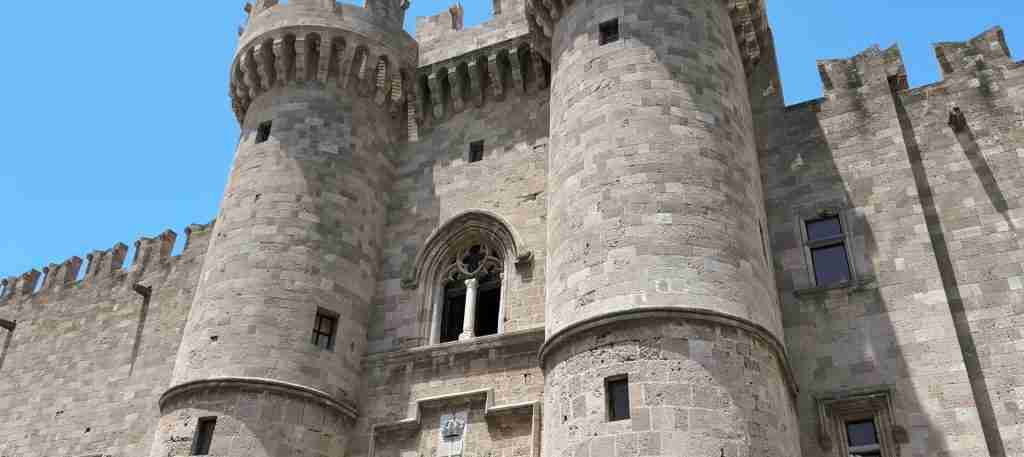
Palace of the Grand Master (€6 admission, 08:00-20:00 summer) dominates the northwestern corner as headquarters for Knights Grand Master. Original 14th-century Byzantine citadel rebuilt 1937-1940 during Italian occupation after 1856 gunpowder explosion destroyed much of structure. Ground floor houses exhibitions “Rhodes from the 4th c. AD to its Capture by the Ottoman Turks (1522)” and “Ancient Rhodes – 2,400 Years” displaying archaeological finds. First floor contains restored Grand Masters apartments with medieval furniture, Hellenistic mosaics from Kos, and ceremonial halls. Gothic architecture including pointed arches, vaulted ceilings, and twin-tower facade creates imposing presence.
Street of the Knights (Ippoton Street) extends 600 meters from Palace to Knights Hospital building, lined with Inns housing different national chapters (Tongues) of Knights order. Inn of France, Inn of Spain, Inn of Italy, and others display Gothic facades with coats of arms carved in stone. Only Inn of France regularly opens to visitors. Archaeological Museum occupies Hospital of the Knights building (€8 admission) with medieval architecture creating atmospheric setting for ancient sculptures, pottery, and mosaics including Aphrodite of Rhodes marine marble sculpture 1st century BC.
Residential neighborhoods spread across Old Town with 6,000 permanent residents living in medieval buildings. Turkish Quarter contains Suleiman Mosque built 1522 after Ottoman conquest with pink minaret, Turkish Library housing 16th-century manuscripts, and traditional Turkish houses. Jewish Quarter’s Kahal Shalom Synagogue (oldest in Greece, 1577) operates as museum (€5 admission) documenting Sephardic Jewish community nearly eliminated in Holocaust. Plateia Evreon Martyron (Square of the Jewish Martyrs) memorializes 1,673 Rhodes Jews deported 1944 to Auschwitz. Byzantine museum (€2 admission) occupies Lady of the Castle church with icon collection. Walking Old Town requires 3-4 hours minimum to appreciate major sites, full day permits thorough exploration including climbing fortification walls (access points near Palace).
Historic Centre of Patmos UNESCO site encompasses three components: Chora historic town, Monastery of Saint-John the Theologian, and Cave of the Apocalypse. The 1999 inscription recognizes religious significance as pilgrimage destination and exceptional architecture preserving Byzantine monastic traditions.
Monastery of Saint John the Theologian crowns Chora hilltop position fortified against pirate raids with buttressed walls, towers, and limited external openings creating fortress appearance. Founded 1088 by Blessed Christodoulos following Byzantine Emperor Alexios I Komnenos land grant, the monastery developed into major religious and cultural center. Katholikon (main church) interior features 17th-18th century frescoes, elaborate carved wooden iconostasis, and Chapel of Blessed Christodoulos containing saint’s relics in silver reliquary. Treasury museum (€6 combined admission with Cave, restricted hours 08:00-13:30 and 16:00-18:00) displays priceless Byzantine manuscripts including illuminated Gospel books 6th-15th centuries, imperial chrysobulls (decrees with golden seals), vestments embroidered with gold thread, and icons. Photography prohibited inside monastery preserving sacred atmosphere.
Cave of the Apocalypse marks location where St. John the Divine received visions recorded in Biblical Book of Revelation circa 95 AD during exile under Emperor Domitian. Small cave shrine partway down hillside between Chora and Skala contains rock ledge where tradition claims John slept, triple fissure in roof where divine voice emerged, and silver-covered recess where disciple Prochoros sat writing dictation. Silver iconostasis and hanging lamps create intimate devotional space. Chapel of St. Anne built around cave (€3 admission or €6 combined with monastery, same restricted hours). Orthodox pilgrims worldwide visit this sacred site making it active place of worship rather than museum.
Chora town surrounding monastery preserves traditional Aegean architecture with whitewashed houses, narrow stepped streets, windmills, and over 40 Byzantine-era chapels. Heritage protection regulations maintain architectural integrity prohibiting modern construction. Traditional captains’ mansions with carved doorways, pebble mosaic courtyards, and painted ceilings demonstrate 18th-19th century prosperity from maritime trade. Population 400 permanent residents maintain quiet residential character. No vehicles allowed in historic center preserving pedestrian atmosphere.
Beaches and Water Activities Across the Dodecanese 2026
Dodecanese coastlines deliver 300+ beaches ranging from organized resort beaches with full facilities to remote coves accessible only by boat, across sand, pebble, and volcanic compositions. Water clarity throughout the archipelago ranks among Mediterranean’s best with visibility often exceeding 20-30 meters for snorkeling and diving.
Rhodes beaches divide into organized resort beaches with sunbed rentals (€20 for two sunbeds and umbrella), beach bars, and watersports facilities versus quieter undeveloped beaches. Eastern coast from Rhodes Town south features sandy beaches including Elli Beach in town (organized, crowded), Kallithea Springs beach beside restored Italian spa complex with snorkeling around rock formations, and Faliraki’s long sandy beach (extremely developed with watersports, beach clubs, nightlife). Anthony Quinn Bay small cove offers excellent snorkeling in crystal waters though gets crowded. Tsambika Beach long golden sand attracts families with shallow entry and organized facilities. Lindos Bay below acropolis combines dramatic setting with developed beach services. Pefkos and Lardos bays further south maintain more relaxed atmospheres.
Western Rhodes coast faces rougher seas from prevailing winds making beaches less suitable for swimming but attracting windsurfers. Ialyssos-Ixia beaches north of Rhodes Town feature pebbles, strong winds, and windsurfing schools. Prasonisi peninsula in southern tip creates double beach phenomenon with Aegean on one side, Mediterranean on other, separated by sandy isthmus. Extreme winds make Prasonisi windsurfing and kitesurfing Mecca June-September. Remote western beaches including Fourni accessible via dirt roads offer solitude for adventurous visitors.
Kos beaches span 112 kilometers of coastline with concentrations along northern, eastern, and southern coasts. Northern coast from Lambi to Tigaki to Marmari offers long stretches of sand with shallow water ideal for families and windsurfers when meltemi blows. Beach resorts provide organized facilities. Southern coast Kardamena developed into party resort with beach clubs, jet skiing, and nightlife. Paradise Beach lives up to name with fine sand and turquoise water, though increasingly crowded. Agios Stefanos beach features small island with Byzantine basilica ruins accessible by wading through shallow water creating unique photo opportunities. Western Kefalos peninsula preserves quieter beaches including Kamari sandy cove. Kos Town beach (Lambi) stretches along urban waterfront with bike paths connecting hotels.
Patmos beaches maintain undeveloped character with mix of sand and pebble compositions. Psili Ammos beach in south requires boat access or hiking creating remote atmosphere with sand beach and taverna. Livadi Geranou pebble beach near Skala offers organized facilities with sunbeds and seaside restaurant. Kampos beach attracts families with safe swimming. Agriolivadi, Lampi, and Vagia beaches provide quieter alternatives reached by road or hiking paths. Limited beach development preserves natural character matching island’s serene ambiance.
Smaller island beaches offer escape from crowds. Symi rocky coastlines create secluded coves accessible by water taxis from Gialos harbor (€5-10 per person). Nanou sandy beach and Marathounda pebble beach receive most visitors. Boat excursions visit remote bays for swimming and snorkeling. Nisyros volcanic coastline produces dark sand beaches (Hohlaki) and lighter sand at Lies. Tilos’s Eristos long sandy beach provides main swimming destination with minimal development. Remote Plaka beach requires 4WD access rewarding adventurous visitors. Kalymnos beaches include Myrties, Massouri, and Armeos along climbing coast, plus tranquil Vathis fjord-like harbor with pebble beach. Telendos islet reached by 5-minute water taxi from Myrties (€2.50) offers quiet beaches and tavernas.
Watersports facilities operate at major beaches offering jet skiing (€40-50 per 15 minutes), parasailing (€50-70 per flight), banana boat rides (€15-20 per person), wakeboarding, water skiing, and paddleboarding. Windsurfing centers in Prasonisi, Ialyssos, and Kos northern beaches rent equipment (€40-60 per day) and offer instruction. Kitesurfing schools operate May-September with lessons €200-300 for 3-day beginner courses.
Diving centers throughout Rhodes, Kos, Kalymnos, and Leros organize recreational dives, training courses, and specialized technical diving. Rhodes diving explores marine caves, wall dives, and artificial reefs around Lindos and Kallithea. Kos dive sites include Kos Castle reef with abundant fish life and WWII wrecks. Kalymnos and Leros specialize in wreck diving with British and German WWII vessels resting 15-40 meters depth. Discover Scuba Diving introductory dives cost €60-80, PADI Open Water certification courses €350-450. Advanced certification, Nitrox, and technical diving training available.
Snorkeling requires only mask, snorkel, and fins (rental €8-12 daily from beach shops or dive centers). Rocky coastlines with underwater caves and rock formations create better snorkeling than sandy beaches. Top snorkeling spots include Anthony Quinn Bay and Kallithea Springs in Rhodes, Agios Stefanos island area in Kos, volcanic rock formations around Nisyros, and numerous Symi coves. Clear water visibility 20+ meters May-October. Rental equipment quality varies so inspect carefully for proper fit and condition.
Cultural Experiences and Local Life 2026
Authentic Dodecanese culture survives strongest in mountain villages, traditional festivals, and family-operated tavernas maintaining generations-old recipes and hospitality customs. Visitors who explore beyond beach resorts encounter living traditions distinct from mainland Greece and Cyclades islands.
Traditional village life preserves centuries-old rhythms on smaller islands and mountain areas. Morning activities center on bakeries producing fresh bread, village plateia (squares) where elderly men gather for coffee and conversation, and small shops selling local products. Afternoon siesta closes businesses 14:00-17:00 across the islands. Evening volta (promenade) sees families walking main streets, greeting neighbors, and gathering at kafeneia (traditional cafes). Rhodes mountain villages including Embona wine village and Siana honey village demonstrate this rhythm. Patmos Chora traditional character remains intact with donkeys still transporting goods through narrow lanes. Tilos and Halki small populations maintain close-knit community dynamics where visitors become temporary residents rather than anonymous tourists.
Religious festivals (panigyria) celebrating patron saints animate villages throughout summer. Celebrations begin with afternoon church service followed by village feast with free food and wine, live music, and traditional dancing lasting until dawn. Major celebrations include St. John feast on Patmos (September 26), Assumption of Mary (August 15) celebrated throughout islands, and numerous village-specific festivals June-September. Visitors welcomed to participate with locals encouraging joining traditional dances. Festival calendars at tourist offices and hotels list upcoming celebrations.
Traditional music features prominently in cultural life. Dodecanese folk music style differs from mainland Greece with Byzantine influences and lyra (bowed string instrument) prominence. Lyrics often describe island life, sea, and historical events. Live music tavernas in Rhodes Old Town, Symi Chorio, and Patmos Skala perform traditional repertoire weekend evenings. Festival music incorporates violin, laouto (lute), lyra, and vocals with specific dance forms including sousta lively dance, ballos couples dance, and various regional variations.
Culinary traditions emphasize fresh local ingredients, simple preparations, and recipes passed through family generations. Dodecanese cuisine shares common Greek elements (olive oil, vegetables, seafood, grilled meats) while incorporating Italian influences from 1912-1947 occupation. Rhodes specialties include pitaroudia (chickpea fritters with onions), melekouni (sesame and honey candy), and takos (slow-cooked goat or lamb). Symi known for shrimp dishes and tiny sweet Symi shrimp unique to waters. Kalymnos famous for cheese-filled xerotigana pastries and potato-filled katouni flatbread. Nisyros pitaridia chickpea cakes served in tavernas. Family tavernas often cook from grandmothers’ recipes without written menus, offering daily specials based on morning market shopping and seasonal availability.
Local products worth seeking include Rhodes honey from mountain villages (€8-12 per jar), Symi sponges from remaining sponge beds (€15-40 depending on size and quality), Patmos icons and religious items from monastery shops, olive oil from Rhodes and Kos groves (€10-15 per liter for quality oil), and wine from Rhodes Emery and Alexandris wineries. Craft workshops in Old Towns create handmade ceramics, textiles, and leather goods. Supporting family businesses maintains traditional production methods and provides income to local communities.
Language remains predominantly Greek with limited English in smaller villages and among older generations. Rhodes and Kos tourism workers speak English, German, and sometimes Italian. Learning basic Greek phrases (kalimera = good morning, efharisto = thank you, parakalo = please/you’re welcome) earns appreciation. Greek hospitality (philoxenia) manifests in genuine warmth toward visitors, generous portions at tavernas, and willingness to help with directions or recommendations. Reciprocating respect for local customs (appropriate dress at monasteries requiring covered shoulders and knees, quiet behavior during afternoon siesta hours, greeting shopkeepers when entering) strengthens positive interactions.
Practical Travel Tips and Money-Saving Strategies 2026
Currency throughout Greece uses the euro with ATMs widely available in all island towns. Credit cards accepted at hotels, restaurants, and larger shops, though smaller tavernas and shops may require cash. Carry €50-100 cash for small purchases, taxis, and village tavernas. ATMs dispense €20 and €50 notes with withdrawal limits typically €400-600 per transaction. Foreign transaction fees vary by bank so check before departure.
Electrical outlets use European Type C and F plugs (two round pins) with 230V 50Hz current. North American devices require plug adapters and voltage converters for non-dual voltage items. Most modern electronics (phones, laptops, camera chargers) handle 110-240V and only need plug adapters.
Language spoken is Greek with limited English in tourist areas. Rhodes and Kos tourism workers communicate well in English, German, Italian. Smaller islands and mountain villages require more basic Greek or gestures. Google Translate app with downloaded Greek language pack helps when needed. Written Greek uses different alphabet so learning basic letters assists reading signs and menus.
Tipping customs in Greece remain modest compared to North America. Round up restaurant bills to nearest €5 or leave 5-10% for good service. Tavernas don’t expect large tips since service charge usually not included in prices. Taxi drivers appreciate rounding up fare. Hotel porters €1-2 per bag. Tour guides €5-10 per person for day tours. Overly generous tipping can seem ostentatious rather than appreciated.
Safety throughout Dodecanese ranks excellent with low crime rates. Petty theft occurs occasionally in crowded tourist areas (Rhodes Old Town, ferry ports) so maintain awareness of belongings. Violent crime extremely rare. Women traveling solo report feeling safe. Swimming safety requires attention to red flags indicating dangerous conditions. Rocky coastlines harbor sea urchins so water shoes recommended. Sun exposure significant with UV index often 8-10 April-September requiring sun protection (SPF 30+ sunscreen reapplied frequently, hat, sunglasses). Dehydration risk in summer heat requires carrying water.
Health services adequate with public hospitals in Rhodes and Kos, health centers on smaller islands, and private clinics in tourist areas. European Health Insurance Card (EHIC) provides EU citizens access to public healthcare. Non-EU visitors should verify travel insurance coverage including medical evacuation. Pharmacies well-stocked with common medications available over-counter that require prescriptions elsewhere. Tap water potable throughout islands though some prefer bottled water (€0.50-1 per liter at supermarkets, €2-3 at restaurants/cafes).
Internet and mobile connectivity good in towns with 4G/5G coverage from major Greek carriers (Cosmote, Vodafone, Wind). EU roaming regulations allow EU visitors to use home data plans at no extra charge. Non-EU visitors can purchase Greek SIM cards (€10-20 with data) at airports and phone shops. Most hotels and many cafes offer free Wi-Fi though speeds vary. Remote beaches and mountain areas may lack mobile coverage.
Money-saving strategies help budget-conscious travelers maximize value. Book accommodations and ferries 2-4 weeks advance for early booking discounts 30-50%. Travel May-June or September-October shoulder seasons delivering 30-50% lower accommodation rates versus July-August peak while maintaining excellent weather. Eat lunch at tavernas where many offer daily specials €8-12 including salad and drink, cheaper than dinner. Shop supermarkets for breakfast supplies, snacks, and picnic items reducing meal costs. Take conventional ferries instead of high-speed catamarans saving 40-60% on inter-island transport. Use public buses on Rhodes and Kos for major destinations instead of taxis or rentals. Visit free beaches instead of paying beach club entrance fees. Book directly with small hotels avoiding booking platform commissions that inflate prices. Look for family-run tavernas in residential neighborhoods versus touristy harbor-front locations for better value. Share accommodation costs traveling with companion or family splitting hotel rooms. Cook some meals if renting apartments with kitchens.
Peak season crowds July-August create capacity pressures on popular islands. Rhodes and Kos hotels, restaurants, and beaches operate at maximum capacity with corresponding noise levels and reduced service quality. Booking everything advance becomes essential. Shoulder seasons deliver better experiences with available accommodation, responsive staff, and beaches not packed solid. Early summer (May-mid June) brings wildflowers, green landscapes, and cooler temperatures 22-26°C. September-early October maintains warm sea temperatures 24-26°C from summer heating while reducing air temperatures to comfortable 26-30°C. Winter (November-March) sees many hotels and restaurants close, ferry frequencies reduced, but potential for very low prices and complete tranquility for hardy travelers content with limited services.
Environmental responsibility requires attention to water conservation (take shorter showers, reuse towels), proper waste disposal (carry trash to bins when hiking or visiting beaches), reef-safe sunscreen to protect marine ecosystems, and supporting businesses demonstrating environmental consciousness. Tilos renewable energy initiatives and Natura 2000 protected status exemplify sustainable tourism. Choose accommodations with environmental certifications where possible.
Sample Dodecanese Itineraries 2026
Creating effective Dodecanese itineraries requires balancing ferry schedules, travel times, island character, and personal interests. These sample itineraries demonstrate efficient routing while allowing sufficient time for each destination.
One Week Dodecanese Highlights Itinerary 2026
Day 1: Arrive Rhodes, check into Old Town hotel, afternoon walking tour of medieval city including Palace of the Grand Master and Street of the Knights. Evening dinner at traditional taverna in Turkish Quarter. Accommodation Rhodes Old Town (€80-120 mid-range hotel).
Day 2: Full day Rhodes including morning visit to Lindos acropolis (take early bus 08:00 to avoid crowds), afternoon beach time at Lindos Bay, return Rhodes Town late afternoon. Evening explore Mandraki harbor area. Accommodation Rhodes Town (€80-120).
Day 3: Morning Rhodes Old Town museums and shopping, afternoon ferry to Symi (depart 14:00, arrive 15:20, €95), evening walk Gialos harbor and Chorio village. Overnight Symi (€120-180 boutique hotel).
Day 4: Morning Symi beaches via water taxi (Nanou or Marathounda, €10 return), afternoon return ferry to Rhodes (depart 16:00), evening Rhodes. Accommodation Rhodes (€80-120).
Day 5: Early morning ferry Rhodes to Kos (depart 08:00, arrive 10:30, €30 conventional ferry), check into Kos Town hotel, afternoon explore Kos Town ancient agora and Castle of the Knights. Evening harbor tavernas. Accommodation Kos Town (€70-100).
Day 6: Morning visit Asklepieion ancient sanctuary (€8 admission), afternoon beach time at Tigaki or Lambi, evening Kos Town. Accommodation Kos Town (€70-100).
Day 7: Day trip to Nisyros volcano (morning ferry from Kos 09:00, €25, explore crater and Mandraki, return ferry 16:00), evening Kos Town, late evening flight or prepare for next destination. Accommodation Kos Town (€70-100).
Total estimated costs excluding flights: Ferry transport €180, accommodation €650-820 (mid-range doubles), attractions €40, meals €280-420 (€40-60 daily), miscellaneous €100. Total per person €625-780 sharing double accommodation.
Ten Day Northern Dodecanese and Rhodes Itinerary 2026
Day 1-2: Rhodes (arrival, Old Town exploration, Lindos day trip). Accommodation Rhodes (€160-240 two nights mid-range).
Day 3: Ferry Rhodes to Patmos (morning departure 08:00, arrive 12:00, €45), afternoon Monastery of St. John and Cave of Apocalypse visits, evening Skala harbor. Accommodation Patmos Skala (€100-150).
Day 4: Patmos beaches and Chora village exploration, evening Skala. Accommodation Patmos (€100-150).
Day 5: Morning ferry Patmos to Leros (depart 10:00, arrive 11:00, €18), explore Lakki Italian architecture and Platanos castle, afternoon Alinda beach. Accommodation Leros (€70-100).
Day 6: Leros diving or beach day, evening Agia Marina. Accommodation Leros (€70-100).
Day 7: Ferry Leros to Kalymnos (depart 11:00, arrive 12:00, €15), afternoon Pothia sponge museum, check into Massouri area hotel. Accommodation Kalymnos Massouri (€70-100).
Day 8: Kalymnos climbing observation or participation, Vathis fjord visit, evening Massouri. Accommodation Kalymnos (€70-100).
Day 9: Ferry Kalymnos to Kos (depart 09:00, arrive 10:00, €25), Asklepieion visit, Kos Town exploration. Accommodation Kos (€80-120).
Day 10: Kos beaches or departure flights.
Total estimated costs: Ferries €195, accommodation €720-1,060 (mid-range), attractions €35, meals €400-600 (€40-60 daily), miscellaneous €150. Total per person €750-1,020 sharing double rooms.
Two Week Comprehensive Dodecanese Journey 2026
Combines previous itineraries with additions including Karpathos, Tilos, and extended time on major islands. Day 1-3 Rhodes (€240-360 three nights), Day 4 Symi day trip, Day 5-6 Tilos (€140-180), Day 7-8 Nisyros and return Kos (€160-240 two nights Kos), Day 9-10 Kalymnos (€140-200), Day 11 Leros (€70-100), Day 12-13 Patmos (€200-300 two nights), Day 14 Return Rhodes or Kos for departure. Ferry costs €280-350. Total accommodation €950-1,380. Meals €560-840 (14 days). Attractions €60. Total per person €940-1,315 sharing double rooms plus miscellaneous €200.
Best Time to Visit the Dodecanese 2026
Seasonal timing dramatically affects weather conditions, pricing, crowd levels, and service availability across the Dodecanese. Understanding monthly patterns helps travelers choose optimal visit periods matching priorities.
May through early June ranks as ideal for first-time visitors balancing excellent weather with manageable crowds and reasonable prices. Air temperatures reach 22-28°C, comfortable for sightseeing without oppressive heat. Sea temperatures climb 20-23°C, swimmable for most visitors though some find water initially cool. Wildflowers carpet hillsides and green vegetation hasn’t yet browned from summer sun. Hotel prices remain 30-50% below July-August peak. Ferry schedules expand from winter frequencies but haven’t reached peak capacity. Beaches accommodate visitors without sardine-packed conditions. Restaurants, shops, and attractions operate full schedules without overwhelming crowds. Occasional rain showers possible early May but precipitation decreases toward June. This window delivers best overall experience for travelers prioritizing weather, value, and comfort.
July-August peak season brings maximum heat (30-35°C air, 26-28°C sea), crowds, and prices. Rhodes and Kos overflow with package tourists filling resort hotels, beaches, and attractions. Accommodation prices peak 40-80% above shoulder season with limited availability requiring months-advance booking. Ferry frequencies maximize with 5+ daily departures on major routes but passenger volumes create crowded vessels. Archaeological sites become uncomfortably hot midday requiring early morning or late afternoon visits. Beaches require arriving early (before 10:00) for sunbed availability at organized beaches. Meltemi winds cool afternoons, especially northern coasts. These months suit travelers who enjoy lively atmospheres, don’t mind crowds, prioritize guaranteed sunshine, and book well advance. Families with school-age children often must travel July-August despite drawbacks. Smaller islands like Tilos, Halki, and Lipsi remain relatively quiet even peak season.
September through mid-October delivers many travelers’ preferred period combining warm sea temperatures (24-26°C from summer heating), comfortable air temperatures (26-30°C early September cooling toward 22-26°C October), reduced crowds, and lower prices. Accommodation rates drop 30-40% versus peak summer. Ferry schedules remain robust through September before reducing October. Sea conditions usually calmer than summer with decreased meltemi intensity. Weather reliability remains high with occasional autumn storms possible late September-October. Vegetation appears browned from summer heat but golden light enhances photography. This period particularly suits couples, active travelers, and anyone avoiding crowds while maintaining summer-like conditions.
April and late October-November shoulder extremes offer rock-bottom prices and near-empty islands but variable weather and limited services. April temperatures range 16-22°C with sea temperatures 16-18°C too cold for most swimmers. Hotels and restaurants begin opening April but full services don’t commence until May. Late October-November reverses this pattern with services closing and ferry schedules reducing. These periods suit budget travelers, photographers appreciating moody weather, and visitors content with limited dining/accommodation options. Wildflower blooms peak April making nature enthusiasts accept cooler conditions.
December-March winter season sees most accommodation and restaurants closed, minimal ferry service (1-2 weekly on many routes), and cool rainy weather (10-16°C). Rhodes and Kos maintain skeleton tourism infrastructure with some hotels and tavernas operating. Archaeological sites and museums maintain reduced hours. This period suits hardy independent travelers seeking absolute tranquility and rock-bottom prices (€30-50 per night for open hotels). Swimming not viable with sea temperatures 15-17°C. Storm watching and hiking appeal to specialized interests. Christmas and New Year see slight tourism uptick with some hotels reopening temporarily.
Monthly weather details for Rhodes (representative of Dodecanese): January 12°C average, February 12°C, March 14°C, April 17°C, May 21°C, June 25°C, July 27°C, August 27°C, September 25°C, October 21°C, November 17°C, December 13°C. Precipitation concentrated November-March with 12-14 rainy days per month December-February, decreasing to 8-10 days November/March, 4-6 days April/October, and 0-2 days May-September. Sunshine averages 6-7 hours daily winter increasing to 12-13 hours summer. Over 300 sunshine days annually across the archipelago.
Frequently Asked Questions About Dodecanese Travel 2026
Do I Need a Car to Explore the Dodecanese Islands in 2026?
Car necessity depends on which islands you visit and your exploration style. Rhodes and Kos benefit from car rentals for reaching archaeological sites, mountain villages, and remote beaches not served by buses, though public buses adequately serve main destinations for budget travelers. Smaller islands like Patmos, Symi, Halki, and Tilos measure only 10-20 kilometers across making cars unnecessary for most visitors who can walk, take taxis (€8-15 for common trips), or rent scooters. Patmos and Symi ban or restrict vehicles in historic centers making walking required anyway. Kalymnos visitors staying near climbing areas don’t need cars as climbing sectors cluster within walking/cycling distance. Ferry-based island-hopping doesn’t require vehicles since you can’t easily transport cars between islands (vehicle ferry transport costs €40-80 each crossing). Rent cars only on islands where you’ll spend 3+ days exploring widely.
Can You Visit Multiple Dodecanese Islands on One Trip in 2026?
Multi-island visits define ideal Dodecanese travel in 2026 with efficient ferry networks connecting islands within 1-4 hours sailing time. Rhodes-Kos-Patmos-Kalymnos northern route allows visiting 4 major islands in 7-10 days. Rhodes-Symi-Tilos-Nisyros southern/central route creates different character emphasizing smaller islands and volcanic landscapes. Ferry schedules permit same-day or next-day connections between major islands with 2-5 daily departures on busy routes. Minimal planning required as tickets can be purchased 1-2 days advance except peak July-August when booking 1-2 weeks ahead recommended. Challenge lies in smaller islands with 2-3 weekly ferry service requiring overnight stays. A one-week trip comfortably visits 3-4 islands. Ten days allows 5-6 islands. Two weeks permits comprehensive exploration of 6-8 islands across northern and southern groups. Build 2 nights minimum per island accounting for arrival/departure days and actual exploration time.
What’s the Best Island for First-Time Dodecanese Visitors in 2026?
Rhodes serves as optimal first-time Dodecanese destination combining UNESCO World Heritage medieval Old Town, excellent beaches, comprehensive tourism infrastructure, easy airport access, and convenient ferry connections to other islands. The island delivers complete Greek island experience including historical monuments (Palace of the Grand Master, ancient Lindos), resort beach areas (Faliraki, Tsambika), traditional villages (Embona, Lindos), and natural attractions (Valley of Butterflies) within one destination. Accommodation options span all budgets from hostels to luxury resorts. Dining diversity exceeds smaller islands with traditional tavernas, international cuisine, and upscale restaurants. English widely spoken. Efficient bus network permits car-free exploration of main attractions. Rhodes airport receives direct flights from major European cities April-October plus year-round Athens connections. From Rhodes base, add day trips or overnight visits to Symi, Kos, or other islands via frequent ferries.
Is the Dodecanese Expensive Compared to Other Greek Islands in 2026?
Dodecanese pricing remains moderate compared to luxury Cyclades islands like Mykonos and Santorini while slightly higher than undeveloped islands like Naxos or Paros. Rhodes and Kos tourist infrastructure creates competitive pricing with hotels from $38-44 budget to $200-400 luxury matching or undercutting Cyclades equivalents of similar quality. Restaurant prices (€8-20 main courses, €3-5 wine/beer) align with Greek average. Smaller Dodecanese islands like Halki, Tilos, and Lipsi offer better value than Cyclades alternatives due to lower tourist demand. Patmos commands slight premiums (€10-18 restaurant mains) reflecting upscale clientele but remains cheaper than Mykonos. Ferry costs between Dodecanese islands (€14.50-€64) compare favorably to Cyclades routes. Overall daily budgets excluding accommodation: €40-60 per person covers meals, local transport, and attractions across most Dodecanese islands. Luxury travelers spending €100+ daily find more value than Santorini or Mykonos equivalent experiences.
Do You Need to Speak Greek to Travel the Dodecanese in 2026?
English suffices for tourist interactions throughout Rhodes, Kos, and major attractions on all islands. Hotel staff, restaurant servers in tourist areas, rental agencies, and tour operators communicate adequately in English with many also speaking German, Italian, or Russian. Tourist information offices provide English materials and staff. Ferry ticket offices handle English transactions. Challenges arise in mountain villages, small-island neighborhoods, and interacting with elderly Greeks who learned foreign languages before English became dominant. Learning basic Greek courtesies (kalimera = good morning, efharisto = thank you, parakalo = please, signomi = excuse me, ne = yes, ochi = no) demonstrates respect and earns warmer welcomes. Greek alphabet familiarity helps reading signs, menus, and maps though transliteration appears frequently in tourist contexts. Google Translate app with downloaded Greek language pack provides backup for complicated situations. Young Greeks under 40 typically speak conversational English learned through education and media exposure.
Can You Swim Year-Round in the Dodecanese?
Swimming remains possible but not comfortable outside May-October. Sea temperatures follow seasonal patterns: January-March 15-17°C (too cold for most swimmers), April 17-19°C (hardy swimmers only), May 20-22°C (increasingly comfortable), June-July 23-26°C (pleasant), August-September 26-28°C (warmest), October 23-25°C (still comfortable), November 20-22°C (cooling), December 17-19°C (cold). Greeks and northern European visitors accustomed to cold water swim April-October. Most international tourists prefer June-September when water feels bathlike. Sea warmest September-early October from cumulative summer heating. Winter swimming attracts polar bear swimmers and year-round residents but doesn’t define tourism experience. Over 300 sunshine days annually means weather usually permits beach visits even when water feels cold. Protected southern bays warm faster spring and retain heat longer autumn versus northern exposed coasts.
What Should I Pack for a Dodecanese Trip in 2026?
Summer packing (May-September) requires lightweight breathable clothing (shorts, t-shirts, sundresses), swimwear, beach coverups, sun protection (SPF 30+ sunscreen, sunglasses, wide-brim hat), comfortable walking shoes for cobblestone streets and archaeological sites, sandals for beaches and casual wear, one lightweight long-sleeve shirt and long pants for evening or conservative dress at monasteries (shoulders and knees must be covered), small daypack for beach/hiking essentials, reusable water bottle, and basic first aid items. Evening dining doesn’t require formal dress — smart casual suffices at upscale restaurants. Spring/autumn additions (April, October-November) include light jacket or sweater for cooler evenings, light rain jacket, closed-toe walking shoes. Winter visits (December-March) require warm layers, rain gear, and warmer footwear. Electronics: camera, phone charger, European plug adapter (Type C/F two round pins), power bank for full-day excursions. Medications: bring sufficient supplies as specific brands may not be available. Greek pharmacies stock common medications but prescription requirements differ. Documents: passport, travel insurance details, accommodation confirmations, ferry ticket printouts or mobile confirmations.
Are the Dodecanese Islands Family-Friendly in 2026?
Dodecanese islands welcome families with children offering safe environments, family-friendly accommodation, calm beaches, and activities engaging various ages. Rhodes and Kos excel for families with shallow sandy beaches (Tsambika, Faliraki in Rhodes; Tigaki, Kardamena in Kos), water parks (Faliraki Water Park, Aqua Splash Kos), all-inclusive resorts with kids clubs and entertainment programs, and archaeological sites that engage older children. Hotel rooms accommodate families with apartments and family suites sleeping 4-6 available widely. Restaurants welcome children with outdoor seating and accommodating service. Greek culture values children creating genuine welcomes. Challenges include summer heat requiring midday breaks, cobblestone Old Town streets not stroller-friendly, and limited changing facilities at undeveloped beaches. Smaller islands suit families seeking quieter experiences though limited kids-specific facilities mean parents must create entertainment. Ferry travel duration (2-8 hours) can challenge younger children though most ferries have outdoor decks, cafeterias, and TV areas providing distractions. Baby supplies (diapers, formula, etc.) available at supermarkets and pharmacies in all towns.
How Many Days Do You Need in Rhodes in 2026?
Three to four days allows thorough Rhodes exploration covering major attractions without rush. Day 1 dedicates to Rhodes Old Town (Palace of the Grand Master, Street of the Knights, Archaeological Museum, wall walks, shopping, dinner in atmospheric taverna). Day 2 visits Lindos acropolis and village with beach time at Lindos Bay or nearby beaches. Day 3 explores western Rhodes including Ancient Kamiros, Valley of the Butterflies, or mountain villages, returning via coastal route. Day 4 provides buffer for activities missed, relaxed beach day, or day trip to Symi. Travelers prioritizing beaches over culture can substitute Day 3 archaeological sites for beach-hopping. Five to seven days permits deeper exploration of all regions, multiple beach days, wine tasting in Embona, hiking, watersports, and relaxed pacing. Using Rhodes as island-hopping base requires only 2 days if prioritizing other islands over Rhodes depth. Weekend breaks (2-3 days) focus on Old Town and Lindos as must-sees.
What’s the Difference Between Rhodes and Kos Islands?
Rhodes and Kos share similar tourism profiles as large developed Dodecanese islands with airports, beaches, and ancient sites but differ in size, character, and specific attractions. Rhodes (1,401 square kilometers, 115,000 residents) dwarfs Kos (290 square kilometers, 33,000 residents) with correspondingly more diverse landscapes, villages, and attractions. Rhodes UNESCO medieval Old Town represents world-class historical monument unmatched in Kos. Rhodes coastline delivers greater beach variety across 220 kilometers versus Kos’s 112 kilometers. Kos compensates with flatter terrain ideal for cycling, more developed northern coast beach resorts, and closer proximity to northern Dodecanese islands (Kalymnos, Patmos). Kos Town archaeological sites integrate into modern city creating open-air museum atmosphere versus Rhodes separated Old Town/New Town. Both islands host busy airports, comprehensive accommodation options all budgets, extensive dining choices, and nightlife catering to package tourists. Kos attracts slightly younger demographics with developed Kardamena party scene. Rhodes better suits first-time visitors and history enthusiasts. Kos appeals to active travelers, cyclists, and those prioritizing northern island access.