Delphi Day Trip from Athens 2026: Complete Planning Guide
A day trip from Athens to Delphi delivers one of Greece’s most rewarding cultural experiences, transporting visitors 180 kilometers northwest to the ancient sanctuary once revered as the center of the world. This comprehensive 2026 planning guide provides verified transportation options, current entrance fees, optimal timing strategies, and complete budget breakdowns to help you maximize your single-day visit to this UNESCO World Heritage Site. Whether traveling independently by KTEL bus, joining an organized tour, or driving yourself, understanding the logistics and planning framework ensures an efficient, enriching experience at Apollo’s sacred sanctuary.
Key Takeaways for Planning Your Delphi Day Trip 2026
- Transportation timeline reality: Round-trip travel from Athens requires minimum 5-6 hours (2.5-3 hours each way), leaving 3-4 hours for site exploration—early departure between 7:00-8:30 AM proves essential for meaningful visits
- Combined entrance value 2026: The €12 combined ticket covers both the archaeological site and museum, valid for single-day use only with no re-entry—prioritize the archaeological site first when crowds are lighter, then visit the museum
- Independent vs. tour cost comparison: KTEL bus (€33 roundtrip) plus entrance (€12) totals €45, while guided tours (€50-84) include transportation, entrance, guide services, and often lunch—tour premium of €5-40 delivers stress-free logistics and expert interpretation
- Peak season crowd management: May-October brings maximum visitors with tour buses arriving 10:00 AM-3:00 PM—independent travelers arriving at 8:00 AM opening or after 4:00 PM avoid the densest crowds while maintaining adequate exploration time
- Physical demands consideration: The archaeological site requires ascending 200+ meters of elevation on uneven ancient paths and marble surfaces, taking 2-3 hours to visit properly—sturdy footwear, sun protection, and water bottles (1.5-2 liters per person) are non-negotiable requirements
- Complete day trip budget 2026: Independent travelers budget €60-80 per person (transport €33, entrance €12, meals €15-25, extras €5-10), while guided tour participants budget €70-110 (tour €50-84, additional meals €10-15, extras €5-10)
People Also Ask About Delphi Day Trips from Athens 2026
Is a Delphi day trip from Athens worth it in 2026?
A Delphi day trip from Athens delivers exceptional value despite the long travel time, offering access to Greece’s most significant oracle sanctuary, dramatic mountain scenery, and world-class archaeological artifacts within a single day. The site’s UNESCO status recognizes outstanding universal value, combining the Temple of Apollo ruins ascending Mount Parnassus slopes with the exceptional Archaeological Museum housing the Charioteer of Delphi bronze masterpiece. While the 5-6 hour round-trip transportation commitment limits on-site time to 3-4 hours, this proves sufficient to visit both the archaeological complex and museum, photograph iconic views, and absorb the spiritual atmosphere that made Delphi the ancient world’s religious center. The day trip works best for visitors with limited Greece itineraries who cannot spare overnight stays, though those with flexibility gain deeper appreciation from two-day visits allowing sunset experiences and less rushed exploration.
What’s the best way to get from Athens to Delphi in 2026?
The optimal Athens-Delphi transportation depends on priorities balancing cost, convenience, and experience quality. KTEL intercity buses (€16.50 one-way, €33 roundtrip) offer the most economical option with 4-5 daily departures from Liosion Terminal, taking 2.5-3 hours each direction—ideal for budget travelers comfortable managing independent logistics and navigating Greek bus stations. Organized guided tours (€50-84) provide maximum convenience with hotel pickup, air-conditioned coaches, licensed guides, entrance tickets included, and structured itineraries eliminating planning stress—recommended for first-time visitors, those with limited mobility, or travelers prioritizing efficiency over cost savings. Private car rental (€40-60 daily plus fuel) delivers maximum flexibility for multi-stop itineraries combining Delphi with Arachova, Hosios Loukas Monastery, or other Boeotia attractions, though navigation challenges and parking constraints at Delphi reduce this option’s appeal for single-destination day trips.
How much time do you need at Delphi archaeological site in 2026?
Visiting Delphi’s archaeological complex properly requires 2-3 hours minimum, ascending the Sacred Way from the site entrance through multiple monument zones to the ancient theater and stadium at the summit, then descending to the Sanctuary of Athena Pronaia featuring the iconic Tholos circular temple. Rushing through in 90 minutes allows seeing major monuments but sacrifices depth—reading informational plaques, photographing key structures from multiple angles, and absorbing the dramatic landscape setting all demand time. The Archaeological Museum requires an additional 60-90 minutes to examine major collections including the Charioteer, Sphinx of Naxos, Treasury friezes, and extensive votive offerings. Combined, allocating 3.5-4 hours total for both site and museum enables thorough exploration without excessive rushing, though history enthusiasts easily spend 5-6 hours engaging deeply with the monuments and artifacts.
What should I bring on a Delphi day trip from Athens 2026?
Essential items for Delphi day trips include sturdy closed-toe walking shoes with good traction for uneven ancient marble surfaces, sun protection (hat, sunglasses, SPF 30+ sunscreen), minimum 1.5-2 liters water per person as the site has limited facilities, lightweight layers for temperature changes between coastal Athens and mountain Delphi (10-15°F cooler), and camera or smartphone with charged battery for photography. Organized tour participants should pack small daypacks fitting under bus seats, snacks for morning journey since lunch typically occurs 2:00-3:00 PM, motion sickness medication if prone to winding mountain roads, and cash euros for purchases as many village shops accept cards reluctantly. Independent KTEL bus travelers add printed bus tickets or confirmation, small bills for on-site purchases, portable phone charger, and flexibility for schedule adjustments since return buses fill quickly during peak season.
Extended multi-day tours – 5+ days
Featured Delphi Multi-Day Tour Packages

3 days
Delphi 3-Day Discovery Tour
- ✓ Comprehensive Delphi experience
- ✓ Expert local guides included
- ✓ All accommodation included
- ✓ Transportation provided

5 days
Delphi 5-Day Highlights Experience
- ✓ Comprehensive Delphi experience
- ✓ Expert local guides included
- ✓ All accommodation included
- ✓ Transportation provided

7 days
Delphi 7-Day Cultural Journey
- ✓ Comprehensive Delphi experience
- ✓ Expert local guides included
- ✓ All accommodation included
- ✓ Transportation provided

10 days
Delphi 10-Day Complete Adventure
- ✓ Comprehensive Delphi experience
- ✓ Expert local guides included
- ✓ All accommodation included
- ✓ Transportation provided
Multi-day tour packages powered by TourRadar. Prices and availability subject to change.
Introduction to Delphi Day Trips 2026
Delphi occupies an exceptional position in ancient Greek civilization—the sanctuary where priests interpreted Apollo’s divine will through the enigmatic Oracle, where victorious athletes competed in Pythian Games second only to Olympia, where Greek city-states dedicated treasuries displaying their wealth and devotion. For 2026 visitors, this UNESCO World Heritage Site delivers concentrated cultural immersion within day-trip distance from Athens, combining archaeological grandeur with mountain landscape drama that explains why ancient Greeks believed this location represented the earth’s center.
The practicality of Delphi day trips balances compelling advantages against real constraints. The primary advantage—accessing one of antiquity’s most significant sanctuaries while maintaining Athens accommodation base—appeals to travelers maximizing limited Greece itineraries. The 180-kilometer distance from Athens, traversed via modern highway through Boeotia’s agricultural plains and up Mount Parnassus foothills, requires 2.5-3 hours each direction. This travel time commitment, consuming 5-6 hours of a 12-14 hour day trip, leaves 3-4 hours for on-site exploration when factoring transport, meal breaks, and schedule buffers.
This time limitation shapes realistic expectations. Visitors will not experience Delphi at the contemplative pace the sacred site merits, will not photograph sunrise illuminating the Phaedriades cliffs, will not explore thoroughly the mountain villages and Byzantine monasteries surrounding the main sanctuary. The day trip delivers concentrated highlights—the Temple of Apollo terrace commanding Pleistos valley views, the ancient theater carved into Parnassus slopes, the Tholos at Athena Pronaia creating Greece’s most photographed ancient structure, and the museum’s extraordinary bronze Charioteer. These highlights justify the journey despite constraints.
Planning a successful Delphi day trip requires strategic decisions across multiple dimensions: transportation mode (bus, tour, or car), departure timing balancing early access against Athens traffic, site visit sequence optimizing crowd avoidance, and budget allocation matching travel style priorities. This guide addresses each decision with verified 2026 pricing, realistic time estimates, and practical optimization strategies enabling both independent travelers and tour participants to maximize their single-day Delphi experience.
Understanding Delphi’s Geography and Setting 2026
Delphi sits at 550-700 meters elevation on the southern slopes of Mount Parnassus in the Phocis region of central Greece, 180 kilometers northwest of Athens as measured by the E75/A1 national highway route. The sanctuary occupies a dramatic natural amphitheater formed by the Phaedriades (“Shining Ones”) cliffs rising 200-300 meters above the monument terraces, overlooking the Pleistos River valley that descends toward the Gulf of Corinth visible in the distance on clear days.
The modern town of Delphi, rebuilt in the 1890s when the archaeological excavations required relocating the old village of Kastri, extends along the main road one kilometer west of the archaeological site. This separation creates minor logistical complexity—visitors arriving by KTEL bus disembark in the town center, then walk 10-15 minutes uphill to the site entrance, while tour buses typically deposit passengers directly at the site parking areas. The modern town provides accommodation, restaurants, and visitor services, while the archaeological complex and museum cluster within a compact zone accessible via the main highway.
Geography profoundly shaped ancient Delphi’s religious significance. The location’s physical isolation, accessed via mountain passes defensible against invasion, created natural protection for the sanctuary’s accumulated wealth. The dramatic cliffs and valley vistas generated the awe ancient pilgrims experienced approaching Apollo’s oracle. The Castalian Spring flowing between the cliffs provided the pure water required for ritual purification before consulting the oracle. These natural features transformed geological accident into sacred landscape.
For contemporary visitors, Delphi’s mountain setting creates practical considerations. The site sits 10-15°F cooler than coastal Athens—comfortable relief during summer heat but requiring layered clothing during spring and autumn visits. Elevation changes within the archaeological complex total 200+ meters from the lower sanctuary entrance to the stadium summit, demanding moderate fitness levels and appropriate footwear. The exposed mountain slopes offer limited shade, making sun protection essential during midday hours. Understanding these geographic realities helps visitors prepare appropriate clothing, plan adequate water supplies, and set realistic expectations for the physical demands of site exploration.
Transportation Options from Athens to Delphi 2026
Three primary transportation modes connect Athens with Delphi, each offering distinct advantages matching different traveler priorities and budgets. Understanding the complete logistics, costs, and time requirements for each option enables informed decisions aligned with personal preferences and constraints.
Public Bus Transportation via KTEL 2026
KTEL Fokidas operates direct intercity bus service between Athens Liosion Terminal and Delphi with 4-5 daily departures covering the 180-kilometer route in 2.5-3 hours depending on traffic conditions and stops. Buses depart Athens typically at 7:30 AM, 10:30 AM, 3:00 PM, and 6:00 PM, though schedules vary seasonally and should be verified via the official KTEL Fokidas website before travel.
Bus tickets cost €16.50 one-way or €33 roundtrip when purchased together in 2026. Tickets can be purchased at the Liosion Terminal ticket office, online through the KTEL website (requiring printed confirmation), or occasionally onboard when space permits, though advance booking ensures seat assignments on numbered coaches. Students with valid ISIC cards, seniors over 65 from EU countries, and children under 12 receive discount fares, while children under 5 travel free.
The Liosion Terminal (Terminal B) occupies 260 Liossion Street in northwest Athens, accessible via Metro Green Line to Kato Patissia station (15-minute walk) or Airport Express Bus X93 with direct terminal stop. The terminal facility, though functional, lacks modern amenities—minimal seating, basic restrooms, limited food options—making early arrival less comfortable than necessary. Buses depart from numbered gates clearly marked with destination signs.
Return buses from Delphi to Athens depart at 5:30 AM, 11:00 AM, 3:00 PM, and 6:00 PM approximately, with the “bus station” in Delphi functioning as a restaurant (“In Delphi”) on Apollonos Street near where arriving buses discharge passengers. This informal arrangement confuses first-time visitors—look for the “Bus Station” sign painted on the building exterior. Purchase return tickets inside the restaurant or book online in advance to guarantee seats during peak season when buses fill quickly.
The KTEL option suits budget-conscious travelers comfortable navigating Greek public transportation, those maintaining flexible schedules accommodating bus timetables, and independent explorers who research site information before arrival since no guide interpretation accompanies bus travel. The cost savings versus organized tours (€17-51 less expensive) trades for self-managed logistics, no guaranteed site entrance tickets, and complete responsibility for timing coordination.
Organized Guided Tours from Athens 2026
Multiple tour operators offer Delphi day trips from Athens in 2026, with prices ranging €50-84 depending on inclusions and group size. Standard tours include round-trip air-conditioned coach transportation with Athens hotel pickup, licensed guide services throughout the day, entrance tickets to both archaeological site and museum, and structured itineraries optimizing time allocation across monuments and village stops. Premium tours add lunch at traditional tavernas, stops at Hosios Loukas Byzantine monastery, or small group sizes (8-15 participants versus 40-50 on budget tours).
Tour itineraries typically follow this sequence: 7:00-8:30 AM hotel pickup across Athens accommodation zones, 8:30 AM departure from central meeting point (often Syntagma or Omonia Square), 2.5-3 hour drive to Delphi with brief rest stop, 11:00 AM-2:00 PM guided archaeological site visit, 2:00-3:00 PM lunch break (included or independent), 3:00-4:00 PM museum visit, optional 20-minute Arachova village photo stop, 6:30-7:30 PM Athens return. Total tour duration spans 10-12 hours door-to-door.
Guide quality significantly impacts tour value, transforming archaeological ruins into comprehensible historical narratives. Licensed Greek guides provide interpretation connecting monument remains with ancient religious practices, mythological traditions, and historical events that made Delphi central to Greek civilization. This guided context proves particularly valuable at Delphi where scattered foundation stones require significant imagination and historical knowledge to visualize the sanctuary’s ancient splendor.
Tour participants sacrifice flexibility for convenience and structure. Fixed itineraries allocate specific time blocks for each activity, limiting spontaneous exploration or extended photography at favored locations. Group dynamics affect experience quality—large tour groups (40-50 people) create crowding at popular photo spots and reduce question opportunities with guides, while smaller groups (8-15 people) enable more personalized interaction at higher cost premiums. Tour buses cannot navigate narrow Delphi village streets, dropping participants at designated points requiring short walks to restaurants and shops.
Organized tours appeal to first-time Greece visitors unfamiliar with transportation logistics, travelers prioritizing efficiency over cost, those seeking expert interpretation enhancing site comprehension, and visitors uncomfortable navigating Greek language barriers at bus stations and ticket offices. The premium over independent bus travel (€17-51 depending on tour tier) purchases stress-free logistics, guaranteed entrance access, and professional guide services transforming site visits from independent wandering to structured learning experiences.
Private Car Rental and Driving 2026
Renting a car from Athens enables flexible Delphi day trips customized to personal interests and schedules, with driving time approximately 2.5 hours each direction via the E75/A1 highway and EO48 mountain road. Rental costs range €40-60 daily for economy vehicles from major agencies (Hertz, Avis, Europcar, Sixt) plus fuel costs approximately €25-30 for the 360-kilometer roundtrip, totaling €65-90 daily vehicle expense before parking fees.
The Athens-Delphi driving route follows the E75 national highway northwest from Athens through Thebes, exits at the Levadia junction onto route EO3 toward Lamia, then transitions to EO48 winding through Arachova village before descending to Delphi. The highway sections present straightforward driving on modern divided roads, while the mountain sections feature numerous curves, elevation changes, and dramatic drop-offs requiring attentive driving and comfort with mountain roads. Traffic congestion in Athens outskirts (particularly morning departures 7:00-9:00 AM) can extend driving time 30-45 minutes beyond ideal conditions.
Parking at Delphi concentrates in designated lots along the main highway between the archaeological site and museum, charging €2-3 for day parking. Spaces fill quickly during peak season (May-October) by late morning as tour buses and private vehicles compete for limited capacity. Arriving before 9:00 AM or after 3:00 PM typically ensures available parking. The modern town offers additional parking though these lots require uphill walking to reach the site entrance.
Private cars deliver maximum routing flexibility, enabling multi-stop itineraries combining Delphi with Arachova village exploration, Hosios Loukas Monastery (30 minutes south of Delphi), Galaxidi seaside town (35 minutes south), or Thermopylae battlefield site (90 minutes northeast). This flexibility transforms single-destination day trips into comprehensive regional tours exploring central Greece beyond concentrated archaeological sites. Cars also enable departure timing independent of bus schedules and accommodation in mountain villages like Arachova offering authentic Greek hospitality unavailable in Athens.
Car rental suits travelers comfortable with European driving conventions (right-hand drive, kilometers, Greek road signs), groups of 3-4 people sharing costs bringing per-person expenses comparable to bus fares, and itineraries incorporating multiple destinations beyond Delphi alone. The vehicle expense (€65-90 total) splits across passengers reduces per-person costs while delivering transportation freedom unavailable via buses or tours, though drivers sacrifice wine tasting opportunities at lunch and bear navigation responsibilities throughout the journey.
Entrance Fees and Ticketing Delphi 2026
Entrance to Delphi’s archaeological site and museum requires purchasing a combined ticket costing €12 for adults in 2026, with free admission for EU citizens under 25 years old, students from EU countries with valid identification, children under 18 from non-EU countries, and disabled visitors with companion. Check the official Hellenic Ministry of Culture website for current rates as pricing updates occur periodically throughout the year.
The combined ticket grants single-day access to both the main archaeological complex (Temple of Apollo, theater, stadium, treasuries) and the Archaeological Museum housing artifacts from excavations. Tickets validate for the specific date purchased with no re-entry permitted—exiting either venue requires purchasing a new ticket to return. The ticket does not cover the Sanctuary of Athena Pronaia (Tholos site) located 10 minutes east along the highway, which maintains free admission for all visitors.
Ticket purchase occurs at two locations: the archaeological site ticket office near the main entrance or the museum ticket office adjacent to the museum building. Both offices operate ticket machines accepting credit cards and cash euros, plus staffed windows during peak hours. Lines at the site entrance typically prove shorter during early morning opening (8:00-9:00 AM) and late afternoon (after 4:00 PM), while midday (10:00 AM-2:00 PM) sees maximum queuing from tour group arrivals.
Reduced-rate tickets at €6 apply to EU seniors over 65 years old during winter season (November-March), Greek students, and certain other categories detailed on signage at ticket offices. Free admission days include the first Sunday of each month November-March, March 25 (Greek Independence Day), October 28 (Ochi Day), and International Museum Day (May 18), though these free days attract maximum crowds reducing visit quality despite cost savings.
Organized tour packages typically include entrance tickets in the total tour price (€50-84), eliminating separate ticket purchases and queue time at site entrances. Tours marketing “skip-the-line” access may use group reservations avoiding general admission queues, though at Delphi the benefit proves minimal compared to major Athens sites like the Acropolis where hour-long queues occur regularly.
Site Opening Hours and Timing Strategies 2026
Delphi archaeological site maintains seasonal opening hours in 2026: summer schedule (April 1-October 31) operates 8:00 AM-8:00 PM with last admission 7:40 PM, while winter schedule (November 1-March 31) operates 8:30 AM-3:30 PM with last admission 3:10 PM. The museum follows identical hours. Gradual schedule adjustments occur during autumn with closing times shifting earlier in September (7:30 PM) and October (6:00 PM) as daylight shortens.
The site closes entirely on specific public holidays including Greek Easter Sunday, December 25-26, and January 1, while reduced hours apply on Good Friday, Holy Saturday, and Greek Easter Monday. These closures affect spring visits particularly since Greek Easter follows the Orthodox calendar falling 1-5 weeks after Western Easter. Verify current schedules via the official Hellenic Ministry of Culture website before finalizing travel dates.
Optimal arrival timing balances crowd avoidance with adequate exploration time. The 8:00 AM opening attracts minimal crowds—primarily independent travelers and photography enthusiasts seeking morning light illuminating the Phaedriades cliffs. Organized tour groups typically arrive 10:00 AM-12:00 PM creating peak crowding at major monuments through early afternoon. Crowds thin after 3:00 PM as tour buses depart, though afternoon heat during summer makes late morning or late afternoon timing more comfortable than midday visits.
For KTEL bus travelers, the 7:30 AM Athens departure arrives Delphi approximately 10:30 AM, enabling immediate site access during the pre-peak window before maximum tour arrivals. The return bus at 3:00 PM requires departing the site by 2:30 PM, providing roughly 4 hours for combined site and museum visits if skipping lunch or eating quickly. Alternative strategies using later return buses (6:00 PM) extend site time but create very long days returning to Athens after 9:00 PM.
Organized tours control timing through structured itineraries allocating specific blocks for site exploration (typically 2-2.5 hours), museum visits (45-60 minutes), and lunch breaks (45-60 minutes). This pacing ensures comprehensive coverage while maintaining schedule adherence for the group, though individual preferences for more time at specific areas cannot be accommodated easily.
Seasonal timing considerations extend beyond hours to weather and light quality. Spring (April-May) delivers comfortable temperatures, wildflowers covering the mountain slopes, and excellent photography light without summer haze. Summer (June-August) brings maximum temperatures (30-35°C / 86-95°F), minimal rain but heat fatigue, and dramatic afternoon light. Autumn (September-October) offers ideal weather, fewer crowds than summer, and spectacular light for photography. Winter (November-March) provides solitude and dramatic atmosphere but shorter hours, potential rain, and occasional site closures for inclement weather.
Archaeological Site Visit Strategy 2026
The Delphi archaeological complex sprawls across Mount Parnassus slopes, ascending 200+ meters elevation from the entrance to the stadium summit via the Sacred Way processional route that ancient pilgrims followed approaching Apollo’s temple. Understanding the site layout and monument sequence enables efficient routing maximizing limited day-trip time while experiencing Delphi’s major features in logical progression.
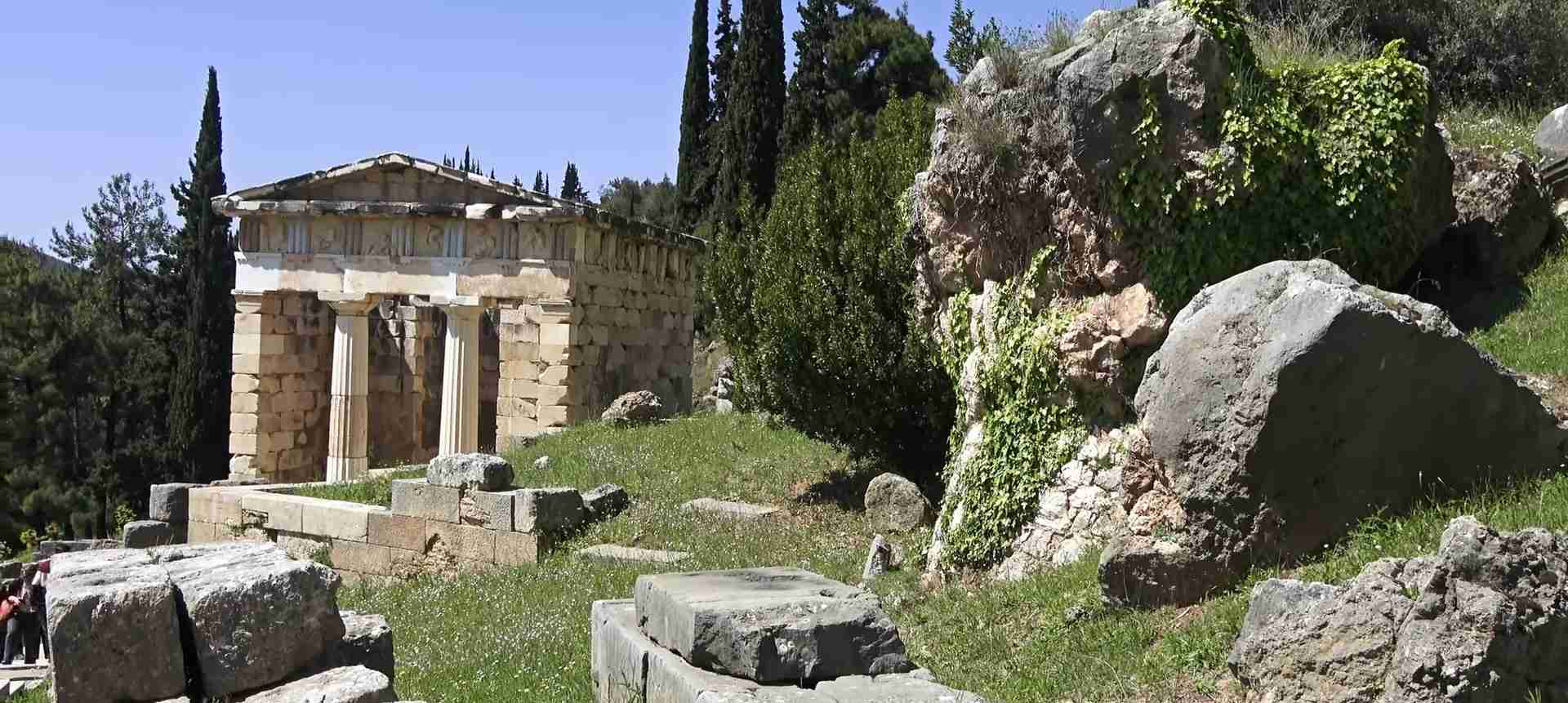
Enter through the main gate where ticket control operates, immediately accessing the Sacred Way paved with ancient stones ascending through the lower sanctuary. This ceremonial route passes foundations of treasuries built by Greek city-states to house their votive offerings—small temple-like structures demonstrating civic wealth and piety. The Treasury of the Athenians, reconstructed in the early 20th century using original marble blocks, stands as the best-preserved treasury showing Doric architectural proportions and sculptural decoration.
The Sacred Way winds upward past the reconstructed Stoa of the Athenians, the Sibyl’s Rock where early oracle consultations allegedly occurred, and numerous votive monuments including the bronze statues of conquered enemies dedicated by victorious city-states. Interpretive signs identify monument locations though imagination must reconstruct missing architectural elements from scattered foundation stones and column drums. Allocate 20-30 minutes for this lower section, pausing to photograph the valley views and examine detailed stonework at the Athenian Treasury.
The Temple of Apollo platform dominates the middle terrace, commanding the entire sanctuary. The current remains represent the fourth temple built on this site, dating to the 4th century BCE after earthquake destroyed the previous archaic temple. Six reconstructed columns rising from the temple’s north side provide scale for the structure’s original dimensions (approximately 60 by 23 meters), while foundation walls outline the cella where the Pythia priestess delivered oracular pronouncements. This focal point deserves 30-45 minutes—circumnavigate the entire platform examining different perspectives, photograph the columns against the Phaedriades cliff backdrop, and locate the adyton (inner sanctum) where the oracle operated.
Above the temple, the ancient theater carved into the mountain slope accommodated 5,000 spectators for the dramatic and musical performances during Pythian Games. The semi-circular stone seating tiers survive in excellent condition, offering spectacular views across the temple ruins to the valley beyond. Climb to the upper seats for photography encompassing the entire sanctuary layout—this panoramic perspective reveals how the monuments ascend the mountain in structured terraces. Allocate 15-20 minutes for theater exploration including the climb to upper seating.
The stadium occupies the sanctuary’s highest point, requiring an additional 10-15 minute uphill walk beyond the theater along a mountain path. This athletic facility hosted foot races, wrestling, and boxing during Pythian Games, with stone seating for 6,500 spectators lining the 177-meter track. The preserved starting blocks still mark the race beginning, while the arched entrance gate survives in partial condition. Many visitors skip the stadium due to the demanding uphill walk and time constraints, making this the least crowded sanctuary zone—those who invest the effort enjoy solitude and commanding views unavailable lower on the site.
Descend via the same Sacred Way, visiting any monuments passed quickly during ascent or photographing features in afternoon light if morning visits occurred. The total circuit from entrance to stadium and return requires 2-3 hours depending on fitness levels, photography time, and detail orientation. Rushing through in 90 minutes sacrifices depth while 4+ hours suits only archaeological specialists or visitors with strong site-specific interest.
After exiting the main archaeological complex, cross the highway (10-minute walk east) to visit the Sanctuary of Athena Pronaia featuring the iconic Tholos circular temple photographed in every Delphi guidebook. This separate precinct occupies lower slopes where pilgrims performed preliminary rituals before ascending to Apollo’s sanctuary. The Tholos’s three reconstructed Doric columns create Delphi’s most photogenic ancient structure, particularly dramatic in late afternoon light. Free admission and easy access from the roadside parking area make this essential 15-20 minute addition to complete Delphi visits.
Archaeological Museum Visit Strategy 2026
The Delphi Archaeological Museum houses one of Greece’s finest archaeological collections, preserving artifacts from sanctuary excavations spanning 1,500 years from Mycenaean period through Roman occupation. The modern museum building, last renovated in 1999, organizes collections chronologically and thematically across 14 rooms surrounding a central courtyard, requiring 60-90 minutes for thorough examination.
Enter the museum through the main lobby where ticket control operates (unless holding combined tickets purchased at the site entrance) and information desks provide floor plans and exhibition guides. Audio guides available for rent (€5) offer detailed commentary on major artifacts in multiple languages, worthwhile for visitors lacking extensive classical archaeology knowledge.
The collection sequence begins with Room 1 displaying Mycenaean and Geometric period finds demonstrating pre-sanctuary occupation, then progresses through the archaic period (Rooms 2-6) when Delphi emerged as panhellenic religious center. The archaic galleries preserve Delphi’s most celebrated treasures: the Siphnian Treasury frieze depicting mythological battles with extraordinary sculptural detail, the enigmatic kouros statues (Cleobis and Biton) representing early Greek monumental sculpture, and the Sphinx of Naxos—a marble creature perched atop an Ionic column demonstrating technical virtuosity and symbolic power.
Room 12 contains the museum’s supreme masterpiece: the bronze Charioteer of Delphi, one of the finest surviving Greek bronzes from the classical period. This 1.8-meter-high figure, created circa 474 BCE to commemorate a chariot race victory at the Pythian Games, demonstrates technical perfection in bronze casting and naturalistic human representation that influenced centuries of subsequent sculpture. The Charioteer’s serene expression, detailed drapery folds, and lifelike proportions justify extended viewing—allocate 15-20 minutes in this room examining the statue from multiple angles and reading interpretation panels explaining the original monument context (originally part of a chariot group including horses and chariot).
The classical and Hellenistic galleries (Rooms 13-14) display smaller votive offerings, marble sculptures, and bronze objects including the remarkable Antinoos statue and various bronze tripods. Room 9 presents Roman period material demonstrating sanctuary continuity despite Greek political decline, while specialized galleries preserve inscriptions documenting oracle consultations and sanctuary administration.
Strategic museum routing depends on time constraints. Comprehensive visits proceed chronologically through all galleries, rewarding patient examination with deep understanding of Delphi’s artistic evolution. Time-limited visitors prioritize the essential masterpieces: Siphnian Treasury frieze (Room 5), Sphinx of Naxos (Room 6), and Charioteer (Room 12), allocating 40-45 minutes to these highlights before examining other galleries as time permits. The museum shop and café occupy the ground floor near the exit, offering quality publications and refreshments.
Most visitors sequence site-then-museum, reasoning that viewing monuments first provides context for understanding their artifacts. This logic proves sound, though museum-then-site sequences benefit visitors preferring historical orientation before exploring ruins. Either sequence works—choose based on timing (site best visited early morning before crowds while museum remains less time-sensitive) and personal learning preferences.
Dining and Refreshments in Delphi 2026
Delphi village offers multiple dining options ranging from budget souvlaki shops to upscale tavernas, all concentrated along the main street (Pavlou & Frederikis Street) running parallel to the highway through the modern town. Prices reflect the tourist economy—moderately higher than equivalent Athens neighborhood tavernas but reasonable by international standards.
Traditional taverna meals (grilled meats, Greek salads, tzatziki, wine) cost €12-20 per person for full sit-down lunches, with pricing increasing at establishments commanding valley views versus side-street locations. Signature dishes include slow-roasted lamb or goat traditional to mountain regions, fresh Parnassus trout from nearby streams, and hearty bean stews (fasolada) reflecting Phocis culinary traditions. Quality varies significantly—research TripAdvisor or Google reviews beforehand or ask locals for recommendations avoiding obvious tourist traps.
Quick lunch options include souvlaki or gyros wraps (€3-5), bakery offerings of spinach pie or cheese pie (€2-3), and pre-made sandwiches from mini-markets (€4-6). These budget options suit independent KTEL bus travelers coordinating return schedules or visitors maximizing site time over meal experiences. Several cafés serve coffee (€2.50-4), soft drinks (€2-3), and pastries (€2-4) ideal for mid-morning or mid-afternoon breaks.
Water availability proves critical given Delphi’s mountain exposure and minimal shade at archaeological monuments. Purchase bottled water (€1-2 for 1.5 liters) before entering the site—on-site facilities provide no refreshment sales. The village supermarket near the bus stop offers better water prices than tourist-oriented shops. Carry adequate supplies (minimum 1.5 liters per person, 2+ liters for summer visits) to prevent dehydration during site exploration.
Organized tours typically include lunch at contracted tavernas or offer lunch as optional upgrade (€15-20 additional), with meals served buffet-style or as set menus featuring traditional Greek dishes. Tour lunch quality ranges from excellent authentic cooking to mediocre tourist-oriented meals—reviews of specific tour operators provide guidance. The scheduled lunch timing (typically 2:00-3:00 PM) suits European meal patterns though North American visitors accustomed to noon lunch may prefer carrying snacks for mid-morning energy.
Arachova Village Stop 2026
Arachova, a picturesque mountain village perched at 960 meters elevation on Mount Parnassus slopes, sits 10 kilometers before Delphi on the Athens approach route. The village’s traditional stone architecture, narrow cobbled streets, and dramatic cliff-edge setting make it a popular stop for day-trippers, offering authentic Greek mountain character contrasting with Delphi’s archaeological focus.
Most organized tours allocate 15-20 minutes for Arachova photo stops, parking along the main square (Plateia Xenia) where visitors can photograph the village panorama, browse handicraft shops selling local textiles (particularly the hand-woven rugs, blankets, and carpets for which Arachova maintains longstanding reputation), and purchase regional products including formaela cheese (a local PDO specialty), tsipouro spirit, and honey from Parnassus wildflowers.
Independent travelers controlling their schedules might extend Arachova visits to 1-2 hours, enabling café stops for Greek coffee (€2.50-3) paired with traditional sweets, taverna lunches featuring grilled meats and local wine, or handicraft shopping beyond quick souvenir purchases. The village functions as a winter ski resort base given proximity to Parnassus Ski Center, creating dual tourist economy split between summer cultural tourists and winter sports enthusiasts.
Timing Arachova stops strategically balances schedule demands with experience quality. Morning stops (9:00-10:00 AM en route from Athens) find shops just opening and villages relatively quiet. Afternoon return stops (4:30-5:30 PM after Delphi visits) encounter maximum activity as cafés fill with locals socializing over coffee and tour groups compete for photo opportunities. Brief photo stops fulfill minimum village exposure, while extended visits reward travelers interested in authentic mountain culture beyond archaeological sites.
Day Trip Budget Breakdown Athens-Delphi 2026
Complete Delphi day trip costs for 2026 vary significantly based on transportation mode, meal choices, and optional expenses. The following budget breakdowns provide realistic total costs per person for different travel styles.
Independent KTEL bus travelers: Roundtrip bus fare €33, Delphi combined entrance ticket €12, lunch at taverna €15-20, coffee or snacks €5-8, bottled water and supplies €3-5. Total day cost: €68-78 per person excluding accommodation. Budget travelers substituting taverna lunch with souvlaki wraps and skipping coffee stops reduce costs to €55-60 per person.
Organized guided tour participants: Tour package €50-84 (includes transportation, entrance, guide services, some tours include lunch), additional meal if lunch not included €15-20, coffee and snacks €5-8, souvenirs and extras €5-15. Total day cost: €75-127 per person excluding accommodation. Premium small-group tours at the higher end (€84) typically include lunch and superior guide quality justifying the cost premium.
Private car rental groups (4 people): Car rental €40-60 daily, fuel €25-30, parking €2-3, entrance tickets €48 (four people at €12 each), lunch for four €60-80 at taverna, coffee and supplies €15-20. Total costs: €190-241 for the group, or €48-60 per person when split equally. Three-person groups increase per-person costs to €63-80, while two-person groups pay €95-120 each, demonstrating how car rental cost-effectiveness depends on passenger count.
These budgets exclude Athens accommodation, evening meals after returning from Delphi, and discretionary shopping for handicrafts, books, or souvenirs. Visitors should budget an additional €10-30 for unexpected expenses or impulse purchases—the museum bookshop and village handicraft stores tempt even budget-conscious travelers with quality Greek products unavailable elsewhere.
Practical Tips for Successful Delphi Day Trips 2026
Footwear proves critical for Delphi visits given the extensive walking on uneven ancient stone surfaces, marble pavements, and unpaved mountain paths. Sturdy closed-toe shoes with good ankle support and slip-resistant soles prevent injuries from stumbles on loose rocks or polished marble. Avoid sandals, flip-flops, or smooth-soled fashion shoes that provide inadequate traction on Delphi’s slopes. Breaking in new shoes before the trip prevents blister problems during the 2-3 hour site exploration.
Weather preparation requires checking forecasts the week before travel and packing layers accommodating temperature variability. Delphi sits 10-15°F cooler than Athens year-round, with mountain weather changing rapidly—morning sunshine transitions to afternoon clouds bringing temperature drops. Spring and autumn visits demand lightweight jackets or fleeces for morning and evening, while summer requires sun hats, light long-sleeve shirts for sun protection, and sunglasses. Winter visits need warm layers including waterproof outerwear for potential rain.
Photography equipment choices balance image quality desires with carrying convenience. Smartphone cameras capture excellent images at Delphi’s monuments and landscapes, eliminating dedicated camera weight for casual photographers. Enthusiasts should bring DSLR or mirrorless cameras with wide-angle lenses (16-35mm equivalent) for architectural views and medium telephoto lenses (70-200mm equivalent) for detail shots. Tripods prove unnecessary during day visits and create carrying burdens on site slopes. Spare batteries and memory cards ensure capacity for the hundreds of photos Delphi’s photogenic monuments inspire.
Sun protection extends beyond sunscreen to strategic clothing and timing choices. The archaeological site offers minimal shade—the ancient trees that once shaded sacred precincts disappeared millennia ago. Apply broad-spectrum SPF 30+ sunscreen before entering the site, reapplying every 2 hours during extended visits. Wide-brimmed hats protect faces and necks from direct sun exposure, while UV-blocking sunglasses prevent eye strain from intense Aegean light reflecting off white marble. Schedule the most demanding uphill sections (theater to stadium) during cooler morning hours rather than midday heat.
Hydration management requires carrying adequate water supplies (1.5-2 liters per person minimum) since the archaeological site provides no water fountains or refreshment facilities. Insulated bottles keep water cool during summer heat, encouraging regular hydration. Sports drinks or electrolyte tablets help replace minerals lost through sweating during summer visits. Recognize dehydration symptoms—headache, dizziness, excessive fatigue—and rest in shade while drinking water if these develop.
Tour group dynamics affect experience quality in ways participants cannot fully control but can mitigate through strategic positioning and behavior. Position yourself near the guide to hear commentary clearly, particularly in large groups where trailing participants miss spoken information. Ask questions during designated Q&A times rather than interrupting presentations. Arrive promptly for all scheduled meeting times avoiding delays that frustrate fellow travelers and guides. Consider tipping guides (€3-5 per person typical) for excellent service, a common practice in Greek tourism though not mandatory.
Independent travelers should research Delphi’s history and monuments before arrival, using guidebooks, documentaries, or online resources to build background knowledge enhancing on-site comprehension. Without guide interpretation, understanding the sanctuary’s religious significance, architectural development, and historical importance depends on pre-visit preparation. The Hellenic Ministry of Culture website offers downloadable site information, while Rick Steves and DK Eyewitness guidebooks provide accessible historical introductions.
Seasonal Considerations for Delphi Visits 2026
Spring (April-May) delivers ideal Delphi visiting conditions combining comfortable temperatures (15-25°C / 59-77°F), wildflower blooms transforming Mount Parnassus slopes into colorful gardens, and moderate tourist volumes before peak summer crowds. Occasional spring rain showers require waterproof jackets, though precipitation typically arrives as brief afternoon storms rather than all-day downpours. Photography benefits from clear post-rain atmosphere and dramatic cloud formations around the Phaedriades cliffs. The countryside’s green vibrancy and blossoming orchards create scenic drives rivaling the archaeological attractions.
Summer (June-August) brings maximum temperatures (28-35°C / 82-95°F), intense Mediterranean sun, and peak tourist season with maximum crowds at monuments and congested village restaurants. The heat creates physical challenges during midday site exploration, making early morning visits (8:00-10:00 AM) or late afternoon timing (after 4:00 PM) essential for comfort. Summer compensates for heat stress with extended daylight hours (sunset around 9:00 PM in June), reduced rain probability, and vibrant social atmosphere as Greek families vacation through July-August. Accommodation and tour prices peak during summer, particularly August when Greeks take traditional holidays.
Autumn (September-October) rivals spring as optimal visiting season, offering warm days without summer extremes (20-28°C / 68-82°F), fewer tourists after school resumption, and spectacular light quality for photography. September maintains summer warmth while reducing crowds, while October introduces autumn colors to Parnassus forests and cooler mountain air. Shorter days (sunset 6:30-7:30 PM) reduce extended afternoon exploration options but afternoon light’s golden quality enhances monument photography. Restaurant and hotel prices decrease after August, offering better value for equivalent services.
Winter (November-March) transforms Delphi into austere mountain sanctuary with minimal tourism, potential snow on Parnassus peaks creating dramatic backdrops, and reduced hours limiting visits. Temperatures range 5-15°C (41-59°F) with frequent rain and occasional snow at archaeological site elevations. Winter visits reward hardy travelers with solitude unavailable during other seasons and powerful atmospheric effects—fog drifting through temple ruins, dramatic storm clouds over the valley—creating haunting images. Many village restaurants and hotels close during winter, reducing service options though major sites remain accessible. Winter pricing reaches annual lows for tours and accommodation.
Combining Delphi with Nearby Attractions 2026
Visitors with private transportation can expand single-destination day trips into comprehensive central Greece explorations combining Delphi with nearby cultural and natural attractions, though realistic time management proves essential avoiding exhausting marathon days.
Hosios Loukas Monastery, a UNESCO World Heritage Byzantine monastery located 35 kilometers south of Delphi near Distomo village, preserves exceptional 11th-century mosaics and frescoes representing middle Byzantine art at its peak. The monastery complex requires 45-60 minutes to visit properly, with entrance fees €6. Combined Delphi-Hosios Loukas itineraries extend day trips to 12-14 hours total, feasible for energetic travelers but demanding for those with moderate fitness levels or heat sensitivity.
Galaxidi, a charming seaside town 35 kilometers south of Delphi on the Corinthian Gulf coast, offers traditional harbor atmosphere, seafood tavernas, and relaxed coastal ambiance contrasting with mountain Delphi. The town functions well as a lunch stop (1-1.5 hours) or overnight base for two-day itineraries. Swimming opportunities exist during summer months at nearby beaches. Combined routing requires careful timing to avoid returning to Athens during evening traffic peak (6:00-8:00 PM).
Thermopylae battlefield site, where Leonidas and 300 Spartans fought the Persian army in 480 BCE, lies 130 kilometers northeast of Delphi requiring 90-minute drives each direction. The modern monument and small museum require 30-45 minutes to visit. Combining Delphi and Thermopylae in single-day trips creates extremely long journeys (14-16 hours total) recommended only for history enthusiasts prioritizing both sites over comfort considerations. Multi-day itineraries incorporating both sites with Meteora monasteries offer better alternatives to forced marching.
Multi-Day Alternative: Overnight Delphi Stays 2026
Extending Delphi visits to two days via overnight stays transforms rushed day trips into relaxed explorations enabling sunset photography, evening village atmosphere, and morning site access before tour crowds arrive. This alternative suits travelers with flexible Greece itineraries prioritizing depth over destination quantity.
Accommodation options in Delphi village range from budget hotels (€40-60 per night for double rooms) to mid-range establishments with valley views (€70-100) and boutique properties offering luxury amenities (€120-180). Nearby Arachova provides mountain village atmosphere with comparable pricing plus winter skiing infrastructure creating year-round tourism economy. Booking direct through hotel websites often yields better rates than international booking platforms, particularly for multi-night stays or off-season periods.
Two-day itineraries enable splitting archaeological site and museum visits across separate days, reducing fatigue and allowing contemplative engagement with monuments rather than rushed checklist completion. Day one focuses on the archaeological complex, ascending to the stadium during comfortable morning hours, photographing monuments in varying light conditions, and dining at village tavernas watching sunset over the Pleistos valley. Day two visits the museum at opening for solitude with masterpieces, explores the Sanctuary of Athena Pronaia thoroughly, and departs mid-afternoon avoiding evening Athens traffic.
Evening experiences unavailable to day-trippers include village social life in cafés and bars, traditional taverna dinners with live Greek music, and photography during blue hour when monuments illuminate against twilight skies. The slower pace reduces stress, enables spontaneous discoveries, and creates memories extending beyond monument photographs to genuine cultural immersion.
Frequently Asked Questions Delphi Day Trips 2026
Can you visit Delphi independently without a tour in 2026?
Yes, independent Delphi visits prove completely feasible using KTEL public buses from Athens, providing cost savings versus organized tours while enabling flexible scheduling and self-paced exploration. The KTEL bus system operates reliably with 4-5 daily departures from Athens Liosion Terminal to Delphi, requiring no advance booking though online ticket purchase guarantees seats during peak season. Independent visitors should research site history before arrival since no guide interpretation accompanies bus travel, using guidebooks, audio guides available at the museum (€5 rental), or smartphone apps providing monument information. The tradeoff between bus travel (€45 total with entrance) versus tours (€50-84) balances €5-40 savings against self-managed logistics and absent guide expertise. Independent travel suits budget-conscious visitors comfortable navigating Greek transportation and those preferring individual exploration pace over group schedules.
What’s the difference between summer and winter Delphi opening hours in 2026?
Summer hours (April 1-October 31) operate 8:00 AM-8:00 PM with last admission 7:40 PM, while winter hours (November 1-March 31) operate 8:30 AM-3:30 PM with last admission 3:10 PM. This dramatic difference reflects daylight hours and tourist season patterns. Summer’s extended hours enable flexible visit timing—early morning before heat peaks, late afternoon after tour crowds depart, or midday despite temperature challenges. Winter’s abbreviated hours require morning arrivals maximizing the limited 7-hour window, with realistic combined site and museum visits completing by 2:00-2:30 PM. The autumn transition implements gradual closing time reductions: 7:30 PM through mid-September, 7:00 PM through month end, 6:30 PM early October, 6:00 PM late October. Spring brings reverse extensions. These seasonal variations affect day trip feasibility from Athens—summer accommodates relaxed scheduling while winter demands early departures and efficient site routing.
Are there food and drink facilities at the Delphi archaeological site in 2026?
No, the archaeological site provides no cafés, restaurants, water fountains, or refreshment sales within the monument zone. Visitors must carry adequate water supplies (minimum 1.5 liters per person, 2+ liters for summer visits) and snacks for energy during the 2-3 hour site exploration. The museum building includes a small café serving coffee, soft drinks, and light snacks (sandwiches, pastries) with indoor seating and terrace views, though this facility only becomes accessible after purchasing museum entrance or combined tickets. The modern village of Delphi, located 1 kilometer west along the highway from the site entrance, offers full restaurant and café services requiring 10-15 minute walks from site exits. Smart planning involves purchasing water and snacks before entering the site, with the village supermarket near the bus stop offering best prices. Dehydration represents the primary health risk at Delphi given mountain exposure, minimal shade, and elevation changes requiring sustained physical effort.
Can you combine Delphi and Meteora in a single day trip from Athens 2026?
While technically possible, combining Delphi and Meteora in single-day trips creates extremely demanding 16-18 hour marathons delivering rushed, superficial experiences at both sites rather than meaningful engagement with either. The Athens-Delphi drive requires 2.5 hours, Delphi-Meteora adds 3 hours, and Meteora-Athens return demands another 4.5 hours—totaling 10 hours driving before any site visits. Several tour operators market “Delphi and Meteora in one day” products departing Athens 6:00-7:00 AM and returning after 11:00 PM, allocating 60-90 minutes at each site for minimal monument viewing. These tours appeal to cruise ship passengers or travelers with absolute minimal Greece time, though the exhaustion and superficiality undermine cultural value. Better alternatives include two-day/one-night tours visiting Delphi day one and Meteora day two with Kalambaka overnight accommodation, or simply choosing one site for proper day trip exploration rather than attempting both inadequately.
Do I need to book Delphi tours in advance or can I book on arrival 2026?
Advance booking proves essential for Delphi tours during peak season (May-October) when popular departures sell out days or weeks beforehand, while shoulder season (April, November) and winter permit some last-minute availability though options narrow for specific dates. Major tour operators like GetYourGuide, Viator, and local Greek companies accept online bookings months in advance, offering best price guarantees and confirmed departures versus speculative walk-up attempts. Booking 1-4 weeks ahead ensures preferred dates and tour types (small group versus large coach, lunch included versus excluded, standard versus premium), while last-minute bookings risk settling for less desirable alternatives or finding no availability. Summer weekends and Greek holiday periods (Easter week, August) require longest advance planning. Tour cancellation policies typically allow free cancellation 24-48 hours before departure, enabling flexible booking without commitment risk. Independent KTEL bus travelers enjoy more booking flexibility since buses rarely sell out completely, though advance online purchase guarantees seat selection versus potentially standing-room-only conditions during peak periods.
What should I wear to visit Delphi archaeological site in 2026?
Wear comfortable athletic or hiking clothing suitable for 2-3 hours of walking on uneven terrain with 200+ meters elevation gain, prioritizing function over fashion. Sturdy closed-toe shoes with good traction prove absolutely essential—athletic shoes, hiking boots, or trail runners work well, while sandals, flip-flops, or smooth-soled fashion shoes risk ankle injuries on loose rocks and polished marble. Lightweight moisture-wicking fabrics help manage sweat during summer heat, while layerable clothing (t-shirt, long-sleeve shirt, light fleece) accommodates temperature changes from morning cool to midday heat to evening return. Wide-brimmed sun hats protect against intense Mediterranean sun exposure at the exposed mountain site. Modest clothing suffices since Delphi imposes no dress code restrictions unlike active religious sites, though avoiding skimpy beachwear respects cultural norms. Bring a small daypack for carrying water bottles, sunscreen, camera, and layers rather than struggling with hand-carried items during steep ascents. Avoid new unworn shoes which cause blisters during extended walking—break in footwear before the trip or accept mild discomfort rather than painful injuries.
Is Delphi wheelchair accessible for visitors with mobility limitations 2026?
The Delphi archaeological site presents significant accessibility challenges for wheelchair users and visitors with severe mobility limitations due to steep elevation changes, ancient stone surfaces, and lack of paved wheelchair routes throughout the monument zones. The Sacred Way ascending from the entrance to the Temple of Apollo involves continuous uphill walking on uneven ancient paving stones impossible to navigate in standard wheelchairs. The museum building provides full wheelchair access via elevator and accessible restrooms, creating partial site accessibility for visitors prioritizing artifact collections over outdoor monuments. Visitors with moderate mobility issues who can manage short walks with frequent rest stops can visit the lower sanctuary sections (treasuries, Athenian Treasury, lower Sacred Way) and the Sanctuary of Athena Pronaia which offers roadside parking close to the Tholos temple. Those requiring full wheelchair access should candidly assess whether Delphi suits their capabilities or if other more accessible archaeological sites (Athens Acropolis Museum, Heraklion Archaeological Museum) better serve their interests. Tour operators rarely advertise accessibility features so direct inquiry about specific mobility needs proves essential during booking.
What’s the best month to visit Delphi from Athens in 2026?
May and October represent optimal months for Delphi day trips, combining comfortable temperatures (18-25°C / 64-77°F), moderate tourist volumes avoiding peak summer crush, excellent photography light quality, and full summer operating hours (8:00 AM-8:00 PM) without winter limitations. May offers wildflower blooms, green mountain landscapes, and spring freshness, while October provides autumn colors, harvest season village atmosphere, and warm days without summer heat extremes. April and September function as secondary choices—slightly cooler and potentially wetter than May/October but less crowded and marginally cheaper for tours and hotels. June proves acceptable for heat-tolerant visitors though temperatures climb toward uncomfortable levels. July and August bring maximum heat (30-35°C) requiring extreme sun protection and hydration, maximum crowds reducing experience quality, and peak pricing, recommended only for travelers constrained by summer school vacation schedules. November-March suits hardy visitors seeking solitude and dramatic winter atmosphere despite abbreviated hours, weather uncertainties, and reduced village services.
Can you visit Delphi on a cruise ship port day from Piraeus 2026?
Yes, though the 220-kilometer distance from Piraeus port to Delphi creates tight timing windows requiring organized shore excursions rather than independent exploration. Cruise lines and local operators offer Delphi shore excursions (€90-140 per person) with transportation, guide services, entrance tickets, and schedules coordinated to ship departure times. These excursions typically allocate 90-120 minutes at the archaeological site and 45-60 minutes at the museum—abbreviated compared to full-day tours from Athens but sufficient for seeing major highlights. The drive from Piraeus requires 3 hours each direction (versus 2.5 hours from central Athens), consuming 6+ hours of available port time. Ships docking early morning (7:00-8:00 AM) and departing late evening (6:00-7:00 PM) provide adequate windows, while midday arrivals or early departures create insufficient time. Independent attempts coordinating KTEL buses with ship schedules risk missing departure if delays occur—the cruise line bears no responsibility for passenger tardiness when using non-official excursions. Cruise passengers should weigh Delphi’s significance against alternative shore excursions to closer Athens sites (Acropolis, Ancient Agora, National Archaeological Museum) offering fuller experiences within tighter timeframes.
What archaeological artifacts can I see at Delphi Museum in 2026?
The Delphi Archaeological Museum preserves exceptional collections spanning Mycenaean through Roman periods, with masterpiece highlights including the Charioteer of Delphi—one of ancient Greece’s finest surviving bronze sculptures created circa 474 BCE, the monumental Sphinx of Naxos carved marble creature from the archaic period, and the elaborate Siphnian Treasury frieze depicting mythological battle scenes with extraordinary sculptural detail. Additional significant artifacts include the twin kouros statues known as Cleobis and Biton representing early Greek monumental sculpture, the chryselephantine (gold and ivory) statue fragments showing wealth of temple dedications, the extensive collection of bronze tripods and caldrons offered as prizes at Pythian Games, the Antinoos statue from the Roman period, and numerous inscriptions documenting oracle consultations and sanctuary administration. The museum organizes collections chronologically across 14 galleries, requiring 60-90 minutes to examine major pieces adequately. Audio guides available for €5 rental provide detailed artifact interpretation in multiple languages. Photography without flash is permitted in most galleries though specific rooms with light-sensitive materials may restrict cameras.