Death Valley Day Trip from Las Vegas 2026: Complete Planning Guide
Death Valley National Park sits just 120 miles northwest of Las Vegas, transforming from neon-lit casinos to North America’s lowest point in under three hours. This desert masterpiece delivers scorching salt flats, towering sand dunes, and rainbow-colored badlands — all achievable on a single-day excursion from the Strip.
Key Takeaways: Death Valley Day Trip from Las Vegas 2026
- Driving Logistics 2026: The journey spans 120-150 miles depending on your chosen route, requiring 2-2.5 hours each way via NV-160 through Pahrump (fastest) or US-95 through Beatty (scenic with ghost town stop). Early departure at 6-7 AM maximizes daylight in the park.
- Budget Planning 2026: Self-drive day trips cost $65-100 per person when two travelers share expenses, including park entry ($15 per person share of $30 vehicle fee), gas ($18-23 per person share of $35-45 total), and meals ($30-60). Solo travelers pay $100-130. Organized tours from Las Vegas range $169-280 with all logistics included.
- Essential Stops: A well-planned day trip covers Badwater Basin (lowest point at 282 feet below sea level), Zabriskie Point (sunrise views), Dante’s View (5,475-foot overlook), Artist’s Palette (multicolored rock formations), and Mesquite Flat Sand Dunes.
- Seasonal Timing 2026: November through March offers comfortable temperatures (60-75°F daytime), while April-October brings extreme heat (100-130°F). Winter months provide optimal conditions for a full day of exploration without heat exhaustion risks.
- Tour vs Self-Drive Decision: Guided tours eliminate navigation stress and provide expert commentary for first-time visitors, while self-driving offers flexibility to spend more time at preferred locations and adjust the itinerary spontaneously.
- Preparation Essentials: Carry one gallon of water per person, fill your gas tank in Pahrump (last reliable station before the park), pack sunscreen and hats, and download offline maps since cell service is virtually nonexistent throughout Death Valley.
People Also Ask About Death Valley Day Trip from Las Vegas 2026
Is Death Valley worth visiting as a day trip from Las Vegas in 2026?
Death Valley absolutely merits a day trip from Las Vegas despite the 4-5 hours of total driving time. The park delivers North America’s most extreme desert landscapes — you’ll stand at the continent’s lowest elevation, walk across vast salt flats that stretch to the horizon, photograph sand dunes reaching 100 feet high, and witness rock formations in shades of pink, purple, yellow, and green that exist nowhere else on Earth. The dramatic contrast from Las Vegas casinos to this raw wilderness takes less than three hours to achieve, making it one of the Southwest’s most accessible natural wonders. Early morning departures at 6-7 AM provide 8-10 hours in the park, sufficient time to visit five to seven major viewpoints. Winter months (November-March) offer comfortable exploration temperatures, while summer visits require strategic timing around the intense heat. The investment of one day yields landscapes that most travelers consider among North America’s most memorable natural experiences.
How much does a Death Valley day trip from Las Vegas cost in 2026?
Self-drive day trips cost $65-100 per person for two travelers sharing expenses. This includes the Death Valley entrance fee of $30 per vehicle (covering all passengers for seven days), round-trip gas expenses of $35-45, and meals totaling $30-60 per person. Organized tours eliminate the driving responsibility and range from $169 for basic small-group experiences to $280 for premium operators with lunch included. Sunset and stargazing tours cost $249-295 and extend to 11-12 hours. Private tours start at $244 per person with flexible itineraries. Tour prices include park entrance fees, transportation, water and snacks, and professional guides. Self-driving provides greater flexibility and lower costs for groups, while tours deliver expert commentary and eliminate navigation concerns for first-time desert visitors.
What is the best time of year to visit Death Valley from Las Vegas in 2026?
November through March represents the optimal window for Death Valley day trips, delivering daytime temperatures between 60-75°F that allow comfortable exploration of outdoor viewpoints and short hiking trails. December and January bring the coolest conditions (50-65°F), while late March begins transitioning toward warmer spring weather. April and October serve as shoulder months with moderate heat (80-95°F) requiring sun protection but remaining manageable for most visitors. May through September brings extreme temperatures often exceeding 110°F, with July and August regularly reaching 120-130°F — conditions dangerous for extended outdoor activity. Summer visits demand pre-dawn departures, minimal midday exposure, and strategic timing around the most intense heat hours. Winter months also provide clear skies for stargazing, fewer crowds than peak spring wildflower season, and the longest comfortable daylight exploration windows. February through early March occasionally delivers superbloom wildflower displays following wet winters.
Can you do Death Valley in one day from Las Vegas in 2026?
A single day provides sufficient time to experience Death Valley’s essential highlights when properly planned. The standard itinerary covers 140-160 miles of driving within the park plus the 240-250 mile round trip from Las Vegas, totaling approximately 7-8 hours behind the wheel. This leaves 6-8 hours for stops at major viewpoints including Badwater Basin, Zabriskie Point, Dante’s View, Artist’s Palette, Mesquite Flat Sand Dunes, and Devils Golf Course. Early departures at 6-7 AM maximize available daylight, particularly crucial during winter months when sunset arrives by 5 PM. Each viewpoint requires 15-45 minutes for parking, walking to overlooks, photography, and returning to your vehicle. The compact geography around Furnace Creek concentrates most iconic locations within a 50-mile radius, creating an efficient touring loop. Two-day visits allow deeper exploration including remote backcountry roads, extensive hiking, and sunset viewpoint visits without rushing. However, most first-time visitors find the one-day experience thoroughly satisfying for capturing Death Valley’s signature landscapes.
Extended multi-day tours – 5+ days
Featured Las Vegas Multi-Day Tour Packages

3 days
Las Vegas 3-Day Discovery Tour
- ✓ Comprehensive Las Vegas experience
- ✓ Expert local guides included
- ✓ All accommodation included
- ✓ Transportation provided
5 days
Las Vegas 5-Day Highlights Experience
- ✓ Comprehensive Las Vegas experience
- ✓ Expert local guides included
- ✓ All accommodation included
- ✓ Transportation provided

7 days
Las Vegas 7-Day Cultural Journey
- ✓ Comprehensive Las Vegas experience
- ✓ Expert local guides included
- ✓ All accommodation included
- ✓ Transportation provided
10 days
Las Vegas 10-Day Complete Adventure
- ✓ Comprehensive Las Vegas experience
- ✓ Expert local guides included
- ✓ All accommodation included
- ✓ Transportation provided
Multi-day tour packages powered by TourRadar. Prices and availability subject to change.
Introduction: Death Valley Day Trip from Las Vegas 2026
Death Valley National Park stands as North America’s hottest, driest, and lowest elevation landscape — and remarkably, this 3.4 million-acre wilderness sits just two hours northwest of the Las Vegas Strip. This proximity transforms one of Earth’s most extreme environments into an achievable day trip, allowing visitors to escape casino floors and experience desert landscapes that challenge conventional notions of what defines “alive” versus “barren.” The park earned its ominous name from California Gold Rush pioneers who nearly perished crossing this unforgiving terrain in 1849, yet modern infrastructure and preparation knowledge convert this historic death trap into one of the American West’s most accessible national parks.
The journey from Las Vegas delivers dramatic transitions. Highway corridors slice through Mojave Desert expanses dotted with Joshua trees before descending into the furnace-like valley where summer ground temperatures exceed 200°F. Badwater Basin’s salt flats sprawl at 282 feet below sea level — the Western Hemisphere’s lowest point — while the Panamint Range towers 11,000 feet above, creating North America’s steepest vertical relief. This topographic drama generates the extreme climate that gives Death Valley its reputation, yet also sculpts the otherworldly geology that draws 1.1 million annual visitors.
Planning a successful day trip requires understanding Death Valley’s geography and climate. The park spans 140 miles north to south, but strategic routing concentrates the essential viewpoints within a manageable touring loop around Furnace Creek, the park’s service hub. Most visitors enter via Death Valley Junction on the park’s eastern boundary, allowing clockwise circulation through Zabriskie Point, Badwater Basin, Artist’s Palette, and the Mesquite Flat Sand Dunes before exiting through Beatty or returning via the same entrance route.
Seasonal timing fundamentally shapes the Death Valley experience. November through March delivers comfortable daytime temperatures (60-75°F) that allow extended outdoor exploration, while summer months (May-September) bring dangerous heat exceeding 120°F that limits safe activity to early morning hours. Winter visitors enjoy clear skies, manageable crowds, and the opportunity to comfortably walk salt flats and sand dunes without heat exhaustion risks. Spring occasionally produces superbloom wildflower displays following wet winters, transforming the valley floor into carpets of yellow, purple, and pink blossoms.
The decision between self-driving and organized tours hinges on personal preferences and group dynamics. Self-drive trips offer flexibility to adjust itineraries spontaneously, spend extended time at preferred viewpoints, and reduce per-person costs for groups of three or more. The driving itself remains straightforward on paved highways, though cell service disappears entirely once you enter the park. Organized tours eliminate navigation stress, provide expert geological and historical commentary, handle all logistics including park entry and meals, and allow passengers to focus entirely on photography and landscape appreciation rather than route planning.
This guide provides comprehensive planning resources for both approaches. You’ll find detailed route comparisons for self-drivers, budget breakdowns accounting for all expenses, hour-by-hour itinerary recommendations optimized for one-day visits, essential safety preparations for desert travel, and curated stops prioritized by visual impact and accessibility. Whether you’re escaping Vegas for a single day or incorporating Death Valley into a broader Southwest road trip, this planning framework ensures you experience the park’s signature landscapes efficiently while respecting the extreme environment that makes this destination simultaneously dangerous and magnificent.
Getting to Death Valley from Las Vegas 2026: Routes, Drive Times, and Navigation
The drive from Las Vegas to Death Valley’s primary entrance at Death Valley Junction spans 120-125 miles via the fastest route (NV-160 through Pahrump) or 140-150 miles via alternative routes through Beatty. Both journeys require approximately 2-2.5 hours under normal traffic conditions, positioning Death Valley among the most accessible national parks from a major metropolitan area. The transition from urban Las Vegas to extreme desert wilderness occurs gradually — suburban sprawl gives way to open Mojave Desert landscapes within 30 minutes, followed by increasingly dramatic mountain ranges and valley systems as you approach the park boundary.
Three primary routes connect Las Vegas to Death Valley, each offering distinct advantages. The NV-160 route through Pahrump represents the fastest and most direct option, departing Las Vegas via Blue Diamond Road (NV-160 West) and continuing through the small town of Pahrump before reaching Death Valley Junction. This route delivers consistent highway conditions with minimal elevation changes until the final descent into the valley. Traffic remains light except during weekend mornings when Las Vegas residents head to regional recreation areas. The town of Pahrump, reached after approximately 60 miles (one hour), provides the last reliable services before entering the park — gas stations, grocery stores, fast food restaurants, and clean restrooms make this an essential preparation stop.
The US-95 route through Beatty adds approximately 20 miles but compensates with scenic interest and the opportunity to visit Rhyolite Ghost Town. This routing departs Las Vegas on US-95 North, passing through the small communities of Indian Springs and Amargosa Valley before reaching Beatty, the closest town to Death Valley’s northern entrance. Beatty serves as a budget accommodation hub for multi-day Death Valley visitors and offers multiple gas stations, restaurants, and convenience stores. From Beatty, NV-374 descends dramatically into Death Valley through Hell’s Gate, delivering panoramic valley views as you enter the park. The ghost town of Rhyolite sits just 4 miles west of Beatty — this abandoned gold mining settlement features photogenic ruins including a historic train depot, bottle house, and crumbling bank building. Most organized tours from Las Vegas utilize this route specifically to include the Rhyolite stop.
Navigation within Death Valley follows straightforward highway corridors once you understand the basic geography. California Highway 190 serves as the primary east-west artery, connecting Death Valley Junction (eastern entrance) with Furnace Creek (park services hub) and continuing west to Stovepipe Wells and eventually Panamint Springs. Badwater Road runs north-south along the valley floor, accessing the park’s lowest elevations including Badwater Basin and Devils Golf Course. Most major viewpoints cluster within 30 miles of Furnace Creek, allowing efficient touring without excessive backtracking.
Cell phone service vanishes almost entirely once you enter Death Valley National Park boundaries. Both AT&T and Verizon networks provide coverage in Pahrump and Beatty but drop to zero bars within the park except for occasional weak signals at Furnace Creek Resort. This communication blackout necessitates advance preparation — download offline maps through Google Maps or specialized apps like Gaia GPS before departing Las Vegas. The National Park Service provides excellent paper maps at entrance stations and visitor centers, and these physical backups prove invaluable when electronic devices fail or batteries deplete in the heat.
Road conditions throughout Death Valley remain excellent on all paved highways including CA-190, Badwater Road, and Artist’s Drive. Standard passenger cars access every major viewpoint covered in this guide without requiring high clearance or four-wheel drive. Unpaved roads lead to remote areas like Titus Canyon, Racetrack Playa, and Eureka Dunes, but these destinations require high-clearance vehicles and add substantial time commitments unsuitable for day trips. The paved road network delivers the park’s essential highlights with complete accessibility.
Fuel availability becomes critical for Death Valley day trips. Gas stations exist only at two locations within the park — Furnace Creek Ranch and Stovepipe Wells Village — and both charge premium prices ($1.50-2 per gallon above Las Vegas rates) while occasionally running dry during peak visitation periods. The prudent strategy fills your tank in Pahrump or Beatty before entering the park, ensuring sufficient fuel for 200-250 miles of total driving without depending on potentially unavailable or expensive park stations. A round trip from Las Vegas including park touring typically consumes 10-15 gallons depending on vehicle efficiency.
GPS routing proves reliable for the primary highways but occasionally suggests unpaved shortcuts or seasonal roads unsuitable for standard vehicles. Override GPS recommendations that deviate from paved CA-190 and Badwater Road unless you’re driving a high-clearance 4WD vehicle and possess experience with backcountry desert navigation. The primary paved routes deliver efficient access to all essential viewpoints without venturing onto unmaintained roads where vehicles can become stranded far from assistance.
Winter weather rarely impacts Death Valley access, but occasional flash flooding can temporarily close roads following rare storm events. Summer monsoon season (July-August) brings the highest flash flood risk, though actual precipitation remains uncommon. Check current road conditions via the National Park Service website or call the park information line (760-786-3200) before departing Las Vegas if weather forecasts indicate precipitation. Road closures typically clear within 24-48 hours as maintenance crews remove debris and repair washouts.
Death Valley Entrance Fees & Permits 2026
Death Valley National Park charges a $30 entrance fee per vehicle, valid for seven consecutive days from the date of purchase. Check the official National Park Service website for current rates as fees are subject to change. This single payment covers all occupants in your vehicle regardless of number — two people or seven people pay the identical $30 rate. The seven-day validity allows multi-day visits without additional entrance charges, though most Las Vegas day trippers complete their visit within a single day.
Motorcycles pay a reduced rate of $25 per bike including rider and passenger. Pedestrians and bicyclists entering the park pay $15 per person. These alternative entry methods remain uncommon for Las Vegas day trips given the 240-mile round-trip distance and extreme summer heat that makes cycling dangerous.
Payment occurs at automated kiosks located at major park entrances rather than staffed gates. Death Valley transitioned to a fully cashless system in June 2023 — kiosks accept credit cards and debit cards only. The Death Valley Junction entrance (most common entry point from Las Vegas) features kiosks immediately after entering park boundaries. Simply park at the kiosk, complete the transaction using the touch screen interface, and display the printed receipt on your dashboard throughout your park visit. Rangers patrol regularly and issue citations to vehicles lacking valid entrance passes.
Alternative payment options include purchasing your entrance pass online through Recreation.gov before your trip. This advance purchase streamlines the entry process — simply print your pass or display it on your mobile device when entering the park. However, note that cell service vanishes almost immediately upon entering Death Valley, so downloaded offline passes prove more reliable than depending on mobile data access.
Annual Death Valley passes cost $55 and grant unlimited entry for one full year from the purchase date. This option benefits visitors planning multiple trips within twelve months or locals who explore the park regularly. The annual pass covers the same vehicle-based entry as the weekly pass — all occupants in your vehicle enter free when the pass is displayed.
The America the Beautiful Annual Pass costs $80 and provides access to all US National Parks and federal recreation areas for one year. This pass delivers exceptional value for travelers planning to visit three or more national parks within twelve months. Death Valley day trippers continuing to Grand Canyon, Zion, Bryce Canyon, Joshua Tree, or any other national park on the same Southwest road trip save substantially with this pass compared to paying individual entrance fees at each location.
Free entrance days occur on specific dates throughout the year when the National Park Service waives entrance fees at all parks. In 2026, Death Valley waives fees on Martin Luther King Jr. Day (January 20), National Park Week (April 18-26), Anniversary of the Great American Outdoors Act (August 4), National Public Lands Day (September 26), and Veterans Day (November 11). Planning your day trip to coincide with these dates eliminates the $30 entrance fee, though expect increased crowds on these promotional days.
Military personnel, veterans, and Gold Star families qualify for free annual passes through the America the Beautiful program. Active duty military and their dependents, as well as veterans and Gold Star families, can obtain these passes at park visitor centers by presenting valid military identification or documentation. This benefit provides substantial savings for service members and their families who frequently explore national parks.
Senior citizens (US residents age 62 and older) qualify for lifetime or annual Senior Passes at significantly reduced rates. The lifetime Senior Pass costs $80 — a one-time payment providing unlimited national park access for life. Annual Senior Passes cost $20 per year. Both options cover entrance fees for the pass holder and all passengers in their vehicle, making this among the best values in federal recreation access.
Citizens or permanent residents with permanent disabilities qualify for free lifetime Access Passes. These passes provide the same vehicle-based entry benefits as standard passes and can be obtained at park visitor centers or through the Recreation.gov website by providing disability documentation. The Access Pass represents the National Park Service’s commitment to ensuring park access for all Americans regardless of physical ability.
No additional permits are required for day trips focusing on viewpoint stops, short walks, and photography. Overnight camping requires separate campground fees ($14-36 per night depending on the facility), and backcountry overnight trips require free wilderness permits obtained from visitor centers. Day visitors exploring only paved road viewpoints and established trails need only the vehicle entrance pass.
Organized Tours from Las Vegas 2026: Options, Prices, and What’s Included
Organized Death Valley tours from Las Vegas range from $169 to $295 depending on group size, duration, and included amenities. Small-group tours with 10-14 passengers represent the most popular category, typically priced at $169-219 per person for full-day experiences lasting 10-12 hours. These tours depart Las Vegas hotels between 6-7 AM, drive to Death Valley via the Beatty route (often including Rhyolite Ghost Town), visit five to seven major viewpoints throughout the day, and return to Las Vegas by 5-7 PM.
Premium small-group tours priced at $249-280 add enhanced amenities including provided lunches (rather than restaurant stops), upgraded vehicles with extra legroom and climate control, smaller group sizes (8-10 passengers maximum), and extended itineraries covering additional viewpoints. These tours prioritize comfort and thoroughness over budget efficiency, appealing to travelers who prefer comprehensive experiences without time pressure or large group dynamics.
Sunset and stargazing tours cost $249-295 and extend to 11-13 hours to capture Death Valley’s dramatic evening light and exceptional dark sky conditions. These specialized tours time the itinerary to reach Zabriskie Point or Dante’s View for sunset photography, then continue to designated dark sky locations for stargazing and night photography instruction. Departure times vary seasonally to align with sunset timing — winter tours (November-March) depart Las Vegas at 8-10 AM, while summer tours (June-August) depart at 11 AM-1 PM to avoid midday extreme heat and arrive at sunset locations during golden hour.
Private tours start at $244-399 per person depending on group size, with costs decreasing as more people join (typically structured for 2-6 passengers). Private tours offer maximum flexibility — you control the itinerary, pace, and time allocation at each stop rather than following a fixed schedule. This option suits families with children who need frequent breaks, photographers seeking extended time at specific locations for optimal lighting, or travelers with mobility considerations requiring customized accessibility accommodations.
Standard tour inclusions across all price ranges typically provide round-trip hotel transportation from all Las Vegas Strip and downtown hotels, park entrance fees (the $30 vehicle pass included in tour pricing), bottled water and light snacks throughout the day, professional guides with geological and historical expertise, and air-conditioned vehicles equipped with panoramic windows. Most tours accommodate 10-14 passengers in high-roof extended vans or small buses designed specifically for sightseeing comfort.
Lunch handling varies by tour operator and price point. Budget tours ($169-199) typically stop at the Furnace Creek Ranch restaurant or general store where passengers purchase their own meals (expect $15-25 per person for casual dining). Mid-range tours ($219-249) often include boxed lunches or provide lunch at designated picnic areas using pre-prepared sandwiches and snacks. Premium tours ($250+) feature upgraded meal options from Furnace Creek dining facilities or catered lunches consumed at scenic viewpoints.
The standard Death Valley day tour itinerary includes Badwater Basin (North America’s lowest point), Zabriskie Point (panoramic valley views and unique badland formations), Artist’s Palette and Artist’s Drive (multicolored volcanic deposits creating natural paintings across hillsides), Devils Golf Course (crystalline salt formations), Furnace Creek Visitor Center (museum exhibits and park information), and Mesquite Flat Sand Dunes (classic Death Valley sand dune photography). Premium and extended tours add Dante’s View (5,475-foot overlook providing the park’s most dramatic elevation contrast), Twenty Mule Team Canyon (off-road drive through historic borax mining area), and Rhyolite Ghost Town (abandoned mining settlement outside park boundaries).
Tour departure logistics require attention to hotel pickup timing. Small-group tours pick up passengers from multiple Las Vegas hotels between 6-7 AM, creating a 60-90 minute hotel collection window before the group departs for Death Valley. Your specific pickup time depends on your hotel’s location relative to other passengers — Strip hotels typically receive 6:15-6:45 AM pickups, while downtown hotels may see 6:45-7:15 AM collections. Tour operators provide exact pickup times via email or phone 24-48 hours before your tour date.
Cancellation policies vary by operator but generally allow full refunds for cancellations made 48-72 hours before the tour date. Same-day cancellations or no-shows forfeit the full tour cost. Weather cancellations initiated by tour operators (extremely rare in Death Valley’s arid climate) result in full refunds or rescheduling options. Some operators offer partial refunds (50-75%) for cancellations made 24-48 hours in advance, though policies differ significantly — verify specific terms when booking.
Group size minimums affect tour operations, particularly during slower shoulder seasons. Most tours require 4-6 participants to operate. If minimum enrollment isn’t met, operators contact booked passengers 24-48 hours before the tour date offering alternative tour dates or full refunds. This cancellation risk peaks during January-February and July-August when Death Valley visitation drops due to either cold winter weather or extreme summer heat. Booking tours during peak season (March-April and October-November) minimizes this operational uncertainty.
Physical requirements for standard Death Valley tours remain minimal. All major viewpoints feature paved parking areas and short walks (50-400 yards) on relatively flat terrain to reach overlooks. Participants should manage basic walking on uneven surfaces and stairs, but extensive hiking isn’t required. Most tours note that participants must navigate vehicle entry and exit steps, walk short distances in direct sun, and stand for viewpoint explanations. Wheelchair-accessible tours exist but require advance booking and specific tour selection — verify accessibility accommodations when making reservations if mobility assistance is needed.
Age restrictions vary by operator. Most Death Valley tours welcome children age 5 and older at full adult pricing without child discounts. Some operators prohibit children under age 3 due to safety regulations regarding car seat installations in tour vehicles and the extended duration (10-12 hours) potentially challenging for toddlers. Family-oriented tours specifically market to parents with children and may provide kid-friendly commentary, more frequent bathroom breaks, and flexible timing to accommodate family needs.
What to bring on organized tours includes sun protection (hat, sunglasses, high-SPF sunscreen), camera equipment with extra batteries and memory cards, layered clothing (temperatures can vary 30-40°F between valley floor and elevated viewpoints like Dante’s View), comfortable walking shoes suitable for gravel and sand surfaces, and any necessary medications. Tour operators provide water and snacks, but bringing supplemental snacks accommodates personal preferences and dietary restrictions. Leave valuables and unnecessary items at your Las Vegas hotel — space in tour vehicles is limited and desert heat can damage electronics left in vehicles during viewpoint stops.
Self-Drive Day Trip Planning 2026: Essential Logistics and Timeline
Self-drive Death Valley day trips require approximately 12-14 hours from Las Vegas hotel departure to return, accounting for 4-5 hours of highway driving, 6-8 hours exploring the park, and brief stops for gas and meals. The timeline begins with early morning departure between 6-7 AM, positions you at the park entrance by 8:30-9:30 AM, allows midday exploration during optimal lighting hours, and returns you to Las Vegas by 6-8 PM depending on seasonal sunset timing and your preferred pace.
Pre-trip preparation checklist begins the evening before departure. Fill your vehicle’s gas tank in Las Vegas (cheaper than Pahrump and far cheaper than park stations), load offline maps for Death Valley onto your smartphone or GPS device, pack a cooler with one gallon of water per person plus additional hydration beverages, prepare or purchase lunch components to avoid limited and expensive park dining options, charge all electronics including cameras and phones to full capacity, and verify you have sunscreen (SPF 50+ recommended), wide-brimmed hats, and sunglasses easily accessible rather than buried in luggage.
The optimal departure time from Las Vegas sits between 6-7 AM for most of the year. This early start delivers three key advantages: you reach Death Valley’s first viewpoints by 9 AM when angled morning light enhances photography at locations like Zabriskie Point, you maximize daylight exploration hours particularly crucial during winter months when sunset arrives by 5 PM, and you avoid the most intense midday heat during shoulder seasons (April, October) and summer months when temperatures peak between 11 AM-3 PM. Departing at 7-8 AM remains feasible during winter (November-February) when cooler temperatures and later sunrises reduce the urgency, though earlier starts still optimize your available park time.
The drive from Las Vegas to Death Valley Junction via NV-160 through Pahrump requires 2-2.5 hours covering approximately 125 miles. Expect to reach the junction of I-15 and NV-160 within 20 minutes under normal morning traffic, then continue west through suburban sprawl transitioning to open desert. The town of Pahrump appears after approximately 60 miles (one hour from Las Vegas) and serves as your final preparation stop — fill gas if needed despite topping off in Vegas, use clean restroom facilities, purchase any forgotten supplies at grocery stores or convenience marts, and grab quick breakfast items if you departed your hotel before eating.
From Pahrump, continue west on NV-160 (Bell Vista Avenue through town) approximately 35 miles to the junction with California Highway 127 at Death Valley Junction. This segment crosses increasingly barren desert with minimal services and stunning Funeral Mountains views to your north. At Death Valley Junction, turn right onto CA-127 briefly, then left onto CA-190 West which serves as the primary entry road into Death Valley. The park boundary appears approximately 5 miles west of Death Valley Junction.
Your first decision point arrives at the park entrance kiosk. Stop to purchase your entrance pass ($30 per vehicle for seven days) using the automated credit card kiosk, display the receipt on your dashboard, and continue west on CA-190 toward Zabriskie Point (approximately 10 miles ahead). The entrance kiosk area offers the last cell phone service before entering the communication dead zone that encompasses most of Death Valley — send any necessary texts or make calls before proceeding deeper into the park.
Vehicle requirements for Death Valley day trips remain minimal. Any standard passenger car, sedan, or SUV handles the paved highway network accessing all major viewpoints covered in standard itineraries. High clearance vehicles and four-wheel drive become necessary only for unpaved backcountry roads leading to remote areas like Titus Canyon, Racetrack Playa, or Eureka Dunes — destinations requiring full-day commitments unsuitable for Las Vegas day trips. Rental cars from Las Vegas agencies work perfectly for Death Valley visits as long as you avoid unpaved roads restricted by most rental agreements.
Vehicle preparation before departure includes verifying proper tire inflation (desert heat increases tire pressure — slightly under-inflating compensates for this thermal expansion), confirming your spare tire is inflated and accessible, checking that coolant levels are full (extreme heat stresses cooling systems), and ensuring air conditioning functions properly (you’ll depend on it during warm months). These basic checks prevent roadside breakdowns in remote desert locations where assistance requires hours to arrive.
The park’s extreme temperatures demand respect for your vehicle’s limitations. If temperature warning lights illuminate on your dashboard, immediately turn off air conditioning to reduce engine load, turn on the heater at maximum setting to draw heat away from the engine, and pull over at the first safe location to allow the engine to cool. Never open a hot radiator cap — pressure release can cause severe burns. Carry extra coolant and water for radiator emergencies, though modern vehicles rarely overheat on paved roads if properly maintained.
Navigation within Death Valley follows straightforward patterns once you understand the primary roads. California Highway 190 runs east-west connecting Death Valley Junction to Furnace Creek (the park’s service hub with visitor center, restaurants, and lodging) and continuing west to Stovepipe Wells and Panamint Springs. Badwater Road runs north-south from CA-190 near Furnace Creek down to Badwater Basin and beyond. Artist’s Drive forms a one-way scenic loop off Badwater Road. These three roads access all essential viewpoints for day trip visitors.
Parking at Death Valley viewpoints ranges from spacious paved lots (Badwater Basin, Zabriskie Point, Furnace Creek areas) to smaller pull-offs accommodating 10-20 vehicles (Devil’s Golf Course, various Artist’s Palette overlooks). Arrive at popular locations like Badwater Basin before 11 AM to secure parking close to walkways rather than in overflow areas requiring longer walks in direct sun. Zabriskie Point parking fills quickly during sunrise hours (6-8 AM) when photographers arrive for dramatic morning light — if this lot is full, continue to Dante’s View and return to Zabriskie Point later in your itinerary when crowds thin.
Restroom availability in Death Valley remains limited to specific locations. Flush toilets exist at Furnace Creek Visitor Center, Stovepipe Wells Ranger Station, and Mesquite Flat Sand Dunes parking area. Vault toilets (non-flush pit toilets) serve Badwater Basin, Zabriskie Point, and a few other major viewpoints. Many scenic overlooks lack any facilities — plan restroom stops strategically at major hubs rather than assuming facilities exist at every viewpoint. Carry toilet paper and hand sanitizer for emergencies at remote overlooks without facilities.
Food options within Death Valley concentrate at Furnace Creek and Stovepipe Wells. The Furnace Creek Ranch general store sells pre-made sandwiches, snacks, and beverages though at elevated prices ($12-18 for sandwiches, $3-5 for bottled beverages). The Ranch at Death Valley restaurant serves breakfast and lunch with sit-down service requiring 45-60 minutes for meal completion — time commitment that consumes significant portions of a day trip schedule. The more efficient strategy packs lunch components from Las Vegas (sandwiches, chips, fruit, cookies stored in a cooler) and picnics at scenic overlooks like Zabriskie Point or Dante’s View, converting meal time into extended viewpoint enjoyment rather than restaurant waiting.
Emergency preparedness for Death Valley self-drive trips requires three essentials: abundant water (minimum one gallon per person, better to pack two gallons per person during warm months), a fully charged cell phone even though service is unavailable (emergency 911 calls sometimes connect through distant towers even when regular service shows zero bars), and communication plans with someone outside the park who knows your itinerary and expected return time. If stranded by vehicle breakdown, stay with your car rather than walking for help — vehicles are easier for rescue teams to spot than individuals wandering in vast desert landscapes.
Must-See Highlights: Essential Stops for Death Valley Day Trips
Badwater Basin represents Death Valley’s most iconic location and the Western Hemisphere’s lowest elevation point at 282 feet below sea level. This vast salt flat stretches for miles across the valley floor, creating an otherworldly landscape of white crystalline patterns against dark mountain backdrops. The paved parking area provides easy access to a boardwalk extending several hundred feet onto the salt flats, allowing visitors to walk directly onto this geological marvel without trudging through mud or unstable surfaces. Looking west across the basin, the Panamint Range rises 11,000 feet above this lowest point, creating the largest topographic relief in the contiguous United States.
The salt formations at Badwater Basin constantly evolve through seasonal water cycles. Winter rains occasionally flood the basin creating shallow ephemeral lakes inches deep but stretching for miles. As temperatures rise and evaporation accelerates, this water recedes leaving behind concentrated salt deposits that crystallize into geometric patterns of ridges, polygons, and pinnacles. The hexagonal shapes visible across the basin’s surface result from thermal expansion and contraction of salt layers combined with occasional water intrusion that dissolves and redeposits minerals in new configurations. Photography here excels during morning hours (7-10 AM) when side lighting enhances the three-dimensional texture of salt formations, or late afternoon (4-6 PM) when the setting sun backlights the Panamint Range creating dramatic silhouettes.
Allocate 30-45 minutes for Badwater Basin including parking, walking the boardwalk onto the salt flats, photography stops, and optional ventures beyond the boardwalk onto the vast flats. The boardwalk extends approximately 400 feet but many visitors continue walking onto the salt surface itself — perfectly acceptable as long as you avoid any wet or muddy areas where salt crust may conceal soft subsurface mud. A cliff face above the parking area displays a white marker indicating “Sea Level” to visualize how far below the ocean’s surface you’re standing.
Zabriskie Point delivers Death Valley’s most photographed landscape — a sweeping panorama of eroded badlands displaying shades of gold, brown, and bronze sculpted by millennia of wind and water erosion. The viewpoint sits at 600 feet elevation overlooking the badlands formations below and the valley floor beyond, providing photographers with layered compositions incorporating textured foreground ridges, middle-distance valleys, and the Panamint Range on the horizon. These badlands consist of ancient lake-bed sediments deposited 5-10 million years ago when Death Valley held a vast inland lake, then uplifted by tectonic forces and carved by erosion into the fluted ridges visible today.
Sunrise at Zabriskie Point ranks among Death Valley’s premier photography opportunities. Arrive 30 minutes before sunrise (check exact times for your visit date) to secure parking in the small lot and claim viewpoint positions before crowds arrive. As the sun crests the Funeral Mountains to the east, the first rays illuminate the badlands in warm orange and gold tones while shadows emphasize every ridge and canyon with dramatic three-dimensional relief. This brief 15-20 minute period delivers lighting that transforms throughout the year based on the sun’s angle — winter sunrise arrives from the southeast creating longer shadows, while summer sunrise comes from a more northeastern position with different shadow patterns.
The viewpoint requires a short uphill walk from the parking area — approximately 200 yards on a paved path gaining 50 feet of elevation. Wheelchair-accessible viewing exists at parking level, though the elevated viewpoint platform delivers superior compositions. Plan 20-45 minutes at Zabriskie Point depending on whether you’re making a brief stop or timing your visit for sunrise photography. A short trail (Badlands Loop) descends from the viewpoint into the eroded canyons below for hikers seeking closer interaction with these formations, though this 3-mile round trip exceeds the time budget for most day trips.
Dante’s View provides Death Valley’s most spectacular overlook, positioned at 5,475 feet elevation directly above Badwater Basin 5,757 feet below. This viewpoint delivers the park’s most dramatic vertical perspective — looking down upon the entire valley floor with Badwater Basin’s salt flats visible as white patches in the valley’s depths while the 11,049-foot Telescope Peak towers above on the opposite side. The air temperature at Dante’s View typically runs 20-30°F cooler than the valley floor, providing welcome relief during warm months and requiring jackets during winter visits.
Access to Dante’s View requires a 13-mile drive from CA-190 via Dante’s View Road, a paved but winding mountain road that climbs approximately 5,000 feet through a series of switchbacks carved into the Black Mountains. This road accommodates all vehicle types though some sections feature tight curves and limited shoulders. The climbing distance and curvy nature means budget 25-30 minutes each direction between CA-190 and the viewpoint parking area.
Photography at Dante’s View excels during morning hours when the rising sun illuminates the valley floor and the Panamint Range receives direct light highlighting topographic details. Afternoon visits position the sun behind the Panamints creating backlighting and silhouette effects rather than the detailed visibility morning light provides. Sunset at Dante’s View attracts dedicated photographers timing their arrival to capture the last light painting the valley in warm tones while the salt flats reflect the colored sky — allocate extra time if planning sunset photography here since the return drive occurs in darkness on winding mountain roads.
Plan 45-60 minutes for Dante’s View including the drive from CA-190, time at the viewpoint for photographs and simply absorbing the panoramic vista, and the return drive. The parking lot accommodates 30-40 vehicles and rarely fills except during peak spring wildflower season weekends. Restroom facilities are absent at Dante’s View — use facilities at Zabriskie Point or Furnace Creek before beginning the climb.
Artist’s Palette represents Death Valley’s most colorful landscape where volcanic deposits created natural paintings across hillsides in shades of pink, purple, yellow, green, and burgundy. These vibrant colors result from mineral oxidation processes — pink and red from iron oxides, yellow from sulfur compounds, green from copper-bearing minerals, and purple from manganese. Artist’s Drive, a nine-mile one-way scenic loop off Badwater Road, winds through these colorful formations with multiple pull-offs allowing visitors to stop for photography and close examination of the mineral deposits.
The Artist’s Palette viewpoint marks the loop’s highlight approximately midway through the drive. Park in the paved lot and walk 50 yards to viewing platforms where the hillside displays its most concentrated color variations — a natural canvas of reds, yellows, greens, and purples streaking across the volcanic deposits. The colors intensify during overcast conditions when diffused light minimizes shadows and enhances color saturation, though sunny days create dramatic lighting contrasts highlighting topographic texture.
Artist’s Drive and Artist’s Palette require 45-60 minutes total including the nine-mile scenic drive (one-way only — no option to reverse direction or exit early), stops at multiple pull-offs for photography, and the highlighted Artist’s Palette viewpoint. The road surface consists of paved two-lane roadway suitable for all vehicles, though some sections narrow slightly where the route hugs cliff faces. This loop operates year-round and maintains good conditions.
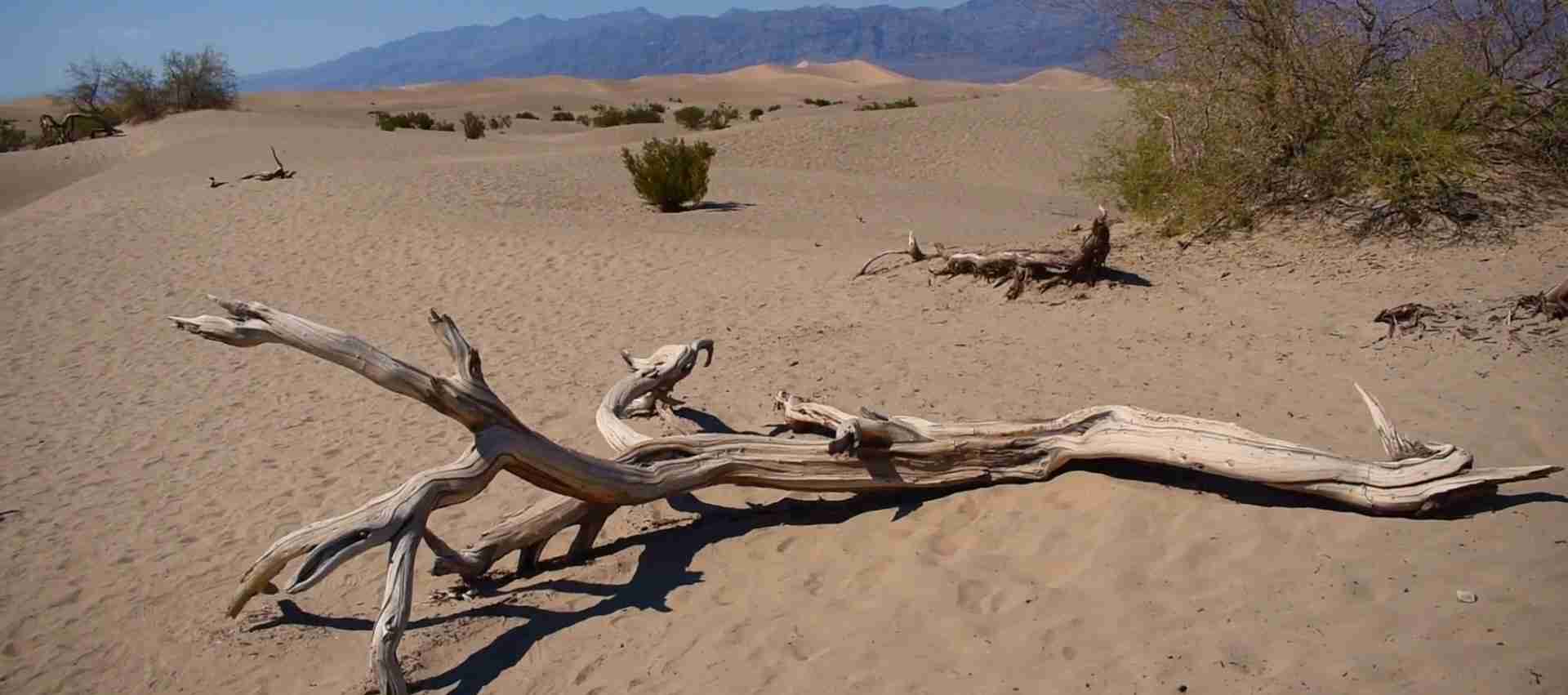
Mesquite Flat Sand Dunes provide Death Valley’s most accessible sand dune experience and classic desert photography opportunities. These dunes reach heights of 100 feet in the tallest sections and sprawl across several square miles of valley floor near Stovepipe Wells. Unlike many desert dunes that restrict foot traffic, Mesquite Flat encourages visitors to walk directly onto the sand, climb dunes, and explore freely without designated trails or restricted areas.
The dunes appear most photogenic during early morning or late afternoon when low-angle sunlight rakes across the sand creating dramatic shadows that emphasize every wind-carved ripple and ridge. Midday sun flattens the dunes’ visual impact by eliminating shadows that reveal three-dimensional contours. Footprints track across the sand throughout the day, but overnight winds erase most human traces by the following sunrise — early morning visitors enjoy pristine dune surfaces unmarred by hundreds of daily visitor tracks.
Access to Mesquite Flat Sand Dunes couldn’t be simpler — a paved parking area sits immediately adjacent to the dune field along CA-190 approximately 2 miles east of Stovepipe Wells Village. From your vehicle, walk directly onto the sand and explore as far as you wish. Most visitors venture 100-300 yards from the parking area, climbing several dune ridges for photographs before returning. Serious dune exploration can extend miles into the dune field, but 30-45 minutes suffices for day trip visitors seeking the classic Death Valley sand dune experience.
Sand temperatures become dangerous during warm months when surface readings exceed 150°F — hot enough to burn exposed skin within seconds. Visit the dunes before 10 AM or after 4 PM during April-October to avoid these extreme surface temperatures. Winter visits (November-March) allow comfortable midday dune exploration without heat concerns. Wear closed-toe shoes rather than sandals for dune walking regardless of season, as exposed sand burns feet even during cooler months when air temperatures remain moderate.
Devils Golf Course showcases salt formations in their most dramatic crystalline form — jagged pinnacles and ridges of salt rising inches to feet above the surrounding basin. These formations result from repeated cycles of flooding and evaporation concentrating dissolved minerals from distant mountain runoff into dense salt deposits. As water evaporates, salt crystallizes and expands, pushing upward and creating the rough, craggy surface that inspired the name (suggesting terrain so rough only the devil could play golf here).
A dirt road extends from Badwater Road approximately one mile to a parking area surrounded by the salt formations. This road requires careful driving over washboard surfaces and loose rocks, but standard vehicles navigate it successfully by maintaining slow speeds (10-15 mph). From the parking area, short walks venture onto the salt formations themselves — exercise extreme caution as the salt pinnacles are razor-sharp and can easily lacerate skin or tear clothing. Warning signs throughout the area emphasize falling risks given the irregular surface that makes stable footing difficult.
The Devils Golf Course setting delivers an alien landscape unlike anywhere else in Death Valley. The vastness of the salt field combined with the crystalline textures creates otherworldly scenes favored by photographers seeking Death Valley’s more surreal environments. Allocate 20-30 minutes for Devils Golf Course including the dirt road access, brief exploration around the parking area, and photography of the salt formations. Avoid venturing far from your vehicle given the sharp salt hazards and disorienting uniformity that makes navigation difficult.
Furnace Creek Visitor Center provides Death Valley’s primary information hub, museum exhibits, bookstore, and ranger-staffed desk for questions about park conditions, weather, and route planning. The facility’s modern architecture incorporates design elements that minimize energy consumption in the extreme climate while providing air-conditioned comfort for visitors. Museum exhibits explain Death Valley’s geology, ecology, and human history through interactive displays, photographs from the mining era, and specimens of the region’s unique plants and animals adapted to extreme aridity.
Plan 20-40 minutes at the visitor center depending on your interest in museum exhibits and whether you need to speak with rangers about current park conditions. The facility includes clean restrooms, water bottle refilling stations, and a selection of trail maps and educational materials. The bookstore offers Death Valley-specific guides, geological references, and regional hiking resources more detailed than the free park maps available at entrance stations. Rangers can provide current information about road conditions on unpaved routes if you’re considering ventures beyond the paved highway network.
Sample Itinerary: One-Day Death Valley Trip 2026
This optimized itinerary concentrates Death Valley’s essential highlights into a single day while maintaining reasonable pacing that allows photography stops, short walks at viewpoints, and meal breaks. The routing minimizes backtracking through strategic sequencing of stops and assumes early morning departure from Las Vegas positioning you at the park entrance by 8:30 AM. Adjust timing earlier during winter months (November-February) when shorter daylight hours compress the available exploration window.
6:00-6:30 AM — Depart Las Vegas hotel fully fueled from the previous evening. Drive west on I-15 briefly before exiting onto NV-160 (Blue Diamond Road) heading west toward Pahrump. Morning traffic remains light on this route and you’ll escape urban Las Vegas within 30 minutes as the highway transitions to open Mojave Desert landscapes.
7:00-7:15 AM — Arrive in Pahrump after approximately 60 miles of driving. Make final preparation stops here including topping off fuel if needed, using restroom facilities, and purchasing any forgotten supplies like sunscreen, hats, or snacks. Grab quick breakfast items if you haven’t eaten (drive-through coffee and breakfast sandwiches available at several locations along NV-160 through Pahrump). Resume westbound on NV-160 toward Death Valley Junction.
8:15-8:30 AM — Reach Death Valley Junction where NV-160 meets CA-127. Turn right briefly on CA-127 then immediately left onto CA-190 West toward Death Valley. Stop at the entrance kiosk approximately 5 miles west of the junction to purchase your park entrance pass ($30 per vehicle), display the receipt on your dashboard, and continue west on CA-190.
8:45-9:30 AM — Zabriskie Point arrival. Park in the lot and walk the short paved path to the elevated viewpoint platform. Morning light at this hour illuminates the badlands formations beautifully, creating dramatic shadows that emphasize the eroded ridges and canyons. Spend 30-45 minutes here photographing the panoramic vista, identifying prominent peaks on the horizon, and simply absorbing one of Death Valley’s signature landscapes. If you arrived early enough (before 7:30 AM departure from Vegas), you can time Zabriskie Point for sunrise creating even more dramatic lighting.
9:40-10:25 AM — Drive to Dante’s View via the turnoff from CA-190 onto Dante’s View Road. The 13-mile ascent winds through switchbacks climbing 5,000 feet to this spectacular overlook at 5,475 feet elevation. Park and walk to viewpoint platforms offering panoramic views down to Badwater Basin far below and across to the Panamint Range beyond. The elevation gain brings notably cooler temperatures — bring a light jacket if visiting during winter months. Photography, viewpoint appreciation, and the sense of scale provided by this bird’s-eye perspective of Death Valley merit 30-45 minutes before returning down Dante’s View Road to CA-190.
11:00-11:40 AM — Furnace Creek Visitor Center stop for restrooms, air conditioning break during warm months, and optional museum exhibits explaining Death Valley’s geology and ecology. Rangers staff the desk to answer questions about current park conditions or provide trail recommendations if you’re considering short hikes. The bookstore offers Death Valley-specific guides and maps. This stop also serves as a decision point for lunch strategy — you can eat at the Ranch at Death Valley restaurant (45-60 minutes table service) or purchase pre-made items from the general store for picnicking at upcoming scenic overlooks.
11:50 AM-12:30 PM — Lunch break, either at Furnace Creek dining facilities or as a packed picnic consumed at Badwater Basin or another scenic overlook depending on your preference. If picnicking from prepared items packed in Las Vegas, drive directly to Badwater Basin for a scenic lunch stop at the lowest point in North America. The covered picnic tables near the parking area provide shade during warm months.
12:30-1:15 PM — Badwater Basin exploration assuming you used this location for picnic lunch. Walk the boardwalk onto the salt flats, photograph the expansive white crystalline patterns against dark mountain backdrops, and locate the “Sea Level” sign on the cliff above the parking area visualizing how far below ocean surface you’re standing at 282 feet below sea level. The salt flats stretch for miles — you can walk well beyond the boardwalk directly onto the salt surface (avoiding any wet or muddy areas). Allocate 45 minutes total including parking, boardwalk walking, salt flat photography, and optional ventures onto the open flats.
1:30-2:00 PM — Devils Golf Course brief stop. Turn onto the dirt access road from Badwater Road and drive the approximately one mile to the parking area surrounded by razor-sharp salt crystalline formations. Walk carefully around the immediate parking area photographing the jagged pinnacles and ridges while exercising extreme caution to avoid lacerating skin on the sharp salt surfaces. The otherworldly landscape merits 20-30 minutes before returning to Badwater Road and continuing south.
2:15-3:00 PM — Artist’s Drive and Artist’s Palette. Turn onto the one-way scenic loop from Badwater Road and follow this nine-mile route through Death Valley’s most colorful geological formations. Multiple pull-offs allow photography of pink, purple, yellow, and green mineral deposits streaking across volcanic hillsides. The highlighted Artist’s Palette viewpoint appears midway through the loop — park and walk to viewing platforms where concentrated color displays create natural paintings across the landscape. Complete the full loop allowing stops at several viewpoints and focused time at Artist’s Palette itself, approximately 45 minutes total before rejoining Badwater Road heading north.
3:20-4:05 PM — Mesquite Flat Sand Dunes near Stovepipe Wells. Park in the roadside lot along CA-190 and walk directly onto the sand dunes stretching across the valley floor. Climb several dune ridges for classic Death Valley desert photography capturing wind-carved ripples and undulating sand shapes. Late afternoon light begins creating the dramatic shadows that emphasize dune contours and three-dimensional forms. Most visitors explore 100-300 yards into the dune field over 30-45 minutes before returning to vehicles. This represents your final major stop before beginning the return drive to Las Vegas.
4:15-6:45 PM — Departure from Death Valley and return drive to Las Vegas. Exit the park via CA-190 east to Death Valley Junction, then follow CA-127 briefly before turning onto NV-160 toward Pahrump and Las Vegas. Consider a brief stop in Pahrump for fuel, restrooms, and refreshments before the final hour of driving to Las Vegas. Sunset timing varies seasonally — winter months see sunset during this return drive while summer months maintain daylight throughout the journey.
6:45-7:15 PM — Arrival back at Las Vegas hotels, completing a full day of Death Valley exploration covering approximately 380-420 miles of total driving and visiting seven essential viewpoints that capture the park’s signature landscapes.
This itinerary provides buffer time between stops accounting for variable factors like parking availability, photography enthusiasm, and physical walking paces. If running ahead of schedule, add optional stops like the Harmony Borax Works historic site near Furnace Creek or the Twenty Mule Team Canyon Drive. If falling behind schedule, skip Devils Golf Course (the least essential stop on this routing) or reduce time at Dante’s View (impressive but time-consuming given the mountain road access). Flexibility allows personalizing the experience while maintaining the core stops that define a comprehensive Death Valley day trip.
Best Time to Visit Death Valley from Las Vegas 2026
Death Valley’s extreme climate creates dramatically different visitor experiences across seasons, with comfortable exploration windows concentrated during winter months and dangerous heat limiting summer access to essential early morning hours. Understanding these seasonal patterns proves critical for planning successful day trips that balance pleasant conditions, optimal photography lighting, and crowd management.
November through March represents Death Valley’s peak visitation season and the optimal period for Las Vegas day trips. Daytime temperatures during these months range from 60-75°F on the valley floor — comfortable for extended outdoor walking, photography at multiple viewpoints, and short hikes without heat exhaustion risks. Nights cool to 35-50°F, though day trippers return to Las Vegas before nightfall and rarely experience these lower temperatures. December and January bring the coolest conditions with daytime highs in the 50-65°F range and occasional cold fronts dropping valley floor temperatures into the 40s. Light jackets prove useful for morning hours and elevated viewpoints like Dante’s View where temperatures run 20-30°F cooler than the valley floor.
Winter months deliver crystal-clear skies ideal for landscape photography. The low sun angle during November through January creates dramatic side lighting that emphasizes topographic relief at locations like Zabriskie Point and the Mesquite Flat Sand Dunes. Sunrise arrives between 6:30-7:15 AM depending on the specific month, allowing reasonable departure times from Las Vegas (5:30-6:30 AM) for photographers seeking dawn light at Zabriskie Point. Sunset occurs between 4:45-5:45 PM, necessitating earlier departures from the park to complete the return drive in daylight unless you’re comfortable navigating winding mountain roads after dark.
Crowd levels during winter peak on weekends and holiday periods including Thanksgiving week, Christmas through New Year’s, and Presidents’ Day weekend. Weekday visits during January and February encounter notably lighter traffic at viewpoints and easier parking availability. Spring break periods in March see increased families visiting from the Southwest and California, though crowds remain manageable compared to iconic parks like Grand Canyon or Yosemite.
February through early March occasionally delivers superbloom wildflower displays following wet winters. Death Valley requires substantial winter precipitation (several inches above the annual average of 2 inches) to trigger widespread wildflower germination, making blooms unpredictable and occurring perhaps 3-4 times per decade. When conditions align, the valley floor and bajadas explode in carpets of yellow desert gold, purple notchleaf phacelia, pink sand verbena, and white desert primrose. Peak bloom timing varies by elevation and exposure but typically occurs late February through mid-March. The National Park Service provides bloom status updates on its website and social media channels allowing real-time decisions about timing visits to coincide with floral displays.
April and October serve as shoulder months bridging comfortable winter conditions and extreme summer heat. April daytime temperatures climb to 80-95°F with occasional days reaching 100°F. October reverses this pattern with early month temperatures near 95-100°F gradually cooling to 75-85°F by month’s end. These shoulder periods allow day trip visits but require increased water consumption, sun protection, and strategic timing to minimize midday heat exposure. Morning arrivals at the park (before 10 AM) and departures by early afternoon (2-3 PM) optimize cooler portions of the day. Sunset timing during these months (5:30-7 PM) extends useful daylight compared to winter, allowing slightly later park departures.
May through September brings Death Valley’s infamous extreme heat that earned the park its ominous name. June through August regularly produces daytime highs of 115-120°F with ground temperatures exceeding 200°F on exposed surfaces. July holds the record for Death Valley’s hottest month, averaging 116°F for daily highs. The park’s all-time high temperature of 134°F (recorded on July 10, 1913) stands as the highest reliably measured temperature in world history. These conditions create genuine danger for visitors who underestimate the environment’s lethality — heat stroke, dehydration, and vehicle failures escalate rapidly in this climate.
Summer day trips from Las Vegas remain possible but require extreme discipline and preparation. Pre-dawn departures (4-5 AM) position you at Death Valley viewpoints by sunrise (5:30-6 AM in summer) when temperatures still linger in the 80-90°F range. The critical window for safe outdoor activity extends only until 10-11 AM before heat becomes dangerous for extended exposure. This compressed timeframe allows visiting 3-4 essential viewpoints (Zabriskie Point for sunrise, Badwater Basin, Dante’s View, and perhaps Mesquite Flat Sand Dunes) before departing the park by late morning. Afternoon hours should be spent returning to air-conditioned Las Vegas rather than attempting additional Death Valley exploration.
Summer visitors must carry double the water supply recommended for winter months — two gallons per person minimum rather than one gallon. Vehicle air conditioning failures become life-threatening rather than merely uncomfortable, and spare tire checks become mandatory since blowouts increase dramatically in extreme heat. Summer tourism in Death Valley drops to minimal levels (less than 10% of winter visitation) as both tour operators and independent travelers recognize the genuine hazards of warm-season visits.
Monsoon season affects Death Valley from late July through September when moisture from the Gulf of California occasionally penetrates the region bringing afternoon thunderstorms. These storms remain infrequent (occurring on perhaps 5-10 days per summer) but deliver intense rainfall that generates flash floods capable of washing out roads and stranding motorists. Never drive through flooded roadways regardless of water depth — flash floods can transform a dry wash into a raging torrent within minutes. Check weather forecasts before summer visits and avoid canyons and low-lying roads if afternoon thunderstorms threaten.
The ideal Death Valley day trip from Las Vegas occurs on a weekday during January or February when comfortable temperatures, uncrowded viewpoints, and dramatic low-sun-angle photography converge. March and November offer slightly warmer conditions with marginally larger crowds but maintain excellent overall visiting conditions. April and October work for heat-tolerant visitors willing to adjust schedules around midday intensity. May through September should be avoided unless compelling reasons justify accepting the extreme heat constraints and compressed visitation windows these months impose.
Dining Options in Death Valley 2026
Death Valley National Park offers extremely limited dining infrastructure concentrated at two locations — Furnace Creek and Stovepipe Wells — with both delivering elevated prices reflecting remote desert isolation and limited competition. Day trippers from Las Vegas should anticipate either restaurant expenses of $20-35 per person for casual meals or plan to pack food from Las Vegas for scenic picnicking at viewpoints, avoiding both the cost premium and time consumption of park dining facilities.
The Ranch at Death Valley, located at Furnace Creek, provides Death Valley’s primary dining option through its casual restaurant serving breakfast, lunch, and dinner in an air-conditioned dining room with valley views. Breakfast (served 7-11 AM) features typical American morning fare including eggs, pancakes, breakfast burritos, and continental options, priced $12-18 per person. Lunch service (11 AM-3 PM) offers sandwiches, salads, burgers, and Southwestern-influenced entrees ranging $15-25 per plate. Dinner extends the menu to include steaks, pasta, and regional specialties at $22-38 per entree, though day trippers typically return to Las Vegas before dinner hours.
Service at the Ranch restaurant can be slow during peak periods when a single kitchen handles capacity crowds. Expect 45-60 minutes for complete lunch service from seating through bill payment — time that significantly compresses your park exploration schedule. Reservations aren’t accepted for lunch, creating potential wait times on busy weekends. The convenience of air conditioning and table service appeals to some visitors willing to sacrifice exploration time for a comfortable sit-down meal, while others view the time commitment as incompatible with maximizing viewpoint visits on a single-day itinerary.
The Furnace Creek general store offers faster alternatives through pre-made sandwiches ($10-14), salads ($8-12), chips, trail mix, energy bars, and beverages ($3-5 for bottled water and sodas). This grab-and-go approach saves substantial time compared to restaurant dining while maintaining reasonable quality and variety. The store also stocks ice cream, cookies, and snacks perfect for midday energy boosts during warm months. Picnic tables with shade ramadas adjacent to the parking area provide outdoor dining space when temperatures permit comfortable outdoor eating.
Stovepipe Wells Village operates a more limited dining facility serving basic breakfast and lunch options (burgers, sandwiches, salads) at similar prices to Furnace Creek but with less menu variety and more rustic atmosphere. This location serves primarily overnight guests staying at the Stovepipe Wells Village Hotel and sees less day-tripper traffic given its position on the western side of the park. Hours vary seasonally and the restaurant occasionally closes for staff shortages during slower periods.
Outside these two commercial hubs, Death Valley offers zero food services. No food trucks, roadside stands, or vending machines exist along the park’s 300+ miles of paved roads. This scarcity transforms meal planning into a critical preparation component for day trips — either you plan dining stops at Furnace Creek or Stovepipe Wells into your itinerary timeline, or you pack complete meal supplies from Las Vegas.
The packed meal strategy delivers multiple advantages for day trippers optimizing their limited park time. Grocery stores and delis throughout Las Vegas sell pre-made sandwiches, wraps, fruit, chips, cookies, and beverages at prices 40-60% below Death Valley’s markup. Packing these items in a cooler with ice maintains food safety despite desert heat. Scenic picnicking at Badwater Basin, Dante’s View, or Zabriskie Point converts meal time into extended viewpoint appreciation rather than time consumed in restaurant queues. The flexibility to eat whenever hunger strikes rather than coordinating stops with limited restaurant hours and locations further enhances this approach.
What to pack for Death Valley picnicking: sandwiches or wraps that tolerate several hours without refrigeration (avoid mayonnaise-heavy items that spoil in heat), hearty sides like chips, crackers, trail mix, and energy bars, fresh fruit (apples, oranges, grapes hold up better than delicate berries), cookies or brownies for dessert, and abundant beverages. Pack one gallon of water per person absolute minimum, supplemented with sports drinks, lemonade, or iced tea providing electrolyte replacement and flavor variety. Freeze several water bottles overnight and pack these as ice substitutes that gradually melt into drinkable ice-cold water throughout the day.
Alcohol consumption in Death Valley’s extreme climate accelerates dehydration and impairs heat regulation — save celebratory beverages for your return to Las Vegas rather than risking compounded heat stress in the park. Energy drinks and high-caffeine beverages similarly exacerbate dehydration despite temporarily masking fatigue. Water and electrolyte-replacement sports drinks optimize hydration and sustained energy through long days of desert exploration.
Restaurant meals at Furnace Creek make sense for specific scenarios: visitors uncomfortable with picnic logistics, travelers arriving without pre-planned provisions, those seeking air-conditioned breaks during warm weather, or day trippers timing visits specifically to include a leisurely lunch as part of the experience rather than maximizing viewpoint quantity. The decision balances time efficiency against convenience and personal preferences about dining as relaxation versus functional fueling.
Transportation Costs & Logistics 2026
Self-drive Death Valley day trips from Las Vegas incur transportation costs primarily through fuel consumption, with the 240-250 mile round trip requiring 10-15 gallons depending on your vehicle’s efficiency. Calculate expected gas expenses using your vehicle’s average miles per gallon and current fuel prices in the Las Vegas area (typically $3.50-4.50 per gallon during 2026). A vehicle averaging 25 MPG consumes approximately 10 gallons for the complete round trip at a cost of $35-45. Less efficient SUVs or trucks averaging 18 MPG require closer to 14 gallons at $50-65 total fuel expense.
Fill your tank in Las Vegas the evening before departure or early morning before leaving the city. Gas prices in Las Vegas average $0.50-1 per gallon lower than Pahrump and dramatically lower than Death Valley’s two park stations. The Pahrump area along NV-160 offers multiple gas stations where prices run approximately $0.30-0.50 per gallon above Las Vegas rates — acceptable for topping off if needed but avoiding the necessity saves money. Death Valley’s Furnace Creek and Stovepipe Wells stations charge premium prices ($1.50-2 per gallon above Las Vegas rates) and occasionally run dry during busy weekends, making them unreliable and expensive options.
The fuel strategy for day trips: depart Las Vegas with a full tank, optionally top off in Pahrump if you’re uncomfortable with remaining fuel level, drive to Death Valley and complete your entire park visit without refueling, and gas up again either in Pahrump on the return or back in Las Vegas depending on remaining fuel. Most modern vehicles easily complete the entire round trip plus park touring (300-320 total miles including within-park driving) on a single tank, assuming you started with a full 12-15 gallon tank.
Rental car considerations become relevant for Las Vegas visitors flying in without personal vehicles. Standard rental car rates in Las Vegas range $35-75 per day depending on vehicle class, demand, and booking timing. Compact and economy cars deliver the lowest rates and provide perfectly adequate transportation for Death Valley’s paved road network — no need for SUVs or premium vehicles unless you prefer additional space and comfort. Book rental cars well in advance of Las Vegas arrival to secure competitive rates, as last-minute bookings during peak Las Vegas visitation periods (conventions, holidays, major events) inflate prices substantially.
Rental car insurance adds $15-35 per day to rental costs depending on coverage levels selected. Verify whether your personal auto insurance or credit card provides rental car coverage before purchasing redundant policies through rental agencies. Many credit cards include collision damage waiver coverage for rentals charged to the card, potentially saving $20-30 per rental day. Read policy details carefully to confirm coverage applies to Death Valley driving — most policies cover standard paved highway driving but exclude unpaved roads.
Parking throughout Death Valley remains free at all viewpoints, visitor centers, and day-use areas. The park entrance fee ($30 per vehicle) covers all access including parking — no additional fees apply for individual lot usage. This contrasts with some heavily visited national parks where parking reservations or timed entry systems restrict access during peak seasons. Death Valley’s vastness and modest visitation levels (relative to parks like Yosemite or Zion) eliminate parking scarcity even during busy winter months.
Vehicle requirements for Death Valley day trips focusing on paved road viewpoints remain minimal. Any roadworthy passenger car navigates the routes outlined in this guide. High clearance or four-wheel drive becomes necessary only for unpaved backcountry roads leading to remote areas like Racetrack Playa, Titus Canyon, or Eureka Dunes — destinations requiring full-day commitments incompatible with Las Vegas day trips. Rental car agreements typically restrict driving on unpaved roads, making these remote areas off-limits to rental vehicle operators regardless.
Vehicle preparation before departure includes basic checks: verify tire pressure and spare tire condition, confirm coolant and oil levels meet manufacturer specifications, test that air conditioning functions properly (critical during warm months), and ensure you carry a functioning jack and tire iron. These preventive measures reduce breakdown risks in remote desert locations where assistance requires hours to arrive and towing costs run $300-600 or more due to the distances involved.
Emergency supplies for desert driving should include: one gallon of water per person for drinking plus one gallon extra for radiator emergencies, a cell phone charger (though service is absent throughout most of Death Valley, emergency 911 calls sometimes connect through distant towers), basic tools for minor repairs, a flashlight with fresh batteries, and a reflective emergency blanket. These items occupy minimal space but provide critical safety margins if breakdowns or medical emergencies occur in areas without cell service or passing traffic.
Tour transportation eliminates all self-drive logistics while adding comprehensive service. Organized tours include round-trip hotel pickup and return, eliminating Las Vegas parking fees ($15-30 per day at many Strip hotels), removing navigation stress, and allowing passengers to relax and photograph throughout the journey rather than focusing on driving. Small-group tours ($169-280) provide comfortable vehicles with panoramic windows, climate control, and professional guides handling all route planning and timing.
The self-drive versus tour cost comparison depends on group size. Solo travelers pay the same $30 park entrance and approximately $40 fuel whether driving alone or joining a $169 tour — the tour delivers significantly better value through guide expertise and social dynamics. Couples driving together split the $70 total transportation cost to $35 per person, making tours ($169 per person) substantially more expensive unless you value the guide service and eliminated driving responsibility. Groups of three or four reduce per-person self-drive costs to $23-27 each, creating strong economic incentives for renting a vehicle rather than booking individual tour seats at $169-280 per person.
Vehicle wear and tear from the 300+ mile round trip adds minimal cost to personal vehicles — perhaps $25-35 in accelerated depreciation, brake wear, and tire tread consumption. This factor rarely influences decision-making but merits consideration for those analyzing complete cost accounting. Rental vehicles absorb this wear into the daily rate without additional charges beyond fuel consumption.
Day Trip Budget Summary 2026: Complete Cost Breakdown
Self-drive Death Valley day trips from Las Vegas cost $65-100 per person when two people share expenses, accounting for park entrance, fuel, and meals. This budget assumes moderate dining choices either packing some food from Las Vegas or purchasing items at park facilities, efficient vehicles achieving 20-25 MPG, and standard passenger cars requiring no rental fees for travelers with personal vehicles available.
Budget breakdown for two people sharing a self-drive day trip includes park entrance fee $30 per vehicle covering both passengers ($15 per person share), round-trip fuel $35-45 for 240-250 miles at current Las Vegas area gas prices ($18-23 per person share), and meals and snacks $30-60 per person depending on dining choices. Total per-person costs range $63-98, rounding to approximately $65-100 for the shared two-person trip. Optional expenses like bottled beverages purchased in the park ($8-15 per person) and souvenirs add to this base budget.
Solo travelers pay the full $30 park entrance and approximately $40 fuel expense while dividing costs by one person rather than two. Solo self-drive budgets total $100-130 per person using identical assumptions for meals and optional purchases. The economics shift unfavorably for solo travelers compared to joining organized tours priced at $169-219 — tours deliver guide expertise, social interaction with fellow travelers, and eliminated driving responsibility for just $40-90 more than solo self-driving.
Groups of three or four people dramatically reduce per-person transportation costs through expense sharing. Four people split the $30 entrance fee ($7.50 per person) and $40 fuel expense ($10 per person), dropping base transportation costs to under $20 per person before meals. Total day trip costs for groups of four run $50-85 per person, making self-driving the overwhelming economic choice compared to tour pricing at $169-280 per person.
Rental car scenarios for Las Vegas visitors without personal vehicles add $35-75 daily rental fees plus $15-35 for optional insurance coverage. Split among two people, this adds $25-55 per person to the base transportation budget, bringing total self-drive costs to $90-155 per person. At these price points, organized tours ($169-280) remain competitively priced when accounting for the eliminated driving responsibility, guide expertise, and included amenities like water and snacks throughout the day.
Dining choices create the widest budget variability. The frugal approach packs complete lunch components from Las Vegas supermarkets ($8-12 per person for sandwich, chips, fruit, and cookies) plus breakfast items consumed before departure or during the Pahrump stop ($5-8 per person), totaling $13-20 for meals. Mid-range dining purchases lunch at the Furnace Creek general store ($15-25 per person for pre-made sandwiches, drinks, and snacks) while packing breakfast, reaching $20-33 for daily food costs. The premium approach eats a sit-down lunch at the Ranch at Death Valley restaurant ($22-35 per person including beverage and tip) plus breakfast items, totaling $30-45 for meals.
Water and hydration supplies purchased before leaving Las Vegas (supermarket prices) cost $3-5 per person for one gallon plus supplemental beverages. Purchasing equivalent water and drinks within Death Valley at park facilities runs $12-18 per person due to remote location pricing. Pre-planning saves $9-13 per person while ensuring you carry adequate hydration from the trip’s start rather than hoping park facilities stock sufficient supplies.
Optional expenses vary widely based on individual interests. The Death Valley visitor center bookstore sells park-specific guidebooks ($12-25), geological references ($18-35), trail maps ($8-15), and commemorative items. Photography enthusiasts might invest in polarizing filters or lens cleaning supplies given Death Valley’s extreme dust and glare conditions. Most day trippers allocate $0-30 for optional purchases beyond essential trip costs.
Organized tour pricing includes all core expenses within a single upfront payment. Standard small-group tours ($169-219 per person) cover round-trip transportation from Las Vegas hotels, park entrance fees, bottled water and light snacks throughout the day, and professional guide services. Meals remain the primary additional expense — most budget tours either stop at the Furnace Creek restaurant where passengers purchase their own lunch ($15-25 per person) or provide time for passengers to buy pre-made items from the general store ($12-18). Premium tours ($249-280) often include boxed lunches in the tour price, eliminating meal decisions and additional food costs.
Sunset and stargazing tours ($249-295) justify their premium pricing through extended duration (11-13 hours versus 10-11 hours for standard tours), specialized timing to capture dramatic evening light, and dark sky viewing opportunities unavailable on daytime-only tours. These tours appeal to photographers and astronomy enthusiasts willing to pay $80-125 more than basic tours for the enhanced experience.
Private tours ($244-399 per person depending on group size) deliver customized itineraries and flexible pacing impossible with fixed small-group schedules. The per-person cost decreases as group size increases — two people might pay $399 each for private guide service, while a group of six reduces per-person costs to $244 each while maintaining the private tour benefits of customizable stops and timing.
The budget-conscious Las Vegas visitor minimizes Death Valley costs through: driving a personal fuel-efficient vehicle (eliminating rental fees), sharing expenses with travel companions (reducing per-person transportation costs), packing complete meal supplies from Las Vegas supermarkets (cutting food costs 60-70% versus park dining), pre-purchasing water and beverages before departure (saving $10-15 per person versus park prices), and focusing spending exclusively on the essential park entrance fee and transportation fuel. This approach delivers full Death Valley access for $65-95 per person when splitting costs between two people.
The comfort-prioritized visitor optimizes experience over cost savings through: joining organized tours eliminating driving stress and navigation concerns ($169-280 per person), selecting premium tours with included meals and smaller group sizes ($249-280), allocating budget for sit-down restaurant meals providing air-conditioned breaks during warm weather ($25-35 per person), and purchasing park-specific books and maps from the visitor center supporting continued Death Valley education after the visit ($15-40). This approach invests $220-360 per person while maximizing convenience, comfort, and expert interpretation.
Most visitors balance these extremes, self-driving to maintain flexibility and reduce costs while allocating budget for quality meals and selecting a few optional purchases that enhance the experience. The $65-100 per-person range represents this balanced middle path delivering comprehensive Death Valley access at moderate expense through strategic choices about dining, shopping, and logistics.
Essential Preparation & Safety Tips 2026
Death Valley’s extreme environment transforms minor oversights into genuine emergencies. Proper preparation and respect for desert conditions separate successful day trips from dangerous situations requiring rescue intervention. These essential guidelines address the specific hazards Death Valley presents and the proactive measures that eliminate risk while maximizing enjoyment.
Water carries paramount importance in Death Valley preparation. Dehydration occurs rapidly in the park’s arid climate even during winter months when moderate temperatures mask ongoing fluid loss through respiration and perspiration. The minimum water supply for day trips totals one gallon per person, increased to two gallons per person during warm months (April-October). This quantity seems excessive until you understand that an active adult can lose 1-2 liters of fluid hourly in Death Valley’s dry heat even without obvious sweating. Pack water in multiple containers rather than a single large jug, making individual bottles easier to grab during brief viewpoint stops without unpacking larger containers.
Recognize dehydration symptoms before they progress to dangerous levels: early signs include thirst (obvious but often ignored), decreased urination or dark yellow urine, headaches, fatigue, and dizziness. Advanced dehydration produces confusion, rapid heartbeat, and eventually loss of consciousness. The dry climate prevents sweat accumulation on skin — moisture evaporates instantly — creating false security that you’re not losing fluids as rapidly as reality dictates. Drink water on a schedule (every 30-45 minutes regardless of thirst sensation) rather than waiting until you feel thirsty, at which point you’re already mildly dehydrated.
Sun protection becomes critical given Death Valley’s minimal shade and intense solar radiation at these southern latitudes and low elevations. Apply broad-spectrum sunscreen with SPF 50 or higher to all exposed skin before leaving your vehicle at each viewpoint. Reapply every 90-120 minutes and after any sweating that might compromise coverage. Wear wide-brimmed hats providing face, neck, and ear protection — baseball caps leave too much skin exposed. Sunglasses with UV protection prevent eye damage from reflected glare off salt flats and sand dunes.
The desert sun delivers skin-damaging radiation even during winter months when air temperatures remain comfortable. Ultraviolet exposure at Death Valley’s elevation and latitude exceeds levels in northern states by 30-40%. Cloudy days provide no protection — UV radiation penetrates cloud cover easily. Sunburn develops within 15-20 minutes of unprotected exposure during midday hours, progressing to painful burns within 45-60 minutes. Severe sunburn compromises your body’s heat regulation ability and increases dehydration risks through damaged skin losing fluid retention capacity.
Clothing selection for Death Valley emphasizes light colors reflecting solar radiation, loose-fitting breathable fabrics allowing air circulation, and layering options for temperature variations. Pants and long-sleeve shirts provide superior sun protection compared to shorts and tank tops despite feeling counterintuitive in desert heat. Natural fabrics like cotton absorb moisture while remaining comfortable, though some prefer modern moisture-wicking synthetics designed for athletic activity. Avoid dark colors that absorb heat and tight-fitting garments that restrict cooling air flow.
Temperature variations between valley floor locations and elevated viewpoints create layering needs even during summer. Dante’s View sits 5,475 feet above sea level and typically runs 20-30°F cooler than Badwater Basin just 13 miles away. Winter visits may experience 40°F at Dante’s View while Furnace Creek enjoys 70°F comfort. Pack a light jacket or fleece accessible in your vehicle for elevated viewpoint stops rather than discovering the temperature differential while standing in cold winds unprepared.
Cell phone service vanishes almost entirely within Death Valley National Park boundaries. Both major carriers (AT&T, Verizon) and smaller networks provide zero coverage through most of the park except occasional weak signals at Furnace Creek Resort. This communication blackout eliminates real-time map access, weather updates, emergency calls, and coordination with travel companions if groups separate. Download offline maps through Google Maps or specialized apps like Gaia GPS before entering the park. Share your itinerary with someone outside the park including expected return time to Las Vegas — if you fail to check in, they can initiate rescue coordination.
Emergency 911 calls occasionally connect through distant cell towers even when regular service shows zero bars. If experiencing a genuine emergency (medical crisis, vehicle breakdown in dangerous heat, injury preventing self-rescue), dial 911 and allow your phone to search for any available signal. Emergency calls receive routing priority and sometimes connect through towers 50+ miles away that wouldn’t handle normal calls. Don’t depend on this capability for routine communication, but understand it exists for life-threatening situations.
Vehicle reliability becomes critical in an environment where breakdowns strand you miles from assistance in dangerous heat. Before departing Las Vegas, verify your vehicle’s condition through basic checks: tire pressure at manufacturer specifications, spare tire inflated and accessible with functioning jack and lug wrench, coolant reservoir filled to proper level, oil level adequate, and air conditioning functional. These simple preventive measures catch issues before they strand you in 115°F heat miles from the nearest town.
If your vehicle experiences problems during your Death Valley visit, remain with the vehicle rather than walking for help. Cars are vastly easier for rescue teams to locate than individuals wandering in Death Valley’s immense landscapes. Run your air conditioning intermittently to maintain survivable interior temperatures while conserving fuel. Display visible distress signals like opening the hood, hanging bright fabric from windows, or writing “HELP” in large letters using rocks arranged on open ground near your vehicle. Park rangers patrol regularly and will investigate any vehicle appearing abandoned or in distress.
Heat-related illness progresses through increasingly dangerous stages if unaddressed. Heat exhaustion symptoms include heavy sweating, weakness, cold clammy skin, fast weak pulse, nausea, and fainting. Treatment requires moving to shade or air conditioning immediately, drinking water with electrolyte replacement, and cooling skin with wet cloths. Heat stroke represents life-threatening progression characterized by body temperature above 103°F, hot dry skin (sweating stops), rapid strong pulse, confusion, and possible unconsciousness. Heat stroke requires immediate emergency evacuation — call 911, move the victim to shade or air conditioning, and apply ice packs to neck, armpits, and groin while awaiting rescue.
Prevent heat illness through proactive hydration, avoiding midday exposure during warm months, taking frequent breaks in air-conditioned vehicles or shaded areas, and recognizing early symptoms before they progress. Never ignore headaches, dizziness, or nausea as minor inconveniences — these early warnings provide opportunity to rest, hydrate, and cool down before symptoms escalate to dangerous levels.
Wildlife encounters in Death Valley remain uncommon but require awareness. Rattlesnakes inhabit rocky areas and emerge during warm months (April-October), though sightings along paved viewpoint walkways occur rarely. Watch where you step when walking on unpaved surfaces and never place hands in rock crevices or under ledges where snakes shelter. If you encounter a rattlesnake, back away slowly giving the animal space to retreat — snakes strike only when feeling threatened and trapped. Bites are extremely rare among visitors respecting wildlife and maintaining awareness of surroundings.
Flash floods pose serious dangers during the rare occasions when Death Valley receives precipitation. Thunderstorms primarily occur during summer monsoon season (July-September) when moisture from the Gulf of California penetrates the region. These storms produce intense rainfall over small areas, generating flash floods that transform dry washes into raging torrents within minutes. Never drive through flooded roadways regardless of apparent shallow depth — moving water just 6 inches deep can sweep vehicles off roads. If weather forecasts indicate precipitation, avoid canyons and low-lying roads where flash flood risk concentrates.
Road safety in Death Valley requires attention to wildlife crossings, particularly during dawn and dusk hours when animals are most active. Bighorn sheep, coyotes, and desert kit foxes occasionally cross paved roads, creating collision hazards. Drive at posted speed limits and scan roadways ahead for movement. Pull completely off pavement if stopping to photograph wildlife — blocking traffic creates hazards for other vehicles unable to see stopped cars around curves.
Photography equipment requires protection from Death Valley’s extreme conditions. Sand and dust infiltrate camera bodies and lenses despite your best efforts — bring microfiber cloths and lens cleaning supplies to maintain clear optics throughout the day. Heat damages electronics and batteries — never leave cameras, phones, or other devices in vehicles parked in direct sun where interior temperatures can exceed 150°F within 30 minutes. Store electronics in insulated bags or coolers when not actively using them, and allow devices to cool before attempting to charge them (charging hot batteries can permanently damage capacity).
Best photography occurs during golden hours (the hour after sunrise and hour before sunset) when angled light enhances texture and color saturation. The intense midday sun creates harsh shadows and washed-out highlights difficult to manage even with post-processing. Polarizing filters reduce glare from reflective surfaces like salt flats and improve sky saturation. Tripods stabilize cameras for compositions requiring depth of field or long exposures, though most viewpoints provide adequate light for handheld shooting during daytime hours.
Weather & Seasonal Considerations 2026
Death Valley’s climate extremes define the park experience more than any other factor, with temperature variations between seasons reaching 90-100°F and daily temperature swings within single days spanning 40-50°F. Understanding these patterns allows strategic timing that maximizes comfort while minimizing heat-related risks and optimizing photography lighting.
Winter months (December-February) deliver Death Valley’s most comfortable conditions with daytime highs averaging 65-70°F on the valley floor. Overnight lows drop to 35-45°F, though day trippers return to Las Vegas before evening cold arrives. Occasional cold fronts during these months can depress daytime temperatures to the 50-55°F range while bringing rare precipitation (Death Valley averages just 2 inches annually, mostly falling during winter months). These winter storms rarely impact visitation since roads clear quickly and sunny conditions typically resume within 24-48 hours.
January and February represent Death Valley’s coldest period though “cold” remains relative given the park’s desert climate and southern latitude. Frost occasionally appears on valley floor vegetation during overnight hours following clear skies and calm winds allowing radiative cooling. Elevated viewpoints like Dante’s View and the Panamint Mountains accumulate light snow during stronger winter storms, creating unusual desert snow photography opportunities occurring perhaps 2-3 times per winter in typical years.
Spring (March-May) brings warming trends as the sun’s angle increases and days lengthen. March maintains winter’s comfortable temperatures (70-80°F daytime) while April transitions toward warm conditions (80-90°F). May exits spring and enters summer territory with highs frequently exceeding 100°F and occasional days reaching 110°F. Wildflower blooms concentrate during March and early April following wet winters, transforming bajadas and valley floors into carpets of yellow, purple, and pink blossoms. Peak bloom timing varies annually based on winter precipitation patterns and spring temperature trends — the National Park Service provides real-time bloom status updates through its website and social media channels.
Summer (June-August) brings Death Valley’s infamous heat earning the park its ominous reputation. June averages 109°F for daily highs, July peaks at 116°F average highs, and August gradually cools to 113°F averages. These figures represent average temperatures — individual days during these months regularly exceed 120°F with the valley floor’s record high of 134°F (recorded July 10, 1913) standing as the highest reliably measured temperature in world history. Ground temperatures on exposed surfaces reach 180-200°F, hot enough to cause severe burns within seconds of skin contact.
Summer heat creates genuine dangers for unprepared visitors. Heat exhaustion and heat stroke occur rapidly when outdoor exposure exceeds 1-2 hours during midday hours. Vehicle breakdowns become life-threatening rather than inconvenient since air conditioning loss in 120°F ambient temperature creates interior vehicle temperatures exceeding 150°F within 20-30 minutes. Water consumption requirements double or triple compared to winter visits — two gallons per person minimum for summer day trips versus one gallon during winter months.
Monsoon season affects Death Valley from late July through September when moisture from the Gulf of California occasionally penetrates the region. Traditional monsoon flow patterns remain less reliable here than in Arizona and New Mexico, making summer precipitation highly variable and unpredictable. When moisture does arrive, afternoon and evening thunderstorms produce intense localized rainfall generating flash floods through normally dry washes and canyons. These storms occur on perhaps 5-10 days per summer in typical years, though El Niño patterns can increase monsoon activity while La Niña years see minimal summer moisture.
Fall (September-November) reverses spring’s warming pattern as temperatures gradually decline from summer extremes. September maintains summer-level heat with 105-110°F average highs and limited visitation from heat-averse travelers. October transitions into comfortable territory with highs falling to 85-95°F early in the month and reaching 75-80°F by month’s end. November completes the transition to winter’s pleasant conditions with 65-75°F daytime highs and minimal precipitation risk.
Seasonal visitation patterns mirror the climate progression. January through March attracts peak crowds drawn by comfortable temperatures, though “crowded” in Death Valley remains modest compared to iconic parks like Yosemite or Grand Canyon. Weekend parking lots at Badwater Basin and Zabriskie Point fill by late morning during these peak months, while weekdays maintain lighter traffic. April and November see moderate visitation from spring and fall travelers willing to accept slightly warmer conditions. May through September drops to minimal tourist presence as extreme heat deters all but the most dedicated desert enthusiasts and those constrained by limited vacation timing.
Sunrise and sunset timing varies dramatically across seasons, impacting day trip logistics. December’s shortest days deliver sunrise near 7:00 AM and sunset by 4:45 PM, compressing available daylight to under 10 hours and requiring earlier Las Vegas departures to maximize park time. June’s longest days extend from 5:30 AM sunrise to 8:00 PM sunset, providing nearly 15 hours of daylight though practical exploration compresses to morning hours before heat becomes dangerous. Photography benefits from knowing precise sunrise timing — online calculators and apps like The Photographer’s Ephemeris predict exact sunrise/sunset times for specific dates and locations enabling precise timing for Zabriskie Point sunrise shoots.
Wind patterns in Death Valley generally remain calm during morning hours, increasing through midday and peaking during mid-to-late afternoon. These afternoon winds blow sand and dust reducing visibility and creating challenging photography conditions. Winter frontal systems occasionally bring stronger sustained winds from variable directions, making tripod stabilization difficult and blowing sand that damages camera equipment. Check wind forecasts when planning photography-focused trips since sustained winds above 15-20 mph compromise landscape photography and make sand dune exploration uncomfortable.
Air quality in Death Valley maintains excellent clarity most of the year given the park’s remote location far from urban pollution sources. Occasional wildfire smoke from California’s Central Valley or Southern California can drift into Death Valley during summer and fall fire seasons, reducing visibility and creating hazy atmospheric conditions. These smoke intrusions last 2-7 days depending on wind patterns and fire intensity. Real-time air quality monitoring through apps like AirNow provides current readings and forecasts allowing rescheduling decisions if smoke significantly impacts visibility.
The optimal Death Valley day trip window for comfortable conditions, uncrowded viewpoints, and excellent photography lighting concentrates during January-February weekdays. March and November deliver slightly warmer temperatures with marginally increased crowds but maintain overall excellent conditions. April and October work for heat-tolerant visitors accepting 85-95°F midday temperatures. May through September should be avoided unless you possess extensive desert experience, accept extreme heat constraints, and schedule visits for pre-dawn through late morning time windows only.
Frequently Asked Questions: Death Valley Day Trip from Las Vegas 2026
How long does it take to drive from Las Vegas to Death Valley in 2026?
The drive from Las Vegas to Death Valley’s primary entrance at Death Valley Junction requires 2-2.5 hours covering 120-150 miles depending on your chosen route. The fastest route via NV-160 through Pahrump spans approximately 125 miles and takes 2-2.5 hours under normal traffic conditions. The alternative route via US-95 through Beatty adds approximately 15-20 miles but compensates with scenic interest including the Rhyolite Ghost Town near Beatty. Morning traffic heading west from Las Vegas remains light on these routes, allowing highway speed cruising of 55-70 MPH through open desert. The town of Pahrump appears after approximately 60 miles and one hour of driving, serving as an ideal preparation stop for fuel, restrooms, and final supplies before entering Death Valley 30 miles further west. From the park entrance at Death Valley Junction, Furnace Creek (the park’s main service hub) sits another 30 miles west on CA-190, adding 25-30 minutes to reach central Death Valley locations where most viewpoints cluster. Total travel time from Las Vegas hotels to major Death Valley viewpoints ranges 2.5-3 hours each direction including a brief Pahrump stop.
What should I pack for a Death Valley day trip from Las Vegas in 2026?
Essential items for Death Valley day trips include abundant water (minimum one gallon per person, two gallons during warm months April-October), comprehensive sun protection (SPF 50+ sunscreen, wide-brimmed hat, UV-protection sunglasses), layered clothing for temperature variations between valley floor and elevated viewpoints, comfortable walking shoes suitable for gravel and sand surfaces, camera equipment with extra batteries and memory cards, and basic emergency supplies including first aid kit, flashlight, and extra food. Download offline maps for Death Valley onto your smartphone before departure since cell service vanishes throughout most of the park. Pack lunch components from Las Vegas supermarkets to avoid limited and expensive park dining options — sandwiches, chips, fruit, cookies, and beverages stored in a cooler maintain food safety despite desert heat. Bring a light jacket even during summer months since elevated viewpoints like Dante’s View run 20-30°F cooler than the valley floor. Car-specific supplies should include spare tire verification, coolant for radiator emergencies, and basic tools for minor repairs. Carry all prescription medications, personal electronics chargers, and any specialized items like infant supplies or dietary restriction foods that park facilities won’t stock.
Can you visit Death Valley in summer 2026 or is it too dangerous?
Summer Death Valley visits (June-September) remain possible but require extreme discipline, pre-dawn departures, and acceptance of compressed exploration windows limited to early morning hours before heat becomes dangerous. Temperatures during these months regularly exceed 115-120°F with July averaging 116°F for daily highs and ground temperatures reaching 180-200°F on exposed surfaces. These conditions create genuine life-threatening risks for visitors who underestimate the environment or inadequately prepare. Successful summer day trips depart Las Vegas by 4-5 AM positioning you at Death Valley viewpoints by sunrise (5:30-6:00 AM) when temperatures linger in the 80-90°F range. The safe exploration window extends only until 10-11 AM before heat escalates to dangerous levels for extended outdoor exposure. This compressed timeframe allows visiting 3-4 essential locations (Zabriskie Point for sunrise, Badwater Basin, Dante’s View, perhaps Mesquite Flat Sand Dunes) before departing the park by late morning and returning to air-conditioned Las Vegas. Summer visitors must carry double the water supply recommended for winter months (two gallons per person minimum rather than one gallon) and recognize that vehicle air conditioning failures transition from inconvenient to life-threatening. Tourism during summer months drops to less than 10% of winter visitation levels as both tour operators and independent travelers acknowledge the genuine hazards these months present.
What is the best route from Las Vegas to Death Valley in 2026?
The NV-160 route through Pahrump represents the fastest and most practical option for Death Valley day trips from Las Vegas, delivering direct access to Death Valley Junction in 2-2.5 hours via well-maintained highways with excellent services in Pahrump for final preparations. Depart Las Vegas heading west on Blue Diamond Road (NV-160 West), continue through gradually opening desert landscapes for approximately 60 miles to Pahrump where multiple gas stations, restaurants, and grocery stores provide last reliable services before the park. From Pahrump, continue west on NV-160 (Bell Vista Avenue through town) approximately 35 miles to the junction with California Highway 127 at Death Valley Junction. Turn right briefly on CA-127 then immediately left onto CA-190 West which serves as the primary entry road into Death Valley. The park entrance kiosk appears approximately 5 miles west of Death Valley Junction where you’ll purchase your entrance pass and enter the communication dead zone affecting most of the park. This routing minimizes drive time while maintaining convenient access to services and straightforward navigation. The alternative US-95 route through Beatty adds 20-30 minutes and approximately 20 miles but compensates with scenic interest and the opportunity to visit Rhyolite Ghost Town — a worthwhile trade-off for first-time visitors interested in Death Valley’s mining history or travelers with flexible schedules appreciating the additional desert scenery along this northern approach.
Do I need a 4WD vehicle for Death Valley day trips from Las Vegas in 2026?
Standard passenger cars, sedans, and rental vehicles access every major viewpoint featured in Death Valley day trip itineraries without requiring high clearance or four-wheel drive capability. The paved highway network including CA-190 (the primary east-west route), Badwater Road (running north-south along the valley floor), and Artist’s Drive (a nine-mile paved scenic loop) reaches Badwater Basin, Zabriskie Point, Dante’s View, Artist’s Palette, Mesquite Flat Sand Dunes, Devils Golf Course, and Furnace Creek — all essential stops for day visitors. These paved routes maintain excellent condition year-round and accommodate any roadworthy vehicle including compact rental cars and low-clearance sedans. High clearance vehicles and four-wheel drive become necessary only for unpaved backcountry roads leading to remote destinations like Titus Canyon, Racetrack Playa, Eureka Dunes, or the Saline Valley — areas requiring full-day commitments incompatible with Las Vegas day trips and typically restricted by rental car agreements prohibiting unpaved road usage. If you’re planning to stick to the standard day trip itinerary covering paved viewpoint access, any reliable passenger vehicle handles the requirements perfectly. Verify your spare tire is inflated and your vehicle cooling system functions properly regardless of vehicle type, as these basic reliability factors matter more than ground clearance or drivetrain configuration for paved road exploration.
Is there cell phone service in Death Valley in 2026?
Cell phone service vanishes almost entirely throughout Death Valley National Park with both major carriers (AT&T, Verizon) and smaller networks providing zero coverage through most of the park except occasional weak signals at Furnace Creek Resort. This communication blackout begins immediately upon entering park boundaries at Death Valley Junction and persists throughout your entire visit until exiting back to areas with tower coverage. The last reliable cell service appears at Pahrump on the NV-160 route or Beatty on the US-95 route — send any necessary messages, make calls, and verify important information before proceeding into the park’s communication dead zone. This service absence eliminates real-time map access, weather updates, social media posting, and emergency calls during your park visit, making advance preparation critical. Download offline maps through Google Maps or specialized apps like Gaia GPS before entering the park, share your complete itinerary including expected return time with someone outside the park who can initiate rescue coordination if you fail to check in, and prepare all navigation and planning decisions before losing connectivity. Emergency 911 calls occasionally connect through distant towers even when regular service shows zero bars — if experiencing genuine life-threatening emergencies, dial 911 and allow your phone to search for any available signal as emergency calls receive routing priority and sometimes reach towers 50+ miles away that wouldn’t handle normal calls. Don’t depend on this capability for routine issues, but understand it exists for critical situations when other options are exhausted.
How much water should I bring to Death Valley in 2026?
Carry minimum one gallon of water per person for Death Valley day trips during winter months (November-March), increased to two gallons per person for visits during warm months (April-October) when dehydration occurs more rapidly in the extreme heat. This quantity seems excessive until you understand that active adults lose 1-2 liters of fluid hourly in Death Valley’s arid climate through respiration and perspiration even without obvious sweating — the dry air evaporates moisture instantly before sweat accumulates on skin. Pack water in multiple smaller bottles rather than single large containers, making individual servings easier to grab during brief viewpoint stops without unpacking larger jugs. Supplement water with electrolyte-replacement sports drinks providing sodium and potassium that pure water doesn’t replace — dehydration involves both fluid loss and electrolyte depletion. Drink water on a schedule every 30-45 minutes regardless of thirst sensation rather than waiting until you feel thirsty, at which point you’re already mildly dehydrated. Freeze several water bottles overnight before your trip and pack these as ice substitutes that gradually melt into ice-cold drinking water throughout the day while keeping other beverages and food items cool in your vehicle. Purchase all water and beverages in Las Vegas before departure where supermarket prices run $3-5 per gallon rather than Death Valley park facilities charging $3-5 per single bottle. The one-gallon-per-person minimum represents absolute baseline for survival — experienced desert travelers often carry double this quantity to ensure abundant supply for extended exploration, vehicle radiator emergencies, or unexpected delays that extend your time in the park beyond original plans.
What are the must-see stops in Death Valley for a one-day visit in 2026?
A comprehensive one-day Death Valley visit should prioritize five essential locations delivering the park’s signature landscapes within manageable time constraints. Badwater Basin (North America’s lowest point at 282 feet below sea level) showcases vast salt flats stretching for miles with geometric crystalline patterns and dramatic Panamint Range backdrop. Zabriskie Point provides Death Valley’s most photographed vista overlooking eroded badlands in shades of gold and bronze with optimal viewing during sunrise when angled light creates dramatic relief. Dante’s View delivers the park’s most spectacular overlook from 5,475 feet elevation looking down upon the entire valley floor with Badwater Basin visible nearly a vertical mile below. Artist’s Palette displays multicolored volcanic deposits creating natural paintings across hillsides in pink, purple, yellow, and green accessible via the nine-mile Artist’s Drive scenic loop. Mesquite Flat Sand Dunes offer classic desert photography with 100-foot dunes visitors can freely explore by walking directly onto the sand. These five stops capture Death Valley’s diverse geology including lowest-elevation salt flats, badlands erosion, elevated mountain viewpoints, colorful mineral deposits, and sand dune formations. If time permits, add Devils Golf Course for dramatic salt crystalline formations and Furnace Creek Visitor Center for museum exhibits and ranger expertise. Skip secondary stops like the Harmony Borax Works or Twenty Mule Team Canyon if running behind schedule — the five essential locations deliver more comprehensive Death Valley representation than exhaustive coverage of minor sites.
Should I take a tour or drive myself to Death Valley from Las Vegas in 2026?
The tour versus self-drive decision depends on group size, driving comfort level, and preferences regarding flexibility versus guided expertise. Self-driving delivers overwhelming economic advantages for groups of three or more people who split the $30 park entrance and approximately $40 fuel expense, reducing per-person costs to $23-27 before meals compared to tour pricing at $169-280 per person. Self-drive also provides complete flexibility to adjust timing at viewpoints, extend stays at preferred locations, modify the itinerary spontaneously, and accommodate photography interests or hiking opportunities impossible on fixed tour schedules. Solo travelers and couples face less clear economics since tours at $169-219 deliver guide expertise, social interaction with fellow travelers, and eliminated driving stress for just $40-90 more than self-drive costs when splitting two-person expenses. Organized tours handle all logistics including navigation, route planning, park entrance fees, and water/snacks while providing professional geological and historical interpretation enhancing landscape appreciation. Tours work particularly well for first-time Death Valley visitors unfamiliar with desert driving, travelers uncomfortable navigating without cell service or real-time map access, and those preferring to focus entirely on photography and landscape enjoyment rather than driving responsibilities. Self-driving suits experienced road trippers comfortable with remote desert conditions, photography enthusiasts requiring flexible timing for optimal lighting, groups large enough to make cost sharing highly economical, and travelers who prefer independent exploration over group schedules. The intermediate option rents a vehicle in Las Vegas for flexible independent exploration while still requiring navigation skills and accepting desert driving responsibilities — economically this makes sense for groups of three or more where rental fees split multiple ways.
What is the temperature difference between Las Vegas and Death Valley in 2026?
Death Valley temperatures typically exceed Las Vegas by 5-15°F during summer months when both locations experience extreme desert heat, while winter temperatures in Death Valley run similar to or slightly cooler than Las Vegas depending on specific elevation within the park. Summer comparisons show Las Vegas averaging 104-108°F for July highs while Death Valley’s Furnace Creek averages 116°F — approximately 8-12°F hotter in the valley despite similar desert climate and latitude. This temperature differential results from Death Valley’s 282-foot-below-sea-level elevation at Badwater Basin creating trapped air that superheats in the basin geography, while Las Vegas sits at 2,000 feet elevation with slightly better air circulation. Winter months reverse this pattern with Las Vegas averaging 57-60°F for January highs while Death Valley’s valley floor reaches 65-70°F — the below-sea-level elevation provides warming effects during winter when sun angle remains low. Within Death Valley itself, dramatic temperature variations exist between valley floor locations and elevated viewpoints. Dante’s View at 5,475 feet elevation typically runs 20-30°F cooler than Badwater Basin just 13 miles away, creating jacket requirements at the overlook while the valley floor enjoys comfortable warmth. These elevation-based differences persist year-round and require layered clothing for Death Valley day trips visiting both valley floor and mountain viewpoints during a single day. The practical impact for Las Vegas day trippers means Death Valley visits during summer months add 8-12°F to already extreme Las Vegas heat, creating genuinely dangerous conditions requiring pre-dawn departures and compressed morning-only exploration windows.