Cu Chi Tunnels Day Trip from Ho Chi Minh City 2026: Vietnam War History Guide
The Cu Chi Tunnels, located 50-70 kilometers northwest of Ho Chi Minh City, offer one of Vietnam’s most compelling war history experiences through an extensive underground network that stretched over 250 kilometers during the Vietnam War. This immersive day trip combines crawling through authentic tunnel sections, exploring booby trap demonstrations, viewing war artifacts, and understanding the ingenious survival strategies employed by Viet Cong fighters who lived beneath the earth for years.
Key Takeaways
- Two main sites available for 2026: Ben Dinh (closer, more accessible, 50km from HCMC) and Ben Duoc (further, more authentic, 70km from HCMC with 5x larger area and fewer crowds)
- Entrance fees 125,000 VND (~$5 USD) for foreigners in 2026, with guided group tours ranging $16-25 USD for half-day experiences including transportation
- Half-day tours typically require 5-6 hours total including 1.5-2 hour drive each way, with 2 hours exploring tunnels, demonstrations, and optional shooting range activities
- Best visiting hours are 7 AM-10 AM in 2026 to avoid heat and crowds, with tunnels open daily 7 AM-5 PM and ticket counters closing at 4 PM
- Optional shooting range costs 40,000-60,000 VND ($1.60-2.40 USD) per bullet with minimum 5-10 bullet purchases for trying Vietnam War-era weapons like AK-47 and M16 rifles
- Total day trip budget ranges 600,000-1,200,000 VND ($24-48 USD) per person in 2026 including tour, meals, and optional activities excluding accommodation
People Also Ask About Cu Chi Tunnels Day Trip 2026
How Much Does a Cu Chi Tunnels Day Trip Cost in 2026?
A Cu Chi Tunnels day trip from Ho Chi Minh City costs 600,000-1,200,000 VND ($24-48 USD) per person in 2026 depending on tour type and optional activities. Budget group tours start at 400,000-625,000 VND ($16-25 USD) including round-trip transportation and entrance fees, while premium small-group experiences range 800,000-1,500,000 VND ($32-60 USD). Independent travelers using public buses (7,000 VND or $0.30 per bus ride) plus entrance fees (125,000 VND or $5 USD) can visit for approximately 160,000 VND ($6.50 USD) total, though this requires 4-5 hours of travel time and multiple bus transfers. Private tours begin around 2,175,000 VND ($87 USD) offering flexible schedules and personalized experiences.
Which Cu Chi Tunnel Site Should I Visit in 2026: Ben Dinh or Ben Duoc?
Ben Duoc offers a superior experience for most travelers in 2026 with significantly fewer crowds, more authentic tunnel dimensions, and five times larger exploration area (100 hectares versus 17 hectares at Ben Dinh), despite requiring an additional 30 minutes travel each way. Ben Dinh, located 50 kilometers from Ho Chi Minh City, provides easier access and wider tunnel sections suitable for those with limited time or mobility concerns, but suffers from heavy tourist congestion and constant shooting range noise disrupting the historical atmosphere. Ben Duoc, situated 70 kilometers from the city, preserves tunnels closer to original wartime dimensions, features a memorial temple honoring fallen soldiers, and positions the shooting range separately to maintain tranquility throughout the main site, making it the preferred choice for history enthusiasts seeking authentic immersion rather than quick photo opportunities.
Can You Visit Cu Chi Tunnels Independently Without a Tour in 2026?
Independent visits to Cu Chi Tunnels are possible in 2026 using public buses from Ho Chi Minh City, though guided tours provide significantly better value and convenience for most travelers. The independent route requires taking Bus 13 from Ben Thanh Market to Cu Chi district, then transferring to Bus 79 (for Ben Duoc) or Bus 63 (for Ben Dinh), with total travel time exceeding 2.5-3 hours each way and costs around 60,000 VND ($2.50 USD) round-trip for transportation. However, upon arrival, all visitors must join guided groups of 10-20 people included with entrance fees—you cannot explore the tunnels alone for safety and preservation reasons. Budget group tours starting at 400,000 VND ($16 USD) eliminate complex bus transfers, reduce travel time by providing direct transportation, include English-speaking guides with historical context, and often add lunch stops, making them more cost-effective than the perceived savings of independent travel when factoring in time value and comprehensive experience.
What Should I Wear and Bring for Cu Chi Tunnels in 2026?
Wear lightweight, breathable clothing in dark colors (black, navy, brown) that you don’t mind getting dirty when crawling through tunnels in 2026, paired with closed-toe athletic shoes or hiking boots with good traction for navigating uneven terrain and slippery tunnel entrances. Essential items include minimum 2 liters of water per person (temperatures inside tunnels exceed 35°C/95°F with high humidity), strong insect repellent (mosquitoes prevalent in jungle setting), sunscreen for outdoor demonstrations, small backpack for carrying belongings, and cash in Vietnamese Dong for optional activities like shooting range. Avoid white clothing which shows dirt immediately, sandals or flip-flops which provide inadequate foot protection, large bags which create difficulties in confined tunnel spaces, and expensive jewelry or watches which risk damage or loss. Bring a small towel or wet wipes for cleaning hands after tunnel crawling, and consider long lightweight pants to protect legs from scratches when navigating tight passages.
Extended multi-day tours – 5+ days
Featured Ho Chi Minh City Multi-Day Tour Packages
3 days
Ho Chi Minh City 3-Day Discovery Tour
- ✓ Comprehensive Ho Chi Minh City experience
- ✓ Expert local guides included
- ✓ All accommodation included
- ✓ Transportation provided
5 days
Ho Chi Minh City 5-Day Highlights Experience
- ✓ Comprehensive Ho Chi Minh City experience
- ✓ Expert local guides included
- ✓ All accommodation included
- ✓ Transportation provided
7 days
Ho Chi Minh City 7-Day Cultural Journey
- ✓ Comprehensive Ho Chi Minh City experience
- ✓ Expert local guides included
- ✓ All accommodation included
- ✓ Transportation provided

10 days
Ho Chi Minh City 10-Day Complete Adventure
- ✓ Comprehensive Ho Chi Minh City experience
- ✓ Expert local guides included
- ✓ All accommodation included
- ✓ Transportation provided
Multi-day tour packages powered by TourRadar. Prices and availability subject to change.
Introduction: Understanding Cu Chi Tunnels Historical Significance for 2026 Travelers
The Cu Chi Tunnels represent one of the most extraordinary achievements of guerrilla warfare engineering in modern military history, transforming ordinary Vietnamese countryside into an underground city that frustrated American military forces throughout the Vietnam War. Located in Cu Chi district northwest of Ho Chi Minh City (formerly Saigon), this vast tunnel network originally served as a hiding place during French colonial rule in the 1940s before expanding into a complex 250-kilometer underground infrastructure during the American War years of 1965-1975.
What began as simple tunnel shelters evolved into a sophisticated multi-level system containing living quarters, hospitals, command centers, kitchens with smokeless stoves, storage facilities, schools, and meeting rooms—all hidden beneath the earth while intense combat raged above. The tunnels’ strategic location at the end of the Ho Chi Minh Trail and within striking distance of Saigon made them crucial to Viet Cong military operations, allowing communist forces to control vast areas of South Vietnam’s countryside despite American technological superiority.
For travelers visiting in 2026, the Cu Chi Tunnels offer an unparalleled opportunity to experience firsthand the claustrophobic conditions, ingenious engineering solutions, and remarkable human resilience that characterized Vietnam’s resistance warfare. Unlike museums or memorials, the tunnels provide direct physical engagement with history—crawling through darkened passages barely 60-80 centimeters high, discovering hidden trapdoor entrances disguised by leaves, examining reconstructed living spaces where entire families survived for years underground, and comprehending the psychological and physical challenges faced by tunnel residents who endured constant bombing, limited oxygen, and isolation from sunlight.
The site has been carefully preserved and developed for tourism while maintaining historical authenticity, with two main sections open to visitors: Ben Dinh (the more accessible but crowded option) and Ben Duoc (the larger, quieter, more authentic experience). Both locations offer guided tours explaining tunnel construction techniques, demonstrating booby traps employed against enemy soldiers, showcasing period weapons and equipment, and providing opportunities to crawl through enlarged but still challenging tunnel sections. The experience fundamentally changes visitors’ understanding of the Vietnam War by illustrating the determination, resourcefulness, and sacrifice of those who fought against overwhelming odds.
Planning a Cu Chi Tunnels day trip in 2026 requires understanding several practical considerations: choosing between the two tunnel sites based on your priorities (accessibility versus authenticity), selecting appropriate tour options matching your budget and interests (group tours, private experiences, or independent travel), preparing for physical challenges of heat and confined spaces, and allocating sufficient time for the round-trip journey from Ho Chi Minh City. This comprehensive guide provides all necessary information—current pricing, transportation logistics, tour comparisons, historical context, and practical tips—to ensure your Cu Chi Tunnels experience delivers meaningful historical education combined with adventurous exploration.
Cu Chi Tunnels Entrance Fees and Ticket Options 2026
Entrance fees for Cu Chi Tunnels in 2026 are 125,000 VND (approximately $5 USD) per person for foreign visitors at both Ben Dinh and Ben Duoc sites. Check official site pricing at time of visit as fees may adjust seasonally. Vietnamese citizens pay discounted rates of 90,000-110,000 VND, while children aged 7-16 with valid student cards receive 50% discounts, and children under 7 years old enter free of charge.
These entrance fees include access to the tunnel complex, guided group tours (mandatory for safety—independent exploration is not permitted), documentary film screenings explaining tunnel history, demonstrations of booby traps and survival techniques, museum exhibits displaying war artifacts and weaponry, and opportunities to crawl through designated tunnel sections. The fees do NOT include shooting range activities (priced separately per bullet), food and beverages (available for purchase at on-site cafés and shops), transportation to/from Ho Chi Minh City, or optional souvenir purchases.
Tickets can be purchased directly at entrance ticket counters on the day of your visit, operating 7 AM-4 PM daily with tunnels remaining open until 5 PM. Payment is accepted in Vietnamese Dong cash only—credit cards are generally not available at ticket counters, so ensure you carry sufficient local currency. During peak tourist season (November-March), ticket counter queues can extend 20-30 minutes during mid-morning hours (9 AM-11 AM), though early arrivals (7 AM-8 AM) typically experience minimal wait times.
When booking organized tours, entrance fees are usually included in the package price, eliminating the need for separate ticket purchases and allowing streamlined entry through tour operator arrangements. Verify fee inclusion when comparing tour options, as some budget operators advertise low base prices but exclude entrance fees, creating hidden costs that negate apparent savings. Premium tours typically bundle all costs (transportation, entrance, guide, lunch) into single transparent pricing.
Ben Dinh Versus Ben Duoc Entrance Fee Differences 2026
Entrance fees for foreign visitors at both Ben Dinh and Ben Duoc sites are standardized at 125,000 VND (~$5 USD) per person in 2026, with no price difference between locations. Some older sources indicate Ben Duoc charged slightly less (90,000-110,000 VND), but current pricing has equalized across both sites. The fee differential that matters for budget planning relates to tour packages—tours to Ben Duoc often cost 50,000-125,000 VND ($2-5 USD) more than Ben Dinh tours due to additional fuel costs and extended driving time, though this modest increase delivers substantially better experience value through reduced crowds and enhanced authenticity.
Tour Options and Pricing for Cu Chi Tunnels 2026
Organized tours from Ho Chi Minh City to Cu Chi Tunnels in 2026 range from budget group experiences starting at 400,000 VND ($16 USD) to luxury private tours exceeding 2,175,000 VND ($87 USD), with most travelers selecting mid-range options in the 625,000-1,000,000 VND ($25-40 USD) bracket offering optimal value. Tour prices typically include round-trip transportation from central Ho Chi Minh City hotels, entrance fees, English-speaking guide services, and bottled water, with variations in group size, vehicle quality, lunch inclusion, and tunnel site visited (Ben Dinh versus Ben Duoc) determining final costs.
Budget Group Tours 2026 (400,000-625,000 VND / $16-25 USD Per Person)
Budget group tours represent the most economical organized option for Cu Chi Tunnels day trips in 2026, accommodating 20-30 participants in standard coach buses with basic air conditioning. These half-day experiences typically depart Ho Chi Minh City at 8 AM or 1 PM, visit Ben Dinh tunnels (the closer, more crowded site), and return approximately 6 hours later including 2 hours each way travel time. Tour inclusions cover hotel pickup from District 1 locations, round-trip bus transportation, entrance fees, English-speaking guide (though commentary quality varies considerably), and sometimes bottled water. Lunch is rarely included at this price point, though tours may stop at restaurants where meals can be purchased separately for 80,000-150,000 VND ($3-6 USD).
Budget tours maximize passenger loads to reduce per-person costs, resulting in large groups that move through the tunnel site as a pack with limited opportunities for questions, photography, or personalized pacing. Guides often rush through explanations to maintain schedules, and waiting times at popular features (tunnel entrances, tank photo spots) can extend 10-15 minutes per attraction due to crowd congestion. Despite these limitations, budget tours provide functional access to Cu Chi Tunnels for price-conscious travelers willing to accept reduced comfort and flexibility in exchange for significant cost savings.
Premium Small Group Tours 2026 (800,000-1,500,000 VND / $32-60 USD Per Person)
Premium small group tours limit participants to 8-12 people maximum, delivering substantially enhanced experiences through modern air-conditioned minivans, knowledgeable guides with superior English proficiency and historical expertise, and visits to less-crowded Ben Duoc tunnel site. These tours often include lunch (Vietnamese set menu or buffet at local restaurants), operate on more relaxed schedules allowing extended tunnel exploration time, and provide opportunities for meaningful dialogue with guides who can address individual questions and interests.
The higher price point reflects better guide compensation (attracting more experienced professionals), smaller group dynamics enabling personalized attention, quality vehicle standards ensuring comfortable journeys, and strategic site selection prioritizing authentic experiences over tourist-factory operations. Many premium tours add value through bonus stops at local villages, coconut candy workshops, or rice paper production facilities, contextualizing Cu Chi within broader Vietnamese rural culture rather than treating it as isolated attraction.
Speedboat Tours 2026 (1,875,000-2,500,000 VND / $75-100 USD Per Person)
Speedboat tours offer unique alternative transportation via Saigon River, combining Cu Chi Tunnels exploration with scenic 1.5-hour boat journeys each direction through Vietnamese waterways. These premium experiences accommodate 8-12 passengers on modern speedboats equipped with shaded seating, refreshments, and sometimes lunch served onboard. The river route avoids highway traffic entirely while providing photographic opportunities of riverside life, floating markets, and traditional fishing villages inaccessible by road.
Speedboat pricing reflects specialized vessel operation costs, smaller group sizes, lunch inclusion (typically higher-quality Vietnamese cuisine), and novelty value of the river journey experience. Tours typically visit Ben Dinh tunnels due to closer riverside access, though some operators offer Ben Duoc options with extended travel time. This premium option appeals to travelers seeking distinctive experiences beyond standard bus tours, though the substantially higher cost (3-4x budget tours) represents significant budget consideration for price-sensitive visitors.
Private Tours 2026 (2,175,000-3,750,000 VND / $87-150 USD Total for 2-4 People)
Private tours provide maximum flexibility and personalization through dedicated vehicles (sedan for 2-3 people, SUV/van for 4-8 people) and private guide services. Departure times adjust to visitor preferences (early morning to avoid crowds, afternoon to accommodate other activities), site selection reflects individual interests (Ben Dinh versus Ben Duoc choice), and pacing adapts to group needs (extended photography stops, detailed historical discussions, abbreviated visits for families with young children). Lunch options expand to include restaurant preferences or picnic arrangements, and itineraries can incorporate additional stops like Cao Dai Temple or local markets.
Private tour pricing is typically quoted per vehicle rather than per person, making them economically competitive for groups of 3-4 travelers when compared to premium small group tours. Solo travelers or couples face higher per-person costs but gain unmatched control over the experience. Private tours particularly benefit travelers with mobility limitations (allowing vehicle-side assistance), photography enthusiasts (enabling optimal timing and positioning), or families with children (permitting flexible schedules and child-appropriate pacing).
Full-Day Combination Tours 2026 (1,000,000-2,500,000 VND / $40-100 USD Per Person)
Full-day combination tours pair Cu Chi Tunnels with Mekong Delta visits, creating comprehensive southern Vietnam experiences spanning 9-11 hours. Morning portions typically visit tunnels (3-4 hours including travel), followed by lunch stops, then afternoon Mekong Delta exploration featuring boat rides through canals, visits to coconut candy workshops, fruit gardens, and honey bee farms. These intensive tours maximize sightseeing value for travelers with limited time in Ho Chi Minh City, though the packed schedules can feel rushed and tiring.
Combination tour pricing reflects full-day guide services, extended transportation costs, multiple site entrance fees, lunch inclusion, and boat rental expenses for Mekong portions. Budget versions (1,000,000-1,500,000 VND / $40-60 USD) operate large groups of 25-35 people with basic bus transportation, while premium options (1,875,000-2,500,000 VND / $75-100 USD) limit groups to 10-15 participants with luxury vehicle standards and higher-quality meals.
Getting to Cu Chi Tunnels from Ho Chi Minh City 2026
Transportation from Ho Chi Minh City to Cu Chi Tunnels spans 50-70 kilometers depending on which site you visit (Ben Dinh closer, Ben Duoc further), requiring 1.5-2.5 hours each direction via highway and rural roads. Multiple transportation options exist ranging from budget public buses at 7,000 VND ($0.30 USD) per ride to private car hire at 1,250,000-1,875,000 VND ($50-75 USD) round-trip, with organized tours providing the most balanced combination of cost, convenience, and experience quality for most travelers.
Public Bus Transportation to Cu Chi Tunnels 2026
Independent travelers can reach Cu Chi Tunnels via public bus system for approximately 60,000 VND ($2.50 USD) round-trip, though the route requires multiple transfers and extends total travel time to 4-5 hours combined (2-2.5 hours each way). The journey begins at Ben Thanh Market in District 1 where Bus 13 departs to Cu Chi district, costing 7,000 VND ($0.30 USD) per person. After approximately 1.5 hours, transfer to Bus 79 (for Ben Duoc tunnels) or Bus 63 (for Ben Dinh tunnels) for the final 30-60 minute segment at identical 7,000 VND ($0.30 USD) fare.
Public buses operate basic standards with minimal air conditioning, crowded seating during peak hours (7-9 AM, 4-6 PM), and limited luggage space. Service frequency averages 20-30 minutes between buses for main routes, though connecting buses to tunnel sites run less frequently (30-60 minute intervals), potentially creating extended wait times at transfer points. Language barriers complicate navigation as signage and announcements use Vietnamese only, making this option most suitable for experienced budget travelers comfortable with uncertainty and extended travel durations.
Upon arriving at tunnel sites via public bus, visitors must still purchase entrance tickets (125,000 VND / $5 USD) and join mandatory guided groups. The total independent cost reaches approximately 185,000 VND ($7.50 USD) including transport and entrance, versus 400,000 VND ($16 USD) for budget organized tours that eliminate navigation stress, reduce travel time through direct routing, and provide English-speaking guides—representing questionable savings given the substantial additional effort and time consumption of public bus routes.
Private Car or Motorbike Hire 2026
Private vehicle hire offers flexibility and comfort for groups of 2-4 travelers willing to invest in premium transportation. Grab (Southeast Asia’s Uber equivalent) provides on-demand car services with estimated costs of 1,250,000-1,875,000 VND ($50-75 USD) round-trip including waiting time at tunnels, though availability for full-day hires varies and pricing fluctuates based on demand. Many travelers arrange private car hire through hotels or tour agencies at negotiated daily rates of 1,500,000-2,175,000 VND ($60-87 USD) including driver and fuel, creating door-to-door convenience with air-conditioned comfort.
Motorbike rental represents adventure-oriented option for experienced riders comfortable navigating Vietnamese traffic. Rental costs average 125,000-250,000 VND ($5-10 USD) per day from shops in District 1, with fuel expenses adding 50,000-75,000 VND ($2-3 USD) for round-trip journeys. The 50-70 kilometer route follows Highway 22 through increasingly rural landscapes, though heavy truck traffic, unfamiliar road conditions, and intense heat create challenges for inexperienced riders. Motorbike travel also requires secure parking arrangements at tunnel sites and provides no protection from tropical rain showers common during wet season (May-October).
Organized Tour Transportation Comparison 2026
Organized tours provide optimal transportation balance for most travelers through dedicated vehicles departing central Ho Chi Minh City locations (typically Ben Thanh Market area or District 1 hotels) at scheduled times (8 AM and 1 PM most common). Budget tours utilize 40-50 passenger coaches with basic air conditioning and limited legroom, while premium tours operate comfortable 12-16 seat minivans with individual climate controls and superior suspension systems. Travel time ranges 1.5-2 hours to Ben Dinh or 2-2.5 hours to Ben Duoc via most efficient highway routes, with professional drivers familiar with optimal traffic avoidance strategies.
Tours eliminate language barriers, navigation uncertainties, and parking complications while providing English-speaking guides who begin historical commentary during the drive, transforming travel time into educational experience rather than wasted transit. The convenience premium (tour cost minus independent entrance fee) typically amounts to 275,000-875,000 VND ($11-35 USD), which many travelers consider worthwhile investment given time savings, stress reduction, and enhanced comprehension through expert guidance.
Ben Dinh Tunnels Experience and Site Features 2026
Ben Dinh represents the more accessible and popular Cu Chi Tunnels site, located approximately 50 kilometers northwest of Ho Chi Minh City with travel time averaging 1.5-2 hours via Highway 22. This 17-hectare complex served as a district command post during the Vietnam War, actively engaging in combat and frequently facing enemy attacks. The site has been extensively developed for tourism with widened tunnel sections, comprehensive signage, souvenir shops, food stalls, and shooting range facilities creating a busy attraction atmosphere that some visitors find detracts from historical authenticity.
Main Attractions at Ben Dinh 2026
Guided tours at Ben Dinh follow standardized routes lasting 1.5-2 hours that showcase key tunnel system features. Visits begin with a 15-minute documentary film screening in air-conditioned theater, presenting Vietnamese perspective on tunnel construction, daily life underground, and wartime challenges. The propaganda-style narration emphasizes Vietnamese heroism and resilience while depicting American forces negatively—context that surprises some Western visitors unaccustomed to reversed war narratives.
The tunnel exploration area contains multiple entrance points demonstrating various concealment techniques: camouflaged trapdoors hidden beneath leaves and debris, dual-function structures (a bread oven that doubles as tunnel access), and narrow openings requiring visitors to contort their bodies to fit through—photo opportunities that illustrate the extraordinary physical demands placed on tunnel inhabitants who maneuvered through these spaces while carrying weapons and supplies.
Booby trap demonstrations reveal ingenious defensive mechanisms employed against American soldiers, including punji stake pits (sharpened bamboo spears coated with excrement to cause infections), rolling traps that impaled victims from multiple directions, and door traps activated by trip wires. These displays feature reconstructed models with mannequins demonstrating trap deployment, creating visceral understanding of psychological warfare that terrorized enemy troops venturing into tunnel zones. The graphic nature of these exhibits (depicting injuries and deaths) may disturb sensitive visitors or young children.
Crawl-through tunnel sections offer the experience’s physical highlight, with three designated passages of varying lengths (20 meters, 50 meters, 100 meters) that visitors can attempt based on comfort levels and claustrophobia tolerance. These tunnels have been widened from original 60-70 centimeter dimensions to approximately 80-100 centimeters and reinforced with concrete to prevent collapses, but still require hunched crouching or hands-and-knees crawling through dark, hot, humid passages with limited ventilation. Exit points every 20 meters allow claustrophobic visitors to escape before completing full lengths.
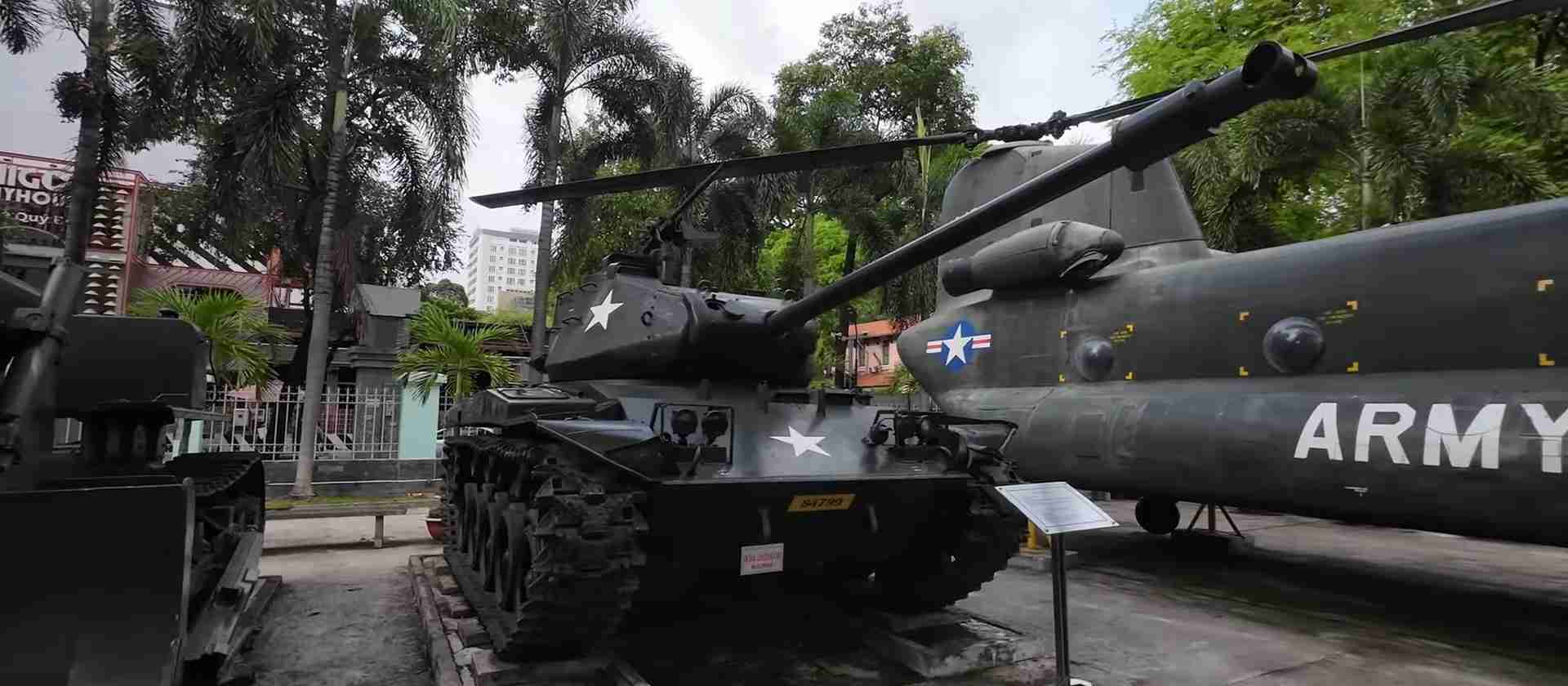
Surface exhibits display war-era equipment including rusted American tanks, artillery pieces, bomb craters (some exceeding 10 meters in diameter and depth), and weapon collections featuring AK-47 rifles, M16s, and various explosive ordnance. Reconstructed above-ground structures show kitchens with smokeless stoves (using diverted ventilation systems to prevent smoke detection), meeting rooms, living quarters, and storage areas, providing context for tunnel residents’ daily survival strategies.
Ben Dinh Shooting Range 2026
The shooting range at Ben Dinh operates within the main site area, creating constant background noise that disrupts the historical atmosphere—a common complaint in visitor reviews. The facility offers opportunities to fire 10-12 different Vietnam War-era weapons including AK-47 assault rifles, M16s, M60 machine guns, and carbines at paper targets approximately 25 meters distance. Pricing follows per-bullet charges of 40,000-60,000 VND ($1.60-2.40 USD) with minimum purchases typically 5-10 bullets, meaning a brief AK-47 shooting experience (10 bullets) costs 400,000-600,000 VND ($16-24 USD)—equal to or exceeding the cost of entire budget tour packages.
Safety protocols require participants to remain behind designated lines while others shoot, with range staff loading weapons and supervising firing to prevent accidents. The experience involves selecting your weapon, purchasing bullets (cash payment only in Vietnamese Dong), receiving brief safety instructions (often minimal), firing your rounds while staff assists with weapon operation, and collecting shell casings as souvenirs if desired. Total participation time ranges 10-15 minutes per person depending on queue lengths during peak hours.
Ethical considerations surround the appropriateness of recreational shooting at sites commemorating war deaths, with opinions varying widely among visitors. Some find firing period weapons creates meaningful connection to wartime realities and soldier experiences, while others view the activity as disrespectful commercialization of tragedy. The loud gunfire creates headaches and stress for visitors not participating, making timing considerations important—arriving early (7-8 AM) before shooting range opens or during lunch periods (12-1 PM) minimizes noise exposure.
Ben Dinh Advantages and Disadvantages 2026
Ben Dinh’s primary advantage lies in accessibility—the shorter 50-kilometer distance from Ho Chi Minh City reduces travel time by 30-60 minutes each direction compared to Ben Duoc, making it preferable for travelers with tight schedules or those prone to motion sickness on long car journeys. The compact 17-hectare site concentrates attractions within walkable distances, suitable for visitors with limited mobility who struggle with extensive hiking. More frequent tour departures to Ben Dinh (every 30-60 minutes from various operators) provide scheduling flexibility that Ben Duoc’s less frequent service cannot match.
However, Ben Dinh suffers from severe overcrowding during peak tourist season (November-March) and mid-morning hours (9 AM-12 PM), when multiple tour groups of 20-30 people each converge simultaneously. Queue times at tunnel entrances, photo opportunity spots, and attraction stations extend 10-20 minutes, while guide commentary becomes difficult to hear amid competing groups and constant shooting range noise. The heavily commercialized atmosphere with aggressive souvenir vendors, loud tour groups, and theme-park-like development diminishes historical gravitas that many history enthusiasts seek.
The widened tunnel sections, while accommodating Western body sizes more comfortably, reduce authenticity and fail to convey the extreme physical constraints that made tunnel life so challenging. Visitors to Ben Dinh experience a sanitized, tourist-friendly version of Cu Chi that prioritizes convenience over historical accuracy, making it suitable for casual tourists seeking photo opportunities but disappointing for serious history students desiring genuine wartime conditions understanding.
Ben Duoc Tunnels Experience and Site Features 2026
Ben Duoc offers a dramatically different Cu Chi Tunnels experience located approximately 70 kilometers northwest of Ho Chi Minh City with 2-2.5 hour travel time. This expansive 100-hectare site—five times larger than Ben Dinh—served as Viet Cong headquarters where military strategies and tactics were developed rather than primarily as a battle zone. The complex has been preserved more authentically with tunnels maintained closer to original dimensions, fewer commercial developments, and significantly reduced tourist crowds creating contemplative atmosphere conducive to historical reflection.
Main Attractions at Ben Duoc 2026
Ben Duoc follows similar guided tour structure to Ben Dinh but executes the experience with greater depth and less rush. The documentary film screening provides identical content but often shows to smaller audiences in less chaotic environment. The larger site allows guides to spread groups across multiple areas simultaneously, reducing congestion at popular features and enabling visitors to photograph and explore without constant jostling from other tourists.
Tunnel sections at Ben Duoc maintain more authentic dimensions—while still enlarged from the original 60-70 centimeters that accommodated only Vietnamese fighters’ smaller frames, the enlargement remains minimal, preserving challenging navigation that requires genuine crawling through dark, confined spaces. Some tunnels descend to multiple levels (second and third underground floors), showcasing the sophisticated multi-tiered engineering that made the network so defensible. These deeper sections reach depths of 6-10 meters below surface, demonstrating how residents remained safe even during heavy bombing raids that crater evidence throughout the site reveals occurred with devastating frequency.
The booby trap demonstrations and war artifact displays match Ben Dinh’s offerings but benefit from quieter setting that allows guides to provide more detailed explanations. Visitors report superior guide quality at Ben Duoc, attributed to smaller group sizes (often 8-15 people versus 25-35 at Ben Dinh) that enable guides to engage more personally and answer individual questions rather than delivering scripted monologues to crowds.
Ben Duoc Memorial Temple 2026
The Memorial Temple at Ben Duoc represents a unique feature absent from Ben Dinh, honoring the estimated 50,000 Vietnamese soldiers and civilians who died in Cu Chi district during the war. This solemn pagoda-style structure features traditional Vietnamese architecture with multiple roof tiers, ornate decorations, and interior altar spaces containing memorial plaques listing names of fallen fighters. The temple provides space for quiet reflection and mourning, creating emotional counterpoint to the adventure-tourism aspects of tunnel crawling and trap demonstrations.
Vietnamese visitors frequently burn incense and offer prayers at the temple, particularly on significant dates (Reunification Day April 30, Vietnamese commemoration days throughout the year), contextualizing the tunnels within ongoing national memory rather than treating them merely as historical curiosity. International visitors benefit from observing these practices, gaining insight into how Vietnamese society continues processing war trauma and honoring sacrifice decades after conflict’s end.
Ben Duoc Shooting Range 2026
Ben Duoc positions its shooting range 3-5 kilometers from the main tunnel site, requiring short vehicle transfer (included in tours or available via on-site shuttle services). This geographic separation eliminates the constant noise pollution that plagues Ben Dinh, allowing visitors who choose not to participate in shooting activities to explore tunnels in relative quiet conducive to historical contemplation. The range itself offers identical weapon selections (AK-47, M16, M60, etc.) and pricing structure (40,000-60,000 VND / $1.60-2.40 USD per bullet with 5-10 bullet minimums) as Ben Dinh.
The separate location creates clearer choice: visitors interested in shooting can allocate specific time for the activity, while those uncomfortable with recreational firearms at memorial sites can skip it entirely without the activity intruding on their tunnel experience. Many tours to Ben Duoc make shooting range optional, asking participants during the visit whether they wish to include it, whereas Ben Dinh tours typically build shooting range time into standard itineraries due to on-site proximity.
Ben Duoc Advantages and Disadvantages 2026
Ben Duoc’s primary advantage manifests in substantially reduced tourist density—even during peak season, the 100-hectare site absorbs visitors across larger area, and the longer travel time deters some tour operators and budget travelers, resulting in 50-70% fewer people than Ben Dinh during comparable time periods. This reduced crowding transforms the experience quality: minimal queue times at tunnel entrances, ability to photograph without crowds in background, opportunity to hear guide commentary clearly, and psychological space for historical reflection rather than rushed photo-taking.
The more authentic tunnel dimensions provide superior understanding of wartime realities. Crawling through narrower passages that remain genuinely claustrophobic despite enlargement conveys visceral appreciation for the physical and psychological challenges faced by tunnel inhabitants who navigated these spaces multiple times daily for years while carrying weapons, food, wounded comrades, and supplies. The preserved original features—meeting rooms, storage areas, hospital sections—show less reconstruction and modernization, maintaining weathered, war-damaged character that Ben Dinh’s polished presentation lacks.
The memorial temple adds emotional and cultural depth absent from Ben Dinh’s more entertainment-focused approach. Witnessing Vietnamese families honoring their ancestors and fallen soldiers contextualizes the tunnels within ongoing national mourning rather than positioning them as adventure tourism attraction, creating more respectful and meaningful engagement with the site’s tragic history.
However, Ben Duoc’s disadvantages include increased travel time (additional 30-60 minutes each direction) that may challenge travelers with limited schedules, motion sickness, or young children. The larger site requires more walking—sometimes 2-3 kilometers total during full tour circuits—demanding reasonable fitness levels that some elderly or mobility-impaired visitors may not possess. Tours to Ben Duoc depart less frequently than Ben Dinh options, offering fewer daily departure times and potentially conflicting with other itinerary plans.
Shooting Range Experience and Costs 2026
Shooting ranges at both Cu Chi Tunnels sites offer opportunities to fire Vietnam War-era weapons including AK-47 assault rifles, M16 rifles, M60 machine guns, carbines, and occasionally larger weapons like .50 caliber machine guns, all priced per bullet at 40,000-60,000 VND ($1.60-2.40 USD) with minimum purchase requirements of 5-10 bullets. A typical shooting experience firing 10 rounds from an AK-47 costs 400,000-600,000 VND ($16-24 USD)—approximately equal to the entire cost of budget day tour packages, making this optional activity a significant budget consideration.
Available Weapons and Pricing Structure 2026
The most popular weapon choice remains the AK-47 (Avtomat Kalashnikova) assault rifle that served as standard Viet Cong infantry weapon throughout the war, priced at 50,000-60,000 VND ($2-2.40 USD) per bullet. The M16 rifle used by American forces costs similarly at 50,000-60,000 VND per round. The M60 machine gun, which fires larger 7.62mm ammunition and was employed as squad automatic weapon by US forces, commands premium pricing at 60,000 VND ($2.40 USD) per bullet and typically requires minimum 10-bullet purchases.
Smaller weapons including carbines and pistols may be offered at slightly reduced rates of 40,000-50,000 VND ($1.60-2 USD) per bullet, while specialty weapons like the Soviet SKS rifle or period shotguns vary in availability depending on range inventory and condition. All weapons are authentic period pieces or military-surplus firearms from the war era, showing wear and aging that adds historical authenticity but occasionally affects reliability—misfires and jams occur periodically, typically resulting in replacement bullets provided without additional charge.
Payment is accepted in Vietnamese Dong cash only at the shooting range counter. No credit cards, no US dollars, no other currencies. Ensure you carry sufficient local currency if you intend to participate, as no ATMs exist at tunnel sites and currency exchange is unavailable. After purchasing bullets, staff load magazines, demonstrate safety procedures (often very briefly with limited English explanation), and supervise your shooting while standing immediately adjacent.
Safety Procedures and Shooting Process 2026
Safety standards at Cu Chi Tunnels shooting ranges meet basic requirements but fall short of Western commercial range protocols. Participants receive minimal safety briefings (typically 30-60 seconds of instruction), basic ear protection (foam earplugs provided though many visitors find them inadequate), and no eye protection. Range staff load weapons, hand them to shooters, and stand closely to assist with operation, but communication barriers due to limited English often create confusion about firing procedures.
The shooting lane setup positions participants behind designated firing lines approximately 25 meters from paper targets. Other visitors and tour groups wait behind barrier ropes 5-10 meters behind the firing line, close enough that the extremely loud gunfire (AK-47 produces 150+ decibels) creates discomfort for non-participants. This proximity means your tour group will experience shooting noise even if you don’t personally participate, making the activity unavoidable disturbance at Ben Dinh where the range sits within the main site.
The shooting process involves selecting your weapon at the counter, paying for bullets (minimum purchases enforced), waiting in queue if other shooters precede you (10-30 minute waits during peak hours at Ben Dinh, minimal waits at Ben Duoc’s separate range), receiving brief safety instructions, being handed the loaded weapon, firing your rounds (full-auto or semi-auto depending on weapon and range rules), and returning the weapon to staff. Shell casings can be kept as souvenirs, and some visitors arrange for staff to photograph them shooting (provide your phone to guides or tour companions as range staff typically don’t photograph customers).
Ethical Considerations and Visitor Perspectives 2026
The appropriateness of recreational shooting at war memorial sites generates intense debate among visitors, with ethical perspectives ranging from enthusiastic endorsement to strong condemnation. Supporters argue that firing period weapons creates tangible connection to wartime realities, helps understand combat challenges faced by soldiers using these firearms, and provides memorable experiential learning that textbooks and museums cannot replicate. The loud noise, recoil, and adrenaline of firing an assault rifle conveys visceral appreciation for the violence and danger that characterized combat.
Critics contend that turning sites where thousands died into shooting galleries commercializes tragedy, disrespects fallen soldiers (both Vietnamese and American), and trivializes serious historical events by transforming them into entertainment. The carnival-like atmosphere of tourists excitedly firing weapons while hooting and photographing each other strikes many as profoundly inappropriate given the memorial context. The fact that shooting generates substantial revenue for site operators creates financial incentive to promote this activity despite questionable ethical grounding.
International visitor reviews show approximately 60% participated in shooting (either fully supportive or neutrally willing to try the experience), while 40% declined based on ethical objections, cost concerns, or disinterest in firearms. Western European visitors tend toward lower participation rates (40-50%) compared to American, Australian, and Asian tourists (60-70% participation). Consider your personal values and comfort level when deciding whether to include shooting in your Cu Chi Tunnels experience—neither choice is objectively correct, and respectful visitors exist in both camps.
What to Expect During Cu Chi Tunnels Visit 2026
A typical Cu Chi Tunnels visit requires 5-6 hours total time including 3-4 hours round-trip transportation and 2 hours on-site exploration, with the experience combining historical education, physical adventure, cultural immersion, and occasional discomfort from heat, crowds, and challenging conditions. Understanding realistic expectations—both positive highlights and negative challenges—enables better preparation and more satisfying visits.
Physical Demands and Comfort Factors 2026
Cu Chi Tunnels presents moderate physical challenges that most travelers with average fitness levels can manage but which may overwhelm very young children, elderly visitors, or those with mobility impairments. The site requires walking 1.5-3 kilometers total distance across uneven terrain including dirt paths, elevated wooden walkways, steps down to tunnel entrances, and climbing in/out of ground-level structures. Sturdy closed-toe shoes with good traction are essential as surfaces can be muddy during wet season (May-October) and slippery even during dry months.
Tunnel crawling represents the primary physical challenge, demanding the ability to crouch or crawl through confined spaces 80-100 centimeters high for distances of 20-100 meters. Most tourists can manage the 20-meter introductory tunnel if they possess reasonable flexibility and don’t suffer claustrophobia, but the 50-meter and 100-meter sections challenge even fit individuals. Inside the tunnels, temperatures exceed 35-38°C (95-100°F) with humidity approaching 90%, creating sauna-like conditions that cause profuse sweating and shortness of breath.
The dark, enclosed environment triggers panic responses in approximately 15-20% of visitors who attempt tunnel entries, with exit points every 20 meters providing escape routes for those who become overwhelmed. Physical contact with muddy tunnel walls is inevitable—expect to emerge with dirt-covered clothing, hands, and sometimes hair, making dark-colored clothing advisable to minimize visible staining. The experience is genuinely claustrophobic by design, conveying authentic sense of tunnel life’s psychological difficulty.
Above-ground portions expose visitors to tropical heat and humidity with limited shade, making hydration critical. Bring minimum 1-2 liters of water per person, though water can be purchased at on-site shops (typically 15,000-25,000 VND / $0.60-1 USD for 500ml bottles, 2-3x city prices). Insect repellent is essential as mosquitoes and other insects thrive in the jungle environment, particularly during wet season and dawn/dusk hours.
Cultural and Historical Context Presentation 2026
Cu Chi Tunnels interpretive materials and guided tours present the Vietnam War from Vietnamese perspective, emphasizing resistance heroism, American aggression, and communist victory—narrative framing that differs substantially from Western historical accounts taught in US, European, and Australian schools. The documentary film shown at both sites celebrates Viet Cong fighters as national heroes defending their homeland against foreign invaders, depicts American soldiers as brutal occupiers, and characterizes the war as unambiguous struggle between righteousness (Vietnamese communists) and evil (American imperialism).
This perspective surprises some Western visitors unaccustomed to viewing their countries’ military actions as villainous, while others find it valuable exposure to alternative historical interpretations that challenge dominant narratives. The propaganda-style presentation can feel heavy-handed with its glorification of young guerrilla fighters (including children) who killed American soldiers, celebration of successful attacks and casualties, and absence of nuance regarding war’s complexity.
However, this Vietnamese framing is entirely appropriate for a Vietnamese memorial site and provides crucial insight into how Vietnamese society processes war memory and constructs national identity around resistance struggle. International visitors benefit from experiencing this perspective—not necessarily to accept it wholesale, but to understand how the war’s other side views the conflict and to recognize that historical truth contains multiple legitimate viewpoints shaped by different national experiences.
Guides typically speak serviceable English but with varying proficiency levels—budget tours often assign guides with basic vocabulary and grammatical errors, while premium tours employ guides with fluent English and deeper historical knowledge. All guides present the Vietnamese perspective consistently, but better English speakers can engage with Western visitors’ questions more effectively and acknowledge complexity in ways that basic English speakers cannot articulate.
Crowds and Tourist Management 2026
Tourist density varies dramatically by site (Ben Dinh versus Ben Duoc), time of day (morning versus afternoon), and season (peak November-March versus shoulder April-May and September-October). Ben Dinh during mid-morning peak hours (9:30-11 AM) can host 300-500 visitors simultaneously across the 17-hectare site, creating theme-park-like atmosphere with multiple large tour groups competing for space at popular features, queue times of 10-20 minutes at tunnel entrances, and difficult photography due to constant human traffic.
Strategic timing dramatically improves the experience: arriving when gates open at 7 AM (requiring very early hotel departure around 5-5:30 AM) provides 1-2 hours before large tour groups arrive, allowing relatively uncrowded exploration. Alternatively, late afternoon visits after 3 PM encounter thinning crowds as groups complete tours, though this timing risks missing some demonstrations that conclude at 4-4:30 PM.
Ben Duoc maintains substantially lower density even during peak periods—the 100-hectare site spread across larger area combined with deterrent effect of longer travel time results in 100-200 visitors maximum at any given time, often feeling nearly empty during early mornings or late afternoons. This reduced congestion transforms visitor experience from rushed photo-taking to contemplative historical engagement.
Daily Budget Planning for Cu Chi Tunnels 2026
A Cu Chi Tunnels day trip from Ho Chi Minh City requires budget allocation of 600,000-1,875,000 VND ($24-75 USD) per person in 2026 depending on tour selection, optional activities, meal choices, and souvenir purchases, excluding accommodation costs which are addressed separately in overnight stay scenarios. This comprehensive budget breakdown enables accurate trip planning across different spending levels from budget backpackers to comfortable mid-range travelers.
Budget Traveler Cu Chi Tunnels Day Cost 2026
Budget-conscious travelers prioritizing cost minimization can complete Cu Chi Tunnels day trips for 600,000-850,000 VND ($24-34 USD) per person through strategic choices. Transportation via budget group tour costs 400,000-625,000 VND ($16-25 USD) including entrance fees and guide (entrance fees already included in tour price, no separate payment needed). Lunch at basic restaurant near tunnel site or packed lunch from Ho Chi Minh City adds 80,000-150,000 VND ($3-6 USD). Water and snacks purchased at convenience stores before departure (avoiding marked-up on-site prices) cost 30,000-50,000 VND ($1.20-2 USD). Optional souvenir purchases if limited to small items (magnets, postcards) run 50,000-100,000 VND ($2-4 USD).
Budget calculation: Tour with entrance 500,000 VND, lunch 100,000 VND, water/snacks 40,000 VND. Total day cost: 640,000 VND ($26 USD) per person excluding accommodation. Skipping the shooting range eliminates single largest optional expense, saving 400,000-600,000 VND ($16-24 USD) that would otherwise double the day’s total cost.
Mid-Range Traveler Cu Chi Tunnels Day Cost 2026
Mid-range travelers seeking comfort and quality experiences invest 1,000,000-1,500,000 VND ($40-60 USD) per person on Cu Chi Tunnels day trips. Premium small group tour to less-crowded Ben Duoc site costs 800,000-1,000,000 VND ($32-40 USD) with better vehicles, superior guides, and lunch included. Additional water and snacks (purchased on-site for convenience) add 50,000-75,000 VND ($2-3 USD). Shooting range participation firing 10 rounds from AK-47 costs 500,000 VND ($20 USD). Souvenir shopping for quality items (military surplus, books, handicrafts) runs 200,000-300,000 VND ($8-12 USD).
Mid-range calculation: Premium tour with lunch 900,000 VND, water/snacks 60,000 VND, shooting range 500,000 VND, souvenirs 250,000 VND. Total day cost: 1,710,000 VND ($68 USD) per person excluding accommodation. This investment delivers substantially enhanced experience quality through reduced crowds, better guides, and memorable activities while remaining affordable for most international tourists.
Luxury Traveler Cu Chi Tunnels Day Cost 2026
Luxury travelers prioritizing comfort, flexibility, and premium experiences allocate 2,500,000-3,750,000 VND ($100-150 USD) per person or more on Cu Chi Tunnels day trips. Private tour with dedicated vehicle and guide for 2-4 people costs 2,175,000-3,125,000 VND ($87-125 USD) total, equating to 1,087,500 VND ($43.50 USD) per person for couples or 781,250 VND ($31.25 USD) per person for groups of four. Lunch at higher-quality restaurant or hotel costs 250,000-400,000 VND ($10-16 USD). Premium beverages, fresh coconuts, specialty snacks add 100,000-150,000 VND ($4-6 USD). Extended shooting range experience firing multiple weapons (30-40 bullets across AK-47, M16, M60) costs 1,500,000-2,000,000 VND ($60-80 USD). Quality souvenirs and books for home library run 400,000-625,000 VND ($16-25 USD).
Luxury calculation for couple: Private tour 2,500,000 VND (1,250,000 per person), lunch 300,000 VND each, beverages 125,000 VND, extensive shooting 1,750,000 VND, souvenirs 500,000 VND. Total day cost: 3,925,000 VND ($157 USD) per person excluding accommodation. The premium investment purchases unmatched flexibility, personalized attention, and comprehensive activity participation without budget constraints.
Hidden and Optional Costs to Consider 2026
Beyond primary tour and entrance expenses, several optional and hidden costs affect total trip budgets. Tips for guides and drivers, while not mandatory in Vietnamese culture, are increasingly expected at 50,000-100,000 VND ($2-4 USD) per person for satisfactory service or 100,000-200,000 VND ($4-8 USD) for exceptional guides who provided superior English commentary and extra assistance. Lockers for securing valuables during tunnel crawling (if needed) cost 20,000-50,000 VND ($0.80-2 USD). Purchasing photos or videos from professional photographers operating at popular photo spots runs 100,000-250,000 VND ($4-10 USD) per image or package.
Snacks and refreshments consumed during waiting periods or travel cost 40,000-100,000 VND ($1.60-4 USD) depending on choices—fresh coconut drinks (50,000 VND / $2 USD), Vietnamese coffee (30,000-50,000 VND / $1.20-2 USD), fruit smoothies (40,000-60,000 VND / $1.60-2.40 USD). Mobile data or Wi-Fi rental for uploading photos immediately costs 80,000-150,000 VND ($3-6 USD) per day for portable hotspot devices, though most hotels provide free Wi-Fi making this unnecessary for evening uploads.
Best Time to Visit Cu Chi Tunnels 2026
Cu Chi Tunnels operate year-round with daily opening hours 7 AM-5 PM (ticket counters close 4 PM), but optimal visiting conditions occur during Ho Chi Minh City’s dry season from December through April 2026 when minimal rainfall, moderate temperatures (27-32°C / 80-90°F), and clearer skies create comfortable exploration weather. However, the dry season coincides with peak international tourism to Vietnam, resulting in maximum crowds especially during Chinese New Year (late January-early February 2026), Christmas-New Year holidays, and spring break periods (March).
Seasonal Weather Considerations 2026
The dry season months (December 2025-April 2026) provide reliable sunshine, minimal rain risk (5-10% daily chance), and temperatures that, while hot, remain tolerable for tunnel exploration especially during morning hours. December and January offer slightly cooler weather averaging 25-28°C (77-82°F) compared to March-April’s intense 30-35°C (86-95°F) heat. The lower humidity during dry months makes tunnel crawling more bearable, though interior tunnel temperatures still exceed 35°C (95°F) regardless of season.
Wet season visits (May-October 2026) bring distinct advantages and challenges. Daily rainfall increases significantly with May-August averaging 250-300mm monthly precipitation and September-October bringing heaviest rains (300-400mm monthly). Tropical downpours typically occur as intense afternoon thunderstorms (2-4 PM most common) lasting 30-90 minutes rather than all-day rain, meaning morning visits (7-11 AM) usually remain dry while afternoon tours face rain risk. The wet season creates muddy, slippery conditions that make surface walking treacherous and tunnel entrances messy, requiring extra caution and resignation to getting dirty.
However, wet season travel dramatically reduces tourist crowds (40-60% fewer visitors than dry season peaks), makes hotel and tour prices more negotiable, and creates lush green landscapes more photogenic than dry season’s dusty brown countryside. The cooler temperatures (26-29°C / 79-84°F) and cloud cover provide relief from brutal dry season heat. Budget travelers and those prioritizing crowd avoidance should seriously consider wet season visits despite rain inconvenience.
Daily Timing Recommendations 2026
Morning tours departing Ho Chi Minh City at 5-6 AM to arrive at tunnel sites by 7-7:30 AM opening provide optimal conditions: minimal crowds for first 90-120 minutes before 9:30 AM bus tour wave arrives, cooler temperatures (24-27°C / 75-80°F versus 32-35°C / 90-95°F by noon), better photography light (soft morning sun rather than harsh midday glare), and energy for tunnel crawling before heat exhaustion sets in. The primary drawback involves very early hotel departure requiring wake-up calls at 4:30-5 AM, challenging for travelers recovering from jet lag or late previous evenings.
Afternoon tours departing 12-1 PM encounter maximum heat during 2-4 PM site exploration periods, though crowd levels often decrease slightly as morning tour groups depart. The 3-4 PM arrival timing hits late-afternoon conditions when some demonstrations conclude, limiting access to certain features. However, afternoon tours suit travelers who prefer sleeping later, accommodate morning activities in Ho Chi Minh City, and work for those returning to city for evening plans since 6-7 PM return timing allows dinner and nightlife participation.
The 7-8 AM arrival window (requiring 5:30-6 AM departure from city) represents the sweet spot balancing reasonable wake-up time, manageable temperatures, acceptable crowd levels, and full feature access before afternoon closures. Most experienced travelers recommend this early-moderate timing over both extreme early (5 AM departure) and afternoon options.
Holiday and Peak Period Timing 2026
Certain periods in 2026 bring exceptional crowds or operational changes affecting Cu Chi Tunnels visits. Vietnamese Lunar New Year (Tet Festival, January 29-February 4, 2026) closes many tour operators and creates limited service availability, making pre-booking essential and prices potentially 25-30% higher. The holiday period brings maximum domestic Vietnamese tourism with local families visiting in large groups, overwhelming sites with crowds double or triple normal levels.
International school holiday periods—Christmas-New Year (December 20, 2025-January 5, 2026), Easter (April 2026), summer vacation (June-August 2026)—increase Western tourist presence substantially. European summer holidays (July-August) coincide with Vietnam’s wet season, creating interesting dynamic of high international demand during low domestic demand period, partially offsetting crowd levels.
Vietnamese national holidays including Reunification Day (April 30) and Independence Day (September 2) bring domestic tourist surges and potential tour service modifications. Planning visits outside these specific dates while still within preferred seasons (December-April for weather, May-October for low crowds) optimizes the experience.
What to Wear and Bring to Cu Chi Tunnels 2026
Proper clothing and equipment preparation dramatically improves Cu Chi Tunnels experience comfort and enjoyment, with key considerations including expected dirt exposure during tunnel crawling, extreme heat and humidity, insect presence, and lengthy walking distances across uneven terrain.
Clothing Recommendations 2026
Wear lightweight, breathable clothing in dark colors (black, navy, dark brown, dark green) that conceals dirt inevitable from tunnel crawling. Light-colored fabrics show mud stains prominently and will look filthy within 30 minutes of arrival. Synthetic moisture-wicking materials (polyester, nylon blends) dry faster than cotton when soaked with sweat, though cotton provides superior comfort in extreme heat. Avoid expensive or sentimental clothing as some damage risk exists from crawling through rough tunnel surfaces.
Long lightweight pants offer better protection than shorts against scratches from tunnel walls, insect bites, and sun exposure, though many visitors wear shorts accepting these trade-offs for heat relief. Women should wear pants rather than skirts or dresses as tunnel crawling requires hands-and-knees positioning incompatible with modest skirt wearing. Athletic leggings work well for women providing coverage, flexibility, and modest appearance.
Closed-toe athletic shoes or hiking boots with good traction are absolutely essential—flip-flops, sandals, and open-toe footwear create safety hazards on slippery surfaces and provide no protection when navigating tunnel entrances. Shoes will get muddy and dusty, so wear older pairs you don’t mind soiling. Socks prevent blisters during extensive walking (1.5-3 kilometers typical) and protect feet from tunnel debris.
A lightweight long-sleeve shirt (stored in backpack, worn selectively) provides sun protection during exposed demonstrations and guards against insect bites for those with sensitive skin, though most visitors tolerate heat better in short sleeves accepting sunscreen as protection alternative. Wide-brimmed hats or baseball caps shield faces from sun during above-ground portions but must be removed for tunnel crawling (bring bag to store hat).
Essential Items to Bring 2026
Water represents the single most critical item—bring minimum 1.5-2 liters per person in reusable bottles, as on-site prices reach 15,000-25,000 VND ($0.60-1 USD) for 500ml bottles (3x city prices) and adequate hydration requires consuming 1-2 liters during the 2-hour visit plus travel time. Dehydration causes headaches, fatigue, and heat exhaustion common among underprepared visitors.
Strong insect repellent (DEET-based formulations most effective) applied before arrival and reapplied every 2-3 hours prevents mosquito bites prevalent in jungle environment. Dengue fever and other mosquito-borne illnesses exist in Vietnam, making protection essential beyond mere comfort. Sunscreen with SPF 30+ protects exposed skin during above-ground demonstrations and walking between features, requiring reapplication after sweating or swimming (if combining with other activities).
A small backpack or daypack carries essentials while keeping hands free for tunnel crawling and photography. Pack includes: water bottles, sunscreen, insect repellent, small towel or wet wipes (for cleaning hands after tunnel crawling), snacks (granola bars, fruit, nuts for energy), personal medications, toilet paper (bathrooms sometimes lack supplies), hand sanitizer, backup phone battery or power bank (extensive photography drains batteries), small first aid kit (bandages, pain relievers), and rain poncho during wet season.
Cash in Vietnamese Dong proves essential as on-site facilities accept cash only—no credit cards, no US dollars, no other currencies. Budget travelers need 200,000-400,000 VND ($8-16 USD) for potential purchases (water, snacks, souvenirs), while those planning shooting range participation should carry 500,000-1,000,000 VND ($20-40 USD) additional. ATMs do not exist at tunnel sites, and the nearest machines are in Cu Chi town 10-15 kilometers away.
Photography Equipment Considerations 2026
Smartphones provide adequate photography capability for most visitors, capturing site features, tunnel entrances, and group photos without requiring specialized equipment. However, dedicated cameras with manual controls improve results in challenging lighting conditions—darkened interiors, bright outdoor contrasts, and tunnel photography benefit from DSLR or mirrorless camera capabilities.
Wide-angle lenses (16-35mm full-frame equivalent) work best for tunnel interior shots and capturing expansive site views, while standard zooms (24-70mm) handle general documentation. Avoid bringing expensive or fragile equipment into tunnels where damage risk exists from confined spaces and rough surfaces. Action cameras (GoPro-style) excel for tunnel crawling documentation as their compact size, durability, and wide-angle perspective capture the experience without delicate handling concerns.
Extra batteries and memory cards prevent missing photo opportunities as extensive shooting (200-400 images typical for enthusiasts) depletes power and storage. Protect electronics from water damage during wet season with waterproof bags or rain covers. Selfie sticks, despite popularity, create obstacles in tunnel crawling and annoy other visitors in confined spaces—use sparingly and never in tunnels themselves.
Cu Chi Tunnels History and Military Significance
The Cu Chi Tunnels originated during French colonial rule in the late 1940s when Viet Minh resistance fighters excavated initial passages to hide from French air attacks and ground patrols. These early tunnels provided basic shelter and storage in simple networks measuring few hundred meters total length. Following the 1954 Geneva Accords that temporarily divided Vietnam, southern communist forces (later known as Viet Cong) continued tunnel expansion in Cu Chi district, strategically located at the end of the Ho Chi Minh Trail and within striking distance of Saigon.
By 1965, when American combat troops deployed to South Vietnam, the tunnel network had grown to approximately 200-250 kilometers stretching from the Cambodian border toward Saigon. The system contained three distinct levels: upper tunnels at 3-4 meters depth used for storage and temporary hiding; middle level at 6-8 meters containing living quarters, hospitals, and meeting rooms; and lower level at 10-12 meters serving as bomb shelters during intense bombardment. The deepest sections protected inhabitants even from 500-pound bombs that cratered surface layers but couldn’t reach lower chambers.
Tunnel System Engineering and Design
Vietnamese engineers designed tunnels with remarkable sophistication despite lacking modern equipment, using simple tools (shovels, bamboo baskets, oil lamps) to excavate clay soil by hand. The narrow dimensions—typically 60-70 centimeters wide and 80-90 centimeters high—accommodated smaller Vietnamese physiques while preventing larger American soldiers from pursuing resistance fighters underground. This size differential created defensive advantage as American troops struggled to navigate passages that Vietnamese defenders moved through easily.
Trapdoors concealed tunnel entrances using ingenious camouflage including leaves, soil, and sometimes false bottoms in cooking pots or bread ovens. Multiple entrance/exit points for each tunnel section prevented entrapment if one entrance was discovered, while zigzag passage configurations with sharp turns every 3-4 meters protected inhabitants from gunfire, grenades, or gas pumped into tunnels—the turns blocked straight-line weapon effects while allowing defenders to shoot enemies following them.
Ventilation systems brought fresh air to deep chambers through concealed shafts positioned in vegetation or termite mounds, preventing detection while providing breathable atmosphere in sealed underground spaces. Smokeless kitchen designs diverted cooking smoke through long channels emerging hundreds of meters from actual kitchen locations, cooling smoke to ambient temperature before release to avoid thermal detection. Water sources included underground wells and collection systems for rainwater, ensuring water supply during extended periods underground when surface movement became impossible.
Life Underground During Wartime
Thousands of Vietnamese civilians and Viet Cong fighters lived in Cu Chi Tunnels for months or years at a time, creating underground society complete with schools, hospitals, theaters, and markets. Families raised children entirely underground for extended periods when American operations made surface living too dangerous. The confined conditions caused severe health problems including malaria (from mosquito-breeding standing water), intestinal parasites (from contaminated water and poor sanitation), and respiratory diseases (from poor air quality and cooking smoke exposure).
Food consisted primarily of tapioca root grown in jungle clearings during brief surface periods, supplemented by rice, dried fish, and vegetables when supply routes remained open. Chronic malnutrition weakened tunnel residents, contributing to high disease mortality rates. Medical facilities within tunnels treated wounded fighters using primitive equipment—surgery performed by lamp light without adequate anesthesia, antibiotics, or sterile conditions resulted in high complication rates and deaths from infections.
Psychological challenges rivaled physical hardships as months without sunlight, limited human contact beyond immediate family or military unit, constant fear of discovery and death, and absence of normal life activities (bathing, recreation, privacy) created severe mental health impacts. Many tunnel residents developed depression, anxiety disorders, and trauma responses that persisted decades after war’s end.
American Military Response and Iron Triangle Operations
American forces recognized Cu Chi Tunnels’ strategic threat early in the war, designating the region as the “Iron Triangle” and launching massive operations to destroy the tunnel network. Operation Cedar Falls (January 1967) involved 30,000 American and South Vietnamese troops conducting largest ground operation of the war to that date, attempting to clear the Iron Triangle of Viet Cong presence. The operation killed hundreds of Viet Cong fighters, captured documents and weapons, and evacuated civilian population, but failed to destroy the tunnels permanently.
Specialized “tunnel rats”—soldiers trained for underground combat—volunteered for exceptionally dangerous missions crawling into tunnels to map passages, kill defenders, and plant explosives. These soldiers (typically smaller-statured men who could fit in confined spaces) faced pitch-black conditions, booby traps, venomous snakes placed deliberately by defenders, and armed Viet Cong waiting in ambush positions. The psychological terror of tunnel rat duty caused high casualty rates from both combat deaths and psychological breakdowns requiring evacuation.
Massive bombing campaigns dropped thousands of tons of explosives attempting to collapse tunnels through concussion and cratering, with B-52 strikes creating “Arc Light” operations that devastated surface forests and villages. However, the deep tunnels survived most bombing as soil absorbed blast effects before reaching lower chambers. Chemical warfare including CS gas and defoliants attempted to flush defenders to surface or poison them underground, achieving limited success as ventilation systems dispersed gases and defenders retreated to sealed chambers during attacks.
Despite years of effort and tremendous resource investment, American forces never successfully eliminated the Cu Chi Tunnels network. The tunnels remained operational throughout the war, serving as staging area for the Tet Offensive (January 1968) that brought combat into Saigon itself and fundamentally changed American public opinion about war viability. The tunnels’ survival demonstrated limits of military technology when confronting determined resistance using terrain advantages and guerrilla tactics.
Cu Chi Tunnels Preservation and Tourism Development
Following Vietnam’s reunification in 1975, authorities recognized Cu Chi Tunnels’ historical importance and tourism potential, beginning preservation efforts that opened first sections to visitors in the late 1970s. Initial development focused on Ben Dinh site due to closer proximity to Saigon (renamed Ho Chi Minh City), with structural reinforcements preventing collapse, tunnel widening accommodating tourist access, and museum exhibits explaining wartime functions. Ben Duoc site opened to tourism later in the 1980s, preserved more authentically with less modification to original tunnel dimensions.
The sites balance historical preservation with tourist accessibility through selective tunnel reinforcement using concrete linings in heavily-trafficked sections while maintaining original earth walls in protected areas, tunnel dimension enlargement from 60-70 centimeters to 80-100 centimeters enabling Western tourists to crawl through while preserving challenging character, and reconstruction of surface structures (kitchens, meeting rooms, weapons workshops) that were destroyed or deteriorated after war. This development approach creates accessible historical experience while acknowledging that complete authenticity would prevent tourist participation—original tunnels remain too small and dangerous for public access.
Tourism revenue generated from Cu Chi Tunnels visits funds ongoing preservation work, site maintenance, historical research, and local economic development in Cu Chi district. The estimated 500,000-750,000 annual visitors (predominantly international tourists) in 2026 make the tunnels one of Vietnam’s most important cultural heritage sites and significant contributor to Ho Chi Minh City’s tourism industry generating millions of dollars yearly in tour fees, entrance charges, and ancillary spending.
Frequently Asked Questions About Cu Chi Tunnels 2026
How Long Should I Spend at Cu Chi Tunnels in 2026?
Allocate 5-6 hours total for Cu Chi Tunnels day trips from Ho Chi Minh City in 2026, comprising 1.5-2 hours travel each direction (3-4 hours round-trip transportation) plus 2 hours on-site exploration. Organized tours typically schedule 1.5-2.5 hours at the tunnel site depending on whether shooting range participation is included, while independent travelers can extend visits to 3-4 hours if desired though most complete comprehensive tours in 2-2.5 hours. The half-day commitment makes morning departures (5:30-6 AM) popular for visitors wanting afternoons free in Ho Chi Minh City, or afternoon tours (12-1 PM departure) for those preferring morning city activities with evening tunnel returns.
Is Cu Chi Tunnels Worth Visiting in 2026?
Cu Chi Tunnels absolutely merits visiting for travelers interested in Vietnam War history, experiential learning, or understanding Vietnamese culture and resilience, ranking among Southeast Asia’s most significant war heritage sites alongside Cambodia’s Killing Fields and Thailand’s Death Railway. The combination of historical education, physical adventure (tunnel crawling), cultural immersion (Vietnamese war perspective), and accessibility from Ho Chi Minh City (1.5-2.5 hours) creates compelling experience unavailable elsewhere. However, visitors seeking pristine nature, relaxation, luxury amenities, or apolitical tourism should consider alternative destinations as Cu Chi focuses specifically on war history with modest facilities and challenging conditions. The site works best for travelers aged 10-65 with average fitness, basic claustrophobia tolerance, and genuine interest in understanding conflict that shaped modern Vietnam.
Can Children Visit Cu Chi Tunnels in 2026?
Children aged 7 and older can visit Cu Chi Tunnels in 2026 with appropriate preparation regarding physical challenges, historical content intensity, and behavioral expectations. Children under 7 enter free but may struggle with extensive walking (1.5-3 kilometers), cramped tunnel crawling, extreme heat, and 5-6 hour total trip duration including transportation. The violent historical content (war deaths, booby trap demonstrations causing injuries, shooting range activities) disturbs some children while fascinating others depending on individual temperament and maturity level—parents should honestly assess their children’s ability to process war-related educational material. Family-friendly tour operators offer modified itineraries with shorter tunnel crawl options, increased rest breaks, child-appropriate historical explanations, and flexibility for children who become overwhelmed or tired. Children with claustrophobia should not attempt tunnel crawling, though surface demonstrations and museum exhibits remain accessible and educational without underground portions.
What Happens If It Rains During My Cu Chi Tunnels Visit in 2026?
Rain transforms Cu Chi Tunnels experience significantly, making surface areas muddy and slippery, tunnel entrances treacherous, and outdoor demonstrations temporarily suspended during heavy downpours, though tours typically continue unless severe weather creates genuine safety hazards. Wet season afternoon thunderstorms (common May-October) last 30-90 minutes before clearing, allowing guides to wait under covered areas then resume tours once lightning subsides. Bring rain poncho or waterproof jacket during wet season as umbrellas prove impractical when crawling through tunnels or navigating narrow paths. Waterproof bags protect electronics and valuables from water damage, while quick-dry clothing and shoes with good wet traction improve comfort. Tours rarely cancel for rain—expect to get wet and muddy if visiting during monsoon season. The positive side includes dramatically reduced crowds during wet season (40-60% fewer tourists than dry season), cooler temperatures, and more negotiable tour prices offsetting rain inconvenience for flexible travelers.
Are There Age or Physical Limitations for Cu Chi Tunnels in 2026?
No official age restrictions apply to Cu Chi Tunnels visits in 2026, but practical physical limitations affect participant ability to fully enjoy the experience. Tunnel crawling requires ability to crouch or move on hands-and-knees through confined spaces 80-100 centimeters high for distances of 20-100 meters, making it unsuitable for individuals with severe mobility impairments, back problems preventing bending, knee injuries limiting crawling, or extreme claustrophobia. Obesity can create difficulties fitting through narrow tunnel dimensions though most visitors of varying body types manage successfully. Elderly visitors (70+) often find the walking distances (1.5-3 kilometers), heat exposure, and physical exertion challenging, though many successfully visit by skipping tunnel crawling portions and focusing on surface demonstrations.
Wheelchair accessibility remains extremely limited as uneven terrain, steps, and tunnel features create insurmountable obstacles for wheelchair users—visitors with mobility disabilities requiring wheelchairs should honestly assess whether the site can accommodate their needs or if alternative historical sites provide better accessibility. Pregnant women should consult doctors before visiting as tunnel crawling, heat exposure, and confined spaces create potential health risks depending on pregnancy stage and individual conditions. The site accommodates most visitors with average fitness levels who can walk 2-3 kilometers and tolerate heat, humidity, and basic physical challenges.
Can I Visit Cu Chi Tunnels and Mekong Delta Same Day in 2026?
Combined Cu Chi Tunnels and Mekong Delta visits in one day are possible through specialized full-day tours spanning 9-11 hours total (6:30 AM-5:30 PM typical schedule), visiting tunnels in morning (3-4 hours including travel) followed by Mekong Delta in afternoon (3-4 hours including boat rides, workshop visits, lunch). These intensive tours cost 1,000,000-2,500,000 VND ($40-100 USD) depending on group size and tour quality, maximizing sightseeing efficiency for travelers with limited time in Ho Chi Minh City. However, the packed schedule feels rushed with minimal flexibility, creates exhaustion from constant activity and heat exposure, and prevents deep engagement with either site—consider whether brief superficial exposure to both locations provides more value than comprehensive half-day focus on single destination with afternoon free for rest or other activities. Travelers with 3+ days in Ho Chi Minh City should dedicate separate half-days to each destination for optimal experiences.
What Food and Drink Options Exist at Cu Chi Tunnels in 2026?
Both Ben Dinh and Ben Duoc sites offer basic food stalls and cafés selling Vietnamese dishes, snacks, and beverages at tourist-inflated prices typically 2-3x Ho Chi Minh City costs. Menu options include rice dishes with meat/vegetables (80,000-150,000 VND / $3-6 USD), Vietnamese noodle soup (70,000-120,000 VND / $2.80-4.80 USD), banh mi sandwiches (40,000-60,000 VND / $1.60-2.40 USD), and snacks like spring rolls or fruit (30,000-60,000 VND / $1.20-2.40 USD). Beverages include bottled water (15,000-25,000 VND / $0.60-1 USD), soft drinks (20,000-30,000 VND / $0.80-1.20 USD), fresh coconuts (50,000-70,000 VND / $2-2.80 USD), and Vietnamese iced coffee (30,000-50,000 VND / $1.20-2 USD). Food quality ranges from acceptable to mediocre—manage expectations for basic sustenance rather than culinary experiences. Many tours include lunch at nearby restaurants offering superior quality and value compared to on-site facilities, or visitors can bring packed lunches from Ho Chi Minh City convenience stores (banh mi, fruit, snacks) for maximum budget savings and food control.
Should I Book Cu Chi Tunnels Tour in Advance or On Arrival in 2026?
Advance booking provides better tour selection, guaranteed availability during peak periods, competitive online pricing (often 10-20% less than walk-in rates), and ability to read customer reviews before committing, making it the recommended approach for most travelers. Peak season months (December-March) see popular premium tours selling out 3-7 days ahead, particularly small group tours to Ben Duoc which operate fewer daily departures than Ben Dinh options. Budget group tours maintain better walk-in availability due to larger capacity and frequent departures, making same-day or next-day booking feasible especially during shoulder season (April-May, September-October) when tour operators compete aggressively for customers and offer last-minute discounts. However, last-minute booking risks accepting whatever tours remain available rather than selecting optimal options, potentially forcing compromises on timing (undesirable afternoon departures), site visited (crowded Ben Dinh when Ben Duoc preferred), or tour quality (budget operators when premium preferred). International travelers should book 3-7 days advance to secure preferred tours, while flexible budget travelers can potentially negotiate walk-in discounts during low season by approaching District 1 tour agencies afternoon before desired visit.
How Much Vietnamese Dong Cash Should I Bring to Cu Chi Tunnels in 2026?
Bring 500,000-1,500,000 VND ($20-60 USD) cash per person in Vietnamese Dong to Cu Chi Tunnels in 2026 depending on planned optional activities and purchases. Minimum recommended amount covers water/snacks (50,000-100,000 VND / $2-4 USD), basic souvenirs (100,000-200,000 VND / $4-8 USD), food if not included in tour (100,000-150,000 VND / $4-6 USD), and guide tips (50,000-100,000 VND / $2-4 USD), totaling approximately 300,000-550,000 VND ($12-22 USD). Add 500,000-1,000,000 VND ($20-40 USD) additional if shooting range participation planned (10-20 bullets typical purchase). All on-site facilities (ticket counters, shooting range, food stalls, souvenir shops) accept cash only—no credit cards, no US dollars, no other currencies accepted. Nearest ATMs located in Cu Chi town 10-15 kilometers from tunnel sites, making pre-arrival cash withdrawal essential. Tour costs are typically pre-paid through hotel or online booking, so on-site cash needs focus purely on optional purchases and activities. Budget-conscious travelers can minimize cash needs by bringing water/snacks from Ho Chi Minh City, skipping shooting range, and limiting souvenir purchases.
Are There Restrooms Available at Cu Chi Tunnels in 2026?
Both Ben Dinh and Ben Duoc sites provide basic restroom facilities (squat toilets and some Western-style toilets) near entrance areas and at mid-point locations throughout the complex. Restroom cleanliness varies from acceptable to poor depending on time of day (early morning cleanest, midday most heavily used), with peak tourism periods straining facilities designed for lower capacity. Bring personal toilet paper and hand sanitizer as supplies frequently run out during busy periods and soap/water handwashing stations may lack functional amenities. The facilities are free to use but tips (5,000-10,000 VND / $0.20-0.40 USD) appreciated for cleaning staff. Restrooms at Ben Duoc maintain generally better conditions than Ben Dinh due to lower visitor volume, though neither site offers luxury standards—expect basic functionality rather than modern comfort. Plan restroom stops before beginning guided tunnel tours as opportunities become limited once exploration starts, and the physical activity of tunnel crawling combined with heat/hydration creates frequent needs. Female travelers should consider bringing wet wipes for improved hygiene and comfort given basic facility standards.