
Corfu Old Town UNESCO Guide: Venetian Heritage & Fortresses
Inscribed as a UNESCO World Heritage Site in 2007, Corfu Old Town represents the Mediterranean’s most complete surviving example of a fortified Venetian port city, where four centuries of Venetian rule shaped architectural character and urban planning distinct from anywhere else in Greece. The ensemble of three imposing fortresses, neoclassical housing stock, and labyrinthine cobbled streets preserves authentic testimony to European cultural exchange at the strategic entrance to the Adriatic Sea.
Key Takeaways: Understanding Corfu’s UNESCO Venetian Heritage
- Strategic Position Legacy: Corfu’s location at the Adriatic entrance made it Venice’s critical first line of defense against Ottoman expansion, resulting in the Mediterranean’s most sophisticated fortification ensemble designed by renowned Venetian military engineers.
- Architectural Fusion: The Old Town demonstrates extraordinary layering of Venetian medieval structures, British neoclassical buildings, French urban planning, and Greek Orthodox sacred architecture creating unique visual identity absent elsewhere in Greece.
- Three-Fortress System: The Old Fortress (Palaio Frourio), New Fortress (Neo Frourio), and integrated town fortifications formed an interconnected defensive complex protecting maritime trading interests for four centuries.
- Authentic Urban Fabric: Corfu preserves Greece’s only large historic area retaining intact medieval urban network with buildings spanning 17th-19th centuries, demonstrating exceptional authenticity and integrity.
- British Transformation: The 19th-century British protectorate introduced distinctive neoclassical architecture including the Palace of St. Michael and St. George, elegant Liston promenade, and cricket traditions unique in Greek territories.
- Living Heritage Site: Unlike many fortress complexes functioning purely as museums, Corfu Old Town remains a vibrant residential and commercial center where 3,000+ inhabitants sustain traditional community life within UNESCO-protected walls.
People Also Ask About Corfu Old Town UNESCO Heritage
Why is Corfu Old Town a UNESCO World Heritage Site?
Corfu Old Town earned UNESCO World Heritage designation in 2007 under criterion (iv) recognizing it as an outstanding example of fortified Mediterranean port architecture demonstrating Venetian defensive engineering and urban planning. UNESCO specifically cited the exceptional integrity and authenticity of the urban and port ensemble dominated by fortresses of Venetian origin, noting how the strategic location at the Adriatic entrance shaped four centuries of continuous fortification development. The site represents a unique architectural fusion where Venetian military design, British neoclassical transformation, French urban aesthetics, and Greek Orthodox sacred architecture converged creating cultural synthesis found nowhere else. The fortification system—comprising the Old Fortress, New Fortress, and integrated town walls—constitutes one of the Mediterranean’s most complete surviving defensive complexes, while the preserved urban fabric demonstrates authentic historical continuity from the 8th century BC through modern times.
What makes Corfu’s Venetian fortresses architecturally significant?
Corfu’s fortification ensemble represents the pinnacle of Venetian military engineering adapted to local topography and evolving warfare technology across four centuries. The Old Fortress occupies a natural rocky promontory transformed through massive engineering works including the Contrafossa seawater moat separating the fortress from the town, multiple defensive layers with bastions positioned for overlapping fields of fire, and underground galleries creating protected communication routes and ammunition storage. The New Fortress demonstrates advanced 16th-century bastion fortification design with sophisticated geometric planning allowing defenders to eliminate blind spots where attackers could approach unseen. Renowned Venetian engineers Michele Sanmicheli, Francesco Marmora, and others applied cutting-edge military architecture theories developed across Venice’s Mediterranean empire, customizing designs to Corfu’s specific strategic requirements as the empire’s northwestern anchor. The British period added distinctive neoclassical elements including St. George’s Church inside the Old Fortress, constructed 1840 in Doric temple style unique among Greek Orthodox churches, demonstrating architectural adaptation to occupying powers while preserving defensive functionality.
How does Corfu Old Town differ from other Greek historic cities?
Corfu Old Town stands uniquely apart from Classical and Byzantine Greek heritage sites through its dominant Venetian character and Western European architectural influences largely absent elsewhere in Greece. While Athens, Delphi, and Thessaloniki showcase ancient Greek temples, Byzantine churches, and Ottoman mosques, Corfu displays Italian-inspired arcaded streets (the Liston), Venetian-style fortifications, British neoclassical public buildings, and French urban planning creating Mediterranean atmosphere more reminiscent of Venice, Dubrovnik, or Split than traditional Greek cities. The architectural fusion reflects Corfu’s distinct historical trajectory: while mainland Greece experienced Ottoman rule for four centuries, Corfu remained under Venetian protection, then passed to French and British control, only joining Greece in 1864. This resulted in preservation of Latin Catholic traditions alongside Greek Orthodox practices, introduction of cricket and ginger beer from British culture, development of philharmonic musical traditions from Italian influence, and urban aesthetics emphasizing covered arcades, ornate facades, and formal squares rather than the whitewashed simplicity characteristic of Cycladic architecture or Byzantine austerity marking much of Greek heritage.
Can you visit all three fortresses in Corfu Old Town?
The Old Fortress (Palaio Frourio) operates as the primary accessible fortress with regular opening hours, entrance fees, and developed visitor infrastructure including interpretive signage, cafe facilities, and public restrooms. The New Fortress (Neo Frourio) functions as a secondary attraction with seasonal opening (typically April-October), more limited facilities, and less interpretive infrastructure though offering excellent panoramic views from summit positions. The third element—the integrated town fortifications including walls, gates, and bastions—surrounds the Old Town and remains visible from streets and public spaces though not functioning as a discrete attraction with entrance requirements. Visitors seeking comprehensive fortress exploration should allocate 2-3 hours for the Old Fortress exploring ramparts, underground chambers, Church of St. George, and lighthouse viewpoint; 1-2 hours for the New Fortress climbing to summit positions and exploring tunnel networks; and additional time walking exterior town walls identifying Venetian gates, bastions, and defensive features integrated into the urban fabric. Combined fortress tickets are not available—each fortress requires separate admission purchased at individual entrance gates.
Extended multi-day tours – 5+ days
Featured Corfu Multi-Day Tour Packages
3 days
Meteora (Greece) & Albania; Semi – Private Tour with Dedicated Tour Leader & Car
- ✓ Comprehensive Corfu tour
- ✓ Expert local guides included
- ✓ All accommodation arranged
- ✓ Transportation provided
7 days
Peloponnese and Meteoras
- ✓ Comprehensive Corfu tour
- ✓ Expert local guides included
- ✓ All accommodation arranged
- ✓ Transportation provided
7 days
Tirana to Corfu: Ancient Towns & the Albanian Riviera
- ✓ Comprehensive Corfu tour
- ✓ Expert local guides included
- ✓ All accommodation arranged
- ✓ Transportation provided
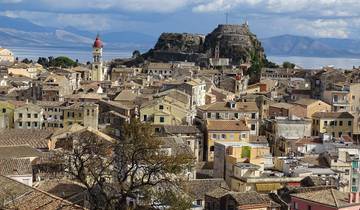
6 days
6-Day Private Greece Tour, UNESCO Sites, Culinary & Corfu Island
- ✓ Comprehensive Corfu tour
- ✓ Expert local guides included
- ✓ All accommodation arranged
- ✓ Transportation provided
Multi-day tour packages powered by TourRadar. Prices and availability subject to change.
Introduction: Corfu’s Exceptional Venetian Legacy
The inscription of Corfu Old Town on the UNESCO World Heritage List in 2007 acknowledged what architectural historians had long recognized: this small Ionian island preserves the Mediterranean’s most authentic and complete surviving example of a Venetian fortified port city. Unlike Crete, Cyprus, or other Venetian colonies where subsequent Ottoman conquest, modern development, or wartime destruction compromised historical integrity, Corfu’s fortifications and urban ensemble survived remarkably intact through five centuries, maintaining architectural coherence and functional authenticity rare in European fortress cities.
The UNESCO designation encompasses 70 hectares of core property including the entire Old Town historic center, both major fortresses, and significant portions of integrated defensive works, surrounded by 162 hectares of buffer zone protecting visual approaches and historical context. This comprehensive protection ensures that the relationship between fortifications, urban development, port facilities, and natural landscape—the ensemble creating Corfu’s outstanding universal value—remains legible and authentic for future generations.
Understanding Corfu’s UNESCO significance requires appreciating the geopolitical circumstances shaping its development. Positioned at the entrance to the Adriatic Sea, Corfu controlled maritime routes between Venice and its eastern Mediterranean possessions, making the island strategically invaluable to Venetian commercial and military interests. When Constantinople fell to the Ottomans in 1453, Corfu’s importance intensified as Venice’s first line of defense protecting the Adriatic from Ottoman naval expansion. This strategic reality drove continuous investment in fortifications, urban planning, and defensive infrastructure creating the architectural ensemble visible today.
The Venetian period spanning 1386-1797 established Corfu’s fundamental character. Venetian governors (provveditori) administered the island from the Old Fortress, implementing urban planning regulations controlling building heights, street widths, and architectural styles to enhance defensive capabilities while accommodating growing population. The construction of the New Fortress in the late 16th century demonstrated Venice’s commitment to maintaining Corfu as an impregnable stronghold despite enormous financial costs. Venetian cultural influence extended beyond military architecture—the introduction of opera, establishment of philharmonic societies, development of Catholic and Orthodox religious coexistence, and creation of aristocratic traditions all contributed to Corfu’s distinct identity.
The transition to French control (1797-1799, 1807-1814) brought Napoleonic urban planning concepts including the transformation of the Spianada into a formal parade ground and construction of the Liston arcade modeled after Paris’ Rue de Rivoli. Though brief, French occupation introduced Enlightenment principles and urban aesthetics that refined Venetian medieval structures with neoclassical elegance.
The British protectorate (1815-1864) wrought the most visible transformations visible today. British administrators, viewing Corfu as a Mediterranean stronghold securing routes to India, undertook massive public works including construction of the Palace of St. Michael and St. George housing the High Commissioner and later the Ionian Parliament, introduction of neoclassical architectural standards for public buildings, development of water supply and sanitation infrastructure, and construction of the road network still forming the island’s transportation backbone. British cultural influences—cricket, ginger beer, tea culture—became embedded in Corfiot daily life persisting long after Greek unification.
The final transition to Greek sovereignty in 1864 integrated Corfu into the modern Greek state while preserving its distinctive architectural and cultural character. The 20th century brought challenges of modernization pressures, tourism development, and population changes, yet Corfu Old Town maintained exceptional integrity through protective regulations, community commitment to heritage preservation, and eventually UNESCO designation formalizing international recognition and protection obligations.
Today’s visitor encounters this layered history through direct architectural experience. Walking Corfu’s cobbled streets, passing under Venetian arches, ascending fortress ramparts, observing neoclassical facades, and experiencing the urban ensemble’s spatial organization provides immediate connection to five centuries of Mediterranean geopolitical dynamics, architectural evolution, and cultural synthesis. The UNESCO designation ensures this authentic experience remains available to future generations by protecting the physical fabric and maintaining the historical character that makes Corfu Old Town truly exceptional.
Historical Context: From Byzantine Origins to Venetian Dominance
Corfu’s historical significance extends far beyond the Venetian period that shaped its current character, with archaeological evidence documenting settlement from the 8th century BC when Eretrian Greeks established early colonies. By 734 BC, Corinthian colonists founded Kerkyra (ancient Corfu) south of the present Old Town, creating a prosperous polis that established its own colonies in Illyria and Epirus, demonstrating maritime power rivaling its mother city Corinth. The strategic position controlling the narrow channel between Corfu and the Albanian mainland made the island invaluable for controlling Adriatic access and trade routes to Sicily and the western Mediterranean.
Roman conquest in 229 BC transformed Corfu into a critical naval base and administrative center for Roman expansion into Greece and the eastern Mediterranean. The island served as launching point for Julius Caesar’s campaigns, with its excellent natural harbors providing secure anchorage for fleets. Early Christian tradition associates Corfu with disciples of St. Paul who introduced Christianity in the 1st century AD, establishing religious significance that would influence the island’s subsequent development particularly during Byzantine and Venetian periods when sacred architecture became integral to urban planning.
The division of the Roman Empire in 395 AD assigned Corfu to the Eastern (Byzantine) Empire, beginning nearly a millennium of Greek cultural continuity despite periodic invasions and occupations. Gothic invasions in 551 destroyed the ancient city on the plain, forcing the population to relocate to the defensible rocky peninsula (the “korifi” or twin peaks) where the Old Fortress now stands. This Byzantine population shift established the fundamental urban pattern—fortified acropolis protecting concentrated settlement—that Venetian engineers would later elaborate into the sophisticated defensive ensemble visible today.
Byzantine Corfu experienced repeated invasions from Normans, Sicilians, Genoese, and others seeking control of its strategic position, yet the island maintained Orthodox Christian identity and Greek cultural traditions through these disruptions. The construction of Byzantine fortifications on the acropolis established defensive precedents that Venetian engineers inherited and expanded. Byzantine sacred architecture including churches dedicated to local saints, Orthodox liturgical practices, and monastic traditions all persisted through subsequent Venetian Catholic overlay, creating the religious pluralism characteristic of Corfu’s cultural synthesis.
Venice’s annexation of Corfu in 1386 occurred within the context of Venetian expansion across the eastern Mediterranean following the Fourth Crusade. Venice had established trading posts, colonies, and protectorates throughout the Aegean and eastern Mediterranean, but Corfu’s position at the Adriatic entrance gave it unique strategic importance for protecting maritime routes to Venice itself. The initial Venetian acquisition occurred through diplomatic agreement rather than military conquest, with Corfu’s nobility accepting Venetian protection against Angevin and Ottoman threats in exchange for maintaining local privileges and property rights.
The fall of Constantinople to the Ottomans in 1453 transformed Corfu’s strategic significance. With Byzantine authority collapsed and Ottoman naval power expanding westward, Corfu became Venice’s critical first line of defense protecting the Adriatic. Venice invested enormous resources in fortification construction, recognizing that Ottoman conquest of Corfu would expose Venice itself to direct naval attack. The military urgency drove fortification projects that would ultimately create the UNESCO-recognized ensemble visible today.
The period 1453-1716 witnessed three major Ottoman sieges attempting to conquer Corfu, each repulsed through combination of Venetian defensive engineering, naval reinforcements, and desperate resistance by defenders and civilian population. The 1537 siege devastated surrounding countryside but failed to breach the Old Fortress defenses. The 1571 siege coincided with the Battle of Lepanto where combined Christian navies defeated the Ottoman fleet, reducing immediate pressure on Corfu. The climactic 1716 siege brought 30,000 Ottoman troops against Corfu’s fortifications in a month-long assault that nearly succeeded before Venetian naval intervention and the heroic defense led by German mercenary commander Johann Matthias von der Schulenburg saved the island.
These successful defenses against Ottoman conquest preserved Corfu’s Western Christian orientation and Venetian cultural influences through the critical centuries when mainland Greece experienced Ottoman rule. The continuous investment in fortifications necessitated by Ottoman threat produced the layered defensive works—bastions, ramparts, underground galleries, moats—that characterize Corfu’s fortification ensemble. The military imperative shaped urban planning as civilian buildings were regulated to avoid creating cover for attackers, streets were designed for rapid troop movement between defensive positions, and entire neighborhoods were demolished to create clear fields of fire around fortress walls.
Venetian governance introduced administrative systems, legal codes, and cultural institutions that profoundly influenced Corfiot society. The Venetian tradition of religious tolerance allowed Orthodox and Catholic communities to coexist, with Orthodox churches serving the Greek majority while Catholic institutions served Venetian administrators and nobility. The Venetian aristocratic system created a Corfiot nobility (the Libro d’Oro or Golden Book families) who adopted Venetian culture while maintaining Greek Orthodox faith and language. This cultural hybridity—Greek in religion and language, Venetian in governance and high culture, Mediterranean in architectural aesthetics—created the unique synthesis that UNESCO recognition acknowledges as outstanding universal value.
The French Revolutionary Wars ended Venetian rule when Napoleon’s Treaty of Campo Formio transferred Venice’s Adriatic possessions to France in 1797. The brief initial French period introduced revolutionary principles and urban planning concepts before Russia and Ottoman Turkey jointly occupied the island 1799-1807 as the Septinsular Republic. A second French period 1807-1814 under Napoleon’s direct control saw construction of the Liston and other urban improvements before British victory in the Napoleonic Wars established the British protectorate that would last until Greek unification.
Old Fortress (Palaio Frourio): Architectural Masterpiece and Strategic Stronghold
The Old Fortress occupies a natural rocky promontory extending into the Ionian Sea from Corfu Town’s eastern edge, connected to the mainland only by a narrow isthmus where fortifications concentrate defensive power. This geographical position provided inherent defensive advantages that successive civilizations exploited, beginning with Byzantine fortifications on the twin peaks (korifi) giving Corfu its modern name. The Venetians transformed this natural stronghold into one of the Mediterranean’s most formidable fortresses through engineering works spanning the 14th-18th centuries.
The fortress entrance presents visitors with immediate architectural drama: a stone bridge crossing the Contrafossa, a seawater moat excavated by Venetian engineers to completely isolate the fortress from the town. The moat represents an extraordinary engineering achievement, requiring removal of thousands of cubic meters of rock to create a defensive barrier 30-40 meters wide filled with seawater through channels connecting to the surrounding sea. This isolation transformed the natural promontory into an artificial island accessible only across the bridge, which defenders could destroy to prevent enemy access during siege.
Above the main gate, the winged Lion of St. Mark carved in marble announces Venetian sovereignty and dominates the entrance architecture. This symbol of Venice appears repeatedly throughout Corfu’s fortifications, asserting political authority while demonstrating the artistic refinement Venetian culture brought even to military architecture. The lion holds an open book inscribed with “PAX TIBI MARCE EVANGELISTA MEUS” (Peace to you, Mark, my evangelist), the traditional Venetian inscription signifying peaceful governance rather than military conquest.
The fortification system consists of multiple defensive layers creating zones where defenders could fall back if outer defenses were breached, maintaining resistance even after perimeter walls fell to attackers. The outer walls feature massive stone construction with gentler slopes on the exterior (the scarp) designed to resist cannon fire while steeper interior faces (the counterscarp) prevented attackers who reached the base from easily climbing. Artillery positions (embrasures and casemates) positioned at strategic points provided overlapping fields of fire covering all approaches, eliminating dead zones where attackers could mass forces unseen by defenders.
The summit area preserves two distinct peaks reflecting the original Byzantine geography. The western peak supports the lighthouse constructed during British administration, now a distinctive landmark visible from throughout Corfu Town and serving as navigation beacon for maritime traffic. The eastern peak hosts the Church of St. George, an extraordinary structure demonstrating British architectural contributions to the fortress complex.
The Church of St. George represents one of the Old Fortress’s most distinctive features, constructed 1840 during British administration in pure Doric temple style. The neoclassical design follows ancient Greek temple proportions with a peristyle of Doric columns surrounding the main structure, pediments decorated with sculptural reliefs, and overall form more resembling the Parthenon than a Christian church. This architectural choice reflected British Philhellenism—the Romantic fascination with ancient Greek culture—while serving practical military function as the garrison church for British troops stationed at the fortress. The building demonstrates how successive occupying powers adapted the fortress to their needs while contributing new architectural layers to the ensemble’s historical complexity.
Underground galleries honeycomb the fortress interior, creating protected spaces for ammunition storage, food and water reserves, troop quarters, and communication routes linking defensive positions. These subterranean works allowed defenders to move between fortress sections without exposure to enemy fire, while providing bomb-proof shelter during artillery bombardment. The galleries feature sophisticated engineering including ventilation shafts preventing suffocation, drainage systems managing groundwater infiltration, and structural reinforcement preventing collapse under the weight of fortifications above.
The British period introduced additional modifications transforming the fortress from active military installation to administrative center and eventually tourist attraction. British engineers repaired war damage from previous Ottoman sieges, modernized artillery positions to accommodate new weapons technology, and constructed neoclassical buildings housing administrative functions. The construction of roads and pathways improving access to summit positions made the fortress more suitable for civilian visits while maintaining defensive functionality.
Water supply represented a critical consideration for fortress design, as siege warfare typically focused on cutting water sources to force surrender. The Old Fortress addressed this vulnerability through massive cisterns excavated into solid rock, collecting and storing rainwater sufficient to sustain the garrison through prolonged siege. These cisterns remain visible throughout the fortress, demonstrating the scale of engineering required to maintain a viable fortress capable of withstanding months-long blockade.
Panoramic views from the fortress summit reveal why this position proved so strategically valuable. Looking north shows the narrow Corfu Channel separating the island from Albania, a maritime chokepoint controlling access between the Ionian and Adriatic seas. To the south stretches Corfu’s coastline toward Paxos and the open Mediterranean. The west reveals Corfu Town’s layout with the New Fortress visible on its own promontory, demonstrating how the two fortresses provided overlapping defensive coverage. These viewpoints help visitors understand the geopolitical dynamics that shaped Corfu’s fortification investment.
Entrance to the Old Fortress requires purchasing tickets at the gate kiosk located before crossing the moat bridge. Adult admission costs €6, with reduced rates for students and EU seniors over 60 (€2), and free admission for children. Opening hours vary seasonally: winter period (November-March) operates 08:30-15:30 daily, while summer season extends hours accommodating tourist demand. Visitors should allocate 2-3 hours for thorough exploration including summit ascent, church visit, underground gallery exploration, and time appreciating panoramic views from multiple vantage points.
The fortress hosts cultural events particularly during summer months, including classical music concerts utilizing the church’s exceptional acoustics, theatrical performances staged within the historic walls, and sound-and-light shows dramatizing siege history. These events demonstrate how UNESCO World Heritage sites can maintain living cultural functions beyond passive monument preservation, engaging contemporary audiences with historical spaces through artistic programming.
New Fortress (Neo Frourio): Advanced Venetian Military Engineering
The New Fortress dominates Corfu Town’s western heights, a massive fortification complex constructed 1576-1645 representing the apex of Venetian bastion fortification design. Despite its name suggesting more recent construction than the Old Fortress, “new” merely distinguishes it from the earlier medieval fortress—the New Fortress actually preserves more authentic Venetian military architecture than the extensively British-modified Old Fortress. The construction responded to military developments making older medieval fortifications vulnerable to artillery siege, requiring complete redesign of defensive systems around sophisticated geometric principles.
The design follows the bastion trace system developed by Italian military engineers during the 16th century as gunpowder artillery rendered high medieval walls obsolete. Traditional vertical walls provided excellent targets for cannon fire, with impacts concentrating force at wall bases causing catastrophic collapse. The bastion system instead employed low, thick walls with gentle slopes deflecting cannon balls, massive earthwork fills absorbing impact energy, and projecting angular bastions allowing defenders to fire along wall faces preventing attackers from reaching the base unseen. This geometric solution to artillery siege created the distinctive star-shaped fortress plans characteristic of the period.
The New Fortress demonstrates these principles through carefully calculated bastion positions creating overlapping fields of fire covering all approaches. Each bastion projects from the main fortress perimeter at precisely determined angles, allowing defenders positioned on one bastion to fire directly along the adjacent wall faces. This eliminates “dead ground”—blind spots where attackers could mass forces unseen by defenders—making direct assault suicidal and forcing besiegers to adopt slow, expensive formal siege techniques of trench approach and artillery bombardment.
Renowned Venetian military engineer Francesco Marmora supervised much of the construction, applying theories developed through Venetian fortress building across the Mediterranean from Crete to Dalmatia. The New Fortress incorporated lessons learned from Ottoman siege attempts against other Venetian fortresses, with particular attention to underground mine warfare where attackers tunneled beneath walls to collapse them with explosives. Counter-mine galleries within the fortress allowed defenders to detect and intercept enemy tunneling, while the rocky foundation made tunneling extraordinarily difficult for attackers.
The construction required enormous resource investment demonstrating Venice’s strategic commitment to Corfu’s defense. Thousands of laborers, specialized stonemasons, and military engineers worked for decades quarrying stone, excavating foundations, building walls, and creating the intricate defensive works. The financial burden contributed to Venice’s eventual economic decline, as maintaining fortifications across a Mediterranean empire stretched beyond the republic’s fiscal capacity particularly as Ottoman naval threat diminished after the Battle of Lepanto.
The fortress interior preserves extensive tunnel networks connecting defensive positions, powder magazines, troop quarters, and storage facilities. These underground works protected garrison forces from bombardment while enabling rapid movement between fortress sections without exposure to enemy fire. The tunnels demonstrate sophisticated engineering including ventilation systems maintaining air quality in deep underground spaces, drainage managing groundwater and preventing flooding, and structural archwork distributing weight and preventing collapse.
Multiple gates controlled access to different fortress sections, each designed as a defensive strongpoint forcing attackers through narrow passages covered by defensive fire from multiple directions. The main entrance features a complex approach requiring several direction changes, preventing attackers from using battering rams or direct assault techniques. Guard rooms flanking passages allowed defenders to observe and control everyone entering or leaving, maintaining security even during peacetime garrison duties.
The summit provides spectacular panoramic views across Corfu Town, the harbor, and surrounding landscape. Looking east shows the Old Fortress across the town center, revealing how the two fortresses created coordinated defensive coverage with overlapping fire sectors. The northern view extends to the Albanian coast and Corfu Channel, while western vistas show the island’s mountainous interior. These viewpoints help visitors appreciate strategic considerations shaping fortress positioning and design.
Unlike the Old Fortress which underwent extensive British modifications, the New Fortress preserves more authentic Venetian character with fewer later alterations. British administrators found the New Fortress less suitable for administrative purposes and conducted minimal modifications beyond necessary maintenance and garrison accommodation. This preservation through neglect ironically protected authentic Venetian military architecture from the neoclassical transformations affecting the Old Fortress.
The fortress experienced periods of abandonment and deterioration during the 20th century as military functions ceased and maintenance proved financially challenging. Greek authorities gradually restored major structures and opened sections to public access, though conservation remains an ongoing challenge given the monument’s massive scale and exposure to Mediterranean climate conditions. UNESCO designation brought increased attention and resources to conservation needs, though the New Fortress continues requiring significant investment for full restoration and interpretation.
Current access to the New Fortress operates seasonally with typical opening April-October, closed November-March. Adult admission costs €5, notably less than the Old Fortress reflecting the less developed visitor infrastructure and interpretation. The entrance location can confuse first-time visitors—multiple approaches exist, but the main public entrance follows a cobbled path from the old port area near Spilia Gate. Signage proving limited, visitors should ask locally for directions or consult maps before attempting to locate the entrance.
The fortress interior requires considerable physical fitness to explore thoroughly. Steep stone staircases, uneven surfaces, and extensive walking across the large complex demand appropriate footwear and reasonable mobility. Limited shade on exposed sections creates heat challenges during summer months, making morning visits advisable. Water availability proves limited—visitors should bring adequate supplies for the 1-2 hour exploration time required to appreciate the fortress adequately.
Interpretive signage within the New Fortress proves minimal compared to the Old Fortress, with few explanatory panels in English describing architectural features or historical context. This lack of interpretation means visitors benefit significantly from hiring guides or studying fortress history before visiting to fully appreciate the sophisticated military engineering visible throughout the complex. Future conservation plans include improved interpretation and visitor facilities, though implementation timelines remain uncertain pending funding availability.
Old Town Urban Architecture: Venetian Planning and Neoclassical Transformation
The residential and commercial fabric of Corfu Old Town preserves Greece’s only large historic area maintaining substantially intact medieval urban network, with street patterns, building plots, and architectural character largely unchanged since Venetian period urban planning established the fundamental organization. This extraordinary preservation results from Corfu’s unique historical trajectory avoiding Ottoman conquest and experiencing instead continuous Western European governance that maintained and enhanced rather than replacing Venetian urban structures.
The street network follows organic medieval patterns rather than geometric planning, with narrow cobbled lanes (kantounia) winding between tall buildings creating shaded passages protecting pedestrians from summer sun while channeling sea breezes for natural cooling. This dense urban fabric reflects medieval defensive considerations—narrow streets impeded attacking forces, prevented effective artillery fire into the town center, and could be barricaded creating internal defensive lines if outer walls fell. The apparent chaos actually demonstrates sophisticated urban design optimizing multiple functions including defense, climate comfort, and social organization.
Building heights typically reach 4-5 stories, unusual for Greek cities but characteristic of Venetian urban density maximizing population accommodation within defensive perimeters. Venetian regulations controlled building heights, materials, and construction methods ensuring structural stability and preventing buildings from providing attackers with elevated firing positions overlooking defensive works. These regulations created the remarkably homogeneous architectural character visible today despite construction spanning several centuries.
The architectural style combines Venetian and Italian elements with Greek and British influences creating unique fusion. Characteristic features include covered arcades (stoas) providing weather protection at street level, tall windows with wooden shutters allowing ventilation while controlling light and heat, external staircases accessing upper floors, wrought-iron balconies projecting over streets, and pastel-colored facades in ochres, pinks, and creams typical of Mediterranean architecture. This aesthetic synthesis demonstrates how architecture absorbs and reinterprets multiple cultural influences through practical adaptation to local climate and building traditions.
The British protectorate introduced neoclassical architectural standards transforming Corfu’s visual character. British administrators commissioned public buildings, private residences, and urban improvements reflecting Georgian and Regency aesthetics fashionable in early 19th-century Britain. The Palace of St. Michael and St. George represents the period’s most ambitious monument, a neoclassical masterpiece constructed 1819-1824 housing the British High Commissioner and Ionian Parliament. The palace demonstrates British imperial architecture at its most refined, with Maltese limestone construction, Doric colonnades, formal gardens, and interior spaces designed for ceremonial functions and administrative purposes.
The Liston promenade exemplifies French and British urban planning transforming Venetian military spaces into elegant public amenities. Originally a Venetian defensive glacis maintaining clear fields of fire from fortress walls, the space was redesigned during French occupation as a formal parade ground and subsequently refined by British administrators who added the distinctive arcaded facade modeled on Parisian prototypes. The Liston’s covered arcade provides shaded walking and cafe seating, creating the social hub where Corfiots gather for the traditional evening volta (promenade), demonstrating how military spaces evolved into civic amenities as defensive needs diminished.
Spianada Square forms the Mediterranean’s second-largest public square after Moscow’s Red Square, though this comparison misleads as Spianada functions more as landscaped park than formal plaza. The space originated as military training ground and parade area, explaining its unusual size within dense medieval urban fabric. British administrators developed the space with tree plantings, walking paths, monuments, and facilities including the cricket pitch where matches continue today, making Corfu the only Greek location where cricket remains popular recreation decades after British departure.
Sacred architecture demonstrates the religious pluralism characterizing Corfu’s cultural heritage. The Church of St. Spyridon dominates the Old Town skyline with its distinctive red-domed campanile, the most prominent Orthodox church in the Ionian Islands housing the preserved relics of St. Spyridon, Corfu’s patron saint whose miracle interventions allegedly saved the island from plague, famine, and Ottoman conquest. The church interior displays exceptional Orthodox iconography, silverwork, and votive offerings demonstrating centuries of devotional practice. Catholic churches serving the Venetian minority include smaller structures scattered through the Old Town, while the Anglican Church of St. George inside the Old Fortress served British garrison needs.
The Jewish Quarter (Evraiki) preserves the memory of Corfu’s Romaniote Jewish community, one of Greece’s oldest Jewish populations predating the Common Era. The quarter’s narrow lanes and distinctive architecture survive despite the Holocaust’s devastating impact—over 1,800 Corfiots Jews were deported to Auschwitz in 1944, with fewer than 200 surviving. A memorial synagogue and Holocaust memorial honor this lost community, while preservation efforts maintain the quarter’s architectural character recognizing its significance to Corfu’s multicultural heritage.
Traditional shops and workshops continue operating in ground-floor spaces throughout the Old Town, maintaining commercial vitality essential for living heritage preservation. Artisan workshops produce traditional Corfiot crafts including kumquat liqueur and preserves (kumquats were introduced during British protectorate), olive wood carvings, traditional soap from the historic Patounis factory operating since 1850, and musical instrument construction supporting Corfu’s renowned philharmonic tradition. These active commercial functions prevent the Old Town from becoming a museum-like tourist quarter, sustaining resident population and authentic daily life.
The residential population faces challenges characteristic of historic centers globally—tourism pressure, commercial conversion of residential properties, aging infrastructure, and younger generations relocating to modern neighborhoods. UNESCO designation brings protective regulations preventing inappropriate alterations and requiring conservation standards for renovations, though these same protections can make property maintenance expensive and discourage residential investment. Balancing heritage preservation with maintaining vibrant residential community represents ongoing challenge for municipal authorities and heritage managers.
Conservation efforts focus on maintaining authentic architectural character while accommodating modern living requirements. Regulations control exterior alterations, require traditional materials and techniques for repairs, and prohibit visual intrusions like satellite dishes and air conditioning units on street-facing facades. Infrastructure improvements including modern utilities, seismic reinforcement, and accessibility adaptations must be implemented sympathetically to avoid compromising historic fabric. These conservation challenges require ongoing technical expertise, financial resources, and community cooperation ensuring the Old Town’s UNESCO values persist while serving as living neighborhood rather than static monument.
Cultural Significance and UNESCO Outstanding Universal Value
UNESCO’s inscription of Corfu Old Town recognized outstanding universal value under criterion (iv): “The urban and port ensemble of Corfu, dominated by its fortresses of Venetian origin, constitutes an architectural example of outstanding universal value in both its authenticity and its integrity.” This designation acknowledges several interrelated values making Corfu unique among Mediterranean fortified cities and European heritage sites generally.
The fortification ensemble demonstrates the evolution of European military architecture from medieval castle design through sophisticated bastion fortification systems developed in response to gunpowder artillery. The three fortresses—Old Fortress preserving Byzantine foundations with Venetian elaboration and British modification, New Fortress representing pure Venetian bastion design, and integrated town fortifications—together constitute one of the Mediterranean’s most complete surviving defensive complexes. This architectural progression visible within a compact area provides exceptional educational value for understanding European military engineering development.
The strategic significance of Corfu’s position at the Adriatic entrance shaped four centuries of continuous fortification investment, creating layered defensive works where each successive threat prompted new engineering responses. This historical record preserved in physical form demonstrates how geopolitical dynamics drove architectural and urban planning decisions, making Corfu an outstanding example of the relationship between strategic position, military technology, and urban development.
The cultural fusion visible throughout the Old Town demonstrates exceptional synthesis of Western European and Greek traditions. Venetian governance, French urban planning, British neoclassical architecture, and Greek Orthodox sacred architecture coexist creating unique character found nowhere else in Greece. This architectural pluralism reflects cultural exchange and adaptation across five centuries, demonstrating how successive governing powers contributed to evolving heritage rather than replacing previous cultural layers.
The authenticity and integrity of Corfu’s historic ensemble prove exceptional when compared to other Mediterranean fortified cities. Many Venetian colonial cities experienced Ottoman conquest bringing architectural transformation, World War II destruction requiring reconstruction, or modern development compromising historical fabric. Corfu avoided these disruptions, maintaining extraordinary continuity from Venetian period through present. The street patterns, building plots, fortification works, and architectural character remain substantially intact, providing authentic testimony to historical processes shaping the ensemble.
The living heritage aspect enhances Corfu’s outstanding value. Unlike many fortress cities functioning primarily as tourist attractions with minimal residential population, Corfu Old Town sustains over 3,000 permanent residents conducting daily life within historic fabric. This vitality demonstrates successful integration of heritage conservation with contemporary urban function, avoiding the “museum-ification” that can drain historic centers of authentic community life. The continuation of traditional festivals, religious practices, philharmonic musical traditions, and artisan crafts within the UNESCO-protected area maintains cultural continuity linking present to past.
The educational and scientific value proves substantial for multiple disciplines. Military historians study the fortification evolution and siege warfare history. Architectural historians analyze the fusion of building styles and adaptation of European prototypes to Mediterranean conditions. Urban planners examine how defensive requirements shaped settlement patterns and how those patterns adapt to contemporary needs. Conservation specialists develop methodologies for preserving complex architectural ensembles balancing multiple heritage values and stakeholder interests. This multidisciplinary research potential enhances Corfu’s significance beyond architectural merit alone.
The comparative analysis supporting UNESCO inscription demonstrated Corfu’s distinctiveness among similar heritage sites. While the Venetian Works of Defence (another UNESCO site) includes multiple fortifications across Croatia, Montenegro, and Italy, Corfu stands out for preserving intact urban ensemble where fortifications, town planning, and residential architecture remain integrated as originally designed. Dubrovnik, though architecturally comparable, experienced significant World War II damage requiring reconstruction. Malta’s fortifications prove grander but developed under different circumstances with different architectural influences. Split and other Adriatic cities preserve Venetian elements but within different urban contexts. This comparative analysis confirmed Corfu’s outstanding universal value derives from its unique combination of authenticity, integrity, and architectural synthesis.
Museums and Cultural Attractions Within Old Town
The Museum of Asian Art, housed within the Palace of St. Michael and St. George, presents one of Europe’s most significant collections of Asian decorative arts outside traditional colonial powers like Britain and France. The collection originated with Gregorios Manos, a Greek diplomat who assembled approximately 10,000 objects during service in Austria-Hungary, subsequently donating the collection to the Greek state in 1919. Additional donations expanded holdings to over 15,000 objects representing civilizations across Asia from Japan through India to the Middle East.
The Japanese collection constitutes particular strength with exceptional examples of Edo period screens, Noh theater masks, samurai armor and swords, lacquerware, and ceramics spanning multiple dynasties and regional traditions. Chinese holdings include Tang dynasty pottery, Song porcelain, Ming furniture, and Qing decorative arts demonstrating the evolution of Chinese artistic traditions across millennia. The Southeast Asian galleries display Thai, Cambodian, and Indonesian sculpture, textiles, and ceremonial objects revealing cultural connections across the region. Indian collections feature Gandharan Buddhist sculpture, Mughal miniature paintings, and textiles illustrating India’s artistic diversity.
The museum’s neoclassical palace setting creates dramatic contrast between Western architectural framework and Eastern artistic content, highlighting cross-cultural dialogue and European fascination with Asian civilizations during the 19th-century colonial period. The juxtaposition prompts reflection on collection histories, cultural exchange, and the complex relationships between European colonialism and appreciation of non-Western artistic traditions.
Exhibition design emphasizes object quality and aesthetic appreciation rather than ethnographic or historical contextualization, reflecting museum traditions emphasizing formal artistic merit. Contemporary museology might prefer more interpretive context explaining objects’ original functions, cultural significance, and collection histories, though the focus on aesthetic contemplation allows visitors to appreciate artistic achievement across cultural boundaries.
The Byzantine Museum (Museum of Antivouniotissa) occupies a beautifully restored 15th-century church, the Church of Panagia Antivouniotissa, itself an architectural monument demonstrating Venetian-period sacred architecture adapted to Orthodox liturgical requirements. The church’s architectural features including ornate iconostasis, frescoed walls, and marble decorative elements create atmospheric setting for the museum’s collection of Byzantine and post-Byzantine icons, ecclesiastical objects, and religious art.
The icon collection spans the 13th-19th centuries, representing major Byzantine artistic traditions including Cretan school masters whose refined technique and classical proportions influenced religious art across the Orthodox world. Corfu-produced icons demonstrate local artistic traditions adapting Byzantine conventions to regional preferences and Western artistic influences penetrating through Venetian contact. The chronological and stylistic range allows visitors to trace icon painting evolution and understand regional variations within broader Byzantine artistic tradition.
Liturgical objects including chalices, ciboria, gospel covers, and processional crosses demonstrate the craftsmanship dedicated to Orthodox worship, with silver and gold work, enamel decoration, and gem inlay creating objects of extraordinary beauty serving sacred functions. Vestments, embroidered epitaphioi (funeral cloths), and other textiles reveal textile arts supporting religious ceremonies while demonstrating technical sophistication in weaving, embroidery, and decorative techniques.
The church architecture itself merits close attention, with structural features revealing construction techniques, decorative programs demonstrating artistic patronage, and liturgical arrangements showing how architectural space facilitated Orthodox worship. The museum interpretation explains these architectural features alongside the object collections, providing integrated understanding of sacred art’s architectural and liturgical contexts.
The Banknote Museum operated by the Ionian Bank presents the history of currency and banking in the Ionian Islands, with particular focus on the distinctive banknotes issued during British protectorate when Ionian Islands maintained separate currency from mainland Greece. The collection includes rare banknotes, commemorative issues, and documentation of banking practices revealing economic history and financial institutions’ role in trade and commerce.
The Philharmonic Archives and Music Museum celebrates Corfu’s exceptional musical traditions, particularly the philharmonic societies that make the island unique in Greece. Italian opera traditions introduced during Venetian period evolved into distinctive Corfiot philharmonic culture with multiple societies competing through public performances, maintaining extensive repertoires, and training musicians through structured education programs. The museum preserves musical instruments, scores, photographs, and documentation of philharmonic history while explaining this living tradition’s significance to Corfiot cultural identity.
The Reading Society of Corfu (Anagnostiki Etaireia Kerkyras), established 1836, functions as cultural institution housing library collections, hosting lectures and cultural events, and maintaining traditions of intellectual discourse and literary culture. While not strictly a museum, the Reading Society’s historic building, library holdings, and cultural programs contribute to the Old Town’s intellectual and educational heritage, demonstrating how cultural institutions sustain community identity beyond tourism.
Practical Visitor Information and Touring Strategies
Accessing Corfu Old Town proves straightforward for visitors staying anywhere on the island. The Old Town occupies the eastern peninsula of Corfu Town (Kerkyra), bordered by the Spianada to the east, the New Port to the west, and the sea to the north and south. Most hotels in Corfu Town center lie within walking distance of the Old Town, while visitors staying in coastal resorts can reach the capital via public bus, rental car, or organized tours.
The main KTEL bus station serving island routes operates near the New Port, providing access from resort areas including Paleokastritsa, Sidari, Kassiopi, Kavos, and other popular destinations. Local urban buses connect various Corfu Town neighborhoods with the center. Parking presents challenges within the Old Town’s pedestrian zones—visitors driving should utilize parking facilities near the New Port or Spianada periphery, then explore the historic center on foot as narrow streets prohibit vehicle access and UNESCO regulations restrict traffic to preserve architectural fabric and pedestrian experience.
Optimal touring strategy allocates a full day for comprehensive Old Town exploration including both fortresses, museums, architectural appreciation, and time experiencing the urban atmosphere through unhurried walking and cafe stops. A suggested itinerary might begin with early morning Old Fortress visit (arriving at 08:30 opening avoids crowds and heat), spending 2-3 hours exploring ramparts, church, underground galleries, and enjoying summit views. Mid-morning transitions to walking the Old Town streets, visiting the Byzantine Museum and observing architectural details. Lunch on the Liston allows people-watching and cultural immersion. Early afternoon dedicates to the Museum of Asian Art or specific architectural interests. Late afternoon undertakes New Fortress exploration before the site closes. Evening concludes with volta promenade on the Liston and dinner at a traditional taverna.
Alternative focused itineraries serve visitors with limited time or specific interests. A fortifications-focused half-day prioritizes the Old Fortress exploration with architectural observation of town fortification elements visible from streets and public spaces, suitable for military history enthusiasts. A cultural heritage half-day emphasizes museums, churches, and traditional workshops demonstrating artisan crafts, appealing to visitors interested in artistic and cultural traditions. An architectural walking tour following a thematic route highlighting Venetian, British, and French architectural contributions suits photography enthusiasts and architecture students.
Guided tours provide valuable context for visitors seeking deeper understanding beyond self-guided exploration. Local guides licensed by the Greek Ministry of Tourism offer expertise in Corfu history, architecture, and cultural traditions, bringing sites to life through stories, historical context, and insider knowledge. Tours range from general Old Town introductions to specialized themes like military architecture, sacred architecture, or culinary traditions. Booking through reputable operators ensures qualified guides, though independent guides may be engaged at tourist information offices or by arrangement with hotels.
Footwear and clothing considerations merit attention given the Old Town’s physical characteristics. Cobblestone streets and fortress explorations require sturdy walking shoes with good traction—fashion sandals or heeled shoes prove impractical and potentially dangerous on uneven surfaces and fortress staircases. Summer heat necessitates light clothing, sun protection including hats and sunscreen, and carrying water bottles as shade proves limited in many areas. Modest dress is required for church visits, with shoulders and knees covered showing respect for sacred spaces—carrying a light scarf or shawl allows quick adaptation when entering religious sites.
Photography opportunities abound throughout the Old Town, with architectural details, fortress vistas, street scenes, and cultural events providing unlimited subject matter. The best photographic light occurs during early morning and late afternoon when angled sun creates modeling on building facades and fortress walls. Midday overhead light flattens architectural features though the strong Mediterranean sun creates dramatic contrasts. Sunset photography from fortress ramparts captures spectacular views with warm light illuminating the town and surrounding seascape. Permission should be requested before photographing individuals, particularly during religious ceremonies or in residential areas where privacy expectations apply.
Dining in the Old Town spans budget tavernas serving traditional Greek cuisine to upscale restaurants offering refined Mediterranean menus. The Liston’s cafes provide premium positioning and ambiance at correspondingly higher prices, suitable for breakfast, coffee breaks, or aperitifs while people-watching. Side streets harbor more affordable tavernas where locals dine, offering authentic Corfiot specialties including sofrito (veal in white wine and garlic sauce), pastitsada (pasta with spiced meat), bourdeto (fish stew), and local cheeses and charcuterie. Traditional pastry shops (zacharoplasteia) sell sweet treats including mandolato (nougat), sykomaida (fig paste), and kumquat preserves unique to Corfu.
Shopping opportunities include traditional crafts, local food products, and artisan goods providing authentic souvenirs versus mass-produced tourist merchandise. Seek out the historic Patounis soap factory for traditionally made olive oil soaps, kumquat liqueur and preserves (Corfu’s signature agricultural product introduced by British botanists), olive wood carvings and cutting boards, and hand-blown glass objects. Jewelry shops offer gold and silver work, while antique stores scattered through side streets contain treasures for collectors willing to browse and negotiate.
Accessibility for visitors with mobility limitations presents challenges given the Old Town’s medieval urban fabric and fortress architecture. Cobblestone streets, narrow passages, stairways, and uneven surfaces make wheelchair navigation difficult though not impossible in main pedestrian thoroughfares. The fortresses prove particularly challenging with extensive staircases, steep ramps, and rough terrain limiting access for those with walking difficulties. The Museum of Asian Art in the neoclassical palace provides better accessibility than medieval structures, though elevator access may be limited. Visitors with mobility concerns should contact sites in advance to understand access limitations and available accommodations.
Conservation Challenges and Heritage Management
UNESCO World Heritage designation brings both protective benefits and management challenges as Corfu Old Town balances heritage conservation with serving as a living urban center. The Hellenic Ministry of Culture maintains primary responsibility for archaeological sites and monuments including the fortresses, while the Municipality of Corfu manages urban planning, infrastructure, and community services within the protected area. This shared responsibility requires coordination between multiple government levels, conservation authorities, property owners, and community stakeholders.
The Management Plan for the Old Town of Corfu, first adopted 2006-2012 and subsequently updated, establishes conservation priorities, development controls, and action programs addressing key challenges. The plan identifies pressures including tourism impacts, infrastructure deterioration, inappropriate alterations to historic buildings, commercial conversion of residential properties, and traffic management. Addressing these challenges requires regulatory frameworks, financial investments, technical expertise, and community engagement ensuring conservation serves broader public interests while respecting property rights and economic realities.
Building conservation within the Old Town requires specialized knowledge and techniques as historic structures utilize traditional materials and construction methods rarely encountered in modern building practice. Restoration projects must employ compatible materials, traditional techniques, and conservation principles preventing irreversible damage while adapting structures to contemporary use requirements. This specialized work proves expensive, discouraging property owners from necessary maintenance and creating deterioration cycles where deferred maintenance compounds problems requiring eventually more extensive interventions.
Financial mechanisms supporting conservation include heritage grants from the Ministry of Culture, tax incentives for restoration work, and technical assistance programs providing conservation expertise. However, funding limitations mean many buildings receive minimal intervention, while some deteriorate awaiting resources for proper restoration. The challenge intensifies for residential properties where owners may lack financial capacity for expensive conservation work yet face regulatory restrictions preventing them from making alterations with conventional materials and techniques.
Tourism pressure creates both economic benefits supporting conservation and challenges threatening heritage values. Tourist spending generates income supporting restaurants, shops, hotels, and service providers, creating economic incentives for maintaining attractive historic environment. However, excessive tourism strains infrastructure, disrupts residential community life, drives commercial conversion reducing residential population, and creates demands for visitor amenities potentially incompatible with heritage character. Managing tourism intensity while maintaining authentic community function represents ongoing balancing act.
Infrastructure modernization proves particularly challenging in medieval urban fabric never designed for modern utilities, traffic, or service requirements. Installing water supply, sewage, electricity, telecommunications, and other utilities must occur without damaging historic fabric or compromising visual character. Underground utility installation requires archaeological supervision as excavations routinely encounter buried archaeological remains requiring documentation and sometimes preservation. These complications make infrastructure work expensive and time-consuming, though necessary for maintaining habitable urban environment.
Seismic risk presents serious concern as Corfu lies in an earthquake-prone zone where historic unreinforced masonry buildings prove vulnerable to structural damage during seismic events. Implementing seismic retrofitting that strengthens buildings without compromising architectural character requires specialized engineering adapting modern techniques to historic structures. The cost and technical complexity mean many buildings remain vulnerable despite known seismic risk, creating potential for catastrophic heritage loss if a major earthquake occurs before comprehensive seismic strengthening programs can be implemented.
Climate change impacts including sea-level rise, increased storm intensity, and changing rainfall patterns create emerging threats to Corfu’s coastal fortifications and urban fabric. The seawater moat surrounding the Old Fortress faces altered tidal patterns and wave action potentially damaging historic stonework. Increased rainfall intensity stresses historic drainage systems and accelerates weathering of building materials. Rising temperatures affect both visitor comfort and material deterioration rates. Adaptation strategies must be developed anticipating future climate conditions while maintaining heritage values.
Community engagement proves essential for conservation success as local residents and business owners serve as daily stewards of heritage fabric through maintenance decisions, business practices, and civic participation. Conservation authorities work to build awareness of heritage values, explain regulatory requirements, provide technical assistance, and create partnerships between government, property owners, and community organizations. Educational programs, interpretive materials, and public events foster pride in cultural heritage and support for conservation policies that might otherwise be perceived as burdensome restrictions.
Frequently Asked Questions: Corfu Old Town Heritage and Visits
How long should I spend visiting Corfu Old Town and the fortresses?
A comprehensive exploration of Corfu Old Town including both major fortresses, key museums, and appreciation of urban architecture requires a full day of 6-8 hours. Allocate 2-3 hours for the Old Fortress exploring ramparts, underground galleries, Church of St. George, and summit viewpoints; 1-2 hours for the New Fortress navigating tunnel networks and ascending to panoramic positions; 2-3 hours walking the Old Town streets observing Venetian architecture, visiting churches, and exploring shops and cafes; and 1-2 hours for one major museum such as the Museum of Asian Art or Byzantine Museum. Half-day visits focusing on either fortifications or cultural attractions prove feasible for visitors with limited time, though this abbreviated timeline sacrifices comprehensive understanding. Architecture enthusiasts, military history buffs, or photographers may wish to allocate multiple days for detailed exploration, repeat visits capturing different lighting conditions, and specialized research into particular architectural or historical aspects. The Old Town’s compact size allows efficient use of limited time, with major sites clustered within 10-15 minute walks, though rushing through reduces appreciation of subtle architectural details and atmospheric qualities best experienced through unhurried exploration.
What are the key differences between the Old Fortress and New Fortress?
The Old Fortress (Palaio Frourio) occupies a natural rocky promontory east of the town center, features layered construction from Byzantine foundations through Venetian elaboration to British neoclassical additions, preserves the distinctive Church of St. George built in Doric temple style, offers the most developed visitor infrastructure with cafe, restrooms, and interpretive signage, and charges €6 adult admission with winter hours 08:30-15:30 extended in summer. The New Fortress (Neo Frourio) crowns the western heights, represents pure Venetian bastion fortification design from the 16th-17th centuries with minimal later modifications preserving authentic military architecture, features more extensive underground tunnel networks and less developed visitor facilities, offers equally spectacular but different panoramic views, charges €5 admission, and operates seasonally (typically April-October, closed November-March). The Old Fortress underwent more extensive British modifications transforming military installations to administrative purposes and subsequently developing tourist amenities, while the New Fortress preserves more authentic Venetian character through having received less investment in later periods. Both fortresses merit visiting for comprehensive understanding of Corfu’s defensive ensemble, as each demonstrates different aspects of military engineering evolution and provides unique perspectives on the town and surrounding landscape. The Old Fortress proves more accessible for mobility-limited visitors and families with young children, while the New Fortress rewards adventurous exploration with more dramatic tunnel networks and fewer crowds though less interpretation.
Is Corfu Old Town accessible for visitors with mobility limitations?
Corfu Old Town presents significant accessibility challenges for wheelchair users and visitors with mobility limitations due to medieval urban fabric featuring cobblestone streets, narrow passages, stairways, and uneven surfaces throughout the historic center. Main pedestrian thoroughfares including portions of the Liston and streets near Spianada prove relatively accessible with level or gently sloped surfaces, though cobblestones create wheelchair navigation difficulties requiring assistance or powered wheelchairs with robust suspension. Both fortresses present severe accessibility limitations with steep stone staircases, rough terrain, and medieval architectural features incompatible with wheelchair access—summit areas prove essentially inaccessible without ability to climb extensive stairs. The Museum of Asian Art in the neoclassical Palace of St. Michael and St. George offers better accessibility than medieval structures with entrance ramps and elevator access to some gallery levels, though not all exhibition spaces may be wheelchair accessible. Churches vary in accessibility depending on entrance configurations and floor level changes. Visitors with mobility concerns should contact sites in advance to understand specific access limitations and available accommodations such as alternative entrances or assisted access. Hired guides or assistance from companions proves essential for mobility-limited visitors seeking to experience the Old Town, as public infrastructure for accessibility remains underdeveloped compared to modern urban environments. Despite these limitations, experiencing portions of the Old Town remains feasible through strategic site selection focusing on more accessible areas, though comprehensive exploration including fortress ascents proves impossible for wheelchair users without significant assistance.
What is the best time of year to visit Corfu Old Town?
Late spring (April-May) and early autumn (September-October) provide optimal visiting conditions combining pleasant temperatures, moderate tourist crowds, and full service availability across museums, fortresses, and visitor facilities. April-May temperatures range 18-25°C (64-77°F) with minimal rainfall, wildflowers blooming in fortress gardens, and Easter celebrations potentially enriching cultural experience though creating crowd peaks during Greek Orthodox Easter week. September-October maintains warm temperatures 20-28°C (68-82°F) with sea temperatures still comfortable for swimming at nearby beaches, reduced summer crowds allowing easier fortress exploration and more relaxed Old Town atmosphere, and golden autumn light enhancing photography. Summer months (June-August) bring maximum crowds particularly from cruise ship arrivals, intense heat reaching 30-35°C (86-95°F) making midday fortress exploration uncomfortable, and peak prices for accommodation though offering longest daylight hours for extended exploration and full cultural calendar including concerts and festivals. Winter (November-March) provides solitary atmosphere with minimal tourists, reduced operating hours at museums and seasonal New Fortress closure, cooler temperatures 10-15°C (50-59°F) comfortable for walking but limiting outdoor cafe culture, and occasional rainfall though winter sun proves pleasant for unhurried exploration. Local festivals and cultural events occur year-round, with Greek Orthodox Easter (date varies annually) presenting exceptionally colorful celebrations including processions, traditional music, and special church services providing unique cultural immersion opportunities.
How does Corfu Old Town compare to other Venetian heritage sites?
Corfu Old Town distinguishes itself among Venetian colonial heritage sites through exceptional preservation of fortification ensemble with minimal later modifications, unique British period transformation adding neoclassical architectural layer absent from other former Venetian territories, and status as Greece’s only major Venetian urban complex creating distinctive position within Greek heritage. Venice itself obviously surpasses all colonial sites in scale and splendor as the metropolitan center of maritime empire, though faces severe overtourism and sea-level rise challenges threatening long-term sustainability. Dubrovnik in Croatia matches Corfu’s fortification quality and urban charm though underwent Ottoman siege damage and extensive post-World War II reconstruction compromising authenticity compared to Corfu’s continuous integrity. The Venetian Works of Defence UNESCO site encompasses multiple fortifications across Italy, Croatia, and Montenegro demonstrating evolution of defensive architecture, though individual sites lack Corfu’s integrated urban ensemble where fortifications, town planning, and residential fabric remain functionally and visually connected. Split, Zadar, and Kotor along the Dalmatian coast preserve Venetian elements within different historical contexts mixing Roman, Byzantine, and Slavic influences creating different character than Corfu’s Greek-Venetian-British fusion. Crete’s Venetian fortifications at Heraklion, Chania, and Rethymno demonstrate similar military architecture but within subsequently Ottomanized urban contexts transforming architectural character. Corfu’s uniqueness derives from this combination of excellent preservation, minimal Ottoman influence, British neoclassical overlay, living community maintaining authentic urban functions, and insular Greek setting creating cultural synthesis found nowhere else in the Mediterranean.
What traditional Corfiot foods should I try while visiting the Old Town?
Sofrito represents Corfu’s signature dish—veal slices slowly cooked in white wine sauce with garlic, parsley, and pepper creating tender meat in aromatic sauce traditionally served with mashed potatoes or rice. Pastitsada presents another essential specialty featuring beef, veal, or rooster braised with tomatoes, onions, wine, and spices including cinnamon and cloves, served over thick pasta (traditionally macaronada), demonstrating Italian culinary influence on Corfiot cooking. Bourdeto offers spicy fish stew prepared with scorpionfish or other local catch cooked in tomato sauce with cayenne pepper, demonstrating Venetian-influenced fish cookery adapted to local ingredients and tastes. Bianco presents delicate fish preparation with white wine, lemon, garlic, and herbs showcasing fresh catch without heavy sauces. Kumquat products including liqueur, preserves, and candied fruits utilize the distinctive citrus introduced to Corfu by British botanists in the 19th century, now cultivated extensively and processed into sweet confections and alcoholic beverages uniquely Corfiot. Mandolato (white nougat with almonds) and sykomaida (fig paste) represent traditional sweets often enjoyed with Greek coffee or as dessert. Savoro presents fried fish marinated in vinegar, rosemary, and garlic creating distinctive preserved preparation. Ginger beer (tsitsibira) continues British beverage tradition with locally produced versions flavored with ginger and lemon. Olive oil from ancient Corfiot olive groves produces distinctive oils worth tasting at specialty shops or purchasing as culinary souvenir. Traditional bakeries sell bread varieties including olive bread, cheese pies (tyropites), and sweet pastries demonstrating local baking traditions. These dishes appear on taverna menus throughout the Old Town, with traditional establishments near residential areas serving more authentic preparations than tourist-oriented restaurants on main thoroughfares—asking locals for dining recommendations often leads to exceptional traditional cooking at reasonable prices.
Are there UNESCO World Heritage plaques or markers in Corfu Old Town?
The official UNESCO World Heritage plaque marking Corfu Old Town’s inscription appears inside the main town hall building at Dimarchiou Square, though not prominently displayed for casual tourist viewing as the location inside administrative building proves less accessible than ideal for public recognition. Additional interpretive signage identifying UNESCO status appears sporadically throughout the Old Town, though comprehensive signage system explaining heritage values, pointing out significant architectural features, or creating coherent interpretive framework remains underdeveloped compared to some other World Heritage sites. This minimal interpretation means visitors often walk past significant architectural elements, historical sites, or conservation projects without understanding their importance to the ensemble’s outstanding universal value. Heritage authorities have discussed implementing more extensive interpretive infrastructure including informational panels at key locations, mobile apps providing audio guides and augmented reality features, and printed materials available at visitor centers explaining heritage values and conservation efforts. However, implementation requires funding, coordination between multiple governmental bodies, and balancing interpretive infrastructure with maintaining authentic atmospheric qualities of the medieval urban environment—excessive signage risks compromising visual character that constitutes part of the heritage value. Current visitors benefit from hiring licensed guides who provide expert interpretation, consulting guidebooks explaining heritage significance, or downloading apps offering self-guided tour information filling the interpretation gap left by minimal on-site signage.
What special events or festivals occur in Corfu Old Town?
Greek Orthodox Easter celebrations represent Corfu’s most spectacular annual events, with traditions unique to the island including the Saturday morning litany of St. Spyridon where the saint’s relics process through streets accompanied by philharmonic bands, the dramatic pot-throwing custom where residents hurl clay pots from balconies creating thunderous crashes at 11 AM symbolizing resurrection and new beginnings, multiple church services with elaborate liturgies and chanting, and family feasts celebrating with traditional foods including lamb, bread, and Easter sweets. The date varies annually according to Orthodox calendar calculations, typically occurring April-May. August 11 celebrates St. Spyridon’s feast day with religious processions, musical performances, and community gatherings honoring Corfu’s patron saint credited with protecting the island from plague, famine, and Ottoman conquest through miraculous interventions. The Corfu International Festival presents summer concert series including classical music, opera, and theatrical performances staged at historic venues including the Old Fortress, bringing internationally renowned artists performing in dramatic architectural settings. Cricket matches occur regularly at Spianada throughout the season, continuing British sporting tradition unique in Greece where local teams and visiting sides play surrounded by Venetian fortifications creating surreal juxtaposition of English sport and Mediterranean setting. Philharmonic concerts feature Corfu’s multiple philharmonic societies performing in public spaces, demonstrating the island’s exceptional musical traditions inherited from Italian operatic culture and maintained through competitive excellence between rival societies. Various religious feast days throughout the year bring neighborhood celebrations, church services, and traditional customs providing windows into authentic Corfiot cultural life beyond tourist performances. Cultural programming at museums, galleries, and cultural institutions brings exhibitions, lectures, and educational events enriching intellectual life while making heritage accessible to residents and visitors.
How can I learn more about Venetian military architecture before visiting?
Several resources enhance understanding of Venetian fortification design and military architecture prior to visiting Corfu. “Fortifications and the Synagogue in the Jewish Quarter of Corfu” by Niki Gameiro provides detailed architectural analysis of Corfu’s defensive works. “The Venetian Empire: A Sea Voyage” by Jan Morris offers accessible historical narrative explaining Venice’s maritime dominance and colonial network establishing context for Corfu’s strategic importance. Academic studies available through JSTOR and Google Scholar include specialized analyses of bastion fortification development, siege warfare evolution, and Venetian military engineering across the Mediterranean empire—searching terms like “Venetian fortifications,” “bastion trace systems,” or “Mediterranean military architecture” yields scholarly articles providing technical depth. The UNESCO World Heritage nomination file for Corfu Old Town available at the World Heritage Centre website presents detailed architectural documentation, comparative analysis with similar sites, and conservation assessments explaining outstanding universal value from expert heritage perspective. Online architectural history courses from universities including MIT OpenCourseWare and Coursera offer modules covering Renaissance and early modern military architecture contextualizing Venetian innovations within broader European developments. Virtual tours and architectural visualization projects available through museum websites and heritage organizations provide digital access to fortification structures and architectural details preparing visitors for what they will encounter. Reading contemporary accounts of siege warfare, traveler descriptions of Venetian Corfu, and historical studies of Venice’s eastern Mediterranean empire builds historical understanding enriching architectural appreciation. Documentary films about Venetian history, Mediterranean naval warfare, and World Heritage sites provide visual introduction to architectural forms and historical contexts. This preparatory research transforms visits from passive sightseeing to informed engagement with sophisticated architectural and engineering achievements, allowing recognition of subtle design features, understanding of defensive strategies, and appreciation of how Corfu’s fortifications compare to other examples of Venetian military architecture across the Mediterranean.
What photography restrictions exist at Corfu Old Town heritage sites?
Photography policies vary across different heritage sites within Corfu Old Town, requiring awareness of specific restrictions. The fortresses (Old and New) generally permit photography throughout exterior spaces including ramparts, courtyards, and defensive works for personal non-commercial use, though commercial photography including professional shoots for publications, advertising, or commercial media requires permits from heritage authorities and typically involves fees. Inside the Church of St. George within the Old Fortress, photography may be restricted during religious services out of respect for worship, though allowed during general visiting hours—visitors should observe posted signage and respect any restrictions. Museums implement varied policies: the Museum of Asian Art prohibits flash photography throughout to prevent light damage to sensitive objects, while permitting non-flash photography for personal use; the Byzantine Museum similarly restricts flash while allowing photography of icons and ecclesiastical objects; special exhibitions may implement additional restrictions protecting loaned objects or respecting copyright on contemporary artworks. Churches throughout the Old Town generally discourage photography during services and may restrict photography entirely within sacred spaces—always request permission before photographing inside churches, and respect any prohibitions whether posted or communicated by church personnel. Photographing people requires cultural sensitivity and courtesy: request permission before photographing individuals particularly in residential neighborhoods, during religious ceremonies, or in situations where photography might be perceived as intrusive; local residents conducting daily activities deserve privacy despite the picturesque setting. Commercial photography, film production, or drone operations require permits from municipal authorities and heritage managers, with applications submitted well in advance specifying locations, timing, and purpose; unauthorized commercial photography risks confiscation of equipment and potential fines. Tripods and professional equipment may attract attention from security personnel who may request permits or restrict usage even for personal photography—carrying permit documentation proves advisable for serious photographers using professional gear. Social media posting of personal photographs raises no restrictions though tagging locations and sharing images responsibly respecting cultural sensitivities and privacy of incidentally photographed individuals demonstrates good practice.