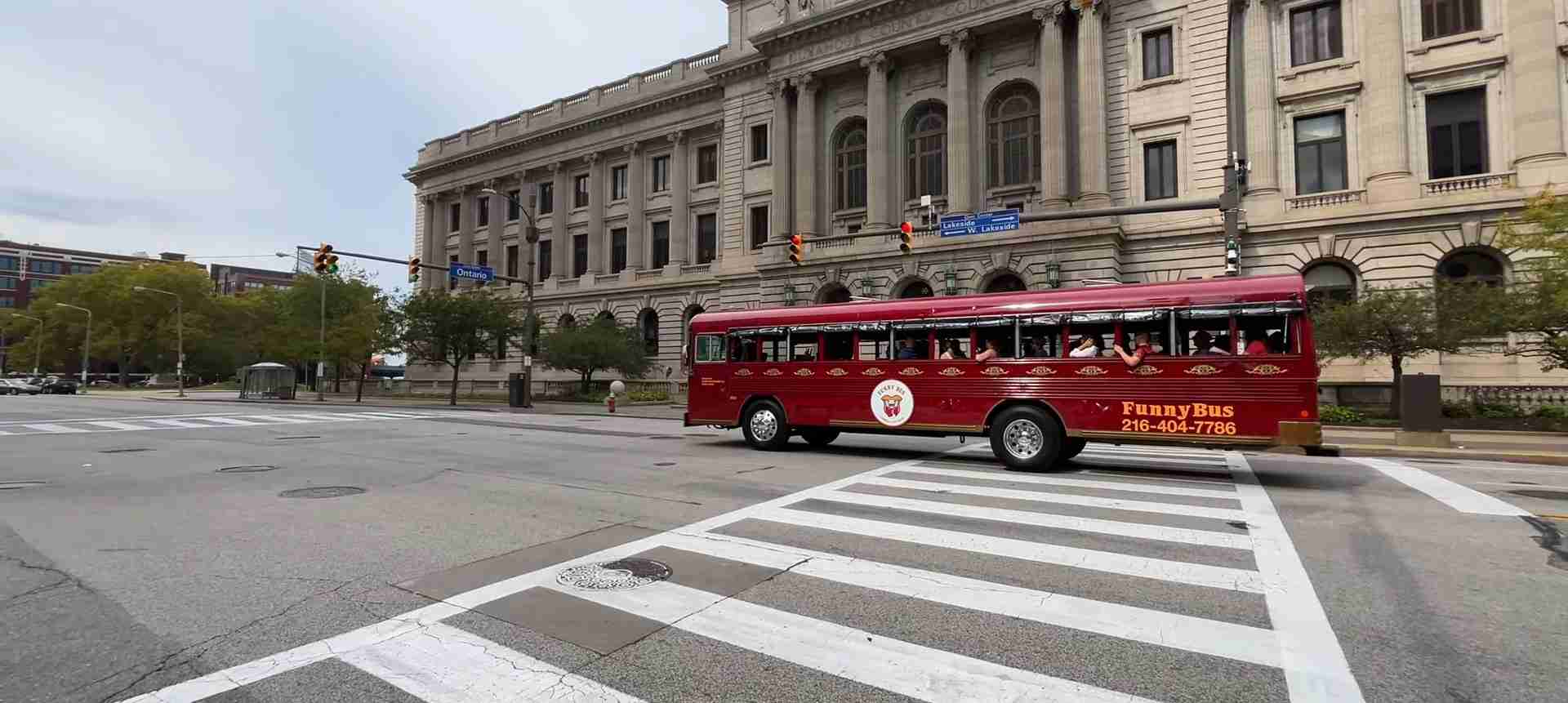
Cleveland Best Tours & Walking Routes 2026: Complete Travel Guide
Cleveland transforms lakeside industry into cultural renaissance, where guided tours reveal Rock Hall legends and century-old ethnic neighborhoods while walking routes connect downtown monuments to forest reservations. Planning your 2026 Cleveland exploration requires matching tour operators to interests and mapping walkable districts against trail systems that reach from Lake Erie shores to Cuyahoga Valley wilderness.
Key Takeaways: Cleveland Tours and Walking Routes 2026
- Tour Pricing Range 2026: Guided experiences span $26-79 for specialty tours including ghost walks, food explorations, and comedy buses, while self-paced options like Rock & Roll Hall of Fame admission ($40) and Metroparks trails (free) provide budget flexibility
- Downtown Walking District: Public Square to Playhouse Square creates a compact 1.5-mile core connecting Rock Hall, The Arcade, and Terminal Tower through walkable streets ideal for 2-3 hour self-guided exploration
- Neighborhood Food Tours 2026: Little Italy ($79, 3.5 hours), West Side Market, and Tremont culinary walks combine immigrant history with tastings at 4-6 establishments, offering Cleveland’s most comprehensive cultural immersion
- Lakefront and River Trails: Cleveland Lakefront Nature Preserve (2.8 miles) and Ohio & Erie Canal Towpath segments provide flat, accessible routes with skyline views and historical canal remnants year-round
- Best Tour Season 2026: May through October delivers optimal weather for walking tours and outdoor explorations, though winter ghost walks and indoor-focused experiences operate comfortably November through March
- Combination Strategy: Pair morning guided neighborhood tours with afternoon self-paced Metroparks trails to maximize Cleveland’s urban culture and natural beauty in single-day itineraries throughout 2026
People Also Ask About Cleveland Tours and Walking Routes 2026
What are the best guided tours in Cleveland for 2026?
The most acclaimed guided tours in Cleveland for 2026 include Little Italy Food Tours ($79, 3.5 hours) exploring Murray Hill’s century-old Italian culture through restaurant tastings; Rock & Roll Hall of Fame self-guided admission ($40 adults) spanning six floors of music history; ghost tours ($26-32, 1-1.5 hours) revealing haunted downtown landmarks; comedy bus tours (90 minutes) providing humorous neighborhood overviews; and West Side Market food explorations featuring century-old vendor tastings. Private city overview tours run 2-4 hours with customizable itineraries focusing on architecture, history, or specific neighborhoods like Ohio City and Tremont. Specialty tours include Cuyahoga Valley National Park driving audio guides, brewery crawls in Ohio City, and seasonal holiday-themed walks.
How much do Cleveland tours cost in 2026?
Cleveland tour prices in 2026 range from free self-guided options to $79 specialty experiences. Rock & Roll Hall of Fame admission costs $40 for adults and $30 for children 6-12 in 2026, with student and military discounts at $35 (check official website for current rates). Food tours command premium pricing with Little Italy tours at $79, West Side Market tours around $65-75, and Tremont culinary walks at similar rates including 4-6 restaurant tastings. Ghost tours operate at $26-32 for adults and $17 for children under 13. Comedy bus tours run approximately $45-55 per person. Private tours range $150-300 for 2-4 hour experiences depending on group size and customization. Cuyahoga Valley self-guided audio tours cost $15-20 per vehicle. Cleveland Metroparks trail access remains free year-round.
What are the best walking routes in downtown Cleveland 2026?
Downtown Cleveland’s premier walking route in 2026 follows a 1.5-mile loop from Public Square east through The Arcade’s Victorian glass galleries, north past Playhouse Square’s theater district showcasing the world’s largest outdoor chandelier, along Euclid Avenue’s historical Millionaires’ Row remnants, and returning via Superior Avenue past the Old Stone Church and Soldiers and Sailors Monument. This 2-3 hour self-paced walk connects Rock & Roll Hall of Fame, Great Lakes Science Center, and North Coast Harbor waterfront attractions. Alternative routes include the Flats riverside path along Cuyahoga River’s entertainment district, Ohio City’s Market District walk centered on West Side Market, and Heritage Walk guided tours emphasizing architecture and Civil War history. Cleveland Lakefront Nature Preserve offers a 2.8-mile lakefront loop with skyline views 15 minutes from downtown.
Can you walk Cleveland’s neighborhoods safely in 2026?
Cleveland’s tourist-focused neighborhoods provide safe walking environments in 2026 during daylight and early evening hours. Downtown core, University Circle, Little Italy, Tremont, Ohio City, and Gordon Square maintain active pedestrian traffic, well-lit streets, and visible business activity supporting comfortable exploration. Guided tours operate evening ghost walks and food tours safely through established routes. Standard urban precautions apply: stay aware of surroundings, walk in groups when possible after dark, avoid displaying valuables, and remain in populated commercial districts. Cleveland Metroparks trail systems offer daytime safety with regular park ranger patrols and emergency call boxes at major trailheads. Winter ice creates the primary walking hazard requiring appropriate footwear November through March. RTA HealthLine rapid transit connects safe neighborhoods along Euclid Avenue for extended walking tours.
Extended multi-day tours – 5+ days
Featured Midwest Usa Multi-Day Tour Packages
7 days
Chicago – The Home of Skyscrapers
- ✓ Booking needs min. 2 travelers
8 days
Chicago and Niagara ROT (including Niagara Falls)
- ✓ Comprehensive Midwest Usa tour
- ✓ Expert local guides included
- ✓ All accommodation arranged
- ✓ Transportation provided

8 days
From Chicago's Skyline to Niagara's Mist – 8 days
- ✓ Comprehensive Midwest Usa tour
- ✓ Expert local guides included
- ✓ All accommodation arranged
- ✓ Transportation provided

4 days
City Break in Chicago Among Skyscrapers
- ✓ Booking needs min. 2 travelers
Multi-day tour packages powered by TourRadar. Prices and availability subject to change.
Introduction: Navigating Cleveland’s Tours and Trails in 2026
Cleveland spreads cultural attractions across distinct neighborhoods where century-old immigrant communities, industrial renaissance architecture, and lakefront natural areas create touring complexity requiring strategic planning. The 2026 travel landscape offers professional guided experiences revealing hidden histories alongside self-paced trail systems connecting downtown monuments to wilderness reserves 15 miles south.
This guided versus self-paced decision shapes Cleveland exploration fundamentally. Food tours in Little Italy and Tremont deliver immigrant narratives impossible to discover independently, while ghost walks access private buildings and share documented paranormal research unavailable through casual strolls. Conversely, Cleveland Metroparks’ 300+ miles of trails and waterfront paths provide solitary nature immersion at your own rhythm without group schedules.
Tour operators in 2026 emphasize neighborhood authenticity over generic sightseeing, with local guides highlighting Murray Hill’s century-old bakeries, Ohio City’s craft brewery culture, and University Circle’s museum concentration through walking explorations lasting 2-4 hours. These experiences cost $26-79 but include insider access—restaurant kitchen tours, historical society archives, and architectural details invisible to independent visitors.
Walking route planning requires understanding Cleveland’s geography: a compact downtown core walkable in 90 minutes, waterfront trails extending east and west along Lake Erie, the Cuyahoga River valley creating north-south greenways, and Metroparks reservations forming a continuous “Emerald Necklace” encircling the metropolitan area. Self-guided exploration suits visitors prioritizing flexibility and budget consciousness, while guided tours serve those seeking depth, storytelling, and local perspective.
The 2026 touring season divides distinctly: May through October delivers comfortable temperatures for outdoor walking and extended neighborhood explorations, while November through March channels activity toward indoor-focused experiences like Rock Hall visits, covered market tours, and brewery crawls with minimal outdoor exposure. This seasonal rhythm influences tour availability, pricing, and group sizes throughout the year.
Cleveland’s cultural diversity manifests geographically—Italian, Irish, Slovenian, Polish, and German heritage neighborhoods retain distinct character accessible through specialized tours or independent walks following immigrant settlement patterns from the 1880s through 1920s. Understanding these ethnic enclaves enhances both guided tour appreciation and self-paced neighborhood exploration throughout 2026.
Rock & Roll Hall of Fame Tours and Experiences 2026
The Rock & Roll Hall of Fame anchors Cleveland’s cultural tourism as the world’s premier music museum spanning seven floors and 350,000 square feet of exhibits along North Coast Harbor. The 2026 self-guided admission experience offers flexibility impossible with standard museum tours while providing comprehensive access to permanent collections and rotating special exhibits.
General admission costs $40 for adults in 2026, $30 for children ages 6-12, and $35 for students, military, and first responders with valid identification (check official website for current rates as pricing may vary). Children 5 and under enter free. Advance online booking ensures entry during peak summer weekends and special event periods when capacity limits apply.
The museum operates daily 10 AM to 5 PM during standard seasons, extending hours to 8 PM Thursday through Saturday during July and August peak tourism months. Plan minimum 2.5-3 hours for thorough exploration though music enthusiasts often spend 4-5 hours examining detailed exhibits across multiple floors.
Self-guided exploration begins on the ground floor with the Legends of Rock exhibit providing chronological music history from blues and folk roots through contemporary genres. The Foster Theater screens documentaries and performance footage continuously throughout operating hours. Second floor galleries focus on individual artist contributions with rotating special exhibits changing quarterly—2026 features include Taylor Swift’s piano, Beatles handwritten lyrics, and comprehensive Saturday Night Live music history.
Interactive elements distinguish the Rock Hall from passive museums. The sample recording studio allows visitors to experiment with multi-track recording technology. Touch-screen kiosks throughout galleries provide deep-dive content on specific artists, songs, and historical movements. The third floor houses the actual Hall of Fame inductee signatures and artifacts from induction ceremonies dating to 1986.
Audio guides rent for $5 providing narrated context for major exhibits though most visitors find the comprehensive text panels and video displays sufficient. The museum’s official app offers alternative guided content downloadable before your visit for offline use throughout galleries.
Combination strategies enhance value: pair Rock Hall morning visits with afternoon walks through nearby Voinovich Bicentennial Park and North Coast Harbor waterfront. The museum’s location 800 feet from Great Lakes Science Center allows dual attractions in single downtown trips. Wednesday evening extended hours accommodate visitors balancing daytime neighborhood tours with evening museum access.
Photography policies permit personal photos without flash throughout exhibits, enabling memory capture of favorite memorabilia and performance costumes. The Rock Hall Store operates as standalone retail accessible without museum admission for last-minute music-themed gifts.
Special events in 2026 include quarterly Induction Weekend programming, summer concert series on the plaza, and holiday-themed exhibits November through January. These premium experiences require separate ticketing beyond general admission and sell out months in advance for popular performers.
Cleveland Food Tour Experiences 2026
Cleveland’s culinary tourism centers on ethnic neighborhood food tours combining immigrant history with multi-restaurant tastings throughout 2026. These walking experiences provide cultural immersion impossible through independent dining while supporting local establishments maintaining century-old recipes and family traditions.
Little Italy Food Tours 2026
The Little Italy Neighborhood Food Tour operates year-round at $79 per person for 3.5-hour walking experiences through Murray Hill’s historic Italian enclave. Tours depart from Tony Brush Park at Random Road and Mayfield at 3 PM most days, covering approximately 2 miles at leisurely pace with 4-6 restaurant stops featuring pasta, pizza, meatballs, espresso, and cannoli from both century-old establishments and contemporary trattorias.
Local guides—frequently praised by name in visitor reviews—share immigration narratives from the late 1800s when Northern Italian families settled this Cleveland Heights hillside, establishing the bakeries, groceries, and restaurants still operating in 2026. The tour explores architecture including Holy Rosary Church, visits Lake View Cemetery when schedules permit, and provides insider recommendations for return visits to favorite discoveries.
Group sizes cap at 12 ensuring intimate experiences and guide interaction. Tours operate rain or shine requiring weather-appropriate clothing year-round. The substantial food portions serve as replacement for lunch or dinner rather than light tastings, with participants consistently noting fullness by tour conclusion. Dietary restrictions receive accommodation with advance notice to tour operators.
The experience particularly suits food enthusiasts seeking authentic Italian-American cuisine, history buffs interested in immigrant narratives, and visitors wanting guided neighborhood introduction before independent exploration. The $79 cost includes all tastings but not gratuities for guide services.
West Side Market Food Tours 2026
West Side Market tours explore Cleveland’s 1912 historic public market through guided 2-hour walking experiences visiting 12-15 specialty vendors selected from the 100+ permanent stalls. Tour prices range $65-75 per person including tastings from ethnic bakeries, butcher shops, specialty cheese vendors, and international food stands representing Cleveland’s diverse immigrant communities.
The market operates Monday, Wednesday, Friday, and Saturday creating touring schedule constraints. Guided experiences typically begin 10 AM capturing morning market energy and freshest vendor offerings. Tours navigate both the main arcade hall’s permanent stalls and outdoor seasonal vendor area explaining market architecture, vendor family histories spanning multiple generations, and the Market’s role as Cleveland’s culinary crossroads since opening over a century ago.
Tastings emphasize Cleveland ethnic specialties: Polish pierogi and kielbasa, Middle Eastern falafel and baklava, German bratwurst, Amish baked goods, and artisan chocolates. The experience provides broader ethnic diversity than single-neighborhood tours, spanning a dozen culinary traditions in concentrated timeframe.
Independent market visits complement guided tours—arrive early Saturday mornings for maximum vendor activity and product selection, or book guided tours for insider vendor relationships and sampling access typically unavailable to casual shoppers. The market’s Ohio City location connects naturally to brewery district walks and Tremont neighborhood explorations in extended itineraries.
Tremont Food Tours 2026
Tremont culinary tours trace this historic neighborhood’s transformation from Eastern European working-class enclave to contemporary dining destination through 2.5-3 hour walking experiences at similar $70-80 pricing to other Cleveland food tours. The route explores Lincoln Park, visits the neighborhood’s many restored churches representing different immigrant communities, and stops at 5-6 restaurants showcasing evolution from traditional ethnic cuisine to modern gastropub and farm-to-table concepts.
Tastings might include traditional Polish comfort food, contemporary American plates featuring local ingredients, craft cocktails from neighborhood bars, and desserts from artisan bakeries. Guides emphasize the neighborhood’s artistic character with numerous galleries, public murals, and the annual Tremont Arts and Cultural Festival context.
These tours suit visitors interested in urban renewal narratives, contemporary Cleveland dining trends, and neighborhoods balancing historic preservation with modern development. The Tremont experience provides contrast to Little Italy’s focused Italian heritage and West Side Market’s traditional market culture.
Ghost Tours and Evening Walking Experiences 2026
Cleveland’s haunted history tours operate year-round evening walks revealing paranormal research, architectural details invisible in daylight, and crime narratives from prohibition era through industrial decline. Multiple operators serve different audiences from family-friendly supernatural stories to adult-oriented historical crime tours.
US Ghost Adventures operates the “Phantom’s Parade on Prospect” tour departing Public Square nightly at 8 PM for 60-minute walks through downtown’s most historically significant haunted locations. Adult tickets cost $26 and children under 13 pay $17 in 2026 (check official websites for current rates). Meeting point at 101 W Superior Avenue outside Rebol provides central downtown access via RTA and parking structures.
Tour routes visit Soldiers and Sailors Monument with underground tunnel system allegedly haunted by Civil War spirits, The Arcade’s Victorian glass galleries where employees report shadowy figures, Cleveland Grays Armory Museum with documented paranormal activity, and Playhouse Square theaters where Depression-era performers apparently linger. Guides carry lanterns for atmospheric effect and share documented supernatural encounters from building staff and visitors.
Strange & Spooky Cleveland Tours represents locally-owned alternatives emphasizing paranormal research over entertainment. Led by published paranormal author and investigative historian William G. Krejci, these specialized walks include Franklin Castle tours (90 minutes through Ohio’s most haunted house), brewery ghost tours combining craft beer with supernatural narratives, and true crime walks exploring Cleveland’s notorious murder cases alongside haunting claims.
Cleveland Ghosts operates the “Rock, Roll & Restless Spirits” tour connecting music history with supernatural tales throughout downtown, emphasizing Playhouse Square theaters, historical figures including detective Eliot Ness, and Lake Erie disaster victims. The 1-hour walking distance covers approximately 1 mile at accessible pace suitable for most fitness levels.
All ghost tour operators guarantee operations regardless of weather conditions—rain, snow, and cold temperatures proceed with tours as scheduled. Warm layered clothing proves essential November through March when evening temperatures drop below freezing. Tours generally accommodate maximum 20-25 participants maintaining group cohesion through downtown streets.
These evening experiences suit visitors seeking alternative history perspectives, couples looking for unique date activities, and travelers wanting downtown orientation through engaging narratives. The paranormal focus appeals to supernatural enthusiasts while the historical content satisfies skeptics interested in Cleveland’s documented past.
Photography encouragement distinguishes ghost tours from many experiences—guides actively welcome photos at each stop hoping participants capture unexplained anomalies. EMF detectors and paranormal equipment occasionally supplement standard tours though most operators focus on storytelling over equipment-based investigations.
Downtown Cleveland Walking Routes 2026
Downtown Cleveland’s compact geography enables comprehensive self-guided exploration connecting major landmarks through walkable streets spanning 1.5-2 miles in 2-3 hour circuits. These routes reveal architectural evolution from 1890s Beaux-Arts monuments through contemporary glass towers along paths serviced by free downtown circulator buses for optional rest breaks.
Public Square to Playhouse Square Loop
This essential downtown walk begins at Public Square’s Soldiers and Sailors Monument honoring Civil War veterans. The 1894 monument offers interior viewing during limited hours revealing memorial hall and historical exhibits. Terminal Tower anchors the square’s southwestern corner—its 52-story height dominated Cleveland’s skyline from 1930 through the 1990s, now housing observation deck visits and Tower City Center shopping accessed through connecting underground concourse.
Walk east on Euclid Avenue passing Old Stone Church (1855), Cleveland’s oldest building in continuous use, displaying Gothic Revival architecture with interior tours available Sunday mornings. Continue past the Arcade at 401 Euclid Avenue—an 1890 Victorian glass-roofed shopping gallery spanning entire block between Euclid and Superior Avenues featuring five-story atrium with ornamental ironwork and gas lamp reproductions creating Cleveland’s most photographed interior space.
Playhouse Square emerges 10 blocks east at Euclid and East 14th Street representing North America’s second-largest performing arts center after New York’s Lincoln Center. The outdoor chandelier suspended above Euclid Avenue contains 4,200 crystals illuminating the theater district nightly. Five restored 1920s movie palaces—Palace, State, Ohio, Hanna, and Allen—host Broadway tours, orchestra performances, and ballet throughout 2026 season.
Return west via Superior Avenue passing Cleveland Public Library’s main branch, the Federal Reserve Bank with its marble facade and gold vault tours available by advance reservation, and the Renaissance Cleveland Hotel’s lobby worth viewing for its 1918 Beaux-Arts grandeur. The complete circuit covers 2 miles at relaxed pace including photo stops and brief building entries.
Rock Hall and Lakefront Walking Route
North Coast Harbor concentrates waterfront attractions within half-mile radius enabling focused lakefront exploration. Start at Rock & Roll Hall of Fame, walk east through Voinovich Bicentennial Park’s terraced gardens offering skyline photography angles, continue to William G. Mather Museum—the retired Great Lakes freighter providing maritime history tours—and reach Cleveland Browns Stadium area where lakefront trails extend toward Edgewater Park.
The Science Center, Great Lakes Science Center with OMNIMAX theater, stands adjacent to Rock Hall providing combination admission opportunities. FirstEnergy Stadium (Browns) and Progressive Field (Guardians baseball) anchor the eastern edge of downtown waterfront, both offering stadium tours during off-game days throughout 2026.
This route emphasizes contemporary Cleveland renaissance while providing Lake Erie shoreline access and skyline views impossible from inland streets. Flat terrain and wide paved paths suit all mobility levels. Plan 90 minutes for the waterfront walk not including museum or attraction visits. The area lacks natural shade requiring sun protection during summer months.
Warehouse District and Flats Entertainment Circuit
This evening-oriented walk explores Cleveland’s revitalized industrial riverfront transformed into entertainment districts. Begin in the Warehouse District bounded by West 6th Street, West 9th Street, St. Clair Avenue, and the Cuyahoga River, where 19th-century commercial buildings now house restaurants, breweries, and nightlife venues maintaining original exposed brick and timber architecture.
Descend to the Flats along either West 9th Street or Old River Road reaching Cuyahoga River’s east and west banks. The river valley creates dramatic elevation change with industrial bridges overhead and waterfront dining terraces along both shores. Walking paths connect venues though the area functions primarily as dining and nightlife destination rather than daytime sightseeing district.
The Flats East Bank includes Alley Cat Oyster Bar, Collision Bend Brewing Company waterfront deck, and seasonal concert venues. West Bank features Shooters Waterfront and additional dining options connected by river taxis during summer months. The entire district illuminates evening hours while appearing somewhat desolate during winter afternoons.
Neighborhood Walking Routes 2026
Cleveland’s immigrant heritage neighborhoods retain distinct cultural character accessible through self-paced walks following historical settlement patterns. These districts reward slower exploration discovering architectural details, specialty shops, and community gathering spaces invisible from vehicle tours.
Little Italy and University Circle Walk
Mayfield Road connects Little Italy’s Murray Hill district to University Circle’s museum concentration creating 1.5-mile cultural corridor walkable in 2-3 hours. Start at Holy Rosary Church (12021 Mayfield Road) anchoring Little Italy’s historic center, explore restaurants and galleries along Mayfield and Murray Hill Roads, visit local bakeries including Presti’s and Corbo’s maintaining family recipes from the 1920s, and observe residential architecture reflecting Italian settlement patterns.
Walk west on Mayfield Road or parallel side streets reaching University Circle’s cultural institutions concentrated around Wade Oval. The Cleveland Museum of Art offers free general admission year-round displaying comprehensive collections in 2013 expansion doubling exhibition space. Museum of Contemporary Art Cleveland, Cleveland Museum of Natural History, Cleveland Botanical Garden, and Western Reserve Historical Society cluster within half-mile radius providing full-day cultural immersion.
Lake View Cemetery borders University Circle’s eastern edge containing James Garfield Memorial, Wade Memorial Chapel with Tiffany interior, and John D. Rockefeller family monument within 285-acre Victorian garden cemetery. Free admission and dawn-to-dusk access enables peaceful walks through landscaped grounds and historical architecture.
This route combines ethnic heritage with high culture, Italian cuisine with museum exhibitions, residential neighborhood character with institutional grandeur. The area supports multiple RTA rapid transit stations enabling easy downtown connections for extended itineraries.
Ohio City and West Side Market District
Ohio City forms Cleveland’s oldest suburb across Cuyahoga River from downtown, centered on West Side Market at West 25th Street and Lorain Avenue. Walking exploration radiates from the market covering historic residential blocks lined with Victorian homes converted to restaurants, galleries, and shops. The neighborhood maintains working-class character alongside contemporary urban renewal.
Start at West Side Market exploring the 1912 Guastavino-tile building, cross to St. Ignatius High School campus viewing Collegiate Gothic architecture, walk residential streets including Bridge Avenue discovering craft breweries—Great Lakes Brewing Company anchors the district at Market Avenue—and reach Gordon Square Arts District merging into Detroit-Shoreway neighborhood where Capitol Theatre and Near West Theatre provide performance venues.
The Ohio City walk emphasizes Cleveland’s brewery culture with a dozen craft beer establishments within one-mile radius, locally-owned restaurants representing diverse cuisines, and community markets supporting urban agriculture. Flat terrain and sidewalk coverage enable comfortable year-round exploration though winter ice requires careful footing.
Plan 2 hours for comprehensive Ohio City exploration including West Side Market visit and brewery stops, or extend to half-day incorporating Edgewater Park lakefront access 1.5 miles north via West 25th Street. The neighborhood hosts summer farmers markets and seasonal festivals worth timing visits around throughout 2026.
Tremont Arts and Architecture Walk
Tremont occupies hillside southwest of downtown featuring Lincoln Park at its center and Professor Avenue’s restaurant row as main commercial corridor. Walking routes explore church architecture representing Polish, Ukrainian, and German immigrant parishes—St. Theodosius Russian Orthodox Cathedral displays classic onion domes featured in “The Deer Hunter” filming—alongside contemporary art galleries, indie boutiques, and renovated Victorian homes.
Start at Literary Road intersection with Professor Avenue, walk Lincoln Park perimeter viewing neighborhood skyline, explore Professor Avenue’s dining concentration, ascend residential streets observing architectural diversity from worker cottages to merchant mansions, visit galleries along Professor, Literary, and Jefferson Avenues, and circle back to Tremont’s northern edge bordering I-90 where Metro Health Medical Center anchors neighborhood employment.
The Tremont walk reveals Cleveland’s urban reinvention: historic preservation funding restored deteriorating properties throughout the 1990s-2000s attracting artists, young professionals, and culinary entrepreneurs. The neighborhood demonstrates walkability supporting car-free residents while maintaining street parking for visitors. Uneven terrain includes significant hillside climbs testing cardiovascular fitness.
Time visits for Third Friday Gallery Walks (monthly April-December) when galleries extend evening hours and streets fill with neighborhood residents. Plan 2-3 hours covering 2 miles of mixed terrain, or focus on Professor Avenue’s half-mile commercial strip for concentrated dining and shopping in 60-90 minutes.
Cleveland Metroparks Trail System 2026
Cleveland Metroparks encircle the metropolitan area with 24,000 acres forming the “Emerald Necklace” of interconnected reservations accessible via 300+ miles of trails ranging from paved all-purpose paths to rugged forest hiking routes. The 2026 system offers free access year-round connecting urban neighborhoods to wilderness experiences within 20-minute drives from downtown.
Ohio & Erie Canal Towpath Trail
This signature regional trail follows the historic Ohio & Erie Canal route 90 miles from downtown Cleveland’s Canal Basin Park south through Cuyahoga Valley National Park to New Philadelphia. The trail provides flat crushed-limestone and paved surface accessible for walking, running, and cycling throughout its length with multiple access points enabling customized distance selection.
Popular Cleveland sections include the Tremont starting point at Steelyard Commons connecting to Brooklyn neighborhood access, Cuyahoga Valley segments featuring Brandywine Falls overlooks and Beaver Marsh wildlife viewing areas, and downtown portions linking to Flats riverfront trails. The northern terminus at Canal Basin Park (1500 Merwin Avenue) offers parking, restrooms, and interpretive displays explaining canal history from 1825 construction through 1913 abandonment.
Distance planning ranges from 2-mile out-and-back neighborhood strolls to 20-mile point-to-point adventures using shuttle vehicles or Cuyahoga Valley Scenic Railroad for return transport. The trail passes through urban, suburban, and rural landscapes providing ecosystem diversity unavailable on single-environment paths.
Trail etiquette follows right-side travel, cyclist announcements when passing walkers, and leashed-dog requirements in most sections. The crushed-limestone surface drains well but becomes muddy during spring thaw and after heavy rains requiring appropriate footwear April through May. Winter maintenance keeps major sections passable though ice conditions require microspikes or traction devices December through February.
Cleveland Lakefront Nature Preserve
This urban oasis occupies 88 acres of former industrial land transformed into wildlife habitat and recreational trails along Lake Erie’s southern shore. The 2.8-mile loop trail circles the preserve perimeter offering continuous water views, seasonal bird migration observation, and downtown skyline perspectives impossible from inland locations.
Access via Dike Road off East 55th Street provides free parking 6 AM to 11 PM daily. The dirt and gravel trail maintains relatively flat grade suitable for most fitness levels though uneven surfaces challenge mobility-limited visitors. Spring and fall migrations transform the preserve into premier birding location with 200+ species documented including rare warblers, shorebirds, and waterfowl attracting regional enthusiasts with spotting scopes and field guides.
The preserve lacks facilities beyond portable restrooms at parking area—bring water, snacks, and sunscreen for multi-hour visits. Exposed lakefront location creates strong winds year-round requiring windbreaker layers even during summer visits. Winter ice formations along shoreline provide dramatic photography subjects though bitter wind chills discourage extended winter walks.
Plan 60-90 minutes for complete loop at casual pace with bird observation and photography stops. The preserve connects conceptually to broader Cleveland lakefront trail network though physical gaps prevent continuous waterfront walking from downtown to eastern suburbs in 2026.
Rocky River Reservation Trails
Rocky River Reservation protects valley forest along its namesake waterway southwest of downtown with 14+ miles of trails ranging from paved river-parallel paths to challenging ravine climbs. The all-purpose trail provides 14-mile paved route following Rocky River from Lake Erie to southern suburban areas, serving cyclists, inline skaters, joggers, and walkers seeking longer-distance options.
Notable features include the Fort Hill loop accessing 135-stair descent to river level for valley-floor exploration, Cedar Point picnic area offering shelters and playgrounds for family outings, and Mastick Woods boardwalk traversing wetland ecosystem with interpretive signage explaining flora and fauna. Multiple parking areas and restroom facilities support day-long trail use without returning to starting points.
The reservation’s mixed hardwood forest provides fall color displays peaking mid-October, while spring wildflower concentrations bloom late April through May attracting botanical photographers. Year-round trail access accommodates winter cross-country skiing and snowshoeing when 3+ inches of snow cover the ground.
Distance options range from 1-mile nature center loops suitable for children and elderly visitors to 10-mile point-to-point treks requiring shuttle coordination. The valley’s elevation changes—up to 200 feet from rim to river—create challenging grades testing stamina on loop routes incorporating ravine descents and climbs.
Mill Stream Run Reservation Trails
Mill Stream Run occupies western Metroparks edge with 16 miles of all-purpose paved trail forming the Emerald Necklace’s southwestern link. The reservation connects to neighboring communities via regional trail network enabling extended cycling and walking routes exceeding 25 miles when combined with adjacent systems.
The smooth asphalt surface and gentle grades suit casual walkers, families with strollers, and beginning cyclists seeking traffic-free environments. The trail parallels roadways through portions creating noise intrusion and reduced wilderness atmosphere compared to more isolated reservations, but convenience and accessibility compensate for these limitations.
Spring flooding occasionally closes low sections near Baldwin Wallace University campus requiring detour routes and alternative access points April through early May. The reservation’s website provides real-time closure updates and reroute suggestions throughout flood seasons.
Seasonal Walking and Tour Considerations 2026
Cleveland’s continental climate creates distinct seasonal patterns affecting tour availability, pricing, trail conditions, and visitor comfort throughout 2026. Strategic season selection balances weather preferences with crowd levels and special event schedules.
Spring Walking Season (March-May 2026)
Spring brings wildflower blooms to Metroparks trails late April through May while downtown walking routes shed winter ice and snow revealing clean sidewalks. March weather remains unpredictable with temperatures ranging 35-55 degrees and frequent rain requiring waterproof layers and flexible scheduling. April stabilizes to 45-65 degree comfort while May delivers ideal 55-75 degree walking weather.
Tour operators resume full spring schedules by mid-March with food tours, ghost walks, and neighborhood explorations operating regular daily departures. Spring mud season affects unpaved Metroparks trails mid-March through April requiring waterproof hiking boots for serious walkers, though paved urban routes and downtown walks remain accessible throughout shoulder season.
Special spring events include Cleveland Marathon (May) creating route closures in downtown and lakefront areas, Earth Day celebrations throughout Metroparks reservations, and spring brewery festivals in Ohio City worth coordinating visits around throughout late April and May 2026.
Summer Peak Season (June-August 2026)
Summer represents Cleveland’s busiest tourism period with extended daylight supporting longer walking explorations and outdoor attractions operating maximum hours. Temperatures range 70-85 degrees with occasional 90+ degree heat waves requiring sun protection, hydration planning, and midday shade breaks during extended outdoor activities.
Food tours and walking tours operate at capacity requiring advance reservations for weekend dates and popular time slots. Downtown festivals and events create both attraction draws and navigation obstacles—consult event calendars when planning specific date itineraries to avoid unexpected street closures or crowd congestion.
Lake Erie moderates summer heat creating comfortable lakefront walking conditions even during inland heat waves. Edgewater Park, Cleveland Lakefront Nature Preserve, and North Coast Harbor trails provide cooling breezes and water access for temperature relief during July-August peak months.
Summer represents optimal season for combining multiple activities in single days—morning Metroparks nature walks, afternoon downtown museum visits, evening neighborhood food tours—enabled by 9 PM sunsets and comfortable overnight temperatures supporting outdoor dining and entertainment.
Fall Walking Season (September-November 2026)
Fall delivers Cleveland’s most comfortable walking weather with September maintaining summer warmth minus humidity, October providing peak fall color displays throughout Metroparks, and November ushering cooler temperatures requiring layered clothing. This season combines moderate crowds with stable weather creating ideal touring conditions for visitors prioritizing quality over summer event density.
Fall foliage peaks mid-October throughout Rocky River, North Chagrin, and South Chagrin Reservations where mixed hardwood forests display vibrant reds, oranges, and yellows against evergreen accents. Plan Metroparks hikes and scenic drives during Columbus Day weekend through October’s third week for maximum color intensity.
Halloween season amplifies ghost tour popularity with multiple departures nightly throughout October and special extended tours available weekends. Food tours continue regular schedules through October before transitioning to reduced November frequency as temperatures drop and daylight shortens.
November weather variability requires flexible planning—temperatures swing from 60-degree Indian Summer warmth to 30-degree early winter chills within single weeks. Lake effect snow arrives sporadically affecting trail conditions though downtown walking routes remain clear through municipal snow removal services.
Winter Season (December-February 2026)
Winter transforms Cleveland touring toward indoor-focused experiences and specialized cold-weather activities. Temperatures range 25-35 degrees with wind chills frequently below 20 degrees discouraging extended outdoor walking for casual visitors. Downtown walking remains viable with proper layering—insulated boots, winter coat, hat, gloves—for 60-90 minute circuits between indoor warming destinations.
Ghost tours and comedy bus experiences continue year-round operations with enclosed or brief outdoor exposure suitable for winter participation. Food tours reduce frequency but maintain weekend availability for hardy visitors seeking authentic Cleveland winter experiences including hot ethnic cuisine served in cozy neighborhood restaurants.
Metroparks trails convert to cross-country skiing and snowshoeing when snow depth exceeds 3 inches, typically mid-December through February. Rocky River Reservation maintains groomed trails for Nordic skiing while nature center locations rent equipment and provide beginner instruction throughout winter months.
Holiday seasons create special touring opportunities: December’s Playhouse Square holiday lighting, seasonal events at West Side Market and Little Italy, and New Year’s programming downtown compensate for reduced general tour availability during Cleveland’s coldest months.
Private and Custom Tour Options 2026
Cleveland’s tour landscape includes customizable private experiences accommodating specific interests, mobility needs, and group dynamics impossible with standard scheduled tours. These personalized options suit families with children, accessibility requirements, deep-dive enthusiasts, and corporate groups seeking tailored content.
Private city overview tours operate 2-4 hours in climate-controlled vehicles driven by knowledgeable local guides. Standard routes cover downtown landmarks, cultural institutions, ethnic neighborhoods, and industrial heritage sites with narrative adjusted to group interests. Pricing typically ranges $200-400 for groups up to 6 participants depending on duration and customization complexity.
Specialized focus areas include architecture tours emphasizing Cleveland’s evolution from Beaux-Arts grandeur through modernist innovations, industrial history explorations visiting former steel mills and shipping facilities, ethnic heritage deep-dives concentrating on specific immigrant communities, and contemporary arts tours connecting galleries, public installations, and artist studios across multiple neighborhoods.
Accessibility-focused private tours accommodate wheelchair users, mobility-challenged visitors, and those requiring frequent rest breaks through vehicle-based routing with strategic photo stops and brief walking segments. Guides coordinate elevator access, accessible restrooms, and appropriate pacing unavailable in standard group tours with mixed-ability participants.
Corporate team-building tours combine Cleveland history with interactive elements suitable for employee groups—scavenger hunt variations, trivia competitions, or food tour formats encouraging collaboration while exploring neighborhoods. These experiences typically run 3-4 hours with pricing scaled to group size from 10-50 participants.
Private tour booking requires advance scheduling ranging from 48 hours for standard experiences to several weeks for complex customizations involving special access arrangements or coordination with cultural institutions. Contact operators directly rather than third-party booking platforms for maximum flexibility and pricing transparency when arranging private experiences.
Tour Booking Strategies and Timing 2026
Successful Cleveland tour participation requires understanding booking windows, cancellation policies, and optimal reservation timing balancing spontaneity with availability concerns throughout 2026 season.
Rock & Roll Hall of Fame admission requires online advance booking for guaranteed entry during peak summer weekends, though walk-up ticket availability exists during off-peak weekday periods January through March. Book 2-3 days ahead for summer Saturday visits, or purchase same-day tickets during winter shoulder seasons. The museum’s online ticketing system displays real-time capacity helping visitors select optimal time slots.
Food tours cap group sizes at 8-15 participants creating frequent sellout conditions for Friday-Saturday evening departures and holiday weekend dates. Reserve Little Italy, West Side Market, and Tremont food tours 1-2 weeks ahead for prime summer slots, or book 3-5 days ahead for shoulder season availability. Weekday tours accommodate last-minute reservations more readily than weekend experiences.
Ghost tours and entertainment-focused walking experiences maintain more flexible capacity with multiple daily departures absorbing demand fluctuations. Same-day booking often succeeds for ghost tours except during October’s Halloween season when advance reservations prove necessary. Standard 24-hour cancellation policies allow schedule adjustments without financial penalty for most operators.
Private tours require longest booking windows—2-4 weeks for summer high season, 1-2 weeks for shoulder seasons—enabling operators to arrange guides, vehicles, and special access permissions. Rush booking fees sometimes apply for requests within 48 hours of desired tour dates.
Weather contingency planning differs by tour type: food tours and ghost walks operate regardless of weather with rain-or-shine policies, while outdoor-focused experiences like Metroparks guided hikes may cancel for severe conditions. Understand each operator’s weather policies and cancellation terms during booking to avoid surprise forfeitures.
Package combination discounts occasionally appear for booking multiple experiences through single operators—inquire about multi-tour pricing when planning comprehensive Cleveland explorations spanning several days. Third-party booking platforms sometimes offer bundled rates though direct booking with operators typically provides better pricing transparency and flexibility for custom requests.
Transportation Between Tours and Walking Routes 2026
Navigating between Cleveland’s dispersed neighborhoods and trail systems requires understanding public transit options, parking logistics, and rideshare availability throughout 2026 touring activities.
RTA rapid transit connects downtown to University Circle (Red Line) and airport areas (Red and Blue Lines) with $2.50 single rides or $5.50 all-day passes purchased at station kiosks. The HealthLine bus rapid transit runs dedicated Euclid Avenue lanes linking Public Square to University Circle every 7-10 minutes during peak hours, providing fastest public transit between downtown and cultural district attractions.
Downtown circulator buses (C-Line) operate free service connecting Rock Hall, Playhouse Square, Warehouse District, and Public Square Monday through Saturday eliminating walking fatigue between widely-spaced downtown attractions. The circulator runs 15-minute frequency during business hours extending evening service Thursday through Saturday.
Parking downtown costs $8-20 for event parking, $5-12 for general day parking in surface lots and structures. Early arrival secures lower rates—lots fill and prices increase for evening events and summer weekend peak periods. University Circle offers free parking at Cleveland Museum of Art’s university-adjacent garage, though spaces fill early weekend afternoons during exhibition openings and special events.
Rideshare services (Uber, Lyft) operate throughout Cleveland with 5-15 minute pickup times in downtown and major neighborhood hubs, extending to 15-25 minutes for Metroparks trail access points outside dense urban areas. Typical fares range $8-15 for neighborhood-to-neighborhood trips, $15-25 for downtown-to-suburb routes, and $30-45 for airport connections.
Bicycle rental through Bike Cleveland and UHBikes station network enables self-powered exploration throughout connected neighborhoods though system gaps prevent continuous cycling between all destinations. E-bike options assist hillside neighborhoods like Little Italy and Tremont where elevation changes challenge standard bicycle riders.
Tour operators typically specify meeting points accessible via public transit—Little Italy tours at Holy Rosary Church near RTA stop, West Side Market tours at market entrance with HealthLine bus access, downtown ghost tours at Public Square central transit hub. Review transportation options during booking to confirm accessibility matches capabilities and budget.
Combining Tours with Independent Exploration 2026
Optimal Cleveland tourism strategies blend guided expertise with self-paced discovery enabling both depth and flexibility throughout 2026 visits. Successful combination planning matches tour timing to energy levels and integrates transportation logistics for seamless day-long itineraries.
Morning guided tours paired with afternoon self-paced activities accommodate energy depletion patterns—3-hour food tours ending 1-2 PM transition naturally to relaxed Metroparks walks or museum browsing requiring less mental engagement than additional guided content. Conversely, morning museum self-tours reserve afternoon energy for engaging neighborhood food explorations when restaurants serve fresh dinner preparations.
Neighborhood specialization prevents cultural overload: dedicate single days to specific districts rather than sampling multiple neighborhoods superficially. Spend morning on Little Italy food tour, afternoon exploring University Circle museums independently, and evening returning to discovered Little Italy restaurants for full dinner experiences. This depth-over-breadth approach creates lasting impressions and genuine neighborhood understanding.
Urban-nature balance maintains interest across multi-day Cleveland visits. Alternate downtown walking days with Metroparks trail explorations, combine morning Cuyahoga Valley hikes with afternoon brewery tours in Ohio City, or follow lakefront trail walks with evening downtown entertainment. This variety prevents single-environment fatigue while showcasing Cleveland’s diverse landscape.
Weather contingency structures build flexibility into rigid tour schedules. Book outdoor-focused activities for forecast favorable days while reserving Rock Hall visits, food tours, and indoor attractions for predicted rain periods. This adaptive approach maximizes comfort and experience quality across variable Cleveland weather patterns.
Local expertise acquisition accelerates through early-visit guided tours providing orientation, insider recommendations, and neighborhood context impossible to absorb independently. Book comprehensive city overview or food tour for arrival day, then apply gained knowledge to remaining self-guided days armed with local perspectives and hidden gem discoveries shared during professional experiences.
Budget-Conscious Tour and Walking Strategies 2026
Cleveland’s tourism landscape accommodates tight budgets through free attractions, self-guided alternatives, and strategic timing enabling comprehensive exploration without premium tour costs throughout 2026.
Free Cleveland experiences include Metroparks trail access across 24,000 acres, Cleveland Museum of Art general admission galleries, West Side Market browsing and vendor watching (purchases optional), Public Square and downtown walking routes connecting monuments and architecture, Lake View Cemetery Victorian garden grounds, and seasonal neighborhood festivals throughout Ohio City, Tremont, and Little Italy.
Self-guided walking replaces paid food tours through advance research and strategic timing. Visit West Side Market independently Saturday mornings observing vendor activity and purchasing single tastings building custom culinary explorations at fraction of organized tour costs. Explore Little Italy restaurants for lunch specials offering pasta dishes $12-18 versus $79 comprehensive tour fees.
Metroparks nature center programs provide free ranger-led hikes, wildlife talks, and seasonal activities throughout 2026. Check individual reservation calendars for weekend programming eliminating need for paid nature tour guides while delivering expert interpretation and group social dynamics.
Downtown Cleveland Alliance offers free self-guided walking tour maps downloadable from their website detailing architecture, history, and landmark routes covering content similar to paid heritage walks. Audio tour apps provide smartphone-guided experiences at $10-15 one-time fees versus $45-75 live guide costs.
Rock Hall discount timing includes Wednesday evening reduced rates during summer extended hours, Northeast Ohio resident discounts requiring local identification, and student pricing year-round. Annual membership ($95) pays for itself after three visits providing unlimited admission value for extended Cleveland stays or return trip planning.
Combination attraction passes occasionally offer bundled savings pairing Rock Hall with Science Center or other North Coast Harbor museums—inquire at initial visit about multi-attraction deals before purchasing single-site tickets. Cleveland CityPASS programs fluctuate availability but traditionally deliver 40-45% savings on major attractions when purchased as package.
Shoulder season travel April-May and September-October captures moderate weather while avoiding summer peak pricing for accommodations and reduced tour demand enabling last-minute booking without premium weekend supplements.
Family-Friendly Walking Tours and Routes 2026
Cleveland’s family tourism adapts adult-focused tours and trails to child attention spans, mobility limitations, and interest levels through specialized programming and route selection throughout 2026.
Rock & Roll Hall of Fame engages children through interactive music technology exhibits, costume displays attracting fashion-interested youth, and video performances maintaining visual stimulation beyond text-heavy historical content. Plan 90-minute visits for elementary-age children, extending to 2+ hours for teenagers genuinely interested in music history. The museum’s lower levels provide most child-appropriate content concentrating interactive elements and performance videos.
Great Lakes Science Center adjacent to Rock Hall delivers hands-on STEM exhibits specifically designed for ages 5-15 with physical demonstrations, experiment stations, and OMNIMAX theater films appealing across age ranges. Combination Rock Hall-Science Center days balance music history with active learning maintaining child engagement through format variety.
Metroparks nature centers offer family trail programs throughout 2026 including junior ranger activities, animal encounter programs, and age-appropriate guided hikes 1-2 miles covering terrain suitable for elementary students. North Chagrin Nature Center and Rocky River Nature Center maintain the strongest children’s programming with weekend activities year-round.
West Side Market visits captivate children through sensory stimulation—ethnic food smells, vendor interactions, sampling opportunities—while educational content about immigrant communities and food sourcing provides parent-appreciated learning context. Saturday morning visits maximize activity and vendor engagement versus quieter Friday operations.
Ghost tours split family suitability: daytime heritage walks appropriate for ages 8+, while evening supernatural tours containing adult content and mild scares better suit ages 12+ depending on individual child sensitivities. Operators specify age recommendations during booking enabling informed decisions balancing child interests with content appropriateness.
Cleveland Lakefront Nature Preserve’s flat 2.8-mile loop accommodates strollers and young walkers while providing bird observation, lake views, and open space for energy release. The preserve’s exposed location creates wind conditions requiring secure stroller handling and child supervision near unfenced water edges.
Playhouse Square daytime visits allow theater lobby viewing and outdoor chandelier photography without evening show commitments, while select family matinee performances throughout 2026 season provide age-appropriate Broadway content in manageable 90-minute to 2-hour formats.
Accessibility Considerations for Cleveland Tours 2026
Cleveland’s tour operators and trail systems vary significantly in accessibility accommodation requiring specific inquiry and planning for mobility-limited visitors throughout 2026.
Rock & Roll Hall of Fame provides full wheelchair accessibility via elevator access to all seven floors, accessible restrooms on multiple levels, and mobility device rentals at guest services. The museum’s open floor plans and wide corridors accommodate powered wheelchairs and mobility scooters without navigation obstacles. Audio tours include hearing-impaired options with closed-captioning capability for video content.
Walking tours present accessibility challenges varying by operator and route terrain. Little Italy food tours navigate hilly Murray Hill geography with approximately 2 miles walking including inclines testing mobility-limited stamina. Operators accommodate slower pacing and rest breaks but cannot eliminate elevation changes inherent to neighborhood topography. Inquire about specific accessibility concerns during booking enabling operators to assess feasibility for individual situations.
Downtown walking routes maintain ADA-compliant sidewalk infrastructure throughout Public Square to Playhouse Square core though uneven pavement sections and curb transitions exist in older areas. The Arcade’s interior includes elevator access to upper levels, and most downtown attractions provide ramp or elevator entry. Winter ice creates temporary accessibility barriers requiring extra caution December through February.
Metroparks all-purpose paved trails offer best accessibility among trail options with smooth asphalt surfaces and gentle grades. Ohio & Erie Canal Towpath maintains accessibility for first several miles from downtown with firm crushed-limestone surface, though unpaved natural-surface trails throughout reservations challenge wheelchair users and walkers requiring stable footing.
Ghost tours primarily utilize sidewalk routes but access some buildings with stair-only entry during evening explorations. Contact operators in advance specifying mobility limitations enabling route adjustment or appropriate tour selection avoiding inaccessible segments.
RTA rapid transit provides elevator-equipped stations at major stops including Tower City, Public Square, and University Circle enabling accessible public transportation for attraction connections. HealthLine bus rapid transit features low-floor buses with ramp deployment accommodating wheelchairs throughout Euclid Avenue corridor. Paratransit services require advance registration but provide door-to-door accessible transportation for qualifying individuals unable to use standard fixed-route transit.
Cleveland Museum of Art exemplifies accessibility best practices with wheelchairs available free at coat check, elevator access throughout, accessible restrooms on all public floors, and gallery seating enabling rest breaks during extended visits. This standard sets expectations for other Cleveland cultural institutions generally meeting accessibility requirements though specific accommodation details require verification before visits.
Weather Preparation for Cleveland Walking Tours 2026
Cleveland’s variable weather demands flexible clothing strategies and contingency planning throughout 2026 to ensure comfort across sudden temperature shifts, precipitation events, and seasonal extremes.
Layered clothing systems prove essential year-round enabling temperature regulation during 3-4 hour walking tours and trail explorations. Spring and fall require base layer, insulating mid-layer, and weather-resistant outer shell accommodating 20-degree temperature swings during single outings. Summer visits demand moisture-wicking fabrics, sun protection including wide-brim hats, and backup light rain jacket for sudden thunderstorms.
Footwear selection determines comfort levels across extended walking distances. Downtown sidewalk tours succeed with comfortable athletic shoes or supportive walking shoes providing arch support and blister prevention. Metroparks unpaved trails require hiking boots with ankle support and aggressive tread patterns, especially during muddy spring conditions and icy winter months. Waterproof footwear proves valuable April through May and November through March when precipitation frequently creates wet trail surfaces.
Lake Erie’s moderating influence creates microclimates affecting tour experiences. Lakefront walks encounter 5-10 degree cooler temperatures than inland neighborhoods during summer months while experiencing warmer conditions during winter compared to southern suburbs. Wind speeds consistently higher along exposed waterfront require windbreaker layers year-round for lakefront nature preserve and North Coast Harbor explorations.
Rain contingencies vary by tour operator: food tours and ghost walks proceed during light-to-moderate precipitation with operators expecting participants to bring umbrellas and waterproof layers. Heavy downpours or severe thunderstorm warnings trigger cancellations and rescheduling options. Self-paced museum and indoor attraction days provide ideal weather backup plans when forecast indicates sustained precipitation.
Winter preparation extends beyond warm clothing to ice traction management. Microspikes or traction cleats attach to footwear providing secure footing on icy sidewalks and trails December through February. Downtown walking tours navigate cleared sidewalks manageable with careful attention, while Metroparks trails require specialized winter gear including insulated boots, hand warmers, and face protection for sub-zero wind chills during January cold snaps.
Summer heat management includes hydration planning carrying minimum 20-ounce water bottles for 2+ hour explorations, sunscreen application before outdoor activities, and schedule adjustments avoiding midday heat peaks. Morning starts 8-10 AM and late afternoon begins 4-6 PM optimize summer comfort while maintaining substantial daylight for photography and extended routes.
Photography Opportunities on Cleveland Tours 2026
Cleveland’s architectural diversity, waterfront vistas, and cultural landmarks create exceptional photography subjects accessible throughout guided tours and self-paced walking routes in 2026.
Rock & Roll Hall of Fame permits personal photography without flash throughout exhibits enabling memorabilia documentation and concert costume captures. The museum’s modern glass architecture provides striking exterior angles best photographed from Voinovich Park east of building during golden hour lighting approximately 90 minutes before sunset May through August.
Downtown architecture photography concentrates around Playhouse Square’s outdoor chandelier, The Arcade’s Victorian glass atrium requiring wide-angle lenses capturing five-story vertical span, and Terminal Tower’s art deco details. Early morning weekend visits 7-9 AM deliver empty streets and warm sunrise light impossible during weekday business activity. Public Square monuments photograph well throughout day though midday harsh shadows reduce quality compared to morning-evening softer illumination.
Lakefront sunrise photography rewards early risers at Cleveland Lakefront Nature Preserve and Edgewater Park where eastern horizon views across Lake Erie capture dramatic color displays April through October. Arrive 30 minutes before published sunrise times establishing position for optimal compositions as light develops. Winter sunrise photography occurs conveniently late—8 AM December mornings versus 6 AM June timing—enabling comfortable schedules without predawn departures.
Little Italy’s residential architecture, church details, and restaurant exteriors photograph well afternoon through evening with warm light emphasizing brick tones and architectural details. Holy Rosary Church interior requires permission for photography though exterior shots capture Italian Renaissance revival architecture freely from public sidewalks.
Metroparks fall color photography peaks mid-October throughout Rocky River and Chagrin reservations with overcast days providing even light eliminating harsh shadows under forest canopy. Brandywine Falls in Cuyahoga Valley National Park maintains consistent water flow supporting waterfall photography year-round though autumn foliage frames create the most striking compositions.
Ghost tour photography receives active encouragement from operators hoping participants capture paranormal anomalies. While “orbs” and unexplained shapes rarely manifest, nighttime downtown architecture under street lighting and historic building exteriors provide moody atmospheric photography regardless of supernatural results.
Tripod policies vary by location: Metroparks trails permit tripods for landscape photography, while downtown sidewalks and crowded venues restrict their use to avoid pedestrian obstacles. Rock Hall and museums generally prohibit tripods during operating hours though some institutions allow them during special photography sessions requiring advance arrangement.
Solo Traveler Tour Experiences 2026
Cleveland’s tour landscape welcomes solo participants across group experiences and self-guided explorations providing social connection options while accommodating independent preferences throughout 2026.
Food tours naturally facilitate solo traveler integration through group dining formats seating 8-15 participants around shared tables. Little Italy, West Side Market, and Tremont culinary walks create conversation opportunities with fellow food enthusiasts while guides manage group dynamics preventing isolation. Solo travelers frequently report tour companions becoming temporary exploration partners extending socializing beyond official tour conclusions.
Ghost tours attract solo participants interested in Cleveland history and supernatural topics, with guides directing group attention preventing awkward standing-alone periods common in unstructured social settings. Evening departure times suit solo travelers avoiding dinner-hour solitude while the 60-90 minute duration provides defined social commitment rather than open-ended interaction pressure.
Rock & Roll Hall of Fame self-guided format perfectly suits solo exploration enabling personal pacing through exhibits without group coordination constraints. The museum’s scale and visitor density prevent feelings of isolation while maintaining privacy for uninterrupted music appreciation. Many solo visitors report striking conversations with strangers sharing favorite artist exhibits creating spontaneous social moments without forced interaction.
Metroparks trails deliver solitary nature experiences for solo travelers seeking contemplative outdoor time. Popular trails including Lakefront Nature Preserve and Rocky River Reservation maintain sufficient hiker traffic providing security comfort while preserving peaceful atmosphere. Early morning and weekday visits maximize solitude for those specifically seeking isolated trail experiences.
Single supplement costs generally don’t apply to Cleveland tours sold per-person rather than per-group, with food tours, ghost walks, and attraction admissions charging identical rates regardless of party size. This per-capita pricing benefits solo travelers compared to destinations implementing single-traveler surcharges or double-occupancy tour structures.
Neighborhood café culture in Ohio City, Tremont, and Little Italy supports solo travelers seeking comfortable dining experiences. Counter seating at many establishments, communal tables in breweries, and coffee shop atmospheres enable solo visitors to blend naturally into local scene without conspicuous alone-dining awkwardness.
Safety considerations for solo travelers mirror general urban awareness: maintain situational awareness in downtown areas particularly evening hours, keep valuables secure and not obviously displayed, stick to well-lit populated streets, and trust instincts avoiding uncomfortable situations regardless of tour schedules or planned routes. Cleveland’s tourist districts maintain active police presence and general safety records comparable to similar Midwestern cities.
Frequently Asked Questions: Cleveland Tours and Walking Routes 2026
How long should I spend in Cleveland to experience major tours and walking routes?
Comprehensive Cleveland exploration covering downtown walking routes, major attractions, one food tour, Metroparks trail experiences, and neighborhood discovery requires 3-4 full days in 2026. Dedicated tourists completing Rock Hall visit (3 hours), Little Italy food tour (3.5 hours), downtown heritage walk (2-3 hours), one Metroparks trail hike (2-4 hours), West Side Market visit (2 hours), and ghost tour (1.5 hours) fill approximately 15-18 hours of touring across these four days leaving buffer time for meals, rest, and spontaneous discoveries. Focused visits concentrating on specific interests accomplish satisfying Cleveland experiences in 2 days prioritizing top-ranked tours and eliminating redundant activities. Extended week-long stays enable deeper neighborhood immersion, multiple Metroparks reservations, day trips to Cuyahoga Valley National Park, and repeat visits to favorite discoveries warranting longer exploration.
Are Cleveland tours suitable for winter visits December through February?
Cleveland tours operate successfully throughout winter months 2026 with appropriate cold-weather preparation and indoor activity emphasis. Rock & Roll Hall of Fame, museums, food tours with minimal outdoor exposure, and ghost walks continue regular schedules December through February. Outdoor Metroparks trails remain accessible for winter hiking, snowshoeing, and cross-country skiing when snow depth exceeds 3 inches creating dedicated winter sports opportunities. Winter touring requires insulated boots, layered clothing including wind-resistant outer shells, hat and gloves, and acceptance of 25-35 degree temperatures with wind chills frequently below 20 degrees. Indoor attractions gain appeal during severe cold snaps while brewery tours and covered markets provide comfortable winter alternatives to extended outdoor walking. January-February represent Cleveland’s least crowded tourism period enabling intimate tour experiences and hotel value pricing balancing cold weather challenges. Food tours particularly shine during winter when hot ethnic cuisine and cozy restaurant atmospheres create memorable seasonal experiences unavailable during summer outdoor dining emphasis.
Can I do Cleveland tours without a car in 2026?
Cleveland tours function successfully without personal vehicles using RTA public transit, rideshare services, and strategic neighborhood selection throughout 2026. Downtown attractions including Rock Hall, Playhouse Square, and Public Square walking routes connect via free circulator buses and $2.50 rapid transit rides. Little Italy, University Circle, and Ohio City access via HealthLine bus rapid transit running Euclid Avenue every 7-10 minutes. Food tours specify meeting points accessible by public transportation with operators confirming transit options during booking. Metroparks reservations require rideshare transportation ($15-25 from downtown) as public transit doesn’t reach most trail access points. Car-free Cleveland tourism succeeds for visitors concentrating on urban neighborhoods, downtown cultural attractions, and scheduled tours with central meeting locations. Multi-day exploration without vehicles proves more cost-effective than rental cars when lodging downtown or near University Circle transit hubs. Budget $20-40 daily for rideshare supplementing RTA passes enabling attraction connections beyond walking distances and fixed transit routes. Winter weather increases car-free navigation challenges as walking between transit stops and destinations involves snow and ice exposure unavoidable in personal vehicle scenarios.
What are the most Instagram-worthy spots on Cleveland walking routes?
Cleveland’s top photography locations in 2026 include Playhouse Square’s outdoor chandelier suspended over Euclid Avenue capturing theater district essence in single frame, The Arcade’s Victorian glass atrium providing symmetrical architectural perspective from five-story balconies, Cleveland Script Sign at Edgewater Park with lakefront and skyline backdrop delivering iconic Cleveland branded photos, Rock & Roll Hall of Fame’s distinctive glass pyramid reflecting water and sky along North Coast Harbor, and West Side Market’s interior arcade with vendor stalls creating colorful cultural composition. Additional Instagram favorites include Lake View Cemetery’s James Garfield Memorial tower offering panoramic city views, Little Italy’s colorful restaurant facades and Holy Rosary Church architecture, Public Square’s Soldiers and Sailors Monument with Terminal Tower backdrop, Cleveland Lakefront Nature Preserve’s shoreline skyline perspectives, and Gordon Square Arts District’s street murals providing urban art backdrops. Optimal photography timing favors morning golden hour 90 minutes after sunrise and evening golden hour 90 minutes before sunset when warm light enhances architecture and reduces harsh shadows. Overcast days work well for forest trail photography eliminating bright sky contrast while providing even lighting for architectural details and urban scenes.
How physically demanding are Cleveland walking tours and trails?
Cleveland walking tour physical demands range from easy downtown sidewalk routes requiring minimal fitness to strenuous Metroparks trails testing cardiovascular conditioning and joint stability. Downtown heritage walks and ghost tours cover 1-2 miles over 60-90 minutes on flat paved surfaces accessible for most mobility levels with moderate fitness. Little Italy food tours involve 2 miles including hillside elevation changes testing stamina on 3.5-hour duration though frequent restaurant stops provide rest opportunities. West Side Market tours remain flat and accessible while Tremont neighborhood explorations incorporate significant uphill walking challenging sedentary visitors. Metroparks trails vary dramatically: paved all-purpose paths offer flat accessible routes suitable for elderly and children, while natural-surface hiking trails include steep ravine descents and climbs totaling 200+ feet elevation change demanding hiking boots and cardiovascular fitness. Ohio & Erie Canal Towpath maintains mostly flat crushed-limestone surface ideal for longer-distance walking without technical challenges. Winter ice and summer heat increase physical demands across all routes requiring additional effort for balance maintenance and temperature regulation. Visitors with health concerns should discuss specific fitness requirements with tour operators during booking, request accessibility information for trail selections, and carry medical necessities including medications and emergency contact information during extended explorations.
What’s the best way to combine urban tours with nature trails in Cleveland?
Optimal urban-nature combinations alternate morning trail experiences with afternoon cultural tours preventing single-environment fatigue throughout 2026 Cleveland visits. Start days with 8-10 AM Metroparks hikes at Rocky River Reservation or Lakefront Nature Preserve capturing morning light and cooler temperatures, return to accommodations for midday rest and meal, then participate in 2-4 PM food tours or museum visits when afternoon fatigue makes physical exertion less appealing. Alternatively, reverse the sequence with morning museum hours followed by late-afternoon trail walks during summer months when extended daylight supports 6-8 PM nature photography. Geographic proximity enhances combinations: pair University Circle museum district with nearby North Chagrin Reservation trails 15 minutes east, combine downtown Rock Hall morning with Edgewater Park afternoon lakefront walks 10 minutes west, or link West Side Market tours with Rocky River Reservation explorations in same trip itinerary. Budget full days for urban-nature combinations rather than attempting morning and afternoon switches without adequate rest periods between activities. Transportation coordination proves essential—rideshare Metroparks access from downtown costs $15-25 each direction requiring budget allocation beyond public transit expenses covering urban attractions. Weekend versus weekday timing affects both trail crowding and urban tour availability, with Saturday combining busiest Metroparks traffic and maximum food tour departures while weekdays offer peaceful trail conditions alongside reduced tour frequency.
Are Cleveland food tours worth the cost compared to independent dining?
Cleveland food tours at $65-79 deliver value through insider access, cultural context, and quantity of included tastings for visitors prioritizing efficiency and education over budget dining in 2026. Little Italy tours visit 4-6 restaurants providing pasta, pizza, meatballs, espresso, and dessert portions totaling meal replacement quantity while guides share immigrant histories and neighborhood stories impossible to access independently. The $79 cost breaks down to approximately $13-20 per restaurant stop including narrated walking time and local expertise—comparable to independent dining costs without historical depth or guaranteed access to popular establishments requiring reservations. Food tours suit first-time Cleveland visitors establishing neighborhood familiarity, travelers uncomfortable navigating ethnic enclaves independently, and tourists wanting concentrated culinary experiences avoiding research time selecting restaurants and menu items. Independent dining costs less when ordering strategically—lunch specials at Little Italy restaurants run $12-18 delivering similar portions to tour tastings—while providing menu choice freedom and flexible timing unavailable in group formats. The cultural education component and social atmosphere with fellow food enthusiasts add intangible value beyond pure price-per-bite calculations. Budget-conscious strategies combine single food tour establishing neighborhood orientation with subsequent independent return visits armed with guide recommendations and cultural context enhancing appreciation during self-paced meals.
What tour combinations work well for 2-day Cleveland visits?
Two-day Cleveland itineraries maximize cultural diversity pairing downtown attractions with neighborhood immersion throughout 2026. Day one focuses downtown: morning Rock & Roll Hall of Fame self-guided visit (2.5-3 hours) exploring music history, walk North Coast Harbor waterfront to Great Lakes Science Center if interested in STEM exhibits, lunch at East 4th Street restaurant district, afternoon downtown heritage walk covering Public Square through Playhouse Square architecture (2 hours), and evening ghost tour (90 minutes) revealing haunted history. Day two explores neighborhoods: morning Little Italy food tour (3.5 hours departing 10 AM or noon) providing cultural immersion and lunch, afternoon University Circle museum visits including Cleveland Museum of Art free admission (2 hours), and evening brewery exploration in Ohio City or Tremont culminating dinner at recommended restaurants. Alternative day-two structures substitute Metroparks trail hiking for museum time when prioritizing nature over culture—morning Rocky River Reservation or Lakefront Nature Preserve walks (2-3 hours) followed by afternoon West Side Market visit and Ohio City neighborhood stroll. This urban-nature-food combination showcases Cleveland’s diversity while maintaining schedule flexibility allowing weather contingencies and energy-level adjustments. Both itineraries accommodate 10 AM-8 PM active touring leaving mornings and late evenings for hotel rest and independent meals supplementing tour food tastings.
How do Cleveland tours compare to other Great Lakes cities?
Cleveland’s tour landscape in 2026 emphasizes ethnic heritage and industrial history distinguishing it from Great Lakes counterparts focusing on different cultural strengths. Compared to Chicago’s architectural focus and Toronto’s international scale, Cleveland delivers intimate neighborhood authenticity at lower pricing—$65-79 food tours versus $100-150 comparable Chicago experiences, free museum admissions at Cleveland Museum of Art versus Toronto’s $20-30 institution charges. Milwaukee shares Cleveland’s brewery culture though Cleveland’s ethnic diversity spans more immigrant groups beyond German concentration. Detroit parallels Cleveland’s industrial renaissance narrative though Cleveland’s completed urban renewal provides more polished visitor infrastructure. Buffalo’s proximity to Niagara Falls overshadows urban touring while Cleveland’s lack of singular natural wonder forces deeper cultural development. Cleveland’s Metroparks system rivals or exceeds other Great Lakes city park networks in accessibility and acreage relative to metropolitan population. Rock & Roll Hall of Fame creates unique Cleveland draw without equivalent in sister cities though each maintains compensating specialized institutions—Henry Ford Museum in Detroit, Field Museum in Chicago, Royal Ontario Museum in Toronto. Cleveland’s compact downtown enables more walkable self-guided exploration than sprawling Chicago or Detroit requiring significant transit time between attractions. Overall value proposition favors Cleveland for budget-conscious cultural tourists while lacking the international recognition and tourism infrastructure depth of Chicago or Toronto.
What essential items should I pack for Cleveland walking tours?
Cleveland tour success requires season-appropriate layered clothing, comfortable broken-in walking shoes, weather protection including rain jacket and sun hat, refillable water bottle, smartphone for navigation and photography, portable battery pack, small daypack distributing weight across shoulders, and any personal medications throughout 2026. Spring-fall seasons demand light base layers, insulating mid-layer pullover, waterproof outer shell, and backup warm layer for unpredictable temperature swings 20+ degrees during single days. Summer touring requires moisture-wicking clothing, wide-brim sun hat, sunscreen SPF 30+, and insulated water bottle maintaining cold temperature during 4+ hour explorations. Winter preparation extends to insulated boots with aggressive tread, warm hat covering ears, insulated gloves, neck gaiter or scarf, hand warmers for extended outdoor exposure, and layering system including thermal base layer, fleece mid-layer, and wind-resistant down jacket. Footwear represents most critical decision: athletic shoes or walking shoes with proven blister-free history for downtown tours, hiking boots with ankle support for Metroparks trails, and waterproof options for spring mud season and winter ice conditions. Camera equipment beyond smartphones suits photography enthusiasts though phone cameras capture adequate quality for social media and memory documentation. Avoid heavy backpacks and unnecessary items—food tours provide substantial tastings eliminating snack needs, downtown attractions maintain accessible water fountains and restroom facilities, and excessive gear creates burden during 3-4 hour walking periods without storage options.