
Chichen Itza Maya History: Meaning, Mythology & Significance
Key Takeaways
- Chichen Itza served as one of the most powerful Maya city-states for over 1,000 years, dominating northern Yucatan through military prowess, religious authority, and astronomical expertise
- The name “Chichen Itza” translates to “at the mouth of the well of the Itza,” referring to the sacred cenotes that made this desert location viable and spiritually significant
- Kukulkan (Feathered Serpent) mythology permeated the city’s architecture, ceremonies, and political power, with the famous pyramid serving as both temple and astronomical calendar
- The Maya civilization at Chichen Itza possessed remarkable astronomical knowledge, tracking Venus cycles with precision that rivals modern calculations and incorporating cosmic alignments into sacred architecture
- UNESCO recognized Chichen Itza as a World Heritage Site in 1988, acknowledging its exceptional testimony to Maya civilization and its universal cultural significance
- Archaeological evidence reveals Chichen Itza as a cosmopolitan center where Maya, Toltec, and other Mesoamerican cultures merged, creating a unique architectural and cultural synthesis
Introduction: The Sacred City at the Well of the Itza
Chichen Itza stands as one of the most magnificent achievements of Maya civilization, a testament to a culture that flourished in the challenging environment of the northern Yucatan Peninsula. This ancient city reached heights of political power, religious influence, and architectural sophistication that few pre-Columbian cities could match. From its humble beginnings as a small settlement around natural water sources to its emergence as a dominant force controlling trade routes and pilgrimage networks across Mesoamerica, Chichen Itza’s history spans more than a millennium of continuous occupation and cultural evolution.
The city’s strategic location, despite the absence of rivers or surface water, proved advantageous precisely because of its access to deep cenotes—natural sinkholes that provided reliable water in the limestone landscape. These cenotes transcended their practical function to become sacred portals to Xibalba, the Maya underworld, transforming Chichen Itza into a major pilgrimage destination long after its political power waned. The Sacred Cenote, in particular, served as a repository for precious offerings and, according to archaeological evidence, occasional human sacrifices that reinforced the city’s religious authority.
Understanding Chichen Itza requires examining multiple layers of meaning embedded in its structures, artworks, and urban planning. The city represents not just architectural achievement but a sophisticated worldview that integrated astronomical observation, mathematical precision, agricultural cycles, religious cosmology, and political power into a cohesive cultural expression. Every building, plaza, and sculpture served purposes beyond the immediately visible, encoding knowledge systems that the Maya elite used to maintain their authority and connect their society to cosmic forces they believed governed existence.
The architectural legacy of Chichen Itza reveals a complex cultural history marked by the blending of Maya traditions with influences from Central Mexico, particularly elements associated with the Toltec civilization. This synthesis created a distinctive style that archaeologists identify as the “Maya-Toltec” or “Modified Florescent” period, characterized by new religious iconography, architectural forms, and military symbolism that differed significantly from earlier Classic Maya cities. The debate over whether this transformation resulted from conquest, migration, or gradual cultural exchange continues among scholars, but the evidence clearly shows Chichen Itza as a cosmopolitan center where multiple Mesoamerican traditions merged.
People Also Ask About Chichen Itza History
What does Chichen Itza mean in Maya language?
The name “Chichen Itza” derives from Yucatec Maya words that translate as “at the mouth of the well of the Itza.” “Chi” means mouth or edge, “chen” signifies well or water source, and “Itza” refers to the ethnic group that dominated the city during its later periods of prominence. This name directly references the cenotes that made settlement possible in this location, particularly the large Sacred Cenote that became central to the city’s religious practices. The Itza people established themselves as the ruling elite, giving their name to what became one of Mesoamerica’s most influential cities. Alternative interpretations suggest “chi-ch’en” could mean “edge of the well,” emphasizing the city’s relationship with these sacred water sources. The name itself encapsulates the fundamental relationship between the city’s inhabitants, their water sources, and the religious significance they attributed to these natural features in the limestone landscape.
Who built Chichen Itza and when?
The Maya people built Chichen Itza through multiple construction phases spanning over 1,000 years, beginning around 600 CE during the Late Classic period. The earliest structures show pure Maya architectural styles consistent with other Yucatan cities of that era. Around 900-1000 CE, a significant transformation occurred when new construction incorporated architectural and iconographic elements from Central Mexico, possibly brought by Toltec migrants or resulting from increased contact with Central Mexican civilizations. This later period saw the construction of Chichen Itza’s most famous monuments, including the Pyramid of Kukulkan, the Great Ball Court, and the Temple of the Warriors. The Itza Maya, from whom the city takes its name, emerged as the dominant group during this transformative period. Construction and occupation continued until approximately 1200 CE, when the city’s political power declined, though it remained an important pilgrimage site for centuries afterward. The building of Chichen Itza thus represents a collaborative effort across generations, with different Maya groups and possibly Central Mexican peoples contributing to its architectural legacy.
What was the religious significance of Chichen Itza?
Chichen Itza functioned as one of Mesoamerica’s most important religious centers, serving as a pilgrimage destination that drew worshippers from across the Maya world and beyond. The Sacred Cenote represented a portal to Xibalba, the underworld realm described in Maya mythology, making it a crucial site for communicating with deities and ancestors. Priests conducted elaborate ceremonies at the cenote, throwing precious objects, copal incense, and occasionally human victims into its depths as offerings to the rain god Chaac and other deities. The Pyramid of Kukulkan embodied cosmic principles central to Maya religion, with its 365 steps representing the solar year and its orientation creating the famous serpent shadow phenomenon during equinoxes. This astronomical alignment demonstrated divine favor and priestly knowledge of celestial patterns. The Temple of the Warriors, Great Ball Court, and numerous other structures served specific ceremonial functions, from ritual ball games with cosmic significance to sacrificial rites that maintained cosmic order. Chichen Itza’s religious authority extended far beyond its political boundaries, maintaining its sacred status even after its decline as a political power. The city’s temples, plazas, and cenotes formed a sacred landscape where the Maya enacted their understanding of universal forces and humanity’s place within cosmic cycles.
What role did Kukulkan play in Chichen Itza mythology?
Kukulkan, the Feathered Serpent deity, dominated Chichen Itza’s religious and political mythology as the supreme god associated with creation, wind, water, fertility, and divine kingship. The Maya identified Kukulkan with the Toltec god Quetzalcoatl, and this deity’s prominence at Chichen Itza reflects the city’s synthesis of Maya and Central Mexican religious traditions. The massive pyramid now called El Castillo served as Kukulkan’s principal temple, its architecture encoding astronomical knowledge and creating the famous equinox phenomenon where sunlight creates the illusion of a serpent descending the pyramid’s northern staircase. This visual manifestation of the god reinforced priestly authority and demonstrated the elite’s ability to predict and manipulate cosmic forces. Kukulkan represented the ideal of divine rulership, and Chichen Itza’s leaders associated themselves with this deity to legitimize their power. Carved serpent columns, serpent balustrades, and feathered serpent imagery throughout the city proclaimed Kukulkan’s omnipresence and the rulers’ connection to divine authority. The god’s dual nature—combining the earthbound serpent with the celestial bird—symbolized the connection between earth and sky, underworld and heavens, making Kukulkan the perfect embodiment of the cosmic order that Chichen Itza’s elite claimed to maintain through their knowledge, ceremonies, and sacrifices.
Extended multi-day tours – 5+ days
Featured Chichen Itza Multi-Day Tour Packages
3 days
Chichen Itza 3-Day Discovery Tour
- ✓ Comprehensive Chichen Itza experience
- ✓ Expert local guides included
- ✓ All accommodation included
- ✓ Transportation provided
5 days
Chichen Itza 5-Day Highlights Experience
- ✓ Comprehensive Chichen Itza experience
- ✓ Expert local guides included
- ✓ All accommodation included
- ✓ Transportation provided
7 days
Chichen Itza 7-Day Cultural Journey
- ✓ Comprehensive Chichen Itza experience
- ✓ Expert local guides included
- ✓ All accommodation included
- ✓ Transportation provided
10 days
Chichen Itza 10-Day Complete Adventure
- ✓ Comprehensive Chichen Itza experience
- ✓ Expert local guides included
- ✓ All accommodation included
- ✓ Transportation provided
Multi-day tour packages powered by TourRadar. Prices and availability subject to change.
Origins and Early Settlement
Archaeological evidence indicates that the area around Chichen Itza saw human settlement as early as 600 CE, during the Late Classic period of Maya civilization. The earliest structures discovered at the site demonstrate pure Maya architectural styles characteristic of the Yucatan region during this era, with similarities to other northern Maya cities like Uxmal and Kabah. These initial settlers chose this location despite the absence of surface water, drawn by the presence of deep cenotes that provided reliable water sources in the porous limestone landscape that defines the northern Yucatan Peninsula.
The name given to this early settlement already referenced its defining geographical feature—the cenotes or natural wells that made habitation possible. The “Itza” people who gave the city its name may have arrived during this early period, though the question of Itza origins and identity remains debated among scholars. Some evidence suggests the Itza originated from the southern Maya lowlands, migrating northward as Classic Maya civilization in that region faced collapse. Others propose the Itza represented a local Yucatan group that rose to prominence, adopting the name that would become synonymous with one of the Maya world’s most powerful cities.
During these early centuries, Chichen Itza developed as one among several competing Maya city-states in northern Yucatan. The settlement’s growth benefited from its position along trade routes connecting the northern coast with inland regions, allowing it to access both marine resources from the Caribbean and products from the interior. The early Maya residents constructed residential compounds, ceremonial platforms, and small temples following traditional Maya architectural principles, establishing the foundation for the great city that would emerge in subsequent centuries.
The initial period of occupation, known to archaeologists as the “Pure Florescent” phase, saw Chichen Itza develop distinctively Maya characteristics in its art, architecture, and hieroglyphic writing. Structures from this era show the typical Maya corbel vaulting technique, hieroglyphic inscriptions recording dynastic histories, and iconography featuring Maya deities like the rain god Chaac. This early Chichen Itza participated in the broader cultural sphere of Classic Maya civilization, though it remained peripheral to the great power centers of the southern lowlands like Tikal, Calakmul, and Copan.
The Classic Maya Period at Chichen Itza
Between 600 and 800 CE, Chichen Itza grew from a modest settlement into a significant regional center, though it had not yet achieved the dominance that would characterize its later history. The city’s development during this Classic period reflected broader patterns in Maya civilization, with investment in monumental architecture, establishment of long-distance trade networks, and consolidation of political authority under a dynastic ruling lineage.
The architecture from this period demonstrates sophisticated understanding of Maya cosmology and astronomical knowledge. Buildings aligned with solar events like solstices and equinoxes, showing that Chichen Itza’s elite already possessed the astronomical expertise that would later reach spectacular expression in structures like the Pyramid of Kukulkan and the Caracol observatory. Hieroglyphic texts from this era, though fragmentary, record the accomplishments of early rulers and their claims to divine authority derived from their ability to interpret celestial patterns and maintain proper relations with supernatural forces.
Trade networks connected Chichen Itza to distant regions, bringing obsidian from Central Mexican sources, jade from the Motagua Valley in modern Guatemala, and marine shells from both Caribbean and Pacific coasts. These exotic materials demonstrated the city’s growing commercial importance and provided the raw materials for prestige goods that reinforced elite status. Local craft specialists worked these imported materials into jewelry, ritual objects, and architectural decorations that proclaimed the city’s prosperity and its rulers’ access to rare and valuable resources.
The population expanded during this period, with residential areas spreading outward from the ceremonial core. Maya families constructed stone houses with plastered floors and walls, organized into compounds that likely housed extended kinship groups. Agricultural terraces and water collection systems supported the growing population, demonstrating the engineering skills that allowed the Maya to thrive in the challenging environment of the northern Yucatan where rainfall was seasonal and unpredictable.
Religious practices during the Classic period centered on traditional Maya deities, particularly Chaac the rain god, whose importance in the drought-prone Yucatan can hardly be overstated. The Sacred Cenote already served ritual functions, with offerings thrown into its depths to petition the gods for rain and agricultural fertility. The ball game, with its cosmic symbolism and connection to Maya creation mythology, played an important role in ceremonial life, though the ball courts from this period were smaller than the massive Great Ball Court constructed later.
Itza Maya Occupation and Transformation
Around 800-1000 CE, Chichen Itza underwent a dramatic transformation that archaeologists identify as the transition to the “Modified Florescent” or “Maya-Toltec” period. This transformation marked the city’s emergence as the dominant power in northern Yucatan and one of the most influential centers in all of Mesoamerica. The nature of this transformation—whether it resulted from conquest by Central Mexican peoples, migration of Maya groups with Central Mexican connections, or gradual cultural exchange—remains one of Mesoamerican archaeology’s most debated questions.
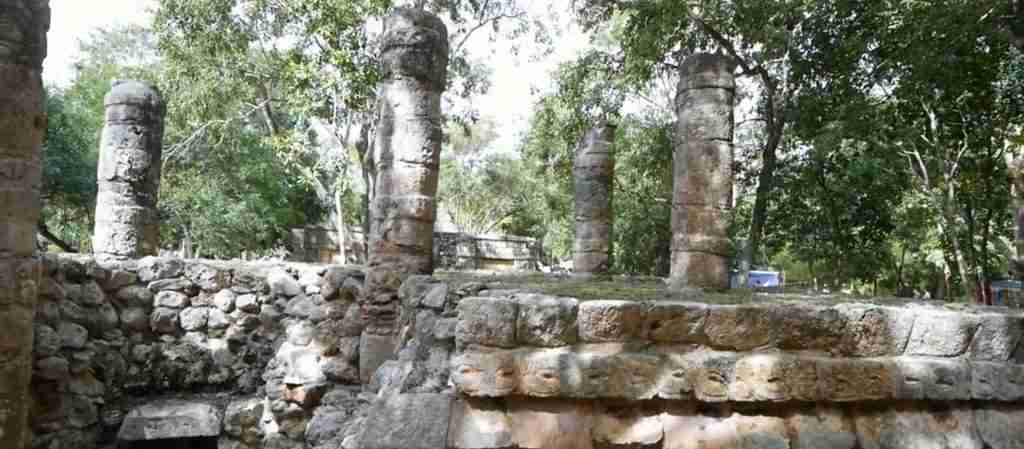
The architectural and artistic evidence from this period shows clear incorporation of styles and iconography associated with Tula, the capital of the Toltec civilization in Central Mexico. The Temple of the Warriors closely resembles structures at Tula, with its colonnaded halls, carved warrior columns, and chacmool sculptures—reclining figures that held sacrificial offerings. The Great Ball Court, largest in Mesoamerica, features panels depicting the ritual decapitation of ball players, a theme common in Central Mexican iconography. The Pyramid of Kukulkan, though built on Maya architectural principles, displays Central Mexican religious symbolism in its feathered serpent imagery and warrior processions.
This “Toltec Maya” synthesis created a distinctive cultural identity that set Chichen Itza apart from other Maya cities. Military imagery became prominent, with carved relief panels showing warriors in battle, captive nobles, and scenes of human sacrifice. This martial imagery suggests that Chichen Itza’s power rested partly on military strength, a shift from the earlier emphasis on dynastic legitimacy and cosmic knowledge that characterized Classic Maya kingship. The city’s rulers adopted titles and iconography that emphasized their warrior status and their connection to the Feathered Serpent deity Kukulkan, creating a new model of political authority.
The transformation brought new religious practices and deities to prominence while maintaining Maya traditions. Kukulkan/Quetzalcoatl became the supreme deity, though Maya gods like Chaac continued to receive worship. The cult of human sacrifice intensified, with ritual killings conducted at multiple locations including the Great Ball Court, the Sacred Cenote, and atop pyramid temples. These sacrifices served both religious purposes—maintaining cosmic order and pleasing the gods—and political functions—demonstrating the power of Chichen Itza’s rulers and intimidating rivals.
During this period, Chichen Itza expanded its political control over northern Yucatan, establishing itself as the regional capital. Smaller cities acknowledged Chichen Itza’s supremacy, either voluntarily seeking alliance or succumbing to military pressure. Trade routes came under Chichen Itza’s influence, allowing the city to control the flow of valuable goods like salt, obsidian, cacao, and cotton cloth. This commercial dominance enriched the city’s merchant class and provided resources for continued monumental construction.
The Sacred Cenote and Water Worship
The Sacred Cenote at Chichen Itza represents one of Mesoamerica’s most significant ritual sites, a natural sinkhole approximately 60 meters in diameter and 27 meters deep that served as a portal to the supernatural realm for centuries. Unlike other cenotes that provided drinking water, the Sacred Cenote was reserved exclusively for religious ceremonies, its brackish waters receiving countless offerings from worshippers seeking divine favor or attempting to communicate with the gods dwelling in Xibalba, the Maya underworld.
Archaeological excavations of the cenote, beginning with Edward H. Thompson’s controversial dredging operations in the early 20th century and continuing with more scientific investigations, have recovered thousands of artifacts spanning from the Classic period through the Spanish conquest and beyond. These offerings included jade ornaments, gold disks, copper bells, incense burners, textiles, wooden objects, and ceremonial knives. The precious metals and exotic materials demonstrate that pilgrims traveled from across Mesoamerica to make offerings at this sacred location, establishing Chichen Itza as a pan-regional religious center.
Human remains recovered from the cenote indicate that human sacrifice formed part of the ritual practices associated with this sacred well. Spanish colonial accounts describe ceremonies where individuals—often children or young adults—were thrown into the cenote during droughts to petition the rain god Chaac for water. Those who survived the plunge and the hours spent treading water were pulled out and asked to relay messages from the gods dwelling in the depths. Physical evidence largely corroborates these accounts, though the number of human sacrifices appears smaller than colonial sources suggested, with ritual offerings of precious objects being more common than human victims.
The cenote’s religious significance derived from Maya cosmological beliefs that viewed such natural openings as entrances to Xibalba, the underworld realm inhabited by death gods and ancestors. Water sources held particular sacred importance because they provided life in the drought-prone Yucatan and because they connected the surface world with the watery underworld below. The Maya conceived the universe as layered, with the earth floating on a primordial sea, the sky above supported by divine trees, and the underworld below accessed through caves and cenotes. The Sacred Cenote therefore represented a liminal space where the boundaries between cosmic realms thinned, allowing communication with supernatural forces.
Processions to the Sacred Cenote followed a raised causeway called a sacbe that extended approximately 300 meters from the city’s ceremonial core to the cenote’s edge. This formal approach ritualized the journey to the sacred well, with pilgrims processing along the white limestone road to the platform overlooking the dark waters. The ceremonies conducted at the cenote continued long after Chichen Itza’s decline as a political power, with Maya peoples from across Yucatan making pilgrimages to this sacred site well into the colonial period and beyond, demonstrating the cenote’s enduring spiritual significance independent of the city’s political fortunes.
Kukulkan: The Feathered Serpent Mythology
The Feathered Serpent deity known as Kukulkan in Yucatec Maya and Quetzalcoatl in Central Mexico dominated Chichen Itza’s religious and political mythology, serving as the supreme god whose worship legitimized the city’s ruling elite and connected Chichen Itza to broader Mesoamerican religious traditions. This deity’s dual nature—combining serpent and bird symbolism—represented fundamental cosmic principles: the union of earth and sky, the cycle of death and rebirth, and the connection between worldly and divine realms.
Kukulkan’s mythology incorporated elements from both Maya and Central Mexican traditions, reflecting Chichen Itza’s position as a cultural crossroads. In Maya tradition, serpents symbolized earth, fertility, and the underworld, while birds represented the celestial realm and communication with the divine. The Feathered Serpent therefore embodied the complete cosmos, mediating between opposed but complementary forces. In Toltec tradition, Quetzalcoatl served as a culture hero who taught humans civilization, the calendar, astronomy, and agriculture, transforming him from a natural force into a teacher god who brought knowledge and order to humanity.
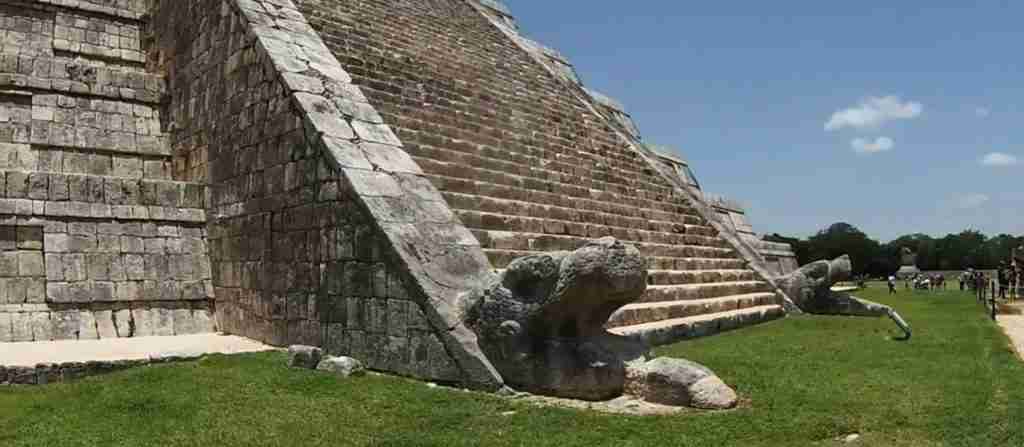
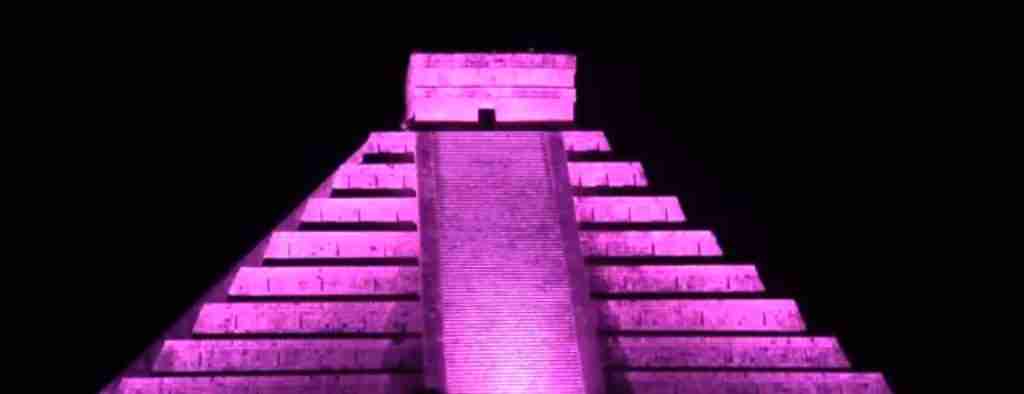
The Pyramid of Kukulkan—called El Castillo by Spanish conquistadors—served as the primary temple dedicated to this deity and stands as the most recognizable symbol of Chichen Itza. The pyramid’s architecture encodes sophisticated astronomical and calendrical knowledge: four stairways of 91 steps each, plus the top platform, total 365 steps corresponding to the solar year; each face displays 52 panels, matching the 52-year cycle of the Maya calendar round; nine terraces divided by the central stairway create 18 segments on each face, corresponding to the 18 months of the Maya ritual calendar. This mathematical precision demonstrated the priests’ mastery of cosmic patterns and their ability to manifest divine order in architectural form.
The equinox phenomenon at the Pyramid of Kukulkan represents the most famous demonstration of this astronomical knowledge. During spring and autumn equinoxes, the afternoon sun creates a pattern of light and shadow on the pyramid’s northern staircase that appears to show a serpent descending from the temple at the summit to the carved serpent heads at the base. This undulating shadow moves down the pyramid as the sun’s angle changes, creating the illusion of Kukulkan himself descending to earth. This spectacular phenomenon served religious functions—demonstrating the god’s presence and the cosmic order maintained by the priests—and political purposes—validating the authority of rulers who could predict and orchestrate such divine manifestations.
Kukulkan imagery appears throughout Chichen Itza’s architecture, from serpent columns supporting temple lintels to undulating serpent bodies carved on building facades to feathered serpent heads flanking stairways. This ubiquitous presence proclaimed the deity’s authority over the city and emphasized the connection between Chichen Itza’s rulers and divine power. The ruling elite associated themselves with Kukulkan, adopting the god’s attributes and sometimes claiming to be earthly manifestations of the Feathered Serpent. This identification between ruler and deity strengthened political authority by conflating obedience to human leaders with devotion to the supreme god.
The mythology surrounding Kukulkan emphasized themes of cyclical renewal, sacrificial death leading to rebirth, and the maintenance of cosmic order through ritual. According to Mesoamerican beliefs, the gods had sacrificed themselves to create the world and humanity, establishing a cosmic debt that humans repaid through offerings and sacrifices. Kukulkan, as the supreme deity at Chichen Itza, received the most elaborate offerings, including human sacrifices that reenacted mythological events and maintained the balance between cosmic forces. The ball game played in the Great Ball Court dramatized these mythological themes, with the game itself representing cosmic struggles and the sacrifice of losing players serving as ritual reenactment of divine sacrifice.
Astronomical Knowledge and Calendar Systems
The Maya civilization at Chichen Itza possessed astronomical knowledge of remarkable precision, tracking the movements of celestial bodies with an accuracy that rivals modern astronomical observations. This expertise served both practical purposes—organizing agricultural cycles, scheduling religious ceremonies, and maintaining accurate calendars—and religious functions—demonstrating elite knowledge of cosmic patterns and validating claims to divine authority.
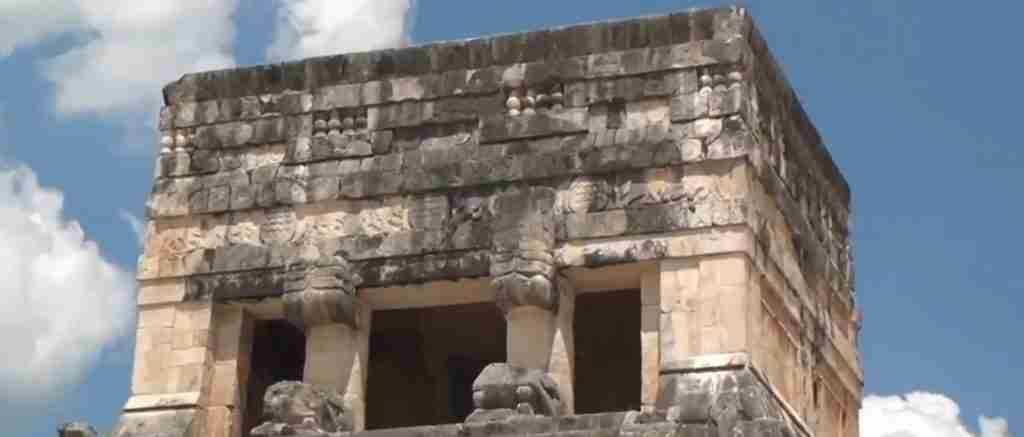
The Caracol, a round tower observatory at Chichen Itza, provided a structure specifically designed for astronomical observation. Its narrow window openings align with significant celestial events: the setting sun at spring equinox, the southernmost setting of the moon, and various positions of Venus during its complex cycle. Venus held particular importance in Maya astronomy and religion, with its appearances as morning and evening star carefully tracked and recorded. The Maya calculated Venus’s synodic period—the time between successive morning appearances—as 584 days, remarkably close to the modern calculation of 583.92 days. The Caracol’s design allowed priests to observe Venus’s positions and predict its appearances with the precision necessary for scheduling ceremonies and making auspicious predictions.
The Maya employed multiple calendar systems that interlocked to create a sophisticated temporal framework. The Haab calendar of 365 days organized the solar year into 18 months of 20 days each, plus five “nameless days” considered unlucky. The Tzolkin ritual calendar ran on a 260-day cycle created by combining 13 numbers with 20 day names. These two calendars meshed like gears, with any particular combination of Haab and Tzolkin dates repeating only once every 52 years—the Calendar Round. This 52-year cycle held profound significance, marking major ritual occasions and periods of cosmic renewal when the world faced potential destruction and rebirth.
For tracking longer time periods, the Maya developed the Long Count calendar, which counted days from a mythological creation date in 3114 BCE. This linear calendar allowed the Maya to record historical events with precision and to make calculations spanning thousands of years into past and future. Chichen Itza’s priests used these calendar systems to schedule ceremonies, predict astronomical events, determine auspicious dates for warfare or construction, and maintain the complex ritual cycle that governed religious life.
The architectural integration of astronomical alignments at Chichen Itza demonstrated how completely cosmic knowledge permeated Maya religious and political culture. Buildings oriented to solar events marked the passage of the year and the agricultural seasons. The Pyramid of Kukulkan’s equinox phenomenon represented the most famous example, but numerous other structures at Chichen Itza aligned with solstices, equinoxes, and the movements of Venus and other celestial bodies. These alignments transformed the city itself into a cosmic diagram, with temples, plazas, and causeways mapping celestial patterns onto the earthly landscape.
This astronomical expertise gave Chichen Itza’s elite tremendous authority. Their ability to predict eclipses, the movements of Venus, and the agricultural seasons demonstrated their connection to cosmic forces and their role as intermediaries between human society and the divine realm. When priests correctly predicted astronomical events or announced the proper timing for planting based on celestial observations, they reinforced their indispensable role in maintaining social and cosmic order. This knowledge was carefully guarded, passed down through elite lineages and restricting access to ensure that astronomical expertise remained a source of political power.
Military Power and Political Influence
Chichen Itza’s rise to regional dominance rested not only on religious authority and astronomical knowledge but also on military power and political acumen. The city’s transformation during the Modified Florescent period brought increased emphasis on martial imagery and warrior culture, suggesting that conquest and military intimidation played significant roles in establishing Chichen Itza’s hegemony over northern Yucatan.
Architectural evidence demonstrates this military character through abundant warrior imagery carved on building facades, columns, and panels. The Temple of the Warriors features columns carved with depictions of armed fighters in elaborate military dress, while the Great Ball Court displays panels showing warriors and captives. These martial representations created a visual environment that proclaimed Chichen Itza’s military prowess and served as propaganda reinforcing the city’s dominant position. The architectural emphasis on warriors marked a shift from earlier Maya cities where royal portraiture emphasized dynastic legitimacy and cosmic authority rather than military conquest.
The weapons and military technology depicted in Chichen Itza’s art included atlatls (spear-throwers), clubs, shields, and protective cotton armor. These weapons allowed Chichen Itza’s warriors to project power across the northern Yucatan, conducting campaigns against rival cities and establishing a network of subordinate settlements that acknowledged Chichen Itza’s supremacy. While Maya warfare during the Classic period focused on capturing elite prisoners for sacrifice and tribute extraction, the evidence from Chichen Itza suggests a more systematic approach to conquest and territorial control.
Trade networks provided both motivation for military activity and resources to sustain Chichen Itza’s power. The city controlled important trade routes connecting the northern coast with the interior, allowing it to regulate the flow of salt from coastal production centers, obsidian from Central Mexican sources, and other valuable commodities. This commercial dominance generated wealth that funded monumental construction projects, supported a large non-agricultural population including craft specialists and warriors, and enriched the merchant class that formed an important constituency supporting the city’s rulers.
Political organization at Chichen Itza appears to have differed from the highly centralized divine kingship that characterized Classic Maya cities. Rather than a single all-powerful ruler, evidence suggests Chichen Itza operated under a more distributed power structure with multiple elite lineages sharing authority. Councils of nobles may have governed the city collectively, with military leaders, merchant princes, and priestly authorities each controlling aspects of the political system. This more complex political structure might explain why Chichen Itza produced relatively few royal monuments and hieroglyphic texts commemorating individual rulers, unlike Classic Maya cities where kings erected numerous monuments proclaiming their divine authority and accomplishments.
The political influence of Chichen Itza extended across northern Yucatan through a combination of military threat, commercial advantage, religious prestige, and diplomatic alliances. Smaller cities acknowledged Chichen Itza’s supremacy through tribute payments, participation in religious ceremonies, and military cooperation. This regional system allowed Chichen Itza to coordinate activities across a wide territory without establishing direct administrative control over subordinate settlements. The system proved effective for several centuries, maintaining regional peace and facilitating trade networks that benefited all participants, though clearly favoring Chichen Itza as the regional capital.
Decline and Abandonment
Around 1200 CE, Chichen Itza’s political power collapsed with remarkable suddenness. The city’s dominance over northern Yucatan ended, monumental construction ceased, and the population declined sharply. The reasons for this collapse remain debated among archaeologists, with explanations including military defeat, internal political conflicts, environmental degradation, and shifts in trade routes that undermined the city’s economic foundation.
The rise of Mayapan as a new regional power center coincided with Chichen Itza’s decline, suggesting that competition between cities played a role in the transformation. Mayapan’s rulers claimed to inherit the political authority previously held by Chichen Itza, establishing themselves as the new dominant power in northern Yucatan. Whether this transition occurred through conquest, political agreement, or gradual economic and political shift remains uncertain, but the effect was clear: Chichen Itza ceased to function as a political capital, and its resident population dispersed.
Environmental factors may have contributed to the decline. The northern Yucatan’s dependence on rainfall and the challenges of agriculture in the limestone environment made cities vulnerable to extended droughts. Tree ring data and lake sediment analysis indicate that the period around 1200 CE experienced severe drought conditions across the Maya region. Such droughts would have strained the agricultural system supporting Chichen Itza’s large urban population, potentially triggering social unrest, emigration, and political instability. However, droughts alone cannot explain the collapse, as other northern Yucatan cities survived this period and Chichen Itza’s access to cenotes provided some protection against water scarcity.
Internal political conflicts may have weakened Chichen Itza’s governing system. The apparent division of power among multiple elite factions, while successful during the city’s rise and height, may have proven vulnerable during times of stress. Competition between lineages, conflict between military and merchant classes, or challenges to priestly authority could have fragmented the political system, making it impossible to mount effective responses to external threats or environmental challenges. The archaeological record provides limited evidence for such internal conflicts, but the relative silence of hieroglyphic texts from Chichen Itza’s final period leaves significant gaps in our understanding.
Despite the collapse of political power, Chichen Itza retained religious significance and continued to attract pilgrims long after its abandonment as a political center. The Sacred Cenote received offerings throughout the Postclassic period and into colonial times, demonstrating that the site maintained spiritual importance independent of its political fortunes. Maya peoples from across Yucatan continued to regard Chichen Itza as a sacred landscape, a place of power where the boundaries between natural and supernatural realms remained permeable.
The population decline following political collapse was dramatic but not total. A smaller resident community maintained occupation of parts of the site, conducting ceremonies and maintaining basic upkeep of the major temples. This pattern of decline—from major regional capital to pilgrimage center with small resident population—characterized many Post-Classic Maya sites, including earlier Classic period cities like Tikal and Copan. The massive public architecture remained visible, serving as monuments to past glory and as sacred spaces where the spiritual power of ancestors lingered.
Spanish Conquest and Colonial Period
When Spanish conquistadors arrived in Yucatan during the 1520s and 1530s, they found Chichen Itza already long abandoned as a political center, though still recognized as sacred ground by the Maya population. The Spanish recorded Maya oral traditions about the city’s past greatness, though their accounts mixed historical memory with mythology and were filtered through Spanish religious and cultural biases that often misinterpreted Maya beliefs and practices.
Diego de Landa, the Franciscan friar who became Bishop of Yucatan, visited Chichen Itza and recorded descriptions of its architecture and his understanding of Maya religious practices. Ironically, while Landa orchestrated the burning of Maya codices and the suppression of Maya religion, his writings preserved valuable information about Maya culture and provided some of the earliest European accounts of Chichen Itza’s monuments. His description of the Sacred Cenote and the offerings thrown into its depths inspired later archaeological investigations, though his account of human sacrifice at the site may have exaggerated the practice to justify Spanish religious conversion efforts.
The Spanish attempted to establish settlements near Chichen Itza but faced resistance from the Maya population, who remained unwilling to fully submit to colonial authority. The northern Yucatan proved difficult for Spanish colonization due to its lack of precious metals, scattered population, and the fierce resistance mounted by Maya groups who maintained military capabilities and political organization long after the conquest. Multiple Maya rebellions challenged Spanish control, and complete pacification of the region took decades longer than in Central Mexico.
During the colonial period, Chichen Itza served as a refuge and gathering point for Maya groups resisting Spanish authority. The site’s remote location and its continued sacred status made it attractive to those seeking to maintain traditional practices away from colonial oversight. Spanish authorities attempted to prevent Maya pilgrimages to Chichen Itza, recognizing that such gatherings could reinforce traditional beliefs and serve as covers for political organizing. Despite these restrictions, Maya people continued to visit the site, particularly the Sacred Cenote, maintaining connections to their ancestral heritage in the face of colonial pressure to abandon traditional religion.
The buildings of Chichen Itza suffered damage during the colonial period from both natural weathering and human activity. Spanish settlers used the site as a source of cut stone for colonial construction projects, removing building stones from ancient structures to build churches and houses. Vegetation began reclaiming the site as the forest advanced over plazas and buildings no longer maintained by resident populations. Yet despite this deterioration, the major monuments survived, their massive construction resisting complete collapse and preserving the architectural legacy for later discovery.
Rediscovery and Archaeological Exploration
Interest in Chichen Itza among Europeans and Americans began during the 19th century as part of broader fascination with ancient civilizations and romantic interest in lost cities and mysterious ruins. John Lloyd Stephens and Frederick Catherwood visited the site in 1843, producing detailed descriptions and illustrations that brought Chichen Itza to international attention. Stephens’s writing and Catherwood’s precise architectural drawings revealed the sophistication of Maya civilization to audiences who had dismissed indigenous American cultures as primitive. Their work sparked archaeological and popular interest that would continue to the present day.
The late 19th and early 20th centuries saw various expeditions and excavation efforts at Chichen Itza, though many of these early investigations damaged the site while recovering artifacts. Edward H. Thompson purchased the Hacienda Chichen in 1894, gaining control of the site and the Sacred Cenote. Between 1904 and 1910, Thompson dredged the cenote, recovering thousands of artifacts that he shipped to the Peabody Museum at Harvard University. While Thompson’s methods destroyed archaeological context and his removal of artifacts to the United States sparked ongoing controversy and eventual legal battles, the recovered objects provided important evidence about ancient Maya religious practices and the cenote’s role as a pilgrimage destination.
More systematic archaeological research began in the 1920s under the Carnegie Institution of Washington, which conducted excavations and restoration work at Chichen Itza for decades. These projects revealed the site’s complex construction history, identified different architectural styles and building phases, and began the careful restoration of major monuments that transformed Chichen Itza from overgrown ruins to the partially restored archaeological park visited today. The Carnegie work established professional archaeological standards for investigation and preservation, moving beyond artifact collection toward understanding the site’s cultural and historical context.
Mexican government involvement in Chichen Itza’s investigation and preservation increased throughout the 20th century as archaeological heritage became an important component of Mexican national identity. The Instituto Nacional de Antropología e Historia (INAH) assumed responsibility for the site, conducting ongoing research, conservation work, and management of tourist access. Mexican and international scholars have continued investigating Chichen Itza through excavation, architectural analysis, hieroglyphic decipherment, and application of new technologies like LiDAR scanning that reveals hidden structures beneath forest cover.
Controversies have marked the archaeological history of Chichen Itza, particularly regarding artifact ownership and the ethics of early investigations. The Mexican government has sought return of objects removed during the 19th and early 20th centuries, arguing that they constitute Mexican cultural patrimony taken during periods when laws inadequately protected archaeological heritage. Museums and institutions holding these collections have responded variously, with some returning artifacts and others claiming legal acquisition and arguing that their curation has preserved and studied materials that might otherwise have been lost.
UNESCO World Heritage Recognition
UNESCO designated Chichen Itza as a World Heritage Site in 1988, recognizing its outstanding universal value as a testimony to Maya civilization and its significance in the broader context of Mesoamerican cultural development. This designation acknowledged Chichen Itza’s importance as an archaeological and historical site worthy of protection and preservation for the benefit of all humanity, not just the Mexican nation or the Maya people who created it.
The UNESCO recognition identified multiple criteria justifying Chichen Itza’s World Heritage status. The site represents a masterpiece of human creative genius, demonstrated in its sophisticated architecture, astronomical alignments, and artistic achievements. The monuments at Chichen Itza exhibit important exchanges of human values over time and across cultural areas, specifically the synthesis of Maya and Central Mexican traditions that created the distinctive Maya-Toltec style. The site bears exceptional testimony to a cultural tradition that developed one of Mesoamerica’s most advanced civilizations, with achievements in mathematics, astronomy, architecture, and art that continue to influence understanding of human cultural development.
World Heritage designation brought both opportunities and challenges for Chichen Itza’s management and preservation. The recognition increased international tourism, bringing economic benefits to the region but also creating conservation challenges as millions of visitors annually impact the site’s fragile structures and archaeological deposits. The designation emphasized the need for professional site management balancing conservation requirements with public access, economic development, and respect for the site’s sacred significance to contemporary Maya communities.
Conservation efforts at Chichen Itza have focused on stabilizing structures, preventing collapse, and addressing damage from weathering, vegetation, and human impact. The porous limestone from which Chichen Itza’s monuments were constructed proves vulnerable to water penetration, chemical weathering, and structural stress. Restoration projects must navigate between preserving authentic ancient fabric and intervening to prevent collapse, a balance that generates ongoing debate among archaeologists and conservators about appropriate restoration philosophies and techniques.
The relationship between Chichen Itza as archaeological site and tourist destination creates tensions that UNESCO designation helps manage but cannot entirely resolve. Tourism generates revenue that supports conservation work and provides economic incentives for protecting the site, but mass tourism also threatens the very values that justify World Heritage status. Visitor foot traffic damages fragile stucco surfaces, vibration from tour groups affects structural stability, and the commercialization of the surrounding area transforms the site’s setting. Managing these impacts while maintaining public access requires ongoing adaptation of management strategies and investment in conservation infrastructure.
Chichen Itza’s World Heritage status has made it a symbol of Mexico’s cultural heritage and a point of national pride. The site appears in promotional materials, educational curricula, and cultural diplomacy efforts that project Mexico’s rich indigenous heritage to the world. For the Maya people, Chichen Itza represents both ancestral achievement and ongoing cultural continuity. Contemporary Maya communities maintain spiritual connections to the site, conducting ceremonies and regarding Chichen Itza as sacred space where the boundary between past and present remains permeable.
Frequently Asked Questions
Why was Chichen Itza built in a location without rivers?
Chichen Itza was built where it is precisely because of the deep cenotes—natural sinkholes that provided reliable water sources in the porous limestone landscape of northern Yucatan. These cenotes made settlement viable despite the absence of rivers or lakes. The cenotes also held profound religious significance as portals to the underworld, transforming the practical advantage of water access into spiritual power that made Chichen Itza an important pilgrimage destination throughout its history.
How did the Maya achieve such precise astronomical observations without telescopes?
Maya astronomers achieved remarkable precision through careful naked-eye observations conducted over centuries, establishing a cumulative body of astronomical knowledge passed down through elite lineages. They built observatories like the Caracol with sight lines aligned to important celestial events, allowing systematic tracking of the sun, moon, Venus, and stars across years and decades. This long-term observation, combined with sophisticated mathematical systems and detailed record-keeping, allowed the Maya to calculate celestial cycles with accuracy rivaling modern observations.
What happened to the people who lived at Chichen Itza after its collapse?
When Chichen Itza’s political power collapsed around 1200 CE, most of the population dispersed to other settlements across northern Yucatan. Some moved to Mayapan, the new regional power center, while others established smaller communities or joined existing settlements. A small resident population remained at Chichen Itza, maintaining the major temples and conducting ceremonies as the site transitioned from political capital to pilgrimage center. The descendants of Chichen Itza’s builders continued as Maya people throughout the region, maintaining cultural traditions that survived the city’s political decline and later Spanish conquest.
How accurate is the snake shadow phenomenon at the Pyramid of Kukulkan?
The serpent shadow appearing on the pyramid’s northern staircase during equinoxes results from precise architectural design that calculates the sun’s angle at those specific times. The pyramid’s orientation, the angle of the stepped terraces, and the timing of the equinoxes create the undulating pattern of light and shadow that resembles a snake descending the pyramid. The phenomenon occurs reliably during spring and autumn equinoxes, demonstrating the Maya architects’ sophisticated understanding of astronomy and their ability to encode cosmic knowledge in monumental architecture.
Why are there so many cenotes in the Yucatan Peninsula?
The Yucatan Peninsula consists of limestone bedrock formed from ancient coral reefs. Rainwater, slightly acidic, dissolves the limestone over thousands of years, creating underground rivers and caves. When the roofs of these underground chambers collapse, they create cenotes—the natural sinkholes that characterize the Yucatan landscape. The peninsula has thousands of cenotes in various stages of formation, ranging from fully enclosed caves to open pools. For the ancient Maya, these cenotes provided essential water sources and sacred sites for ritual activities.
Did Chichen Itza have contact with other Mesoamerican civilizations?
Chichen Itza maintained extensive contacts with civilizations across Mesoamerica through trade networks, religious pilgrimage, and possibly political alliances or conflicts. The city received goods from Central Mexico, the Maya lowlands, and distant coastal regions. The architectural synthesis of Maya and Toltec styles demonstrates direct cultural contact with Central Mexico, whether through migration, conquest, or exchange. Pilgrims visited Chichen Itza from across the Maya world to make offerings at the Sacred Cenote, creating a cosmopolitan environment where people from diverse backgrounds interacted.
What role did human sacrifice play at Chichen Itza?
Human sacrifice at Chichen Itza served both religious and political functions. The Maya believed that gods had sacrificed themselves to create the world, establishing a debt that humans repaid through offerings including human lives. Sacrifices maintained cosmic order, ensured agricultural fertility, and pleased the gods. Politically, the ability to demand and conduct human sacrifices demonstrated power and authority. The Great Ball Court, Sacred Cenote, and pyramid temples all served as locations for ritual killings. While human sacrifice occurred, the frequency has been debated, with archaeological evidence suggesting it was less common than Spanish colonial accounts implied, though still a significant aspect of religious practice.
How did the Maya calendar work and why was it so complex?
The Maya used multiple interlocking calendar systems to track different types of time. The 365-day Haab organized the solar year for agricultural and civil purposes. The 260-day Tzolkin served ritual and divinatory functions. These two calendars meshed to create the 52-year Calendar Round. The Long Count provided a linear count of days from a mythological creation date, allowing precise historical recording. This complexity arose from the Maya need to coordinate astronomical observations, agricultural cycles, religious ceremonies, and historical records. The multiple calendars allowed Maya priests to track various celestial phenomena while maintaining the ritual calendar that governed sacred activities.
What materials did the Maya use to build Chichen Itza?
Chichen Itza’s monuments were constructed primarily from local limestone quarried from the surrounding area. Builders cut limestone blocks, faced them carefully, and assembled them using lime mortar made by burning limestone. They covered building surfaces with limestone plaster that was then painted in bright colors including red, blue, green, and yellow. Interior spaces used Maya corbel vaulting—a false arch created by progressively overlapping stones. Wooden beams supported some roof structures, and builders incorporated precious materials like jade and obsidian into architectural decorations and ritual deposits placed in building foundations.
How has tourism affected the preservation of Chichen Itza?
Tourism generates significant revenue that funds conservation work at Chichen Itza but also creates preservation challenges. Millions of annual visitors cause wear on pathways and structures, with foot traffic eroding surfaces and vibrations from crowds affecting structural stability. Authorities have restricted access to building interiors and pyramid climbing to prevent damage. Tourism revenue supports professional site management, restoration projects, and security measures that protect against looting and vandalism. The challenge involves balancing preservation requirements with public access that provides the economic and educational benefits justifying conservation efforts. Ongoing management adaptations seek to minimize tourism impact while maintaining the site’s accessibility to visitors who provide financial support for its preservation.