
Chichen Itza History: Rise and Fall of the Mayan Capital
Deep in Mexico’s Yucatan Peninsula stands a testament to one of history’s most sophisticated civilizations. Chichen Itza, whose name translates to “at the mouth of the well of the Itza,” represents more than just ancient ruins scattered across limestone terrain. This remarkable city chronicles the rise, golden age, and mysterious decline of a Mayan capital that once controlled vast territories and influenced cultures across Mesoamerica for nearly a millennium.
The Dawn of a Mayan Metropolis
Origins in the Sacred Cenotes
The story of Chichen Itza begins around 550-600 CE, when Maya peoples first settled this strategic location in the northern Yucatan Peninsula. Unlike many ancient cities that grew around rivers or coastal areas, Chichen Itza emerged around sacred cenotes—natural sinkholes that provided life-sustaining fresh water in an otherwise arid landscape.
These geological formations weren’t merely practical water sources; they held profound spiritual significance for the Maya, believed to be portals to Xibalba, the underworld realm of their gods. The Sacred Cenote, in particular, would later become central to the city’s religious practices and ceremonial life.
The earliest Maya settlers recognized the site’s potential immediately. The cenotes ensured year-round water access, while the relatively flat terrain could accommodate large-scale construction. Most importantly, the location positioned the growing settlement along crucial trade routes connecting the Maya heartland with coastal regions.
Early Settlement and Growth
Archaeological evidence reveals that the first permanent structures at Chichen Itza appeared during the Late Classic period (600-900 CE). These early buildings demonstrated the characteristic Puuc architectural style, named after the nearby Puuc hills region. The Puuc style featured precisely cut limestone blocks, intricate geometric patterns, and distinctive representations of Chaac, the Maya rain god.
Among the earliest surviving structures are the Casa de las Monjas (the Nunnery), El Caracol (the Observatory), and the Akab Dzib (House of the Dark Writing). These buildings showcase the Maya’s advanced understanding of astronomy, mathematics, and architectural engineering that would define Chichen Itza throughout its history.
The city’s population grew steadily during these formative centuries. By 800 CE, Chichen Itza had evolved from a regional ceremonial center into a thriving urban complex covering nearly 25 square kilometers. The Maya connected their expanding city through an intricate network of raised stone roads called sacbeob, creating one of Mesoamerica’s most sophisticated urban transportation systems.
Multi-day tour packages powered by TourRadar. Prices and availability subject to change.
Extended multi-day tours – 5+ days
Featured Chichen Itza Multi-Day Tour Packages
 3 days
Chichen Itza 3-Day Discovery Tour
 5 days
Chichen Itza 5-Day Highlights Experience
 7 days
Chichen Itza 7-Day Cultural Journey
 10 days
Chichen Itza 10-Day Complete Adventure
The Classical Mayan Period: Foundation of Greatness
Architectural Innovations and Urban Planning
During its Classical period, Chichen Itza demonstrated remarkable urban planning sophistication. The Maya artificially leveled vast areas of naturally uneven terrain to accommodate monumental construction projects. This massive undertaking required coordinated labor from thousands of workers and revealed the city’s growing political and economic power.
The early Puuc-style buildings established Chichen Itza’s reputation for architectural excellence. The Casa de las Monjas, despite its Spanish colonial nickname meaning “nunnery,” likely served as an administrative palace complex. Its intricate facade features hundreds of carved stone elements representing Maya deities, celestial symbols, and geometric patterns that demonstrated both artistic mastery and religious devotion.
El Caracol, the observatory, stands as perhaps the most impressive example of Maya scientific achievement. This circular structure, unique among Maya buildings, was precisely oriented to track the movements of Venus, the moon, and other celestial bodies. The Maya’s astronomical observations weren’t merely academic pursuits—they directly influenced agricultural cycles, religious ceremonies, and political decisions throughout the empire.
Religious and Ceremonial Life
Religion permeated every aspect of life in Classical period Chichen Itza. The Maya pantheon included hundreds of deities governing everything from rainfall and crop fertility to warfare and royal succession. Chaac, the rain god, held particular significance in the Yucatan’s semi-arid climate, and his image appears throughout the city’s early architecture.
The Sacred Cenote served as the focal point for religious ceremonies. Archaeological excavations have revealed thousands of offerings thrown into its depths over the centuries: precious jade ornaments, gold disks, incense burners, and human sacrifices. These rituals weren’t expressions of bloodthirsty cruelty but sophisticated religious practices designed to maintain cosmic balance and ensure divine favor.
Ceremonial ball courts played crucial roles in both religious and social life. The ball game itself, called pitz by the Maya, combined athletic competition with profound spiritual symbolism. Players, using only their hips and forearms, attempted to pass a heavy rubber ball through stone rings positioned high on the court walls. The game represented the eternal struggle between light and darkness, life and death, with the outcome determining divine favor or displeasure.
Economic Foundations and Trade Networks
Chichen Itza’s Classical period prosperity rested on sophisticated economic foundations extending far beyond the Yucatan Peninsula. The city controlled crucial trade routes connecting central Mexico with the Caribbean coast, positioning its merchants to profit from exchanging goods across vast distances.
Archaeological evidence reveals Chichen Itza’s extensive trade connections. Obsidian from central Mexican volcanic regions was shaped into cutting tools and weapons. Jade from Guatemala’s highland regions became precious ornaments and religious artifacts. Gold and copper from South America arrived through complex trading networks spanning the entire Americas.
The Maya also developed local industries that enhanced their economic power. Salt production along the northern Yucatan coast provided valuable trade commodities, while cacao cultivation supplied both local consumption and export markets. Cotton textiles, pottery, and carved stone goods manufactured in Chichen Itza workshops found markets throughout Mesoamerica.
The Toltec Transformation: A Civilization in Transition
The Great Cultural Fusion
Around 900-1000 CE, Chichen Itza experienced a dramatic transformation that would define its golden age. This period coincided with the arrival of new populations carrying strong cultural influences from central Mexico, particularly from the Toltec civilization centered at Tula.
Historical accounts, though filtered through later Spanish colonial records, suggest this transformation involved a ruler named Ce Acatl Topiltzin Quetzalcoatl—known to the Maya as Kukulkan. According to these sources, political conflicts in Tula forced this leader and his followers to migrate southeast, eventually reaching Chichen Itza around 987 CE.
The resulting cultural fusion created something unprecedented in Mesoamerican history. Rather than simple conquest or replacement, Chichen Itza became a hybrid civilization combining Maya sophistication with Toltec innovations. This synthesis produced architectural styles, artistic motifs, and religious practices unique to the city.
The influence appears mutual rather than one-directional. Recent archaeological evidence suggests that some “Toltec” elements at Chichen Itza may predate similar features at Tula, indicating complex cultural exchanges rather than simple conquest scenarios.
Architectural Renaissance
The Toltec period witnessed Chichen Itza’s most ambitious construction projects. El Castillo (the Castle), also known as the Temple of Kukulkan, represents the pinnacle of this architectural renaissance. This step pyramid rises 79 feet above the Great Plaza, its design incorporating sophisticated astronomical alignments and mathematical precision.
El Castillo contains exactly 365 steps—one for each day of the solar year—when counting all four staircases plus the top platform. During the spring and autumn equinoxes, the setting sun creates shadows that appear to show a feathered serpent descending the pyramid’s northern staircase, linking the structure to Kukulkan, the feathered serpent deity.
The Temple of the Warriors complex demonstrates the new architectural synthesis. Massive columns carved with warrior figures support expansive roof structures, creating interior spaces unprecedented in earlier Maya architecture. These warriors wear distinctive costumes and carry weapons associated with central Mexican military traditions, yet the overall design incorporates unmistakably Maya proportions and decorative elements.
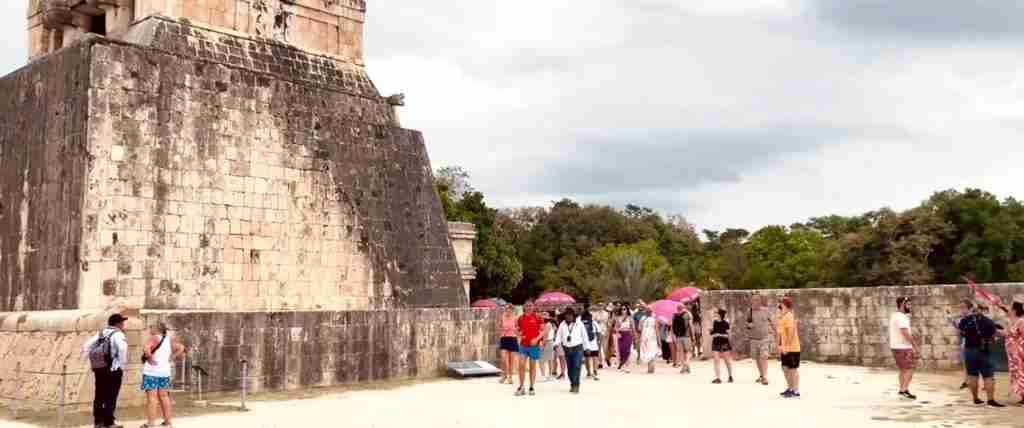
The Great Ball Court, measuring 554 feet long and 231 feet wide, became the largest known ball court in ancient Mesoamerica. Its acoustical properties allow whispers at one end to be clearly heard at the opposite end, demonstrating sophisticated understanding of sound engineering principles.
Religious Evolution and the Feathered Serpent
The Toltec transformation introduced new religious elements while maintaining Maya spiritual traditions. Kukulkan, the feathered serpent deity (equivalent to the central Mexican Quetzalcoatl), became central to Chichen Itza’s religious life. This deity represented the union of earth (serpent) and sky (feathered), embodying the cosmic duality fundamental to Mesoamerican spiritual thought.
Kukulkan imagery appears throughout Toltec-period architecture. Feathered serpent columns support temple doorways, serpent heads emerge from staircases, and relief carvings depict the deity in various forms. Yet these representations maintain distinctly Maya artistic characteristics, reflecting the cultural synthesis occurring throughout the city.
The Platform of Skulls (Tzompantli) represents another Toltec innovation adapted to Maya practice. This structure, used to display the heads of sacrificial victims, reflects central Mexican warrior cult traditions. However, Chichen Itza’s version incorporates Maya artistic elements and appears to have served different ceremonial functions than its central Mexican counterparts.
Human sacrifice increased in frequency and elaboration during this period, though it had existed in Maya culture long before Toltec influence. The ceremonies became more theatrical and public, reflecting the warrior ideology associated with the new cultural elements.
The Golden Age: Chichen Itza as Regional Superpower
Political Dominance and the Mayapan League
During the 10th through 12th centuries, Chichen Itza reached its zenith as a regional superpower controlling much of the northern Yucatan Peninsula. The city’s influence extended far beyond its immediate territory through a combination of military might, economic control, and diplomatic alliances.
In 987 CE, Chichen Itza helped establish the Mayapan League, a tripartite alliance with the cities of Uxmal and Mayapan. This confederation initially operated under Chichen Itza’s leadership, creating unprecedented political stability and economic prosperity across the region.
The league’s success rested on complementary strengths. Chichen Itza provided military leadership and controlled crucial trade routes. Uxmal contributed artistic and architectural expertise, while Mayapan offered agricultural resources and administrative capabilities. Together, these cities created a powerful alliance that dominated Yucatecan politics for over two centuries.
Archaeological evidence suggests Chichen Itza’s political control extended well beyond the league boundaries. Tributary relationships with smaller cities provided regular flows of goods and labor, while strategic military outposts secured important trade routes and resource areas.
Economic Prosperity and Commercial Networks
Chichen Itza’s golden age coincided with unprecedented economic expansion. The city’s merchants established trading relationships spanning from central Mexico to Central America, creating commercial networks that rivaled those of any contemporary civilization.
The port of Isla Cerritos, located on the northern Yucatan coast, served as Chichen Itza’s primary maritime gateway. From this strategic location, Maya merchants could access both Caribbean and Gulf of Mexico trade routes, connecting their city to commerce throughout the Americas.
Archaeological excavations reveal the scope of these commercial relationships. Turquoise from the American Southwest, copper bells from South America, and exotic shells from distant coastal regions all found their way to Chichen Itza’s markets. In return, Maya merchants exported cotton textiles, carved jade ornaments, and specialized pottery throughout Mesoamerica.
Salt production along the northern coast provided a particularly valuable trade commodity. The Maya developed sophisticated techniques for extracting salt from coastal lagoons, creating a product essential for food preservation throughout ancient America. Control of these salt beds gave Chichen Itza significant economic leverage over neighboring regions.
Local craft production flourished during this period. Specialized workshops produced goods for both local consumption and distant export markets. Stone carvers created intricate sculptures and architectural elements, while textile workers developed cotton fabrics renowned throughout Mesoamerica for their quality and artistic beauty.
Scientific and Cultural Achievements
Chichen Itza’s golden age produced remarkable scientific and cultural achievements that influenced Mesoamerican civilization for centuries. Maya astronomers at the city created increasingly sophisticated calendars and astronomical tables, tracking celestial movements with accuracy that wouldn’t be surpassed in Europe for many centuries.
The Maya calendar system reached its highest development during this period. Their Long Count calendar tracked time from a mythical creation date corresponding to 3114 BCE in the modern calendar, while their 260-day ritual calendar and 365-day solar calendar created intricate cycles governing religious ceremonies and agricultural activities.
Mathematical innovations supported these astronomical achievements. The Maya independently developed the concept of zero, using place notation systems that facilitated complex calculations. Their mathematical sophistication enabled the precise architectural alignments and calendar calculations that characterized their greatest achievements.
Artistic expression flourished throughout the golden age. Sculptors created relief carvings of unprecedented complexity and beauty, combining Maya traditions with new stylistic elements from central Mexico. These works often depicted historical events, religious ceremonies, and astronomical observations with remarkable detail and artistic sophistication.
The Maya writing system reached new levels of complexity during this period. Scribes developed increasingly sophisticated hieroglyphic texts recording historical events, religious concepts, and astronomical observations. While many of these texts were later destroyed during the Spanish colonial period, surviving examples demonstrate remarkable literary and intellectual achievement.
The Military Might of Chichen Itza
Warrior Culture and Military Innovation
The Toltec transformation introduced new military traditions that fundamentally changed Chichen Itza’s approach to warfare and regional control. The city’s armies adopted new weapons, tactics, and organizational structures that enhanced their effectiveness across the northern Yucatan Peninsula.
Archaeological evidence reveals significant changes in military equipment during this period. Warriors began using atlatls (spear-throwers) that increased projectile range and impact force. New types of obsidian weapons provided sharper cutting edges, while defensive equipment included cotton armor quilted with salt for additional protection.
Military architecture reflected these changes. The Temple of the Warriors features extensive relief carvings depicting armed figures carrying weapons and wearing military costumes associated with central Mexican warrior traditions. These images suggest the adoption of new military hierarchies and ceremonial practices related to warfare.
The Great Ball Court may have served military as well as religious functions. Some scholars interpret the ball game as training for warfare, developing physical skills and tactical thinking useful in battle. The association between ball game outcomes and human sacrifice also reinforced military values and divine sanction for warfare.
Fortified outposts extended Chichen Itza’s military control throughout the region. These strategic positions secured important trade routes, protected tributary communities, and served as bases for military campaigns against rival cities. The coordination required for this military network demonstrates sophisticated organizational capabilities.
Conquest and Tributary Relations
Chichen Itza’s military expansion created tributary relationships with numerous smaller cities throughout the northern Yucatan. These arrangements provided regular tribute payments while allowing local rulers to maintain internal autonomy under Chichen Itza’s overall authority.
Archaeological evidence suggests military campaigns targeted both economic and strategic objectives. Coastal areas provided access to marine resources and trade routes, while inland regions offered agricultural products and craft specializations. Highland areas supplied obsidian and other volcanic products essential for tool and weapon production.
The tributary system generated substantial wealth for Chichen Itza while reducing the costs of direct territorial administration. Local rulers collected tribute from their populations and forwarded agreed portions to Chichen Itza, maintaining stability while ensuring regular resource flows to the imperial capital.
Military success reinforced religious authority. Captured enemies provided sacrificial victims for important ceremonies, while military victories demonstrated divine favor and royal legitimacy. This combination of military and religious power created a self-reinforcing system that sustained Chichen Itza’s dominance for centuries.
Daily Life in the Mayan Capital
Social Structure and Urban Organization
At its peak, Chichen Itza housed an estimated 35,000-50,000 residents, making it one of the largest cities in the Americas. This population was organized into complex social hierarchies that reflected the city’s political importance and economic prosperity.
The royal court occupied the city center, living in elaborate stone palaces decorated with intricate carvings and paintings. These elite residences featured multiple rooms, private courtyards, and sophisticated drainage systems that demonstrated both wealth and technological sophistication.
Noble families lived in substantial stone houses throughout the urban core. These structures typically included separate areas for family life, craft production, and storage, reflecting the multiple economic activities that sustained elite lifestyles. Many noble residences featured small ball courts, suggesting recreational activities as well as possible ritual significance.
Commoner housing extended throughout the surrounding areas, ranging from modest stone structures to simple thatched buildings. Archaeological excavations reveal considerable variation in commoner living standards, suggesting economic differentiation within non-elite populations.
Specialized craft quarters housed artisans producing goods for both local consumption and distant export. Stone carvers, textile workers, potters, and jewelers lived in dedicated neighborhoods where specialized tools and raw materials have been discovered by archaeologists.
Economic Activities and Specialization
Economic specialization reached sophisticated levels during Chichen Itza’s golden age. Different neighborhoods concentrated on specific craft activities, creating efficient production systems that supplied both local needs and export markets.
Textile production employed thousands of workers, primarily women, who grew cotton, processed fibers, and wove fabrics renowned throughout Mesoamerica. Archaeological evidence includes spindle whorls, loom weights, and textile fragments that demonstrate both technical skill and artistic sophistication.
Stone carving workshops produced architectural elements, sculptures, and decorative objects. Master craftsmen trained apprentices in techniques for working limestone, creating the intricate relief carvings that adorned the city’s monumental buildings.
Pottery production included both utilitarian vessels for daily use and elaborate ceremonial pieces for religious rituals. Ceramic styles from Chichen Itza have been found throughout the Maya region, indicating extensive trade networks and cultural influence.
Agricultural activities supported the large urban population through intensive farming techniques. The Maya developed sophisticated irrigation systems using cenotes and constructed reservoirs, while raised field systems maximized crop yields in areas prone to seasonal flooding.
Market activities concentrated in dedicated plaza areas where merchants from throughout Mesoamerica exchanged goods. Archaeological evidence includes standardized weights and measures, suggesting sophisticated commercial practices and quality control systems.
Religious Practices and Ceremonies
Religious life permeated daily existence in Chichen Itza. The Maya calendar determined the timing of agricultural activities, craft production, and commercial transactions, while religious ceremonies marked important life transitions and seasonal changes.
Household shrines provided focal points for family religious practices. These small structures typically featured images of patron deities and served as locations for daily offerings and prayers. Archaeological excavations have revealed ceramic incense burners, jade ornaments, and other ritual objects associated with domestic religious activities.
Community festivals involved entire neighborhoods in elaborate ceremonies honoring specific deities or celebrating important calendar dates. These events included feasting, dancing, and theatrical performances that reinforced social bonds while honoring divine powers.
The Sacred Cenote remained central to major religious ceremonies throughout the city’s history. Processions from throughout the urban area converged on this sacred location for offerings and sacrificial rituals designed to ensure divine favor and community prosperity.
Bloodletting rituals involved nobility in personal sacrifice designed to communicate with ancestral spirits and divine powers. These practices, documented in Maya art and Spanish colonial accounts, reflected beliefs about the sacred nature of blood and its power to facilitate divine communication.
The Mysterious Decline: Theories and Evidence
Internal Strife and the Mayapan Conflict
The decline of Chichen Itza began in the 12th century through a combination of internal conflicts and external pressures that ultimately ended the city’s dominance over the northern Yucatan Peninsula. The most significant factor appears to have been the breakdown of the Mayapan League and the subsequent warfare that devastated the region.
By 1200 CE, tensions within the Mayapan League had reached critical levels. Archaeological evidence suggests increasing militarization throughout the region, with fortifications appearing at previously undefended sites. The precise causes of these conflicts remain debated, but they likely involved disputes over trade routes, tribute obligations, and political succession.
The city of Mayapan emerged as Chichen Itza’s primary rival during this period. Located further south in the Yucatan Peninsula, Mayapan had initially been the weakest member of the tripartite alliance. However, changing political circumstances allowed Mayapan’s rulers to challenge Chichen Itza’s hegemony and ultimately defeat their former allies.
Archaeological evidence from this period reveals increasing social stress within Chichen Itza itself. Defensive structures appeared throughout the city, while evidence of internal violence suggests civil conflicts accompanied external warfare. The social cohesion that had sustained the city’s golden age appeared to be breaking down under military and political pressures.
The final defeat came around 1221 CE, when Mayapan forces conquered Chichen Itza and forced its ruling elite into exile. According to later Maya historical accounts, the defeated Itza rulers fled southward to the Peten region of modern Guatemala, where they established new communities that survived until the Spanish colonial period.
Environmental and Economic Factors
Environmental factors likely contributed to Chichen Itza’s decline, though their relative importance compared to political conflicts remains uncertain. Paleoclimatic evidence suggests that the northern Yucatan experienced increased drought conditions during the 12th and 13th centuries.
These drought conditions would have stressed agricultural systems throughout the region. The Maya’s intensive farming techniques required reliable water supplies, while the large urban population at Chichen Itza demanded constant food imports from surrounding agricultural areas. Reduced rainfall could have triggered food shortages that undermined social stability.
Economic factors also played important roles in the city’s decline. Changing trade patterns may have reduced Chichen Itza’s commercial advantages, while the costs of maintaining military forces and monumental architecture strained the city’s resources. Archaeological evidence suggests declining craft production and reduced construction activity during the city’s final decades.
The breakdown of trade networks had cascading effects throughout the regional economy. Tributary communities may have reduced their payments to Chichen Itza as the city’s military power declined, creating fiscal crises that further weakened the government’s ability to maintain control.
Population decline appears to have accompanied these economic problems. Archaeological evidence suggests that many residential areas were abandoned during the 12th century, while the remaining population concentrated in the city center. This demographic collapse reduced both the labor force available for economic activities and the tax base supporting government operations.
The Final Abandonment
By 1250 CE, Chichen Itza had been largely abandoned as a major urban center. Archaeological evidence indicates that most monumental construction ceased around this time, while residential areas throughout the city were gradually deserted.
The abandonment appears to have been gradual rather than sudden. Some areas of the city continued to be occupied into the 14th century, while the Sacred Cenote remained a pilgrimage destination throughout the colonial period. This pattern suggests that religious significance persisted even after political and economic decline.
Spanish colonial accounts describe finding small populations living in and around Chichen Itza during the 16th century. These communities maintained knowledge of the site’s religious importance and continued to perform ceremonies at key locations, particularly the Sacred Cenote.
The physical structures survived abandonment remarkably well due to the high quality of Maya construction techniques. The dry climate of the northern Yucatan also helped preserve architectural elements that might have deteriorated in more humid environments.
By the time Spanish conquistadors arrived in the Yucatan during the 1520s, Chichen Itza had become a symbol of ancient Maya greatness rather than a functioning political center. The Spanish recognized the site’s former importance and initially attempted to establish a colonial capital there, though these efforts ultimately failed.
Spanish Conquest and Colonial Period
Early Spanish Encounters
When Spanish conquistadors first arrived in the Yucatan Peninsula in 1517, they encountered a fragmented political landscape dramatically different from the unified empire that had characterized Chichen Itza’s golden age. The great Maya cities had been abandoned for centuries, their populations dispersed into smaller communities throughout the region.
Francisco Hernández de Córdoba’s initial expedition provided the first European accounts of Maya civilization. His reports described impressive stone buildings and sophisticated artistic achievements, though the Spanish initially failed to comprehend the full scope of Maya cultural accomplishments.
Subsequent expeditions led by Juan de Grijalva and Hernán Cortés gathered more detailed information about Maya society and history. Spanish chroniclers recorded Maya accounts of ancient cities and former greatness, though these reports were often filtered through European preconceptions about indigenous peoples.
The Spanish conquest of the Yucatan Peninsula proved more difficult than the conquest of central Mexico. Maya communities fiercely resisted European colonization, while the tropical environment and lack of mineral wealth made the region less attractive to Spanish settlers.
Francisco de Montejo received authorization to conquer the Yucatan in 1526. His initial campaigns met with limited success, encountering determined Maya resistance and logistical challenges that prevented effective occupation of the peninsula.
Attempts at Colonial Settlement
In 1531, Francisco de Montejo the Younger attempted to establish a Spanish capital at Chichen Itza, recognizing the site’s former importance and strategic location. The Spanish encountered a thriving Maya community living in and around the ancient ruins, suggesting that the site retained significant cultural and religious importance.
The Spanish initially met little resistance and began dividing surrounding lands among conquistadors. They established a colonial administration and attempted to impose Spanish legal and religious systems on the local Maya population.
However, Maya resistance intensified as Spanish demands for labor and tribute increased. The indigenous population had never fully accepted Spanish authority, and they organized increasingly effective opposition to colonial rule.
By 1533, Maya forces had besieged the Spanish garrison at Chichen Itza, cutting off supply lines to the coast and forcing the colonizers to retreat to defensive positions among the ancient ruins. The irony of Spanish conquistadors seeking refuge in Maya temples was not lost on contemporary observers.
The siege lasted for months, with Spanish forces gradually weakening due to disease, hunger, and constant Maya attacks. In 1534, Montejo the Younger ordered a desperate breakout attempt that cost 150 Spanish lives but allowed the surviving conquistadors to escape under cover of darkness.
Legacy and Later Colonial Developments
The failure at Chichen Itza delayed Spanish colonization of the Yucatan Peninsula by several years. Maya resistance continued throughout the region, requiring renewed military campaigns before effective colonial control could be established.
When the Spanish finally conquered the Yucatan in the 1540s, they established their colonial capital at Mérida rather than attempting to rebuild at Chichen Itza. The ancient Maya city was granted to Spanish colonists as part of a cattle ranch, beginning centuries of private ownership that would complicate later archaeological investigations.
Despite colonial control, Chichen Itza retained religious significance for Maya communities throughout the region. Spanish colonial records document continued pilgrimages to the Sacred Cenote, where Maya people performed traditional ceremonies despite official prohibition of indigenous religious practices.
The Spanish destruction of Maya books and records during the colonial period eliminated most written sources about Chichen Itza’s history. Bishop Diego de Landa’s infamous burning of Maya codices in 1562 destroyed irreplaceable historical information that might have explained the city’s rise and decline.
However, oral traditions preserved important knowledge about Chichen Itza throughout the colonial period. Maya communities maintained stories about their ancestors’ achievements and the ancient city’s former greatness, providing cultural continuity despite political and religious suppression.
Rediscovery and Archaeological Exploration
Early European Explorers
Chichen Itza remained largely forgotten by the outside world for three centuries after Spanish colonization. The site’s jungle location and private ownership limited access for potential visitors, while scholarly interest in pre-Columbian America remained minimal during the colonial period.
The first modern European description of Chichen Itza appeared in John Lloyd Stephens’ 1841 book “Incidents of Travel in Yucatan.” Stephens, accompanied by artist Frederick Catherwood, provided detailed accounts and illustrations of the ruins that captured international attention.
Stephens’ work revealed the sophistication of Maya architecture and artistic achievement to a European audience largely ignorant of indigenous American accomplishments. His vivid descriptions and Catherwood’s precise illustrations challenged prevailing assumptions about New World civilizations.
Following Stephens’ publication, a steady stream of explorers and adventurers visited Chichen Itza throughout the 19th century. These early visitors often removed artifacts and architectural elements as souvenirs, causing significant damage to the archaeological record.
French explorer Desire Charnay conducted more systematic investigations during the 1880s, producing some of the first photographic documentation of the ruins. His work provided valuable records of architectural details that were later damaged or destroyed by weathering and human activity.
Scientific Archaeological Investigations
Serious archaeological investigation of Chichen Itza began in the early 20th century when American consul Edward Herbert Thompson purchased the site from local landowners. Thompson’s acquisition allowed for systematic excavation and conservation efforts that revealed the full scope of the ancient city.
Thompson’s most famous achievement was his exploration of the Sacred Cenote using diving equipment imported from the United States. His underwater excavations recovered thousands of artifacts including gold disks, jade ornaments, pottery vessels, and human remains that confirmed historical accounts of sacrificial ceremonies.
The Carnegie Institution of Washington initiated large-scale archaeological investigations at Chichen Itza during the 1920s and 1930s. These expeditions, led by Sylvanus Morley and other prominent archaeologists, established scientific standards for Maya archaeology that influenced research throughout Mesoamerica.
Carnegie Institution researchers conducted the first systematic mapping of the entire site, revealing the full extent of ancient Chichen Itza and the sophistication of its urban planning. They documented hundreds of structures beyond the famous pyramids and temples that had attracted earlier visitors.
These investigations also pioneered techniques for architectural restoration that balanced historical accuracy with structural stability. The reconstruction of El Castillo and other major buildings provided models for archaeological conservation throughout Mexico and Central America.
Modern Archaeological Research
Contemporary archaeological research at Chichen Itza employs increasingly sophisticated techniques that reveal new information about the ancient city’s history and development. Ground-penetrating radar, LIDAR scanning, and other remote sensing technologies allow researchers to investigate areas previously inaccessible to excavation.
Recent discoveries include previously unknown structures beneath existing buildings, providing evidence for multiple construction phases that span the city’s entire occupation period. These findings suggest more complex developmental patterns than earlier research had indicated.
DNA analysis of human remains from the Sacred Cenote has revealed new information about Maya society and religious practices. Recent studies indicate that sacrificial victims were primarily young males rather than the young women suggested by earlier interpretations, challenging long-held assumptions about Maya religious ceremonies.
Underwater archaeology in the cenotes surrounding Chichen Itza continues to yield new discoveries about Maya religious practices and trade relationships. Advanced diving techniques allow researchers to explore previously inaccessible underwater caves and passages that contain remarkably preserved artifacts.
Collaborative research involving Mexican and international institutions has established Chichen Itza as a model for archaeological investigation and cultural preservation. These partnerships combine scientific research with community engagement and tourism development in ways that benefit both scholarship and local economies.
Chichen Itza’s Architectural Marvels
El Castillo: The Pyramid of Kukulkan
El Castillo stands as Chichen Itza’s most iconic structure and one of the most sophisticated architectural achievements in ancient America. This step pyramid rises 79 feet above the Great Plaza, its design incorporating mathematical precision, astronomical alignments, and religious symbolism that demonstrate the pinnacle of Maya architectural achievement.
The pyramid’s construction reveals remarkable mathematical sophistication. Each of its four staircases contains 91 steps, totaling 364 steps plus the top platform to equal 365—the number of days in the solar year. This numerical relationship reflects the Maya’s integration of architecture with astronomical observation and calendar calculation.
During the spring and autumn equinoxes, the setting sun creates shadows on the pyramid’s northern staircase that appear to show a feathered serpent descending from the temple to the ground. This optical illusion, enhanced by stone serpent heads at the staircase base, demonstrates the Maya’s sophisticated understanding of light, shadow, and architectural design.
Archaeological investigations have revealed that El Castillo contains an earlier pyramid completely enclosed within the later structure. This inner pyramid features a red jaguar throne studded with jade and shell inlays, providing evidence for multiple construction phases and the continuity of religious practices across centuries.
The pyramid’s orientation aligns with significant astronomical events beyond the equinoxes. Researchers have identified alignments with Venus cycles, lunar events, and seasonal solar positions that guided agricultural activities and religious ceremonies throughout the Maya calendar year.
The Great Ball Court
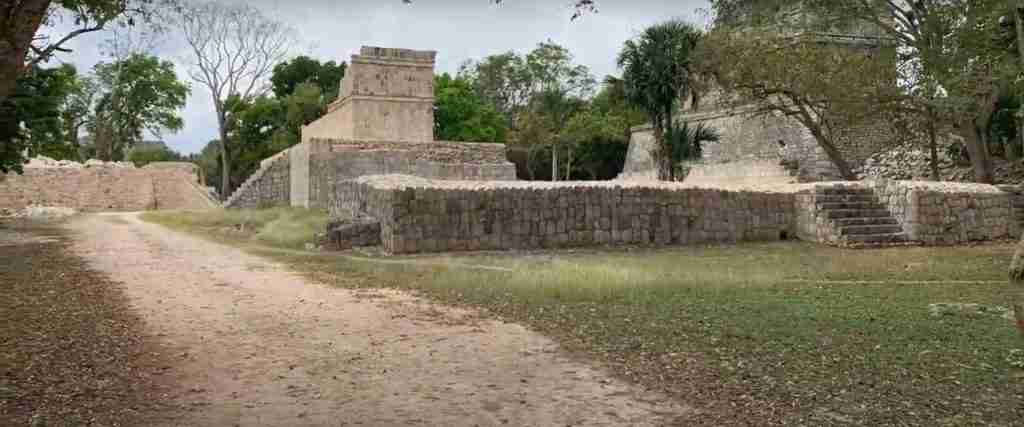
Chichen Itza’s Great Ball Court represents the largest known ball court in ancient Mesoamerica, measuring 554 feet long and 231 feet wide. Its massive scale and sophisticated acoustic properties demonstrate both the importance of the ball game in Maya society and the architectural expertise of its builders.
The court’s acoustical design allows whispers spoken at one end to be clearly heard at the opposite end, while normal conversation remains inaudible to listeners in the center. This acoustic phenomenon may have served practical purposes for ceremonial announcements or religious rituals performed during ball game competitions.
Relief carvings along the court walls depict ball game scenes with remarkable detail and artistic sophistication. These images show players wearing elaborate protective gear while manipulating a heavy rubber ball, providing visual evidence for the game’s rules and ceremonial significance.
The carvings also depict the aftermath of ball games, including scenes of human sacrifice that demonstrate the religious significance of these competitions. While scholars debate whether winners or losers were sacrificed, the images clearly show that ball games held life-and-death importance in Maya society.
Archaeological evidence suggests that the ball court served multiple functions beyond athletic competition. The structure may have hosted religious ceremonies, political gatherings, and theatrical performances that brought together large audiences from throughout the Maya region.
The Temple of the Warriors
The Temple of the Warriors complex demonstrates the architectural fusion that characterized Chichen Itza’s Toltec period. This massive structure combines Maya proportional systems with central Mexican stylistic elements, creating a unique architectural synthesis that influenced construction throughout Mesoamerica.
The temple’s most distinctive feature is its forest of carved columns depicting warriors in elaborate costumes and carrying various weapons. These columns originally supported a wooden roof system that created vast covered spaces unprecedented in earlier Maya architecture.
Each warrior column represents a unique individual with distinct costume details, facial features, and military equipment. The variation suggests that these images may represent actual historical figures rather than generic warrior types, providing visual records of military leadership during Chichen Itza’s imperial period.
The temple’s summit features a Chac Mool sculpture—a reclining figure holding a bowl that may have received hearts from sacrificial victims. This sculptural type originated in central Mexico but was adapted to Maya artistic traditions and religious practices at Chichen Itza.
Adjacent structures include the Group of a Thousand Columns, an extensive colonnade that may have served as a marketplace or administrative center. The scale of this construction demonstrates the economic prosperity and organizational capabilities of Chichen Itza during its golden age.
El Caracol: The Observatory
El Caracol, known as the Observatory, represents one of the most sophisticated examples of Maya astronomical architecture. This circular structure, unique among Maya buildings, was precisely designed to track celestial movements crucial for calendar calculations and agricultural planning.
The building’s name derives from its internal spiral staircase that winds upward like a snail shell. This staircase provides access to upper chambers with carefully positioned windows that frame specific astronomical events including Venus cycles, lunar extremes, and seasonal solar positions.
The observatory’s windows were precisely cut to observe particular celestial phenomena. Archaeological astronomers have identified alignments with Venus at its greatest elongations, the moon at its northernmost and southernmost rising points, and various star groups important to Maya religious and agricultural calendars.
The structure’s foundations reveal evidence for multiple construction phases, suggesting that Maya astronomers continuously refined their observations and improved the building’s astronomical capabilities. Each renovation incorporated new astronomical knowledge while maintaining the building’s primary observational functions.
Recent research has identified possible alignments with more subtle astronomical phenomena including the Pleiades star cluster and the Milky Way’s seasonal positions. These discoveries suggest that Maya astronomical knowledge was even more sophisticated than previously recognized by scholars.
Religion and Mythology at Chichen Itza
The Feathered Serpent: Kukulkan
Kukulkan, the feathered serpent deity known as Quetzalcoatl in central Mexico, became central to Chichen Itza’s religious life during the Toltec period. This deity represented the union of earth (serpent) and sky (feathered), embodying cosmic duality fundamental to Mesoamerican spiritual thought.
The deity appears throughout Chichen Itza’s Toltec-period architecture in various forms. Feathered serpent columns support temple doorways, serpent heads emerge from pyramid staircases, and relief carvings depict the deity’s mythological exploits and religious significance.
Maya creation mythology associated Kukulkan with wind, rain, and fertility—attributes essential for agricultural success in the Yucatan’s semi-arid environment. The deity’s festivals coincided with seasonal transitions and agricultural cycles, linking religious observance with practical economic activities.
Historical accounts suggest that the arrival of Kukulkan worship at Chichen Itza involved actual historical figures as well as mythological traditions. The ruler Ce Acatl Topiltzin Quetzalcoatl may have promoted the deity’s cult as part of his political and religious agenda during the Toltec transformation.
The integration of Kukulkan worship with existing Maya religious traditions created syncretic practices unique to Chichen Itza. The deity adopted attributes of Maya wind and rain gods while maintaining central Mexican associations with warfare and royal authority.
Sacred Cenotes and Water Worship
The Sacred Cenote remained central to Chichen Itza’s religious life throughout the city’s occupation. Archaeological investigations have revealed continuous use of this natural sinkhole for ceremonial purposes spanning over a millennium of Maya civilization.
Maya mythology identified cenotes as entrances to Xibalba, the underworld realm of gods and ancestors. These beliefs made the Sacred Cenote a place of particular spiritual power where humans could communicate directly with divine forces through offerings and sacrificial ceremonies.
Archaeological evidence demonstrates the variety of offerings deposited in the Sacred Cenote over the centuries. Precious materials including jade, gold, copper, and textiles were thrown into the water alongside copal incense, ceramic vessels, and human sacrifices designed to honor the rain gods.
The cenote’s religious significance extended beyond Chichen Itza itself. Colonial period accounts describe pilgrims traveling from throughout the Maya region to participate in ceremonies at this sacred location, suggesting that its spiritual importance transcended local political boundaries.
Recent underwater archaeological investigations have revealed previously unknown aspects of cenote ceremonies. Carved wooden sculptures, intact ceramic vessels, and preserved textile fragments provide new insights into Maya religious practices and artistic achievements.
Human Sacrifice and Ritual Practice
Human sacrifice at Chichen Itza served complex religious and political functions that extended far beyond simple bloodthirsty cruelty. These ceremonies reinforced social hierarchies, demonstrated divine favor, and maintained cosmic balance according to Maya religious beliefs.
Archaeological evidence indicates multiple forms of sacrificial practice at Chichen Itza. Heart extraction atop pyramid temples provided the most dramatic ceremonies, while drowning victims in the Sacred Cenote honored rain gods, and ritual decapitation in ball courts symbolized agricultural fertility.
Recent DNA analysis of sacrificial victims has challenged earlier assumptions about these practices. Scientific evidence indicates that most victims were young males from local populations rather than the foreign captives or young women suggested by some historical accounts.
The discovery of identical twins among sacrificial victims suggests that ritual requirements sometimes demanded specific types of offerings. Maya mythology associated twins with divine heroes, making them particularly appropriate sacrifices for certain ceremonial occasions.
Sacrificial ceremonies served political as well as religious purposes. Public rituals demonstrated royal power while providing spectacular entertainment that reinforced social bonds and political loyalty among Chichen Itza’s diverse population.
Art and Culture in the Mayan Capital
Sculptural Achievements
Chichen Itza’s sculptural tradition represents one of the high points of Mesoamerican artistic achievement. The city’s stone carvers created works that combined Maya traditions with new stylistic elements from central Mexico, producing art of unprecedented sophistication and beauty.
Relief carvings throughout the city depict historical events, religious ceremonies, and mythological scenes with remarkable detail and artistic mastery. These works provide visual records of Maya life while demonstrating the aesthetic sensibilities that characterized the civilization’s cultural achievements.
The Platform of Skulls features hundreds of carved skulls arranged in intricate patterns that create powerful visual effects. This monument demonstrates both artistic skill and the central role of death imagery in Maya religious and political symbolism.
Three-dimensional sculptures including Chac Mool figures and warrior statues reveal sophisticated understanding of human anatomy and artistic proportion. These works combine realistic representation with symbolic elements that conveyed complex religious and political messages to contemporary viewers.
Architectural sculpture integrated seamlessly with building design, creating unified aesthetic experiences that enhanced the religious and ceremonial functions of major structures. Serpent columns, warrior reliefs, and geometric patterns transformed architecture into comprehensive artistic statements.
Ceramic Arts and Craft Production
Chichen Itza’s ceramic tradition evolved continuously throughout the city’s occupation, incorporating new techniques and decorative styles that reflected changing cultural influences and artistic preferences. Local potters produced both utilitarian vessels for daily use and elaborate ceremonial pieces for religious rituals.
Fine Orange ceramics represent one of Chichen Itza’s most distinctive pottery traditions. These vessels feature sophisticated slip techniques and complex iconographic programs that demonstrate both technical skill and artistic sophistication.
Plumbate pottery, characterized by its metallic luster and distinctive decorative motifs, shows influences from Pacific coastal regions and demonstrates the extensive trade networks that connected Chichen Itza with distant areas of Mesoamerica.
Figurine production included both solid and hollow ceramic sculptures depicting humans, animals, and supernatural beings. These small-scale works provide insights into Maya religious beliefs and daily life while demonstrating the artistic abilities of local craftspeople.
Polychrome vessels featuring complex painted scenes represent the pinnacle of Maya ceramic achievement. These works combine narrative content with aesthetic sophistication, creating objects that functioned both as practical containers and as vehicles for artistic expression.
Textile Arts and Personal Adornment
Although few ancient textiles survive from Chichen Itza due to climate conditions, archaeological evidence and artistic representations provide insights into sophisticated textile traditions that rivaled any contemporary civilization.
Cotton cultivation and processing reached industrial scales during Chichen Itza’s golden age. Archaeological evidence includes specialized tools for spinning and weaving, while artistic depictions show the elaborate costumes worn by nobility and religious officials.
Dye technology employed both local and imported materials to create vivid colors prized throughout Mesoamerica. Maya Blue, a distinctive pigment combining indigo dye with local clays, represents one of the most sophisticated color technologies developed in ancient America.
Personal adornment emphasized jade ornaments, shell jewelry, and feathered accessories that demonstrated wealth and social status. Archaeological discoveries include elaborate ear ornaments, necklaces, and headdresses that reveal Maya aesthetic preferences and symbolic associations.
Tattooing and body modification served both decorative and religious purposes. Artistic representations show elaborate body decorations that identified social status, religious affiliation, and cultural identity within Maya society.
The Legacy of Chichen Itza
Influence on Later Maya Culture
Chichen Itza’s cultural influence extended far beyond its political decline and abandonment. The city’s architectural innovations, artistic styles, and religious practices continued to influence Maya civilization throughout the Postclassic period and into the colonial era.
Later Maya cities throughout the Yucatan Peninsula adopted architectural elements pioneered at Chichen Itza. Serpent columns, warrior imagery, and astronomical alignments became standard features of Maya architecture, demonstrating the lasting impact of Chichen Itza’s cultural innovations.
Religious practices associated with the feathered serpent deity spread throughout the Maya region following Chichen Itza’s prominence. Kukulkan worship became integral to Maya religious life, influencing ceremonies and mythological traditions that survived into the colonial period.
The site retained religious significance for Maya communities long after its political abandonment. Colonial period accounts describe continued pilgrimages and ceremonies at Chichen Itza, suggesting that its spiritual importance transcended temporal political changes.
Knowledge traditions associated with Chichen Itza influenced later Maya intellectual achievements. Astronomical observations, calendar calculations, and architectural techniques developed at the city contributed to the broader development of Maya science and technology.
Modern Cultural Impact
Today, Chichen Itza serves as one of Mexico’s most important cultural symbols and tourist destinations. The site attracts over 2.6 million visitors annually, making it one of the most visited archaeological sites in the world and a major contributor to regional economic development.
The designation of Chichen Itza as a UNESCO World Heritage Site in 1988 recognized its universal cultural value and established international frameworks for its preservation and study. This status has enhanced global awareness of Maya achievements while providing resources for conservation efforts.
In 2007, Chichen Itza’s selection as one of the New Seven Wonders of the World through a global internet poll brought unprecedented international attention to the site. While the methodology of this selection was criticized by archaeologists, it significantly increased tourism and cultural awareness.
The site serves as a focal point for Maya cultural revival movements throughout Mexico and Central America. Indigenous communities use Chichen Itza as a symbol of their ancestral achievements and cultural continuity, promoting pride in Maya heritage and identity.
Educational programs at Chichen Itza reach millions of visitors annually, providing insights into Maya civilization that challenge stereotypes about indigenous American societies. These programs demonstrate Maya achievements in architecture, astronomy, mathematics, and other fields while promoting cultural understanding and appreciation.
Archaeological Significance
Chichen Itza remains one of the most important archaeological sites for understanding ancient American civilizations. Ongoing research continues to reveal new information about Maya society, culture, and history that influences scholarly understanding throughout Mesoamerica.
The site provides crucial evidence for cultural interaction between Maya and central Mexican civilizations. The architectural and artistic synthesis at Chichen Itza offers insights into how ancient societies adapted foreign influences while maintaining cultural identity and continuity.
Recent archaeological discoveries at Chichen Itza employ cutting-edge techniques that advance methodology throughout the discipline. Ground-penetrating radar, underwater archaeology, and DNA analysis pioneer approaches that influence archaeological research worldwide.
The site serves as a training ground for Mexican and international archaeologists, providing educational opportunities that develop expertise in Maya archaeology and cultural preservation. These programs ensure continued research capacity while building international collaboration.
Conservation challenges at Chichen Itza require innovative solutions that balance preservation needs with tourism pressures and climate change impacts. Successful approaches developed at the site influence cultural heritage management throughout Latin America and beyond.
Conclusion: Echoes of Ancient Grandeur
The story of Chichen Itza encompasses far more than the rise and fall of a single Maya city. It represents the remarkable achievements of a civilization that created one of the world’s most sophisticated urban centers in the heart of tropical America, demonstrating human ingenuity, cultural adaptation, and artistic expression that continues to inspire admiration over a millennium after its golden age.
From its humble origins as a ceremonial center around sacred cenotes to its emergence as a regional superpower controlling vast territories, Chichen Itza’s history reveals the dynamic nature of ancient American civilizations. The city’s ability to synthesize Maya traditions with Toltec innovations created something unprecedented in Mesoamerican history—a hybrid culture that transcended ethnic boundaries while achieving architectural and artistic greatness.
The archaeological evidence from Chichen Itza challenges many assumptions about pre-Columbian America. The city’s sophisticated urban planning, advanced astronomical knowledge, and complex political systems demonstrate that indigenous American societies achieved levels of civilization that rivaled contemporary developments in Europe and Asia. The Maya’s mathematical innovations, architectural achievements, and artistic sophistication represent independent cultural developments that expand our understanding of human potential and creativity.
Yet Chichen Itza’s ultimate abandonment also provides sobering lessons about civilizational fragility. Environmental pressures, political conflicts, and social stress combined to end what had seemed like an unstoppable imperial expansion. The city’s decline reminds us that even the most sophisticated societies remain vulnerable to forces beyond their control, making cultural preservation and historical understanding crucial for contemporary civilizations.
Today, as millions of visitors walk through Chichen Itza’s ancient plazas and climb its restored pyramids, they encounter more than impressive ruins. They experience direct connections to human ancestors who grappled with challenges similar to those facing modern societies: environmental sustainability, political cooperation, cultural diversity, and social justice. The Maya’s achievements and failures offer insights relevant to contemporary global challenges.
The ongoing archaeological investigation of Chichen Itza continues to reveal new information about Maya civilization while developing methodologies that advance our understanding of ancient societies worldwide. Each new discovery adds pieces to the complex puzzle of human cultural development, demonstrating that Chichen Itza’s importance extends far beyond its role as a tourist destination or symbol of Mexican national heritage.
Perhaps most importantly, Chichen Itza serves as a testament to the enduring power of human creativity and cultural achievement. The vision that motivated its builders—to create sacred spaces that connected earth and sky, to build structures that would endure across centuries, to synthesize diverse traditions into unified cultural expressions—continues to inspire architects, artists, and cultural leaders today.
The feathered serpent still descends El Castillo’s stairs each equinox, the Sacred Cenote still reflects clouds and stars as it did for ancient pilgrims, and the Great Ball Court still echoes with whispers that span the centuries. In these enduring monuments, we find not just the remnants of a vanished civilization, but living connections to the human spirit that built them—ambitious, creative, and eternally reaching toward something greater than itself.
As we face our own civilizational challenges in the 21st century, Chichen Itza reminds us that human societies can achieve greatness through cultural synthesis, technological innovation, and artistic vision. The Maya capital’s legacy lies not just in its stones and carvings, but in its demonstration that human imagination, guided by spiritual purpose and sustained by social cooperation, can create works that transcend time itself and speak across the millennia to future generations seeking wisdom, inspiration, and hope.