
Chichen Itza Photography Guide: Best Shots, Camera Settings & Pro Tips
Capturing stunning photographs at Chichen Itza requires more than just pointing and shooting at the iconic El Castillo pyramid. As one of the New Seven Wonders of the World and Mexico’s most photographed archaeological site, this ancient Mayan city presents unique challenges and extraordinary opportunities for photographers. From navigating equipment restrictions to mastering the perfect lighting conditions, our comprehensive photography guide reveals the insider secrets for creating breathtaking images that showcase the mystical beauty of this UNESCO World Heritage Site.
Essential Photography Information
| Photography Aspect | Details | Pro Tips |
|---|---|---|
| Best Lighting | Sunrise (6:30-8:30 AM)<br>Golden Hour (4:30-6:00 PM) | Early access tours essential |
| Equipment Allowed | DSLR cameras with fee ($5 USD)<br>Smartphones (free) | No tripods without permit |
| Crowd Avoidance | Before 9:00 AM<br>After 3:00 PM | Photography tours recommended |
| Special Events | Equinox (March 21, Sept 21)<br>Night shows (7:00 PM) | Book 6 months in advance |
Best Photography Spots at Chichen Itza
El Castillo (Temple of Kukulcán) – The Iconic Shot
El Castillo, the towering 79-foot pyramid at the heart of Chichen Itza, is a sight to behold. Its symmetrical design, steep steps, and intricate stone carvings make it a favorite among photographers. The Temple of Kukulcán is one of the most iconic viewpoints in all of Mexico and forms the centerpiece of virtually every Chichen Itza photograph.
Best Shooting Positions:
- Northwest View: Classic postcard angle with perfect pyramid symmetry
- Great Ball Court Perspective: Dramatic low-angle shots emphasizing height
- Platform of Venus: Elevated position for compositional variety
- Temple of Warriors View: Side angle highlighting architectural details
Camera Settings for El Castillo:
- Aperture: f/8-f/11 for sharp foreground and background
- ISO: 100-400 in good light, up to 1600 for dawn/dusk
- Shutter Speed: 1/125s minimum for handheld stability
- Focus: Hyperfocal distance for maximum sharpness
The Great Ball Court – Dramatic Perspectives
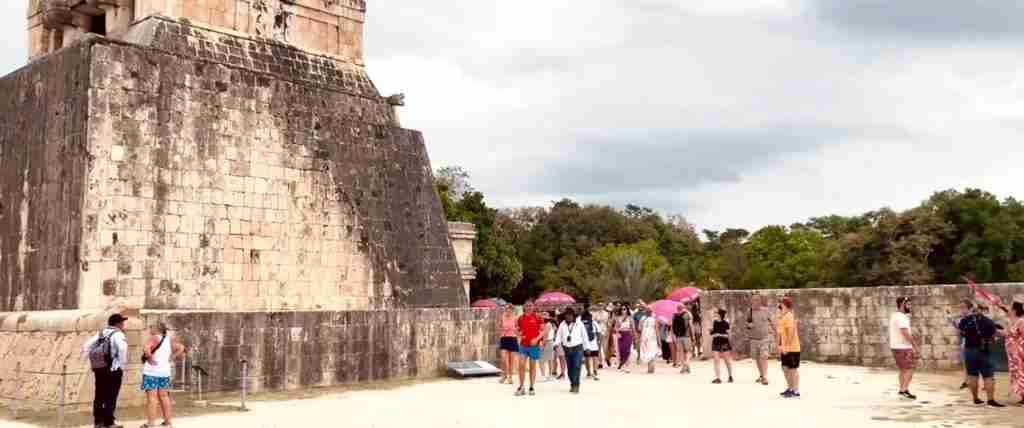
The Great Ball Court, with its colossal walls and stone rings, presents an impressive backdrop for powerful and dramatic photographs. As the largest ball court in Mesoamerica, it offers unique compositional opportunities that highlight the engineering prowess of the ancient Maya.
Photography Techniques:
- Symmetry Shots: Center yourself for balanced compositions
- Leading Lines: Use the court’s walls to guide the viewer’s eye
- Scale Photography: Include people to show massive proportions
- Detail Work: Focus on intricate wall carvings and stone rings
Temple of Warriors – Architectural Details
The Temple of Warriors, with its columns adorned by stone warriors, offers a unique opportunity for close-up shots. The intricate details of the carvings, including feathered serpents and warriors in full regalia, provide excellent subjects for capturing the artistry of the Mayan civilization.
Detail Photography Tips:
- Macro Compositions: Focus on individual carved elements
- Pattern Recognition: Capture repetitive column designs
- Texture Emphasis: Use side lighting to reveal stone textures
- Historical Context: Include multiple warriors in single frame
El Caracol Observatory – Unique Compositions
El Caracol, the observatory of Chichen Itza, is not only architecturally intriguing but also offers opportunities for unique compositions. Its circular design and astronomical significance make it perfect for creative photography approaches.
Extended multi-day tours – 5+ days
Featured Chichen Itza Multi-Day Tour Packages

3 days
Chichen Itza 3-Day Discovery Tour
- ✓ Comprehensive Chichen Itza experience
- ✓ Expert local guides included
- ✓ All accommodation included
- ✓ Transportation provided

5 days
Chichen Itza 5-Day Highlights Experience
- ✓ Comprehensive Chichen Itza experience
- ✓ Expert local guides included
- ✓ All accommodation included
- ✓ Transportation provided
7 days
Chichen Itza 7-Day Cultural Journey
- ✓ Comprehensive Chichen Itza experience
- ✓ Expert local guides included
- ✓ All accommodation included
- ✓ Transportation provided
10 days
Chichen Itza 10-Day Complete Adventure
- ✓ Comprehensive Chichen Itza experience
- ✓ Expert local guides included
- ✓ All accommodation included
- ✓ Transportation provided
Multi-day tour packages powered by TourRadar. Prices and availability subject to change.
Optimal Lighting Conditions
Golden Hour Magic (First Hour After Sunrise)
Capturing the play of light and shadows as the sun moves across the pyramid adds depth and drama to your shots. The interplay of light and shadows at Chichen Itza creates a magical ambiance that adds depth and dimension to your photographs.
Sunrise Photography Schedule:
- 6:00 AM: Arrive with early access tours
- 6:30 AM: Begin blue hour photography
- 7:00 AM: Sunrise illumination starts
- 7:30-8:30 AM: Optimal golden hour lighting
- 9:00 AM: Crowds arrive, lighting becomes harsh
Late Afternoon Golden Light
The afternoon light, especially in the last hour before sunset, provides warm, directional illumination that enhances the honey-colored limestone of the ancient structures.
Afternoon Photography Benefits:
- Fewer crowds after 3:00 PM tour departures
- Dramatic shadow play on pyramid steps
- Enhanced texture in stone carvings
- Warm color temperature for mood
Equinox Phenomenon – Special Event Photography
Photographers often seek special dates like the Equinox where natural phenomena form unique shadows. During the spring and autumn equinoxes (March 21 and September 21), the setting sun creates the illusion of Kukulcán, the feathered serpent, descending the pyramid’s stairs.
Equinox Photography Strategy:
- Arrival Time: 3:00 PM for optimal positioning
- Shadow Formation: Begins around 4:30 PM
- Peak Effect: 5:00-5:30 PM
- Equipment: Telephoto lens to compress perspective
- Booking: Reserve tours 6 months in advance
Camera Equipment and Settings
Recommended Gear for Chichen Itza
Camera Bodies:
- DSLR/Mirrorless: Full-frame preferred for low light
- High ISO Performance: Sony a7III, Canon R6, Nikon Z6
- Weather Sealing: Protection against humidity and rain
- Backup Body: Recommended for important shoots
Essential Lenses:
- Wide-Angle (16-35mm): For expansive pyramid shots
- Standard Zoom (24-70mm): Versatile for most compositions
- Telephoto (70-200mm): Detail work and compression effects
- Macro (100mm): For intricate stone carvings
Important Equipment Restrictions:
- Tripods: Not allowed without expensive INAH permit
- Selfie Sticks: Prohibited throughout the site
- Professional Permits: Required for commercial work
- Camera Fee: $5 USD for DSLR cameras
Handheld Photography Techniques
Since tripods are not permitted without special permits, mastering handheld photography becomes essential for sharp images at Chichen Itza.
Stability Techniques:
- Proper Stance: Feet shoulder-width apart, elbows tucked
- Breathing Control: Shoot at the bottom of your exhale
- Image Stabilization: Use in-body or lens stabilization
- Shutter Speed Rule: 1/focal length minimum
- Burst Mode: Take multiple shots for sharpest selection
Low Light Photography Without Tripods
Hand-held photography at night can be a challenge but the right settings with high ISO can compensate for shaky hands. Modern cameras like the Sony a7III perform exceptionally well in low light situations.
Night Photography Settings:
- ISO: 1600-6400 depending on camera capability
- Aperture: f/2.8-f/4 for maximum light gathering
- Shutter Speed: 1/60s-1/125s for handheld stability
- Focus: Manual focus using live view magnification
Composition Techniques for Ancient Architecture
Rule of Thirds and Beyond
Experiment with different angles, perspectives, and compositions to create visually engaging photographs. Capture the grandeur and scale of the structures, focus on intricate details, or frame shots creatively to tell a story.
Compositional Strategies:
- Foreground Interest: Use carved serpent heads or stone platforms
- Leading Lines: Pyramid steps guide eye to summit
- Framing: Use doorways and arches to frame distant structures
- Symmetry: Center compositions for formal, balanced feel
- Asymmetry: Off-center placement for dynamic energy
Capturing Scale and Grandeur
Including people in your compositions provides context for the massive scale of these ancient structures while adding human interest to your photographs.
Scale Photography Tips:
- Human Elements: Include visitors for size reference
- Wide Perspectives: Step back to show entire structures
- Low Angles: Shoot from ground level to emphasize height
- Multiple Structures: Show relationship between buildings
Specialized Photography Opportunities
Cenote Photography Near Chichen Itza
Chichen Itza is surrounded by cenotes, natural sinkholes with crystal-clear waters that provide unique photographic opportunities combining archaeological and natural elements.
Popular Cenotes for Photography:
- Cenote Ik Kil: Dramatic circular opening with hanging vines
- Cenote Suytun: Famous light beam effects
- Sacred Cenote at Chichen Itza: Historical significance
- Cenote Saamal: Less crowded, intimate atmosphere
Cenote Photography Techniques:
- Light Beams: Visit midday for dramatic sunlight penetration
- Underwater Shots: Waterproof housing for submerged perspectives
- Reflection Photography: Still water surface mirrors
- Wide Angle: Capture entire cenote opening
Night Photography and Light Shows
If possible, attend the light show at night. It’s a mesmerizing experience that allows you to see Chichen Itza under a starry sky with dramatic colored illumination of the pyramid.
Night Show Photography:
- Timing: Shows typically start at 7:00 PM
- Settings: High ISO (3200-6400), wide aperture
- Stability: Brace against walls or use solid surfaces
- Color Balance: Adjust white balance for artificial lighting
- Multiple Exposures: Capture different lighting phases
Photography Tours and Workshops
Early Access Photography Tours
These are perfect for photographers looking to capture the temples at sunrise, with no one else around. They need to be booked in advance, or as part of a limited early morning sunrise tour.
Photography Tour Benefits:
- Exclusive Access: Entry before general public
- Expert Guides: Local knowledge of best angles
- Optimal Timing: Coordinated for perfect lighting
- Group Size: Limited numbers for unobstructed shots
- Equipment Support: Help with settings and techniques
Specialized Photography Workshops
While Chichen Itza does not offer official photography tours or workshops, many local tour operators and guides are well-versed in the best photography spots and techniques at the site.
What Professional Guides Offer:
- Historical context for meaningful compositions
- Knowledge of restricted and accessible areas
- Timing advice for optimal lighting conditions
- Cultural sensitivity guidance
- Technical photography assistance
Creative Photography Techniques
Sunburst and Starburst Effects
There are a few important things to be mindful of when shooting starbursts around the pyramid structures. Capturing the perfect sunburst can compensate for the midday photography blues when harsh lighting usually prevents quality shots.
Starburst Technique:
- Aperture: f/16-f/22 for pronounced star effects
- Positioning: Partially hide sun behind pyramid edges
- Lens Choice: Wide-angle lenses create better starbursts
- Timing: When sun is at proper angle to pyramid
Black and White Photography
The dramatic contrast and textures of Chichen Itza’s limestone structures lend themselves beautifully to monochrome photography.
B&W Processing Tips:
- Contrast Enhancement: Emphasize texture in ancient stones
- Shadow Detail: Preserve information in dark areas
- Dramatic Skies: Use polarizing filter effect in post
- Timeless Feel: Remove color distractions
Panoramic Photography
Create sweeping panoramic images that capture the full scope of this ancient city and its relationship to the surrounding jungle landscape.
Panorama Techniques:
- Overlap: 30-50% overlap between frames
- Manual Settings: Lock exposure, focus, and white balance
- Tripod Alternative: Use landmarks for alignment
- Vertical Orientation: Capture more sky and foreground
Crowd Management for Photography
Strategic Timing
The best solution to crowd problems involves timing. If you can swing it with your schedule, don’t settle for the day trip – make a two-day excursion out of Chichen Itza for optimal photography opportunities.
Crowd Avoidance Schedule:
- 8:00 AM: Gates open, minimal crowds
- 9:30-10:00 AM: Tour buses begin arriving
- 10:00 AM-3:00 PM: Peak crowding period
- 3:00-5:00 PM: Tours depart, crowds thin
- Late afternoon: Best lighting with fewer people
Patience and Persistence
Remember, you may not get the kind of photos you were hoping for immediately, but persistence pays off. Wait for crowd movements, gaps in tour groups, and natural breaks in foot traffic.
Crowd Photography Strategies:
- Multiple Attempts: Take several shots of same composition
- Long Exposures: Blur moving people (if tripod permitted)
- Selective Focus: Use shallow depth of field
- Alternative Angles: Find less popular viewpoints
- Post-Processing: Clone out unwanted elements
Post-Processing for Chichen Itza Photography
Essential Editing Techniques
Enhance your Chichen Itza photographs with targeted post-processing that emphasizes the drama and mystery of this ancient site.
Key Adjustments:
- Contrast Enhancement: Increase local contrast for texture
- Shadow Recovery: Reveal details in dark stone areas
- Highlight Protection: Prevent blown-out sky areas
- Color Grading: Enhance warm limestone tones
- Clarity/Structure: Emphasize ancient stone textures
Removing Unwanted Elements
There’s always Photoshop for removing the odd tourist from your photograph. With a steady hand and just a little practice, removing unwanted elements becomes straightforward.
Clean-up Techniques:
- Clone Stamp Tool: Remove people and modern objects
- Content-Aware Fill: Automatically replace unwanted areas
- Healing Brush: Seamlessly blend corrections
- Crop Strategy: Eliminate distracting edges
Cultural Sensitivity and Photography Ethics
Respecting the Sacred Site
Respect for the Site and Culture: Chichen Itza is a sacred site with deep cultural and historical significance. Respect the rules, signage, and roped-off areas to preserve the integrity of the site and show reverence for the ancient civilization.
Ethical Photography Guidelines:
- No Climbing: Never climb on restricted structures
- Barrier Respect: Stay behind all protective barriers
- Guide Instructions: Follow all guide directions
- Quiet Behavior: Maintain respectful silence
- Local Peoples: Ask permission before photographing individuals
Supporting Conservation Through Photography
Use your photography to support conservation efforts and cultural preservation of this UNESCO World Heritage Site.
Conservation Support:
- Share educational content about Mayan heritage
- Promote responsible tourism practices
- Highlight preservation efforts in your captions
- Support local guide services and communities
Photography Tour Booking and Preparation
When to Book Photography Tours
For the best photography experience, especially during special events like the equinox, advance booking is essential.
Booking Timeline:
- Equinox Tours: 6 months in advance
- Early Access Tours: 2-3 months ahead
- Peak Season: Book 1-2 months early
- Low Season: 2-3 weeks sufficient
What to Bring for Photography
Photography Essentials:
- Camera Equipment: Body, lenses, memory cards, batteries
- Weather Protection: Rain covers, lens cloths
- Comfort Items: Comfortable shoes, sun hat
- Backup Power: Portable battery packs
- Documentation: Permits if professional
Prohibited Items:
- Tripods (without permit)
- Selfie sticks
- Drones
- Professional lighting equipment
Sharing Your Chichen Itza Photography
Social Media and Digital Platforms
After capturing your photographic journey through Chichen Itza, it’s time to share your experiences with the world. Share your photographs on social media platforms, photography communities, or your personal blog.
Sharing Best Practices:
- Storytelling: Provide context and historical insights
- Technical Details: Share camera settings for learning
- Cultural Education: Include Mayan civilization facts
- Conservation Messages: Promote site preservation
- Visit Inspiration: Encourage responsible tourism
Conclusion: Mastering Chichen Itza Photography
Photographing Chichen Itza successfully requires careful planning, technical skill, and deep respect for this sacred site. Whether you’re capturing the iconic silhouette of El Castillo during golden hour, documenting the intricate stone carvings of the Temple of Warriors, or witnessing the magical serpent shadow during the equinox, each photograph becomes a bridge connecting ancient Mayan wisdom with modern artistic expression.
Remember that the most compelling Chichen Itza photographs go beyond mere documentation – they capture the mystery, spirituality, and architectural genius that has captivated visitors for over a millennium. By following these techniques, respecting the cultural significance of the site, and bringing patience and creativity to your photography, you’ll return home with images that truly honor this extraordinary testament to human achievement.
The key to exceptional Chichen Itza photography lies in preparation, persistence, and reverence. Book your early access photography tour, master your handheld techniques, and prepare to capture some of the most iconic architectural photography subjects in the world. Your camera will thank you, and your viewers will be transported to this magical place where ancient astronomy, architecture, and artistry converge in perfect harmony.