Château d’Amboise: Leonardo da Vinci’s Final Home
Key Takeaways
- Château d’Amboise served as Leonardo da Vinci’s final residence from 1516 until his death in 1519, connected to the royal château by an underground passage from Clos Lucé
- The château represents nine centuries of French royal history, from medieval fortress to Renaissance palace, with architectural evolution reflecting major periods of French architecture
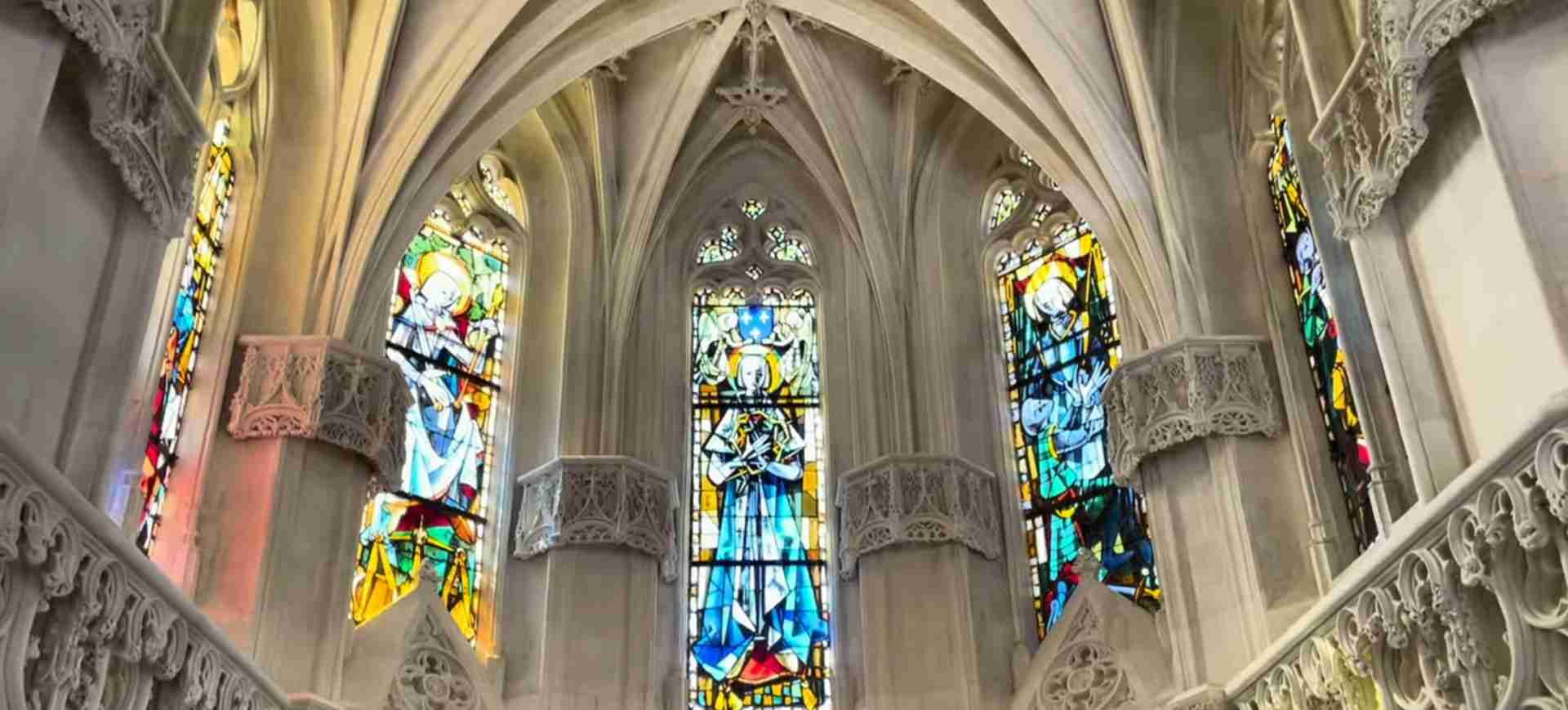
- Charles VIII’s Gothic-Renaissance transformation created the Chapel of Saint-Hubert, Leonardo da Vinci’s final resting place featuring exceptional stained glass and carved details
- The royal apartments showcase authentic 15th and 16th-century furnishings, offering insight into Renaissance royal court life during the château’s golden age
- Panoramic terraces provide commanding views over the Loire River and the historic town of Amboise, demonstrating the château’s strategic medieval military importance
- UNESCO World Heritage recognition as part of the Loire Valley acknowledges the château’s exceptional cultural significance in French Renaissance history and European royal heritage
Introduction: Royal Splendor and Renaissance Genius
Château d’Amboise rises majestically above the Loire River, its towers and ramparts dominating the skyline of one of France’s most historically significant towns. This royal residence claims a unique distinction among Loire Valley châteaux: it served as the final home of Leonardo da Vinci, the Renaissance master who spent his last three years under the protection of King Francis I. The connection between French royalty and Italian genius transformed Amboise into a cultural crossroads where medieval military architecture met Renaissance artistic innovation.
The château’s history spans nearly a millennium, from its origins as a medieval fortress to its transformation into a Renaissance palace that housed French kings and witnessed pivotal moments in French history. Walking through the royal apartments, the Chapel of Saint-Hubert, and the Renaissance gardens reveals layers of architectural evolution and royal patronage that shaped French cultural identity. The château stands as both a monument to royal power and a testament to the intellectual exchange between France and Italy during the Renaissance.
Understanding Château d’Amboise requires appreciating its dual nature: a fortress that controlled the Loire Valley and a palace that nurtured artistic genius. The underground passage connecting the château to Leonardo’s residence at Clos Lucé symbolizes the intimate relationship between royal patronage and Renaissance creativity. This educational guide explores the château’s complete history, architectural significance, cultural impact, and enduring legacy as Leonardo da Vinci’s final sanctuary.
People Also Ask About Château d’Amboise
Why did Leonardo da Vinci choose Château d’Amboise for his final years?
Leonardo da Vinci accepted King Francis I’s invitation to Amboise in 1516 because the French monarch offered him unparalleled conditions for his twilight years. Francis I provided Leonardo with a generous pension, the elegant manor house of Clos Lucé adjacent to the royal château, and complete freedom to think, create, and pursue intellectual projects without the obligation to produce specific works. The king valued Leonardo’s genius and sought his counsel on architectural projects, court festivities, and engineering challenges rather than demanding paintings or sculptures.
The invitation came at a strategic moment in Leonardo’s life. After years of political instability in Italy and complex relationships with demanding patrons, the 64-year-old master found in Francis I a patron who appreciated his multifaceted genius rather than treating him merely as a craftsman. The underground passage connecting Clos Lucé to the royal château enabled frequent conversations between the aging polymath and the young king, who viewed Leonardo as a mentor and intellectual companion. Francis I famously called Leonardo “mon père” (my father), reflecting the depth of their relationship.
Amboise offered Leonardo practical advantages beyond royal patronage. The Loire Valley’s mild climate suited his aging health, the château’s intellectual environment welcomed his diverse interests in engineering and natural philosophy, and the distance from Italian political intrigue allowed him to work without interference. Leonardo brought his most treasured possessions to France, including the Mona Lisa, Saint John the Baptist, and the Virgin and Child with Saint Anne, demonstrating his intention to make Amboise his permanent home.
What makes Château d’Amboise architecturally significant?
Château d’Amboise exemplifies the architectural transition from medieval fortress to Renaissance palace, preserving elements from both periods within a single monument. The château’s massive circular Tour des Minimes and Tour Heurtault demonstrate advanced medieval military engineering, with internal spiral ramps wide enough for horses and carriages to reach the upper levels. These towers represent innovative solutions to the logistical challenges of fortified residences, combining defensive strength with practical functionality.
Charles VIII’s late 15th-century renovations introduced Italian Renaissance architectural elements to France, making Amboise one of the earliest examples of Renaissance style north of the Alps. The king brought Italian craftsmen and architects to transform the medieval fortress into a palatial residence featuring Renaissance proportions, decorative details, and spatial concepts. The Logis du Roi (King’s Lodging) showcases this fusion, with Gothic structural elements supporting Renaissance decorative programs.
The Chapel of Saint-Hubert stands as the château’s architectural masterpiece, combining Flamboyant Gothic structure with Renaissance decorative elements. The chapel’s exterior features extraordinarily detailed stone carving depicting hunting scenes and religious imagery, while the interior preserves exceptional stained glass windows and carved wooden choir stalls. The building’s small scale and exquisite craftsmanship demonstrate the attention to artistic quality that characterized the château during its Renaissance transformation.
Where is Leonardo da Vinci buried at Château d’Amboise?
Leonardo da Vinci rests in the Chapel of Saint-Hubert, the exquisite Gothic chapel perched on the château’s ramparts overlooking the Loire River. When Leonardo died at Clos Lucé on May 2, 1519, his will specified burial in the collegiate church of Saint-Florentin within the château grounds. The chapel, dedicated to Saint Hubert, the patron saint of hunters, was built by Charles VIII and completed shortly before the king’s death in 1498. Leonardo’s remains were transferred to this chapel after the revolutionary period destroyed the original church of Saint-Florentin.
The current tomb, installed in the 19th century, bears a simple inscription identifying Leonardo and the dates of his life. Archaeological research and historical records confirm the authenticity of the remains interred in the chapel, though the exact location of his original burial site was lost during the French Revolution when many royal and religious monuments suffered destruction or desecration. The chapel’s intimate scale and artistic beauty create an appropriate final resting place for the Renaissance master who spent his last years in the shadow of the royal château.
Visiting Leonardo’s tomb connects visitors to the physical presence of Renaissance genius in a setting that reflects the cultural exchange between France and Italy. The chapel’s stained glass windows filter colored light across the stone floor, the carved hunting scenes on the exterior walls demonstrate Flamboyant Gothic mastery, and the panoramic views from the chapel terrace encompass the landscape Leonardo knew during his final years. The tomb has become a pilgrimage site for those honoring Leonardo’s contributions to art, science, and human knowledge.
What role did Château d’Amboise play in French royal history?
Château d’Amboise served as a principal royal residence during the late 15th and early 16th centuries, hosting French kings during the Loire Valley’s golden age as the center of royal power. Charles VIII was born at Amboise in 1470 and launched the château’s transformation from fortress to palace after returning from his Italian campaigns inspired by Renaissance architecture. The château witnessed his tragic death in 1498 when the king struck his head on a low doorway, dying hours later at age 27.
Francis I spent much of his childhood at Amboise and maintained deep emotional connections to the château throughout his reign. His invitation to Leonardo da Vinci transformed Amboise into an intellectual center where Renaissance ideas flourished under royal patronage. The château hosted elaborate festivals, diplomatic receptions, and cultural events that showcased French royal magnificence and attracted Italian artists, musicians, and scholars to the French court.
The château also witnessed darker moments in French history, including the Amboise Conspiracy of 1560 when Protestant reformers attempted to seize the young King Francis II. The brutal suppression of this plot, with executions carried out on the château’s balconies and in the town below, marked a turning point in French religious wars. These contrasting episodes of cultural flowering and political violence illustrate Amboise’s central role in the dramatic events that shaped Renaissance and Reformation France.
Extended multi-day tours – 5+ days
Featured Loire Valley Multi-Day Tour Packages
3 days
Loire Valley 3-Day Discovery Tour
- ✓ Comprehensive Loire Valley experience
- ✓ Expert local guides included
- ✓ All accommodation included
- ✓ Transportation provided

5 days
Loire Valley 5-Day Highlights Experience
- ✓ Comprehensive Loire Valley experience
- ✓ Expert local guides included
- ✓ All accommodation included
- ✓ Transportation provided

7 days
Loire Valley 7-Day Cultural Journey
- ✓ Comprehensive Loire Valley experience
- ✓ Expert local guides included
- ✓ All accommodation included
- ✓ Transportation provided
10 days
Loire Valley 10-Day Complete Adventure
- ✓ Comprehensive Loire Valley experience
- ✓ Expert local guides included
- ✓ All accommodation included
- ✓ Transportation provided
Multi-day tour packages powered by TourRadar. Prices and availability subject to change.
Historical Background: Nine Centuries of Royal Power
The strategic promontory overlooking the Loire River attracted fortification as early as the Gallo-Roman period, though the first documented fortress at Amboise dates to the 10th century when the Counts of Anjou controlled the territory. Medieval chronicles record Amboise as a powerful stronghold commanding the river crossing and the road network connecting northern and southern France. The fortress changed hands repeatedly during feudal conflicts, its military importance growing with the consolidation of royal power.
The château entered royal possession in 1434 when Charles VII confiscated it from Louis d’Amboise after the nobleman’s involvement in aristocratic plots against royal authority. This confiscation marked a turning point in the château’s history, transforming it from a feudal fortress into a crown property that would host French kings for more than a century. Charles VII’s son, the future Louis XI, knew the château well, having been imprisoned there briefly during his rebellious youth.
Charles VIII’s reign (1483-1498) initiated Amboise’s golden age. The young king, returning from his Italian campaigns deeply impressed by Renaissance art and architecture, determined to transform his childhood home into a palace rivaling the splendors he had witnessed in Naples and Rome. He brought Italian architects, craftsmen, and artists to Amboise, initiating construction projects that introduced Renaissance aesthetics to France. The king’s vision encompassed not merely architectural renovation but the creation of a cultural environment where French traditions merged with Italian innovations.
The construction campaigns of the 1490s created much of the château’s current structure. Italian master builders designed the innovative spiral ramp towers that became Amboise’s signature architectural features, while French masons executed the detailed stone carving that adorned the Chapel of Saint-Hubert and the royal apartments. Gardens designed in the Italian style covered the terraces, introducing French nobles to Renaissance landscape design concepts. The scale of building activity transformed Amboise from a medieval fortress into a Renaissance showcase.
Louis XII (1498-1515) continued his predecessor’s work, though his focus shifted to other Loire châteaux, particularly Blois. Amboise remained a favored royal residence, hosting court festivities and diplomatic receptions, but the intensity of building activity declined. The château’s role evolved from active construction site to established royal residence where the rhythms of court life unfolded in completed apartments and gardens.
Francis I’s accession in 1515 brought renewed attention to Amboise, where the king had spent much of his youth. Though Francis I invested heavily in other châteaux, particularly Chambord and Fontainebleau, Amboise retained special significance as the residence he offered to Leonardo da Vinci. The king’s invitation to Leonardo and the master’s subsequent three-year residence transformed Amboise into an intellectual center where Renaissance humanism flourished under royal patronage.
The château’s importance declined after Francis I moved the royal court to the Île-de-France region in the 1520s. Subsequent kings visited occasionally but maintained their primary residences elsewhere. The religious wars of the late 16th century brought violence to Amboise with the conspiracy of 1560, and the château increasingly served as a prison for troublesome nobles rather than a festive royal residence.
The French Revolution devastated Amboise’s architectural heritage. Revolutionary authorities demolished two-thirds of the château, destroying the collegiate church of Saint-Florentin where Leonardo had been buried, the grand royal apartments, and numerous other buildings. The surviving structures—the Tour des Minimes, the Tour Heurtault, the Chapel of Saint-Hubert, and the Logis du Roi—represent merely a fraction of the château’s Renaissance extent.
The 19th century brought partial restoration under the Orleans family, who owned the château from 1815. Louis-Philippe, who became King of the French in 1830, carried out repairs and installed Leonardo da Vinci’s memorial in the Chapel of Saint-Hubert. The château remained in Orleans family ownership until the mid-20th century, when the Saint Louis Foundation acquired it and opened it to public visitation as a historical monument.
Architectural Significance: Medieval Strength Meets Renaissance Elegance
The Tour des Minimes exemplifies the architectural innovation that characterizes Château d’Amboise. This massive cylindrical tower, 50 meters in diameter, contains a revolutionary spiral ramp rather than conventional stairs, allowing horses and carriages to ascend from ground level to the château’s upper terraces. The ramp’s gentle incline and generous width demonstrate sophisticated engineering that solved the logistical challenges of provisioning a clifftop fortress. Five large windows punctuate each level, providing illumination and allowing defenders to observe approaching traffic.
The ramp’s construction required precise calculation of angles, structural support, and load-bearing capacity. The outer wall’s massive thickness provides stability while creating deep window embrasures that flood the ascending passage with light. The central core, hollow and open to the sky, allows natural light to penetrate all levels while reducing the tower’s overall weight. This elegant engineering solution combines practical functionality with architectural beauty, creating a structure that impresses modern visitors as much as it impressed Renaissance courtiers.
The Tour Heurtault, the château’s second great tower, mirrors the Minimes’ spiral ramp design on the opposite side of the promontory. Together, these towers provided dual access routes to the upper château, essential for a royal residence hosting large courts and frequent festivities. The towers’ military function remained important—their commanding positions allowed defenders to control approaches to the château—but their primary purpose had become facilitating the complex logistics of royal household operations.
The Chapel of Saint-Hubert represents the pinnacle of Flamboyant Gothic art at Amboise. Perched on the ramparts with panoramic views over the Loire, the chapel measures just 12 meters long and 6 meters wide, yet every surface displays extraordinary artistic craftsmanship. The exterior walls feature intricate stone carving depicting hunting scenes appropriate to Saint Hubert, the patron saint of hunters, interspersed with religious imagery and heraldic symbols. The level of detail astounds viewers: individual dogs in the hunting scenes show distinct breeds and poses, while the flora and fauna demonstrate close observation of nature.
The chapel’s stained glass windows, though partially restored, preserve original 16th-century panels showing exceptional artistic quality. The colored glass depicts religious scenes with Renaissance attention to human anatomy and spatial depth, demonstrating the synthesis of Gothic glazing techniques with Renaissance artistic principles. Light filtering through the windows creates constantly changing patterns across the stone floor and carved wooden choir stalls.
Inside the chapel, the vaulted ceiling displays delicate ribbing that exemplifies late Gothic structural elegance. The choir stalls feature carved misericords—small wooden ledges allowing standing worshippers to rest discreetly—decorated with humorous and grotesque figures reflecting medieval visual humor. The combination of architectural refinement, artistic craftsmanship, and human touches like the misericords creates an intimate sacred space that contrasts dramatically with the château’s military grandeur.
The Logis du Roi (King’s Lodging) preserves the most complete section of the Renaissance royal apartments. The exterior façade demonstrates the transition from medieval to Renaissance architecture, with Gothic structural elements supporting Renaissance decorative programs. Large windows with stone mullions allow abundant light into the royal chambers, while projecting oriel windows create alcoves offering views over the Loire Valley. The roofline features dormers, chimneys, and decorative elements that enliven the silhouette against the sky.
The interior apartments showcase authentic 15th and 16th-century furnishings, tapestries, and decorative objects that recreate the atmosphere of royal court life. The Guard Room features medieval defensive elements including massive fireplaces and thick walls, while the Council Chamber displays Renaissance refinement with carved wooden ceilings and ornate furniture. The Queen’s Bedroom preserves a monumental bed with elaborate hangings, demonstrating the ceremonial importance of royal sleeping chambers where courtiers gathered for morning and evening rituals.
The furniture collection includes exceptional examples of Renaissance craftsmanship, from intricately carved chairs and tables to elaborate cabinets displaying Gothic and Renaissance decorative motifs. Flemish tapestries depicting mythological and historical scenes cover the walls, providing both insulation and visual splendor. The scale and richness of these furnishings illustrate the material culture of Renaissance royal courts, where art objects demonstrated political power and cultural sophistication.
The château’s terraced gardens represent Renaissance landscape design principles adapted to the challenging topography of the promontory. Multiple levels connected by stairs and ramps create outdoor rooms offering different perspectives on the Loire Valley landscape. The gardens originally featured elaborate parterres, fountains, and ornamental plantings inspired by Italian villa gardens, though the current landscaping reflects later periods and modern restoration work.
The rampart walks provide commanding views that demonstrate Amboise’s strategic military importance. From these elevated positions, guards could observe river traffic on the Loire, monitor the roads approaching from all directions, and coordinate defensive responses to threats. The same viewpoints offer modern visitors breathtaking panoramas encompassing the historic town of Amboise, the Loire River, and the surrounding valley—perspectives that help visitors understand the château’s relationship to its landscape setting.
Cultural Impact: Leonardo’s Sanctuary and Royal Court Life
Leonardo da Vinci’s residence at Amboise from 1516 to 1519 transformed the château into a center of Renaissance intellectual life. The master brought his most treasured paintings to France, including the Mona Lisa, Saint John the Baptist, and the Virgin and Child with Saint Anne, allowing Francis I’s court to experience these masterpieces firsthand. Leonardo’s presence attracted other Italian artists and scholars to Amboise, creating an international intellectual community under royal patronage.
The relationship between Leonardo and Francis I exemplified Renaissance ideals of enlightened patronage. The king valued Leonardo’s diverse expertise in painting, sculpture, architecture, engineering, anatomy, and natural philosophy, consulting him on court festivities, architectural projects, and engineering challenges. Leonardo designed elaborate mechanical devices for royal celebrations, planned canal systems to improve Loire Valley navigation, and discussed philosophical questions with the young monarch who genuinely appreciated intellectual exchange.
Leonardo’s workshop at Clos Lucé became a laboratory where the aging master continued his scientific investigations. He pursued anatomical studies, refined his theories of flight and mechanics, and worked on architectural projects including designs for a new royal palace at Romorantin. Though age and illness limited his ability to paint, Leonardo’s intellectual productivity remained extraordinary, filling notebooks with observations, sketches, and theoretical speculations that reflected his insatiable curiosity about the natural world.
The underground passage connecting Clos Lucé to the royal château symbolized the intimacy between patron and artist. Francis I visited Leonardo frequently, engaging in conversations that ranged across art, science, philosophy, and statecraft. Contemporary accounts describe the king’s reverence for Leonardo, whom he called “my father,” reflecting the depth of their relationship beyond conventional patron-artist dynamics. When Leonardo died on May 2, 1519, allegedly in the king’s arms according to later tradition, Francis I had lost not merely a court artist but an intellectual mentor.
Court life at Amboise during the château’s golden age reflected the elaborate ceremonies and festivities that characterized Renaissance royal households. The château hosted diplomatic receptions, religious celebrations, tournaments, theatrical performances, and elaborate banquets that demonstrated French royal magnificence. Italian musicians and performers brought by Charles VIII and Francis I introduced new artistic forms to the French court, while French traditions merged with Italian innovations to create a distinctive court culture.
The royal apartments witnessed the daily rituals of court life: the lever (morning rising ceremony) when courtiers gathered to attend the king’s awakening, the formal meals where seating arrangements reflected political hierarchies, the councils where royal policy was debated, and the coucher (evening retirement ceremony) that concluded the day’s public activities. These ceremonies transformed everyday activities into opportunities for political theater where power relationships were performed and reinforced.
The chapel served as the spiritual center of court life, with daily masses and special celebrations marking the liturgical calendar. The chapel’s intimate scale created a sacred space distinct from the grand cathedrals where kings were crowned, offering the royal family a private place of worship within their residence. The quality of religious music, the beauty of vestments and sacred vessels, and the solemnity of ceremonies demonstrated that spiritual life at Amboise reflected the same commitment to excellence that characterized all aspects of royal court culture.
The cultural exchange between France and Italy that flourished at Amboise influenced French arts and letters for generations. The Italian artists, musicians, scholars, and craftsmen brought by French kings introduced Renaissance ideas and techniques that French artists adapted to create distinctive national styles. The fusion of French Gothic traditions with Italian Renaissance innovations that characterizes Amboise’s architecture found parallels in painting, sculpture, music, literature, and decorative arts, shaping the cultural identity of Renaissance France.
Artistic Elements: From Gothic Carving to Renaissance Splendor
The stone carving adorning Château d’Amboise demonstrates exceptional craftsmanship spanning Gothic and Renaissance periods. The Chapel of Saint-Hubert’s exterior features the most elaborate carving, with hunting scenes depicting dogs pursuing stags, boars, and other game animals with remarkable naturalism. The sculptors captured individual dogs mid-stride, their muscles taut and expressions alert, demonstrating keen observation of animal anatomy and movement. Vegetation frames these hunting scenes, with precisely carved leaves, flowers, and branches creating lace-like patterns against the stone.
Religious imagery on the chapel includes scenes from Saint Hubert’s life, particularly his legendary conversion while hunting when he encountered a stag bearing a crucifix between its antlers. The sculptors rendered this miraculous vision with Gothic attention to symbolic detail while incorporating Renaissance interest in natural observation. The saint’s figure displays the elaborate costume and aristocratic bearing appropriate to his noble status, while the stag embodies both physical realism and spiritual symbolism.
Heraldic symbols throughout the château proclaim royal ownership and dynastic connections. The ermine of Brittany, associated with Anne of Brittany who was queen to both Charles VIII and Louis XII, appears alongside the salamander of Francis I and the porcupine of Louis XII. These heraldic devices, carved in stone, woven into tapestries, and painted on wooden ceilings, created a visual vocabulary of power that courtiers learned to read and interpret as signals of royal authority and political allegiances.
The château’s tapestry collection includes exceptional Flemish works depicting mythological, biblical, and historical scenes. These woven artworks served multiple purposes: they insulated stone walls against cold, demonstrated the owner’s wealth and taste, and created immersive visual environments that transformed architectural spaces. The finest tapestries show remarkable technical virtuosity, with subtle color gradations, complex compositions, and fine detail rivaling contemporary paintings. Tapestries depicting the story of David and Bathsheba, the labors of Hercules, and scenes from Ovid’s Metamorphoses brought classical learning to life in visual form.
Furniture and decorative objects throughout the royal apartments exemplify Renaissance craftsmanship in wood, metal, and textile. Carved wooden chairs feature Gothic tracery combined with Renaissance grotesques and classical motifs, demonstrating the stylistic transition characteristic of the period. Elaborate cabinets display marquetry techniques using different colored woods to create pictorial scenes and geometric patterns. Bronze candlesticks, silver serving vessels, and ceramic vessels from Italy and Spain demonstrate the international luxury trade that supplied Renaissance courts.
The stained glass windows in the Chapel of Saint-Hubert preserve fragments of original 16th-century glazing alongside later restoration work. The original panels show Renaissance painting techniques adapted to the medium of colored glass, with attention to perspective, human anatomy, and spatial depth that distinguishes them from medieval glass painting. The color palette combines deep blues and reds traditional in Gothic glazing with the wider range of colors available to Renaissance glass painters. The interplay of light through these windows creates constantly changing patterns that animate the chapel interior.
Ceiling decorations in the royal apartments range from painted wooden beams to elaborate coffered designs featuring carved and painted ornaments. The ceilings demonstrate the Renaissance delight in creating “rooms within rooms,” with architectural frameworks painted on flat surfaces to create illusions of depth and structure. Heraldic devices, floral motifs, and grotesques inspired by ancient Roman decoration discovered in Italian excavations cover these ceilings, transforming the overhead space into an art gallery.
The integration of artistic elements throughout the château created total environments where architecture, sculpture, painting, tapestry, furniture, and decorative objects formed coherent aesthetic programs. Royal apartments demonstrated not merely wealth but cultural sophistication through the careful selection and arrangement of art objects that reflected humanist learning, classical inspiration, and contemporary artistic achievement. This integration of arts represents a distinctively Renaissance approach to creating spaces that educated, impressed, and delighted their inhabitants and visitors.
Legends and Stories: Royal Drama and Historical Mysteries
The legend of Leonardo da Vinci dying in Francis I’s arms has captivated popular imagination for centuries, though historical evidence suggests the story emerged from later romantic embellishment rather than documented fact. According to the legend, the king rushed to Clos Lucé upon hearing of Leonardo’s illness and held the dying master in his arms as he breathed his last. Contemporary records indicate Francis I was actually at the royal château of Saint-Germain-en-Laye near Paris when Leonardo died on May 2, 1519, making the dramatic deathbed scene unlikely. Nevertheless, the legend reflects the genuine affection between patron and artist and the king’s grief at losing his intellectual mentor.
Charles VIII’s tragic death at Amboise in 1498 demonstrates how accidental events alter history’s course. The 27-year-old king struck his head on a low stone doorway while rushing to watch a tennis match in the château’s moat. He initially seemed unharmed, attended the match, and only later collapsed. Hours of agony followed before his death, leaving the throne to his cousin Louis XII and ending the direct Valois line. The doorway where the accident occurred became a macabre tourist attraction, though its exact location remains disputed. The incident reminds visitors that grand historical events sometimes hinge on trivial accidents.
The Amboise Conspiracy of March 1560 transformed the château from festive royal residence to execution ground. Protestant reformers planned to seize the young King Francis II and remove him from the influence of the Catholic Guise family who controlled the regency. The plot was betrayed, and more than 1,200 conspirators were captured and executed in brutal public displays. Bodies hung from the château’s balconies and battlements while crowds gathered below to witness royal justice. The bloodshed marked a turning point in French religious wars, demonstrating the violent passions that would tear France apart for the next forty years.
The mystery of Leonardo da Vinci’s original burial place intrigues historians and art lovers. Leonardo’s will specified burial in the collegiate church of Saint-Florentin within the château grounds, but revolutionary mobs destroyed that church in the 1790s. When authorities exhumed remains from the ruined church in 1863, they identified a skeleton believed to be Leonardo based on its location and associated artifacts. These remains were reinterred in the Chapel of Saint-Hubert, but questions persist about whether the bones truly belong to Leonardo or represent mistaken identification during the romantic 19th-century fascination with Renaissance genius.
Ghost stories attached to ancient châteaux reflect their atmospheric power, and Amboise has accumulated its share of supernatural tales. Night guards report unexplained footsteps in empty corridors, cold spots in the royal apartments, and the sensation of unseen presences in the Chapel of Saint-Hubert. Skeptics attribute these experiences to drafts, settling stones, and imagination stimulated by historical knowledge, but the stories persist. Whether literally true or psychologically revealing, ghost stories demonstrate how places saturated with dramatic history continue to affect those who inhabit them.
The underground passage connecting Clos Lucé to the royal château has inspired romantic speculation about secret meetings and clandestine activities. While the passage certainly existed and facilitated Leonardo’s access to the royal residence, some accounts embellish its mysterious nature with tales of hidden chambers and secret purposes. The reality—a practical tunnel allowing sheltered passage between two buildings—may be less dramatic than legends suggest, but the tunnel’s survival through centuries of historical turmoil adds authentic mystery to the château’s story.
Photography Guide: Capturing Renaissance Grandeur
The Chapel of Saint-Hubert offers exceptional photographic opportunities throughout the day, with morning light illuminating the intricate stone carving on the exterior walls. Position yourself on the rampart walk east of the chapel to capture the building’s profile against the sky, with the Loire Valley landscape providing depth in the background. The golden hour before sunset bathes the chapel’s western façade in warm light that emphasizes the three-dimensional quality of the carved hunting scenes and architectural details.
Interior photography in the chapel requires high ISO settings or tripod support due to limited natural light. The stained glass windows create colorful light patterns on the stone floor and walls, particularly during morning hours when direct sunlight penetrates the eastern windows. Position yourself to capture these light patterns while including architectural elements like the vaulted ceiling or carved choir stalls for compositional context. The intimate scale of the chapel allows wide-angle lenses to capture complete interior views showing the relationship between architecture and decoration.
The Tour des Minimes spiral ramp provides dynamic compositional opportunities with its curved geometry and repeating architectural elements. Shoot from the base looking up to create vertiginous perspectives emphasizing the tower’s height and engineering sophistication. The windows punctuating each level create rhythmic patterns of light and shadow that strengthen vertical compositions. Descending the ramp, photograph through the windows to frame views of the Loire Valley landscape within the circular openings, combining architectural detail with environmental context.
The panoramic terraces offer 360-degree views requiring different lenses and techniques depending on desired effects. Wide-angle lenses capture sweeping vistas encompassing the Loire River, the historic town of Amboise, and the surrounding valley, emphasizing the château’s commanding position. Telephoto lenses isolate specific elements like the tower of Saint-Denis church, the slate roofs of the historic town, or Leonardo da Vinci’s residence at Clos Lucé across the valley. Sunset photography from the terraces benefits from graduated neutral density filters to balance exposure between bright sky and shadowed landscape.
The royal apartments present interior photography challenges due to mixed lighting from windows and artificial sources. Use window light as your primary source whenever possible, positioning subjects near windows to achieve natural illumination that complements the Renaissance furnishings and tapestries. The Guard Room’s massive fireplace provides strong compositional anchors, while the ornate ceilings in the royal chambers create overhead interest that adds depth to vertical compositions. Details like carved furniture, tapestry scenes, and decorative objects reward close-up photography emphasizing texture and craftsmanship.
Architectural photography of the château’s exterior benefits from varying distances and angles. From the town below, telephoto lenses compress perspective to emphasize the château’s domination of the promontory. The gardens and terraces provide mid-range viewpoints showing the relationship between buildings and landscape. Detail photography of architectural elements like window tracery, carved dormer windows, and decorative chimneys reveals the craftsmanship that distinguishes Renaissance architecture from earlier medieval work.
Seasonal variations dramatically affect photographic opportunities at Amboise. Spring brings flowering trees and gardens to life, with fresh green foliage creating color contrasts against stone architecture. Summer provides long days with extended golden hour periods, though midday sun creates harsh shadows. Autumn offers spectacular color in the Loire Valley landscape, with morning mists over the river creating atmospheric effects. Winter’s bare trees and potential snow reveal architectural forms clearly while creating stark, dramatic compositions.
Black and white photography emphasizes the château’s architectural forms and textures without the distraction of color. The stone carving on the Chapel of Saint-Hubert, the geometric patterns of the spiral ramps, and the play of light and shadow across ramparts and towers all gain dramatic power in monochrome. Convert color images to black and white in post-processing to control tonal relationships and emphasize specific aspects of the architecture and decoration.
Conservation Efforts: Preserving Renaissance Heritage
The Saint Louis Foundation’s stewardship of Château d’Amboise since the mid-20th century demonstrates the challenges and rewards of preserving major historical monuments. The foundation’s acquisition rescued the château from potential further deterioration, establishing professional management focused on conservation, restoration, and public access. The foundation balances the sometimes conflicting demands of preservation and accessibility, maintaining the monument’s historical integrity while welcoming hundreds of thousands of visitors annually.
Stone conservation represents the most visible and technically demanding aspect of château preservation. The limestone used in construction weathers through exposure to rain, frost, and atmospheric pollution, requiring regular assessment and intervention. Conservators identify stones that need replacement or stabilization, using stone from the same quarries when possible to maintain visual and material consistency. The Chapel of Saint-Hubert’s elaborate carved decoration demands particular care, with conservators cleaning centuries of accumulated dirt and biological growth while avoiding damage to delicate carved details.
The stained glass windows in the Chapel of Saint-Hubert underwent comprehensive restoration to stabilize deteriorating glass and lead came while preserving original 16th-century panels. Conservators documented each panel photographically before removal, allowing precise reinstallation after treatment. Broken glass pieces were stabilized with reversible adhesives, and missing sections were filled with compatible new glass to maintain structural integrity without attempting deceptive reconstruction. Protective external glazing shields the historic windows from weather while allowing visitors to appreciate their beauty.
Interior conservation addresses the château’s collection of furnishings, tapestries, and decorative objects. Tapestries require climate control to prevent deterioration from temperature and humidity fluctuations, while furniture benefits from protection from direct sunlight and careful handling. Conservation specialists periodically assess the condition of objects on display, rotating particularly vulnerable items to storage to reduce exposure damage. This ongoing care ensures that future generations can appreciate authentic Renaissance furnishings in their original architectural settings.
Archaeological investigations conducted during conservation projects reveal information about the château’s construction history and evolution. Excavations in the gardens and around demolished buildings uncover foundations, drainage systems, and other buried features that help historians reconstruct the château’s original extent and layout. Analysis of construction techniques, material sourcing, and architectural details refines understanding of the building campaigns that created the surviving structures.
Digital documentation creates comprehensive records of the château’s current condition, providing baselines for monitoring future changes and resources for research and education. High-resolution photography, laser scanning, and photogrammetry capture architectural details and spatial relationships with precision impossible through traditional documentation methods. These digital archives support conservation planning, allow virtual access for researchers unable to visit in person, and create backup records in case of damage or disaster.
Visitor management balances public access with conservation requirements. Heavy foot traffic threatens historic floors and architectural elements, requiring monitoring and occasional restrictions. The chapel’s limited capacity means managing visitor flow to prevent overcrowding that could damage fragile surfaces or compromise the contemplative experience appropriate to Leonardo’s final resting place. Educational programs help visitors understand conservation challenges and the care required to maintain historical monuments for future generations.
Climate change presents emerging challenges for château conservation, with more extreme weather patterns threatening stone structures through increased freeze-thaw cycles, more intense storms, and changing patterns of biological growth. Conservators must anticipate these threats and develop adaptive strategies that protect the château while respecting its historical character. The challenge of preserving 500-year-old buildings in changing environmental conditions requires combining traditional craft knowledge with contemporary scientific understanding.
UNESCO Recognition: Loire Valley Cultural Landscape
Château d’Amboise’s inclusion in the UNESCO World Heritage designation of the Loire Valley between Sully-sur-Loire and Chalonnes recognizes the château’s contribution to an exceptional cultural landscape. The 2000 UNESCO inscription acknowledged the Loire Valley as “an outstanding cultural landscape of great beauty, containing historic towns and villages, great architectural monuments—the châteaux—and cultivated lands formed by many centuries of interaction between local populations and their physical environment, notably the Loire itself.”
The World Heritage designation emphasizes the château’s role in the Renaissance transformation of French architecture and culture. Amboise exemplifies how royal patronage created monuments that combined military, residential, and artistic functions while introducing Italian Renaissance ideas to France. The château’s influence extended beyond its walls, affecting architectural development throughout the Loire Valley and establishing patterns of royal château building that continued for centuries.
UNESCO recognition brings international attention to conservation challenges and best practices at Amboise. World Heritage status encourages rigorous conservation standards and provides a framework for international cooperation in preservation efforts. The designation attracts scholarly research, conservation expertise, and public awareness that support the château’s long-term preservation. Annual monitoring reports to UNESCO ensure ongoing attention to conservation issues and threats to the site’s outstanding universal value.
The cultural landscape concept underlying the Loire Valley designation acknowledges that Château d’Amboise cannot be understood in isolation from its setting. The château’s relationship to the Loire River, the historic town of Amboise, the surrounding agricultural landscape, and other Loire Valley châteaux creates a comprehensive cultural system. Understanding requires appreciating how geography, history, architecture, and human activity interact to create distinctive cultural landscapes that embody regional identity and historical development.
Tourism management challenges accompany World Heritage designation, as international recognition attracts increased visitation that threatens the very qualities that merit protection. The Saint Louis Foundation must balance the educational benefits of public access against the conservation risks of heavy visitation. Strategies include timed entry systems, guided tours that manage visitor flow, and educational programs that foster understanding of conservation needs. The goal is sustainable tourism that allows people to experience the château while ensuring its preservation.
The Loire Valley’s World Heritage status creates opportunities for coordinated preservation and interpretation across multiple châteaux and historic sites. Regional collaboration allows sharing of conservation expertise, development of common standards, and creation of comprehensive interpretive programs that help visitors understand the cultural landscape as a whole. Amboise participates in these networks, contributing its unique Leonardo da Vinci connection to the broader narrative of Renaissance cultural achievement in the Loire Valley.
Frequently Asked Questions
What is the best time of day to visit Château d’Amboise?
Morning visits between 9 AM and 11 AM offer the most tranquil experience with fewer crowds and excellent natural light for photography. The Chapel of Saint-Hubert receives beautiful morning light that illuminates the stained glass windows and carved exterior details. Morning hours also provide comfortable temperatures during summer months when afternoon heat can make exploring the sun-exposed terraces less pleasant. Arriving at opening time allows unhurried exploration before tour groups arrive mid-morning.
How long does it take to visit the château thoroughly?
A comprehensive visit to Château d’Amboise requires two to three hours to explore the royal apartments, Chapel of Saint-Hubert, gardens, rampart walks, and both spiral towers. Visitors interested in detailed examination of furnishings, architectural details, and historical displays should allow three to four hours. The audio guide provides excellent narration that extends visit duration while enriching understanding of the château’s history and significance. Visitors combining Amboise with nearby Leonardo da Vinci’s residence at Clos Lucé should plan a full day for both sites.
Can you visit Leonardo da Vinci’s tomb?
The Chapel of Saint-Hubert where Leonardo da Vinci is buried is included in château admission and open to all visitors. The chapel’s intimate scale limits the number of people who can enter simultaneously, so brief waits may occur during peak visitation periods. Visitors can approach Leonardo’s tomb marker on the chapel floor, though protective barriers prevent physical contact with the memorial. The chapel’s beauty and Leonardo’s presence create a contemplative atmosphere that encourages quiet reflection rather than rushed photography.
What makes the spiral towers unique?
The Tour des Minimes and Tour Heurtault feature innovative spiral ramps rather than stairs, wide enough for horses and carriages to ascend from ground level to the upper château. This engineering solution allowed provisioning the clifftop residence without the difficulty of carrying supplies up conventional stairs. The ramps’ gentle incline and generous width demonstrate sophisticated understanding of mechanics and logistics. The towers represent transitional architecture combining medieval military functions with Renaissance attention to practical efficiency and aesthetic beauty.
Are there gardens to visit at Château d’Amboise?
The château features terraced gardens offering panoramic views over the Loire Valley and the historic town of Amboise. While the current gardens differ from the elaborate Renaissance parterres that originally adorned the terraces, they maintain the multi-level design and provide pleasant walking areas with excellent viewpoints. The gardens’ greatest value lies in the perspectives they offer on the château’s architecture and the surrounding landscape rather than elaborate horticultural displays. Benches throughout the gardens invite visitors to rest while contemplating the views that inspired Renaissance courtiers.
What happened to the rest of the château?
The French Revolution devastated Château d’Amboise, with revolutionary authorities demolishing approximately two-thirds of the complex including the collegiate church of Saint-Florentin, extensive royal apartments, and numerous other buildings. The destruction aimed to erase symbols of royal power and provide building materials for other projects. What survives today—the spiral towers, the Chapel of Saint-Hubert, and the Logis du Roi—represents merely a fraction of the château’s Renaissance extent. Historical prints and documents allow historians to reconstruct the lost buildings, helping visitors imagine the château’s original magnificence.
Is photography allowed inside the château?
Photography for personal use is permitted throughout Château d’Amboise including the interior spaces, Chapel of Saint-Hubert, and gardens. Flash photography and tripods are prohibited to protect fragile furnishings and tapestries from light damage and to prevent interference with other visitors. The château’s management encourages visitors to share their photographs on social media, helping promote awareness of this important historical monument. Professional photography and filming require advance permission and may incur additional fees.
What role did Francis I play at Château d’Amboise?
Francis I spent much of his childhood at Amboise and maintained deep emotional connections to the château throughout his reign. His most significant contribution was inviting Leonardo da Vinci to France in 1516, offering the elderly master comfortable residence at Clos Lucé adjacent to the royal château. Francis I valued Leonardo’s genius across multiple disciplines, consulting him on architectural projects, court festivities, and engineering challenges. The king’s patronage of Leonardo exemplified Renaissance ideals of enlightened royal support for arts and learning.
How does Château d’Amboise compare to other Loire Valley châteaux?
Château d’Amboise uniquely combines several important characteristics: authentic medieval military architecture in the spiral towers, pioneering Renaissance residential design in the royal apartments, exceptional artistic quality in the Chapel of Saint-Hubert, and direct association with Leonardo da Vinci. While larger châteaux like Chambord or Chenonceau display greater architectural ambition, Amboise offers intimate connection to specific historical figures and events. The château’s manageable scale allows thorough exploration in a single visit, while its historical depth rewards repeated visits and detailed study.
What should visitors not miss at Château d’Amboise?
Essential experiences include visiting Leonardo da Vinci’s tomb in the Chapel of Saint-Hubert, ascending the Tour des Minimes spiral ramp to appreciate its engineering innovation, exploring the furnished royal apartments to understand Renaissance court life, and walking the ramparts for panoramic Loire Valley views. The underground passage connecting to Clos Lucé provides atmospheric connection to Leonardo’s daily life. Allow time for contemplative moments in the chapel and on the terraces, where the combination of architecture, history, and landscape creates powerful emotional and intellectual resonance.