Château de Villandry: Renaissance Gardens UNESCO Heritage
Key Takeaways
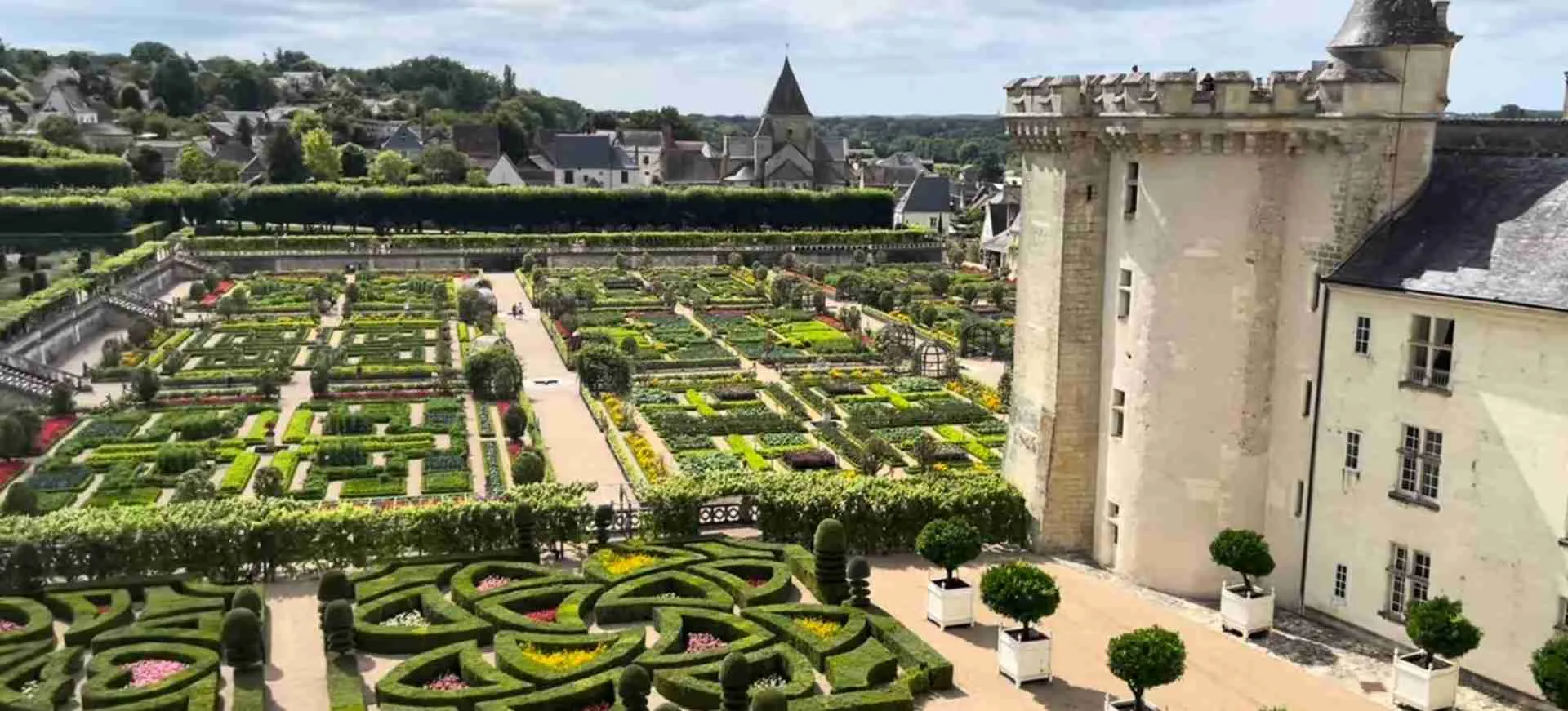
- Villandry’s six terraced gardens represent the most complete reconstruction of Renaissance garden design in France, covering approximately 6 hectares with geometric patterns and symbolic plantings
- The Ornamental Garden features four sections representing different types of love—tender, passionate, fickle, and tragic—through symbolic plant arrangements and boxwood designs
- The Kitchen Garden combines aesthetic beauty with agricultural productivity, displaying over 40 varieties of vegetables in nine geometric squares following Renaissance horticultural traditions
- The Water Garden on the highest terrace provides irrigation for all lower gardens while creating a contemplative space reflecting monastic garden heritage
- The château architecture exemplifies the transition from medieval fortress to Renaissance residence, with original 14th-century keep surrounded by 16th-century residential wings
- UNESCO World Heritage recognition as part of the Loire Valley acknowledges Villandry’s exceptional contribution to Renaissance garden history and European horticultural heritage
Introduction: Where Garden Art Reaches Perfection
Château de Villandry stands as the Loire Valley’s supreme achievement in Renaissance garden design, where architectural precision meets horticultural artistry to create living masterpieces that change with the seasons. Unlike châteaux celebrated primarily for architectural grandeur, Villandry’s fame rests on its extraordinary gardens—six terraced levels of geometric perfection where vegetables become art, flowers express symbolic meanings, and water features provide both utility and beauty. The gardens represent a complete reconstruction of Renaissance garden philosophy, offering contemporary visitors the opportunity to experience the sophisticated relationship between architecture and landscape that characterized aristocratic estates during France’s cultural golden age.
The château itself embodies architectural history spanning six centuries, from its medieval origins as a fortress commanding the confluence of the Loire and Cher rivers to its transformation into an elegant Renaissance residence. The building’s evolution mirrors broader patterns in French château architecture: military necessity gradually yielding to residential comfort and aesthetic ambition. The harmonious integration of architecture and gardens demonstrates Renaissance ideals of proportion, symmetry, and the ordering of nature through human design.
Dr. Joachim Carvallo’s early 20th-century restoration transformed Villandry from neglected estate to horticultural showcase, recreating Renaissance garden principles through careful historical research and botanical expertise. His vision rescued the gardens from 19th-century landscape garden fashion and restored the geometric clarity that characterized Renaissance design. Understanding Villandry requires appreciating this dual heritage: authentic Renaissance architecture combined with scholarly 20th-century recreation that honors historical principles while adapting to modern knowledge and techniques.
People Also Ask About Château de Villandry Gardens
What makes Villandry’s gardens unique among Loire Valley châteaux?
Villandry’s gardens represent the most comprehensive reconstruction of Renaissance garden design in France, distinguished by their scale, complexity, and adherence to historical principles. While other Loire châteaux maintain beautiful gardens, Villandry stands alone in its systematic recreation of the geometric patterns, symbolic plantings, and hierarchical terrace organization that characterized aristocratic Renaissance gardens. The gardens cover six hectares arranged on multiple terraced levels, each serving distinct aesthetic and functional purposes while maintaining overall visual harmony.
The integration of ornamental and productive gardens distinguishes Villandry from purely decorative landscapes. The Kitchen Garden demonstrates that Renaissance garden design extended beyond flowers and ornamental plants to encompass vegetables arranged in aesthetic patterns that combined beauty with productivity. This holistic approach reflects Renaissance belief in the harmony between useful and beautiful, practical and contemplative. The careful maintenance required to preserve geometric precision throughout growing seasons represents a gardening achievement few historic properties attempt.
The symbolic content encoded in the Ornamental Garden’s four love sections adds intellectual depth beyond visual beauty. Renaissance gardens functioned as texts to be read and interpreted, with plant choices, colors, and arrangements conveying meanings understood by educated viewers. Villandry preserves this tradition of garden-as-language, where boxwood patterns and flower selections express complex ideas about love, relationships, and human emotions. This symbolic dimension transforms garden viewing from passive appreciation to active interpretation.
How are Villandry’s gardens maintained throughout the year?
Maintaining Villandry’s gardens requires a team of ten full-time gardeners working year-round to preserve the geometric precision and seasonal displays that define the property’s character. The gardeners follow strict planting schedules that ensure continuous bloom from spring through autumn, with spring bulbs giving way to summer annuals and autumn plantings creating final seasonal displays. Each of the 1,015 linden trees forming garden frameworks requires annual pruning to maintain precise shapes, while the 52 kilometers of boxwood hedges need trimming twice annually to preserve crisp edges and geometric clarity.
The Kitchen Garden operates on a rotation system that balances aesthetic requirements with horticultural best practices. Gardeners plant the nine geometric squares twice yearly, coordinating vegetable varieties to create color harmonies while respecting crop rotation principles that maintain soil health. Spring plantings feature cool-season vegetables like lettuces, cabbages, and leeks arranged by color and form, while summer plantings showcase warm-season crops including tomatoes, peppers, and squashes. The visual effect changes dramatically as plants mature, creating living tapestries that evolve throughout growing seasons.
Water management represents a critical maintenance challenge, with the Water Garden on the highest terrace feeding the entire irrigation system through gravity-fed channels. Gardeners monitor water flow constantly, adjusting distribution to meet varying plant needs during different seasons and weather conditions. The system’s Renaissance engineering continues to function effectively, though modern additions like drip irrigation supplement historical methods during particularly dry periods. Pest and disease management relies primarily on organic methods respecting the garden’s historical character and ecological principles.
What do the different garden sections represent?
The Ornamental Garden’s four sections express different manifestations of love through symbolic plant arrangements that educated Renaissance viewers would have recognized and interpreted. The Tender Love section features gentle curves and soft pink flowers representing the gentle, nurturing aspects of romantic affection. The Passionate Love section displays hearts broken by flames in red and orange flowers, symbolizing the intensity and consuming nature of passionate desire. The Fickle Love section shows hearts separated by fan shapes suggesting inconstancy and the changing nature of romantic attachment. The Tragic Love section depicts hearts pierced by daggers in dark red flowers, representing the pain and suffering that can accompany love.
The Kitchen Garden functions both as productive agricultural space and aesthetic masterpiece, demonstrating Renaissance belief in the compatibility of beauty and utility. The nine geometric squares contain over 40 vegetable varieties chosen for color, form, and growth habits that create visual patterns. Blue-green cabbages contrast with burgundy lettuces, orange pumpkins balance purple eggplants, and the varied greens of different herbs create subtle tonal variations. Rose standards at the corners of each square add vertical elements and sweet fragrance, while fruit tree espaliers along the walls demonstrate specialized horticultural techniques.
The Water Garden on the highest terrace represents contemplative spirituality and Renaissance fascination with hydraulic engineering. The large rectangular pool mirrors the sky and surrounding vegetation while serving the practical function of water storage for irrigation. The design recalls monastic cloister gardens where water symbolized spiritual purity and reflection, connecting Villandry’s Renaissance aesthetics to medieval religious traditions. Fountains and channels demonstrate mastery of water movement, a Renaissance engineering achievement that controlled natural forces for aesthetic and practical purposes.
When were the current gardens created?
The current gardens represent early 20th-century recreation rather than unbroken continuity from the Renaissance period. When Dr. Joachim Carvallo purchased Villandry in 1906, the estate featured a 19th-century English-style landscape garden with winding paths, irregular plantings, and romantic naturalism that had replaced the original Renaissance geometric gardens. Carvallo, a Spanish physician passionate about art history and garden heritage, devoted himself to researching and reconstructing Renaissance garden design principles. Between 1906 and his death in 1936, he systematically removed the landscape garden and recreated the geometric terraced gardens visible today.
Carvallo based his reconstruction on historical research including period engravings, garden treatises, and archaeological evidence of original terrace walls and water channels. The most important source was Du Cerceau’s architectural engravings from the 16th century showing French châteaux and their gardens, providing detailed visual documentation of Renaissance garden layouts. Carvallo adapted these historical precedents to Villandry’s specific topography and dimensions, creating gardens that honor Renaissance principles while representing his own scholarly interpretation and aesthetic vision.
The Carvallo family has maintained ownership and continued developing the gardens through four generations, with each generation adding refinements while respecting the founder’s vision. The Sun Garden, added in the 1990s, demonstrates how the property continues evolving while maintaining overall coherence. This ongoing stewardship ensures that Villandry’s gardens represent not merely historical recreation but living tradition where Renaissance principles interact with contemporary horticultural knowledge and changing visitor expectations.
Extended multi-day tours – 5+ days
Featured Loire Valley Multi-Day Tour Packages

3 days
Loire Valley 3-Day Discovery Tour
- ✓ Comprehensive Loire Valley experience
- ✓ Expert local guides included
- ✓ All accommodation included
- ✓ Transportation provided

5 days
Loire Valley 5-Day Highlights Experience
- ✓ Comprehensive Loire Valley experience
- ✓ Expert local guides included
- ✓ All accommodation included
- ✓ Transportation provided
7 days
Loire Valley 7-Day Cultural Journey
- ✓ Comprehensive Loire Valley experience
- ✓ Expert local guides included
- ✓ All accommodation included
- ✓ Transportation provided
10 days
Loire Valley 10-Day Complete Adventure
- ✓ Comprehensive Loire Valley experience
- ✓ Expert local guides included
- ✓ All accommodation included
- ✓ Transportation provided
Multi-day tour packages powered by TourRadar. Prices and availability subject to change.
Historical Background: From Fortress to Horticultural Showcase
The strategic site overlooking the confluence of the Loire and Cher rivers attracted fortification during the medieval period, with a castle recorded at Villandry by the 12th century. The fortress controlled river crossings and the road network connecting Tours to the south, making it a valuable military asset during the conflicts between French kings and powerful regional nobles. The medieval château witnessed dramatic historical events, including the meeting between Henry II Plantagenet, King of England, and Philip II Augustus, King of France, where Henry acknowledged defeat and accepted humiliating peace terms in 1189.
Jean Le Breton, Finance Minister to King Francis I, acquired the medieval fortress in 1532 and initiated its transformation into a Renaissance residence. Le Breton had accompanied Francis I to Italy and witnessed the architectural and garden splendors of Italian Renaissance villas. Returning to France inspired by what he had seen, Le Breton demolished much of the medieval fortress while preserving the 14th-century keep, then constructed new residential wings arranged around three sides of a courtyard opening toward the valley. The new construction combined French architectural traditions with Italian Renaissance proportions and decorative elements.
Le Breton created gardens befitting his new Renaissance residence, terracing the sloping land and establishing the basic layout that subsequent owners would modify but never fundamentally alter. The terracing required massive earth-moving to create level surfaces for geometric garden beds, with retaining walls separating the different levels. Hydraulic engineering brought water from higher elevations to feed fountains and irrigation channels, demonstrating Renaissance mastery of landscape manipulation for aesthetic and practical purposes.
The château passed through various noble families during the 17th and 18th centuries, with each generation modifying the gardens according to changing fashions while maintaining the basic terraced structure. Documentary evidence from this period remains fragmentary, making precise reconstruction of garden layouts difficult. The French Revolution brought confiscation and sale of the property, initiating a period of neglect and subdivision that diminished the estate’s coherence. Multiple owners during the 19th century made various modifications, with the gardens eventually transformed into the English landscape style fashionable during that era.
Dr. Joachim Carvallo’s 1906 purchase marked a turning point in Villandry’s history. Carvallo, born in Spain but residing in France, had trained as a physician but pursued passionate interests in art history and garden heritage. His wife, Ann Coleman, an American heiress, provided financial resources for the ambitious restoration project. Carvallo approached the restoration with scholarly rigor, researching historical documents, studying period garden treatises, and examining archaeological evidence of original garden structures. His goal was not merely decorative landscaping but authentic recreation of Renaissance garden principles.
The restoration proceeded systematically over three decades. Carvallo removed the 19th-century landscape garden, excavated to expose original terrace walls and water channels, and reconstructed the geometric garden beds according to Renaissance design principles. He planted the extensive boxwood hedges that define the gardens’ geometric patterns, established the linden tree frameworks, and created the elaborate parterres of the Ornamental Garden. The Kitchen Garden represented particularly ambitious undertaking, requiring research into Renaissance vegetable varieties and cultivation methods while adapting historical practices to contemporary horticultural knowledge.
Carvallo’s son Henri inherited the property and continued his father’s work, refining the gardens and opening them more extensively to public visitation. Henri’s contributions included improved irrigation systems, expanded plantings, and enhanced visitor facilities that made Villandry accessible to growing numbers of garden enthusiasts. His stewardship ensured continuity of his father’s vision while adapting the estate to mid-20th-century conditions and expectations.
Robert Carvallo, Henri’s son, assumed responsibility in the latter 20th century and oversaw major developments including the creation of the Sun Garden and comprehensive restoration of the château interiors. Robert’s contributions demonstrate how historical properties can evolve while maintaining authentic character, adding new elements that complement rather than compromise original design principles. His expansion of educational programming, including workshops and demonstrations, transformed Villandry from private estate to cultural institution sharing horticultural knowledge with broad audiences.
Architectural Significance: Renaissance Harmony in Stone and Garden
The château’s architectural evolution spans six centuries, with the 14th-century keep representing the property’s medieval origins. This square tower, built with thick limestone walls and small defensive windows, exemplifies the military architecture of its era. The keep’s strategic position on the highest terrace provided commanding views over the river valley, allowing defenders to observe approaching threats and coordinate defensive responses. The structure’s massive solidity contrasts dramatically with the elegant Renaissance wings surrounding it, creating visual dialogue between different architectural eras and functions.
Jean Le Breton’s 16th-century residential wings demonstrate the Renaissance transformation of French château architecture. The buildings arranged around three sides of a central courtyard follow a U-shaped plan common in French Renaissance architecture, with the fourth side open toward the valley to preserve views and light. The façades feature regular window rhythms, classical proportions, and decorative elements including carved dormers, ornamental chimneys, and sculptural details that enliven rooflines and wall surfaces. The architecture balances symmetry and variety, creating harmonious compositions that please the eye without monotony.
The main entrance façade facing the courtyard displays Renaissance attention to hierarchical organization. The central section containing the main portal receives enhanced architectural treatment with elaborate window surrounds and decorative carving, while the flanking wings maintain simpler treatment appropriate to their secondary status. This architectural hierarchy guides visitors’ attention and creates clear spatial organization that reflects social hierarchies and functional divisions within the residence. The white limestone construction contrasts beautifully with slate roofs, creating the distinctive color scheme characteristic of Loire Valley châteaux.
The interior spaces preserve authentic Renaissance architectural elements including massive fireplaces, carved wooden ceilings, and doorways with Renaissance decorative motifs. The Guard Room features monumental fireplace surrounds carved with classical architectural elements and heraldic devices, while the State Rooms display coffered ceilings with painted decoration and gilt details. The scale and refinement of these interiors reflect the residence’s status as a Finance Minister’s château rather than merely a country manor, with rooms sized and decorated to accommodate court visits and diplomatic receptions.
The most architecturally significant interior space is the Oriental Room, though this represents 18th-century modification rather than Renaissance original. The room features exceptional Spanish-Moorish painted and gilded ceiling panels installed during the 18th century, creating an exotic atmosphere that contrasted with the château’s predominantly French character. The ceiling’s geometric patterns, arabesques, and intricate detailing demonstrate Islamic decorative traditions adapted to European aristocratic taste. This multicultural element adds unexpected richness to the château’s architectural narrative.
The relationship between architecture and gardens represents Villandry’s most important architectural achievement. The château sits at the intersection of all six garden terraces, with windows and terraces providing carefully composed views of different garden sections. From the main reception rooms, windows frame views of the Ornamental Garden’s geometric patterns, while upper-floor windows reveal the full extent of the terraced landscape. This integration of indoor and outdoor spaces reflects Renaissance belief in architecture and gardens as complementary elements of a unified artistic composition.
The terrace walls supporting the different garden levels represent significant engineering achievements essential to the gardens’ functionality. These retaining walls, built with local limestone, support thousands of tons of earth while maintaining the level surfaces necessary for geometric garden beds. The walls incorporate drainage systems preventing water accumulation that could undermine stability, and their construction angles calculated to resist earth pressure. The technical sophistication hidden within these seemingly simple walls demonstrates Renaissance engineering knowledge applied to landscape design.
The château’s moat, which originally served defensive purposes, was transformed into decorative water feature enhancing the property’s aesthetic appeal. The moat surrounds the château on three sides, creating visual separation between the building and gardens while providing mirror-like reflections that multiply architectural forms. Swans traditionally inhabit the moat, adding movement and life to these water features. The transformation from military moat to ornamental water garden exemplifies the broader evolution from fortress to pleasure residence that characterizes Loire Valley château development.
Cultural Impact: Gardens as Art and Philosophy
Villandry’s gardens embody Renaissance humanist philosophy that viewed nature as material for human artistic expression and intellectual exploration. The geometric patterns imposed on the landscape demonstrate Renaissance confidence in human ability to order and improve nature through design intelligence. This philosophical stance contrasted with medieval gardens that tended toward symbolic religious meanings and with later Romantic landscape gardens that valued naturalistic irregularity. Villandry represents the Renaissance moment when humans viewed themselves as partners with nature in creating beauty through rational design.
The symbolic program in the Ornamental Garden reflects Renaissance fascination with emblematic meanings and visual allegory. Educated visitors to Renaissance gardens expected to “read” meanings in plant arrangements, colors, and patterns, interpreting gardens as texts expressing ideas about love, virtue, philosophy, or political power. Villandry’s love garden continues this tradition, encoding emotional and psychological concepts in botanical form. The four sections depicting different types of love function as meditation prompts, inviting viewers to reflect on the varieties of human emotional experience.
The Kitchen Garden represents Renaissance integration of aesthetic and practical concerns that contrasts with modern tendencies to separate functional and ornamental gardens. Renaissance garden theorists believed that vegetables properly arranged could create beauty equal to flower gardens, while the productive capacity provided genuine satisfaction to estate owners. The Kitchen Garden at Villandry demonstrates this philosophy, proving that cabbages and lettuces arranged geometrically achieve visual splendor while producing food. This holistic approach to garden design influenced European horticultural traditions for centuries.
Villandry’s influence extends beyond France through the international community of garden historians, designers, and enthusiasts who study the property as exemplar of Renaissance garden principles. Garden restoration projects worldwide reference Villandry when recreating historical gardens or designing new gardens inspired by Renaissance aesthetics. The château’s demonstration that geometric garden design remains viable and appealing in the contemporary era has encouraged renewed appreciation for formal gardens after a century dominated by naturalistic landscape styles.
The educational programs at Villandry transmit horticultural knowledge to new generations, with workshops demonstrating the specialized techniques required to maintain geometric gardens. These programs preserve practical skills including boxwood shaping, espalier training, vegetable arrangement, and seasonal planting schedules that might otherwise disappear as traditional gardening knowledge fades. Participants gain hands-on experience with Renaissance gardening methods while contributing to the garden’s ongoing maintenance, creating direct connection between historical practices and contemporary application.
The château serves as case study in heritage restoration ethics, demonstrating both possibilities and limitations of recreating historical gardens based on documentary evidence. Carvallo’s scholarly approach established standards for research-based restoration that subsequent projects have emulated, while the acknowledged elements of interpretation remind viewers that all restoration involves creative decision-making alongside historical reconstruction. This transparency about the restoration process contributes to broader discussions about authenticity, interpretation, and the appropriate roles of historical evidence versus contemporary vision in heritage preservation.
Artistic Elements: Living Canvas Through the Seasons
The Ornamental Garden functions as seasonal painting, with color schemes changing as spring, summer, and autumn plantings succeed one another. Spring displays feature tulips, pansies, and forget-me-nots in coordinated color schemes that emphasize pastel harmonies. The bulb displays emerge dramatically after winter dormancy, transforming the geometric beds with waves of color that define the boxwood patterns. The spring palette tends toward soft pinks, purples, blues, and whites that create romantic atmosphere appropriate to the garden’s love theme.
Summer plantings shift to more intense colors with greater heat tolerance. Red and pink petunias, orange marigolds, purple salvias, and yellow coreopsis create bold color contrasts that remain vibrant through hot weather. The gardeners coordinate color placement to create balanced compositions across the four love sections, with each section maintaining its distinctive character while contributing to overall harmony. The summer displays reach peak intensity in July and August when mature plants achieve maximum bloom and the full geometric patterns emerge with complete clarity.
Autumn plantings introduce more subdued colors reflecting seasonal transition. Ornamental cabbages in shades of purple, pink, and white replace summer annuals, while chrysanthemums add russet, bronze, and gold tones. The autumn palette coordinates with changing leaf colors in the surrounding landscape, creating gentle harmonies that ease the transition toward winter dormancy. The visual effect becomes more subtle and contemplative, inviting quieter reflection compared to summer’s exuberant displays.
The boxwood hedges provide permanent structural elements that define the gardens’ character regardless of seasonal flower plantings. The low hedges, maintained at 30 centimeters height through careful trimming, outline the geometric patterns with dark green precision. The contrast between evergreen boxwood and changing flower colors creates dynamic tension between permanent and ephemeral elements. The boxwood’s fine texture and compact growth habit allow the detailed patterns including hearts, flames, daggers, and fans that give each section its distinctive character.
The Kitchen Garden achieves artistic effects through vegetable selection coordinating color, texture, and form. Spring plantings feature the cool blues of cabbage and kale, the burgundy of red lettuce, the bright greens of various lettuces and herbs, and the purple of radicchio. Summer vegetables add warm colors: red and yellow tomatoes, orange pumpkins and peppers, purple eggplants, and the varied greens of beans, cucumbers, and herbs. The visual effect rivals flower gardens while demonstrating that aesthetic beauty and agricultural productivity enhance rather than contradict each other.
The fruit tree espaliers along the Kitchen Garden walls represent specialized horticultural art combining practical fruit production with geometric beauty. The trees, trained flat against sunny walls, develop two-dimensional branching patterns through careful pruning and support. Apple and pear espaliers create living lattices where spring blossoms give way to summer foliage and autumn fruits, adding vertical interest to the predominantly horizontal garden beds. The espalier technique maximizes fruit production in limited space while creating architectural plant forms that complement the garden’s overall geometry.
The Water Garden achieves serene beauty through simplicity and reflection rather than elaborate plantings. The large rectangular pool mirrors sky, clouds, and surrounding vegetation, creating ever-changing natural paintings on the water surface. Water lilies and aquatic plants add subtle color and texture without overwhelming the contemplative character. The garden’s restraint provides contrast with the more elaborate lower terraces, offering visual respite and encouraging meditative pauses during garden tours.
The Sun Garden, added in the 1990s, introduces contemporary garden design while respecting Villandry’s overall aesthetic principles. The circular design contrasts with the rectilinear geometry dominating other garden sections, while the sunny yellow and orange color scheme creates warm, cheerful atmosphere. The planting scheme emphasizes sun-loving perennials and annuals chosen for extended bloom periods and drought tolerance. This modern addition demonstrates that Villandry remains living tradition evolving with contemporary horticultural knowledge rather than frozen historical recreation.
Legends and Stories: Creating Villandry’s Garden Heritage
The story of Dr. Joachim Carvallo’s discovery and rescue of Villandry has acquired almost mythical status among garden enthusiasts. According to family tradition, Carvallo was traveling through the Loire Valley when he noticed the château from the road and impulsively decided to investigate. Finding a neglected estate with landscape garden obscuring its Renaissance heritage, he recognized the property’s potential and purchased it on the strength of his vision for restoration. The romantic narrative of passionate physician abandoning medical career to dedicate his life to garden restoration has inspired generations of garden preservationists and historic property rescuers.
The legend of the “perfect garden” that requires no pesticides or chemical interventions reflects Villandry’s reputation for ecological gardening practices ahead of contemporary environmental movements. While the reality involves sophisticated integrated pest management combining biological controls, companion planting, and selective organic treatments, the legend emphasizes Villandry’s demonstration that beautiful gardens can function in harmony with natural systems. This story resonates with contemporary audiences concerned about sustainable gardening and environmental stewardship.
Local tradition claims that vegetables from Villandry’s Kitchen Garden possess exceptional flavor due to the garden’s privileged terroir and the special care lavished on them. While most produce from the gardens goes to staff meals and occasional visitor tastings rather than commercial sale, the legend of superior vegetables reinforces the Renaissance belief that beauty and quality correlate. The story suggests that plants grown with aesthetic intention and expert care transcend mere agricultural production to become expressions of horticultural art worthy of aristocratic tables.
The tale of the “midnight gardener” who supposedly tends the gardens during full moon nights represents a charming ghost story without historical basis but reflecting the magical atmosphere the gardens create at night. According to the legend, a dedicated gardener from the Renaissance period returns spiritually to ensure the gardens maintain their perfection, an appealing fantasy suggesting that the estate’s beauty transcends normal temporal boundaries. The story captures the romantic notion that truly great gardens possess souls that persist beyond individual human caretakers.
Stories about garden proposals, weddings, and romantic encounters at Villandry reinforce the château’s association with love themes embodied in the Ornamental Garden. Couples from around the world choose Villandry as the setting for marriage proposals, believing the love garden’s symbolism will bless their relationships. These personal stories, accumulated over decades of public visitation, add contemporary layers to the Renaissance love symbolism, demonstrating how historical gardens continue generating new meanings and memories for each generation of visitors.
Photography Guide: Capturing Garden Geometry and Seasonal Beauty
The elevated viewpoints from upper terrace levels and château windows provide essential perspectives for photographing Villandry’s geometric garden designs. The Ornamental Garden reveals its full symbolic patterns only from elevated positions showing how individual beds relate to create complete compositions. Position yourself on the upper terrace or at upper-floor windows during mid-morning or late afternoon when angled sunlight emphasizes the three-dimensional relief of boxwood hedges and creates modeling shadows that clarify geometric patterns. A moderate wide-angle lens captures complete garden sections while maintaining geometric accuracy without excessive distortion.
Spring photography benefits from the dramatic transformation as bulb plantings emerge. Early morning photography captures dewdrops on tulip petals and fresh colors enhanced by soft light. The spring palette’s pastel harmonies photograph beautifully in slightly overcast conditions that eliminate harsh shadows and allow delicate colors to glow. Focus on individual flowers as well as overall patterns, showing how thousands of coordinated bulbs create the geometric designs visible from above.
Summer’s intense colors and mature plantings reward photography throughout the day, though early morning and late afternoon provide most flattering light. The bold color contrasts between petunias, marigolds, salvias, and other summer annuals create vibrant compositions that benefit from saturated color rendering. Photograph from ground level to emphasize the scale and abundance of summer displays, showing how shoulder-high plants create immersive environments within the geometric beds. Macro photography of individual flowers reveals texture and detail lost in overview shots.
Autumn photography captures the subtle beauty of seasonal transition with ornamental cabbages, chrysanthemums, and changing leaf colors. The softer light and more diffuse color schemes create contemplative moods appropriate to the season. Morning fog occasionally settles in the valley, creating atmospheric effects that add mystery and romance to garden photography. The autumn palette coordinates beautifully with the château’s white limestone and slate roofs, creating harmonious overall compositions when photographing buildings and gardens together.
The Kitchen Garden offers unique photographic opportunities combining aesthetic beauty with agricultural authenticity. Photograph the geometric squares from above to show how color patterns emerge from vegetable arrangements, or work at ground level to capture the textures, forms, and colors of individual vegetables. The rose standards at bed corners provide vertical accents and sweet spots of color, while the fruit tree espaliers along walls create interesting backgrounds and foreground elements. Early morning light illuminates vegetables with back-lighting that emphasizes form and creates rim-light outlines around leaves and fruits.
Water Garden photography emphasizes reflection and contemplation. Photograph the rectangular pool from ends or sides to capture sky reflections and surrounding vegetation mirrored on still water surfaces. Use polarizing filters to control reflection intensity, either enhancing mirror effects or reducing glare to reveal submerged aquatic plants. The garden’s simplicity rewards minimalist compositions focusing on the relationship between water, sky, and surrounding vegetation without including excessive architectural or ornamental elements.
Architectural photography of the château benefits from late afternoon light illuminating the main façade. Position yourself in the courtyard to capture the relationship between the Renaissance wings and the medieval keep, showing the architectural evolution embodied in the structure. Detail photography of carved dormers, decorated chimneys, window surrounds, and other architectural elements reveals Renaissance craftsmanship. Interior photography requires high ISO settings or tripod support due to limited natural light, but the painted ceilings, massive fireplaces, and period furnishings reward the technical challenges.
Seasonal comparison photography tracking changes throughout the year creates compelling documentation of the gardens’ dynamic nature. Photograph identical viewpoints during different seasons to show how plantings, colors, and atmospheres transform while geometric structures remain constant. These comparison series educate viewers about the work required to maintain seasonal displays and demonstrate the gardens’ designed relationship with natural cycles. Time-lapse photography condensing seasonal changes into brief videos proves particularly effective for social media and educational purposes.
Conservation Efforts: Preserving Living Heritage
Garden conservation at Villandry presents unique challenges because the heritage being preserved consists of living organisms subject to growth, disease, weather, and natural senescence. Unlike architectural monuments where conservation can stabilize existing materials, garden conservation requires constant intervention to maintain designed appearances. The gardening staff must balance historical authenticity with horticultural realities, preserving Renaissance design principles while adapting to contemporary climate conditions, available plant varieties, and evolved understanding of plant care.
Boxwood conservation represents critical concern given the hedges’ structural importance to the gardens’ geometry. The 52 kilometers of boxwood hedges require trimming twice annually to maintain precise edges and shapes, with gardeners using traditional hand shears for much of the work to achieve quality unattainable with mechanical hedge trimmers. Boxwood pests and diseases, particularly boxwood blight that threatens European boxwood populations, require vigilant monitoring and immediate response. The château maintains replacement stock nursery, growing young boxwood plants to replace any hedges that succumb to disease or age, ensuring continuous availability of appropriate plant material.
The historical linden tree frameworks require specialized arboriculture to maintain health and structural integrity. Annual pruning keeps trees in their designed shapes while removing dead or diseased wood and managing canopy density to allow appropriate light levels for understory plantings. Storm damage occasionally requires significant branch removal and structural support, with arborists making decisions balancing tree health with aesthetic requirements. Some original Carvallo-era lindens have reached their lifespan limits, requiring systematic replacement programs that maintain garden framework while introducing younger trees that will serve future generations.
Soil management presents ongoing challenges in intensively cultivated gardens. The Kitchen Garden’s twice-yearly plantings deplete soil nutrients despite the addition of compost and organic amendments. Soil testing monitors nutrient levels and pH, guiding amendment applications that maintain optimal growing conditions. The challenge involves achieving productive soil supporting healthy plant growth while avoiding excessive fertilization that might compromise the organic gardening principles Villandry has embraced. Crop rotation within the geometric squares helps maintain soil health while creating visual variety across growing seasons.
Water conservation has become increasingly important as climate change brings more variable precipitation patterns and occasional drought periods. While the Water Garden’s gravity-fed irrigation system provides efficient water distribution, prolonged dry periods require supplemental watering beyond what the historical system supplies. Modern drip irrigation installations supplement traditional methods, providing targeted watering that minimizes waste while maintaining plant health. The gardening staff monitors soil moisture and plant stress indicators, adjusting watering schedules to balance conservation with the need to maintain garden appearance.
The château building conservation proceeds through systematic campaigns addressing specific elements. Stone cleaning and repair focuses on areas where weathering threatens structural integrity or where biological growth damages masonry. The slate roofs require periodic replacement of damaged tiles and maintenance of flashings preventing water infiltration. Interior conservation addresses painted surfaces, carved woodwork, and historic furnishings, with specialized conservators treating materials according to international conservation standards. The goal is arresting deterioration while preserving authentic historical materials wherever possible.
Climate change adaptation represents emerging challenge requiring careful consideration of how to maintain Villandry’s heritage while acknowledging changing environmental conditions. Rising temperatures affect plant hardiness zones, potentially allowing Mediterranean species to thrive while threatening plants adapted to cooler conditions. More extreme weather events including intense storms, prolonged droughts, and unexpected frosts test gardens’ resilience and require flexible management strategies. The conservation challenge involves preserving historical character while making necessary adaptations ensuring long-term viability.
Documentation and knowledge transfer ensure conservation expertise passes to future generations. The gardening staff trains apprentices in specialized techniques required for Villandry’s maintenance, preserving practical skills that might otherwise disappear. Detailed photographic and written records document garden layouts, planting schemes, and maintenance procedures, creating institutional memory independent of individual staff members. This documentation supports both daily operations and long-term planning while providing resources for researchers studying historical gardens and conservation methods.
UNESCO Recognition: Loire Valley Garden Heritage
Villandry’s inclusion in the UNESCO World Heritage designation of the Loire Valley between Sully-sur-Loire and Chalonnes recognizes the château’s exceptional contribution to the cultural landscape’s overall significance. The 2000 UNESCO inscription acknowledged the Loire Valley as outstanding example of how human societies shape landscapes through architecture, garden design, agricultural practices, and cultural traditions. Villandry exemplifies the integration of building and landscape that characterizes the region’s heritage, demonstrating Renaissance approaches to ordering nature through design.
The World Heritage designation emphasizes Villandry’s role in preserving Renaissance garden traditions that might otherwise have disappeared. Many Renaissance gardens were destroyed or transformed beyond recognition during subsequent centuries as garden fashions changed and properties changed ownership. Villandry’s comprehensive reconstruction based on scholarly research provides tangible evidence of Renaissance garden principles, offering educational resources for understanding historical landscape design. This preservation of vanished traditions adds cultural value beyond the gardens’ aesthetic beauty.
UNESCO recognition brings responsibilities for maintaining conservation standards and protecting the site’s outstanding universal value. The château must demonstrate ongoing commitment to preserving heritage significance while managing visitation, adapting to climate change, and meeting contemporary expectations for accessibility and interpretation. Regular monitoring reports to UNESCO document conservation activities, visitor management strategies, and responses to threats or challenges. This accountability framework ensures international attention to Villandry’s preservation needs.
The cultural landscape concept underlying the Loire Valley designation requires understanding Villandry within broader regional context. The château’s relationship to the Loire River, surrounding agricultural lands, nearby villages, and other Loire châteaux creates comprehensive cultural system reflecting centuries of human activity shaping the landscape. Understanding requires appreciating how geography, agriculture, architecture, and garden design interact to create distinctive regional character expressing French cultural identity.
Tourism management challenges accompany World Heritage status as international recognition attracts increased visitation. The château welcomes over 350,000 visitors annually, placing significant pressure on gardens designed for private aristocratic enjoyment rather than mass tourism. Managing visitor flow through timed entry, designated paths, and peak season crowding requires balancing conservation protection with the educational mission of sharing heritage with broad audiences. Sustainable tourism strategies aim to allow people to experience the gardens while ensuring their preservation for future generations.
The Loire Valley World Heritage designation creates opportunities for regional cooperation in heritage preservation and interpretation. Collaboration among Loire châteaux, gardens, and historic sites allows sharing conservation expertise, developing coordinated educational programs, and creating comprehensive visitor experiences. Villandry participates in these networks, contributing garden conservation knowledge while benefiting from architectural expertise and regional tourism planning. This cooperation strengthens the overall heritage protection system while educating visitors about the cultural landscape’s integrated character.
Frequently Asked Questions
What is the best season to visit Villandry’s gardens?
Each season offers distinctive beauty at Villandry, making the “best” time dependent on personal preferences and interests. Spring displays feature spectacular tulip and bulb plantings creating fresh, romantic atmosphere as gardens awaken from winter dormancy. Summer provides the most vibrant colors and fullest plantings, with mature annuals creating bold geometric patterns at their most defined. Autumn brings subtle beauty with ornamental cabbages and changing leaf colors creating contemplative seasonal mood. Even winter has appeal, with the boxwood geometry visible without distracting flower colors and occasional snow emphasizing garden structures.
How long does it take to visit the château and gardens thoroughly?
A comprehensive visit to Villandry requires three to four hours to explore all six garden terraces, walk through the château interiors, and appreciate the full scope of the property. Garden enthusiasts often spend longer, particularly during peak growing seasons when the abundant plantings reward detailed examination. Visitors can complete more cursory visits in two hours, seeing major highlights without exhaustive exploration. Photography enthusiasts should allow additional time for capturing the gardens from various angles and light conditions. The property’s scale and complexity reward unhurried exploration rather than rushed tours.
Are the vegetables in the Kitchen Garden edible?
All vegetables in the Kitchen Garden are authentic edible varieties grown using organic methods without synthetic pesticides or fertilizers. The produce serves staff meals and occasional visitor tastings rather than commercial sale, though the quantities grown in nine geometric squares significantly exceed staff consumption. The vegetable selections balance aesthetic requirements with practical considerations, choosing varieties that create desired colors and forms while producing quality produce. Heritage and heirloom varieties receive priority, preserving agricultural biodiversity while creating connections to historical vegetable gardening traditions.
Can visitors access all garden areas?
Visitors can walk through all six garden terraces following designated paths that provide access while protecting planted areas from trampling damage. The paths allow close views of plantings without permitting direct contact that would damage delicate plants or disturb garden symmetry. Certain areas remain staff-only to preserve garden integrity and prevent overcrowding in fragile zones. The terrace system creates natural visitor flow moving upward or downward through different garden sections, with each level offering new perspectives and discoveries. Respect for designated paths ensures all visitors can enjoy the gardens while preserving them for future enjoyment.
What makes Villandry’s restoration historically accurate?
Dr. Carvallo based his restoration on scholarly research including 16th-century architectural engravings, Renaissance garden treatises, and archaeological evidence of original terrace walls and water systems. The most important source was Du Cerceau’s detailed engravings showing French Renaissance châteaux and their gardens, providing visual documentation of period garden layouts. Carvallo adapted these historical precedents to Villandry’s specific site while incorporating contemporary horticultural knowledge. The restoration represents scholarly interpretation rather than exact replication, creating gardens that honor Renaissance principles while acknowledging gaps in historical documentation and changes in available plants and techniques.
How does Villandry maintain geometric precision?
Maintaining geometric precision requires year-round work by skilled gardeners following strict planting plans and maintenance schedules. Boxwood hedges receive trimming twice annually using traditional hand shears for edges requiring perfect straightness. Planting beds use string guides and measuring tools ensuring accurate spacing and alignment. Seasonal plantings follow detailed plans specifying exact plant quantities, positions, and color sequences. Regular monitoring identifies problems requiring immediate correction before they compromise overall geometric integrity. This intensive maintenance represents significant ongoing commitment essential to preserving the gardens’ designed appearance.
What role did Ann Coleman Carvallo play in Villandry’s restoration?
Ann Coleman, Dr. Carvallo’s American wife, provided essential financial resources enabling the ambitious restoration project. Her family wealth allowed the couple to purchase the property and fund the extensive work required to remove 19th-century additions and recreate Renaissance gardens. Beyond financial contributions, Ann participated actively in garden planning and plant selection, bringing American perspectives to the French restoration project. The Carvallo partnership combined Joachim’s scholarly expertise with Ann’s financial resources and shared aesthetic vision, demonstrating how successful heritage preservation often depends on both intellectual commitment and material resources.
Are there guided tours available at Villandry?
The château offers guided tours of the interior spaces providing historical context and architectural explanations that enhance understanding. Garden visits operate on self-guided basis with comprehensive information panels throughout the terraces and optional audio guides offering detailed commentary on different garden sections. The self-guided approach allows visitors to explore at their own pace, spending more time in areas that particularly interest them while moving quickly through others. Special theme tours focusing on specific aspects like horticulture, history, or photography operate during peak season, requiring advance reservation.
How does Villandry compare to other Loire Valley gardens?
Villandry stands apart from other Loire Valley châteaux through its primary emphasis on garden rather than architectural heritage. While châteaux like Chambord, Chenonceau, or Azay-le-Rideau feature beautiful gardens, their fame rests primarily on architectural splendor with gardens playing supporting roles. Villandry inverts this relationship, with the château serving as architectural frame for gardens that represent the main attraction. The comprehensive recreation of Renaissance geometric garden design at Villandry has no parallel among Loire properties, making it essential destination for garden enthusiasts and anyone interested in Renaissance landscape architecture.
What should visitors not miss at Villandry?
Essential experiences include viewing the Ornamental Garden from elevated terraces to appreciate its symbolic love sections, walking through the Kitchen Garden to experience the beauty of geometric vegetable arrangements, visiting the Water Garden for its contemplative atmosphere, and exploring the château interiors particularly the Oriental Room with its exceptional ceiling. Allow time to walk the complete terrace system appreciating how different garden levels relate to each other and to the broader Loire Valley landscape. The perspective from upper terraces revealing the full scope of garden geometry represents Villandry’s signature view that visitors remember long after their visits.