
Charleston Budget Guide 2026: Complete Travel Cost Breakdown
Charleston combines antebellum architecture with Lowcountry cuisine and Atlantic beaches, offering experiences from budget hostels to luxury historic inns. Understanding daily costs across accommodation, dining, transportation, and attractions helps travelers plan realistic budgets for this Holy City destination, whether exploring cobblestone streets, touring plantations, or sampling she-crab soup along the harbor.
Key Takeaways: Charleston Budget 2026
- Daily Budget Ranges 2026: Budget travelers need $80-145 per person daily assuming two sharing accommodation, mid-range visitors spend $185-270, and luxury travelers invest $340-515 for premium experiences across this coastal Carolina destination.
- Accommodation Costs 2026: Hotels range from budget properties at $77-120 nightly to mid-range historic district hotels at $160-220 and luxury boutique inns at $340-500, with seasonal variations reaching peak rates during spring festival season March through May.
- Dining Diversity 2026: Lowcountry cuisine spans from $8 fast-casual meals and $18-28 casual dining to $50-100 fine dining experiences at establishments like Hall’s Chophouse and Husk, with Restaurant Week offering special prix-fixe menus in January.
- Money-Saving Passes 2026: TourPass offers admission to 40+ attractions starting at $106 for one-day access, saving up to 40% versus individual ticket prices for Fort Sumter, plantation tours, carriage rides, and museums when visiting multiple sites daily.
- Free Transportation Options 2026: DASH shuttle provides free downtown circulation connecting major attractions, while CARTA regular buses cost $2 per ride with three-day passes at $14 offering unlimited travel across the metro area.
- Weekly Trip Costs 2026: Seven-day Charleston visits range from $560-1,015 for budget travelers to $1,295-1,890 for mid-range comfort and $2,380-3,605 for luxury experiences, with shoulder seasons offering lower accommodation rates and smaller crowds.
People Also Ask About Charleston Budget 2026
How much does Charleston cost per day in 2026?
Charleston costs $80-145 per person daily for budget travelers, $185-270 for mid-range comfort, and $340-515 for luxury experiences in 2026. Budget travelers stay in hostels or budget hotels at $39-60 per person when sharing rooms, eat at casual restaurants for $38-58 daily, use CARTA public buses at $2 per ride, and focus on free attractions like Waterfront Park and the City Market plus occasional paid sites. Mid-range travelers select historic district hotels at $80-110 per person sharing, dine at restaurants like Fleet Landing and Husk for $70-100 daily, mix public transport with rideshares for $12-20, and use attraction passes for plantation tours and museums costing $25-40 daily. Luxury visitors book boutique properties at $170-250 per person sharing, experience fine dining at Hall’s Chophouse and Peninsula Grill for $100-150 daily, rely on rideshares and private transport for $25-40, and purchase premium experiences including private tours for $45-75 daily. All costs assume two people sharing accommodation.
Is Charleston more expensive than Savannah or Myrtle Beach in 2026?
Charleston typically costs 15-25% more than Savannah and 30-45% more than Myrtle Beach for comparable experiences in 2026, primarily due to higher accommodation rates in the historic district and upscale dining scene. Mid-range Charleston hotels average $160-220 nightly compared to Savannah’s $120-180 and Myrtle Beach’s $90-140 for similar quality properties. Charleston’s restaurant scene commands premium prices with mid-range dinners costing $35-50 versus Savannah’s $25-40 and Myrtle Beach’s $20-35 for comparable meals. Charleston compensates with superior free attractions including year-round DASH shuttle service, extensive waterfront parks, and the Charleston City Market, while offering more diverse accommodation options from budget hostels to luxury historic inns. Budget travelers find similar costs across all three cities when prioritizing hostels, casual dining, and free activities, with daily expenses ranging $80-145 in each destination.
What’s the best time to visit Charleston on a budget in 2026?
November through February offers the best budget opportunities in Charleston for 2026, with hotel rates dropping 30-45% from summer peaks and temperatures remaining comfortable at 50-65°F for outdoor exploration. Winter season hotels range $90-140 for mid-range properties versus summer’s $200-280, while attractions maintain full operations without summer crowds at Fort Sumter, plantations, and museums. January features Restaurant Week with three-course prix-fixe menus at $30-70 representing 35-50% savings at acclaimed restaurants, plus Museum Mile passes offering $100 value for $25 at twelve historic sites. Late August through October provides secondary budget windows with hotel rates 20-30% below spring peaks while avoiding hurricane season’s August concerns, offering pleasant 70-80°F weather for beach activities at Folly Beach and Isle of Palms. Spring festival season March through May delivers peak experiences including Charleston Wine + Food Festival and Spoleto Festival USA but commands premium accommodation rates $240-350 nightly and requires advance booking three to six months ahead.
How much money should I budget for a week in Charleston in 2026?
Budget $560-1,015 per person for a week in Charleston at budget level, $1,295-1,890 for mid-range comfort, or $2,380-3,605 for luxury experiences in 2026, all figures assuming two people sharing accommodation. Budget weekly costs include accommodation $273-420 for hostels or budget hotels divided by two, meals $266-406 dining at casual restaurants and preparing some meals, transportation $28-42 using CARTA buses and occasional rideshares, and attractions $0-140 focusing on free sites with selective paid admissions. Mid-range weekly budgets cover accommodation $560-770 at historic district hotels divided by two, meals $490-700 at restaurants like 82 Queen and Magnolias, transportation $84-140 mixing buses with convenient rideshares, and attractions $175-280 using TourPass for plantations and museums. Luxury weekly totals include accommodation $1,190-1,750 at boutique properties divided by two, meals $700-1,050 at fine dining establishments, transportation $175-280 via rideshares and private services, and attractions $315-525 for premium experiences including private tours and upscale activities. These totals assume seven full days and exclude airfare or special events.
Extended multi-day tours – 5+ days
Featured Charleston Multi-Day Tour Packages
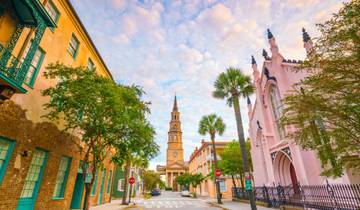
7 days
Southern Charms (from Charleston to Savannah)
- ✓ Comprehensive Charleston tour
- ✓ Expert local guides included
- ✓ All accommodation arranged
- ✓ Transportation provided
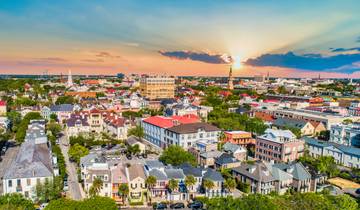
7 days
Southern Charm featuring Charleston, Savannah, and Jekyll Island (Charleston, SC to Jekyll Island, GA, 2027)
- ✓ Comprehensive Charleston tour
- ✓ Expert local guides included
- ✓ All accommodation arranged
- ✓ Transportation provided
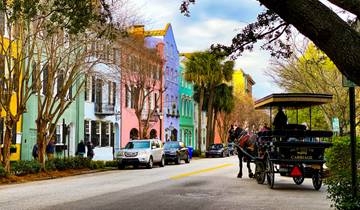
7 days
Southern Charm Holiday (Charleston, SC to Jekyll Island, GA, 2026)
- ✓ Comprehensive Charleston tour
- ✓ Expert local guides included
- ✓ All accommodation arranged
- ✓ Transportation provided
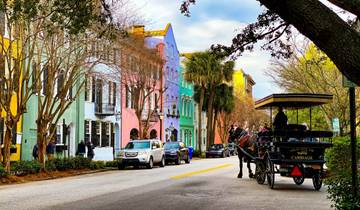
7 days
Southern Charm Holiday (Charleston, SC to Jekyll Island, GA, 2027)
- ✓ Comprehensive Charleston tour
- ✓ Expert local guides included
- ✓ All accommodation arranged
- ✓ Transportation provided
Multi-day tour packages powered by TourRadar. Prices and availability subject to change.
Introduction: Understanding Charleston Travel Costs 2026
Charleston stands as one of America’s most architecturally preserved cities, where cobblestone streets wind past pastel antebellum mansions draped in Spanish moss, waterfront promenades overlook historic Fort Sumter, and renowned restaurants serve Lowcountry classics from she-crab soup to shrimp and grits. This coastal Carolina destination blends Revolutionary War history with contemporary Southern culture, attracting over seven million visitors annually to experience horse-drawn carriage tours, plantation gardens, Atlantic beaches, and what Travel + Leisure repeatedly names America’s top city.
Planning a Charleston budget in 2026 requires understanding distinct cost layers across accommodation, dining, transportation, and attractions, with expenses varying dramatically between budget hostels at $77 nightly and luxury boutique inns at $500, casual Lowcountry kitchens at $18 per meal and fine dining at $100, free DASH shuttles and $40 rideshares, plus complimentary waterfront parks versus $37 plantation admissions. The Holy City rewards strategic planning through attraction passes saving up to 40%, Restaurant Week discounts in January, free public transportation via DASH shuttles, and shoulder season hotel rates dropping 35% below spring peaks.
Charleston’s compact peninsula geography concentrates most visitor attractions within the historic district bordered by the Ashley and Cooper Rivers, creating walkable neighborhoods from the French Quarter to the Battery while beaches at Isle of Palms, Sullivan’s Island, and Folly Beach extend ten to fifteen miles beyond downtown. This urban density enables budget travelers to minimize transportation costs through walking and free DASH shuttles while accessing premium experiences including the Charleston City Market’s sweetgrass basket artisans, Waterfront Park’s pineapple fountain, and Rainbow Row’s Georgian townhouses without admission fees.
Seasonal pricing follows predictable patterns with peak season March through May commanding hotel premiums during Spoleto Festival USA and Charleston Wine + Food Festival, shoulder seasons September through October and late January through February offering optimal value with 25-40% lower accommodation costs, and summer June through August presenting moderate crowds with afternoon thunderstorms and high humidity offsetting beach access advantages. Understanding these seasonal dynamics helps budget-conscious travelers secure mid-range comfort at budget prices by timing visits strategically around Charleston’s festival calendar and weather patterns.
Charleston Accommodation Costs 2026
Charleston hotels range from budget properties at $77-120 nightly to mid-range historic district hotels at $160-220 and luxury boutique inns at $340-500, with rates fluctuating 35-50% between winter lows and spring festival peaks. Location significantly impacts pricing, with historic district properties commanding 25-40% premiums over West Ashley or North Charleston suburban hotels while delivering walkable access to attractions, restaurants, and waterfront promenades reducing transportation expenses.
Budget Accommodation Charleston 2026 ($77-120 Nightly)
Budget travelers find Charleston hostels and economy hotels concentrated in North Charleston near the airport and West Ashley across the Ashley River, offering $77-120 nightly rates with basic amenities including free parking, continental breakfast, and WiFi. Not So Hostel on Upper King Street provides downtown hostel accommodation at $45-70 for dorm beds and $95-120 for private rooms, positioning budget travelers within walking distance of the historic district while offering kitchen facilities for meal preparation reducing dining costs. Quality Inn properties in West Ashley and North Charleston deliver reliable chain standards at $80-95 nightly with free parking worth $20-30 daily compared to downtown garage rates, though locations require CARTA bus rides or rideshares adding $8-20 daily for attraction access.
Charleston’s budget hotel options expand beyond the peninsula to Mount Pleasant across the Cooper River and Summerville northwest of downtown, where properties like Comfort Inn Mount Pleasant at $85-110 and Hampton Inn Summerville at $90-120 provide mid-chain comfort at budget prices while maintaining twenty to thirty-minute drives to historic district attractions. These suburban locations suit budget travelers with rental cars who prioritize accommodation savings over walkable access, particularly during peak spring season when comparable downtown properties command $220-280 nightly. Free hotel parking and included breakfast at suburban properties offset transportation costs while delivering room savings of $80-160 nightly versus downtown alternatives.
Mid-Range Hotels Charleston 2026 ($160-220 Nightly)
Mid-range Charleston accommodation concentrates in the historic district where properties like Francis Marion Hotel at $170-210, Hyatt Place Charleston Historic District at $160-200, and The Pinch at $180-220 combine authentic architecture with modern amenities including rooftop pools, fitness centers, and on-site dining. These centrally located hotels position travelers within five to ten-minute walks of major attractions including the Charleston City Market, Waterfront Park, and King Street shopping district while eliminating daily parking fees of $25-35 that suburban hotel guests face when driving downtown.
Historic inn properties including The Jasmine House Inn at $190-220 and boutique hotels like The Vendue at $200-240 deliver enhanced character through period architecture, afternoon wine receptions, and personalized service justifying slight premiums over chain hotels while maintaining mid-range accessibility. These properties typically include expanded continental breakfasts worth $15-20 per person, complimentary bicycles for neighborhood exploration, and evening social hours with wine and appetizers representing $25-35 value, effectively reducing the price premium through included amenities. Location advantages translate to daily savings of $15-25 in eliminated rideshares and parking fees compared to suburban properties.
Luxury Accommodation Charleston 2026 ($340-500+ Nightly)
Luxury Charleston hotels including The Charleston Place at $380-470, Hotel Bennett at $360-450, and Wentworth Mansion at $400-520 deliver five-star experiences through full-service spas, rooftop pools, butler service, and acclaimed restaurants like Charleston Grill and Gabrielle representing the Holy City’s finest accommodations. These properties combine historic buildings with contemporary luxury featuring marble bathrooms, premium linens, 24-hour concierge services, and prime historic district locations commanding peak rates during spring festival season March through May when advance booking six months ahead becomes essential.
Boutique luxury options including Zero George Street at $420-500 and The Spectator Hotel at $340-420 offer intimate alternatives with personalized butler service, complimentary breakfast delivered to rooms, and exclusive amenities including private label spirits and afternoon tea service. These properties typically accommodate twelve to twenty-four guests versus larger luxury hotels’ one hundred to two hundred rooms, creating exclusive atmospheres while maintaining comparable rates. Luxury properties justify premiums through included services worth $75-125 daily including valet parking, premium breakfast, evening cocktail receptions, and spa access, while locations within the historic district eliminate transportation costs for major attractions.
Seasonal Accommodation Patterns Charleston 2026
Charleston hotel rates follow dramatic seasonal swings with peak season March through May commanding premiums 45-65% above winter lows during Spoleto Festival USA in late May and early June when even budget properties reach $140-180 nightly and luxury hotels approach $550-650. Shoulder seasons September through October and January through February deliver optimal value with mid-range properties dropping to $120-160 while maintaining pleasant 60-75°F temperatures for outdoor activities and full attraction operations without summer crowds or spring festival surcharges.
Summer season June through August presents moderate pricing between shoulder and peak seasons with hotels at $180-240 for mid-range properties, though afternoon thunderstorms and 85-95°F heat with high humidity impact outdoor touring comfort while beach access at Folly Beach and Isle of Palms compensates with Atlantic swimming opportunities. Hurricane season considerations August through October create booking flexibility with properties offering liberal cancellation policies, though Charleston’s hurricane frequency remains lower than Florida destinations with most storms producing rain and wind rather than evacuation scenarios. Winter December through February delivers lowest rates at $90-140 for mid-range properties despite mild 55-65°F days suitable for walking tours, museum visits, and restaurant exploration without summer heat or spring crowds.
Charleston Food and Dining Costs 2026
Charleston’s acclaimed food scene spans from $8 fast-casual Lowcountry kitchens to $100 fine dining establishments serving innovative Southern cuisine, with Restaurant Week in January and casual waterfront restaurants providing budget-friendly access to she-crab soup, shrimp and grits, and fried green tomatoes that define Holy City dining. Strategic meal planning combining breakfast preparation, lunch at casual spots, and selective upscale dinners enables mid-range travelers to experience Charleston’s culinary reputation while maintaining $70-100 daily food budgets.
Budget Dining Charleston 2026 ($38-58 Daily Per Person)
Budget travelers maintain $38-58 daily food costs through hostel breakfast preparation at $8-12 using groceries from Harris Teeter or Whole Foods Market, lunch at casual spots like Callie’s Hot Little Biscuit for $10-15, and dinner at Lowcountry institutions including Bertha’s Kitchen for $14-20 delivering authentic soul food including fried chicken, okra soup, and lima beans. Dave’s Carry Out serves shrimp platters at $10 and Hannibal’s Kitchen offers crab rice at $15, providing genuine Charleston cuisine at budget prices while Bowens Island Restaurant on James Island delivers fried shrimp baskets and oyster roasts under $20 in casual waterfront settings.
Downtown budget dining concentrates around College of Charleston where student-oriented restaurants including Moe’s Crosstown Tavern serve pub burgers at $14 and six wings for $10, while The Royal American delivers hearty sandwiches including the $12 patty melt representing substantial value in the historic district. Fast-casual chains including Chipotle and Panera Bread provide familiar $8-12 meals clustered around King Street, though local budget options like Toast! All Day deliver superior Charleston character with breakfast sandwiches $10-15 and lunch plates $12-18 showcasing Lowcountry ingredients in casual atmospheres.
Grocery shopping at Publix, Harris Teeter, or Trader Joe’s enables breakfast and snack preparation reducing daily food costs by $15-25 versus restaurant meals, particularly valuable for travelers in accommodations with kitchen facilities. Charleston City Market vendors sell local produce and prepared foods including boiled peanuts, pralines, and regional specialties at $3-8, creating affordable snacking opportunities while exploring downtown. Budget travelers combining hostel breakfast preparation, one casual restaurant meal daily, and grocery snacks maintain $38-58 daily food expenses while experiencing authentic Lowcountry cuisine.
Mid-Range Dining Charleston 2026 ($70-100 Daily Per Person)
Mid-range dining budgets of $70-100 daily support breakfast at babas on Cannon Street for $15-20, lunch at Fleet Landing Restaurant & Bar overlooking the harbor for $20-30, and dinner at establishments like 82 Queen or Magnolias for $35-50 experiencing Charleston’s acclaimed restaurant scene without fine dining premiums. This budget tier accesses signature Lowcountry dishes including she-crab soup at $12-15, shrimp and grits at $22-28, and she-crab bisque at $14-18, plus Charleston’s craft cocktail scene with bourbon selections and house specialties at $12-16.
Historic district mid-range restaurants including Husk on Queen Street showcase Southern ingredients through seasonal menus with entrees $28-38, while Indaco serves wood-fired pizzas at $18-24 and pasta dishes $22-28 representing Italian-influenced Lowcountry cuisine. Peninsula Grill offers three-course Restaurant Week menus in January at $55 representing 40% savings versus regular prices, with similar deals at Husk ($45), Halls ($70), and Oak Steakhouse providing strategic opportunities for upscale dining within mid-range budgets. Mid-range travelers scheduling one Restaurant Week dinner save $30-50 while experiencing Charleston’s finest kitchens.
Waterfront dining at restaurants like The Obstinate Daughter on Sullivan’s Island and Reds Ice House combines marsh views with casual pricing at $25-40 for seafood entrees including local shrimp, oysters, and fish delivered daily from Charleston’s commercial fleet. King Street restaurant corridor concentrations enable dinner venue selection based on daily budgets, with options ranging from $22 pizza at Basic Kitchen to $38 entrees at The Macintosh all within three-block radius. Mid-range diners maintaining $70-100 daily budgets experience Charleston’s full culinary spectrum from casual Lowcountry kitchens to upscale contemporary Southern cuisine through strategic restaurant selection and lunch versus dinner pricing differentials.
Fine Dining Charleston 2026 ($100-150+ Daily Per Person)
Charleston’s fine dining tier at $50-100 per person for dinner showcases acclaimed chefs at Hall’s Chophouse serving dry-aged steaks $48-78, Peninsula Grill featuring coconut cake and Contemporary Southern cuisine with entrees $42-65, and FIG on Meeting Street delivering seasonal farm-to-table menus at $38-58 per entree. These establishments represent Charleston’s reputation as a top American culinary destination, with sommeliers offering wine pairings $65-95 and tasting menus at $95-135 per person excluding beverages creating complete dining experiences justifying $100-150 per person totals including cocktails and wine.
Hotel restaurants including Charleston Grill at Charleston Place and Gabrielle at Hotel Bennett deliver luxury dining experiences with seasonal tasting menus at $125-145, extensive wine cellars featuring rare vintages, and formal service standards matching properties’ five-star accommodations. These venues suit special occasion dining with dress codes encouraging jackets for men, though Charleston’s overall dining culture maintains relaxed Southern hospitality avoiding overly formal atmospheres even at premium establishments. Reservations four to six weeks ahead become essential for peak spring season dining at acclaimed restaurants, with online platforms like OpenTable and Resy managing most bookings.
Oyster-focused restaurants including The Ordinary showcase Charleston’s seafood heritage through raw bars featuring local oysters at $3-4 each and seafood towers $85-125 for two, while upscale contemporary spots like The Grocery deliver innovative small plates $18-28 enabling grazing-style dining building custom meals across multiple courses. Fine dining travelers budgeting $100-150 daily per person experience Charleston’s culinary pinnacle through strategic selection of acclaimed restaurants, with lunch pricing at many establishments offering 30-40% savings versus dinner for similar menu access at spots like Husk and FIG.
Charleston Transportation Costs 2026
Charleston transportation costs range from free DASH shuttles circulating downtown to $2 CARTA bus rides, $12-25 rideshares, and $25-35 daily parking fees, with compact peninsula geography enabling walking as the primary transportation mode for attractions within the historic district. Strategic transportation planning combining free DASH shuttles, selective CARTA bus use for beach access, and occasional rideshares maintains budget traveler costs at $4-6 daily while mid-range visitors spending $12-20 daily gain flexibility for plantation visits and evening restaurant transportation.
Free DASH Shuttle Service 2026
Charleston’s Downtown Area Shuttle (DASH) provides free transportation on three color-coded routes circulating through the historic district connecting major attractions, hotels, and the Charleston Visitor Center on Meeting Street. The Orange Line (Route 210) serves the eastern peninsula including the South Carolina Aquarium, Fort Sumter Visitor Education Center, and waterfront boat tour departures, running every fifteen minutes during peak hours and every twenty-five minutes during term breaks. The Purple Line (Route 211) covers the western historic district including Marion Square and Upper King Street shopping, while the Green Line (Route 212) serves the central peninsula connecting both routes.
DASH operates Monday through Saturday from 7:00 AM to 10:00 PM and Sunday 10:00 AM to 6:00 PM, with extended hours during academic terms September through April serving College of Charleston students. All three routes converge at the Charleston Visitor Center creating a free transportation hub for attraction planning and map collection, with air-conditioned buses featuring wheelchair accessibility and bike racks. Budget travelers basing accommodations along DASH routes eliminate most transportation costs while maintaining access to Waterfront Park, Charleston City Market, Battery promenades, and King Street dining and shopping districts representing Charleston’s primary visitor experiences.
CARTA Public Bus System 2026
Charleston Area Regional Transportation Authority (CARTA) operates fixed-route buses serving downtown, North Charleston, West Ashley, Mount Pleasant, and James Island at $2 per ride with free transfers enabling budget travelers to access beaches, plantations, and suburban areas beyond DASH coverage. Three-day passes cost $14 providing unlimited travel across all regular routes, while ten-ride passes at $16 deliver slight savings for travelers planning multiple bus trips. Express routes including XP3 connecting Charleston International Airport to downtown charge $3.50 reflecting faster limited-stop service.
Key CARTA routes for visitors include Route 31 serving Folly Beach with hourly service connecting downtown to Atlantic beach access, Route 40 reaching Mount Pleasant and Patriots Point Naval Museum, and Routes 10 and 11 serving West Ashley plantation corridor including Middleton Place and Drayton Hall. Bus frequencies range from fifteen minutes on high-volume downtown routes to sixty minutes on suburban and beach routes, requiring schedule consultation via CARTA’s mobile app or printed timetables available at the Visitor Center. Children six and under ride free with paying passengers, while students with valid school IDs receive reduced fares.
CARTA limitations include evening service ending around 10:00 PM on most routes and no Sunday service on many suburban lines, restricting budget travelers to daytime attraction visits and weekend downtown focus. Route 31 to Folly Beach provides weekend service enabling budget beach access, though sixty-minute headways require careful timing to avoid extended waits. Budget travelers comfortable with bus schedules and flexible timing save $40-70 weekly versus rideshare dependency while accessing Charleston’s full geographic range including plantation tours and beach days at minimal transportation cost.
Rideshare and Taxi Costs 2026
Uber and Lyft rideshare services operate throughout Charleston with downtown trips averaging $8-15, historic district to airport rides $25-35, and downtown to Folly Beach or Isle of Palms $30-45 depending on time and demand. Surge pricing during peak hours, festivals, and weekend evenings increases costs 50-100% creating $20-30 charges for short trips that normally cost $10-12. Traditional taxis maintain similar pricing with meter rates starting at $3.50 plus $2.40 per mile, though availability concentrates around major hotels and the airport rather than on-demand app convenience.
Mid-range travelers using rideshares for two to three trips daily including morning plantation visits, evening restaurant transportation, and late-night returns to hotels budget $20-35 daily for transportation flexibility. Sharing rides between two travelers effectively halves per-person costs making rideshares cost-competitive with CARTA for time-sensitive trips, particularly when visiting multiple attractions across Charleston’s sprawling geography from James Island plantations to Mount Pleasant beaches. Strategic rideshare use for early morning Fort Sumter departures or evening fine dining combined with free DASH shuttles and walking for daytime historic district exploration optimizes transportation budgets.
Rental Car Considerations 2026
Rental cars cost $45-75 daily through Charleston International Airport providers including Enterprise, Hertz, and National, with downtown parking fees at $25-35 daily offsetting suburban hotel free parking advantages and creating total transportation costs of $70-110 daily when combining rental and parking expenses. Cars provide maximum flexibility for plantation tours requiring twenty to thirty-minute drives including Boone Hall, Middleton Place, and Magnolia Plantation, plus beach access at Isle of Palms, Sullivan’s Island, and Folly Beach where parking costs $10-20 daily but eliminates rideshare expenses.
Downtown Charleston’s compact geography and limited parking create situations where rental cars decrease convenience versus walking and DASH shuttles, with most historic district attractions positioned within ten to fifteen-minute walks from any downtown hotel. Street parking requires Charleston City parking app payment at $2-3 hourly with two-hour limits, while garage parking costs $3-5 per hour or $20-30 daily making cars impractical for downtown exploration. Travelers combining suburban hotel stays with extensive plantation and beach touring justify rental cars through accommodation savings and multi-day attraction access, while those staying downtown maximize value through walkable access and free DASH shuttles.
Rental car economics favor groups of three or four travelers splitting costs creating $18-28 per person daily expenses including parking, comparable to individual rideshare costs while delivering unlimited flexibility. Solo travelers and couples staying in downtown hotels minimize costs through walking, DASH shuttles, and selective CARTA bus or rideshare use, with rental cars adding expenses without corresponding convenience benefits. Weekend rentals Friday through Monday provide options for Friday afternoon Folly Beach trips and Saturday plantation touring while eliminating downtown parking concerns during peak weekday periods.
Charleston Attractions and Activities Costs 2026
Charleston attractions range from free waterfront parks and historic district walking to $37 plantation admissions and $45 boat tours, with TourPass providing access to 40+ attractions starting at $106 for one-day admission delivering up to 40% savings versus individual tickets for travelers visiting multiple paid sites daily. Strategic attraction selection combining free experiences like Battery promenades and Charleston City Market with selective paid admissions maintains budget traveler costs at $0-20 daily while mid-range visitors using multi-attraction passes spend $25-40 accessing Charleston’s full historical and cultural offerings.
Free Charleston Attractions 2026
Charleston delivers exceptional free attractions including Waterfront Park featuring the pineapple fountain and harbor views, The Battery promenade lined with antebellum mansions and waterfront benches, and Rainbow Row’s pastel Georgian townhouses representing America’s longest cluster of preserved colonial buildings. Charleston City Market operates daily with 300+ vendor stalls selling sweetgrass baskets, local art, and regional specialties requiring no admission while showcasing Gullah craftspeople maintaining traditions dating to pre-Revolutionary times. White Point Gardens at The Battery provides shaded oak trees, Civil War cannons, and harbor panoramas where Fort Sumter appears across the water.
Historic district churches including St. Michael’s Episcopal Church (1761) and St. Philip’s Episcopal Church (1836) welcome visitors for free self-guided exploration outside service times, with cemetery walks revealing Charleston’s layered history through tombstones dating to colonial era. King Street shopping corridor spanning Lower King’s antiques to Upper King’s contemporary boutiques enables window shopping and architectural appreciation without purchase requirements, while East Bay Street’s historic warehouse buildings and Vendue Range waterfront create photography opportunities throughout the peninsula.
Free beach access exists at Folly Beach County Park, Isle of Palms County Park, and Sullivan’s Island with parking costs of $10-15 daily representing sole expenses for Atlantic swimming and sunbathing. Arthur Ravenel Jr. Bridge pedestrian path offers free harbor views during the 2.5-mile crossing connecting Charleston to Mount Pleasant, popular with walkers and cyclists enjoying sunrise and sunset panoramas. Budget travelers strategically combining free attractions with one or two paid admissions daily experience Charleston’s historical significance and natural beauty while maintaining minimal activity costs.
Paid Attractions and Museums 2026
Charleston’s paid attractions concentrate in historic house museums at $12-18 including Nathaniel Russell House, Aiken-Rhett House, and Joseph Manigault House showcasing period architecture and furnishings, with combination tickets for three houses at $25 delivering 40% savings versus individual admissions. Fort Sumter National Monument tours via ferry cost $35 adults and $25 children including boat transportation and island access to Civil War fortification where first shots began America’s bloodiest conflict, with ninety-minute tours departing from Liberty Square multiple times daily requiring advance booking during peak spring season.
Plantation admissions range from $28-37 with Magnolia Plantation and Gardens at $30, Middleton Place at $32, and Boone Hall Plantation at $28 offering distinct experiences from Magnolia’s romantic gardens to Middleton’s preserved slave cabins to Boone Hall’s oak avenue and working farm. Drayton Hall presents the only unrestored plantation house at $25 admission, showcasing original Georgian-Palladian architecture without modern interpretations, while McLeod Plantation Historic Site focuses specifically on African American experience and Gullah heritage at $18 admission. Most plantations operate daily 9:00 AM to 5:00 PM with last admissions at 4:30 PM, requiring two to three hours for complete touring.
Charleston Museum claims status as America’s first museum (1773) charging $12 adults for exhibits covering natural history, decorative arts, and regional culture, while Gibbes Museum of Art features American art with Charleston connections at $14 admission. South Carolina Aquarium showcases 4,500+ animals including local species from mountain streams to Atlantic depths at $30 adults and $23 children, operating year-round as Charleston’s premier family attraction with touch tanks and 4D theater experiences. Old Exchange and Provost Dungeon offers Revolutionary War history at $12, while Patriots Point Naval & Maritime Museum across the harbor displays USS Yorktown aircraft carrier at $30 with substantial military history collections.
TourPass Multi-Attraction Savings 2026
TourPass Charleston provides admission to 40+ attractions starting at $106 for one-day adult access and $68 children, with five-day passes at $259 maximizing savings for travelers visiting multiple sites daily. One-day passes include two featured tours such as Fort Sumter, carriage tours, Boone Hall Plantation, or Charleston Harbor cruises plus unlimited access to walk-in attractions including historic house museums, Gibbes Museum of Art, and Charleston Museum creating $180-220 total value for $106 cost representing 40% savings. Multi-day passes add featured tours with three featured experiences on three-day passes and five on five-day passes.
Featured tour categories require advance reservations through TourPass app including Fort Sumter departures, 90-minute carriage tours, plantation visits to Magnolia, Middleton, or Boone Hall, plus ghost tours and harbor cruises creating flexible itinerary building. Walk-in attractions accessible anytime during operating hours include all historic house museums, the Powder Magazine (1713), Slave Mart Museum documenting Charleston’s auction history, and various specialty museums throughout downtown. TourPass delivers maximum value for travelers planning two to three attractions daily over multiple days, with break-even occurring around three full-price admissions creating immediate savings.
Pass activation occurs on first attraction visit rather than purchase date, enabling advance buying without immediate travel commitment. Digital passes eliminate physical cards with smartphone showing serving as admission at all locations, while customer support provides real-time assistance for booking changes or attraction questions. Families of four purchasing five-day passes access comprehensive Charleston historical and cultural experiences for $518 children and adults combined versus $800-1,000 for equivalent individual admissions, with savings increasing for families with multiple children using reduced child pricing.
Carriage Tours and Walking Tours 2026
Historic carriage tours represent quintessential Charleston experiences at $32-38 per person for sixty to ninety-minute narrated rides through downtown streets, with companies including Old South Carriage Company and Palmetto Carriage Works departing from locations near Charleston City Market. Guides share architecture, history, and local legends while horses pull carriages past landmarks including Rainbow Row, The Battery, and historic churches, though routes vary daily based on city rotation preventing traffic concentration. Evening tours at $38-45 add romantic ambiance through gas-lamp lit streets, while private carriage charters cost $225-300 for exclusive experiences.
Walking tours span free volunteer-led history walks through preservation societies to $30-45 specialized tours including culinary walks sampling Lowcountry cuisine, ghost tours exploring haunted sites, and African American heritage walks documenting Gullah culture and slavery history. Bulldog Tours operates history and ghost tours at $25-30 with 20% local discounts for tri-county residents showing ID, while free downtown Charleston walking tours depart daily from the Visitor Center covering basic historical orientation in ninety minutes. Food tours combining restaurant samples with culinary history cost $65-85 per person including substantial tastings replacing lunch meals.
Harbor tours via schooner, yacht, or ferry provide waterfront perspectives at $35-55 per person for ninety-minute to two-hour cruises showcasing Fort Sumter, Arthur Ravenel Jr. Bridge, and Charleston Harbor maritime traffic. Sunset cruises command premium pricing at $55-75 with champagne and appetizers included, while daytime ecological cruises exploring marsh ecosystems and dolphin habitats appeal to nature enthusiasts at $45-60. Harbor water taxi provides transportation alternative to DASH shuttles at $12 for day passes enabling unlimited crossings between downtown waterfront and Patriots Point creating functional touring combined with scenic harbor perspectives.
Daily Budget Breakdowns Charleston 2026
Understanding complete daily costs across accommodation, dining, transportation, and attractions helps travelers build realistic Charleston budgets matching their comfort expectations and activity priorities. The following breakdowns detail typical spending across budget, mid-range, and luxury tiers assuming two people sharing accommodation, with all costs expressed per person daily for direct comparison.
Budget Daily Costs Charleston 2026: $80-145 Per Person
Budget Charleston travelers maintain $80-145 per person daily expenses through strategic accommodation selection, casual dining focus, public transportation reliance, and free attraction emphasis supplemented with selective paid admissions. Accommodation at budget hotels or hostels costs $77-120 nightly with shared rooms at $39-60 per person, while meal costs of $38-58 daily include hostel breakfast preparation at $8-12, casual lunch at spots like Toast! or Callie’s Hot Little Biscuit for $12-18, and dinner at Lowcountry kitchens including Bertha’s Kitchen or Dave’s Carry Out for $18-28. Transportation costs $4-6 daily using CARTA buses at $2 per ride with free DASH shuttles for downtown circulation, while attractions focus on free waterfront parks, Battery promenades, and Charleston City Market supplemented with one paid admission every two to three days averaging $0-20 daily.
Sample budget day includes waking at Not So Hostel downtown ($60 per person sharing private room), preparing breakfast from Harris Teeter groceries ($10), walking to Waterfront Park and Charleston City Market (free), riding DASH shuttle to Battery (free), lunch at The Royal American ($15), afternoon CARTA bus to Folly Beach ($2), beach time and sunset (free), dinner at Bowens Island Restaurant ($22), and CARTA return plus rideshare to hostel ($8). Total daily cost: $117 per person.
Budget travelers extend stays through off-season timing November through February when hotel rates drop to $65-95 for budget properties creating daily costs as low as $70-95 per person, while Restaurant Week in January enables upscale dining at $30-45 prix-fixe representing occasional splurges within budget frameworks. Free walking tours, extensive waterfront parks, and historic district architecture appreciation enable rich Charleston experiences without compromising budget constraints, with selective paid admissions to attractions like Fort Sumter or one plantation creating comprehensive historical understanding while maintaining spending discipline.
Mid-Range Daily Costs Charleston 2026: $185-270 Per Person
Mid-range Charleston travelers spending $185-270 per person daily balance comfort accommodation in historic district hotels, full restaurant participation across casual and upscale venues, flexible transportation mixing DASH with convenient rideshares, and comprehensive attraction access through TourPass utilization. Accommodation at properties like Francis Marion Hotel or Hyatt Place Charleston Historic District costs $160-220 nightly providing $80-110 per person sharing, while dining budgets of $70-100 daily support breakfast at babas ($18), lunch at Fleet Landing ($28), and dinner at restaurants like Husk or Indaco ($50) experiencing Charleston’s acclaimed food scene. Transportation costs $12-20 daily combining free DASH shuttles with strategic rideshares for evening restaurants and morning plantation departures, while TourPass providing featured tour access plus walk-in museums averages $25-40 daily when amortized across multi-day usage.
Sample mid-range day includes waking at Francis Marion Hotel downtown ($100 per person sharing), breakfast at hotel or nearby cafe ($18), morning Fort Sumter tour via TourPass (included in $38 daily amortized cost), return DASH to hotel (free), lunch at 82 Queen ($32), afternoon carriage tour via TourPass (included), cocktails at The Vendue rooftop bar ($24), rideshare to Peninsula Grill for dinner ($12), three-course meal ($65), rideshare return ($12). Total daily cost: $263 per person.
Mid-range travelers optimize costs through strategic TourPass use visiting two to three attractions daily creating per-visit costs of $18-25 versus $28-37 individual plantation admissions, while historic district hotel locations eliminate most transportation expenses through walkable access to dining and attractions. Spring and fall shoulder seasons offer mid-range comfort at near-budget prices with hotels at $120-160 creating daily costs of $165-230 while maintaining pleasant weather and full attraction operations. Mid-range budgets enable comprehensive Charleston experiences including fine dining occasions, full plantation access, harbor tours, and entertainment without luxury premiums.
Luxury Daily Costs Charleston 2026: $340-515 Per Person
Luxury Charleston travelers investing $340-515 per person daily access premier accommodation at boutique hotels, fine dining experiences at acclaimed restaurants, private transportation convenience, and VIP attraction access. Accommodation at properties like Hotel Bennett, Charleston Place, or Wentworth Mansion costs $340-500 nightly providing $170-250 per person sharing along with included amenities worth $50-75 daily such as valet parking, premium breakfast, rooftop pool access, and evening receptions. Dining budgets of $100-150 daily support upscale breakfast at hotel restaurants ($25), lunch at contemporary spots like The Grocery ($40), and dinner at establishments including Hall’s Chophouse or Charleston Grill ($75-100) featuring Charleston’s culinary pinnacle with wine pairings and sommelier service.
Transportation costs $25-40 daily through rideshare and private car services eliminating wait times and schedule constraints, while attraction budgets of $45-75 daily cover private guided tours, VIP experiences, and premium access without group tour participation. Luxury travelers book private carriage tours at $225-300 for sixty minutes creating exclusive experiences, reserve private harbor yacht charters at $400-600 for two-hour cruises, and arrange customized plantation tours with docents providing specialized historical interpretation beyond standard group presentations.
Sample luxury day includes waking at Hotel Bennett ($225 per person sharing suite), rooftop breakfast buffet ($30), private carriage tour of historic district ($150 split between two = $75), lunch at FIG ($45), spa treatment at hotel ($120), afternoon private yacht harbor tour ($250 split = $125), cocktails at The Bar at The Spectator ($28), dinner at Peninsula Grill including wine pairing ($135), late-night dessert and bourbon at Charleston Grill ($25). Total daily cost: $508 per person. Luxury budgets justify Charleston’s reputation as America’s premier destination through exclusive access, personalized service, and culinary excellence representing Southern hospitality at its finest expression.
Sample Charleston Itineraries with Costs 2026
Three-day and five-day sample itineraries demonstrate how different budget tiers translate to complete Charleston experiences, providing day-by-day breakdowns across accommodation, meals, transportation, and attractions while highlighting strategic choices that optimize spending within each category. All costs represent per-person expenses assuming two travelers sharing accommodation, with daily totals reflecting realistic Charleston touring including meals, activities, and movement throughout the city.
Budget 3-Day Charleston Itinerary 2026
Day 1: Historic District Orientation
- Accommodation: Not So Hostel private room $60 per person
- Breakfast: Self-prepared at hostel from groceries $10
- Morning: Walk to Charleston Visitor Center, join free walking tour, explore Charleston City Market (free)
- Lunch: Callie’s Hot Little Biscuit $12
- Afternoon: DASH shuttle to Waterfront Park, walk Battery promenade, Rainbow Row photos (free, DASH free)
- Dinner: Dave’s Carry Out shrimp platter $16
- Evening: King Street window shopping (free)
- Day 1 Total: $98 per person
Day 2: Plantation and Beach
- Accommodation: Not So Hostel $60 per person
- Breakfast: Self-prepared $10
- Morning: CARTA bus to Magnolia Plantation $2, admission $30
- Lunch: Packed lunch from groceries $8
- Afternoon: CARTA to Folly Beach $2, beach time (free), parking $10
- Dinner: Bowens Island Restaurant $22
- Return: CARTA bus $2
- Day 2 Total: $146 per person
Day 3: Museums and Waterfront
- Accommodation: Not So Hostel $60 per person
- Breakfast: Self-prepared $10
- Morning: Walk to Charleston Museum $12, Gibbes Museum of Art $14
- Lunch: Toast! All Day $15
- Afternoon: South Carolina Aquarium $30, waterfront walk (free)
- Dinner: Bertha’s Kitchen $18
- Evening: Sunset at White Point Gardens (free)
- Day 3 Total: $159 per person
Three-day budget total: Accommodation $180, meals $118, transportation $8, attractions $96. Total: approximately $400 per person for comprehensive Charleston introduction including plantation tour, beach day, museums, and extensive free attraction exploration.
Mid-Range 5-Day Charleston Itinerary 2026
Day 1: Arrival and Historic District
- Accommodation: Francis Marion Hotel $90 per person
- Breakfast: Hotel breakfast $18
- Lunch: Fleet Landing $28
- Afternoon: Activate TourPass, 90-minute carriage tour (TourPass featured), walk historic district
- Dinner: Husk $55
- Transportation: DASH shuttles and walking (free)
- TourPass: $52 per person amortized over five days
- Day 1 Total: $243 per person
Day 2: Fort Sumter and Waterfront
- Accommodation: Francis Marion Hotel $90 per person
- Breakfast: babas $18
- Morning: Fort Sumter tour via TourPass (included in daily amortization)
- Lunch: Charleston City Market food vendors $15
- Afternoon: Historic house museums via TourPass walk-in access, Waterfront Park
- Dinner: 82 Queen $45
- Evening: Rooftop bar at The Vendue $24
- Transportation: DASH and walking (free)
- TourPass: $52 daily amortization
- Day 2 Total: $244 per person
Day 3: Plantation Tour
- Accommodation: Francis Marion Hotel $90 per person
- Breakfast: Hotel breakfast $18
- Morning: Rideshare to Middleton Place $15, admission via TourPass (included)
- Lunch: Middleton Place Restaurant $32
- Afternoon: Explore gardens and house museum, rideshare to Magnolia Plantation $12, admission via TourPass
- Dinner: Rideshare return $15, dinner at Indaco $38
- TourPass: $52 daily amortization
- Day 3 Total: $272 per person
Day 4: Beach and Harbor
- Accommodation: Francis Marion Hotel $90 per person
- Breakfast: Hotel breakfast $18
- Morning: Rideshare to Isle of Palms $20, beach time, lunch at beachfront restaurant $25
- Afternoon: Harbor cruise via TourPass (included), return via water taxi
- Dinner: Peninsula Grill Restaurant Week special $70
- Transportation: Rideshare return $18
- TourPass: $52 daily amortization
- Day 4 Total: $293 per person
Day 5: Art and Departure
- Accommodation: Francis Marion Hotel $90 per person
- Breakfast: Hotel breakfast $18
- Morning: Gibbes Museum via TourPass walk-in, Charleston Museum via TourPass
- Lunch: The Macintosh $28
- Afternoon: King Street shopping, last Battery walk (free)
- Early dinner: Magnolias $42
- Airport: Rideshare $18
- TourPass: $52 daily amortization
- Day 5 Total: $248 per person
Five-day mid-range total: Accommodation $450, meals $520, transportation $98, TourPass $259. Total: approximately $1,325 per person for comprehensive Charleston experience including all major attractions, fine dining occasions, plantation tours, beach access, and harbor cruises through efficient TourPass utilization and strategic transportation planning.
Luxury 3-Day Charleston Weekend 2026
Day 1: Arrival and Fine Dining
- Accommodation: Hotel Bennett suite $200 per person
- Arrival: Private car from airport $25 per person
- Lunch: Gabrielle at hotel $45
- Afternoon: Spa treatment $140, rooftop pool time
- Evening: Private carriage tour $125 per person (split $250 total)
- Dinner: Hall’s Chophouse with wine pairing $135
- Late night: The Bar at The Spectator bourbon tasting $35
- Day 1 Total: $505 per person
Day 2: Exclusive Experiences
- Accommodation: Hotel Bennett suite $200 per person
- Breakfast: Rooftop breakfast buffet $30
- Morning: Private yacht harbor tour $250 per person (split $500 total)
- Lunch: FIG $50
- Afternoon: Private plantation tour at Drayton Hall with docent $180 per person (split $360 total)
- Dinner: Charleston Grill tasting menu with wine $155
- Transportation: Private car service throughout day $45 per person
- Day 2 Total: $510 per person
Day 3: Beach and Departure
- Accommodation: Hotel Bennett suite $200 per person
- Breakfast: Rooftop breakfast $30
- Morning: Private car to Wild Dunes Resort Isle of Palms $35 per person, spa cabana rental $120 per person
- Lunch: Resort oceanfront restaurant $55
- Afternoon: Beach club access, massage $140
- Early dinner: The Obstinate Daughter Sullivan’s Island $65
- Airport: Private car service $30 per person
- Day 3 Total: $475 per person
Three-day luxury total: Accommodation $600, meals $565, transportation $135, experiences and activities $690. Total: approximately $1,490 per person for premium Charleston weekend featuring exclusive experiences, butler service accommodation, fine dining at acclaimed restaurants, private tours, and spa treatments representing Southern luxury hospitality at its finest.
Seasonal Pricing Variations Charleston 2026
Charleston costs fluctuate 35-55% between low winter season and peak spring festivals, with strategic timing delivering mid-range comfort at budget prices or enabling luxury experiences within mid-range budgets. Understanding seasonal patterns across accommodation, attractions, and special events helps travelers optimize value while aligning trips with preferred weather and crowd levels.
Peak Season Costs Spring 2026 (March-May)
Spring peak season March through May commands highest annual costs with mid-range hotels reaching $240-320 nightly during Spoleto Festival USA late May and early June when cultural performances attract international visitors filling accommodation capacity. Charleston Wine + Food Festival in early March and Cooper River Bridge Run in early April create additional demand spikes pushing hotel rates 45-65% above winter baselines, while plantation gardens reach peak azalea and camellia blooms attracting maximum visitation creating crowded conditions at Magnolia Plantation and Middleton Place.
Peak season advantages include optimal weather with 70-85°F temperatures, minimal rain compared to summer thunderstorms, and full festival calendars providing evening entertainment and special culinary events worth $65-125 per person for exclusive tastings and performances. Restaurant reservations become essential four to six weeks ahead at acclaimed venues including Peninsula Grill, FIG, and Hall’s Chophouse, while attraction lines extend particularly at Fort Sumter and South Carolina Aquarium requiring TourPass advance booking features. Peak season travelers accept 50% cost premiums for ideal touring conditions and festival participation, with advance booking six months ahead securing preferred accommodation before capacity constraints drive last-minute rates even higher.
Shoulder Season Value Fall 2026 (September-October)
Fall shoulder season September through October delivers optimal value with hotel rates 25-35% below spring peaks at $140-190 for mid-range properties while maintaining pleasant 70-80°F temperatures and reduced humidity compared to summer. Atlantic water temperatures remain warm through October enabling comfortable beach swimming at Folly Beach and Isle of Palms, while hurricane season September through October creates booking flexibility with properties offering liberal cancellation policies though Charleston’s actual hurricane impacts remain infrequent with most storms producing rain rather than evacuations.
September food and wine events including Charleston Restaurant Week alternatives and special chef collaborations provide festival atmosphere without peak season crowds, while plantation gardens transition to fall colors creating different aesthetic appeal compared to spring blooms. Shoulder season travelers experience similar weather and attraction access as peak season at significantly reduced costs enabling luxury accommodation within mid-range budgets or extending stays from three to five days within fixed total budgets. Advance booking remains beneficial for preferred properties and popular restaurants, though two to three-week lead times suffice versus peak season’s six-month requirements.
Winter Low Season 2026 (December-February)
Winter low season December through February presents lowest annual costs with mid-range hotels at $90-140 representing 40-50% savings versus spring peaks, while maintaining mild 50-65°F temperatures suitable for walking tours, museum visits, and restaurant exploration without summer heat or humidity. Charleston’s Southern latitude delivers occasional 70°F winter days enabling comfortable outdoor touring, though December through January evenings require light jackets for waterfront walks and outdoor dining with temperatures dropping to 40-45°F after sunset.
January Restaurant Week provides exceptional value with three-course prix-fixe menus at $30-70 at establishments normally charging $65-135, representing Charleston’s premier culinary event for budget-conscious travelers experiencing acclaimed restaurants including Husk, Peninsula Grill, and Hall’s Chophouse at substantial discounts. Museum Mile pass in January offers $100 value for $25 at twelve historic sites creating comprehensive historical touring opportunities, while holiday season December features special events including harbor boat parades and historic house tours decorated for period Christmas celebrations worth $15-25 per person.
Winter low season suits travelers prioritizing budget over beach activities, with indoor attractions including museums, historic houses, restaurants, and shopping providing rich experiences regardless of temperatures. Advance booking becomes less critical with two-week lead times securing quality accommodation, while restaurant reservations one week ahead access most venues except peak weekend evenings. Winter travelers extending stays from three to seven days due to accommodation savings experience comprehensive Charleston touring while maintaining total costs comparable to three-day spring peak season trips.
Summer Season Considerations 2026 (June-August)
Summer season June through August presents moderate pricing between shoulder and peak seasons at $180-240 for mid-range hotels, with afternoon thunderstorms and 85-95°F temperatures creating touring challenges offset by Atlantic beach access and extended daylight hours for evening activities. Humidity levels reach 75-85% making midday outdoor walking uncomfortable, though morning museum visits, afternoon beach time at Folly Beach or Isle of Palms, and evening harbor cruises create weather-appropriate touring patterns.
Summer advantages include beach swimming at comfortable 78-82°F Atlantic temperatures, longer days enabling 8:00 PM sunset harbor views, and mid-level pricing delivering value compared to spring peaks while maintaining full attraction operations and restaurant availability. Air-conditioned attractions including South Carolina Aquarium, Charleston Museum, and historic house museums provide heat relief, while harbor boat tours deliver cooling breezes and dolphin sighting opportunities peak during summer months when marine life activity increases.
Summer travelers accept afternoon weather limitations including 30% chance of thunderstorms typically occurring 2:00-5:00 PM creating natural touring breaks, with morning plantation visits and beach afternoons followed by evening downtown dining creating efficient weather-adapted schedules. Accommodation costs justify beach access value for families prioritizing swimming and outdoor activities, while solo travelers and couples may prefer shoulder seasons combining optimal weather with superior value pricing.
Charleston Money-Saving Strategies 2026
Strategic planning across accommodation timing, attraction passes, dining selections, and transportation choices reduces Charleston costs 30-50% without compromising experience quality, enabling budget travelers to access mid-range comfort and mid-range visitors to incorporate luxury elements within established spending limits. The following strategies represent proven methods for optimizing Charleston value while maintaining comprehensive historical, culinary, and cultural access.
Accommodation Savings Strategies
Booking Charleston accommodation three to six months ahead during peak spring season secures lowest available rates before festival-driven demand increases prices 25-40%, while shoulder season September through October and January through February timing delivers identical properties at 35% discounts without advance booking requirements. Suburban hotels in West Ashley, North Charleston, or Mount Pleasant cost $65-95 versus downtown’s $160-220 for comparable quality, with free parking worth $25-35 daily offsetting CARTA bus costs of $4-6 and rideshares adding $15-25 for evening restaurant access creating net savings of $45-85 nightly for budget travelers comfortable with twenty to thirty-minute commutes.
Mid-week stays Tuesday through Thursday cost 15-25% less than Friday through Sunday across most Charleston hotels, with four-night Wednesday through Saturday combinations capturing three-night weekend rates for one night only rather than entire stay. Package deals bundling accommodation with attraction tickets or dining credits through hotel websites deliver 10-20% overall savings compared to separate bookings, while loyalty program members at chains including Marriott, Hilton, and Hyatt access member rates 8-15% below standard pricing plus occasional free night awards on extended stays.
Restaurant and Dining Savings
Restaurant Week in January enables fine dining experiences at $30-70 prix-fixe menus representing 40-55% savings versus regular pricing at establishments including Peninsula Grill, Husk, Hall’s Chophouse, and FIG, with advance reservations four weeks ahead securing preferred times at acclaimed venues. Lunch pricing at upscale restaurants costs 30-40% less than dinner for similar menu access, with lunch at spots like FIG delivering $22-28 entrees versus dinner’s $38-58 while maintaining identical ingredient quality and preparation standards creating strategic opportunities for daytime fine dining.
Charleston City Market food vendors provide authentic Lowcountry specialties including boiled peanuts, pralines, and prepared foods at $3-8 creating affordable snacking alternatives to restaurant meals, while Harris Teeter, Publix, and Trader Joe’s enable breakfast and lunch preparation for travelers in accommodations with kitchens reducing daily food costs by $25-40. Happy hour specials at restaurants and bars including The Vendue, The Rooftop at The Vendue, and various King Street establishments offer half-price appetizers and drink specials 4:00-6:00 PM creating substantial dinner substitutes at $15-25 per person versus full dinner costs of $35-65.
Attraction and Activity Discounts
TourPass five-day access at $259 adults delivers break-even around three full-price attraction admissions creating immediate savings when visiting Fort Sumter ($35), two plantations ($28-37 each), plus carriage tour ($32-38) and harbor cruise ($35-45) totaling $158-192 saved compared to individual tickets. Museum Mile pass in January provides twelve historic site admissions for $25 representing $100 regular value creating 75% savings for comprehensive historical touring, while Charleston County Parks Annual Pass at $80 residents and $95 non-residents includes Folly Beach County Park, Isle of Palms County Park, McLeod Plantation, and special event admission creating value for week-long stays with multiple beach visits.
Free attractions including Battery promenades, Waterfront Park, Rainbow Row, Charleston City Market, and church visits enable rich historical experiences without admission costs, while free DASH shuttles eliminate downtown transportation expenses and free downtown walking tours from Charleston Visitor Center provide ninety-minute historical orientation. South Carolina State Parks Passport at $100 annually grants unlimited admission to 47 parks statewide including Charles Towne Landing in Charleston creating value for travelers exploring broader South Carolina regions beyond Charleston proper.
Transportation Cost Reduction
Free DASH shuttle service eliminates most downtown transportation costs for travelers staying in historic district hotels, while CARTA three-day passes at $14 provide unlimited bus travel creating better value than individual $2 rides for travelers planning six or more trips. Bicycle rentals through hotel programs or Holy Spokes bike share at $8-12 daily enable free-range downtown exploration while avoiding rideshare costs, with Charleston’s flat geography and moderate year-round temperatures supporting comfortable cycling for casual riders.
Walking serves as primary transportation mode within historic district where most attractions cluster within fifteen to twenty-minute radius from Charleston City Market hub, with proper planning eliminating all intra-downtown transportation costs through efficient routing visiting nearby attractions sequentially. Rideshare trip splitting between couples creates $4-6 per person costs versus $8-12 solo rides making rideshares cost-competitive with CARTA for time-sensitive trips, while strategic rideshare use limited to early morning Fort Sumter departures and late evening returns from distant restaurants maintains daily transportation budgets under $10-15 per person when combined with free DASH and walking.
Hidden Costs and Additional Fees Charleston 2026
Charleston travel involves several costs beyond base accommodation, dining, and attraction prices that travelers should budget to avoid unexpected expenses during trips. Understanding parking fees, tipping expectations, resort charges, and seasonal surcharges enables accurate total cost projections ensuring budgets cover complete Charleston experiences without mid-trip financial surprises.
Parking and Garage Fees
Downtown Charleston parking costs $2-3 hourly for street parking via Charleston City parking app with two-hour limits enforcing turnover, while garage parking costs $3-5 hourly or $20-30 daily at facilities near Charleston City Market and Waterfront Park creating substantial expenses for travelers with rental cars. Valet parking at hotels ranges from $40-62 nightly with Hotel Bennett at $58, The Charleston Place at $62, and Planters Inn at $45 representing significant additions to nightly accommodation costs that free-parking suburban hotels eliminate entirely.
Beach parking at Folly Beach County Park, Isle of Palms County Park, and James Island County Park costs $10-15 daily for non-residents, while Sullivan’s Island offers limited free street parking creating savings for travelers willing to search for spaces during peak summer weekends. Plantation parking remains free at Magnolia, Middleton, Boone Hall, and Drayton Hall included in admission prices, while Patriots Point Naval Museum charges $5 parking separate from $30 admission creating combined $35 total costs. Budget travelers avoiding rental cars through public transportation and rideshare eliminate parking expenses entirely while mid-range and luxury travelers with cars budget $30-50 daily for parking across accommodation, attraction, and restaurant visits.
Tipping and Service Charges
Charleston restaurant tipping follows standard American practices at 18-22% of pre-tax bills for good service, with 15% representing minimum acceptable gratuity and 20% considered standard for quality dining experiences. Carriage tour guides expect $5-10 per person tips beyond base $32-38 tour costs, while harbor cruise staff appreciate $3-5 per person gratuity and plantation tour guides receive $3-5 per person for exceptional narration though tipping remains optional at admission-based attractions.
Hotel valet parking includes $3-5 tips per car retrieval creating $6-10 daily valet gratuity expenses beyond base parking fees, while bellhops receive $2-3 per bag and housekeeping staff appreciate $3-5 daily left in rooms at departure. Rideshare tips of 15-20% through app functions add $2-4 to typical $10-15 rides, while private tour guides and personal shoppers receive 18-20% gratuities on service costs. Travelers budgeting for Charleston should add 20-25% to stated restaurant prices and 15-20% to service-based activities for realistic total cost calculations including appropriate gratuities.
Resort Fees and Hotel Surcharges
Charleston hotels increasingly charge resort fees or destination fees of $20-35 per night covering WiFi, fitness center access, pool use, and daily newspapers creating mandatory charges beyond quoted room rates. These fees apply regardless of amenity use and typically appear separate from advertised rates on booking sites, with luxury properties like The Charleston Place charging $30 daily resort fees adding $210 to week-long stays. Travelers should request total cost including all fees when booking to avoid check-out surprises, with some properties waiving resort fees for loyalty program members or direct bookings.
Occupancy taxes and tourism fees add 13.5-15% to Charleston accommodation costs combining South Carolina state tax, Charleston County accommodations tax, and municipal hospitality tax creating substantial additions to quoted rates. A $200 nightly hotel room costs $227-230 total after taxes, with these percentages applying uniformly across budget, mid-range, and luxury properties. Some booking platforms display tax-inclusive rates while others show pre-tax pricing requiring attention to final checkout amounts, with direct hotel bookings typically showing clearest total cost breakdowns.
Seasonal Event Surcharges
Spoleto Festival USA late May and early June creates premium pricing across hotels, restaurants, and attractions with minimum night stays required at hotels and accommodation rates 50-85% above shoulder season baselines. Charleston Wine + Food Festival in early March similarly increases costs, while Cooper River Bridge Run in early April fills hotels along race routes with advance booking twelve months ahead securing limited availability. These festival periods deliver unique experiences justifying premium costs for cultural enthusiasts, while budget travelers avoiding these dates maintain baseline pricing accessing identical attractions without festival-specific activities.
New Year’s Eve restaurant menus feature mandatory prix-fixe offerings at $125-195 per person replacing regular menus, while Valentine’s Day weekend hotels enforce three-night minimum stays with rates elevated 30-45% above normal February pricing. Holiday weeks including Thanksgiving, Christmas, and Independence Day create moderate demand increases with hotels at 15-25% premiums, though these periods avoid festival-level surcharges making them viable for travelers seeking Charleston experiences during traditional vacation weeks without extreme cost inflation.
Budget Travel Tips for Families Charleston 2026
Charleston family travel presents unique budget considerations across child-friendly attractions, accommodation configurations, and dining options that multiply baseline costs across multiple travelers while offering family discounts, free admission for young children, and package deals reducing per-person expenses. Strategic family planning enables comprehensive Charleston experiences within $175-280 per person daily budgets across parents and children combined.
Family Accommodation Strategies
Charleston hotel suites with kitchenettes at properties like Homewood Suites Charleston Historic District cost $180-240 nightly accommodating families of four in single rooms with sofa beds, while apartment rentals through VRBO or Airbnb deliver full kitchens, multiple bedrooms, and living spaces at $200-320 nightly creating better value than two hotel rooms at $320-440 combined. Kitchen facilities enable breakfast and lunch preparation saving $40-80 daily for family of four versus restaurant meals, with grocery runs to Harris Teeter or Publix stocking staples, snacks, and easy-preparation items reducing total daily food costs by 35-45%.
Suburban hotels in West Ashley or Mount Pleasant with complimentary breakfast buffets and pools provide family-friendly amenities at $120-180 nightly versus downtown boutique properties at $240-360 lacking child-oriented facilities, with free parking worth $25-35 daily and pool access entertaining children during afternoon heat breaks creating comprehensive value despite twenty-minute drives to downtown attractions. Embassy Suites Charleston Historic District at $200-260 offers two-room suites with refrigerators, microwaves, free breakfast, and evening receptions including light snacks reducing dining costs while maintaining downtown walkability.
Child-Friendly Attraction Costs
South Carolina Aquarium represents Charleston’s premier family attraction at $30 adults and $23 children ages 3-12 with children under 3 free, featuring touch tanks, 4D theater, and interactive exhibits maintaining 2-3 hour engagement for elementary-age visitors. Charleston County Parks including James Island County Park offer playgrounds, splash pads, and nature trails at $2 vehicle admission creating affordable all-day entertainment, while free Waterfront Park pineapple fountain enables children’s water play during summer months without admission costs. Fort Sumter tours accommodate families though ninety-minute duration and historical focus suit older children ages 10+ more than younger elementary visitors, with family of four paying $120 combined ($70 adults, $50 children) for complete experience.
TourPass family pricing creates savings with children’s rates at $68 for one-day and $165 for five-day access representing 35% discounts versus adult pricing, while children under 3 receive free admission to most attractions including plantations, museums, and boat tours when accompanied by paying adults. Patriots Point Naval Museum aboard USS Yorktown aircraft carrier engages military history enthusiasts at $30 adults and $18 children with extensive ship exploration, aircraft displays, and Medal of Honor Museum creating 3-4 hour experiences, while beach days at Folly Beach or Isle of Palms cost only $10-15 parking for full-day Atlantic swimming and sandcastle building.
Family Dining Budget Management
Charleston family dining strategies combine breakfast preparation in hotel rooms, casual lunch at spots like Swig & Swine for $12-18 per person including children, and early dinner at family-friendly restaurants including Fleet Landing or Hyman’s Seafood at $15-28 per person avoiding fine dining costs while experiencing Lowcountry cuisine. Callie’s Hot Little Biscuit serves breakfast sandwiches and biscuit plates at $8-12 appealing to children’s tastes, while pizza at Basic Kitchen costs $18-24 for large pies feeding families at $5-6 per person creating budget Italian alternatives to full-service restaurants.
Picnic lunch preparations using Harris Teeter deli sandwiches, fruit, and snacks create $20-30 total family lunch costs versus $60-90 restaurant meals, with Charleston City Market picnic tables and Waterfront Park benches providing eating locations near attractions eliminating time and money spent at restaurants. Kids’ menu offerings at casual restaurants cost $8-12 including entree, side, and beverage creating better value than adult portions for children ages 4-10, while family-style restaurants including Sticky Fingers Smokehouse serve shareable platters at $45-65 feeding four people more economically than individual entrees.
Sample Family Budget Day Charleston 2026
Family of four (two adults, children ages 7 and 10) staying at Homewood Suites Charleston Historic District demonstrates realistic daily costs: Accommodation $210 divided among four people equals $53 per person. Breakfast prepared in suite using grocery items costs $25 total or $6 per person. Morning at South Carolina Aquarium $106 total ($30 adults × 2, $23 children × 2) equals $27 per person. Lunch at Callie’s Hot Little Biscuit $50 total equals $13 per person. Afternoon carriage tour using TourPass $212 family cost ($106 adults × 2, $68 children combined) equals $53 per person amortized over multi-day pass use. Dinner at Fleet Landing $120 total equals $30 per person. Free evening DASH shuttle to Waterfront Park. Daily total per person: approximately $182, with complete family day at $728 including accommodation, all meals, premier attractions, and transportation through efficient planning and selective use of preparation versus dining out.
Solo Travel Budget Considerations Charleston 2026
Solo Charleston travelers face accommodation premiums paying full room rates without sharing costs while benefiting from lower total food expenses, flexible scheduling enabling optimal timing for deals and off-peak pricing, and easier single reservations at popular restaurants where solo diners fill last-minute cancellations. Strategic solo travel planning maintains daily costs at $140-220 through hostel accommodation or off-season hotel timing, selective dining combining grocery preparation with restaurant experiences, and comprehensive free attraction utilization.
Solo Accommodation Costs
Solo travelers at Charleston hostels including Not So Hostel pay $45-70 for dorm beds creating most economical accommodation option at half the cost of budget hotel private rooms, with dormitory settings facilitating social connections among international travelers though sacrificing privacy. Private hostel rooms at $95-120 nightly deliver budget hotel comfort with hostel amenities including communal kitchens, social events, and downtown locations creating comprehensive value for social solo travelers comfortable with shared spaces. Budget hotels charging $77-120 nightly represent the same cost as hostel private rooms while providing private bathrooms and fewer social opportunities, suiting solo travelers prioritizing privacy over community.
Mid-range solo travelers paying full $160-220 hotel rates effectively double per-person costs compared to couples sharing rooms, though off-season November through February timing reduces these rates to $90-140 creating similar total costs as peak season shared accommodation. Some boutique hotels including smaller bed and breakfasts offer single occupancy discounts of 15-25% recognizing solo travelers’ cost sensitivity, with direct booking phone calls more likely securing these discounts than online reservations. Solo travelers extending stays from three to seven days negotiate weekly rates reducing nightly costs 10-20% at independent hotels and bed-and-breakfasts willing to offer discounts for guaranteed occupancy.
Solo Dining Advantages
Solo diners experience lower total food costs consuming single portions versus couples sharing multiple courses and bottles of wine, with daily budgets of $40-65 covering breakfast at cafes for $12-18, lunch at casual spots for $15-22, and dinner at mid-range restaurants for $28-42 including beverages. Counter seating at restaurants including The Ordinary, Husk, and FIG provides prime solo dining with chef interaction and immediate availability versus couples waiting for table seating, while bar dining enables conversation with bartenders and fellow diners creating social experiences for travelers seeking connection.
Solo travelers avoid minimum charges, sharing requirements, and couple-oriented promotions while accessing last-minute restaurant reservations when cancellations create single openings at acclaimed venues like Peninsula Grill and Hall’s Chophouse within 24-48 hours of desired dates. Charleston’s food hall concepts and casual dining abundance suit solo eating with counter service eliminating awkward solo table experiences, while picnic preparations and takeout enable flexible meal timing around touring schedules without restaurant hour constraints. Solo diners maintaining $40-65 daily food budgets experience Charleston’s culinary diversity through strategic breakfast and lunch casual dining combined with occasional upscale dinner splurges.
Solo Activity and Social Opportunities
Free walking tours from Charleston Visitor Center create social opportunities for solo travelers meeting fellow visitors during ninety-minute historical orientations, while group tours including carriage rides and Fort Sumter boats facilitate conversation among passengers sharing Charleston experiences. Cooking classes at Charleston Cooks for $75-95 per person combine culinary education with social interaction as solo travelers collaborate on meal preparation, while food tours at $65-85 gather small groups sampling Lowcountry cuisine together creating built-in dining companions.
Solo travelers book hostel beds or join walking tour groups for social engagement versus independent touring, with evening activities including ghost tours and pub crawls providing structured social frameworks. Restaurant bar seating encourages interaction with staff and neighboring diners, while coffee shop work sessions at cafes like The Daily or Black Tap Coffee enable laptop work with ambient social atmosphere. Solo Charleston travelers balance independent museum visits and free attraction exploration with group activities and social accommodations creating complete experiences combining solitude and connection matching personal preferences and social energy levels.
Frequently Asked Questions: Charleston Budget 2026
Is Charleston expensive compared to other Southern cities in 2026?
Charleston costs 15-30% more than most Southern cities including Savannah, Asheville, and Charlotte primarily due to historic district accommodation premiums and upscale dining scene, with mid-range hotels at $160-220 nightly versus comparable cities’ $110-170 and restaurant entrees at $28-45 versus $22-35 elsewhere. Charleston’s superior preservation, waterfront location, and culinary reputation justify premium pricing delivering experiences unavailable in peer destinations, while free attractions including extensive waterfront parks, historic churches, and DASH shuttles provide exceptional value balancing paid admission costs. Budget travelers find similar costs across Southern destinations when prioritizing hostels, casual dining, and free activities at $80-130 daily, while luxury seekers pay moderate premiums of 20-35% for Charleston’s boutique hotels and acclaimed restaurants versus other regional markets. Charleston rewards strategic planning through attraction passes, Restaurant Week timing, and shoulder season visits delivering premium experiences at mid-range costs when travelers optimize booking timing and activity selection.
How much should I budget for a week in Charleston in 2026?
Budget $560-1,015 per person weekly for budget travel, $1,295-1,890 for mid-range comfort, or $2,380-3,605 for luxury experiences in Charleston during 2026, all assuming two people sharing accommodation. Budget weekly totals include accommodation at hostels or budget hotels $273-420 per person (shared rooms), meals at casual restaurants and self-preparation $266-406, transportation via CARTA buses and occasional rideshares $28-42, and attractions focusing on free sites with selective paid admissions $0-140. Mid-range weeks cover accommodation at historic district hotels $560-770 per person sharing, restaurant dining across casual and upscale venues $490-700, transportation mixing buses with convenient rideshares $84-140, and comprehensive attraction access via TourPass $175-280. Luxury weeks include boutique hotel accommodation $1,190-1,750 per person sharing, fine dining experiences $700-1,050, private transportation $175-280, and premium activities including private tours $315-525. These ranges assume seven full days exploring Charleston and exclude airfare, with shoulder season September through October and January through February timing reducing costs 25-35% below stated ranges through lower hotel rates.
What’s the cheapest month to visit Charleston in 2026?
January and February represent Charleston’s cheapest months with mid-range hotels at $90-140 versus spring peak rates of $240-320, creating daily cost reductions of $75-90 per person sharing accommodation while maintaining mild 50-65°F temperatures suitable for walking tours, museum visits, and restaurant exploration. January features Restaurant Week offering three-course prix-fixe menus at $30-70 representing 40-55% savings at acclaimed restaurants, plus Museum Mile pass providing $100 value for $25 at twelve historic sites creating exceptional cultural access at minimal cost. December offers similarly low accommodation rates with holiday events including harbor boat parades and historic house Christmas tours adding seasonal atmosphere, though hotels increase rates 15-25% during Christmas week and New Year’s week around holiday periods. August through September presents secondary budget window with hurricane season creating booking flexibility and liberal cancellation policies, though afternoon thunderstorm frequency increases and humidity reaches annual peaks at 80-85% creating touring comfort challenges that January’s crisp winter weather avoids entirely.
Are Charleston hotels cheaper outside the historic district in 2026?
Charleston suburban hotels in West Ashley, North Charleston, and Mount Pleasant cost 35-55% less than historic district properties at $80-120 nightly versus downtown’s $160-220 for comparable quality mid-range accommodations, with free parking worth $25-35 daily representing additional savings offsetting CARTA bus costs of $4-6 and occasional rideshares adding $15-25 for evening access. Suburban locations require twenty to thirty-minute drives to downtown attractions creating transportation dependencies unsuitable for travelers without rental cars, though budget-conscious visitors with vehicles save $60-120 nightly on accommodation while accessing identical attractions during daytime hours. Historic district hotels deliver walkable access to restaurants, attractions, and waterfront eliminating all intra-downtown transportation costs worth $15-30 daily in eliminated rideshares and parking fees, with location convenience justifying premiums for travelers prioritizing time efficiency and spontaneous dining options over absolute cost minimization. West Ashley properties near Highway 61 provide best suburban value combining lower rates with fifteen-minute drives to downtown plus proximity to Ashley River plantation corridor including Drayton Hall and Middleton Place reducing touring travel times.
How much does food cost in Charleston per day in 2026?
Charleston daily food costs range from $38-58 for budget travelers eating at casual Lowcountry restaurants and preparing some meals, $70-100 for mid-range diners experiencing Charleston’s acclaimed restaurant scene across breakfast, lunch, and dinner, to $100-150 for fine dining enthusiasts including wine pairings and upscale establishments. Budget food expenses include self-prepared breakfast using grocery items at $8-12, casual lunch at spots like Callie’s Hot Little Biscuit or Toast! at $12-18, and dinner at Lowcountry institutions including Bertha’s Kitchen, Dave’s Carry Out, or Bowens Island Restaurant at $18-28 delivering authentic she-crab soup, fried shrimp, and regional specialties without upscale pricing. Mid-range daily dining supports breakfast at local cafes including babas at $15-20, lunch at waterfront restaurants like Fleet Landing at $20-30, and dinner at establishments including Husk, Indaco, or 82 Queen at $35-50 accessing Charleston’s contemporary Southern cuisine and innovative chef talents. Fine dining budgets enable experiences at Hall’s Chophouse, Peninsula Grill, and Charleston Grill with entrees at $42-78 plus wine pairings and cocktails creating $100-150 per person totals including gratuities, with Restaurant Week in January providing strategic timing for upscale dining within mid-range budgets through prix-fixe menus at $30-70.
Is TourPass worth it for Charleston in 2026?
TourPass delivers value for travelers visiting three or more paid attractions daily with break-even around $100-110 of individual admission costs covered by one-day pass at $106, creating immediate savings when itineraries include Fort Sumter ($35), carriage tour ($32-38), plantation visit ($28-37), and harbor cruise ($35-45) totaling $130-155 individual cost versus $106 pass price representing $24-49 savings daily. Five-day passes at $259 maximize value for comprehensive Charleston stays visiting two featured attractions daily plus multiple walk-in museums creating $350-450 equivalent individual admission value, with family pricing at $165 children ages 3-12 extending savings across multiple travelers. TourPass proves less valuable for travelers prioritizing free attractions including Battery promenades, Waterfront Park, and Charleston City Market, or those visiting only one or two paid sites total over entire Charleston stay where individual admission purchases cost less than pass fees. The pass requires trip planning around included attractions rather than complete freedom to explore unstructured, though most visitors naturally visit Fort Sumter, at least one plantation, and several museums making TourPass alignment organic rather than constraining. Travelers uncertain about daily attraction volume should purchase one-day passes initially, adding additional days post-purchase if usage patterns justify extended access, with digital passes enabling flexible activation timing.
How expensive is Charleston nightlife in 2026?
Charleston nightlife costs range from $25-45 per person for casual bar evenings to $75-125 for upscale cocktail experiences including rooftop venues and craft cocktail bars, with diverse options across King Street corridor and waterfront establishments matching varied budgets and atmosphere preferences. Craft cocktails at acclaimed bars including The Bar at The Spectator, The Ordinary’s raw bar, and cocktail lounges along Upper King Street cost $12-18 per drink with two to three cocktails plus gratuity creating $40-60 evenings, while rooftop bars including The Rooftop at The Vendue and Hotel Bennett’s rooftop command similar pricing with harbor view premiums and sophisticated clientele. Casual dive bars and pubs including Moe’s Crosstown Tavern, Blind Tiger Pub, and The Royal American serve domestic beers at $5-7 and well drinks at $7-10 creating affordable evening options at $20-35 including multiple drinks and gratuity, with many locations offering happy hour specials 4:00-6:00 PM reducing costs further through half-price appetizers and drink discounts.
Live music venues including The Music Farm feature local and touring bands with cover charges at $15-35 plus beverage costs, while jazz clubs and acoustic venues throughout downtown offer free or minimal cover music with drink purchase requirements creating entertainment value at $30-50 total evening costs. Late-night dining at 24-hour spots and evening food options adds $12-25 per person for post-bar meals, with pizza slices, late-night sandwich shops, and casual eateries serving King Street and Market Street areas until 2:00-3:00 AM. Charleston’s nightlife concentrates Thursday through Saturday with Wednesday gaining popularity for service industry night creating lively midweek scenes, while Sunday through Tuesday remain quieter with many establishments closing early or operating on reduced schedules suiting travelers seeking relaxed evening walks over active bar participation.
What hidden costs should I expect in Charleston 2026?
Charleston hidden costs include hotel resort fees of $20-35 nightly adding $140-245 to weekly stays beyond quoted room rates, valet parking at $40-62 nightly plus $3-5 tips per retrieval creating $50-75 daily parking expenses, and occupancy taxes of 13.5-15% increasing accommodation costs 15% above advertised prices. Restaurant tipping at 18-22% adds $7-11 to $40 meals and $18-22 to $100 fine dining experiences, while carriage tour guide tips of $5-10 per person, harbor cruise staff gratuities at $3-5, and plantation tour guide tips at $3-5 create additional costs beyond base admission prices totaling $15-25 daily for travelers participating in guided experiences. Beach parking at county parks costs $10-15 daily separate from free ocean access, while some museums and attractions charge separate fees for special exhibits or audio guides adding $5-8 to base admissions.
Seasonal event surcharges during Spoleto Festival USA and Charleston Wine + Food Festival increase hotel rates 50-85% above shoulder season baselines while enforcing minimum night stays, with some restaurants implementing mandatory prix-fixe menus on holidays including New Year’s Eve at $125-195 per person replacing regular menus. Downtown parking enforcement extends until 8:00 PM on weekdays creating unexpected street parking fees for evening restaurant visits, while some rideshare surge pricing during peak hours and festival periods increases costs 50-100% turning typical $12 rides into $24 charges without advance warning. Budget travelers avoiding these hidden costs book accommodations directly requesting total cost including all fees, stay at properties without resort charges or valet parking, use free DASH shuttles and walking for transportation, and time visits outside major festival periods when pricing remains transparent and competitive.
Can you visit Charleston on a $100 daily budget in 2026?
Visiting Charleston on $100 daily per person budget proves feasible through hostel accommodation at $45-60 per person sharing rooms, self-prepared breakfast and occasional lunch using grocery items for $20-30 daily, one casual restaurant meal at $18-28, free attractions and DASH shuttle transportation, plus selective paid admission every two to three days averaging $10-15 daily across trip duration. Budget travelers staying at Not So Hostel in downtown private rooms at $48-60 per person (split $95-120 total) maintain walkable access to Battery, Waterfront Park, Charleston City Market, and Rainbow Row requiring zero transportation costs while experiencing Charleston’s architectural heritage. Breakfast preparation using Harris Teeter bagels, coffee, and fruit costs $8-12 per person, packed lunch from grocery items adds $10-12, and dinner at authentic Lowcountry spots including Bertha’s Kitchen, Dave’s Carry Out, or Hannibal’s Kitchen delivers regional cuisine at $14-20 maintaining total daily food costs at $32-44.
Free attractions dominate $100 daily budget itineraries with Waterfront Park pineapple fountain, Battery promenades, historic church visits, and King Street window shopping filling daylight hours without admission fees, supplemented by strategic paid attractions including Charleston Museum at $12, one plantation visit at $28-37 every three days, or Fort Sumter tour at $35 budgeted across multiple days. CARTA buses at $2 per ride enable beach access to Folly Beach creating Atlantic swimming opportunities at minimal cost, while free DASH shuttles circulate downtown eliminating intra-peninsula transportation expenses. Successful $100 daily budgeting requires discipline avoiding impulse restaurant meals, bar nights costing $30-50, and daily paid attractions accumulating $40-60 expenses, with rewards including authentic Charleston experiences through free historic district exploration, casual Lowcountry dining, and selective cultural site admissions creating comprehensive visits within tight financial constraints.
How much does a day trip to Charleston cost in 2026?
Charleston day trips from nearby cities including Savannah (110 miles), Myrtle Beach (95 miles), or Columbia (115 miles) cost $60-120 per person including transportation, meals, and selective attractions depending on touring intensity and dining choices. Driving personal vehicles costs $15-25 in gas roundtrip plus $20-30 downtown parking creating $35-55 total transportation expenses, while rideshare from Charleston airport for visitors flying in costs $25-35 each way totaling $50-70 transportation budget. Day trippers eating two meals in Charleston budget $35-60 for lunch and early dinner at casual to mid-range restaurants, or reduce costs to $20-35 through one restaurant meal plus casual snacks from Charleston City Market vendors and cafes.
Day trip attraction options range from free Battery walks, Waterfront Park visits, and Rainbow Row photos requiring zero admission costs to TourPass one-day access at $106 providing Fort Sumter, carriage tour, and walk-in museum admission creating comprehensive historical experiences. Most day trippers focus on two to three attractions including Fort Sumter at $35, one plantation at $28-37, or Charleston Museum at $12 plus Gibbes Museum at $14 creating $40-65 total admission costs, supplemented by free DASH shuttle transportation and walking through historic district neighborhoods. Sample day trip budget includes $40 gas and parking, $45 lunch and dinner, $65 Fort Sumter and carriage tour totaling $150 per person for complete Charleston introduction, or minimal version with $40 transportation, $20 casual meal and snacks, free attractions creating $60 budget option experiencing Charleston’s architectural heritage, waterfront beauty, and market atmosphere without paid admission requirements.