
Charleston Best Tours & Walking Routes 2026: Complete Travel Guide
Charleston combines America’s richest colonial history with elegant Southern hospitality across a compact Historic District perfect for exploration on foot, by carriage, or by boat. With over 300 years of preserved architecture, Civil War landmarks, and atmospheric cobblestone streets, the city rewards visitors who choose the right tours and walking routes to unlock its layered past and vibrant present.
Key Takeaways for Charleston Tours & Walking Routes 2026
- Tour Pricing Strategy 2026: Walking tours cost $30 for comprehensive 1.5-2 hour experiences, carriage tours run $26 for adults, Fort Sumter harbor cruises start at $26, and multi-day attraction passes begin at $106 offering savings across multiple sites.
- Self-Guided vs Guided Routes: Charleston’s compact 2-mile Historic District enables excellent self-guided walking tours covering Rainbow Row, The Battery, and French Quarter in 2-3 hours, while guided carriage and walking tours add rich historical context unavailable from maps alone.
- Optimal Touring Windows 2026: Morning departures from 9-10 AM avoid summer heat and afternoon crowds, while early booking for popular Fort Sumter cruises and plantation tours prevents sellouts during peak spring and fall seasons.
- Route Lottery System: Charleston’s mandatory carriage tour lottery assigns routes randomly to distribute traffic across the Historic District, meaning no single tour covers all major landmarks and multiple rides reveal different neighborhood sections.
- Combination Tour Value: Bundling carriage tours with harbor cruises or plantation visits saves $15-25 per person versus separate bookings, with combo packages offering the best overall Charleston experience for first-time visitors.
- Walking Route Essentials: The classic 1.5-mile self-guided loop from Waterfront Park through Rainbow Row to The Battery and back via Church Street covers Charleston’s most photographed sites in a comfortable morning walk requiring only comfortable shoes and water.
People Also Ask About Charleston Tours & Walking Routes 2026
What are the best tours in Charleston SC in 2026?
The best tours in Charleston for 2026 include historic walking tours with certified guides at $30 for 1.5-2 hours covering the French Quarter and South of Broad neighborhoods, classic horse-drawn carriage rides at $26 exploring 25-30 blocks of the Historic District, and Fort Sumter harbor cruises at $26 including round-trip ferry and self-guided fort exploration. Food tours starting at $99 combine culinary tastings with historical context across downtown Charleston, while evening ghost tours at $41-45 reveal the city’s haunted history. Plantation tours to Magnolia, Middleton Place, and Boone Hall range from $67-85 with transportation included. First-time visitors gain maximum value from combination packages pairing harbor cruises with carriage tours or plantation visits, saving $15-25 versus separate bookings while experiencing Charleston’s essential attractions in a single day.
How much do Charleston carriage tours cost in 2026?
Charleston carriage tours in 2026 cost $26 for adults and $16 for children ages 4-11 across all major operators including Old South Carriage Company, Palmetto Carriage Works, and Charleston Carriage Works. Tours last one hour and cover 25-30 blocks through the Historic District, with departures every 15-30 minutes throughout the day. Evening haunted carriage tours run $26 for adults and $20 for children, while specialized child-free adult tours cost $30 on Saturday afternoons. Private carriage experiences for 1-4 guests range from $200-300 depending on time and customization. Combination packages bundling carriage rides with harbor cruises or Fort Sumter visits offer savings of $10-15 per person. Early morning tours at 9 AM qualify for discount codes reducing standard pricing, and group rates apply for parties of 25 or more guests. All major operators accept reservations online with free cancellation up to one hour before departure for public tours.
Can you walk Charleston Historic District in one day in 2026?
Yes, Charleston’s compact Historic District allows comprehensive walking exploration in one day covering the essential 2-mile circuit from Waterfront Park through Rainbow Row, The Battery, Church Street, and the French Quarter in approximately 2-3 hours at a leisurely pace. Self-guided walkers following the classic loop see the city’s most photographed landmarks including the Pineapple Fountain, colorful Georgian row houses, White Point Gardens overlooking Fort Sumter, St. Philip’s Church, and the Old Slave Mart Museum. Adding guided walking tours at $30 for 1.5 hours enriches the experience with historical context and hidden alleyway discoveries unavailable from maps alone. Visitors with full day availability can combine morning self-guided walking with afternoon carriage tours for different neighborhood perspectives, or pair walking routes with Fort Sumter harbor cruises departing at 9:30 AM, noon, or 2:45 PM. Charleston’s walkability requires only comfortable shoes, water bottles, and early starts to avoid summer heat, making the Historic District one of America’s most accessible urban heritage sites.
Are Charleston tours worth it in 2026?
Charleston tours in 2026 deliver exceptional value for visitors seeking efficient access to the city’s complex 300-year history, architectural heritage, and cultural significance beyond what self-guided exploration provides. Walking tours at $30 reveal hidden courtyards, private gardens viewable only with guide access, and stories connecting Charleston’s colonial founding to Civil War battles and modern preservation efforts. Carriage tours at $26 cover 30+ blocks in comfortable seating with narration from certified guides, replacing hours of independent walking in summer heat. Fort Sumter cruises at $26 provide the only public boat access to the Civil War’s first battlefield with National Park Service ranger programs onboard. Food tours at $99 introduce Lowcountry cuisine through restaurant tastings and culinary history unavailable to casual diners. The tour lottery system for carriages and specialized access for plantation sites mean certain Charleston experiences require organized tours rather than independent visits. First-time visitors gain maximum return through combination packages bundling complementary experiences while avoiding scheduling conflicts and transportation logistics across dispersed historic sites.
Extended multi-day tours – 5+ days
Featured Charleston Multi-Day Tour Packages
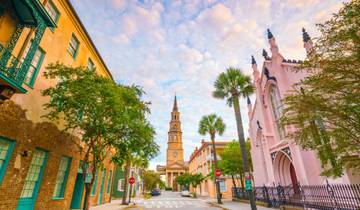
7 days
Southern Charms (from Charleston to Savannah)
- ✓ Comprehensive Charleston tour
- ✓ Expert local guides included
- ✓ All accommodation arranged
- ✓ Transportation provided
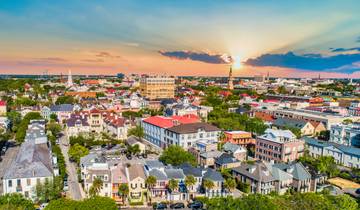
7 days
Southern Charm featuring Charleston, Savannah, and Jekyll Island (Charleston, SC to Jekyll Island, GA, 2027)
- ✓ Comprehensive Charleston tour
- ✓ Expert local guides included
- ✓ All accommodation arranged
- ✓ Transportation provided
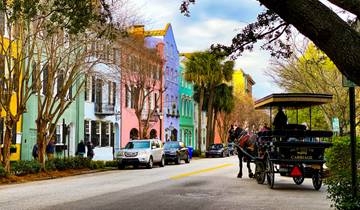
7 days
Southern Charm Holiday (Charleston, SC to Jekyll Island, GA, 2026)
- ✓ Comprehensive Charleston tour
- ✓ Expert local guides included
- ✓ All accommodation arranged
- ✓ Transportation provided
7 days
Southern Charm Holiday (Charleston, SC to Jekyll Island, GA, 2027)
- ✓ Comprehensive Charleston tour
- ✓ Expert local guides included
- ✓ All accommodation arranged
- ✓ Transportation provided
Multi-day tour packages powered by TourRadar. Prices and availability subject to change.
Introduction: Navigating Charleston’s Tour Landscape in 2026
Charleston stands as America’s best-preserved colonial city, where cobblestone streets laid in the 1700s still guide visitors past pastel antebellum mansions, church steeples earning the nickname “The Holy City,” and waterfront vistas where the Ashley and Cooper rivers converge into the Atlantic. The compact Historic District concentrates over 300 years of architectural and cultural heritage within a 2-square-mile peninsula, creating one of the nation’s most walkable urban heritage sites. This geographic compression enables visitors to experience significant colonial, Revolutionary War, and Civil War landmarks within comfortable walking distances, yet the layered complexity of Charleston’s history rewards structured exploration through professional tours and curated routes.
The 2026 tour landscape offers unprecedented variety across transportation modes, thematic focuses, and experience levels. Traditional horse-drawn carriage tours maintain their position as Charleston’s signature sightseeing experience, carrying over 500,000 annual visitors through rotating routes determined by the city’s mandatory lottery system. Walking tours led by certified guides have expanded to include specialized themes from African American heritage to architectural deep-dives and hidden alleyway discoveries. Harbor cruises provide water-based perspectives on Charleston’s maritime history, Civil War battlefields, and contemporary dolphin populations thriving in protected coastal waters. Plantation tours extend exploration beyond the Historic District to antebellum estates preserving both grandeur and the sobering realities of enslaved labor sustaining the rice and cotton economy.
Self-guided walking routes compete effectively with organized tours for visitors prioritizing flexibility and independent pacing. The classic waterfront-to-Battery circuit covers Charleston’s most photographed landmarks in 1.5-2 miles of flat, accessible walking requiring no advance reservations or departure schedules. Digital tools from free PDF maps to premium audio tour apps enable self-directed exploration with varying levels of historical commentary. The Bloomberg Connects app developed by the Preservation Society of Charleston offers multiple thematic self-guided routes accessible through smartphones, while traditional printed maps remain available at the Charleston Visitor Center for $5.
Timing considerations shape optimal touring strategies for 2026 visits. Spring months from March through May and fall months from September through November deliver comfortable temperatures for outdoor exploration, though these peak seasons require advance reservations for popular Fort Sumter cruises and plantation tours selling out weeks ahead. Summer visitors from June through August face heat and humidity reaching 90°F with afternoon thunderstorms, making early morning tours from 9-10 AM essential for comfort. Winter months from December through February offer the lowest prices and smallest crowds, with mild temperatures averaging 55-65°F supporting year-round walking and touring.
Tour pricing in 2026 remains remarkably accessible considering Charleston’s international reputation and tourist infrastructure. Standard walking tours cost $30 for comprehensive 1.5-2 hour experiences with certified guides, while iconic carriage rides maintain consistent $26 adult pricing across all major operators. Fort Sumter National Monument cruises start at $26 including round-trip ferry service and fort admission, matching the value proposition of self-guided walking which costs nothing beyond time and shoe leather. Multi-day attraction passes beginning at $106 bundle multiple sites and tours with savings up to 40% versus individual ticket purchases, appealing to visitors planning three or more days of intensive sightseeing.
The route lottery system governing carriage tours represents Charleston’s unique approach to heritage preservation and traffic management. City ordinances require all carriage companies to participate in computerized lottery drawings determining which of five predetermined routes each carriage follows, preventing tour concentration on specific streets and distributing wear across the Historic District. This system means no single carriage tour covers all major Charleston landmarks, and visitors seeking comprehensive carriage coverage would need multiple rides on different days. The randomization frustrates some visitors expecting specific site guarantees, yet supports Charleston’s broader preservation goals by limiting repetitive traffic on fragile historic streets.
Combination packages bundling complementary experiences deliver the best overall value for first-time Charleston visitors in 2026. Popular pairings include carriage tours with harbor cruises, Fort Sumter visits with downtown walking tours, and plantation excursions with Historic District exploration. These packages reduce total costs by $15-25 per person versus separate bookings while solving transportation and timing logistics across dispersed attractions. Operators including Fort Sumter Tours and Old South Carriage Company offer packaged experiences bookable online with flexible same-day or multi-day usage windows accommodating varied itinerary preferences.
Historic Walking Tours Charleston 2026: Guided Experiences
Professional walking tours in Charleston cost $30 for comprehensive 1.5-2 hour experiences led by certified guides navigating the French Quarter, South of Broad neighborhoods, and hidden alleyways inaccessible to casual visitors. Tours depart multiple times daily from central meeting points near Charleston City Hall, with morning departures at 9:30 AM and 11 AM avoiding afternoon heat while capturing optimal photography light across Rainbow Row and waterfront locations. Groups typically max out at 15-20 participants maintaining intimate atmosphere and easy question-and-answer exchanges with guides sharing decades of local knowledge.
The standard historic walking route covers approximately 1.5 miles at leisurely pace with 8-12 significant stops including Charleston City Hall’s Adamesque architecture, Dock Street Theatre as America’s first purpose-built playhouse, St. Philip’s Church dominating the skyline since 1836, White Point Gardens offering Fort Sumter views, and Rainbow Row’s 13 colorful Georgian townhouses dating to the 1740s. Guides provide historical context connecting colonial founding in 1670 through Revolutionary War occupation, Civil War bombardment, and modern preservation efforts saving Charleston from mid-century urban renewal demolition. The narrative arc reveals how Charleston evolved from England’s wealthiest colonial city through devastating war and economic collapse to contemporary status as a leading heritage tourism destination.
Specialized walking tours expand beyond general history to focused themes appealing to specific interests. African American heritage tours at $30-40 trace the city’s central role in the transatlantic slave trade, visiting the Old Slave Mart Museum where auctions occurred until 1863, Catfish Row inspiring Porgy and Bess, and sites associated with Denmark Vesey’s failed 1822 rebellion. Architecture tours at $35 examine Charleston’s unique “single house” design, earthquake-resistant construction techniques, and transitions from Georgian through Federal to Greek Revival styles. Food tours at $99 combine walking with culinary tastings at 4-6 restaurants and markets, introducing Lowcountry specialties including shrimp and grits, she-crab soup, and Carolina Gold rice.
Ghost and supernatural tours transform evening walks into atmospheric explorations of Charleston’s haunted reputation. Tours departing at 7 PM and 8:30 PM cost $41-45 for 90-minute routes visiting the Unitarian Church Graveyard, Provost Dungeon, and locations associated with Civil War deaths, colonial executions, and reported paranormal activity. Guides balance entertainment with historical accuracy, explaining how yellow fever epidemics, hurricane casualties, and battle deaths created Charleston’s ghost lore without sensationalizing genuine tragedy. Some tours include exclusive after-hours graveyard access unavailable to independent visitors.
Hidden alleyways tours at $30 reveal Charleston’s overlooked spaces between major landmarks. These 2-hour experiences follow narrow passages including Philadelphia Alley connecting Church Street to the waterfront, Longitude Lane preserving colonial-era dimensions, and Gateway Walk’s serpentine route through four historic church graveyards. Guides explain how Charleston’s alley system supported service access, enslaved labor movement, and modern preservation victories saving these spaces from development. The tours appeal to repeat visitors having completed standard historic routes and seeking deeper neighborhood knowledge.
Private walking tours accommodate 1-12 guests for $200-400 total depending on group size and duration. Private options enable customized pacing, specialized topic emphasis, and schedule flexibility unavailable in standard group tours. Families with young children, photographers requiring extended shooting time, and history enthusiasts wanting detailed architectural analysis benefit from private guide attention. Advance booking recommended for weekend and holiday periods when guide availability tightens.
Booking strategies for walking tours in 2026 include online reservations guaranteeing preferred departure times versus walk-up availability accepting last-minute participants when space permits. Most operators offer free cancellation with 24 hours notice, supporting flexible itinerary adjustments for weather or competing attractions. Spring and fall peak seasons warrant 3-5 day advance booking for popular morning departures, while summer and winter periods accommodate same-day walk-ups. Tour companies including Walks of Charleston, Free Tours by Foot, and Bulldog Tours maintain consistent quality across multiple daily departures.
Charleston Carriage Tours 2026: Classic Historic District Experience
Horse-drawn carriage tours represent Charleston’s iconic sightseeing experience, carrying visitors through 25-30 blocks of the Historic District in comfortable one-hour rides narrated by certified guides. Standard tours cost $26 for adults and $16 for children ages 4-11 across all major operators, with departures every 15-30 minutes throughout daylight hours from central stables near the City Market and Anson Street. Belgian and Percheron draft horses pull carriages seating 12-16 passengers in open-air configurations maximizing visibility across Charleston’s architectural heritage.
The city’s mandatory lottery system determines which of five predetermined routes each carriage follows, preventing operator choice and distributing tour traffic across different Historic District sections. Routes rotate through combinations including the French Quarter with Huguenot Church and Dock Street Theatre, South of Broad mansions along Meeting and Legare Streets, the Market district with vendors and sweetgrass basket weavers, Ansonborough neighborhoods showcasing restoration projects, and waterfront areas approaching The Battery. No single route covers all major Charleston landmarks, meaning visitors seeking comprehensive carriage coverage require multiple tours on different days hoping for route variety through lottery draws.
Tour narration follows certified guide training emphasizing architectural styles, colonial founding, Civil War history, and preservation victories saving Charleston from mid-century demolition proposals. Guides point out “single houses” with narrow street-facing facades maximizing breeze capture, earthquake bolts installed after the devastating 1886 temblor, and piazza orientations capturing prevailing winds before air conditioning. The one-hour timeframe balances historical depth with accessible attention spans, particularly for families with children enjoying the carriage ride experience alongside educational content.
Evening and specialty carriage tours expand beyond daytime historic routes. Haunted carriage tours departing at twilight cost $26 for adults and $20 for children, covering 40-minute routes emphasizing supernatural stories, Civil War tragedies, and locations associated with reported ghost sightings. These tours appeal to visitors seeking entertainment alongside history, though guides maintain factual grounding even when discussing Charleston’s haunted reputation. Child-free adult tours on Saturday afternoons at 2 PM cost $30, creating quieter atmosphere for couples and adults preferring historical focus over family-friendly entertainment.
Private carriage experiences accommodate intimate groups of 1-4 guests in elegant vis-à-vis carriages offering exclusive guide attention and customized pacing. Private tours cost $200-300 for one-hour experiences, with route flexibility subject to city traffic regulations but greater conversational interaction unavailable in standard group settings. Anniversary celebrations, proposals, and special occasions drive private carriage demand, with advance reservations required for guaranteed availability.
Combination packages bundling carriage tours with complementary experiences deliver better value than separate bookings. Popular combinations include carriage tours paired with 90-minute harbor cruises for $60 total versus $76 separately, or carriage tours with Fort Sumter visits for $65 versus $78 individually. These packages accommodate same-day or multi-day usage, with tickets valid for 30 days from first use providing itinerary flexibility. Old South Carriage Company and Palmetto Carriage Works offer the widest combo selections partnering with harbor cruise operators and National Park Service Fort Sumter tours.
Booking strategies for carriage tours balance walk-up convenience against guaranteed departure times. All major operators accept online reservations with specific time slots, recommended for morning departures, weekend visits, and peak spring/fall seasons when tours sell out hours ahead. Walk-up purchasing remains available throughout the day but may require 30-60 minute waits during busy periods. Early morning tours at 9 AM qualify for promotional codes reducing standard $26 pricing by $3-5 per person. Free cancellation policies allow changes up to one hour before departure for standard public tours, supporting flexible daily planning.
Animal welfare considerations address concerns about horses working in Charleston’s summer heat. City regulations mandate maximum temperatures of 95°F with mandatory breaks every 90 minutes, shade requirements at departure barns, and veterinary oversight ensuring horse health. Operators rotate animals through work schedules preventing overexertion, with each horse working 4-5 hours daily maximum. Winter months provide comfortable working conditions, while summer operations concentrate on morning and evening hours avoiding peak afternoon heat.
Fort Sumter Tours 2026: Civil War Harbor Cruises
Fort Sumter National Monument cruises provide the only public boat access to the Civil War’s first battlefield, combining 30-minute narrated harbor crossings with self-guided fort exploration. Tours cost $26 for adults in 2026, with departures from two locations serving different Charleston area bases. Downtown Charleston departures from Liberty Square at 340 Concord Street run at 9:30 AM, noon, and 2:45 PM during peak season, while Patriots Point departures from 40 Patriots Point Road in Mount Pleasant run at 10:45 AM and 1:30 PM. Winter schedules reduce to midday departures at 11 AM and 2 PM from each location.
The harbor cruise narrative covers Charleston’s maritime history from colonial port development through Revolutionary War British occupation, antebellum cotton export dominance, and Civil War naval strategy culminating in the April 12, 1861 Confederate bombardment opening the war’s first shots. Boats pass Rainbow Row’s waterfront context, The Battery’s defensive seawalls, Castle Pinckney’s abandoned fortification, and Arthur Ravenel Jr. Bridge spanning the Cooper River with 1,546-foot main span. Onboard narration connects visible landmarks to historical events, explaining how Charleston Harbor’s geography influenced military strategy and commercial shipping for 350 years.
Fort Sumter provides one hour for self-guided exploration across the brick fortification occupying a man-made island at Charleston Harbor’s entrance. National Park Service rangers greet arriving visitors with 15-minute orientation programs explaining the fort’s construction beginning in 1829, Major Robert Anderson’s Union garrison holdout, and Confederate bombardment forcing surrender after 34 hours. The fort’s museum displays artillery shells, garrison artifacts, and interpretive exhibits tracing the installation’s evolution through subsequent Civil War occupation and World War II coastal defense modifications. Upper-level observation decks offer panoramic harbor views encompassing downtown Charleston, Fort Moultrie on Sullivan’s Island, and shipping channels serving modern Port of Charleston operations.
Round-trip ferry transportation includes return cruises completing the 2.5-hour total experience. Return narration often covers different historical themes than outbound commentary, with guides addressing questions accumulated during fort exploration. Boats feature climate-controlled cabins, outdoor deck seating, onboard restrooms, and concession sales for beverages and snacks. Accessibility accommodations include wheelchair boarding ramps at Liberty Square, though Patriots Point boarding presents challenges during extreme low tides requiring advance coordination through 843-722-2628.
Combination packages pairing Fort Sumter cruises with downtown attractions maximize Charleston’s Civil War heritage exploration. Fort Sumter plus historic walking tour combinations cost $55 versus $68 purchased separately, connecting harbor battlefield context with downtown sites including Confederate Museum, Powder Magazine, and Battery promenades where Charleston residents watched the fort’s bombardment. Fort Sumter plus carriage tour packages at $60 provide land and water perspectives on the same historical period through complementary narration styles. Fort Sumter plus Magnolia Plantation combinations at $85 extend exploration from urban military history to rural plantation economy sustaining the Confederate cause.
Booking strategies for Fort Sumter tours emphasize advance reservations during spring and fall peak seasons when tours sell out days ahead. Online booking through fortsumtertours.com guarantees specific departure times and boarding locations, with tickets delivered via email for smartphone scanning. Walk-up purchasing remains possible at Liberty Square and Patriots Point ticket offices based on remaining capacity, risky during March-May and September-November high-demand periods. Tickets refund fully if canceled two hours before departure, supporting weather-dependent itinerary flexibility.
Weather considerations affect Fort Sumter operations year-round. Tours operate in most conditions except lightning storms and heavy fog compromising safe harbor navigation. Summer thunderstorms occasionally delay departures or reduce fort exploration time when lightning reaches within 10 miles, with National Park Service closing observation decks until all-clear conditions return. Winter cold fronts create choppy harbor crossings uncomfortable for seasick-prone visitors, though boats remain stable in typical wave conditions. Bringing light jackets for wind exposure and sun protection for deck seating improves comfort across seasons.
Charleston Harbor Sightseeing Cruises 2026: Waterfront Perspectives
Charleston Harbor sightseeing cruises offer relaxing 90-minute narrated tours showcasing 75+ landmarks from water-level perspectives unavailable to land-based sightseers. Standard daytime cruises cost $40-50 for adults, with sunset cruises commanding premium pricing at $60-65 for golden-hour photography and atmospheric harbor twilight. Departures from Aquarium Wharf at 360 Concord Street run multiple times daily, with morning tours at 10 AM, midday at noon and 2 PM, and sunset times varying seasonally from 5:30 PM to 7:30 PM matching actual sunset schedules.
The cruise route covers Charleston Harbor’s entire navigable waterfront from the Ashley River confluence past downtown historic sites, under the Arthur Ravenel Jr. Bridge, around Fort Sumter’s offshore position, and back via Castle Pinckney and Patriots Point. Certified city guides provide live narration explaining how tidal marsh ecology supports shrimp and crab fisheries, colonial-era seawalls protect Battery promenades from storm surge, and modern container port operations make Charleston the fourth-busiest East Coast shipping hub. Dolphin sightings occur on approximately 70% of cruises, with Atlantic bottlenose dolphins frequently feeding in harbor channels and bow-riding alongside tour boats.
Schooner sailing cruises provide traditional tall-ship experiences aboard 84-foot vessels with 1,500 square feet of canvas sail. Sailing cruises cost $46 for 90-minute daylight tours, with the crew hoisting sails once past harbor no-wake zones and engaging wind power for authentic maritime atmosphere. These cruises appeal to sailing enthusiasts and visitors seeking romantic alternatives to standard motorized tours. Sunset schooner sails at $76 combine sailing experience with premium timing for Charleston’s legendary harbor sunsets reflecting off church steeples and waterfront architecture.
Specialty cruises expand harbor tour options beyond standard sightseeing. Dinner cruises at $111 include three- or four-course meals prepared from local ingredients, with white-tablecloth service and wine/cocktail bars aboard luxury dining yachts. These 2.5-hour cruises combine Charleston cuisine with harbor views, appealing to celebration occasions and upscale visitor experiences. Mimosa brunch cruises at $65 offer weekend midday alternatives pairing breakfast/lunch buffets with daytime harbor touring. Live music cruises incorporate local musicians performing Charleston jazz, blues, and Carolina beach music during evening sailings.
Eco-boat cruises to Morris Island Lighthouse cost $52 for 2.5-hour tours navigating tidal creeks and salt marshes before soft-landing at Morris Island for lighthouse photography and beachcombing. These tours emphasize Lowcountry ecology and wildlife observation over historic narration, with guides explaining marsh grass roles in coastal erosion prevention, horseshoe crab spawning cycles, and migratory bird populations utilizing Charleston’s coastal flyway. The abandoned Morris Island Lighthouse standing offshore since beach erosion separated it from land provides dramatic photography subjects and conservation discussion topics.
Private yacht charters accommodate 6-18 guests for customized harbor cruising at $500-1,000 for 2.5-3 hour experiences. BYOB policies permit guests bringing beverages and light refreshments, with coolers and glassware provided. Private charters appeal to family reunions, corporate team events, and celebration gatherings wanting exclusive vessel access and flexible routing within harbor navigation limits. Sunset timing remains most popular for private bookings, with advance reservations required for weekend dates during spring and fall peak seasons.
Booking strategies for harbor cruises include online purchase through operator websites guaranteeing preferred departure times versus walk-up availability for remaining capacity. Sunset cruises sell out earliest during peak seasons, warranting 3-5 day advance booking for guaranteed seats. Daytime tours maintain better walk-up availability even during busy periods. Combination packages bundling harbor cruises with carriage tours or walking tours reduce total costs by $10-15 per person while coordinating timing across complementary Charleston experiences.
Charleston Plantation Tours 2026: Lowcountry Estate Exploration
Plantation tours extend Charleston exploration beyond the urban Historic District to antebellum estates preserving both architectural grandeur and sobering realities of enslaved labor sustaining rice and cotton economy. Tours including round-trip transportation from downtown Charleston cost $67-85 for half-day experiences, with most departures running 4-5 hours total including travel time and estate exploration. Morning tours departing 9-10 AM and afternoon tours at 1-2 PM accommodate different itinerary preferences, with morning visits avoiding peak midday heat during summer months.
Magnolia Plantation and Gardens represents Charleston’s oldest public tourist site, welcoming visitors since the 1870s when the Drayton family opened gardens to generate post-Civil War income. Tours cost $67 with transportation from Charleston Visitor Center, including guided Magnolia House tours showcasing 1873 post-war reconstruction replacing the main house burned during Sherman’s March, plus choice of Nature Train tours through garden sections or Wildlife Boat tours on Ashley River tributaries. The 60-acre Romantic garden created beginning in the 1680s features camellias, azaleas, and seasonal blooms making spring visits from March-April particularly spectacular. Audubon Swamp Garden adds 60 acres of blackwater cypress-tupelo swamp with boardwalk trails for wildlife observation.
Middleton Place offers National Historic Landmark status and America’s oldest landscaped gardens dating to 1741. Tours cost $75-80 with transportation, featuring guided house tours of the south wing surviving 1865 Union occupation fires, plus self-guided garden exploration across 65 acres of terraced lawns, Butterfly Lakes, and geometric parterre beds reflecting formal European landscape design adapted to Lowcountry conditions. Living history demonstrations include blacksmith forging, pottery throwing, and weaving using period techniques. The stableyards area presents African American interpretation addressing enslaved craftspeople maintaining plantation operations, providing more comprehensive slavery context than many historic sites.
Boone Hall Plantation claims distinction as USA Today’s #1 Plantation and features the South’s most photographed approach avenue lined with live oaks draped in Spanish moss. Tours cost $67 with transportation, including guided Colonial-era house tours and access to nine original 1790s-1810s slave cabins comprising one of America’s most intact enslaved quarters. The Gullah Theater presentation shares stories of enslaved people’s West African heritage and cultural preservation through language, music, and traditions surviving into modern Gullah-Geechee communities. Seasonal peach, strawberry, and pumpkin picking operations maintain Boone Hall’s working farm status dating to 1681 founding.
Drayton Hall stands as the nation’s oldest preserved plantation house open to public access, with the 1738 Georgian-Palladian mansion remaining unfurnished to highlight architectural details often obscured by period furnishings. Tours cost $70-75 with transportation, emphasizing archaeological research uncovering enslaved people’s daily lives, detailed architectural analysis of the structure surviving both Revolutionary War and Civil War occupations unscathed, and African American cemetery preservation efforts recognizing enslaved and freed descendants buried on site. The unfurnished interpretation approach appeals to architecture enthusiasts and visitors seeking deeper understanding beyond decorative arts focus at other historic houses.
Combination plantation tours visit two estates in full-day experiences at $125-140, typically pairing Magnolia and Middleton or Boone Hall and Middleton for complementary perspectives on Charleston-area plantation economy. These extended tours provide lunch breaks at plantation cafes or downtown Charleston restaurants, with total times running 7-8 hours including travel. The combination approach suits visitors allocating single days to plantation exploration rather than spreading visits across multiple days, though the extended timeframe proves tiring for young children and mobility-limited participants.
Private plantation tours accommodate 1-6 guests for $400-600 including dedicated transportation and guide, enabling customized pacing and specialized topic emphasis. Photography-focused private tours allocate extended time at optimal garden viewpoints, while history-centered private tours emphasize archival research and detailed slavery interpretation unavailable in standard group formats. Advance booking required, particularly for peak spring garden bloom periods when demand exceeds guide availability.
Booking strategies for plantation tours emphasize advance reservations during spring months when garden blooms attract highest visitor numbers. Most operators require 48-72 hour advance booking for guaranteed space, with weekend departures selling out first. Combination packages with carriage tours or harbor cruises save $15-20 versus separate purchases while coordinating complementary Charleston experiences. Weather cancellations remain rare given indoor house tour components, though severe thunderstorms occasionally delay outdoor garden portions.
Self-Guided Walking Routes Charleston 2026: Independent Exploration
Self-guided walking routes provide flexibility and cost-free Charleston exploration for visitors preferring independent pacing over group tour schedules. The classic 1.5-mile Historic District loop covers the city’s most photographed landmarks in 2-3 hours at leisurely pace, requiring only comfortable walking shoes, water bottles, and smartphone maps or printed guides available at Charleston Visitor Center for $5. The route begins at Waterfront Park featuring the iconic Pineapple Fountain, proceeds south along East Bay Street to Rainbow Row’s 13 pastel Georgian houses, continues to The Battery’s waterfront promenades with Fort Sumter views, then returns north via Church Street and Meeting Street completing the circuit.
The Waterfront Park to Battery route provides continuous landmark density maintaining visual interest throughout the walk. From the Pineapple Fountain, walkers proceed to Vendue Range viewing Charleston Harbor shipping activity and Ravenel Bridge spans. Rainbow Row at 79-107 East Bay Street presents the city’s most-photographed facade sequence, with individual houses painted in Caribbean-influenced pastel blues, pinks, and yellows dating to 1930s-1940s restoration initiatives. The Old Exchange and Provost Dungeon at East Bay and Broad Streets offers optional museum admission at $12, though exterior architectural appreciation costs nothing.
The Battery at Charleston’s southern peninsula tip combines White Point Gardens’ live oak canopy with seawall promenades facing Fort Sumter’s offshore position 3.5 miles distant. Civil War-era cannons and monuments mark where Charleston residents watched the fort’s bombardment in April 1861, while modern joggers and dog-walkers demonstrate the space’s dual role as historic site and active public park. Mansion facades facing The Battery along South Battery and East Battery streets showcase Charleston’s wealthiest antebellum residences, with architectural details including earthquake bolts, piazzas capturing harbor breezes, and wrought-iron fencing displaying palmetto and scrollwork motifs.
Church Street provides the return route north through Charleston’s densest historic preservation district. St. Philip’s Church at 146 Church Street anchors the skyline with its 1836 steeple visible citywide, while the French Huguenot Church at 136 Church Street represents the nation’s only independent Huguenot congregation surviving from colonial refugees fleeing Catholic persecution. Dock Street Theatre at 135 Church Street occupies America’s first purpose-built playhouse site dating to 1736, with the current structure built in 1937 WPA reconstruction efforts. The route concludes at Charleston City Hall completing the loop back to Waterfront Park.
Extended self-guided routes add the French Quarter and Market district sections for 2.5-3 mile comprehensive walking covering additional Charleston neighborhoods. The French Quarter extension follows Queen Street west from Church Street, featuring St. Mary’s Catholic Church, the Huguenot Society’s museum and library, and densely preserved 18th-century commercial buildings adapted to modern restaurants and galleries. The Market extension continues north on Meeting Street to Charleston City Market’s four-block vendor pavilions selling sweetgrass baskets, regional foods, and souvenirs from local artisans maintaining traditional Lowcountry crafts.
Hidden alleyway routes reveal Charleston’s overlooked spaces between major landmarks. Philadelphia Alley connecting Church Street to the waterfront preserves colonial-era width and cobblestone paving, while Longitude Lane maintains 18th-century alley proportions now threatened by adjacent development pressures. Gateway Walk creates a serpentine route through four historic church graveyards—St. John’s Lutheran, Unitarian, St. Philip’s, and Circular Congregational—offering shaded walking and historical gravestone viewing unavailable on busy streets. These specialized routes require detailed maps available through free PDF downloads from Walks of Charleston website or premium audio tour apps at $10-15.
Digital self-guided tour tools range from free Bloomberg Connects app offering multiple thematic routes developed by the Preservation Society of Charleston, to premium audio tours at $15 providing detailed narration synced to GPS waypoints. Free PDF walking maps from Free Tours by Foot and Tours by Foot websites offer downloadable routes with brief historical descriptions at major stops, while Charleston Visitor Center sells printed maps at $5 including fuller background information. Smartphone navigation apps including Google Maps save custom walking routes connecting desired landmarks in optimal sequences minimizing backtracking.
Self-guided walking strategies for summer visits emphasize early morning starts before 9 AM when temperatures remain comfortable and tourist crowds minimal. Water bottles, sun protection, and rest stops in air-conditioned museum lobbies or shops become essential during June-August heat. Spring and fall shoulder seasons support all-day walking without heat concerns, while winter months rarely drop below 50°F maintaining year-round walkability. Comfortable shoes matter more than stylish footwear given Charleston’s uneven sidewalks pushed up by live oak roots and historic cobblestone street crossings testing ankle stability.
Charleston Food Tours 2026: Culinary Walking Experiences
Food tours combine walking routes with restaurant tastings introducing Charleston’s Lowcountry cuisine and culinary history. Downtown Culinary Tours cost $99 for 2.5-hour experiences visiting 4-6 restaurants and specialty food shops, with tastings including shrimp and grits, she-crab soup, fried green tomatoes, barbecue, pralines, and Carolina Gold rice dishes representing regional specialties unavailable outside the Charleston area. Tours depart at 10:30 AM and 1 PM accommodating breakfast-skippers and lunch-seekers, with group sizes limited to 12-15 participants maintaining intimate interaction with restaurant chefs and food artisans.
The culinary walking route covers approximately 1 mile through downtown Charleston’s densest restaurant concentration, visiting establishments ranging from historic dining rooms serving traditional recipes to modern kitchens reinterpreting Lowcountry ingredients through contemporary techniques. Tour stops typically include she-crab soup at Charleston seafood institutions ladling the rich cream-based soup invented at Everett’s on East Bay Street in the 1930s, shrimp and grits featuring local creek shrimp over stone-ground Carolina Gold rice grits, and barbecue representing South Carolina’s distinct mustard-based sauce tradition differentiating it from vinegar-based North Carolina and tomato-based Georgia styles.
Historical context accompanies food tastings, explaining how Charleston’s colonial port status brought West African rice cultivation expertise, Caribbean spice trade access, and French Huguenot culinary techniques combining into unique Lowcountry cuisine. Guides discuss enslaved West African cooks developing recipes adapting African ingredients like okra, benne seeds, and field peas to New World conditions, creating dishes including Hoppin’ John, gumbo, and red rice. The African heritage recognition provides sobering context alongside culinary appreciation, acknowledging how enslaved labor sustained Charleston’s colonial wealth while creating enduring foodways.
Specialty food tours focus on specific culinary themes beyond general downtown tastings. Chef’s Kitchen Tours at $125 include behind-the-scenes restaurant access watching chefs prepare dishes, with extended time for cooking technique questions and ingredient sourcing discussions. Artisan Food Tours at $110 visit Charleston’s specialty producers including cheese makers, chocolatiers, coffee roasters, and bread bakers, emphasizing farm-to-table movements and local ingredient sourcing. Evening Dessert Tours at $75 concentrate on Charleston’s pastry scene featuring pecan pie, coconut cake, bread pudding, and bourbon-laced sweets reflecting Southern baking traditions.
Market vendor tours at $65 explore Charleston City Market’s four-block vendor pavilions focusing on Gullah-Geechee sweetgrass basket weavers maintaining traditions dating to West African origins. Tours explain sweetgrass basket construction techniques, coil-building methods, and contemporary artists adapting traditional forms to modern decorative purposes while preserving cultural heritage. The lower pricing reflects shorter duration and fewer sit-down tastings compared to full culinary tours, though learning directly from basket artists provides cultural immersion unavailable in standard food-focused experiences.
Private food tours accommodate 2-8 guests for $600-800 total, enabling dietary restriction accommodation, pacing customization, and restaurant selection matching specific culinary interests. Private tours benefit gluten-free, vegetarian, and allergen-sensitive participants requiring menu modifications impractical in standard group formats. Anniversary celebrations and foodie enthusiast groups drive private tour demand, with advance booking required for guaranteed guide and restaurant availability.
Booking strategies for food tours emphasize online reservations securing preferred departure times and dietary requirement communication. Most operators request 72-hour advance notice for dietary restrictions enabling restaurant coordination, though gluten-free and vegetarian accommodations generally accommodate shorter notice. Weekend tours sell out earliest during spring and fall peak seasons, with weekday availability remaining stronger even during busy periods. Tours operate year-round with minimal weather impact given primary indoor restaurant activity.
Charleston Ghost Tours 2026: Evening Supernatural Exploration
Ghost tours transform Charleston’s historic streets into atmospheric evening explorations of supernatural lore, Civil War tragedies, and locations associated with reported paranormal activity. Walking ghost tours cost $41-45 for 90-minute experiences departing at 7 PM and 8:30 PM from central meeting points near Washington Square and Waterfront Park. Group sizes max at 15-20 participants maintaining conversational atmosphere while navigating narrow alleyways and graveyard entrances after dark. Tours appeal to visitors seeking entertainment alongside history, with guides balancing spooky storytelling against factual grounding in Charleston’s genuine tragic events.
The standard ghost tour route covers approximately 1.5 miles through Charleston’s oldest districts, visiting the Unitarian Church Graveyard where overgrown Southern garden surrounds 18th-century graves and reported spirit sightings, the Old Exchange and Provost Dungeon where Revolutionary War prisoners died in basement cells, and locations associated with the 1886 earthquake killing 60+ residents and creating sudden traumatic deaths feeding ghost legend development. Guides share stories about Sue Hardy reportedly haunting St. Philip’s Church graveyard, the Gentleman Ghost of Battery Carriage House Inn, and paranormal activity at the Mills House hotel documented by guests and staff over decades.
Exclusive graveyard access distinguishes certain ghost tours from competitors. The 90-minute tour with Unitarian Church Graveyard after-hours entry costs $45, providing exclusive access unavailable to daytime visitors or competing tour companies lacking special permissions. The atmospheric graveyard setting with Spanish moss draping live oaks creates genuinely eerie ambiance supporting supernatural storytelling, though guides emphasize respecting the sacred space and actual historical figures buried within. Photography encouraged during graveyard portions, with many participants seeking orb phenomena or unusual light artifacts in digital images.
Haunted pub crawls at $50-55 combine ghost stories with bar visits, stopping at 3-4 historic taverns while guides share supernatural tales associated with each location. These adult-oriented tours attract 21+ participants seeking social drinking atmosphere alongside paranormal entertainment, with alcoholic beverages purchased separately at each stop. The format reduces walking intensity compared to standard ghost tours while maintaining historical content between bar visits. Popular haunted pub crawl stops include Poogan’s Porch with its resident dog ghost, the Griffon British Pub occupying colonial-era buildings, and Tommy Condon’s Irish Pub in the historic district.
Carriage ghost tours offer seated alternatives to walking routes, covering 40-minute circuits through haunted Charleston at $26 for adults and $20 for children. The shorter timeframe and carriage comfort appeal to mobility-limited visitors or families with young children wanting ghost tour participation without 90-minute evening walks. Routes pass the Battery where Revolutionary War and Civil War deaths occurred, the Old City Jail housing condemned prisoners before executions, and residential streets with reported haunted house activity. Guides maintain age-appropriate content for family audiences while preserving atmospheric storytelling.
Cemetery-focused ghost tours at $40 concentrate exclusively on Charleston’s historic burial grounds including Magnolia Cemetery’s Confederate soldiers section, St. Michael’s churchyard graves dating to colonial period, and Circular Congregational Church’s graveyard established in the 1690s. These specialized tours appeal to history enthusiasts and grave tourism participants seeking detailed burial ground information beyond general ghost entertainment. Guides provide genealogical context, gravestone symbolism interpretation, and burial practice evolution from colonial through Victorian periods alongside supernatural legends associated with specific graves.
Booking strategies for ghost tours include online reservations guaranteeing space on preferred evening departures versus walk-up availability often resulting in sold-out disappointment during peak seasons. Spring and fall months see strongest demand matching comfortable evening temperatures for outdoor walking, while summer tours maintain popularity despite heat. Winter ghost tours from December-February offer smallest crowds and most intimate group sizes, with mild evening temperatures rarely requiring heavy coats. Tours operate rain-or-shine with cancellations only for severe thunderstorms posing lightning danger during outdoor graveyard portions.
Charleston Bus Tours 2026: Narrated Sightseeing Circuits
Narrated bus tours provide comfortable climate-controlled Charleston sightseeing for visitors preferring seated touring over walking or carriage alternatives. Standard city highlight tours cost $35-45 for 90-minute experiences covering broader geographic areas than walking or carriage routes, including Hampton Park, The Citadel military college, and outlying historic neighborhoods inaccessible to pedestrian tours. Buses depart from Charleston Visitor Center at 375 Meeting Street, with morning tours at 10 AM and afternoon tours at 1 PM and 3 PM accommodating different daily schedules.
The comprehensive bus route covers 100+ points of interest across Charleston’s peninsula and immediate suburbs, passing Rainbow Row, The Battery, Colonial Lake, Marion Square, Citadel campus, and historic church steeples while guides provide continuous narration connecting architectural details to historical events. Four designated stops at Charleston Visitor Center, Hampton Park, The Battery, and City Market allow passengers disembarking for photo opportunities before reboarding for remaining circuit portions. The hop-on hop-off flexibility appeals to visitors wanting self-guided exploration at specific sites while maintaining transportation convenience for longer distances.
Old Town Trolley Tours operate distinctive red trolley buses with open-air seating sections combining motorized touring with vintage trolley aesthetics. Trolley tours cost $40 for adults with all-day hop-on hop-off privileges at 14 stops throughout downtown Charleston and surrounding neighborhoods. Narrated circuits run continuously from 9 AM to 4 PM with 20-30 minute intervals between trolleys, enabling passengers spending varying amounts of time at different stops before catching subsequent trolleys continuing their sightseeing. The all-day access supports multi-hour Charleston exploration without walking fatigue, particularly appealing to families with young children or mobility-limited participants.
Combination packages bundling bus tours with carriage rides or harbor cruises reduce total costs compared to separate ticket purchases. Bus tour plus carriage tour combinations cost $71 versus $82 separately, pairing broad geographic bus coverage with intimate carriage route details for complementary Charleston perspectives. Bus tour plus harbor cruise combinations at $81 add water-based viewpoints to land touring, with flexible same-day or multi-day usage accommodating varied itinerary preferences. These packages suit first-time visitors seeking comprehensive Charleston introduction across multiple transportation modes.
Express bus tours condense standard routes into 60-minute quick overviews at $35, targeting cruise ship passengers on tight shore excursion schedules or business travelers squeezing Charleston sightseeing between meetings. Express routes sacrifice hop-on hop-off flexibility for continuous narrated circuits covering essential landmarks including The Battery, Rainbow Row, Charleston City Market, and major church steeples. The condensed format provides basic Charleston orientation for subsequent independent exploration or satisfies minimal sightseeing goals for time-constrained visitors.
Private bus charters accommodate groups of 20-40 passengers for $600-900 covering 2-3 hour customized itineraries. Group charters suit corporate events, family reunions, and convention activities wanting dedicated vehicles and specialized route emphasis matching specific interests. School groups studying Civil War history request extended Fort Sumter and Battery stops, while architecture-focused groups emphasize residential neighborhood circuits examining Charleston’s building preservation efforts. Advance booking required for guaranteed vehicle availability, particularly during spring and fall convention seasons when corporate group demand peaks.
Booking strategies for bus tours include online purchase guaranteeing seats on preferred departure times versus walk-up tickets subject to remaining capacity. Morning departures typically maintain better availability than afternoon tours during peak visitor seasons, though all-day trolley passes eliminate specific time constraints supporting flexible daily planning. Combination package purchases online deliver better pricing than separate tour bookings, with digital tickets eliminating will-call pickup requirements at busy visitor center windows.
Charleston Scavenger Hunts 2026: Interactive Walking Games
Scavenger hunt experiences transform Charleston walking into interactive games combining historical exploration with puzzle-solving challenges. App-based scavenger hunts cost $10-15 per player for self-paced experiences navigating downtown landmarks while solving riddles, finding hidden plaques, and photographing specific architectural details. Popular apps including Let’s Roam and Operation City Quest guide participants through 2-3 mile routes over 2-3 hour timeframes, with competitive scoring systems tracking team progress against other players and virtual leaderboards.
The game mechanics blend traditional scavenger hunt checklist completion with trivia questions testing Charleston historical knowledge and photo challenges documenting landmark discoveries. Participants follow smartphone app directions to sequential waypoints revealing new riddles and tasks, with GPS verification confirming arrival at correct locations before unlocking subsequent challenges. Teams of 2-6 players compete against each other or cooperate toward collective goals, with flexible pacing allowing breaks for refreshments or extended photography sessions without time pressure penalizing casual participants.
Themed scavenger hunts focus on specific Charleston topics beyond general historic exploration. Civil War scavenger hunts emphasize Fort Sumter viewpoints, Confederate Museum locations, and Battery defensive positions while asking questions about battle timelines and military strategy. Architecture hunts challenge participants identifying Charleston’s signature single house design, earthquake bolt placements, and piazza orientations while explaining structural purposes. Ghost-themed hunts visit supernatural locations evening hours with spooky narratives accompanying landmark discovery tasks.
Bar crawl scavenger hunts combine drinking with downtown exploration, routing teams through 4-6 bars while completing drinking-related challenges and Charleston trivia questions. These 21+ adult experiences cost $35-45 including pre-purchased drink tickets redeemable at participating bars, creating social party atmosphere alongside competitive gaming. The format appeals to bachelor/bachelorette parties, corporate team-building events, and friend groups seeking entertainment beyond standard bar hopping without structured games.
Private scavenger hunt creation services develop customized routes and challenges for special events including marriage proposals, birthday celebrations, and corporate team events. Custom scavenger hunts cost $200-400 depending on complexity and participant numbers, with organizers designing personalized riddles, photo challenges, and route waypoints matching specific celebration themes or company messaging. Advance planning required given custom content development timelines, though resulting experiences provide unique Charleston memories unavailable through generic tourist activities.
Family-friendly scavenger hunts simplify challenges for children ages 6-12 while maintaining adult engagement, using age-appropriate riddles and achievable physical tasks like counting church steeples or finding specific colored houses. Family hunts cost $40-50 total for groups of 4-6 participants, providing kid-focused entertainment during Charleston visits while educating children about history through interactive gameplay rather than passive tour listening. The self-paced format accommodates children’s energy levels and attention spans better than structured group tours requiring sustained focus.
Booking strategies for scavenger hunts emphasize app download and account creation before arrival, enabling immediate game start upon reaching Charleston rather than spending vacation time on technical setup. Apps including Let’s Roam and Operation City Quest offer free trials revealing game mechanics before committing to paid hunts. Group organizers should purchase team packages rather than individual tickets when available, with bulk pricing reducing per-person costs for parties of 4+ participants. Downloaded content enables offline gameplay preventing cellular data overages during extended outdoor game sessions.
Best Walking Routes Charleston 2026: Neighborhood-by-Neighborhood Guide
Charleston’s Historic District divides into distinct neighborhoods each offering unique walking experiences and architectural characteristics. Understanding neighborhood-specific routes enables targeted exploration matching visitor interests from waterfront walking to residential mansion viewing to commercial district shopping integration.
The French Quarter bounded by Market Street, East Bay Street, Broad Street, and Meeting Street concentrates Charleston’s densest colonial-era commercial architecture adapted to modern restaurants, galleries, and boutique shops. The French Quarter walking route spans 0.8 miles covering Dock Street Theatre, French Huguenot Church, St. Philip’s Church, and Philadelphia Alley in 60-90 minutes at casual pace. This compact neighborhood suits morning exploration before midday heat, with numerous café stops providing refreshment breaks between landmark visits. The area name reflects 18th-century French Huguenot merchant concentration rather than New Orleans-style French colonial architecture, with structures displaying English Georgian influence dominant in colonial Charleston.
South of Broad represents Charleston’s most exclusive residential district, where antebellum mansions facing The Battery showcase the city’s wealthiest preservation efforts. The South of Broad route follows Meeting Street south from Broad Street to The Battery, loops west along South Battery and East Battery viewing waterfront mansions, then returns north via Church Street covering 1.2 miles in 90 minutes. Architectural highlights include Edmondston-Alston House’s Italianate details, Calhoun Mansion’s 35-room opulence, and private residences rarely open to public access but impressive from exterior viewing. The neighborhood maintains exclusively residential character with minimal commercial intrusions preserving 19th-century streetscape atmosphere.
Ansonborough between Market Street and Calhoun Street showcases Charleston’s most dramatic preservation victories, where 1960s-1970s restoration efforts reversed mid-century decline threatening wholesale demolition. The Ansonborough walking route covers Hasell Street, Laurens Street, and Anson Street residential blocks totaling 1 mile over 75-90 minutes, demonstrating how preservation tax incentives transformed near-slums into Charleston’s priciest real estate. The Historic Charleston Foundation headquarters at 40 East Bay Street provides neighborhood context through exhibits explaining preservation techniques and economic revival strategies replicable in other threatened historic districts nationwide.
The Market district from Meeting Street to East Bay Street centers on Charleston City Market’s four-block vendor pavilions operating since 1804. The Market walking route spans 0.5 miles covering market halls, surrounding restaurant concentrations, and Gullah-Geechee sweetgrass basket vendors maintaining traditional African-rooted crafts. The compact area suits afternoon browsing and shopping, with air-conditioned market halls providing heat relief between outdoor street sections. Evening visits after 6 PM offer quieter atmosphere as day vendors depart, with nearby restaurant patios activating street life through dinner hours.
Harleston Village west of King Street features Victorian-era residential development with Charleston’s largest concentration of single houses showcasing the city’s distinctive architectural adaptation to subtropical climate. The Harleston Village route follows Bull Street, Smith Street, and Pitt Street residential blocks covering 1.3 miles over 90 minutes, passing Colonial Lake’s downtown park setting and viewing residential architecture spanning 1850s-1920s construction periods. The neighborhood sees fewer tourists than French Quarter or South of Broad, providing authentic residential Charleston atmosphere beyond heavy tourist concentrations.
King Street shopping district divides into Upper King’s modern retail and dining, Middle King’s antique shops and boutiques, and Lower King’s luxury stores and galleries. The complete King Street walking route spans 2.5 miles from Calhoun Street to The Battery requiring 2-3 hours with shopping stops, though most visitors concentrate on specific King Street sections matching shopping interests. Upper King appeals to younger visitors seeking contemporary fashion and craft cocktail bars, while Lower King targets luxury shoppers and art collectors browsing gallery districts.
Radcliffeborough north of Calhoun Street represents Charleston’s emerging neighborhood undergoing active gentrification transforming former working-class districts into destination dining and boutique hotel concentrations. The Radcliffeborough route follows Spring Street and Reid Street residential blocks plus Morrison Drive’s restaurant row covering 1.5 miles over 90-120 minutes, demonstrating Charleston’s geographic expansion beyond traditional Historic District boundaries. The area suits adventurous visitors seeking authentic local character and culinary innovation beyond tourist-saturated French Quarter establishments.
Charleston Photography Walking Routes 2026: Optimal Shooting Locations
Photography-focused walking routes prioritize Charleston’s most photogenic locations during optimal lighting conditions maximizing image quality and iconic composition opportunities. The sunrise waterfront route begins at Waterfront Park’s Pineapple Fountain for dawn golden hour photography, proceeds to Rainbow Row capturing morning side-lighting across pastel facades, then concludes at The Battery for sunrise harbor views with Fort Sumter silhouettes. The 1.5-mile route requires 2-3 hours accommodating tripod setup, composition refinement, and lighting wait periods, with 6-7 AM starts capturing pre-tourist crowds and soft dawn light.
Church steeple photography routes emphasize Charleston’s “Holy City” skyline dominated by Anglican, Catholic, Baptist, and Huguenot church towers rising above residential rooflines. Optimal shooting positions include Washington Square viewing St. Philip’s Church from southeast angles, Broad Street viewing St. Michael’s Church from street-level perspectives, and Meeting Street viewing multiple steeples in composed skyline frames. Late afternoon side-lighting from 4-6 PM creates dramatic shadows defining architectural details invisible in flat midday sun, while blue hour twilight at 7-8 PM silhouettes steeples against colored sky gradients.
Architectural detail routes concentrate on Charleston’s distinctive design elements including earthquake bolts, wrought-iron gates displaying palmetto and scrollwork motifs, and gas lamp conversions from 19th-century street lighting. Close-up photography walking spans Tradd Street, Legare Street, and Church Street examining residential facades for decorative ironwork, shutter configurations, and doorway treatments representing Charleston’s architectural vocabulary. Overcast days provide diffused lighting eliminating harsh shadows interfering with detail photography, while early morning and late afternoon angles create dimensional relief enhancing texture visibility.
Garden and courtyard photography requires advance arrangement for private property access, though certain establishments including restaurants and historic house museums welcome courtyard photography during business hours. Notable accessible gardens include Nathaniel Russell House’s oval rooms opening to formal gardens, Aiken-Rhett House’s preserved work yard, and restaurant courtyards along Queen Street and State Street featuring fountain centerpieces and seasonal plantings. Spring months from March-May offer peak bloom conditions for azalea, camellia, and wisteria photography, while fall months showcase turning foliage against evergreen backgrounds.
Street scene photography routes capture Charleston’s living urban character beyond architectural documentation, focusing on horse-drawn carriages, street vendors, sidewalk musicians, and cafe patios activating public spaces. King Street’s commercial vitality, Market Street’s tourist activity, and Broad Street’s professional foot traffic provide diverse human subjects and candid photography opportunities. Weekend mornings offer relaxed atmosphere with fewer crowds interfering with compositions, while weekday afternoons present business district energy and local resident authenticity beyond tourist-dominated settings.
Harbor and waterfront photography routes emphasize Charleston’s maritime setting from Waterfront Park piers, Battery seawalls, and harbor cruise departures. Sunset timing from 6-8 PM depending on season creates optimal conditions for harbor photography silhouetting sailboats, reflecting colored sky in calm water, and backlighting Arthur Ravenel Jr. Bridge cable stays. Harbor photography benefits from slight elevation at Battery upper terrace or Waterfront Park raised platforms, with wide-angle lenses capturing expansive sky and water compositions while telephoto lenses compress Fort Sumter and distant harbor elements.
Weather-dependent photography opportunities include morning fog from October-March creating atmospheric harbor scenes and softening hard architectural lines, post-rain reflections on wet cobblestone streets and sidewalks doubling architectural elements, and dramatic storm light preceding thunderstorms highlighting church steeples against dark sky backgrounds. Monitoring weather forecasts and maintaining flexible shooting schedules enables capturing special conditions unavailable during persistent sunny weather, with local photographers considering overcast and stormy days equally valuable as bright sunshine for certain subjects.
Charleston Tour Pass Options 2026: Multi-Attraction Savings
Multi-attraction passes bundle Charleston’s major tours and historic sites into discounted packages saving 30-40% versus individual ticket purchases for visitors planning intensive sightseeing across multiple days. The Charleston TourPass costs $106 for 1-day adult access, $68 for 1-day child access, with multi-day options scaling to $259 for 5-day adult passes maximizing savings for extended Charleston visits. Passes include unlimited admission to participating attractions without reservations required, enabling spontaneous itinerary adjustments and filling gaps between scheduled signature tours.
Pass coverage includes major historic sites (Old Exchange and Provost Dungeon, Powder Magazine, Charleston Museum, Joseph Manigault House, Heyward-Washington House), plantation admissions (Middleton Place, Magnolia Plantation), specialty museums (Patriots Point Naval Museum, South Carolina Aquarium), and tour operators accepting pass validation. The comprehensive inclusion appeals to history enthusiasts and families wanting broad Charleston exposure without individual ticket budgeting and purchase logistics. Digital pass activation occurs upon first site visit, with 10-day validity window allowing non-consecutive usage days for multi-week Charleston stays.
Savings calculations demonstrate pass value compared to typical independent ticket purchases. A sample 3-day itinerary visiting Fort Sumter ($26), Old Exchange ($12), Charleston Museum ($12), Magnolia Plantation ($30), Patriots Point ($30), and South Carolina Aquarium ($35) totals $145 retail versus $156 for a 3-day TourPass—marginal savings until adding supplemental sites like Powder Magazine ($8) and Heyward-Washington House ($18) raising retail totals to $171 against unchanged pass costs. Maximum value requires visiting 2-3 attractions daily across consecutive days, while single-day visitors hitting only 2-3 sites gain minimal savings justifying direct ticket purchase instead.
The Essential Charleston Passport offers alternative bundling focused specifically on historic sites, costing $45 for adult access to Old Exchange, Powder Magazine, and either Heyward-Washington House or Aiken-Rhett House versus $50 purchasing separately. This targeted pass suits visitors concentrating on colonial and antebellum architecture rather than broad attraction sampling, with 60-day validity supporting leisurely exploration without pressure for consecutive-day touring.
Combination tour packages from individual operators provide focused bundling around specific themes. Fort Sumter Tours offers packages combining harbor cruises with carriage tours ($60), plantation visits ($85), or downtown walking tours ($55), saving $10-18 per person while coordinating transportation and timing logistics across complementary experiences. Old South Carriage Company bundles daytime and evening haunted carriage tours for combined $46 versus $52 separately, appealing to visitors wanting comprehensive carriage experiences beyond single lottery-assigned routes.
Private tour passes and group rates accommodate parties of 6-25+ participants through bulk pricing unavailable to individual ticket buyers. Group discounts of 15-20% apply across walking tours, carriage rides, and harbor cruises when booking party sizes exceeding operator minimums, with advance coordination required for guide and vehicle availability. School groups, corporate team events, and family reunions drive group pass demand during spring and fall seasons when Charleston’s moderate temperatures support outdoor activities.
Booking strategies for attraction passes emphasize pre-arrival online purchase avoiding visitor center ticket window delays and enabling immediate activation upon Charleston arrival. Digital passes store on smartphones eliminating physical voucher carrying and loss concerns, with backup email confirmations supporting re-download if devices malfunction. Passes purchased online activate on first use rather than purchase date, supporting advance buying during promotional pricing periods without penalizing pre-arrival timeline flexibility. Comparing pass coverage against planned itineraries prevents purchasing unnecessary multi-day passes when focused interests require only 2-3 specific attractions justifying direct ticket purchase instead.
Seasonal Tour Considerations Charleston 2026: Weather and Crowds
Charleston’s seasonal variations affect tour comfort, crowd levels, and pricing across the year, with spring and fall shoulder seasons delivering optimal conditions balancing weather and visitor numbers. Spring months from March through May feature comfortable temperatures averaging 65-75°F supporting all-day outdoor touring without summer heat concerns, though peak bloom periods at Magnolia and Middleton Place plantations attract maximum visitor numbers requiring advance tour reservations. Azalea and camellia blooms peak late March through mid-April creating spectacular garden photography conditions, while Charleston’s Festival of Houses and Gardens in March-April increases accommodation prices and tour demand across downtown areas.
Summer months from June through August present Charleston’s most challenging touring conditions, with temperatures reaching 88-95°F combining with 70-80% humidity creating oppressive outdoor conditions during midday hours. Morning tours departing 9-10 AM and evening tours after 5 PM avoid peak heat, while afternoon hours from noon-4 PM suit air-conditioned bus tours, indoor historic house visits, and harbor cruises capturing sea breezes. Afternoon thunderstorms occur 40-50% of summer days, typically developing 3-5 PM and lasting 30-60 minutes before clearing. Summer advantages include longest daylight hours supporting extended evening exploration and lower accommodation prices than spring peak season, with tour availability strongest for walk-up bookings versus advance-sold spring departures.
Fall months from September through November restore comfortable touring conditions with temperatures dropping to 70-80°F September and 55-65°F November, combining moderate weather with fall foliage color appearing late October through November. Spoleto Festival USA in late May-early June and MOJA Arts Festival in late September-early October increase cultural programming and visitor numbers, requiring advance tour bookings during festival dates. Fall hurricane season extending through November occasionally disrupts touring with tropical systems approaching Charleston, though advance warning enables itinerary rescheduling and most storms track offshore without direct impact.
Winter months from December through February offer Charleston’s quietest touring periods, with temperatures averaging 50-60°F supporting comfortable walking without summer heat while requiring light jackets for morning and evening hours. Holiday decorations from Thanksgiving through New Year transform Historic District streets with seasonal lighting, wreaths, and period decorations at historic houses opening for special Christmas tours. Visitor numbers drop significantly January-February creating smallest tour group sizes and strongest walk-up availability, with accommodation prices reaching annual lows and restaurant reservations easiest to secure. Winter disadvantages include reduced plantation garden bloom and occasional cold snaps dropping temperatures into 30s requiring heavier coats than typical Charleston mild conditions.
Optimal touring strategies by season include concentrating outdoor walking and carriage tours during spring and fall moderate temperatures while reserving summer for primarily indoor air-conditioned activities and water-based harbor cruises. Winter visits enable maximum tour flexibility with minimal advance booking required, supporting spontaneous itinerary adjustments impossible during peak spring weekends when popular tours sell out days ahead. Year-round touring remains viable given Charleston’s mild subtropical climate rarely dropping below freezing or exceeding 100°F, though seasonal timing affects comfort levels and crowd tolerance significantly.
Charleston Tour Accessibility 2026: Mobility and Special Needs
Charleston’s historic preservation creates accessibility challenges balancing modern accommodation requirements against 18th-century building constraints and cobblestone street preservation, though major tour operators implement accessibility provisions supporting wheelchair users and mobility-limited participants.
Walking tours accommodate wheelchair users and mobility scooters on modified routes avoiding steep curbs and narrow sidewalks where Charleston’s historic infrastructure prevents full ADA compliance. Operators including Walks of Charleston offer accessible tour options upon advance request, selecting routes emphasizing Meeting Street and King Street’s relatively smooth sidewalks over French Quarter cobblestone sections and South of Broad uneven brick walkways. Pace adjustments and rest stop additions accommodate participants requiring slower speeds than standard group touring, with guides trained in accessibility communication and physical assistance protocols.
Carriage tours present mixed accessibility depending on boarding requirements and carriage configurations. Most operators provide portable steps assisting mobility-limited passengers boarding carriages elevated 2-3 feet above ground level, though wheelchair transfers remain physically challenging given carriage design. Advance notification enables operators positioning accessible carriages at departure locations and scheduling additional boarding time preventing rushed transfers risking participant falls. Service animals accompany passengers without restriction, though regular pets face prohibition due to horse distraction concerns and limited carriage space.
Fort Sumter cruises accommodate wheelchairs and mobility scooters with ramp boarding at Liberty Square downtown Charleston departure point, though Patriots Point boarding presents challenges during extreme low tides affecting ramp angles. Advance coordination through 843-722-2628 confirms current accessibility conditions and arranges assistance if needed. Fort Sumter itself features lift access enabling wheelchair users reaching museum, bookstore, and upper observation decks previously accessible only via stairs, though uneven brick surfaces and narrow passages limit full site access compared to ambulatory visitors.
Harbor cruise vessels include wheelchair-accessible boarding ramps, elevators between deck levels, and handicapped-accessible restrooms supporting mobility-limited passenger comfort. Outdoor deck seating provides level surfaces without step obstacles, while indoor climate-controlled cabins offer accessible seating with wide aisles accommodating wheelchair maneuvering. Advance notification assists operators reserving appropriate seating areas near accessible facilities.
Bus tours provide the most accessible Charleston touring option, with climate-controlled vehicles featuring wheelchair lifts, designated wheelchair positions with securements, and minimal walking requirements limited to optional photo stops. Old Town Trolley Tours and Charleston City Tours both maintain ADA-compliant fleet vehicles, with advance notice recommended though not required for standard wheelchair accommodation. The seated touring format suits participants unable to sustain walking tour distances or carriage boarding requirements, providing comprehensive Charleston overview without physical demands.
Historic house museums present varied accessibility with modern additions including ramps and lifts at properties including Nathaniel Russell House and Aiken-Rhett House, while other houses maintain limited first-floor access only due to preservation requirements preventing elevator installation in fragile historic structures. Plantation sites including Magnolia and Middleton Place offer wheelchair-accessible nature tram tours and garden paths, though historic house interiors often restrict upper floor access to ambulatory visitors.
Sensory accommodations for deaf and hard-of-hearing participants include advance-requested sign language interpreters for private tours, though standard group tours rely on written materials and guide proximity enabling lip-reading. Visual tour aids and printed guides supplement auditory narration for participants with hearing limitations. Braille materials and audio described tours remain limited across Charleston touring operations, with Fort Sumter offering Braille park brochures and National Park Service rangers trained in accessibility communication.
Booking Charleston Tours 2026: Strategies and Timing
Advanced booking strategies for Charleston tours balance guaranteed availability against itinerary flexibility, with optimal approaches varying by tour type, season, and party size. Fort Sumter harbor cruises warrant earliest advance booking during spring months from March-May when tours sell out 3-7 days ahead, particularly weekend departures when cruise ship visitors and regional tourists converge on limited departure slots. Summer months maintain stronger walk-up availability despite higher overall visitor numbers, while fall shoulder season from September-November matches spring demand requiring comparable advance planning.
Carriage tour reservations provide guaranteed departure times during peak periods though walk-up purchasing remains viable with potential 30-90 minute waits before available tours. Online booking through operator websites including Old South Carriage Company and Palmetto Carriage Works enables specific time selection and early morning promotional pricing unavailable at walk-up windows, with free cancellation policies up to one hour before departure supporting flexible weather-dependent planning. Early morning tours at 9 AM offer smallest crowds, coolest temperatures, and promotional discount codes reducing standard $26 pricing, appealing to value-conscious visitors willing to adjust vacation sleep schedules for savings.
Walking tour advance booking proves unnecessary except during major event weekends when Charleston Marathon, Spoleto Festival, and holiday periods increase demand beyond normal tour capacity. Most walking tour operators accommodate walk-up participants joining scheduled departures, though advance online purchase guarantees preferred morning time slots avoiding afternoon heat during summer months. Private walking tours require 72-hour minimum advance booking for guide scheduling and route customization, with weekend dates during spring and fall booking 2-3 weeks ahead for guaranteed availability.
Plantation tour reservations require stricter advance planning given transportation coordination and limited daily departure slots. Most plantation tour operators accept bookings only 48-72 hours minimum ahead, with weekend departures during spring garden bloom season selling out 1-2 weeks advance. Combination plantation tours visiting multiple estates in single days warrant earliest booking given complex logistics coordinating transportation, admission timing, and lunch reservations across dispersed sites requiring precise schedule adherence.
Food tour booking emphasizes dietary restriction communication requiring 72-hour advance notice enabling restaurant coordination for gluten-free, vegetarian, and allergen-sensitive menu modifications. Standard food tours accommodate walk-up bookings during weekdays, though weekend departures during peak dining periods fill days ahead given limited group sizes maintaining intimate restaurant interactions. Private food tours require minimum one-week advance booking for restaurant partnership coordination and guide availability, with weekend evening tours booking earliest during peak seasons.
Ghost tour reservations become essential during October Halloween season when supernatural tourism peaks and evening departures sell out days ahead, though year-round availability remains strong supporting same-day walk-up purchases except major holiday weekends. Exclusive graveyard access tours maintain smallest group sizes creating tighter capacity limits than standard street-based ghost tours, warranting advance booking during any peak visitor period. Family-friendly ghost tour timing emphasizes earlier 7 PM departures versus 8:30-9 PM adult-oriented tours, with parents booking ahead ensuring appropriate content levels for children accompanying evening activities.
Multi-day attraction pass purchases optimize when completed online during pre-arrival planning periods, activating on first site visit rather than purchase date and enabling immediate touring upon Charleston arrival without visitor center ticket window delays. Passes purchased during promotional periods offering 10-15% discounts provide best value, though standard pricing remains competitive against individual ticket purchases for visitors planning 3+ attractions daily across consecutive days. Digital pass delivery via email confirmation supports smartphone storage eliminating physical voucher carrying concerns.
Last-minute booking strategies accommodate spontaneous Charleston visits or itinerary changes by targeting tours maintaining strongest walk-up availability including bus tours, standard carriage tours during off-peak seasons, and self-guided walking routes requiring no reservations. Harbor cruise operators maintain multiple daily departures supporting flexible same-day booking, while Fort Sumter’s limited departure slots require advance planning even during quieter winter periods. Monitoring tour operator websites and calling 24 hours ahead confirms current availability preventing wasted arrival time at sold-out departure locations.
Frequently Asked Questions: Charleston Tours & Walking Routes 2026
Do you need reservations for Charleston carriage tours in 2026?
Charleston carriage tours accept both advance reservations and walk-up purchases, though booking ahead guarantees specific departure times and avoids potential 30-90 minute waits during busy periods. Online reservations cost $26 for adults and $16 for children with free cancellation up to one hour before departure, supporting flexible weather-dependent planning. Peak spring and fall weekends warrant advance booking, while summer weekday visits accommodate walk-ups reliably. Early morning tours at 9 AM qualify for promotional discount codes reducing standard pricing when booked online ahead of arrival. The city’s lottery system randomly assigns routes regardless of reservation timing, so advance booking provides time slot certainty without route selection advantages. All major operators including Old South Carriage Company, Palmetto Carriage Works, and Charleston Carriage Works maintain user-friendly online booking platforms accepting immediate confirmation and digital ticket delivery.
How long does a typical Charleston walking tour last in 2026?
Standard Charleston walking tours last 1.5-2 hours covering approximately 1.5 miles through the French Quarter and South of Broad neighborhoods at leisurely pace with 8-12 significant stops. Tours departing at 9:30 AM and 11 AM conclude before midday heat while capturing optimal photography lighting across Rainbow Row and waterfront locations. Specialized walking tours extend to 2.5 hours for food tours including restaurant tastings, or condense to 60-90 minutes for focused theme tours emphasizing specific topics like architecture or hidden alleyways. Ghost tours run 90 minutes departing evenings at 7 PM and 8:30 PM, while private walking tours customize duration from 1-3 hours matching client preferences and physical abilities. Self-guided walking following the classic Waterfront Park to Battery circuit requires 2-3 hours at casual pace with photography stops, though motivated walkers complete the route in 90 minutes focusing on landmark viewing over extended exploration. Group sizes maxing at 15-20 participants enable reasonable pace accommodating questions and photo opportunities without rush.
What is the best time of day for Charleston tours in 2026?
Early morning departures from 9-10 AM provide optimal Charleston touring conditions avoiding summer heat, afternoon crowds, and harsh midday photography lighting while capturing fresh energy for multi-hour walking or carriage experiences. Morning tours conclude before noon enabling afternoon activities at air-conditioned museums, harbor cruises, or restaurant dining during hottest hours. Sunset harbor cruises departing 90 minutes before sunset offer premium photography conditions and romantic atmosphere justifying higher pricing than midday departures, while evening ghost tours at 7-8:30 PM create atmospheric conditions supporting supernatural storytelling after dark. Fort Sumter morning departures at 9:30 AM avoid afternoon thunderstorm potential during summer months when storms develop 3-5 PM, though midday and afternoon departures suit visitors prioritizing sleeping in over early schedules. Winter months support all-day touring given moderate 50-60°F temperatures, while summer visits concentrate outdoor activities before 11 AM and after 4 PM avoiding peak heat exposure. Carriage tours operate throughout daylight hours with lottery-assigned routes regardless of timing, so temperature considerations outweigh route selection factors when choosing departure windows.
Can you do Fort Sumter and a carriage tour in one day in 2026?
Yes, Fort Sumter and carriage tours combine easily in single Charleston days given complementary timing and geographic proximity enabling efficient itinerary coordination. Recommended sequencing starts with 9:30 AM Fort Sumter departure from Liberty Square completing the 2.5-hour round-trip cruise by noon, followed by lunch near Charleston City Market, then afternoon carriage tour at 2-3 PM covering Historic District neighborhoods. Reverse scheduling works equally well starting with morning carriage tour at 9-10 AM, then Fort Sumter’s noon departure returning 2:30 PM for afternoon free time. Combination packages bundling both experiences cost $60 versus $76 separately, with flexible same-day or multi-day usage accommodating weather delays or itinerary adjustments. The pairings provide complementary perspectives on Charleston’s Civil War history through Fort Sumter battlefield context and carriage tour downtown sites where residents watched the bombardment launching the conflict. Total touring time spans 4-5 hours leaving morning or afternoon windows for self-guided walking, museum visits, or shopping across remaining daylight hours. Both experiences accommodate mobility-limited participants better than extensive walking tours, appealing to multi-generational family groups wanting comprehensive Charleston coverage without physical demands.
Are Charleston tours wheelchair accessible in 2026?
Charleston tours offer varying wheelchair accessibility depending on tour mode and route selection, with bus tours providing most accessible options and walking tours presenting greatest challenges given historic cobblestone streets and narrow sidewalks. Fort Sumter cruises accommodate wheelchairs at Liberty Square boarding with ramp access and onboard lift reaching observation decks, though Patriots Point boarding requires advance coordination during low tide periods. Harbor cruise vessels feature wheelchair lifts, accessible restrooms, and level deck surfaces supporting comfortable participation. Carriage tours present limited accessibility requiring transfers from wheelchairs to carriage seats elevated 2-3 feet above ground, though operators provide portable steps and assistance upon advance notice. Walking tours offer modified accessible routes avoiding steepest curbs and roughest cobblestone sections, with pace adjustments and rest stops accommodating mobility limitations. Bus and trolley tours deliver fully accessible Charleston touring via wheelchair lifts and designated securements, covering broader geographic areas than walking alternatives while requiring minimal boarding assistance. Advance notification to tour operators enables accessibility accommodation planning, with 24-48 hour notice supporting equipment preparation and guide training for specialized needs. Service animals accompany participants across all tour types without restriction, while emotional support animals face case-by-case evaluation depending on operator policies and animal behavior.
How much should I budget for Charleston tours in 2026?
Budget-conscious Charleston visitors allocate $50-75 daily for essential tours including one walking tour ($30) and one carriage or Fort Sumter experience ($26), providing solid introduction to Charleston’s history and architecture without premium specialty tours. Mid-range touring budgets of $100-150 daily enable walking tour ($30), carriage tour ($26), Fort Sumter cruise ($26), and food tour ($99) combinations delivering comprehensive Charleston coverage across complementary experiences. Luxury touring approaches $200-300 daily incorporating private walking tours ($200-400 for groups), private carriage experiences ($200-300), premium sunset schooner sails ($76), and dinner cruises ($111) emphasizing exclusive access and elevated service. Multi-day attraction passes beginning at $106 provide best value for intensive sightseeing across 2-3+ consecutive days visiting numerous historic sites and plantations, saving 30-40% versus individual ticket purchases totaling $145-200 for comparable coverage. Single-day visitors focusing on 2-3 essential experiences budget $75-100 for carriage tour, Fort Sumter, and one additional activity matching specific interests. Combination packages bundling complementary tours save $10-25 per person versus separate purchases, with harbor cruise plus carriage combinations at $60 and Fort Sumter plus walking tour pairings at $55 delivering best packaged value. Free self-guided walking following downloadable PDF routes eliminates touring costs entirely while covering Charleston’s most photographed landmarks across 1.5-2 mile circuits.
What should I wear for Charleston walking tours in 2026?
Charleston walking tours require comfortable closed-toe shoes with good arch support given 1.5-2 miles of walking over uneven brick sidewalks, cobblestone street crossings, and historic surfaces pushed up by live oak tree roots creating ankle-twisting hazards. Athletic walking shoes or broken-in leather walking shoes prove most reliable, while sandals, flip-flops, and high heels create discomfort and fall risks across Charleston’s 300-year-old infrastructure. Lightweight breathable clothing in natural fibers suits summer touring when temperatures reach 88-95°F with high humidity, while layers accommodate spring and fall moderate conditions varying from cool morning starts to warm afternoon peaks. Sun protection including wide-brim hats, sunglasses, and SPF 30+ sunscreen prevents burns during extended outdoor exposure, particularly during midday tours when shade coverage proves limited along waterfront and Battery routes. Water bottles in backpacks or crossbody bags maintain hydration without hand-carrying burdens, with refill opportunities at public fountains in Waterfront Park and White Point Gardens. Winter tours require light jackets or sweaters for 50-60°F temperatures, though Charleston’s mild subtropical climate rarely necessitates heavy coats. Rain gear including compact umbrellas and water-resistant jackets accommodates afternoon thunderstorms during summer months when storms develop 40-50% of days typically clearing within 30-60 minutes.
Are food tours worth it in Charleston 2026?
Charleston food tours at $99 deliver strong value for visitors seeking culinary introduction to Lowcountry cuisine, combining 4-6 restaurant tastings with historical context and chef interactions unavailable through independent dining. Tours introduce regional specialties including shrimp and grits featuring local creek shrimp, she-crab soup invented in Charleston during the 1930s, and Carolina Gold rice dishes representing the commodity sustaining colonial plantation economy. The 2.5-hour format concentrates restaurant visits eliminating navigation time and reservation logistics while ensuring sufficient food quantity replacing typical lunch portions. Guides provide African American culinary heritage context explaining how enslaved West African cooks adapted African ingredients including okra, benne seeds, and field peas to New World conditions creating enduring Lowcountry foodways. First-time Charleston visitors gain efficient overview of multiple restaurants for subsequent independent return visits, while food enthusiasts access behind-the-scenes kitchen areas and chef conversations unavailable to regular diners. The $99 pricing represents moderate value compared to independent dining costs at participating restaurants totaling $75-90 for equivalent food quantities, with added context and access justifying premium. Food tours suit travelers prioritizing culinary experiences alongside history touring, while budget-conscious visitors and picky eaters gain better value through independent restaurant selection and a la carte ordering.
Do Charleston ghost tours get canceled for rain in 2026?
Charleston ghost tours operate rain-or-shine except severe thunderstorms posing lightning danger during outdoor portions, with guides providing umbrellas and adjusting routes emphasizing covered areas during light rain. Tours cancel only for weather creating unsafe conditions including lightning strikes within 10 miles of tour routes or heavy downpours preventing safe walking across slippery cobblestone surfaces and narrow sidewalks lacking visibility. Advance notice of weather cancellations arrives via email and phone contact provided during booking, with full refunds or free rescheduling offered when operators initiate cancellations for safety reasons. Light rain and drizzle create atmospheric enhancement for ghost tour storytelling, with Spanish moss, fog, and wet cobblestones adding to supernatural ambiance many participants prefer over dry clear conditions. Tours departing 7-8:30 PM avoid typical afternoon thunderstorm timing when summer storms develop 3-5 PM and clear before evening hours, though occasional evening cells prompt on-site decisions delaying departures 15-30 minutes until storms pass. Winter months present minimal rain cancellation risk given lower precipitation frequency and mild temperatures, while spring and summer months warrant checking weather forecasts on tour days supporting backup indoor activity planning if severe weather threatens. Participants should bring light rain jackets and waterproof footwear during May-September highest rainfall months, with operators providing supplemental umbrellas when conditions warrant.
Can you see Rainbow Row without a tour in Charleston 2026?
Yes, Rainbow Row stands freely accessible along East Bay Street between Tradd Street and Elliott Street, requiring no admission fees, tour participation, or advance permissions for viewing and photography. The 13 colorful Georgian houses occupy prominent positions visible from multiple public street vantages, with optimal photography from East Bay Street sidewalks capturing the full pastel facade sequence painted in Caribbean-influenced blues, pinks, yellows, and greens. Morning side-lighting from 8-10 AM creates dimensional shadows defining architectural details, while afternoon front-lighting from 3-5 PM illuminates facades evenly for postcard-style images. Rainbow Row appears on virtually every Charleston walking tour route and carriage tour lottery assignment, though independent visitors following self-guided routes reach the site equally easily from Waterfront Park via 5-minute walks south along East Bay Street. The houses remain private residences closed to interior public access, though exterior viewing satisfies most visitor photography goals without requiring paid tour participation. Street parking proves limited requiring garage parking at nearby facilities or walking from more distant free parking zones. Weekend mornings offer lightest pedestrian and vehicle traffic for unobstructed photography, while weekday afternoons see increased tour group concentrations potentially interfering with clear sight lines for independent photographers.