
Cathedral of Our Lady Antwerp: Rubens Masterpieces Guide
The Cathedral of Our Lady in Antwerp preserves four monumental altarpieces by Peter Paul Rubens, including two works painted specifically for this sacred space and still displayed in their original locations over four centuries later. This exceptional concentration of Baroque masterworks—The Elevation of the Cross, The Descent from the Cross, The Assumption of the Virgin, and The Resurrection of Christ—transforms Belgium’s largest Gothic church into living museum of Flemish art where religious devotion and artistic genius converge beneath soaring vaults that have sheltered worshippers for nearly seven hundred years.
Key Takeaways:
- Cathedral houses four original Rubens altarpieces, with The Descent from the Cross and The Assumption of the Virgin remaining in situ—painted for these specific altars and never moved from their original positions
- The Elevation of the Cross (1610) demonstrates Rubens’ revolutionary integration of Italian Baroque drama with Flemish naturalism in monumental triptych format depicting Christ’s crucifixion with unprecedented emotional intensity
- The Descent from the Cross (1612-1614) represents Rubens’ supreme achievement in religious painting, commissioned by Antwerp’s Arquebusiers Guild and exemplifying Counter-Reformation visual theology
- Gothic architectural magnificence provides dramatic setting for Baroque art—seven-aisle nave stretching 117 meters creates vast interior space while 123-meter tower dominates Antwerp skyline as Belgium’s tallest church spire
- Turbulent history including iconoclasm, Napoleonic theft, and German wartime confiscation adds layers of historical significance to the artworks, which survived multiple attempts at destruction and removal
- Cathedral functions as active worship space where spiritual contemplation and artistic appreciation coexist, maintaining religious purpose while serving as primary destination for understanding Rubens’ contribution to Western art
People Also Ask About Cathedral of Our Lady Rubens
How many Rubens paintings are in Antwerp Cathedral?
The Cathedral of Our Lady contains four complete altarpieces by Peter Paul Rubens: The Elevation of the Cross (1610), The Descent from the Cross (1612-1614), The Assumption of the Virgin (painted for the high altar), and The Resurrection of Christ (1611-1612). This concentration represents the most significant collection of Rubens’ religious works displayed in their intended ecclesiastical context anywhere in the world. Two of these masterpieces—The Descent from the Cross and The Assumption of the Virgin—remain in situ, meaning they occupy the exact altars and positions for which Rubens originally created them. The Elevation of the Cross, though not originally painted for the Cathedral, has been displayed here since 1815 after the church for which it was commissioned (St. Walburga) was demolished. These four works span Rubens’ early mature period (1610-1614) when he established his reputation as Baroque painting’s supreme master, demonstrating his evolution in technique, composition, and religious expression within concentrated timeframe.
What makes The Descent from the Cross so important?
The Descent from the Cross triptych (1612-1614) stands as Rubens’ most celebrated religious painting and one of Baroque art’s defining masterworks for multiple converging reasons. Artistically, the composition achieves unprecedented unity across three panels—the central scene showing Christ’s body being lowered from the cross flows seamlessly into side wings depicting related figures, creating continuous narrative impossible to separate. The pale, lifeless body of Christ contrasts dramatically with surrounding figures’ warm flesh tones and rich fabrics, drawing viewers’ eyes to the painting’s emotional and theological center. Rubens’ mastery of anatomy, drapery, light, and color reaches supreme expression in this work, demonstrating skills honed during Italian years applied to Northern European religious sensibilities. Historically, the painting was commissioned by Antwerp’s Arquebusiers Guild (crossbowmen) for their chapel altar in the Cathedral, where it has remained continuously displayed except during Napoleonic and German confiscations. This permanence in original location allows viewers to experience the work exactly as Rubens intended—illuminated by Cathedral windows, surrounded by Gothic architecture, functioning as focus for religious devotion. The painting’s survival through iconoclasm, warfare, and theft adds historical significance, while its influence on subsequent religious painting established compositional and emotional standards emulated for centuries.
Can I see Rubens paintings for free in the Cathedral?
No, the Cathedral of Our Lady charges admission to enter the nave where Rubens’ altarpieces are displayed, with standard adult tickets costing €12. This fee supports Cathedral maintenance, conservation of priceless artworks, and operational expenses for one of Europe’s most significant Gothic monuments. The admission includes access to all four Rubens masterpieces plus the Cathedral’s complete art collection, stained glass windows, architectural features, and various chapels. Reduced rates (€10) apply for visitors with disabilities accompanied by essential companions, while the companions themselves enter free. The Cathedral occasionally offers free admission during special religious celebrations or heritage events, though these opportunities are limited. Unlike many European churches where basic entry remains free with charges only for special areas, Antwerp Cathedral’s exceptional art collection and UNESCO-listed belfry status justify admission fees that ensure proper conservation and visitor services. The investment provides access to artistic and architectural treasures worth significantly more than the modest entrance cost, with most visitors spending 45-90 minutes exploring the space and examining Rubens’ works in detail.
Why are two paintings described as “in situ”?
Art historians use the term “in situ” (Latin for “in position”) to describe artworks remaining in their original locations and contexts for which they were specifically created. In the Cathedral of Our Lady, The Descent from the Cross and The Assumption of the Virgin qualify as in situ because Rubens painted them for specific altars in this Cathedral where they still hang over four centuries later. This distinction carries profound significance because most Renaissance and Baroque altarpieces have been removed from churches and relocated to museums, destroying the relationship between artwork, architecture, lighting, and religious function that artists carefully planned. When viewing in situ works, visitors experience them exactly as Rubens intended—illuminated by natural light filtering through Gothic windows, positioned at specific heights to control viewing angles, surrounded by architectural elements that frame and enhance compositions, and functioning within active worship space rather than sterile museum gallery. The Descent from the Cross occupies the altar commissioned by the Arquebusiers Guild, while The Assumption of the Virgin crowns the high altar dedicated to the Virgin Mary, the Cathedral’s patron saint. This original context allows viewers to understand how Rubens conceived paintings as integrated elements of sacred architecture rather than standalone objects, appreciating the dialogue between Gothic structure and Baroque decoration that characterizes Counter-Reformation church interiors.
Extended multi-day tours – 5+ days
Featured Belgium Multi-Day Tour Packages
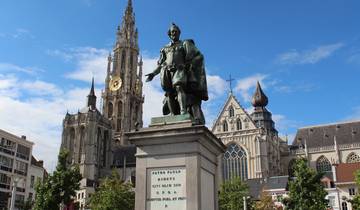
7 days
7 Day Brussels including Antwerp, Battle of the Bulge, Flanders Fields, Ghent, Bruges, Luxemburg & Dinant
- ✓ Comprehensive Belgium tour
- ✓ Expert local guides included
- ✓ All accommodation arranged
- ✓ Transportation provided
7 days
7 Days Across Paris & Brussels: From Eiffel Tower to Grand Place
- ✓ Comprehensive Belgium tour
- ✓ Expert local guides included
- ✓ All accommodation arranged
- ✓ Transportation provided
6 days
6 Days of Belgian Charm: Bruges, Ghent, Antwerp, Dinant & Luxembourg
- ✓ Comprehensive Belgium tour
- ✓ Expert local guides included
- ✓ All accommodation arranged
- ✓ Transportation provided

9 days
9 Days in Brussels and Luxembourg by Train: Fairytale Cities, Castles & Culture
- ✓ Comprehensive Belgium tour
- ✓ Expert local guides included
- ✓ All accommodation arranged
- ✓ Transportation provided
Multi-day tour packages powered by TourRadar. Prices and availability subject to change.
Introduction: Where Gothic Grandeur Meets Baroque Brilliance
Antwerp’s Cathedral of Our Lady rises above the historic center’s cobbled streets and guild houses as monumental testament to medieval faith and Renaissance ambition. Its single northern tower—at 123 meters, Belgium’s tallest church spire—has dominated the city skyline since 1518, serving as navigational landmark, civic symbol, and architectural marvel that took 169 years to complete. The building’s seven-aisle nave spans 117 meters in length, creating interior volume of cathedral proportions that justified its designation as Low Countries’ largest Gothic church and earned its belfry UNESCO World Heritage status.
Yet for many visitors, the Cathedral’s supreme attraction lies not in medieval stonework but in four monumental altarpieces created by Peter Paul Rubens during his early mature period (1610-1614). These paintings transformed the Gothic interior with Baroque drama, introducing explosive color, dynamic composition, and emotional intensity that revolutionized religious art throughout Catholic Europe. Rubens’ genius filled the austere medieval space with visual theology designed to move hearts and minds through sensory experience—exactly the Counter-Reformation’s strategy for combating Protestant emphasis on scripture and reason with Catholic celebration of visual splendor and emotional engagement.
The relationship between Gothic architecture and Baroque painting creates productive tension that enhances both. The Cathedral’s soaring vertical lines, filtered light through stained glass, and rhythmic arcade columns provide dramatic stage for Rubens’ theatrical compositions. His paintings introduce warm flesh tones, rich fabrics, and naturalistic detail that humanize the abstract geometry surrounding them. The medieval builders created contemplative space emphasizing divine transcendence through height and light; Rubens filled it with palpable human presence depicting sacred narratives with unprecedented realism and emotional accessibility.
This synthesis of architectural grandeur and artistic brilliance survives despite turbulent history that nearly destroyed both building and paintings multiple times. Sixteenth-century iconoclasm demolished original medieval decorations, leaving empty spaces that Rubens’ generation filled with Counter-Reformation imagery. Napoleonic armies confiscated the paintings as war trophies in 1794, shipping them to Paris where they remained until 1815. German forces repeated this theft in 1914, transporting the artworks to Berlin until armistice in 1918 forced repatriation. Each return strengthened the paintings’ association with Antwerp’s identity and cultural heritage.
Today’s visitors experience the Cathedral as layered historical monument where medieval structure, Baroque decoration, nineteenth-century restoration, and contemporary conservation converge. Walking through the central portal into the vast nave, eyes gradually adjust from bright exterior to filtered interior light, revealing Rubens’ masterworks positioned throughout the space—The Elevation of the Cross in the north transept, The Descent from the Cross commanding the south transept, The Assumption of the Virgin crowning the high altar, The Resurrection of Christ in a side chapel. Each work rewards extended contemplation, revealing compositional subtleties, technical mastery, and theological sophistication that established Rubens as Baroque painting’s supreme exponent.
The Elevation of the Cross: Theatrical Drama and Physical Power
Historical Context and Commission
Peter Paul Rubens painted The Elevation of the Cross triptych in 1610 immediately upon returning to Antwerp after eight formative years studying Italian Renaissance and Baroque masters in Rome, Mantua, and Genoa. The commission came from the Church of St. Walburga in Antwerp, a significant parish seeking prestigious altarpiece for its main altar. This timing proved crucial—Rubens arrived in Antwerp at moment when Counter-Reformation church building and decoration created enormous demand for religious art, while his Italian experience provided exactly the dramatic visual vocabulary that religious authorities wanted.
The painting demonstrates how completely Rubens absorbed Italian lessons while maintaining distinctive Flemish character. Compositions by Caravaggio, Carracci, and Tintoretto taught him dramatic lighting, foreshortening, and diagonal compositions that create visual tension. Michelangelo’s muscular figures and complex poses influenced his approach to human anatomy. Titian’s rich color and painterly technique shaped his handling of paint. Yet Rubens transformed these influences into something distinctly Northern—combining Italian grandeur with Flemish attention to realistic detail, local physiognomy, and naturalistic light.
St. Walburga Church was demolished in 1817 during post-Napoleonic urban reorganization, and the painting entered the Cathedral’s collection in 1815. This relocation from original context deprives viewers of experiencing the work as Rubens designed it—as high altar centerpiece in smaller church where its scale and drama would have overwhelmed the space. Nevertheless, the Cathedral’s north transept provides appropriate setting, allowing viewers to appreciate the triptych’s monumental dimensions and compositional unity from suitable distance.
Compositional Innovation and Visual Impact
The Elevation of the Cross breaks with traditional triptych conventions by creating single continuous scene across three panels rather than depicting separate related episodes. The central panel (460 x 340 cm) shows nine muscular executioners straining to raise the heavy cross bearing Christ’s body into vertical position. The diagonal composition—cross moving from lower left to upper right—creates dynamic visual movement impossible in static centered arrangements. Rubens positions viewers at ground level looking up at the scene, intensifying the drama and placing us among the crowd witnessing the crucifixion.
The left wing extends the composition showing Mary and John the Evangelist with mourning women, their vertical poses contrasting with the central panel’s diagonal energy and emphasizing the emotional anguish of Christ’s loved ones. The right wing depicts the Roman centurion directing the execution mounted on a rearing horse, adding imperial authority and military precision to the chaotic violence of crucifixion. The horse’s rear legs extend the diagonal movement from the central cross, while the centurion’s commanding gesture provides counterpoint to the physical strain of the executioners.
Rubens’ handling of anatomy demonstrates virtuoso skill—nine different male figures display varied musculature, poses, and physical types, each rendered with convincing weight and volume. The executioners’ straining bodies show understanding of how muscles engage during extreme physical effort. Christ’s body combines idealized beauty with realistic weight, his pale flesh contrasting with the executioners’ sun-darkened skin. The painting celebrates physical power while depicting physical suffering, creating tension between classical beauty ideals and Christian emphasis on bodily mortification.
Color orchestration reinforces the compositional dynamics. Warm reds and oranges dominate the central crucifixion scene—blood, fabric, flesh tones creating visual heat that draws attention. Cooler blues and grays in the side panels provide contrast and relief. Strategic highlights—bright fabric catching light, reflective armor, Christ’s luminous body—guide viewers’ eyes through the composition. This sophisticated color organization demonstrates Rubens’ understanding of how visual perception works and how to manipulate it for maximum emotional impact.
Theological Message and Counter-Reformation Context
The Elevation of the Cross embodies Counter-Reformation visual theology with precision. The Council of Trent (1545-1563) mandated that religious art should instruct the faithful, move them to piety, and defend Catholic doctrine against Protestant challenges. Rubens’ painting addresses all three requirements while pushing beyond mere illustration toward transformative visual experience that makes viewers feel present at the crucifixion.
The painting’s unprecedented focus on the physical act of raising the cross—a moment rarely depicted in earlier art—emphasizes Christ’s human suffering and the violence humanity inflicted on divinity incarnate. This aligns with Catholic emphasis on Christ’s full humanity alongside his divine nature, countering Protestant tendencies toward more abstract theological formulations. The executioners’ evident strain makes Christ’s sacrifice viscerally real rather than symbolically distant, engaging viewers’ empathy and physical responses.
The inclusion of contemporary-looking figures among the executioners and onlookers suggests that crucifixion isn’t merely historical event but ongoing reality—viewers themselves participate in Christ’s passion through their sins, making the painting’s drama personally relevant rather than safely historical. This theological interpretation transforms the triptych from narrative illustration into meditation device encouraging self-examination and repentance.
The Descent from the Cross: Supreme Achievement in Religious Painting
The Arquebusiers’ Commission and Original Purpose
In 1611, Antwerp’s Guild of Arquebusiers (crossbowmen) commissioned Rubens to create an altarpiece for their chapel in the Cathedral of Our Lady. These guilds—civic militia organizations combining military training, social networking, and religious devotion—competed for prestige through elaborate chapel decorations. The Arquebusiers chose the Cathedral’s most prominent young painter for their most important altar, demonstrating both civic pride and shrewd artistic judgment that history has vindicated.
The commission specified a triptych depicting the Descent from the Cross—Christ’s body being lowered from the cross after death—with side panels showing related figures and events. Rubens designed the altarpiece to function liturgically during the guild’s religious observances while advertising their wealth and cultural sophistication to fellow citizens visiting the Cathedral. The painting needed to work from multiple viewing distances—impressive from the nave’s far end, rewarding close examination for those approaching the altar, beautiful from side angles as processions moved through the church.
The Arquebusiers’ devotional focus on Christ’s descent from the cross carried special meaning for crossbowmen who identified with instruments of Christ’s passion—their weapons parallel the nails, spear, and cross that wounded Christ. This typological connection between military training and religious meditation characterizes how Renaissance guilds integrated secular and sacred aspects of their corporate identity. Rubens’ painting honors this connection while transcending narrow guild concerns to create universal meditation on death, sacrifice, and redemption.
Compositional Mastery and Emotional Depth
The Descent from the Cross represents compositional achievement of highest order, solving complex visual problems while appearing effortless and natural. The central panel shows seven figures working together to lower Christ’s pale, lifeless body down a white winding sheet toward waiting tomb. Rubens arranges these figures around a sweeping S-curve—from the man atop the ladder through Christ’s descending body to Mary Magdalene catching his feet—that guides viewers’ eyes through the composition while suggesting the gentle downward movement being depicted.
The pale body of Christ dominates the composition through color contrast alone. Surrounded by figures in rich reds, blues, and golden yellows, Christ’s ivory flesh and the luminous white shroud create visual center of gravity that draws attention immediately. Rubens intensifies this effect through lighting—Christ appears illuminated from above, his body the brightest element in the painting, suggesting divine light even in death. This strategic use of value contrast (light against dark) represents sophisticated understanding of how human vision prioritizes high-contrast areas.
The emotional range depicted across seven figures demonstrates Rubens’ psychological insight. John the Evangelist, shown in red robes atop the ladder, combines physical effort with spiritual anguish. Mary, dressed in blue below, extends her arms toward her son in gesture suggesting both support for his body and yearning for connection. Mary Magdalene kneels at Christ’s feet, her posture expressing devotional love. Nicodemus and Joseph of Arimathea (according to tradition) handle the body with reverent care. Each figure’s expression and gesture contributes unique emotional note to the composition’s symphony of grief, devotion, and love.
The left wing shows the Visitation—Mary visiting her cousin Elizabeth, both pregnant with future religious leaders (Jesus and John the Baptist). This scene creates temporal bridge between joy of Christ’s impending birth and sorrow of his death, reminding viewers that incarnation always pointed toward passion. The right wing depicts the Presentation in the Temple—infant Jesus offered to God forty days after birth—foreshadowing the ultimate sacrifice depicted in the central panel. These side scenes transform the triptych from single dramatic moment into meditation on Christ’s entire earthly life from birth to death.
Technical Excellence and Painterly Innovation
The Descent from the Cross showcases Rubens’ supreme technical abilities developed through years of study and practice. His handling of paint varies throughout the composition according to expressive needs—Christ’s smooth, almost porcelain-like flesh contrasts with roughly textured rock and wood; flowing fabric receives fluid brushwork while armor gets crisp, precise strokes; soft atmospheric effects in background differ from sharp focus on foreground figures.
The drapery painting demonstrates particular virtuosity. The white winding sheet catches light and shadow in convincing folds that suggest actual linen texture while creating beautiful abstract patterns of light and dark. Mary’s voluminous blue robe falls in heavy sculptural folds indicating quality fabric, while Mary Magdalene’s thinner garments cling and flow differently. This variety prevents visual monotony while displaying technical range that few painters could match.
Rubens’ understanding of anatomy appears throughout—each figure’s pose looks anatomically possible, muscles engage appropriately for their actions, weight distribution appears convincing. Christ’s body particularly shows anatomical precision combined with idealization, representing perfected human form even in death. This combination of ideal beauty and naturalistic observation characterizes Rubens’ approach to religious painting—making sacred figures recognizable as human while elevating them beyond ordinary physicality.
The Assumption of the Virgin: High Altar Centerpiece
Marian Devotion and Cathedral Dedication
The Cathedral of Our Lady takes its name and primary dedication from Mary, mother of Christ, making the Virgin’s feast days central to the church’s liturgical calendar. The Assumption of Mary—celebrating her bodily ascent to heaven at the end of her earthly life—ranks among the most important Marian feasts, observed annually on August 15th. Rubens’ altarpiece for the high altar depicts this moment of triumph, showing Mary rising toward heaven assisted by angels while apostles gather around her empty tomb below.
This painting demonstrates how Rubens designed works specifically for their architectural settings. The high altar occupies the Cathedral’s eastern end, visible from the moment visitors enter through the western portal. Rubens conceived the painting to work at this great distance—bold gestures, strong colors, clear composition reading effectively from 100 meters away. Yet the painting also rewards close viewing, with subtle details emerging that distant viewers cannot perceive. This dual function characterizes successful religious art intended for large public spaces.
The theological significance of depicting the Assumption at the Cathedral’s spiritual and architectural center reinforces Mary’s role as intercessor between earthly and divine realms. Her upward movement creates vertical visual axis aligning with the Cathedral’s Gothic verticality, drawing viewers’ eyes and thoughts heavenward. The painting functions as visual theology explaining Mary’s unique position in salvation history and Catholic devotional practice.
Compositional Structure and Heavenly Vision
Rubens divides the composition into earthly and heavenly zones connected by Mary’s ascending figure. The lower section shows apostles gathered around Mary’s empty tomb, their varied reactions ranging from awestruck wonder to intellectual contemplation as they witness the miracle. These figures anchor the composition in recognizable human experience—we understand their surprise and reverence even while we cannot share their supernatural vision.
Mary occupies the composition’s center, her blue robe and red dress creating color focal point while her upward gaze and gesture direct attention toward the heavenly realm above. Angels surround and support her, their dynamic poses and flowing drapery creating sense of movement and spiritual energy. Rubens positions Mary in the void between earth and heaven, representing her unique status as fully human yet assumed into divine presence.
The upper section depicts the Holy Trinity—God the Father and Christ holding the crown prepared for Mary—represented in semi-relief sculpture above the painting itself. This integration of painting and architectural elements demonstrates how Rubens conceived altarpieces as complete ensembles rather than isolated paintings. The crown motif unifies painted and sculpted elements, creating visual continuity that leads viewers’ eyes from earthly tomb through Mary’s ascent to heavenly coronation.
Light plays crucial role in the composition’s hierarchy. The heavenly realm glows with golden radiance suggesting divine presence, while the earthly zone receives cooler, more naturalistic lighting. Mary’s figure catches both earthly and heavenly light, her transitional position marked by this dual illumination. This sophisticated light orchestration guides viewers’ understanding of the theological drama—Mary moving from mortal existence into eternal glory.
The Resurrection of Christ: The Moretus Commission
Personal Devotion and Family Memorial
The smallest of the four Rubens altarpieces in the Cathedral, The Resurrection of Christ triptych (1611-1612) originated not as guild commission or church project but as private family memorial. Jan Moretus and his wife commissioned the painting as epitaph for Jan’s deceased parents, whose names are inscribed below the altarpiece. This personal connection adds intimate dimension to what might otherwise seem formulaic religious commission.
The Moretus family’s prominence in Antwerp cultural life makes this commission historically significant beyond its artistic merit. Jan Moretus inherited and expanded the Plantin-Moretus printing dynasty, maintaining close friendship with Rubens that resulted in numerous collaborations—Rubens designed title pages for Plantin-Moretus publications while painting portraits of family members. This altarpiece represents religious dimension of their relationship, showing how artistic patronage, personal friendship, and spiritual devotion intertwined in early modern Antwerp.
Balthasar Moretus, son of the couple who commissioned the painting, later added his parents’ memorial function to the work. This multi-generational patronage demonstrates how religious art served family memory preservation, marking burial locations and ensuring prayers for deceased relatives’ souls. The Cathedral contains numerous such epitaph altarpieces, creating gallery of Antwerp family history alongside religious devotion.
Resurrection Iconography and Compositional Structure
The central panel depicts Christ rising triumphantly from the dark tomb, his luminous body emerging into brilliant light that blinds and terrifies the Roman guards set to prevent exactly this event. Rubens positions Christ in powerful contrapposto pose—weight on one leg, torso twisted, arms raised holding victory banner—that suggests both divine power and classical beauty. The resurrection banner with red cross identifies Christ’s victory over death, a standard iconographic element that Rubens handles with characteristic dramatic flair.
The guards’ varied reactions demonstrate Rubens’ psychological range within confined compositional space. One soldier flees in panic, unable to process the supernatural event. Another freezes mid-action, caught between fight and flight responses. A third shields his eyes from the blinding divine radiance, his gesture acknowledging Christ’s power while unable to face it directly. These naturalistic human reactions ground the supernatural event in believable human experience, helping viewers imagine their own responses to witnessing resurrection.
The side panels show angels in grisaille (monochrome painting technique suggesting sculpture) opening the gates of the underworld, allowing the souls of the righteous dead to enter heaven following Christ’s resurrection. This theological element—Christ’s “harrowing of hell” between crucifixion and resurrection—represents important Catholic doctrine that Rubens illustrates with architectural metaphor. The painted architecture on the wings creates illusionistic extension of real space, making the triptych’s theological narrative feel physically present in the Cathedral.
Gothic Architecture: The Canvas for Baroque Art
Construction History and Architectural Evolution
The Cathedral’s foundation stone was laid in 1352 during Antwerp’s emergence as major European commercial center. Construction proceeded through economic booms and busts, wars and plagues, extending across 169 years until the north tower’s completion in 1521. This prolonged building campaign resulted in architectural unity despite changing circumstances—the planners’ original Gothic vision remained consistent even as construction techniques and decorative details evolved.
The architects Jan and Pieter Appelmans designed a seven-aisle basilica plan, exceptionally wide for Northern European Gothic churches. This width creates different spatial experience than narrow French cathedrals striving for maximum height—Antwerp’s Cathedral feels expansive horizontally as well as vertically, creating floor space for multiple altars, chapels, and congregational areas. The wide interior suited Antwerp’s civic character as merchant city where guild chapels, confraternity altars, and family memorials competed for space and attention.
The single completed tower represents compromise with original ambitions. Plans called for twin western towers flanking the main portal, creating symmetrical facade typical of Gothic cathedrals. Only the north tower reached completion, rising 123 meters (404 feet) to become Belgium’s tallest church spire and dominating landmark visible throughout Antwerp. The south tower remains truncated at lower level, its incomplete state adding asymmetrical character that distinguishes the Cathedral from more conventional Gothic designs.
Interior Space and Light Quality
Entering the Cathedral through the western portal, visitors encounter vast interior space that takes moments to comprehend fully. Seven aisles separated by rows of slender columns create forest of stone extending toward the distant high altar. The nave rises to 40 meters at its highest point, creating vertical emphasis characteristic of Gothic architecture intended to direct thoughts heavenward. Yet the horizontal extension and wide spacing between columns prevent the oppressive narrowness some Gothic interiors display.
Light enters through 55 stained glass windows distributed throughout the structure, creating filtered illumination that changes character throughout the day and seasons. Morning light enters through eastern windows behind the high altar, illuminating Rubens’ Assumption painting from behind and creating backlit effect. Afternoon sun streams through western windows, casting colored light across the nave. This dynamic light quality means Rubens’ paintings appear different at different times—warm golden afternoon light enhances flesh tones and reds, while cooler morning light emphasizes blues and grays.
The Gothic proportions and Rubens’ Baroque paintings interact in fascinating ways. The vertical architecture emphasizes transcendence and divine otherness—God dwelling in light inaccessible to humans. Rubens’ humanistic paintings bring divine narratives down to earth, depicting sacred figures with naturalistic bodies, recognizable emotions, and physical presence. This tension between Gothic abstraction and Baroque accessibility creates rich visual dialogue where architecture and painting complement while contrasting with each other.
UNESCO World Heritage Belfry
The Cathedral’s north tower earned UNESCO World Heritage designation as part of the “Belfries of Belgium and France” inscription recognizing civic and religious bell towers as symbols of medieval urban power and autonomy. While primarily religious structure, the Cathedral tower also served civic functions—its carillon of 49 bells marked hours, warned of fires or attacks, and celebrated civic occasions. This dual function characterized Low Countries urban culture where religious and civic authority often overlapped.
The tower houses one of Europe’s finest historical carillons, with bells dating from different centuries creating rich tonal palette. Regular carillon concerts continue this musical tradition, with performances echoing across Antwerp’s historic center. The mechanical complexity of carillon playing—keyboard controlling hammers striking individual bells while managing their varied weights and response times—represents remarkable intersection of music, engineering, and civic pride.
Climbing the tower (when tours are available) provides different perspective on both Cathedral architecture and urban context. Spiral stairs wind upward through the tower’s Gothic structure, revealing construction techniques and structural systems invisible from ground level. The viewing platform offers panoramic views across Antwerp, showing how the Cathedral’s tower relates to other historic buildings and how the medieval street plan survived into the modern city. This broader urban context helps visitors understand the Cathedral not as isolated monument but as integral element of Antwerp’s identity and spatial organization.
Historical Context: Counter-Reformation and Cultural Revival
Religious Turmoil and Artistic Opportunity
The period when Rubens created his Cathedral masterpieces (1610-1614) followed decades of religious violence and political upheaval that had devastated Antwerp’s artistic and economic prosperity. The iconoclastic fury of 1566 saw Calvinist mobs destroy Catholic religious images throughout the Low Countries, emptying churches of medieval art treasures. Spanish reconquest in 1585 restored Catholic authority but also prompted Protestant merchants and artisans to flee north to the newly independent Dutch Republic, draining Antwerp’s commercial vitality.
The Twelve Years’ Truce (1609-1621) between Spain and the Dutch Republic provided respite from warfare, creating window of stability that enabled cultural and economic recovery. Catholic authorities launched aggressive program to refurbish churches stripped bare during iconoclasm, creating unprecedented demand for religious art. Guilds, confraternities, and wealthy families competed to commission altarpieces, sculptures, and decorative elements that would demonstrate their piety, wealth, and cultural sophistication.
Rubens returned to Antwerp in 1608 perfectly positioned to capitalize on this demand. His Italian training provided exactly the dramatic Baroque visual language that Counter-Reformation theology required—emotionally engaging imagery that would move hearts toward Catholic faith through sensory experience rather than intellectual argument. His Flemish roots gave him natural understanding of local artistic traditions, patronage networks, and religious sensibilities. This combination of international experience and local knowledge made him indispensable for Antwerp’s cultural revival.
Baroque Visual Theology and Sensory Engagement
The Counter-Reformation’s embrace of visual arts represented deliberate theological strategy responding to Protestant iconoclasm and emphasis on scripture alone. Catholic authorities at the Council of Trent affirmed images’ value for teaching illiterate believers, moving hearts to devotion, and making abstract doctrines accessible through concrete visual form. This mandate encouraged artistic innovation rather than conservative repetition of medieval models.
Baroque painting’s characteristic features—dramatic lighting, emotional intensity, naturalistic detail, dynamic composition—served Counter-Reformation goals by creating immersive experiences that engaged viewers’ senses and emotions. Rubens’ Cathedral altarpieces exemplify this approach. The paintings don’t merely illustrate Biblical stories; they transport viewers into the narrative, making them feel present at crucifixion, descent from cross, and resurrection. This emotional engagement was understood as pathway to spiritual transformation—feeling Christ’s suffering would lead to repentance, witnessing resurrection would inspire faith.
The Cathedral’s collection of Rubens altarpieces demonstrates how visual theology operated in practice. Each painting addresses different aspects of Catholic devotion—Christ’s passion and death (Elevation and Descent), Marian devotion (Assumption), resurrection hope (Resurrection). Together they form comprehensive visual catechism teaching core doctrines through sensory experience. Worshippers encountering these images during Mass would have absorbed theological lessons through emotional and aesthetic impact rather than intellectual analysis.
Turbulent History: Theft, Survival, and Return
Napoleonic Confiscation and Parisian Exile
In 1794, French Revolutionary armies conquered the Austrian Netherlands (modern Belgium), bringing Antwerp under French control. Revolutionary authorities pursued aggressive program of seizing artistic treasures from conquered territories, shipping masterpieces to Paris to stock the newly established Louvre Museum. The Cathedral’s Rubens altarpieces represented precisely the kind of prestigious works that would enhance France’s cultural capital at occupied territories’ expense.
Both The Elevation of the Cross and The Descent from the Cross were removed from the Cathedral and transported to Paris, where they entered the Louvre’s collection. This confiscation served multiple purposes—depriving Antwerp of cultural treasures that embodied civic pride, demonstrating French military and cultural dominance, and building collections that would establish Paris as Europe’s artistic center. The religious significance of the paintings mattered less to Revolutionary authorities than their artistic value as trophies.
The paintings remained in Paris for two decades until Napoleon’s final defeat in 1815. The Congress of Vienna mandated return of artworks seized during Napoleonic wars, and both Rubens masterpieces returned to Antwerp amid public celebration. The Elevation of the Cross could not return to St. Walburga Church (demolished during French occupation) and entered the Cathedral instead. This repatriation strengthened the paintings’ association with Antwerp identity—they represented not just religious art but symbols of civic resilience and cultural continuity despite foreign occupation.
German Wartime Seizure and Second Return
History repeated itself almost exactly a century later when German forces captured Antwerp during the 1914 Siege following Belgium’s invasion. German authorities confiscated the Rubens altarpieces, shipping them to Berlin where they were displayed in the Kaiser’s palace. This second theft followed similar logic to the Napoleonic confiscation—artistic treasures serving as war trophies demonstrating military dominance while enriching the conquering nation’s cultural patrimony.
The paintings remained in Berlin throughout World War I until the November 1918 Armistice obligated Germany to return looted artworks. The Cathedral altarpieces returned to Antwerp for second time, again amid public celebration that emphasized their symbolic importance beyond mere artistic value. The two cycles of theft and return transformed the paintings from religious art into national heritage symbols representing Belgian resistance to foreign occupation and cultural survival despite military defeat.
This turbulent history adds layer of meaning to contemporary viewing experiences. Standing before The Descent from the Cross, visitors encounter not just Rubens’ 1614 masterpiece but object that survived iconoclasm, two wartime confiscations, transport across Europe, and four centuries of changing religious and political circumstances. The painting’s survival testifies to artwork’s power to transcend historical contingencies, maintaining meaning and value across radically different cultural contexts.
Other Significant Artworks in the Cathedral
Baroque Painting Beyond Rubens
While Rubens’ four altarpieces dominate the Cathedral’s artistic reputation, numerous other significant paintings enrich the interior. Cornelis Schut’s massive circular painting “The Assumption of the Virgin” (580 cm diameter) hangs 43 meters high in the crossing tower, creating illusionistic effect of Mary ascending through the tower itself toward heaven. This trompe-l’oeil technique demonstrates how Baroque painters collaborated with architecture to create immersive environments rather than discrete artworks.
Otto van Veen, who taught Rubens during his Antwerp apprenticeship, contributed several altarpieces showing the teacher’s more conservative style compared to his famous student’s innovations. Jacob de Backer’s paintings represent earlier Mannerist traditions that Rubens would transform through Italian influence. Marten de Vos, a successful Antwerp painter of the generation before Rubens, created numerous works for the Cathedral including elaborate altarpieces combining Northern detail with Italian grandeur.
These additional paintings provide context for understanding Rubens’ achievement. Comparing his dynamic compositions and naturalistic figures with predecessors’ more static arrangements and idealized forms reveals his innovations clearly. The Cathedral functions as museum of Flemish painting spanning several generations, showing how artistic styles evolved in response to changing religious, cultural, and aesthetic demands.
Sculpture, Stained Glass, and Decorative Arts
The Cathedral’s sculptural program includes works from the 14th through 19th centuries. A mid-14th century marble statue “Madonna and Child” from Liège demonstrates Gothic sculptural style with flowing drapery and gentle naturalism. The 16th-century painted wooden statue “Our Lady of Antwerp” in the Mary Chapel represents the Cathedral’s most venerated image, dressed in changing liturgical vestments that mark different feast days and seasons.
Fifty-five stained glass windows fill the Gothic structure with colored light while depicting Biblical narratives, saints’ lives, and donor portraits. Many windows were destroyed during iconoclasm or wartime bombardments and replaced with 19th-century neo-Gothic designs. This mixture of historical and restoration work characterizes the Cathedral’s layered history where centuries of modification, destruction, and renewal coexist. The windows’ varying quality—some achieving artistic distinction, others merely adequate—reflects changing resources and priorities across five centuries.
Elaborate baroque pulpit, ornate confessionals, gilded altar furnishings, and decorative ironwork demonstrate the complete ensemble of ecclesiastical arts required for Counter-Reformation churches. These elements work together creating total aesthetic environment where every surface contributes to overwhelming sensory experience designed to inspire devotion. The Cathedral represents not isolated masterpieces but integrated artwork encompassing architecture, painting, sculpture, decorative arts, and liturgical performance.
Visiting the Cathedral: Practical Guide
Location and Access
The Cathedral of Our Lady occupies central position in Antwerp’s historic core, approximately 300 meters southeast of the Grote Markt (Grand Place). Its tower serves as navigational landmark visible throughout the old city, making orientation straightforward. The main entrance opens onto Groenplaats, a pleasant square with outdoor cafés and tram connections. This central location makes the Cathedral easily accessible on foot from most Antwerp hotels and attractions.
Public transport connections include multiple tram lines (3, 5, 9, 15, and 4) stopping at Groenplaats directly in front of the Cathedral. Buses 22, 180, 181, 182, and 183 also serve this central hub. Centraal Station lies approximately 1.5 kilometers northeast—a pleasant 15-20 minute walk along pedestrianized shopping streets or quick tram ride. Velo bike-sharing stations operate near the Cathedral for visitors exploring the city by bicycle.
Parking proves challenging in the historic center due to narrow medieval streets and pedestrian zones. The nearest parking garage operates beneath Groenplaats, offering convenient access but expensive hourly rates. Visitors driving to Antwerp should consider peripheral parking at Park+Ride facilities with tram connections to the center, avoiding congestion and reducing costs while accessing public transport for final approach.
Admission and Opening Hours
The Cathedral charges €12 admission for adults, with reduced rates (€10) for visitors with disabilities accompanied by essential companions who enter free. This fee supports Cathedral maintenance, artwork conservation, and visitor services while providing access to the complete interior including all Rubens paintings, side chapels, and architectural features. Payment accepts cash and credit cards at the entrance desk.
Opening hours vary by day and season. The Cathedral typically opens daily with reduced hours on Sundays to accommodate religious services. Visitors should verify current hours on the official website (dekathedraal.be) before planning visits, as special events, renovations, or liturgical celebrations occasionally modify standard schedules. The Cathedral remains active worship space—religious services take precedence over tourist access, and visitors must respect ongoing Masses by remaining silent and avoiding flash photography during services.
Timed entry systems do not currently operate for general admission, though large tour groups should contact the Cathedral office for coordination. Peak visiting hours (11 AM – 3 PM) see highest crowds, particularly during summer months and cruise ship arrivals. Visiting early morning (10-11 AM) or late afternoon (4-5 PM) provides quieter experience with better light for viewing paintings and photographing architecture without crowds obstructing views.
Guided Tours and Audio Guides
Free printed guides in multiple languages (Dutch, French, English, German) provide basic information about the Cathedral’s history, architecture, and major artworks. These pamphlets suffice for independent visitors seeking general orientation but lack detailed analysis of Rubens’ paintings or architectural significance. More comprehensive guidebooks are available for purchase at the Cathedral shop, offering scholarly depth for visitors with particular interest in art history or Gothic architecture.
Audio guides accessible via QR codes at major artworks provide detailed commentary about Rubens paintings, stained glass windows, and architectural features. These smartphone-compatible guides enable self-paced exploration while offering professional interpretation that enhances understanding and appreciation. The system includes audio description for visually impaired visitors, describing artworks in sufficient detail to create mental images of what cannot be seen.
Guided tours operate regularly through the Cathedral’s official program and third-party tour operators. These tours typically last 45-90 minutes covering highlights including all four Rubens altarpieces, Gothic architecture, stained glass, and historical context. Expert guides provide insights impossible to glean from static labels or audio guides, answering questions and adapting commentary to group interests. Private tours can be arranged for specialized focus on particular aspects—Rubens scholarship, architectural history, religious symbolism—by contacting the Cathedral office in advance.
Photography Policies and Visitor Etiquette
Photography for personal non-commercial use is permitted throughout the Cathedral without flash, tripods, or selfie sticks. This policy enables visitors to document their experience and create personal records while protecting light-sensitive artworks from flash damage and other visitors from obstruction by photographic equipment. Professional photography, filming, or commercial image use requires advance permission and appropriate fees.
Visitor etiquette respects the Cathedral’s dual function as active worship space and cultural attraction. Speaking in quiet conversational tones, silencing mobile phones, and avoiding disruptive behavior show respect for those praying or attending services. Modest dress (covering shoulders and knees) demonstrates appropriate respect, though enforcement varies. Eating, drinking, and smoking are prohibited inside the building, with adjacent cafés and squares providing break opportunities.
Wheelchair accessibility accommodates mobility-impaired visitors in the main nave and side aisles via ramps. However, the high altar, crypt, garden, and tower remain inaccessible due to historic architecture’s steps and narrow passages that cannot be modified without compromising structural integrity. Companions accompanying visitors with disabilities enter free, and discounted admission (€10) applies. Accessible restrooms operate near the shop and in the Cathedral bistro.
Frequently Asked Questions
How long should I spend visiting the Cathedral?
Most visitors find 45-90 minutes sufficient for comprehensive Cathedral experience including viewing all four Rubens altarpieces, examining stained glass windows, appreciating Gothic architecture, and exploring various chapels and decorative elements. Art enthusiasts with particular interest in Rubens or Baroque painting easily spend 2+ hours closely examining each altarpiece’s compositional details, color orchestration, and theological symbolism. Casual visitors satisfied with general impressions complete visits in 30-45 minutes, though this rushed pace sacrifices deeper engagement with Rubens’ masterpieces. The Cathedral’s central location makes it easy to combine with nearby attractions—Grote Markt, Plantin-Moretus Museum, Rubenshuis—creating full-day cultural itinerary through Antwerp’s historic center. Audio guides and printed materials help pace visits by highlighting major works requiring extended attention versus secondary elements meriting brief notice.
What is the best time of day to visit for photography?
Morning hours (10 AM-12 PM) provide optimal natural light for photographing the Cathedral interior and Rubens paintings. Eastern windows behind the high altar admit direct sunlight that illuminates the nave while creating dramatic lighting effects on altarpieces. The Descent from the Cross in the south transept receives particularly beautiful morning light that enhances Rubens’ color palette and brings out subtle tonal variations. Afternoon light (2-4 PM) enters through western windows creating different atmospheric effects but potentially causing harsh contrasts and glare on paintings’ varnished surfaces. Overcast days produce even diffused light that reduces contrast and enables easier photography of stained glass windows without blown-out highlights. Weekday mornings before 11 AM see fewer crowds, allowing unobstructed photography angles and time to compose shots carefully without other visitors blocking views. Flash photography is prohibited to protect artworks, requiring high ISO settings or image stabilization for hand-held shooting in the Cathedral’s relatively dim interior.
Can I attend Mass at the Cathedral?
Yes, the Cathedral maintains active schedule of Catholic Masses and liturgical celebrations throughout the week. Mass times appear on the Cathedral website and posted at the entrance, typically including weekday services, multiple Sunday Masses, and special celebrations for major feast days. Visitors of any faith or no faith may attend services respectfully, though only baptized Catholics in good standing should receive communion. During Mass, the Cathedral functions as worship space rather than tourist attraction—photography is discouraged, conversation inappropriate, and movement restricted to avoid disrupting services. Experiencing the Cathedral during liturgical use provides unique perspective on how architecture and art function in their intended religious context rather than as museum displays. The Rubens altarpieces gain different meaning when viewed during worship—The Descent from the Cross during Good Friday services or The Assumption during August 15th feast day celebration demonstrates how religious art serves devotional purposes beyond aesthetic appreciation. Visitors should dress modestly and arrive slightly early to find seating before services begin.
Are there any Rubens paintings elsewhere in Antwerp?
Yes, Antwerp contains several other significant Rubens collections beyond the Cathedral. The Rubenshuis (Rubens House) museum occupies the artist’s former residence and studio, displaying numerous works including portraits, altarpieces, and the studio where he trained apprentices and operated his painting workshop. The Museum of Fine Arts (KMSKA) houses extensive Rubens collection including major altarpieces, mythological subjects, portraits, and sketches spanning his entire career. Saint Charles Borromeo Church contains ceiling paintings Rubens created for the Jesuit church (though originals were lost to fire and replaced with copies). The Royal Museum owns several significant works acquired through various means. Combined, these Antwerp institutions enable comprehensive study of Rubens’ development, working methods, and artistic range that single location cannot provide. Multi-day Antwerp visits focused on Rubens can trace his evolution from early Italian-influenced work through mature Baroque masterpieces to late contemplative paintings, understanding how one artist’s career shaped European art for generations. The Cathedral remains essential starting point for this exploration, housing his most important religious commissions in their original ecclesiastical context.
Why do some sources say there are three Rubens paintings while others say four?
The discrepancy arises from how sources count and categorize the artworks. The Cathedral definitively contains four separate Rubens altarpiece commissions: The Elevation of the Cross, The Descent from the Cross, The Assumption of the Virgin, and The Resurrection of Christ. Some older sources or brief descriptions mention only three paintings by emphasizing the most famous works (Elevation, Descent, and Assumption) while omitting the smaller, less prominent Resurrection triptych. Other sources focus on the two in situ works (Descent and Assumption) commissioned specifically for the Cathedral, treating the Elevation differently since it was painted for another church. Additionally, some descriptions might not count the Assumption prominently since it forms part of the high altar ensemble rather than standing as independent altarpiece. However, scholarly consensus and the Cathedral’s official information clearly identify four distinct Rubens altarpieces, each representing separate commission and artistic achievement. Visitors should plan to view all four works for complete understanding of Rubens’ contribution to the Cathedral’s artistic patrimony and his role in Antwerp’s cultural identity.
Is the Cathedral part of a UNESCO World Heritage Site?
The Cathedral’s belfry (north tower) is inscribed on the UNESCO World Heritage List as part of the “Belfries of Belgium and France” designation recognizing civic and religious bell towers throughout the Low Countries as symbols of medieval urban autonomy and architectural achievement. This inscription acknowledges the tower’s historical, architectural, and cultural significance within broader context of European urban development. However, the Cathedral building itself is not separately listed as UNESCO World Heritage Site, unlike some other European cathedrals (Chartres, Cologne, etc.) that have achieved individual recognition. The distinction matters for understanding conservation obligations and international protection standards—the tower specifically receives UNESCO designation while the remainder of the Cathedral, though protected under Belgian heritage law, lacks separate international heritage status. This partial inscription reflects the tower’s exceptional height (123 meters, Belgium’s tallest church spire), historical importance as civic landmark, and architectural quality as Gothic engineering achievement. The tower’s UNESCO status enhances the Cathedral’s prestige and emphasizes its importance to Antwerp’s identity, though visitors primarily come for the Rubens paintings rather than UNESCO designation.
What happened to the Cathedral during the Reformation?
The Cathedral suffered severe damage during the iconoclastic fury (Beeldenstorm) of 1566 when Calvinist mobs destroyed Catholic religious images throughout the Low Countries as idolatrous violations of Biblical commandments against graven images. Iconoclasts smashed statues, defaced paintings, broke stained glass windows, and stripped altars of precious metalwork and decorative elements, leaving the Gothic interior largely bare. This destruction reflected theological disputes between Catholic veneration of images and Protestant rejection of visual representations as obstacles to pure spiritual worship. A second wave of iconoclasm occurred in 1581 when Antwerp came under Protestant control during the Dutch Revolt against Spanish Habsburg rule. Only Spanish reconquest in 1585 restored Catholic worship and initiated the Counter-Reformation refurbishment program that created demand for Rubens’ altarpieces. The Cathedral’s pre-iconoclasm medieval decorations are largely lost—most current artworks postdate 1585, representing Counter-Reformation replacement program rather than original Gothic artistic ensemble. This history explains why the Cathedral’s interior mixes Gothic architecture (surviving structure) with Baroque art (Counter-Reformation replacements), creating the productive tension between medieval and early modern aesthetics that characterizes the space today.
Can I climb the Cathedral tower?
Tower climbing opportunities exist through special guided tours that must be booked in advance through the Cathedral office or official tour operators. These tours are not continuously available but operate on scheduled dates throughout the year, particularly during summer months when tourism peaks and weather favors outdoor portions of the climb. The ascent involves steep spiral staircases (no elevator) requiring reasonable fitness and mobility—the route is not wheelchair accessible and may prove challenging for visitors with knee problems, respiratory issues, or fear of heights. Participants climb approximately 400 steps to reach viewing platforms offering panoramic views across Antwerp’s historic center, port facilities, and surrounding Flemish countryside. The climb reveals the tower’s internal structure including massive timber framing supporting the bells, mechanical systems for the carillon, and medieval construction techniques. Tours typically last 60-90 minutes and require separate fees beyond general Cathedral admission. Booking well in advance (several weeks) is advisable as tour capacity is limited and popular dates fill quickly. Winter months see reduced or suspended tower tours due to weather conditions and limited daylight hours. Tower tours are not included in standard Cathedral admission and must be arranged separately through specific programs advertised on the official website.
How does the Cathedral compare to other Belgian churches?
The Cathedral of Our Lady ranks as Belgium’s largest Gothic church by interior volume and floor area, surpassing Brussels’ Cathedral of St. Michael and St. Gudula and Ghent’s Saint Bavo Cathedral in physical dimensions. Its 123-meter tower stands as Belgium’s tallest church spire, exceeding other notable examples like Mechelen’s Sint-Romboutskathedraal (97 meters) and Brussels’ Cathedral (69 meters). Artistically, the concentration of four original Rubens altarpieces in their ecclesiastical context is unmatched anywhere—Ghent Cathedral contains the van Eyck brothers’ Ghent Altarpiece (arguably more famous), but no other Belgian church rivals Antwerp for Baroque painting. Architecturally, the seven-aisle plan creates exceptional width unusual in Northern European Gothic tradition that typically emphasized vertical height over horizontal expansion. The Cathedral’s incomplete state—one tower finished, one truncated—creates distinctive asymmetry unlike the balanced facades of most major cathedrals. The combination of Gothic structure with Baroque decoration exemplifies Counter-Reformation church interiors throughout Catholic Europe, but few achieve the quality and completeness preserved in Antwerp. The Cathedral’s central role in Antwerp’s identity as the city’s most prominent landmark and primary tourist attraction parallels other Belgian churches’ relationships with their cities, though Antwerp’s commercial rather than purely administrative character gives the Cathedral different cultural significance than capital-city cathedrals.
What other attractions are near the Cathedral?
The Cathedral occupies Antwerp’s historic core surrounded by numerous significant attractions within easy walking distance. The Grote Markt (Grand Place) lies 300 meters northwest, showcasing Renaissance guild houses and Town Hall around the main square. Rubenshuis museum occupies the artist’s former home approximately 800 meters east, displaying his paintings, studio, and baroque garden. Plantin-Moretus Museum, the world’s only UNESCO-listed museum building preserving a Renaissance printing house, sits 400 meters north on Vrijdagmarkt. The fashion district with designer boutiques and Museum MoMu extends eastward. Het Steen castle and MAS (Museum aan de Stroom) occupy the waterfront 600 meters north. Antwerp Central Station, an Art Nouveau architectural masterpiece, lies 1.5 kilometers northeast. The diamond district surrounding the station offers jewelry shopping and Diamond Museum. This concentration of cultural attractions within the compact historic center enables comprehensive sightseeing without lengthy travel between sites. Visitors can easily combine Cathedral visit with morning Rubenshuis tour, afternoon at Plantin-Moretus Museum, and Grote Markt refreshments, creating full-day cultural immersion in Antwerp’s artistic heritage. The pedestrianized shopping street Meir connects many attractions, providing pleasant walking route with cafés and shops for breaks between cultural experiences.