
Cappadocia Hot Air Balloon Guide 2026: Complete Experience
Cappadocia’s hot air balloon flights rank among the world’s most spectacular travel experiences, with up to 154 balloons rising simultaneously over fairy chimneys and ancient valleys each morning. This comprehensive 2026 guide provides verified pricing ranging from €50 to €600, detailed operator comparisons across 27 licensed companies, seasonal timing strategies with cancellation rates from 7% in August to 50%+ in winter, and complete booking procedures to help you plan the perfect sunrise flight experience over Turkey’s most magical landscape.
Key Takeaways
- Pricing Range 2026: Standard flights cost €50-€400 per person depending on season, with lowest prices January-March (€50-€120) and peak rates September-October (€280-€400). Comfort flights range €110-€430, while deluxe experiences cost €170-€600.
- Best Flying Months: August offers the most reliable conditions with only 7% cancellation rate, followed by September-October (14-17% cancellations). April-October provides 280-300 flying days annually, while winter months see 50%+ cancellation rates.
- Booking Strategy 2026: Reserve 2-4 months ahead for April-October flights when prices and availability are optimal. Book your first morning in Cappadocia to allow rescheduling flexibility if weather causes cancellations.
- Flight Experience: Flights last 60 minutes standard or 75-90 minutes deluxe, with complete experience spanning 3.5-4 hours including hotel pickup at 4:30-5:00 AM, light breakfast, safety briefing, flight, champagne celebration, certificate, and return transfer by 8:30-9:00 AM.
- Operator Selection: Choose from 27 licensed companies including established operators like Royal Balloon, Voyager Balloons, and Turquaz Balloons. Smaller baskets (4-16 passengers) cost more but offer better viewing space than standard 20-28 passenger flights.
- Safety Standards 2026: Turkey’s Civil Aviation Authority enforces strict regulations including minimum 200 flight hours for commercial pilots, daily weather approvals using red/yellow/green flag system, and maximum 154 balloon daily limit to prevent air traffic congestion.
People Also Ask About Cappadocia Hot Air Balloon 2026
How much does a hot air balloon ride cost in Cappadocia in 2026?
Hot air balloon rides in Cappadocia cost €50-€600 per person in 2026 depending on season, basket size, and operator. Standard flights (20-28 passengers) range €50-€400, with low season January-March prices at €50-€120, mid-season at €150-€250, and peak September-October rates reaching €280-€400. Check official operator websites for current rates as pricing varies by booking demand and weather-related capacity. Comfort flights with 12-16 passengers cost €110-€430, while deluxe experiences with 8-12 passengers range €170-€600. VIP private flights for 4-8 passengers reach €350-€1000. All prices include hotel transfers, light breakfast, 60-minute flight, champagne celebration, flight certificate, and insurance coverage.
What is the best month for hot air balloon rides in Cappadocia in 2026?
August is statistically the best month for Cappadocia hot air balloon rides in 2026, with only 7% cancellation rate and near-perfect weather conditions including light morning winds averaging 1-4 km/h and maximum visibility. September and October also offer excellent conditions with 14-17% cancellation rates plus stunning autumn colors creating golden valley landscapes perfect for photography. April through June provides reliable spring conditions with 20-26% cancellations, green valleys, and wildflower displays. July-August delivers the most stable weather with early sunrise flights and comfortable 10-15°C morning temperatures. Winter months December-February offer the lowest prices (€50-€120) but highest cancellation risk exceeding 50% due to snow, freezing temperatures, and strong winds.
How early do you need to wake up for a Cappadocia balloon ride in 2026?
Hotel pickup for Cappadocia hot air balloon rides begins 1-1.5 hours before sunrise, typically between 4:30-5:00 AM in 2026. Summer sunrise pickups (June-July) start around 3:30-4:00 AM as sunrise occurs earlier, while winter pickups (December-February) begin closer to 5:30-6:00 AM. After pickup, passengers reach the launch site approximately 30 minutes before flight for light breakfast and safety briefing. Balloons inflate and lift off at sunrise when air temperature and wind conditions are most favorable. The complete experience lasts 3.5-4 hours total, with passengers returning to hotels by 8:30-9:00 AM, allowing time to join daily tours or enjoy breakfast at accommodations.
Are Cappadocia hot air balloon rides safe in 2026?
Cappadocia hot air balloon rides are among the world’s safest ballooning experiences in 2026, regulated by Turkey’s Civil Aviation Authority with strict safety standards. Commercial pilots must hold minimum 200 total flight hours and certified licenses, while balloons undergo regular maintenance inspections and comply with international safety requirements. Daily weather monitoring uses a red/yellow/green flag system where flights only operate under green flag authorization when conditions meet all safety parameters. Since 2013, a slot allocation system limits operations to maximum 154 balloons daily, preventing air traffic congestion and reducing collision risk. Established operators like Royal Balloon, Voyager Balloons, and Turquaz Balloons maintain perfect safety records spanning 15-30 years of operations. All flights include passenger insurance coverage, and reputable companies use balloons from premier manufacturers Cameron Balloons and Lindstrand Balloons with advanced safety features.
Extended multi-day tours – 5+ days
Featured Cappadocia Multi-Day Tour Packages
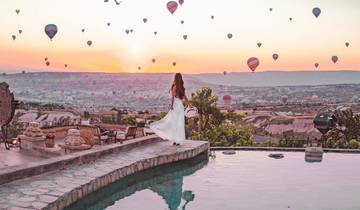
3 days
Enchanting Cappadocia Getaway – 3 Days Cave Hotel Experience & Optional Balloon
- ✓ Comprehensive Cappadocia tour
- ✓ Expert local guides included
- ✓ All accommodation arranged
- ✓ Transportation provided
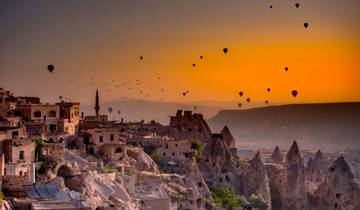
4 days
Enchanting Cappadocia Experience! 4 Days Cave Hotel, Optional Balloon
- ✓ Comprehensive Cappadocia tour
- ✓ Expert local guides included
- ✓ All accommodation arranged
- ✓ Transportation provided
5 days
Romantic Views in Cappadocia
- ✓ Booking needs min. 2 travelers
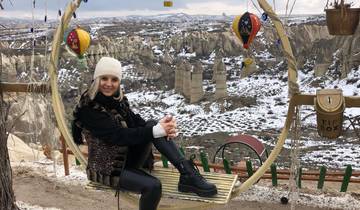
3 days
3 Days Cappadocia Highlights
- ✓ Comprehensive Cappadocia tour
- ✓ Expert local guides included
- ✓ All accommodation arranged
- ✓ Transportation provided
Multi-day tour packages powered by TourRadar. Prices and availability subject to change.
Introduction to Cappadocia Hot Air Balloon Experiences 2026
Cappadocia has earned its reputation as one of the world’s premier hot air balloon destinations, with the surreal landscape of fairy chimneys, volcanic rock formations, and ancient cave dwellings creating a panorama unlike anywhere else on Earth. Every morning at sunrise, up to 154 colorful balloons lift off simultaneously across Göreme Valley and surrounding regions, creating the iconic skyline that has become synonymous with Cappadocia tourism. This spectacular daily ballet of balloons floating gracefully over otherworldly terrain draws hundreds of thousands of travelers annually, making hot air balloon flights the region’s signature experience and often the highlight of entire Turkey itineraries.
The 2026 season continues Cappadocia’s tradition of world-class ballooning operations, with 27 licensed companies operating flights under strict Turkish Civil Aviation Authority regulations that prioritize passenger safety while maintaining the magical quality of this bucket-list experience. From budget-conscious standard flights offering authentic Cappadocia balloon experiences at accessible prices to intimate VIP flights with champagne service and maximum personal space, the range of options accommodates every preference and budget. Understanding the seasonal variations in weather reliability, pricing fluctuations throughout the year, operator differences in basket size and service quality, and strategic booking timing helps travelers maximize their chances of experiencing perfect flight conditions while securing optimal value.
Planning a Cappadocia hot air balloon flight for 2026 requires knowledge of several interconnected factors that influence both the likelihood of successful flights and the overall experience quality. Weather patterns determine cancellation rates that vary from just 7% in August to over 50% in winter months, making seasonal timing a crucial decision. Pricing structures shift dramatically based on demand, with low-season rates starting at €50 in January-March escalating to €400+ during peak September-October periods. Operator selection impacts everything from basket crowding and viewing angles to safety records and service amenities. Booking strategies affect both availability during high-demand months and flexibility options when weather causes inevitable cancellations.
This comprehensive guide provides the detailed information needed to plan an unforgettable Cappadocia hot air balloon experience in 2026. You’ll discover verified current pricing across all flight categories from multiple operators, month-by-month weather analysis with specific cancellation probability data, detailed comparisons of 27 licensed balloon companies including their safety records and passenger capacities, complete day-of-flight logistics from predawn hotel pickup through landing celebrations, photography tips for capturing both aerial and ground-level balloon images, and strategic booking recommendations that balance cost savings against weather reliability. Whether you’re planning your first balloon flight or returning for another magical sunrise over Cappadocia’s enchanting landscape, the following sections deliver the practical knowledge required to make informed decisions and create memories that last a lifetime.
Understanding Hot Air Balloon Costs in Cappadocia 2026
Hot air balloon prices in Cappadocia for 2026 range from €50 to €600 per person depending on three primary factors: seasonal demand, basket size and passenger count, and operator reputation. Standard flights with 20-28 passengers cost €50-€400, representing the most budget-friendly option while still delivering the authentic Cappadocia ballooning experience. Comfort flights with 12-16 passengers range €110-€430, offering enhanced personal space and better viewing angles preferred by couples and photographers. Deluxe experiences with 8-12 passengers cost €170-€600, providing extended flight durations and champagne service. VIP private flights for 4-8 passengers reach €350-€1000, delivering ultimate exclusivity with maximum space per passenger.
Seasonal pricing variations create significant opportunities for cost savings throughout 2026. Low season from January through early March offers the most economical rates at €50-€120 per person for standard flights, though winter weather increases cancellation probability to over 50%. Mid-season spanning late March through June and November shows moderate pricing at €150-€250 as spring and early winter conditions balance affordability with reasonable flight success rates. Peak season during September-October commands highest prices at €280-€400 due to optimal weather conditions, stunning autumn colors, and maximum international travel demand. Summer months July-August present mid-range pricing at €180-€300 despite offering the year’s most reliable weather, as European vacation schedules drive high booking volumes.
All Cappadocia hot air balloon prices in 2026 include comprehensive services providing exceptional value beyond the flight itself. Round-trip hotel transfers from Göreme, Ürgüp, Uçhisar, Ortahisar, Avanos, and other central Cappadocia locations come standard with all bookings, eliminating transportation logistics for early morning departures. Light breakfast or snacks before the flight help passengers manage predawn wake-up times. The 60-minute standard flight or 75-90 minute deluxe experience delivers ample time to photograph fairy chimneys, valleys, and the balloon flotilla from aerial perspectives. Post-landing champagne or sparkling wine celebrations honor the centuries-old ballooning tradition. Personalized flight certificates commemorating the experience provide lasting mementos. Passenger insurance coverage from licensed operators ensures protection throughout the activity.
Understanding price variations between operators helps travelers identify optimal value. Established companies like Royal Balloon, Voyager Balloons, and Turquaz Balloons typically charge premium rates justified by perfect safety records spanning 15-30 years, newer balloon equipment from Cameron and Lindstrand manufacturers, experienced pilots with thousands of flight hours, and superior customer service reflected in extensive positive reviews. Mid-tier operators offer competitive pricing while maintaining full regulatory compliance and safe operations. Budget providers focus on volume operations with larger baskets and streamlined services, delivering authentic experiences at accessible prices. Direct booking through operator websites typically costs 10-20% less than hotel arrangements or third-party platforms, making research and comparison worthwhile for cost-conscious travelers.
Booking timing significantly influences final pricing in 2026. Early bird reservations made 2-4 months ahead often receive discounts of €10-30 per person, particularly for April-October high-demand periods when operators incentivize advance bookings. Last-minute bookings within 24-48 hours sometimes access discounted rates if operators have unsold capacity, though availability becomes limited especially during peak months. Group bookings for 6+ passengers may qualify for volume discounts of 5-10%. Cash payment options at some operators provide €10 per person savings compared to credit card processing. Comparing multiple operators through booking platforms like BalloonScanner aggregates real-time pricing and availability across companies, streamlining the search for optimal deals.
Seasonal Weather Patterns and Best Time to Fly 2026
Cappadocia’s seasonal weather patterns create dramatic variations in flight reliability throughout 2026, with cancellation rates ranging from just 7% in optimal months to over 50% during winter. Understanding these patterns helps travelers choose visit dates that balance weather dependability, pricing considerations, and desired landscape aesthetics. The region’s semi-arid continental climate produces stable morning conditions approximately 280-300 days annually, making Cappadocia one of the world’s most reliable ballooning destinations despite seasonal fluctuations.
Spring Season in Cappadocia 2026 (April-June)
Spring represents one of the peak periods for Cappadocia hot air balloon flights, offering reliable weather conditions combined with spectacular natural scenery. April sees temperatures ranging from 3°C to 18°C with valleys carpeted in wildflowers creating vibrant contrast against ancient rock formations. May delivers ideal conditions with 7°C to 23°C temperatures, full bloom landscapes, and clear skies providing uninterrupted views of fairy chimneys and cave dwellings. June ushers in early summer with 11°C to 28°C temperatures allowing longer, higher flights as warm air provides enhanced lift capabilities.
Spring cancellation rates remain moderate at 20-26% as occasional March-carried winds gradually diminish through April and May. Morning wind speeds typically measure 3-6 km/h, within the ideal 5-10 km/h range for safe balloon operations. Visibility reaches maximum levels with clear skies dominating most days, perfect for photography enthusiasts seeking crisp aerial shots of Cappadocia’s landscape. Green valleys and wildflower displays create unique seasonal aesthetics unavailable during summer’s golden hues or winter’s snow-covered terrain.
Flight operations during spring months begin with predawn hotel pickups around 4:30-5:00 AM as sunrise occurs between 5:30-6:00 AM. Cooler morning temperatures necessitate layered clothing including light jackets, though conditions warm quickly once the sun rises above the horizon. Spring attracts significant international tourism, making advance booking essential for securing preferred dates and optimal pricing. The season combines weather reliability with manageable crowd levels before peak summer arrivals, positioning spring as a favorite among experienced Cappadocia travelers seeking balance between conditions and value.
Summer Season in Cappadocia 2026 (July-August)
Summer delivers the year’s most reliable hot air balloon conditions in Cappadocia, with August achieving a remarkable 7% cancellation rate representing near-perfect flight consistency. July-August temperatures range from 15°C morning lows to 35°C afternoon highs, though balloon flights operate exclusively during cool predawn hours when conditions prove ideal. Light morning winds averaging 1-4 km/h create exceptional stability for smooth takeoffs, gentle flights, and precision landings. Clear skies dominate with minimal fog or cloud cover, providing maximum visibility for photographing the landscape and balloon flotilla.
Summer represents peak tourist season in Cappadocia, resulting in high booking demand and moderate-to-high pricing despite optimal weather. Standard flights cost €180-€300 during July-August, positioned between spring/autumn mid-range rates and September-October premium pricing. The extended daylight hours allow full daily itineraries after morning balloon flights, with passengers returning to hotels by 8:30-9:00 AM leaving entire days for exploring Göreme Open Air Museum, underground cities, and valley hikes. Afternoon temperatures become intense for outdoor activities, making early morning balloon flights followed by air-conditioned tours or cave hotel relaxation a popular pattern.
Flight operations during summer months begin with earliest hotel pickups around 3:30-4:00 AM as sunrise occurs near 5:00 AM. The warm air allows balloons to reach maximum altitudes approaching 1000 meters, providing expansive panoramic views across the entire Cappadocia region. Summer flights offer extended duration potential with favorable thermal conditions, particularly for deluxe 75-90 minute experiences. Despite high tourist volumes creating crowded basket conditions in standard flights, the season’s weather reliability makes summer optimal for travelers with inflexible schedules or those unwilling to risk weather-related cancellations.
Autumn Season in Cappadocia 2026 (September-October)
Autumn ranks alongside spring as Cappadocia’s premier ballooning season, combining excellent weather conditions with stunning fall colors that transform valleys into golden-red landscapes perfect for photography. September-October temperatures range from 10°C to 25°C, providing comfortable cool mornings ideal for balloon flights and pleasant daytime conditions for ground-level exploration. Cancellation rates measure 14-17%, representing reliable operations while slightly elevated compared to summer’s exceptional 7% rate. Clear skies and stable atmospheric conditions dominate autumn months, creating magical lighting for both aerial and ground-based photography.
Autumn commands peak season pricing with September-October rates reaching €280-€400 for standard flights as international travelers target these months for optimal conditions combined with spectacular scenery. The crisp morning air enhances visibility to maximum distances, allowing passengers to observe fairy chimneys, valleys, villages, and distant mountain ranges in crystal clarity. Autumn colors create unique photographic opportunities as vineyards, orchards, and natural vegetation display amber, gold, and rust hues contrasting against Cappadocia’s volcanic rock formations. Sunrise lighting during September-October produces particularly dramatic color saturation, making autumn the favorite season among professional photographers.
Flight operations during autumn begin with hotel pickups around 4:30-5:00 AM as sunrise occurs between 5:30-6:30 AM depending on the specific date. The comfortable morning temperatures require moderate layering rather than heavy winter clothing, making autumn flights more pleasant than cold-weather experiences. Autumn attracts maximum tourist volumes rivaling summer crowds, necessitating bookings 2-4 months in advance for securing preferred dates. Despite premium pricing, autumn represents exceptional value for travelers prioritizing photographic quality, comfortable conditions, and the magical combination of reliable weather with spectacular seasonal aesthetics.
Winter Season in Cappadocia 2026 (November-March)
Winter presents the most economical hot air balloon prices in Cappadocia with rates dropping to €50-€120 for standard flights, representing less than half the cost of peak autumn periods. However, winter weather creates the year’s highest cancellation rates exceeding 50% as snow, freezing temperatures ranging from -5°C to 6°C, strong winds, and low clouds frequently prevent safe flight operations. Successful winter flights deliver breathtaking snow-covered fairy chimney landscapes creating fairytale scenery unavailable during other seasons, rewarding travelers willing to accept weather uncertainty with unique photographic opportunities and crowd-free experiences.
November marks the transition into winter with temperatures dropping and wind speeds increasing, producing cancellation rates around 30-40%. December through February experience the most challenging conditions with frozen ground, snowfall, and unpredictable weather patterns that can ground balloons for consecutive days. March signals winter’s end with improving conditions, though strong winds persist making cancellations still probable around 35-40%. The Civil Aviation Authority implements particularly strict weather evaluations during winter months, prioritizing passenger safety over operational continuity when marginal conditions exist.
Winter flight operations require significant flexibility with travelers advised to schedule 3-4 day Cappadocia stays to increase chances of experiencing at least one successful flight attempt. Hotel pickups occur later around 5:30-6:00 AM as sunrise happens near 7:00 AM during winter months. Passengers must prepare for extreme cold with layered clothing, warm jackets, gloves, and head protection essential for comfort during flights reaching altitudes where temperatures drop further. Despite the challenges, winter’s low prices, minimal crowds, and magical snowy landscapes attract budget-conscious travelers and photographers seeking unique seasonal imagery willing to accept cancellation risk as part of the adventure.
Choosing Your Balloon Operator in Cappadocia 2026
Selecting the right hot air balloon operator significantly impacts your Cappadocia experience, with 27 licensed companies offering varying levels of service quality, safety records, basket sizes, and pricing structures. All operators must comply with Turkish Civil Aviation Authority regulations including licensed pilots with minimum 200 flight hours, regular balloon maintenance inspections, daily weather approval requirements, and comprehensive passenger insurance coverage. Beyond these baseline standards, established premium operators distinguish themselves through superior equipment, experienced pilots with thousands of flight hours, smaller passenger loads for enhanced comfort, and customer service excellence reflected in extensive positive reviews.
Premium Established Operators 2026
Royal Balloon stands as Cappadocia’s deluxe operator, founded by prominent tourism companies and maintaining ISO 9001:2015 certification alongside memberships in prestigious organizations including American Express Selects, American Society of Travel Agents, Balloon Federation of America, and British Balloon and Airship Club. Royal operates exclusively British-manufactured balloons from Cameron and Lindstrand with advanced Hyperlife Silver Coating materials ensuring highest safety and flight performance. Their fleet strategy emphasizes quality over quantity, flying fewer balloons with reduced passenger counts even in standard flights that accommodate maximum 20-24 passengers compared to competitors’ 28-32 passenger baskets. Royal’s perfect safety record, celebrity clientele including royalty and international stars, and consistent TripAdvisor Certificate of Excellence awards justify premium pricing while delivering superior experiences.
Voyager Balloons has operated for over 18 years with FAA-certified pilots, professional staff, and outstanding safety record serving 30,000+ satisfied passengers annually. Voyager distinguishes itself through longer flight times than most competitors, more scenic flight plans, indoor buffet breakfast facilities rather than outdoor snacks, and newer spacious balloon equipment maintained in full compliance with Turkish Civil Aviation requirements. Their pilots speak multiple languages including English, Turkish, Russian, Spanish, French, German, Chinese, Italian, and Portuguese, accommodating international passengers from diverse backgrounds. Voyager’s smaller basket capacities compared to volume operators provide enhanced personal space and viewing angles, particularly popular with couples and photographers seeking less crowded experiences.
Turquaz Balloons operates with experienced pilots including Emre Yavuz, Cappadocia’s youngest licensed pilot who also serves as company general director. Their signature Turquaz Comfort Flights limit baskets designed for 20 passengers to maximum 16 people, providing substantial personal space while maintaining competitive pricing. Standard flights accommodate 28 passengers maximum, while deluxe experiences offer even smaller groups for ultimate comfort. Turquaz maintains modern balloon fleet with custom-designed baskets and consistently receives excellent reviews for professional service, safety consciousness, and memorable experiences including champagne celebrations and flight certificates.
Mid-Tier Quality Operators 2026
Discovery Balloons, founded in 2011, operates in Göreme National Park with experienced pilots including well-known instructor Yüksel who maintains over 5000 flight hours across five continents and works for Civil Aviation Authority training new pilots. Discovery offers both sunrise Discovery Flights and slightly later Daylight Flights starting about 20 minutes after the first ascent, accommodating passengers preferring less extreme early morning wake-ups. Their professional ground crews ensure smooth operations from inflation through landing celebrations, with competitive pricing making Discovery popular among travelers seeking quality experiences without premium operator costs.
Kapadokya Balloons holds the distinction of being Cappadocia’s pioneering operator, established in 1991 when commercial balloon tourism first emerged in the region. This three-decade history provides extensive experience and established safety protocols refined over thousands of flights. As one of the larger operators, Kapadokya offers reliable availability even during peak season periods when smaller companies sell out. Their longevity demonstrates sustained quality and customer satisfaction, positioning them as a trusted choice for risk-averse travelers prioritizing proven track records.
Rainbow Balloons has transformed dreams into reality since 2005, establishing itself as the region’s third-largest operator. Their substantial fleet provides excellent availability and frequent flight schedules accommodating last-minute bookings when weather and capacity align. Rainbow maintains competitive pricing while delivering consistent quality experiences, making them popular among budget-conscious travelers seeking reputable operators without premium price tags. Multi-language capabilities and professional service standards meet international tourist expectations.
Budget-Friendly Options 2026
Budget operators in Cappadocia focus on volume operations with larger basket capacities and streamlined services, providing authentic ballooning experiences at accessible prices starting from €50-€120 in low season. These companies comply with all Turkish Civil Aviation Authority safety regulations, maintain licensed pilots, and deliver the core experience of floating over fairy chimneys at sunrise with included hotel transfers, light breakfast, champagne toast, and flight certificates. The primary differences involve larger passenger counts creating more crowded basket conditions, potentially shorter flight durations, and fewer luxury amenities compared to premium operators.
Standard 28-passenger baskets represent the maximum capacity most budget operators utilize, dividing the basket into compartments accommodating 6-8 passengers each. While these larger groups reduce per-person costs significantly, they also limit personal space and can make achieving optimal viewing angles more challenging, particularly for photography enthusiasts seeking unobstructed shots. Passengers should arrive early within their assigned basket compartment to secure corner positions providing best perspectives. Despite the crowding, budget operators deliver the fundamental balloon experience over identical terrain with the same sunrise views, making them excellent choices for cost-conscious travelers prioritizing the activity itself over luxury amenities.
Booking Direct vs. Third-Party Platforms 2026
Direct booking through operator websites typically costs 10-20% less than hotel arrangements or third-party booking platforms, as operators avoid commission fees when acquiring customers directly. Company websites provide complete transparency regarding exact basket sizes, flight schedules, included services, and current availability. Direct communication with operators ensures clear understanding of cancellation policies, rescheduling procedures, and payment options including cash discounts offered by some companies. However, direct booking requires researching multiple operators individually and comparing offerings without aggregated comparison tools.
Third-party platforms like BalloonScanner aggregate real-time pricing and availability across multiple Cappadocia operators, streamlining comparison shopping and potentially revealing deals or last-minute discounts. These platforms provide user reviews, safety ratings, and operator comparisons in centralized locations, saving research time. Platform booking fees typically add 10-15% to base operator prices, though occasional promotional discounts can offset this premium. For travelers valuing convenience and comprehensive comparisons over maximum cost savings, platforms deliver worthwhile services. Budget-conscious travelers willing to invest time in direct operator research achieve better pricing through company websites.
Flight Experience Details and What to Expect 2026
The complete Cappadocia hot air balloon experience in 2026 spans 3.5-4 hours from initial hotel pickup through final return transfer, with actual flight time constituting 60 minutes for standard packages or 75-90 minutes for deluxe options. Understanding the detailed timeline, physical requirements, and moment-by-moment progression helps travelers prepare mentally and physically for this bucket-list experience while maximizing enjoyment and photographic opportunities throughout the journey.
Predawn Hotel Pickup and Transfer to Launch Site
Hotel pickups begin 1-1.5 hours before sunrise, typically between 4:30-5:00 AM during spring-autumn months and 5:30-6:00 AM in winter. Mercedes Sprinter minibuses with 16-passenger capacity collect guests from accommodations throughout Göreme, Ürgüp, Uçhisar, Ortahisar, Avanos, and surrounding towns within the central Cappadocia ballooning zone. Hotels located farther from flight areas in Kayseri, Aksaray, Kaymakli, Ihlara, or Güzelyurt may incur additional transfer fees or not qualify for included pickup services. Passengers should confirm their specific hotel location with operators during booking to verify transfer eligibility.
The predawn drive to launch areas takes 15-30 minutes depending on hotel location and the day’s chosen flight zone. Turkish Civil Aviation Authority divides Cappadocia into multiple flight sectors including Göreme, Çavuşin Valley, and Soğanlı Valley, with pilots selecting optimal launch sites based on daily wind direction forecasts to ensure the most scenic routes over fairy chimneys, valleys, and cave dwellings. During the transfer, passengers enjoy views of the awakening landscape with early morning light beginning to illuminate rock formations and other balloon companies preparing their equipment at various sites across the region.
Light Breakfast and Safety Briefing
Upon arrival at the operator’s facility or launch site, passengers receive light breakfast consisting of pastries, cookies, fruit, coffee, tea, and juice. Premium operators like Voyager Balloons provide indoor buffet breakfast areas, while others serve outdoor snacks depending on facilities and weather conditions. This 20-30 minute breakfast period allows passengers to fully wake up, use restroom facilities, and begin acclimating to the early morning cold before heading to the actual takeoff location.
Pilots deliver comprehensive safety briefings in English and other languages depending on passenger nationalities, covering proper landing position (facing away from travel direction, back against basket wall, hands holding rope loops, knees bent), altitude expectations reaching up to 1000 meters, flight duration estimates, and general balloon operation principles. Passengers learn about the propane burner system creating hot air for lift, the lack of steering capability as balloons drift with wind currents, and the pilot’s role in adjusting altitude to catch different wind layers moving in desired directions. This briefing establishes passenger confidence through transparency about how balloon flights work and what sensations to expect.
Balloon Inflation and Boarding Process
Passengers witness the spectacular inflation process as ground crews unload basket and envelope components from transport vehicles, lay out the massive nylon balloon fabric across the ground, and begin inflation using powerful fans to pump cold air into the envelope while it lies horizontally. Once partially inflated with cold air, pilots activate the propane burner system, blasting flames into the envelope opening and heating the air inside. The balloon slowly rises from horizontal to vertical position as hot air provides lift, creating a magical transformation from colorful fabric lying on the ground to a towering balloon standing upright with basket ready for boarding.
This inflation sequence typically takes 15-20 minutes and provides exceptional photography opportunities as dozens of balloons across the valley undergo simultaneous inflation, creating a spectacular scene of colorful envelopes rising against the predawn sky. The inflation phase often ranks among passengers’ favorite moments of the entire experience, combining the anticipation of upcoming flight with the visual spectacle of balloon preparation. Photographers should position themselves with the rising sun behind them to capture balloons illuminated by first light against darker valley backgrounds.
Boarding occurs by stepping over the basket edge and settling into assigned compartments within the basket’s divided sections. Standard 20-28 passenger baskets typically feature 4-8 compartments accommodating 3-7 people each, with passengers standing throughout the flight as basket floors provide no seating. Pilots verify weight distribution across compartments to ensure balanced flight characteristics, sometimes requesting passenger repositioning if one side becomes too heavy. Once all passengers board and pilots complete final safety checks, the balloon gently lifts from the ground as increased burner heat overcomes the basket’s weight, beginning the magical journey skyward.
In-Flight Experience Over Cappadocia
The sensation of liftoff proves remarkably gentle, with the basket rising smoothly into the air without the dramatic acceleration passengers might expect from their experience with other aircraft. Within minutes, the balloon achieves altitude of several hundred meters, providing expanding panoramic views of Göreme Valley, fairy chimneys, cave dwellings, vineyards, and the growing flotilla of other balloons rising simultaneously across the landscape. The near-silence between burner blasts creates a serene atmosphere broken only by occasional propane roars and the pilot’s narration about landscape features, historical sites, and flight progress.
Pilots navigate by adjusting altitude to catch different wind currents flowing in various directions at different heights, allowing some route influence despite balloons lacking traditional steering mechanisms. Flights typically descend into valleys providing close-up views of fairy chimney formations and cave churches, then ascend to 800-1000 meters for sweeping panoramas encompassing the entire Cappadocia region including distant mountain ranges. The constantly shifting perspective as the balloon rises, descends, and drifts creates an ever-changing visual experience with new photographic opportunities every few minutes.
Sunrise during the flight bathes the landscape in golden light that progressively intensifies as the sun climbs above the horizon, creating the magical color palette Cappadocia’s balloon flights are famous for. The combination of dramatic landscape, hundreds of colorful balloons floating at various altitudes, and sunrise lighting produces some of the world’s most spectacular aerial photography opportunities. Pilots time flights to maximize this golden hour period, ensuring passengers experience the full transition from predawn twilight through peak sunrise illumination.
The 60-minute standard flight or 75-90 minute deluxe experience passes remarkably quickly as passengers alternate between photography, observation, and conversation about the stunning scenery. Pilots provide informative commentary about Cappadocia’s geological formation through volcanic eruptions and erosion over millions of years, the region’s historical importance as a refuge for early Christians, and the development of modern balloon tourism since commercial flights began in 1991. Ground crews track the balloon’s progress from below, positioning chase vehicles to reach predicted landing zones based on wind drift calculations.
Landing, Celebration, and Return Transfer
Landing procedures demonstrate pilots’ skill as they identify suitable open areas away from roads, buildings, and obstacles, then carefully descend by reducing burner heat and allowing the balloon to settle onto the ground. Experienced ground crews grab basket handles to stabilize the landing and assist passengers in maintaining the proper landing position if wind conditions create movement during touchdown. Most landings occur smoothly with minimal impact, though occasionally stronger winds require pilots to drag the basket briefly across the ground before complete stop, making the proper landing position essential for passenger safety.
Post-landing celebrations honor centuries-old ballooning traditions dating to 18th-century France when successful flights were considered remarkable technological achievements. Operators set up champagne or sparkling wine service with small tables in the landing field, toasting passengers’ successful flights while ground crews pack away balloon equipment. Pilots present personalized flight certificates with passenger names, flight dates, and operator details, creating lasting mementos of the experience. Some operators include commemorative medals, souvenir photographs, or other keepsakes depending on their service packages.
This celebration period lasts 15-20 minutes, providing relaxed social time for passengers to share experiences, exchange photos, and enjoy the accomplishment of completing a Cappadocia balloon flight. The informal atmosphere creates bonding moments among passengers who shared the basket during flight, often leading to photo swaps and travel recommendations. Ground crews complete balloon packing during celebrations, demonstrating the teamwork required for every successful flight operation.
Return transfers to hotels complete the experience, with passengers arriving back at accommodations by 8:30-9:00 AM. This timing allows joining daily tours departing around 9:30-10:00 AM, having breakfast at cave hotels, or simply resting after the early morning adventure before exploring Cappadocia’s ground-level attractions. The entire 3.5-4 hour experience from pickup through return leaves most of the day available for additional activities, making balloon flights an efficient use of limited vacation time that doesn’t consume entire mornings despite the predawn start.
Photography Tips for Balloon Flights and Ground Views 2026
Cappadocia’s hot air balloon flights provide some of the world’s most spectacular photography opportunities, combining dramatic landscape, colorful balloon flotillas, and magical sunrise lighting. Maximizing photographic success requires understanding optimal camera settings, composition techniques, timing strategies, and ground-level viewpoint options for capturing both aerial perspectives from basket positions and iconic shots of balloons from valley viewpoints.
Aerial Photography from Balloon Baskets
Camera equipment for balloon flights should prioritize versatility over specialized gear, as basket space limitations and constantly shifting perspectives favor adaptable setups. A single camera body with 24-70mm or 24-105mm standard zoom lens handles 80% of aerial photography situations, capturing both wide landscape views and tighter compositions of individual fairy chimneys or nearby balloons. A second camera with 70-200mm telephoto lens allows isolating distant balloons, compressing perspective for dramatic flotilla shots, and photographing sunrise details, though weight and space considerations make this optional rather than essential.
Camera settings for balloon photography should account for early morning low light transitioning to bright sunrise conditions. Start with ISO 800-1600 to maintain fast shutter speeds preventing motion blur from basket movement and hand-holding, gradually decreasing ISO as sunrise light intensifies. Aperture around f/5.6-f/8 provides sufficient depth of field for landscape shots while maintaining fast shutter speeds, opening wider to f/2.8-f/4 for individual balloon portraits with background separation. Shutter priority mode at 1/500 second or faster freezes balloon movement and compensates for hand-holding instability, while aperture priority works well once sunrise provides abundant light allowing fast automatic shutter speeds.
Composition techniques maximize impact by incorporating multiple visual elements across foreground, middle ground, and background. Position fairy chimneys or valleys in the foreground, other balloons at various altitudes in the middle ground, and distant mountain ranges or expansive sky in the background to create depth and scale. Vertical compositions work particularly well for hot air balloon subjects, emphasizing their height and the dramatic vertical dimension of Cappadocia’s valleys. Include basket edges, burner flames, or fellow passengers in foreground corners to provide human scale and context, though avoid excessive basket inclusion that distracts from landscape focus.
Timing considerations optimize lighting quality throughout the 60-90 minute flight. The initial predawn period offers soft blue hour light perfect for silhouetting fairy chimneys against lightening sky, with balloons’ burner flames creating dramatic orange accents in the dim conditions. Sunrise itself produces the most spectacular lighting as golden rays illuminate rock formations and balloon envelopes, creating warm color palettes and dramatic shadows defining landscape texture. Post-sunrise continues providing excellent light for 20-30 minutes as the sun climbs higher, though contrast increases requiring careful exposure management to preserve both highlight and shadow detail.
Ground-Level Balloon Photography Viewpoints 2026
Photographing balloons from ground viewpoints in Cappadocia valleys provides the iconic wide shots showing dozens of balloons floating above fairy chimneys that have become synonymous with the region’s imagery. Several locations offer superior perspectives combining landscape interest with balloon flight paths that ensure colorful subjects populate the frame during sunrise launch periods.
Uçhisar Castle stands as Cappadocia’s highest point, providing panoramic views across Göreme Valley where most balloon flights concentrate. Arriving 30 minutes before sunrise secures optimal positions on the castle’s viewing platforms and rock outcropping, though crowds gather quickly during peak season making very early arrival essential for unobstructed shooting positions. The elevated perspective allows capturing balloons at eye level as they ascend to higher altitudes, creating unique compositions unavailable from valley floors. Wide-angle lenses around 16-35mm capture expansive scenes showing the full balloon flotilla against fairy chimney landscapes.
Love Valley offers one of Cappadocia’s most unique backdrops with its distinctive phallic rock formations creating surreal foreground elements for balloon compositions. The valley’s orientation relative to sunrise direction varies by season, with spring-summer positioning working best as balloons drift toward Love Valley’s distinctive formations. Arriving before dawn allows setting up compositions with rock formations in foreground and balloon flight paths in background, waiting for the flotilla to populate the frame as flights progress. Love Valley’s less crowded nature compared to Uçhisar Castle provides more relaxed shooting conditions and opportunities to explore various compositions without competing with other photographers.
Rose Valley and Red Valley both provide excellent ground-level perspectives with colorful rock formations complementing balloon subjects. The valleys’ network of hiking trails offers flexibility to position based on wind direction and balloon drift patterns observed during inflation phase. Mobility advantages allow photographers to adjust positions throughout the morning as balloon concentrations shift, maximizing opportunities rather than remaining fixed at a single viewpoint. The valleys’ open nature permits unobstructed sky views essential for balloon photography.
Important technical considerations for ground photography include arriving early enough to scout compositions before balloons launch, bringing tripods for low-light predawn shooting, using wide-angle lenses to capture balloon flotillas against landscapes, and avoiding drone usage as regulations prohibit flying drones near hot air balloon flight zones for safety reasons. The combination of dramatic foreground rock formations, colorful balloon subjects, and magical sunrise lighting creates photographic opportunities worthy of Cappadocia’s reputation as one of the world’s most photogenic destinations.
Booking Strategies and Timing for 2026
Strategic booking timing significantly impacts both price paid and likelihood of securing preferred flight dates in Cappadocia during 2026. Understanding operator booking patterns, seasonal demand fluctuations, advance reservation advantages, and flexibility strategies helps travelers optimize their balloon flight arrangements while minimizing cost and maximizing weather-related backup options.
Advance Booking Timeline Recommendations
Booking 2-4 months ahead provides optimal balance between early bird pricing discounts and avoiding excessive commitment before weather forecasts become reliable. Spring season April-June and autumn September-October represent peak demand periods when 2-4 month advance reservations become essential for securing preferred operators and dates, as popular companies like Royal Balloon, Voyager Balloons, and Turquaz Balloons sell out premium months well in advance. Summer July-August also requires advance booking despite slightly less extreme demand, as family vacation schedules and European holiday periods fill capacity quickly.
Winter months November-March offer more booking flexibility given lower demand and higher cancellation rates, with 2-4 week advance reservations typically sufficient for securing availability. However, even winter travelers benefit from early booking to lock in low-season pricing at €50-€120 before operators adjust rates upward if unexpected demand emerges. Last-minute winter bookings sometimes access deeply discounted rates within 24-48 hours of flight dates if operators have unsold capacity and favorable weather forecasts, though this strategy risks missing the experience entirely if no availability exists.
Early bird booking advantages beyond securing availability include pricing discounts of €10-€30 per person offered by operators incentivizing advance reservations. Direct operator bookings through company websites provide best access to these early bird rates, as third-party platforms may not reflect promotional pricing during campaign periods. Email newsletters from operators sometimes announce flash sales or seasonal promotions providing additional savings for subscribers who book promptly during limited-time offer windows.
Multi-Day Stay Strategy for Weather Flexibility
Scheduling balloon flights for the first morning in Cappadocia while planning 3-4 total days in the region provides crucial flexibility when weather causes inevitable cancellations. The 35% annual average cancellation rate means roughly one-third of scheduled flights don’t operate, making backup dates essential for travelers unwilling to risk missing the experience entirely. Attempting the flight on arrival day leaves 2-3 subsequent mornings available for rescheduling if weather grounds the initial attempt, dramatically increasing overall success probability.
This multi-day strategy works particularly well during shoulder seasons and winter when cancellation rates climb to 30-50%, as extended stays convert high single-flight failure probability into reasonable multi-attempt success likelihood. For example, staying 3 days during a period with 40% daily cancellation rate produces roughly 78% probability of experiencing at least one successful flight across the three attempts (calculated as 1 – 0.4^3), transforming marginal weather periods into viable options for budget-conscious travelers willing to accept some uncertainty.
Operators typically offer two options for weather-related cancellations: free rescheduling for the next available morning at no additional cost, or full refund if rescheduling becomes impossible due to travel constraints or consecutive days of poor weather. Communicating multi-day flexibility during initial booking helps operators prioritize rescheduling passengers with extended availability when capacity becomes limited during high-demand periods following multiple consecutive cancellation days.
Direct Booking vs. Platform Comparison
Direct booking through operator websites costs 10-20% less than hotel arrangements or third-party platforms, as companies avoid commission fees when acquiring customers without intermediaries. Operators like Royal Balloon, Voyager Balloons, Turquaz Balloons, and Discovery Balloons maintain straightforward online booking systems accepting credit cards, with some offering additional €10 per person cash payment discounts if passengers pay balance on flight day rather than prepaying entirely online. Direct communication with operators ensures clear understanding of exact pickup times, specific balloon baskets assigned, and detailed cancellation/rescheduling policies.
Third-party platforms like BalloonScanner aggregate real-time pricing and availability across multiple operators, providing convenient comparison shopping and potentially revealing last-minute deals or promotional rates. Platform booking fees add 10-15% to base prices, though comprehensive operator reviews, safety ratings, and centralized comparison tools justify this premium for travelers prioritizing convenience over maximum cost savings. Platforms excel for last-minute bookings when researching multiple operators individually becomes time-prohibitive, as aggregated availability instantly reveals which companies have remaining capacity.
Hotel booking arrangements represent the least cost-effective option, with properties typically adding 20-30% markup to operator prices as commission for handling reservations on guests’ behalf. This convenience premium might make sense for travelers uncomfortable with online booking or language barriers, though most established operators maintain English-language websites and customer service making direct booking straightforward for international visitors. Hotels sometimes bundle balloon flights with accommodation packages, potentially offsetting some markup through overall package discounts, though comparing unbundled direct operator booking plus separate hotel reservation usually reveals superior value.
Safety Regulations and Standards 2026
Cappadocia maintains some of the world’s strictest hot air balloon safety regulations, with Turkey’s Civil Aviation Authority (Şehircilik ve Havacılık Genel Müdürlüğü – SHGM) enforcing comprehensive standards covering pilot licensing, balloon equipment specifications, daily weather approvals, operational limitations, and passenger safety protocols. These regulations position Cappadocia as one of the safest ballooning destinations globally, with accident rates far below international averages despite operating the world’s highest daily balloon flight volumes.
Pilot Licensing Requirements 2026
Commercial hot air balloon pilots in Cappadocia must hold licenses requiring minimum 200 total flight hours including specific experience in balloon operations, meteorology knowledge, emergency procedures proficiency, and passenger management skills. This 200-hour baseline far exceeds minimum requirements in many countries, ensuring Cappadocia pilots possess substantial real-world experience before conducting commercial passenger flights. Licensed pilots undergo regular recertification testing, medical examinations verifying physical fitness for aviation duties, and continuing education requirements covering updated regulations and safety protocols.
Instructor pilots like Yüksel of Discovery Balloons who train new commercial pilots hold even more stringent qualifications with 5000+ flight hours across multiple continents and certification to evaluate student pilot skills during training flights. These instructor pilots often work directly with Civil Aviation Authority conducting license examinations and establishing training standards for the entire Cappadocia ballooning industry. Their presence at various operators ensures institutional knowledge transfer and maintenance of high operational standards throughout the region’s balloon companies.
Daily Weather Approval System
Each morning, SHM Kapadokya meteorological experts evaluate weather conditions across Cappadocia’s flight zones and assign flag status determining whether commercial operations may proceed. The red/yellow/green flag system provides clear operational authorization levels understood by all pilots and operators throughout the region. Red flag conditions prohibit all commercial balloon flights when meteorological conditions fail to meet minimum safety standards including wind speeds exceeding safe operational limits, precipitation, low cloud ceilings, or other hazardous weather factors. Yellow flag restrictions permit only training flights with certified instructor pilots aboard, allowing skill development while preventing passenger-carrying commercial operations during marginal conditions. Green flag authorization indicates conditions meet all safety requirements for full commercial operations.
This flag system updates every 15 minutes based on real-time meteorological data from weather stations positioned across Cappadocia’s flight zones, with sector-specific flags allowing operations in some valleys while grounding flights in others experiencing different local conditions. The dynamic assessment ensures pilots have current information rather than making go/no-go decisions based on outdated forecasts, substantially reducing weather-related risks. Conservative evaluation standards prioritize passenger safety over operator revenue, with authorities granting red flag status whenever any doubt exists about condition safety.
Slot Allocation System and Air Traffic Management
Since 2013, Civil Aviation Authority has limited Cappadocia balloon operations to maximum 154 balloons daily across all flight zones, preventing the air traffic congestion that developed during the 2010s when unlimited balloon numbers created collision risks. This slot allocation system assigns each of the 27 licensed operators specific daily balloon quotas based on their fleet size, safety record, and infrastructure capacity, ensuring predictable air traffic volumes that pilots can navigate safely. The 154-balloon limit represents careful balance between accommodating tourism demand and maintaining safety margins as hundreds of balloons share relatively confined airspace during concentrated sunrise launch periods.
Flight zones divide Cappadocia into sectors including Göreme, Çavuşin Valley, and Soğanlı Valley, with pilots selecting launch sites based on daily wind patterns to ensure optimal routes over scenic terrain while maintaining separation from other balloons. Ground controllers monitor balloon positions and communicate with pilots about air traffic conditions, though balloons’ lack of steering capability and reliance on wind currents for movement limits active traffic management compared to powered aircraft. The slot system prevents over-concentration in any single zone by distributing operators across multiple launch areas.
Balloon Equipment Standards and Maintenance
All balloons operating in Cappadocia must comply with Turkish Civil Aviation requirements for safe operation, including regular maintenance inspections, envelope integrity testing, burner system safety checks, and basket structural evaluations. Operators using balloons from premier manufacturers like Cameron Balloons and Lindstrand Balloons benefit from advanced construction techniques, high-quality materials including Hyperlife Silver Coating used by companies like Royal Balloon, and factory support for ongoing maintenance needs. Balloon envelopes have defined service lifespans based on flight hours and sun exposure, requiring retirement or remanufacturing after reaching specified limits.
Passenger capacity limitations ensure baskets never exceed manufacturer-rated weight capacities accounting for passengers, pilot, fuel, and equipment combined weights. Operators verify passenger weights during booking and may request actual weights before flights to confirm safety margins, with weight restrictions typically around 120 kg (264 lbs) per person requiring notification rather than prohibition but helping pilots distribute loads appropriately across basket compartments. These weight management protocols prevent overloading that could compromise flight performance or landing safety.
Passenger Safety Protocols
Age and height restrictions prohibit children under 6 years old from balloon flights due to safety concerns including inability to maintain landing position, understand safety instructions, and stand stationary for 60-90 minute flight durations. Minimum height requirements around 110-120 cm ensure children can see over basket edges and won’t risk falling through compartment openings during flights. Pregnancy restrictions prohibit women who have entered their 28th week from flying due to potential complications from altitude changes, landing impacts, and limited medical assistance availability during flights.
Physical mobility requirements specify that baskets are not wheelchair accessible, as passengers must step over basket edges during boarding and stand throughout flights without seating accommodations. Landing position protocols require all passengers to face away from travel direction, back against basket wall, hands gripping rope loops, and knees bent to absorb potential impact forces during touchdown. Pilots practice this position during safety briefings and direct passengers to assume it as landings approach, with the proper stance substantially reducing injury risk during windy landings that create basket movement.
What to Bring and Wear for Balloon Flights 2026
Proper clothing and equipment preparation significantly impacts comfort and enjoyment during Cappadocia hot air balloon flights, with early morning predawn temperatures, altitude-related cooling, and standing-only basket positions creating specific requirements different from typical daytime tourism activities. Understanding seasonal temperature variations, layering strategies, footwear considerations, and photography equipment needs helps passengers arrive properly prepared for the 3.5-4 hour complete experience.
Clothing Recommendations by Season 2026
Spring April-June mornings range from 3°C to 11°C during predawn pickup times, requiring layered clothing starting with thermal or long-sleeve base layers, mid-layer fleece or sweater, and outer windproof jacket protecting against wind chill during flight. As sunrise warms temperatures by 5-10°C and burner heat provides periodic warmth when pilots activate propane systems, excessive heavy clothing becomes uncomfortable, making removable layers superior to single heavy coats. Long pants rather than shorts or skirts provide leg protection and warmth, with jeans or hiking pants offering appropriate coverage without excessive bulk.
Summer July-August offers warmest conditions with 15°C morning temperatures, though altitude increases create cooling effects making light jackets advisable despite warm ground-level conditions. Short-sleeve shirts with light fleece or windbreaker outer layers accommodate the moderate temperature range, easily removed if conditions warm excessively. Summer’s reliable weather and comfortable temperatures create the most forgiving clothing requirements, reducing risk of discomfort from over- or under-dressing.
Autumn September-October mirrors spring with 10-15°C morning temperatures requiring moderate layering. Light jackets, long-sleeve shirts, and long pants provide sufficient warmth without heavy winter gear, with the comfortable autumn conditions making clothing decisions straightforward. Autumn’s crisp morning air enhances flight experience comfort compared to summer heat or winter cold extremes.
Winter November-March demands serious cold weather preparation with temperatures ranging from -5°C to 5°C requiring thermal base layers, insulated mid-layers, heavy winter coats, gloves, warm hats, and scarves protecting extremities from freezing conditions. Altitude increases further during flight create additional cooling requiring comprehensive protection. Multiple thin layers prove superior to single bulky coats, allowing temperature adjustment as sunrise warmth gradually improves conditions. Winter passengers must balance warmth needs against mobility requirements for climbing into baskets and maintaining landing positions.
Footwear and Practical Considerations
Closed-toe shoes with good grip represent essential footwear for balloon flights, as passengers must step over basket edges during boarding, stand on potentially uneven basket floors throughout flights, and maintain stable footing during landings that sometimes involve basket dragging across ground before complete stops. Hiking boots, running shoes, or sturdy sneakers all work well, while sandals, flip-flops, high heels, or dress shoes create safety risks and discomfort during the standing flight experience. Boots provide ankle support beneficial for landing impacts, though not absolutely necessary if passengers wear athletic shoes with solid construction.
Avoid flowing scarves, loose clothing, or dangling accessories that could catch on basket structures, burner equipment, or other passengers’ gear during the crowded confined space of balloon baskets. Hair ties for long hair prevent wind from creating distracting tangles during flight, improving photography opportunities and overall comfort. Sunglasses protect eyes from bright sunrise light once the sun rises above horizon, though not needed during predawn darkness and potentially problematic if lost during flight activities.
Photography Equipment and Accessories
Camera equipment should prioritize compact versatile gear over heavy specialized systems, as basket space limitations and standing positions throughout flights make large bags and multiple bodies/lenses impractical. A single camera with standard zoom lens handles most photographic situations, with optional second camera for telephoto shots representing maximum practical equipment for most passengers. Neck straps rather than hand straps prevent accidental drops when switching between shooting and enjoying views, as basket edges create fall hazards for loose equipment.
Avoid bringing drones to balloon flights, as regulations strictly prohibit flying drones near hot air balloon operations for safety reasons. Attempting to launch drones from balloons violates aviation rules and creates collision risks with other balloons in the congested airspace. Ground-based drone operations near balloon flight zones similarly face restrictions preventing interference with commercial operations. Photography from basket positions and ground viewpoints provides ample creative opportunities without requiring drone footage.
Small backpacks or bags secure personal items including water bottles, snacks, phones, wallets, and extra clothing layers, though minimize size to avoid consuming limited basket floor space shared with other passengers. Operators sometimes provide storage areas for bags during flights, allowing passengers to retrieve items as needed without constant carrying. Valuable items should remain secured in zippered pockets or bags rather than loose in hands where movement and excitement could cause accidental drops over basket edges.
Alternative Flight Zones Beyond Göreme 2026
While Göreme Valley hosts the majority of Cappadocia’s daily balloon flights and offers the iconic fairy chimney views that made the region famous, alternative flight zones including Çavuşin Valley and Soğanlı Valley provide quieter alternatives with equally dramatic landscapes, potentially lower prices, and less crowded basket conditions during peak season periods when Göreme flights sell out or command premium rates.
Çavuşin Valley Flight Characteristics
Çavuşin Valley offers wide valley views, dramatic cliff formations, and comprehensive Cappadocia balloon experience in slightly calmer atmosphere compared to Göreme’s concentrated balloon traffic. The valley’s orientation and wind patterns sometimes provide superior flight routes during specific weather conditions, allowing pilots to showcase different landscape features than standard Göreme circuits. During busy April-October months when Göreme flights sell out weeks in advance or prices increase rapidly due to limited availability, Çavuşin serves as excellent alternative maintaining reasonable pricing and better availability.
Landscape features in Çavuşin include ancient cave dwellings carved into cliff faces, eroded rock formations creating varied topography, agricultural valleys with vineyards and orchards, and sufficient fairy chimney concentrations providing the characteristic Cappadocia scenery. While Göreme’s higher fairy chimney density creates slightly more dramatic immediate surroundings, Çavuşin’s broader valley perspectives offer compensating visual interest through different geological formations and less crowded airspace allowing closer approach to terrain features without collision concerns.
Soğanlı Valley Flight Options
Soğanlı Valley flights operate as popular alternative especially during peak travel periods, offering authentic Cappadocia ballooning at potentially reduced prices compared to premium Göreme rates. The valley’s more remote location relative to main tourism centers in Göreme and Ürgüp creates less concentrated demand, allowing Soğanlı operators to maintain competitive pricing while delivering full balloon flight experiences over similarly spectacular terrain. Passengers staying in Göreme may face longer transfer times reaching Soğanlı launch sites, though operators include these extended transfers in standard pickup services.
Soğanlı’s landscape characteristics include rock-cut churches, cave monasteries, distinctive geological formations, and agricultural valleys creating varied scenery during flights. The valley’s less developed tourism infrastructure preserves more authentic rural character compared to heavily visited Göreme, appealing to travelers seeking experiences beyond primary tourist zones. Flight operations maintain identical safety standards and regulatory compliance as Göreme, with same Civil Aviation Authority oversight, licensed pilots, and daily weather approval requirements ensuring passenger safety regardless of launch location.
Frequently Asked Questions About Cappadocia Hot Air Balloon 2026
Do hot air balloons fly every day in Cappadocia in 2026?
Hot air balloons operate year-round in Cappadocia but do not fly every single day in 2026 due to weather-dependent safety requirements. Approximately 280-300 days per year see successful flights out of 365 total days, representing 77-82% operational rate. Daily operations depend entirely on Turkish Civil Aviation Authority weather approval using the red/yellow/green flag system, with flights only permitted under green flag authorization when wind speeds, visibility, precipitation, and other meteorological factors meet strict safety standards. August achieves highest reliability with 93% flight success rate (only 7% cancellations), while winter months December-February experience 50%+ cancellation rates. Operators notify passengers between 9:00-10:00 PM the evening before scheduled flights or by 5:00 AM on flight morning regarding cancellation decisions, offering free rescheduling for next available morning or full refunds if weather prevents operations.
Can children go on Cappadocia hot air balloon rides in 2026?
Children age 6 and older can participate in Cappadocia hot air balloon rides in 2026, subject to minimum height requirements of 110-120 cm (approximately 3.5-4 feet) ensuring they can see over basket edges and safely navigate boarding and landing procedures. Children under age 6 are prohibited from balloon flights for safety reasons including inability to understand complex safety instructions, difficulty maintaining landing position during potentially rough touchdowns, and challenges standing still for 60-90 minute flight durations without seating accommodations. All children under age 16 must fly accompanied by responsible adults, though parents or legal guardians are not strictly required and other adult family members or guardians suffice. Children meeting age and height requirements enjoy the same spectacular views and magical experience as adult passengers, with many families reporting balloon flights as highlight memories of Cappadocia trips. No special pricing discounts apply for children meeting minimum requirements, as operators charge full adult rates regardless of passenger age.
What happens if my Cappadocia balloon flight gets cancelled in 2026?
When Cappadocia balloon flights cancel due to weather in 2026, reputable operators offer two standard options: free rescheduling for the next available morning at no additional cost, or full refund if rescheduling becomes impossible due to travel constraints or consecutive cancellation days eliminating backup date options. Operators typically communicate cancellation decisions between 9:00-10:00 PM the evening before scheduled flights after reviewing latest weather forecasts, or by 5:00 AM on flight morning if conditions deteriorate overnight. Passengers planning multi-day Cappadocia stays (recommended 3-4 days minimum) benefit most from rescheduling options, as extended availability increases likelihood of experiencing at least one successful flight attempt during visit periods. When booking initially, communicate your full stay duration and flexibility to operators who prioritize rescheduling passengers with backup dates available over those with single-day windows. Never pay companies refusing weather-related refunds or rescheduling, as this violates standard industry practices and suggests unreliable operators. The 35% annual average cancellation rate means roughly one-third of scheduled flights don’t operate, making weather flexibility essential when planning Cappadocia balloon experiences.
How high do hot air balloons go in Cappadocia in 2026?
Hot air balloons in Cappadocia reach altitudes up to 1000 meters (3280 feet) in 2026 depending on daily wind direction, speed, and pilot flight plans designed to showcase optimal landscape views. Pilots continuously adjust altitude throughout 60-90 minute flights rather than maintaining constant heights, descending into valleys for close-up views of fairy chimneys and cave churches at 100-300 meters, then ascending to 800-1000 meters for sweeping panoramic perspectives encompassing entire Cappadocia region including distant mountain ranges. The varying altitude strategy creates constantly changing visual experiences with new photographic opportunities emerging as perspectives shift between intimate valley details and expansive regional overviews. Maximum altitudes provide dramatic sense of scale showing dozens of other balloons at various heights across the landscape, while lower valley flights deliver proximity to geological formations and historical sites impossible to appreciate from ground level. Pilots navigate by catching different wind currents flowing in various directions at different altitudes, allowing some route influence despite balloons lacking traditional steering mechanisms.
Is it cold in a hot air balloon in Cappadocia in 2026?
Temperature conditions during Cappadocia hot air balloon flights in 2026 vary significantly by season and altitude, ranging from comfortable to quite cold requiring appropriate clothing preparation. Predawn ground temperatures measure 3-15°C during spring-autumn months and -5°C to 5°C in winter, with altitude increases creating additional 5-10°C cooling effects as balloons ascend to 800-1000 meters. However, the propane burner system pilots activate periodically to maintain balloon altitude generates substantial heat that radiates downward warming passengers standing below, creating alternating warm and cool sensations throughout flights as burners activate and deactivate. Summer July-August provides warmest conditions with light jackets sufficient for comfort, while winter November-March demands serious cold weather gear including thermal layers, heavy coats, gloves, hats, and scarves protecting against freezing conditions. Spring and autumn require moderate layering with removable jackets allowing temperature adjustment as sunrise warms conditions. The standing-only basket positions without seating create greater cold exposure than sitting activities, making warm footwear and leg coverage important for overall comfort during the hour-long flight experience.
How long does a hot air balloon ride last in Cappadocia in 2026?
Hot air balloon flights in Cappadocia last 60 minutes for standard packages or 75-90 minutes for deluxe experiences in 2026, with the complete adventure spanning 3.5-4 hours total from initial hotel pickup through final return transfer. The timeline breaks down as follows: hotel pickup occurs 1-1.5 hours before sunrise (typically 4:30-5:00 AM spring-autumn, 5:30-6:00 AM winter), with 15-30 minute transfers to launch sites followed by 20-30 minute light breakfast and safety briefing periods. Passengers witness 15-20 minute balloon inflation process before boarding and lifting off at sunrise. The 60-90 minute actual flight time passes quickly as passengers alternate between photography, landscape observation, and pilot commentary about Cappadocia’s geological and historical features. Post-landing celebrations with champagne toast and flight certificate presentations last 15-20 minutes before return transfers delivering passengers back to hotels by 8:30-9:00 AM. This timing allows joining daily tours departing around 9:30-10:00 AM or having breakfast at accommodations, making balloon flights an efficient use of limited vacation time that doesn’t consume entire mornings despite predawn starts.
Do you need to book Cappadocia hot air balloon rides in advance for 2026?
Advance booking is highly recommended for Cappadocia hot air balloon rides in 2026, particularly during peak demand periods April-June and September-October when popular operators sell out 2-4 months ahead. Booking 2-4 months in advance provides optimal balance between securing preferred dates with reliable operators like Royal Balloon, Voyager Balloons, and Turquaz Balloons while accessing early bird pricing discounts of €10-€30 per person that reward advance reservations. Summer July-August also requires advance booking despite slightly less extreme demand, as family vacation schedules and European holiday periods fill capacity quickly. Winter November-March offers more booking flexibility given lower demand and higher cancellation rates, with 2-4 week advance reservations typically sufficient though early booking still locks in lowest pricing at €50-€120 before potential rate increases. Last-minute bookings within 24-48 hours sometimes access deeply discounted rates if operators have unsold capacity and favorable weather forecasts, though this strategy risks missing the experience entirely if no availability exists. Direct operator website bookings provide best access to early bird rates and promotional pricing compared to third-party platforms or hotel arrangements that add commission fees.
What should I wear for a hot air balloon ride in Cappadocia in 2026?
Wear layered clothing appropriate for early morning temperatures ranging from -5°C to 15°C depending on season, with closed-toe shoes providing good grip for safe boarding and landing procedures in 2026. Spring April-June and autumn September-October require thermal or long-sleeve base layers, mid-layer fleece or sweater, and outer windproof jacket, with long pants providing leg protection and warmth. Summer July-August allows lighter clothing with short-sleeve shirts and light fleece or windbreaker outer layers sufficient for 15°C morning temperatures, though jackets remain advisable as altitude increases create cooling effects. Winter November-March demands comprehensive cold weather preparation including thermal base layers, insulated mid-layers, heavy winter coats, gloves, warm hats, and scarves protecting against -5°C to 5°C conditions that worsen with altitude gains. Footwear should be hiking boots, running shoes, or sturdy sneakers rather than sandals, flip-flops, high heels, or dress shoes that create safety risks during the standing flight experience and landing impacts. Avoid flowing scarves, loose clothing, or dangling accessories that could catch on basket structures or burner equipment. Multiple thin layers prove superior to single bulky coats, allowing temperature adjustment as sunrise warmth gradually improves conditions and burner heat provides periodic warming when pilots activate propane systems.
Can you take photos during Cappadocia hot air balloon rides in 2026?
Photography is encouraged and represents a highlight activity during Cappadocia hot air balloon rides in 2026, with the aerial perspective, colorful balloon flotilla, and sunrise lighting creating some of the world’s most spectacular photographic opportunities. Bring cameras with standard zoom lenses around 24-70mm or 24-105mm handling most situations, capturing both wide landscape views and tighter compositions of individual fairy chimneys or nearby balloons. Secure cameras with neck straps rather than hand straps preventing accidental drops when switching between shooting and enjoying views, as basket edges create fall hazards for loose equipment. Start with ISO 800-1600 maintaining fast shutter speeds preventing motion blur from basket movement, gradually decreasing ISO as sunrise light intensifies. The constantly shifting perspective as balloons rise, descend, and drift creates ever-changing visual experiences with new photographic opportunities every few minutes. However, never bring drones to balloon flights as regulations strictly prohibit flying drones near hot air balloon operations for safety reasons, with attempted drone launches from balloons violating aviation rules and creating collision risks with other balloons in congested airspace. Ground-level photography from viewpoints like Uçhisar Castle, Love Valley, and Rose Valley provides excellent perspectives for iconic shots showing dozens of balloons floating above fairy chimneys.
Are there weight restrictions for Cappadocia hot air balloon rides in 2026?
Hot air balloon operators in Cappadocia typically set weight guidelines around 120 kg (264 lbs) per person requiring advance notification rather than absolute prohibition, helping pilots distribute loads appropriately across basket compartments to maintain flight safety and performance in 2026. Passengers exceeding this weight threshold should inform operators during booking so pilots can plan weight distribution preventing basket overload that could compromise safety. Total basket capacity limits account for combined weights of all passengers, pilot, fuel, and equipment, with manufacturers rating maximum loads operators must not exceed. Proper weight distribution across basket compartments prevents imbalanced flight characteristics that could create handling difficulties or unsafe landing scenarios. Pregnant women who have entered their 28th week of pregnancy face restrictions prohibiting balloon flights due to potential complications from altitude changes, landing impacts, and limited medical assistance availability during flights rather than weight-related concerns. The standing-only basket positions require passengers to support their own body weight throughout 60-90 minute flights without seating accommodations, making physical fitness and mobility important considerations beyond simple weight measurements.