Cappadocia Best Tours & Walking Routes 2026: Complete Travel Guide
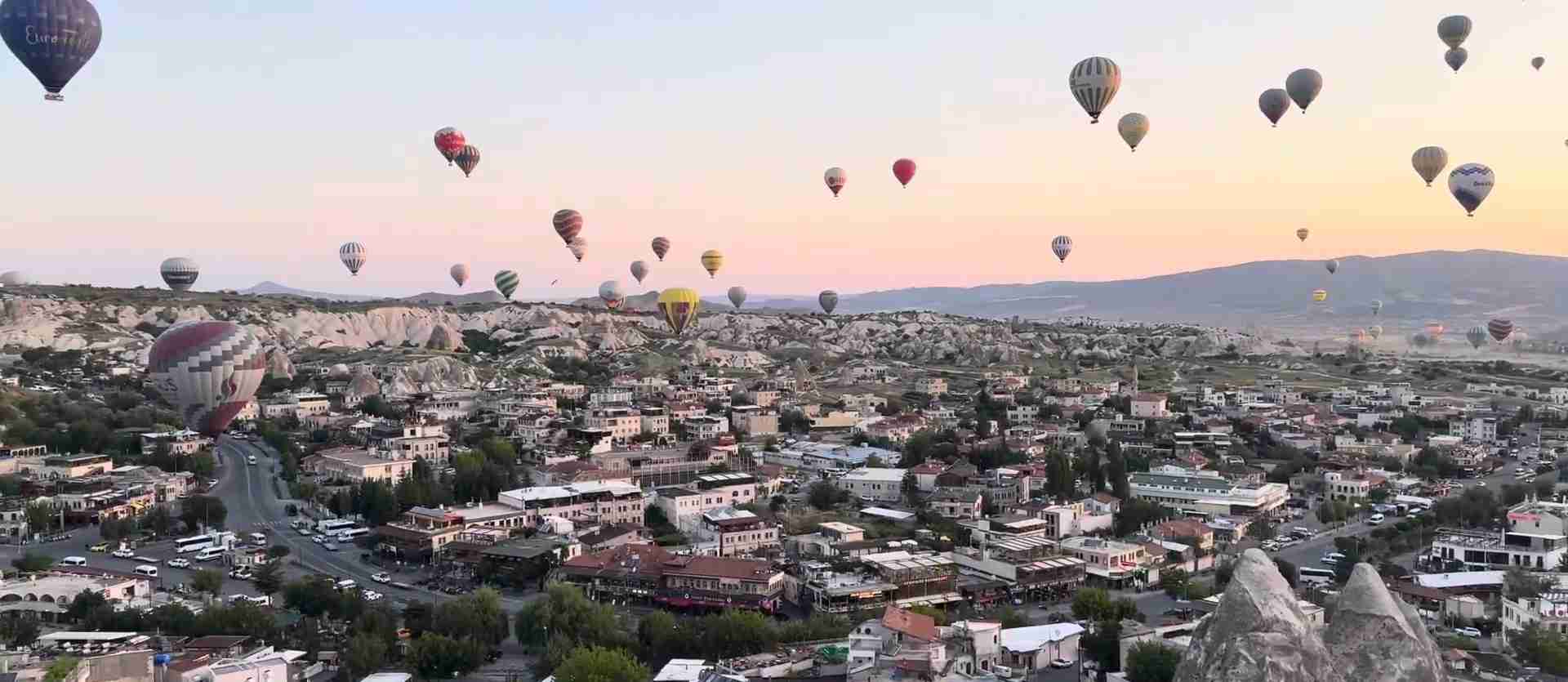
Cappadocia’s surreal landscape of fairy chimneys, honeycombed hillsides carved with ancient cave dwellings, Byzantine frescoed churches hidden in volcanic rock, and valleys painted in rose and red hues creates one of Earth’s most otherworldly destinations, combining geological phenomena spanning millions of years with human history stretching across millennia. Experiencing this UNESCO World Heritage region optimally requires strategic tour selection balancing organized efficiency for distant sites against independent valley hiking accessing intimate landscapes, with hot air balloon flights providing aerial perspectives transforming dawn into floating spectacles above hundreds of colorful balloons and the planning challenge lying in navigating price variations, seasonal timing, physical difficulty levels, and time allocation across competing options from underground cities to sunset viewpoints.
Key Takeaways
- Hot Air Balloon Pricing 2026: Standard flights range €80-400 per person depending on season (winter €50-120, peak spring/autumn €200-400), basket size (standard 16-20 passengers, comfort 8-12, deluxe 4-8), and booking timing (advance bookings 45-60 days secure lowest rates)
- Red Tour Versus Green Tour Selection: Red Tour (€40-85) covers northern Cappadocia’s accessible highlights including Göreme Open Air Museum and Uçhisar Castle ideal for limited mobility or families with children, while Green Tour (€44-85) reaches southern sites like Derinkuyu Underground City and Ihlara Valley requiring full-day commitment but offering diverse experiences impossible to access independently
- Self-Guided Valley Hiking Economics: Rose Valley, Red Valley, Love Valley, and Pigeon Valley trails cost zero entrance fees and range 4-12 kilometers requiring 1.5-5 hours, making independent hiking Cappadocia’s most budget-friendly activity versus organized tours while demanding navigation capability and moderate fitness
- Göreme Open Air Museum Costs 2026: Standard admission €20 with Dark Church requiring additional €6, or Museum Pass Turkey (€65 for 15 days) covering Göreme, underground cities, Ihlara Valley, and Zelve providing value for visitors planning 4+ paid attractions within two weeks
- Seasonal Flight Success Rates: Summer months (June-August) achieve 95% hot air balloon launch success rates with highest prices and crowds, winter (November-March) drops to 70% success but offers €50-120 flights, while shoulder seasons (April-May, September-October) balance 85-90% reliability against €150-250 pricing
- Optimal Time Allocation: Minimum viable Cappadocia visits require 2 full days (1 balloon flight + 1 major tour), comfortable exploration needs 3-4 days (balloon + Red Tour + Green Tour + independent valley hiking), comprehensive coverage demands 5-7 days adding ATV tours, additional underground cities, and extended valley treks
People Also Ask About Cappadocia Tours and Hiking 2026
How much does a hot air balloon ride cost in Cappadocia in 2026?
Hot air balloon rides in Cappadocia cost €50-470 per person in 2026 depending on season, flight type, and booking timing. Winter months (January-March) offer the lowest rates at €50-120 for standard flights as reduced tourism demand and less reliable weather create discounts, though flight cancellation rates increase to 25-30% of scheduled departures versus summer’s 5% cancellation rate. Peak seasons (April-May, September-October) see prices rise to €200-350 for standard flights as perfect weather conditions, spectacular spring wildflowers or autumn colors, and high demand drive rates upward. Summer (June-August) maintains €180-280 pricing with excellent flight reliability but intense heat and maximum tourist crowds. Flight type significantly impacts cost – standard flights (16-20 passengers per basket) represent the lowest tier, comfort flights (8-12 passengers) cost €110-430 providing more space, and deluxe flights (4-8 passengers) reach €170-470 offering premium experiences with smaller groups and sometimes extended 90-minute duration versus standard 60 minutes. Advance booking 45-60 days before travel secures early-bird pricing saving 20-30% compared to last-minute reservations, though weather cancellations remain possible regardless of booking timing. All prices include hotel pickup, pre-flight light breakfast, champagne toast after landing, and flight certificates. Children under 6 and pregnant women cannot fly for safety reasons.
Should I book the Red Tour or Green Tour in Cappadocia 2026?
Choose the Green Tour if visiting Cappadocia for 2-3 days as it accesses southern region sites impossible to reach independently including Derinkuyu Underground City (descending 8 levels and 85 meters underground), the 14-kilometer Ihlara Valley with riverside hiking and Byzantine cave churches, and Selime Monastery’s dramatic cliff-carved complex, with these distant attractions requiring private vehicle transportation or tours making independent access impractical and expensive. The Red Tour suits travelers with only one day, those with children or mobility limitations preferring less walking, or visitors comfortable accessing northern sites independently via dolmuş (shared minibuses) from Göreme for €1-2 per trip – Red Tour highlights including Göreme Open Air Museum, Uçhisar Castle, Paşabağ fairy chimneys, and Avanos pottery workshops sit within 5-15 kilometers of Göreme versus Green Tour’s 40-90 kilometer distances requiring 2+ hours driving. Both tours cost €40-85 per person including lunch, entrance fees, and hotel pickup/dropoff, but Green Tour provides better value-per-dollar through accessing otherwise difficult sites while Red Tour duplicates what independent travelers easily explore freely. Travelers with 4+ days in Cappadocia benefit from booking both tours, experiencing comprehensive regional coverage, or substituting Red Tour with independent valley hiking while prioritizing Green Tour for its unique access. The Blue Tour, priced approximately double at €150-200, combines both Red and Green highlights in premium small groups (4 passengers maximum) but appeals primarily to time-constrained visitors willing to pay for comprehensive single-day coverage.
Can I hike Cappadocia’s valleys without a guide in 2026?
Independent valley hiking works well for Rose Valley, Red Valley, Love Valley, Pigeon Valley, and Meskendir Valley using free trail maps from AllTrails, Maps.me, or hotel concierges, with well-established paths marked by occasional spray-painted arrows, informal signage, and visible foot traffic making navigation manageable for hikers comfortable with moderate route-finding. Download offline maps before hiking as cellular reception disappears in valley depths, carry 2-3 liters water per person (cafes exist but sporadically and seasonally), wear proper hiking boots for dusty/slippery volcanic soil, and inform hotel staff of planned routes and expected return times as an emergency precaution. Rose Valley to Red Valley loop (10 kilometers, 4-5 hours) represents the most popular independent route combining spectacular pink-hued rock formations, hidden Byzantine churches accessible without entrance fees (unlike Göreme Museum’s €20 charge), and sunset viewpoint cafes, though navigation challenges arise where multiple trail branches create confusion without clear signage. Love Valley to Uçhisar via Pigeon Valley (11.7 kilometers, 4-5 hours) offers easier navigation following well-defined valley floors with one steep climb to Uçhisar Castle requiring 30-40 minutes ascent, rewarding with panoramic Cappadocia views before the gentle descent through Pigeon Valley back to Göreme. Solo hikers, especially women, report feeling safe on popular trails during daylight hours encountering other walkers and occasional tea garden vendors, though arriving early (7:00-8:00 AM) or late afternoon (4:00-5:00 PM) increases solitude. Extreme heat (35-40°C/95-104°F) during summer midday (11:00 AM – 4:00 PM) makes hiking uncomfortable and potentially dangerous – plan morning or evening treks during June-August or shift entirely to shoulder season hiking when temperatures moderate to 20-28°C/68-82°F.
Is Göreme Open Air Museum worth the €20 entrance fee in 2026?
Göreme Open Air Museum justifies its €20 entrance (plus €6 for Dark Church optional addition) through exceptional 10th-12th century Byzantine frescoes preserved in rock-carved churches impossible to replicate elsewhere, representing Cappadocia’s most concentrated and accessible collection of Christian monastic art with vivid colors, biblical scenes, and architectural sophistication demonstrating the region’s religious significance during Byzantine rule. The museum functions as an outdoor complex where visitors walk between 10+ cave churches including the Apple Church (Elmalı Kilise) with geometric fresco patterns, St. Barbara Church featuring red ochre paintings, Snake Church (Yılanlı Kilise) with primitive Christian imagery, and the Dark Church (Karanlık Kilise – requiring separate €6 ticket) preserving the region’s most brilliant frescoes through minimal light exposure creating exceptional preservation. Allocated 1.5-2 hours suffices for thorough exploration reading informational plaques, examining fresco details, and photographing exteriors (interior photography prohibited for preservation), with early arrival (8:00-9:00 AM) before tour groups flood the site providing contemplative viewing impossible during peak 10:00 AM – 2:00 PM crowds when dozens of tours converge creating lines at popular churches. The Museum Pass Turkey (€65 for 15 days nationwide access) provides value for visitors planning Göreme Museum plus 2-3 additional sites like underground cities (€20 each), Ihlara Valley (€15), and Zelve (€15), saving money beyond 4 paid attractions while adding convenience of barcode scanning versus cash transactions. Independent valley hiking reveals similar cave churches and chapels without entrance fees though lacking the museum’s exceptional fresco preservation, professional lighting, and explanatory context – budget travelers hiking Rose Valley and Meskendir Valley access free Byzantine churches sacrificing museum-quality preservation for zero cost.
How physically demanding are Cappadocia walking routes in 2026?
Cappadocia valley trails range from easy 4-kilometer Pigeon Valley walks requiring 1.5 hours with minimal elevation gain (mostly downhill Uçhisar to Göreme) suitable for families with children ages 6+ and moderately fit seniors, to challenging 10-12 kilometer combined valley loops (Rose-Red-Meskendir) demanding 4-5 hours with steep climbs, loose volcanic soil creating slip hazards, narrow tunnel squeezes, and occasional ladder climbing requiring good fitness and agility. The terrain features soft volcanic tuff creating dusty paths that become slippery on descents, exposed rocky sections heating intensely under summer sun, and elevation changes of 100-300 meters between valley floors and rim viewpoints translating to 20-30 minute steep climbs rewarded with panoramic vistas. Love Valley’s famous phallic rock formations occupy relatively flat valley floor (4 kilometers, 1.5 hours easy walking) but connecting to Uçhisar requires steep 200-meter ascent over 2 kilometers creating moderate difficulty, while the return via Pigeon Valley mostly descends making the second half considerably easier than the first. Rose Valley hiking involves constant mild ups and downs as the trail weaves through fairy chimneys, enters narrow rock passages sometimes requiring sideways shuffling, and branches frequently with spray-painted arrows providing navigation assistance – physically easier than Love Valley’s steep climb but navigationally more complex. Travelers with knee problems, balance concerns, or cardiovascular limitations should stick to Pigeon Valley’s gentle gradient, avoid multi-valley loops requiring 4+ hours continuous hiking, and consider morning timing when temperatures remain moderate (starting by 8:00 AM to finish before noon heat). Heat stroke and dehydration represent real risks during summer hiking – symptoms include dizziness, nausea, and confusion requiring immediate shade, water consumption, and potential medical attention, making proper hydration (2-3 liters per person), sun protection (hat, sunscreen, sunglasses), and conservative pacing essential for safe valley exploration.
Extended multi-day tours – 5+ days
Featured Cappadocia Multi-Day Tour Packages
3 days
Enchanting Cappadocia Getaway – 3 Days Cave Hotel Experience & Optional Balloon
- ✓ Comprehensive Cappadocia tour
- ✓ Expert local guides included
- ✓ All accommodation arranged
- ✓ Transportation provided
4 days
Enchanting Cappadocia Experience! 4 Days Cave Hotel, Optional Balloon
- ✓ Comprehensive Cappadocia tour
- ✓ Expert local guides included
- ✓ All accommodation arranged
- ✓ Transportation provided
5 days
Romantic Views in Cappadocia
- ✓ Booking needs min. 2 travelers
3 days
3 Days Cappadocia Highlights
- ✓ Comprehensive Cappadocia tour
- ✓ Expert local guides included
- ✓ All accommodation arranged
- ✓ Transportation provided
Multi-day tour packages powered by TourRadar. Prices and availability subject to change.
Introduction
Cappadocia’s geological evolution began 30 million years ago when ancient volcanoes including Mount Erciyes and Mount Hasan erupted across central Anatolia, blanketing the landscape in thick layers of volcanic ash and lava that compressed over millennia into soft tuff stone. Wind and water erosion over millions of years carved this tuff into the region’s signature fairy chimneys – towering rock spires with mushroom caps where harder basalt protected underlying softer stone from erosion while surrounding material weathered away. Nature created the canvas, but human habitation transformed Cappadocia into a living museum when Bronze Age Hittites (1800-1200 BCE) first carved homes into the soft rock, followed by early Christians (4th-11th centuries CE) excavating elaborate underground cities reaching 8-10 levels deep to hide from persecution, and Byzantine monks painting exquisite frescoes inside rock-hewn churches creating monastic complexes that today constitute UNESCO World Heritage sites drawing millions of annual visitors.
The modern tourism infrastructure centered on Göreme village provides accommodation ranging from budget cave hostels (€15-30 per night) to luxury cave hotels (€150-400 per night), restaurants serving traditional Turkish cuisine alongside international options, and dozens of tour operators competing for visitor bookings through package deals combining hot air balloons, daily tours, and adventure activities. This competition creates both opportunity and confusion – prices vary wildly between providers for identical services, quality ranges from exceptional professional operations to substandard experiences, and navigating the options without local knowledge or extensive research risks overpaying or missing optimal choices. Understanding the fundamental tour categories, realistic pricing ranges, seasonal variations, and practical logistics enables informed decisions maximizing Cappadocia experiences while managing budgets and time constraints effectively.
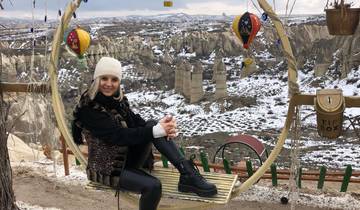
The region’s tourism seasons divide distinctly: winter (November-March) brings cold temperatures (0-8°C/32-46°F), occasional snow dusting fairy chimneys with white creating magical landscapes, reduced tourist crowds providing near-solitude at major sites, and the lowest prices across accommodations, balloon flights, and tours, though weather unpredictability increases flight cancellations and some businesses close entirely. Summer (June-August) delivers reliable sunshine and hot temperatures (30-38°C/86-100°F), maximum tourist presence creating lines at attractions and fully booked balloon flights, highest seasonal pricing, and near-perfect flight success rates but intense midday heat making valley hiking uncomfortable. Shoulder seasons (April-May, September-October) optimize weather-crowd-price balance with comfortable temperatures (15-25°C/59-77°F), spring wildflowers or autumn golden hues, moderate tourist levels, and pricing falling between winter lows and summer peaks while maintaining good balloon launch reliability.
Cappadocia’s physical scale surprises first-time visitors – the UNESCO-protected area spans 700+ square kilometers encompassing dozens of valleys, villages, and attractions distributed across distances requiring vehicular transportation between major sites. Göreme sits centrally within the tourism zone with most visitors basing themselves here for accommodation and tour departures, while outlying settlements including Uçhisar (5 kilometers), Avanos (10 kilometers), Urgüp (15 kilometers), and distant sites like Derinkuyu Underground City (40 kilometers) or Ihlara Valley (90 kilometers) necessitate organized tours or rental cars for access. This geography explains the color-coded tour system – Red Tour covers northern attractions within 15 kilometers of Göreme accessible independently but grouped conveniently, Green Tour reaches southern sites 40-90 kilometers distant requiring full-day vehicle expeditions, and various specialized tours (Blue Tour, ATV tours, horse riding) provide alternative exploration methods with varying logistics and pricing.
The following sections detail hot air balloon experiences, organized tour options, independent valley hiking routes, practical logistics, and budget planning enabling visitors to construct personalized Cappadocia itineraries matching their interests, physical capabilities, time availability, and financial parameters while avoiding common pitfalls like overpaying for balloon flights, duplicating tour content with independent activities, or underestimating hiking difficulty and heat challenges.
Hot Air Balloon Experiences and Pricing 2026
Hot air balloons floating above Cappadocia’s fairy chimneys at sunrise constitute the region’s signature experience and primary tourism draw, with 100-150 balloons launching daily during peak season creating spectacular aerial displays as hundreds of passengers simultaneously witness dawn illuminating the volcanic landscape from basket perspectives 300-1,000 meters above ground. Understanding flight types, pricing structures, booking strategies, and seasonal timing optimizes this once-in-lifetime experience while avoiding the €400+ premium pricing some travelers pay unnecessarily.
Flight Categories and Basket Sizes 2026
Standard flights accommodate 16-20 passengers in large baskets divided into compartments of 4-5 people each, providing economical pricing (€80-400 depending on season) suitable for budget-conscious travelers accepting limited personal space and group dynamics. The pilot operates from the center compartment while passengers occupy surrounding sections, each person receiving approximately 60-70 centimeters width creating cozy but not uncomfortable proximity to fellow passengers. Flight duration runs 50-70 minutes actual airtime with total experience lasting 3-4 hours including predawn hotel pickup (typically 4:30-5:30 AM depending on season and sunrise time), transfer to launch site, witnessing balloon inflation process, flight itself, champagne celebration after landing, and return hotel transfer by 8:30-9:30 AM allowing time for subsequent daily activities or resting after early waking.
Comfort flights reduce passenger count to 8-12 people per basket, increasing per-person space to approximately 90-100 centimeters width and creating more intimate group atmospheres with better photography angles and reduced crowding. Pricing ranges €110-430 depending on season, positioning comfort flights as middle-tier options for travelers valuing space without extreme premium costs. The smaller groups sometimes allow for more pilot interaction and personalized experience as communication becomes easier with fewer passengers competing for attention, though actual flight routes and altitudes remain identical to standard flights since all balloons follow similar patterns dictated by wind direction and Civil Aviation Authority regulations.
Deluxe flights limit baskets to 4-8 passengers creating premium experiences with maximum personal space (120-150 centimeters per person), sometimes offering extended 90-minute flight duration versus standard 60 minutes, and occasionally including upgraded champagne, breakfast spreads, or additional photography services. Costs reach €170-470 depending on season and specific operator offerings, appealing to honeymooners, special occasions, or travelers prioritizing comfort over economy. Some deluxe packages market “private” flights implying exclusive baskets, though true private balloons (single party only, any size from 2-8 people) cost significantly more (€1,500-3,000+ total) and most “deluxe” offerings simply mean small-group sharing rather than genuine privacy.
Seasonal Pricing and Weather Success Rates 2026
Winter months (November-March) offer the lowest hot air balloon prices at €50-120 for standard flights as reduced tourism demand, cold temperatures deterring some visitors, and increased weather cancellation risk (25-30% of scheduled flights cancel versus summer’s 5%) create discounting. Snow-dusted fairy chimneys and crisp winter air provide unique visual experiences, though predawn temperatures drop to -5 to 5°C (23-41°F) requiring substantial warm clothing layers. Operators cancel flights when wind speeds exceed 10-15 kilometers per hour, precipitation occurs, or visibility drops below safe thresholds, with winter weather volatility creating uncertainty – booking 2-3 nights in Cappadocia during winter increases rebooking chances if initial flight cancels, as operators automatically reschedule canceled passengers to next available day without additional charges.
Spring (April-May) and autumn (September-October) represent peak ballooning season with perfect weather conditions creating 85-90% flight success rates, spectacular natural colors (spring wildflowers carpeting valleys or autumn golden hues), comfortable temperatures (10-18°C/50-64°F at dawn), and consequently the highest pricing at €200-350 for standard flights during these optimal months. Demand exceeds supply during April-May and September-October, with popular operators selling out 4-6 weeks in advance necessitating early booking. The shoulder season balances reliability against cost – higher than winter but offering weather conditions worth the premium through near-guaranteed flights and beautiful seasonal landscapes enhancing the visual experience beyond Cappadocia’s already dramatic base scenery.
Summer (June-August) maintains €180-280 pricing with excellent 95% flight success rates thanks to stable weather patterns, though predawn temperatures of 18-25°C/64-77°F create comfortable conditions and midday heat reaching 35-40°C/95-104°F affects post-flight activities rather than morning balloon experiences. Maximum tourist crowds fill Cappadocia during summer peak, creating busy skies with 150+ balloons launching simultaneously during July-August versus winter’s 20-40 balloons, transforming the aerial spectacle through sheer numbers but also reducing the intimate feeling some photographers prefer for capturing clean balloon images without dozens of competitors in every frame.
Booking Strategies and Operator Selection 2026
Advance booking 45-60 days before travel secures early-bird pricing saving 20-30% compared to last-minute reservations, with many operators offering specific advance purchase discounts for bookings made 6+ weeks prior. Platform comparison tools including BalloonScanner aggregate multiple Cappadocia operators allowing price comparisons across flight types, dates, and companies, though booking directly through operator websites sometimes provides better rates than third-party platforms charging commission fees. Read recent reviews (within past 6-12 months) on TripAdvisor, Google Reviews, and travel forums focusing on pilot experience, safety procedures, landing technique quality (smooth precision landings versus rough trailer bumps), and customer service responsiveness rather than balloon size or champagne quality which remains similar across reputable operators.
Reputable operators licensed by Turkish Civil Aviation Authority include Royal Balloon, Voyager Balloons, Atlas Balloons, Butterfly Balloons, Urgup Balloons, and Turkaz Balloons among others, with safety records and pilot experience mattering more than specific company choice since all licensed operators maintain equivalent safety standards and similar flight routes. Avoid booking through unauthorized agents promising unrealistic discounts (€30-40 flights during peak season indicate possible scams), insist on receiving operator confirmation including company name and contact details (not just agent booking numbers), and verify the actual balloon company operating your flight one day before departure as some agencies switch providers without notification if preferred operators fill.
Weather cancellation policies universally offer full refunds or next-day rescheduling at no additional charge since safety regulations prevent flights during unsuitable conditions regardless of passenger disappointment. Most operators notify passengers by 4:00-5:00 AM on flight morning whether conditions allow launching, meaning travelers wake for pickup before learning if the flight proceeds – this uncertainty frustrates some visitors but reflects real-time weather assessment requirements ensuring safety. Booking multiple nights in Cappadocia (minimum 2-3 nights) provides rescheduling flexibility if weather cancels initial flight, with travelers sometimes experiencing cancellations on Day 1 followed by successful flights Day 2 or 3 making the extended stay worthwhile despite initial disappointment.
Red Tour Northern Cappadocia Circuit 2026
The Red Tour covers northern Cappadocia’s most accessible attractions within 15 kilometers of Göreme including the region’s premier museum, dramatic castle viewpoint, iconic fairy chimney formations, and traditional pottery workshops, operating as full-day organized experiences (8-9 hours including pickup/dropoff) costing €40-85 per person with lunch and entrance fees included through small-group minibus tours departing 9:00-9:30 AM.
Göreme Open Air Museum and Byzantine Churches 2026
Göreme Open Air Museum functions as the Red Tour’s centerpiece, consuming 1.5-2 hours of the itinerary exploring the monastic complex where Byzantine monks carved elaborate churches, refectories, and living quarters into volcanic rock between the 10th-12th centuries CE, decorating interior walls with vibrant frescoes depicting biblical scenes, saints, and religious imagery preserved through centuries of minimal light exposure. The museum operates 8:00 AM – 5:30 PM daily with standard €20 admission (included in Red Tour pricing) plus optional €6 supplement for the Dark Church (Karanlık Kilise) featuring Cappadocia’s best-preserved frescoes through its location deep inside rock where limited light prevented fading that affects more exposed churches.
Key churches within the complex include the Apple Church (Elmalı Kilise) with geometric fresco patterns and scenes from Jesus’s life, St. Barbara Church showcasing red ochre paintings in primitive Christian style, Snake Church (Yılanlı Kilise) featuring a serpentine figure in Constantine and Helena frescoes, and the Buckle Church (Tokalı Kilise) occupying a separate building outside the main ticket area but often visited during Red Tours for its exceptional cross-in-square architecture and extensive fresco coverage across multiple chambers. Photography is prohibited inside churches to protect frescoes from camera flashes, though exterior photography of rock-cut facades remains permitted creating frustration for visitors wanting to document the intricate interior artwork they’ve paid to access.
Crowds peak 10:00 AM – 2:00 PM when multiple Red Tours converge simultaneously, creating bottlenecks at popular churches where narrow doorways accommodate single-file entry and small interior spaces hold only 8-12 people comfortably before feeling overcrowded. Tour guides provide 15-20 minute historical context outside the museum before allowing free exploration time, with most groups spending 60-90 minutes total on-site balancing thorough church viewing against tour schedule pressures to reach subsequent stops. Independent visitors arriving at 8:00-8:30 AM opening or late afternoon after 3:00 PM when tour groups depart experience tranquil viewing impossible during midday rush, justifying the €20 entrance fee through contemplative appreciation versus hurried group-paced viewing.
Uçhisar Castle Panoramic Viewpoint 2026
Uçhisar Castle represents Cappadocia’s highest point and most dramatic rock fortress, rising 60 meters above the village of Uçhisar 5 kilometers from Göreme with interior carved tunnels, chambers, and stairs ascending to summit platform providing 360-degree panoramas across fairy chimney valleys, distant Mount Erciyes volcano, and the entire Cappadocia region visible simultaneously. Red Tours typically stop 30-45 minutes allowing climbing to the summit (entrance €5-8 included in tour pricing) requiring moderately steep stairs and narrow passages unsuitable for claustrophobic visitors or those with significant mobility limitations, though the village square at castle base offers similar views without climbing for those opting to skip the interior ascent.
The castle functioned historically as defensive position and lookout tower with residents retreating inside during invasions, communicating with neighboring castle networks through signal fires creating an early warning system across Cappadocia’s interconnected settlements. Modern visitors encounter honey-combed rock interior showing former living chambers, storage rooms, and defensive positions, though much of the structure remains closed to public access for safety reasons as ongoing erosion threatens unstable sections. Photography opportunities abound both from the summit platform looking outward across valleys and from the village square photographing upward at the castle’s imposing carved rock mass punctured with window openings creating iconic Cappadocia imagery.
Paşabağ Fairy Chimneys and Monks Valley 2026
Paşabağ (Monks Valley) showcases Cappadocia’s most accessible and photogenic fairy chimney formations including distinctive mushroom-shaped rocks with multiple caps where harder basalt layers protected softer tuff underneath creating multi-tiered structures rising 15-20 meters high. The site permits walking directly among fairy chimneys along marked paths, entering small cave chapels carved into rock bases where hermit monks lived in isolation during Byzantine period, and photographing dramatic geological formations from ground level creating different perspectives than distant valley viewpoints provide. Red Tours stop 30-40 minutes allowing sufficient exploration and photography time before continuing to subsequent attractions.
The valley’s flat terrain and short walking distances (200-300 meters from parking to furthest formations) make Paşabağ accessible for all mobility levels including wheelchairs and strollers on paved paths, though entering cave chapels requires climbing uneven rock stairs unsuitable for limited mobility visitors. No entrance fee applies (unusual for major Cappadocia attractions) as the site functions as open landscape rather than managed museum, with informal vendors selling pomegranate juice, Turkish tea, and souvenirs from small stands creating commerce without formal ticket infrastructure. The combination of accessibility, photogenic rock formations, and zero entrance charges makes Paşabağ popular for independent visitors arriving by dolmuş or rental car outside organized tour contexts, with early morning (7:00-8:00 AM) or late afternoon (5:00-6:00 PM) visits avoiding midday tour group peaks when 5-6 buses simultaneously unload passengers creating crowded conditions.
Avanos Pottery Workshops and River Setting 2026
Avanos serves as Red Tour’s final major stop, positioned along the Kızılırmak (Red River – Turkey’s longest river) where distinctive red clay deposits have supported pottery traditions spanning 4,000 years from Hittite times through Ottoman ceramics to contemporary artisan production. Tours visit family-operated pottery workshops where master craftsmen demonstrate traditional kick-wheel techniques spinning clay into bowls, plates, and decorative pieces, often inviting tourists to attempt the wheel themselves creating amateur (and amusing) attempts at pottery making that typically conclude with purchases of professional pieces as souvenirs.
The demonstrations function partially as sales pitch with workshops earning commissions on tourist purchases, though quality pottery genuinely represents Avanos craftsmanship and prices remain reasonable (€10-80 for hand-crafted ceramics) compared to inflated souvenir shop rates. Some workshops combine pottery displays with underground tunnel tours showing historical production facilities, kilns, and storage chambers carved into rock beneath modern buildings, adding historical context beyond pure sales motivation. The Kızılırmak riverside setting provides photo opportunities and riverside cafes offering post-demonstration refreshments, with 45-60 minutes allocated for pottery viewing, shopping, and brief town exploration before Red Tours return to Göreme completing 8-9 hour circuits.
Green Tour Southern Cappadocia Expedition 2026
The Green Tour ventures into southern Cappadocia’s distant attractions 40-90 kilometers from Göreme, accessing spectacular sites impossible to visit independently without rental cars including the deepest underground city, most scenic river valley, and dramatic cliff monasteries, operating as full-day experiences (8-9 hours) costing €44-85 per person including lunch, entrance fees, and hotel pickup/dropoff through small-group minibus tours departing 9:00-9:30 AM.
Derinkuyu Underground City Eight-Level Depths 2026
Derinkuyu Underground City descends 85 meters through 8 accessible levels (up to 18 levels exist though deeper sections remain closed) representing Cappadocia’s largest and deepest subterranean refuge where early Christians carved interconnected tunnels, living chambers, churches, wine cellars, stables, and defense mechanisms into soft volcanic rock creating shelter for 20,000+ people during Arab raids and Persian invasions between 7th-10th centuries CE. The complex entrance through unassuming building in Derinkuyu town opens to steep narrow stairs and low passages (minimum 1.6 meters height requiring ducking) descending level by level through sophisticated ventilation shafts (52 shafts reaching surface from deepest levels maintaining air circulation), rolling stone doors (massive circular rocks sliding to block tunnels during attacks), and organized room networks demonstrating remarkable engineering predating modern technology.
Green Tours allocate 1-1.5 hours for guided underground exploration with English-speaking guides explaining historical context, defensive strategies, daily life logistics (underground animal keeping, wine production, food storage in cool temperatures), and architectural features while navigating the maze-like passages linking chambers across multiple levels. Claustrophobia warnings apply legitimately – passages narrow to 80-100 centimeters width in sections, ceiling heights drop to 1.5-1.6 meters requiring stooping, and the deep underground setting without natural light creates genuine discomfort for claustrophobic visitors despite decent artificial lighting and constant visitor traffic ensuring you’re never truly alone. The experience fascinates history enthusiasts and adventure seekers while potentially distressing those with spatial anxiety, height concerns (despite being underground, the multi-level stairs and depths trigger similar psychological responses), or physical limitations making repetitive stair climbing and ducking difficult.
Entrance fees of €20 per person (included in Green Tour pricing) or covered by Museum Pass Turkey make independent visits financially equivalent to tours, but the 40-kilometer distance from Göreme, lack of direct public transport, and complex underground layout where guides prevent getting lost justify Green Tour participation for most visitors. Alternative underground cities including Kaymaklı (closer to Göreme at 25 kilometers) and Özkonak offer similar though smaller experiences if Derinkuyu’s distance proves prohibitive, though Green Tours specifically target Derinkuyu as the most impressive option creating comprehensive underground city exposure versus Red Tours which typically omit underground sites entirely.
Ihlara Valley Riverside Canyon Hiking 2026
Ihlara Valley carves a dramatic 14-kilometer gorge 100-150 meters deep through volcanic tuff with the Melendiz River flowing along its verdant floor creating an oasis setting of poplar trees, wildflowers, chirping birds, and medieval rock-cut churches hidden in canyon walls contrasting sharply with Cappadocia’s arid open valleys. Green Tours typically include 3-4 kilometer hiking segments (approximately 1 hour walking) along the valley floor following mostly flat riverside trails requiring minimal physical exertion beyond sustained walking on uneven natural paths, making the experience accessible for average fitness levels while providing nature immersion impossible in more barren regions.
The standard Green Tour entrance point descends 400+ stairs (the Ihlara Village entrance) to reach the valley floor, consuming 15-20 minutes in steep descent that challenges knees and cardiovascular systems before the easier river-level hiking begins, though some tours use alternative Belisırma Village entrance with fewer stairs trading easier access for reduced total walking distance. Small Byzantine churches dot canyon walls including Ağaçaltı Church (Church Under the Tree) featuring 10th-century frescoes depicting biblical scenes accessible via short side paths from the main trail, with guides pointing out church locations and providing historical context though interior photography restrictions and entrance fees (€15 valley access included in Green Tours) limit casual exploration versus more detailed independent investigations possible with extended time.
Belisırma Village positioned mid-valley provides lunch stops for Green Tours at riverside restaurants serving traditional Turkish cuisine (included in tour pricing) with trout from Melendiz River featuring prominently on menus alongside standard meat dishes, giving 45-60 minute meal breaks allowing bathroom access (limited facilities along trail segments), stretching legs after morning travel, and enjoying shaded riverside seating before afternoon tour segments. The valley combination of geological drama, easier hiking versus multi-valley loops, Byzantine church access, and nature atmosphere creates highlight status for many Green Tour participants, justifying the full-day commitment through experiences unavailable elsewhere in Cappadocia’s drier northern regions.
Selime Monastery Cliff Complex 2026
Selime Monastery ranks among Cappadocia’s largest rock-cut ecclesiastical complexes, featuring cathedral-sized main church with columns and arches entirely carved from single rock mass, monastic living quarters honeycombed across cliff face, defensive tunnels, and summit viewpoints overlooking surrounding countryside accessible via steep interior stairs and passages. Green Tours allocate 45-60 minutes exploring this dramatic site positioned roadside 90 kilometers from Göreme near Ihlara Valley exit, making it convenient final major stop before return journeys.
The monastery scale dwarfs typical cave churches – the main cathedral space reaches 15+ meters height with carved columns supporting interior arches, accommodating hundreds of worshippers during Byzantine peak versus the intimate 10-20 person capacity of most Cappadocia cave churches. Exploring requires climbing stairs, entering dark chambers with flashlights (bring phone lights), and navigating uneven surfaces creating moderate physical challenge for complete site coverage though ground-level cathedral viewing remains accessible for limited mobility visitors. Photography opportunities abound both inside the dramatic cathedral spaces and from exterior vantage points showing the honeycombed cliff facade, though afternoon light (typical Green Tour timing reaches Selime 3:00-4:00 PM) creates harsh shadows versus morning’s softer illumination.
No entrance fee applies (unusual for such a significant site) making Selime accessible for independent visitors with vehicles, though the 90-kilometer distance from Göreme and limited dolmuş service create practical challenges justifying Green Tour participation for those without cars. The monastery represents one of few Cappadocia attractions where organized tour timing actually benefits photography and viewing since afternoon visits provide better angles than morning sessions, unlike most sites where early arrival improves experience quality through reduced crowds and superior light.
Valley Hiking Routes and Self-Guided Exploration 2026
Cappadocia’s valley system encompasses dozens of interconnected hiking routes ranging from easy 4-kilometer Pigeon Valley strolls to challenging 12-kilometer multi-valley loops, providing free outdoor experiences (zero entrance fees, no tour costs) requiring only navigation capability, moderate fitness, proper footwear, and adequate water supplies for safe enjoyable exploration of fairy chimney landscapes, hidden Byzantine churches, and dramatic geological formations impossible to access from roads.
Rose Valley and Red Valley Combined Loop 2026
The Rose Valley and Red Valley combined circuit represents Cappadocia’s most popular independent hiking route, stretching 10-12 kilometers depending on specific path choices through the region’s most colorful rock formations where iron oxide minerals create pink, rose, and red-hued canyon walls particularly dramatic during sunset’s golden hour illumination. The standard route begins at Göreme’s northern edge (2 kilometers walking from town center or 5-minute taxi ride to trailhead near Kaya Camping), ascends to the Meskendir Valley entrance, descends into Rose Valley’s corrugated ridges of pink fairy chimneys, continues through Red Valley’s narrow crimson gorge sections, and concludes at Red Valley’s sunset viewpoint cafe/parking area where taxis return hikers to Göreme (€5-8 per car) or dolmuş buses provide budget transport if timing aligns with sporadic schedules.
Total hiking time ranges 4-5 hours at moderate pace including photography stops, church explorations, and cafe breaks, with difficulty rated moderate through combination of valley floor walking (relatively easy flat or gentle grades), steep climbs ascending from valleys to rim viewpoints (200-300 meter elevation gains requiring 20-30 minutes sustained climbing), and navigation challenges where multiple trail branches create confusion without clear signage. Spray-painted arrows on rocks provide directional guidance (red arrows for Red Valley, various colors for Rose Valley branches) though faded, contradictory, or missing arrows in sections create uncertainty – downloading offline maps via AllTrails, Maps.me, or similar apps before hiking prevents getting lost in the valley maze where cellular reception disappears and few other hikers may be present to ask directions.
Byzantine churches hidden in Rose Valley canyon walls offer free exploration alternatives to Göreme Museum’s €20 entrance, including columned churches with partially preserved frescoes accessible via short side trails marked by informal signs or spray paint, though lacking professional lighting, interpretive plaques, or preservation measures creating rustic historical encounters versus museum-quality presentations. The sunset viewpoint cafe at Red Valley’s end (Panoramic Point) provides the region’s premier sunset watching location (sunset timing varies seasonally: 5:00-5:30 PM winter, 7:30-8:00 PM summer) where dozens of visitors gather to photograph golden light illuminating fairy chimneys while enjoying tea (€2-3), beer (€4-6), or snacks, creating social culmination to solitary valley hiking and convenient taxi summoning point as drivers await tourist departures.
Love Valley to Uçhisar via Pigeon Valley Circuit 2026
The Love Valley to Uçhisar to Göreme circuit via Pigeon Valley creates Cappadocia’s second most popular hiking route, covering 11-12 kilometers in 4-5 hours combining Love Valley’s famous phallic rock formations, Uçhisar Castle’s commanding viewpoint, and Pigeon Valley’s ancient dovecotes carved into canyon walls. The route typically begins in Göreme town center walking 3 kilometers north along the main road to Love Valley’s lower entrance (or taxi to trailhead saving 40 minutes walking on pavement), enters the valley floor among the distinctive mushroom-topped columns reaching 20-30 meters height, ascends out of Love Valley via White Valley connection creating the route’s steepest climb (200 meters elevation gain over 2 kilometers requiring 30-40 minutes sustained uphill effort), reaches Uçhisar village for castle visiting and lunch breaks, then descends through Pigeon Valley back to Göreme completing the loop.
Physical difficulty surpasses Rose-Red Valley through the substantial Uçhisar ascent creating cardiovascular challenge for less fit hikers, though the latter half’s Pigeon Valley descent mostly runs downhill (gentle 150 meter elevation loss over 4 kilometers) providing easier walking when legs tire from morning exertion. Navigation proves simpler than Rose-Red Valley as Love Valley and Pigeon Valley follow obvious valley floors without complex branching, though the Uçhisar climb’s multiple route options through White Valley create potential confusion – following the most worn paths generally succeeds as popular routes self-maintain through continuous foot traffic versus overgrown alternatives representing dead-ends or extreme difficulty variants.
Uçhisar Castle visit (€5-8 entrance) provides mid-route break from hiking, offering summit panoramas and village cafes/restaurants for lunch or refreshments (budget €15-25 for meals, €3-5 for drinks) before continuing to Pigeon Valley’s comparatively easy downhill walk. The valley earned its name from thousands of pigeon houses (dovecotes) carved into soft rock walls where farmers traditionally kept pigeons whose droppings provided fertilizer for Cappadocia’s challenging agriculture, with many carved openings still visible though pigeon populations declined from historical peaks. Cafes positioned mid-valley offer tea gardens with traditional seating providing rest opportunities and local atmosphere, while the valley’s gentle gradient attracts families with children ages 8+ capable of sustained 1.5-2 hour downhill walking.
Meskendir Valley Extension for Longer Routes 2026
Meskendir Valley extends from Göreme’s northern outskirts toward Rose and Red Valleys, adding 3-4 kilometers to combined valley circuits for hikers wanting extended exploration or those preferring loop routes starting and ending in Göreme rather than requiring taxi returns from Red Valley viewpoint. The valley features narrow canyon sections requiring sideways shuffling through tight passages (60-80 centimeters width in spots), tunnel segments where carved passages shortcut between valley sections creating adventurous exploration versus exposed hiking, and green vegetation including grass and small trees providing shade relief unusual in more arid Cappadocia valleys.
Accessing Meskendir requires walking 2 kilometers from Göreme center to the trailhead near Kaya Camping (or 5-minute taxi €3-5), with the valley functioning as connector to Rose-Red Valley system rather than standalone destination – most hikers combine Meskendir with at least one other valley creating 8-12 kilometer total circuits. The tunnel and narrow passage sections attract adventure seekers photographing dramatic geological squeezes and exploring cave connections, though claustrophobic hikers may prefer bypassing Meskendir’s tightest sections choosing more open valley alternatives. Small churches and hermit caves dot the valley requiring exploration initiative versus obvious signage, rewarding curious investigators with Byzantine frescoes fragments and historical architecture in quieter settings than heavily-touristed Göreme Museum.
Practical Planning and Budget Management 2026
Optimizing Cappadocia experiences while managing costs requires understanding entrance fee structures, multi-day itinerary construction, accommodation selection, seasonal timing trade-offs, and alternative activity options beyond mainstream hot air balloons and valley hiking creating comprehensive regional exploration.
Museum Pass Versus Individual Entrance Economics 2026
Museum Pass Turkey costs €65 providing 15-day unlimited access to Cappadocia’s major paid attractions including Göreme Open Air Museum (€20 value), Zelve Open Air Museum (€15), Derinkuyu Underground City (€20), Kaymaklı Underground City (€20), and Ihlara Valley (€15), totaling €90 in entrance fees if visited individually making the pass valuable for travelers planning 4+ paid sites within two weeks. The pass functions nationwide covering Istanbul, Ephesus, Pamukkale, and other Turkish UNESCO sites creating exceptional value for multi-destination travelers visiting 8-10 museums across Turkey versus Cappadocia-only visitors where the regional subset provides marginal savings unless visiting extensively.
Individual entrance strategies work better for selective site visitors planning only Göreme Museum plus one other paid attraction, or those relying on Green Tours (which include entrance fees in €44-85 tour cost) eliminating need for separate underground city tickets. The calculation becomes: if planning Göreme Museum (€20) + Derinkuyu (€20) + Kaymaklı (€20) + Ihlara Valley (€15) = €75 individual cost versus €65 pass, the pass saves €10 while adding Zelve Museum free. But if only visiting Göreme Museum (€20) + Green Tour (includes Derinkuyu and Ihlara in tour price) = €20 individual spending, buying €65 pass wastes €45 on unused access.
Purchasing locations include Göreme Open Air Museum ticket office, Derinkuyu Underground City entrance, major museum sites nationwide, and online through Museum Pass Turkey mobile app providing digital passes eliminating physical card collection requirements. The 15-day validity begins from first use (not purchase date) allowing strategic activation timing, though most Cappadocia visitors concentrate sightseeing within 3-4 consecutive days making the extended validity period largely irrelevant for regional-only travel.
Multi-Day Itinerary Construction Frameworks 2026
Minimum viable Cappadocia visits require 2 full days plus arrival/departure days creating 3-night stays: Day 1 hot air balloon flight + rest/recovery + afternoon valley walk, Day 2 Green Tour exploring southern sites (Derinkuyu, Ihlara Valley, Selime Monastery), allowing essential experiences without excessive rushing. This compressed timeline suits travelers on tight schedules though missing northern attractions and limiting valley hiking exploration, with weather cancellation risk potentially forcing balloon reschedule elimination or extension to 3 full days if first flight cancels.
Comfortable standard visits span 3-4 full days across 4-5 night stays: Day 1 hot air balloon + Göreme Museum independent visit + afternoon Love Valley walk, Day 2 Green Tour comprehensive southern circuit, Day 3 independent Rose-Red Valley hiking + sunset viewpoint, Day 4 Red Tour northern highlights or alternative activities (ATV tour, additional hiking, rest day exploring Göreme village), providing balanced organized tours and independent exploration while allowing weather-related balloon rescheduling without trip compromise. This framework accommodates 90% of visitors creating satisfying comprehensive exposure to Cappadocia’s major features without excessive time investment.
Extended thorough exploration demands 5-7 full days for travelers prioritizing outdoor activities, photography opportunities, or historical depth: Days 1-2 balloon flights (allowing backup day for cancellation), Days 3-4 Green Tour + extended Ihlara Valley hiking beyond tour segments, Days 5-6 multiple valley routes (Rose-Red-Meskendir loop + Love-Pigeon-Uçhisar circuit on separate days), Day 7 additional underground cities (Kaymaklı, Özkonak), Zelve Museum, or simply rest and village exploration. This intensive schedule rewards active travelers comfortable with daily hiking but exhausts less outdoorsy visitors better served by the 3-4 day moderate framework.
ATV Tours and Alternative Activities 2026
ATV (quad bike) tours provide mechanized valley access for non-hikers or variety-seeking visitors, operating as 2-hour guided experiences (€30-55 per person) following dirt tracks through Love Valley, Rose Valley, and surrounding landscapes at speeds creating wind-blown adventure sensations versus contemplative walking pace. Tours depart morning (9:00-11:00 AM) and afternoon (4:00-6:00 PM) sessions with sunset ATV tours timed for concluding at Red Valley viewpoint during golden hour, though dust clouds from multiple ATVs reduce photography quality versus peaceful hiking arrives.
Concerns include environmental impact as ATVs erode trails and disturb hiking tranquility creating conflicts between motorized recreationists and foot travelers preferring quiet valley experiences, plus safety issues as inexperienced riders navigating unfamiliar terrain on powerful vehicles occasionally crash or injure themselves despite guide supervision. Reputable operators provide safety briefings, helmets, and lead riders at conservative speeds, while budget operators cutting corners through inadequate equipment maintenance or minimal supervision create higher accident risk – reading recent reviews and selecting established companies like Heritage Tours or Goreme ATV Tours justifies modest price premiums for safety assurance.
Horse riding tours offer traditional valley exploration methods at €40-70 for 2-hour rides, though fitness requirements (ability to sit horseback for sustained periods) and prior riding experience expectations vary by operator creating potential discomfort for novice riders unprepared for sustained trotting or uneven terrain navigation. Whirling Dervish ceremonies (€35-45 per person) provide cultural experiences through Sufi mystical performances in historical caravanserais, operating evening sessions (typically 9:00-10:00 PM) combining spiritual tradition with tourism interpretation creating opinions ranging from profound cultural insight to commercialized tourist show depending on individual expectations and performance quality.
Frequently Asked Questions About Cappadocia Tours and Hiking 2026
Do hot air balloon flights in Cappadocia require advance booking in 2026?
Yes, advance booking 2-3 weeks minimum (6-8 weeks for peak season April-May and September-October) is essential as balloon flights sell out consistently during high season with daily launch limits (typically 150-200 balloons maximum) imposed by Civil Aviation Authority creating supply constraints when demand peaks. Last-minute bookings (1-3 days before desired flight date) sometimes succeed during winter months (November-March) when reduced tourism leaves capacity available, though relying on last-minute availability during April-October risks disappointment as sold-out conditions occur frequently. Online booking through operator websites, comparison platforms like BalloonScanner, or hotel concierge services provides confirmation emails including pickup time, operator name, and emergency contacts essential for flight morning coordination. Payment timing varies – some operators require full prepayment at booking, others collect payment on flight morning before boarding, and established companies accept credit cards though small operators may demand cash creating ATM withdrawal requirements. Weather cancellation policies universally provide full refunds or automatic next-day rescheduling without fees, meaning advance payment doesn’t risk money loss if conditions prevent safe flight operations, though travelers without flexible schedules potentially forfeit the experience entirely if single-day Cappadocia visits experience cancellations without rebooking options.
Can I visit Cappadocia in winter and still have good experiences in 2026?
Winter Cappadocia (November-March) delivers distinctly different but equally spectacular experiences compared to peak season, featuring snow-dusted fairy chimneys creating ethereal white landscapes photographing beautifully against blue skies, near-empty attractions allowing private viewings at Göreme Museum and underground cities where summer crowds create bottlenecks, and lowest annual pricing across accommodation (€20-50 per night for quality cave hotels versus €80-150 summer rates), tours, and balloon flights. The trade-offs include cold temperatures (0-8°C/32-46°F daytime, frequently below freezing at night and dawn) requiring substantial warm clothing layers especially for predawn balloon flights, increased balloon cancellation rates (25-30% of scheduled flights versus summer’s 5%) due to wind, precipitation, or low visibility creating uncertainty around marquee experiences, and reduced service availability as some restaurants, tour operators, and hotels close entirely during slowest winter months (January-February particularly). Successful winter visits require booking 3-4 nights minimum allowing balloon rescheduling flexibility if weather cancels initial attempt, packing serious winter gear (thermal layers, down jackets, waterproof boots, gloves, hats) for outdoor activities, accepting that some valley hiking becomes impractical during snow or ice conditions making tours relatively more valuable versus summer when independent hiking flourishes, and embracing the quiet contemplative atmosphere versus summer’s bustling energy – winter Cappadocia rewards solitude-seeking photographers and budget travelers comfortable with weather uncertainties while frustrating those expecting guaranteed balloon flights or vibrant tourist scene.
Are Cappadocia tours wheelchair accessible in 2026?
Cappadocia’s terrain, attractions, and tours present significant accessibility challenges for wheelchair users though some experiences remain possible with planning and assistance. Göreme Open Air Museum features paved paths to several churches with ground-level viewing, though most churches require climbing rock-cut stairs making interiors inaccessible for wheelchairs while exteriors and select accessible churches provide partial museum experience. Underground cities (Derinkuyu, Kaymaklı) prove entirely inaccessible for wheelchair users through steep narrow stairs, low passages requiring ducking, and multi-level descents without elevator alternatives, forcing mobility-limited visitors to skip these attractions entirely. Valley hiking trails feature unpaved surfaces, rocky sections, elevation changes, and natural obstacles unsuitable for standard wheelchairs though all-terrain wheelchairs with assistance potentially access portions of flatter valleys like Paşabağ’s short marked paths around fairy chimneys. Hot air balloons require stepping over 1-meter basket walls and standing throughout 60-90 minute flights without seating making them problematic for anyone unable to stand unsupported for extended periods, though some operators accommodate limited mobility passengers with crew assistance for boarding/landing if notified in advance. Red Tour and Green Tour buses feature steps without wheelchair lifts requiring transfers between personal wheelchair and bus seats, with tour operators generally willing to assist though not equipped with specialized accessibility infrastructure. Uçhisar Castle, Love Valley’s central formations (requiring valley floor access), and Pigeon Valley’s gentler sections remain accessible with assistance and appropriate expectations, while Rose Valley’s complex terrain and Red Valley’s narrow passages prove too challenging for most mobility limitations. Travelers using wheelchairs should contact tour operators directly before booking, explain specific mobility limitations clearly, and request honest accessibility assessments rather than optimistic assurances from sales-focused staff wanting bookings – realistic expectations prevent disappointing exclusions after arrival.
How do I get to Cappadocia from Istanbul in 2026?
Domestic flights from Istanbul to either Kayseri Airport (ASR, 75 kilometers from Göreme) or Nevşehir Airport (NAV, 40 kilometers from Göreme) provide fastest access taking 1-1.5 hours flight time at costs of €40-120 round-trip depending on booking timing and airline (Turkish Airlines, Pegasus, AnadoluJet operate routes). Kayseri receives more frequent flights (8-12 daily from Istanbul’s two airports) offering better schedule flexibility versus Nevşehir’s 2-4 daily flights, though Nevşehir’s proximity to Göreme reduces ground transfer time and cost. Airport shuttle services coordinated through hotels or independent companies like Argeus Tourism charge €8-15 per person for shared minibus transfers from Kayseri (90 minutes driving) or €6-10 from Nevşehir (60 minutes), with private transfers costing €40-80 total per vehicle accommodating 1-4 passengers providing convenience for groups splitting costs. Overnight buses from Istanbul’s main terminal to Göreme operate by companies including Metro Turizm, Nevşehir Seyahat, and Kamilkoç charging €15-30 for 10-12 hour overnight journeys (departing 8:00-10:00 PM, arriving 7:00-9:00 AM) suited for budget travelers comfortable with bus sleeping and wanting to save accommodation night, though lost sleep and physical discomfort make flights preferable for most visitors. High-speed trains don’t reach Cappadocia region requiring bus connections from Ankara or Konya adding complexity versus direct flights or buses, making rail impractical for most Istanbul-Cappadocia routing despite Turkey’s otherwise excellent high-speed network. Flight booking timing matters significantly – booking 3-4 weeks advance secures €40-60 round-trip fares versus €100-120 last-minute rates, with Tuesday-Wednesday-Thursday travel dates offering better pricing than Friday-Sunday-Monday when domestic tourism peaks.
What’s the best area to stay in Cappadocia for first-time visitors in 2026?
Göreme village represents the optimal base for 90% of first-time Cappadocia visitors, providing central location within 5-15 kilometers of major northern attractions, maximum concentration of accommodation options across all budgets (€15-30 budget cave hostels, €50-100 mid-range cave hotels, €150-400 luxury cave suites), dozens of restaurants serving Turkish and international cuisine, easy tour operator access with companies clustered in town center, and pedestrian-friendly compact size allowing walking between accommodation, dining, and services. The village’s valley setting surrounded by fairy chimneys creates immediate landscape immersion versus outlying towns requiring drives to reach formations, with sunrise balloon launch viewing possible from hotel rooftops or short walks to viewpoints as 100+ balloons lift off daily from Göreme valley during peak season. Disadvantages include tourist-focused atmosphere versus authentic Turkish village character, higher prices than less-touristed alternatives (though still budget-friendly by European standards), and crowds during peak season creating lines at popular restaurants and fully-booked accommodation requiring advance reservations. Alternative bases include Uçhisar (5 kilometers from Göreme, offering quieter atmosphere with luxury hotel concentration and dramatic castle views but less dining variety and tour access), Ürgüp (15 kilometers away providing larger town infrastructure, local Turkish culture, and wine tasting opportunities but less convenient for major attractions), and Avanos (10 kilometers distance featuring riverside setting and pottery tradition plus lower prices though less central for touring). First-timers prioritizing convenience, variety, and easy access to tours, restaurants, and activities choose Göreme accepting tourist atmosphere trade-offs, while return visitors or those seeking authentic experiences explore alternatives like Uçhisar’s refinement or Avanos’s local character after understanding regional geography through initial Göreme-based visits.
Are there vegetarian and vegan food options in Cappadocia in 2026?
Turkish cuisine’s heavy emphasis on vegetable-based meze (appetizers), grain dishes, and olive oil preparations creates surprisingly good vegetarian options throughout Cappadocia restaurants despite meat-centric main course focus, with dishes like stuffed grape leaves (dolma), eggplant dishes (imam bayıldı, baba ghanoush), white bean salads (piyaz), bulgur pilaf, lentil soups, fresh salads, and various börek (savory pastries) providing substantial vegetarian meals. Requesting “vejetaryen” (vegetarian) receives understanding from most tourist-area restaurant staff accustomed to international dietary requirements, though servers may need clarification that vegetarian excludes chicken and fish which some Turkish restaurants consider acceptable for “no meat” requests. Vegan dining proves more challenging as butter, yogurt, and eggs feature heavily in Turkish cooking – dishes appearing vegetable-based frequently incorporate dairy or animal fats requiring explicit questioning about preparation methods and requesting “sütsüz ve yumurtasız” (without milk and without eggs) though this may confuse less English-proficient staff. Göreme’s tourist restaurant concentration includes several establishments advertising vegetarian and vegan awareness with marked menu items, while traditional lokantas (casual local restaurants) serving home-style Turkish food provide extensive vegetable dishes, grain salads, and bean stews suitable for modification to vegetarian requirements. Tour lunches included in Red and Green Tour pricing typically offer vegetarian options when requested at booking time (specify dietary needs in reservation comments), though selections may lack variety defaulting to salad-bread-rice combinations versus creative plant-based preparation. Grocery stores and bakeries in Göreme stock hummus, fresh produce, olives, nuts, and traditional breads enabling self-catering for strict vegans or those wanting control over ingredients, with cave hotels often allowing kitchen access or providing refrigerators in rooms supporting prepared meal storage. Overall, vegetarians thrive in Cappadocia through abundant meze and vegetable dishes, while vegans manage successfully through menu scrutiny, preparation questions, and occasional self-catering though the experience requires more effort than vegetarian dining.
When is the absolute best time to visit Cappadocia for photography in 2026?
April-May delivers optimal photography conditions combining perfect weather (15-25°C/59-77°F, minimal precipitation, clear skies 80% of days), spectacular spring wildflowers carpeting valleys in yellows and purples creating colorful foregrounds for fairy chimney backgrounds, green foliage maximizing landscape vibrancy before summer heat browns vegetation, and ideal sunrise/sunset timing (6:30 AM sunrise, 7:30 PM sunset allowing comfortable early waking for dawn shooting without 4:00 AM winter alarms). Hot air balloon photography peaks April-May when 100-150 balloons launch daily creating mass aerial displays, excellent 90-95% launch success rates minimize wasted early mornings from cancellations, and soft spring light during golden hours produces better color saturation than summer’s harsh sun or winter’s flat light. The sole disadvantage involves maximum tourist crowds creating difficulty finding isolated shooting positions at popular viewpoints like Red Valley panorama or Uçhisar Castle, though early arrival (30-45 minutes before sunrise/sunset) secures prime spots before crowds arrive. September-October provides second-choice photography timing with similar weather benefits (comfortable temperatures, reliable clear skies), autumn golden foliage replacing spring’s green vibrancy, slightly reduced crowds versus spring, and comparable balloon launch reliability, though lacking spring’s wildflower carpets that add unique seasonal character. Winter photography (December-February) suits specialized shooters targeting snow-dusted fairy chimneys against blue skies creating ethereal landscapes, sunrise balloon launches with frost-covered formations providing rare imagery, and complete solitude at normally-crowded viewpoints, though accepting 25-30% cancellation rates, predawn temperatures at -5 to 5°C (23-41°F) challenging camera operation and personal comfort, and shorter daylight hours (7:30 AM sunrise, 5:30 PM sunset) compressing golden hour shooting windows. Summer (June-August) ranks last for serious photography despite excellent weather due to harsh midday light washing out colors, brown vegetation lacking vibrancy, heat haze reducing distant sharpness, and maximum crowds at all viewpoints making composition control difficult, though sunrise and sunset quality remains good for photographers willing to endure midday heat for bookend golden hours.
Can children enjoy Cappadocia tours and hikes in 2026?
Cappadocia suits families with children ages 8-16 well through varied activities balancing education and adventure, though toddlers and young children (under 6) face significant limitations from hot air balloon age restrictions (under 6 prohibited from flights entirely), underground city claustrophobia and physical challenges navigating steep narrow stairs, and valley hiking distances exceeding young children’s endurance creating frustration. Hot air balloons require minimum age 6 with height requirements (children must see over basket edge at approximately 1.2 meters tall) and standing capability throughout 60-90 minute flights without seating available, though many 6-8 year olds lack patience or interest for early waking (4:30-5:30 AM pickup), long standing periods, and slow-paced floating versus anticipated thrill ride expectations – ages 10+ typically enjoy balloon experiences while 6-9 year olds present unpredictable outcomes depending on individual maturity. Red Tour suits families better than Green Tour through shorter driving segments (15 kilometers maximum between stops versus Green Tour’s 40-90 kilometer distances), less walking at each attraction, and generally more engaging sites for children like pottery wheel demonstrations and fairy chimney climbing at Paşabağ versus contemplative museum viewing or historical context appreciation requiring maturity. Göreme Open Air Museum creates mixed family experiences – Byzantine frescoes fascinate some children while boring others, the outdoor setting prevents typical museum restlessness, but crowds and photography restrictions frustrate teenagers wanting Instagram content. Valley hiking works well for fit active families willing to moderate pace and distance – Pigeon Valley’s 4-kilometer gentle downhill from Uçhisar to Göreme succeeds with ages 8+ capable of 1.5-2 hour sustained walking, while Love Valley’s phallic rock formations create giggling adolescent amusement and photography opportunities. Underground cities challenge young children through darkness, tight passages, repetitive stairs, and confined spaces creating claustrophobia or whining, though many children find the underground adventure exciting if parents frame it as exploration rather than museum visit and keep durations under 1 hour versus adults’ more thorough 1.5-2 hour investigations. Overall, Cappadocia family travel succeeds best with children ages 10-16 capable of full tour participation, hiking moderate distances, handling early balloon waking, and appreciating historical context, while ages 6-9 require selective activity choice focusing on outdoor exploration and hands-on experiences over museums and lectures, and children under 6 limit options severely though still allowing enjoyable visits through careful planning around limitations.
What should I pack specifically for Cappadocia tours and hiking in 2026?
Essential packing items differ significantly by season and planned activities. For hot air balloon flights year-round: substantial warm layers (down jacket or heavy fleece, thermal underwear) as predawn temperatures drop 10-15°C/18-27°F below daytime highs even in summer, making 4:30 AM pickups surprisingly cold requiring winter gear despite afternoon t-shirt weather. For valley hiking April-October: proper hiking boots with ankle support and aggressive tread (not sneakers or sandals) as volcanic soil becomes slippery during descents creating fall risks, wide-brimmed hat and high-SPF sunscreen (30+ minimum, 50+ better) as Cappadocia’s 1,000 meter elevation and limited tree shade create intense sun exposure causing burns within 30 minutes midday, and 2-3 liter water carrying capacity per person (hydration bladders or multiple bottles) as valley cafes exist sporadically and heat/exertion cause faster dehydration than expected. Summer-specific additions (June-August): lightweight breathable hiking clothes in light colors reflecting heat, neck gaiters or scarves for dust protection as dry conditions create airborne particles, and electrolyte supplements (tablets or powder) replacing salts lost through profuse sweating during 4-5 hour valley circuits in 35-40°C/95-104°F temperatures. Winter additions (November-March): waterproof insulated boots for snow/ice conditions on trails and towns, waterproof jacket and pants as winter precipitation makes exposure dangerous, thermal base layers in merino wool or synthetic fabrics maintaining warmth when damp unlike cotton which becomes hypothermia risk, and hand/toe warmers for predawn balloon flights or extended outdoor photography sessions. Year-round practical items: headlamp or bright phone flashlight for underground city exploration, cave church investigation, and tunnel navigation as these locations lack adequate lighting, portable phone charger maintaining battery through extensive photography days and navigation app usage draining power quickly, offline map downloads (AllTrails, Maps.me) before hiking as cellular coverage disappears in valleys, and daypack (20-30 liter) for water bottles, extra layers, snacks, and camera gear during full-day tours or multi-hour valley hikes. Camera equipment deserves protection – bring lens cleaning cloths removing constant dust accumulation, rain covers protecting gear during unexpected precipitation or dusty conditions, and consider polarizing filters improving Cappadocia’s intense blue sky saturation and reducing harsh midday glare on white rock formations. Modest clothing expectations apply for mosque visits if itinerary includes working mosques (knees and shoulders covered minimum) though most Cappadocia rock churches lack active religious use eliminating strict dress code requirements.
How much money should I budget per day for Cappadocia in 2026?
Daily Cappadocia budgets range dramatically based on accommodation choices, tour participation, dining preferences, and activity selection. Budget travelers spending €35-60 per day manage through hostel dormitory accommodation (€10-20 per night), cheap eats at local lokantas and self-catered meals (€10-15 daily), skipping hot air balloons and paid tours in favor of independent valley hiking (free), dolmuş transport (€1-3 per trip), and limiting paid attractions to perhaps Göreme Museum (€20) spread across multi-day visit. This extreme economy requires accepting basic accommodation often lacking private bathrooms, eating simple Turkish food without restaurant variety, substantial walking between sites, and sacrificing Cappadocia’s signature balloon experience plus organized tour convenience, suiting backpackers or long-term travelers extending funds through austerity measures. Mid-range comfortable spending of €100-150 per day covers decent cave hotel private rooms (€50-80 nightly), restaurant meals mixing local Turkish establishments and tourist-oriented cafes (€25-40 daily for three meals), one major paid activity every 2-3 days averaged (balloon flight €200, tours €40-85, spreading costs across stay), entrance fees to 2-3 museums, taxis for occasional convenience, and beer/wine with dinners creating pleasant balanced experience without luxury indulgence or budget stress. This range satisfies most visitors wanting quality cave accommodation, dining variety, essential tours and activities, and comfort conveniences like taxis when tired from hiking. Luxury comfort spending €200-350+ per day delivers boutique cave suite hotels with breakfast included and rooftop balloon viewing (€150-250 nightly), upscale restaurant dining with wine pairings (€50-80 daily), comprehensive tour packages (balloon + Red Tour + Green Tour + ATV = €350-450 total spread across 3-4 days), private guides versus group tours, comfortable transportation preferences, and premium experiences without budget constraints creating stress-free maximum enjoyment trips. The calculation formula: (accommodation ÷ number of nights) + (planned tours ÷ days of stay) + daily food budget + incidentals (souvenirs, drinks, taxis, museum entrances) = daily average. For 4-night/3-day stay example: (€240 accommodation ÷ 4 nights = €60/night) + (€400 tours total ÷ 4 days = €100/day) + €30 food + €20 incidentals = €210/day average. Cash versus card usage: bring sufficient cash (€200-300 for 3-4 day stay) as small restaurants, dolmuş drivers, valley cafes, and souvenir vendors frequently lack card readers, though major hotels, tour operators, and larger restaurants accept cards universally, with ATMs available throughout Göreme town center dispensing Turkish Lira at reasonable exchange rates.