
Canada Budget Guide 2026: Complete Cost Breakdown
Canada’s vast geography and diverse cities create significant regional price variations, with Vancouver and Toronto commanding premium rates while Maritime provinces offer exceptional value. From hostel dormitories at $40 nightly to luxury palace hotels exceeding $500, and from food truck meals at $12 to fine dining at $80 per person, Canada accommodates every budget tier while delivering world-class experiences across its spectacular natural landscapes and vibrant urban centers.
Key Takeaways: Canada Travel Costs 2026
- Budget Planning 2026: Budget travelers need $95-155 per person daily assuming two sharing budget accommodation, mid-range travelers spend $205-280 per person daily, and luxury visitors invest $350-550+ per person daily for two sharing hotels.
- Canada Strong Pass 2026: FREE admission to all national parks from June 19 to September 7, 2026, plus 25% discount on camping and overnight stays, eliminates the single biggest expense category for summer wilderness travelers visiting Banff, Jasper, or any Parks Canada destination.
- Regional Price Variations: Vancouver and Toronto accommodation costs 40-60% more than Calgary, Montreal, or Halifax, while food and transportation prices remain relatively consistent nationwide with only 10-15% variation between expensive and affordable cities.
- Transportation Economics 2026: Monthly transit passes in major cities range $95-160, VIA Rail Discovery Pass covers unlimited travel for $650, and domestic flights between major cities cost $150-400 one-way, making strategic transportation choices the second-largest budget variable after accommodation.
- Food Cost Strategy: Grocery shopping costs $310-320 per person monthly versus restaurant dining at $45-90 daily per person, creating a 60-70% savings opportunity for travelers with kitchen access in hostels, Airbnbs, or hotels with kitchenettes.
- Seasonal Price Impact: Summer peak season June-August commands 30-50% premiums over spring April-May and fall September-October shoulder seasons, while winter December-March offers the lowest accommodation rates but adds significant heating and winter activity costs in outdoor destinations.
People Also Ask About Canada Budget 2026
How much does a trip to Canada cost per day in 2026?
Daily costs in Canada range $95-155 per person for budget travelers, $205-280 for mid-range comfort, and $350-550+ for luxury experiences, assuming two people sharing accommodation. Budget travelers staying in hostels or budget hotels spend approximately $50-65 per person on shared accommodation, $35-45 on meals combining groceries and occasional restaurants, $8-12 on local transit, and $10-25 on attractions and activities. Mid-range travelers in comfortable hotels spend $95-130 per person for accommodation when sharing, $65-85 on restaurant meals and cafes, $10-15 on transportation including some taxis, and $35-50 on tours and cultural experiences. Luxury travelers invest $200-300+ per person for premium hotels, $85-120+ on fine dining, $20-35 on private transportation, and $45-80+ on exclusive tours and activities.
What is the most expensive city to visit in Canada in 2026?
Vancouver consistently ranks as Canada’s most expensive destination, with average hotel costs $180-280 nightly for mid-range properties and $350-600+ for luxury accommodations. Toronto follows closely with similar pricing, while resort destinations like Whistler during ski season December-March and Banff in summer July-August match or exceed Vancouver rates at $250-400 for mid-range hotels. Montreal, Calgary, Ottawa, and Halifax offer 25-40% lower accommodation costs at $130-200 for comparable mid-range properties. Restaurant meal prices remain relatively consistent across major cities, varying only 10-15%, but Vancouver and Toronto charge premiums for waterfront dining, fine dining establishments, and trendy neighborhoods like Gastown, Yaletown, or Queen West.
How much money do I need for 7 days in Canada in 2026?
A week-long Canada trip requires $720-1,030 per person for budget travel, $1,435-1,960 for mid-range comfort, or $2,450-3,850+ for luxury experiences, all assuming two travelers sharing accommodation. Budget calculation: accommodation $350-455 for 7 nights shared budget hotel or hostel dormitory, meals $245-315 combining groceries and fast food, local transport $56-84, attractions $70-175. Total approximately $720-1,030 per person. Mid-range calculation: accommodation $665-910 for 7 nights shared mid-range hotel, meals $455-595 primarily restaurants, transport $70-105 including some taxis, attractions $245-350. Total approximately $1,435-1,960 per person. These totals exclude flights to Canada, major excursions like multi-day Rocky Mountain tours, or equipment rentals for activities like skiing or kayaking which add substantial additional costs.
Is food expensive in Canada compared to other countries in 2026?
Canadian food costs rank in the upper-middle range globally, approximately 20-30% more expensive than the United States, 40-60% higher than Mexico or Southeast Asia, but 15-25% cheaper than Scandinavia, Switzerland, or Iceland. Grocery prices average $310-320 per person monthly according to Statistics Canada data, while restaurant meals cost $18-30 for casual dining, $35-55 for mid-range restaurants, and $70-120+ for fine dining experiences. Fast food value meals run $11-15, comparable to US prices when accounting for exchange rates. Canada’s universal 5-13% sales taxes and 15-20% tipping expectations add 20-33% to posted food prices, making the final bill notably higher than menu prices suggest. The Canada Food Price Report 2026 projects 4-6% food inflation continuing into 2026, with restaurant prices rising faster than grocery costs, making self-catering increasingly economical for budget-conscious travelers.
Extended multi-day tours – 5+ days
Featured Canada Multi-Day Tour Packages

5 days
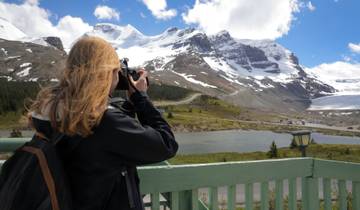
5-Day Canadian Rockies: Banff, Columbia Icefield, Yoho & Kootenay National Parks Tour from Calgary
- ✓ Comprehensive Canada tour
- ✓ Expert local guides included
- ✓ All accommodation arranged
- ✓ Transportation provided
5 days
Rockies Premium Tour from Vancouver
- ✓ Comprehensive Canada tour
- ✓ Expert local guides included
- ✓ All accommodation arranged
- ✓ Transportation provided

6 days
6-Day Canadian Rockies Adventure Tour: Banff, Yoho, Kootenay & Lake Louise Highlights
- ✓ Comprehensive Canada tour
- ✓ Expert local guides included
- ✓ All accommodation arranged
- ✓ Transportation provided
9 days
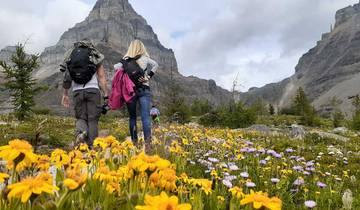
9 Day Rockies Hiking and Camping Tour
- ✓ Comprehensive Canada tour
- ✓ Expert local guides included
- ✓ All accommodation arranged
- ✓ Transportation provided
Multi-day tour packages powered by TourRadar. Prices and availability subject to change.
Introduction: Understanding Canada Travel Costs in 2026
Canada presents a complex budgeting landscape shaped by continental-scale geography, dramatic seasonal variations, and significant regional price differentials that can double daily costs between destinations, seasons, and accommodation tiers. The second-largest country by land mass encompasses world-class cities, pristine wilderness, Atlantic coastlines, Pacific rainforests, Arctic tundra, and the Rocky Mountains, creating travel experiences ranging from urban cultural immersion to backcountry wilderness adventures with correspondingly diverse cost structures.
The Canadian dollar’s relative strength against most currencies except the US dollar, combined with inflation pressures affecting food, accommodation, and transportation, positions Canada as a moderately expensive destination compared to global standards. Budget travelers can explore Canada successfully at $95-155 per person daily, mid-range visitors enjoy comfortable experiences at $205-280, while luxury seekers access premium properties and exclusive experiences at $350-550+ per person daily, all assuming two people sharing accommodation to split room costs.
Regional price variations create strategic planning opportunities. Vancouver and Toronto command 40-60% premiums over Montreal, Calgary, Halifax, or Ottawa for equivalent accommodation quality. Summer peak season June-August adds 30-50% to shoulder season April-May and September-October prices. The transformative Canada Strong Pass initiative providing FREE national park admission June 19-September 7, 2026, eliminates the most significant cost category for wilderness-focused itineraries visiting Banff, Jasper, Pacific Rim, or any of Canada’s 48 national parks during this period.
Successful budget management in Canada requires understanding five major cost categories: accommodation typically consuming 40-50% of daily budgets, food and dining accounting for 25-35%, transportation representing 10-20%, attractions and activities adding 15-25%, and miscellaneous expenses including connectivity, tips, and incidentals comprising the remaining 5-10%. Smart travelers optimize spending by targeting shoulder seasons, choosing mid-tier cities as bases for exploring expensive regions, utilizing public transit aggressively, combining grocery shopping with selective restaurant experiences, and booking accommodation with kitchen facilities to dramatically reduce food costs through self-catering.
This comprehensive guide provides detailed cost breakdowns across all budget tiers, regional price comparisons, seasonal variation analysis, money-saving strategies, and sample itineraries demonstrating realistic daily spending patterns for diverse travel styles exploring Canada’s extraordinary landscapes and vibrant cities.
Accommodation Costs in Canada 2026
Accommodation represents the single largest expense category for Canada travelers, typically consuming 40-50% of daily budgets and exhibiting the widest price variation between budget tiers, cities, and seasons. Canadian hotels, hostels, Airbnbs, and alternative lodging options span from $40 dormitory beds to $600+ luxury suites per night, with strategic choices in accommodation type, location, and booking timing creating the greatest opportunity for budget optimization or luxury indulgence depending on traveler priorities and financial resources.
Budget Accommodation in Canada: $40-120 Per Night
Budget accommodation in Canada centers on hostels, budget hotel chains, and economy motels providing basic comfort and essential amenities at $40-120 nightly. Hostel dormitory beds in major cities cost $40-70 per night in Toronto, Vancouver, and Montreal hostels offering shared bathrooms, communal kitchens, and social common areas popular with backpackers and young solo travelers. Private hostel rooms with shared bathrooms range $80-110 nightly, providing more privacy while retaining kitchen access and budget pricing. Budget hotel chains including Days Inn, Super 8, Travelodge, and Comfort Inn charge $80-120 per night for basic private rooms with ensuite bathrooms, free WiFi, and complimentary breakfast in most locations, offering better value in secondary cities like Halifax, Regina, or Fredericton than in expensive Vancouver or Toronto markets.
Location significantly impacts budget accommodation value. Downtown Vancouver or Toronto budget hotels command $100-120 nightly, while identical chains in suburbs accessible by public transit cost $70-90 for the same standard room. Maritime provinces including Nova Scotia, New Brunswick, and Prince Edward Island offer exceptional budget accommodation value at $60-85 for quality budget hotels that would cost $95-120 in Ontario or British Columbia. Budget accommodation booking strategies include securing reservations 2-3 months advance for summer peak season, targeting Sunday-Thursday nights for 15-25% savings over Friday-Saturday rates, and joining hotel loyalty programs offering member-only rates and occasional room upgrades.
Alternative budget options include Airbnb private rooms in host-occupied homes at $45-75 nightly providing local interaction and occasional breakfast inclusion, university residence halls during summer May-August at $50-90 offering excellent downtown locations, and YMCA/YWCA rooms in major cities at $65-95 combining budget pricing with fitness facility access. Budget travelers should verify kitchen access when booking, as preparing even 40-50% of meals at accommodation dramatically reduces daily food costs from $45-55 to $25-35 per person.
Mid-Range Hotels in Canada: $150-280 Per Night
Mid-range accommodation in Canada encompasses chain hotels, boutique properties, and quality independent hotels delivering comfortable rooms, reliable amenities, and convenient locations at $150-280 nightly. National chains including Best Western Plus, Holiday Inn, Courtyard Marriott, and Sandman Hotels charge $150-220 per night for well-appointed rooms with modern furnishings, quality bedding, work desks, flat-screen TVs, and complimentary WiFi, representing the sweet spot for value-conscious travelers seeking comfort without luxury premiums.
Vancouver mid-range hotels cost $180-280 nightly in downtown, Yaletown, or Coal Harbour neighborhoods, with better value $150-200 in Richmond near the airport or Burnaby connected by SkyTrain. Toronto mid-range properties charge $170-260 downtown or in popular Yorkville and Entertainment District areas, dropping to $130-180 in Midtown or North York with excellent subway access. Montreal offers superior mid-range value at $140-210 for comparable downtown properties in Old Montreal, Quartier des Spectacles, or Plateau neighborhoods. Calgary, Ottawa, and Halifax mid-range hotels range $130-200, providing 25-35% savings versus Vancouver or Toronto for equivalent quality.
Boutique hotels and design-focused properties charge 15-30% premiums over chains, reaching $200-320 per night but delivering distinctive character, personalized service, locally-sourced amenities, and unique design aesthetics appealing to style-conscious travelers. Mid-range accommodation booking windows of 4-8 weeks advance optimize pricing for most seasons, while last-minute deals occasionally appear for unsold inventory in shoulder seasons April-May and September-October. Corporate rates and association discounts including AAA, CAA, AARP, and professional organization memberships reduce published rates 10-20%.
Luxury Accommodation in Canada: $300-600+ Per Night
Luxury accommodation in Canada features internationally-branded five-star hotels, heritage properties, boutique luxury retreats, and exclusive lodges offering impeccable service, premium locations, exceptional dining, spa facilities, and distinctive architectural or natural settings at $300-600+ nightly. Fairmont properties anchoring major cities and resort destinations including Fairmont Vancouver, Fairmont Banff Springs, Fairmont Chateau Laurier Ottawa, and Fairmont Le Château Frontenac Quebec City charge $350-600 delivering historic grandeur, prime locations, world-class restaurants, and comprehensive concierge services.
Modern luxury hotels including Four Seasons, Shangri-La, Ritz-Carlton, and Rosewood properties in Vancouver, Toronto, and Montreal range $400-750 per night for standard rooms, offering contemporary design, Michelin-caliber dining, destination spas, and sophisticated urban luxury. Boutique luxury properties in converted heritage buildings, restored mansions, or purpose-built design hotels charge $320-550 providing intimate scale, personalized attention, curated local experiences, and distinctive aesthetics that contrast with chain luxury uniformity.
Resort luxury accommodation in destinations like Whistler, Banff, Jasper, and Tofino peaks at $450-850+ for premium hotels during high seasons December-March for ski resorts and July-August for mountain and coastal destinations. Exclusive wilderness lodges, eco-luxury retreats, and remote fishing or hiking lodges reach $600-1,200+ per night with most including meals, guided activities, and transportation in all-inclusive pricing structures. Luxury accommodation booking requires 6-12 months advance for peak summer Rocky Mountain destinations or winter Whistler ski season, with shoulder season availability offering 25-40% discounts and occasional upgrade opportunities for direct bookings or loyalty program members.
Food and Dining Expenses in Canada 2026
Food costs in Canada present travelers with stark choices between economical grocery shopping at $310-320 monthly per person versus restaurant dining consuming $45-90 daily, creating the second-largest variable expense category after accommodation and offering the greatest opportunity for budget optimization through strategic self-catering, selective restaurant splurges, and understanding regional food price variations across provinces and cities.
Grocery Costs and Self-Catering in Canada 2026
Grocery shopping in Canada costs $310-320 per person monthly according to Statistics Canada household spending data, translating to approximately $10-11 daily for basic nutritious meals prepared at accommodation with kitchen facilities. The Canada Food Price Report 2026 projects 4-6% food price increases continuing inflation trends that have elevated grocery costs 27% above 2019 levels, with meat prices rising 5-7% fastest, followed by bakery items and vegetables at 4-6%, while seafood increases moderately at 1-2%.
Budget grocery shopping strategies target discount chains including No Frills, FreshCo, Food Basics, and Walmart Supercenters offering 15-25% lower prices than premium chains Loblaws, Sobeys, or Metro for identical products. Weekly grocery budgets for travelers with kitchen access run $65-85 per person purchasing basics including bread $3-4, milk $3, eggs $5-6 per dozen, chicken breast $14-18 per kilogram, ground beef $12-16 per kilogram, pasta $2-3, rice $4-6 for 2kg, seasonal vegetables $8-15 for week’s supply, fruit $10-15, cheese $8-12, and sandwich supplies $12-18 for lunch components. Prepared foods from grocery store delis including rotisserie chicken $10-13, pre-made salads $6-9, and heat-and-eat meals $8-14 offer convenience approaching fast food pricing while maintaining grocery economics.
Regional grocery price variations remain modest compared to accommodation or restaurant differentials. Vancouver and St. John’s charge 5-15% premiums over Toronto and Montreal for identical grocery baskets, while Calgary, Edmonton, and Winnipeg offer 5-10% savings. Seasonal produce price swings create 20-40% cost variations between winter imported tomatoes, peppers, and berries versus summer local equivalents. Grocery shopping reduces daily food costs from $45-90 for restaurant dining to $12-20 for breakfast and lunch prepared at accommodation, reserving restaurant budgets for occasional dinners exploring local cuisine.
Restaurant Meal Prices in Canada 2026
Restaurant dining in Canada costs $18-30 per person for casual establishments, $35-55 for mid-range restaurants, and $70-120+ for fine dining experiences before taxes and tips, with the Canada Food Price Report 2026 forecasting continued 4-6% restaurant inflation making dining out increasingly expensive relative to grocery alternatives. Fast food value meals at McDonald’s, Tim Hortons, or A&W run $11-15 including burger or sandwich, fries, and soft drink, representing the most economical restaurant option matching grocery-prepared meal costs.
Casual dining restaurants including local cafes, ethnic restaurants, pub fare, and chain establishments like Boston Pizza, Moxie’s, or Cactus Club charge $18-30 per person for entrees ranging $16-26, beverages $3-6 for soft drinks or $7-12 for beer, and desserts $8-12. Adding mandatory 5-13% sales taxes depending on province and customary 15-20% tips raises total bills 20-33% above menu prices, pushing typical casual dinner costs to $25-40 per person after all charges. Lunch specials at casual restaurants offer 20-30% savings over dinner pricing for identical meals, running $12-22 per person including taxes and tips.
Mid-range restaurants featuring elevated cuisine, craft cocktails, wine lists, and upscale ambiance charge $35-55 per person before taxes and tips for entrees $28-48, appetizers $12-22, desserts $10-16, and alcoholic beverages $8-18 per drink. Fine dining establishments, Michelin-contending restaurants, chef-driven tasting menus, and premium steakhouses reach $70-120+ per person for multi-course meals with wine pairings exceeding $150-250 per person. Regional restaurant price variations remain modest at 10-15% between expensive Vancouver or Toronto and more affordable Calgary, Montreal, or Halifax markets.
Coffee culture significantly impacts daily budgets. Tim Hortons coffee and breakfast sandwich run $8-11, while Starbucks cappuccino and pastry cost $9-14. Daily coffee shop visits add $10-18 to food budgets, totaling $70-125 weekly. Budget-conscious travelers brew coffee at accommodation, using coffee shop visits as occasional treats rather than daily necessities. Alcohol purchases dramatically inflate restaurant bills, with wine by bottle adding $40-80, craft beers $7-10 each, and cocktails $14-20, potentially doubling meal costs when drinking accompanies dining.
Food Cost Strategies for Budget Optimization
Strategic food spending combining grocery shopping for most meals with selective restaurant experiences optimizes both budget control and culinary exploration. Effective patterns include breakfast at accommodation using grocery staples costing $3-5 per person, packed lunches from grocery supplies at $6-10, and restaurant dinners 3-4 evenings weekly at $30-50 per person, reducing daily food costs to $25-40 versus $55-90 for full restaurant dining while still experiencing local cuisine. Alternative patterns substitute fast food or food truck lunches $12-18 for packed options, reserving restaurant budgets for authentic ethnic neighborhoods, local specialties, or celebrated regional cuisines worth premium pricing.
Accommodation selection dramatically impacts food economics. Hostels and Airbnbs with full kitchens enable comprehensive self-catering, while hotels offering only mini-fridges and coffee makers limit grocery options to breakfast basics, cold lunches, and snacks. Budget hotels with complimentary hot breakfast included save $10-15 per person daily compared to purchasing equivalent restaurant breakfast, effectively reducing net room cost by this amount and earning preference when comparing total daily accommodation expenses.
Regional food specialties and budget-friendly authentic experiences include Montreal bagels $1-2, poutine $8-14, Montreal smoked meat sandwiches $12-18, Vancouver Asian cuisine in Richmond or Commercial Drive $12-22, Toronto ethnic neighborhoods offering exceptional Pakistani, Caribbean, Chinese, or Italian meals $15-28, Maritime seafood including fish and chips $16-24 or lobster rolls $18-28, and Alberta beef in Calgary steakhouses $35-65. Food trucks, farmers markets, and local bakeries provide authentic experiences at 30-50% discounts versus sit-down restaurant equivalents.
Transportation Costs and Strategies in Canada 2026
Transportation expenses in Canada vary enormously based on travel style, distance covered, and intercity versus intracity movement, ranging from $8-15 daily for local public transit users to $150-400 for domestic flights between cities or $100-180 daily for car rentals, making transportation strategy the third-largest budget variable after accommodation and food, with choices dramatically impacting both costs and travel flexibility across Canada’s vast geography.
Public Transit Costs in Canadian Cities 2026
Public transit in Canadian cities costs $3-4 per single ride or $95-160 for monthly unlimited passes, providing economical transportation for travelers staying primarily in one urban center and using buses, subways, light rail, and streetcars to access attractions, neighborhoods, restaurants, and cultural sites without taxi or rental car expenses. Toronto TTC charges $3.35 per ride or $156 monthly for unlimited travel across extensive subway, streetcar, and bus networks serving the entire metropolitan area. Vancouver TransLink costs $3.50 per ride after July 1, 2026 fare increases or $95-160 monthly depending on zone coverage, with SkyTrain, SeaBus, and bus services connecting downtown, airports, suburbs, and surrounding municipalities.
Montreal STM transit costs approximately $3.75 single ride or $95 monthly, offering excellent metro and bus coverage throughout the island. Calgary Transit charges $3.60 per ride or $112 monthly for C-Train light rail and bus services. Ottawa OC Transpo runs $3.70 per ride or $128 monthly. Halifax Transit costs $2.75 per ride or $82 monthly, representing Canada’s most affordable major city public transit. Daily and weekly pass options provide value for short-term visitors, typically costing $10-13 for unlimited day passes or $25-35 for weekly passes depending on city.
Smart card systems including Toronto PRESTO, Vancouver Compass Card, and Montreal OPUS offer 10-15% discounts versus cash fares and enable seamless transfers between modes within 90-120 minute windows. Transit apps including Transit, Citymapper, and Google Maps provide real-time schedules, route planning, and service alerts essential for efficient system navigation. Budget travelers staying 5-7 days in one city should calculate whether daily transit costs justify weekly or monthly pass purchases, typically breaking even at 8-12 single rides depending on fare structures.
Intercity Transportation: Trains, Buses, and Flights in 2026
Intercity transportation in Canada encompasses VIA Rail trains, discount bus lines, and domestic flights offering dramatically different price points, travel times, and comfort levels for moving between cities across Canada’s continental distances. VIA Rail operates corridor services in Quebec-Ontario including frequent Montreal-Toronto-Ottawa routes, plus transcontinental services Vancouver-Toronto, regional routes in Maritimes, and iconic tourist trains like The Canadian offering multi-day scenic journeys. Sample VIA Rail fares include Toronto-Montreal $80-150 economy 5-hour journey, Toronto-Ottawa $70-130 economy 4.5-hour trip, Vancouver-Toronto $450-900 economy or $1,200-2,200 sleeper class for 4-day transcontinental journey.
VIA Rail pass options include Canrailpass offering 7 one-way trips anywhere on the network within 60 days for $650-850 depending on season, representing excellent value for travelers visiting 4-5 cities via train rather than flying. Advance booking 4-8 weeks before travel and traveling Tuesday-Thursday reduces fares 20-40% versus last-minute weekend bookings. Sleeper class on long-distance trains includes private cabins, meals, and lounge access, effectively bundling accommodation and transportation for overnight journeys.
Budget bus services including FlixBus, Megabus, and regional operators offer significant savings over trains and flights. Toronto-Montreal buses run $30-60 for 6-7 hour journeys, Toronto-Ottawa $25-50 for 5-6 hours, Vancouver-Seattle $35-70 for 4-5 hours. Long-distance buses sacrifice comfort and speed but enable cross-country travel on minimal budgets, with transcontinental journeys possible at $200-350 versus $400-800 for equivalent flights.
Domestic flights between Canadian cities cost $150-400 one-way depending on route, season, and advance booking. Sample economy fares include Toronto-Vancouver $250-450, Toronto-Montreal $150-280, Vancouver-Calgary $180-320, Toronto-Halifax $220-380. Budget carriers including Flair Airlines and Swoop offer 20-40% discounts over Air Canada or WestJet but charge fees for checked bags, seat selection, and other services. Advance booking 6-12 weeks before summer peak travel or 3-6 weeks for off-peak seasons optimizes flight pricing. Flying proves economical and time-efficient for transcontinental distances exceeding 1,000 kilometers, while trains offer superior value and experience for corridor routes under 600 kilometers.
Car Rentals and Driving Costs in Canada 2026
Car rentals in Canada cost $50-90 daily for economy vehicles, $70-120 for midsize or SUVs, and $100-180 for premium or large vehicles including minivans, with prices varying dramatically between cities, seasons, and booking windows. Vancouver and Toronto charge premium rates $70-110 daily for economy cars, while Calgary, Montreal, and Halifax offer better value $50-75 for equivalent vehicles. Summer peak season June-August commands 30-50% premiums over April-May spring or September-October fall rental rates. Airport rentals include 10-20% facility fees and taxes absent from downtown locations but offer superior convenience for fly-drive itineraries.
Gasoline costs $1.65-1.95 per liter or approximately $6.25-7.40 per gallon depending on province and proximity to refineries, with British Columbia and Maritime provinces at the high end and Alberta offering Canada’s lowest fuel prices. Fuel-efficient economy cars consuming 6-7 liters per 100km cost $10-13 per 100 kilometers driven, totaling $35-60 daily for typical 300-500 kilometer driving days exploring regions. Insurance adds $20-40 daily when purchased from rental companies, though credit card coverage and personal auto policies may provide partial or complete coverage for qualified renters, requiring verification before declining rental company insurance.
Parking costs $15-35 daily in downtown Vancouver, Toronto, or Montreal, with hotel parking adding $20-45 nightly at urban properties. Free parking remains common in smaller cities, suburbs, national parks, and roadside attractions, but expensive urban centers charge premium rates. Highway tolls remain uncommon across most of Canada except for specific bridges and express lanes around Toronto adding $5-15 daily for commuter routes. Car rentals prove economical for groups of 3-4 splitting costs and for exploring regions with limited public transit including Canadian Rockies, Maritime provinces, or wine regions, but become expensive and problematic for solo travelers navigating expensive urban centers with excellent public transit.
National Park Entry Fees and Outdoor Recreation Costs 2026
National park admission and outdoor recreation expenses range from completely free during the Canada Strong Pass period June 19-September 7, 2026, to $12 daily per person or $84-168 annually for Parks Canada Discovery Pass coverage, representing essential expenses for wilderness-focused itineraries visiting Banff, Jasper, Pacific Rim, Gros Morne, Cape Breton Highlands, or any of Canada’s 48 national parks, 171 national historic sites, and 5 national marine conservation areas.
Parks Canada Discovery Pass Pricing 2026
Parks Canada Discovery Pass costs $84 for adults, $72 for seniors 65-plus, and $168 for family/group passes covering up to 7 people in one vehicle, valid for 12 full months from purchase date and providing unlimited admission to all Parks Canada destinations nationwide. Daily park admission averages $11-13 per adult depending on specific park, making Discovery Pass economical for travelers visiting parks 7-8+ days annually or families with multiple adults sharing group pass costs. Rocky Mountain national parks including Banff, Jasper, Yoho, Kootenay, Mount Revelstoke, and Glacier charge $12.25 per adult daily, meaning a 7-day visit reaches $86 per person equaling Discovery Pass cost.
Youth 17 and under enter all Parks Canada destinations free regardless of season or program, providing significant family savings when children accompany adult pass holders. Discovery Pass purchases occur online through Parks Canada website, at park entrance gates, at visitor centers within parks, and at select MEC outdoor retailers across Canada. Online purchases require allowing delivery time before trips, making in-person purchases preferable for international visitors or last-minute planners. Discovery Pass holders display passes on vehicle dashboards when entering parks by car, eliminating stop requirements at entrance gates that process cash or card payments.
Canada Strong Pass: Free Admission Summer 2026
Canada Strong Pass initiative provides completely FREE admission to all Parks Canada destinations from June 19 to September 7, 2026, eliminating the largest outdoor recreation expense for summer travelers and enabling unlimited national park visits, national historic site tours, and marine conservation area exploration without any entry fees during peak wilderness travel season. The program additionally offers 25% discounts on camping fees and roofed accommodation within Parks Canada operated campgrounds and lodging during the same period, further reducing costs for visitors camping in national parks or staying in park-operated cabins, yurts, or other overnight facilities.
Free admission applies during regular operating hours without requiring advance passes, tickets, or reservations for entry itself, though specific activities including backcountry camping, boat launches, mooring permits, fishing licenses, and interpretive programs still require separate fees. The Canada Strong Pass does not extend to provincial parks, territorial parks, municipal parks, or privately operated attractions within or adjacent to national parks, applying exclusively to federally-operated Parks Canada destinations. Summer 2026 travelers visiting Banff, Jasper, Pacific Rim, Cape Breton Highlands, Gros Morne, or any other Parks Canada destination between mid-June and early September save $12 daily per person or $168 for family groups, effectively providing $85-340 value for week-long wilderness itineraries.
Outdoor Recreation Equipment and Activity Costs
Outdoor recreation activities beyond basic park admission include equipment rentals, guided tours, permits, and specialized experiences adding $30-200+ daily depending on activity intensity and equipment requirements. Camping in Parks Canada campgrounds costs $20-45 per site nightly depending on services, with frontcountry campgrounds offering vehicle access, flush toilets, and showers at $32-45, while more primitive campgrounds with pit toilets and hand pumps charge $20-28. The 25% Canada Strong Pass discount June 19-September 7 reduces camping costs to $15-34 per site, saving $100-200 weekly for camping-based itineraries.
Equipment rentals in outdoor recreation hubs include canoe or kayak rentals $40-80 daily, stand-up paddleboards $35-65, mountain bikes $45-85, camping gear packages $35-75 daily, and winter ski or snowboard packages $45-75 daily. Multi-day rentals typically offer 15-25% per-day discounts. Guided outdoor experiences range from interpretive park walks $15-35 per person for 2-3 hours, to half-day guided hikes $75-120, full-day adventures $140-220, multi-day backcountry trips $400-900 per person including guide services, meals, and group camping equipment, and premium wilderness lodge experiences $600-1,500+ daily with all-inclusive lodging, meals, equipment, and expert guides.
Backcountry camping permits cost $10 per person per night in most national parks, plus $12 annual wilderness pass fee for access to backcountry areas, creating modest fees for self-guided wilderness travelers with their own camping and safety equipment. Fishing licenses vary by province and territory, typically $30-80 for week-long non-resident licenses, with national park supplements adding $10-35. Wildlife viewing, hiking, swimming, photography, and general nature appreciation activities remain completely free beyond park entry fees, enabling extraordinary outdoor experiences on minimal budgets for travelers carrying basic recreational equipment.
Urban Attractions and Cultural Experience Costs 2026
Urban attractions, museums, galleries, cultural sites, tours, and entertainment in Canadian cities cost $0-50+ per experience, with many world-class museums offering free or pay-what-you-can admission, while premium experiences including CN Tower, major aquariums, or guided food tours charge $30-150+ per person, requiring strategic attraction selection and advance planning to optimize cultural immersion within budget constraints.
Museums and Galleries: Free and Paid Options
Canadian museums and galleries span free admission institutions to $20-30 ticketed experiences, with many offering discounted or free evening hours, pay-what-you-can policies, or donation-based entry expanding access. Major free museums include National Gallery of Canada in Ottawa, Art Gallery of Ontario’s permanent collection on Wednesday evenings, Vancouver Art Gallery donation evenings Thursday 5-8pm, Montreal Museum of Fine Arts permanent collection, and Royal Ontario Museum free Wednesday evenings. These policies enable comprehensive cultural exploration on minimal budgets when scheduling visit days strategically around free admission periods.
Paid museum admissions typically cost $15-30 per adult, including Royal Ontario Museum Toronto $25 general admission, Canadian Museum of History Gatineau $20, Canadian Museum for Human Rights Winnipeg $17, Royal BC Museum Victoria $30, and major science centers $18-28. Student, senior, and youth discounts reduce rates 20-40%, while family passes covering 2 adults and 2-4 children typically save 15-25% versus individual tickets. Annual memberships at $60-120 per person or $120-200 family prove economical for extended stays in one city or repeat visitors, often including reciprocal admission at museum networks across Canada.
Major Attractions and Iconic Experiences
Signature Canadian attractions charge premium rates reflecting iconic status and operating costs. CN Tower Toronto admission $38 for main observation level or $49 for SkyPod highest viewing deck, represents Toronto’s must-see experience with advance online booking saving $3-5 per ticket. Niagara Falls attractions including Journey Behind the Falls $30, Hornblower boat tours $35-45, and Skylon Tower observation deck $18 combine for $85-115 per person comprehensive waterfall experience. Vancouver Capilano Suspension Bridge charges $60 admission for cliffwalk and treetop adventures, while Grouse Mountain Skyride costs $75 including gondola, mountain activities, and grizzly bear refuge access.
Montreal attractions including Olympic Stadium tower $27, Biodome $23, and Montreal Tower $17 cluster in Olympic Park enabling $60-80 full-day experience. Quebec City Citadel tours cost $20, while Old Quebec exploration remains free except for paid attractions. Butchart Gardens Victoria charges $40-45 seasonal depending on summer peak versus spring/fall shoulder season. Alberta attractions including Calgary Tower $20, Royal Tyrrell Museum Dinosaur Provincial Park $21, and Edmonton river valley activities mostly free create affordable urban experiences.
Guided Tours and Food Experiences
Guided walking tours cost $25-50 per person for 2-3 hour neighborhood explorations, food tours, historical walks, or cultural immersion experiences led by knowledgeable local guides. Vancouver food tours range $75-120 including 6-8 tastings across ethnic neighborhoods. Toronto graffiti and street art tours $35-45 explore rapidly changing urban canvas. Montreal’s Underground City and architecture tours $30-50 reveal hidden infrastructure. Free walking tours operating on tips-only basis in major cities request $10-20 per person gratuity for quality experiences, offering budget-friendly guided exploration alternatives.
Food and culinary experiences including cooking classes $85-140, market tours with chef guides $75-110, craft brewery tours $45-75, wine tours in Okanagan or Niagara regions $80-150, and progressive tasting experiences $90-180 combine education and gastronomy for premium pricing justified by comprehensive inclusion of tastings, transportation, and expert guidance. Budget alternatives include self-guided food neighborhood explorations in areas like Vancouver Commercial Drive, Toronto Kensington Market, Montreal Mile End, or Halifax waterfront using online research and small bites at multiple establishments totaling $30-60 per person for equivalent culinary diversity.
Budget Travel in Canada 2026: $95-155 Daily Per Person
Budget travel in Canada proves viable at $95-155 per person daily for travelers prioritizing affordability through hostel accommodation, grocery shopping, public transit, free attractions, and strategic spending on essential experiences, enabling extended travel duration, diverse destination coverage, and authentic local interaction while maintaining financial discipline and avoiding debt accumulation or budget overruns that compromise trip enjoyment or force premature returns.
Budget Daily Cost Breakdown
Budget travelers spending $95-155 per person daily allocate costs across accommodation, food, transportation, and experiences in carefully managed proportions. Accommodation consumes $50-65 per person when two share budget hotel rooms at $100-130 nightly, or $40-55 for hostel dormitory beds and private hostel rooms. Food costs $35-45 daily combining grocery shopping for breakfast and lunch $18-25 with occasional fast food or budget restaurant dinner $17-20, reserving restaurant experiences for 2-3 evenings weekly while cooking at hostels or hotels with kitchenettes for remaining meals. Public transit expenses run $8-12 daily purchasing single rides or day passes for sightseeing around urban centers. Attractions and activities budget $10-25 daily targets free museums, parks, beaches, hiking trails, and walking neighborhoods, with occasional paid attractions including major museums $15-25 or budget-friendly tours.
Sample budget daily costs in Toronto for two sharing: accommodation $55 per person for budget hotel, breakfast $5 groceries, lunch $8 packed lunch or food court, dinner $22 casual restaurant, transit $8 for three rides, museum admission $15, coffee $5, total approximately $118 per person. Vancouver budget day: accommodation $60 per person, meals $38 groceries and occasional dining, transit $10, attractions $12, total approximately $120. Montreal budget day: accommodation $50, meals $35, transit $8, attractions $10, total approximately $103. Budget travelers targeting $665-1,085 weekly manage approximately $95-155 daily averages through disciplined spending and strategic free activity incorporation.
Budget Travel Money-Saving Strategies
Budget optimization strategies extend limited resources through accommodation timing and location choices, comprehensive grocery shopping, aggressive public transit use, and targeted free attraction focus. Accommodation savings accumulate through booking 2-3 months advance for summer, targeting Sunday-Thursday nights avoiding weekend premiums, choosing locations one subway stop outside expensive downtown cores, and joining hostel loyalty programs earning free nights after 10-night stays. Kitchen access proves essential, reducing daily food costs $25-35 through breakfast and lunch preparation at accommodation, reserving $20-30 for dinner exploration of authentic local cuisine.
Transportation savings favor unlimited day passes over multiple single fares, walking between nearby attractions, and bicycle rental programs $8-15 daily providing flexible transportation covering larger distances than walking without transit costs. Free attraction focus includes parks, beaches, public markets, architectural walking tours, neighborhood exploration, free museum evenings, gallery districts, waterfronts, university campuses, and cultural festivals occurring regularly in summer months providing premium experiences without admission charges.
Seasonal timing dramatically impacts budget feasibility. Spring shoulder season April-May and fall September-October offer 20-30% accommodation savings versus summer while maintaining excellent weather and uncrowded attractions. June 19-September 7 Canada Strong Pass free national park admission eliminates $85-170 weekly park fees for wilderness-focused itineraries. Off-peak winter November-March delivers exceptional value for urban cultural experiences with 40-60% accommodation discounts outside ski resort destinations, though cold weather increases heating costs and limits outdoor activities.
Mid-Range Travel in Canada 2026: $205-280 Daily Per Person
Mid-range travel in Canada at $205-280 per person daily balances comfort, quality, and value through mid-tier hotels, restaurant dining, selective tours, and flexible transportation including taxis and occasional car rentals, representing the sweet spot for travelers seeking reliable experiences, convenient locations, and stress-free logistics without luxury premiums or budget constraints limiting choices, spontaneity, or comfort levels during extended trips.
Mid-Range Daily Cost Breakdown
Mid-range travelers allocate $205-280 daily across upgraded accommodation, restaurant dining, flexible transportation, and comprehensive attractions access. Accommodation consumes $95-130 per person when two share mid-range hotels at $190-260 nightly, securing comfortable rooms, reliable amenities, central locations, and quality sleep essential for maintaining energy through active travel days. Food costs $65-85 daily primarily through restaurant meals including breakfast $12-18 at cafes, lunch $18-28 at casual restaurants, dinner $35-55 at quality establishments, plus coffee and snacks $10-15 daily, with occasional grocery breakfast or lunch providing modest savings and local market exploration opportunities.
Transportation expenses rise to $10-15 daily combining public transit passes with strategic taxi use for late evenings, luggage transfers between hotels, or rainy day convenience. Attractions and activities budget $35-50 daily enables paid museum admissions, walking tours, occasional special exhibitions, harbor cruises, gondola rides, or guided experiences without constant cost consideration restricting choices. Sample mid-range Toronto day for two sharing: accommodation $100 per person, meals $75 restaurant dining, transit and taxi $12, attractions $40 including museum and walking tour, coffee and drinks $15, total approximately $242 per person.
Vancouver mid-range day: accommodation $115, meals $80, transportation $15, attractions $45, miscellaneous $15, total approximately $270. Montreal mid-range day: accommodation $95, meals $70, transit $10, attractions $35, total approximately $210. Regional price variations create 20-30% daily cost differentials between expensive Pacific and Atlantic destinations versus affordable Prairie or Quebec cities, enabling strategic itinerary planning balancing premium and value destinations for consistent mid-range average spending.
Mid-Range Comfort and Convenience Balance
Mid-range travel philosophy prioritizes time efficiency, energy conservation, and stress reduction through upgraded choices justifying 40-80% premiums over budget alternatives. Accommodation location premiums paying $20-40 nightly extra for downtown hotels versus suburbs eliminate 45-90 minute daily commuting time and transportation costs, effectively recovering surcharge through time savings. Hotel breakfast inclusion saving $12-18 per person daily effectively reduces net accommodation cost, earning preference when comparing total daily expenses rather than isolated room rates.
Transportation flexibility incorporating taxis for airport transfers $50-70, late evening returns from restaurants or events $15-25, or luggage movement between hotels $20-35 enhances convenience justifying costs through time saved and reduced physical strain. Selective car rentals for 2-3 day regional explorations from urban bases enable access to wine regions, coastal areas, or nearby parks impossible via public transit, with $150-250 three-day rental costs split between couples proving economical at $75-125 per person for expanded destination access.
Guided tour investments including $75-120 food tours, $85-140 day trips, or $45-75 specialized walking tours deliver expert interpretation, hidden gem access, local interaction, and comprehensive experiences impossible through independent exploration, justifying premium pricing for travelers valuing learning, efficiency, and social connection opportunities during limited vacation time. Mid-range travelers balance guided experiences 3-5 times weekly with independent exploration maintaining autonomy and spontaneity while benefiting from local expertise for complex topics or logistically challenging destinations.
Luxury Travel in Canada 2026: $350-550+ Daily Per Person
Luxury travel in Canada at $350-550+ per person daily accesses premium accommodation, fine dining, private transportation, exclusive tours, and exceptional service delivering refined comfort, unique experiences, prestigious properties, and effortless logistics for travelers prioritizing quality, distinction, and memorable moments over cost optimization, budget discipline, or value calculations driving budget and mid-range planning approaches.
Luxury Daily Cost Breakdown
Luxury travelers allocate $350-550+ daily across five-star hotels, fine dining, private transportation, exclusive experiences, and premium services. Accommodation consumes $200-300+ per person when two share luxury hotels at $400-600+ nightly, securing exceptional properties including Fairmont flagships, Four Seasons elegance, boutique luxury intimacy, or historic heritage grandeur delivering impeccable service, prime locations, destination dining, spa facilities, and distinctive character impossible at lower tiers. Food costs $85-120+ daily through fine dining experiences including gourmet breakfast $25-40, elevated lunch $35-60, and chef-driven dinner $70-120+ for entrees before wine pairings $50-150 additional, plus premium coffee, artisanal bakery visits, and sophisticated afternoon tea experiences $25-45.
Private transportation including airport transfer services $80-140, executive car service for daily touring $200-350, or luxury car rentals $120-200 daily plus fuel eliminates public transit entirely, providing door-to-door convenience, premium comfort, and flexible scheduling matching luxury accommodation and dining standards. Attractions and experiences budget $45-80+ daily targets exclusive tours, private guides, VIP access programs, premium attraction tickets including behind-scenes experiences, helicopter tours $250-400, seaplane flights $180-350, yacht charters $300-600 half-day, or destination spa treatments $150-300.
Sample luxury Toronto day for two sharing: accommodation $225 per person Fairmont or Four Seasons, meals $110 fine dining, private car service $30 per person, exclusive experiences $65, premium services $20, total approximately $450 per person. Vancouver luxury day: accommodation $275, meals $125, transportation $40, experiences $80, miscellaneous $30, total approximately $550. Banff luxury day: accommodation $300 resort property, meals $105, activities $90 including gondola and spa, total approximately $495 per person.
Luxury Travel Distinctions and Premium Experiences
Luxury travel distinctions transcend basic comfort reaching exceptional quality through property heritage, service anticipation, exclusive access, and memorable moments impossible at lower price points. Five-star accommodation delivers personalized check-in, room preferences remembered across visits, proactive service addressing needs before requests, turndown service, premium bedding and linens, luxury bath amenities, and concierge expertise accessing sold-out restaurants, private guides, or exclusive experiences unavailable through public booking channels.
Fine dining experiences at luxury tier include Michelin-contending restaurants, tasting menus showcasing seasonal Canadian ingredients, expert sommelier wine pairings, chef’s table experiences watching kitchen choreography, and immersive culinary events including progressive dinners, farm-to-table tours visiting suppliers, and cooking masterclasses with celebrated chefs $250-450 per person. Luxury travelers prioritize authentic culinary excellence over generic fine dining, seeking indigenous fusion cuisine celebrating First Nations ingredients, regional specialties including East Coast seafood or West Coast Pacific Rim influences, and innovative contemporary Canadian chefs earning international recognition.
Exclusive experiences define luxury travel value proposition. Private wildlife tours in national parks with expert naturalists $400-700 daily for couples locate elusive species, explain ecology, and access restricted areas. Helicopter tours over Rockies, glaciers, or coastal fjords $400-800 per person reveal perspectives impossible from ground level. Private yacht charters exploring Gulf Islands, Haida Gwaii, or Atlantic coastlines $800-1,500 daily deliver intimate wilderness encounters. Multi-day luxury lodge experiences in remote locations $600-1,200+ per person daily including gourmet meals, expert guides, and wilderness activities create transformative immersion impossible through standard tourism.
Regional Price Variations Across Canada 2026
Canadian regional price variations create 30-60% cost differentials between expensive and affordable destinations, with strategic itinerary planning balancing premium Pacific and Atlantic coastal experiences against value Prairie and Quebec cities enabling budget management while accessing diverse landscapes, cultures, and attractions spanning continental distances from Pacific rainforests to Atlantic fishing villages, Rocky Mountain wilderness to Great Lakes urban centers.
Most Expensive Canadian Destinations
Vancouver consistently ranks Canada’s most expensive city with accommodation averaging $180-280 mid-range and $350-600+ luxury, driven by limited downtown hotel inventory, extraordinary natural setting, temperate climate attracting year-round visitors, and international gateway status concentrating Asian, Australian, and US travelers. Whistler during ski season December-March matches or exceeds Vancouver pricing at $250-400 mid-range and $450-850+ luxury reflecting world-class ski resort economics, limited accommodation capacity, and peak demand. Toronto follows closely with accommodation $170-260 mid-range and $400-750 luxury, though offering more supply and competitive options than Vancouver’s constrained market.
Banff and Jasper summer season July-August command premium pricing $200-350 mid-range and $400-700+ luxury driven by UNESCO World Heritage designation, spectacular scenery, limited park accommodation, and global bucket-list status concentrating demand into 8-12 week high season. Tofino on Vancouver Island peaks $220-380 mid-range summer reflecting surf culture cachet, dramatic Pacific coast setting, and limited remote location lodging. Victoria maintains elevated pricing $160-280 mid-range year-round through capital city status, cruise ship tourism, and British Columbia destination appeal.
Most Affordable Canadian Destinations
Halifax offers exceptional value at $130-200 mid-range and $280-400 luxury, delivering Atlantic coast charm, rich maritime history, vibrant waterfront culture, excellent seafood dining, and UNESCO-protected Old Town at 30-40% discounts versus Vancouver or Toronto equivalents. Quebec City surprisingly affordable at $140-220 mid-range and $300-500 luxury despite UNESCO World Heritage Old Town status, French cultural immersion, and European ambiance unmatched elsewhere in North America.
Prairie cities including Calgary, Edmonton, Regina, and Winnipeg deliver strong value at $130-200 mid-range and $280-450 luxury, offering urban sophistication, cultural attractions, festivals, restaurants, and accommodations at 25-35% below coastal Canadian markets. Winnipeg particularly appeals to budget travelers combining $110-170 mid-range hotels with exceptional cultural institutions including Canadian Museum for Human Rights, Winnipeg Art Gallery, and vibrant Exchange District architecture and dining scene.
Smaller Maritime centers including Fredericton, Charlottetown, and St. John’s offer even deeper value at $100-160 mid-range hotels delivering charm, history, safety, and authentic Atlantic Canadian culture at prices comparable to international budget destinations. Interior British Columbia including Kelowna Okanagan wine region provides summer value $140-220 mid-range accessing spectacular scenery, beach recreation, and celebrated wineries at discounts versus Vancouver coastal pricing.
Seasonal Price Variations and Timing Strategy 2026
Seasonal price variations create 30-60% cost differentials between peak summer months, shoulder seasons, and off-peak winter, with strategic travel timing delivering dramatic savings for flexible travelers willing to accept weather compromises, shorter daylight hours, or reduced service availability in exchange for lower accommodation costs, smaller crowds, easier booking, and authentic experiences less dominated by mass tourism impacts visible during peak summer months July-August.
Peak Season: Summer June-August
Summer peak season June-August commands highest prices for accommodation, tours, attractions, and activities across virtually all Canadian destinations except winter-focused ski resorts. Vancouver hotels peak $180-280 mid-range and $400-700+ luxury in July-August versus $120-190 and $280-450 in April-May shoulder season, representing 40-55% premiums. Banff and Jasper summer accommodation reaches $250-400 mid-range and $500-900+ luxury versus $140-240 and $280-450 spring/fall, reflecting 60-100% peak surcharges driven by compressed high season demand.
Summer advantages justify premium pricing for many travelers. Long daylight hours 15-18 hours enable extensive daily exploration, warm weather 18-28°C permits comfortable outdoor recreation without specialized cold-weather gear, all attractions, tours, restaurants, and services operate full schedules, hiking trails remain snow-free accessing alpine areas, and festival seasons concentrate cultural events, music festivals, and community celebrations creating vibrant atmospheres throughout July-August. Canada Strong Pass free national park admission June 19-September 7 eliminates $85-170 weekly park fees partially offsetting accommodation premiums for wilderness-focused itineraries.
Shoulder Seasons: Spring April-May and Fall September-October
Shoulder seasons deliver optimal value-quality balance with 25-40% accommodation savings versus peak summer while maintaining excellent weather, operational services, and uncrowded attractions. April-May spring brings awakening landscapes, wildflower blooms, migrating wildlife, comfortable 12-22°C temperatures, and hotel rates $20-60 nightly lower than summer peaks. September-October fall offers spectacular autumn color, harvest festivals, wine harvest touring, pleasant 15-25°C weather, and similar accommodation discounts creating ideal conditions for cultural exploration, wine regions, urban experiences, and moderate hiking.
Shoulder season tradeoffs include shorter daylight hours 12-14 hours limiting daily touring, occasional rainy weather particularly Pacific coast and Atlantic regions, some attractions reducing hours or closing weekdays, high-elevation hiking trails potentially snow-covered through May or after mid-October, and reduced tour frequency requiring advance booking. Benefits dramatically outweigh limitations for experienced travelers prioritizing value, smaller crowds, easier restaurant reservations, superior local interaction, and authentic destinations less impacted by mass tourism.
Off-Peak: Winter November-March
Winter off-peak November-March splits between ski resort peaks and urban value opportunities. Whistler, Banff, and Jasper ski season December-March commands premium pricing matching or exceeding summer, with accommodation $250-400 mid-range and $450-850+ luxury reflecting global ski destination status. Conversely, urban centers including Vancouver, Toronto, Montreal, Ottawa, and Halifax deliver exceptional winter value with 40-60% accommodation discounts, hotel rates $100-170 mid-range and $240-380 luxury creating opportunities for extended cultural exploration, museum visits, restaurant tours, and city discovery on minimal budgets.
Winter Canada requires appropriate preparation. Temperatures -5 to -25°C across most regions except Vancouver’s mild 0-8°C demand quality cold-weather clothing, insulated boots, and layering systems adding luggage bulk and potential equipment costs for unprepared travelers. Shorter daylight hours 8-10 hours limit daily touring. Snow and ice create walking challenges and occasional service disruptions. Benefits include winter-specific activities including skating, winter festivals, northern lights viewing Yukon and northern territories, cozy restaurant and pub culture, holiday markets November-December, and authentic Canadian winter experiences impossible during temperate summer months.
Money-Saving Strategies and Budget Optimization Tips 2026
Strategic money management through accommodation timing, grocery shopping, public transit commitment, free attraction focus, and shoulder season targeting enables Canadian travel at 30-50% below unoptimized costs, transforming expensive destinations into affordable experiences for disciplined travelers willing to research options, book advance, make compromises on convenience, and prioritize value over luxury throughout planning and execution phases.
Accommodation Cost Reduction Strategies
Accommodation represents largest single expense category and greatest savings opportunity. Advance booking 8-12 weeks before summer peak travel and 4-8 weeks for shoulder seasons captures early booking rates 20-35% below last-minute prices. Sunday-Thursday travel avoiding Friday-Saturday weekend premiums saves $25-60 nightly. Suburban locations one subway stop beyond downtown cores cut costs $30-80 nightly while maintaining transit access. Hostels with private rooms deliver $40-70 savings versus equivalent budget hotels while providing kitchen access enabling grocery meal preparation.
Alternative accommodation including Airbnb entire apartments with kitchens cost $90-180 nightly for spaces accommodating 3-4 travelers at $23-45 per person versus $60-90 hotel costs, particularly valuable for groups splitting costs. University residence halls during summer May-August offer excellent downtown locations $50-90 nightly with basic services. Camping in national or provincial parks costs $20-45 per site accommodating 2-4 people at $10-23 per person, representing ultimate budget accommodation for equipped travelers comfortable with outdoor sleeping.
Food Cost Optimization Techniques
Food cost management through grocery shopping cuts daily expenses $30-50 per person versus full restaurant dining. Accommodation with kitchen facilities enables breakfast preparation $3-5 per person versus $12-18 restaurant breakfast, packed lunches $6-10 versus $18-28 restaurant, and occasional dinner cooking $12-20 versus $35-55 dining out, accumulating $40-75 daily savings per person totaling $280-525 weekly. Shopping discount grocery chains No Frills, FreshCo, Food Basics, or Walmart saves 15-25% versus premium Loblaws, Sobeys, or Metro chains.
Strategic restaurant dining focuses budgets on authentic local specialties, celebrated regional cuisines, and memorable experiences impossible to replicate through grocery preparation. Montreal smoked meat, Maritime lobster, Vancouver dim sum, Toronto diverse ethnic neighborhoods, and indigenous fusion restaurants justify premium pricing for cultural immersion and culinary education unavailable elsewhere. Lunch restaurant specials offer identical menus to dinner at 25-35% discounts, enabling quality dining experiences on limited budgets. Food trucks, farmers markets, and neighborhood bakeries deliver authentic local food $8-18 per meal versus $25-45 sit-down restaurant equivalents.
Transportation and Activity Savings
Public transit commitment eliminates expensive taxi, Uber, or rental car costs except truly necessary occasions. Monthly or weekly transit passes provide unlimited travel 25-40% cheaper than accumulated single fares for travelers staying one city 5+ days. Walking between attractions saves transit costs while enabling neighborhood discovery impossible from vehicles. Bicycle rental programs $8-15 daily offer flexible transportation faster than walking, cheaper than transit for multiple daily trips, and superior city exploration versus underground subways hiding street life.
Free attractions including parks, beaches, waterfronts, public markets, architectural walking tours, gallery districts, university campuses, and free museum evenings enable comprehensive cultural experiences without admission charges. Many world-class Canadian museums offer free admission specific evenings, pay-what-you-can policies, or donation-based entry. Walking tours on tips-only basis request $10-20 gratuity for 2-3 hour guided experiences versus $35-65 commercial tour equivalents. Self-guided exploration using online research, tourism office maps, and mobile apps delivers complete destination coverage on zero budget except occasional paid attractions justifying premium pricing through unique access or exceptional interpretation.
Sample Budget Itinerary: Week-Long Canada Trip
Seven-day budget Canada itinerary demonstrates realistic daily spending patterns, accommodation choices, transportation decisions, and activity selections enabling comprehensive destination exploration at $95-155 per person daily for two travelers sharing costs, totaling approximately $720-1,030 per person excluding flights to Canada, suitable for young travelers, extended-trip backpackers, or cost-conscious visitors prioritizing duration and destination diversity over luxury comfort or convenience.
Days 1-3: Toronto Budget Experience
Day 1 Toronto arrival and downtown exploration: accommodation $55 per person budget hotel or hostel private room, breakfast $5 grocery coffee and pastry, lunch $10 Kensington Market food stalls, dinner $22 Chinatown restaurant, subway day pass $11, CN Tower admission $38, waterfront walking free, total approximately $141 per person. Day 2 museums and neighborhoods: accommodation $55, meals $35 groceries and food court, transit $8, Royal Ontario Museum $25 or free Wednesday evening, Distillery District exploration free, Queen West galleries free, total approximately $123. Day 3 city islands and markets: accommodation $55, meals $38, ferry to Toronto Islands $9, island bike rental $15, St. Lawrence Market browsing free, total approximately $117. Toronto three-day average $127 per person daily, total approximately $381 per person.
Days 4-5: Montreal Budget Discovery
Day 4 train to Montreal and Old Montreal: VIA Rail Toronto-Montreal $80 advance booking, accommodation $50 budget hotel, lunch $12 fast food, dinner $25 Plateau restaurant, metro day pass $9, Old Montreal walking tour free, total approximately $176 including train. Day 5 Montreal culture and neighborhoods: accommodation $50, breakfast and lunch $22 groceries, dinner poutine specialty $14, transit $8, Mount Royal hiking free, Plateau and Mile End neighborhoods free, Jean-Talon Market browsing free, total approximately $94. Montreal two-day average $135 per person daily including arrival train, in-city average $94 daily.
Days 6-7: Quebec City and Return
Day 6 Quebec City exploration: bus Montreal-Quebec City $35, accommodation $48 budget hotel, meals $34, Old Town walking entirely free, Plains of Abraham free, fortification walls free, total approximately $117 including bus. Day 7 morning Quebec and return: breakfast $6, Citadel tour $20, lunch $13, bus Quebec-Montreal $35, train Montreal-Toronto $80 for Day 8 departure, total approximately $154 travel day. Week total excluding international flights: approximately $935 per person including intercity transportation, demonstrating budget travel viability through strategic accommodation, grocery meal preparation, public transit commitment, and free attraction maximization.
Sample Mid-Range Itinerary: Week-Long Canada Journey
Seven-day mid-range Canada itinerary demonstrates comfortable travel at $205-280 per person daily for two travelers sharing quality hotels, restaurant dining, flexible transportation, and comprehensive attraction access, totaling approximately $1,435-1,960 per person excluding flights, delivering balanced experiences prioritizing comfort, convenience, and cultural immersion without budget constraints limiting choices or luxury premiums inflating costs unnecessarily.
Days 1-3: Vancouver Comfort Exploration
Day 1 Vancouver arrival and downtown: accommodation $115 per person mid-range hotel, breakfast $15, lunch $20, dinner Yaletown $45, airport transit $28, Stanley Park seawall walking free, Gastown exploration free, total approximately $223 per person. Day 2 Granville Island and attractions: accommodation $115, meals $75, transit $12, Granville Island Market browsing free, Science World $28, Capilano Suspension Bridge $60, total approximately $290. Day 3 North Shore and culture: accommodation $115, meals $78, transit and taxi $15, Grouse Mountain $75, Museum of Anthropology $20, total approximately $303. Vancouver three-day average $272 per person daily, total approximately $816 per person including higher West Coast costs.
Days 4-5: Whistler Mountain Experience
Day 4 drive to Whistler and village: car rental pickup $40 per person for two days, accommodation $120 Whistler village hotel, meals $72, gondola ride $70, village strolling free, total approximately $302 including car. Day 5 Whistler activities and return: accommodation $120, meals $75, gondola Peak 2 Peak $80, Valley Trail hiking free, drive return Vancouver, rental return, total approximately $275 with transport. Whistler two-day average $289 per person daily showcasing resort premium pricing.
Days 6-7: Vancouver Island Victoria
Day 6 ferry to Victoria: BC Ferries $20, accommodation $108 Victoria mid-range, meals $70, Inner Harbour walking free, Royal BC Museum $30, afternoon tea Fairmont Empress $45, total approximately $273. Day 7 Butchart Gardens and departure: breakfast $18, Butchart Gardens $42, lunch $28, ferry return $20, evening Vancouver hotel $90, total approximately $198 final day. Week total approximately $1,885 per person including rentals and ferries, demonstrating mid-range comfort across diverse landscapes, quality accommodation, restaurant dining, and comprehensive attraction access without compromise or constant cost consideration.
Communication and Connectivity Costs in Canada 2026
Communication and connectivity costs including mobile data, WiFi access, phone service, and internet enable navigation, booking, social sharing, and emergency communication throughout Canadian travel, ranging from zero using free WiFi networks to $40-80 for temporary mobile plans or SIM cards, representing modest expenses easily managed through strategic choices and reasonable data discipline avoiding excessive streaming or download consumption during travels.
Mobile Phone Options for Travelers
Canadian mobile networks operate on similar technology to US systems using CDMA and GSM standards, with most modern unlocked phones functioning on Canadian carriers including Rogers, Bell, Telus, and budget providers Fido, Virgin, and Koodo. International travelers with unlocked phones can purchase Canadian prepaid SIM cards $30-50 including basic data and calling, available at convenience stores, airports, and mobile carrier shops without contracts or identification requirements. Data packages typically include 2-5GB data plus unlimited national calling sufficient for 7-14 day visits using maps, messaging, social media, and occasional web browsing.
US travelers often find their domestic plans include Canadian roaming at no additional cost or modest daily fees $5-10 through carriers including T-Mobile, AT&T international plans, or Verizon North America packages, making verification of existing plan coverage essential before purchasing separate Canadian SIM cards or temporary plans. European and Asian travelers should research their home carrier roaming rates, often discovering $10-15 daily roaming fees quickly exceed $50-80 prepaid Canadian SIM card costs for week-long visits.
WiFi and Internet Access
Free WiFi access remains widely available across Canadian cities through coffee shops, restaurants, libraries, tourism offices, many hotels and hostels, shopping malls, airports, and some public spaces including select parks and squares, enabling intermittent connectivity for travelers comfortable with data-free periods between WiFi location visits. Budget accommodation typically includes free in-room WiFi, while luxury hotels occasionally charge $10-20 daily WiFi fees justified through security and bandwidth quality rather than revenue generation.
Data discipline through downloading offline maps, pre-loading entertainment content at accommodation WiFi, using messaging apps rather than data-intensive video calls, and avoiding social media auto-play videos conserves mobile data enabling 2-3GB packages covering 7-14 day trips. Travelers requiring consistent connectivity for work, navigation, or social sharing should budget $40-80 for robust 5-10GB data packages or international roaming plans providing reliable service throughout Canadian regions visited.
Tipping and Service Charge Customs in Canada
Tipping culture in Canada follows North American expectations with 15-20% gratuities standard for restaurant table service, taxi rides, hairdressers, and tour guides, adding 15-20% to all service transactions and representing significant budget impacts easily overlooked when calculating expenses based solely on menu prices, admission fees, or fare estimates without factoring customary tips that constitute substantial portions of service worker compensation.
Restaurant Tipping Standards
Restaurant tipping in Canada expects 15% minimum for adequate service, 18-20% for good service, and 15% or less only for genuinely poor experiences with clear service failures. Tips calculate on pre-tax totals rather than post-tax final bills, though many diners calculate on final totals for convenience. Full-service restaurants, cafes with table service, and bars expect tips, while fast food restaurants, cafeteria-style service, and counter-order establishments do not require tips except optional jar contributions $0.50-2 for exceptional service or complicated specialty drink preparation.
Restaurant bills sometimes include automatic gratuities for large parties 6-8+ people, typically 18-20% added to total requiring verification before additional tip calculations to avoid double-tipping. Food delivery through apps including UberEats, DoorDash, or SkipTheDishes suggests 10-15% tips for drivers, though pre-set options occasionally default to higher amounts requiring attention to actual percentages selected versus dollar amounts displayed.
Service Tipping Beyond Restaurants
Taxi and rideshare tipping follows 10-15% standards, with $2-3 minimum tips for short rides and higher percentages 15-20% for exceptional service, assistance with luggage, or difficult destinations. Hotel housekeeping receives $2-5 daily per room, left prominently on dresser or pillow with brief note indicating tips for cleaning staff. Bellhops and porters earn $2-5 per bag depending on luxury level and distance carried. Valet parking tips $5-10 when retrieving vehicles.
Tour guides expect 10-20% of tour cost or $5-10 minimum for budget tours, $20-40 for full-day guided experiences, and $50-100 for multi-day tour leaders providing comprehensive services. Free walking tours operating on tips-only basis rely entirely on gratuities, with $10-20 per person appropriate for quality 2-3 hour guided experiences. Hairdressers, spa therapists, and personal service providers receive 15-20% tips added to service costs.
Sales Tax and Total Cost Calculations
Canadian sales taxes add 5-15% to virtually all purchases including restaurants, attractions, accommodation, and retail, varying by province through combinations of federal GST 5% and provincial PST 0-10% or harmonized HST 13-15% in participating provinces, requiring mental adjustment for travelers from countries displaying final tax-inclusive prices and creating surprise at checkout when $25 menu prices become $28-32 total bills after taxes and tips.
Provincial Tax Rate Variations
Provincial tax structures create regional variation in final costs. Alberta charges only 5% GST federal tax with no provincial component, making it Canada’s lowest-tax province. British Columbia, Manitoba, Quebec, and Saskatchewan use separate GST 5% plus PST 7-10% systems totaling 12-15% combined. Ontario, Nova Scotia, New Brunswick, Newfoundland, and Prince Edward Island use harmonized HST single-rate systems at 13-15% simplifying calculation but reaching identical or higher totals as dual-tax provinces.
Tax exemptions include basic groceries, prescription medications, and medical services remaining tax-free nationwide, while prepared restaurant meals, alcohol, accommodation, and most consumer goods face full taxation. Some services including children’s clothing, books, and feminine hygiene products receive preferential treatment in certain provinces. International visitors cannot claim tax refunds on most purchases as Canada eliminated tourist tax rebate programs, making taxes permanent cost increases unlike some countries offering VAT refund mechanisms for foreign visitors.
Budgeting for Taxes and Tips
Accurate budget planning requires adding 25-35% to all posted prices for restaurants accounting for 12-15% taxes and 15-20% tips, and 5-15% to accommodation, attractions, and retail purchases for sales taxes. Menu price $25 becomes $33-36 final cost, hotel room $150 becomes $170-180 after taxes, attraction $30 becomes $34-38. Daily budget calculations should use tax-and-tip-inclusive estimates rather than posted prices to avoid systematic underestimation of actual costs.
Credit cards displaying Canadian dollar amounts at checkout include all taxes but not tips, while restaurant bills present subtotals before automatic tax calculation then provide blank lines for tip addition before final totals. Electronic payment terminals at restaurants prompt tip selection through percentage buttons 15-20-25% or custom amount entry before processing payments, requiring attention to whether selected percentages calculate from pre-tax or post-tax amounts depending on terminal programming.
Travel Insurance and Medical Costs for Visitors
Travel insurance for Canadian visits costs $35-85 per person weekly depending on age, coverage limits, and pre-existing conditions, protecting against trip cancellations, medical emergencies, lost luggage, and travel delays, while Canadian healthcare system provides universal coverage for citizens and permanent residents but charges full uninsured rates to international visitors facing potentially catastrophic costs for serious injuries or illnesses requiring emergency treatment, hospital stays, or medical evacuation.
Medical Costs for International Visitors
Canadian medical care for uninsured international visitors charges market rates including $200-500 for emergency room visits, $2,000-8,000+ daily for hospital stays, $300-800 for specialist consultations, $500-2,000+ for diagnostic imaging, and $50,000-150,000+ for serious conditions requiring surgery, ICU care, or extended hospitalization. Medical evacuation by air ambulance to home countries costs $25,000-100,000+ depending on origin and medical supervision requirements, creating financially devastating scenarios for uninsured travelers suffering serious accidents or sudden illnesses.
Prescription medications purchased at Canadian pharmacies cost significantly less than US equivalents, with many common medications available $15-40 versus $80-200 US pricing for identical drugs, creating reverse incentives where Americans crossing borders for medication access. Walk-in clinics serving minor illness and injury charge $80-200 uninsured visit fees plus medication costs, providing affordable care for routine ailments including infections, minor injuries, or prescription renewals compared to emergency room alternatives.
Travel Insurance Coverage and Selection
Comprehensive travel insurance covering medical emergencies, trip cancellation, lost baggage, and travel delays costs $35-85 per person weekly for standard policies, with higher-risk activities including skiing, mountaineering, or adventure sports requiring specialized coverage at premium rates $60-120 weekly. Insurance selection should verify medical coverage limits exceed $100,000 minimum with $250,000-500,000 preferred for serious incident protection, trip cancellation coverage matching prepaid costs, and 24-hour emergency assistance providing medical coordination and evacuation arrangement if necessary.
Pre-existing condition coverage requires disclosure and sometimes medical certification, with insurers either excluding specific conditions, charging premium surcharges, or declining coverage entirely for high-risk individuals. Credit card travel insurance included with premium cards often provides basic coverage for trips charged to cards, requiring verification of coverage limits, exclusions, and whether primary or secondary coverage applies after other insurance exhaustion. Comparison shopping across insurers finds significant price variations for equivalent coverage, with online aggregators simplifying multi-company quote comparison.
Safety and Emergency Considerations
Canada ranks among the world’s safest countries with low crime rates, political stability, excellent emergency services, and welcoming attitudes toward international visitors, though wilderness travel, winter conditions, and urban areas present specific risks requiring awareness, preparation, and appropriate precautions to ensure safe, incident-free travel throughout diverse Canadian environments from Arctic tundra to urban downtown cores.
Urban Safety and Crime Prevention
Canadian cities maintain low violent crime rates and generally safe downtown areas, though property crime including pickpocketing, bag snatching, and vehicle break-ins occurs in tourist areas, public transit, and attractions as worldwide. Standard precautions including securing valuables, avoiding isolated areas late night, maintaining situational awareness, and using hotel safes for passports and excess cash provide adequate protection for typical travel situations. Emergency services 911 operate nationwide with English and French capability, providing police, fire, and ambulance response across all regions.
Homelessness and substance abuse issues visible in Vancouver Downtown Eastside, Toronto downtown areas, and some Montreal neighborhoods create uncomfortable encounters for unprepared visitors but rarely threaten tourist safety when exercising reasonable awareness and avoiding confrontation or engagement with individuals experiencing visible mental health or addiction crises. Tourist police programs in major cities provide specialized assistance for visitors, including translation services, theft reporting, and tourism-related support beyond standard emergency responses.
Wilderness Safety and Natural Hazards
Wilderness travel in Canadian national parks, remote areas, and backcountry environments requires preparation for wildlife encounters, weather extremes, navigation challenges, and limited emergency services. Bear safety fundamentals include carrying bear spray $40-60 in grizzly country, making noise while hiking, storing food properly, and understanding bear behavior recognition and response protocols. Canadian Rockies, northern territories, and coastal British Columbia contain both black bears and grizzly bears requiring heightened awareness compared to eastern provinces with only black bears.
Weather changes rapidly in mountain environments, with summer thunderstorms, sudden temperature drops, and unexpected snow possible any month above treeline requiring layered clothing, emergency shelter, and conservative trip planning. Hypothermia risks persist year-round in wet coastal conditions or high-elevation environments even summer months. Winter travel requires specialized cold-weather gear, avalanche awareness in mountainous terrain, and realistic assessment of personal capabilities versus conditions encountered. Cell phone coverage remains limited or absent in many wilderness areas, necessitating proper trip planning, park registration for backcountry travel, and emergency communication devices including satellite messengers or PLBs for extended wilderness adventures.
Frequently Asked Questions About Canada Travel Costs 2026
How much cash should I bring to Canada?
Carry $200-500 Canadian dollars cash for contingencies, small purchases, tips, and occasional cash-only establishments, while relying primarily on credit cards accepted universally across Canada for major expenses including accommodation, restaurants, attractions, and transportation. ATMs widely available in cities, towns, and many rural areas dispense Canadian dollars using international debit cards, typically charging $3-5 withdrawal fees plus home bank foreign transaction fees 1-3%. Credit cards offering no foreign transaction fees including Capital One, Chase Sapphire, and many travel-focused cards eliminate 2-3% currency conversion surcharges saving $30-90 on $1,500-3,000 spending. Notify banks before international travel to prevent fraud holds blocking cards during trips.
Are credit cards widely accepted in Canada?
Credit cards enjoy near-universal acceptance across Canada including hotels, restaurants, attractions, car rentals, and most retail establishments, with Visa and Mastercard accepted everywhere, American Express at 80-90% of locations, and Discover less commonly. Contactless tap payment works for purchases under $250 at equipped terminals representing 95%+ of Canadian merchants. Chip-and-PIN technology standard in Canada sometimes creates confusion for US magnetic stripe cards, though most terminals accept signature verification when PIN unavailable. Budget travelers should carry backup card from different institution preventing complete payment access loss if primary card experiences issues, fraud holds, or technical failures during travels.
How expensive is alcohol in Canada compared to other countries?
Alcohol in Canada costs 30-60% more than United States and significantly more than Europe due to government pricing controls, high taxes, and provincial liquor monopolies in some regions. Beer costs $3-5 per bottle at government liquor stores, $7-10 at bars and restaurants. Wine ranges $15-30 bottles at stores, $45-80 in restaurants. Cocktails cost $14-20 at bars. Quebec offers lowest alcohol prices while remote territories charge highest rates. Bringing duty-free alcohol allowances from home countries saves substantial amounts, with most travelers permitted 1.5 liters spirits or 8.5 liters beer duty-free when staying 48+ hours, though provincial minimum pricing policies prevent dramatic savings on cheap imports.
What is the best way to exchange currency for Canada travel?
ATM withdrawals using international debit cards provide best exchange rates, typically within 1-2% of interbank rates plus $3-5 per-withdrawal ATM fees, making them superior to airport currency exchange booths charging 5-8% spreads or hotel exchanges at 8-12% premiums. Withdraw larger amounts $200-500 reducing per-transaction fee impact relative to total obtained. Credit cards offering no foreign transaction fees deliver optimal rates for purchases without cash handling. Avoid exchanging significant amounts at airports, hotels, or tourist-area exchange booths charging premium rates exploiting convenience or urgency. US dollar cash accepts widely in Canadian border regions and tourist areas though receiving change in Canadian dollars at unfavorable informal rates.
How much does it cost to visit Niagara Falls from Toronto?
Niagara Falls day trip from Toronto costs $85-170 per person depending on transportation mode and attraction choices. Megabus offers $15-25 roundtrip budget option requiring advance booking, while car rentals split between 2-4 travelers cost $25-40 per person including gas for 260-kilometer roundtrip. Niagara attractions including Journey Behind the Falls $30, Hornblower boat tour $35-45, Skylon Tower $18, and clifftop restaurant meal $25-45 total $110-140 for comprehensive waterfall experience. Budget day trips cost $85-110 using discount bus and selective attractions, while mid-range experiences reach $140-170 including car, multiple attractions, and restaurant dining. Overnight stays add $80-180 per person for Niagara Falls accommodation extending visit for evening illuminations and multiple-day exploration.
Is public transit in Canadian cities safe at night?
Public transit in major Canadian cities remains generally safe at night with security presence, emergency communication systems, and frequent service on main lines through midnight or later. Toronto TTC, Vancouver SkyTrain, Montreal Metro, and Calgary C-Train operate late evening with minimal incidents affecting tourists. Exercise standard urban transit precautions including staying aware of surroundings, sitting in visible areas near other passengers or operators, avoiding isolated stations or platforms when possible, and considering taxi or rideshare alternatives after midnight on weekdays or 2am weekends when service frequencies decline and passenger numbers drop. Late-night buses replacing after-hours subway service require extra awareness as buses sometimes traverse less-developed areas between stations with fewer passengers and longer stop intervals.
Do I need winter clothes for summer Canada travel?
Summer Canada travel June-August requires layered clothing for temperature variations but not heavy winter gear except high-elevation Rocky Mountain hiking. Southern cities including Vancouver, Toronto, Montreal, Ottawa, and Halifax experience 20-28°C summer temperatures requiring standard warm-weather clothing. Mountain destinations including Banff, Jasper, and Whistler plus northern regions need fleece or light jacket for morning and evening temperatures dropping to 8-15°C. Rain gear proves essential for Vancouver and coastal British Columbia experiencing precipitation year-round despite summer dry bias. High-elevation hiking above treeline requires warm layers, windproof shell, and gloves for summit attempts even July-August with temperatures approaching freezing and wind chill creating harsh conditions above 2,500 meters. Coastal destinations warrant waterproof jacket for fog, drizzle, and marine layer moisture.
How much does ski vacation in Whistler or Banff cost?
Ski vacation in Whistler or Banff costs $350-600+ per person daily during winter peak December-March including accommodation, lift tickets, equipment rentals, and meals. Accommodation consumes $200-350 per person for two sharing mid-range or luxury ski-in/ski-out properties, with budget options $100-160 per person in village locations requiring shuttle or walking to lifts. Lift tickets cost $140-170 daily or $550-750 for 5-day packages at Whistler and $135-165 or $520-700 five-day at Banff-Lake Louise. Equipment rentals add $45-75 daily for skis or snowboard packages. Meals run $80-120 daily combining on-mountain cafeteria lunches $20-30, breakfast $15-25, and dinner $45-65. Budget ski trips targeting $250-350 daily use advance accommodation booking, multi-day lift ticket discounts, personal equipment avoiding rentals, and grocery breakfast/lunch preparation.
Are there free attractions in expensive Canadian cities?
Expensive cities including Vancouver, Toronto, and Banff offer extensive free attractions enabling comprehensive cultural experiences without admission charges. Vancouver free highlights include Stanley Park seawall, Granville Island Public Market browsing, Kitsilano Beach, Gastown historic district, Lynn Canyon suspension bridge, and UBC campus gardens. Toronto provides free experiences including Harbourfront walking, Distillery District galleries, Queen West street art, High Park hiking, St. Lawrence Market browsing, Bloor-Yorkville luxury shopping window displays, and Wednesday evening ROM admission. Banff features unlimited hiking trails, Bow Falls viewing, downtown Banff Avenue shopping, Lake Minnewanka shore walking, and wildlife spotting opportunities without park activity fees. Strategic itinerary planning maximizing free attractions reduces daily costs $30-60 per person versus fully commercialized attraction-focused approaches.
What hidden costs should I budget for Canada travel?
Hidden costs frequently underestimated in Canada travel include 15-20% restaurant tipping adding $150-300 weekly to dining budgets, 5-15% sales taxes on most purchases inflating all posted prices, laundry expenses $10-20 per load at laundromats or $15-30 hotel valet service, baggage fees $30-50 each way on budget airlines, parking charges $20-45 daily in major cities, travel insurance $35-85 weekly, mobile data or SIM cards $30-80, attraction photos $15-30 at major sites, and incidental conveniences including airport transfers, luggage storage, and emergency purchases totaling $200-400 beyond core accommodation, food, and transportation budgets. Comprehensive budget padding 15-20% above calculated daily costs accommodates these persistent add-ons without forcing spending compromises or credit card balance anxiety mid-trip.