Cádiz Budget Guide 2026: Complete Cost Breakdown
This comprehensive guide details every expense category with specific pricing, money-saving strategies, and sample budgets for different traveler types. From hostel beds to luxury suites, from market picnics to Michelin-recommended restaurants, from free walking tours to private culinary experiences, these breakdowns enable accurate financial planning for 2026 Cádiz visits across all budget levels and travel styles.
Key Takeaways:
- Budget travelers spend €60-85 daily in Cádiz including accommodation, meals, and activities – 30-40% less than major Andalusian cities like Seville or Granada
- Mid-range visitors budget €120-180 per day for comfortable hotels, quality dining, and comprehensive experiences, while luxury travel costs €250-400 daily
- Accommodation represents the largest expense at €45-140 nightly depending on category and season, with Carnival week prices jumping 60-80% above normal rates
- Cathedral admission costs €7 for adults in 2026, Torre Tavira €6, and combined city museum pass €15 (check official tourism websites for current rates as pricing may vary)
- Traditional taverns serve substantial meals for €12-20 per person, while budget-conscious travelers eat well on €25-35 daily through local markets and neighborhood restaurants
- May, September, and October deliver optimal value with excellent weather and accommodation costs 25-35% below summer high season rates
Understanding Cádiz Costs in 2026
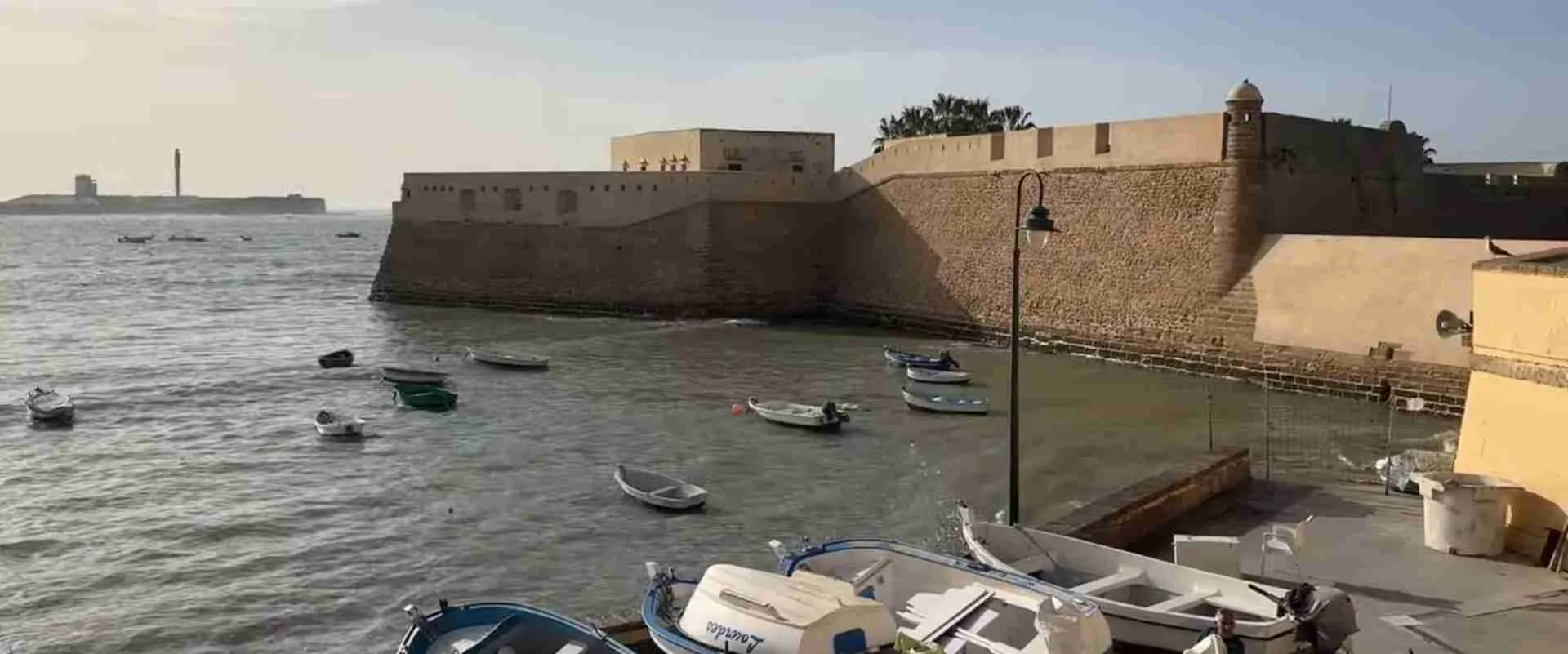
Cádiz delivers exceptional budget value among Spanish coastal destinations, combining 3,000 years of history, Atlantic beaches, and authentic Andalusian culture at costs significantly below tourist-heavy cities. The compact peninsula layout eliminates transportation expenses for most travelers, while neighborhood taverns provide quality seafood at fraction of tourist restaurant prices. Free attractions include La Caleta beach, Roman Theatre ruins, church visits outside mass times, and wandering atmospheric streets through historic neighborhoods.
Seasonal pricing variations create dramatic cost differences throughout the year. Low season (November-February except Carnival) offers accommodation 40-50% below summer rates, with double rooms in budget hotels starting €45-55 nightly versus €85-130 during July-August. Shoulder seasons (March-May, September-October) provide the sweet spot of pleasant weather and moderate pricing. Carnival week in late February requires special budget consideration, with accommodation costs doubling or tripling and minimum stay requirements of 3-4 nights at premium properties.
Daily costs break down into accommodation, meals, attractions, local transportation, and incidental expenses. Budget travelers prioritizing hostels, local taverns, free attractions, and walking save substantially compared to mid-range visitors choosing hotels, sit-down restaurants, and organized tours. Luxury experiences emphasize boutique hotels, gourmet dining, private guides, and premium activities. Understanding category-specific costs enables realistic budget planning and prevents overspending surprises during the trip.
People Also Ask About Cádiz Budget 2026
How much money do I need per day in Cádiz in 2026?
Budget travelers need €60-85 daily covering hostel accommodation (€20-28 per bed), three meals at local taverns and markets (€25-35), museum admissions (€5-15), and incidental expenses. Mid-range visitors budget €120-180 daily for private hotel rooms (€90-150), quality restaurant dining (€45-65), attraction tickets, and occasional tours or activities. Luxury travelers spend €250-400 daily on boutique hotels (€200-350), gourmet dining experiences (€80-120), private guides, and premium activities. These estimates assume single travelers; couples and groups achieve 20-30% per-person savings through shared accommodation and some meal splitting.
Is Cádiz expensive to visit in 2026?
Cádiz ranks among Spain’s most affordable coastal cities for tourists in 2026, costing 30-40% less than Barcelona or San Sebastián, and 25-35% below Seville for comparable experiences. Budget accommodation starts €20-28 per hostel bed versus €35-45 in major cities. Restaurant meals cost €12-20 per person at traditional taverns serving quality seafood, while tapas bars offer €3-6 portions enabling inexpensive grazing. Many significant attractions charge minimal fees (€3-7) or offer free access, including beaches, Roman ruins, and historic churches. Transportation needs remain minimal due to compact size, eliminating metro passes or extensive taxi use required in larger destinations.
When is Cádiz cheapest to visit in 2026?
November through early February provides the lowest costs for Cádiz visits in 2026, with accommodation 40-50% below summer rates, restaurants offering lunch menus at €12-16 for three courses, and minimal tourist competition for quality properties. January delivers rock-bottom prices with budget hotels charging €40-55 for doubles and excellent availability without advance booking. However, February Carnival (February 19-March 1 in 2026) creates the year’s highest prices with accommodation doubling or tripling. After Carnival, early March returns to low-season pricing. May and September-October offer better weather while maintaining costs 25-35% below peak summer, representing optimal value for most travelers.
What is the cheapest way to get to Cádiz in 2026?
Advance-purchase train tickets from Seville cost €12.30-18.50 for the 2-hour journey, with deepest discounts booking 15-60 days ahead through Renfe website. Buses from Seville charge €12-16 with similar travel times. From Madrid, connecting through Seville on discounted train tickets costs €40-65 total versus €85-120 for last-minute purchases. Jerez Airport serves as nearest air connection 40 kilometers away, with airport buses reaching Cádiz for €4.50 in 50 minutes – far cheaper than €50-65 taxi transfers. Budget airlines like Ryanair fly to Jerez from various European cities, with advance bookings finding fares €20-60 from major hubs. Seville Airport offers more international connections with bus transfers to Cádiz costing €16-22 total.
Extended multi-day tours – 5+ days
Featured Cadiz Multi-Day Tour Packages

3 days
Cadiz 3-Day Discovery Tour
- ✓ Comprehensive Cadiz experience
- ✓ Expert local guides included
- ✓ All accommodation included
- ✓ Transportation provided

5 days
Cadiz 5-Day Highlights Experience
- ✓ Comprehensive Cadiz experience
- ✓ Expert local guides included
- ✓ All accommodation included
- ✓ Transportation provided

7 days
Cadiz 7-Day Cultural Journey
- ✓ Comprehensive Cadiz experience
- ✓ Expert local guides included
- ✓ All accommodation included
- ✓ Transportation provided
10 days
Cadiz 10-Day Complete Adventure
- ✓ Comprehensive Cadiz experience
- ✓ Expert local guides included
- ✓ All accommodation included
- ✓ Transportation provided
Multi-day tour packages powered by TourRadar. Prices and availability subject to change.
Accommodation Costs 2026
Budget Accommodation Pricing and Options
Hostel dormitory beds in Cádiz’s old town charge €18-28 per night in low season (November-February except Carnival), rising to €22-32 in shoulder seasons (March-May, September-October), and peaking at €25-38 during summer (June-August). Properties like Cadiz Inn Backpackers and Hostel Inturjoven include WiFi, common kitchens, and social spaces. Most hostels provide lockers for valuables, with some requiring personal padlocks. Breakfast inclusion varies by property, with continental offerings adding €3-5 when not included in rates.
Budget private rooms in guesthouses and basic hotels cost €45-70 per night for doubles in low season, €65-95 in shoulder periods, and €85-130 during summer peaks. Pension Centro Sol near Plaza de las Flores offers shared bathroom rooms for €40-65 including basic breakfast. Hotel Argantonio provides private bathrooms and central location for €55-85. These properties include WiFi, daily cleaning, and front desk assistance but limited amenities like pools or restaurants. Single travelers pay 60-75% of double rates, while triple rooms add 30-40% to double pricing.
Apartment rentals deliver excellent value for groups or extended stays, with one-bedroom units in the old town costing €50-80 nightly in low season, €75-120 in shoulder months, and €110-180 during summer. Two-bedroom apartments accommodate four people for €80-140 low season, €120-200 shoulder, and €180-280 summer. Weekly rentals attract 15-20% discounts from nightly rates, while monthly stays reduce costs by 30-40%. Apartments include full kitchens, washing machines, and living spaces, enabling significant savings through self-catering and reducing dining expenses by 40-60% when cooking breakfasts and some lunches.
Mid-Range Hotel Costs and Value Analysis
Mid-range hotels in restored historic buildings charge €90-150 nightly in low season, €130-200 in shoulder periods, and €180-280 during summer. Hotel Parador Atlántico overlooks La Caleta beach with sea views, modern rooms, and breakfast buffet for €120-190. Monte Puertatierra Hotel provides contemporary design near Playa de la Victoria with parking included for €95-165. These properties offer 24-hour reception, concierge services, on-site dining, and often rooftop terraces or pools. Breakfast costs €8-15 when not included in room rates.
Boutique hotels converting convents, palaces, or aristocratic residences into luxury accommodations charge €140-240 in low season, €180-300 in shoulder months, and €250-380 during summer. Hotel Convento Cádiz occupies a former religious building with architectural details, central patio, and designer interiors for €140-240. Las Cortes de Cádiz combines 19th-century architecture with modern comfort for €160-280. Boutique properties emphasize unique design, personalized service, and cultural atmosphere over standardized hotel experiences. Room categories vary from standard doubles to junior suites, with 30-50% premiums for upgraded options.
Luxury Hotel Investment and Premium Experiences
Luxury hotels deliver premium positioning for €200-350 nightly in low season, €280-450 in shoulder periods, and €350-600 during summer peaks and Carnival week. Senator Cádiz Spa Hotel offers beachfront Playa de la Victoria location with rooftop pool, spa facilities, and sea-view rooms for €180-320. Top-tier properties include gourmet restaurants, extensive spa menus with treatments costing €60-120, fitness centers, concierge assistance for reservations and experiences, and premium room amenities. Suites and special categories add 50-100% to standard room rates.
Luxury travelers also consider villa rentals along Bay of Cádiz coastline, with properties accommodating 6-10 guests for €300-600 nightly in shoulder seasons, €500-900 during summer. These include private pools, full kitchens, multiple bedrooms, and often staff services. Per-person costs drop significantly for groups, with villa accommodations providing space, privacy, and facilities unavailable in hotels. However, remote locations require car rentals adding €40-70 daily to overall budgets.
Seasonal Accommodation Strategy for 2026
Carnival week (February 19-March 1, 2026) creates exceptional pricing spikes with budget hotels charging €120-180 for doubles normally costing €45-70, mid-range properties reaching €280-400 versus typical €130-200, and luxury hotels commanding €500-800 compared to €250-400. Properties implement 3-4 night minimum stays during Carnival, with many selling out completely 6-9 months ahead. Travelers on fixed budgets consider staying in nearby towns like Puerto de Santa María or Jerez with train connections to Cádiz for Carnival participation while avoiding extreme accommodation costs.
Semana Santa week (March 30-April 6 in 2026) generates moderate price increases of 20-30% above normal shoulder season rates, with advance booking recommended 3-4 months ahead for good selection. Summer weekends (Friday-Sunday) cost 15-25% more than midweek stays, while shoulder season maintains consistent pricing throughout the week. Long weekends around Spanish holidays like May 1, August 15, or October 12 see brief spikes requiring early reservations. Winter months offer last-minute booking flexibility with good availability even 1-2 weeks before arrival.
Dining Budget Strategies 2026
Budget Dining Options and Daily Food Costs
Budget travelers eat well on €25-35 daily through strategic choices combining markets, bakeries, and local taverns. Breakfast from bakeries costs €2-4 for coffee and pastry or tostada con tomate. Mercado Central provides fresh produce, cheese, charcuterie, and bread for picnic assembly at €6-10 per person for substantial lunches on beaches or in plazas. Neighborhood taverns in Barrio de la Viña serve pescaíto frito portions for €8-15 at lunch, with three tapas and drink totaling €12-18. Supermarkets stock basics for self-catering, with pasta, sauce, salad ingredients, and wine costing €8-12 for dinner preparation in apartments with kitchens.
Menú del día lunches provide outstanding value year-round at traditional restaurants, offering three courses (starter, main, dessert), bread, and drink for €12-16. These fixed-price menus operate Monday through Friday during lunch hours, with local workers filling tables by 2 PM. Quality varies significantly, with family-run establishments near markets providing better food than tourist-oriented restaurants on main plazas. Menu options include gazpacho or salad starters, fish or meat mains, and dessert or coffee. Wine or beer comes included, making menú del día the best bargain in Spanish dining.
Tapas grazing enables sampling multiple dishes while controlling costs, with bars charging €3-6 per tapa, €6-10 for raciones (larger portions). Strategic ordering of 2-3 tapas per person plus drinks creates satisfying meals for €15-22. Traditional taverns like Casa Manteca serve generous portions, while modern tapas bars offer contemporary interpretations at similar prices. Free tapas culture operates minimally in Cádiz compared to Granada, though some bars provide small complimentary bites with drink purchases.
Mid-Range Restaurant Budget and Dining Experiences
Mid-range dining budgets €45-65 daily per person, enabling lunch at quality restaurants (€18-28), coffee breaks with pastries (€4-7), and dinner at recommended establishments (€25-35). Three-course lunches at restaurants like El Faro or La Candela cost €20-30 per person without wine, with à la carte selections reaching €25-40 when including appetizers and desserts. Wine by the glass costs €3-6 for local selections, €5-10 for premium bottles.
Dinner at seafood restaurants serving fresh Atlantic catches costs €30-45 per person for substantial meals with multiple courses. Signature dishes like urta a la roteña (sea bream), langostinos (prawns), or seafood rice dishes range €18-28 for main courses. Sharing starters, ordering mains, and splitting desserts creates balanced experiences at moderate costs. Tips add 5-10% for good service, though not obligatory in Spain. Reservations prove essential for popular restaurants, booking online through Google Maps or calling directly in Spanish.
Luxury Gastronomy Investment for 2026
Luxury dining budgets €80-120 daily, accessing Michelin-recommended restaurants, gourmet tasting menus, and premium wine pairings. Restaurants like Código de Barra offer innovative tasting menus at €55-75 per person, with wine pairings adding €35-50. Traditional fine dining establishments serve classic Cádiz cuisine with premium ingredients for €45-70 per person before wine. Seafood temples specializing in wild-caught fish, red prawns, and caviar reach €80-120 per person for comprehensive experiences.
Cooking classes teaching pescaíto frito techniques, seafood preparation, and Andalusian traditions cost €65-95 for 3-4 hour sessions including market visits, instruction, and meal consumption. These experiences provide cultural immersion alongside culinary skills, with small group sizes ensuring personal attention. Wine tasting tours in nearby Jerez sherry triangle charge €45-75 for bodega visits, expert guidance, and multiple tastings. Combined food and wine experiences create memorable alternatives to restaurant dining while providing education and interaction.
Self-Catering Savings and Market Shopping
Apartment accommodations with full kitchens enable 40-60% reductions in daily food costs through strategic self-catering. Breakfast preparation costs €3-5 per person for coffee, fresh bread, fruit, yogurt, and eggs versus €8-12 at cafes. Lunch assembly from market purchases costs €6-10 per person for quality meals with fresh seafood, vegetables, local cheese, and wine. Dinner cooking using supermarket ingredients runs €8-15 per person for substantial meals with leftovers.
Mercado Central operates Monday-Saturday mornings with fresh seafood landed at local ports, seasonal vegetables, cured meats, cheeses, and olives. Shopping early (before 11 AM) ensures best selection, with vendors offering cooking advice and preparation suggestions. Surrounding supermarkets like Mercadona or Día provide packaged goods, beverages, cleaning supplies, and basics at mainland European prices. Bakeries sell fresh bread daily for €1-2 per loaf, with traditional panaderías offering superior quality to supermarket options. Local wine from Cádiz province costs €3-8 per bottle at supermarkets, providing excellent value for apartment dining.
Transportation Costs 2026
Public Transport and City Travel Budget
Single bus tickets cost €1.30 purchased on board with exact change required, covering routes throughout the peninsula and newer neighborhoods. Ten-ride bonobús cards cost €8 at tobacconists and newspaper stands, delivering 38% savings for multiple journeys. Tourist passes provide unlimited travel for 1 day (€4.50) or 3 days (€10), offering value for visitors making 4+ trips daily. However, the compact old town measures just 2 kilometers end-to-end, with most travelers walking between attractions and only using buses for beach visits or train station transfers.
Walking eliminates transportation costs entirely for old town exploration, with comfortable shoes essential for cobblestone streets and all-day touring. The flat peninsula terrain enables easy navigation without significant climbing beyond tower ascents at Cathedral and Torre Tavira. Most budget travelers spend €0-3 daily on local transport, using buses only for specific beach trips or late-night returns to accommodations. Mid-range visitors budget €3-8 daily including occasional taxi use, while luxury travelers spending €10-20 daily utilize taxis freely for convenience and time savings.
Taxi and Private Transport Costs
Taxis charge €1.50 base fare plus €0.85 per kilometer, with typical journeys within city limits costing €6-12. Old town to Playa de la Victoria runs €6-9, train station to central hotels costs €8-12, and bus terminal transfers range €7-10. Night surcharges add 20% to fares after 10 PM and on Sundays. Taxis wait at ranks in major plazas or book through phone calls, with ride-sharing apps operating limited availability compared to larger cities. Budget-conscious travelers avoid taxis almost entirely, while mid-range visitors allocate €15-25 weekly for strategic convenience use.
Car rentals cost €30-45 daily for economy vehicles, €50-75 for mid-size cars, with advance online booking through comparison sites providing 20-30% discounts versus airport counters. However, car rentals make little financial sense for Cádiz city visits due to €18-25 daily parking fees, restricted old town access, and walking-friendly distances. Cars prove valuable for exploring Bay of Cádiz towns, white villages, and Costa de la Luz beaches, justifying costs for groups splitting expenses or travelers planning extensive regional exploration. Insurance adds €10-18 daily, with comprehensive coverage recommended for peace of mind despite costs.
Intercity Transportation Budget for Day Trips
Train tickets to Jerez de la Frontera cost €3.50 each way, with 30-minute journeys departing every hour throughout the day. Advance online booking through Renfe provides minimal savings for short-distance regional trains, though tickets purchased at stations work fine without reservations. Buses to Seville charge €12-16 for 2-hour journeys operated by Comes company, with advance online booking optional. Routes to Tarifa cost €15-20 covering 2 hours to Spain’s southernmost point and Africa ferry connections.
Organized day tours including transportation, guide, and admission fees charge €55-85 for sherry triangle experiences visiting Jerez bodegas, €65-95 for white villages routes covering Arcos de la Frontera and surrounding hill towns, and €75-110 for Gibraltar and Tangier combinations with ferry crossings. These packages provide convenience and comprehensive experiences while eliminating navigation and language concerns. Budget travelers choosing independent transport save 40-60% but invest time in planning and potentially miss cultural context provided by guides. Groups of 3-4 people renting cars for day trips achieve competitive per-person costs versus tour pricing while gaining flexibility.
Activities and Attractions Budget 2026
Museum and Monument Admission Costs
Cathedral admission costs €7 for adults, €5 for students and seniors over 65 in 2026 (check official cathedral website for current rates as pricing may vary). The entry includes access to the baroque interior, crypt, treasury, and option to climb Torre Poniente for panoramic views. Combined cathedral and museum tickets cost €10 versus €13 for separate purchases. Torre Tavira charges €6 for adults, €4.50 for reduced admission, including camera obscura demonstrations showing real-time city views through 18th-century optical technology.
Museo de Cádiz operates Tuesday-Sunday with free admission for EU citizens, €1.50 for non-EU visitors. The museum displays Phoenician sarcophagi, Roman mosaics, fine arts collection, and archaeological finds from 3,000 years of city history. Roman Theatre ruins charge €3 for access to excavated remains from 1st century BCE. Casa del Obispo museum costs €3 for archaeological excavations beneath episcopal palace revealing layers from Phoenician through medieval periods. Combined city museum pass covering multiple sites costs €15 versus €20-25 for individual purchases, providing savings for comprehensive cultural visitors.
Free and Low-Cost Experiences
Extensive free attractions enable budget-conscious exploration without admission costs. La Caleta beach provides urban swimming between fortress walls with no entry fees, beach services, or mandatory sun lounger rentals. Playa de la Victoria extends 3 kilometers along the Atlantic coast with free access, though sun lounger rental costs €8-12 daily. Roman Theatre ruins offer partial views from street level without €3 admission, while many churches allow free entry outside mass times including historically significant sites.
Walking the old town discovering hidden plazas, atmospheric streets, and neighborhood character costs nothing beyond comfortable shoes and time. The compact peninsula enables comprehensive exploration in single days, with landmarks like Plaza de las Flores, Barrio del Pópulo medieval quarter, and Barrio de la Viña authentic neighborhood accessible freely. Sunset watching from various peninsula points creates memorable experiences without expenses, particularly at La Caleta beach or Torre Tavira viewpoint areas. Market visits to Mercado Central provide cultural immersion and local life observation for free, with purchasing optional.
Tours and Guided Experience Costs
Free walking tours operate on tip-based models, departing daily from Plaza de San Juan de Dios at 10:30 AM and 5 PM for 2-hour historic center explorations. Guides work for tips only, with €10-15 per person representing fair compensation for quality experiences. These tours cover major monuments, historical context, local legends, and orientation advice. Specialized paid walking tours charge €20-35 for focused experiences including archaeological heritage, baroque architecture, Jewish quarter history, or gastronomic routes. Small group sizes (8-15 participants) enable questions and personalized attention.
Tapas food tours cost €45-65 per person for 3-4 hour experiences visiting 4-5 traditional taverns, sampling signature dishes, and learning about local cuisine and wine. Tours include all food and drinks, guide services, and cultural explanations. Cooking classes teaching pescaíto frito techniques and seafood preparation charge €65-95 for market visits, instruction, and meal consumption. Flamenco shows in intimate tablaos cost €25-40 including one drink, with dinner packages reaching €50-75 for reserved seating and full meals before performances.
Sample 2026 Budget Breakdowns
Ultra-Budget Traveler: €60-70 Daily
Accommodation Strategy: Hostel dormitory bed in old town location for €22-28 per night in shoulder season, selecting properties with included breakfast and kitchen access. Cadiz Inn Backpackers or Hostel Inturjoven provide social atmosphere, common spaces, and WiFi. Total accommodation: €22-28 daily.
Food Budget: Continental breakfast included at hostel (free), bakery coffee and pastry €3 if breakfast not included. Lunch from Mercado Central purchases creating picnic for €6-8 with fresh bread, local cheese, olives, fruit. Dinner at traditional tavern ordering menú del día for €12-16 or tapas portions totaling €15-20. One coffee or drink daily €2-3. Total food: €23-32 daily.
Activities Budget: Free walking tour with €10 tip, alternate days between paid museums (€3-7) and free attractions (churches, beaches, neighborhoods). Average €5-8 daily for culture. Total activities: €5-8 daily.
Transportation: Walking for all old town exploration, occasional bus for Playa de la Victoria visits €1.30-2.60 daily. Total transport: €0-3 daily.
Daily Total: €60-71 per person maintaining quality hostel accommodation, substantial local meals, selective cultural attractions, and authentic experiences.
Budget Conscious Traveler: €80-100 Daily
Accommodation: Budget hotel private room or shared apartment €55-75 nightly in shoulder season, selecting properties with breakfast included or apartment kitchens for self-catering. Pension Centro Sol or apartment rental through booking platforms. Total accommodation: €55-75 daily.
Food Budget: Breakfast at accommodation or café €5-8, lunch combining menú del día (€12-16) with market picnics on alternate days, dinner at mid-level taverns (€20-28) or self-prepared apartment meals (€10-15). Wine or drinks with dinners €4-8. Total food: €35-50 daily.
Activities: Museum combination pass €15 spread over 3 days (€5 daily equivalent), plus paid walking tour €25 spread over trip (€3-4 daily equivalent), beach time, and free attractions. Total activities: €8-12 daily.
Transportation: Primarily walking with occasional taxi for convenience or late returns €5-10 weekly (€1-2 daily equivalent), bus for beach visits €2-4. Total transport: €3-6 daily.
Daily Total: €86-103 per person enabling comfortable budget travel with private accommodation, quality local dining, comprehensive cultural access, and flexibility for spontaneous experiences.
Mid-Range Comfortable Travel: €120-160 Daily
Accommodation: Mid-range hotel in restored historic building or boutique guesthouse €110-150 nightly in shoulder season, selecting properties with central location, breakfast included, and quality amenities. Hotel Parador Atlántico or Monte Puertatierra Hotel. Total accommodation: €110-150 daily.
Food Budget: Hotel breakfast included, coffee break €4-6, quality lunch at recommended restaurants €20-30, afternoon drinks or snacks €5-8, dinner at seafood restaurants €30-40. Wine with meals €8-15 total. Total food: €52-74 daily.
Activities: All museums and monuments €15-20 total spread over trip (€5-7 daily), paid guided tour €25-35 once during visit (€8-12 daily equivalent), flamenco show €30-40 (€10-13 daily equivalent), cooking class €75 shared across trip (€5-8 daily equivalent). Total activities: €28-40 daily.
Transportation: Taxis for convenience €10-15, day trip to Jerez by train €7 return spread across stay (€2-3 daily), walking for old town. Total transport: €12-18 daily.
Daily Total: €127-158 per person providing comfortable mid-range experience with quality hotels, excellent dining, comprehensive cultural activities, and convenient transportation.
Luxury Premium Experience: €250-350 Daily
Accommodation: Luxury boutique hotel or beachfront property €220-320 nightly in shoulder season, emphasizing unique design, premium service, central or beachfront location, spa facilities. Senator Cádiz Spa Hotel or Las Cortes de Cádiz. Total accommodation: €220-320 daily.
Food Budget: Hotel breakfast included, premium coffee breaks €6-10, Michelin-recommended lunch €45-65, afternoon drinks at rooftop bars €12-18, gourmet dinner €55-75, premium wine selections €20-35. Total food: €88-128 daily.
Activities: Private guided tours €80-120 per day, cooking class €85-95, flamenco show with premium seating and dinner €65-85, spa treatment €70-95, wine tasting tour €55-75. Average €60-95 daily for curated experiences. Total activities: €60-95 daily.
Transportation: Taxis throughout visit €20-35 daily, private car service for day trips €80-120 shared across stay (€15-25 daily equivalent), airport transfer €60 shared across trip (€5 daily). Total transport: €40-65 daily.
Daily Total: €268-348 per person delivering luxury positioning with premium accommodation, gourmet gastronomy, private experiences, and maximum convenience without budget constraints.
Money-Saving Tips for 2026
Strategic Timing for Maximum Savings
Travel during shoulder seasons (May, September, October) to capture 25-35% lower accommodation costs while maintaining excellent weather, functional beach facilities, and full attraction hours. September offers particular value with warm ocean temperatures, harvest season gastronomy, and post-summer price drops across hotels and restaurants. May provides spring bloom, festival atmosphere with Cruz de Mayo, and comfortable temperatures without July-August heat intensity.
Book accommodation 3-4 months ahead for 15-25% discounts compared to last-minute rates, with additional savings selecting non-refundable reservations. Train tickets from Renfe offer 20-40% advance purchase discounts when booking 15-60 days before travel through online platform. Museum combination passes cost €15 versus €25-30 for individual site admissions. Walking tours booked online save €5-10 per person versus street sign-ups.
Avoid Carnival week (February 19-March 1, 2026) unless specifically seeking that experience, as accommodation costs double or triple with 3-4 night minimum stays. Similarly, Semana Santa week (March 30-April 6) generates 20-30% price increases. Summer weekends cost 15-25% more than midweek stays. Traveling Tuesday-Thursday during shoulder seasons captures lowest rates and best availability across all accommodation categories.
Accommodation Value Optimization
Apartment rentals deliver superior value for groups, couples, or extended stays compared to hotels, with full kitchens enabling 40-60% reductions in daily food costs through strategic self-catering. Two-bedroom apartments accommodate four people at €120-200 nightly in shoulder season versus €260-400 for two hotel rooms. Weekly rentals attract 15-20% discounts from nightly rates, while monthly stays reduce costs 30-40%.
Select accommodation near Playa de la Victoria rather than old town center for 20-30% lower rates while maintaining 15-minute walk or 5-minute bus access to main attractions. Properties 2-3 blocks from tourist zones charge significantly less while providing identical comfort and services. Book directly with hotels after comparing prices on booking platforms, as direct reservations often include breakfast, parking, or room upgrades unavailable through third parties.
Consider accommodation in nearby Puerto de Santa María or Jerez de la Frontera for Carnival week to avoid extreme Cádiz prices, with 20-30 minute train connections enabling participation in festivities while spending €90-140 nightly versus €280-450 in Cádiz proper. This strategy extends budgets during peak events without sacrificing experience quality.
Dining and Food Cost Reduction Strategies
Prioritize menú del día lunches at local restaurants for €12-16 three-course meals, providing the day’s largest and most economical restaurant experience. Eat in neighborhood taverns around Barrio de la Viña, near Mercado Central, or in residential areas rather than tourist-oriented restaurants on main plazas, saving 30-40% on equivalent quality. Order house wine at €2-4 per glass rather than premium selections at €5-10, as local table wines from Cádiz province offer excellent value.
Shop Mercado Central mornings for fresh seafood, vegetables, cheese, and charcuterie creating high-quality picnic lunches for €6-10 per person. Bakeries provide fresh bread for €1-2 per loaf. Beach picnics combine budget-friendly eating with optimal locations and experiences. Supermarkets stock basics for breakfast and simple dinners at mainland European prices, with coffee, yogurt, fruit, pasta, and sauce totaling €15-25 for multiple meals.
Eat larger lunches when restaurants serve better value, then lighter dinners combining tapas portions, market purchases, or simple apartment preparations. Three tapas with drink costs €12-18 versus €25-40 for sit-down dinners, providing cultural experiences and sampling opportunities while controlling expenses. Drink beer or wine with meals rather than cocktails, saving €4-8 per drink while enjoying local beverage traditions.
Activity and Attraction Budget Optimization
Purchase €15 combined museum pass covering Museo de Cádiz, Roman Theatre, and Casa del Obispo rather than paying €3-6 individual admissions totaling €20-25. Visit churches outside mass times for free access to baroque interiors, religious art, and architectural details that would cost €5-8 at comparable monuments. Attend free walking tours working on tip-based models, contributing €10-15 for quality experiences versus €25-35 for paid equivalents.
Enjoy free beach access at La Caleta and Playa de la Victoria rather than expensive beach clubs with €15-30 entrance fees or mandatory minimums. Bring beach towels from accommodation, purchase snacks and drinks at supermarkets beforehand, and save €25-40 per beach day compared to full beach club experiences. Sunset watching from various peninsula viewpoints creates memorable experiences without admission costs.
Join local festivals and cultural events throughout the year offering authentic experiences at zero cost. Cruz de Mayo in early May features neighborhood decorations and celebrations, San Juan beach bonfires on June 23rd create magical atmospheres, and various concerts and cultural programming operate free admission during summer months. These provide cultural immersion superior to many paid tourist activities while preserving budget.
Complete Weekly Budget Examples 2026
Budget Backpacker Week: €420-500 Total
7-Night Hostel Accommodation: €154-196 (€22-28 nightly in shoulder season with breakfast included)
Daily Food Budget €23-32: Breakfast included at hostel, lunch from markets €6-8, dinner at taverns €12-16 or tapas €15-20, coffee/snacks €2-3. Total weekly food: €161-224
Activities and Culture: Free walking tour €10 tip, museum combination pass €15, one paid tour €25, beach days free, church visits free, neighborhood exploration free. Total activities: €50-60
Transportation: Walking primary method, occasional buses €1.30 per ride, 5-10 buses weekly €6.50-13. Day trip to Jerez train €7 return. Total transport: €13.50-20
Miscellaneous: Sunscreen, water bottles, laundry, incidentals €30-40
Weekly Total: €428-553 per person providing authentic budget travel experience with quality hostel accommodation, substantial local meals, selective cultural activities, and beach enjoyment.
Comfortable Mid-Range Week: €840-1120 Total
7-Night Mid-Range Hotel: €770-1050 (€110-150 nightly shoulder season including breakfast)
Daily Food Budget €52-74: Hotel breakfast included, quality lunch €20-30, dinner at recommended restaurants €30-40, coffee breaks and wine €8-15. Total weekly food: €364-518
Activities: All museums €15-20, guided tour €30, flamenco show €35, cooking class €75, wine tour €55, beaches free. Total activities: €210-260
Transportation: Taxis for convenience €70-105 weekly, train day trips €14-20, walking for old town. Total transport: €84-125
Miscellaneous: Shopping, photos, unexpected treats €80-120
Weekly Total: €1,508-2,073 per person delivering comfortable mid-range experience with quality accommodation, excellent dining, comprehensive activities, and convenient transportation throughout week-long visit.
Luxury Premium Week: €1750-2450 Total
7-Night Luxury Hotel: €1540-2240 (€220-320 nightly shoulder season with breakfast and amenities)
Daily Food Budget €88-128: Hotel breakfast included, premium lunch €45-65, gourmet dinner €55-75, upscale snacks and wine €20-35. Total weekly food: €616-896
Activities: Private guided tours €560-840 (€80-120 daily), cooking class €90, premium flamenco with dinner €75, wine experiences €140, spa treatments €150-200. Total activities: €1015-1345
Transportation: Taxis throughout €140-245, private car service for day trips €160-240, airport transfers €120. Total transport: €420-605
Miscellaneous: Premium shopping, additional experiences, gratuities €200-350
Weekly Total: €3,791-5,436 per person providing luxury positioning with premium accommodation, gourmet dining, private experiences, spa treatments, and maximum convenience without budget constraints.
Frequently Asked Questions About Cádiz Budget 2026
Can I visit Cádiz on €50 per day in 2026?
Visiting Cádiz on €50 daily proves challenging but achievable through extreme budget measures in low season. This requires €18-25 hostel beds, complete self-catering from supermarkets and markets for all meals (€15-20 daily), exclusive focus on free attractions (beaches, churches, walking tours with minimal tips), and zero paid activities or museums. The compact city enables walking-only exploration without transport costs. However, this budget eliminates restaurant meals, paid cultural sites, and typical tourist experiences, suitable only for determined backpackers prioritizing minimal spending over comprehensive destination experiences.
How much should I budget for a 3-day Cádiz trip in 2026?
Budget travelers need €180-255 total for 3-day Cádiz trips (€60-85 daily) covering hostel accommodation, local tavern dining, selective museums, and free attractions. Mid-range visitors budget €360-540 (€120-180 daily) for comfortable hotels, quality restaurants, comprehensive cultural activities, and some organized experiences. Luxury travelers allocate €750-1200 (€250-400 daily) for boutique hotels, gourmet dining, private tours, and premium positioning. These estimates assume shoulder season timing; summer requires 25-35% increases while low season enables 20-30% reductions.
What unexpected costs should I prepare for in Cádiz?
Unexpected costs in Cádiz remain minimal compared to larger tourist cities, though some surprises emerge. Many churches charge €1-2 donations for access despite appearing free from exterior. Beaches provide free access but sun loungers and umbrellas rent for €8-15 daily if desired. Some museums close Mondays or specific days, potentially disrupting plans and requiring alternative paid activities. Restaurant cover charges add €1-2 per person at some establishments. Taxis charge 20% night surcharges after 10 PM and Sundays. Carnival week accommodation requires 3-4 night minimum stays rather than flexible single nights. Budget €30-50 beyond planned expenses as contingency for these situations.
Is it cheaper to book in advance or last minute in 2026?
Advance booking delivers better value in nearly all categories for Cádiz visits. Accommodation booked 3-4 months ahead costs 15-25% less than last-minute rates, with deepest discounts for non-refundable reservations. Train tickets provide 20-40% savings booking 15-60 days ahead through Renfe website versus station purchases. Tours booked online directly with operators save €5-10 per person. However, winter low season (excluding Carnival) offers last-minute deals through booking platforms due to low demand, with hotels reducing prices for unsold inventory. Summer and Carnival require advance planning for any reasonable rates and availability.
Do restaurants in Cádiz accept credit cards in 2026?
Larger restaurants, hotels, and shops accept major credit cards throughout Cádiz, though small taverns, market stalls, and traditional establishments prefer cash. Many bars only accept cash for tapas and drinks, while sit-down dining accepts cards for meals exceeding €10-15. Carry €40-60 cash daily for smaller purchases, coffee, market shopping, and traditional venues. ATMs throughout the old town provide convenient withdrawals, with Santander and BBVA banks charging no fees for many foreign cards. Notify banks before travel to prevent fraud blocks on international transactions.
What is the best money-saving tip for visiting Cádiz?
The single best money-saving strategy involves timing visits during shoulder seasons (May, September, October) when accommodation costs drop 25-35% below summer while weather remains excellent. This timing change alone saves €25-60 daily on hotels, €10-20 on restaurants with special menus, and provides uncrowded beaches and attractions. Combined with strategic choices like menú del día lunches (€12-16), neighborhood tavern dinners (€15-25), apartment rentals with kitchens, museum combination passes (€15 versus €25-30 individual), and free walking tours (€10 tip versus €25-35 paid), shoulder season timing creates foundation for maximum value without sacrificing experience quality.
Are there any free days at Cádiz museums?
Museo de Cádiz provides free admission year-round for EU citizens showing passports, with non-EU visitors paying only €1.50 – essentially free compared to typical €8-12 museum costs in major cities. Roman Theatre ruins charge €3 but offer partial views from street level without admission. Many churches allow free entry outside mass times, including historically significant sites like Oratorio de San Felipe Neri. However, Cathedral and Torre Tavira maintain paid admission (€7 and €6 respectively) without free days. The combined €15 museum pass covering multiple sites provides the best value for comprehensive cultural visitors planning extensive museum exploration.
How much money should I carry in cash versus cards?
Carry €40-60 cash daily for small purchases, traditional taverns, market shopping, coffee bars, and establishments preferring cash for small transactions. Use credit cards for hotel payments, larger restaurants, museum admissions, and substantial purchases. This balance ensures access to cash-only venues while avoiding excessive cash carrying. Replenish cash through ATM withdrawals as needed rather than carrying large amounts, with Santander and BBVA ATMs charging no withdrawal fees for many foreign cards. Store excess cash in accommodation safe rather than carrying daily. Total cash needs for week-long visits range €280-420 for budget travelers, €350-560 for mid-range visitors, depending on dining preferences and shopping habits.