
Budapest at Night: Illuminated Landmarks from the Danube
Budapest transforms into one of Europe’s most spectacular cities after dark, with the Danube River reflecting the golden glow of illuminated landmarks that define the city’s skyline. From the majestic Parliament Building to the historic Chain Bridge, experiencing these architectural masterpieces from the river offers perspectives impossible to achieve from land. This guide reveals the best viewpoints, photography techniques, and cultural insights for capturing Budapest’s nighttime magic.
Key Takeaways: Budapest Night Illumination Essentials
- Parliament Building illumination: Over 1,000 LED lights create the most photographed night scene in Budapest, best viewed from Buda side or river cruises
- Optimal timing: Blue hour (30-40 minutes after sunset) provides the most dramatic lighting contrast between sky and illuminated architecture
- River perspectives: Danube cruises offer unobstructed views of both Buda and Pest sides simultaneously, impossible from any single land position
- Year-round spectacle: Budapest’s permanent illumination system operates nightly regardless of season, with Christmas adding temporary decorative lighting
- Photography equipment: Tripod essential for sharp night photography; wide-angle lenses (16-35mm) capture sweeping riverbank scenes effectively
- Cultural significance: The illumination design follows UNESCO World Heritage guidelines, preserving architectural integrity while showcasing 19th-century grandeur
People Also Ask About Budapest Night Illumination
What time do Budapest’s landmarks get illuminated?
Budapest’s major landmarks illuminate automatically at sunset throughout the year, with the timing varying seasonally from approximately 4:30 PM in winter to 8:30 PM in summer. The Parliament Building, Chain Bridge, Buda Castle, and other UNESCO World Heritage sites along the Danube employ sophisticated LED systems that activate based on ambient light levels rather than fixed schedules. The illumination remains active until midnight on weekdays and 1:00 AM on weekends, though some landmarks maintain low-level lighting throughout the night. Blue hour—the period 30-40 minutes after sunset when the sky retains deep blue color—offers the most dramatic photography conditions, as the contrast between the darkening sky and golden-lit architecture creates extraordinary depth and color saturation.
Which side of the Danube offers better night views?
The Buda side (west bank) provides superior views of Pest’s illuminated landmarks, particularly the Parliament Building, while the Pest side (east bank) offers perspectives of Buda Castle and Gellért Hill. However, Danube river cruises deliver the optimal vantage point by positioning viewers centrally between both banks, allowing simultaneous appreciation of the entire panorama. Margaret Bridge to Elisabeth Bridge represents the most photographed stretch, encompassing Parliament, Chain Bridge, and Buda Castle within a single frame. For land-based viewing, the Buda embankment between Chain Bridge and Elisabeth Bridge features dedicated viewing platforms with benches and minimal light pollution, while Pest’s riverside promenade near the Shoes on the Danube Memorial offers closer proximity to Parliament’s reflection in the water.
How does Budapest’s night illumination compare to other European capitals?
Budapest’s night illumination ranks among Europe’s most comprehensive and architecturally sympathetic lighting schemes, comparable to Prague and Vienna but surpassing Paris and London in terms of riverside concentration and UNESCO-compliant design. The city’s illumination philosophy emphasizes warm golden tones (2700-3000K color temperature) that complement 19th-century Neo-Gothic and Neo-Renaissance architecture, avoiding the harsh white LEDs common in modern developments. Unlike many cities where commercial lighting competes with historic monuments, Budapest maintains strict regulations ensuring architectural illumination dominates the nightscape. The Parliament Building alone uses over 1,000 individually calibrated LED fixtures, creating subtle gradations that accentuate Gothic Revival details without creating glare or light pollution visible from residential areas.
Can you photograph Budapest’s night illumination without professional equipment?
Modern smartphones with night mode capabilities produce acceptable Budapest night photographs when used with proper technique, though dedicated cameras with manual controls achieve superior results. The key challenges—low light requiring longer exposures and capturing the extreme brightness range between illuminated buildings and dark sky—can be managed on phones by enabling night mode, which automatically combines multiple exposures. However, smartphone images often show noise in shadow areas and struggle with the fine architectural details that make Budapest’s illumination remarkable. For tripod-free photography, increase ISO to 800-1600 and use night mode’s stabilization features. River cruise railings provide makeshift stabilization points. Those seeking publication-quality images should invest in a camera with manual exposure control, allowing precise adjustment of aperture (f/8-f/11 for maximum sharpness), shutter speed (1-4 seconds for water blur), and ISO (100-400 for minimal noise).
Extended multi-day tours – 5+ days
Featured Budapest Multi-Day Tour Packages

3 days
Hungary: Christmas Markets in Budapest
- ✓ Booking needs min. 2 travelers
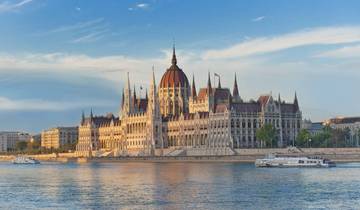
5 days
Highlights of Budapest & Danube Bend – 5 Days
- ✓ Comprehensive Budapest tour
- ✓ Expert local guides included
- ✓ All accommodation arranged
- ✓ Transportation provided
7 days
A Piece of Europe GO
- ✓ Comprehensive Budapest tour
- ✓ Expert local guides included
- ✓ All accommodation arranged
- ✓ Transportation provided
6 days
6 Day Vienna, Salzburg, Budapest, Bratislava, and the Danube Valley
- ✓ Comprehensive Budapest tour
- ✓ Expert local guides included
- ✓ All accommodation arranged
- ✓ Transportation provided
Multi-day tour packages powered by TourRadar. Prices and availability subject to change.
Introduction: Budapest’s Architectural Theater After Dark
Budapest’s transformation from daylight capital to illuminated wonderland represents one of Europe’s most remarkable urban spectacles, where 19th-century architecture meets 21st-century lighting technology along the Danube River. The city’s designation as a UNESCO World Heritage site extends to its nighttime presentation, with illumination guidelines ensuring that architectural integrity takes precedence over commercial visibility. This careful balance creates a nightscape where every major landmark—from the 268-meter Parliament Building to the medieval Buda Castle—glows with warm golden light that reflects off the Danube’s surface, doubling the visual impact.
The Danube River serves as both subject and canvas in Budapest’s night illumination, its surface mirroring the architectural achievements that line both banks. Unlike cities where riverfront development occurred piecemeal over centuries, Budapest’s Danube embankments received unified design treatment during the Austro-Hungarian Empire’s golden age (1867-1918), creating architectural coherence that translates into visual harmony after dark. The river’s width—approximately 400 meters at Parliament—provides sufficient distance for viewers on one bank to appreciate the opposite side’s illuminated grandeur without distortion, while river cruises position observers at the optimal midpoint for simultaneous appreciation of both Buda and Pest.
Photography enthusiasts find Budapest particularly rewarding because the city’s illumination system employs warm color temperatures (2700-3000K) that complement camera sensors’ color response, creating images with rich golden tones rather than the artificial white-blue cast common in cities using cooler LED systems. The permanent nature of the illumination—operating year-round rather than as seasonal decoration—means photographers can plan visits around weather conditions and seasonal river levels rather than arbitrary lighting schedules. Winter’s lower sun angle and earlier darkness provide extended blue hour photography windows, while summer’s late sunsets allow dinner cruises to coincide with optimal lighting conditions.
The cultural significance of Budapest’s night illumination extends beyond tourism, representing a deliberate civic choice to celebrate architectural heritage through light. Following the 1987 UNESCO designation of the Banks of the Danube as World Heritage, the city invested in comprehensive lighting upgrades that replaced older sodium vapor lamps with precisely calibrated LED systems capable of highlighting architectural details invisible in daylight. This investment reflects Budapest’s identity as a capital that values its imperial past while embracing technological innovation—a duality evident in the contrast between 19th-century Neo-Gothic facades and 21st-century LED technology.
Understanding Budapest’s Illumination System
Budapest’s landmark illumination operates on a sophisticated automated system managed by the city’s public works department, with individual buildings maintaining their own lighting controls while adhering to citywide color temperature and timing standards. The system employs astronomical timers that calculate sunset times based on GPS coordinates and calendar dates, ensuring illumination activates at precisely the right moment regardless of seasonal variation or daylight saving time changes. This automation eliminates the visual discontinuity common in cities where different landmarks illuminate at different times, creating a synchronized transition from daylight to nighttime presentation.
The LED fixtures illuminating Budapest’s landmarks represent significant technological advancement over the halogen and sodium vapor systems used until the early 2000s. Modern LED arrays allow precise color temperature control, with most landmarks using 2700-3000K warm white that simulates traditional incandescent lighting while consuming 70% less electricity. The Parliament Building’s lighting system, upgraded in 2014, employs over 1,000 individually controllable LED fixtures that create subtle gradations emphasizing the building’s Gothic Revival details—pointed arches, flying buttresses, and ornamental stonework—that remain invisible under uniform illumination.
Light pollution mitigation represents a key design principle in Budapest’s illumination philosophy. Unlike floodlighting that casts light in all directions including upward into the night sky, Budapest’s systems employ precisely aimed spotlights with minimal light spillage beyond their architectural targets. This approach preserves the dark sky backdrop essential for dramatic contrast in photography while reducing energy waste and impact on nocturnal wildlife. Residential areas remain protected from light intrusion through strict regulations limiting illumination intensity and directing light away from windows, a consideration often overlooked in cities prioritizing tourist visibility over resident comfort.
The color rendering index (CRI) of Budapest’s LED systems—typically 85-90 compared to 100 for natural daylight—ensures that architectural materials appear in colors faithful to their daylight appearance. Sandstone facades maintain their warm beige tones rather than appearing grayish-white under poor-quality LEDs, while copper roofing retains its green patina visibility. This attention to color accuracy reflects the UNESCO mandate to present World Heritage architecture authentically, avoiding theatrical effects that distort historical materials’ appearance. Photographers benefit from this high CRI rating, as it reduces post-processing required to correct color casts common when shooting under lower-quality artificial lighting.
Parliament Building: Budapest’s Crown Jewel Illuminated
The Hungarian Parliament Building dominates Budapest’s night skyline with its 268-meter length, 123-meter central dome, and over 1,000 LED fixtures creating what many photographers consider Europe’s most photogenic illuminated landmark. Designed by Imre Steindl and completed in 1904, this Neo-Gothic masterpiece contains 691 rooms, 29 staircases, and 10 courtyards, all of which contribute architectural complexity that becomes dramatically visible under nighttime illumination. The building’s symmetrical design—with the central dome flanked by two identical wings—creates perfect compositional balance for photography, while its riverside location ensures unobstructed views from the opposite Buda bank.
The Parliament’s illumination system emphasizes vertical elements—the 96-meter-high dome, numerous spires, and pointed arches—through uplighting that accentuates height and creates dramatic shadows. The warm golden color (2800K) complements the building’s pale limestone facade while providing visual warmth that contrasts effectively against cool blue twilight skies during blue hour. Individual architectural details receive specific lighting treatment: the dome’s ribbing becomes prominently visible through precisely angled spotlights, while the riverside arcade’s repeated arches create rhythmic patterns enhanced by consistent lighting intensity across all 96 bays.
Photography of the illuminated Parliament benefits from understanding the building’s orientation and ideal shooting positions. The building faces the Danube with its main facade oriented northeast-southwest, meaning the facade receives no direct sunlight during winter afternoons but glows with reflected light during summer evenings. For photographers, this orientation means that twilight photography during blue hour requires shooting from the Buda embankment (west bank) to capture the facade with darkening blue sky as background. The optimal vantage point lies approximately 400 meters from the building—far enough to include the entire structure without wide-angle distortion but close enough to capture architectural details clearly.
The Parliament’s reflection in the Danube doubles its visual impact, though water clarity and surface conditions significantly affect reflection quality. Calm evenings with minimal wind produce mirror-like reflections that create symmetrical compositions prized by photographers, while choppy water scatters light into atmospheric patterns. The reflection’s visibility peaks approximately 1-2 hours after sunset when complete darkness intensifies the contrast between illuminated building and dark water. River traffic from evening cruises creates temporary wake patterns that disrupt reflections but add dynamic elements to long-exposure photographs, with boat light trails complementing the static architecture.
Seasonal variations in Parliament illumination photography stem from changes in sun position, twilight duration, and weather patterns rather than illumination system modifications. Summer’s late sunsets (8:30-9:00 PM) mean blue hour occurs during typical dinner hours, making riverside restaurant terraces excellent photography locations where tripod use may be restricted but railing stabilization suffices. Winter’s early darkness (4:30-5:00 PM) allows blue hour photography during afternoon hours when tourist crowds diminish and cruise boat traffic reduces, though colder temperatures require extra battery capacity for cameras and patience for photographers. Autumn and spring offer moderate conditions with extended twilight durations ideal for capturing the full transition from daylight through blue hour to complete darkness.
Chain Bridge: Connecting Two Cities in Light
The Széchenyi Chain Bridge, Budapest’s oldest permanent Danube crossing, transforms into an illuminated architectural statement that connects Pest’s urban density with Buda’s hillside monuments through light as well as engineering. Completed in 1849 to a design by William Tierney Clark and constructed under the supervision of Scottish engineer Adam Clark, this 375-meter suspension bridge represents 19th-century engineering achievement while serving as a visual anchor for Budapest’s night cityscape. The bridge’s illumination system highlights both its structural elements—the massive stone pylons, iron chains, and suspended roadway—and its symbolic significance as the landmark that catalyzed Budapest’s transformation from separate settlements into a unified capital.
The bridge’s lighting design employs uplighting for the stone pylons (each standing 48 meters high) and linear LED arrays outlining the suspension chains, creating a composition that emphasizes both mass and delicacy. The stone pylons, built from massive limestone blocks in neoclassical style with triumphant arch motifs, receive warm illumination (2800K) that accentuates their three-dimensional sculptural quality and creates dramatic shadows within the archways. The iron chains, each link weighing hundreds of kilograms, feature LED strips that trace their elegant catenary curves from pylon tops to roadway level, making the engineering principle of suspension—where compression in the pylons supports tension in the chains—visually comprehensible through light alone.
Photography of the illuminated Chain Bridge benefits from multiple vantage points along both riverbanks and from river level during cruises. The Pest embankment between Elisabeth Bridge and Parliament offers classic views showing the bridge with Buda Castle rising in the background, creating layered compositions that demonstrate Budapest’s topographic drama—flat Pest rising gradually to meet elevated Buda across the Danube’s divide. The Buda approach to the bridge, particularly from Clark Ádám Square near the Castle Hill Funicular, provides foreground interest through the bridge’s western portal while framing Parliament in the distance beyond the bridge’s eastern span.
The bridge’s roadway illumination—functional street lighting serving vehicular and pedestrian traffic—contrasts with the aesthetic architectural lighting, creating opportunities for light trail photography. Long exposures (10-30 seconds) transform moving vehicle headlights and taillights into continuous streaks that trace the bridge’s roadway geometry, adding dynamic elements to otherwise static architectural compositions. The pedestrian walkways on both sides of the roadway allow photography from bridge level, where the illuminated chains appear to rise overhead while the roadway’s receding perspective creates dramatic vanishing point compositions.
Seasonal and weather variations significantly impact Chain Bridge photography due to the structure’s exposed position over the Danube. Winter fog, common in December and January when cold air meets the river’s relatively warmer water, creates atmospheric conditions that soften the bridge’s illumination into diffused glows and halos around light sources. While frustrating for photographers seeking crisp architectural detail, fog produces moody images that emphasize Budapest’s Central European climate and the Danube’s physical presence as a water body capable of generating its own microclimate. Summer thunderstorms, though less frequent, provide opportunities for dramatic sky backgrounds when illuminated architecture contrasts against lightning-lit clouds, though safety concerns and camera protection requirements limit such photography to brief windows before and after storm passage.
Buda Castle: Hilltop Illumination and Panoramic Views
Buda Castle’s illuminated presence on Castle Hill dominates Budapest’s skyline from its 170-meter elevation above the Danube, providing both a destination for night photography and a vantage point for photographing the illuminated cityscape below. The castle complex—comprising the Royal Palace (housing the Hungarian National Gallery and Budapest History Museum), defensive walls, courtyards, and terraces—stretches over 400 meters along the hilltop, with illumination systems highlighting architectural periods from medieval to Baroque to 19th-century Neo-Baroque reconstruction. The hilltop position creates natural separation between the castle’s warm illumination and the dark sky above, eliminating light pollution that plagues ground-level monuments in urban cores.
The Royal Palace’s illumination emphasizes its massive scale—230 meters long by 170 meters wide—through uplighting that creates vertical emphasis on the building’s central dome (rising 92 meters above the Danube) and corner pavilions. The Baroque and Neo-Baroque architectural details—ornamental window surrounds, sculptural groups, balustrades—receive specific lighting that creates three-dimensional depth through controlled shadow. Unlike buildings illuminated uniformly from all sides, the palace accepts shadow as an essential element in revealing form, with south-facing facades receiving less illumination than Danube-facing facades to preserve the dramatic contrast visible from Pest and from river cruises.
Photography from Castle Hill’s terraces and ramparts offers panoramic views encompassing Parliament, Chain Bridge, Margaret Island, and the entire Pest cityscape. The Danube flows 60-70 meters below the viewing terraces, providing natural separation that creates visual hierarchy in photographs—foreground elements on the terrace itself, middle ground comprising the river and Chain Bridge, background featuring Parliament and the Pest urban fabric. The elevation difference means photographers can shoot slightly downward, minimizing sky area in compositions while maximizing coverage of illuminated architecture along both riverbanks. Wide-angle lenses (16-24mm on full-frame cameras) capture the full panoramic scope, while telephoto lenses (70-200mm) isolate specific landmarks for detailed studies.
The castle’s defensive walls and bastions, remnants of centuries of military function, create dramatic foreground elements for photography when themselves illuminated. The medieval walls, built initially in the 13th century and repeatedly modified through subsequent centuries, show architectural evolution through their varying masonry styles and defensive features—arrow slits, crenellations, bastions—that become sculptural elements under directional lighting. The Habsburg Steps, a grand Baroque staircase connecting the upper castle grounds with lower terraces, features illuminated balustrades and sculptural groups that lead the eye through vertical space, useful for creating foreground interest in compositions showing the illuminated cityscape beyond.
Access to Castle Hill for night photography involves practical considerations that differ from daytime visits. The Castle Hill Funicular operates until 10:00 PM, providing the most convenient access route for photographers carrying tripods and camera equipment too cumbersome for the steep walking paths. Alternative access via public buses (routes 16, 16A, and 116) continues past midnight, serving the Szentháromság Square stop near Matthias Church. Walking access via the Habsburg Steps or Castle Garden Bazaar stairs remains available throughout the night, though illumination along these routes focuses on safety lighting rather than architectural presentation. Photographers should verify specific access points remain open, as certain courtyards and terraces within the castle complex may close after museum hours despite the exterior grounds remaining accessible.
Elisabeth Bridge and Gellért Hill Perspectives
Elisabeth Bridge, the southernmost of Budapest’s central Danube crossings, provides an illuminated architectural statement that contrasts with the older Chain Bridge through its modern suspension design and minimalist aesthetic. The current bridge, completed in 1964 after World War II destruction necessitated complete rebuilding, features a single-span suspension design without intermediate supports—the cables stretch 380 meters directly from Buda to Pest in an unbroken arc. The bridge’s illumination employs white LED arrays (4000K color temperature) that create contemporary visual character distinct from the warm golden tones dominating older landmarks, establishing visual variety in the illuminated riverscape.
The bridge’s modern character and white illumination make it particularly effective as a compositional element framing other landmarks rather than as a primary photographic subject. Views from the Pest embankment south of the bridge show Elisabeth Bridge’s cables as foreground elements framing Buda Castle on the hill beyond, while the bridge’s clean lines and white lighting provide visual separation from the castle’s warm golden illumination. Long-exposure techniques transform the bridge’s traffic into light trails that connect Pest with the illuminated Gellért Hill visible beyond, creating narrative compositions that illustrate Budapest’s geographic division and infrastructural connection simultaneously.
Gellért Hill rises 235 meters above the Danube immediately south of the castle, crowned by the Citadella fortress and Liberation Monument that dominate southern Budapest’s skyline. The hilltop monuments receive illumination treatment that emphasizes their sculptural mass and symbolic significance—the Citadella’s defensive walls glow with warm uplighting visible from across the city, while the 14-meter Liberation Monument features powerful spotlighting that makes the bronze figure visible from Parliament five kilometers away. The hill’s elevation provides panoramic photography vantage points rivaling Castle Hill, with the advantage of including Buda Castle itself within the panoramic sweep along with Parliament, Chain Bridge, and the entire central Danube corridor.
Photography from Gellért Hill’s viewing terraces requires accessing either the Citadella fortress at the summit or the Philosopher’s Garden terrace approximately two-thirds up the slope. The Citadella offers 360-degree views at 235 meters elevation, though the summit position means shooting downward at steep angles that compress perspective and emphasize rooftops over architectural facades. The Philosopher’s Garden terrace at approximately 150 meters elevation provides more favorable viewing angles that capture building facades rather than rooftops while maintaining sufficient elevation for panoramic scope. Both locations involve uphill walks on paths that may be dark and uneven after sunset, requiring sturdy footwear and flashlights beyond what camera equipment necessitates.
The Gellért Thermal Bath complex at the hill’s base, while not occupying hilltop positions, contributes to the area’s night illumination through its Art Nouveau building’s warm golden lighting. The bath’s facade, featuring ornamental stonework, sculptural groups, and distinctive green copper roof elements, creates foreground interest for photographs taken from Elisabeth Bridge or the Pest embankment. The building’s illumination employs similar warm color temperatures (2800K) as Parliament and Buda Castle, maintaining visual harmony while the building’s Art Nouveau details—curvilinear forms, organic motifs, decorative tilework visible through large windows—add architectural variety to the predominantly Neo-Gothic and Neo-Baroque illuminated landmarks dominating the riverscape.
Danube River Cruises: Optimal Viewing Platform
Danube river cruises provide unmatched vantage points for experiencing Budapest’s illuminated landmarks by positioning viewers equidistant from both riverbanks, allowing simultaneous appreciation of Pest’s Parliament Building and Buda’s Castle Hill without the perspective limitations inherent in land-based viewing. The cruises operate year-round with multiple daily evening departures, though specific schedules concentrate departures during blue hour and early evening hours when illumination visibility peaks. Standard cruise routes cover the Parliament-to-Elisabeth Bridge corridor, the most densely concentrated section of illuminated UNESCO World Heritage architecture, with typical durations of 60-90 minutes allowing multiple passes of key landmarks.
The photographic advantages of river cruises stem from the central Danube position and unrestricted 180-degree views toward both banks. Unlike embankment photography where trees, pedestrian traffic, or architectural elements create foreground obstacles, cruise vessels provide clear sight lines across open water. The vessel’s movement creates compositional variety as relative positions between landmarks shift—Parliament and Chain Bridge align differently as the boat moves along its route, creating unique juxtapositions impossible from fixed land positions. However, vessel movement also introduces challenges: camera shake from engine vibration, inability to use tripods effectively on moving platforms, and constantly changing compositions that require rapid camera adjustments.
Photographers selecting river cruises for night photography should prioritize open-deck vessels over enclosed cabin cruises, as glass windows introduce reflections, color casts, and optical distortions that degrade image quality. Open-air deck positions allow unobstructed views and freedom to move around the vessel seeking optimal angles without glass interference. The tradeoff involves weather exposure—winter cruises on open decks require substantial cold-weather clothing, while summer evenings may be more comfortable but attract larger crowds that complicate securing railing positions for camera stabilization. Upper decks provide elevated perspectives that reduce foreground water area in favor of architectural coverage, though they amplify vessel movement that increases camera shake challenges.
Photography technique on river cruises adapts traditional night photography methods to the vessel’s motion constraints. Tripods become impractical due to deck movement, requiring high ISO settings (1600-3200) and faster shutter speeds (1/60-1/125 second) than ideal for optimal image quality. Image stabilization systems in modern cameras and lenses partially compensate for vessel motion, allowing sharper images at slower shutter speeds than otherwise possible. Photographers should shoot in bursts of 3-5 frames for each composition, increasing the probability that at least one frame captures a moment of minimal vessel movement. The vessel’s railing provides stabilization points—bracing the camera against the rail or using the rail as a monopod substitute reduces shake compared to handheld shooting without support.
Cruise timing relative to sunset and blue hour significantly affects photography outcomes. Cruises departing 30-60 minutes before sunset capture the transition from daylight through golden hour into blue hour, providing diverse lighting conditions within a single cruise. The disadvantage involves photographing landmarks before their illumination activates fully, though some photographers value the subtlety of architecture emerging from twilight into full illumination. Cruises departing during or immediately after blue hour maximize the dramatic sky-architecture contrast but miss the transition phases. Later evening departures (after 10:00 PM) encounter completely dark skies that eliminate the blue hour’s color gradients, creating stark contrasts between illuminated architecture and black sky that some photographers find visually compelling but others consider overly theatrical.
Photography Techniques for Night Illumination
Night photography of Budapest’s illuminated landmarks requires technical approaches that differ substantially from daylight photography, primarily due to the extreme contrast between brightly lit architecture and dark sky backgrounds. The fundamental challenge involves capturing detail in both the brightest highlights (illuminated facades) and the darkest shadows (night sky, unlit building sections) within a single exposure—a dynamic range that often exceeds camera sensors’ capabilities. Advanced techniques including bracketed exposures, HDR processing, and graduated neutral density filters address this contrast challenge while maintaining natural appearance that respects the scene’s actual lighting conditions.
Camera settings for night illumination photography begin with manual exposure mode, which provides complete control over aperture, shutter speed, and ISO—the three variables determining exposure. Aperture selection balances depth of field requirements against light-gathering needs: f/8 to f/11 provides sufficient depth of field for architectural scenes while allowing reasonable shutter speeds, whereas wider apertures (f/2.8-f/4) gather more light but reduce depth of field to levels that may render foreground or background elements unacceptably soft. Shutter speeds between 1 and 4 seconds produce optimal results for static architecture, long enough to accumulate sufficient light at low ISO settings (100-400) but short enough to minimize blur from residual camera movement despite tripod use.
ISO settings directly affect image noise—the random variation in brightness and color that degrades image quality particularly in shadow areas. Modern cameras produce acceptable image quality at ISO 400-800, with modest noise that post-processing can reduce effectively. Higher ISO settings (1600-3200) become necessary for handheld photography or when photographing from moving cruise vessels, though the resulting noise requires careful post-processing. The optimal approach involves using the lowest ISO that allows appropriate aperture and shutter speed combinations, generally ISO 100-400 for tripod-mounted cameras and ISO 1600-3200 for handheld or cruise-based work.
Composition techniques for night illumination photography leverage architectural elements and their illumination to create visual interest beyond simple documentation. Leading lines—Chain Bridge’s suspension cables, Parliament’s riverside arcade, embankment pathways—guide viewers’ eyes through the composition toward focal points. Reflection opportunities in the Danube double visual impact while creating symmetry that many viewers find aesthetically pleasing, though reflections require calm water conditions and specific camera positions. Framing techniques use foreground architectural elements—bridge railings, tree branches, archways—to create depth and context while preventing compositions from becoming simply illuminated buildings floating in black voids.
White balance settings determine color accuracy in final images, with night illumination presenting challenges due to mixed light sources—warm LED architectural lighting (2700-3000K), cooler street lighting (4000-5000K), and residual twilight during blue hour. Auto white balance often produces inconsistent results as the camera’s processor struggles with mixed sources, while daylight white balance setting (5500K) preserves the warm golden color of architectural lighting that defines Budapest’s aesthetic. Photographers shooting RAW format can adjust white balance during post-processing, allowing experimentation with different color renditions. Custom white balance using a gray card under the dominant light source (architectural LED illumination) provides technically accurate color but may produce cooler results than the warm golden tones many viewers prefer.
Best Viewing Positions: Land-Based Photography
The Buda embankment between Chain Bridge and Elisabeth Bridge offers Budapest’s premier land-based positions for photographing illuminated landmarks on the Pest side, particularly Parliament. This 1.2-kilometer stretch features a dedicated pedestrian promenade set back from the roadway, with periodic viewing platforms, benches, and minimal light pollution that preserves dark sky backgrounds essential for dramatic architecture-sky contrast. The embankment’s elevation approximately 3-4 meters above Danube water level provides ideal viewing angles that include building reflections in the river while keeping foreground water area proportionate to architectural coverage.
Specific optimal positions along the Buda embankment include the viewing platform directly opposite Parliament’s central dome (GPS coordinates approximately 47.5040°N, 19.0440°E), which allows symmetrical compositions centered on the dome with wings extending equally to either side. The area near Batthyány Square Metro station (200 meters north of the platform) provides slightly oblique views that emphasize Parliament’s length and create dynamic compositions through perspective convergence. The southern section approaching Chain Bridge includes foreground opportunities using the bridge’s stone portal and approach ramps as compositional elements framing Parliament in the distance.
The Pest embankment offers reciprocal advantages for photographing Buda Castle and Gellért Hill, with the promenade between Elisabeth Bridge and Chain Bridge providing unobstructed views across the Danube. The area near the Shoes on the Danube Memorial (approximately 300 meters north of Chain Bridge) allows compositions including both the memorial’s sculptural elements as foreground interest and Buda Castle rising on the hill beyond. The embankment’s width—generally 30-40 meters from building facades to riverbank—provides sufficient distance for photographers to position tripods without impeding pedestrian flow, while periodic benches and railings offer stabilization alternatives when tripods prove impractical.
Margaret Bridge, connecting Margaret Island with both Pest and Buda, provides elevated perspectives from its two-level structure that prove particularly effective for photographing the river corridor. The bridge’s pedestrian walkways, separated from vehicular traffic by barriers, allow safe long-exposure photography while the bridge’s 38-meter height above water level creates perspectives unavailable from embankment positions. Views looking south toward Parliament show the building with Chain Bridge in middle ground and the river stretching toward Elisabeth Bridge in the distance, creating layered compositions that demonstrate Budapest’s linear development along the Danube corridor.
Liberty Bridge, the southernmost of the central bridges, features Art Nouveau design elements including ornamental ironwork and decorative light fixtures that create foreground interest for photographs while the bridge’s position allows views encompassing both Gellért Hill and the southern end of Castle Hill. The bridge’s green color—distinctive among Budapest’s bridges—creates visual separation from the warm golden illumination of surrounding architecture, adding chromatic variety to compositions. The bridge’s relatively narrow width and Art Nouveau railings require photographers to work carefully to avoid intrusive foreground elements while still utilizing the bridge’s architectural character.
Seasonal Considerations and Weather Impact
Winter night photography in Budapest combines advantageous early darkness—sunset occurs around 4:30-5:00 PM in December and January—with challenging cold temperatures that affect both equipment and photographers. The early darkness allows blue hour photography during afternoon hours when many tourists remain in museums or thermal baths rather than crowding embankments, providing clearer shooting positions. However, temperatures regularly drop below freezing (often -5 to -15°C in January), requiring battery management strategies as lithium-ion batteries lose capacity rapidly in cold conditions. Photographers should carry spare batteries kept warm in inside jacket pockets, swapping them frequently to maintain camera operation throughout shooting sessions.
Winter weather patterns bring fog events, particularly in December and January when temperature inversions trap cold air near the Danube’s surface while warmer air layers above prevent mixing. These fog conditions create atmospheric photographs where illuminated landmarks emerge from mist, their details softened and light halos surrounding bright sources. While frustrating for photographers seeking architectural detail, fog provides opportunities for moody interpretations that emphasize Budapest’s Central European climate and the Danube’s physical presence. The fog’s density varies—light fog creates subtle atmospheric effects while maintaining landmark visibility, whereas heavy fog may obscure landmarks entirely beyond 100-200 meters, effectively preventing photography of distant subjects like Parliament from Buda embankments.
Spring and autumn represent optimal seasons for night illumination photography, combining moderate temperatures with reasonable twilight durations and lower tourist densities than summer peak season. March through May and September through November offer comfortable working conditions (generally 5-15°C during evening hours) that allow extended shooting sessions without the extreme cold of winter or summer’s late sunsets. Spring brings variable weather with frequent rain showers that create puddle reflections adding visual interest to foreground areas, while autumn’s clearer skies provide the sharpest visibility for distant landmarks. Both seasons feature moderate tourist traffic—sufficient to create activity and light trails in photographs but not so dense as to make securing optimal shooting positions difficult.
Summer night photography faces the challenge of late sunsets—around 8:30-9:00 PM in June and July—that delay blue hour until most restaurants’ dinner services peak and cruise boats reach maximum capacity. The late timing means photographing during blue hour occurs when embankments, bridges, and cruise vessels experience maximum crowding, complicating tripod positioning and requiring patience to secure clear sight lines. However, summer’s extended twilight duration provides approximately 60-90 minutes from sunset through blue hour into complete darkness, allowing leisurely exploration of different positions and compositions rather than the rushed 30-40 minute windows characteristic of winter twilight. The warm temperatures (often 20-25°C during evening hours) create comfortable working conditions, though photographer comfort may translate into increased competition for optimal shooting positions.
Weather monitoring for night photography extends beyond simple rain forecasts to include cloud cover predictions, wind speeds affecting water surface conditions, and humidity levels influencing atmospheric clarity. Clear skies produce the darkest backgrounds and sharpest architectural detail but eliminate the interesting cloud formations that add visual drama to compositions. Partial cloud cover creates the most photographically interesting conditions—clouds catch and reflect urban light glow creating subtle gradations in the night sky while breaks in cloud cover allow stars visible in darker sky patches. Wind conditions directly affect Danube surface smoothness and therefore reflection quality, with winds below 10 km/h generally producing acceptably calm water while stronger winds create choppy surfaces that scatter reflections into generalized glows rather than clear mirror images.
Safety and Practical Considerations
Personal safety during night photography in Budapest centers on awareness of surroundings, particularly when focused on cameras and compositions rather than the environment. The embankments and major bridges experience regular police patrols and maintain good lighting along pedestrian areas, making them generally safe for photography activities. However, photographers should remain conscious of belongings—expensive camera equipment attracts attention—and avoid isolated positions far from other pedestrians. Working in pairs or small groups increases safety while providing practical benefits: one person can manage equipment while another scouts compositions, and group members can take turns photographing while others monitor surroundings.
Equipment security requires simple precautions: use camera straps that secure equipment to the body, keep backup equipment in closed bags rather than displayed openly, and maintain awareness of immediate surroundings rather than becoming completely absorbed in compositions. The theft risk remains relatively low in tourist-frequented areas along the Danube, but basic vigilance prevents opportunistic incidents. Photographers using expensive equipment should consider insurance coverage that includes theft protection for items used outside the home, as standard homeowners or renters policies often exclude professional equipment or limit coverage for items stolen from vehicles.
River embankment safety includes maintaining distance from unprotected edges, particularly in areas lacking railings or where water levels may have eroded embankment stability. The Danube’s water level fluctuates seasonally and following rainfall in upstream areas, with spring snowmelt sometimes raising levels significantly above summer low points. High water reduces the distance between embankment pathways and water surface, while low water exposes rocks and debris that create additional hazards. Photographers should verify stable footing before positioning tripods near edges and avoid backing up while viewing through camera viewfinders—a common cause of falls when spatial awareness becomes compromised by camera operation.
Transportation logistics for night photography include planning return routes after public transport services reduce frequency during late evening hours. Budapest’s metro system operates until approximately 11:00 PM weekdays (midnight on weekends), after which night bus services provide coverage though with less frequent service and different routes than daytime operations. Photographers planning extended blue hour sessions that extend past metro operation should verify night bus routes in advance or budget for taxi services. The major embankment positions along the Danube remain accessible via multiple night bus routes, though specific stops may differ from daytime metro stations requiring short walks to photography locations.
Weather protection for equipment becomes essential during Budapest’s variable weather conditions, particularly the rain showers common during spring and autumn. Rain covers for cameras and lenses protect against water damage while allowing continued photography during light precipitation, though heavy rain generally necessitates suspending shooting to protect equipment. Lens cloths for removing water droplets from front elements prevent degraded image quality, while microfiber cloths specifically designed for optical surfaces avoid scratching expensive lens coatings. Cold weather requires different protection—lens elements tend to fog when brought from warm indoor environments into cold outdoor air, requiring gradual temperature acclimation before use. Keeping cameras in bags while transitioning between environments moderates temperature changes and reduces condensation formation.
Cultural and Historical Context
Budapest’s night illumination reflects the city’s identity as a capital that values architectural heritage from its Austro-Hungarian imperial past (1867-1918), the period that produced most of the monumental buildings dominating the illuminated skyline. The decision to illuminate landmarks permanently rather than as temporary seasonal decoration represents a civic commitment to presenting this heritage as integral to contemporary Budapest rather than as museum pieces divorced from modern urban life. The illumination investment—estimated at several million euros for the Parliament system alone—demonstrates that Budapest positions heritage presentation as a core function comparable to infrastructure maintenance rather than optional cultural spending.
The UNESCO World Heritage designation of the Banks of the Danube and the Buda Castle Quarter (1987) established the framework that guides illumination decisions, requiring that lighting systems respect architectural integrity and historical character. This framework prevented the kind of inappropriate illumination that mars some World Heritage sites—garish colored lighting, excessive brightness, or commercial lighting that overwhelms architectural features. Budapest’s adherence to warm color temperatures matching historical incandescent lighting and careful intensity calibration that highlights rather than obscures architectural details demonstrates how contemporary technology can serve heritage presentation goals when guided by clear conservation principles.
The Danube River’s role in Budapest’s development provides essential context for understanding the illuminated landmarks’ positioning and significance. The river historically divided the settlements—Buda on the western hillside, Pest on the eastern plain—into separate entities with distinct characters: Buda royal and administrative, Pest commercial and residential. The construction of permanent bridges beginning with Chain Bridge in 1849 initiated the physical and administrative unification culminating in the 1873 merger creating Budapest as a single city. The illuminated landmarks visible from the river therefore represent not just individual architectural achievements but the manifestation of a unified capital’s self-presentation, with Pest’s Parliament (1904) facing Buda’s Royal Palace (18th-19th century reconstructions) across the river that once divided them.
Contemporary Budapest uses its illuminated heritage to position itself within European tourism hierarchies, competing with Prague, Vienna, and other Central European capitals for visitor attention and establishing visual identity distinct from Western European cities. The illumination’s warm golden tones and Gothic Revival aesthetic create associations with Central Europe’s imperial past rather than contemporary globalized urbanism, appealing to tourists seeking authentic historical character rather than generic modern cities. This positioning influences tourism marketing that emphasizes Budapest’s 19th-century architectural heritage and romantic Danube setting, with night illumination photography serving as iconic imagery representing the city’s brand internationally.
Extended Photography Projects and Themes
Long-term photography projects focusing on Budapest’s illuminated landmarks can explore themes beyond single-visit documentation, developing narrative depth through seasonal variations, changing weather conditions, or human elements integrated with architectural subjects. A four-season project documenting the same viewpoints throughout the year reveals how changing daylight hours, vegetation, and weather patterns transform familiar scenes: winter’s bare trees and early darkness versus summer’s foliage and late twilight, spring floods raising the Danube versus autumn’s low water exposing riverbed features. Such projects require return visits and patience to capture specific conditions, but produce bodies of work demonstrating temporal change rather than frozen moments.
Thematic approaches might focus on specific architectural styles or historical periods visible in the illuminated landscape: tracing Neo-Gothic elements across Parliament, Matthias Church, and Fisherman’s Bastion; documenting Art Nouveau in Gellért Bath and Liberty Bridge details; or comparing Baroque versus Neo-Baroque interpretations in various palaces and public buildings. These thematic studies encourage close examination of architectural details often overlooked in wide panoramic views, developing photographers’ understanding of stylistic characteristics and historical development. The illumination systems’ detail revelation proves particularly valuable for such studies, as nighttime lighting can emphasize decorative elements through controlled shadows more effectively than flat daylight sometimes allows.
Human elements integrated with illuminated architecture create storytelling opportunities that pure architectural documentation cannot achieve. Silhouettes of people viewing landmarks from embankments or bridges, restaurant diners enjoying riverside terraces with illuminated backgrounds, or musicians performing in public spaces all add narrative layers suggesting how residents and visitors experience Budapest’s illuminated heritage. Long exposures blur moving people into ghostly presences while static architecture remains sharp, creating images that convey both the permanent architectural character and the transient human activity that animates the city. Such approaches require balancing technical requirements—long exposures for architecture—with compositional opportunities created by human subjects whose movements and positions constantly change.
Astrophotography combining illuminated landmarks with celestial features represents an advanced challenge requiring specific conditions: clear skies, minimal moon brightness, and sufficient distance from urban light pollution. While Budapest’s city center proves too bright for extensive star field photography, the Moon, planets, and brightest constellations remain visible and can be incorporated into compositions. The Milky Way core visible during summer months from darker locations outside the immediate city center offers possibilities for photographers willing to scout elevated positions in Buda hills where urban light glow diminishes sufficiently. Such projects demonstrate photographers’ technical mastery while creating images that place Budapest within cosmic context rather than treating the city as isolated from natural world.
Frequently Asked Questions
What camera settings work best for night illumination photography in Budapest?
Optimal camera settings for Budapest night illumination involve manual mode with aperture f/8-f/11 for maximum sharpness, shutter speeds of 1-4 seconds for static architecture on tripods, and ISO 100-400 for minimal noise. These settings capture the extreme contrast between brightly lit landmarks like Parliament and dark night skies while maintaining detail in both highlights and shadows. When photographing from moving river cruises or shooting handheld without tripods, increase ISO to 1600-3200 and shutter speed to 1/60-1/125 second, accepting higher noise levels as necessary tradeoff for sharp images despite camera movement. Shoot in RAW format for maximum post-processing flexibility, particularly for adjusting white balance to manage Budapest’s warm LED illumination (2700-3000K color temperature). Use mirror lockup and cable releases on tripod-mounted cameras to eliminate vibration from shutter actuation and finger pressure, ensuring maximum sharpness in images that will be enlarged or closely examined for architectural details.
When is blue hour in Budapest and why does it matter for photography?
Blue hour in Budapest occurs approximately 30-40 minutes after sunset when the sky transitions from orange-red sunset glow through deep blue twilight before complete darkness, with timing varying seasonally from around 5:00-5:40 PM in winter to 9:00-9:40 PM in summer. This period matters critically for photography because the deep blue sky provides saturated color background that contrasts dramatically with Budapest’s warm golden illuminated landmarks, creating the vibrant images that define the city’s visual identity. Before blue hour, residual daylight creates pale washed-out skies lacking visual impact; after blue hour, completely black skies produce stark contrast that some photographers find overly theatrical. The brief duration—typically 30-40 minutes—creates urgency that requires photographers to scout positions in advance, arrive with equipment ready, and work efficiently through compositions rather than spending time on setup and decisions. Smartphone apps calculating blue hour timing for specific dates and GPS coordinates help photographers plan visits to coincide with optimal lighting conditions.
Can I use drones for aerial photography of illuminated Budapest landmarks?
Drone photography in Budapest faces strict regulations prohibiting flights over the UNESCO World Heritage area encompassing the Danube riverbanks, Buda Castle, and most central landmarks without specific permits rarely granted for commercial or private use. The regulations protect both historic sites and public safety in densely populated areas where drone failures could cause property damage or personal injury. Even outside protected zones, Hungarian drone regulations require registration for drones over 250 grams, prohibit night flights except with special authorization, and maintain no-fly zones around Parliament and other government buildings. Photographers interested in aerial perspectives of illuminated landmarks should investigate helicopter tours that operate under commercial aviation licenses allowing overflights, though such tours follow specific routes at minimum altitudes (typically 300-500 meters) limiting compositional flexibility. Ground-based photography from elevated positions on Gellért Hill or Castle Hill provides many aerial perspective benefits while remaining accessible and legal.
How do I photograph Budapest illumination to avoid tourist crowds in my compositions?
Avoiding tourist crowds in illumination photographs requires timing strategies combined with compositional techniques that minimize visible people. Visit during winter months (December-February) when tourism drops significantly compared to summer peaks, and photograph during weekday evenings rather than Friday-Sunday when weekend visitors concentrate. Arrive during blue hour’s earliest phase before crowds build, or wait until after 10:00 PM when most casual sightseers depart though illumination remains active. Compositionally, use long exposures (10-30 seconds) on tripods to blur moving people into transparent ghosts while static architecture remains sharp—individuals walking through the frame during exposure create minimal visual impact while groups standing still require waiting for gaps in activity. Employ telephoto lenses to isolate distant landmarks excluding nearby crowded embankments, or shoot from cruise vessels where water separation naturally eliminates land-based crowds from compositions. For complete crowd avoidance, focus on architectural details and abstract compositions that exclude human-scale context, using telephoto lenses to frame specific building elements rather than full structures in their urban context.
What’s the best month to visit Budapest specifically for night illumination photography?
October represents the optimal month for Budapest night illumination photography, combining several advantages: moderate evening temperatures (10-15°C) comfortable for extended outdoor photography sessions, blue hour timing (around 6:00-6:40 PM) coinciding with early evening hours when embankments remain accessible but not overcrowded, reduced tourist densities compared to summer peak season, and autumn’s typically clear skies providing sharp visibility across the Danube. October offers transition conditions—still mild enough to avoid winter’s harsh cold and equipment challenges but sufficiently late in the year that darkness arrives early enough for blue hour photography before late evening hours. The month’s length provides multiple weather windows for photographers willing to monitor forecasts and wait for optimal conditions, while autumn foliage adds warm colors to hillside landscapes visible in wider compositions including Buda Hills beyond Castle Hill. Alternative excellent months include April for spring clarity and April-May flowers adding foreground interest, though April weather proves less predictable than October’s typically stable conditions.
How much does a typical Danube night cruise cost and which company offers best photography opportunities?
Danube night cruises in Budapest range from 6,000-15,000 HUF (approximately €15-40) per person depending on duration, included services, and vessel type, with basic sightseeing cruises starting around 6,000 HUF for 60 minutes and dinner cruises reaching 15,000 HUF including meals and longer durations. For photography purposes, basic sightseeing cruises on open-deck vessels prove superior to dinner cruises despite lower cost, as photography requires mobility around the vessel and unobstructed views rather than table seating with limited movement freedom. Companies operating open-deck vessels include Legenda and Duna Bella, both offering multiple evening departures with English commentary. Book online in advance during peak season (May-September) when cruises sell out frequently, but walk-up tickets remain available during shoulder seasons (March-April, October-November) and winter months. Compare departure times against sunset schedules to ensure cruises coincide with blue hour—departures 30-60 minutes before sunset capture the full lighting transition providing diverse photography opportunities within a single cruise.
Are tripods allowed on river cruises and bridges for night photography?
Tripod policies vary by location and situation, with river cruises generally prohibiting traditional tripods due to space constraints, safety concerns on moving vessels, and potential trip hazards for other passengers. Small tabletop tripods (under 30cm height) may be tolerated if used on railings without obstructing passenger movement, providing some stabilization improvement over purely handheld photography. On bridges including Chain Bridge and Elisabeth Bridge, tripod use remains legal on pedestrian walkways provided photographers avoid obstructing pedestrian traffic—position tripods near railings rather than pathway centers, and remain prepared to relocate if crowds necessitate. Some photographers prefer monopods on cruises and bridges, as single-leg supports provide partial stabilization while occupying minimal space and creating fewer obstruction concerns than three-legged tripods. Embankment promenades along both Buda and Pest riversides allow unrestricted tripod use in areas outside immediate pedestrian flow, with the wide pathways providing ample space for equipment setup without interfering with other embankment users.
What post-processing is necessary for Budapest night illumination photographs?
Post-processing for Budapest night illumination photographs typically involves exposure adjustments to balance highlights and shadows, white balance refinement to achieve desired warmth in golden architectural lighting, noise reduction for shadow areas particularly when higher ISOs were necessary, and selective sharpening to enhance architectural details. Begin by adjusting overall exposure if the in-camera histogram indicated clipping in highlights or shadows, using graduated adjustments that darken bright sky areas while maintaining illuminated architecture detail. Refine white balance to achieve warm golden tones characteristic of Budapest’s LED illumination (typically 2700-3000K), avoiding excessive cooling that creates sterile appearance or excessive warming that produces unrealistic orange casts. Apply noise reduction specifically to shadow areas where digital noise concentrates, using settings that balance noise suppression against detail preservation—excessive noise reduction creates plastic-looking images lacking texture. Enhance sharpness selectively on architectural details using masking techniques that target building facades while avoiding sky areas where sharpening accentuates noise rather than improving appearance. Consider HDR techniques combining multiple exposures when single-shot dynamic range proves insufficient for capturing detail in both bright architectural lighting and dark surroundings.
Is it safe to photograph alone at night along the Danube embankments?
Night photography along Budapest’s central Danube embankments between Margaret Bridge and Elisabeth Bridge remains generally safe due to consistent pedestrian traffic, regular police patrols, and good lighting along major pathways. The areas immediately around Parliament, Chain Bridge, and major cruise departure points maintain the highest activity levels and therefore greatest safety through passive surveillance from other pedestrians and commercial establishments. However, photographers should exercise standard urban safety precautions: remain aware of surroundings rather than becoming completely absorbed in photography, keep expensive equipment secured with straps and avoid displaying gear unnecessarily, work in areas with other pedestrians rather than completely isolated positions, and trust instincts if a location feels uncomfortable regardless of objective safety statistics. Solo photographers might prefer working during early evening hours (6:00-9:00 PM) when embankment activity peaks rather than late night (after 11:00 PM) when pedestrian traffic diminishes. Photographing in pairs or small groups increases both actual safety and sense of security while providing practical benefits of having someone monitor equipment while another person scouts compositions.
How does fog affect Budapest night illumination photography and when is it most common?
Fog transforms Budapest night illumination photography by softening architectural details, creating halos around light sources, and reducing visibility of distant landmarks while potentially enhancing atmospheric mood for photographers seeking ethereal rather than crisp architectural documentation. Fog occurs most commonly during December and January when temperature inversions trap cold air near the Danube’s surface (the river remains relatively warm compared to air temperatures), with fog density varying from light mist allowing photography beyond 500 meters to heavy fog limiting visibility to 100 meters or less. Light fog creates beneficial effects for photography—diffused light, reduced harsh contrast, and mysterious atmosphere—while maintaining sufficient clarity for landmark recognition. Heavy fog frustrates architectural documentation by obscuring details and preventing photography of distant subjects like Parliament from Buda embankments, though close-range subjects like Chain Bridge pylons or embankment monuments remain photographable. Fog conditions prove unpredictable even with weather forecasts, as microclimate variations mean fog may affect certain Danube sections while leaving other areas clear. Photographers encountering fog should adjust plans to focus on nearby subjects, embrace atmospheric interpretations rather than fighting conditions, and consider fog as opportunity for unique images rather than obstacle preventing standard architectural documentation.