
Bucharest Travel Tips 2026: Essential Planning & Practical Advice
Bucharest blends post-communist grit with Belle Époque grandeur, offering travelers Europe’s best value capital experience in 2026. This comprehensive guide delivers verified pricing, strategic planning insights, and insider knowledge for navigating Romania’s dynamic capital efficiently and economically. From metro fare increases to neighborhood selection strategies, these essential tips maximize your Bucharest experience while minimizing common tourist pitfalls.
Key Takeaways: Essential Bucharest Travel Tips 2026
- Budget Planning 2026: Daily costs range $49-77 for budget travelers, $94-155 for mid-range comfort, and $233-407 for luxury experiences, all per person assuming two sharing accommodation. Bucharest delivers exceptional value compared to Western European capitals, with restaurant meals, transport, and cultural attractions costing 40-60% less than Paris or Rome.
- Metro Fare Increase May 2026: Single metro trips increased from 5 RON to 7 RON ($1.45) starting May 1, 2026, representing a 40% fare hike. Purchase 10-trip cards (approximately 63 RON / $13) or monthly passes (140 RON / $29) for better value. Surface transport (buses, trams, trolleybuses) remains 3 RON ($0.62) per ride, making the extensive STB network the most economical option for sightseeing.
- Currency and Payment 2026: Romania uses the Romanian Leu (RON), not the Euro, with exchange rates around 4.85 RON per USD in 2026. Contactless card payments accepted widely at metro turnstiles, restaurants, shops, and museums. ATMs offer better exchange rates than airport currency booths. Bring a Visa or Mastercard for tap-to-pay convenience on public transport.
- Neighborhood Selection Strategy: Old Town (Lipscani) offers walkability to major attractions but premium hotel rates and tourist-oriented pricing. Dorobanți and Cotroceni provide authentic residential experiences with excellent restaurant value. Sector 1 near Piața Romană balances central location with moderate pricing and superior metro connections to both Henri Coandă Airport and city attractions.
- Seasonal Timing 2026: April through June and September through October deliver ideal weather (15-25°C), blooming parks, active terrace culture, and moderate hotel rates. July-August brings intense heat (30-35°C) and higher accommodation costs but fewer crowds at indoor museums. November through March sees budget hotel rates drop 30-40% but shortened daylight and occasional winter fog.
- Essential Safety and Scams: Bucharest maintains low violent crime but opportunistic pickpocketing targets crowded metro stations and Old Town areas during peak season. Avoid unmarked taxis at the airport and train station—use Bolt or Uber apps exclusively. Legitimate restaurants display clear menus with prices; if staff bring menus without prices or suggest “specials” without stating costs, politely leave.
People Also Ask About Bucharest Travel 2026
How much money do I need per day in Bucharest in 2026?
Daily costs in Bucharest for 2026 range $49-77 per person for budget travelers, $94-155 for mid-range comfort, and $233-407 for luxury experiences, all assuming two people sharing hotel accommodation. Budget travelers staying in hostel dormitories ($8-14 per bed) or budget hotels and eating street food with occasional sit-down meals manage on the lower end. Mid-range travelers in 3-star hotels ($66-124 per room) dining at neighborhood restaurants and taking occasional Uber rides cluster around $94-155 daily. These estimates include accommodation, three meals, local transport, and attraction admission but exclude shopping, nightlife, and day trips outside the city.
Bucharest delivers exceptional value compared to Western European capitals. The same $155 daily mid-range budget covering comfortable hotel, restaurant meals, museum admission, and convenient transport would barely secure a hostel bed and fast food in London, Paris, or Copenhagen. Romania’s non-Euro currency and lower cost of living make Bucharest one of Europe’s most accessible capital cities for travelers seeking authentic urban experiences without premium pricing.
Is Bucharest safe for tourists in 2026?
Bucharest maintains low violent crime rates and remains generally safe for tourists in 2026, with risks concentrated in opportunistic theft rather than aggressive crime. Pickpocketing targets crowded metro stations (particularly Piața Unirii during rush hours), Old Town pedestrian areas on weekend evenings, and markets. Standard precautions—front pockets for valuables, bags zipped and in front, awareness in crowded spaces—effectively mitigate these risks. Aggressive panhandling occurs occasionally near tourist sites but remains non-threatening.
The primary safety concern involves taxi scams at Henri Coandă Airport and Gara de Nord train station, where unmarked or unlicensed drivers charge 3-5 times legitimate fares. Download Bolt and Uber apps before arrival and use exclusively—both operate reliably throughout Bucharest with transparent metered fares. Walking at night stays safe in central neighborhoods (Old Town, Piața Romană, Dorobanți), though poorly lit residential side streets warrant standard urban caution. Solo female travelers report comfortable experiences with respectful treatment in restaurants, museums, and public spaces.
What is the best way to get from the airport to central Bucharest in 2026?
Express Bus 780 provides the most economical airport transfer in 2026, operating 24/7 between Henri Coandă International Airport and city center stops (Piața Romană, Piața Universității, Piața Unirii) for 7 RON ($1.45). Buses depart every 15 minutes during daytime (6 AM-11 PM), every 20 minutes on weekends, and every 30 minutes overnight. Journey time runs 40-60 minutes depending on traffic and your specific destination. Purchase tickets on board using any contactless Visa or Mastercard—tap the payment terminal when boarding. The bus stop sits at ground floor level of the Arrivals terminal; descend from the first-floor arrivals hall to reach it.
Train service connects the airport to Gara de Nord (Bucharest North Railway Station) every 40-60 minutes, with journey time around 25 minutes for approximately 7 RON ($1.45). This option suits travelers continuing to other Romanian cities by train or staying near Gara de Nord, but most tourists find the city center more convenient. Bolt and Uber provide reliable door-to-door service for 70-120 RON ($14-25) depending on destination and traffic, representing good value for groups of 2-3 sharing the fare. Avoid unmarked taxis offering rides inside the terminal—these routinely charge 300+ RON ($60+) for journeys costing $15-20 via ride-hailing apps.
Do I need to speak Romanian to visit Bucharest in 2026?
English proficiency in Bucharest reaches functional levels among younger service workers, hotel staff, restaurant servers in tourist areas, and museum personnel, making Romanian language skills helpful but not essential for tourism in 2026. Major attractions provide English audio guides and signage. Metro stations display bilingual Romanian-English maps and announcements. Restaurant menus in Old Town, Dorobanți, and other visitor-friendly neighborhoods typically include English translations, though neighborhood establishments serving primarily locals may not.
Learning basic Romanian courtesies enhances interactions: “Bună ziua” (good day), “Mulțumesc” (thank you), “Vă rog” (please), “Scuză-mă” (excuse me). Older Romanians often speak French rather than English due to historical educational emphasis. Google Translate’s camera function translates printed Romanian menus, signs, and product labels instantly. Taxi drivers, market vendors, and staff at neighborhood bakeries or convenience stores may have limited English, making translation apps genuinely useful rather than mere backups.
Extended multi-day tours – 5+ days
Featured Bucharest Multi-Day Tour Packages
1 days
10 hours Bucharest City Tour – Ceausescu Communism Private Tour plus Dracula's Grave
- ✓ Comprehensive Bucharest tour
- ✓ Expert local guides included
- ✓ All accommodation arranged
- ✓ Transportation provided
3 days
Private Bucharest City Break: Discover Romania's capital and Transylvania's Castles on a 3-Day PrivateTour
- ✓ Comprehensive Bucharest tour
- ✓ Expert local guides included
- ✓ All accommodation arranged
- ✓ Transportation provided
2 days
Transylvania's Medieval Wonders and Wildlife: An Immersive 2-Day Tour
- ✓ Comprehensive Bucharest tour
- ✓ Expert local guides included
- ✓ All accommodation arranged
- ✓ Transportation provided

1 days
Transfagarasan Road Private Day Trip from Bucharest / The Best Road in the World
- ✓ Comprehensive Bucharest tour
- ✓ Expert local guides included
- ✓ All accommodation arranged
- ✓ Transportation provided
Multi-day tour packages powered by TourRadar. Prices and availability subject to change.
Introduction: Navigating Bucharest Successfully in 2026
Bucharest defies expectations. Romania’s capital layers architectural eras—Byzantine churches beside brutalist apartment blocks beside Belle Époque mansions—across a sprawling urban canvas that rewards strategic planning over aimless wandering. Unlike compact European capitals where major sites cluster within walkable historic centers, Bucharest spreads attractions across 20 kilometers of boulevards, parks, and residential sectors. This geography makes transport strategy, neighborhood selection, and realistic daily itinerary planning essential rather than optional.
The city’s remarkable value proposition—comfortable 3-star hotels at $66-124 per room, substantial restaurant meals at $8-13, comprehensive metro access at $1.45 per ride—attracts budget-conscious travelers seeking authentic European capital experiences without Western European pricing. Yet this affordability comes with complexity. Romania remains outside the Eurozone, requiring currency awareness. English penetration varies significantly by age group and neighborhood. The metro’s five lines connect major sites efficiently, but station spacing creates walking gaps the extensive bus and tram network fills, demanding multi-modal thinking.
Bucharest in 2026 sits at an inflection point. The May 2026 metro fare increase from 5 to 7 RON signals gradual price normalization toward Western European levels, though gaps remain substantial. Infrastructure modernization continues with M6 metro line construction and historic district restoration. Tourism infrastructure expands with boutique hotels, English-friendly restaurants, and cultural programming aimed at international visitors. The city you encounter in 2026 delivers better tourist services than five years prior while maintaining the rough-edged authenticity that mass tourism dilutes elsewhere.
Successful Bucharest navigation in 2026 requires abandoning Western European tourist city templates. Paris rewards wandering; Bucharest rewards planning. Amsterdam centers on a compact core; Bucharest spreads across sprawling sectors. Prague’s tourist infrastructure anticipates every need; Bucharest requires initiative, flexibility, and occasional improvisation. Travelers who research transport options, learn neighborhood characteristics, understand realistic walking distances, and maintain patient flexibility encounter a fascinating capital offering experiences unattainable in over-touristed Western alternatives. Those expecting Barcelona-style convenience will find Bucharest frustrating. Those appreciating cities on their own terms will find Bucharest revelatory.
Understanding Bucharest Costs and Budget Planning 2026
Bucharest’s cost structure in 2026 positions the city as Europe’s best-value capital for travelers seeking urban cultural experiences without premium pricing. Restaurant meals, accommodation, museum admission, and transport all run 40-60% below comparable Western European capitals while delivering quality that surpasses the price differential. A €100 daily budget securing budget accommodation and fast food in Rome or Barcelona funds comfortable mid-range hotel stays and sit-down restaurant meals in Bucharest.
The currency factor amplifies this value. Romania uses the Romanian Leu (RON) rather than the Euro, with 2026 exchange rates around 4.85 RON per US Dollar. Many travelers mentally calculate using a simplified 5:1 ratio for easier math. This means a 50 RON meal converts to approximately $10—substantially less than equivalent Western European restaurant meals. Euro-using travelers benefit from rates around 5.05-5.10 RON per Euro. Bring a contactless Visa or Mastercard for convenient payment throughout the city, from metro turnstiles to restaurants to museum ticket counters, which widely accept tap-to-pay technology in 2026.
Budget Traveler Daily Costs 2026: $49-77 Per Person
Budget travelers in Bucharest manage daily costs of $49-77 per person assuming two people sharing budget hotel accommodation. Hostel dormitories cost 40-70 RON ($8-14) per bed, while budget hotels in outer sectors or near Gara de Nord charge 160-240 RON ($33-50) per room, dividing to 80-120 RON ($16-25) per person when two share. These properties deliver clean rooms with private bathrooms, basic breakfast, and functional amenities without design flourishes or central locations.
Budget meals center on street food, bakery counters, and casual cafeterias. Breakfast from bakeries costs 20-30 RON ($4-6) for pastries and coffee. Lunch at take-away pizza counters, shawarma stands, or supermarket prepared food sections runs 35-50 RON ($7-10). Dinner at budget-friendly restaurants in non-tourist neighborhoods or daily menu specials reaches 40-60 RON ($8-13). This meal structure totals 95-140 RON ($20-29) daily while providing satisfying portions and authentic Romanian flavors.
Transport costs on the budget tier rely exclusively on public transit—metro and STB surface transport. Daily transport spending reaches 21-35 RON ($4-7) for 3-5 metro rides at the new 7 RON fare plus occasional bus trips at 3 RON. Budget travelers walking between nearby sites and clustering activities by neighborhood minimize transport expenses. Attraction costs focus on free sites (Cișmigiu Gardens, Herăstrău Park, street architecture) and affordable museums, totaling 40-80 RON ($8-16) daily for selective paid entries like the Village Museum (40 RON / $8) or Romanian Athenaeum (15 RON / $3).
This budget tier allows authentic Bucharest experiences—market browsing, park strolling, neighborhood restaurant discovery, public transport navigation—while maintaining financial discipline. The experience diverges from luxury travel but delivers genuine cultural immersion and memorable urban exploration. Budget accommodations in Sector 1 or near Piața Victoriei provide acceptable bases for active travelers spending daylight hours sightseeing rather than lounging in hotel rooms.
Mid-Range Comfort Daily Costs 2026: $94-155 Per Person
Mid-range travelers in Bucharest spending $94-155 per person daily (two sharing accommodation) access 3-star hotels in central or desirable neighborhoods, sit-down restaurant meals for all courses, convenient transport including occasional ride-hailing services, and comprehensive attraction admission. This spending level delivers genuinely comfortable experiences rivaling what budget travelers encounter in Western European capitals.
Accommodation in the mid-range tier spans 3-star hotels charging 320-600 RON ($66-124) per room, dividing to 160-300 RON ($33-62) per person for couples sharing. These hotels cluster in Piața Romană, Universității, and quieter Dorobanți neighborhoods, offering renovated rooms, breakfast buffets, helpful English-speaking staff, and strong wifi. Properties at this level include international chains (Ibis, Novotel) and independent boutique hotels in restored belle époque buildings.
Meals in the mid-range tier shift entirely to sit-down restaurants with table service and diverse menus. Breakfast at hotel buffets (often included) or neighborhood cafes costs 40-60 RON ($8-13). Lunch at casual restaurants in non-tourist zones runs 60-90 RON ($12-19) for soups, mains, and beverages. Dinner at neighborhood favorites or Old Town establishments reaches 80-120 RON ($16-25) for three courses with wine or beer. Total meal costs reach 180-270 RON ($37-56) daily while supporting local restaurants serving authentic Romanian cuisine and international options.
Transport combines metro for longer distances with Uber or Bolt for convenience, particularly late evenings or when carrying purchases. Daily transport spending reaches 35-60 RON ($7-12). Mid-range travelers purchase multi-ride metro cards or monthly passes when staying 7+ days. Attraction budgets expand to 80-120 RON ($16-25) daily, covering major sites like the Palace of Parliament guided tour (64 RON / $13), paid museums, and occasional cultural performances.
Luxury Experience Daily Costs 2026: $233-407 Per Person
Luxury travelers investing $233-407 per person daily (two sharing) access Bucharest’s finest 5-star hotels, upscale dining, private guides, and premium experiences. This tier positions Bucharest as remarkable value—the same $407 daily maximum barely secures mid-range hotels and casual dining in London, Paris, or Zurich.
Five-star accommodation includes properties like the JW Marriott Bucharest Grand Hotel, InterContinental Athénée Palace, and boutique luxury hotels in restored historic buildings, charging 1,000-2,000 RON ($206-413) per room or 500-1,000 RON ($103-206) per person when two share. These hotels deliver spa facilities, concierge services, gourmet restaurants, and locations near the Palace of Parliament or in elegant Dorobanți.
Luxury dining focuses on fine dining establishments, hotel restaurants, and international cuisine, totaling 400-600 RON ($83-124) daily per person for three meals. Transport relies on private drivers, premium Uber Black services, and rental cars with drivers, costing 80-120 RON ($16-25) daily. Luxury attraction spending reaches 150-250 RON ($31-52) for private museum tours, exclusive cultural experiences, and premium event tickets.
Metro, Bus, and Public Transport Mastery 2026
Bucharest’s public transport system in 2026 combines an efficient five-line metro network operated by Metrorex with extensive surface transport (buses, trams, trolleybuses) managed by STB (Societatea de Transport București). Understanding this dual-operator system proves essential because the companies maintain separate ticketing—metro tickets don’t work on buses, and bus cards don’t access metro turnstiles. The only exception remains monthly combined passes valid across both networks.
The May 2026 metro fare increase from 5 to 7 RON ($1.45) per single journey represents a 40% hike following January 2025’s increase from 3 to 5 RON. This rapid price escalation signals normalization toward Western European transit costs, though Bucharest metro fares still run 60% below Paris or London equivalents. Purchase magnetic card tickets from metro station kiosks or automated machines accepting cash and cards. Ten-trip cards cost approximately 63 RON ($13), offering slight discounts versus single rides. Contactless bank cards now function at newer station turnstiles, enabling tap-to-enter without purchasing separate tickets.
Metro Network Strategy and Station Selection 2026
Bucharest’s metro spans five lines (M1 Yellow, M2 Blue, M3 Red, M4 Green, M5 Orange) serving 63 stations across 80 kilometers. Operating hours run 5:00 AM to 11:00 PM daily, with trains arriving every 3-5 minutes during rush hours (7:30-9:30 AM, 5:00-7:00 PM) and 6-12 minutes during off-peak periods. Arrive at stations 15 minutes before 11:00 PM to catch the last train—final departures leave precisely at closing time.
The M2 Blue Line serves as the primary tourist artery, connecting Henri Coandă Airport via connecting bus to city center stations. Key M2 stops include Piața Victoriei (government district, upscale shopping), Piața Romană (central hotels, restaurants), Universitate (Old Town access point), and Piața Unirii (major transfer hub connecting M1, M2, M3 lines). The M1 Yellow Line circles the city, connecting Gara de Nord train station with Piața Victoriei and providing access to residential neighborhoods. The M3 Red Line runs east-west through central sectors. The M5 Orange Line (opened 2020) serves the Drumul Taberei residential district. M6 remains under construction with completion projected beyond 2026.
Strategic station selection maximizes sightseeing efficiency. Piața Unirii station places travelers within 15-minute walks of the Palace of Parliament, Old Town, and Cișmigiu Gardens. Universitate station accesses the northern edge of Old Town and Bulevardul Regina Elisabeta. Izvor station sits closest to the Palace of Parliament main entrance. Aviatorilor station on M2 provides access to Herăstrău Park and the Village Museum. Eroilor station connects to Cotroceni Palace. Plan multi-attraction days around clustering sites near 2-3 metro stations rather than crisscrossing the city repeatedly.
Surface Transport: Buses, Trams, and Trolleybuses Navigation
STB’s surface transport network fills gaps the metro leaves, particularly in Old Town (which lacks metro stations), parks, and residential neighborhoods. Buses, trams, and trolleybuses cost 3 RON ($0.62) per ride—significantly cheaper than the 7 RON metro fare. Surface tickets use rechargeable plastic cards (“Activ” personal cards or “Multiplu” non-personal cards ideal for tourists) purchased and loaded at STB kiosks located near major bus stops and all metro stations.
Multiplu cards can be preloaded with specific trip quantities (10-trip cards around 27 RON / $5.60) or time-based passes (24-hour pass 12 RON / $2.50, 72-hour pass approximately 30 RON / $6.20). Validate cards by tapping readers immediately upon boarding—controllers conduct spot checks and issue fines (Suprataxa) to passengers without validated tickets. Buses and trams operate 5:00 AM to 11:00 PM on most routes, with select lines running later or 24/7 (Express Bus 780 to airport).
Dedicated tram lines running on separated rights-of-way offer speed approaching metro levels without traffic delays. Buses tend toward slower progression through congested streets, particularly during rush hours. Plan surface transport trips during off-peak periods when possible. The Info TB app (Info Transport București) provides real-time tracking of buses and trams, showing live vehicle locations and estimated arrival times. Google Maps integrates STB route planning, displaying connections between metro and surface transport for complex multi-leg journeys.
Monthly Passes and Multi-Day Visitor Options
The combined monthly pass remains the only ticket valid across both Metrorex metro and STB surface transport, priced at 140 RON ($29) for unlimited travel throughout a calendar month. This pass delivers value for visitors staying 15+ days who use public transport twice daily (42+ total rides monthly). Purchase at metro station ticket counters or STB kiosks.
Shorter visits benefit from strategic single-ticket and multi-ride card combinations. Calculate your likely daily metro rides (typically 2-4 for active sightseers) and surface transport trips (1-3 for park access or Old Town movement). Buying a 10-trip metro card (63 RON / $13) plus a 10-trip STB card (27 RON / $5.60) provides flexible coverage for 4-5 days of intensive sightseeing at lower cost than daily passes.
Bucharest lacks comprehensive tourist cards bundling transport and attraction admission comparable to Paris Museum Pass or Roma Pass. The “Bucharest MegaPass” includes some attractions but excludes public transport entirely, limiting utility. This absence means visitors must separately manage transport cards and attraction tickets rather than relying on all-inclusive passes.
Accommodation Strategy: Neighborhoods and Hotel Selection 2026
Bucharest’s hotel landscape in 2026 spans renovated belle époque properties, international chains, communist-era towers undergoing modernization, and new boutique constructions. Prices vary dramatically by neighborhood, season, and day of week, rewarding strategic timing and location decisions. Sunday through Tuesday nights deliver the lowest rates as business travel declines. January, February, and August see 30-40% discounts versus May-June and September-October peak seasons.
Neighborhood selection trumps hotel star rating for satisfaction. A 3-star property in Piața Romană or Dorobanți near restaurants, transport, and authentic neighborhood life outperforms a 4-star hotel in isolated business districts requiring taxi dependence. Central location becomes genuinely valuable in sprawling Bucharest where attractions scatter across 20+ kilometers. Prioritize neighborhoods with metro station proximity and walking access to multiple dining options.
Old Town (Lipscani): Maximum Convenience, Premium Pricing
Old Town hotels place guests within walking distance of historic sites, pedestrian streets, museums, and nightlife but charge 20-30% premiums over equivalent properties elsewhere. Three-star hotels here run 400-700 RON ($83-145) per room versus 320-600 RON ($66-124) citywide. The convenience factor suits travelers prioritizing Old Town dining and nightlife over broader city exploration.
Old Town accommodations range from restored 19th-century buildings with original details to modern boutique constructions. Properties like Vilacrosse Boutique Inn and Rembrandt Hotel occupy historic structures with character surpassing chain alternatives. Noise levels warrant consideration—Old Town weekend evenings bring bar crowds, outdoor music, and pedestrian activity through midnight. Request rooms facing interior courtyards rather than Strada Lipscani or Strada Șelari for quieter sleep.
The lack of metro stations in Old Town itself requires 10-15 minute walks to Universitate or Piața Unirii stations. This walkability suits active travelers but challenges those with mobility limitations or heavy luggage. Old Town hotels deliver maximum convenience for night owls enjoying cocktail bars, live music venues, and late dining. Day trippers to Palace of Parliament, Village Museum, or Therme Bucharest still require metro or Uber transportation.
Piața Romană and Universității: Central Balance
The Piața Romană and Universității neighborhoods deliver central locations with superior metro connectivity, diverse restaurant options, and moderate pricing relative to Old Town premiums. Three-star hotels in these areas charge 320-600 RON ($66-124) per room with convenient M2 Blue Line access placing Henri Coandă Airport and all major sites within 20-minute metro rides.
Piața Romană sits along Bulevardul Lascăr Catargiu and Calea Victoriei, surrounded by government ministries, upscale shopping, and the elegant Romanian Athenaeum. Hotels here serve business travelers weekdays and tourists weekends, creating pricing variation favoring weekend bookings. The neighborhood offers authentic terrace dining at moderate prices, supermarkets for self-catering supplies, and residential tranquility evenings despite central positioning.
Universității area hotels cluster near the Intercontinental landmark and University of Bucharest campus, providing 5-10 minute walks to Old Town northern edge while maintaining calmer atmospheres than Lipscani’s tourist density. The M2 Universitate station facilitates airport connections and citywide movement. This neighborhood balances walkability to historic sites with neighborhood authenticity and value pricing.
Dorobanți and Cotroceni: Residential Authenticity
Dorobanți and Cotroceni residential neighborhoods deliver authentic Bucharest experiences away from tourist concentrations while maintaining good transport connections. Hotels in these areas charge 280-550 RON ($58-114) for 3-star properties, delivering 15-20% discounts versus central alternatives with equivalent comfort levels.
Dorobanți occupies elegant streets northeast of Piața Victoriei, characterized by restored villas, boutique hotels, and sophisticated restaurants serving primarily Romanian clientele rather than tourists. The neighborhood attracts upscale locals and business travelers, creating genuinely local dining scenes with excellent value. Walking to Old Town requires 25-35 minutes, making metro or Uber transportation necessary for sightseeing. Aviatorilor station on M2 connects to Herăstrău Park and the city center.
Cotroceni sits near the Presidential Palace and Cotroceni Palace museum, offering quiet tree-lined streets and authentic neighborhood character. Limited tourist infrastructure means fewer English menus and English-speaking staff but correspondingly lower prices and genuine Romanian experiences. Eroilor metro station on M1 and M3 provides city connectivity. This neighborhood suits independent travelers comfortable with occasional communication challenges and preferring residential tranquility over tourist convenience.
Near Gara de Nord: Budget Options and Transit Connections
Hotels near Gara de Nord (North Railway Station) offer Bucharest’s lowest room rates—budget properties at 160-280 RON ($33-58) per room, 3-star hotels at 280-450 RON ($58-93)—while facilitating connections for travelers continuing to Brașov, Cluj-Napoca, or other Romanian destinations. This area serves transit-focused visitors rather than city explorers.
The Gara de Nord neighborhood lacks tourist infrastructure, noteworthy restaurants, or cultural attractions, functioning primarily as a transportation hub. Hotels here deliver functional accommodation for early train departures or late arrivals without charm or convenience for city sightseeing. M1 Yellow Line and M4 Green Line stations connect to central areas, requiring 15-25 minute metro rides to reach Old Town or major museums.
Safety near Gara de Nord warrants standard urban caution. The station area attracts pickpockets and taxi scammers targeting arriving travelers. Use Bolt or Uber exclusively for transport from hotels here to avoid unmarked taxi overcharges. Budget-conscious travelers willing to sacrifice location and atmosphere for maximum savings find value here, particularly for one-night stays bookending longer Romanian journeys.
Restaurant Scene and Dining Costs 2026
Bucharest’s restaurant landscape in 2026 blends traditional Romanian cuisine, international options, and innovative fusion concepts across pricing tiers accessible to all budgets. A substantial three-course meal with wine or beer in neighborhood restaurants costs 40-60 RON ($8-13) per person, while upscale Old Town establishments charge 80-120 RON ($16-25) for comparable quality. These prices run 50-65% below equivalent Western European capital dining costs while often exceeding the quality differential.
Romanian cuisine centers on grilled meats (mici—skinless grilled sausages, ciolan—pork knuckle, mititei), stews (sarmale—cabbage rolls, ciorbă—sour soups), polenta (mămăligă), and rich dairy products. Traditional restaurants serve generous portions designed to satisfy rather than impress aesthetically—expect hearty flavors, substantial quantities, and filling accompaniments. Vegetarian options exist but remain less developed than in Western European capitals; clarify preparation methods as “vegetarian” items sometimes include meat-based broths or lard.
Budget Dining: Street Food and Casual Spots
Budget dining in Bucharest centers on ubiquitous take-away bakeries offering pizza by the slice, stuffed pretzels, calzones, and pastries for 5-10 RON ($1-2) per item. These walk-up counters cluster on busy corners throughout the city, providing quick, fresh, inexpensive options for breakfast or lunch. Purchase 3-4 items for a filling meal totaling 20-30 RON ($4-6).
Shawarma stands and kebab shops offer substantial wraps for 20-30 RON ($4-6), including meat, vegetables, and sauce in pita or lavash. Quality varies dramatically—look for busy shops with visible grills and fresh ingredient turnover. Avoid empty establishments where meat sits on spits for extended periods. These spots cluster in Old Town, university areas, and near metro stations.
Fast food chains (McDonald’s, KFC, Taco Bell, Burger King) offer familiar options with combo meals at 25-35 RON ($5-7). Prices approximate or exceed local casual restaurant meals, making international chains poor value compared to Romanian alternatives. Use these for familiar comfort food rather than budget maximization.
Supermarket prepared food sections in Carrefour, Kaufland, and Mega Image sell sandwiches, salads, rotisserie chicken, and ready meals at 15-35 RON ($3-7). This option suits picnic-style dining in parks or budget-conscious travelers willing to eat in hotel rooms. Quality exceeds typical Western European supermarket offerings with fresh daily preparation.
Mid-Range Neighborhood Restaurants: Best Value Dining
Neighborhood restaurants serving Romanian, Italian, and international cuisine in non-tourist areas deliver Bucharest’s best dining value in 2026. Three-course meals with beverages cost 50-80 RON ($10-17) per person at establishments where locals outnumber tourists. These restaurants cluster in Dorobanți, Cotroceni, and residential sections of Sector 1.
Traditional Romanian restaurants (“crama” or “conac” styles) serve ciorbă de burtă (tripe soup), sarmale (cabbage rolls), mici (grilled sausages), and mămăligă (polenta) with pickled vegetables. Portions satisfy heartily—consider sharing appetizers or ordering fewer courses than typical Western European dining. Beer (10-18 RON / $2-4 for 500ml) and Romanian wine (60-120 RON / $12-25 per bottle) accompany meals well.
Italian restaurants offering pizza, pasta, and risotto populate every neighborhood at moderate prices. Pizzas run 30-50 RON ($6-10) for individual sizes serving 1-2 people. Pasta dishes cost 35-55 RON ($7-11). These establishments often provide better value than traditional Romanian restaurants for vegetarians, as Italian cuisine offers genuine plant-based options rather than adapted meat dishes.
Reservations rarely prove necessary except weekend evenings at popular spots. Walk-in seating accommodates most diners, though calling ahead for parties of 6+ ensures table availability. English menus appear at most mid-range establishments, with staff offering functional English for order-taking even when full fluency lacks.
Old Town and Tourist Area Dining: Convenience Premium
Old Town restaurants charge 20-40% premiums over identical food quality in neighborhood locations, with three-course meals reaching 80-120 RON ($16-25) per person. This premium buys pedestrian-zone seating, multilingual menus, English-speaking staff, and proximity to historic sites. Travelers prioritizing convenience over value find these restaurants acceptable; budget-conscious diners walk 10-15 minutes to peripheral areas for better pricing.
Tourist-oriented restaurants display prominent signage, photo menus, and multilingual staff but sometimes deliver mediocre food at inflated prices. Avoid establishments where staff actively solicit customers from sidewalks—quality restaurants rely on reputation rather than aggressive recruiting. Check reviews on Google Maps before committing, and verify menu prices before seating to prevent surprise bills.
Hanul lui Manuc, a historic 19th-century caravanserai in Old Town, offers atmospheric dining in a courtyard setting at moderate tourist-area prices. The food quality approximates typical Romanian restaurant standards while the setting delivers genuine historical character. Reserve ahead for weekend dinners when tour groups occupy large sections.
Upscale and Fine Dining: Premium Experiences
Bucharest’s fine dining scene in 2026 includes innovative Romanian cuisine, international concepts, and hotel restaurants charging 120-250 RON ($25-52) per person for multi-course meals. These establishments deliver experiences rivaling Western European fine dining at 40-50% lower prices. Reservations prove essential, particularly weekends.
The Marmorosch Bucharest hotel’s restaurant occupies a converted vault with architectural drama complementing refined menus. The JW Marriott’s restaurants serve international and Romanian fine dining. Boutique hotels in Dorobanți offer intimate upscale dining rooms serving Romanian ingredients with contemporary techniques. Wine lists emphasize Romanian varietals (Fetească Neagră, Fetească Albă, Tămâioasă Românească) alongside international selections.
Fine dining requires business casual dress minimally; some establishments specify jacket requirements for men. Service standards approximate Western European expectations with multilingual staff, sommelier recommendations, and course pacing suitable for 2-3 hour meals. Tipping in upscale restaurants reaches 15-20% versus 10% in casual establishments.
Attraction Admission and Sightseeing Costs 2026
Major Bucharest attractions maintain remarkably low admission prices in 2026, with the Palace of Parliament guided tour (64 RON / $13) representing the highest single-site cost. Most museums charge 15-50 RON ($3-10), making comprehensive cultural exploration affordable across all budget tiers. Free sites include Cișmigiu Gardens, Herăstrău Park, and exterior architectural viewing along boulevards and historic streets.
The Palace of Parliament requires guided tours (advance booking recommended via official website). Standard tours cost 64 RON ($13) for adults in 2026, with pedestal access at 75 RON ($15) and roof terrace tours at higher tiers. Tour duration runs 60-90 minutes covering opulent chambers, conference halls, and historical context about Ceaușescu’s megalomaniac construction project. Tours operate in multiple languages including English, Romanian, French, and German. Bring valid photo ID—entry requires passport or national ID card verification.
Museum Admission and Cultural Sites
The Village Museum (Muzeul Satului Dimitrie Gusti) charges 40 RON ($8) for adults in 2026, displaying traditional architecture from Romanian regions in an outdoor park setting beside Herăstrău Lake. Plan 2-3 hours for comprehensive exploration of relocated historical buildings representing different eras and regions. The museum provides an accessible introduction to rural Romanian culture and construction techniques.
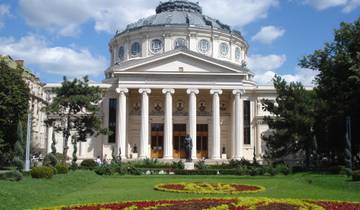
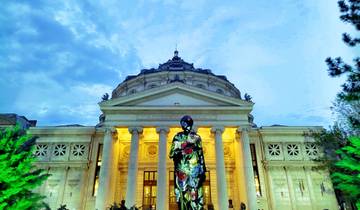
The Romanian Athenaeum offers interior visits at 15 RON ($3), allowing access to the concert hall’s impressive circular fresco depicting Romanian history. Visit independently or time visits around philharmonic concert schedules (tickets 30-120 RON / $6-25 depending on seating). The neoclassical building represents Bucharest’s cultural heart and architectural Belle Époque heritage.
National Museum of Art (Muzeul Național de Artă al României) displays Romanian and European art collections in the former Royal Palace. Admission costs 30 RON ($6) for adults, reduced rates for students and seniors. The collection spans medieval Romanian religious art, 19th-century Romanian painting, and European masters. Multilingual audio guides available for rent at 20 RON ($4).
Stavropoleos Church requires no admission fee for entry during visiting hours, allowing visitors to appreciate intricate Brâncovenesc architecture and well-preserved frescoes from the 18th century. This small gem in Old Town delivers extraordinary artistic and architectural value without cost. Dress modestly and maintain respectful silence during religious services.
Parks and Green Spaces: Free Access
Cișmigiu Gardens, Bucharest’s oldest public park, provides free access to landscaped gardens, walking paths, and a central lake offering rowboat rentals (40 RON / $8 per hour) during warm months. The park transforms to ice skating in winter with skate rentals available. Located near Old Town, Cișmigiu offers tranquil respite from urban intensity and beautiful tree-lined paths.
Herăstrău Park (officially King Michael I Park) sprawls across 465 acres surrounding Herăstrău Lake, offering biking paths (bike rentals 30-50 RON / $6-10 per hour), boat rentals, and extensive walking trails. The park houses the Village Museum (paid admission) alongside free gardens, playgrounds, and waterfront cafes. Weekend afternoons bring local families, joggers, and cyclists creating lively park atmosphere.
Carol Park features the Mausoleum monument and landscaped gardens providing elevated city views. Free access allows exploration of early 20th-century park design and the imposing Communist-era tomb structure. The park sees fewer tourists than Herăstrău or Cișmigiu, offering quieter contemplative walks.
Day Trip and Excursion Pricing
Therme Bucharest, Europe’s largest wellness center, charges variable admission based on duration and area access. Basic 3-hour Galaxy area tickets start around 90 RON ($19) weekdays, rising to 120-150 RON ($25-31) weekends and holidays. Full-day access including Palm and Elysium zones reaches 180-250 RON ($37-52). The facility delivers 10 pools, 16 water slides, saunas, and botanical gardens with over 800,000 plants. Express Bus 442 connects city center (Piața Presei) to Therme for standard STB fare.
Bran Castle and Peleș Castle day trips from Bucharest require either organized tours (300-450 RON / $62-93 per person including transport and admission) or independent travel by train/bus plus separate castle admission (80-120 RON / $16-25 combined for both sites). Independent travel offers budget advantages but requires navigating Romanian railway schedules and buses. Organized tours provide English-speaking guides, streamlined logistics, and guaranteed return to Bucharest without schedule stress.
Money, Currency, and Payment Methods 2026
Romania uses the Romanian Leu (RON), not the Euro, despite European Union membership. Exchange rates in 2026 hover around 4.85-5.10 RON per US Dollar and 5.05-5.15 RON per Euro. Mental calculations simplify using 5:1 ratios (5 RON = $1 or €1 approximately), though actual rates vary slightly. Romania maintains no immediate Euro adoption timeline, requiring visitors to manage LEI currency throughout their stay.
ATMs provide the best exchange rates, offering interbank rates with minimal margins compared to airport currency exchange booths’ 5-10% commissions. Use ATMs from major Romanian banks (BCR, BRD, Raiffeisen, ING) rather than independent operators in tourist areas charging higher fees. Select “decline conversion” when prompted to convert to home currency—always accept charges in RON rather than USD or EUR to avoid unfavorable dynamic currency conversion rates.
Credit Card Acceptance and Contactless Payments
Credit and debit card acceptance reaches near-universal levels in Bucharest in 2026 at restaurants, hotels, museums, shops, and transport systems. Visa and Mastercard function everywhere; American Express sees limited acceptance outside luxury hotels and upscale establishments. Contactless tap-to-pay technology dominates—metro turnstiles, bus payment terminals, restaurant POS systems, and shop registers all accept contactless cards without signature or PIN for transactions under 100-150 RON.
Bring a contactless-enabled Visa or Mastercard for seamless metro access, eliminating ticket purchase queues at station kiosks. Tap your card on metro entry turnstiles (7 RON / $1.45 charged automatically), ride the system, and tap out at destination stations. This convenience particularly benefits travelers making multiple short trips daily who would otherwise queue repeatedly for individual tickets.
Notify your bank of Romanian travel dates before departure to prevent fraud-triggered card blocks. Romanian transactions sometimes trigger security alerts at US banks unfamiliar with Eastern European travel patterns. Carry two different cards (different issuers) as backup if one encounters authorization problems.
Cash Requirements and Usage Patterns
Despite widespread card acceptance, carry 200-400 RON ($40-85) cash for situations requiring physical currency. Small neighborhood bakeries, market stalls, taxi drivers (though Uber/Bolt preferred), and occasional restaurants in outer sectors may lack card terminals or maintain “broken” card readers encouraging cash payment. Street vendors selling flowers, chestnuts, or souvenirs operate cash-only.
Withdraw larger amounts less frequently to minimize ATM fees. Take 500-800 RON ($100-165) per withdrawal, using funds over several days rather than making multiple small withdrawals incurring repeated fees. Store excess cash in hotel room safes rather than carrying daily. Romanian ATM withdrawal limits typically allow 2,000-3,000 RON ($400-620) per transaction, though bank fees and daily limits on your home account may restrict this.
Coins feature prominently in Romanian currency with 1 RON and smaller denominations in coin form. Cashiers provide exact change reliably; short-changing scams remain rare in legitimate establishments. Keep 5-10 RON in small bills and coins for public restroom attendants (typically 2 RON), church donations, or tipping small amounts.
Tipping Customs and Practices 2026
Tipping in Bucharest restaurants reaches 10% for satisfactory service, 15-20% for excellent experiences in upscale establishments. Most POS terminals in 2026 allow adding tips to card payments legally, eliminating the cash requirement for gratuities. When this option appears, select the percentage or enter a custom amount. Some restaurants still require cash tips; carry small bills (10, 20, 50 RON) for this purpose.
Cafe and bar tipping follows similar patterns—round up bills or leave 5-10 RON for drinks service. Hotel porters expect 5-10 RON per bag; housekeeping receives 5-10 RON daily left in rooms. Tour guides warrant 20-50 RON ($4-10) for half-day tours, 50-100 RON ($10-20) for full-day excursions depending on group size and service quality.
Taxi drivers receive tips only for exceptional service (heavy luggage assistance, route suggestions), not as standard practice. Uber and Bolt transactions include tip options in-app; adding 5-10% for professional drivers with clean vehicles and safe driving proves appreciated but not obligatory. Never tip unmarked taxi drivers at airports or stations—using Bolt/Uber exclusively avoids this scenario entirely.
Safety, Scams, and Common Tourist Pitfalls 2026
Bucharest maintains low violent crime rates with risks concentrated in opportunistic theft, pickpocketing, and tourist-targeted scams rather than aggressive crime. Travelers exercising standard urban precautions—awareness in crowded areas, secure valuables, avoiding isolated areas late nights—encounter minimal safety problems. The city feels safe walking after dark in central, well-lit neighborhoods, though poorly lit residential side streets warrant caution.
Pickpocketing targets crowded metro stations, particularly Piața Unirii during rush hours when platform density creates opportunities. Thieves work in teams—one distracts (dropping coins, asking directions, creating commotions) while partners access pockets or bags. Keep valuables in front pockets or bags worn in front, zipped closed. Maintain awareness when crowds press close during boarding or station transfers.
Taxi and Transportation Scams: Prevention Strategies
Unmarked or unlicensed taxis at Henri Coandă Airport and Gara de Nord train station represent Bucharest’s most common and expensive tourist scam in 2026. Drivers approach arriving travelers offering rides at “fixed prices” of 200-400 RON ($40-85) for journeys costing 70-120 RON ($14-25) via legitimate services. These operators lack meters, official markings, or taxi company affiliations, functioning as unlicensed transport extracting maximum fares from uninformed visitors.
Avoid this scam completely by using only Bolt or Uber ride-hailing apps. Download both apps before arriving in Romania, register payment methods, and request rides directly from airport arrivals or train station exits. Both services display driver names, vehicle details, and fixed prices before confirming rides. Drivers meet passengers at designated pickup zones marked in apps. Payment processes automatically through registered cards, eliminating cash-based price disputes.
Legitimate metered taxis do exist and charge reasonable rates, but identifying licensed operators among unlicensed scammers proves challenging for first-time visitors. The Bolt/Uber apps eliminate this uncertainty entirely. Even Romanians preferentially use ride-hailing apps over hailing street taxis, confirming this approach as local best practice rather than tourist-specific advice.
Restaurant and Nightlife Pricing Scams
Some Old Town restaurants and bars employ menu scams targeting tourists through menu-free “specials,” undisclosed prices, or dramatically inflated bills. Legitimate establishments display clear menus with prices at entrances and provide printed menus listing all item costs. When staff suggest “today’s specials” or “chef recommendations” without stating prices, politely request written menus and confirm costs before ordering.
Red flags include: staff bringing menus without prices, suggestions to “trust the chef” on pricing, reluctance to provide itemized bills, or bills significantly exceeding expected totals. If a bill appears excessive, request itemized breakdowns listing every item with individual prices. Legitimate restaurants provide these immediately; scam operations resist transparency. Pay only for items you ordered at prices matching the menu; refuse excessive charges and leave if staff become aggressive.
Nightclub cover charges and bottle service sometimes involve undisclosed minimums or mandatory consumption requirements. Clarify all charges before entering clubs or ordering bottles. Some establishments charge cover, then require minimum drink purchases beyond the cover fee. Others advertise free entry but charge exorbitant drink prices. Verify total expected spending before committing.
Pickpocketing and Petty Theft Prevention
Beyond metro stations, pickpockets target crowded Old Town areas on Friday and Saturday evenings, Piața Unirii, and buses during rush hours. Standard prevention applies: wallets and phones in front pockets, bags zipped and worn in front, valuable jewelry minimized, passports in hotel safes rather than carried daily. Romanian law requires ID for some situations (hotel check-in, certain purchases), but passport photocopies or secondary ID usually suffice for daily activities.
Bag-snatching from outdoor cafe tables occurs occasionally when diners place bags or phones on empty chairs or under tables. Keep bags looped around chair legs or in lap; maintain phones in hands or pockets rather than left on tables. Thieves operate on bicycles or foot, grabbing items and disappearing into Old Town’s maze of pedestrian lanes before victims react.
Beggars, particularly women with children or individuals with disabilities, approach tourists in Old Town and near major sites. Most pose no threat beyond persistent requests for money. Decline politely and walk away; ignore aggressive follow-up requests. Scammers sometimes work in pairs—one solicits donations while a partner accesses pockets or bags during distraction. Maintain awareness when anyone approaches requesting money or signatures for petitions.
Currency Exchange and ATM Safety
Airport currency exchange booths advertise “no commission” while applying 5-10% spreads between buy and sell rates, effectively charging hidden fees. ATMs inside the secure terminal area post-customs clearance offer standard bank rates. Use these for initial cash needs rather than currency exchange counters. Bucharest city center provides abundant ATM access for subsequent withdrawals.
ATM skimming occurs rarely but exists. Use ATMs inside bank branches or shopping centers rather than standalone street machines. Check card slots for loose attachments or unusual features before inserting cards. Shield PIN entry from cameras or observers. If an ATM retains your card, contact your bank immediately and report the machine to bank staff if inside a branch.
Language, Communication, and Cultural Etiquette 2026
Romanian functions as Bucharest’s primary language, though English proficiency among younger residents (under 40) reaches functional levels for tourism purposes. Hotel reception staff, restaurant servers in tourist areas, museum ticket sellers, and metro station information booths typically employ English speakers or staff with basic English sufficient for transactions. Outside tourist zones, English capability drops significantly among older generations and service workers in neighborhood shops or restaurants.
French represents the second foreign language for many older Romanians due to historical educational emphasis and cultural affinity with France. Travelers speaking French often achieve better communication with 50+ age groups than attempting English. Italian also sees wider recognition than German or Spanish among foreign languages due to linguistic similarity with Romanian and Italian media influence.
Essential Romanian Phrases and Pronunciation
Learning basic Romanian courtesies dramatically improves interactions and demonstrates cultural respect. Romanian pronunciation follows relatively consistent rules once learned, making these phrases accessible:
Greetings and Basics: “Bună ziua” (boo-nuh ZEE-wah) means “good day” and functions as universal polite greeting. “Bună” (boo-nuh) alone works informally. “Mulțumesc” (mool-tzoo-MESK) means “thank you.” “Cu plăcere” (koo plah-CHEH-reh) means “you’re welcome.” “Vă rog” (vuh rohg) means “please” formally, “te rog” (teh rohg) informally. “Scuză-mă” (SKOO-zuh-muh) means “excuse me” informally, “Scuzați-mă” (skoo-ZATS-muh) formally.
Questions and Requests: “Vorbiți engleza?” (vor-BEETS eng-LEH-zah) means “Do you speak English?” “Cât costă?” (kuht KOS-tuh) means “How much does it cost?” “Unde este…?” (OON-deh YES-teh) means “Where is…?” “Un bilet, vă rog” (oon bee-LET vuh rohg) means “One ticket, please.”
Dining: “Nota, vă rog” (NO-tah vuh rohg) means “The bill, please.” “Este foarte bun” (YES-teh FWAHR-teh boon) means “It is very good.” “Apă” (AH-puh) means “water,” specify “apă plată” (flat water) or “apă minerală” (sparkling water). “O cafea” (oh kah-FEH-ah) means “a coffee.”
Attempting these basic phrases, even imperfectly pronounced, generates positive responses and appreciation from Romanians who recognize cultural effort. Staff typically switch to English (if able) after hearing tourists attempt Romanian, creating friendly communication foundations.
Translation Apps and Digital Communication
Google Translate’s camera function translates printed Romanian text instantly, proving invaluable for menus, signs, product labels, and museum descriptions. Point your phone camera at text and select the translate function—Romanian text displays in English overlaid on the original. This technology functions offline after downloading Romanian language packs, ensuring availability without data connections.
Voice translation features less reliably for Romanian due to pronunciation complexities and dialectical variations, but text translation achieves high accuracy. Type or photograph text for translation rather than relying on voice recognition. Romanian restaurant menus, museum placards, and transit signs all translate well via camera function.
Free wifi pervades Bucharest in 2026 at hotels, restaurants, cafes, shopping centers, and many public spaces. Metro stations provide free wifi after registration. Purchase local SIM cards from mobile operators (Orange, Vodafone, Telekom Romania) at airport kiosks or city center shops for data access everywhere. Prepaid tourist plans offer 10-20GB data for 30-50 RON ($6-10) for 7-30 day validity, eliminating roaming charges and providing navigation, translation, and communication capability throughout your stay.
Cultural Etiquette and Social Norms
Romanians value politeness, formality in first encounters, and directness in communication. Address strangers and service workers formally using “dumneavoastră” (formal you) until invited to informal “tu” (informal you). Elderly people particularly appreciate respectful formal address and traditional courtesies.
Dress codes remain relatively conservative in religious sites. Cover shoulders and knees when visiting churches and monasteries. Many Orthodox churches request women cover heads with scarves—some provide scarves at entrances for visitors lacking their own. Remove hats upon entering churches. Photography may be restricted or prohibited in religious spaces; observe posted signage or ask before photographing.
Tipping customs favor 10% in restaurants and cafes as described in Money sections above. Service workers (hotel housekeepers, porters) appreciate small tips but don’t expect lavish gratuities. Overtipping embarrasses rather than impresses, suggesting patronizing attitudes.
Smoking remains prevalent in Romania despite increasing restrictions. Restaurants and bars offer outdoor seating where smoking occurs freely; indoor spaces theoretically prohibit smoking but enforcement varies. Expect cigarette smoke at outdoor cafes and terraces. This cultural norm differs markedly from North American or Western European restrictions.
Seasonal Considerations and Weather Planning 2026
Bucharest experiences continental climate extremes with cold winters and hot summers, requiring seasonal planning affecting packing, activity choices, and comfort levels. Spring (April-May) and fall (September-October) deliver ideal conditions—15-25°C (59-77°F), moderate rainfall, blooming parks in spring, colorful foliage in fall, and comfortable walking weather for sightseeing.
Summer (June-August) brings intense heat, particularly July and August when temperatures reach 30-35°C (86-95°F) regularly with occasional spikes to 38°C (100°F+). This heat makes midday walking exhausting; plan indoor museum visits during peak afternoon hours, saving park and outdoor site exploration for mornings and evenings. Air conditioning exists in hotels, restaurants, and shopping centers but not universally in budget accommodations or older buildings. Hotel rates increase 20-30% during summer months despite challenging weather.
Spring Season: April Through June
Spring delivers Bucharest’s most pleasant weather with April temperatures around 12-18°C (54-64°F), May reaching 18-24°C (64-75°F), and June transitioning toward summer heat at 22-28°C (72-82°F). Parks burst with flowers, outdoor terraces open fully, and cultural events populate schedules. Light layers—long-sleeve shirts, light jackets, comfortable walking shoes—suit variable spring conditions with occasional rain showers.
May and June represent peak tourist season with hotel rates 20-30% above winter baselines. Book accommodation 2-3 months ahead for best selection and pricing. Weather variability means pack rain jackets or compact umbrellas—spring showers arrive unpredictably but typically pass quickly. May Day (May 1) brings closures and festivities; verify museum and attraction schedules around this holiday.
Summer Heat Management: July and August
July and August heat demands strategic planning. Schedule Palace of Parliament tours, major museums, and indoor attractions for 12:00-16:00 when outdoor comfort drops significantly. Visit parks and outdoor sites 8:00-11:00 or after 18:00 when temperatures moderate. Carry water bottles (refill from taps or purchase from shops—1.5L bottles cost 3-5 RON / $0.60-1), wear sun protection (hats, sunscreen), and plan indoor respites during peak heat.
Budget accommodations lacking air conditioning become uncomfortable during summer nights when temperatures remain above 20°C (68°F). Verify air conditioning presence before booking budget hotels for July-August stays, or accept potential discomfort as trade-off for budget savings. Mid-range and luxury hotels universally provide air conditioning.
Summer brings fewer crowds at indoor museums as many Romanians vacation at Black Sea coast or mountains, creating some advantages despite challenging weather. Restaurant terraces operate at full capacity with outdoor dining dominating the scene. Evening outdoor concerts and cultural events populate parks and public squares throughout summer months.
Autumn Excellence: September and October
September and October rival spring for ideal Bucharest visit conditions. September temperatures (18-25°C / 64-77°F) maintain summer warmth with reduced intensity. October cooling (12-18°C / 54-64°F) brings beautiful fall foliage in parks and along boulevards. Lower humidity compared to summer creates comfortable walking conditions. Pack light sweaters or jackets for October evenings when temperatures drop below 10°C (50°F).
Autumn represents second peak tourist season with hotel rates elevated but below summer levels. Cultural season begins in earnest after summer break—opera, philharmonic concerts, theater performances resume full schedules in September. Harvest festivals celebrate wine and regional products in surrounding areas accessible via day trips.
Winter Realities: November Through March
Winter in Bucharest runs November through March with temperatures hovering around freezing—December through February average 0-5°C (32-41°F) with occasional drops to -10°C (14°F) or below. Snow falls irregularly, accumulating for brief periods before melting. Gray skies, short daylight (sunset around 17:00 in December), and occasional fog create atmospheric but challenging conditions for sightseeing.
Winter delivers Bucharest’s best hotel values with rates dropping 30-40% compared to spring and summer. Three-star hotels charging 450-600 RON ($93-124) in May offer winter rates of 280-380 RON ($58-78) for identical rooms. Budget travelers timing visits for January or February maximize accommodation savings while accepting weather limitations.
Winter clothing requirements include heavy coats, warm layers, waterproof boots, hats, and gloves for outdoor exploration. Indoor spaces (museums, restaurants, hotels) maintain comfortable heating. Winter attractions include Christmas markets (late November through early January), ice skating at Cișmigiu Gardens, and reduced museum crowds. Shorter daylight hours compress sightseeing schedules but create opportunities for atmospheric evening walks through illuminated historic districts.
Mobile Connectivity and Internet Access 2026
Romania offers excellent mobile network coverage and fast 4G/5G speeds throughout Bucharest at reasonable prices, making local SIM cards worthwhile for stays exceeding 3-4 days. Tourist prepaid plans from Orange, Vodafone, and Telekom Romania provide 10-20GB data, domestic calls, and EU roaming for 30-50 RON ($6-10) valid 7-30 days depending on package. Purchase SIM cards at airport kiosks, mobile operator shops in city center, or authorized retailers.
Bring an unlocked phone to accept Romanian SIM cards. US phones purchased through carriers (AT&T, Verizon, T-Mobile) often arrive locked to those networks; contact carriers before departure to unlock devices if necessary. European phones typically come unlocked. Insert Romanian SIM cards, follow activation instructions (usually automated), and gain instant mobile data access eliminating expensive roaming fees.
Free Wifi Availability and Quality
Free wifi blankets Bucharest in 2026 at virtually all hotels (budget through luxury), restaurants, cafes, shopping centers, museums, and public spaces. Metro stations provide free wifi after one-time registration—open wifi network, accept terms, provide email address, receive instant access valid throughout metro system. Quality varies from excellent speeds in hotels and modern establishments to slower connections in older buildings or crowded public areas.
Relying exclusively on wifi requires planning around connection availability. Maps, translation apps, and ride-hailing services need constant connectivity, making local SIM cards more practical for active sightseers. Free wifi suits travelers spending significant time in hotels, working remotely from cafes, or following predictable routines with consistent wifi access points.
Security-conscious travelers should use VPN services on public wifi networks to encrypt data and protect sensitive transactions. Most Romanian public wifi networks lack encryption, exposing data to potential interception. Avoid banking, shopping, or email access on unsecured networks without VPN protection. Local SIM cards with mobile data provide more secure connectivity than public wifi.
Navigation Apps and Digital Maps
Google Maps provides comprehensive Bucharest coverage including public transport routing, real-time metro and bus arrival predictions, walking directions, restaurant locations, and user reviews. Download offline maps before arrival or during hotel wifi sessions for use without data connectivity. Offline maps enable basic navigation and location finding but lack real-time public transport updates or traffic conditions.
The Info TB app (Info Transport București) supplements Google Maps for STB surface transport with real-time bus, tram, and trolleybus tracking. The app displays live vehicle positions, estimated arrival times, and route details. Download before arrival and use conjunction with Google Maps for comprehensive transport coverage—Google Maps plans routes, Info TB confirms real-time vehicle locations and delays.
Uber and Bolt apps require data connectivity for requesting rides and tracking drivers. The apps won’t function offline or on wifi-only connections when standing on streets. Mobile data via SIM cards ensures these essential services remain available anywhere in Bucharest.
Health, Medical, and Pharmacy Information 2026
Bucharest maintains modern medical infrastructure with public and private hospitals, clinics, and pharmacies providing quality care at lower costs than Western Europe or North America. Travel insurance covering medical care abroad remains strongly recommended despite lower Romanian healthcare costs. Serious medical issues or evacuation expenses can still reach substantial amounts even in budget-friendly Romania.
Pharmacies (farmacii) cluster throughout Bucharest marked by green crosses. Many maintain extended hours with 24-hour pharmacies near major hospitals and central areas. Pharmacists speak functional English in tourist areas and can recommend over-the-counter medications for minor ailments. Romanian pharmacy regulations require prescriptions for antibiotics and controlled substances but allow over-the-counter sales of many medications requiring prescriptions in other countries.
Common Health Concerns and Preventive Measures
Tap water in Bucharest meets European safety standards and remains safe for drinking, though some travelers experience temporary digestive adjustment to different mineral content. Hotels and restaurants serve tap water freely; request “apă de la robinet” (tap water) to avoid automatic bottled water charges. Bottled water costs 3-7 RON ($0.60-1.45) per 1.5L bottle at supermarkets, far less than restaurant markup prices of 10-15 RON ($2-3) for smaller bottles.
Air quality in Bucharest occasionally reaches unhealthy levels during winter temperature inversions or summer heat when smog accumulates. Monitor air quality indices via weather apps or websites; consider limiting outdoor exertion on poor air quality days. Most days maintain acceptable air quality for normal activity.
Altitude, insects, and tropical diseases pose no concerns in Bucharest. Standard European health precautions apply—hand washing, food safety awareness, sun protection during summer. No vaccinations beyond routine immunizations required for Romanian entry.
Medical Care Access and Costs
Private clinics and hospitals in Bucharest serve international patients with multilingual staff, modern equipment, and transparent pricing well below Western costs. A general practitioner consultation costs 150-300 RON ($31-62), specialist consultations 200-400 RON ($41-83). These cash prices apply for travelers without European Health Insurance Cards or insurance coverage; many clinics accept major travel insurance direct billing.
Emergency care via public hospitals provides treatment regardless of insurance or ability to pay, though quality and English capability vary. For serious medical emergencies, call 112 (Romania’s emergency number equivalent to 911). For non-emergency medical needs, private clinics offer superior service and English communication. Regina Maria and Medicover represent major private healthcare networks with clinics throughout Bucharest.
Dental care in Romania attracts medical tourists from Western Europe due to quality services at 40-60% below Western European prices. Emergency dental care for broken teeth, lost fillings, or pain relief costs 200-500 RON ($41-103) at private clinics with English-speaking dentists. Routine cleaning costs 150-300 RON ($31-62) versus $150-300+ in North America.
Shopping and Souvenir Strategies 2026
Bucharest shopping spans traditional craft markets, modern shopping malls, boutique shops, and souvenir stands catering to different budgets and interests. Authentic Romanian products include painted ceramics, embroidered textiles, wooden items, Orthodox icons, brandy (țuică and palincă), wine, and traditional clothing items. Avoid mass-produced “Romanian” souvenirs actually manufactured in China—examine items for origin labels and craftsmanship quality.
The Obor Market and Piața Amzei offer fresh produce, cheeses, meats, and flowers at local prices catering to Romanian shoppers rather than tourists. These markets provide authentic cultural experiences and photography opportunities but limited souvenir potential. Vendors speak primarily Romanian with minimal English; bring translation apps or photos of desired items to facilitate communication.
Old Town Souvenir Shopping: Convenience with Premium Pricing
Old Town souvenir shops cluster along pedestrian streets offering traditional crafts, clothing, religious items, and tourist kitsch at elevated prices. Painted eggs cost 30-60 RON ($6-13), embroidered blouses 150-400 RON ($31-83), wooden items 40-150 RON ($8-31), and icon reproductions 80-250 RON ($16-52) depending on size and quality. These shops provide convenient one-stop shopping with English-speaking staff but charge 30-50% premiums over equivalent items at markets or neighborhood shops.
Bargaining rarely succeeds in established Old Town shops with posted prices. Market stalls and independent vendors sometimes negotiate, particularly for multiple-item purchases. Start offers at 60-70% of asking prices; vendors counter between 80-90% of originals. Accept or decline without pressure—Romanian vendors rarely employ aggressive sales tactics.
Shopping Malls and Modern Retail
AFI Palace Cotroceni, Baneasa Shopping City, and Bucharest Mall provide familiar international shopping experiences with Western European and American brands at Romanian pricing. Zara, H&M, Sephora, and other international chains maintain presence alongside Romanian retailers. Prices approximate or slightly undercut Western European levels but offer minimal advantages versus home-country shopping for most travelers.
These malls deliver value for replacing forgotten items (adapters, chargers, toiletries) or weather-inappropriate clothing discovered necessary mid-trip. Food courts offer familiar international fast food and local chains at moderate prices. Many malls include Carrefour or other hypermarkets selling local food products (wines, brandies, chocolates, coffees) at far better prices than airport duty-free shops.
Romanian Wine and Spirits Shopping
Romania produces excellent wines—particularly Fetească Neagră (indigenous red), Fetească Albă (indigenous white), and international varietals grown in Dealu Mare, Murfatlar, and Cotnari regions. Wine shops and supermarket selections offer quality bottles at 30-80 RON ($6-17) easily matching $30-50 wines from more famous regions. Purchase at Mega Image, Carrefour, or specialized wine shops rather than tourist-oriented Old Town shops charging double.
Traditional Romanian brandies include țuică (plum brandy) and palincă (fruit brandy), ranging from harsh homemade varieties to smooth aged premium versions. These spirits represent authentic Romanian drinking culture but require acquired taste appreciation. Purchase small bottles (200-375ml) for sampling before committing to full bottles. Quality versions cost 40-80 RON ($8-17) versus 15-25 RON ($3-5) for rough commercial varieties.
EU regulations allow 2 liters of spirits and 4 liters of wine in checked luggage when departing Romania for non-EU destinations. Verify your home country’s import limits—US allows 1 liter spirits duty-free per adult. Pack bottles carefully in checked luggage using clothing padding; wine shops sometimes provide protective wrapping or boxes for packed bottles.
Day Trips and Nearby Attractions 2026
Bucharest serves as a convenient base for day trips to Transylvania’s castles, mountain resorts, Danube Delta, and Black Sea coast, though distances require early departures and long days or overnight stays for comprehensive exploration. Organized tours simplify logistics while independent travel offers flexibility and budget savings.
Bran Castle (marketed as “Dracula’s Castle”) and Peleș Castle combine as popular day trip destinations 130-160 kilometers from Bucharest. Organized tours cost 300-450 RON ($62-93) per person including round-trip transport, English-speaking guides, and admission to both castles. These tours depart around 8:00-9:00 AM, returning to Bucharest by 18:00-19:00. Independent travel by train to Brașov (2.5 hours, 50-80 RON / $10-17), then local bus to Bran (40 minutes, 8 RON / $1.60) offers budget alternatives but requires navigating Romanian railway schedules and coordinating transfers.
Therme Bucharest Wellness Complex
Therme Bucharest, Europe’s largest wellness and entertainment center, sits 8 kilometers north of city center near Henri Coandă Airport. The complex features 10 swimming pools including Romania’s largest wave pool, 16 water slides, 10 saunas, botanical gardens with 800,000+ plants, and extensive relaxation zones. Admission varies by duration and zone access: 3-hour Galaxy area tickets start around 90 RON ($19) weekdays, 120-150 RON ($25-31) weekends; full-day access including all zones reaches 180-250 RON ($37-52).
Reach Therme via Express Bus 442 from Piața Presei (3 RON / $0.62 standard bus fare, 40-minute journey) or arrange hotel shuttle services (many hotels offer packages including Therme admission and transport). The facility operates year-round with indoor temperatures at 29-30°C and water at 33°C, making it attractive during any season but particularly valuable during cold winter months.
Plan full days (6-8 hours) to justify admission costs and experience multiple zones. Bring swimwear (available for purchase on-site if forgotten), towels (rental 20 RON / $4), and waterproof phone cases for photography. Food and beverage available throughout the complex at inflated resort pricing—consider eating before arrival or bringing permitted snacks.
Brașov and Transylvania Exploration
Brașov, Transylvania’s second-largest city, sits 165 kilometers north of Bucharest offering medieval architecture, mountain access, and proximity to Bran and Peleș castles. Direct trains depart Gara de Nord hourly (2.5 hours, 50-80 RON / $10-17 each way), arriving at Brașov station within walking distance of the historic center. Day-trippers can explore Council Square, Black Church, and medieval lanes before returning to Bucharest evening trains.
Overnight stays allow more comprehensive Transylvania exploration including Bran Castle (30 kilometers from Brașov), Peleș Castle (60 kilometers via Sinaia), and Poiana Brașov mountain resort. Brașov accommodation costs 200-400 RON ($41-83) for mid-range hotels, significantly less than equivalent Bucharest properties while offering mountain scenery and medieval atmosphere.
Business Travel and Working Remotely 2026
Bucharest attracts business travelers and digital nomads with modern infrastructure, reliable internet, affordable living costs, and central European timezone (UTC+2) facilitating communication with European and Middle Eastern clients. The city hosts regional headquarters for multinational corporations, tech companies, and business process outsourcing centers, creating business hotel demand and coworking space supply.
Business hotels cluster near Piața Victoriei, Baneasa business district, and around major corporate office buildings. Properties like JW Marriott, Radisson Blu, InterContinental, and Novotel cater specifically to corporate travelers with business centers, meeting rooms, executive lounges, and conference facilities. Weekday rates run 20-30% higher than weekend rates as business demand peaks Tuesday-Thursday.
Coworking Spaces and Remote Work Facilities
Coworking spaces including Impact Hub Bucharest, Norrsken House, WATS Digital Village, and Spring Hub provide professional work environments for remote workers and traveling professionals. Day passes cost 50-80 RON ($10-17), monthly memberships 400-800 RON ($83-165) depending on location and amenities. These spaces offer high-speed internet (100+ Mbps typical), printing facilities, meeting rooms, coffee, and networking events.
Cafes serving remote workers include Origo Coffee Shop, Ted’s Coffee, and M60 with reliable wifi, comfortable seating, and tolerance for extended laptop work sessions. Order regularly (coffee every 1-2 hours, lunch, snacks) to maintain welcome as working guest. Weekday mornings and early afternoons see lighter crowds versus mid-afternoon rushes when students and social groups arrive.
Internet speeds in Bucharest rank among Europe’s fastest, with residential connections reaching 500-1000 Mbps commonly and business locations offering even higher speeds. Video conferencing, large file transfers, and cloud-based work function seamlessly from hotels, coworking spaces, and cafes with modern infrastructure.
Business Etiquette and Meeting Culture
Romanian business culture values punctuality, formal dress (suits for men, professional attire for women), and structured meetings with clear agendas. Initial meetings involve formal greetings, business card exchanges, and polite conversation before business topics. Address business contacts by title and surname until invited to first-name basis.
Business lunches occur frequently as relationship-building opportunities, typically lasting 1.5-2 hours at upscale restaurants. The person initiating the meeting traditionally pays. Business dinners run later (19:30-20:00 starts) and extend longer with multiple courses and wine. Moderate alcohol consumption appears acceptable in business contexts, though maintaining professionalism remains essential.
English serves as common business language in multinational corporations and tech companies, with younger Romanian professionals speaking fluent business English. Older executives and government officials may prefer Romanian or French for formal business discussions. Professional translators can be hired for important meetings requiring absolute clarity.
Frequently Asked Questions: Bucharest Travel 2026
What’s the best neighborhood to stay in Bucharest for first-time visitors?
Piața Romană and Universității neighborhoods offer the best balance of central location, metro connectivity, restaurant access, and value pricing for first-time visitors in 2026. Hotels in these areas charge 320-600 RON ($66-124) for 3-star properties, place guests within 5-15 minute walks of Old Town, and provide immediate M2 Blue Line metro access to the airport and all major sites. The neighborhoods combine authentic residential character with tourist-friendly infrastructure including English-speaking restaurant staff, supermarkets, and pharmacies. Old Town delivers maximum walkability to attractions but charges 20-30% hotel premiums and experiences higher tourist density. Budget travelers accept outer neighborhoods near metro stations; luxury visitors prefer boutique hotels in Dorobanți. Piața Romană and Universității serve 80% of visitors well through centrality, convenience, and reasonable pricing.
How many days should I spend in Bucharest?
Three full days allow comprehensive Bucharest exploration including major attractions, neighborhoods, museums, and parks without rushed pacing in 2026. Day 1 covers Old Town, Palace of Parliament, and Cișmigiu Gardens. Day 2 explores Village Museum, Herăstrău Park, Romanian Athenaeum, and Calea Victoriei boulevard. Day 3 visits neighborhood markets, smaller museums, and allows flexible time for shopping, additional sites, or relaxation. This schedule provides thorough city coverage while maintaining comfortable daily pacing of 6-8 hours sightseeing.
Travelers adding day trips to Bran and Peleș castles, Therme Bucharest, or Brașov extend to 4-5 days total. Business travelers or digital nomads working remotely while exploring spread sightseeing across 5-7 days alongside work commitments. Weekend visitors (2-3 nights) see highlights—Old Town, Palace of Parliament, one major museum—accepting incomplete coverage. Bucharest rewards extended stays better than quick visits; the city’s scale, scattered attractions, and neighborhood diversity reveal themselves gradually rather than in rushed 48-hour blitzes.
Is Bucharest good for solo travelers?
Bucharest accommodates solo travelers successfully in 2026 with safe conditions, hostel infrastructure, easy public transport navigation, and walkable central areas. Women traveling alone report generally comfortable experiences with respectful treatment in restaurants, museums, and public spaces. Standard solo travel precautions apply—awareness in crowded areas, metro station caution during late hours, avoiding unmarked taxis, maintaining vigilant valuables security. The city’s scale means solo travelers benefit from staying in social hostels in Old Town or near Piața Romană where common areas facilitate meeting other travelers.
Solo dining presents no challenges in Bucharest where many restaurants welcome individual diners without awkwardness. Bar seating at restaurants, cafe culture, and outdoor terraces all accommodate solo meals comfortably. Language barriers occasionally complicate complex interactions but rarely prevent basic transactions. Solo travelers without Romanian language skills rely more heavily on translation apps and patience than groups where someone often manages communication.
Solo travelers pay single-occupancy supplements at hotels (full room rates rather than per-person pricing), making hostel dormitories financially attractive at 40-70 RON ($8-14) per bed versus 320-600 RON ($66-124) for private hotel rooms. Budget-conscious solo travelers choose shared accommodation; those prioritizing privacy accept higher costs as necessary expense.
Do restaurants in Bucharest accept credit cards?
Virtually all sit-down restaurants in Bucharest accept credit cards in 2026, with Visa and Mastercard functioning universally and American Express accepted at upscale establishments only. Contactless payment dominates with most restaurants upgrading to tap-to-pay terminals allowing payments without signature or PIN for transactions under 100-150 RON. Many modern POS terminals in 2026 include tipping options directly in card payment flows, eliminating cash requirements for gratuities when this feature appears.
Cash remains necessary for small neighborhood bakeries, market food stalls, street vendors, and occasional budget restaurants in outer sectors where card terminals may be absent or “temporarily broken” (encouraging cash payment). Carry 100-200 RON ($20-41) cash as backup for situations requiring physical currency. Higher-end restaurants universally accept cards with sophisticated POS systems integrated with table management software.
What should I pack for Bucharest?
Packing for Bucharest depends heavily on season. Spring and fall visits (April-May, September-October) require layers—light sweaters, long-sleeve shirts, rain jacket, comfortable walking shoes, and one warmer jacket for cool evenings when temperatures drop to 10-15°C (50-59°F). Summer packing (June-August) emphasizes heat management—lightweight breathable clothing, sun hat, sunglasses, sunscreen, and comfortable walking sandals for 30-35°C (86-95°F) heat. Winter visits (November-March) demand serious cold-weather gear—heavy coat, warm layers, waterproof boots, hat, gloves, and scarf for temperatures around freezing with occasional drops to -10°C (14°F).
Universal packing items include: European two-pin plug adapters (Romania uses standard EU outlets), contactless credit cards, unlocked smartphone for local SIM card, small daypack for sightseeing, reusable water bottle, basic first-aid supplies, and any prescription medications in original containers. Modest clothing suits church visits—items covering shoulders and knees. Comfortable walking shoes prove essential given Bucharest’s scale and cobblestone Old Town streets; broken-in sneakers or walking shoes prevent blisters during 15,000+ step sightseeing days.
How early should I book Bucharest hotels?
Book Bucharest hotels 2-3 months ahead for May-June and September-October peak seasons to secure best selection and moderate pricing in 2026. Central neighborhoods and highly-rated properties fill earliest. Last-minute bookings (1-2 weeks out) still find availability but face limited choices and potentially elevated prices at remaining properties. Booking 3+ months ahead sometimes captures early-bird discounts of 10-15% at hotels encouraging advance reservations.
Off-season visits (January-February, July-August, November) allow 2-4 week advance booking with excellent availability and competitive pricing. Hotels compete for limited off-season demand through discounted rates. Weekend stays book faster than weekday nights due to leisure travel patterns—Friday and Saturday nights sell out earliest while Sunday-Thursday maintains better availability. Business hotels reverse this pattern with weekday demand exceeding weekends.
Flexible travelers compare prices across booking platforms (Booking.com, Expedia, Hotels.com, hotel direct websites) as rates vary significantly. Direct hotel bookings sometimes match or beat third-party platforms while offering more flexible cancellation policies and upgrade possibilities. Free cancellation options provide flexibility to rebook if better deals appear.
Are there luggage storage facilities in Bucharest?
Gara de Nord train station operates left-luggage facilities (depozit bagaje) charging approximately 10-15 RON ($2-3) per bag per 24 hours in 2026. These facilities accommodate travelers arriving early, departing late, or storing luggage during transit between trains. Hours typically run 6:00 AM-22:00 daily with some extended coverage. Bring photo ID for storage transactions.
Private luggage storage services including Bounce, LuggageHero, and Stasher partner with hotels, shops, and cafes throughout Bucharest offering storage at 25-40 RON ($5-8) per bag daily. Book via apps or websites, drop luggage at designated locations (often near Old Town or major transport hubs), and retrieve when convenient. These services provide flexibility for day-use storage when hotels won’t accommodate early check-in or late checkout luggage holding.
Most hotels store luggage free for guests checking out but continuing to explore Bucharest before evening flights or trains. Arrive early for checkout day sightseeing, store bags at hotel reception, explore unburdened, and return for luggage before departing. This courtesy extends to mid-range and luxury properties reliably; budget hotels and hostels sometimes charge nominal fees of 5-10 RON ($1-2) per bag.
What’s the tipping percentage in Bucharest restaurants?
Standard restaurant tipping in Bucharest reaches 10% for satisfactory service in 2026, with 15-20% appropriate for excellent experiences at upscale establishments. Many modern POS terminals include tipping options in card payment flows—select the percentage or enter a custom amount when prompted. When paying cash, round up bills or leave tip on the table; stating “thank you” when receiving change signals you don’t expect return of small amounts as tip.
Cafe and bar tipping follows similar patterns—round up to nearest convenient amount or leave 5-10 RON ($1-2) for drinks. Counter service at bakeries or take-away establishments requires no tipping. Hotel services warrant 5-10 RON per bag for porters, 5-10 RON daily for housekeeping left in rooms, and 20-30 RON for concierge assistance with reservations or bookings. Tour guides receive 50-100 RON ($10-20) for full-day tours depending on group size and service quality.
Can I use Uber or Lyft in Bucharest?
Uber operates reliably throughout Bucharest in 2026, joined by Bolt (formerly Taxify) which actually dominates the Romanian ride-hailing market with slightly lower prices than Uber. Download both apps for backup options. Lyft does not operate in Romania. Typical Bucharest Uber/Bolt rides within central areas cost 15-30 RON ($3-6), airport transfers 70-120 RON ($14-25) depending on destination and traffic.
Both services function identically to US operations—set pickup location, select destination, view price estimate before confirming, track driver arrival, pay automatically through registered card. Drivers speak variable English levels but apps handle all essential communication. Tipping in-app remains optional; 5-10% for professional service proves appreciated. Ride-hailing completely eliminates taxi scam risks at airports and train stations while providing transparent metered pricing unavailable from street taxis.
What cultural differences should I be aware of in Romania?
Romanians value politeness, directness, and formality in initial encounters followed by warm hospitality once relationships develop. Address strangers formally using “dumneavoastră” until invited to informal “tu” especially with older generations who appreciate traditional courtesies. Restaurant servers appreciate acknowledgment and polite requests rather than finger-snapping or table-pounding American-style attention-getting.
Orthodox Christianity influences culture significantly with churches maintained as sacred spaces requiring modest dress and respectful behavior. Remove hats upon entering, cover shoulders and knees, and maintain quiet voices. Photography may be restricted; observe posted rules. Sunday mornings bring active worship attendance—visit churches during services only if genuinely interested in observing Orthodox liturgy respectfully.
Smoking remains culturally accepted and prevalent despite increasing restrictions. Expect cigarette smoke at outdoor cafe terraces and occasionally lingering in hotel hallways or older buildings. This differs markedly from North American smoke-free norms. Meal pacing runs slower than American fast-casual dining with multi-hour restaurant stays common. Service arrives deliberately rather than rushed; this reflects European dining culture rather than poor service. Relax, enjoy, and resist urges to rush courses.