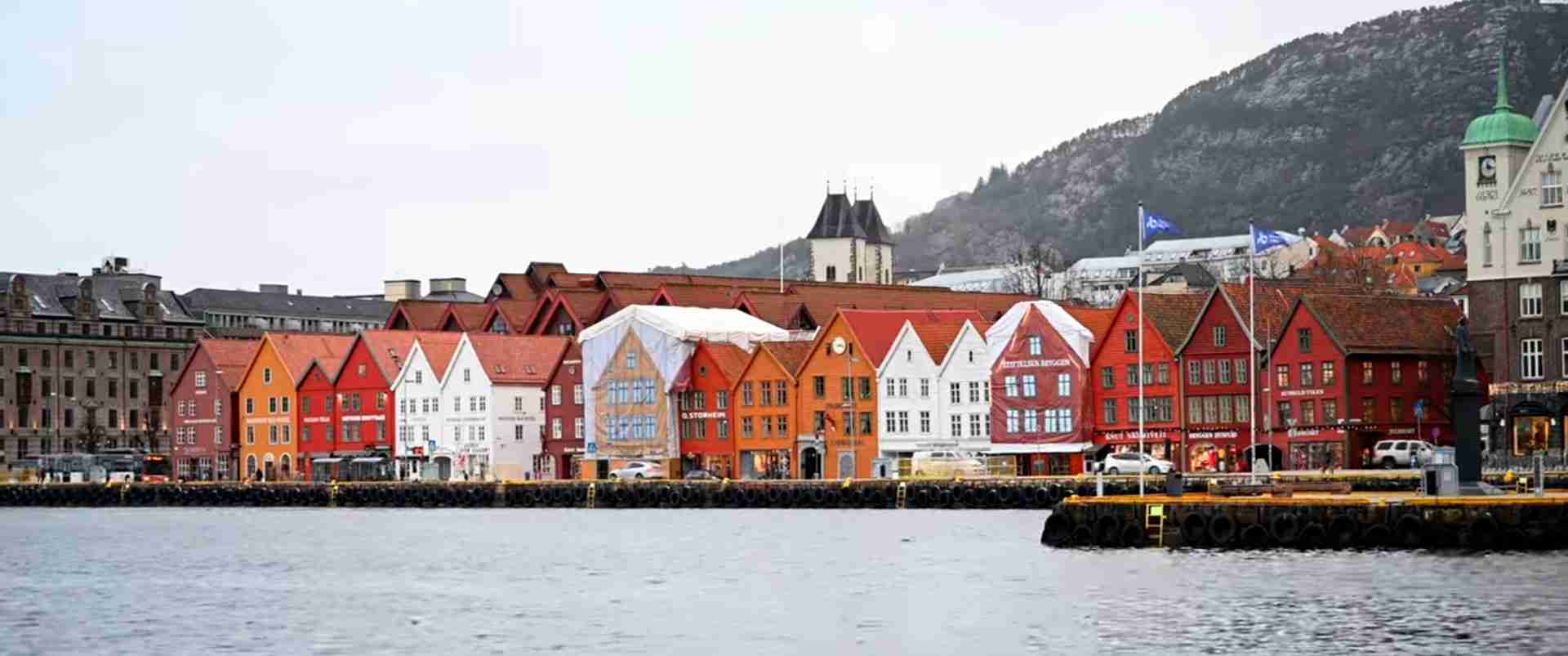
Bryggen Bergen: UNESCO Hanseatic Wharf Complete Guide
Bryggen stands as one of Northern Europe’s most significant medieval trading posts, a UNESCO World Heritage site where colorful wooden facades tell centuries of maritime commerce, Hanseatic influence, and Norwegian resilience. Walking through the narrow alleyways between these distinctive buildings transports visitors back to an era when Bergen controlled northern trade routes and the powerful Hanseatic League shaped the city’s destiny.
Key Takeaways
- UNESCO Recognition: Inscribed in 1979 as one of Bergen’s most important historical monuments, representing 900 years of continuous maritime trading tradition
- Hanseatic Heritage: The wharf served as the northern headquarters of the Hanseatic League from the 14th to 18th centuries, controlling Norwegian fish trade across Europe
- Architectural Significance: 62 historic wooden buildings demonstrate medieval construction techniques, with structures built directly on medieval foundations dating to the 1100s
- Living History: Unlike most preserved historical sites, Bryggen functions as working space with craftsmen, artists, shops, and restaurants maintaining authentic character
- Fire Resilience: Despite devastating fires throughout history, the community consistently rebuilt using traditional methods, preserving architectural authenticity
- Cultural Symbol: The colorful gabled facades have become Norway’s most photographed landmark, representing Bergen’s identity as a maritime trading city
People Also Ask About Bryggen Bergen
What Makes Bryggen a UNESCO World Heritage Site?
Bryggen earned UNESCO World Heritage status in 1979 for representing an outstanding example of medieval Hanseatic commercial buildings and settlement patterns. The site demonstrates exceptional continuity of use from the 12th century to the present, maintaining its original street layout and building traditions despite multiple reconstructions. UNESCO recognized Bryggen as one of the most significant reminders of the Hanseatic League’s role in European trade networks, particularly its control over Norwegian stockfish exports. The preservation of medieval construction techniques, foundation stones, and archaeological layers provides invaluable insights into northern European trading practices, urban planning, and daily life across eight centuries.
How Did the Hanseatic League Control Bergen?
The Hanseatic League established dominance over Bergen’s economy through systematic control of the stockfish trade. German merchants arrived in the 14th century with capital, commercial networks, and trading expertise that Norwegian merchants lacked. By 1360, Hanseatic traders had secured exclusive trading privileges, establishing a self-governing German community at Bryggen with its own laws, governance structure, and cultural institutions. The League imposed strict regulations: only League members could trade directly with northern Norwegian fishermen, young apprentices from German cities rotated through Bergen to learn the trade, and Norwegian merchants were effectively excluded from international commerce. This economic stranglehold lasted over 400 years, fundamentally shaping Bergen’s development and creating the architectural complex visible today.
Why Are the Buildings Different Colors?
The distinctive red, yellow, ochre, and white facades date primarily from the 18th and 19th centuries, when building owners began painting their structures to distinguish properties and display prosperity. Originally, Bryggen buildings stood unpainted, weathering to natural gray tones. The tradition of colorful facades developed gradually as paint became more affordable and building maintenance practices evolved. Each owner chose colors reflecting personal preference or following trends of the period, creating the vibrant palette visitors see today. The color schemes have been carefully maintained during restorations to preserve historical authenticity, with modern paint selections based on pigment analysis of original layers. This chromatic diversity enhances Bryggen’s visual appeal while documenting centuries of individual building histories.
What Happened to the Original Medieval Buildings?
Fire destroyed most original medieval structures in 1702, the most devastating of numerous blazes throughout Bryggen’s history. The medieval wooden buildings, heated by open fires and densely packed, proved extremely vulnerable to conflagration. Archaeological excavations beneath current structures have revealed extensive remains of earlier buildings, providing detailed evidence of medieval construction techniques, daily life artifacts, and urban organization. When rebuilding after fires, the community faithfully replicated original designs, maintaining medieval floor plans, building heights, and construction methods. This tradition of reconstruction in original style preserved Bryggen’s authentic character even when physical structures were replaced. The oldest surviving buildings date from the early 18th century, but their forms closely mirror medieval predecessors, making Bryggen an architectural time capsule of trading post design.
Extended multi-day tours – 5+ days
Featured Bergen Multi-Day Tour Packages

5 days
Bergen to Stavanger
- ✓ Comprehensive Bergen tour
- ✓ Expert local guides included
- ✓ All accommodation arranged
- ✓ Transportation provided

4 days
Bergen for First-Timers: Bryggen, Fjords, and Mountain Views
- ✓ Booking needs min. 2 travelers

6 days
Tailor-Made 6 Days Best Norway Private Tour to Scenic Sognefjord
- ✓ Comprehensive Bergen tour
- ✓ Expert local guides included
- ✓ All accommodation arranged
- ✓ Transportation provided

7 days
Winter Wonders of Norway – 7 days
- ✓ Comprehensive Bergen tour
- ✓ Expert local guides included
- ✓ All accommodation arranged
- ✓ Transportation provided
Multi-day tour packages powered by TourRadar. Prices and availability subject to change.
Introduction: Understanding Bryggen’s Historical Significance
Bryggen represents far more than a picturesque collection of colorful buildings along Bergen’s waterfront. This compact quarter embodies 900 years of northern European commercial history, architectural tradition, and cultural exchange. The 62 wooden structures standing today occupy the same medieval street pattern established when Bergen emerged as Norway’s primary trading port in the 12th century. Each narrow passage, shared courtyard, and gabled facade tells stories of German merchants, Norwegian fishermen, devastating fires, and remarkable community resilience.
The wharf’s significance extends beyond Bergen to illuminate the broader medieval trading networks that connected Scandinavia with continental Europe. For over four centuries, Hanseatic merchants based at Bryggen controlled the stockfish trade that fed Catholic Europe during meatless fast days, establishing Bergen as one of the era’s most important commercial centers. The architectural forms developed here—long narrow buildings with shared courtyards, communal assembly halls, and specialized storage facilities—reflect the unique organizational structure of Hanseatic commerce.
UNESCO’s 1979 designation recognized Bryggen as “an outstanding example of the traditional wooden architecture of Northern Europe, and the only preserved settlement of the medieval Hanseatic period in Western Scandinavia.” This recognition acknowledges both the physical structures and the living cultural traditions they represent. Unlike many historical preservation projects that create museum pieces, Bryggen continues functioning as working space where craftspeople, artists, and merchants maintain centuries-old traditions of waterfront commerce.
Understanding Bryggen requires appreciating multiple historical layers. Medieval foundations support 18th-century buildings reconstructed in medieval style. Archaeological deposits containing thousands of artifacts from daily life in the 1300s lie beneath current structures. Traditional crafts once practiced by Hanseatic apprentices continue in modern workshops. This temporal complexity makes Bryggen simultaneously an archaeological site, an architectural monument, and a living community, offering insights into how historical preservation can accommodate contemporary use while maintaining authentic character.
Medieval Origins: Bergen’s Rise as Trading Center
Bergen’s strategic location at the intersection of northern fishing grounds and continental trade routes determined the city’s destiny from its founding around 1070. King Olav Kyrre established Bergen as a royal administrative center, recognizing the natural harbor’s potential for controlling maritime commerce. The city’s position offered access to rich fishing areas along Norway’s western and northern coasts while providing sheltered anchorage for merchant vessels traveling between Scandinavia and the European continent.
During the 12th and 13th centuries, Bergen developed into Scandinavia’s largest city and Norway’s de facto capital, surpassing Oslo in commercial and political importance. The expansion of European trade networks, particularly demand for Norwegian stockfish in Catholic regions observing meatless fast days, fueled Bergen’s growth. Norwegian fishermen delivered catches to Bergen, where local and foreign merchants processed, stored, and distributed fish throughout Europe. This commercial activity attracted craftsmen, laborers, and merchants, transforming Bergen into a cosmopolitan trading hub.
The waterfront area now known as Bryggen emerged during this period as the city’s commercial heart. Merchants built long, narrow warehouses extending from the harbor inland, maximizing waterfront access for ship loading while efficiently using limited coastal land. These structures combined residential quarters, storage facilities, and commercial spaces in distinctive configurations that would define Bryggen’s character for centuries. By 1200, the wharf bustled with Norwegian merchants trading stockfish, butter, hides, and timber for grain, cloth, and manufactured goods from continental Europe.
Norwegian control over this lucrative trade proved temporary. Local merchants lacked the capital reserves, commercial networks, and business organization to compete with sophisticated German trading houses. When the Hanseatic League—a powerful confederation of German merchant cities—focused attention on Bergen’s stockfish trade in the 14th century, Norwegian dominance ended. The transition from Norwegian to German commercial control fundamentally altered Bryggen’s character, establishing patterns that would persist for over 400 years and creating the architectural complex recognized today as a UNESCO World Heritage site.
The Hanseatic Period: German Trading Dominance
German merchants from Lübeck, Bremen, and other Hanseatic cities began arriving in Bergen during the late 1200s, initially operating seasonally before establishing permanent presence. By 1360, the Hanseatic League had secured formal trading privileges from Norwegian authorities, effectively granting German merchants monopoly control over Bergen’s fish trade. This marked the beginning of the Kontor—the Hanseatic trading post at Bryggen—which became one of four major League outposts, alongside London, Bruges, and Novgorod.
The Kontor operated as a self-governing German colony within Bergen, maintaining its own legal system, governance structure, and social organization independent of Norwegian authority. At its peak, approximately 2,000 German merchants and apprentices lived and worked at Bryggen, organized into numerous trading houses called “gårder.” Each gård functioned as a complete commercial unit with warehouses, living quarters, offices, and specialized facilities for fish processing and storage. The architectural layout reflected this organizational structure, with long narrow buildings arranged to create self-contained compounds.
Life at the Hanseatic Kontor followed strict regulations designed to maintain commercial discipline and German cultural identity. Young apprentices from German cities spent years at Bergen learning the stockfish trade under harsh conditions. Winter, called “Hanseatic,” meant severe cold in unheated warehouses, basic food rations, and intensive labor processing and packing fish for export. Social hierarchies strictly defined relationships between merchants, apprentices, and workers. Religious services, social gatherings, and daily routines reinforced German language and customs, creating a distinct cultural enclave that persisted for generations.
The Hanseatic monopoly fundamentally shaped Bergen’s economy and development. German merchants controlled direct trade with northern Norwegian fishing communities, purchasing catches at low prices and selling processed fish across Europe at substantial profit. Norwegian merchants found themselves excluded from international commerce, reduced to local trade and auxiliary services. This economic dominance continued until the late 1700s, when changing trade patterns, declining fish stocks, and Norwegian political reforms gradually eroded Hanseatic power. The last German merchant departed Bergen in 1899, ending over 500 years of Hanseatic presence, but leaving the architectural legacy visible at Bryggen today.
Architecture and Urban Design
Bryggen’s distinctive architecture reflects both medieval construction traditions and the specific functional requirements of Hanseatic commerce. The 62 surviving buildings demonstrate remarkable consistency in form and layout, following patterns established in the medieval period and faithfully replicated during reconstructions after fires. Understanding this architectural language reveals how physical structures supported complex commercial and social organization while adapting to Bergen’s challenging climate and terrain.
Building Construction and Layout
Each Bryggen structure follows a characteristic long, narrow plan, typically 7-10 meters wide but extending 30-50 meters inland from the waterfront. This configuration maximized the number of buildings with direct harbor access while efficiently using limited coastal space. Buildings stand two to four stories tall, with gabled facades facing the harbor and steeply pitched roofs designed to shed heavy rainfall. The ground floors originally served as commercial spaces and fish storage, while upper floors provided living quarters and additional storage.
Construction employed traditional Norwegian log building techniques adapted for urban conditions. Horizontal logs notched at corners create load-bearing walls, with vertical timber framing supporting upper floors. Buildings lack foundations in the conventional sense; instead, structures rest on stone packing and preserved medieval foundation timbers. This construction method proved both practical and vulnerable—practical because soft ground conditions made deep foundations difficult, vulnerable because wooden structures on wooden bases proved highly susceptible to fire. Despite this weakness, the technique survived because it allowed relatively quick reconstruction using traditional skills and local materials.
Passageways and Courtyards
Narrow passages between buildings create Bryggen’s characteristic maze-like quality, serving both practical and defensive purposes. These alleyways, often barely wide enough for two people to pass, provided access to interior courtyards where merchants conducted business, workers processed fish, and residents gathered for social activities. The confined passages also helped control access to individual trading compounds, allowing merchants to monitor who entered their property and protecting valuable stored goods from theft.
Shared courtyards formed the social and functional heart of each trading complex. These open spaces provided light and air to otherwise dark interiors while serving as work areas for fish processing, barrel making, rope work, and other commercial activities. Communal facilities including kitchens, assembly halls, and storage sheds surrounded the courtyards, creating self-contained compounds where dozens of workers lived and labored together. The courtyard system reflected Hanseatic organizational principles emphasizing communal living and collective commercial enterprise rather than individual households.
Architectural Details and Decoration
Bryggen’s buildings display restrained decoration focused on functional elements rather than ornamental excess. Carved wooden galleries on upper floors provided protected outdoor space and architectural interest without elaborate ornamentation. Simple door and window frames, occasionally featuring modest carved details, maintain the aesthetic of practical merchant architecture. The most visually distinctive elements—the colorful painted facades and varied rooflines—developed gradually over centuries rather than following a single architectural vision.
Building interiors reveal sophisticated understanding of structural principles and functional efficiency. Massive timber beams support upper floors and roof structures, with joints and connections demonstrating centuries of woodworking expertise. Storage spaces feature specialized shelving and hooks for hanging stockfish, while living quarters include built-in sleeping platforms, storage chests, and simple furnishings reflecting the austere conditions Hanseatic apprentices endured. Modern restorations have maintained these authentic interior features, providing visitors with glimpses into medieval commercial life.
Fire and Reconstruction: Bryggen’s Resilience
Fire represents the defining force shaping Bryggen’s physical evolution. Dense clusters of wooden buildings heated by open fires created catastrophic fire risks that materialized repeatedly throughout history. Major conflagrations occurred in 1198, 1248, 1476, 1702, 1955, and numerous smaller fires between these devastating events. Each blaze destroyed substantial portions of the wharf, yet the community consistently rebuilt, maintaining medieval architectural forms and urban patterns through centuries of reconstruction.
The Great Fire of 1702
The 1702 fire stands as the most destructive in Bryggen’s history, consuming virtually all medieval structures and reshaping the wharf’s physical form. Beginning in January during severe winter weather, the fire spread rapidly through dry wooden buildings, destroying the entire German quarter within hours. Contemporary accounts describe apocalyptic scenes: merchants desperately salvaging goods while buildings collapsed around them, frozen harbor water preventing firefighting efforts, and the distinctive crackling sound of ancient timber consumed by flames.
Reconstruction following the 1702 disaster established the essential form visible today. Builders faithfully replicated medieval layouts and construction techniques, maintaining narrow passages, shared courtyards, and traditional building proportions. This commitment to architectural continuity reflected both practical considerations—rebuilding along familiar patterns proved most efficient—and cultural values emphasizing tradition over innovation. The reconstructed wharf thus preserved medieval character despite containing few physically medieval structures, demonstrating how architectural traditions can persist through successive rebuilding cycles.
Modern Fire Challenges and Prevention
The 1955 fire, which destroyed eleven buildings in the northern section of Bryggen, prompted serious examination of preservation strategies. The fire demonstrated that traditional wooden construction remained vulnerable despite modern firefighting capabilities. Authorities faced difficult choices: completely rebuild using original techniques and accept ongoing fire risks, or introduce modern fire prevention systems that would alter historical character. The solution combined traditional reconstruction with discreet modern safety measures including improved firefighting access, fire-resistant barriers between some buildings, and early warning systems.
Contemporary fire prevention at Bryggen balances preservation imperatives with safety requirements. Buildings maintain historical appearances while incorporating modern electrical systems, smoke detectors, and sprinkler installations designed to minimize visual impact. Regular inspections ensure compliance with safety codes while respecting architectural integrity. Firefighting plans account for narrow passages and wooden construction, positioning specialized equipment and training personnel in techniques appropriate for historic wooden structures. These measures reduce but cannot eliminate fire risks, making Bryggen’s continued survival a testament to ongoing vigilance and careful management.
Archaeological Discoveries and Medieval Life
Beneath Bryggen’s current buildings lies one of Northern Europe’s richest archaeological sites, containing exceptionally preserved remains from medieval daily life. Excavations conducted between 1955 and 1972 following the 1955 fire revealed extraordinary deposits of artifacts, building foundations, and organic materials protected by waterlogged soil conditions. These discoveries transformed understanding of medieval Bergen, providing detailed evidence of commercial practices, social organization, diet, literacy, and daily routines.
The Bryggen Excavations
Archaeological investigations uncovered stratified deposits representing continuous occupation from the 12th century to the present, with each layer documenting specific historical periods. The medieval levels proved particularly rich, containing thousands of artifacts including wooden tools, leather shoes, textile fragments, pottery, gaming pieces, and runic inscriptions. Waterlogged conditions prevented decay of organic materials normally lost at archaeological sites, preserving items that illuminate aspects of medieval life rarely documented in historical records.
Building foundations revealed the evolution of Bryggen’s urban layout. Excavators documented medieval property boundaries, building orientations, courtyard configurations, and infrastructure including wells, drainage systems, and privies. Analysis showed remarkable continuity: current buildings occupy the same plots and follow the same orientations as medieval predecessors. This archaeological evidence confirms that Bryggen’s essential urban form dates to the 1100s-1200s, making the site one of Europe’s best-preserved examples of medieval urban planning.
Runic Inscriptions and Literacy
Perhaps the most remarkable discoveries were approximately 600 runic inscriptions carved on wooden sticks, representing the largest collection of medieval runic texts found anywhere. These inscriptions, created primarily during the 1200s-1300s, include commercial records, personal letters, poetry, prayers, jokes, and everyday notes. The texts reveal widespread literacy among medieval Bergen residents, contradicting assumptions that only clergy and nobility could read and write. Merchants used runic script for accounting and correspondence, while apprentices practiced writing through copying verses and composing messages.
The runic sticks provide intimate glimpses into medieval life at Bryggen. Love letters express romantic longing, business notes record fish shipments and debts, prayers request divine protection, and crude jokes demonstrate medieval humor. One famous inscription reads “Kiss me,” while another contains accounting records for stockfish sales. These texts humanize the medieval residents, revealing personalities and concerns that transcend centuries. The Bryggen Museum displays many original runic sticks alongside translations, allowing visitors to connect directly with medieval voices.
Material Culture and Daily Life
Artifacts recovered from excavations document the material culture of medieval trading life. Wooden bowls, spoons, and plates reveal dining practices; leather shoes in various sizes and styles show clothing fashions; gaming pieces indicate entertainment activities; fish bones and food remains illuminate diet; and specialized tools demonstrate crafts practiced at the wharf. The assemblage represents all aspects of daily life rather than just commercial activities, showing that Bryggen functioned as a complete community rather than purely business enterprise.
Analysis of these artifacts reveals international connections. Pottery from Germany, England, and the Low Countries demonstrates trade networks extending across Northern Europe. Specialized tools reflect diverse crafts including barrel making, rope work, metalworking, and leather working. The variety of personal items suggests that despite harsh living conditions, Hanseatic merchants and workers maintained material standards comparable to urban populations elsewhere in medieval Europe.
UNESCO World Heritage Status
Bryggen received UNESCO World Heritage designation in 1979, recognized under criteria (iii) as “an outstanding example of traditional human settlement and land-use, representing a culture and as a property associated with events of outstanding universal significance.” The inscription acknowledged Bryggen’s exceptional preservation of medieval urban structure, its role illustrating Hanseatic commercial practices, and its representation of traditional Northern European wooden architecture.
Criteria for World Heritage Status
UNESCO’s evaluation emphasized several qualities distinguishing Bryggen from other historical sites. First, the remarkable continuity of urban form: despite numerous reconstructions, the wharf maintains its medieval street pattern, property divisions, and building orientations. Second, architectural authenticity: reconstructions faithfully replicate medieval designs using traditional techniques, preserving construction knowledge across generations. Third, historical significance: Bryggen represents the only surviving Hanseatic Kontor, providing unique evidence of this influential trading organization’s operations and impact.
The designation also recognized Bryggen’s role in cultural exchange and commercial development. The Hanseatic presence facilitated transmission of commercial practices, architectural techniques, and cultural influences between Germany and Scandinavia. The stockfish trade centered at Bryggen helped feed Catholic Europe during medieval meatless fast days, making the wharf economically important far beyond regional significance. These international connections and influences justified Bryggen’s inclusion among world heritage sites of outstanding universal value.
Conservation and Management Challenges
World Heritage status brought both resources and responsibilities. Conservation requirements mandate preserving Bryggen’s authentic character while allowing continued use of buildings. This balance proves challenging: wooden structures require regular maintenance to prevent decay, yet interventions must respect historical materials and techniques. Modern safety codes demand fire prevention systems, electrical installations, and structural reinforcements that could compromise historical integrity if implemented insensitively.
Management strategies emphasize minimum intervention principles. Repairs use traditional materials and techniques whenever possible; modern systems install discreetly to minimize visual impact; regular monitoring identifies problems before major interventions become necessary. These approaches maintain Bryggen’s authenticity while ensuring structural stability and safety for continued use. The success of these conservation efforts has influenced management practices at wooden heritage sites worldwide.
Tourism and Preservation Balance
UNESCO designation increased visitor numbers, creating new challenges balancing tourism access with preservation needs. Approximately one million visitors explore Bryggen annually, generating foot traffic, environmental pressures, and commercial demands that stress historic structures. Management must accommodate tourism—a vital component of Bergen’s economy—while protecting vulnerable wooden buildings and maintaining authentic character.
Current approaches include visitor management strategies distributing crowds throughout the day, educational programs explaining preservation needs, and commercial regulations ensuring shops and restaurants operate appropriately within historic spaces. These measures allow public access while preventing tourism from overwhelming conservation priorities. Bryggen demonstrates that World Heritage sites can welcome millions of visitors while maintaining exceptional historical integrity through careful planning and management.
Cultural Significance and Symbolism
Bryggen transcends its identity as historical monument to function as powerful cultural symbol representing Norwegian identity, Bergen’s character, and broader themes of resilience and continuity. The colorful gabled facades appear on countless promotional materials, postcards, and travel images, becoming shorthand for Bergen itself. This symbolic power derives from Bryggen’s visual distinctiveness, historical associations, and continued vitality as living community rather than preserved museum.
Norwegian National Identity
Bryggen’s role in Norwegian cultural consciousness involves complex negotiations between historical fact and contemporary meaning. The wharf’s history encompasses both Norwegian maritime tradition and centuries of foreign economic dominance—themes that resonate with broader narratives about Norwegian national development. The successful preservation of Bryggen despite devastating fires demonstrates cultural resilience valued in Norwegian self-understanding. The transformation from Hanseatic control to Norwegian ownership parallels the nation’s broader journey toward independence and self-determination.
Contemporary interpretation emphasizes Bryggen as Norwegian heritage despite its German origins. Museums and educational materials focus on medieval Norwegian trading traditions that predated Hanseatic arrival, archaeological evidence of local culture, and the eventual reassertion of Norwegian control. This framing allows Bryggen to represent Norwegian values—maritime prowess, commercial capability, cultural preservation—while acknowledging the complex historical realities of foreign economic influence.
Bergen’s Urban Character
For Bergen residents, Bryggen represents the city’s distinctive identity as maritime trading center fundamentally different from Oslo and other Norwegian cities. The wharf embodies Bergen’s international orientation, commercial traditions, and cultural sophistication developed through centuries of foreign contacts. This identity influences how Bergen residents understand their city’s place within Norway and its connections to broader European networks.
The working character of Bryggen—shops, restaurants, artisan workshops operating in historic buildings—reinforces its role as living heritage rather than static monument. This continuity of commercial use maintains connections to medieval trading traditions while adapting to contemporary economic realities. Bergen residents take pride in this functional preservation, seeing it as more authentic than museum-like approaches that exclude contemporary use from historical spaces.
Tourism and Global Recognition
Bryggen’s status as Norway’s most photographed landmark reflects its powerful visual appeal and symbolic resonance. The colorful buildings against harbor waters create instantly recognizable imagery used extensively in tourism promotion. This global recognition benefits Bergen economically while also reinforcing Bryggen’s cultural significance. The wharf functions simultaneously as local heritage and international tourist attraction, connecting Bergen to global networks of heritage tourism and cultural exchange.
International visitors bring diverse perspectives to Bryggen, often emphasizing different aspects than local interpretations stress. Foreign tourists may focus on picturesque aesthetics and medieval atmosphere, while historians recognize the site’s importance for understanding Hanseatic commerce and European trade networks. These multiple interpretive layers enrich Bryggen’s meaning, allowing it to serve different symbolic purposes for different audiences while maintaining core identity as exceptional example of northern European trading heritage.
Contemporary Bryggen: Living Heritage
Unlike many World Heritage sites preserved as museums or monuments, Bryggen functions as active commercial and cultural space where contemporary life unfolds within historical structures. This living heritage approach presents both opportunities and challenges, requiring careful balance between preservation imperatives and practical realities of ongoing use.
Commercial Activities and Shops
Approximately 25 shops operate within Bryggen’s historic buildings, selling crafts, souvenirs, art, clothing, and specialty goods. These commercial activities maintain traditions of waterfront trade dating to medieval times, though products have changed from stockfish and grain to tourist-oriented merchandise. Shop regulations ensure commercial activities respect historical character: businesses must use traditional signage, maintain building exteriors appropriately, and operate in ways compatible with heritage conservation.
Some businesses focus on traditional Norwegian crafts, including knitwear, woodworking, jewelry, and textiles produced using historical techniques. These craft shops provide direct connections to medieval artisan traditions while supporting contemporary makers. Other shops offer more conventional tourist merchandise, creating tensions between commercial viability and heritage authenticity that site managers continually navigate. Finding the right balance allows Bryggen to generate economic activity supporting preservation costs while maintaining character that makes the site valuable.
Restaurants and Cultural Venues
Several restaurants and cafes operate in converted Bryggen buildings, offering dining experiences within medieval structures. These establishments range from traditional Norwegian cuisine to international options, attracting both tourists and local residents. Restaurant use proves compatible with historical buildings since medieval structures contained kitchens and dining areas, though modern health and safety codes require adaptations. Carefully implemented modern amenities allow restaurants to function while preserving historical character.
Cultural venues including galleries, performance spaces, and museums occupy several buildings, programming exhibitions, concerts, and educational activities that activate Bryggen beyond commercial tourism. The Hanseatic Museum preserves a complete merchant’s residence in original condition, providing exceptional insights into historical daily life. Other cultural spaces host contemporary art exhibitions, musical performances, and community events that connect historical setting with current cultural production. These activities demonstrate how heritage sites can serve living communities rather than existing solely for tourist consumption.
Artisan Workshops and Studios
Craftspeople maintain workshops at Bryggen practicing traditional skills including woodcarving, textile work, metalworking, and bookbinding. These artisans produce both functional items and decorative pieces using historical techniques, creating direct continuity with medieval craft traditions. Many workshops welcome visitors, offering demonstrations and educational programs explaining traditional methods. This living craft presence enriches Bryggen’s authenticity by maintaining functional links to historical practices rather than simply preserving empty buildings.
The presence of working artisans also serves conservation purposes. Craftspeople familiar with traditional construction techniques, materials, and tools provide expertise essential for maintaining historic buildings. Carpenters who make furniture using historical joinery methods understand structural principles of wooden buildings. Textile workers familiar with traditional weaving know how historical materials behave. This practical knowledge complements academic conservation approaches, ensuring preservation work respects historical practices while meeting contemporary standards.
Museums and Educational Resources
Multiple museums at and near Bryggen interpret different aspects of the wharf’s history and significance, providing educational resources that deepen visitor understanding beyond casual sightseeing.
The Hanseatic Museum
Located in Finnegården, one of Bryggen’s best-preserved buildings, the Hanseatic Museum presents authentic merchant’s quarters maintained largely in original condition. Visitors experience the cramped living spaces, sparse furnishings, and harsh conditions Hanseatic apprentices endured. The assembly hall where merchants gathered preserves original benches, tables, and decorative elements from the 18th century. Guides provide detailed explanations of Hanseatic commercial practices, social organization, and daily routines, bringing medieval trading life vividly to life.
The museum’s authenticity—based on preserving actual historical spaces rather than creating reconstructions—provides exceptional educational value. Visitors gain visceral understanding of historical conditions by experiencing actual rooms where merchants lived, worked, and socialized. This direct connection to the past proves far more powerful than museum displays or interpretive materials alone, making the Hanseatic Museum one of Europe’s most significant maritime history resources.
Bryggens Museum
Built on the site of the 1955 fire excavations, Bryggens Museum displays archaeological finds and interprets medieval Bergen’s urban development. The museum’s location incorporates preserved medieval building foundations visible beneath protective structures, allowing visitors to see actual archaeological deposits. Exhibitions present artifacts including runic inscriptions, tools, pottery, textiles, and personal items recovered from excavations, with interpretive materials explaining their significance.
The museum’s archaeological focus complements the Hanseatic Museum’s emphasis on later periods, together providing comprehensive coverage of Bryggen’s evolution from medieval Norwegian trading port through Hanseatic dominance to contemporary preservation. Educational programs, guided tours, and special exhibitions explore specific themes in depth, making complex historical and archaeological information accessible to general audiences.
Educational Programs and Tours
Guided tours led by knowledgeable interpreters provide essential context for understanding Bryggen’s significance. Tours explain architectural features, historical developments, daily life practices, and preservation challenges that might escape casual observation. Different tour options serve varied interests: general historical overviews, specialized architectural tours, children’s programs, and archaeological explorations. These educational offerings transform Bryggen from picturesque backdrop into comprehensible historical landscape with layers of meaning.
School programs introduce Norwegian students to local heritage, emphasizing Bryggen’s role in national history and its contemporary significance. International educational groups study Bryggen as example of UNESCO World Heritage management, historical preservation techniques, and living heritage approaches. Academic researchers use Bryggen as case study in medieval urban development, Hanseatic commercial practices, and archaeological interpretation. This educational engagement ensures Bryggen functions as knowledge resource rather than merely tourist attraction.
Preservation Techniques and Traditional Crafts
Maintaining Bryggen’s architectural authenticity requires specialized skills and traditional techniques increasingly rare in contemporary construction. Conservation work employs craftspeople trained in historical methods, using materials and approaches that respect original construction practices while meeting modern structural and safety standards.
Traditional Building Methods
Repairs to Bryggen buildings utilize traditional log construction techniques passed down through generations of Norwegian carpenters. Horizontal logs notched at corners using traditional joinery create load-bearing walls without nails or metal fasteners. Upper floors employ mortise-and-tenon joints connecting major structural timbers. Roofs feature hand-hewn rafters supporting wooden shingles or traditional roofing materials. These methods require specialized skills that conservation workers must learn through apprenticeship and hands-on practice.
Maintaining expertise in traditional construction proves challenging as fewer craftspeople practice historical techniques. Conservation programs train new generations in traditional methods, often recruiting carpenters interested in historical work and providing specialized education in medieval construction practices. This training ensures skills necessary for Bryggen’s maintenance continue despite broader construction industry trends toward modern materials and standardized techniques.
Materials and Sourcing
Conservation work uses materials matching historical examples as closely as possible. Timber comes from Norwegian forests, selected for quality and characteristics similar to original construction wood. Wood species, grain patterns, and seasoning methods affect how materials perform in structures, making appropriate sourcing critical for successful repairs. Traditional roof coverings, window materials, and decorative elements require specialized suppliers familiar with historical building needs.
Balancing historical accuracy with practical availability sometimes necessitates compromises. Perfect matches for historical materials may be unavailable or prohibitively expensive. Conservation practitioners must decide when modern equivalents prove acceptable and when historical accuracy demands traditional materials regardless of cost. These decisions affect both preservation quality and project budgets, requiring careful evaluation of priorities and resources.
Modern Technologies in Conservation
While emphasizing traditional methods, conservation work incorporates modern technologies where appropriate. Structural analysis using engineering calculations ensures repairs meet safety standards while maintaining historical appearance. Moisture monitoring systems track environmental conditions that affect wooden structures, allowing early intervention before serious deterioration occurs. Digital documentation creates precise records of building conditions, repair histories, and conservation decisions for future reference.
The challenge involves integrating modern tools without compromising historical character. Electronic monitoring equipment installs discreetly to avoid visual impact. Structural reinforcements hide within walls or employ traditional timber techniques rather than introducing steel or concrete. This selective use of technology supports conservation goals without overwhelming historical authenticity, demonstrating how modern capabilities can serve preservation rather than replacing traditional approaches.
Visitor Experience and Tourism
Experiencing Bryggen offers multiple layers of engagement, from casual walking through scenic alleyways to deep exploration of museums and historical sites. Understanding how to navigate the area and what to prioritize helps visitors maximize their understanding and enjoyment of this complex heritage landscape.
Exploring the Alleyways
Walking through Bryggen’s narrow passages between buildings provides the essential visitor experience. The distinctive architecture, confined spaces, glimpses into courtyards, and occasional views toward the harbor create atmospheric journey through medieval urban form. Different times of day offer varied experiences: early morning when few tourists crowd the passages, midday when sunlight penetrates between buildings, or evening when building lights create magical atmosphere.
Most passages remain open to the public, though some lead to private courtyards or business premises. Respect for residents and business operators requires visitors to observe posted signs and avoid intruding into clearly private spaces. Photography proves irresistible given Bryggen’s photogenic character, though consideration for others sharing narrow passages and respect for shop owners prevents photography from disrupting the area’s function as working space.
Museum Visits
Visiting the Hanseatic Museum and Bryggens Museum transforms casual sightseeing into educational experience. Budget 1-2 hours for each museum to adequately explore exhibitions and absorb information. The Hanseatic Museum’s preserved merchant’s quarters require guided tours during peak season, with tours departing at scheduled times. Advance booking prevents disappointment during busy periods when tours fill quickly.
Bryggens Museum offers self-guided exploration with excellent interpretive materials explaining archaeological discoveries. The combination of actual building foundations, extensive artifact displays, and comprehensive historical context provides thorough introduction to medieval Bergen. Audio guides available in multiple languages enhance understanding for international visitors. Together, the museums offer complementary perspectives: Bryggen Museum’s archaeological and early medieval focus pairs with Hanseatic Museum’s emphasis on later merchant culture.
Shopping and Dining
Bryggen’s shops offer opportunities to purchase Norwegian crafts and specialty goods within historic setting. Quality and authenticity vary considerably; discerning shoppers can find excellent traditional crafts while others primarily offer tourist merchandise. Shops specializing in Norwegian knitwear, woodcarving, and silver jewelry typically maintain higher quality standards than general souvenir outlets. Prices reflect both quality and premium locations within UNESCO World Heritage site.
Dining options range from cafes offering light refreshments to restaurants providing full meals. Several establishments emphasize traditional Norwegian cuisine, serving local fish dishes, game meats, and regional specialties in historic settings. Prices generally exceed comparable restaurants elsewhere in Bergen, reflecting both location and operational costs within heritage buildings. Reservations prove advisable for dinner during peak tourist season.
Photography Opportunities
Bryggen’s photogenic character attracts photographers from casual tourists to serious artists. The colorful facades photograph particularly well in soft morning or evening light when low sun angles enhance colors and create interesting shadows. Harbor-side perspectives capturing buildings reflected in calm water provide classic Bryggen images. Less conventional angles exploring narrow passages, architectural details, or courtyard compositions offer more personal interpretations.
Peak tourist seasons bring crowds that complicate photography, particularly securing uncluttered shots of popular viewpoints. Early morning before cruise ships arrive or late evening after day visitors depart offers better conditions for photography without crowds. Winter visits provide dramatic atmosphere with lower light, possible snow, and far fewer tourists, though shorter days limit shooting time.
Seasonal Variations and Events
Bryggen’s character changes dramatically across seasons, offering distinct experiences throughout the year. Understanding seasonal variations helps visitors choose optimal timing for their interests and expectations.
Summer: Peak Tourism Season
June through August brings extended daylight, mild weather, and maximum tourist crowds. Summer offers best conditions for outdoor exploration, comfortable temperatures, and full operational schedules for museums and shops. However, narrow passages overflow with visitors, creating congested conditions that diminish the medieval atmosphere. Cruise ship arrivals bring waves of thousands of tourists during midday hours, overwhelming the site’s capacity to absorb visitors comfortably.
Summer events including outdoor concerts, cultural festivals, and special exhibitions activate Bryggen as cultural venue beyond static monument. These events often incorporate historical themes, traditional music, or crafts demonstrations that enhance understanding of heritage traditions. The combination of favorable weather, extended hours, and cultural programming makes summer attractive despite crowds for visitors prioritizing access over authenticity of experience.
Winter: Atmospheric and Uncrowded
November through March presents dramatically different Bryggen. Short days, frequent rain, possible snow, and cold temperatures deter many tourists, leaving the wharf relatively uncrowded. These conditions reveal Bryggen’s atmospheric character more authentically than summer’s crowds permit. The narrow passages feel genuinely medieval when walked alone in winter twilight. Building lights glowing through windows create magical evening atmosphere recalling historical periods when oil lamps illuminated dark interiors.
Winter brings operational limitations: some shops and restaurants maintain reduced hours or close entirely, museum schedules contract, and outdoor activities prove less appealing in cold wet weather. However, for visitors prioritizing atmospheric experience over maximum access, winter offers incomparable opportunity to experience Bryggen’s character without tourist hordes. The trade-off between comfort and authenticity favors those willing to brave Norwegian winter conditions.
Traditional Celebrations
Bryggen hosts traditional Norwegian celebrations maintaining cultural continuity with historical practices. Christmas markets recreate medieval trading atmosphere with craft vendors, traditional foods, and seasonal decorations. Constitution Day (May 17) celebrations incorporate Bryggen into broader Bergen festivities, with historical costumes, traditional music, and cultural programs emphasizing Norwegian heritage.
The Hanseatic Museum occasionally programs special events exploring specific aspects of historical life—medieval feast recreations, traditional craft demonstrations, historical music performances. These special events provide exceptional opportunities to experience living heritage interpretations that animate Bryggen beyond static preservation. Event calendars available through tourism offices and museum websites help visitors coordinate trips with special programming.
Bryggen’s Future: Challenges and Opportunities
Ensuring Bryggen’s survival for future generations requires addressing ongoing challenges while adapting to changing circumstances. The balance between preservation, tourism, climate change, and contemporary use creates complex management questions without simple solutions.
Climate Change and Environmental Pressures
Rising sea levels, increased storm intensity, and changing precipitation patterns threaten Bryggen’s wooden structures. Higher water tables affect foundation timbers, increased rainfall accelerates decay, and severe storms damage roofs and exposed elements. Climate projections suggest these pressures will intensify, requiring proactive adaptation strategies to protect vulnerable heritage structures.
Conservation approaches must account for changing environmental conditions without compromising historical authenticity. Improved drainage systems protect foundations from water damage. Roof maintenance prevents rain penetration. Monitoring systems track environmental conditions allowing early intervention. These measures help buildings withstand climate challenges while maintaining traditional materials and construction methods. However, some adaptation may eventually require more aggressive interventions balancing preservation with practical survival needs.
Tourism Management
Growing tourist numbers strain Bryggen’s capacity and threaten the character that makes it valuable. Overcrowding diminishes visitor experience, creates preservation pressures from excessive foot traffic, and transforms the wharf into tourist theme park rather than living heritage site. Managing this pressure requires strategies limiting numbers, distributing visitors temporally and spatially, and ensuring tourism supports rather than undermines conservation goals.
Potential approaches include timed entry systems limiting simultaneous visitors, promotion of off-peak visitation, development of alternative attractions relieving pressure on Bryggen, and increased entrance fees generating revenue for conservation while potentially reducing demand. Each strategy involves trade-offs between access, economics, and preservation that must be carefully evaluated. The goal remains allowing public access to World Heritage site while protecting its exceptional character.
Living Heritage vs. Museum Preservation
Ongoing debates question whether Bryggen should continue functioning as working commercial space or transition toward museum-like preservation focused entirely on conservation. The living heritage approach maintains continuity with historical use and generates economic activity supporting maintenance costs. However, commercial pressures and contemporary use requirements stress historic structures and potentially compromise authenticity.
Finding sustainable balance requires clear guidelines about appropriate uses, careful tenant selection, and robust enforcement of preservation standards. Buildings can accommodate contemporary activities when those activities respect historical character and accept limitations imposed by heritage conservation. The alternative—converting Bryggen entirely to museums and interpretive centers—would preserve structures but eliminate the living quality that makes the site exceptional. Neither pure preservation nor unrestricted commercial use proves optimal; nuanced approaches balancing multiple objectives offer the best path forward.
Frequently Asked Questions
How Long Does It Take to Visit Bryggen?
A basic walking exploration of Bryggen’s alleyways and external facades takes 30-45 minutes for casual observation. Adding the Hanseatic Museum requires an additional 60-90 minutes including guided tour time. Bryggens Museum adds another 60-90 minutes for thorough exploration. A comprehensive visit including both museums, shopping time, and leisurely passage exploration requires 3-4 hours. Serious photographers or history enthusiasts easily spend an entire day exploring various aspects of the site and its context within broader Bergen heritage.
When Was Bryggen Built?
Bryggen’s origins date to the early 12th century when Bergen emerged as major trading port. The current structures primarily date from the early 18th century, built following the devastating 1702 fire that destroyed most medieval buildings. However, these 18th-century buildings faithfully replicate medieval forms and rest on medieval foundations, maintaining architectural continuity across centuries. Beneath current buildings lie archaeological deposits containing remains from the 1100s-1300s, providing evidence of the site’s medieval origins. The combination of early foundations, faithful reconstructions, and continuous use creates architectural palimpsest spanning nearly 900 years.
Why Is Bryggen Important?
Bryggen represents the only surviving major Hanseatic trading post, providing unique evidence of this influential commercial organization’s operations and impact on European trade. The site demonstrates exceptional preservation of medieval urban structure, traditional wooden construction techniques, and functional organization of commercial quarters. Archaeological deposits contain extraordinary collections of medieval artifacts including hundreds of runic inscriptions illuminating daily life and literacy practices. UNESCO recognition acknowledges Bryggen’s outstanding universal value for understanding medieval commerce, urban development, and cultural exchange in Northern Europe.
Can You Enter the Buildings?
Access to buildings varies. Shops, restaurants, and cafes operating in historic structures welcome public entry during business hours. The Hanseatic Museum provides guided tours of preserved merchant’s quarters. Bryggens Museum offers full public access to exhibitions. Many buildings, however, serve as private residences or offices with restricted access. Passages between buildings remain public space, but some courtyards behind buildings are private. Respect posted signs and don’t intrude into obviously private areas. The balance between public access and private use reflects Bryggen’s continuing function as working community rather than entirely public monument.
What Happened to the Hanseatic Merchants?
Hanseatic influence gradually declined from the 1700s onward as Norwegian merchants reasserted control over trade, fishing patterns changed, and European commercial networks evolved. The Hanseatic League itself dissolved in the 1600s, though German merchants continued operating in Bergen independently. Norwegian political reforms in the 1700s-1800s increasingly restricted foreign trading privileges, reducing German commercial dominance. The last German merchant departed Bergen in 1899, ending over 500 years of Hanseatic presence. Many former Hanseatic buildings transitioned to Norwegian ownership and use, preserving physical structures while transforming their economic and cultural significance.
Is Bryggen Worth Visiting?
Bryggen ranks among Northern Europe’s most significant historical sites, offering exceptional opportunities to experience medieval urban architecture, understand Hanseatic commercial practices, and explore living heritage preservation. The combination of atmospheric alleyways, excellent museums, archaeological evidence, and contemporary cultural activities creates rich multi-layered experience. For visitors interested in medieval history, maritime heritage, architecture, or UNESCO World Heritage sites, Bryggen provides world-class educational and experiential opportunities. Even casual tourists appreciate the photogenic character and distinctive atmosphere. The site’s significance, accessibility, and interpretive resources make it essential inclusion in any Bergen visit.
How Has Bryggen Survived So Many Fires?
Bryggen’s survival despite catastrophic fires reflects community commitment to rebuilding using traditional methods and maintaining historical character. After each fire, residents and merchants reconstructed damaged sections following medieval plans and using traditional construction techniques. This pattern of faithful reconstruction preserved architectural authenticity across centuries even when physical structures were replaced. Modern fire prevention measures including improved firefighting access, fire barriers, early warning systems, and strict safety regulations reduce but cannot eliminate fire risks. Ongoing vigilance, regular maintenance, and emergency preparedness ensure Bryggen’s continued survival against fire threats that destroyed it repeatedly throughout history.
What Is the Connection to UNESCO?
UNESCO designated Bryggen as World Heritage site in 1979, recognizing its outstanding universal value as example of traditional Northern European wooden architecture and sole surviving major Hanseatic trading post. The designation requires Norway to maintain Bryggen’s authenticity and integrity according to international heritage conservation standards. UNESCO monitors preservation efforts, provides technical expertise, and can designate sites as “World Heritage in Danger” if threats emerge. The World Heritage status brings international recognition, tourism benefits, and conservation resources while imposing responsibilities to preserve the site for future generations according to highest international standards.
How Do Wooden Buildings Last So Long?
Traditional wooden construction using high-quality timber, proper joinery techniques, and regular maintenance allows buildings to survive centuries when protected from water damage and fire. Norwegian log building methods create stable structures where horizontal logs support loads and timber expands/contracts seasonally without structural failure. Steep roofs shed water preventing rot; ventilation systems allow moisture to escape; regular painting protects exposed wood from weathering. The key to longevity involves continuous maintenance addressing small problems before they become serious. When properly maintained and protected from catastrophic damage, wooden buildings can last indefinitely—Bryggen’s persistence demonstrates this principle across nearly 900 years of documented history.
What Should I Not Miss at Bryggen?
Essential experiences include: walking through the narrow passages between buildings to experience medieval urban structure; visiting the Hanseatic Museum to see preserved merchant’s quarters in original condition; exploring Bryggens Museum to understand archaeological discoveries and medieval daily life; viewing runic inscriptions revealing medieval literacy and daily concerns; photographing colorful facades from harbor-side perspectives; and experiencing evening atmosphere when tourist crowds diminish and building lights create magical ambiance. For deeper engagement, attend guided tours explaining historical context, explore craft workshops maintaining traditional skills, and visit during special events offering living history demonstrations or cultural programming connecting Bryggen’s heritage to contemporary cultural production.