Brno Travel Guide 2026: Complete Planning Resource for Czech Republic’s Second City
Key Takeaways for Planning Your Brno Visit in 2026
- Strategic Value: Brno offers authentic Czech culture and UNESCO heritage at 40-50% lower costs than Prague, with Villa Tugendhat tickets at 350 CZK ($15) and mid-range hotels from 1,800-2,800 CZK ($80-125) per night
- Optimal Timing: April-June and September-October provide ideal weather (15-22°C), manageable crowds, and 20-30% lower accommodation rates compared to summer peak season
- Transportation Efficiency: Direct trains from Prague reach Brno in 2.5 hours for 200-350 CZK ($9-15), while the compact city center allows exploring major attractions on foot within a 2km radius
- UNESCO Access: Villa Tugendhat requires advance booking 2-4 weeks ahead for standard tours, with English-language tours departing 10 AM, 12 PM, and 2 PM Tuesday-Sunday
- Budget Planning: Daily costs range 1,200-1,800 CZK ($55-80) for budget travelers, 2,000-3,200 CZK ($90-145) for mid-range experiences, excluding accommodation but including meals, attractions, and local transportation
- Cultural Immersion: Brno’s compact Moravian capital status delivers concentrated experiences including functionalist architecture, underground labyrinths, Špilberk Castle, and vibrant student culture from Masaryk University’s 35,000 students
Introduction to Brno Travel Planning 2026
Brno stands as Czech Republic’s second-largest city and Moravia’s cultural capital, offering travelers in 2026 an authentic alternative to Prague’s tourist-heavy experiences. Located 200 kilometers southeast of the capital, this university city of 380,000 residents combines UNESCO World Heritage architecture with medieval fortifications, extensive underground systems, and a thriving contemporary culture scene that rivals any European destination for sophistication while maintaining distinctly reasonable pricing and manageable visitor numbers.
The city’s defining characteristic for 2026 travelers centers on its remarkable concentration of architectural and historical treasures within a walkable urban core. Villa Tugendhat, Brno’s UNESCO World Heritage functionalist masterpiece designed by Ludwig Mies van der Rohe in 1930, represents just one highlight in a city that preserves everything from 13th-century Špilberk Castle to the modernist Exhibition Grounds complex and the second-largest ossuary in Europe beneath St. James Church. This density of significant sites allows visitors to experience comprehensive cultural immersion without the transportation logistics that complicate exploration of more dispersed destinations.
Brno’s appeal for 2026 planning extends beyond architectural heritage to encompass practical advantages that enhance the visitor experience. The city maintains excellent transportation connections including direct international flights to London, Milan, and Eindhoven, rail links connecting to Vienna in 1.5 hours and Prague in 2.5 hours, and a comprehensive local public transportation system operating trams, trolleybuses, and buses throughout the metropolitan area. Accommodation options span from modern international chains to boutique properties in historic buildings, with pricing that delivers exceptional value compared to Western European equivalents.
The 2026 travel landscape in Brno benefits from several recent developments that improve visitor experiences. The city completed extensive pedestrianization of the historic center, creating car-free zones around Svoboda Square and Zelný Market that enhance walkability and outdoor dining opportunities. Digital ticketing systems now integrate public transportation, major attractions, and museum entries through the KORDIS JMK mobile application, simplifying logistics for international visitors. English-language availability has expanded significantly across hospitality services, restaurants, and tourist information points, reducing language barriers that previously challenged some travelers.
Planning a Brno visit for 2026 requires understanding the city’s seasonal patterns and booking requirements. Villa Tugendhat tours operate at limited capacity requiring reservations weeks in advance, while other major attractions accept walk-in visitors with minimal waiting except during peak summer weekends. The shoulder seasons of April-June and September-October deliver optimal conditions combining pleasant weather, festival programming, lower accommodation rates, and comfortable crowd levels. Budget-conscious travelers discover that Brno’s costs run 40-50% below Prague equivalents across accommodation, dining, and entertainment categories while maintaining comparable quality standards.
People Also Ask About Brno Travel 2026
Is Brno worth visiting in 2026?
Brno merits dedicated travel time in 2026 for visitors seeking authentic Czech culture beyond Prague’s tourist infrastructure. The city delivers UNESCO World Heritage architecture, medieval fortifications, extensive underground systems, and vibrant cultural programming at costs 40-50% below Prague rates. A comprehensive Brno experience requires 2-3 full days to explore Villa Tugendhat, Špilberk Castle, the historic center, underground labyrinths, and surrounding Moravian wine country. The destination suits travelers prioritizing architectural heritage, functionalist design, Czech history, and local cultural immersion over conventional tourist attractions.
How much does it cost to visit Brno in 2026?
Visiting Brno in 2026 costs 1,200-3,200 CZK ($55-145) per person daily excluding accommodation, depending on travel style and activity choices. Budget travelers spending 1,200-1,800 CZK ($55-80) daily utilize hostels at 400-600 CZK ($18-27), eat at local cafeterias and street food vendors for 150-250 CZK ($7-11) per meal, visit free attractions, and use public transportation at 25 CZK ($1.10) per ride. Mid-range travelers allocating 2,000-3,200 CZK ($90-145) daily stay in three-star hotels at 1,800-2,800 CZK ($80-125), dine at traditional restaurants for 250-400 CZK ($11-18) per meal, purchase combination tickets for paid attractions, and occasionally use taxis. Luxury experiences exceeding 4,000 CZK ($180) daily access four-star properties, fine dining, private tours, and comprehensive cultural programming. Check official tourism websites and booking platforms for current rates as pricing may vary throughout 2026.
What is the best time to visit Brno in 2026?
The optimal periods for visiting Brno in 2026 are April-June and September-October when pleasant temperatures of 15-22°C combine with lower accommodation rates, manageable crowds, and active cultural programming. Spring months April-May feature blooming parks, outdoor cafe season opening, and Easter celebrations while avoiding summer heat and peak pricing. September-October delivers harvest season in surrounding wine regions, comfortable sightseeing weather, and autumn festival programming including the Brno Grand Prix motorcycle racing. Summer months July-August offer longest daylight hours and warmest temperatures 25-28°C but bring higher accommodation costs, larger crowds at major attractions, and occasional afternoon thunderstorms. Winter December-February presents Christmas market atmosphere, lowest travel costs, and indoor cultural events, though short daylight hours and temperatures near freezing limit outdoor exploration appeal.
How do you get to Brno in 2026?
Reaching Brno in 2026 involves multiple efficient transportation options depending on origin point and budget considerations. Brno-Tuřany Airport (BRQ) receives direct Ryanair flights from London-Stansted, Milan-Bergamo, and Eindhoven, with airport buses connecting to the city center in 25 minutes for 80 CZK ($3.50). Rail transportation provides the primary access method for most European visitors, with RegioJet and České dráhy operating frequent services from Prague (2.5 hours, 200-350 CZK/$9-15), Vienna (1.5 hours, 300-500 CZK/$13-22), and Bratislava (1.5 hours, 250-400 CZK/$11-18). International bus services from FlixBus and RegioJet connect to major European cities at budget rates typically 40-60% below rail equivalents, though journey times extend 30-50% longer. Drivers access Brno via the D1 motorway from Prague or D2 from Bratislava, with parking available at hotels and public garages charging 40-80 CZK ($1.80-3.50) per hour in the center.
Extended multi-day tours – 5+ days
Featured Brno Multi-Day Tour Packages

6 days
Bohemia and Moravia II
- ✓ Comprehensive Brno tour
- ✓ Expert local guides included
- ✓ All accommodation arranged
- ✓ Transportation provided

7 days
Bohemia and Moravia
- ✓ Comprehensive Brno tour
- ✓ Expert local guides included
- ✓ All accommodation arranged
- ✓ Transportation provided
7 days
Czech Triangle
- ✓ Comprehensive Brno tour
- ✓ Expert local guides included
- ✓ All accommodation arranged
- ✓ Transportation provided
7 days
Charms of Bohemia and Moravia ending Krakow
- ✓ Comprehensive Brno tour
- ✓ Expert local guides included
- ✓ All accommodation arranged
- ✓ Transportation provided
Multi-day tour packages powered by TourRadar. Prices and availability subject to change.
Essential Planning Information for 2026
Understanding Brno’s Geography and Layout in 2026
Brno’s compact urban geography concentrates major attractions within a 2-kilometer radius of the historic center, facilitating efficient exploration on foot or via public transportation. The city occupies a strategic position where the Svitava and Svratka rivers converge in the South Moravian basin, with the medieval core rising on elevated terrain that provides natural fortification advantages exploited since the 11th century. Špilberk Castle crowns the highest point at 284 meters elevation, offering panoramic views across the modern city spreading east and south from the historic center.
The historic center organized around Svoboda Square and the Cathedral of St. Peter and Paul forms the tourist focal point, containing the highest density of restaurants, hotels, cultural venues, and architectural landmarks. The functionalist Villa Tugendhat occupies the Černá Pole district 2 kilometers northeast of the center, accessible via tram lines 3, 5, and 11 in 12-15 minutes from Svoboda Square. The Exhibition Grounds complex stretches along the northern periphery, hosting trade fairs, concerts, and events throughout the year in modernist pavilions constructed for the 1928 Exhibition of Contemporary Culture.
Brno’s street layout follows medieval patterns in the historic core with narrow lanes radiating from Svoboda Square and Zelný Market, then transitions to grid-pattern planning in 19th and 20th-century expansion districts. Major thoroughfares including Masarykova Street, Česká Street, and Joštova Street form primary pedestrian corridors linking key attractions and commercial zones. The underground labyrinth system beneath the historic center creates a separate subterranean layer accessible through multiple entry points, offering refuge cellars, passages, and the massive Ossuary of St. James containing 50,000 skeletal remains.
Current Costs and Admission Pricing for 2026
Brno’s 2026 attraction pricing maintains the Czech Republic’s reputation for exceptional cultural value compared to Western European destinations. Villa Tugendhat charges 350 CZK ($15) for standard tours, 500 CZK ($22) for extended tours with garden access, and 250 CZK ($11) for exterior and garden-only tickets. Check tugendhat.eu for current official rates as pricing may vary. Špilberk Castle museums charge 150 CZK ($6.50) for adult entry to permanent exhibitions, 100 CZK ($4.40) for individual towers, or 250 CZK ($11) for combination tickets covering all castle areas. The Brno Underground tour including the Labyrinth and Ossuary costs 180 CZK ($8) for adults, 120 CZK ($5.30) for students, with English-language departures at 11 AM, 1 PM, and 3 PM daily.
The Moravian Museum at the Dietrichstein Palace charges 120 CZK ($5.30) for permanent collections and 150 CZK ($6.50) for temporary exhibitions. The Technical Museum entrance costs 150 CZK ($6.50) for adults covering exhibitions on transportation history, industrial development, and technological innovation across Moravian industries. Cathedral of St. Peter and Paul tower access costs 80 CZK ($3.50) for the 84-meter climb offering city panoramas. Public transportation operates on a flat-rate system with single tickets at 25 CZK ($1.10) for 60 minutes, 90-minute transfers at 29 CZK ($1.30), or 24-hour passes at 110 CZK ($4.80) covering unlimited tram, trolleybus, and bus travel throughout the municipal zone.
Combination tickets provide savings for visitors planning comprehensive sightseeing. The Brno Card offers 48-hour access to major museums, castle areas, underground tours, and unlimited public transportation for 450 CZK ($20), or 72-hour versions at 550 CZK ($24). Student, senior, and family discounts reduce individual attraction prices 30-50% at most venues with valid identification. Several attractions including the historic center’s churches, Zelný Market, public parks, and exterior architecture appreciation remain free, allowing budget-conscious travelers to experience significant cultural content without admission costs.
Climate and Weather Patterns for 2026
Brno experiences a temperate continental climate with distinct seasons affecting travel planning for 2026. Spring months March-May bring gradually warming temperatures from 8°C in early March to 20°C by late May, with moderate rainfall averaging 40-50mm monthly and increasing daylight extending from 12 to 15 hours. Cherry blossoms appear in parks and gardens mid-April, while outdoor cafe seating expands across the historic center as temperatures exceed 15°C consistently by early May. Spring precipitation falls primarily as brief afternoon showers rather than sustained periods, rarely disrupting sightseeing schedules significantly.
Summer June-August delivers warmest conditions with average highs of 25-28°C and occasional heat waves pushing temperatures to 32-35°C during July-August peaks. Rainfall increases to 60-80mm monthly during summer months, often arriving as dramatic afternoon thunderstorms clearing within 1-2 hours. Daylight extends to 16 hours in June, creating lengthy sightseeing windows and vibrant outdoor evening activity in restaurant gardens and public spaces. Humidity remains moderate compared to maritime climates, maintaining comfortable conditions except during peak afternoon hours when temperatures exceed 30°C.
Autumn September-November transitions from warm early September temperatures around 22°C to near-freezing conditions by late November. September-October represents ideal travel weather with comfortable 15-20°C temperatures, minimal rainfall averaging 35-45mm monthly, and dramatic autumn foliage in parks and surrounding countryside. Harvest season in Moravian wine regions peaks during September-October, creating opportunities for vineyard visits and wine festival attendance in nearby Mikulov and Znojmo districts. November brings increasing cloud cover, shorter daylight hours reducing to 9 hours, and first snowfall possibilities as temperatures drop to 3-7°C averages.
Winter December-February experiences cold conditions with average temperatures -2°C to 3°C and occasional severe cold snaps reaching -10°C to -15°C. Snowfall totals vary significantly between seasons, with some winters bringing minimal snow while others deliver substantial accumulations requiring snow removal operations. December Christmas market season provides festive atmosphere despite cold conditions, while January-February represent the quietest tourism period with lowest accommodation rates and shortest daylight hours limiting to 8-9 hours daily. Indoor cultural venues, museums, theaters, and restaurants maintain full operations throughout winter, supporting year-round visitation despite outdoor activity limitations.
Best Time to Visit Brno 2026
Seasonal Analysis for 2026 Planning
Spring April-June emerges as the optimal season for first-time Brno visitors in 2026, combining comfortable temperatures, manageable crowds, reasonable accommodation rates, and full cultural programming without peak season premiums. April temperatures averaging 12-17°C support extended outdoor exploration while avoiding summer heat intensity, with daylight extending to 14 hours by late April enabling comprehensive daily itineraries. Hotels and guesthouses charge 20-30% below summer peak rates during April-May while maintaining full service availability. Cultural venues operate standard hours, spring festivals activate public spaces, and outdoor seating opens across restaurant terraces creating vibrant urban atmosphere.
Early summer June-July provides excellent conditions for visitors prioritizing warm weather and maximum daylight hours, though accommodation costs increase 25-40% above shoulder season rates and popular attractions experience moderate crowding during weekends. June temperatures averaging 22-25°C create ideal conditions for outdoor activities, evening strolls, and extended sightseeing days utilizing 16-hour daylight windows. The Brno Grand Prix motorcycle racing weekend in late August attracts significant crowds and raises accommodation rates 200-300% throughout the metropolitan area, requiring advance booking months ahead or alternative timing for budget-conscious travelers.
Autumn September-October rivals spring for overall travel quality, offering harvest season activities in surrounding wine regions, comfortable 15-20°C temperatures ideal for walking tours, and autumn foliage enhancing park and garden visits. Accommodation rates drop 20-30% from summer peaks while services maintain full availability. Fewer international tourists visit during autumn compared to summer months, creating more intimate experiences at major attractions and shorter lines for Villa Tugendhat tours. Wine harvest festivals throughout South Moravia during September provide authentic cultural experiences and opportunities for regional exploration beyond Brno proper.
Winter December-February suits specific traveler profiles seeking Christmas market atmosphere, lowest annual costs, and indoor cultural focus. December accommodation rates run 30-40% below summer peaks except during the final week when Christmas markets drive demand increases. January-February represent absolute low season with minimal tourist presence, rock-bottom accommodation rates, and excellent availability at all price points. Cold temperatures averaging -2°C to 3°C and short 8-9 hour daylight windows limit outdoor activity appeal, though properly dressed visitors discover uncrowded museums, opera performances, classical concerts, and authentic local atmosphere largely free from tourist infrastructure.
Festival and Event Calendar Highlights 2026
Brno’s 2026 cultural calendar delivers year-round programming that enhances visitor experiences and occasionally influences accommodation availability and pricing. The Brno Grand Prix motorcycle racing occupies the last weekend in August at the Masaryk Circuit, drawing 150,000+ spectators and creating the year’s most significant accommodation demand spike with rates increasing 200-300% and requiring booking months in advance. The event features MotoGP racing, support series, and extensive entertainment programming across a multi-day festival atmosphere.
Spring brings the International Music Festival Brno during April-May, presenting classical concerts, chamber music, and contemporary compositions in historic venues including the Besední dům concert hall and churches throughout the center. The festival attracts classical music enthusiasts and maintains moderate influence on accommodation demand without dramatic rate increases. Easter celebrations during March-April feature traditional markets, church services, and cultural programming across the historic center with decorated eggs, traditional foods, and folk music performances.
Summer June-August delivers the Shakespeare Festival presenting outdoor theatrical productions in English and Czech at various historic locations including Špilberk Castle courtyards. The Ignis Brunensis fireworks competition draws large crowds to Brno Dam during June, featuring international pyrotechnic teams competing across multiple evening displays. Summer film festivals, outdoor concerts, and street performances activate public spaces throughout the historic center, creating vibrant evening atmosphere and entertainment options for visitors.
Autumn September-October focuses on wine harvest celebrations in surrounding Moravian regions, with the Vinobraní wine festival in nearby Znojmo and open cellar weekends throughout South Moravia providing authentic cultural experiences. The Brno Theatre Festival during October presents contemporary drama, experimental performances, and international productions across multiple venues. November’s St. Martin’s Day celebrations on November 11 mark the wine vintage release with traditional goose dinners, wine tastings, and cultural events throughout the city.
Winter December features extensive Christmas markets operating from late November through December 23 in Svoboda Square and Zelný Market, offering traditional foods, handcrafted gifts, and festive atmosphere with decorative lighting throughout the historic center. New Year’s celebrations December 31 bring fireworks displays and public gatherings in central squares. January-February maintain quieter cultural programming focused on indoor venues including opera performances at the Mahen Theatre, classical concerts, and museum exhibitions without major festivals or events affecting accommodation availability.
Accommodation Strategies for 2026
Budget Accommodation Options in 2026
Brno’s budget accommodation sector delivers exceptional value in 2026 through hostels, guesthouses, and budget hotels concentrated in and around the historic center. Hostel dormitory beds range 350-550 CZK ($15-24) per night in centrally located properties offering shared facilities, common areas, guest kitchens, and social atmosphere. Hostel Eleven near the train station provides modern dormitories from 400 CZK ($17) with ensuite bathrooms, individual reading lights, and security lockers. Hostel Mitte in the historic center charges 450-550 CZK ($20-24) for mixed and female-only dormitories with kitchen access and outdoor terrace. Jacob Hostel occupies a renovated building near Špilberk Castle offering dormitories from 380 CZK ($17) and private rooms from 900 CZK ($40).
Private guesthouses and pensions throughout residential neighborhoods surrounding the center provide budget-friendly private accommodations with basic amenities. Penzion Smetanka 2 kilometers from the center charges 1,100-1,400 CZK ($48-62) for double rooms with private bathrooms, parking, and breakfast included, accessible via tram in 10 minutes. Pension na Starém Brně offers rooms from 1,200 CZK ($53) in a historic building near Villa Tugendhat with traditional Czech hospitality and home-style breakfast service. These properties suit couples and solo travelers prioritizing privacy and authentic local interaction over hostel social atmosphere.
Budget hotel chains including Ibis Budget, B&B Hotels, and local equivalents operate properties in peripheral locations with double rooms ranging 1,400-1,900 CZK ($62-84) including breakfast, parking, and modern amenities. Ibis Budget Brno Centre near the train station charges 1,500-1,800 CZK ($66-80) for compact but efficient rooms with ensuite facilities and 24-hour reception. These properties provide standardized quality, English-speaking staff, and online booking convenience while maintaining budget-appropriate pricing through peripheral locations requiring 10-15 minute tram rides to the historic center.
Money-saving strategies for budget travelers in 2026 include booking directly through property websites avoiding commission charges that increase prices 10-15% on third-party platforms. Advance reservations 2-3 months ahead secure lowest rates and best availability, particularly important during spring and autumn shoulder seasons when desirable budget properties fill quickly. Staying slightly outside the compact historic center reduces costs 20-30% while adding minimal inconvenience given excellent public transportation connections. Weekday stays cost 15-25% less than weekend rates at many properties, providing savings for flexible travelers who can time visits accordingly.
Mid-Range and Upscale Hotels 2026
Mid-range accommodation in Brno delivers three-star and boutique hotel quality at 1,800-3,200 CZK ($80-142) per night for double rooms, representing 40-50% savings compared to equivalent properties in Prague while maintaining modern amenities, central locations, and professional service standards. Hotel Continental near Svoboda Square charges 2,200-2,800 CZK ($97-124) for renovated rooms in an art nouveau building with breakfast buffet, fitness center, and English-speaking reception staff. Hotel Royal Ricc in a restored historic building offers rooms from 2,400 CZK ($106) with period architectural details, modern bathrooms, and restaurant serving traditional Moravian cuisine.
Boutique properties throughout the historic center provide characterful accommodations in converted historic buildings with distinctive design and personalized service. Hotel Grandezza occupies a baroque townhouse charging 2,600-3,200 CZK ($115-142) for individually decorated rooms featuring exposed beam ceilings, antique furnishings, and contemporary bathrooms. Barceló Brno Palace in a functionalist building from 1928 offers rooms from 2,800 CZK ($124) with period architectural features, rooftop terrace, and central location steps from major attractions. These boutique properties appeal to design-conscious travelers valuing atmospheric accommodations over standardized hotel chains.
Four-star properties including international chains and upscale local hotels range 3,500-5,500 CZK ($155-243) per night with comprehensive amenities including fitness centers, restaurants, concierge services, and often spa facilities. Courtyard by Marriott Brno charges 3,800-4,500 CZK ($168-199) for modern rooms near the Exhibition Grounds with indoor pool, gym, and business facilities. Hotel International Brno occupies a converted functionalist building offering rooms from 4,200 CZK ($186) with period architecture, wellness center, and gourmet restaurant. These properties suit business travelers, luxury-oriented tourists, and visitors prioritizing full-service amenities and international brand standards.
Apartment rentals through platforms including Airbnb and Booking.com provide alternative accommodation options particularly suitable for groups, families, and extended stays. One-bedroom apartments in the historic center range 1,800-2,600 CZK ($80-115) per night, while two-bedroom units cost 2,400-3,600 CZK ($106-159). Apartments offer kitchen facilities enabling meal preparation for budget savings, additional living space beyond hotel rooms, and local neighborhood integration. Properties in residential districts 2-3 kilometers from the center reduce costs 25-35% while remaining accessible via tram connections.
Booking Strategies and Timing for 2026
Securing optimal Brno accommodation for 2026 requires understanding booking patterns and implementing advance reservation strategies. Budget and mid-range properties in central locations sell out 4-8 weeks ahead during peak season April-June and September-October, requiring early booking to ensure desired properties and lowest advance purchase rates. Last-minute availability during high season limits choices to peripheral locations and higher-priced options as centrally located budget properties fill first.
The Brno Grand Prix motorcycle racing weekend in late August creates extreme accommodation demand requiring reservations 6-12 months in advance with minimum stay requirements of 2-3 nights common and rates increasing 200-300% above standard summer pricing. Visitors planning other Brno exploration should avoid this specific weekend unless specifically attending the racing event. Christmas market season late November-December experiences moderate demand increases requiring 6-8 week advance booking to secure central locations at standard seasonal rates.
Shoulder season April-May and September-October offers the best combination of advance booking benefits and flexibility, with properties maintaining good availability until 2-4 weeks before arrival while offering early booking discounts of 10-20% for reservations made 2-3 months ahead. Cancellation policies providing free cancellation until 1-7 days before arrival allow securing favorable rates while maintaining flexibility for itinerary changes. Direct booking through property websites often delivers lower rates than third-party platforms through commission savings and exclusive direct booking discounts.
Weekly rates at apartments and guesthouses provide 15-25% discounts compared to nightly calculations for stays exceeding 7 days, benefiting travelers using Brno as a base for extended Moravian exploration. Package deals combining accommodation with museum passes, transportation tickets, or tour bookings occasionally offer modest savings though scrutinizing individual component pricing ensures actual value. Loyalty programs for hotel chains accumulate points applicable to future stays, though immediate booking discounts often deliver greater value than deferred loyalty benefits for infrequent travelers.
Transportation Guide 2026
Reaching Brno in 2026
Multiple efficient transportation options connect Brno to major European cities in 2026, with rail transportation providing the primary access method for most visitors. RegioJet and České dráhy operate frequent train services from Prague departing hourly throughout the day with journey times of 2.5-3 hours and fares ranging 200-350 CZK ($9-15) for second-class tickets depending on booking timing and service type. Early booking through carrier websites secures lowest rates typically 30-40% below walk-up fares, while premium services offering onboard refreshments and additional comfort cost 400-550 CZK ($18-24).
Vienna connections provide international access for western travelers, with railjet and regional services covering the 130-kilometer distance in 1.5-2 hours for 300-500 CZK ($13-22) depending on service class and advance booking. Bratislava trains operate every 2 hours with 1.5-hour journey times and fares from 250 CZK ($11) for advance purchase tickets. Budapest services require 4-5 hours with one connection, typically in Břeclav, and cost 600-900 CZK ($26-40) for through tickets. Warsaw and Berlin connections operate overnight services with sleeper accommodations available, providing comfortable long-distance access for northern European visitors.
Brno-Tuřany Airport receives limited international flights primarily from Ryanair serving London-Stansted 5 weekly, Milano-Bergamo 3 weekly, and Eindhoven 2 weekly during summer season with reduced winter frequencies. Flybe Connect operates seasonal services to selected European leisure destinations during summer months. Airport bus line 76 connects to the city center in 25 minutes for 80 CZK ($3.50), departing every 20 minutes 5 AM-11 PM daily. Taxis charge fixed rates of 300-400 CZK ($13-18) for the 8-kilometer journey to central hotels with advance booking recommended during late evening arrivals when bus service operates reduced frequency.
International bus services from FlixBus, RegioJet, and Leo Express provide budget transportation alternatives with prices typically 40-60% below rail equivalents compensated by 30-50% longer journey times and less comfortable seating. Prague-Brno buses cost 150-250 CZK ($6.50-11) with 3-3.5 hour journey times and frequent departures throughout the day. Vienna buses operate 4-6 daily for 200-350 CZK ($9-15) with 2-2.5 hour journeys. Bus stations in both Prague and Vienna connect to subway systems providing convenient onward connections, while Brno’s Zvonařka bus terminal sits 2 kilometers south of the center accessible via tram in 10 minutes.
Drivers reach Brno via the D1 motorway from Prague in 2-2.5 hours under normal traffic conditions, or D2 from Bratislava in 1.5 hours. Czech motorway vignettes cost 310 CZK ($13.50) for 10-day validity purchased at border crossings, gas stations, or online through the state road authority. On-street parking in the historic center operates through payment zones requiring 40-80 CZK ($1.80-3.50) per hour 8 AM-6 PM weekdays with enforcement extending to Saturdays in prime locations. Hotel parking ranges 200-400 CZK ($9-18) daily, while public garages near the center charge 40-60 CZK ($1.80-2.60) per hour or 400-600 CZK ($18-26) for 24-hour periods.
Public Transportation Within Brno 2026
Brno operates an integrated public transportation system managed by DPMB (Dopravní podnik města Brna) combining tram, trolleybus, and bus networks throughout the municipal area with coordinated schedules and unified ticketing valid across all modes. The system serves 380,000 residents and handles significant visitor traffic with routes connecting all major attractions, accommodation areas, and transportation hubs. Trams form the backbone network with 11 routes radiating from the historic center to peripheral districts, operating 4:30 AM-12:30 AM daily with 4-8 minute headways during peak periods and 10-15 minute intervals during off-peak hours and weekends.
Single tickets cost 25 CZK ($1.10) for 60-minute validity including unlimited transfers between all modes, or 29 CZK ($1.30) for 90-minute tickets providing extended transfer windows for longer journeys. Tickets purchased from drivers cost 30 CZK ($1.30) with exact change required as drivers carry limited denominations. Paper tickets validate in orange machines aboard vehicles immediately upon boarding with validation timestamps determining expiration 60 or 90 minutes later. Inspectors conduct random fare checks issuing 1,500 CZK ($66) fines for invalid or unvalidated tickets regardless of circumstances, making proper validation essential for every journey.
Day passes provide better value for visitors making multiple journeys, priced at 110 CZK ($4.80) for 24-hour unlimited travel, 160 CZK ($7) for 48 hours, or 210 CZK ($9.30) for 72 hours. These passes activate upon first validation and remain valid for consecutive hours from that timestamp rather than calendar days. Multi-day passes suit travelers making 4+ journeys daily or those planning comprehensive sightseeing using public transportation to reach dispersed attractions. Passes validate once upon first use with subsequent boardings requiring no additional validation.
The KORDIS JMK mobile application enables purchasing and validating digital tickets through smartphones, eliminating paper ticket purchases and providing real-time route planning, schedule information, and disruption alerts. International credit cards work through the app with tickets activating immediately upon purchase or scheduled for future departure times. The application displays active tickets with animated validation screens preventing fraudulent screenshot usage during inspector checks. English language support throughout the interface assists international visitors navigating the system independently.
Key tram routes for visitor use include line 1 connecting the train station to the historic center and continuing north to the Exhibition Grounds, line 4 running from the train station through the center to Bystrc residential district, and lines 3, 5, 11 serving Villa Tugendhat in the Černá Pole neighborhood. Tram stops display route maps, schedules, and real-time arrival information on digital displays at major stops. Stop announcements occur in Czech with major interchange points and visitor destinations also announced in English during peak tourist seasons.
Walking and Cycling in Brno 2026
Brno’s compact historic center facilitates comprehensive exploration on foot, with major attractions concentrated within a 2-kilometer radius and extensive pedestrianized zones eliminating vehicle conflicts in core tourist areas. The walk from the train station to Svoboda Square requires 15 minutes via Masarykova Street, a primary commercial corridor connecting transportation hubs to the historic center. Pedestrianized Česká Street extends from Svoboda Square to the cathedral, lined with shops, cafes, and restaurants creating vibrant urban atmosphere suitable for leisurely strolling and people-watching.
Comprehensive walking tours covering the historic center, cathedral, Špilberk Castle, and underground attractions require 12-15 kilometers total distance accomplishable in 6-7 hours including attraction visits and meal breaks. Comfortable walking shoes prove essential given cobblestone surfaces throughout the historic center and significant elevation changes ascending to Špilberk Castle and the cathedral. Free walking tour companies operate daily English-language tours departing from Svoboda Square at 11 AM and 2 PM, covering 3-3.5 hours and 5-6 kilometers while providing historical context and orientation for first-time visitors relying on gratuity-based compensation.
Cycling infrastructure has expanded significantly with dedicated bike lanes along major corridors and shared-use paths throughout parks and greenways. The Rekola bike-sharing system operates 800+ bicycles at 80 stations throughout the city, accessed through a mobile app requiring registration and credit card deposit. Rental costs 1 CZK ($0.04) per minute or 30 CZK ($1.30) for 30-minute increments with first 15 minutes free after registration. Stations concentrate around the historic center, major tram stops, and residential districts with bikes typically available 6 AM-11 PM during high season though overnight availability varies by location.
Traditional bike rental shops near the train station and historic center charge 200-350 CZK ($9-15) for full-day rentals with half-day rates at 150-250 CZK ($6.50-11). These shops provide touring bikes, helmets, locks, and route maps with English-speaking staff offering recommendations for scenic routes through Brno and surrounding countryside. Multi-day rentals reduce daily rates 20-30% for 3+ day periods, benefiting visitors planning cycling exploration of Moravian wine country and surrounding natural areas accessible within 20-30 kilometers of Brno.
Notable cycling routes include the 18-kilometer Brno Dam circuit offering lakeside paths and natural landscapes 10 kilometers north of the center, accessible via tram line 1 to Bystrc then cycling paths following the reservoir shoreline. The Svratka River greenway extends 25 kilometers south toward Veveri Castle through forested areas and open countryside suitable for half-day excursions. Urban cycling within the compact center faces challenges from cobblestone surfaces, tramway tracks requiring careful crossing, and moderate vehicle traffic on non-pedestrianized streets necessitating defensive cycling practices and attention to local traffic patterns.
Sample 2026 Itineraries and Daily Costs
One-Day Brno Experience 2026
A comprehensive one-day Brno visit in 2026 concentrates on the compact historic center and primary cultural attractions, achievable through efficient routing and advance planning. Begin at 9 AM at Svoboda Square for orientation, then walk 10 minutes uphill to Špilberk Castle for 10 AM opening. Explore the castle museum, towers, and fortifications spending 2 hours examining medieval defenses, baroque transformations, and city history exhibitions. The castle grounds provide panoramic views across Brno’s urban landscape and opportunities for photography of the historic center spreading below the fortified hilltop.
Descend from Špilberk at noon to the historic center for lunch at traditional restaurants around Zelný Market, the city’s central marketplace operating continuously since the 13th century. After lunch, visit the Cathedral of St. Peter and Paul, ascending the tower for additional city views and examining the neo-gothic interior. Walk to the Ossuary beneath St. James Church for a 1 PM English-language underground tour lasting 45 minutes through Europe’s second-largest bone repository containing 50,000 skeletal remains arranged in architectural configurations.
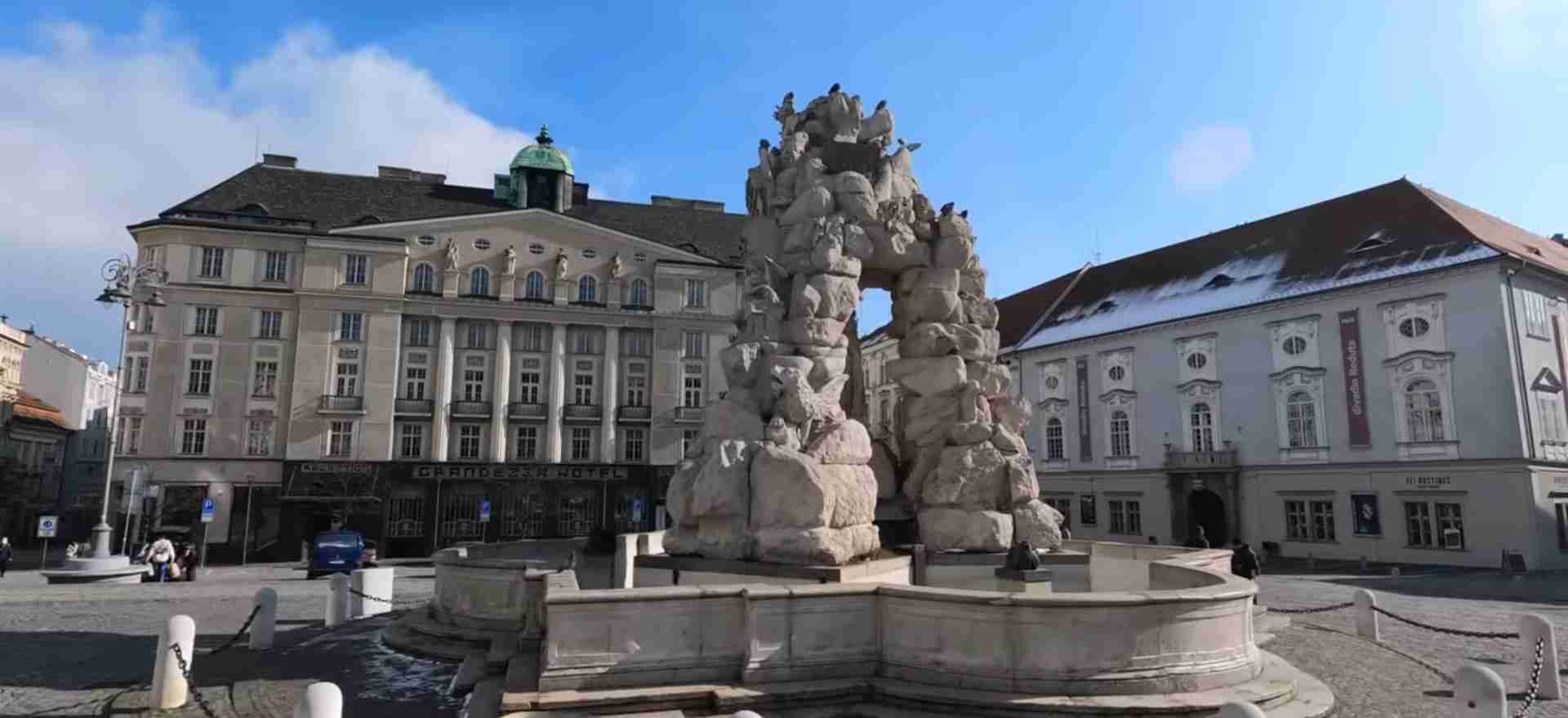
Continue to Villa Tugendhat for a pre-booked 3 PM standard tour, requiring advance reservation at tugendhat.eu weeks before arrival during peak season. The 60-minute guided tour examines Ludwig Mies van der Rohe’s functionalist masterpiece with original furnishings, technical innovations, and architectural significance as UNESCO World Heritage site. After the villa visit, return to the center via tram for late afternoon exploring Zelný Market vendors, the Parnassus Fountain, and pedestrianized shopping streets.
Conclude the day with dinner at traditional Moravian restaurants in the historic center sampling regional specialties including svíčková (marinated beef), bramboráky (potato pancakes), and local wines from South Moravian vineyards. Evening options include attending performance at Mahen Theatre or Janáček Theatre, visiting brewery restaurants for Czech beer culture immersion, or simply strolling the illuminated historic center enjoying the evening atmosphere.
Daily Costs One-Day Visit 2026: Špilberk Castle entry 150 CZK, lunch 180-250 CZK, Cathedral tower 80 CZK, Ossuary tour 180 CZK, Villa Tugendhat 350 CZK, dinner 280-380 CZK, snacks and coffee 80-120 CZK, public transportation day pass 110 CZK. Total day cost: 1,410-1,620 CZK ($62-72) per person (excluding accommodation).
Two-Day Comprehensive Visit 2026
Day One: Follow the one-day itinerary detailed above covering Špilberk Castle, historic center highlights, Cathedral of St. Peter and Paul, underground Ossuary tour, and Villa Tugendhat visit with traditional Moravian dinner concluding the day. This establishes orientation and covers primary UNESCO heritage and architectural highlights requiring advance booking and specific timing.
Day Two: Begin at 9 AM at the Moravian Museum’s Dietrichstein Palace exploring regional history, archaeological collections, and temporary exhibitions spanning 2 hours. Walk to the nearby Technical Museum for 11:30 AM opening, spending 2 hours examining transportation history, industrial development, and Moravian technological innovation across extensive collections of vintage automobiles, locomotives, and manufacturing equipment. Break for lunch at local cafeterias in the Veveří Street area offering budget-friendly traditional meals.
Dedicate afternoon hours to the 14th-century Capuchin Monastery and its unique mummification crypts, followed by exploration of the Denis Gardens providing elevated parkland views across the city. The Moravian Gallery’s Pražák Palace offers extensive art collections spanning medieval to contemporary periods in renovated exhibition spaces 10 minutes walk from the center. Alternatively, take tram line 1 to the Exhibition Grounds for exploring functionalist architecture and the landmark Pavilion Z from 1928.
Evening options include attending opera or ballet at Janáček Theatre, catching contemporary drama at experimental venues, visiting traditional wine bars for South Moravian wine tasting paired with cheese and charcuterie platters, or exploring the city’s craft beer scene at modern brewpubs offering locally produced specialties. The student-populated neighborhood around Masaryk University delivers vibrant evening atmosphere with cafes, bars, and cultural venues maintaining late hours particularly Thursday-Saturday.
Daily Costs Day Two 2026: Moravian Museum 120 CZK, Technical Museum 150 CZK, lunch 150-220 CZK, Capuchin Monastery 80 CZK, Moravian Gallery 120 CZK, coffee and snacks 80-120 CZK, dinner 280-380 CZK, evening entertainment 200-350 CZK, public transportation included in day pass. Total day cost: 1,180-1,540 CZK ($52-68) per person (excluding accommodation).
Three-Day Extended Experience with Day Trip 2026
Days One and Two: Execute the comprehensive two-day program detailed above covering Brno’s primary attractions, UNESCO heritage sites, museums, and cultural venues. This establishes thorough familiarity with the city’s historic center, architectural landmarks, and cultural infrastructure while accommodating advanced bookings for Villa Tugendhat and optimal timing for museum visits and dining experiences.
Day Three – Moravian Wine Country: Depart Brno at 8:30 AM via RegioJet bus to Mikulov, a baroque wine town 60 kilometers south near the Austrian border. The 70-minute journey costs 80-120 CZK ($3.50-5.30) with departures every 2 hours from the Zvonařka terminal. Mikulov centers on its Renaissance castle overlooking the town and surrounding vineyards, with castle museum exploring regional wine culture, noble family history, and border region significance. Entry costs 150 CZK ($6.50) with English-language information materials available.
Explore Mikulov’s historic center featuring baroque Holy Hill pilgrimage site, Jewish Quarter with renovated synagogue, and traditional wine cellars offering tastings of Grüner Veltliner, Riesling, and Zweigelt varieties characteristic of Moravian viticulture. Wine tastings at cellars cost 150-250 CZK ($6.50-11) for 5-6 samples with regional cheese and bread accompaniments. Lunch at traditional restaurants runs 180-280 CZK ($8-12.50) for Czech specialties paired with local wines.
Return buses to Brno depart hourly with last departure at 8 PM, allowing full-day exploration or optional extension to nearby Lednice-Valtice Cultural Landscape, another UNESCO World Heritage site 15 kilometers east featuring baroque château, English-style gardens, and architectural follies across an aristocratic designed landscape. This requires additional transportation via local bus from Mikulov or taxi for 400-600 CZK ($18-26).
Daily Costs Day Three 2026: Brno-Mikulov bus round-trip 160-240 CZK, Mikulov Castle 150 CZK, wine tasting 200 CZK, lunch 220-280 CZK, snacks and coffee 80-120 CZK, dinner back in Brno 280-350 CZK. Total day cost: 1,090-1,340 CZK ($48-59) per person (excluding accommodation).
Essential Attractions and Activities 2026
UNESCO World Heritage – Villa Tugendhat
Villa Tugendhat represents the pinnacle of functionalist architecture in 2026 Brno, designated UNESCO World Heritage Site for its exceptional architectural significance and pioneering modernist design. Ludwig Mies van der Rohe created this residential masterpiece in 1930 for Fritz and Grete Tugendhat, incorporating revolutionary spatial concepts, technological innovations, and material quality that influenced 20th-century architecture globally. The villa occupies a sloping site in the Černá Pole district providing views across Brno toward Špilberk Castle, with three-level configuration stepping down the hillside integrating architecture with landscape through massive glass walls and open-plan interior organization.
The main living space exemplifies Mies van der Rohe’s “less is more” philosophy through column-free interior space divided by freestanding elements including an onyx wall and curved ebony partition creating fluid zones without conventional room divisions. Floor-to-ceiling windows retract mechanically into the basement creating complete interior-exterior integration unprecedented in residential design. Original Tugendhat furniture designed specifically for the villa by Mies van der Rohe and Lilly Reich remains in situ, demonstrating the total design approach integrating architecture, furniture, and spatial experience into unified compositions.
Technical innovations incorporated cutting-edge 1930 technology including steel frame construction enabling large glass expanses, underfloor heating providing comfortable temperatures without visible radiators, and electro-hydraulic window mechanisms allowing massive glass panels to disappear into floor channels. These features positioned Villa Tugendhat at the forefront of modern residential design combining technological sophistication with refined aesthetic expression and luxurious material quality including exotic stone veneers, rare wood treatments, and custom metalwork throughout.
Visiting Villa Tugendhat in 2026 requires advance booking through tugendhat.eu with standard tours departing 10 AM, 12 PM, and 2 PM Tuesday-Sunday. English-language tours accommodate 12-15 visitors for 60-minute guided experiences examining architecture, original furnishings, family history, and technical innovations. Extended tours adding garden and exterior areas operate at 90 minutes with departures at 11 AM and 3 PM. The villa underwent comprehensive restoration 2010-2012 returning all spaces to period condition while adding visitor facilities and conservation systems protecting this architectural treasure for future generations.
Špilberk Castle Complex
Špilberk Castle dominates Brno’s skyline from its 284-meter hilltop position, serving as fortification, royal residence, infamous prison, and now museum complex examining regional history across nine centuries. The castle’s strategic significance derived from commanding positions overlooking trade routes connecting Vienna to Moravia and controlling the Svratka-Svitava river confluence. Original 13th-century foundations expanded through medieval periods into formidable Renaissance fortress resisting sieges during the Thirty Years’ War and maintaining military function until conversion to civilian prison use in the 18th century.
The castle’s darkest period occurred during Habsburg rule when Špilberk operated as brutal political prison housing revolutionaries, nationalists, and common criminals in harsh casemate cells carved from bedrock beneath the fortifications. Permanent exhibitions examine prison conditions, notable inmates, and the fortress’s reputation as “the prison of nations” feared throughout Central Europe. These underground casemates maintain atmospheric preservation allowing visitors to experience claustrophobic conditions endured by prisoners through centuries of incarceration.
Museum collections occupy restored palace spaces exploring Brno’s urban development, medieval life, baroque transformation, and 20th-century history through archaeological artifacts, historical documents, artwork, and interactive displays. The city museum component examines Brno’s evolution from medieval market town to modern industrial center and contemporary European city. Special exhibitions rotate quarterly presenting topics including regional arts, historical events, and cultural developments across Moravian history.
Castle grounds provide elevated parkland overlooking Brno with panoramic views extending across the historic center to surrounding countryside visible from multiple bastions and towers. The parkland includes baroque gardens, defensive earthworks, restored wall walks, and observation platforms offering photography opportunities and orientation perspectives for understanding the city’s geographic organization. The castle hosts summer concerts, theatrical performances, and cultural events utilizing courtyard spaces and historical rooms for atmospheric programming.
Underground Brno – Labyrinth and Ossuary
Brno’s extensive underground system reveals hidden dimensions of city history through cellars, passages, and the massive Ossuary of St. James. The Brno Underground tour combines these subterranean spaces into comprehensive 90-minute experiences departing at 11 AM, 1 PM, and 3 PM daily with English-language guides explaining historical context, architectural features, and cultural significance of these below-ground networks. Advance booking through the tourist information office or online reservation system proves advisable during peak season though walk-up availability typically exists except during busy summer weekends.
The labyrinth system comprises interconnected medieval cellars extending several levels beneath the historic center, originally constructed for storage, refuge, and commercial activity supporting surface shops and residences. These vaulted spaces demonstrate remarkable stonework construction, preservation of medieval building techniques, and adaptation for changing uses across centuries. Tour routes wind through temperature-controlled cellars revealing archaeological findings, historical displays, and architectural features including load-bearing pillars, grain storage areas, and escape passages connecting to surface structures.
The Ossuary of St. James contains skeletal remains of approximately 50,000 individuals, making it Europe’s second-largest charnel house after the Paris Catacombs. These bones accumulated from the 14th through 18th centuries from plague victims, cholera outbreaks, and regular cemetery clearances concentrated in this underground repository beneath St. James Church. The ossuary remained forgotten until rediscovery during construction work in 2001, leading to comprehensive archaeological investigation, public access development, and integration into Brno’s cultural tourism offering.
Contemporary presentation organizes bones in architectural configurations and artistic arrangements respecting the deceased while creating visually striking displays. Informational panels explain historical context, identify demographic patterns visible in skeletal evidence, and discuss cultural attitudes toward death and burial across the centuries represented. The ossuary maintains atmospheric lighting, temperature control for preservation, and interpretive materials in multiple languages assisting international visitors understanding this significant cultural heritage site.
Cathedral of St. Peter and Paul
The Cathedral of St. Peter and Paul rises above Petrov Hill commanding the Brno skyline with distinctive twin neo-gothic spires added during 1901-1909 renovations. The cathedral’s origins trace to 11th-century Romanesque structures repeatedly expanded and rebuilt through medieval periods, baroque transformation in the 17th century, and comprehensive neo-gothic restoration creating the current appearance dominating city views. The cathedral serves as Brno’s primary Catholic religious center and architectural landmark visible throughout the historic center and surrounding districts.
Interior spaces combine architectural layers from multiple periods including romanesque crypt remnants, gothic structural elements, baroque decorative features, and neo-gothic completion creating palimpsest effect revealing construction history. Notable artistic elements include baroque main altar by Moritz Grimm, gothic sculptures, stained glass windows depicting religious narratives, and ornate side chapels housing regional saints and noble family memorials. The cathedral treasury maintains religious artifacts, liturgical vestments, and historical documents examining Catholic heritage in Moravia across nine centuries.
Tower access via 84-meter climb provides panoramic city views extending across the historic center to Špilberk Castle, Villa Tugendhat district, and surrounding Moravian countryside visible in favorable weather conditions. The tower visit costs 80 CZK ($3.50) with narrow spiral staircases requiring moderate fitness for the 150+ step ascent. Observation platforms at multiple levels allow rest breaks while ascending and photography opportunities capturing different perspectives across Brno’s urban fabric and architectural landmarks.
The cathedral maintains unique timekeeping tradition ringing noon bells at 11 AM commemorating historical event when Swedish siege forces promised to withdraw if unable to capture the city by noon. Defenders advanced the bell ringing by one hour causing Swedes to honor their commitment, a tradition continuing four centuries later as distinctive local custom. Regular mass services occur throughout the week with Sunday services at 9 AM and 11 AM attended by local congregation and visitors welcome to participate or observe Catholic worship traditions in Moravia.
Dining and Culinary Experiences 2026
Traditional Moravian Cuisine
Brno’s culinary landscape in 2026 celebrates traditional Moravian cuisine through restaurants, cafeterias, and markets offering regional specialties developed across centuries of agricultural abundance and multicultural influences from Germanic, Hungarian, and Austrian culinary traditions. Svíčková represents the quintessential Czech main course featuring marinated beef sirloin with cream sauce, bread dumplings, and cranberry compote, available at traditional restaurants for 180-280 CZK ($8-12.50) depending on portion size and establishment category. This beloved dish demonstrates Czech mastery of cream-based sauces, slow-cooked meats, and the essential dumpling accompaniments defining Czech cuisine.
Regional specialties include Moravian sparrow (vepřový párek), actually pork cutlets despite the name, served with potato salad or sauerkraut for 150-220 CZK ($6.50-10). Bramboráky (potato pancakes) arrive crispy and golden topped with sour cream, served as appetizers or light meals for 80-120 CZK ($3.50-5.30). Moravian goulash prepared with paprika, slow-cooked beef, and dumplings costs 160-240 CZK ($7-10.50) delivering hearty satisfaction particularly during cold weather months. Roast duck or pork with sauerkraut and dumplings represents traditional Sunday meal fare available daily at conventional restaurants for 200-320 CZK ($9-14).
Zelný Market operating daily in the historic center provides fresh produce, meats, cheeses, and prepared foods from regional farms and producers. Traditional market stalls offer local specialties including smoked meats, farm cheeses, honey, preserves, and seasonal vegetables at prices 20-40% below supermarket equivalents. The market atmosphere creates authentic local shopping experiences with vendors maintaining stalls across generations and providing insights into Moravian food culture and seasonal agricultural rhythms.
Restaurant recommendations for traditional cuisine include Starobrněnská restaurace near Zelný Market serving classic preparations in atmospheric vaulted cellars for 180-320 CZK ($8-14) per main course. U Královny Elišky occupies a historic building offering elevated traditional cooking with local ingredients and attentive service for 250-420 CZK ($11-18.50) per entrée. Koishi Restaurant combines Czech and Asian influences in modern interpretations starting around 200 CZK ($9) for appetizers and 300-450 CZK ($13-20) for mains. Budget-conscious diners discover excellent value at local cafeterias including Lidový dům serving traditional meals for 120-180 CZK ($5.30-8) with cafeteria-style service and generous portions.
Wine Culture and Wine Bars
Brno’s position at the northern edge of South Moravia wine country makes the city an excellent base for exploring Czech wine culture through traditional wine bars, modern wine shops, and regional tastings. Moravian wines primarily comprise white varietals including Grüner Veltliner, Welschriesling, Müller-Thurgau, and Riesling thriving in the region’s continental climate and limestone-rich soils. Red production focuses on Frankovka (Blaufränkisch), Zweigeltrebe, and Svatovavřinecké (St. Laurent) with increasing quality rivaling Austrian and Hungarian neighbors.
Traditional wine cellars called sklepy operate throughout the historic center offering tastings, bottles, and light food pairings in atmospheric vaulted spaces. Vinárna U Čápa maintains extensive Moravian wine selection with knowledgeable staff guiding visitors through regional characteristics and vintage variations. Wine flights featuring 5-6 samples from different producers cost 200-350 CZK ($9-15) with cheese and charcuterie plates adding 150-250 CZK ($6.50-11). Bottles for table service range 400-900 CZK ($18-40) depending on producer reputation and vintage quality.
Modern wine bars including Šelepka Wine Bar and Vinárna Čtyři Váhové feature extensive lists highlighting natural wines, small producers, and experimental winemaking alongside traditional selections. These establishments cater to younger demographics and wine enthusiasts seeking cutting-edge Moravian vintages and international comparisons. Tasting portions allow sampling multiple wines for 60-100 CZK ($2.60-4.40) per glass with full bottles at 450-1,200 CZK ($20-53) for premium selections.
Annual wine events including November’s St. Martin’s Day celebration mark the release of young wines with traditional goose dinners and festive tastings throughout the city. Wine shops near Svoboda Square stock comprehensive Moravian selections enabling visitors to purchase bottles for 150-600 CZK ($6.50-26) depending on quality and producer, significantly below restaurant markups for visitors wanting to enjoy wines in accommodation settings or transport bottles home as gifts or souvenirs representing Moravian terroir and winemaking traditions.
Craft Beer and Brewery Culture
Czech beer culture permeates Brno life with traditional brewery restaurants and modern craft beer venues offering comprehensive experiences beyond conventional bar settings. Pivovar Pegas operates as brewpub in the historic center producing unfiltered lagers, wheat beers, and seasonal specialties in copper kettles visible behind glass windows. The restaurant serves traditional Czech cuisine alongside fresh beer for 45-65 CZK ($2-2.90) per half-liter with food portions priced 150-280 CZK ($6.50-12.50) for main courses.
Traditional beer halls maintain authentic atmosphere with long communal tables, efficient service, and focus on beer consumption alongside simple food offerings. Rebcova pivnice near the cathedral serves Starobrno and Pilsner Urquell for 40-55 CZK ($1.80-2.40) per half-liter in working-class atmosphere attracting locals and adventurous visitors seeking unvarnished Czech beer culture. Traditional ordering customs involve marking consumption on paper coasters with servers tallying final bills based on accumulated marks, requiring trust in the system and attention to tracking personal consumption.
Craft beer growth has introduced modern brewery taprooms and specialist bars featuring Czech and international craft beers. Pivoteka Brno stocks 200+ Czech craft beers with rotating taps featuring local breweries and limited releases. Prices run 60-120 CZK ($2.60-5.30) per beer depending on strength and rarity, with knowledgeable staff explaining flavor profiles, brewing techniques, and regional traditions. These venues appeal to beer enthusiasts seeking variety beyond pilsner-dominated mainstream Czech brewing.
Beer culture etiquette in Brno follows Czech traditions including raising glasses for eye contact during toasts (na zdraví), ordering half-liters as standard serving size, and expecting efficient service focused on beer delivery rather than lingering table service typical in Western establishments. Tipping follows convention of rounding up to nearest 10-20 CZK above the bill total rather than percentage calculations, with cash payment preferred over cards at traditional establishments despite increasing electronic payment acceptance in modern venues.
Shopping and Markets 2026
Zelný Market and Local Produce
Zelný Market occupies the historic center as Brno’s primary fresh market operating continuously since the medieval period, providing daily access to regional produce, meats, cheeses, flowers, and prepared foods from Moravian farms and producers. The market operates 6 AM-6 PM Monday-Friday, 6 AM-1 PM Saturdays, with reduced vendor presence on Sundays. Permanent stalls maintain year-round presence while seasonal vendors supplement selection during harvest periods bringing heightened variety and competitive pricing from direct farm sales.
Seasonal produce follows Moravian agricultural cycles with spring asparagus appearing April-May, strawberries and cherries arriving June-July, and autumn bringing apples, pears, plums, and grape harvests September-October. Winter markets emphasize root vegetables, preserved goods, and imported citrus supplementing limited local fresh production. Prices run 20-40% below supermarket equivalents for comparable quality with some premium organic and specialty items commanding higher rates reflecting production methods and rarity.
Prepared food vendors offer traditional specialties including smoked meats, farm cheeses, honey varieties, preserves, pickled vegetables, and baked goods suitable for picnics, apartment meal preparation, or gifts transporting Czech food culture internationally. Trdelník (chimney cake) vendors prepare fresh pastries for 60-80 CZK ($2.60-3.50) offering sweet treats popular with tourists despite Hungarian rather than Czech origins. Farmer cheese vendors sell fresh tvaroh and aged varieties for 80-150 CZK ($3.50-6.50) per kilogram with tasting samples facilitating selection.
Market atmosphere provides authentic local shopping experiences with vendors maintaining stalls across generations and engaging customers through traditional commerce patterns emphasizing personal relationships, product knowledge, and fair dealing. The market location adjacent to the Parnassus Fountain creates picturesque setting for photography, people-watching, and urban life observation. Wednesday and Saturday mornings bring largest vendor presence and freshest selection, recommended for visitors prioritizing market experience alongside practical food shopping.
Souvenirs and Craft Shopping
Brno souvenir shopping in 2026 ranges from tourist kitsch to legitimate Czech crafts and regional specialties depending on venue selection and product knowledge. Pedestrianized streets around Svoboda Square contain concentrated tourist shops selling magnets, t-shirts, glassware, and trinkets at inflated pricing targeting casual visitors. Quality Czech products including Bohemian crystal, wooden toys, garnet jewelry, and traditional ceramics appear alongside mass-produced imports requiring scrutiny for genuine Czech origins versus generic tourist merchandise.
Bohemian crystal represents authentic Czech craft heritage with traditional glassworks producing hand-cut crystal vases, bowls, glasses, and decorative objects. Quality pieces cost 800-3,000 CZK ($35-133) for small items with larger decorative objects exceeding 5,000 CZK ($220). Reputable shops provide certificates of authenticity and information about manufacturing origins distinguishing genuine Bohemian crystal from Czech-branded imports. Moser, Crystalex, and other established brands maintain quality standards justifying premium pricing over generic tourist shop offerings.
Garnet jewelry utilizing Bohemian garnets showcases regional gemstone heritage with traditional settings in silver or gold. Authentic pieces cost 1,500-8,000 CZK ($66-354) for earrings, pendants, or bracelets depending on size, setting quality, and stone selection. Garnet shops throughout the center offer wide ranges though pricing varies significantly between tourist-focused venues and specialized jewelers requiring comparison shopping and basic negotiation. Certificates documenting Czech origins and gemstone characteristics accompany quality purchases.
Local food products including Moravian wine, honey, preserves, and specialty foods make practical souvenirs representing regional terroir and culinary traditions. Wine shops stock bottles for 150-600 CZK ($6.50-26) suitable for transport in checked luggage with proper packing. Market vendors sell honey varieties for 100-200 CZK ($4.40-9) per jar and fruit preserves for similar pricing. Becherovka herbal liqueur represents popular Czech spirit gift at 250-350 CZK ($11-15) per bottle available at supermarkets and specialty shops throughout the city.
Practical Travel Tips for 2026
Money, Banking, and Payment Systems
Czech crown (koruna, CZK) serves as Brno’s currency in 2026 despite European Union membership, with Czech Republic maintaining monetary independence from the eurozone. Exchange rates fluctuate around 22-23 CZK per US dollar and 24-25 CZK per euro depending on market conditions and exchange provider margins. Airport and train station exchange booths charge 5-8% commission through unfavorable rates, while city center exchange offices offer improved rates around 23.5-24 CZK per euro for cash transactions. Banks provide best official exchange rates though service requires account holder status limiting access for tourists.
ATM withdrawal represents the most economical method for accessing Czech currency, with machines throughout the center offering 24/7 access and accepting international debit and credit cards on Visa, Mastercard, and other major networks. Bank ATMs charge no direct fees though home bank foreign transaction fees typically add 1-3% to exchange rates. Private ATM operators including Euronet occasionally attempt to charge additional fees or unfavorable exchange rates requiring users to decline dynamic currency conversion offers and insist on CZK-denominated transactions at standard interbank rates.
Credit card acceptance has expanded significantly with most hotels, restaurants, shops, and attractions accepting major international cards. Contactless payment works throughout the transportation system, chain retailers, and modern establishments though traditional markets, small cafes, and some independent venues remain cash-only requiring adequate crown availability for daily expenses. Chip-and-PIN technology predominates requiring PIN entry rather than signature verification common in some international markets.
Tipping customs follow Czech conventions expecting 10% gratuity in restaurants for satisfactory service, with rounding up bills to convenient amounts rather than exact percentage calculations. Stating desired total when paying rather than leaving cash on tables prevents confusion, communicated as “keep the change” or simply stating round number including tip. Taxi drivers receive rounding up to nearest 50-100 CZK depending on fare total. Hotel porters and room service merit 20-50 CZK per service. No tipping occurs for counter service, cafes without table service, or self-service establishments.
Internet, Mobile, and Communication
Brno offers comprehensive internet and mobile connectivity in 2026 through widespread WiFi availability, reliable mobile networks, and various options for visitor communication needs. Most hotels, hostels, and apartments provide complimentary WiFi with speeds adequate for email, messaging, navigation, and moderate video streaming. Cafes, restaurants, and shopping centers throughout the historic center offer free guest WiFi with password access displayed or available upon request, creating extensive coverage for connected travelers.
Mobile coverage from Czech operators including O2, T-Mobile, and Vodafone provides reliable 4G/LTE service throughout the city and surrounding regions with 5G networks expanding in the center and major districts. EU visitors enjoy roaming coverage under EU regulations eliminating additional charges for mobile use within Czech Republic. Non-EU travelers face international roaming rates potentially reaching $2-5 per megabyte for data usage unless subscribing to international plans or utilizing local SIM card alternatives.
Local SIM cards from Czech operators cost 200-400 CZK ($9-18) for tourist prepaid packages including 2-5GB data, domestic calls, and limited international calling capacity. SIM cards require passport documentation for registration under Czech telecommunications regulations with activation completing within 1-2 hours. Convenience stores, mobile shops, and newsagents throughout the center sell prepaid SIM cards and top-up vouchers, with English-speaking assistance variable depending on venue and staff composition.
VoIP applications including WhatsApp, Skype, FaceTime, and Viber enable free international calling over WiFi connections, eliminating traditional international calling charges for travelers maintaining internet access. The KORDIS JMK transportation app, Google Maps, and various city guide applications function adequately on moderate data allocations requiring 50-150 MB daily for navigation and real-time information access. Tourist information centers provide free WiFi access and computer terminals for travelers requiring internet access without mobile devices.
Safety, Health, and Emergency Services
Brno maintains low crime rates and generally safe environment for 2026 travelers with violent crime extremely rare and property crime limited primarily to pickpocketing in crowded tourist areas and public transportation. Standard urban precautions including securing valuables, maintaining awareness in crowded spaces, and avoiding isolated areas late at night prove sufficient for personal security. The historic center remains well-lit and populated during evening hours with regular police presence deterring criminal activity in tourist zones.
Emergency services respond to 112 universal emergency number connecting to police, medical, and fire services with operators speaking Czech, English, and German. Medical care meets European standards through public hospitals, clinics, and private facilities with emergency departments providing 24-hour service for urgent conditions. European Health Insurance Cards (EHIC) cover EU citizens for essential medical care at public facilities, while non-EU visitors require travel insurance or direct payment for medical services rendered.
Pharmacies (lékárna) indicated by green cross signage operate throughout the center providing prescription and over-the-counter medications, basic medical supplies, and health consultations. Regular hours run 8 AM-6 PM weekdays, 8 AM-12 PM Saturdays, with 24-hour emergency pharmacy locations posted at all pharmacies and available through hotel reception staff or tourist information services. Many common medications require prescriptions in Czech Republic despite over-the-counter availability elsewhere, necessitating consultation with Czech physicians for some pharmaceutical access.
Water quality from municipal taps meets drinking standards throughout Brno with tap water safe for consumption without boiling or filtration. Restaurants and cafes expect table water requests to specify bottled water with charges of 25-40 CZK ($1.10-1.80) per bottle rather than complimentary tap water common in some international markets. Public restrooms charge 10-15 CZK ($0.40-0.70) for access in train stations, shopping centers, and some public spaces, while restaurant and cafe facilities remain free for customers with purchase expectations.
Planning Your 2026 Visit
Advance Booking Requirements
Successful Brno travel in 2026 requires advance reservations for specific attractions and services while maintaining flexibility for spontaneous exploration of museums, restaurants, and activities accepting walk-in visitors. Villa Tugendhat represents the critical advance booking requirement with standard tours filling 2-4 weeks ahead during peak season April-October and 1-2 weeks ahead during winter months. Booking opens on the first day of each month for tours during the following month through tugendhat.eu website, with popular time slots including weekend mornings and early afternoons filling within hours of booking release.
Accommodation booking follows seasonal patterns with centrally located properties filling 6-8 weeks ahead during spring and autumn shoulder seasons when demand concentrates on limited budget and mid-range options. Summer months maintain good availability until 3-4 weeks before arrival except during the Brno Grand Prix motorcycle racing weekend in late August requiring reservations 6-12 months in advance with minimum stay requirements and premium pricing. Winter months November-February maintain abundant availability allowing last-minute booking flexibility though advance reservations 2-3 weeks ahead secure better rates and preferred properties.
Restaurant reservations prove unnecessary for most dining experiences with walk-in seating available at traditional establishments and casual venues throughout the year. Fine dining restaurants and popular wine bars appreciate reservations for weekend dinner service though weekday availability typically accommodates spontaneous visits. Making reservations through hotel concierge services or directly via phone in English provides assurance for travelers prioritizing specific dining experiences or celebrating special occasions.
Underground tour reservations through the Brno tourist information office or online booking system prove advisable during summer weekends when tour capacity limits create occasional sold-out situations for English-language departures. Weekday tours typically accommodate walk-up visitors without advance booking. Castle museums, churches, and other major attractions accept visitors without reservations throughout the year with minimal waiting except during peak summer Saturday afternoons when school groups and tour groups concentrate visits creating 15-30 minute entry lines at popular venues.
Language and Communication Tips
Czech language predominates in Brno daily life with English language skills varying significantly across different service sectors and generations in 2026. Younger hospitality workers, hotel staff, and tourism professionals generally communicate in functional English adequate for typical visitor interactions including check-in procedures, restaurant orders, and basic directions. Older generations and service workers in traditional sectors including market vendors, public transportation drivers, and some shop assistants maintain limited English requiring patience, gestures, and occasional translation assistance for complex communication.
Basic Czech phrases enhance interactions and demonstrate cultural respect improving service quality and local reception. Essential phrases include “dobrý den” (good day/hello), “děkuji” (thank you), “prosím” (please/you’re welcome), “na zdraví” (cheers), and “mluvíte anglicky?” (do you speak English?). Attempting basic Czech greetings and courtesies before transitioning to English shows cultural awareness appreciated by Czech speakers despite limited language mastery from visitors.
Tourist information centers throughout the historic center staff English-speaking personnel providing maps, recommendations, booking assistance, and problem-solving support for communication challenges. Most establishments display English menu translations or provide English versions upon request, while smartphone translation applications including Google Translate offer real-time assistance for reading signs, menus, and basic written communication when English alternatives prove unavailable.
Cultural communication patterns in Czech society emphasize direct, efficient exchanges over extended pleasantries or elaborate service performances common in some tourist destinations. This directness occasionally appears curt or unfriendly to visitors accustomed to effusive hospitality though reflects cultural norms rather than rudeness or poor service. Adjusting expectations toward functional efficiency over performative friendliness improves comfort with local interaction styles and reduces cultural friction during typical visitor transactions.
Packing and Preparation Recommendations
Packing for Brno in 2026 requires season-appropriate clothing, comfortable walking shoes, and awareness of Central European weather variability across the continental climate. Spring and autumn travel demands layered clothing addressing temperature ranges from 8-22°C with lightweight waterproof jacket essential for frequent brief showers. Summer visits require light clothing for 25-28°C temperatures with sun protection including hat, sunglasses, and sunscreen, plus light jacket for air-conditioned interiors and cooler evenings. Winter packing emphasizes warm layers, waterproof winter coat, gloves, hat, and insulated footwear for -2 to 3°C temperatures with occasional severe cold requiring thermal underlayers.
Comfortable walking shoes prove essential given extensive pedestrian exploration across cobblestone historic center streets and moderate elevation changes ascending to Špilberk Castle and cathedral. Athletic shoes or walking shoes with good arch support prevent foot fatigue during 12-15 kilometer daily walking distances typical for comprehensive sightseeing itineraries. Formal dining and cultural performances require smart casual attire though Brno maintains relatively relaxed dress codes compared to Vienna or Munich with casual clothing acceptable at most venues except opera and high-end restaurants expecting more refined presentation.
Electronic adaptors for Czech Republic follow Continental European Type E standard with two round pins requiring travelers from UK, US, and other non-European markets to bring appropriate adaptor plugs. Czech Republic operates 230V electrical system potentially requiring voltage converters for appliances designed for 110V systems though most modern electronics including phone chargers and laptop power supplies accommodate dual voltage automatically. Power banks prove useful for maintaining smartphone charges during extended sightseeing days given navigation, photography, and translation application battery demands.
Documentation requirements include valid passport for non-EU visitors with Schengen visa obtained in advance for nationals requiring visa authorization. EU citizens use national ID cards for entry without passport requirements under EU freedom of movement provisions. Travel insurance covering medical emergencies, trip cancellation, and lost belongings provides security against unexpected problems though not required for entry. Driving visitors require valid licenses with International Driving Permits recommended though not strictly required for EU license holders. Photocopying important documents including passport, insurance policies, and credit cards provides backup documentation if originals suffer loss or theft during travel.
2026 Updates and Current Information
Recent Developments Affecting Travel
Brno’s 2026 travel landscape reflects several recent infrastructure, cultural, and accessibility improvements enhancing visitor experiences compared to previous years. The historic center pedestrianization expansion completed in 2024 created additional car-free zones around Svoboda Square, Zelný Market, and connecting streets, improving walkability, outdoor dining capacity, and urban atmosphere while reducing vehicle conflicts and air quality concerns. This pedestrianization extends accessible tourism infrastructure supporting wheelchair users, families with strollers, and mobility-limited visitors previously challenged by vehicle traffic in narrow historic streets.
Digital ticketing integration through the KORDIS JMK mobile application expanded in 2025 to include major museum combinations and attraction passes alongside existing public transportation functionality. This system simplifies logistics for international visitors eliminating multiple ticket purchase points and enabling comprehensive planning through single digital platform. English language support throughout the application reduces communication barriers previously complicating independent travel for non-Czech speakers navigating transportation and cultural venues.
Villa Tugendhat implemented enhanced booking system in 2024 improving accessibility for international visitors through English-language interface, calendar availability visualization, and immediate confirmation replacing previous email-based reservation processes requiring multi-day processing. The system accepts international credit cards directly rather than requiring bank transfer payments that complicated advance booking for overseas visitors. These improvements increased international visitation while maintaining capacity limits protecting the UNESCO World Heritage site from overcrowding damage.
Accommodation sector expansion added 800+ hotel rooms across various price categories during 2023-2025 through new property openings and existing hotel renovations. This capacity increase moderated peak season pricing pressures particularly in mid-range categories while improving competition driving service quality improvements across hospitality sectors. Budget segment growth particularly benefited from new hostel openings and apartment conversions increasing options for cost-conscious travelers previously facing limited selection in central locations.
COVID-19 Legacy and Current Protocols
Brno’s 2026 visitor landscape has largely normalized from COVID-19 pandemic disruptions with most restrictions eliminated by 2024. Mask requirements no longer apply to public transportation, indoor venues, or any other settings, while capacity limits on museums, restaurants, and cultural venues have been removed allowing full operational capacity across hospitality and tourism sectors. Advance booking systems initially implemented during pandemic recovery periods for managing capacity persist as operational improvements benefiting both venues and visitors through better crowd distribution and enhanced visitor experience.
Entry requirements for Czech Republic follow standard Schengen zone protocols without COVID-19 vaccination documentation, testing requirements, or health declarations for visitors from any origin countries as of early 2026. Previous digital systems for health documentation verification have been deactivated with no plans for reactivation barring major public health developments requiring renewed restrictions. International travelers access Czech Republic through normal visa and passport requirements without additional health-related bureaucracy from pandemic periods.
Enhanced sanitation protocols implemented during pandemic periods persist at many venues as improved operational standards including more frequent cleaning schedules, hand sanitizer availability, and improved ventilation systems in museums and public spaces. These measures continue as general operational improvements rather than specific health mandates, contributing to overall facility quality standards benefiting all visitors. Restaurant kitchens maintain higher sanitation standards introduced during health crisis periods, while contactless payment adoption accelerated during pandemic years persists as preferred transaction method across retail and hospitality sectors.
Sustainability and Responsible Tourism
Brno actively promotes sustainable tourism practices in 2026 through various municipal initiatives, business sector engagement, and visitor education programs designed to minimize environmental impacts while distributing economic benefits across local communities. Public transportation investment emphasizes electric bus fleet expansion, tram network upgrades, and cycling infrastructure development encouraging visitors to adopt low-carbon mobility options for urban exploration. The city’s compact geography facilitates walking and cycling as primary tourist movement modes, naturally reducing transportation-related environmental impacts compared to more dispersed destinations.
Cultural heritage conservation efforts protecting Villa Tugendhat, Špilberk Castle, historic churches, and underground systems balance visitor access with long-term preservation through capacity management, climate control systems, and professional conservation work maintaining these assets for future generations. Visitor entry fees directly fund conservation activities creating sustainable funding model linking tourism revenue to heritage protection responsibilities. The city emphasizes educational programming explaining conservation challenges and visitor behavior impacts on fragile historic materials, cultivating responsible visitor engagement with cultural heritage.
Local business support initiatives encourage visitors to patronize independent restaurants, family-owned shops, regional food producers, and local service providers distributing tourism economic benefits beyond international hotel chains and franchise operations. Zelný Market highlights regional agricultural production connecting visitors directly with Moravian farmers and food artisans while supporting sustainable local food systems. Wine tourism emphasizes small family vineyards and sustainable viticulture practices characteristic of South Moravian wine production over industrial agricultural models.
Waste reduction programs throughout hospitality sectors include refillable water bottle support at hotels and attractions, elimination of single-use plastics at major venues, and recycling infrastructure in public spaces. Visitors contribute through responsible waste disposal, supporting businesses demonstrating environmental consciousness, choosing walking and public transportation over private vehicles, and respecting heritage site preservation guidelines protecting fragile architectural and artistic elements from damage caused by inappropriate visitor behavior.
Frequently Asked Questions About Brno 2026
How many days do you need in Brno?
Two to three days provides adequate time for comprehensive Brno exploration in 2026 covering primary attractions, UNESCO heritage sites, cultural venues, and dining experiences without rushed scheduling. Day one focuses on Špilberk Castle, historic center orientation, cathedral, and Villa Tugendhat visit requiring advance booking. Day two explores underground systems, museums, and remaining cultural attractions with flexible scheduling allowing spontaneous discovery. A third day enables Moravian wine country excursion to Mikulov, Lednice-Valtice UNESCO landscape, or deeper Brno neighborhood exploration beyond tourist center. Solo travelers focusing exclusively on Villa Tugendhat and architectural highlights complete satisfying one-day visits, while extended stays enable comprehensive regional exploration using Brno as operational base.
Is Brno cheaper than Prague in 2026?
Brno maintains significantly lower costs than Prague across virtually all travel expense categories in 2026, delivering 40-50% savings on accommodation, 30-40% lower restaurant pricing, and 25-35% reduced attraction costs compared to capital city equivalents. Mid-range Brno hotels charge 1,800-2,800 CZK ($80-125) per night versus 3,500-5,500 CZK ($155-243) for comparable Prague properties. Traditional restaurant meals cost 180-320 CZK ($8-14) in Brno versus 280-480 CZK ($12.50-21) in Prague tourist areas. This pricing advantage reflects lower land costs, reduced tourist demand pressures, and local economic conditions in Czech Republic’s second city versus internationally prominent capital attracting premium pricing across hospitality sectors.
What is Brno famous for in 2026?
Brno’s 2026 reputation centers on Villa Tugendhat as UNESCO World Heritage functionalist architecture masterpiece, Špilberk Castle fortress and prison complex, extensive underground labyrinth systems including Europe’s second-largest ossuary, and status as Moravian cultural capital maintaining authentic Czech atmosphere beyond Prague’s heavy tourist infrastructure. The city additionally claims recognition for Moravian wine access, motorsport heritage through the Masaryk Circuit hosting MotoGP racing, university city vitality from 80,000 students attending six universities, and functionalist architecture concentration from 1920s-1930s modernist development including Exhibition Grounds complex and numerous residential and institutional buildings demonstrating avant-garde design principles.
Can you drink tap water in Brno?
Tap water throughout Brno meets European Union drinking water standards in 2026 with municipal supply safe for consumption without boiling, filtration, or chemical treatment. The water originates from protected groundwater sources and receives modern treatment ensuring bacteriological safety and acceptable taste characteristics. Visitors drink tap water safely in hotels, apartments, restaurants, and public facilities without health concerns. Some visitors detect mineral content or chlorine taste differences compared to home water supplies though these variations remain within safety parameters. Restaurants typically expect bottled water orders rather than providing complimentary tap water, with mineral water bottles costing 25-40 CZK ($1.10-1.80) at table service establishments.
What currency is used in Brno?
Czech crown (koruna česká, CZK) serves as official currency throughout Brno and Czech Republic in 2026 despite European Union membership and Schengen zone participation. The country maintains monetary independence with no current timeline for euro adoption despite previous integration discussions. Exchange rates fluctuate around 22-24 CZK per US dollar and 24-26 CZK per euro depending on market conditions and exchange provider margins. ATM withdrawals from bank machines provide most economical currency access for travelers, while credit cards function widely though traditional markets, small cafes, and some venues remain cash-only requiring adequate crown availability for daily expenses.
Is Brno good for solo travelers in 2026?
Brno delivers excellent solo travel experiences in 2026 through safe urban environment, straightforward logistics, English language availability in tourist sectors, comprehensive hostel social infrastructure for meeting other travelers, efficient public transportation enabling independent exploration, and cultural programming accessible to individuals versus group-oriented activities. The compact historic center geography eliminates transportation complications allowing walking-based exploration, while hostel common areas, free walking tours, and wine bar cultures facilitate social connections for travelers seeking communal experiences alongside solitary sightseeing. Lower costs compared to Prague enable extended solo stays on modest budgets, while reliable public safety standards and tourist-friendly infrastructure reduce solo travel challenges common in less developed destinations.
What is the best month to visit Brno?
May and September represent optimal months for Brno visits in 2026, combining pleasant 18-22°C temperatures, manageable tourist crowds, reasonable accommodation rates 20-30% below summer peaks, full cultural programming availability, and minimal weather disruption from extreme heat or cold. May delivers spring blooming, increasing daylight, and activated outdoor dining terraces while avoiding summer intensity. September brings harvest season wine activities, comfortable sightseeing conditions, and autumn festival programming without spring’s occasional cool temperatures and increased rainfall. Both months balance weather quality, cultural access, cost efficiency, and crowd management superior to summer peaks (higher costs, larger crowds) or winter months (cold temperatures, short daylight) for well-rounded travel experiences.
How do you get from Prague to Brno in 2026?
Direct trains from Prague to Brno depart hourly from Praha hlavní nádraží (main station) with 2.5-3 hour journey times and fares ranging 200-350 CZK ($9-15) for second-class tickets depending on service type and booking timing. RegioJet and České dráhy operate competing services with online booking at regiojet.com and cd.cz offering advance purchase discounts 30-40% below walk-up fares. Premium services with complimentary refreshments and additional legroom cost 400-550 CZK ($18-24). Buses from FlixBus and RegioJet provide budget alternatives at 150-250 CZK ($6.50-11) with 3-3.5 hour journey times and less comfortable seating versus trains. Rental cars enable flexible itinerary planning for exploring Moravian countryside though parking costs and urban driving hassles in both cities favor public transportation for direct Prague-Brno connections.
Does Brno have good nightlife in 2026?
Brno maintains vibrant nightlife in 2026 driven by 80,000+ university students and creative cultural scene supporting diverse venues including craft beer bars, wine cellars, cocktail lounges, dance clubs, live music venues, and experimental performance spaces concentrated around the historic center and student neighborhoods near Masaryk University. The scene emphasizes quality over quantity with sophisticated wine bars, innovative craft beer establishments, and intimate live music venues prioritized over massive nightclubs or tourist-oriented entertainment districts. Students and young professionals frequent venues Thursday-Saturday creating energetic atmosphere particularly during academic year September-June, while summer months maintain reduced intensity given student population departures for holidays.
Are there day trips from Brno worth taking in 2026?
Numerous excellent day trips extend Brno travel in 2026 including Moravian wine country destinations Mikulov and Znojmo accessible via bus in 70-90 minutes, Lednice-Valtice UNESCO Cultural Landscape featuring baroque châteaux and designed landscapes 50 kilometers south, Austerlitz battlefield site from Napoleon’s 1805 victory over Russian and Austrian forces 20 kilometers east, Moravian Karst cave systems with Macocha Abyss and Punkva Caves 30 kilometers north, and Vienna accessible via train in 1.5 hours for international extension. These destinations provide architectural heritage, natural landscapes, historical significance, and cultural experiences diversifying Brno-based itineraries while maintaining day-trip logistics returning to base accommodation for multi-day Moravian exploration.