Bosnia UNESCO World Heritage Sites: Complete Guide
Bosnia and Herzegovina preserves five UNESCO World Heritage Sites that chronicle centuries of cultural convergence and natural evolution across the Balkans. From Ottoman-era bridges spanning emerald rivers to medieval tombstones carved with mysterious symbols, from reconstructed architectural icons to primeval forests untouched since the last ice age, these sites represent outstanding universal value recognized by the international community. Each location offers visitors tangible connections to empires, kingdoms, and ecosystems that shaped this crossroads between East and West, where civilizations built, battled, and ultimately created a heritage unlike anywhere else in Europe.
Key Takeaways:
- Bosnia and Herzegovina hosts five UNESCO World Heritage Sites: three cultural monuments and two natural sites, inscribed between 2005 and 2024
- The Old Bridge Area of Mostar, destroyed during the 1990s conflict and meticulously reconstructed, symbolizes both Ottoman architectural mastery and post-war reconciliation
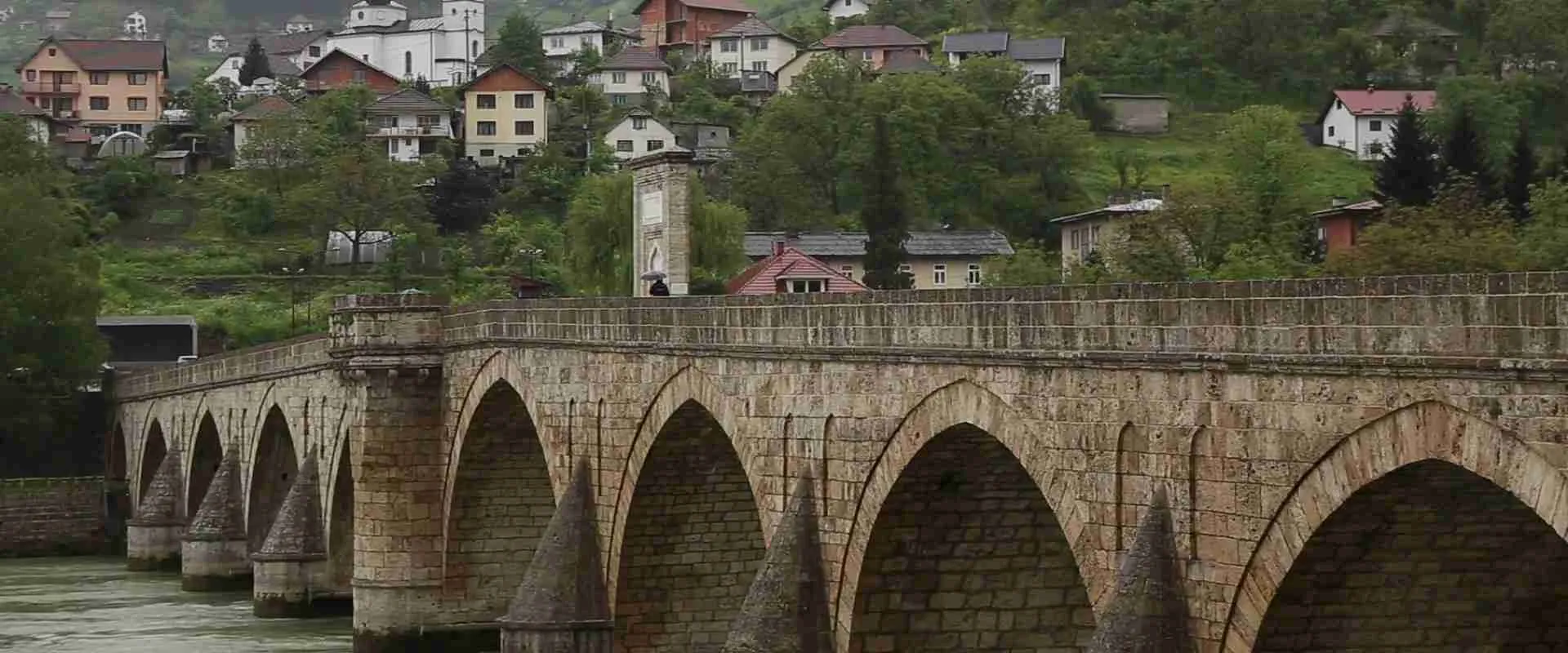
- Mehmed Paša Sokolović Bridge in Višegrad represents the pinnacle of 16th-century Ottoman civil engineering, designed by legendary architect Mimar Sinan and immortalized in Ivo Andrić’s Nobel Prize-winning novel
- Stećci Medieval Tombstone Graveyards comprise 28 necropolis sites across four Balkan countries, with 20 located in Bosnia and Herzegovina, featuring enigmatic limestone monuments from the 12th-16th centuries
- The two natural UNESCO sites—Ancient and Primeval Beech Forests and Vjetrenica Cave—protect old-growth ecosystems and extraordinary biodiversity within the Dinaric Alps mountain range
- All five sites are accessible to visitors throughout the year, with the cultural monuments requiring no admission fees beyond optional museum access
People Also Ask About Bosnia UNESCO World Heritage Sites
How many UNESCO World Heritage Sites does Bosnia and Herzegovina have?
Bosnia and Herzegovina has five UNESCO World Heritage Sites inscribed on the official list. Three sites are cultural monuments: the Old Bridge Area of the Old City of Mostar (inscribed 2005), the Mehmed Paša Sokolović Bridge in Višegrad (inscribed 2007), and the Stećci Medieval Tombstone Graveyards (inscribed 2016 as a transnational site). Two sites are natural properties: the Ancient and Primeval Beech Forests of the Carpathians and Other Regions of Europe, specifically the Janj Primeval Forest component (part of a larger transnational series), and Vjetrenica Cave (inscribed 2024 as the most recent addition). Bosnia ratified the UNESCO World Heritage Convention on July 12, 1993, inheriting its status from the former Yugoslavia. The country maintains a tentative list of nine additional sites proposed for future nomination, including Sarajevo’s multicultural urban landscape and the Perućica Rainforest.
What makes the Mostar Old Bridge culturally significant?
The Old Bridge in Mostar represents exceptional Ottoman architectural achievement and serves as a powerful symbol of reconciliation. Built in 1566 by architect Hajrudin, a student of the legendary Mimar Sinan, the bridge spans 28.7 meters across the Neretva River in a single limestone arch that defied engineering conventions of the 16th century. Its cultural significance deepened after November 1993, when the bridge was deliberately destroyed during the Bosnian War. The international community committed to its reconstruction, which was completed in 2004 using traditional Ottoman techniques and incorporating original stones recovered from the riverbed. UNESCO inscribed the Old Bridge Area in 2005, recognizing it as a monument to the city’s multicultural heritage and as a symbol of coexistence between diverse cultural, ethnic, and religious communities. The bridge area encompasses not just the bridge itself but the surrounding Ottoman-era Old Town with its cobblestone streets, traditional houses, and historic mosques, creating an authentic urban ensemble that preserves Mostar’s role as a cultural crossroads.
Where is the most accessible stećci necropolis for visitors?
The Radimlja Necropolis near Stolac is the most accessible and most famous stećci site in Bosnia and Herzegovina. Located approximately 3.5 kilometers west of Stolac town center and about 60 kilometers south of Mostar, Radimlja features 133 medieval tombstones dating primarily to the 14th and 15th centuries, with 63 displaying intricate artistic carvings. The site is open daily from 7 AM to 7 PM with free admission and requires no advance booking. The necropolis sits adjacent to the main road connecting Bosnia with Croatia and Montenegro, making it easily reachable by car or organized tour. The tombstones at Radimlja showcase diverse decorative motifs including knights on horseback, grapevine patterns, religious symbols, hunting scenes, and mysterious geometric designs. The site provides informational signage explaining the historical context and symbolism. For visitors seeking a comprehensive stećci experience, the nearby Boljuni Necropolis, located 10 kilometers from Radimlja, contains 274 tombstones with even greater artistic diversity and can be visited in combination with Radimlja within a single afternoon.
Can visitors access the primeval beech forests and Vjetrenica Cave?
Both of Bosnia’s natural UNESCO sites are accessible to visitors, though with different levels of access. The Janj Primeval Forest, located near Šipovo in the Sutjeska National Park region, is a 295-hectare strict nature reserve. While the forest itself has limited access to protect its pristine ecological character, the surrounding Sutjeska National Park offers established hiking trails where visitors can experience similar old-growth beech forest environments. Vjetrenica Cave near Ravno in East Herzegovina is fully accessible through guided tours. The cave system stretches 7000 meters total, with 600-800 meters open for public tours that last approximately 40 minutes. Tours run regularly, with entrance fees included in the guided visit. The cave maintains a constant temperature of 17 degrees Celsius throughout the year, requiring visitors to bring warm clothing even during summer. Vjetrenica is notable for its extraordinary biodiversity, hosting endemic cave-dwelling species found nowhere else on Earth, along with impressive karst formations including stalactites, stalagmites, underground lakes, and active streams.
Extended multi-day tours – 5+ days
Featured Bosnia Multi-Day Tour Packages

3 days
Bosnia 3-Day Discovery Tour
- ✓ Comprehensive Bosnia experience
- ✓ Expert local guides included
- ✓ All accommodation included
- ✓ Transportation provided
5 days
Bosnia 5-Day Highlights Experience
- ✓ Comprehensive Bosnia experience
- ✓ Expert local guides included
- ✓ All accommodation included
- ✓ Transportation provided

7 days
Bosnia 7-Day Cultural Journey
- ✓ Comprehensive Bosnia experience
- ✓ Expert local guides included
- ✓ All accommodation included
- ✓ Transportation provided

10 days
Bosnia 10-Day Complete Adventure
- ✓ Comprehensive Bosnia experience
- ✓ Expert local guides included
- ✓ All accommodation included
- ✓ Transportation provided
Multi-day tour packages powered by TourRadar. Prices and availability subject to change.
Introduction
Bosnia and Herzegovina occupies a unique position in European heritage conservation, with a concentration of UNESCO World Heritage Sites that reflects the country’s role as a historical bridge between civilizations. The five inscribed properties span nearly a millennium of human history and natural evolution, from medieval tombstone traditions that predate the Ottoman arrival to 16th-century bridges that exemplified the empire’s architectural zenith, from war-torn monuments painstakingly rebuilt to ancient forests that have stood unchanged since the last glacial period.
What distinguishes Bosnia’s UNESCO portfolio is the narrative of resilience these sites collectively tell. The Old Bridge in Mostar endured destruction and rebirth. The Višegrad bridge survived floods, wars, and the passage of empires. The stećci tombstones weathered centuries of neglect and misuse. The beech forests persisted through climate changes that eliminated similar ecosystems across Europe. Vjetrenica’s cave systems evolved over millions of years, creating biodiversity hotspots in absolute darkness.
These sites matter beyond their aesthetic or historical value. They represent commitments to preservation, reconstruction, and international cooperation in heritage protection. The Old Bridge’s reconstruction involved experts from Turkey, Italy, France, and other nations. The Stećci inscription required coordination among four Balkan countries. The beech forest designation encompasses protected areas across 42 European nations. Bosnia’s participation in the World Heritage program demonstrates that heritage protection transcends political boundaries and contemporary conflicts.
For travelers, Bosnia’s UNESCO sites offer experiences ranging from contemplative walks across centuries-old bridges to underground explorations of caves where prehistoric artists left their marks. The sites cluster primarily in Herzegovina, the southern region, making multi-site visits feasible within a single journey. Mostar serves as an ideal base, positioned within an hour’s drive of Stolac’s stećci sites and two hours from Višegrad. The natural sites require more dedicated excursions but reward visitors with landscapes that have vanished elsewhere in Europe.
Understanding these sites requires recognizing the layers of history embedded in Bosnia’s landscape. The stećci emerged during the medieval Bosnian Kingdom, a period when the region operated as an independent entity. The Ottoman bridges marked the integration of Bosnia into a vast empire that connected Vienna to Baghdad. The destruction and reconstruction of Mostar’s bridge in the 1990s reflected contemporary conflicts over identity and territory. The protection of primeval forests and cave systems represents modern ecological consciousness. Each layer adds depth to Bosnia’s cultural and natural heritage, creating a complex story that cannot be reduced to simple narratives about any single civilization or period.
Old Bridge Area of the Old City of Mostar: Symbol of Resilience and Reconciliation
The Old Bridge Area of the Old City of Mostar, inscribed on the UNESCO World Heritage List in 2005, encompasses a well-preserved Ottoman-era urban ensemble centered on the iconic Stari Most bridge. The protected area includes the bridge itself, the historic quarters on both riverbanks, the towers guarding the bridge approaches, traditional stone houses, mosques, public baths, and the cobblestone streets of the old bazaar. This integrated cultural landscape represents four centuries of Ottoman urban development and multicultural coexistence, destroyed during war and meticulously reconstructed through international cooperation.
Architectural and Engineering Significance of Stari Most
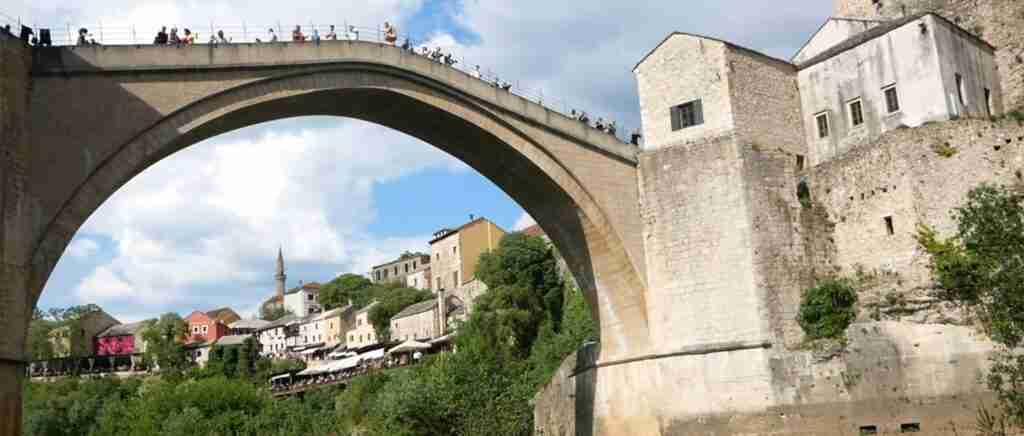
The Old Bridge represents a masterpiece of 16th-century Ottoman civil engineering and architecture. Commissioned by Sultan Suleiman the Magnificent and designed by Hajrudin (known as Mimar Hajruddin), a protégé of the legendary Ottoman court architect Mimar Sinan, the bridge was completed in 1566 after nine years of construction. The structure spans 28.7 meters across the Neretva River gorge in a single graceful arch, rising 24 meters above the water at its highest point.
What made Hajrudin’s design revolutionary was the use of local limestone (tenelija stone) in an arch of unprecedented span for the period. The bridge contains no mortar; the 456 stone blocks are held together by iron clamps sealed with molten lead, creating a flexible structure that could withstand thermal expansion and contraction. The arch’s slender profile—the bridge is only 4 meters wide at the crown—creates an illusion of lightness despite the thousands of tons of stone. This engineering achievement placed the Mostar bridge among the most daring stone arch bridges of the Renaissance period, comparable to contemporary Italian achievements but using different construction principles adapted to local materials and Ottoman architectural traditions.
The bridge was not merely a crossing point but a multifunctional civic space. The two fortified towers—Halebija on the northeast bank and Tara on the southwest bank—served as defensive positions and toll collection points. The flat paved surface of the bridge functioned as a gathering place, market area, and ceremonial space. The diving tradition, which continues today, emerged as early as the 17th century, with young men leaping from the bridge’s apex into the cold waters below as a demonstration of courage and coming-of-age ritual.
Destruction During the Bosnian War and International Reconstruction Efforts
On November 9, 1993, Croatian artillery deliberately targeted and destroyed the Old Bridge during the Bosnian War, causing the four-century-old structure to collapse into the Neretva River. The destruction was not collateral damage but an intentional erasure of a symbol that had come to represent Mostar’s multicultural identity and the coexistence of Muslim, Catholic, Orthodox, and Jewish communities that had characterized the city for generations.
The international response to the bridge’s destruction was immediate and profound. UNESCO, the World Bank, and governments including Turkey, Italy, France, and the Netherlands committed resources to reconstruction even before the war’s end. Turkish funding and expertise proved crucial, as Ottoman construction techniques had been preserved in Turkey. Italian stone conservators analyzed the original tenelija limestone. French engineers studied the structural mechanics. Croatian experts documented the bridge using pre-war photographs and measurements.
Reconstruction began in 2001 and concluded in 2004. The process prioritized authenticity: divers recovered 1,088 original stones from the riverbed, which were integrated into the new structure. Additional stone was quarried from the same Tenelija quarries used in 1566. Ottoman construction techniques were revived, including the use of iron clamps and lead sealing rather than modern adhesives or reinforcements. The reconstructed bridge opened on July 23, 2004, and UNESCO inscribed the Old Bridge Area as a World Heritage Site in 2005, recognizing both its architectural significance and its symbolic role in post-conflict reconciliation.
The Old Town Urban Ensemble and Cultural Landscape
The UNESCO inscription encompasses far more than the bridge itself. The Old Bridge Area includes the traditional neighborhoods on both banks of the Neretva, preserving the characteristic Ottoman urban structure. The eastern bank’s Brankovac neighborhood and the western bank’s Tabhana neighborhood feature closely-packed stone houses with distinctive rooflines, interior courtyards, and architectural details from the 16th through 18th centuries. Many houses were destroyed during the war and have been reconstructed using traditional methods.
Kujundžiluk, the historic copper bazaar street on the eastern approach to the bridge, remains the commercial heart of the Old Town. The narrow cobblestone lane is lined with workshops where artisans continue traditional metalworking, creating copper coffee sets, jewelry, and decorative items using techniques transmitted across generations. The bazaar’s persistence represents continuity of craft traditions despite war and modernization pressures.
The religious architecture within the Old Bridge Area reflects Mostar’s multicultural character. The Koski Mehmed-Pasha Mosque, built in 1618, stands on the western bank overlooking the bridge, its minaret offering panoramic views of the Old Town. The mosque complex includes a medrese (Islamic school) and public fountain. The interior features Ottoman-era calligraphy and geometric tile work. On the eastern bank, the Karadjoz-Bey Mosque (1557) predates the bridge itself and served as a central mosque during Ottoman rule. These mosques coexist with historic Catholic and Orthodox churches in the wider city, though many religious buildings outside the immediate Old Town area suffered damage during the war.
Visiting the Old Bridge Area Practically
Walking across the Old Bridge itself is free and accessible 24 hours daily. The bridge’s surface consists of smooth limestone worn slippery by centuries of foot traffic, making sturdy footwear advisable. The arch’s steep slope—rising then descending across the span—requires moderate physical ability. The bridge becomes crowded during peak summer months, particularly during the famous diving competitions when professional divers perform from the apex.
The Old Bridge Museum, housed within the Tara Tower at the western end of the bridge, provides essential historical context. The museum opens daily from 9 AM to 6 PM, with admission around 10-12 KM (approximately €6). Exhibits document the bridge’s original construction using Ottoman building techniques, its destruction during the war through photographs and recovered fragments, and the international reconstruction project. Climbing the tower provides elevated views of the bridge and Old Town. The Halebija Tower on the eastern bank offers similar perspectives and is included in the museum ticket.
The diving tradition continues throughout the year, though organized competitions occur primarily in summer. Bridge divers, members of the local diving club, collect donations from spectators before performing their 24-meter plunges into the cold Neretva. Successful dives require precise timing to avoid rocks and to enter a deep pool in the river. Watching from the Old Bridge itself provides close-up views, though riverside cafes offer more comfortable vantage points. The Kriva Ćuprija (Crooked Bridge), a smaller Ottoman bridge upstream, provides an excellent angle for photography.
The Old Town’s compact scale allows exploration on foot within 2-3 hours, though a full day permits visits to museums, mosques, and leisurely browsing in the bazaar. Spring (April-May) and autumn (September-October) offer comfortable temperatures and manageable crowds. Summer brings intense heat and peak tourism. Winter sees fewer visitors but showcases the bridge in a more contemplative atmosphere.
Mehmed Paša Sokolović Bridge in Višegrad: Ottoman Engineering Masterpiece
The Mehmed Paša Sokolović Bridge spanning the Drina River in Višegrad was inscribed as a UNESCO World Heritage Site in 2007. This 16th-century stone arch bridge represents the pinnacle of Ottoman civil engineering and the architectural genius of Mimar Sinan, the empire’s greatest architect. The bridge has survived floods, wars, and nearly five centuries of continuous use while maintaining its structural integrity and aesthetic grace.
Historical Context and Commission by Grand Vizier Mehmed Paša Sokolović
The bridge owes its existence to Mehmed Paša Sokolović, one of the most powerful figures in Ottoman history. Born as Bajica Nenadić around 1505 in the village of Sokolovići near Rudo in eastern Bosnia, he was taken as a boy through the devshirme system—the “blood tax” whereby Christian boys from Ottoman territories were recruited, converted to Islam, and trained for military or administrative service. Mehmed Paša’s exceptional abilities propelled him to the position of Grand Vizier, the second most powerful position in the Ottoman Empire, serving three successive sultans from 1565 to 1579.
Despite ruling vast territories from the imperial capital in Constantinople, Mehmed Paša never forgot his homeland. In the early 1570s, he commissioned a bridge over the Drina River at Višegrad, the town nearest his birthplace. The bridge would connect Bosnia with the rest of the empire, facilitating trade and military movement while serving as a lasting monument to his origins. The commission went to Mimar Sinan, the imperial court architect whose portfolio included the Süleymaniye Mosque in Istanbul and dozens of other masterpieces across the empire.
Construction began in 1571 and concluded in 1577, an extraordinarily complex project for a remote frontier location. Workers quarried travertine stone from Višegrad Spa several kilometers away. Each block was hand-carved to precise specifications, with iron clamps and molten lead sealing joints without mortar. Local legends, recorded by novelist Ivo Andrić, speak of construction difficulties and resistance, including stories of sabotage and harsh measures to ensure the bridge’s completion. These narratives, whether historical fact or folk memory, became part of the bridge’s mythology.
Architectural Design and Engineering Innovation
The Mehmed Paša Sokolović Bridge stretches 179.5 meters across the Drina River, consisting of 11 masonry arches with spans varying from 11 to 15 meters. The arches rest on ten stone piers that penetrate deep into the riverbed, designed to resist the powerful spring floods that regularly surge through the Drina canyon. The bridge’s profile rises gradually toward the center, creating a gentle humpback shape that enhances structural stability while allowing flood waters to pass beneath.
Sinan’s engineering brilliance manifests in several design features that ensure the bridge’s longevity. The stone piers were designed with cutwaters—pointed upstream-facing extensions that deflect water flow and ice, reducing pressure on the structure. The arches employ the pointed arch form characteristic of Ottoman architecture, which distributes weight more efficiently than semicircular Roman arches. The bridge deck, originally paved with wood, now features stone paving that has replaced earlier surfaces without altering the underlying structure.
The bridge’s most distinctive feature is the sofa or kapija, a widened platform positioned at the center span on the southeastern side. This 4-meter-by-5-meter platform, accessible via stairs from the roadway, serves as a gathering space offering views up and down the river. Historically, the kapija functioned as a marketplace, meeting point, and observation platform where travelers could rest and socialize. This architectural element transforms the bridge from mere infrastructure into social space, a principle Sinan applied across his work.
The elegance of Sinan’s proportions becomes apparent when viewing the bridge from riverside positions. The arch heights, pier widths, and overall length create visual harmony despite the structure’s substantial mass. This attention to aesthetic proportion alongside structural necessity characterizes Sinan’s approach to architecture, placing him among the greatest builders of the Renaissance period whether judged by European or Ottoman standards.
The Bridge in Literature: Ivo Andrić’s “The Bridge on the Drina”
The Mehmed Paša Sokolović Bridge achieved literary immortality through Ivo Andrić’s 1945 novel “The Bridge on the Drina” (Na Drini ćuprija), an epic chronicle spanning four centuries of history centered on the bridge. Andrić, born in Travnik, Bosnia, and raised partly in Višegrad, used the bridge as both setting and symbol to explore the intersection of Ottoman, Austro-Hungarian, and Yugoslav histories, the coexistence and conflicts among Muslim, Orthodox, Catholic, and Jewish communities, and the bridge itself as a witness to generations of human drama.
The novel opens with the bridge’s construction, including the harrowing legend of Radisav, a Serbian peasant who allegedly sabotaged the construction and was impaled alive on the bridge as punishment—a scene that transforms the bridge into a monument built partly through suffering. Andrić then follows the bridge through Ottoman rule, Austro-Hungarian occupation, World War I, and the interwar period, using it as an unchanging reference point as empires collapse and populations endure occupation, war, and displacement.
Andrić received the Nobel Prize for Literature in 1961, with “The Bridge on the Drina” cited as his masterwork. The novel brought international recognition to the Višegrad bridge and established it as a literary landmark. Visitors familiar with the novel often seek specific locations mentioned in the narrative—the kapija where townspeople gathered to socialize, the point where Radisav was allegedly impaled, the spot where the bridge suffered damage during World War I.
The connection between bridge and novel complicates historical memory. The bridge survived World War I, though three arches were destroyed and later restored. It endured World War II with damage but remained structurally intact. During the Bosnian War of the 1990s, the bridge became associated with war crimes committed in Višegrad, transforming its symbolic meaning for many. Today, the bridge exists simultaneously as an architectural masterpiece, a UNESCO heritage site, a literary monument, and a place bearing difficult recent history—a complexity that reflects Bosnia’s layered past.
Visiting the Mehmed Paša Sokolović Bridge and Višegrad
The bridge is fully accessible to visitors 24 hours daily with no admission fee, functioning as both heritage site and active crossing point between the two halves of Višegrad. Walking across the 179.5-meter span provides perspectives on Sinan’s engineering and allows appreciation of the Drina River’s beauty. The kapija platform at the bridge’s center offers the best vantage point for photography and contemplation, though it can be crowded during summer.
Optimal views of the bridge come from riverside positions rather than the bridge deck itself. The western riverbank below the bridge provides panoramic perspectives showing all 11 arches and the bridge’s full length. The eastern bank offers closer views emphasizing individual arches and architectural details. A zipline facility operates near the bridge, and small tourist boats offer 30-45 minute cruises on the Drina, providing water-level views that reveal the piers’ cutwaters and the bridge’s relationship to the surrounding canyon.
Višegrad itself offers limited additional attractions beyond the bridge, though Andrićgrad, a cultural complex built in 2014 by filmmaker Emir Kusturica and dedicated to Ivo Andrić, lies adjacent to the bridge. This controversial project attempts to recreate an idealized Ottoman-era town but has been criticized for historical inaccuracies and political overtones. The Ivo Andrić House, marking the author’s childhood residence, is not open to the public. The town’s cafes and restaurants along the riverbanks provide comfortable spots for extended observation of the bridge.
Reaching Višegrad requires commitment, as the town lies in the eastern corner of Republika Srpska, approximately 120 kilometers from Sarajevo. Bus connections from Sarajevo’s Lukavica station run irregularly, with the journey taking 2-3 hours. Private transport or organized tours offer more flexibility. Visitors combining UNESCO sites might pair Višegrad with the stećci sites near Stolac, though this requires a full day of driving given the 180-kilometer distance between them.
Stećci Medieval Tombstone Graveyards: Enigmatic Monuments of the Balkans
The Stećci Medieval Tombstone Graveyards, inscribed on the UNESCO World Heritage List in 2016, represent one of Europe’s most distinctive funerary traditions. This transnational serial property encompasses 28 necropolis sites across Bosnia and Herzegovina, Croatia, Serbia, and Montenegro, containing approximately 4,000 individual stećci—monolithic limestone tombstones created between the 12th and 16th centuries. Of these 28 protected sites, 20 are located in Bosnia and Herzegovina, making it the nation with the greatest concentration of these enigmatic monuments.
Origins and Historical Context of Stećci Tradition
Stećci emerged during the medieval period in the Western Balkans, predating the Ottoman conquest of the region. The tradition began in the 12th century, reached its zenith in the 14th and 15th centuries, and continued sporadically into the 16th century as Ottoman influence spread. The geographical distribution of stećci corresponds closely with the boundaries of the medieval Bosnian Kingdom and neighboring Serbian and Croatian territories, suggesting the monuments represent a regional cultural phenomenon rather than the product of a single ethnic or religious group.
The term “stećak” (plural: stećci) derives from South Slavic words meaning “to stand” or “to place,” referring to how these monuments were erected in cemeteries. Unlike typical medieval European tombstones, stećci are substantial monolithic structures carved from limestone, often weighing several tons. They appear in various forms: vertical slabs standing upright, horizontal slabs lying flat, massive chest-like forms resembling sarcophagi (though they are solid stone, not containers), and four-sided monuments with pitched roofs resembling miniature houses.
The cultural and religious identities of those buried beneath stećci have sparked scholarly debate. Inscriptions on some monuments identify deceased individuals as members of the medieval Bosnian nobility, Orthodox Christians, or adherents of the Bosnian Church—a Christian denomination considered heretical by both Rome and Constantinople. Other stećci bear no religious symbols whatsoever, while some display crosses, crescents, or pre-Christian motifs. This diversity suggests stećci served communities across religious boundaries, representing a shared regional funerary tradition that transcended the sectarian divisions emphasized by later historians.
Artistic Motifs and Symbolic Meaning of Stećci Carvings
The carved decorations on stećci represent one of medieval Europe’s most intriguing artistic traditions. Approximately 1,500 of the 70,000 known stećci bear decorative carvings, ranging from simple geometric patterns to elaborate narrative scenes. The most common motifs include spirals, rosettes, grapevines, arcades, hunting scenes, tournament scenes, dancing figures, solar symbols, hands raised in prayer, crescents, and crosses. The artistic sophistication varies dramatically—some stećci display crude incised lines while others feature high-relief carvings of remarkable skill.
Certain recurring motifs have generated particular scholarly interest and popular fascination. The “tournament scene” or “knightly combat” appears on several stećci, depicting horsemen engaged in combat with lances and shields. These images likely represent the deceased’s social status as warriors or nobles. The “dance of death” motif shows figures holding hands in a circle, interpreted as symbolizing the transition from life to death or the equality of all before mortality. Hunting scenes featuring deer, boars, or birds with falcons may represent aristocratic leisure activities or carry symbolic meanings related to the soul’s journey.
The “raised hand” motif—a relief carving of a single hand with palm facing outward—appears frequently and has spawned various interpretations. Some scholars read it as a Christian blessing gesture, others as an oath-taking symbol, and still others as a pre-Christian apotropaic (protective) sign. The absence of consensus reflects the broader mystery surrounding stećci: their iconography combines Christian, pre-Christian, and possibly Bogomil heretical elements into a unique visual language that modern observers struggle to decode fully.
Inscriptions on approximately 250 stećci provide limited information about the deceased. Written in Cyrillic, Glagolitic, or Bosnian Cyrillic scripts, these epitaphs typically identify the deceased by name and sometimes by title or family affiliation. Dates of death appear rarely, complicating efforts to establish precise chronologies. The most informative inscriptions come from nobles’ tombstones, which list military titles, landholdings, and occasionally pious wishes or warnings against disturbing the grave.
Radimlja Necropolis: The Most Significant Stećci Site
The Radimlja Necropolis, located 3.5 kilometers west of Stolac in southeastern Herzegovina, stands as the most extensive, best-preserved, and most visited stećci site in Bosnia and Herzegovina. The site contains 133 stećci arranged across a hillside meadow, with 63 bearing decorative carvings—the highest concentration of decorated monuments at any single necropolis. Radimlja’s importance derives from both the quantity and artistic quality of its monuments, which showcase the full range of stećak forms and motifs.
The necropolis served as the burial ground for the Miloradović-Stjepanović noble family, regional power brokers who controlled this area from the 14th century through the Ottoman transition. Five stećci at Radimlja bear inscriptions naming specific individuals from this family, including Radoje Miloradović and members of the Vuković line. The family’s conversion to Ottoman service in the 15th century, becoming Muslim while maintaining their regional authority, reflects the pragmatic adaptations made by Balkan nobility during the empire’s expansion.
Radimlja’s most famous stećak features the “deer hunt” motif—a high-relief carving showing a mounted archer pursuing a deer, accompanied by hunting dogs. This monument exemplifies the artistic peak of stećak carving, with detailed rendering of the horse’s movement, the archer’s posture, and the fleeing deer. Other notable carvings at Radimlja include the “tournament scene” showing mounted warriors in combat, the “grapevine” motifs symbolizing abundance or Christian symbolism of communion, and geometric patterns exhibiting sophisticated understanding of symmetry and proportion.
The site’s layout reflects medieval cemetery organization. Stećci are arranged in family groups and rows, with the most elaborate monuments marking graves of family patriarchs while simpler markers indicate other family members. The east-west orientation of most monuments follows Christian burial tradition, though the specific positioning varied. The Radimlja site was divided when the Austro-Hungarian administration constructed the main road connecting Bosnia with the Adriatic coast, destroying approximately a dozen monuments and separating the necropolis into two sections now located on opposite sides of the modern highway.
Other Significant Stećci Sites in Bosnia and Herzegovina
Beyond Radimlja, Bosnia and Herzegovina’s UNESCO inscription includes 19 additional stećci necropolises representing the diversity of this funerary tradition across regions, time periods, and social contexts. The Boljuni Necropolis, located 10 kilometers from Radimlja near the village of Boljuni, contains 274 stećci making it the largest protected site by monument count. Boljuni’s tombstones display exceptional artistic quality, with elaborate carvings including the famous “hand” motifs, solar symbols, and intricate geometric patterns. The site served multiple elite families and reflects sustained use over several generations.
The Zgošća Necropolis near Kakanj in central Bosnia represents a different social context—a merchant and artisan community rather than landed nobility. The 61 stećci at Zgošća are more modest in size but include interesting commercial symbolism such as tools and trade goods carved alongside religious motifs. The site’s proximity to medieval mining regions suggests the deceased were involved in Bosnia’s lucrative silver and lead extraction industries that attracted international merchants.
The Gračanica Necropolis in the town of Gračanica contains 92 stećci arranged in a formal cemetery layout within the modern town. This urban setting makes Gračanica particularly accessible but also exposes the monuments to modern development pressures. Some stećci show evidence of reuse as building materials in later centuries—a common fate that destroyed thousands of monuments before heritage protection laws emerged in the 20th century.
Mountain necropolises such as Mrkovo Polje on Bjelašnica Mountain near Sarajevo preserve stećci in isolated natural settings that evoke their original landscape contexts. The 60 monuments at Mrkovo Polje stand in highland pastures used by medieval shepherds, suggesting the tombstones marked seasonal grazing territories as well as serving as grave markers. The remote locations protected these sites from urban development but also limited scholarly documentation and conservation efforts until recent decades.
Conservation Challenges and Visiting Stećci Sites
The 70,000 known stećci across the Balkans—only a fraction of which are protected within the UNESCO designation—face ongoing conservation challenges. Limestone’s vulnerability to weathering means carvings erode gradually, with acid rain accelerating degradation. Biological growth including lichens, mosses, and plant roots causes mechanical damage. Human impacts include vandalism, graffiti, theft for private collections, and historical misuse as building materials. Many unprotected necropolises have lost monuments to road construction, agricultural expansion, or deliberate destruction during conflicts.
The UNESCO inscription has focused conservation resources on the 28 protected sites, enabling monitoring, documentation, and intervention where necessary. Protective shelters have not been constructed, as stećci are meant to remain in their landscape settings where weathering is accepted as part of their authenticity. Instead, conservation prioritizes stabilization of tilted or collapsed monuments, removal of harmful vegetation, and prevention of further human damage through signage and site management.
Visiting the stećci sites requires different approaches depending on location. Radimlja, as the most accessible site, is open daily from 7 AM to 7 PM with free admission and on-site parking. Informational panels provide context in English and Bosnian. The site can be explored independently in 60-90 minutes, with optimal photography during morning or late afternoon when low-angle light emphasizes carved details. Boljuni and other Herzegovina sites near Stolac can be visited in sequence, though some require short walks from parking areas.
Central and northern Bosnia sites like Zgošća and Gračanica lie within towns, making them accessible but sometimes difficult to locate without local guidance. Mountain sites require hiking and should be attempted only with appropriate footwear and preparation. Many smaller necropolises on the UNESCO list are poorly signposted and rarely visited, offering solitary experiences for dedicated heritage travelers willing to navigate rural roads and seek local assistance.
Ancient and Primeval Beech Forests: Old-Growth Ecosystems in the Dinaric Alps
Bosnia and Herzegovina participates in the Ancient and Primeval Beech Forests of the Carpathians and Other Regions of Europe, a transnational UNESCO World Heritage property that encompasses 78 protected beech forest areas across 42 countries. The Janj Primeval Forest, Bosnia’s contribution to this serial designation, represents a 295-hectare strict nature reserve within the broader Sutjeska National Park region near Šipovo in the Republika Srpska entity. This forest protects one of Europe’s last remaining examples of virgin beech woodland—ecosystems that once covered vast areas of temperate Europe but have been eliminated nearly everywhere through centuries of human exploitation.
Ecological Significance and Biodiversity of Primeval Beech Forests
The beech forests protected within the UNESCO designation represent evolutionary and ecological continuity dating back approximately 12,000 years to the retreat of the last ice age. As glaciers withdrew from Europe, beech trees (Fagus sylvatica in Central and Western Europe, Fagus orientalis in the Balkans and Turkey) gradually expanded from Balkan refugia northward and westward, eventually dominating temperate European forests from the Atlantic to the Black Sea. These forests developed complex ecosystem structures without significant human intervention, creating biodiversity patterns that have vanished elsewhere.
In primeval beech forests like Janj, trees reach ages of 300-400 years and heights exceeding 40 meters. The forest canopy creates deep shade that suppresses understory vegetation, resulting in relatively open forest floors dominated by fallen logs in various stages of decay. This deadwood component—absent from managed forests where fallen trees are extracted as waste material—provides crucial habitat for fungi, insects, salamanders, and cavity-nesting birds. Old-growth beech forests support specialized species that cannot survive in younger, managed woodlands.
The biodiversity value of these forests extends beyond visible species to include soil organisms, mycorrhizal fungi networks connecting tree roots underground, and invertebrate communities adapted to deadwood microhabitats. Endemic species found only in Balkan beech forests include certain ground beetles, cave salamanders, and fungi species that have never colonized similar habitats elsewhere in Europe. The forests also serve as genetic reservoirs, preserving beech tree populations that evolved in response to local climate conditions over millennia.
Bosnia and Herzegovina is among Europe’s most heavily forested countries, with over 50% of its territory covered by woodland. Within this vast forest area, true primeval forests—woodlands never significantly logged or managed by humans—occupy only tiny fragments. Janj Primeval Forest achieved strict protection status specifically to preserve its old-growth characteristics. However, illegal logging threatens even protected areas, with organized timber theft causing measurable damage to Bosnia’s forest reserves including portions of the UNESCO-designated zones.
The Janj Primeval Forest: Characteristics and Conservation Status
The Janj Primeval Forest lies on the northern slopes of the Klekovača Mountain at elevations between 1,250 and 1,625 meters within a karst landscape characterized by limestone bedrock, sinkholes, and underground drainage. The forest’s isolation in mountainous terrain inaccessible to historical logging operations allowed it to develop without significant human disturbance. The steep topography, rocky soils, and challenging access prevented agricultural conversion and road construction, factors that typically eliminate primeval forests elsewhere.
The dominant tree species is European beech, with accompanying species including silver fir and sycamore maple at higher elevations. Individual beech trees in the reserve have been documented at ages exceeding 350 years, with some specimens approaching 400 years—near the maximum lifespan for this species. These ancient trees exhibit massive trunks, often with cavities providing nesting sites for woodpeckers, owls, and bats. The forest structure includes all age classes of trees from seedlings to senescent giants, creating the uneven-aged structure characteristic of natural forests.
Deadwood accumulation in Janj reaches levels rarely seen in managed forests. Fallen trunks remain in place until decomposed by fungi and invertebrates, a process taking decades. Standing dead trees (snags) provide habitat for cavity nesters and insect species that bore into dead wood. This deadwood is not waste but essential habitat supporting species dependent on the specific microenvironments found within decaying timber at various stages of decomposition.
Conservation challenges for Janj and similar forests include illegal logging, insufficient ranger resources for effective monitoring, and climate change impacts that may alter forest composition over coming decades. The UNESCO designation provides international recognition that should strengthen protection, though enforcement depends on domestic capacity and political will. Forest fires, though rare in humid beech forests, pose risks during drought periods. Invasive species have not yet established in Janj’s remote location, but continued monitoring is necessary.
Related Forest Sites: Perućica and Broader Conservation Context
Bosnia’s tentative UNESCO list includes the Perućica Rainforest, another primeval beech-fir forest located in Sutjeska National Park approximately 25 kilometers from Janj. Perućica encompasses 1,400 hectares of virgin forest and is more accessible to visitors than Janj. Perućica has protected status dating to 1954, making it one of Europe’s oldest forest reserves. The site includes mixed stands of beech and fir with some of the tallest trees in the Balkans, reaching heights of 50 meters. Several marked trails allow visitors to experience old-growth forest conditions without requiring specialized access.
The inclusion of both Janj and (potentially) Perućica in UNESCO designations reflects the international significance of Bosnia’s remaining primeval forests. These sites are not merely national parks or pretty landscapes but irreplaceable repositories of ecological processes that have vanished elsewhere in Europe. They serve as scientific reference sites where researchers can study natural forest dynamics free from human management, providing insights applicable to forest conservation and restoration across Europe.
Bosnia’s broader forest conservation context is complex. While the country possesses extensive woodland, much of it is under economic pressure from logging interests. The post-war period saw weakened environmental enforcement and increased illegal logging. International conservation organizations have worked with Bosnian authorities to strengthen forest protection, but gaps remain. The UNESCO designation provides leverage for conservation advocates while also attracting international attention to Bosnia’s forest heritage.
Visiting Primeval Beech Forests in Bosnia
The Janj Primeval Forest’s status as a strict nature reserve means public access is limited to protect the old-growth ecosystem. The forest does not have developed trails or visitor facilities, and entry requires special permission from Republika Srpska forestry authorities. For most visitors, experiencing primeval beech forest in Bosnia means visiting Perućica Rainforest in Sutjeska National Park, which offers established trails and interpretive facilities while protecting similar ecological values.
Sutjeska National Park, established in 1962, encompasses 17,500 hectares of mountain terrain including the Perućica forest, Maglić Peak (Bosnia’s highest at 2,386 meters), and the Tjentište War Memorial. The park offers hiking trails of varying difficulty, with trails specifically accessing the Perućica virgin forest. The marked trail through Perućica’s core area is approximately 3 kilometers round-trip and takes 2-3 hours including time to observe the forest. Visitors encounter massive old-growth beech and fir trees, substantial deadwood accumulations, and the characteristically open understory of mature beech woodland.
Optimal seasons for forest visits are late spring (May-June) when beech leaves are fresh and wildflowers bloom, and early autumn (September-October) when fall colors peak and weather remains stable. Summer brings warm temperatures but also the possibility of afternoon thunderstorms in the mountains. Winter access is challenging due to snow accumulation and limited facilities.
Reaching Sutjeska National Park requires private transport or organized tours, as public transportation is infrequent. The park lies approximately 150 kilometers southeast of Sarajevo, accessible via the M18 highway through Foča. The park entrance near Tjentište has basic visitor facilities including information center, small museum, and accommodation options. Hiking maps and trail information are available at park headquarters.
Vjetrenica Cave: Subterranean Biodiversity Hotspot
Vjetrenica Cave, inscribed as Bosnia and Herzegovina’s most recent UNESCO World Heritage Site in 2024, represents an extraordinary subterranean ecosystem located in the Popovo karst field near Zavala in the Ravno municipality of East Herzegovina. The cave system stretches approximately 7,000 meters through the southern flank of the Dinaric Alps, with 600-800 meters accessible to visitors through guided tours. Vjetrenica stands out not for its size—though it ranks among the Balkans’ most extensive cave systems—but for its exceptional biodiversity, hosting more cave-adapted species than any other underground ecosystem in the Dinaric region and one of the richest cave faunas in the world.
Geological Formation and Speleological Characteristics
Vjetrenica formed through millions of years of water erosion within the limestone bedrock of the Dinaric karst, one of the world’s most developed karst landscapes where underground drainage dominates over surface streams. The cave name means “wind cave” or “blowhole” in reference to strong air currents that flow through the system, particularly near the entrance. These air flows result from pressure differences between the extensive cave network and surface atmospheric conditions, creating winds that can reach surprising velocities.
The cave system consists of multiple levels of passages, chambers, lakes, and active streams created as underground water sought lower pathways through soluble limestone over geological time. The hydrologically active portions of Vjetrenica connect to underground rivers that eventually discharge at springs several kilometers away. Inactive upper passages, now dry or containing only seasonal water, preserve spectacular speleothems—cave formations including stalactites hanging from ceilings, stalagmites rising from floors, flowstone sheets covering walls, and delicate crystalline formations growing where mineral-rich water seeps through rock.
The cave maintains a constant temperature of 17 degrees Celsius year-round, with high humidity near 100%. These stable environmental conditions, combined with complete darkness beyond the entrance zone, create specialized habitats supporting unique communities of organisms adapted to perpetual darkness, stable temperatures, and limited food availability. The cave’s location in the biodiversity-rich Balkans, its complex multi-level structure providing varied microhabitats, and its connections to surface ecosystems through water infiltration have enabled exceptional species diversity to evolve.
Exceptional Biodiversity and Endemic Cave Fauna
Vjetrenica hosts more than 200 documented species, an extraordinary total for a cave ecosystem. This includes approximately 50 species found nowhere else on Earth—endemic species that evolved within Vjetrenica’s unique environments over hundreds of thousands or millions of years. The cave fauna includes specialized troglobites (species permanently adapted to cave life), troglophiles (species that can survive in caves but also live in surface habitats), and trogloxenes (species that use caves but must return to surface environments for food).
The most remarkable inhabitants include the Proteus anguinus or olm, a blind salamander endemic to Dinaric karst caves. This entirely aquatic amphibian grows to 25-30 centimeters in length, has lost its eyes through evolutionary adaptation to darkness, and possesses translucent pink skin due to absence of protective pigmentation unnecessary in sunless environments. The olm is one of the world’s longest-lived amphibians, with lifespans potentially exceeding 100 years in the stable cave environment. Vjetrenica represents one of the few confirmed Proteus populations in Bosnia and Herzegovina.
The cave’s invertebrate fauna includes specialized beetles, spiders, millipedes, crustaceans, and pseudoscorpions adapted to cave conditions. Many exhibit troglomorphic characteristics—evolutionary adaptations to cave life including loss of eyes, loss of pigmentation, elongation of appendages for detecting prey in darkness, and reduced metabolism allowing survival on scarce food resources. Some species known from Vjetrenica are documented from literally no other location worldwide, making the cave irreplaceable from a biodiversity conservation perspective.
The cave also hosts bat colonies, though these are trogloxenes that roost in caves but forage for insects in surface habitats at night. Several bat species use Vjetrenica, including species considered threatened or near-threatened on European conservation assessments. The bats’ guano deposits provide essential nutrients supporting cave food webs, as few nutrients enter deep cave zones through other pathways.
Prehistoric Art and Human Connection to the Cave
Vjetrenica contains evidence of human visitation and use dating back to the Paleolithic period. Cave walls near the entrance preserve prehistoric artwork including abstract engravings and possibly representations of animals, though interpretation is complicated by weathering and mineral deposits overlying the images. These markings, made by hunter-gatherers who used the cave as temporary shelter or ritual space tens of thousands of years ago, represent some of the earliest human artistic expressions in the Balkans.
Later prehistoric periods also left traces. Archaeological excavations in the entrance zone recovered stone tools, pottery fragments, and animal bones from Neolithic and Bronze Age occupations. The cave apparently served as seasonal shelter, though permanent settlement deep inside would have been impossible given the darkness and challenging access. The accumulation of cultural materials in accessible chambers documents thousands of years of intermittent human use.
Local folklore and historical records reference Vjetrenica over recent centuries, with accounts of people venturing short distances into the cave’s entrance but considering the deeper passages dangerous or supernatural. Systematic speleological exploration began in the late 19th century during Austro-Hungarian rule. Scientific documentation of the cave’s extent, geology, and biological communities accelerated in the 20th century, with ongoing research continuing to discover new passages, species, and features.
Visiting Vjetrenica Cave: Practical Information
Vjetrenica is accessible only through guided tours that operate regularly throughout the year. The standard tour lasts approximately 40 minutes and covers 600 meters of developed pathways through the entrance zone and first major chambers. The tour route is paved and equipped with lighting, handrails, and interpretive signage, though the natural cave floor remains uneven in places requiring moderate physical ability and sturdy footwear.
Tours depart regularly, with more frequent departures during peak summer months and reduced frequency in winter. Advance booking is recommended during high season, though walk-in visitors are usually accommodated. The entrance fee includes the guided tour with English-speaking guides available. The constant 17-degree Celsius temperature requires visitors to bring warm clothing even during summer—a light jacket or sweater is essential, and long pants are advisable.
The tour introduces visitors to basic speleology explaining how karst caves form, showcases notable speleothems including impressive stalactite and stalagmite formations, and provides information about the cave’s unique biodiversity. Visitors typically see some of the cave fauna including bats or invertebrates, though observing the rare Proteus olm requires luck as these animals are reclusive and inhabit underground streams in deeper sections not accessible on standard tours. Photography is permitted but challenging given the dim lighting and moisture that can fog camera lenses.
Vjetrenica lies approximately 30 kilometers south of Mostar, making it accessible as a day trip from Herzegovina’s main tourist center. The journey crosses scenic karst terrain characterized by rocky hillsides, vineyards, and traditional stone villages. The cave site has limited facilities—a small visitor center, ticket office, and parking area—but no restaurant or extensive services. Nearby Ravno town provides basic amenities. Combining Vjetrenica with visits to other Herzegovina UNESCO sites (Mostar’s Old Bridge, Radimlja stećci) creates a comprehensive heritage tour within a single day or multi-day itinerary.
Bosnia’s Tentative UNESCO List: Future Heritage Candidates
Beyond the five inscribed World Heritage Sites, Bosnia and Herzegovina maintains a tentative list of nine properties proposed for future UNESCO nomination. These tentative sites represent diverse aspects of Bosnian cultural and natural heritage, though inscription requires extensive preparation including documentation, management planning, and demonstrating outstanding universal value according to UNESCO’s rigorous criteria. Some tentative sites have remained on the list for decades without advancing to nomination, while others are under active development.
Sarajevo: Unique Symbol of Universal Multiculture
Sarajevo has been on Bosnia’s tentative list since 1997, proposed for its exceptional character as a city where Islamic, Catholic, Orthodox, and Jewish communities coexisted and created shared urban space over five centuries. The historic core preserves Ottoman-era mosques, Catholic and Orthodox churches, the historic Jewish quarter with its synagogue, and traditional bazaars and caravanserais demonstrating the city’s role as a crossroads between Ottoman, Habsburg, and local Slavic cultures.
Sarajevo’s proposed UNESCO boundaries would encompass the Baščaršija bazaar district, the Gazi Husrev-bey complex (mosque, madrasa, library, market), Emperor’s Mosque, Catholic Cathedral, Orthodox Church, Sephardic and Ashkenazi synagogues, Austro-Hungarian administrative buildings along the river, and associated residential quarters. The challenge has been defining boundaries that encompass this multicultural character while excluding modern development that has altered much of the city’s historic fabric.
The inscription case emphasizes Sarajevo’s unique position as perhaps the only European city where four major religious communities built monumental architecture within a single compact urban core, creating a living museum of tolerance and coexistence. The 1992-1996 siege of Sarajevo, which destroyed portions of the historic city and traumatized its population, adds a layer of contemporary significance as a symbol of resilience and reconstruction.
Natural Heritage Candidates: Perućica Rainforest and Jajce
The Perućica Primeval Rainforest in Sutjeska National Park, mentioned earlier as related to the inscribed Janj Forest, remains on the tentative list as a potential extension or separate nomination. Perućica offers advantages over Janj in terms of visitor accessibility and scientific documentation, but UNESCO may consider it redundant given Bosnia’s existing representation in the beech forest serial property. Alternatively, Perućica could be incorporated into the existing inscription through a boundary modification.
The medieval town of Jajce appears on the tentative list for its historic significance as the capital of the medieval Bosnian Kingdom and for its dramatic location where the Pliva River cascades into the Vrbas River through a large waterfall within the town itself. Jajce’s fortress, catacombs, and Ottoman-era town structures create an integrated historic landscape, though modern development and neglect have complicated conservation efforts.
Jewish Heritage and Other Cultural Properties
The Jewish Cemetery in Sarajevo, established in the 16th century, contains one of the most significant concentrations of historic Jewish gravestones in Europe. The cemetery served the Sephardic Jewish community that arrived in Bosnia after expulsion from Spain in 1492, preserving a unique heritage of Judeo-Spanish culture in the Balkans. The approximately 3,800 gravestones display distinctive artistic styles blending Sephardic traditions with local Ottoman influences.
Other tentative sites include historic urban ensembles in Mostar beyond the Old Bridge Area, the Mehmed Paša Sokolović complex in Višegrad beyond just the bridge, and several natural sites including karst landscapes and river canyons. Progress toward inscription varies, with some sites receiving active conservation support while others remain largely on paper as aspirational heritage without resources for nomination preparation.
Frequently Asked Questions
Do I need advance tickets to visit Bosnia’s UNESCO sites?
No advance tickets are required for Bosnia’s three cultural UNESCO sites—the bridges at Mostar and Višegrad are freely accessible public monuments open 24 hours. The Old Bridge Museum in Mostar’s towers accepts walk-in visitors during opening hours. Vjetrenica Cave requires participation in guided tours, which can be booked on arrival though advance reservation is recommended during peak summer months. The stećci necropolises are open-air sites with no ticketing systems or entrance fees. The Janj Forest requires special permission from forestry authorities if access beyond surrounding trails is desired.
How many days should I allocate to visit all five UNESCO sites in Bosnia?
A comprehensive visit to all five UNESCO sites requires minimum 4-5 days. A practical itinerary based in Mostar allows day trips to Radimlja stećci (30 minutes), Vjetrenica Cave (45 minutes), and extended visits to surrounding Herzegovina. Višegrad lies 2.5-3 hours from Mostar, warranted as an overnight trip. Accessing the primeval forests in Sutjeska National Park requires a separate excursion from Sarajevo (3 hours) or a very long day from Mostar. Travelers combining UNESCO sites with other attractions in Bosnia typically spend 7-10 days exploring the country comprehensively.
Are the UNESCO sites accessible for visitors with mobility limitations?
Accessibility varies significantly. The Old Bridge in Mostar poses challenges—the steep arch with slippery limestone surface and absence of railings makes crossing difficult for those with mobility issues, though viewing from the riverbanks is possible. The bridge museum towers require climbing stairs with no elevator access. The Mehmed Paša Sokolović Bridge in Višegrad is relatively flat and can be walked with assistance, though reaching viewing platforms requires navigating uneven terrain. Vjetrenica Cave’s 600-meter tour route includes stairs and uneven surfaces unsuitable for wheelchairs. The Radimlja stećci site has limited accessibility—the monuments stand on sloping ground with grass or gravel surfaces, though some stećci are visible from parking areas. The primeval forests require hiking on mountain trails unsuitable for those with significant mobility limitations. None of Bosnia’s UNESCO sites offer comprehensive ADA-equivalent accessibility infrastructure.
What is the best season to visit Bosnia’s UNESCO World Heritage Sites?
Late spring (April through early June) and early autumn (September and October) provide optimal visiting conditions across all sites. These shoulder seasons offer comfortable temperatures, manageable crowds, and stable weather for outdoor exploration. Summer (July-August) brings intense heat to Herzegovina sites including Mostar, Radimlja, and Vjetrenica, plus peak tourist crowds at Mostar. However, summer provides the most stable weather for mountain visits to Sutjeska’s forests. Winter (November-March) sees reduced tourist numbers and atmospheric conditions at cultural sites, but snow restricts access to mountain sites and cold temperatures make outdoor cemetery visits uncomfortable. Vjetrenica’s constant 17-degree cave temperature makes it pleasant year-round as an escape from summer heat or winter cold.
Can I visit the stećci sites independently or do I need a guide?
The major stećci sites including Radimlja, Boljuni, and sites near Stolac can be visited independently without guides. Sites have free admission, remain open daylight hours, and provide basic informational signage in English and Bosnian. However, guided visits substantially enhance understanding—stećci symbolism, historical context, and identification of specific motifs benefit from expert interpretation. Local tourism offices in Stolac can arrange guides, and various tour operators based in Mostar offer stećci-focused excursions. Independent travelers should download reference materials or guidebooks before visiting, as on-site interpretation is minimal. Remote stećci sites in mountain or rural locations may require local guidance to locate, as signposting can be inadequate.
Is photography permitted at all UNESCO sites in Bosnia?
Photography for personal non-commercial use is permitted at all Bosnia UNESCO sites. The cultural monuments—bridges and stećci—are outdoor public spaces where photography faces no restrictions. The Old Bridge Museum in Mostar allows photography inside without flash to protect artifacts. Vjetrenica Cave permits photography during tours, though the dim natural lighting, moisture-fogged lenses, and restrictions on flash photography (to protect cave fauna) make capturing quality images challenging. The primeval forests welcome photography. Commercial photography or filming for professional purposes may require advance permission and payment at some sites. Drone photography is generally prohibited at all UNESCO sites without specific authorization from site management and relevant aviation authorities.
What safety concerns should visitors be aware of at Bosnia’s UNESCO sites?
Bosnia’s UNESCO sites present no unusual safety concerns compared to other heritage destinations in Europe. The bridges require standard caution—the Old Bridge’s slippery limestone surface becomes particularly treacherous when wet, and the absence of railings means falls are possible. Radimlja and other stećci sites have uneven ground where ankle injuries can occur if visitors don’t watch footing. Vjetrenica Cave tours follow safe developed pathways, though the darkness, moisture, and uneven surfaces require attention. Mountain sites including Sutjeska forests carry standard hiking risks—weather changes, challenging terrain, and potential for getting lost if straying from marked trails. Bosnia has largely been cleared of landmines from the 1990s war, but visitors should never leave established paths, roads, or trails in rural areas, and should heed any warning signs. Standard precautions against pickpocketing apply in crowded tourist areas like Mostar’s Old Town.
Are there accommodation options near the UNESCO sites?
Mostar provides the broadest accommodation base for accessing Herzegovina’s UNESCO sites, with hotels, guesthouses, and apartments at all price points. The Old Town area offers atmospheric traditional houses converted to boutique hotels, though these command premium prices. Budget travelers find hostels and affordable guesthouses in neighborhoods adjacent to the Old Town. Višegrad has limited accommodation—several small hotels and pensions serve primarily domestic tourism. Stolac near Radimlja has very limited lodging, making Mostar the practical base for stećci visits. Tjentište in Sutjeska National Park offers basic mountain hotels and campsites for forest visits, though Sarajevo serves as an alternative base with broader accommodation variety. Advance booking is essential during summer peak season and during Mostar’s July diving competitions.
How does the Bosnian War history affect visiting these UNESCO sites today?
The Bosnian War profoundly impacted the UNESCO sites, particularly the Old Bridge whose deliberate destruction and reconstruction forms central to its UNESCO inscription narrative. Visiting Mostar today involves confronting visible war damage in neighborhoods surrounding the restored Old Town—bullet-scarred buildings and occasional ruins remain as reminders. The bridge itself functions as a reconciliation symbol, though Mostar remains divided along ethnic lines with tensions occasionally surfacing. Višegrad carries difficult associations—war crimes committed there in the 1990s have made the bridge a site of contested memory beyond its architectural significance. Visitors should approach these sites with awareness of their layered meanings. The stećci necropolises and natural sites escaped war damage. Overall, Bosnia today is safe for tourists, infrastructure has recovered substantially, and the heritage sites welcome international visitors as part of post-conflict normalization and economic development.
What is the UNESCO nomination process for the tentative list sites?
Properties on Bosnia’s tentative list must undergo extensive preparation before UNESCO nomination. This includes completing comprehensive documentation establishing outstanding universal value according to UNESCO criteria, developing management plans demonstrating protection mechanisms, securing legal protection through national monuments designation, conducting boundary studies defining exact protected areas, and gathering comparative analysis showing how the site relates to similar properties worldwide. Nomination dossiers require hundreds of pages of documentation, maps, photographs, and supporting studies, typically taking years and substantial funding to prepare. Once submitted, UNESCO’s advisory bodies review nominations, often requesting additional information or changes. Even well-prepared nominations face rejection if they don’t meet UNESCO’s high standards or if the World Heritage Committee determines the world heritage list already adequately represents that type of heritage. Bosnia’s tentative sites have generally lacked resources and institutional capacity for nomination preparation, explaining why some have remained tentative for decades.