
Borobudur and Prambanan Day Trip from Yogyakarta 2026: Complete Travel Guide
Visiting Borobudur and Prambanan in a single day from Yogyakarta represents one of Indonesia’s most rewarding cultural experiences, combining the world’s largest Buddhist temple with Southeast Asia’s most magnificent Hindu complex. These UNESCO World Heritage Sites lie in opposite directions from Yogyakarta—Borobudur 42 kilometers northwest in Magelang and Prambanan 17 kilometers east near the Central Java border—making strategic planning essential for maximizing your experience while managing travel time, entrance logistics, and the tropical heat that intensifies throughout the day.
Key Takeaways for Borobudur and Prambanan Day Trip 2026
- Entrance costs 2026: Borobudur temple structure access IDR 455,000 ($30), Prambanan IDR 400,000 ($25), or combined ticket IDR 750,000 ($48) with ground-level Borobudur access only
- Private transportation essential: Full-day car rental with English-speaking driver costs IDR 800,000-1,000,000 ($50-65), solving the 45-kilometer distance between temples and limited public transport
- Early departure critical: Starting by 7:00 AM allows visiting Borobudur before peak crowds and heat, securing favorable time slots from the 1,200 daily visitor limit for temple structure access
- Advance booking required: Borobudur temple structure tickets sell out days ahead during peak season; purchase through borobudurpark.com to guarantee climbing access rather than ground-level viewing only
- Strategic temple sequence: Visit Borobudur first (8:30-11:30 AM) when temperatures remain manageable, followed by lunch, then Prambanan afternoon (2:00-4:30 PM) to avoid midday heat and optimize photography light
- Total day cost 2026: Budget travelers spend IDR 1,255,000-1,655,000 ($82-108) per person including temples, transport share, meals; mid-range travelers IDR 2,055,000-2,655,000 ($134-173) with private car and comfort dining
People Also Ask About Borobudur and Prambanan Day Trip 2026
Can you visit Borobudur and Prambanan in one day from Yogyakarta in 2026?
Visiting both Borobudur and Prambanan in one day from Yogyakarta is completely feasible and represents the standard approach for most travelers in 2026. The temples lie 42 kilometers northwest (Borobudur in Magelang) and 17 kilometers east (Prambanan) from Yogyakarta city center, with approximately 45 kilometers separating the two temple complexes. With private transportation and early departure by 7:00-7:30 AM, travelers comfortably explore both sites with 2-3 hours at each temple, lunch between visits, and return to Yogyakarta by 5:00-6:00 PM. The key success factors include hiring a private car with driver for the day (IDR 800,000-1,000,000 / $50-65), booking Borobudur temple structure tickets in advance to secure favorable morning time slots from the 1,200 daily visitor limit, and visiting Borobudur first when temperatures remain cooler (8:30-11:30 AM) followed by Prambanan in the afternoon (2:00-4:30 PM). Public transportation technically connects both sites but requires 3-4 hours of travel time with multiple transfers through Jombor terminal, making it impractical for a same-day visit and explaining why 95% of international visitors choose private transport or organized tours.
How much does a Borobudur and Prambanan day trip cost in 2026?
A Borobudur and Prambanan day trip from Yogyakarta in 2026 costs IDR 1,255,000-2,655,000 ($82-173) per person depending on group size and comfort level. Budget travelers sharing a private car (4 people) pay approximately IDR 1,255,000-1,655,000 ($82-108) covering Borobudur temple structure access IDR 455,000 ($30), Prambanan entrance IDR 400,000 ($25), shared car cost IDR 200,000-250,000 ($13-16 per person for IDR 800,000-1,000,000 vehicle), and meals IDR 200,000-250,000 ($13-16) at local warungs. Mid-range travelers not sharing transport spend IDR 2,055,000-2,655,000 ($134-173) with full private car IDR 800,000-1,000,000 ($50-65), same entrance fees IDR 855,000 ($55), and restaurant meals IDR 400,000-600,000 ($26-39). The combined ticket option at IDR 750,000 ($48) saves IDR 105,000 ($7) versus separate purchases but only includes ground-level Borobudur access, requiring an additional IDR 455,000 ($30) for temple structure climbing—making separate tickets more cost-effective for those wanting the complete Borobudur experience. Organized tours with English-speaking guides range IDR 1,150,000-1,950,000 ($75-120) per person depending on group size, typically including transport, guide services, and entrance coordination but not ticket costs themselves.
What is the best time slot to visit Borobudur temple structure in 2026?
The optimal time slots for visiting Borobudur temple structure in 2026 are 8:30 AM or 9:30 AM departures, balancing cooler morning temperatures, favorable photography light, and manageable crowd levels before the 1,200 daily visitor limit fills completely. The 8:30 AM slot offers the coolest conditions with temperatures 24-26°C (75-79°F) versus 30-32°C (86-90°F) at midday, less haze for photographing distant volcanoes, and smallest crowds as most tour groups arrive 10:00-11:00 AM. Each time slot allows 1.5 hours temple access with mandatory English-speaking guide included in the IDR 455,000 ($30) entrance fee, providing sufficient time to climb all nine platforms, examine relief carvings, and photograph the 72 perforated stupas containing Buddha statues at the uppermost terraces. Morning slots (8:30-10:30 AM) typically sell out 3-7 days in advance during peak season (June-August, December-January), while afternoon slots (1:30-3:30 PM) face intense heat but remain available for last-minute bookings. Sunrise access at 4:30 AM represents the premium experience at IDR 1,000,000 ($65) with exclusive early entry limited to 100-300 visitors, but requires separate booking and costs more than triple standard admission. Book temple structure tickets through the official portal borobudurpark.com rather than purchasing ground-level tickets (IDR 400,000) that deny climbing access.
Is it better to visit Borobudur or Prambanan first when doing both in one day?
Visiting Borobudur first followed by Prambanan represents the superior sequence for combining both temples in a single day from Yogyakarta in 2026, optimizing weather conditions, crowd management, and photography opportunities. Starting with Borobudur’s 8:30-9:30 AM time slot allows climbing the temple’s nine exposed platforms during cooler morning temperatures (24-28°C / 75-82°F) rather than the scorching midday heat (32-35°C / 90-95°F), reducing physical exhaustion from the significant stair climbing required. The morning also provides clearer atmospheric conditions for photographing Borobudur’s surrounding volcanoes before afternoon haze accumulates, and positions you ahead of the peak tour group arrivals between 10:00 AM-12:00 PM. After completing Borobudur by 11:00-11:30 AM, the 60-75 minute drive to Prambanan allows lunch during the hottest period (12:00-1:30 PM), then arriving at Prambanan’s more shaded temple complex by 2:00-2:30 PM when temperatures start declining. Prambanan’s tall spire temples create more shadow areas than Borobudur’s exposed terraces, making afternoon visits more comfortable, and the late afternoon light (3:00-4:30 PM) beautifully illuminates the dark volcanic stone creating superior photography conditions. The reverse sequence (Prambanan first) forces Borobudur visits during peak heat and crowds, while Borobudur’s 1,200 daily visitor limit makes afternoon time slots more readily available for last-minute bookings versus the desirable morning slots that sell out days in advance.
Extended multi-day tours – 5+ days
Featured Yogyakarta Multi-Day Tour Packages
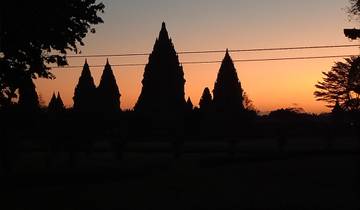
3 days
Best Yogyakarta Tours 3 days
- ✓ Booking needs min. 2 travelers
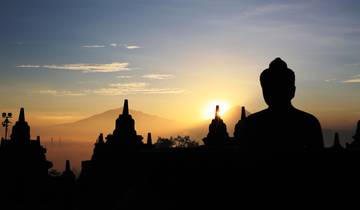
7 days
7 Days 6 Nights Best of Java
- ✓ Booking needs min. 2 travelers
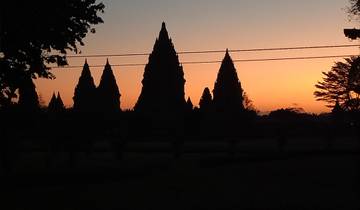
6 days
Yogyakarta: Unesco Temple, Culture and Local Experience Premium Class
- ✓ Booking needs min. 2 travelers
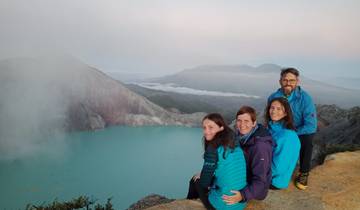
6 days
From Yogyakarta : Borobudur Climb to The Top, Mount Bromo and Ijen Vulcano
- ✓ Comprehensive Yogyakarta tour
- ✓ Expert local guides included
- ✓ All accommodation arranged
- ✓ Transportation provided
Multi-day tour packages powered by TourRadar. Prices and availability subject to change.
Understanding Borobudur and Prambanan Day Trip Planning 2026
Planning a successful same-day visit to both Borobudur and Prambanan from Yogyakarta in 2026 requires understanding the fundamental logistics that differ significantly from visiting a single temple. The 45-kilometer distance separating the two UNESCO World Heritage Sites, combined with Borobudur’s strict 1,200 daily visitor quota system and time-slot entry requirements, transforms what appears as a simple temple tour into a carefully orchestrated day requiring advance ticket booking, strategic timing decisions, and reliable transportation coordination.
The geographical positioning of these temples relative to Yogyakarta creates the day’s basic structure. Borobudur sits 42 kilometers northwest in Magelang Regency, requiring 60-90 minutes driving from central Yogyakarta depending on morning traffic through the agricultural Central Java countryside. Prambanan lies only 17 kilometers east of Yogyakarta on the border with Central Java province, just 30-45 minutes from the city center. However, the temples sit 45 kilometers apart from each other, necessitating 60-75 minutes travel time between sites—a journey that becomes the day’s pivotal transition point when lunch, rest, and heat management strategies come into play.
Most travelers underestimate the physical demands and time requirements each temple presents. Borobudur temple structure access involves climbing steep stairs across nine ascending platforms totaling 118 meters square at the base and rising 35 meters, with the complete circuit and exploration requiring 90-120 minutes minimum even with guide-enforced time limits. Prambanan’s vast 39.8-hectare complex contains 244 temples with the main Shiva temple towering 47 meters high, demanding 90-150 minutes for thorough exploration of the central compound, surrounding perwara temples, and the adjacent Sewu complex that most visitors overlook despite its 249 structures making it Indonesia’s largest Buddhist temple compound.
Temperature variations throughout the day dramatically affect comfort and photography quality at both sites. Morning temperatures at Borobudur (7:00-10:00 AM) remain 24-28°C (75-82°F) with lower humidity and clearer atmospheric conditions ideal for photographing Mount Merapi, Mount Merbabu, and the Menoreh Hills backdrop. By midday (11:00 AM-2:00 PM), temperatures soar to 32-35°C (90-95°F) with heat radiating from Borobudur’s dark andesite stone platforms creating physically exhausting conditions. Prambanan’s tall temple structures create more shade than Borobudur’s open terraces, making afternoon visits (2:00-4:30 PM) more tolerable as temperatures decline to 28-30°C (82-86°F), while the late afternoon sun angle beautifully illuminates the dark volcanic stone facades that appear flat and lifeless in harsh midday overhead light.
The 2026 ticketing system requires advance planning that catches many travelers unprepared. Borobudur’s temple structure access tickets operate on timed entry slots (8:30 AM, 9:30 AM, 10:30 AM, 11:30 AM, 12:30 PM, 1:30 PM, 2:30 PM, 3:30 PM) with the 1,200 daily visitor limit distributed across time periods. Morning slots sell out 3-7 days in advance during peak season (June-August, December-January), while shoulder season (April-May, September-November) often allows 1-3 day advance booking. Travelers who arrive without pre-booked tickets face two disappointing scenarios: purchasing ground-level access tickets (IDR 400,000) that prohibit climbing the temple structure, or accepting late afternoon time slots (2:30-3:30 PM) when heat and haze degrade the experience.
Transportation Options from Yogyakarta to Borobudur and Prambanan 2026
Private car rental with English-speaking driver represents the overwhelmingly preferred transportation solution for visiting both Borobudur and Prambanan in one day, chosen by approximately 95% of international travelers due to the practical impossibility of using public transport to connect both sites within reasonable timeframes. Full-day private car service (10-12 hours) costs IDR 800,000-1,000,000 ($50-65) for sedan or minivan accommodating up to 4-6 passengers, with the per-person cost declining significantly when shared among travel companions.
The private car option solves multiple logistical challenges simultaneously beyond simple transportation. Your driver waits at each temple throughout your visit, eliminating concerns about coordinating pickup times or finding return transport from relatively remote locations. Most drivers provide basic English communication sufficient for discussing timing adjustments, restaurant preferences, and route modifications, though they typically do not serve as licensed temple guides. The air-conditioned vehicle offers essential heat relief between temple visits, secure storage for valuables and purchases, and flexibility to add intermediate stops at Mendut Temple (5 minutes from Borobudur) or lunch restaurants suited to your budget and dietary requirements.
Booking private transport in 2026 occurs through multiple channels with varying price points and service quality. Hotel concierge services typically charge IDR 1,000,000-1,200,000 ($65-78) with 20-30% markup but provide vetted drivers and clear recourse if problems arise. Online platforms like GetYourGuide, Klook, and Viator list numerous operators at IDR 800,000-950,000 ($52-62) with verified reviews, instant confirmation, and standardized cancellation policies. Direct booking through established local operators (Dion Jogja Driver, Borobudur Sunrise Tour, Java Tourism Yogyakarta) often yields the best value at IDR 700,000-850,000 ($45-55) through WhatsApp or email contact, though requires more research to identify reputable companies. The price difference reflects commission structures rather than service quality variations, as most platforms connect to the same pool of local drivers.
Verify several critical details when booking private transport beyond the base price. Confirm the quoted rate includes fuel, tolls, parking fees, and driver meals (standard practice for reputable operators). Specify your hotel pickup location as rates sometimes exclude airport hotels (add IDR 300,000), Magelang area hotels (add IDR 300,000), or Gunungkidul region accommodations (add IDR 450,000) located beyond Yogyakarta city limits. Clarify the total time allocation, with 10-12 hours representing the standard full-day booking sufficient for both temples plus lunch and travel time. Request the driver’s name and phone number sent at least 24 hours before pickup to enable direct communication for any last-minute timing adjustments.
Organized tour packages with English-speaking guides offer a structured alternative to transport-only private car rental, particularly benefiting first-time visitors seeking deeper cultural context and historical background beyond self-guided exploration. Full-day Borobudur and Prambanan guided tours cost IDR 1,150,000-1,950,000 ($75-120) per person with prices decreasing for larger groups—solo travelers pay premium rates while groups of 4-6 achieve the lowest per-person cost approaching the private car plus separate guide combination.
Tour packages typically include private air-conditioned transport, English-speaking licensed guide providing historical and cultural interpretation, assistance with ticket purchase and entry procedures navigating the new quota systems, and coordination of optimal timing between sites. The guide component adds significant value for visitors interested in understanding the Buddhist cosmology represented in Borobudur’s mandala design, the Ramayana epic depicted in Prambanan’s extensive relief carvings, or the architectural innovations of 8th-9th century Sailendra and Mataram dynasties. However, entrance fees remain separate in most tour packages (verify before booking), adding IDR 855,000 ($55) for Borobudur structure access and Prambanan or IDR 750,000 ($48) for the combined ticket with ground-level Borobudur only.
Public transportation connecting Yogyakarta, Borobudur, and Prambanan exists but presents such significant time investments and complexity that only the most budget-conscious backpackers or those with unlimited time choose this option. The journey requires multiple bus transfers through Jombor Terminal with no direct Borobudur-Prambanan connection, consuming 5-7 hours total travel time versus 2-3 hours with private transport. From Yogyakarta to Borobudur, take TransJogja bus 2A or 2B to Jombor Terminal (30 minutes, IDR 3,500), then catch a bus to Borobudur Terminal (90 minutes, IDR 25,000-30,000), followed by a 10-minute walk or motorcycle taxi (IDR 10,000-15,000) to the temple entrance. The Borobudur to Prambanan route lacks direct service, requiring a return to Jombor Terminal followed by TransJogja bus 1A to Prambanan (total 150-180 minutes, IDR 30,000-40,000 combined). The final return from Prambanan to Yogyakarta via TransJogja 1A takes 45-60 minutes (IDR 3,500). Total public transport costs reach only IDR 75,000-95,000 ($5-6) per person, but the 5-7 hour travel time, heat exposure waiting at bus stops, and inflexible schedules make this approach impractical for most travelers attempting to visit both temples in one day.
Borobudur Temple Structure Access 2026: Tickets, Timing, and Entry Procedures
Borobudur temple structure access in 2026 operates under strict visitor management policies implemented to preserve the 9th-century monument while allowing controlled tourism. The most critical planning requirement involves understanding the distinction between two fundamentally different ticket types: temple structure access (IDR 455,000 / $30) allowing climbing to the uppermost terraces, and ground-level access (IDR 400,000 / $25) restricting visitors to the park grounds with views of but not access to the monument itself. This seemingly minor IDR 55,000 price difference represents a massive experience gap that many travelers discover too late when they arrive with ground-level tickets purchased online through resellers who failed to clarify the access limitations.
The temple structure access ticket includes several valuable components beyond simple entry. Each visitor receives special sandals called “upanat” made by local craftspeople to protect Borobudur’s ancient stone from modern shoe damage—these sandals must be worn for all temple climbing and can be kept as souvenirs afterward. The ticket price includes a mandatory licensed guide providing historical context in English (for foreign visitors) or Bahasa Indonesia (for domestic visitors) during the 1.5-hour access window. The guide explains the three-tier Buddhist cosmological journey represented in Borobudur’s architecture, interprets selected relief panels depicting Buddhist teachings, and ensures visitors follow preservation protocols including staying on designated pathways and avoiding touching the ancient stonework.
Booking temple structure access must occur through the official portal borobudurpark.com to guarantee legitimate tickets at official prices. Third-party resellers on Klook, GetYourGuide, and similar platforms often charge significant markups or unknowingly sell ground-level tickets labeled generically as “Borobudur entrance” without clarifying the access limitations. The official booking process requires creating an account, selecting the desired date and time slot, entering the number of adults and children in your group, and completing payment via credit card or bank transfer. Each visitor receives a unique QR code sent to the registered email address—either print these tickets or display them on mobile devices at the temple entrance where staff scan for verification before issuing the physical wristbands that permit structure access.
The 1,200 daily visitor limit for temple structure access distributes across eight time slots running from 8:30 AM to 3:30 PM with 150 visitors permitted per hour. Morning slots (8:30 AM, 9:30 AM, 10:30 AM) sell out 3-7 days in advance during peak season (June-August school holidays, December-January Christmas/New Year period) when domestic Indonesian tourism peaks alongside international visitor numbers. Shoulder season months (April-May, September-November) typically allow 1-3 day advance booking for morning access, while low season (February-March, rainy season) often permits same-day or next-day bookings except during weekend surges. Afternoon slots (1:30 PM, 2:30 PM, 3:30 PM) face less demand year-round due to intense heat but provide last-minute access for travelers who failed to book in advance—though the experience suffers significantly from temperatures exceeding 32°C (90°F) and atmospheric haze reducing visibility of the surrounding volcanic landscape.
Your selected time slot determines a 1.5-hour access window during which you must complete your temple climb and exploration. Arriving early provides no advantage as staff only admit visitors during the designated time period shown on your ticket. Arriving late (more than 30 minutes after your slot start time) may result in denied entry with no refund, as the system maintains strict timing to manage visitor flow and prevent overcrowding. The 1.5-hour allocation provides sufficient time for most visitors to climb all nine platforms, examine the extensive relief carvings on the lower galleries, photograph the iconic perforated stupas containing Buddha statues on the upper terraces, and appreciate the panoramic views from the summit before descending. Photographers and architecture enthusiasts often feel rushed when attempting detailed documentation, while casual visitors finish comfortably within 60-90 minutes.
Temple structure access tickets purchased separately cost IDR 455,000 ($30) for adults and IDR 305,000 ($20) for children ages 6-10, with children under 6 entering free. The combined Borobudur-Prambanan ticket (IDR 750,000 / $48) initially appears to save IDR 105,000 compared to purchasing temples separately at IDR 855,000 total, but this combined ticket only includes Borobudur ground-level access. Travelers wanting the complete experience of climbing Borobudur must purchase either separate tickets (Borobudur structure IDR 455,000 + Prambanan IDR 400,000 = IDR 855,000) or buy the combined ticket plus pay an additional IDR 150,000-180,000 “upgrade fee” at Borobudur entrance to access the temple structure—making the combined ticket actually more expensive for those wanting full access at both sites. The combined ticket’s only advantage applies to travelers accepting ground-level Borobudur viewing to save money, though this approach misses the monument’s primary appeal.
Borobudur sunrise access represents the premium temple experience offered at IDR 1,000,000 ($65) for adults, more than double the standard structure access fee. This exclusive program begins with 4:30 AM pickup from your hotel for the pre-dawn drive to Borobudur, arriving in darkness for 5:00 AM entry before the temple opens to regular visitors at 6:00 AM. The small group (limited to 100-300 participants depending on daily allocation) climbs to the upper terraces where you witness sunrise illuminating the surrounding volcanoes and morning mist filling the Kedu Valley below. The sunrise ticket includes breakfast served after dawn, the same licensed guide service and upanat sandals as standard access, and extended time on the temple until 7:00 AM when you must exit before regular visitors begin arriving. This option suits photographers seeking ideal light, travelers valuing intimate experiences without crowds, and those willing to pay premium prices for once-in-a-lifetime moments—though it requires extremely early wake-up calls and separate booking through official channels or specialized tour operators rather than standard structure access reservations.
Prambanan Temple Complex Access and Exploration 2026
Prambanan temple complex in 2026 operates with significantly simpler access procedures than Borobudur’s quota system, allowing walk-up ticket purchases without advance booking requirements or time slot restrictions. Foreign adult entrance costs IDR 400,000 ($25) with children ages 3-10 paying IDR 250,000 ($16) and children under 3 entering free. The ticket counter opens 6:30 AM to 4:30 PM with temple grounds accessible 6:30 AM to 5:30 PM, providing last entry at 4:30 PM but allowing visitors already inside to remain until closing.
Unlike Borobudur’s single monument focus, Prambanan represents a vast archaeological complex containing multiple distinct temple groups spread across 39.8 hectares. Your entrance ticket provides access to the entire area including the central Prambanan compound (officially named Loro Jonggrang) featuring the iconic 47-meter tall Shiva Mahadeva temple flanked by Brahma and Vishnu temples, the extensive outer courtyard containing 224 pervara (guardian) temples in various states of preservation and ongoing restoration, and the separately located Sewu Temple complex 800 meters north comprising 249 Buddhist structures making it Indonesia’s largest Buddhist temple compound despite being overshadowed by Borobudur’s fame.
Most visitors spend 90-150 minutes at Prambanan depending on their depth of exploration. The minimum circuit covering just the main central temples (Shiva, Brahma, Vishnu and their respective vahana temples dedicated to Nandi, Hamsa, and Garuda) requires 60-75 minutes including time for photographs and examining the Ramayana relief panels carved on the Shiva temple’s inner gallery walls. Adding thorough exploration of the pervara temples, which exist in varying conditions from fully restored structures to foundation stones awaiting reconstruction, extends the visit to 90-120 minutes. Including Sewu Temple—which absolutely deserves attention as an architectural masterpiece featuring eight magnificent Dwarapala guardian statues and beautifully restored main sanctuary—pushes total time to 150-180 minutes that most day-trippers combining Borobudur and Prambanan struggle to allocate.
The Prambanan ticketing system offers several combination options affecting overall day trip costs. The standalone Prambanan ticket (IDR 400,000) provides the simplest purchase for travelers who already bought separate Borobudur structure access. The combined Borobudur-Prambanan ticket (IDR 750,000) saves IDR 50,000 versus purchasing ground-level Borobudur access (IDR 400,000) plus Prambanan (IDR 400,000) separately—but as discussed in previous sections, this combination only makes sense for the small percentage of travelers accepting ground-level Borobudur viewing rather than climbing the temple structure. A Prambanan-Ratu Boko combined ticket also exists for those planning to visit the nearby royal palace complex, though this adds significant time beyond a standard Borobudur-Prambanan day trip.
Facilities at Prambanan exceed those at Borobudur due to the larger grounds and more developed infrastructure. The entrance area features extensive parking for tour vehicles, clean modern restrooms, information centers with English-speaking staff, prayer rooms for Muslim visitors, and designated photo points showcasing optimal angles for capturing the main temples. The exit routes channel visitors through a extensive shopping arcade selling batik textiles, wood carvings, silver jewelry, and tourist souvenirs—while this commercial area can feel intrusive, it provides no-pressure browsing and legitimate craft purchases supporting local artisan communities compared to aggressive street vendors found at some temple sites.
Internal transportation within Prambanan’s vast grounds includes bicycle rentals (single bikes IDR 10,000, tandem bikes IDR 20,000) and golf cart services for elderly or mobility-limited visitors. Most independent visitors explore on foot using the well-maintained pathways connecting temple groups, though the bicycle option appeals to those wanting to reach Sewu Temple’s more distant location without the 15-minute walk through exposed areas with limited shade. The temple grounds provide reasonable shade from tall trees and temple structures themselves, making afternoon visits (2:00-4:30 PM) more comfortable than Borobudur’s fully exposed platforms where midday heat becomes oppressive.
Monday restrictions at Prambanan create a notable planning consideration for day trip scheduling. On Mondays, visitors can only view the main central temples from a distance across a rope barrier rather than entering the inner courtyard and approaching the structures closely—this cleaning and maintenance day significantly reduces the experience quality. However, Sewu Temple remains fully accessible on Mondays, and some travelers specifically choose Monday visits to explore this magnificent but overlooked Buddhist complex without Prambanan’s main temples creating competing time demands. If your Yogyakarta itinerary includes only one day for Borobudur and Prambanan, avoid Monday trips or accept that Prambanan will deliver a diminished experience limited to exterior viewing.
Strategic Timing and Sequencing for Visiting Both Temples 2026
The optimal sequence for visiting Borobudur and Prambanan in a single day follows a carefully structured timeline starting with early morning departure from Yogyakarta, Borobudur exploration during the cooler morning hours, strategic lunch timing during peak midday heat, and Prambanan afternoon visit when temperatures decline and light improves. This proven approach maximizes comfort, photography quality, and overall experience compared to alternative sequencing or poorly timed departures that force temple visits during the hottest and most crowded periods.
The recommended daily schedule begins with 7:00-7:30 AM hotel departure from Yogyakarta, allowing 60-90 minutes driving time to reach Borobudur by 8:30-9:00 AM for your pre-booked time slot entry. Departing later than 7:30 AM risks arriving late for 8:30 AM slots and encountering heavier traffic on the rural roads connecting Yogyakarta and Magelang. The 8:30 AM or 9:30 AM Borobudur time slots provide ideal conditions with morning temperatures 24-28°C (75-82°F), clearer atmospheric conditions for photographing Mount Merapi and Mount Merbabu backdrop, and smaller crowds than the 10:30 AM-12:30 PM surge when most organized tours arrive. Your 1.5-hour temple structure access allows climbing all nine platforms, examining relief carvings, and capturing photographs before exiting around 10:00-11:00 AM.
After completing Borobudur, the 60-75 minute drive to Prambanan provides perfect timing for lunch during the day’s hottest period (12:00-1:30 PM) when temple exploration becomes physically exhausting and photography quality suffers from harsh overhead sunlight. This strategic meal break allows rest in air-conditioned restaurants, recovery from morning exertion, and heat avoidance during the period when outdoor temple touring delivers the least enjoyable experience. Your driver recommends restaurants along the route ranging from local warungs serving traditional Javanese meals (IDR 30,000-60,000 / $2-4 per person) to more comfortable tourist-oriented establishments with English menus and air conditioning (IDR 100,000-200,000 / $7-13 per person).
Arriving at Prambanan around 2:00-2:30 PM positions you perfectly for afternoon temple exploration as temperatures begin declining from peak levels. The tall temple spires create more shade than Borobudur’s open terraces, making afternoon visits more tolerable, while the declining sun angle from 3:00-4:30 PM beautifully illuminates the dark volcanic stone facades creating dramatic relief and excellent photography conditions. This timing also avoids Prambanan’s midday crowds when domestic tour groups peak, providing more intimate temple experiences and easier photography without people blocking shots of the main structures. Complete your Prambanan visit by 4:30-5:00 PM for the 30-45 minute return drive to Yogyakarta, arriving back at your hotel by 5:30-6:00 PM.
The reverse sequence (Prambanan first, Borobudur second) suffers from multiple disadvantages that make it the inferior choice for most travelers. Morning Prambanan visits waste the cooler temperatures on a temple complex with abundant shade, while afternoon Borobudur forces climbing exposed platforms during peak heat (32-35°C / 90-95°F) and atmospheric haze that obscures the volcanic backdrop essential to quality photographs. The reverse sequence also creates Borobudur timing challenges as popular morning slots become unavailable, pushing visits to less desirable afternoon time slots. Additionally, tour group patterns mean Prambanan remains relatively quiet in the morning when most groups prioritize Borobudur, but this advantage disappears when you’re climbing Borobudur in afternoon heat alongside heavier crowds.
Alternative timing approaches exist for specific circumstances, though each carries tradeoffs. Travelers booking Borobudur sunrise access (4:30 AM start) can visit Prambanan mid-morning (9:00-11:00 AM) after completing Borobudur’s pre-dawn experience, but this requires extremely early wake-up and delivers a rushed feeling visiting both temples in quick succession without adequate rest between sites. Some visitors split the temples across two half-days (Borobudur one morning, Prambanan different afternoon) to allow more leisurely exploration and reduce time pressure—this approach works well for longer Yogyakarta stays but requires booking private transport twice or using the complex public transport system. Weekend visitors face heavier crowds at both temples as domestic Indonesian tourism peaks, making weekday visits preferable when flexibility allows.
Complete Day Trip Cost Breakdown Borobudur and Prambanan 2026
Budget travelers visiting Borobudur and Prambanan from Yogyakarta in 2026 spend IDR 1,255,000-1,655,000 ($82-108) per person when sharing private transportation among 4 people and choosing economical dining options. Temple entrance fees represent the largest fixed cost: Borobudur temple structure access IDR 455,000 ($30) and Prambanan IDR 400,000 ($25) totaling IDR 855,000 ($55) per person with no discounts for combining or sharing. Private car rental (IDR 800,000-1,000,000 / $50-65 full day) divides among passengers yielding IDR 200,000-250,000 ($13-16) per person when four travelers share costs. Meals at local warungs include breakfast before departure IDR 30,000-50,000 ($2-3), lunch between temples IDR 60,000-100,000 ($4-7), and optional snacks/drinks IDR 30,000-50,000 ($2-3), totaling IDR 120,000-200,000 ($8-13) daily food costs. Additional expenses include bottled water throughout the day IDR 15,000-25,000 ($1-2), parking fees covered by the driver, and optional tips for the driver IDR 50,000-100,000 ($3-7) for excellent service.
Mid-range travelers choosing private car without sharing and more comfortable dining spend IDR 2,055,000-2,655,000 ($134-173) per person. The same temple entrance costs apply (IDR 855,000 / $55) as these remain fixed regardless of budget category. Full private car costs IDR 800,000-1,000,000 ($50-65) with no sharing providing maximum flexibility for timing adjustments and additional stops. Restaurant meals at tourist-oriented establishments with English menus and air conditioning include breakfast IDR 80,000-120,000 ($5-8), lunch between temples IDR 150,000-250,000 ($10-16), and coffee/snacks at temple cafes IDR 70,000-100,000 ($5-7), totaling IDR 300,000-470,000 ($20-31) food costs. Mid-range travelers typically add local guide services (IDR 200,000-300,000 / $13-20) for deeper cultural interpretation beyond the basic English-speaking guide included with Borobudur structure access, premium bottled water and refreshments IDR 30,000-50,000 ($2-3), and driver tips IDR 100,000-150,000 ($7-10) reflecting the higher service expectations.
Luxury travelers joining premium organized tours with professional guides, smaller group sizes, and enhanced services invest IDR 3,500,000-5,000,000 ($228-325) per person. High-end tour packages include private luxury vehicle transportation, expert English-speaking licensed guide with extensive historical and cultural knowledge, all entrance fees for Borobudur structure access and Prambanan, gourmet lunch at upscale restaurants featuring traditional Javanese cuisine, premium refreshments throughout the day, and priority assistance with ticket booking and entry procedures. Some luxury tours add sunrise Borobudur access (IDR 1,000,000 / $65 replacing standard structure access), visits to additional sites like Mendut and Pawon temples near Borobudur or Sewu temple complex within Prambanan, and cultural experiences such as traditional dance performances or craft village stops. The significant price premium reflects personalized service, guide expertise exceeding basic temple explanations, and seamless logistics eliminating all planning burden from travelers.
The combined Borobudur-Prambanan ticket (IDR 750,000 / $48) appears to save IDR 105,000 ($7) compared to purchasing separate Borobudur structure (IDR 455,000) and Prambanan (IDR 400,000) tickets totaling IDR 855,000 ($55). However, this combined ticket only includes ground-level Borobudur access prohibiting climbing the temple structure—the monument’s primary attraction. Travelers purchasing the combined ticket must pay an additional “upgrade fee” (IDR 150,000-180,000 / $10-12) at Borobudur entrance to access temple structure climbing, creating total costs of IDR 900,000-930,000 ($59-61) that exceed buying separate tickets. The combined ticket only makes financial sense for the minority of travelers accepting ground-level Borobudur viewing without climbing access, sacrificing the experience to save money.
Solo travelers face significantly higher per-person costs than groups due to private car expenses without sharing. A solo budget traveler choosing the most economical approach spends IDR 1,655,000-2,055,000 ($108-134) covering temple entrances IDR 855,000 ($55), full private car IDR 800,000-1,000,000 ($50-65) with no cost sharing, and minimal meals/expenses IDR 150,000-200,000 ($10-13). Many solo travelers instead join organized group tours (IDR 1,150,000-1,500,000 / $75-98 per person) to share transportation costs with other participants while gaining guide services, making this the most cost-effective option for individual travelers despite higher base tour prices compared to DIY private car rental when calculated on a per-person-in-a-group basis.
Money-saving strategies for visiting both temples in 2026 focus on sharing transportation costs, booking tickets directly through official channels avoiding reseller markups, timing visits during shoulder season when both temples operate but peak season premiums disappear, and choosing local warungs for authentic Javanese meals at IDR 30,000-60,000 ($2-4) versus tourist restaurants at IDR 100,000-200,000 ($7-13). Avoid purchasing combined tickets unless accepting ground-level Borobudur access, book temple structure tickets in advance through borobudurpark.com to guarantee morning time slots and avoid last-minute booking stress, and connect with other travelers at your Yogyakarta hotel to share private car costs rather than paying solo rates. Travelers visiting both temples across two separate half-days rather than one intensive full-day trip may reduce per-day costs but face higher overall expenses booking transportation twice and spending additional time traveling.
Organized Tour Options and Packages Borobudur and Prambanan 2026
Organized tour packages for visiting Borobudur and Prambanan from Yogyakarta in 2026 range from basic transportation-and-guide services (IDR 1,150,000-1,500,000 / $75-98 per person) to premium all-inclusive experiences (IDR 3,500,000-5,000,000 / $228-325 per person) with pricing heavily dependent on group size, guide expertise level, and included services beyond temple access. The fundamental value proposition of organized tours centers on convenience, cultural interpretation, and simplified logistics that particularly benefit first-time visitors, solo travelers unable to share private car costs, and those prioritizing expert guidance over independent exploration flexibility.
Standard full-day organized tours typically include private air-conditioned transportation with hotel pickup and drop-off, English-speaking licensed guide providing historical and cultural context at both temples, assistance with ticket purchase procedures and entry coordination through Borobudur’s quota system, and basic bottled water and refreshments. The guide component adds the primary value beyond simple transportation, explaining the Buddhist cosmological principles represented in Borobudur’s nine-platform mandala design, interpreting Prambanan’s extensive Ramayana epic relief carvings across the temple galleries, and providing historical background on the 8th-9th century Sailendra and Mataram dynasties that constructed these monuments during Central Java’s classical Hindu-Buddhist period.
Tour pricing follows a group-size tier structure where per-person costs decline significantly as participant numbers increase. Solo travelers pay premium rates of IDR 1,850,000-2,400,000 ($120-156), two-person bookings reduce costs to IDR 1,400,000-1,800,000 ($91-117) per person, three travelers achieve IDR 1,250,000-1,550,000 ($81-101) per person, and four-person groups reach optimal pricing at IDR 1,150,000-1,400,000 ($75-91) per person with additional participants creating minimal further savings. This pricing structure reflects fixed vehicle and guide costs distributed across varying participant numbers, making organized tours often more economical than independent travel for solo visitors but more expensive than private car rental when 3-4 travelers share costs.
Critical verification before booking any organized tour involves confirming whether temple entrance fees are included in the quoted price or represent additional charges paid separately at the sites. Many tour operators advertise attractive base prices (IDR 1,150,000 / $75 per person for 4-person groups) but exclude entrance fees, adding IDR 855,000 ($55) per person for Borobudur structure access and Prambanan separately bringing total costs to IDR 2,005,000 ($131)—more expensive than booking private transportation independently and buying tickets directly. Fully inclusive tours including all entrance fees quote higher base prices (IDR 2,000,000-2,400,000 / $130-156 per person) but deliver better value and eliminate on-site payment complications. Always clarify this critical detail before booking and calculate total costs including entrance fees when comparing tour options.
Premium tour packages at IDR 3,500,000-5,000,000 ($228-325) per person differentiate through enhanced services and experiences beyond basic temple visits. These luxury options typically include sunrise Borobudur access (4:30 AM entry) for the exclusive pre-dawn temple experience, smaller group sizes (maximum 6-8 participants versus 10-15 on standard tours) providing more intimate experiences and easier communication with guides, expert guides with advanced historical and archaeological knowledge exceeding basic temple explanations, gourmet lunch at upscale restaurants featuring traditional Javanese cuisine with cultural performances, and additional site visits to Mendut and Pawon temples near Borobudur or village craft demonstrations showing batik creation, silver smithing, or traditional puppet making.
Specialty tour variations address specific interests beyond standard temple sightseeing. Borobudur sunrise combined with Prambanan full-day tours (IDR 2,800,000-3,500,000 / $182-228 per person) begin with 4:00 AM hotel pickup for pre-dawn Borobudur arrival and sunrise viewing from the upper terraces, followed by return to hotel for breakfast and rest before afternoon Prambanan visit—this exhausting but rewarding approach suits photographers and travelers willing to endure early wake-up for superior light and intimate crowd-free temple experience. Photography-focused tours (IDR 3,200,000-4,000,000 / $208-260 per person) employ guides with professional photography knowledge who assist with composition, lighting techniques, and accessing optimal shooting locations rather than providing standard historical commentary. Family-oriented tours adjust pacing for children’s shorter attention spans, include interactive guide presentations suited to younger participants, and allow additional rest stops with playground facilities.
Booking organized tours occurs through multiple channels with varying reliability and commission structures. Hotel concierge services offer the simplest booking process with immediate confirmation but typically charge 20-30% markup above direct operator rates, making them convenient but expensive. International online platforms (GetYourGuide, Viator, Klook) list hundreds of tour options with verified customer reviews, instant booking confirmation, and standardized cancellation policies protecting against operator issues—prices include platform commissions but the buyer protection and refund guarantees provide security worth the moderate premium. Direct booking through established local operators (Borobudur Sunrise Tour, Dion Jogja Driver, Java Tourism Yogyakarta, Wonderful Borobudur Tours) delivers best pricing and personal service but requires more research to identify reputable companies and typically involves WhatsApp or email communication rather than instant online booking systems.
Evaluating tour operator quality before booking requires examining several indicators beyond advertised prices. Check TripAdvisor and Google reviews specifically mentioning recent experiences (2024-2026) as older reviews may reflect pre-pandemic operations before current quota systems and entry procedures changed. Verify the operator maintains proper licensing and insurance as legitimate tour companies registered with Indonesian tourism authorities, though individual travelers cannot easily verify credentials without local knowledge. Request specific driver and guide names assigned to your booking rather than accepting vague promises of “professional guides” as this indicates established staff rather than last-minute contractor hiring. Confirm communication response times as reputable operators answer booking inquiries within 24 hours and provide clear written confirmation of services, costs, and pickup details well before your tour date.
Best Time to Visit Borobudur and Prambanan Throughout the Year 2026
The optimal months for visiting Borobudur and Prambanan in 2026 fall during the dry season shoulder periods of April-May and September-November when weather conditions remain favorable, crowd levels moderate, and accommodation prices reasonable compared to peak season premiums. These shoulder months deliver 70-80% probability of dry weather suitable for temple exploration, average daily temperatures 28-31°C (82-88°F) comfortable for outdoor activities, and significantly lighter tourist crowds than the intense June-August and December-January peak periods when domestic Indonesian tourism combines with international visitor surges.
Understanding Java’s climate patterns proves essential for day trip planning as weather dramatically affects temple experience quality. The dry season (April-October) offers the most reliable conditions with minimal rainfall, lower humidity averaging 60-70% versus rainy season’s 80-90%, and clearer atmospheric visibility ideal for photographing Borobudur’s volcanic mountain backdrop. Within the dry season, April-May provides excellent conditions before June-August peak crowds arrive, while September-November delivers similar weather after summer holiday crowds disperse. The rainy season (November-March) brings daily afternoon thunderstorms, higher humidity making heat feel more oppressive, and frequent morning fog reducing visibility—though morning temple visits (departing 7:00 AM) often complete before afternoon rains begin around 2:00-3:00 PM.
Peak season months (June-August, December-January) combine school holidays, Christmas/New Year tourism, and favorable dry weather creating the year’s most crowded and expensive period for visiting both temples. Borobudur’s 1,200 daily visitor limit sells out 5-7 days in advance during these months with morning time slots (8:30-10:30 AM) particularly difficult to secure, forcing late bookings into less desirable afternoon slots when heat and haze degrade the experience. Prambanan handles larger crowds without quota restrictions but still feels congested with organized tour groups creating bottlenecks at the main temples and making quality photography challenging. Yogyakarta accommodation prices increase 40-60% during peak season with mid-range hotels charging IDR 800,000-1,200,000 ($52-78) per night versus shoulder season rates of IDR 500,000-700,000 ($33-46). Private car rental and tour packages face similar premium pricing during peak periods though increases remain more modest at 15-25% above shoulder season rates.
Low season months (January-March excluding January’s New Year carryover) offer the year’s best value pricing with hotel rates 30-40% below peak season and minimal crowds allowing intimate temple experiences without competing for photographs or navigating dense tour group masses. However, February-March represents Java’s wettest period with 15-20 rainy days per month bringing afternoon downpours, morning fog, and higher probability of rain disrupting temple visits despite most precipitation falling after 2:00 PM. Travelers accepting some weather risk and flexible scheduling find low season visits rewarding with dramatically reduced costs and crowds offsetting occasional rain delays. The key strategy involves planning Borobudur visits early (8:30-9:30 AM slots) when rain probability remains low and completing Prambanan by 2:00 PM before typical afternoon storm arrival.
Seasonal photography considerations significantly impact optimal visit timing for travelers prioritizing image quality. The dry season (April-October) provides clearer atmospheric conditions essential for capturing Borobudur’s Mount Merapi and Mount Merbabu volcanic backdrop without the haze that obscures distant mountains during rainy season’s higher humidity. Morning hours (7:00-10:00 AM) throughout the year deliver the clearest visibility before afternoon heat and humidity accumulation reduces clarity, while late afternoon light (3:00-4:30 PM) at Prambanan beautifully illuminates the dark volcanic stone creating dramatic relief and depth. The rainy season’s frequent cloud cover actually benefits photographers seeking dramatic skies and diffused light, though the trade-off involves reduced visibility of distant landscape elements. Serious photographers often schedule visits during the early dry season (April-June) when vegetative growth from recent rains creates lush green landscapes but clearing skies restore atmospheric clarity for distant mountain photography.
What to Bring for Borobudur and Prambanan Day Trip 2026
Essential items for a comfortable and successful Borobudur and Prambanan day trip in 2026 begin with sun protection including wide-brimmed hat or cap providing face and neck coverage, high-SPF sunscreen (minimum SPF 50) reapplied every 2 hours, and quality sunglasses with UV protection against intense tropical sun reflecting off light-colored temple stones. Temperature management items include lightweight, breathable long-sleeved clothing covering shoulders and knees (required for religious site etiquette while providing sun protection), moisture-wicking fabrics that dry quickly when saturated with perspiration, and a small towel or handkerchief for wiping sweat during the physical exertion of climbing Borobudur’s steep stairs across nine platforms.
Hydration supplies prove critical for managing Java’s tropical heat with daytime temperatures reaching 30-35°C (86-95°F) and higher effective temperatures due to 70-80% humidity and radiant heat from exposed stone surfaces. Bring 2-3 liters bottled water per person for the full day—while drinks are available for purchase at both temple sites, prices run 2-3 times normal rates and selection remains limited. A small insulated bag keeps water cool throughout the day as warm water becomes unpalatable and less effective for hydration in extreme heat. Electrolyte supplements or sports drinks help replace minerals lost through heavy perspiration during hours of outdoor temple exploration in tropical conditions.
Comfortable, supportive walking shoes with good traction represent the single most important clothing item as you’ll climb steep, uneven ancient stone stairs at Borobudur and walk across Prambanan’s expansive 39.8-hectare complex on irregular stone pathways. Avoid flip-flops, sandals, or any footwear lacking proper support and grip as Borobudur’s worn stairs become slippery from thousands of daily visitors and accidents occur regularly. While you receive special upanat sandals for climbing Borobudur’s temple structure specifically to protect the ancient stone, you’ll wear your own shoes for walking the grounds, driving between temples, and exploring Prambanan where no special footwear is provided.
Photography equipment should match your skill level and physical willingness to carry gear in tropical heat. Smartphone cameras capture excellent temple photographs sufficient for most travelers’ needs while eliminating heavy equipment burden during hours of walking and climbing. More serious photographers bring wide-angle lens (16-35mm) for capturing Borobudur’s massive structure and Prambanan’s tall spires, standard zoom (24-70mm or 24-105mm) for general temple photography and detail shots of relief carvings, and optional telephoto (70-200mm) for isolating architectural elements and photographing upper temple levels from ground positions. Extra batteries and memory cards prevent missing critical shots when equipment fails or storage fills. A lightweight camera backpack with padding protects gear during transport while distributing weight comfortably for all-day carrying.
Cash in Indonesian Rupiah proves essential as both temples accept only cash payment for entrance tickets, and credit card machines remain unreliable even when theoretically available. Budget IDR 1,000,000-1,500,000 ($65-98) per person minimum to cover entrance fees (IDR 855,000), meals (IDR 200,000-400,000), and incidental expenses. Larger denomination bills (IDR 100,000 notes) work fine at official ticket counters but exchange some into smaller bills (IDR 20,000-50,000) for purchasing drinks, snacks, or tipping. Most private drivers and organized tours accept credit cards or digital payment platforms (GoPay, OVO) for their services but always confirm payment methods when booking to avoid surprises.
Personal comfort items enhance the long day’s experience including personal medications, hand sanitizer and wet wipes for cleaning before meals as bathroom soap availability varies, small snacks like energy bars or dried fruit to maintain energy levels between larger meals, and a lightweight day pack to carry supplies hands-free while climbing Borobudur’s stairs requiring handrail use for safety. Temple entrance security screening prohibits large backpacks and luggage but allows standard day packs under 20 liters—temporary locker facilities store larger bags for a small fee if needed. Bring your passport or passport photocopy as some temple ticket counters request identification verification for foreign visitor pricing, though enforcement varies.
Cultural Etiquette and Dress Code for Temple Visits 2026
Modest dress covering shoulders and knees represents the fundamental etiquette requirement for visiting both Borobudur and Prambanan as active religious sites still used for Buddhist and Hindu ceremonies beyond their tourist monument status. Men should wear long pants or knee-length shorts with t-shirts or collared shirts covering shoulders—tank tops, sleeveless shirts, and short athletic shorts violate proper temple etiquette though enforcement for male visitors remains inconsistent. Women must wear skirts or pants extending below the knee with tops covering shoulders and avoiding low necklines exposing cleavage—sleeveless dresses, short skirts, tank tops, and revealing clothing will result in denied entrance or requirement to rent modest covering (sarongs available for IDR 10,000-20,000 / $1-2) before proceeding.
The dress code enforcement at both temples has intensified in 2026 compared to more lenient pre-pandemic practices when tourist revenue pressures allowed violations. Temple staff now consistently refuse entry to improperly dressed visitors, particularly women wearing revealing clothing, creating embarrassing situations and delays while travelers return to vehicles for appropriate clothing changes or rent temporary covering. The simplest approach involves planning appropriate attire from your hotel departure—lightweight, breathable long pants or long skirts with loose-fitting shirts covering shoulders provide both proper etiquette and practical sun protection while remaining comfortable in tropical heat.
Beyond basic dress requirements, behavioral etiquette includes removing footwear when entering temple structures at Prambanan (Borobudur provides the special upanat sandals for temple climbing). Place shoes neatly in designated areas near entrances rather than leaving them scattered across pathways. Speak quietly and avoid loud conversations or laughter near temple spaces used for meditation or prayer as local Buddhist and Hindu communities regularly conduct ceremonies at both sites. Photography remains generally permitted at both temples (unlike some Indonesian sites with restrictions) but avoid photographing worshippers engaged in prayer or ceremonies without explicit permission, and never climb on Buddha statues or carved reliefs for creative photo angles as this damages fragile ancient stonework and shows profound disrespect.
Public displays of affection should remain minimal out of respect for Indonesian cultural norms, particularly avoiding kissing or intimate embracing near temple structures. Holding hands between couples causes no offense, but more intimate contact makes local visitors and temple staff uncomfortable in these religious spaces. Similarly, avoid turning your back to Buddha images or sitting with feet pointed toward sacred structures—a common Southeast Asian cultural prohibition considering feet the body’s lowest and least clean element. When resting on temple steps or platforms, sit cross-legged or with feet tucked under your body rather than extended toward statues or reliefs.
Women visiting temples during menstruation face complex traditional restrictions that modern Indonesian tourism generally does not enforce at major sites like Borobudur and Prambanan. Hindu temple traditions technically prohibit menstruating women from entering sacred spaces, while Buddhist practice takes more varied approaches. The practical 2026 reality involves no questions or restrictions at either temple’s entrance, and female travelers need not avoid visits during menstruation. However, some local Indonesian visitors may still observe traditional restrictions, and respectful awareness of these cultural beliefs—even when not personally following them—demonstrates cultural sensitivity.
Additional Sites to Combine with Borobudur and Prambanan 2026
Mendut and Pawon temples located 3 kilometers and 1.5 kilometers respectively from Borobudur represent logical additions to a temple-focused day trip, forming the original Buddhist pilgrimage route that connected these three 8th-9th century Sailendra dynasty monuments. Mendut Temple houses a magnificent 3-meter tall Buddha statue considered one of Java’s finest stone sculptures, with beautifully preserved relief panels depicting Jataka tales and Buddhist teachings adorning the exterior walls. The temple sits just 5 minutes drive from Borobudur with entrance fee of only IDR 30,000-40,000 ($2-3) per person, making it an easy 30-40 minute addition requiring minimal extra time or expense. Pawon Temple, smaller than Mendut but featuring exquisite architectural proportions and intricate kala head carvings above doorways, also charges minimal entrance (IDR 30,000) and takes just 20-30 minutes to explore. Adding both temples extends the day trip by approximately 60-90 minutes total while providing deeper context for understanding Borobudur’s place within the larger Buddhist complex.
Sewu Temple Complex located 800 meters north within Prambanan Archaeological Park deserves inclusion in any comprehensive Prambanan visit but most day-trippers unfortunately skip this magnificent site due to time constraints or unawareness. Sewu represents Indonesia’s largest Buddhist temple compound containing 249 structures (sewu means “thousand” in Javanese though the actual count never reached that number) arranged in concentric squares around a magnificent central sanctuary. The temple features eight beautifully restored Dwarapala guardian statues flanking the cardinal direction approaches—massive stone warriors standing several meters tall that rank among Java’s finest classical sculpture. Your Prambanan entrance ticket includes Sewu access without additional fees, but reaching the complex requires 15-minute walk from Prambanan’s main temples through exposed areas with limited shade or bicycle rental (IDR 10,000 / $1) for quicker transport. Budget 45-60 minutes for thorough Sewu exploration, adding this to your Prambanan visit time allocation and potentially reducing time at the main Loro Jonggrang complex to maintain overall day trip schedule.
Ratu Boko Palace Complex sits on a plateau 3 kilometers south of Prambanan, offering sunset viewing opportunities with panoramic vistas across the Prambanan plain and toward the Indian Ocean when visibility permits. This 8th-9th century archaeological site represents a royal palace rather than temple complex, featuring massive stone gateways, bathing pools, meditation caves, and assembly halls suggesting its function as secular royal residence and administrative center rather than religious monument. The sunset experience from Ratu Boko’s elevated position draws crowds during late afternoon (4:30-6:00 PM) when the western sky illuminates dramatically—though adding this site extends the day trip significantly and creates late return to Yogyakarta (6:30-7:00 PM). Ratu Boko entrance costs IDR 300,000-350,000 ($20-23) for foreign visitors or combined ticket with Prambanan (IDR 630,000 / $41) saves versus separate purchases. The addition makes most sense for travelers with ample time, sunset photography priorities, or those splitting Borobudur and Prambanan across separate days allowing the flexibility for extended Prambanan-area exploration.
Food and Dining Options Between Temple Visits 2026
Strategic lunch timing between Borobudur and Prambanan temple visits serves dual purposes of providing necessary sustenance during the physically demanding full-day outing while avoiding temple exploration during the day’s hottest period (12:00-2:00 PM) when outdoor activities become exhausting and photography quality suffers. Most organized tours and private drivers include a meal stop along the route connecting the temples, with restaurant choices ranging from simple local warungs serving traditional Javanese cuisine at IDR 30,000-60,000 ($2-4) per person to comfortable tourist-oriented establishments with air conditioning, English menus, and international options at IDR 100,000-200,000 ($7-13) per person.
Traditional Javanese restaurants near both temple sites specialize in nasi gudeg—young jackfruit slowly cooked in coconut milk with palm sugar and spices until tender, served with rice, chicken, hard-boiled egg, and krecek (crispy beef skin crackers). This signature Yogyakarta dish represents essential cultural food experience alongside temple sightseeing, available at virtually every local warung for IDR 25,000-50,000 ($2-3) per complete plate. Other common menu items include ayam goreng (fried chicken, Indonesian style with distinct spicing), pecel lele (fried catfish with spicy sambal), and various soto (aromatic soup) preparations featuring either chicken or beef in turmeric-rich broth with rice vermicelli, bean sprouts, and fresh herbs.
Tourist-oriented restaurants along the Borobudur-Prambanan route offer more comfortable dining environments with air conditioning providing welcome heat relief, clean modern restrooms, and English menus reducing ordering confusion for travelers unfamiliar with Indonesian cuisine. These establishments serve both Indonesian specialties and international comfort food including fried rice (nasi goreng), fried noodles (mie goreng), grilled fish, and Western options like pasta, sandwiches, or burgers for travelers seeking familiar meals. Prices run IDR 100,000-200,000 ($7-13) per person for complete meals with drinks, roughly 3-4 times local warung costs but delivering significantly enhanced comfort during the meal break’s rest and recovery period.
Your private driver typically recommends specific restaurants based on your indicated budget and preferences during the pre-trip planning conversation or while traveling between temples. Drivers receive small commissions from many tourist restaurants for bringing customers, creating potential bias toward pricier establishments—though reputable drivers honestly present multiple options across price ranges and respect your preference. Specify your budget clearly (local experience under IDR 50,000, comfortable dining IDR 100,000-150,000, or premium meals IDR 200,000+) to guide appropriate recommendations. Many travelers particularly appreciate stops at restaurants with traditional Javanese architecture and garden settings providing pleasant environments for the meal break beyond simply refueling.
Photography Tips for Borobudur and Prambanan 2026
Borobudur’s iconic sunrise photographs showing morning mist filling the Kedu Valley with volcanic peaks rising in the background require the premium sunrise access ticket (IDR 1,000,000 / $65) with 4:30 AM entry rather than standard structure access beginning 8:30 AM when the sun already sits well above the horizon and morning mist dissipates. While sunrise access delivers the most photographically dramatic Borobudur images, standard morning time slots (8:30-10:30 AM) still provide excellent photography opportunities with clearer atmospheric conditions for capturing the temple’s architectural details and surrounding landscape before afternoon haze accumulates. The temple’s dark volcanic andesite stone appears most dramatically when illuminated by angled morning or late afternoon light rather than harsh overhead midday sun that flattens relief and eliminates shadow definition critical for architectural photography.
Wide-angle lenses (16-35mm equivalent) prove essential for capturing Borobudur’s massive scale whether photographing the entire temple structure from ground level or documenting the concentric square platforms from upper terraces looking down. The temple measures 118 meters square at the base with nine ascending platforms creating compositions that require ultra-wide perspectives to encompass the architectural scope. Standard zoom lenses (24-70mm or 24-105mm) provide versatility for general temple photography, relief carving details, and Buddha statue portraits, while telephoto focal lengths (70-200mm) enable isolating specific architectural elements and capturing the 72 perforated stupas containing Buddha statues at the uppermost terraces without including surrounding crowds in the frame.
Prambanan’s tall, narrow temple spires photograph most dramatically during late afternoon (3:00-4:30 PM) when declining sun angle illuminates the dark volcanic stone creating strong relief, deep shadows defining the architectural details, and warm golden light complementing the stone’s natural color. The temples face east traditionally (Shiva temple’s main entrance), meaning afternoon sun illuminates the western facades beautifully while morning light works better for eastern approaches. Wide-angle lenses again prove valuable for capturing the three main temples (Shiva, Brahma, Vishnu) in single compositions showing their relationship and scale, while telephoto lenses enable filling the frame with individual temple structures and their intricate relief carvings from ground-level perspectives without severe upward tilt distortion.
Composition strategies for both temples include using framing elements in the foreground to add depth and context—the pervara guardian temples at Prambanan create excellent frames for the main Shiva temple, while Borobudur’s numerous stupas and Buddha statues provide foreground interest when photographing the upper terraces. Human scale proves valuable in architectural photography, so include people in some compositions to communicate the temples’ massive dimensions that become abstract when only showing stone structures. However, avoid peak crowd periods (10:00 AM-12:00 PM at Borobudur, 11:00 AM-1:00 PM at Prambanan) if you want relatively people-free compositions, instead shooting during early morning or mid-afternoon when visitor density decreases substantially.
Smartphone photography succeeds brilliantly at both temples when applying basic compositional principles and understanding lighting conditions. Modern smartphone cameras handle the high dynamic range between bright sky and shadowed temple structures reasonably well, though exposing for temple details often blows out sky highlights—accept this limitation or use HDR modes if your phone offers them. Shoot in landscape orientation rather than portrait to emphasize temples’ horizontal platforms (Borobudur) or achieve correct vertical proportions for Prambanan’s tall spires without excessive empty sky. Take advantage of smartphones’ superior close-focus capabilities for detailed shots of relief carvings, Buddha faces, and decorative elements that communicate temples’ artistic richness beyond wide architectural views.
Safety and Health Considerations for Temple Day Trips 2026
Heat-related illness represents the primary health risk during full-day temple visits in Central Java’s tropical climate with daytime temperatures reaching 30-35°C (86-95°F) and humidity levels 70-80% creating effective temperatures feeling 5-8°C hotter than actual readings. The physical exertion of climbing Borobudur’s steep stairs across nine platforms combined with hours of outdoor walking at Prambanan in direct sunlight and radiant heat from exposed stone surfaces creates conditions where heat exhaustion develops quickly without proper hydration and heat management. Symptoms include excessive sweating, dizziness, nausea, headache, and fatigue—if experiencing these indicators, immediately move to shaded areas, drink water steadily, and rest until recovery before continuing temple exploration.
Preventing heat illness requires consuming 3-4 liters of water throughout the day beginning with hydration before departure rather than waiting until thirst develops—by the time you feel thirsty, dehydration has already begun affecting physical performance and comfort. Bring adequate water supplies (2-3 liters per person minimum) rather than relying on temple site purchases where availability and pricing create barriers to proper hydration. Take regular breaks in shaded areas every 30-45 minutes during temple exploration rather than pushing through exhaustion to complete full circuits without rest. Avoid the most dangerous heat exposure period (11:00 AM-2:00 PM) by timing Borobudur visits in morning (8:30-11:00 AM) and scheduling lunch break with air-conditioned restaurant rest during peak heat before Prambanan afternoon visit (2:00-4:30 PM).
Injury risks at both temples stem primarily from climbing steep, worn stone stairs with uneven surfaces, loose stones, and limited safety barriers on upper terraces. Borobudur’s stairs rise at steep angles with individual stone treads showing wear from centuries of pilgrims and decades of mass tourism creating polished, slippery surfaces particularly hazardous in wet conditions. Take your time climbing, use handrails where provided, watch for uneven stones that create tripping hazards, and wear proper footwear with good traction rather than flip-flops or smooth-soled dress shoes. The upper terraces at both temples lack protective railings along platform edges—maintain awareness of your position particularly when photographing and backing up to frame shots, as falls from upper levels result in serious injuries occurring several times yearly.
Travel insurance covering medical evacuation and emergency treatment proves essential for international visitors as Indonesian healthcare facilities vary dramatically in quality. Yogyakarta city contains several international-standard hospitals (Bethesda Hospital, Panti Rapih Hospital) equipped for emergencies, but immediate first aid at temple sites relies on basic facilities and staff with limited medical training. Serious incidents require ambulance transport to Yogyakarta hospitals taking 60-90 minutes from Borobudur or 30-45 minutes from Prambanan—situations where travel insurance covers emergency transport costs reaching hundreds of dollars without coverage. Verify your policy covers Indonesia specifically as some travel insurance excludes certain countries, and confirm medical evacuation coverage meets minimums of $50,000-100,000 for adequate protection.
Personal security at both Borobudur and Prambanan temples remains excellent with minimal crime targeting tourists beyond petty theft from unattended belongings. Keep valuables secured in day packs worn on your front while climbing Borobudur’s crowded stairs rather than leaving bags on platforms, and never leave cameras, phones, or wallets unattended even briefly while arranging group photos. Your private driver provides secure vehicle storage for passports, extra cash, and items not needed during temple exploration—lock these valuables in the trunk rather than leaving visible in the passenger compartment. Pickpocketing occurs occasionally in crowded temple areas though less commonly than at some other major tourist sites, with simple precautions of securing valuables in front pockets or bags and maintaining awareness in dense crowds providing adequate protection.
Frequently Asked Questions Borobudur and Prambanan 2026
Do I need to book Borobudur tickets in advance or can I buy them on arrival in 2026?
Borobudur temple structure access tickets (IDR 455,000 / $30) require advance booking through borobudurpark.com to guarantee entry as the 1,200 daily visitor limit sells out 3-7 days ahead during peak season (June-August, December-January) with morning time slots (8:30-10:30 AM) particularly difficult to secure. Arriving without pre-booked tickets forces choosing between purchasing ground-level access tickets (IDR 400,000 / $25) that prohibit climbing the temple structure—eliminating the monument’s primary attraction—or accepting less desirable afternoon time slots (1:30-3:30 PM) when extreme heat and atmospheric haze degrade the experience significantly. Shoulder season months (April-May, September-November) sometimes allow 1-3 day advance booking for morning slots, while low season (February-March) may permit same-day or next-day purchases, though this gamble risks disappointment if quotas fill unexpectedly. The safest approach involves booking temple structure tickets 5-7 days minimum before your planned visit regardless of season, ensuring optimal time slot selection and eliminating stressful last-minute ticket scrambles. Prambanan tickets do not require advance booking as the temple operates without visitor quotas, allowing walk-up purchases at the entrance throughout operating hours 6:30 AM to 4:30 PM.
How physically demanding is climbing Borobudur temple in 2026?
Climbing Borobudur requires moderate physical fitness to ascend steep stairs across nine platforms rising 35 meters from ground level to the uppermost terraces, with the cumulative stair climbing totaling approximately 400-500 steps at steep angles often exceeding 45 degrees. The individual stone treads vary in height and depth showing centuries of wear creating uneven surfaces, while the stairs’ narrow width (often just 60-80 cm) accommodates only single-file traffic requiring coordination when ascending and descending visitors pass each other. Most travelers with average fitness complete the climb without serious difficulty when taking their time and pausing for breath at platform transitions, though the tropical heat (28-35°C / 82-95°F depending on time of day) and humidity (70-80%) intensify physical exertion beyond what the stair count alone suggests. Elderly visitors, those with knee or hip problems, and people with cardiovascular limitations should assess their capabilities honestly before booking temple structure access as no elevators or alternative gentle-slope routes exist. The temple provides no seating areas or rest facilities on upper platforms, so visitors experiencing difficulty must either complete the ascent to reach the summit where sitting areas exist, or carefully descend the same steep stairs they climbed. Travelers with mobility limitations may prefer ground-level access tickets allowing temple viewing and photography from the base without climbing requirements, though this obviously sacrifices the intimate temple experience and spectacular elevated views that climbing provides.
Can I visit Borobudur and Prambanan using public transportation in one day?
Visiting both Borobudur and Prambanan using public transportation in one day remains technically possible but extremely difficult with 5-7 hours travel time, multiple bus transfers through Jombor Terminal, and inflexible schedules that force rushing temple visits to catch connections—explaining why fewer than 5% of international visitors attempt this approach. The route requires TransJogja bus 2A or 2B from Yogyakarta to Jombor Terminal (30 minutes, IDR 3,500), transfer to Borobudur-bound bus (90 minutes, IDR 25,000-30,000), followed by 10-minute walk or motorcycle taxi (IDR 10,000-15,000) to temple entrance. After Borobudur exploration, return to Jombor Terminal via the same bus route as no direct Borobudur-Prambanan service exists (90 minutes), then catch TransJogja 1A to Prambanan (45 minutes, IDR 3,500). The final return from Prambanan to Yogyakarta via TransJogja 1A takes 45-60 minutes. Total public transport costs reach only IDR 75,000-95,000 ($5-6) per person versus private car at IDR 200,000-250,000 ($13-16) per person when sharing among four travelers, but the time investment and physical exhaustion from heat exposure waiting at bus stops makes this saving questionable. The public transport approach works only for extremely budget-conscious travelers with flexible schedules willing to sacrifice comfort and convenience for maximum cost savings, or those treating the journey as cultural immersion rather than simply transportation between destinations. Most travelers conclude that private car rental represents money well-spent given the limited vacation time and the superior temple experience that results from arriving refreshed rather than exhausted from complex bus transfers in tropical heat.
What is the best time of day to visit each temple for photography?
Borobudur photographs best during early morning time slots (8:30-10:30 AM) when angled sunlight illuminates the temple’s nine platforms creating shadow relief that defines architectural details, clearer atmospheric conditions enable sharp photography of Mount Merapi and Mount Merbabu volcanic backdrop before afternoon haze accumulates, and smaller crowds allow composition flexibility without people blocking key sightlines. The premium sunrise experience (4:30 AM entry, IDR 1,000,000 / $65) delivers the most dramatic Borobudur images showing morning mist in the Kedu Valley with volcanic peaks emerging from clouds, but standard morning access produces excellent results without the extreme early wake-up and significant price premium. Avoid midday photography (11:00 AM-2:00 PM) when overhead sun eliminates shadow relief making the dark andesite stone appear flat and lifeless, while harsh light creates strong contrast between sunlit areas and deep shadows that exceed camera dynamic range. Afternoon slots (1:30-3:30 PM) provide acceptable light as the sun angle declines but suffer from accumulated atmospheric haze reducing visibility of distant mountains and the intense heat making physical exertion uncomfortable. Prambanan photographs optimally during late afternoon (3:00-4:30 PM) when declining sun beautifully illuminates the western facades of the tall temple spires creating warm golden light, strong relief shadows defining architectural details, and dramatic side-lighting revealing the intricate relief carvings adorning temple walls. Morning light at Prambanan works adequately for eastern temple approaches but lacks the dramatic quality of afternoon side-lighting, while midday overhead sun again flattens the three-dimensional architecture into disappointing two-dimensional images. The recommended day trip sequence (Borobudur 8:30-11:00 AM, Prambanan 2:00-4:30 PM) naturally positions you at each temple during its optimal photography window.
Are there restaurants between Borobudur and Prambanan for lunch?
Numerous restaurants line the route connecting Borobudur and Prambanan ranging from simple roadside warungs serving traditional Javanese cuisine at IDR 30,000-60,000 ($2-4) per person to comfortable tourist-oriented establishments with air conditioning, English menus, and both Indonesian and international options at IDR 100,000-200,000 ($7-13) per person. Your private driver recommends specific lunch stops based on your indicated budget and preferences, with most drivers maintaining relationships with several restaurants across different price categories and styles. Popular choices include traditional restaurants specializing in nasi gudeg (young jackfruit in coconut milk with rice, chicken, egg, and crispy beef skin—Yogyakarta’s signature dish at IDR 25,000-50,000 per plate), modern Indonesian restaurants serving refined presentations of regional specialties in air-conditioned comfort (IDR 80,000-150,000 per meal), and tourist-oriented buffet restaurants offering unlimited Indonesian and international dishes allowing tired travelers to sample multiple options without ordering confusion (IDR 120,000-180,000 per person). The strategic lunch timing (12:00-1:30 PM) between temple visits serves dual purposes of necessary sustenance and avoiding outdoor temple exploration during the day’s hottest period when physical exertion becomes exhausting and photography quality declines. Communicate your preferences clearly to your driver regarding budget (economical local experience or comfortable tourist dining), cuisine interests (authentic Indonesian or international comfort food), and desired atmosphere (quick simple meal or leisurely rest with air conditioning) to receive appropriate recommendations matching your priorities. Most organized tours include predetermined lunch stops at tourist restaurants where drivers receive commissions, though reputable tours select quality establishments rather than simply maximizing driver payouts.
Do I need a guide to visit Borobudur and Prambanan or can I explore independently?
Borobudur temple structure access in 2026 includes a mandatory licensed guide as part of the IDR 455,000 ($30) entrance fee, providing English-language historical and cultural interpretation during your 1.5-hour temple access period regardless of whether you independently booked tickets or joined an organized tour. This guide explains the Buddhist cosmological principles represented in Borobudur’s nine-platform mandala design, interprets selected relief panels depicting Jataka tales and Buddhist teachings, and ensures visitors follow preservation protocols including staying on designated pathways and avoiding touching ancient stonework. The guide quality varies based on individual expertise and communication skills, but all licensed Borobudur guides complete standardized training programs covering the temple’s history, architecture, and religious significance. Prambanan operates without mandatory guide requirements, allowing completely independent exploration using informational signs in English and Indonesian posted throughout the temple complex, though these signs provide only basic facts rather than the deeper cultural context and interpretive details that knowledgeable guides offer. Hiring an optional guide at Prambanan costs IDR 200,000-300,000 ($13-20) for 90-minute tours covering the main temples and providing valuable interpretation of the extensive Ramayana epic relief carvings, Hindu architectural symbolism, and the temples’ relationship to 9th-century Central Java’s Mataram dynasty—particularly worthwhile for first-time visitors seeking comprehensive understanding rather than simply photographing impressive architecture without cultural context. The decision between independent exploration and guided interpretation depends on your interest in cultural and historical depth versus the freedom to explore at your own pace focusing primarily on photography and personal reflection.
What should I do if Borobudur temple structure tickets are sold out for my dates?
When Borobudur temple structure tickets sell out for your planned dates, several alternative approaches exist depending on your schedule flexibility and willingness to accept compromises. First, check availability for different time slots on the same day as afternoon slots (1:30-3:30 PM) typically remain available when morning slots sell out, though this forces temple climbing during intense heat and atmospheric haze that degrade the experience. Second, adjust your travel dates if possible as moving your visit forward or backward by 1-2 days often provides ticket availability, particularly when your initial choice coincided with weekends or Indonesian holidays when domestic tourism peaks. Third, book through tour operators who may maintain allocation of tickets for their scheduled tours, though this requires joining an organized group tour rather than independent temple exploration and typically costs IDR 2,000,000-2,400,000 ($130-156) per person including guide and transport. Fourth, purchase ground-level access tickets (IDR 400,000 / $25) allowing temple viewing and photography from the base without climbing—while this obviously sacrifices the intimate temple experience and elevated panoramic views, it still provides value for travelers on tight schedules who prefer limited Borobudur access over missing the monument entirely. Fifth, visit alternative viewpoints like Punthuk Setumbu Hill or Bukit Rhema (Chicken Church) offering panoramic views of Borobudur from elevated positions outside the temple complex, though these substitute for rather than replicate the temple climbing experience. Finally, travelers with ample time in Yogyakarta can visit Borobudur across multiple days, touring the ground level on one visit then returning another day when temple structure tickets become available—this obviously increases transportation costs but delivers both experiences when single-day planning fails due to ticket availability.
Is visiting both temples too rushed or should I split them across two days?
Visiting both Borobudur and Prambanan in one day from Yogyakarta provides adequate time for quality temple exploration without excessive rushing when following the recommended schedule of 7:00 AM departure, Borobudur morning visit (8:30-11:00 AM allowing 2.5 hours total including travel), strategic lunch break during peak heat (12:00-1:30 PM), and Prambanan afternoon exploration (2:00-4:30 PM allowing 2.5 hours), returning to Yogyakarta by 5:30-6:00 PM. This timeline allocates 90-120 minutes actual temple exploration at each site—sufficient for climbing Borobudur’s nine platforms with guide-led interpretation and adequate photography time, plus thorough Prambanan coverage including the main central temples and surrounding pervara structures. The single-day approach maximizes limited vacation time and proves more economical than booking private transportation twice across separate days (though organized tour costs remain similar whether combining temples or visiting separately). However, splitting temples across two half-days benefits travelers who prefer leisurely exploration without time pressure, want to include additional sites like Mendut and Sewu temples without rushing, prioritize both sunrise Borobudur (4:30 AM) and sunset Prambanan (4:30-6:00 PM) premium experiences, or simply dislike long intense sightseeing days preferring shorter half-day outings with afternoon rest periods. Photography enthusiasts particularly appreciate the two-day approach allowing morning visits to both temples when light quality peaks, while single-day trips force accepting afternoon light at Prambanan (though this actually works better photographically than morning light at these east-facing temples). Families with young children often prefer splitting across two days to accommodate shorter attention spans and necessary rest periods, while couples and independent travelers typically find single-day visits perfectly manageable when maintaining reasonable pacing and realistic expectations about comprehensive versus highlights-focused temple exploration.
What happens if it rains during our temple visit?
Rain during Borobudur and Prambanan temple visits presents manageable inconvenience rather than serious disruption as both temples remain open during rainfall with temple structures providing no overhead protection from precipitation. Java’s typical rain pattern during the wet season (November-March) involves morning sunshine followed by afternoon thunderstorms arriving 2:00-4:00 PM, creating predictable weather that smart scheduling avoids—visiting Borobudur in morning (8:30-11:00 AM) and completing Prambanan by 2:00 PM positions you ahead of typical rain timing. Light drizzle creates minimal impact on temple exploration as the open-air architecture provides no shelter regardless, though photography quality declines from gray overcast skies and reduced visibility. Heavy downpours force temporary shelter under temple overhangs, pavilions, or the entrance facilities until rain intensity decreases, with most tropical storms lasting 30-60 minutes before clearing or reducing to light drizzle. The temple’s ancient stone becomes slippery when wet, requiring extra caution when climbing Borobudur’s steep stairs and walking Prambanan’s uneven pathways—wear shoes with good traction and take your time rather than rushing. Your Borobudur time slot remains valid regardless of rain, though the 1.5-hour access period does not extend for weather delays, potentially shortening your actual temple exploration if heavy rain forces extended shelter. Most travelers bring lightweight rain jackets or compact umbrellas as precautionary measures during wet season visits, though these prove awkward when climbing Borobudur’s stairs requiring both hands free for balance and handrail use. Private drivers wait at designated parking areas regardless of weather, providing dry vehicle shelter between temple visits and secure storage for rain-soaked clothing. The psychological impact of rain often exceeds the practical disruption—many travelers discover that light rain creates beautiful atmospheric conditions for photography with dramatic cloud formations and enhanced green vegetation, while the reduced crowds from other visitors avoiding wet weather improve the temple experience despite precipitation.
Can I bring a drone to photograph Borobudur and Prambanan from aerial perspectives?
Drone usage remains strictly prohibited at both Borobudur and Prambanan temple complexes in 2026 with security staff conducting bag checks at entrances specifically scanning for drones and confiscating any detected devices until you exit the premises—reclaiming confiscated drones requires significant time negotiating with security personnel and potentially involves small “administrative fees” (bribes) creating frustrating delays. The prohibition reflects cultural respect for active religious sites where drone buzzing disturbs meditation and ceremonies, security concerns as the Indonesian government classifies major cultural monuments as sensitive areas restricting aerial photography, and preservation priorities preventing potential accidents where falling drones damage ancient stonework. Temple security monitors comply strictly with these regulations unlike some Indonesian tourist sites where rules exist theoretically but enforcement remains inconsistent, meaning attempting to launch drones results in immediate intervention and potential confiscation. Travelers seeking aerial perspectives of the temples have limited legal alternatives: booking helicopter or light aircraft scenic flights operating from Yogyakarta airports (expensive at IDR 5,000,000-8,000,000 / $325-520 per hour shared among passengers and subject to weather/availability), visiting designated viewpoints like Punthuk Setumbu Hill offering elevated Borobudur views though not truly aerial, or purchasing licensed aerial photography from professional photographers who maintain special permissions for commercial drone operation at these heritage sites. The prohibition frustrates photography enthusiasts accustomed to drone usage at other destinations, but the regulations remain non-negotiable with no exceptions granted even for professional photographers unless they complete extensive permitting processes through Indonesian cultural heritage authorities requiring weeks of advance application—far beyond typical tourist timeframes.