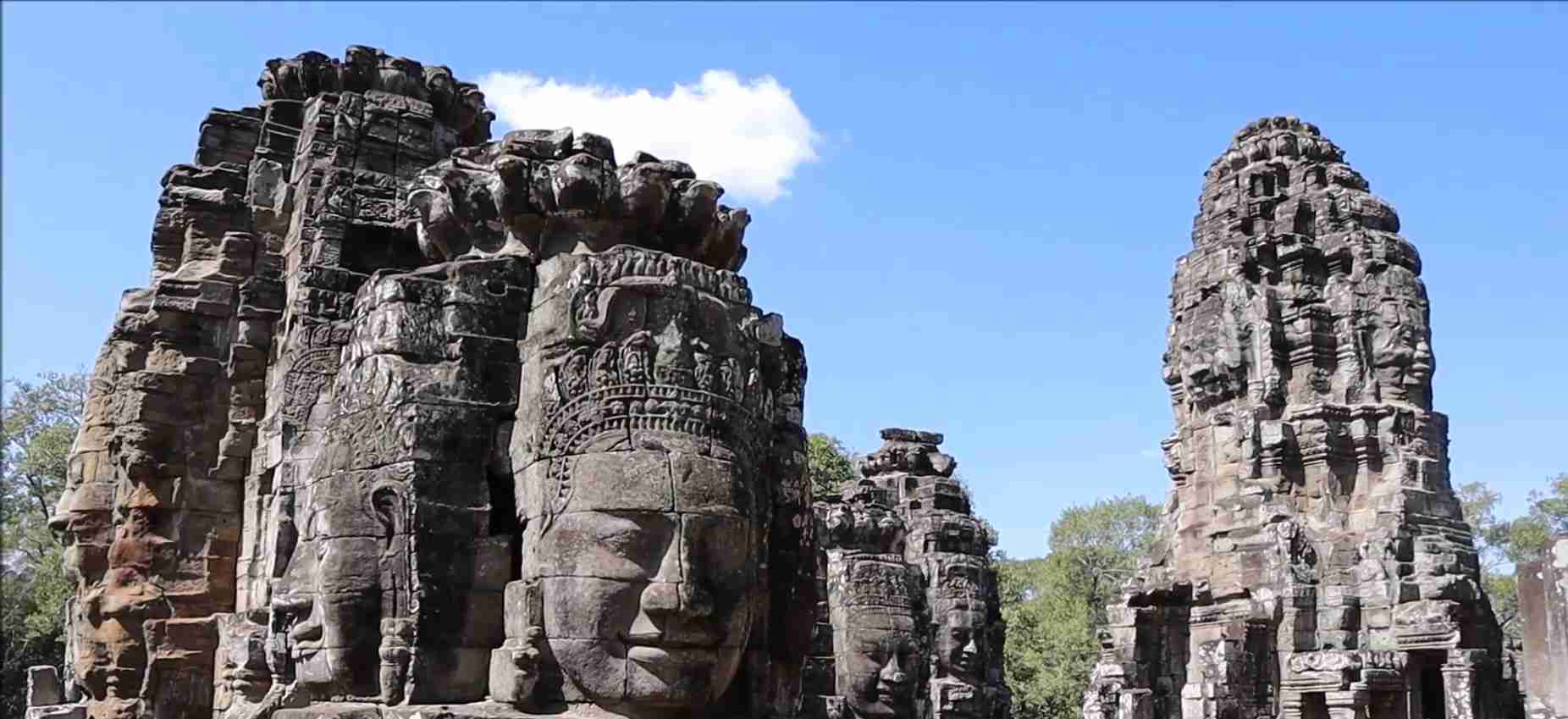
Borobudur vs Angkor Wat: Complete Comparison Guide
Borobudur in Indonesia and Angkor Wat in Cambodia stand as Southeast Asia’s two most magnificent Buddhist monuments, drawing millions of annual visitors who marvel at colossal stone architecture that predates Europe’s great cathedrals by centuries. These UNESCO World Heritage masterpieces share profound Buddhist spiritual significance and stunning artistic achievement, yet they differ fundamentally in architectural design, cultural context, historical purpose, and visitor experience. Understanding these distinctions guides travelers in allocating limited time between Java and Cambodia, while illuminating how two Buddhist civilizations expressed enlightenment through radically different architectural visions separated by 300 years and 2,000 kilometers.
Key Takeaways: Borobudur and Angkor Wat Comparison
- Architectural Conception Differs Fundamentally: Borobudur functions as a three-dimensional mandala pilgrim walks to symbolize the path to enlightenment through nine ascending levels, while Angkor Wat represents Mount Meru cosmology through temple mountain design with galleries, courtyards, and towering spires
- Scale and Size Comparison: Angkor Wat complex covers 162.6 hectares making it the world’s largest religious monument, while Borobudur temple proper measures 123 x 123 meters though both rise to similar heights (Borobudur 35 meters, Angkor Wat 65 meters)
- Religious Origins and Evolution: Borobudur was built purely Buddhist (Mahayana) and remained so, whereas Angkor Wat began as Hindu temple dedicated to Vishnu before converting to Buddhism in the 12th-13th centuries
- Construction Period Separation: Borobudur construction (750-850 CE) predates Angkor Wat (1113-1150 CE) by approximately 300 years, representing different eras of Southeast Asian Buddhist expression and architectural sophistication
- Artistic Focus Diverges: Borobudur emphasizes 2,672 narrative relief panels depicting Buddhist teachings across six kilometers of carved stone, while Angkor Wat showcases intricate bas-reliefs of Hindu mythology and 1,796 devata (deity) sculptures
- Visitor Experience Contrasts: Borobudur offers solitary temple climbing with volcano panoramas, while Angkor Wat provides vast complex exploration across galleries, libraries, courtyards, and multiple structures within monumental scale
People Also Ask About Borobudur vs Angkor Wat
Which is bigger, Borobudur or Angkor Wat?
Angkor Wat significantly surpasses Borobudur in overall complex size, covering 162.6 hectares (402 acres) compared to Borobudur’s temple compound of approximately 25 hectares. The Angkor Wat complex includes the main temple, extensive galleries, libraries, courtyards, and surrounding grounds enclosed by a moat spanning 200 meters wide with a 5.5-kilometer perimeter. In contrast, Borobudur temple proper measures 123 x 123 meters (1.5 hectares) at its base, though this includes Mendut and Pawon temples aligned on the same axis as part of the broader temple compound. When comparing the central temple structures alone, Angkor Wat’s temple proper covers approximately 86,000 square meters (21 acres) versus Borobudur’s 15,129 square meters, making Angkor Wat roughly six times larger in footprint. However, both monuments rise to comparable prominence in their landscapes—Borobudur reaches 35 meters high while Angkor Wat’s central tower rises 65 meters, creating dominant visual landmarks visible from considerable distances across the surrounding plains.
What are the main architectural differences between Borobudur and Angkor Wat?
Borobudur and Angkor Wat embody fundamentally different architectural philosophies despite both serving Buddhist spiritual functions. Borobudur follows a stepped pyramid design composed of nine stacked platforms—six square lower terraces and three circular upper platforms—creating a three-dimensional mandala that pilgrims circumambulate while ascending toward the central stupa symbolizing enlightenment. The structure lacks interior rooms or sanctuary spaces, functioning entirely as an exterior walking meditation path through carved relief panels depicting Buddhist cosmology. Angkor Wat employs the temple mountain concept representing Mount Meru with a quincunx of five towers (four corner towers surrounding a central spire), connected by cruciform galleries, enclosed courtyards, and axial causeways leading from the massive western entrance across the moat. The temple features extensive interior gallery spaces covered with bas-reliefs, libraries positioned symmetrically within courtyards, and multiple ascending levels requiring passage through gopura (entrance pavilions) at each tier. Borobudur’s construction utilized volcanic andesite stone without mortar in an interlocking system, while Angkor Wat employed sandstone blocks joined with binding agents creating monumental horizontal galleries impossible in Borobudur’s pyramidal form. The orientation also differs—Borobudur faces east following Buddhist convention, whereas Angkor Wat unusually faces west, possibly reflecting its dedication to Vishnu or its function as a funerary temple.
Can you visit both Borobudur and Angkor Wat on the same trip?
Visiting both Borobudur and Angkor Wat on a single Southeast Asian journey is logistically feasible but requires significant time allocation and multi-country travel planning. The monuments sit approximately 2,000 kilometers apart across different nations—Borobudur in Central Java, Indonesia, and Angkor Wat near Siem Reap, Cambodia—necessitating international flights between Jakarta or Yogyakarta and Phnom Penh or Siem Reap with no direct overland connection. A combined itinerary typically allocates minimum two days for Yogyakarta (one day Borobudur, one day Prambanan and city), three days for Siem Reap (Angkor Wat plus temples of Angkor Thom and Ta Prohm require multiple days), plus travel days between destinations, totaling at least seven days for both sites. Many travelers extend this to 10-14 days adding Bali or other Indonesian islands plus Phnom Penh or coastal Cambodia destinations. The temples share enough similarities that visiting both reveals the diversity of Buddhist architectural expression, yet differ sufficiently that each offers unique experiences justifying the logistics. Travelers with limited time (under 10 days) might focus on one monument rather than rushing both, while those with 14+ days can comfortably experience both plus complementary destinations. Budget impacts also differ—Indonesia generally costs less than Cambodia for accommodation and food, though entrance fees are comparable, and the international flight between countries adds significant expense versus exploring a single country.
Which temple is older, Borobudur or Angkor Wat?
Borobudur predates Angkor Wat by approximately 300 years, representing an earlier phase of Southeast Asian Buddhist monument construction. Borobudur’s construction occurred between 750-850 CE under the Sailendra Dynasty, completed during the reign of King Samaratungga around 825 CE after an estimated 75 years of building work. Angkor Wat construction began much later in the early 12th century, built between approximately 1113-1150 CE under Khmer King Suryavarman II, requiring roughly 30 years to complete. This three-century separation places Borobudur contemporary with Europe’s Carolingian period and Tang Dynasty China, while Angkor Wat arose during Europe’s High Middle Ages when Gothic cathedrals were beginning construction. The age difference reflects evolving architectural capabilities and Buddhist artistic traditions—Borobudur’s earlier design shows influence from Indian Gupta and post-Gupta Buddhist architecture, while Angkor Wat demonstrates more sophisticated stone engineering and the integration of Hindu-Buddhist cosmological symbolism developed over intervening centuries. Both temples notably preceded Cambodia’s Angkor Thom and European Gothic masterpieces, with Borobudur completed 300 years before work began on Notre-Dame de Paris and 400 years before significant European cathedral construction. The chronological separation also explains their different states of abandonment and rediscovery—Borobudur lay buried under volcanic ash and jungle from roughly the 10th century until 1814, while Angkor Wat never faced complete abandonment, maintained continuously by Buddhist monks even during periods of reduced political importance.
Extended multi-day tours – 5+ days
Featured Asia Multi-Day Tour Packages
3 days
Asia 3-Day Discovery Tour
- ✓ Comprehensive Asia experience
- ✓ Expert local guides included
- ✓ All accommodation included
- ✓ Transportation provided
5 days
Asia 5-Day Highlights Experience
- ✓ Comprehensive Asia experience
- ✓ Expert local guides included
- ✓ All accommodation included
- ✓ Transportation provided
7 days
Asia 7-Day Cultural Journey
- ✓ Comprehensive Asia experience
- ✓ Expert local guides included
- ✓ All accommodation included
- ✓ Transportation provided
10 days
Asia 10-Day Complete Adventure
- ✓ Comprehensive Asia experience
- ✓ Expert local guides included
- ✓ All accommodation included
- ✓ Transportation provided
Multi-day tour packages powered by TourRadar. Prices and availability subject to change.
Introduction: Understanding Two Buddhist Masterpieces
The comparison between Borobudur and Angkor Wat transcends simple monument metrics to illuminate how Buddhist civilization in Southeast Asia expressed profound spiritual concepts through architectural magnificence. These structures represent more than tourist attractions or archaeological wonders—they embody centuries of religious devotion, artistic achievement, mathematical precision, and cosmological understanding crystallized in stone by civilizations commanding vast resources and sophisticated engineering knowledge. Borobudur’s Sailendra Dynasty builders and Angkor Wat’s Khmer architects faced similar challenges of transporting millions of stone blocks, organizing massive labor forces, and translating abstract Buddhist cosmology into navigable physical space where pilgrims experience enlightenment concepts through architectural progression.
The monuments emerged from distinct historical contexts despite shared Buddhist foundations. Borobudur arose in 9th-century Java under the Sailendra Dynasty, a Mahayana Buddhist kingdom controlling maritime trade routes and rice-rich agricultural plains surrounding the Kedu Valley. The temple’s construction coincided with Buddhism’s peak influence in Indonesia before gradual Islamic conversion transformed the archipelago’s religious landscape. Angkor Wat developed three centuries later under the Khmer Empire at its territorial and cultural zenith, when Angkor served as a metropolis of perhaps one million inhabitants—larger than any contemporary European city. King Suryavarman II commissioned the temple as state monument and eventual mausoleum, breaking from previous Khmer tradition of Shaivite (Shiva-worshipping) dedication to honor Vishnu instead, before Buddhism’s subsequent adoption transformed the monument’s religious identity.
Modern recognition as UNESCO World Heritage sites links both monuments in global consciousness, though their paths to this status differed significantly. Borobudur received UNESCO designation in 1991 following major restoration work in the 1970s-1980s that rescued the monument from structural collapse caused by water infiltration, volcanic damage, and vegetation growth. The $25 million restoration, supported by UNESCO and the Indonesian government, dismantled and rebuilt large sections, installed drainage systems, and established conservation protocols preventing further deterioration. Angkor Wat’s UNESCO inscription came in 1992, initially placed on the World Heritage in Danger list due to civil war damage, looting, and neglect before removal from the danger designation in 2004 after successful conservation efforts. This parallel UNESCO recognition positions both temples as universal human heritage requiring preservation beyond national boundaries, though they serve active religious functions for Buddhist communities alongside their roles as tourist destinations and national symbols.
The analytical framework for comparing Borobudur and Angkor Wat examines multiple dimensions: architectural design and structural engineering, size and scale measurements, religious symbolism and cosmological representation, artistic achievement through sculpture and relief carving, construction techniques and materials, historical context and dynastic patronage, abandonment and rediscovery narratives, modern restoration and conservation challenges, visitor experience and tourism infrastructure, and cultural significance for Indonesian and Cambodian national identity. Each dimension reveals both remarkable parallels—shared Buddhist inspiration, monumental ambition, technical sophistication—and striking contrasts shaped by different geographical contexts, religious traditions, architectural conventions, and historical circumstances. Understanding these similarities and differences enriches appreciation for both monuments beyond superficial comparisons of size or age.
Historical Context and Construction Periods
Borobudur’s construction between 750-850 CE occurred during the Sailendra Dynasty’s dominance of Central Java, a period characterized by Buddhist cultural flowering, extensive maritime trade networks, and political stability enabling massive resource allocation to religious monuments. Historical evidence suggests construction began around 750 CE under early Sailendra rulers and continued through multiple reigns, reaching completion circa 825-850 CE during King Samaratungga’s rule. The 75-year construction timeline indicates sustained dynastic commitment across three to four generations, requiring continuous funding, labor organization, and artistic direction maintaining architectural coherence despite political transitions. The Sailendra Dynasty’s power derived from controlling Java’s rich volcanic soil agriculture producing rice surpluses supporting urban populations and artisan classes, plus maritime dominance over trade routes between India and China generating wealth for monumental construction.
The choice of the Kedu Valley location held both practical and symbolic significance. The natural hill providing Borobudur’s foundation offered structural advantages for the massive stone pyramid, while the plain’s fertility supported worker populations during construction decades. Symbolic importance derived from the valley’s position among volcanic peaks—Mount Merapi, Mount Merbabu, Mount Sumbing—visible from Borobudur’s upper terraces, creating landscape connections between earthly monument and mountain homes of gods in Buddhist-Hindu cosmology. The Kedu Plain’s two rivers evoked India’s sacred Ganges and Yamuna, reinforcing the site’s spiritual associations. Archaeological evidence indicates a substantial settlement surrounding Borobudur during the Sailendra period, suggesting the temple anchored a religious-administrative complex rather than standing in isolation.
Angkor Wat’s construction three centuries later reflected the Khmer Empire’s different political and cultural circumstances. King Suryavarman II (reigned 1113-1150 CE) commissioned the temple as state monument, personal memorial, and religious center during an era of military expansion, administrative consolidation, and architectural innovation. The approximately 30-year construction timeline (1113-1150 CE) demonstrates more rapid completion than Borobudur despite comparable or greater complexity, possibly reflecting improved construction techniques, larger labor forces, or more centralized resource control under Suryavarman II’s authority. The temple’s dedication to Vishnu broke Khmer convention favoring Shiva, suggesting Suryavarman II’s religious innovations and political consolidation through new symbolic associations.
Angkor’s capital status provided enormous resources unavailable to Borobudur’s builders. The Khmer Empire at its peak controlled much of modern Cambodia, Thailand, Laos, and Vietnam, commanding tribute, trade revenues, and agricultural surpluses from vast territories. Angkor city itself comprised perhaps one million inhabitants by the 12th century, supported by sophisticated water management systems including massive reservoirs (barays) and irrigation networks transforming the region into agricultural powerhouse producing multiple annual rice harvests. This infrastructure enabled feeding construction workforces numbering potentially tens of thousands plus supporting populations of stonecutters, sculptors, and administrators. Angkor Wat’s sandstone came from Phnom Kulen quarries 40 kilometers northeast, transported via canals and rivers—a logistics challenge solved through the empire’s extensive waterway network.
Both constructions required extraordinary labor mobilization and technical expertise. Estimates suggest Borobudur consumed approximately 1.6 million stone blocks totaling 55,000 cubic meters of andesite volcanic rock, while Angkor Wat utilized 5-10 million sandstone blocks with weights reaching 1.5 tons each. Moving these materials from quarries to construction sites without mechanical equipment necessitated sophisticated knowledge of leverage, rollers, inclined planes, and possibly elephant labor. Stone cutting and fitting achieved remarkable precision—both monuments employed jointing systems without mortar relying on precise shaping and gravity for structural integrity. The architectural knowledge underlying design calculations, weight distribution, and drainage systems demonstrates mathematical and engineering sophistication comparable to contemporary European Romanesque construction.
Architectural Design and Structural Engineering Differences
Borobudur’s architectural conception as a stepped pyramid mandala represents unique Buddhist spatial philosophy translated into walkable three-dimensional form. The monument rises through nine levels representing progressively refined spiritual realms according to Mahayana Buddhist cosmology: the hidden base depicting Kamadhatu (realm of desires), the five square terraces showing Rupadhatu (realm of forms), and the three circular platforms embodying Arupadhatu (formless realm), culminating in the central stupa symbolizing ultimate enlightenment. Pilgrims begin at the eastern entrance and circumambulate clockwise through each level, walking more than three miles while studying 2,672 relief panels narrating Buddhist teachings, Jataka tales of Buddha’s previous lives, and scenes from Buddhist texts. This processional architecture makes the entire structure a meditation device where physical journey mirrors spiritual progression toward Nirvana.
The structural engineering employs a pyramidal stack of progressively smaller square platforms (each side of the base measures 123 meters) creating stability through mass and gravity rather than complex internal vaulting or arches. The natural hill core provides foundational strength, clad in precisely fitted andesite volcanic stone without mortar—blocks interlock through careful cutting with slight inward angles creating compressive forces binding the structure. This technique requires exceptional stone-cutting precision but eliminates mortar degradation issues affecting many ancient structures. The shift from square to circular platforms at upper levels creates the monument’s distinctive silhouette visible from surrounding plains, while 72 perforated stupas arranged concentrically on the three circular terraces house Buddha statues partially visible through diamond and square perforations, representing beings achieving formless enlightenment yet still visible to earthly viewers.
Angkor Wat employs fundamentally different temple mountain architecture representing Mount Meru, the cosmic mountain center of Hindu-Buddhist universe. The design features concentric rectangular galleries connected by axial walkways, creating layered enclosures ascending toward the central sanctuary’s five towers (quincunx arrangement). The temple’s westward orientation—unusual for Khmer temples typically facing east—possibly relates to Vishnu’s association with the west or the monument’s function as Suryavarman II’s funerary temple, as west symbolizes death in Hindu cosmology. The moat surrounding the complex represents the oceans at the edge of the world in Hindu cosmology, while the 188-meter western causeway symbolizes the rainbow bridge between human and divine realms.
Structural engineering demonstrates sophisticated understanding of load distribution, gallery vaulting, and tower construction. The three concentric rectangular galleries (outer gallery 187 x 215 meters, middle 100 x 115 meters, inner 60 x 60 meters) create progressively smaller enclosures accessed through elaborately carved gopura (entrance pavilions) at cardinal points. Corbelled arch vaulting spans the galleries, a technique stacking stones in progressively cantilevered layers meeting at the top—less structurally efficient than true arches but creating the characteristic ogival profiles of Khmer architecture. The central sanctuary rises 65 meters through multiple diminishing levels, each with surrounding miniature towers creating the iconic lotus-bud silhouette. This vertical emphasis contrasts Borobudur’s more horizontal massing despite similar overall heights.
The sandstone construction utilizes binding agents (possibly natural resins or slaked lime) joining blocks rather than Borobudur’s dry-fitting approach, allowing more complex gallery spaces and interior rooms impossible with interlocking blocks alone. The temple incorporates extensive covered passageways, internal chambers, and supported galleries requiring different engineering solutions than Borobudur’s essentially solid pyramid. Drainage systems prevent water accumulation through careful grade planning and stone conduits, critical for preserving sandstone from moisture damage in Cambodia’s monsoon climate. The causeway, galleries, and towers demonstrate understanding of sight lines and perspective—the central towers appear perfectly proportioned from specific viewpoints despite complex three-dimensional arrangements.
Size and Scale: Comprehensive Measurements
Borobudur temple proper occupies a square base measuring 123 x 123 meters (approximately 15,129 square meters or 1.5 hectares) and rises 35 meters from ground level to the central stupa’s peak. The nine levels comprise six square terraces averaging 1.5 meters height each, three circular platforms totaling approximately 3 meters combined elevation, and the central stupa rising 9 meters, though the original chattra (three-tiered stone parasol) that topped the stupa is missing, likely adding several meters to the original height. The structure contains approximately 1.6 million stone blocks totaling 55,000-60,000 cubic meters of volcanic andesite, with individual blocks averaging 25 kilograms though some weigh several tons. The monument’s decorative elements include 2,672 relief panels covering 2,500 square meters of surface area, 504 Buddha statues (originally 505 with one missing), and 72 perforated stupas on the upper circular terraces.
The broader Borobudur Temple Compounds designated by UNESCO encompass approximately 25.51 hectares including the main temple, Pawon Temple, and Mendut Temple aligned along a straight axis. This compound represents the complete pilgrimage complex where the three temples symbolize stages in attaining Nirvana, though Borobudur functions as the central monument dwarfing its companion structures. The buffer zone extends 64.31 hectares protecting the archaeological area from encroaching development, though modern tourism infrastructure and villages now surround portions of the complex. When standing at Borobudur’s summit, visitors command panoramic views across the Kedu Plain to the volcanic peaks of Mount Merapi (2,930 meters), Mount Merbabu (3,145 meters), and Mount Sumbing (3,371 meters), creating dramatic landscape context emphasizing the monument’s spiritual connection to sacred mountains.
Angkor Wat’s total complex covers 162.6 hectares (402 acres or 1,626,000 square meters), making it the world’s largest religious monument by land area. This measurement includes the moat 200 meters wide with a perimeter of 5.5 kilometers enclosing the temple grounds. The moat and outer wall define a rectangular area (approximately 1,500 x 1,300 meters) containing 820,000 square meters (203 acres), though much of this space is now forested areas surrounding the central temple proper. The temple structure itself occupies approximately 86,000 square meters (21 acres), comprising the three concentric galleries, intervening courtyards, libraries, and connecting causeways. The central sanctuary rises 65 meters above ground level through multiple diminishing tiers, with the quincunx of five towers dominating the Angkor Archaeological Park’s skyline and visible from considerable distances across the Cambodian plain.
The gallery systems demonstrate Angkor Wat’s horizontal monumentality complementing vertical tower drama. The outer gallery measures 187 x 215 meters creating a rectangular perimeter covered walkway, its walls decorated with bas-reliefs extending 1,200 square meters depicting Hindu mythology, Khmer military campaigns, and celestial scenes. The middle and inner galleries create progressively smaller rectangular enclosures (100 x 115 meters and 60 x 60 meters respectively) accessed through four cruciform gopura at cardinal directions. The western causeway measuring 250 meters long and 12 meters wide provides the monumental approach across the moat, creating dramatic perspective as visitors process toward the temple’s western entrance. The temple proper utilizes an estimated 5-10 million sandstone blocks, with some weighing 1.5 tons, representing stone volume potentially exceeding all Egyptian pyramids combined according to some estimates.
Comparative scale analysis reveals Angkor Wat’s vastly larger footprint (162.6 hectares versus 1.5 hectares for Borobudur temple proper, or 25.5 hectares for the Compounds), yet both achieve monumental presence through height and architectural massing appropriate to their landscapes. Borobudur’s pyramidal mass concentrates architectural impact in vertical ascent through nine levels, while Angkor Wat distributes monumentality across horizontal gallery systems, courtyards, and libraries before culminating in the central towers. Borobudur functions as a single integrated monument walked in its entirety, whereas Angkor Wat complex requires selective exploration given its vast scale—comprehensive tours spending time at all gallery reliefs, libraries, courtyards, and upper terraces easily consume 4-6 hours versus 2-3 hours typical for thorough Borobudur exploration.
Religious Symbolism and Buddhist Cosmology
Borobudur’s religious symbolism embodies Mahayana Buddhist cosmology through architectural structure functioning as three-dimensional mandala and representation of the Buddhist universe’s three realms. The partially hidden base level contains 160 relief panels depicting Kamadhatu (sphere of desires), showing earthly existence bound to sensory pleasures, attachments, and suffering—appropriate imagery hidden from casual view as pilgrims must overcome base desires before spiritual progress begins. The five square terraces represent Rupadhatu (sphere of forms), where beings have transcended gross desires but remain bound to name and form; these terraces feature 1,300+ relief panels narrating Buddha’s life, Jataka tales, and Buddhist teachings plus 432 Buddha statues in niches displaying five different mudras (hand positions) corresponding to cardinal directions and their associated Dhyani Buddhas.
The three circular upper platforms symbolize Arupadhatu (formless realm) where beings achieve detachment from physical reality approaching Nirvana. The 72 perforated stupas house Buddha statues in dharmachakra mudra (turning the wheel of dharma), partially visible through openings representing beings in formless existence still perceptible but no longer fully manifest in physical form. The central stupa crowning the monument represents the ultimate goal—complete enlightenment and union with the cosmic Buddha—containing an empty chamber discovered during restoration, possibly originally housing sacred relics or representing the void of ultimate reality. This entire architectural program creates a meditation object pilgrims physically traverse, the clockwise circumambulation at each level mimicking the Buddhist pradakshina (ritual circumambulation) performed at stupas, while the upward progression through levels enacts the Bodhisattva path to Buddhahood.
Angkor Wat’s religious symbolism originally derived from Hindu cosmology, specifically Vaishnava traditions worshipping Vishnu as supreme deity, before Buddhist reinterpretation transformed its meaning. The monument represents Mount Meru, the cosmic mountain at the universe’s center, home to gods and axis mundi connecting heaven, earth, and underworld in Hindu-Buddhist cosmology. The five central towers symbolize Mount Meru’s five peaks, the surrounding moat represents the cosmic ocean (Samudra Manthan) at the world’s edge, and the causeway represents the rainbow bridge connecting human realm to divine. The galleries’ bas-reliefs depict Hindu mythology including the Churning of the Ocean of Milk, Ramayana and Mahabharata episodes, scenes from Vishnu’s ten avatars, and historical processions glorifying Suryavarman II, combining religious cosmology with royal legitimization.
The temple’s transformation to Buddhism occurred gradually through the late 12th and 13th centuries as Khmer rulers adopted Buddhism, particularly after King Jayavarman VII (reigned 1181-1218) established Buddhism as state religion following Angkor’s sacking by Cham invaders in 1177. Buddhist reinterpretation maintained the Mount Meru symbolism while adding Buddhist statuary, altering relief meanings, and transforming the central sanctuary into Buddhist shrine. The western orientation gains Buddhist meaning as direction of Sukhavati (Amitabha Buddha’s western paradise), while galleries could be reinterpreted as depicting samsara (cycle of rebirth) requiring liberation through Buddhist practice. This layered Hindu-Buddhist symbolism creates unique religious complexity at Angkor Wat compared to Borobudur’s consistent Mahayana Buddhist design.
Both monuments encode sophisticated astronomical and calendrical knowledge within their architecture. Borobudur’s alignment to cardinal directions, specific measurements corresponding to lunar and solar cycles, and relief panel counts reflecting Buddhist numerical symbolism demonstrate mathematical precision encoding religious knowledge. Angkor Wat’s measurements, proportions, and alignment similarly encode Hindu calendrical cycles, with researchers proposing the temple represents a giant calendar through its dimensions, relief panel counts, and architectural ratios reflecting Hindu temporal cosmology. The spring equinox sunrise aligns perfectly with Angkor Wat’s central tower when viewed from specific locations, suggesting deliberate astronomical incorporation into architectural design. These mathematical-religious integrations position both monuments as cosmograms—physical models of the universe’s structure and functioning according to Buddhist-Hindu understanding.
Artistic Achievement: Sculpture and Relief Carving
Borobudur’s artistic triumph centers on 2,672 relief panels extending approximately six kilometers in cumulative length across the monument’s square terraces, representing the ancient Buddhist world’s largest and most comprehensive narrative relief cycle. The panels employ sophisticated artistic techniques including perspective rendering, dynamic composition, detailed carving showing textile patterns, jewelry, architectural elements, and daily life scenes providing invaluable historical documentation of 9th-century Javanese culture. The reliefs follow a systematic iconographic program across multiple levels: the hidden base’s 160 Kamadhatu panels showing karmic cause and effect through scenes of earthly pleasures and their suffering consequences, the first gallery’s 120 panels combining Lalitavistara (Buddha’s life story) and Jataka tales (Buddha’s previous births), continuing through subsequent levels with Jataka tales, Avadana stories (exemplary Buddhist tales), and Gandavyuha (final journey to enlightenment).
The narrative sophistication demonstrates mature artistic tradition familiar with Indian Buddhist art while developing distinctively Javanese characteristics. Figures display naturalistic proportions, graceful movement, and expressive faces, wearing elaborate jewelry and clothing styles matching archaeological evidence of Sailendra period costume. Architectural details in relief backgrounds accurately depict temple structures, royal palaces, village houses, and landscape elements providing ethnographic data about Java’s built environment. The carving quality varies across different artisan workshops—some panels show exceptional finesse with subtle modeling and complex compositions, while others display more formulaic approach suggesting multiple teams working simultaneously but at different skill levels. The best examples rival contemporary Indian Pala period sculpture in artistic accomplishment while maintaining distinctive Indonesian aesthetic preferring softer modeling and more naturalistic proportions than Indian conventions.
The 504 Buddha statues (originally 505) represent five Dhyani Buddhas through distinct mudras: 104 statues on each cardinal direction of the four Rupadhatu levels displaying their associated mudras (Akshobhya/Bhumisparsha mudra east facing earth witness pose, Ratnasambhava/Varada mudra south showing gift-bestowing gesture, Amitabha/Dhyana mudra west in meditation pose, Amoghasiddhi/Abhaya mudra north displaying fearlessness gesture), plus the fifth level statues in Vairocana/Vitarka mudra (teaching gesture) facing all directions. The circular terrace Buddha statues within perforated stupas uniformly display Dharmachakra mudra (wheel of dharma), representing the Buddha’s first sermon at Deer Park. The statues demonstrate consistent proportional systems, serene expressions, and technical skill in three-dimensional sculpture complementing the relief panels’ narrative focus.
Angkor Wat’s artistic achievement centers on the Gallery of Bas-Reliefs covering 1,200 square meters of sandstone with intricate narrative scenes from Hindu mythology and Khmer history. The south gallery’s western section depicts the Churning of the Ocean of Milk—92 asuras (demons) and 88 devas (gods) pulling the serpent Vasuki wrapped around Mount Mandara to churn the cosmic ocean producing the elixir of immortality, with Vishnu as turtle avatar supporting the mountain. This single relief section extends 49 meters showing hundreds of figures in dynamic composition demonstrating supreme narrative carving achievement. Other major relief sequences include the Battle of Kurukshetra from the Mahabharata, Ramayana battle scenes, Suryavarman II’s military review, judgment of Yama depicting heaven and hell, and Krishna battling the asura Bana.
The relief carving demonstrates technical mastery in three-dimensional depth illusion, compositional rhythm, and narrative clarity across vast surfaces. Unlike Borobudur’s separate panel format, Angkor Wat’s reliefs flow continuously around galleries creating immersive visual narratives viewers read while circumambulating the temple. The carving technique employs multiple depth layers—deeply cut foreground figures, intermediate relief for background figures, and barely raised final layer for distant elements creating sophisticated perspective effects. Details include expressive faces showing emotional states, elaborate costume and jewelry ornamentation, weapon and tool accuracy, animal anatomy including elephants, horses, lions, and mythical creatures, and landscape elements like trees, mountains, and architecture.
The devata (deity) sculptures represent perhaps Angkor Wat’s most iconic artistic achievement, with more than 1,796 individual female deity figures adorning the temple from entry pavilions to upper tower levels. These full-body portraits measuring 95-110 centimeters display extraordinary diversity in hairstyles, headdresses, garments, stance, jewelry, and decorative flowers, suggesting the sculptures depicted actual Angkor period courtly fashions and individual models rather than generic repetitions. Each devata demonstrates subtle variations in hand positioning, facial expression, and decorative details, creating a portrait gallery of Khmer classical beauty standards and royal court aesthetics. Smaller apsara (celestial dancer) figures measuring 30-40 centimeters decorate pillars and walls throughout the temple, adding movement and grace to architectural elements. This sculptural program surpasses Borobudur’s more uniform Buddha statue repetitions in variety and individualization, though both demonstrate supreme technical accomplishment.
Construction Techniques and Materials
Borobudur’s construction methodology employed volcanic andesite stone sourced from nearby rivers and stone outcrops in the Kedu Plain region. The stone’s natural formation in columnar joints facilitated quarrying into manageable blocks, though transporting 1.6 million stones totaling 55,000-60,000 cubic meters to the construction site required sophisticated logistics over the estimated 75-year construction period. The blocks vary from small decorative elements weighing kilograms to massive foundation stones of several tons, cut using iron tools achieving precise angles and surfaces. The dry-stone interlocking technique without mortar necessitated exceptional precision—each block features slightly inward-sloping surfaces creating compression forces binding the structure, while tongue-and-groove joints in some areas provide lateral stability. This construction approach creates flexibility allowing minor movement during earthquakes without catastrophic collapse, explaining Borobudur’s survival through centuries of seismic activity including the destructive 2006 Yogyakarta earthquake.
The monument’s internal structure consists of the natural hill core surrounded by stone retaining walls creating terraces filled with earth and rubble, then faced with the precisely cut andesite blocks bearing relief carvings and forming exterior surfaces. Archaeological investigations reveal complex hidden galleries within the structure’s base, possibly representing earlier design phases later enclosed during construction modifications. The drainage system demonstrates sophisticated hydraulic engineering understanding, with stone conduits channeling rainwater away from the structure preventing water infiltration and erosion that plagued the monument before modern restoration. The volcanic stone’s hardness proved both advantage and challenge—highly weather-resistant and durable, but requiring intensive labor for cutting and shaping with available iron technology.
Angkor Wat’s construction utilized sandstone as primary material, quarried from Phnom Kulen hills approximately 40 kilometers northeast and transported via canal and river networks to the construction site. Sandstone offered advantages over harder stones in ease of carving enabling the elaborate bas-reliefs and decorative elements, though presenting challenges in structural applications requiring additional binding agents and careful stone selection for load-bearing elements. The binding agent joining sandstone blocks remains debated—natural resins, slaked lime, and vegetable compounds have been proposed, though the exact composition and effectiveness continue as research topics. The construction employed laterite (iron-rich sedimentary rock) for foundations, hidden structural elements, and the outer wall, utilizing its availability and strength for non-decorative applications while reserving sandstone for visible architectural elements.
The construction labor organization likely followed systems similar to those documented for other Khmer monuments, with corvée labor (mandatory state service) providing unskilled workers for quarrying, transport, and construction support, while specialized artisan guilds handled stonecutting, carving, and engineering tasks. Estimates suggest peak construction employed tens of thousands of workers simultaneously, organized in teams under master builders and engineers coordinating the complex architectural program. The rapid 30-year construction timeline for such a massive complex indicates highly efficient organization, possibly utilizing construction knowledge accumulated through previous Khmer temple projects. The use of elephant labor for moving heavy stones, lever and inclined plane techniques for raising blocks, and possibly water-filled ramps or channels for final positioning represent technological achievements comparable to Egyptian pyramid construction methods adapted to Khmer contexts.
Both monuments demonstrate sophisticated site preparation and foundation engineering. Borobudur’s natural hill provided stable foundation but required careful terracing and drainage to prevent water accumulation and subsidence. Modern investigations revealed the original builders created drainage systems that failed over centuries, leading to structural problems requiring modern restoration’s sophisticated drainage network. Angkor Wat’s construction on relatively flat terrain required extensive site leveling, foundation preparation across the 162-hectare complex, and moat excavation producing enormous earth volumes used for raising the temple platform above flood level. The moat served dual functions as symbolic cosmic ocean and practical water management element within Angkor’s broader irrigation network, while also providing construction material (filling raised platforms) and transportation routes for building materials.
Abandonment, Loss, and Rediscovery
Borobudur’s abandonment remains historically mysterious, occurring sometime between the 10th and 14th centuries as Java’s political center shifted eastward and Islamic conversion gradually replaced Buddhism as the dominant religion. The temple likely ceased active religious use by the 10th century as the Sailendra Dynasty’s power declined and new kingdoms arose elsewhere in Java. Volcanic eruptions from Mount Merapi covered the monument under layers of volcanic ash, while tropical vegetation rapidly colonized the structure, creating the forest-buried state European explorers encountered in the 19th century. Local Javanese populations retained awareness of the monument through oral traditions and periodic visits, though its original Buddhist purpose and complete architectural design were forgotten. The abandonment proved fortunate in some ways—the volcanic ash provided protective covering preventing stone weathering, while burial discouraged looting and deliberate destruction that afflicted many accessible monuments.
The modern rediscovery in 1814 occurred when Sir Thomas Stamford Raffles, British Lieutenant-Governor of Java during the brief British interregnum (1811-1816), learned of a “mountain of Buddhist sculptures in the jungle” from local reports. Raffles dispatched engineer H.C. Cornelius to investigate, who supervised jungle clearing revealing the monument’s full scale for the first time in centuries. Initial clearing work damaged some stonework through excessive tree removal destabilizing structures, but established Borobudur’s significance for European archaeological scholarship. Subsequent Dutch colonial administration sponsored systematic documentation and restoration attempts beginning with basic photographic surveys in the 1840s-1850s, physical reconstruction in 1907-1911 under Dutch archaeologist Theodoor van Erp preventing imminent collapse, and comprehensive restoration in 1975-1982 supported by UNESCO addressing fundamental structural and drainage issues.
Angkor Wat never experienced complete abandonment comparable to Borobudur’s burial, maintained continuously as Buddhist pilgrimage site even during periods when Angkor city declined as political center. The Khmer capital’s gradual shift southward to Phnom Penh area during the 14th-15th centuries reflected multiple factors including warfare with Siamese kingdoms, possible environmental degradation through deforestation and water system failures, disease epidemics, and commercial reorientation toward maritime trade requiring coastal access. Angkor Wat’s transition to Theravada Buddhism by the 14th century ensured continued religious significance and basic maintenance preventing complete ruin, though many structures deteriorated, surrounding city areas returned to forest, and some stonework fell to looting or natural degradation.
The European “rediscovery” narrative beginning with Portuguese monk Antonio da Magdalena’s 1586 visit and French naturalist Henri Mouhot’s 1860 publication incorrectly portrays Angkor Wat as lost and forgotten—Khmer people, Buddhist monks, and Siamese kingdoms always knew of the temples, with continuous pilgrimage and worship occurring throughout supposed “lost centuries.” Mouhot’s enthusiastic descriptions and detailed drawings created European sensation, prompting French colonial administration to sponsor archaeological missions, conservation efforts, and scholarly documentation from the 1860s onward. French protectorate establishment over Cambodia in 1863 partly motivated by desires to control and study Angkor monuments, with French École française d’Extrême-Orient (EFEO) conducting systematic conservation from 1907 until Cambodia’s independence in 1953.
Both monuments faced significant 20th-century challenges threatening their survival. Borobudur suffered from structural instability as inadequate drainage caused foundation subsidence and stone loosening, biological growth attacking stone surfaces, and atmospheric pollution from modern development. The UNESCO-sponsored restoration (1975-1982) costing $25 million dismantled and rebuilt large sections, installed comprehensive drainage systems, and treated stones against biological attack. Angkor Wat endured civil war damage during Cambodia’s conflicts (1970s-1990s), looting during Khmer Rouge period and subsequent instability, landmine contamination in surrounding areas, and neglect as political instability prevented conservation. The post-1992 UNESCO intervention coordinated international conservation teams addressing structural stabilization, vegetation control, and sustainable tourism development, successfully removing Angkor from World Heritage in Danger status by 2004.
Modern Conservation Challenges and Tourism Impact
Borobudur’s conservation challenges in the contemporary era center on managing mass tourism impact on the ancient stonework, controlling biological growth in tropical climate conditions, and preventing water infiltration through sophisticated drainage maintenance. The monument receives over one million annual visitors whose foot traffic erodes stone surfaces, particularly the narrow staircases and terrace floors where 15 centuries of weathering combined with modern tourism creates measurable wear. The 2023 implementation of visitor management reforms limiting structure climbing to guided groups wearing protective upanat sandals addresses erosion concerns, though balancing conservation needs against tourism revenue and access expectations creates ongoing policy tensions.
Biological growth remains persistent threat as tropical Indonesia’s warm, humid climate promotes moss, lichen, algae, and plant growth on stone surfaces. These organisms produce acids breaking down stone chemically while root systems create physical fissures expanding existing cracks. Regular cleaning programs removing biological growth while minimizing damage to underlying stone represent continuous conservation requirements, though determining safe cleaning methods and frequencies without accelerating stone degradation requires ongoing research. The volcanic andesite’s hardness provides some resistance compared to softer sedimentary stones, though areas with particularly intricate relief carving prove vulnerable to biological attack in protected crevices difficult to clean thoroughly.
Angkor Wat faces similar tourism pressures amplified by even larger visitor numbers—pre-COVID-19 pandemic figures approached 2.5 million annual visitors to Angkor Archaeological Park with significant concentrations at Angkor Wat as the complex’s most famous monument. The sandstone’s relative softness compared to Borobudur’s andesite creates faster erosion from foot traffic, particularly on the steep staircases ascending to upper levels where railings installed for visitor safety also facilitate intensive traffic that would otherwise be limited by difficulty. Conservation teams monitor erosion patterns and implement access restrictions to critically eroded areas, though completely closing popular sections creates visitor dissatisfaction and revenue concerns for Cambodian authorities dependent on tourism income.
Water management represents critical challenge at both sites. Borobudur’s modern drainage system requires continuous maintenance preventing the water infiltration that caused pre-1975 structural problems, while Cambodia’s monsoon rains create seasonal flooding and moisture issues at Angkor Wat. The temple’s sandstone absorbs water causing expansion when saturated and contraction when dry, with repeated cycles creating stone stress and eventual cracking. The moat, originally part of the water management system, now faces pollution from surrounding development and fluctuating water levels affecting foundations. Conservation teams work to maintain original drainage functions while managing modern environmental changes including climate change-related rainfall pattern alterations.
Both monuments grapple with balancing authentic preservation versus reconstruction debates. Borobudur’s 1975-1982 restoration extensively rebuilt sections using original stones plus some replacement materials where originals were missing or too degraded, creating philosophical questions about authenticity and whether rebuilt sections represent original monument or modern reconstruction. Angkor Wat’s anastylosis techniques (dismantling and rebuilding using original materials) applied to various sections create similar questions, compounded by need to replace stones too degraded for reuse. The international conservation teams working at Angkor represent another challenge—coordination among French, Japanese, Indian, Chinese, and other national teams applying different conservation philosophies and techniques requires careful management preventing contradictory approaches damaging overall conservation coherence.
Visitor Experience and Tourism Infrastructure Comparison
Borobudur’s visitor experience centers on the solitary temple standing dramatically on its hilltop, approached through modern visitor infrastructure including museums, rest areas, and regulated entry systems. The experience begins at the visitor center where tickets are purchased and orientation provided, followed by short walk or shuttle ride to the temple platform. The climb through nine levels typically requires 2-3 hours including time to examine relief panels, photograph Buddha statues, and appreciate views from upper terraces. The mandatory guided access for structure climbing creates educational benefit through expert explanation of relief narratives and Buddhist symbolism, though some visitors prefer independent exploration at their own pace. The surrounding landscape of rice fields and volcanic peaks creates contemplative atmosphere emphasizing the monument’s spiritual character, though modern tourism development has intruded on the immediate environs.
Access from Yogyakarta (40 kilometers away) requires approximately one hour by private vehicle, making day trip combinations with Prambanan Temple practical. The site typically experiences lower overall visitor density than Angkor Wat despite significant numbers, as Indonesian domestic tourism peaks during national holidays while international visitation spreads across the year. Sunrise tours offering pre-dawn access provide exclusive experience before public hours, though the limited 100-person daily quota and premium pricing create accessibility barriers for budget travelers. The monument’s relatively compact scale means comprehensive exploration is achievable in single visit, unlike Angkor Wat’s vast complex requiring multiple days for thorough coverage.
Angkor Wat’s visitor experience unfolds across the massive 162-hectare complex requiring selective exploration strategies given the impractical nature of comprehensive coverage in single visit. The standard approach begins at the western entrance, crossing the 188-meter causeway over the moat before entering through the western gopura into the outer courtyard. The galleries’ bas-reliefs typically receive 1-2 hours attention, with highlights including the Churning of the Ocean of Milk and battle scenes, before ascending to upper levels requiring steep staircase climbing. The central sanctuary’s upper platform provides panoramic views across the complex and surrounding Angkor Archaeological Park, creating powerful sense of the Khmer Empire’s architectural achievement and the monument’s landscape dominance.
The sunrise viewing experience at Angkor Wat draws enormous crowds positioning themselves for iconic photos of the towers silhouetted against dawn light reflected in the front courtyard pools. The popularity creates significant crowding making serene sunrise meditation impossible during peak season, though the visual spectacle justifies the early 5:00 AM arrival for many visitors. Alternative times including mid-morning after initial crowds disperse or late afternoon when softer light enhances the sandstone’s warm tones offer better experiences for visitors prioritizing quiet contemplation over iconic photography. The monument’s incorporation within Angkor Archaeological Park means most visitors combine Angkor Wat with Angkor Thom’s Bayon Temple, Ta Prohm’s jungle-engulfed ruins, and other temples, creating multi-day itineraries exploring the Khmer civilization’s architectural legacy.
Infrastructure supporting tourism differs between sites. Borobudur benefits from Yogyakarta’s established tourism infrastructure with extensive accommodation options, restaurants, and domestic airport connectivity, though the monument itself maintains relatively low-key facilities preserving site character. Angkor Wat’s Siem Reap base offers broader international airport access, vast hotel and restaurant development spanning budget to ultra-luxury categories, and tourism services geared toward multi-day temple touring. The Angkor pass system ($37 single-day, $62 three-day, $72 week-long) creates different pricing dynamic than Borobudur’s fixed admission with structure-climbing upcharge, though both sites generate significant national revenue from tourism while struggling to balance access and preservation.
Cultural Significance and National Identity
Borobudur functions as Indonesia’s paramount cultural symbol and source of national pride transcending religious boundaries in the majority-Muslim nation. The monument appears on Indonesian currency, stamps, tourist marketing materials, and national cultural iconography representing the country’s pre-Islamic Buddhist-Hindu heritage and architectural achievement. This symbolic importance creates interesting dynamics in contemporary Indonesia where Islam predominates, yet Buddhist and Hindu heritage periods produce the nation’s most celebrated cultural monuments. The government’s protection and promotion of Borobudur demonstrates Indonesia’s official commitment to religious pluralism and cultural diversity encompassing Buddhist, Hindu, Islamic, and Christian heritage as shared national patrimony rather than threatening competing religious claims.
For Indonesian Buddhists (less than 1% of population), Borobudur serves as pilgrimage destination and connection to Indonesia’s Buddhist past, particularly during Vesak (Buddha’s birth, enlightenment, and death commemoration) when thousands of Buddhist monks process to the monument. The government facilitates these religious observances while maintaining Borobudur primarily as archaeological site and tourist attraction rather than active temple, balancing secular tourism revenue against Buddhist community religious needs. The monument also serves educational functions in Indonesian schools teaching national history, ancient achievements, and cultural heritage appreciation, positioning Borobudur as source of contemporary Indonesian identity rooted in sophisticated pre-colonial civilizations.
Angkor Wat’s cultural significance for Cambodia extends even deeper, appearing on the national flag as central emblem since 1863—one of few national flags featuring architectural monument. This prominence reflects Angkor Wat’s role as ultimate symbol of Khmer civilization’s golden age, national pride source during colonial and post-colonial periods, and rallying point for Cambodian cultural identity. Unlike Indonesia’s religious diversity, Cambodia’s Theravada Buddhist majority (97% of population) maintains direct religious continuity with Angkor Wat despite the monument’s Hindu origins, facilitating ongoing Buddhist worship coexisting with tourism and archaeological study.
The monument’s symbolism proved potent through Cambodia’s traumatic 20th century including French colonial rule, Japanese occupation, independence struggles, American bombing during Vietnam War, Khmer Rouge genocide, Vietnamese occupation, and civil war. Angkor Wat represented enduring Khmer cultural achievement surviving all disasters, providing psychological sustenance during darkest periods when the nation faced existential threats. The post-1992 UNESCO designation and conservation success symbolized Cambodia’s recovery and international reintegration, with tourism revenue from Angkor providing critical economic development funding. The monument functions as de facto national brand recognizable globally, attracting tourists who might otherwise overlook small Southeast Asian nation while generating pride in Cambodian cultural contributions to world civilization.
Both monuments demonstrate how ancient religious architecture transcends original purposes to serve evolving cultural, national, and economic functions. Neither serves primarily as active worship site despite Buddhist communities’ continued religious connections, instead functioning as tourist destinations, national symbols, economic resources, and world heritage treasures. This transformation from religious monument to cultural icon raises questions about authenticity, commercialization, and appropriate balance between preservation, religious respect, tourism development, and national identity expression that both Indonesia and Cambodia continue navigating through policy evolution and stakeholder negotiation.
Which Monument Should You Visit: Decision Factors
The choice between Borobudur and Angkor Wat for travelers with limited time and resources depends on multiple factors including architectural preference, travel logistics, time availability, budget constraints, and specific interests in Buddhist heritage, artistic styles, or photographic opportunities. Neither choice represents superior experience—both offer profound encounters with Buddhist architectural genius requiring different approaches and delivering distinct rewards. Travelers passionate about Buddhist spirituality and cosmological symbolism find Borobudur’s mandala architecture and coherent Buddhist iconographic program offering more direct religious engagement through the walking meditation progression, while Angkor Wat’s layered Hindu-Buddhist symbolism appeals to those interested in religious syncretism and Khmer civilization’s cultural complexity.
Architectural enthusiasts drawn to monumental scale, complex gallery systems, and intricate bas-relief narratives find Angkor Wat’s vast complex providing multiple days of exploration discovering different temple sections, libraries, courtyards, and the broader Angkor Archaeological Park’s diversity of temple styles and historical periods. Borobudur’s focused design as single monument with unified architectural concept appeals to visitors preferring concentrated experience, deeper engagement with one masterpiece, and clearer understanding of complete design intention without the vast scale requiring selective exploration and multiple return visits for comprehensive coverage. Photography interests also diverge—Angkor Wat’s iconic towers reflected in moat pools, dramatic gallery perspectives, and jungle-temple contrasts create widely recognized images, while Borobudur’s perforated stupas framing Buddha statues, relief panel details, and volcano backdrop offer distinctive compositions.
Logistical considerations significantly impact decisions. Travelers already planning Indonesia itineraries including Bali, Java cultural sites, or Indonesian archipelago exploration can efficiently incorporate Borobudur via Yogyakarta base, possibly combined with Prambanan Temple, Mount Bromo, or other Java destinations in comprehensive Indonesia coverage. Cambodia-focused travelers or those exploring mainland Southeast Asia (Thailand, Vietnam, Laos) find Angkor Wat more logistically sensible, allowing Siem Reap base for multi-day temple exploration combined with Phnom Penh cultural sites, Cambodian coastal areas, or regional travel. The monuments’ 2,000-kilometer separation and different-country locations make combined visits requiring international flights, additional visa considerations, and extended timelines feasible only for travelers with 10+ days available and budgets accommodating international airfares.
Budget impacts differ between destinations. Indonesia generally offers lower costs for accommodation, food, and domestic transportation than Cambodia, though Angkor Wat’s multi-day pass requirement (minimum $37 single-day, but most visitors purchase $62 three-day passes) versus Borobudur’s lower single entrance fee (approximately $30 for structure-climbing access) creates different total cost structures. Budget travelers preferring extended time in single destinations find Indonesia’s accommodation diversity and low cost of living stretching budgets further, while Cambodia’s tourism infrastructure despite higher relative costs provides convenient access to Angkor complex plus broader Siem Reap dining and entertainment options concentrated around tourism economy.
Time availability shapes optimal choices. Travelers with limited time (3-5 days total) achieve meaningful Borobudur experience within concentrated Yogyakarta-based itinerary visiting both Borobudur and Prambanan while exploring Yogyakarta’s Sultan’s Palace, markets, and batik workshops. Angkor Wat demands minimum three days for reasonably comprehensive Angkor Archaeological Park coverage including Angkor Wat, Angkor Thom, Ta Prohm, and select smaller temples, making single-destination focus more practical than rushed visits to multiple regional countries. Travelers with extensive time (2-3 weeks) can meaningfully visit both monuments within broader Southeast Asian journeys combining Indonesian and Cambodian destinations, though accepting that each monument deserves focused attention rather than checkbox tourism mentality.
The question “which is better” ultimately proves meaningless—both monuments represent pinnacle Buddhist architectural achievement in different expressions reflecting distinct cultural contexts, religious traditions, and historical periods. The meaningful question becomes “which better matches my specific interests, travel style, logistical situation, and philosophical inclinations?” Answering requires honest self-assessment of priorities: spiritual engagement versus architectural exploration, focused depth versus expansive coverage, photographic opportunities versus meditative atmosphere, budget constraints versus comprehensive experiences, and whether Southeast Asian travel interests concentrate in island Indonesia or mainland Cambodia-region destinations. Ideally, serious students of Buddhist heritage, architecture, or Southeast Asian culture eventually visit both, recognizing each monument’s unique contributions to world cultural heritage and profound human achievement they collectively represent.
Frequently Asked Questions About Borobudur and Angkor Wat
How long does it take to visit each monument?
Borobudur requires 2-3 hours for thorough exploration including climbing all nine levels, examining key relief panels with attention to Buddhist narratives, photographing Buddha statues and perforated stupas, and appreciating views from upper terraces. Comprehensive visits studying all 2,672 relief panels in detail could extend to 4-5 hours though most visitors focus on highlights during 2-3 hour standard visits. Angkor Wat demands 3-4 hours minimum for basic coverage including Gallery of Bas-Reliefs highlights, climbing to upper levels, and central sanctuary exploration, though serious visitors studying relief narratives thoroughly and photographing extensively often spend 5-6 hours. The broader Angkor Archaeological Park typically requires 3-5 days visiting Angkor Wat plus Angkor Thom, Ta Prohm, Banteay Srei, and additional temples comprehensively, while single-day visits capture highlights only. Combined with travel time from Yogyakarta (one hour each way), Borobudur makes feasible half-day excursion or full-day combination with Prambanan, whereas Angkor Wat benefits from multi-day Siem Reap base allowing sunrise visits, return trips during different lighting conditions, and exploration of the vast temple complex’s various sections without time pressure.
What is the best time of day to visit each temple?
Borobudur’s optimal visiting times include sunrise tours (4:00-8:00 AM) offering exclusive early access before public hours, misty atmospheric effects, and soft golden light illuminating the monument as sun rises over surrounding volcanic peaks. Mid-morning (8:30-11:00 AM) provides good lighting conditions, comfortable temperatures before intense tropical heat, and moderate crowd levels. Late afternoon (3:00-5:00 PM) delivers beautiful side-lighting on relief panels, cooler temperatures, and thinner crowds as tour groups depart, though sunset viewing faces westward looking away from the monument rather than showcasing the temple itself. Midday visits (11:00 AM-2:00 PM) encounter harsh overhead lighting creating strong shadows and washing out relief details, plus intense heat making climbing uncomfortable. Angkor Wat’s sunrise viewing (5:00-7:00 AM) creates the iconic image of towers silhouetted against dawn light reflected in courtyard pools, though massive crowds during peak season diminish the contemplative atmosphere. Mid-morning (8:00-11:00 AM) after initial sunrise crowds disperse but before midday heat peaks offers better balance of good lighting, manageable crowds, and comfortable conditions. Late afternoon (3:00-5:00 PM) bathes the western-facing temple in warm light enhancing sandstone colors, creates long shadows emphasizing architectural details, and provides comfortable temperatures plus fewer tour groups. Midday visits (11:00 AM-2:00 PM) face same harsh lighting and heat issues as Borobudur, compounded by Angkor Wat’s larger scale requiring more walking exposure to tropical sun.
Are both monuments wheelchair accessible?
Neither Borobudur nor Angkor Wat offers full wheelchair accessibility given their ancient design featuring steep staircases, uneven stone surfaces, and narrow passages incompatible with modern accessibility standards. Borobudur’s ground level and lower terraces allow limited wheelchair access on paved pathways circling the monument’s base, enabling photography of exterior architecture and access to museums explaining the temple’s history and Buddhist significance, though the nine-level climbing experience requiring staircase ascent remains impossible for wheelchair users or those with significant mobility limitations. Angkor Wat provides wheelchair access across the causeway and into the outer courtyard via the western entrance, allowing viewing of the temple’s iconic facade and access to the first gallery level’s bas-reliefs on relatively flat surfaces, though the steep staircases to upper levels (70-degree angle steps) preclude wheelchair access to the central sanctuary and upper terraces. Both sites present challenges for elderly visitors or those with moderate mobility limitations even without wheelchairs, as the climbing requirements (15-25 centimeter step heights, irregular surfaces, no handrails at Borobudur, minimal railings at Angkor Wat) demand good balance, stamina, and joint flexibility. Visitors with mobility concerns should plan for ground-level access only while still appreciating the monuments’ architectural magnificence from accessible areas, or consider private tours arranging accessible viewing from nearby elevated positions like Punthuk Setumbu Hill overlooking Borobudur, though no comparable Angkor Wat alternative exists.
What are the entrance fees for both monuments?
Borobudur entrance fees operate on a tiered system with Temple Ground tickets allowing access to the monument’s base and surrounding grounds without structure climbing, while Temple Structure tickets enable guided climbing access to all nine levels with mandatory traditional upanat sandals protecting stone surfaces. Foreign visitor Temple Structure tickets providing the full climbing experience cost approximately IDR 455,000 (roughly $30 USD), while children aged 3-10 pay reduced rates around IDR 305,000 ($20 USD). Sunrise tours require special premium tickets of IDR 1,000,000 ($65 USD) including pre-dawn exclusive access, guided tour, traditional breakfast, and the structure-climbing privilege, limited to 100 daily visitors making advance booking essential. Angkor Archaeological Park entrance fees cover access to all temples within the park including Angkor Wat, Angkor Thom, Ta Prohm, and numerous other sites through multi-day pass system: single-day passes cost $37 USD, three-day passes (usable across any three days within one week) cost $62 USD, and seven-day passes (usable across any seven days within one month) cost $72 USD. Children under 12 enter free at Angkor with passport verification. Most Angkor visitors purchase three-day passes allowing comprehensive temple coverage at measured pace across multiple days, making the effective per-day cost ($20.67) comparable to Borobudur though the upfront expenditure proves higher. Both sites prohibit photography for commercial purposes without special permits costing significantly more, though personal photography faces no restrictions or additional fees beyond entrance ticket costs.
Can you climb to the top of both monuments?
Borobudur allows climbing to the summit’s central stupa platform through all nine levels following the clockwise circumambulation path ascending via staircases connecting each terrace, though visitors must purchase Temple Structure tickets (versus cheaper ground-level-only tickets) and join mandatory guided groups wearing protective upanat sandals implemented in 2023 conservation reforms. The climbing experience represents Borobudur’s essential feature as walking meditation device symbolizing enlightenment path, making structure access fundamental to meaningful visits despite the moderate physical demands of ascending 35 meters through progressively narrower terraces with steeper stairways toward upper levels. Angkor Wat similarly permits climbing to the central sanctuary’s upper platform via steep staircases (70-degree angle) requiring careful footing, good balance, and reasonable fitness levels, with handrails installed on main western staircase for safety though other approaches maintain original condition without modern assists. The upper level (Bakan) historically reserved for kings now welcomes all visitors willing to make the climb, though capacity limits sometimes create queues during peak hours requiring patience. Both monuments’ climbing experiences present greater challenges than visitors might anticipate from photographs—the staircases feature irregular step heights, narrow widths allowing single-file traffic only, exposure to weather without shelter, and significant elevation gain requiring rest stops for many visitors. Elderly visitors, those with knee or hip problems, people afraid of heights, and anyone with cardiovascular limitations should carefully consider their physical capabilities before attempting full climbs, as descent proves particularly challenging requiring backward climbing or sideways maneuvering on steep sections. Both sites provide alternative ground-level experiences for those unable or unwilling to climb while still appreciating the monuments’ architectural and artistic achievements.
What should I wear when visiting these Buddhist temples?
Both Borobudur and Angkor Wat maintain modest dress codes appropriate to Buddhist sacred sites, requiring visitors cover shoulders and knees regardless of gender or religious affiliation. Acceptable clothing includes lightweight long pants or long skirts extending below knees, shirts with sleeves (short sleeves acceptable, but tank tops or sleeveless shirts prohibited), and closed-toe or strap-secured sandals providing stable footing on staircases and uneven surfaces. Inappropriate attire includes short shorts, mini-skirts, tank tops, strapless tops, revealing clothing, or beachwear-style outfits that both sites prohibit from structure access. Borobudur provides free sarong loans at the entrance for visitors arriving in inappropriate clothing, covering legs to meet modesty standards though this temporary solution delays entry and limits sarong availability during peak hours. Angkor Wat enforces similar standards more strictly at the upper level access points where staff turn away inappropriately dressed visitors without providing alternative covering, making advance planning essential to avoid disappointment. Beyond modesty requirements, practical considerations suggest lightweight, breathable fabrics (cotton or athletic materials) managing tropical heat and humidity better than heavy jeans or synthetic clothing, sun protection including wide-brimmed hats and long-sleeve lightweight shirts preventing sunburn during hours of outdoor temple exploration, and comfortable walking shoes with good grip navigating uneven stone surfaces and steep staircases safely. Layers prove useful as temple galleries provide shade reducing temperature compared to open courtyards and terraces, while rain jackets or ponchos protect against afternoon thunderstorms during wet season months. Conservative attire respects Buddhist sacred space while ensuring entry access, comfort during extended visits, and appropriate cultural sensitivity in religious contexts where both monuments maintain spiritual significance beyond tourist attraction status.
How were these massive monuments built without modern technology?
Both Borobudur and Angkor Wat represent extraordinary feats of ancient engineering accomplished through sophisticated organization, technical knowledge, and massive labor mobilization rather than advanced machinery or modern construction tools. Borobudur’s construction between 750-850 CE employed estimated tens of thousands of workers over 75 years quarrying, transporting, and positioning 1.6 million andesite volcanic stone blocks totaling 55,000-60,000 cubic meters using iron tools for cutting, wooden rollers and sledges for transport, lever systems and inclined planes for positioning, and possibly elephant labor for moving particularly heavy stones. The Sailendra Dynasty’s control of Java’s rice-rich agricultural base provided food surpluses supporting non-agricultural workers, while their maritime trade dominance generated wealth funding sustained construction investment across multiple generations. Angkor Wat’s more rapid 30-year construction (1113-1150 CE) despite using 5-10 million sandstone blocks reflects the Khmer Empire’s even greater resource control, with extensive canal networks facilitating stone transport from Phnom Kulen quarries 40 kilometers distant via water rather than overland hauling. The architectural knowledge underlying both monuments demonstrates sophisticated mathematics, geometry, and engineering principles including load calculations, drainage systems, foundation stability, and structural integrity concepts comparable to contemporary achievements elsewhere—though expressed through different architectural vocabularies than Roman concrete, Gothic flying buttresses, or Chinese timber frame techniques. The construction techniques adapted proven methods from earlier temple projects, accumulated knowledge from failures and successes informing design improvements, and master builder guilds preserving technical expertise across generations. Modern researchers continue studying these monuments to fully understand construction methodologies, with recent discoveries of hidden chambers, construction phase evidence, and tool marks revealing how ancient engineers solved specific challenges, though some aspects remain mysterious suggesting lost knowledge or techniques not yet rediscovered through archaeological investigation.
Are there other temples near each monument worth visiting?
Borobudur Temple Compounds include two companion temples—Mendut and Pawon—positioned along the same east-west axis approximately 3 kilometers and 1 kilometer from Borobudur respectively, representing stages in Buddhist pilgrimage path toward enlightenment with Borobudur as ultimate destination. Mendut Temple houses a magnificent 3-meter stone Buddha statue flanked by two Bodhisattvas, predating Borobudur (built around 824 CE) and demonstrating the earlier Buddhist architecture tradition that influenced Borobudur’s designers. Pawon Temple, smaller than both companions, features elaborate external decorations and internal space whose original purpose remains debated by scholars. The broader Yogyakarta region contains Prambanan Temple Complex 17 kilometers northeast, Indonesia’s largest Hindu temple compound built contemporaneously with Borobudur and offering complementary experience of Javanese classical period architecture through Hindu rather than Buddhist expression. Day trip itineraries commonly combine Borobudur and Prambanan as dual UNESCO World Heritage site visits, while adventurous travelers explore additional sites including Ratu Boko Palace ruins, Plaosan Temple, and Sewu Temple within the Prambanan area. Angkor Wat forms the centerpiece of Angkor Archaeological Park’s approximately 400 square kilometers containing hundreds of temple structures spanning Khmer Empire’s 9th-15th century dominance. Essential nearby temples include Angkor Thom’s Bayon Temple (late 12th century) featuring massive stone faces on its towers representing Buddhist compassion, Ta Prohm Temple deliberately maintained with strangler fig trees engulfing structures creating dramatic jungle-temple fusion, Banteay Srei Temple (10th century) showcasing intricate pink sandstone carvings considered finest classical Khmer art, and Pre Rup, East Mebon, and Ta Som temples demonstrating architectural evolution across different Khmer periods. Comprehensive Angkor exploration typically requires 3-5 days visiting major temples plus selective smaller sites, making Angkor Wat part of broader temple complex experience rather than standalone destination comparable to Borobudur’s more isolated monument status.
What photography rules apply at each temple?
Both Borobudur and Angkor Wat permit personal photography and videography using cameras, smartphones, drones (with restrictions), and tripods without additional fees beyond entrance tickets, though commercial photography and filming requiring special permits and substantially higher costs. Borobudur allows photography throughout the monument including relief panels, Buddha statues, architectural details, and landscape views from upper terraces, though flash photography should be minimized near reliefs where repeated exposure potentially damages stone surfaces over time through heat and light accumulation. Tripods are permitted but must not obstruct foot traffic on narrow staircases and platforms where visitor flow requires cooperation, while photography etiquette includes avoiding blocking popular viewpoints for extended periods and being aware of other visitors when positioning for shots. Angkor Wat maintains similar liberal photography policies for personal use including the iconic western facade, Gallery of Bas-Reliefs, devata sculptures, and architectural details throughout the complex, though some areas periodically restrict photography when hosting religious ceremonies or when conservation work requires visitor limitation. Drone photography regulations at both sites require verification with local authorities as policies fluctuate—generally recreational drone operation requires prior permission from temple management plus national aviation authority registration for drones exceeding weight limits, while commercial drone filming definitely requires formal permits costing hundreds of dollars and providing insurance documentation. Both sites prohibit inappropriate photography including posing disrespectfully with Buddha statues (sitting on laps, kissing statues, mimicking poses), using flash during religious ceremonies, photographing worshippers without permission, and any commercial usage without proper permits. Social media posting of personal photographs faces no restrictions, though both monuments’ management encourages respectful representation avoiding sensationalized or inappropriate imagery that misrepresents the sites’ sacred character. The monuments’ iconic status makes them among the world’s most photographed locations, with specific viewpoints becoming internationally recognized through repeated appearance in publications and social media—sunrise reflections at Angkor Wat, perforated stupas at Borobudur—creating potential challenges getting clear shots without other photographers during peak visiting hours, though patience and timing adjustments usually allow desired compositions.
Do I need a guide to visit and understand these monuments?
Borobudur mandates guided access for Temple Structure climbing as part of 2023 conservation reforms, with visitors purchasing structure tickets automatically assigned to guided groups led by licensed temple guides providing explanation of Buddhist symbolism, relief narratives, architectural features, and historical context during the climbing experience. This mandatory guidance ensures educational benefit and visitor management for conservation purposes, though some travelers prefer independent exploration at personal pace without group dynamics or scheduled timing constraints. Ground-level access without climbing permits independent wandering, with interpretation available through printed materials, audio guides, or smartphone applications providing self-guided tour options. Angkor Wat permits entirely independent exploration without mandatory guide requirement, allowing visitors to navigate the complex at their own rhythm, focus on personally interesting features, and spend desired time at specific reliefs or architectural elements without group schedule pressures. However, the monument’s vast scale, complex iconography, and layered Hindu-Buddhist symbolism prove challenging to fully comprehend without expert explanation—guidebooks, audio guides, or hired personal guides significantly enhance understanding of bas-relief narratives, architectural symbolism, historical context, and cultural significance that casual observation alone cannot provide. Licensed Angkor Wat guides available for hire at the entrance offer 2-3 hour tours explaining highlights, answering questions, and providing cultural insights unavailable through independent exploration, with costs typically $25-35 for standard tours covering main galleries and upper levels. The decision whether to engage guides depends on visitors’ existing knowledge of Buddhist iconography, interest in detailed historical and religious explanations versus aesthetic appreciation, budget considerations, and preference for social guided experience versus solitary contemplative wandering. Serious students of Buddhist art, architecture, or Southeast Asian history benefit enormously from expert guides revealing meanings and connections otherwise overlooked, while casual visitors primarily seeking photographic opportunities or general impressions may find independent exploration sufficient supplemented by guidebook reading. Both approaches offer valid experiences aligned with different travel philosophies and learning styles.