
Bologna Travel Guide 2026: Food Capital of Italy
Bologna, Italy’s culinary heartland and home to the world’s oldest university, combines medieval architecture, 62 kilometers of UNESCO-protected porticoes, and legendary cuisine that defines Italian gastronomy. Planning your 2026 visit to this Emilia-Romagna gem means navigating a city where tagliatelle al ragù originated, where red-tiled rooftops stretch beneath leaning medieval towers, and where food markets have operated for centuries. This comprehensive guide provides verified 2026 costs, transportation updates, accommodation strategies, and insider knowledge to help you experience Bologna’s authentic character beyond tourist clichés.
Key Takeaways
- Bologna’s Porticoes became a UNESCO World Heritage Site in 2021, protecting 12 representative sections spanning 62 kilometers across the city — the most extensive covered walkway system globally
- The Asinelli Tower remains closed through at least late 2026 due to urgent safety work on the adjacent Garisenda Tower, altering the traditional Bologna sightseeing experience
- Public transport costs increased 53.3% in March 2025, with single bus tickets now €2.30 compared to previous €1.50 — plan transportation budgets accordingly for 2026
- Bologna serves as Italy’s culinary capital where iconic dishes like tagliatelle al ragù, tortellini in brodo, and mortadella originated — allocate significant budget for exceptional dining experiences
- The city’s Red Line tram begins phased opening in 2026, fundamentally transforming public transportation across Bologna’s historic center and connecting major districts
- Mid-range daily costs in Bologna 2026 average €150-220 per person excluding accommodation, significantly higher than southern Italian destinations but offering unmatched food quality
People Also Ask About Bologna 2026
How much does a trip to Bologna cost in 2026?
A mid-range Bologna trip in 2026 costs €150-220 per person daily excluding accommodation. This budget covers three quality restaurant meals (€50-80), public transportation (€4.60 for two bus rides), museum entries (€8-16), and miscellaneous expenses. Budget travelers limiting dining expenses and choosing trattorias over restaurants can manage €80-100 daily, while luxury travelers seeking Michelin-starred experiences and private tours easily spend €350-500 daily. Accommodation adds €50-70 nightly for budget hotels, €89-152 for mid-range properties, or €200+ for luxury stays.
Is Bologna expensive compared to other Italian cities in 2026?
Bologna ranks among Italy’s moderately expensive cities in 2026, less costly than Milan, Venice, or Florence but significantly pricier than southern destinations like Naples or Palermo. Restaurant meals cost 15-30% more than Rome, reflecting Bologna’s culinary reputation and quality ingredients. Accommodation prices match Florence levels during peak season. However, Bologna offers exceptional value for food quality — a €35 trattoria meal here often surpasses €60 Roman restaurant experiences. Public transport costs are Italy’s highest at €2.30 per ride following March 2025 increases, but the compact historic center requires minimal bus usage.
What is the best time to visit Bologna in 2026?
Late April through June and September through early November offer optimal Bologna visits in 2026, balancing pleasant weather, manageable crowds, and seasonal food specialties. Spring showcases fresh vegetables and lamb, while autumn brings truffle season, grape harvest celebrations, and comfortable 15-22°C temperatures perfect for walking under porticoes. July-August brings intense heat (often 30-35°C) and Italian holiday closures, though prices drop and crowds thin. Winter (December-February) features cold, foggy weather but lowest accommodation rates, festive markets, and authentic local atmosphere as tourists disappear. Avoid major food festivals unless specifically planned, as they drive prices up 40-60%.
How many days do you need in Bologna in 2026?
Three full days allow comprehensive Bologna exploration in 2026, covering UNESCO porticoes, museums, food markets, cooking classes, and leisurely meals without rushing. Day one explores Piazza Maggiore, Archiginnasio, and Quadrilatero food market. Day two covers the university district, remaining towers, and a food tour or cooking class. Day three permits the San Luca pilgrimage walk, MAMbo contemporary art museum, or day trips to Modena or Ferrara. Food enthusiasts easily fill five days with market visits, cooking classes, restaurant hopping, and wine tastings. Weekend visitors can experience highlights in two packed days but will miss Bologna’s true rhythm and culinary depth.
Extended multi-day tours – 5+ days
Featured Bologna Multi-Day Tour Packages
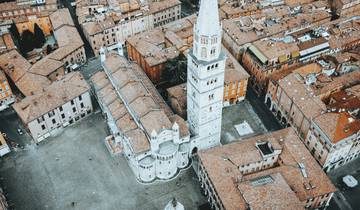
2 days
2-Day Private Ferrari Experience: Speed & Italian Excellence
- ✓ Comprehensive Bologna tour
- ✓ Expert local guides included
- ✓ All accommodation arranged
- ✓ Transportation provided
5 days
A Quick Trip to Sunny Tuscany
- ✓ Booking needs min. 2 travelers
5 days
Veloce Italia
- ✓ Comprehensive Bologna tour
- ✓ Expert local guides included
- ✓ All accommodation arranged
- ✓ Transportation provided
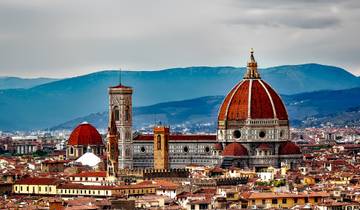
4 days
Explore Italy – 4 Days
- ✓ Comprehensive Bologna tour
- ✓ Expert local guides included
- ✓ All accommodation arranged
- ✓ Transportation provided
Multi-day tour packages powered by TourRadar. Prices and availability subject to change.
Introduction: Understanding Bologna as Italy’s Authentic Culinary and Cultural Capital in 2026
Bologna operates as Italy’s food capital, a designation extending far beyond marketing claims into centuries of culinary innovation, agricultural richness, and gastronomic pride. The city sits at the heart of Emilia-Romagna, Italy’s “Food Valley,” where Parmigiano-Reggiano, Prosciutto di Parma, Traditional Balsamic Vinegar of Modena, and mortadella originate. More importantly, Bologna birthed tagliatelle al ragù — the authentic version of what became bastardized globally as “spaghetti Bolognese” — along with tortellini, lasagne, and ragù itself. Unlike tourist-focused Italian cities where restaurants cater to simplified foreign expectations, Bologna’s dining scene serves discerning local university students, professors, and food professionals who demand authenticity and quality.
The city’s UNESCO World Heritage designation in 2021 recognized its 62 kilometers of porticoes, covered walkways that define Bologna’s urban character. Twelve representative sections earned World Heritage status, showcasing architectural evolution from medieval wooden structures through Renaissance brick arcades to 20th-century reinforced concrete designs. These porticoes weren’t mere aesthetic choices — they represent Bologna’s unique approach to urban planning, where private property extends into public space for community benefit. Merchants operated beneath them, students walked protected from rain and snow, and pilgrims traveled the 3.8-kilometer porticoed path to San Luca sanctuary without exposure to elements.
Bologna’s university, established in 1088, holds the distinction as the Western world’s oldest continuously operating university. This intellectual foundation shaped the city’s character across nine centuries, creating a progressive, culturally sophisticated atmosphere distinct from Italy’s more conservative cities. The university district today houses 85,000 students among Bologna’s 390,000 residents, maintaining youthful energy, leftist politics, and intellectual discourse rare in Italian provincial capitals. Red-painted buildings earned Bologna the nickname “La Rossa” (The Red One), referring both to terracotta rooftops and communist political leanings.
Medieval tower construction defined Bologna’s 12th-13th century skyline, when rival families built estimated 180 towers as wealth displays and defensive strongholds. Two survive prominently today: the 97.2-meter Asinelli and the dramatically leaning 48-meter Garisenda. However, urgent structural concerns identified in 2023 forced Asinelli’s closure through at least late 2026 while engineers stabilize Garisenda’s foundation. This closure eliminates Bologna’s signature panoramic experience, fundamentally altering tourist itineraries and forcing greater emphasis on the city’s culinary, artistic, and architectural treasures at ground level.
Planning Bologna travel in 2026 requires understanding significant infrastructure changes. The Red Line tram, Bologna’s first modern rail transit, begins phased opening in 2026 after years of construction disruption. This 16.5-kilometer electric tram line with 34 stops will connect Borgo Panigale through the Fiera District, Ospedale Maggiore, Piazza Maggiore, and Bologna Centrale station, fundamentally improving mobility across the historic center and surrounding districts. Construction zones that plagued 2023-2025 visitors will gradually disappear as the system becomes operational.
Public transport costs increased dramatically in March 2025, with single bus tickets jumping from €1.50 to €2.30 — a 53.3% increase making Bologna Italy’s most expensive city for public transportation. This price shock affects budget calculations, though Bologna’s compact historic center permits extensive walking under weather-protected porticoes. The Bologna Welcome Card offers potential savings for museum enthusiasts, bundling attraction entries with transport access, though careful cost-benefit analysis determines whether it suits individual itineraries.
Bologna’s culinary reputation creates specific planning challenges. Restaurants here don’t cater to tourists seeking “authentic Italian” stereotypes — they serve actual authentic food to demanding locals. This means no spaghetti Bolognese (locals consider it an abomination), no cappuccino after 11 AM unless you want judgmental looks, and no expecting English menus or service. However, those willing to navigate these cultural expectations access Italy’s finest traditional cooking, where €35 trattoria meals rival Michelin-starred experiences elsewhere.
The city’s 2026 calendar balances food festivals, university events, and cultural programming. Late June through July experiences Italian holiday closures as locals flee summer heat. Many family-run restaurants close for August vacation, though popular tourist spots remain open. September’s reopening brings new energy, as university students return, restaurants reopen with autumn menus featuring truffles and game, and pleasant weather encourages outdoor dining under porticoes. Understanding these seasonal rhythms prevents arriving during unexpected closures or missing peak experiences.
Understanding Bologna’s UNESCO World Heritage: The Porticoes System in 2026
The Porticoes of Bologna achieved UNESCO World Heritage status in July 2021, recognizing 12 representative sections spanning diverse architectural periods, construction techniques, and urban functions across Bologna’s 62-kilometer portico network. These covered walkways represent the world’s most extensive system of connected arcades, defining Bologna’s urban identity across ten centuries. Unlike isolated porticoes found in other European cities, Bologna’s system creates continuous sheltered pathways connecting neighborhoods, markets, religious sites, and public squares into unified pedestrian networks.
The twelve UNESCO-designated components include Portico di San Luca (the world’s longest at 3.8 kilometers with 666 arches), Strada Maggiore (showcasing medieval through baroque evolution), Via Zamboni (university district arcades), Baraccano complex (Renaissance military architecture), and Piazza Santo Stefano (demonstrating porticoes’ relationship to sacred spaces). Each component illustrates specific aspects of portico construction: wooden medieval structures using opus craticium techniques, Renaissance brick vaulting, Baroque theatrical archways, and 20th-century reinforced concrete modernist designs. Together, they demonstrate how Bologna continuously adapted portico construction across changing architectural styles and building technologies.
Bologna’s portico tradition emerged organically during medieval population growth, when residents extended upper floors over public streets to gain living space while creating sheltered walkways below. A 1288 municipal statute formalized this practice, requiring porticoes on streets where they proved useful and mandating minimum height specifications allowing mounted horsemen to pass comfortably. This remarkable law remains in effect today, making Bologna potentially the only city where medieval building regulations actively govern 21st-century construction. Modern developments in districts like Barca incorporate porticoes using contemporary materials and design language while maintaining functional continuity with medieval precedents.
Walking the porticoes provides weather protection unique among Italian cities. Summer thunderstorms, winter snow, and spring rain rarely interrupt Bologna sightseeing, as continuous covered pathways permit dry passage across the historic center. This practical benefit shaped Bologna’s social culture — students, shoppers, and residents gather under porticoes during weather events, creating impromptu community spaces. Evening passeggiate (traditional Italian walks) continue comfortably regardless of conditions, making Bologna uniquely accessible compared to Florence or Rome, where rain halts outdoor activities.
The San Luca portico represents Bologna’s most ambitious porticoed construction, connecting Porta Saragozza in the city center to the Sanctuary of the Madonna di San Luca atop Colle della Guardia. Built between 1674-1793 to allow pilgrims weather-protected access, the 3.8-kilometer covered walkway climbs 300 vertical meters through 666 arches (a number deliberately chosen for theological symbolism). The climb takes 45-60 minutes at moderate pace, offering progressively expanding city views through arcade openings. Descending typically requires 30-40 minutes. The San Luca Express tourist train operates seasonally for those preferring mechanical ascent, though walking remains the intended experience.
Maintenance challenges threaten portico integrity across Bologna. The 2023 Garisenda Tower crisis highlighted broader structural concerns affecting medieval buildings citywide. The Municipality of Bologna operates the “Portici Patrimonio Mondiale” office specifically managing World Heritage components, coordinating restoration, enforcing usage guidelines, and preventing inappropriate modifications. Guidelines titled “Porticoes: Instructions for care and use” regulate commercial signage, outdoor seating, and accessory elements to maintain visual integrity. Businesses operating beneath porticoes must respect historical character while meeting modern commercial needs — a delicate balance occasionally generating conflicts between preservation and economic vitality.
Photography enthusiasts find porticoes endlessly photogenic, particularly during golden hour when low-angle sunlight creates dramatic shadow patterns through arcade rhythms. Via Zamboni near the university district offers Renaissance brick porticoes with elegant proportions. Strada Maggiore showcases varying architectural styles across its length. Piazza Santo Stefano’s asymmetric medieval porticoes frame one of Bologna’s most atmospheric squares. The Meloncello arch, where the San Luca portico begins its hillside ascent, represents baroque architectural drama at its finest. Each UNESCO component offers distinct visual character and photographic opportunities.
Bologna’s Food Culture and Culinary Traditions in 2026
Bologna earned its designation as Italy’s food capital through centuries of agricultural richness, culinary innovation, and uncompromising quality standards that other regions struggle to match. The surrounding Emilia-Romagna countryside produces Italy’s most celebrated ingredients: Parmigiano-Reggiano cheese aged in massive wheels, paper-thin prosciutto di Parma, traditional balsamic vinegar aged decades in wooden casks, and mortadella whose origins trace to 1661 Bologna guild regulations. These products aren’t marketing inventions — they represent centuries of refinement, protected designation of origin status, and production methods unchanged across generations.
Tagliatelle al ragù stands as Bologna’s most iconic dish, though tourists know it by the bastardized name “spaghetti Bolognese” that makes locals visibly cringe. Authentic ragù Bolognese bears little resemblance to the heavy meat sauce served over spaghetti globally. Traditional preparation requires equal parts beef, pork, and veal minced finely, then slow-cooked 3-4 hours with soffritto (finely diced carrot, celery, onion), tomato paste, whole milk, and white wine until achieving dense, rich consistency. The sauce coats fresh tagliatelle — never dried pasta, never spaghetti — cut precisely 8 millimeters wide. The official recipe registered with Bologna’s Chamber of Commerce in 1982 codifies exact proportions and techniques, ending centuries of family arguments.
Tortellini in brodo represents Bologna’s second culinary pillar, tiny hand-folded pasta parcels filled with pork loin, prosciutto, mortadella, and Parmigiano-Reggiano, served floating in clear capon broth. Traditional preparation requires extraordinary skill — experienced sfogline (pasta makers) achieve 1-2 centimeter finished tortellini, each precisely folded to resemble Venus’s navel according to local legend. Christmas Eve tortellini in brodo remains Bologna’s most important family meal, with recipes passed through maternal lines. Restaurants serving tortellini outside broth (such as with cream sauce) cater to tourists rather than maintaining tradition.
Mortadella, Bologna’s contribution to Italian salumi, evolved from medieval pork products into the sophisticated delicacy protected by IGP (Protected Geographical Indication) status today. Quality mortadella contains finely ground pork studded with precise fat cubes, seasoned with black pepper and sometimes pistachios, then slowly cooked in massive cylindrical forms weighing 10-40 kilograms. Thin-sliced mortadella reveals delicate pink color, subtle spicing, and creamy texture nothing like commercial bologna found globally. Eating mortadella in Bologna means experiencing the product’s truest expression, from market stalls selling artisanal versions to elegant restaurants serving it with crescentina (fried dough) and soft cheese.
Lasagne alla Bolognese layers fresh pasta sheets with ragù, besciamella, and Parmigiano-Reggiano, then baked until edges crisp and interior achieves creamy consistency. Traditional versions avoid ricotta (a southern Italian addition), mozzarella (considered inappropriate), or excessive tomato. The dish demands time — preparing pasta sheets, slowly cooking ragù, making besciamella, and carefully assembling layers before baking. Quality restaurants make lasagne fresh daily rather than preparing large batches, visible in delicate texture and balanced flavors.
The Quadrilatero food market operates in the medieval street grid east of Piazza Maggiore, where fishmongers, butchers, greengrocers, cheese specialists, and pasta makers maintain shops their families have operated for generations. Walking these narrow streets reveals Italy’s food culture at its most authentic — locals bargaining for ingredients, vendors explaining preparation techniques, and seasonal produce dictating what’s available rather than year-round standardization. Early morning visits (7-9 AM) show markets at peak activity before tourist crowds arrive. Many shops close 1-4 PM for lunch, reopening until 7-8 PM.
Cooking classes in Bologna range from tourist-focused demonstrations to serious instruction with professional chefs. Quality programs source ingredients from Quadrilatero market, teach traditional techniques like hand-rolling pasta, and explain the cultural context behind regional dishes. Three-hour classes typically cost €80-120 per person, including meal consumption. Full-day programs (€150-200) might visit producers, explore markets with chefs, then spend afternoon preparing multi-course meals. Booking well in advance secures spots, particularly for spring and fall prime seasons.
Food tours offer structured exploration of Bologna’s culinary landscape, though quality varies enormously. The best tours limit group size to 6-10 participants, visit establishments where locals actually shop and eat, and employ guides with genuine food knowledge rather than scripted presentations. Three-hour walking tours cost €70-100 per person, visiting 5-7 stops for tastings of mortadella, Parmigiano-Reggiano, traditional balsamic vinegar, fresh pasta, and local wines. Evening tours incorporating aperitivo and dinner experiences cost €100-140. Avoid massive group tours (15+ participants) prioritizing volume over quality experiences.
FICO Eataly World, a massive food theme park in Bologna’s outskirts, presents Italian gastronomy through interactive exhibits, cooking demonstrations, artisan producer showcases, and 45 restaurants and food stands representing regional specialties. The facility opened in 2017 as the “Disneyland of Italian food,” though reality proved less magical than marketing suggested. FICO functions better as entertainment than authentic cultural immersion — useful for families with children or those wanting concentrated exposure to Italian food concepts, but unnecessary for travelers seeking genuine Bologna food culture available throughout the historic center.
Accommodation Options and Strategies in Bologna 2026
Bologna accommodation in 2026 spans budget hostels from €50-70 nightly through mid-range hotels at €89-152 to luxury properties exceeding €200, with significant seasonal and weekly price variations demanding strategic booking approaches. Unlike heavily touristed Italian cities where accommodation caters primarily to visitors, Bologna’s hotel market serves business travelers, university families, and conference attendees alongside tourists, creating pricing patterns that reward advance planning and calendar awareness.
Budget accommodation options concentrate around Bologna Centrale train station and the university district, where hostels and 2-star hotels target students, backpackers, and cost-conscious travelers. Properties like Ostello Bello Bologna provide dormitory beds from €25-35 nightly and private rooms from €60-80, including breakfast buffets, communal kitchens, and social atmospheres facilitating traveler connections. Budget hotels such as Hotel Panorama Bologna Centro and Hotel Pedrini offer private rooms with ensuite bathrooms from €56-70 nightly, providing basic comfort without luxury amenities. These properties typically lack elevators, air conditioning may be unreliable, and noise from university nightlife can disturb light sleepers.
Mid-range 3-4 star hotels dominate Bologna’s accommodation market, offering €89-152 nightly rates for well-appointed rooms with modern amenities, reliable air conditioning, soundproofing, and professional service. Properties like Hotel Corona d’Oro (€120-160) occupy restored historic buildings near major attractions, combining character with comfort. The Social Hub Bologna (€95-135) targets younger travelers and digital nomads with co-working spaces, rooftop terraces, and contemporary design. Art Hotel Orologio (€140-180) provides boutique atmosphere steps from Piazza Maggiore, commanding premium rates for prime location. Mid-range hotels typically include breakfast, WiFi, and knowledgeable concierge service guiding restaurant reservations and activity planning.
Luxury 5-star properties like Grand Hotel Majestic già Baglioni represent Bologna’s accommodation peak, offering €250-450 nightly rates for palatial rooms with Renaissance frescoes, marble bathrooms, Michelin-level dining, and impeccable service. These historic hotels occupy converted palaces and noble residences, providing atmosphere impossible to replicate in modern construction. Luxury properties justify premium pricing through location (steps from Piazza Maggiore), exclusivity (limited room counts), and exceptional amenities including spas, rooftop terraces, and personal concierge services arranging private tours, cooking classes with renowned chefs, and access to experiences unavailable through public channels.
Apartment rentals through platforms like Airbnb and Vrbo offer alternatives to traditional hotels, particularly valuable for families or groups splitting costs and travelers staying 4+ days who benefit from kitchen access. One-bedroom apartments in the historic center cost €80-140 nightly, while two-bedroom units range €130-200. Apartments provide space and flexibility hotels lack, though they sacrifice daily housekeeping, reception services, and professional amenities. Location matters enormously — apartments within the ancient city walls permit walking to major attractions, while periphery properties require mastering Bologna’s bus system or facing daily commuting time and expense.
Seasonal pricing patterns show dramatic variations. Peak season (late April-June, September-October) sees rates increase 40-60% over winter baseline, with mid-range hotels costing €140-180 versus €90-110 in January-February. Summer (July-August) brings mixed pricing — hotels targeting business travelers discount heavily as conferences cease, while properties near tourist attractions maintain moderate rates. Major food festivals and trade fairs (Bologna hosts significant industry exhibitions) can spike accommodation costs 100%+ citywide, making calendar checking essential before booking. Monday-Thursday rates typically run 15-20% below Friday-Sunday pricing, as business travel dominates weekday demand.
Neighborhood selection fundamentally shapes Bologna experiences. The historic center within the ancient walls provides walking access to attractions, restaurants, and nightlife, though noise from student bars and late-night revelry can disturb sleep in ground-floor or street-facing rooms. The university district offers character and dining options but intensifies noise concerns. Areas near Bologna Centrale station provide transportation convenience for day trips and airport access, sacrificing atmospheric charm for practical efficiency. Outer neighborhoods like Saragozza offer quieter residential character, requiring bus use but providing authentic local atmosphere away from tourist concentrations.
Booking strategies significantly impact costs. Reservations made 60-90 days advance typically secure lowest rates, as hotels discount heavily to fill future dates. Last-minute deals (48 hours before arrival) sometimes appear when hotels face empty rooms, though gambling on availability risks paying premium walk-in rates. Tuesday booking supposedly yields lowest prices based on industry analysis, though differences rarely exceed 5-10%. Flexible date travelers willing to arrive Wednesday-Thursday rather than Friday-Saturday can save 20-30% on identical rooms. Package deals bundling accommodation with attractions or tours occasionally provide value, though scrutinizing individual components against separate booking costs remains essential.
The Bologna Welcome Card (€25-40 depending on duration) sometimes includes accommodation discounts at participating properties, potentially offsetting the card’s cost for travelers planning significant museum visits. However, verifying whether specific hotels offer meaningful discounts versus token 5% reductions requires checking official Bologna Welcome documentation before purchasing the card based on accommodation savings expectations.
Transportation and Getting Around Bologna in 2026
Bologna’s public transportation system underwent significant transformation in 2025-2026, with bus ticket prices increasing 53.3% in March 2025 and the new Red Line tram beginning phased opening in 2026 after years of construction. Single bus tickets now cost €2.30 for 75-minute validity, making Bologna Italy’s most expensive city for public transport, though the compact historic center permits extensive walking under weather-protected porticoes that minimize actual transportation needs for visitors focusing on central attractions.
The TPER bus network operates extensive routes connecting Bologna’s historic center with surrounding neighborhoods, suburbs, and nearby municipalities from 5:00 AM until approximately midnight. Buses run frequently (every 10-20 minutes) on major routes during weekday peak hours, reducing to 30-40 minute intervals evenings and weekends. Each bus stop displays route maps, schedules, and real-time arrival information on digital displays, though Google Maps and the Moovit app provide superior real-time tracking and route planning. Bus routes designated with letters (A, B, C) circle the historic center, while numbered routes connect outlying areas.
Purchasing bus tickets requires advance planning, as drivers no longer sell tickets onboard except via contactless payment at €2.30 per ride. Tobacconists (tabacchi) marked by black and white “T” signs sell single tickets, 10-ride carnets (offering slight discounts), and day passes valid 24 hours from first validation. Ticket vending machines at Bologna Centrale station, the airport, and major bus terminals accept cash and cards. The Roger app permits smartphone ticket purchases, though downloading and configuring the app before travel prevents last-minute frustrations. Ticket validation occurs by tapping cards against yellow readers upon boarding — failure to validate risks €75-100 fines from plainclothes inspectors who patrol frequently.
Day passes cost approximately €5.50 (prices subject to TPER updates) and provide unlimited bus travel for 24 hours from first validation, becoming economical for travelers making 3+ journeys daily. However, Bologna’s compact historic center permits walking most distances under porticoes regardless of weather, making day passes valuable primarily for visitors staying outside the ancient walls or making multiple trips to peripheral attractions like the Ducati Museum or suburban neighborhoods.
The Red Line tram begins phased opening in 2026, ultimately operating 16.5 kilometers with 34 stops connecting Borgo Panigale in the west through Fiera District, Ospedale Maggiore hospital, Piazza Maggiore, Bologna Centrale station, and eastern neighborhoods. The fully electric system integrates with existing bus networks using the same ticket validity — a €2.30 ticket permits transfers between buses and tram within the 75-minute window. Construction disruptions that plagued 2023-2025 visitors will gradually resolve as sections become operational, though some residual work may continue through 2026 as the system reaches full capacity.
Bologna Guglielmo Marconi Airport sits 6 kilometers northwest of the historic center, connected by two primary options. The Marconi Express monorail operates every 7 minutes from airport to Bologna Centrale station, completing the 6.5-kilometer journey in 7 minutes at €12.80 one-way or €23.30 return. While rapid and direct, the Marconi Express costs double the alternative BLQ bus, which runs every 11 minutes from 5:30 AM to 12:15 AM, completing the 20-minute airport-to-station journey for €6. The bus represents better value unless travelers face tight connections or carry excessive luggage making the monorail’s elevator-equipped stations preferable.
Bologna Centrale serves as Italy’s third-busiest railway station, offering frequent high-speed rail connections to major cities. Florence lies 35 minutes away via Frecciarossa trains (€9-25 depending on booking timing), Venice 1.5 hours (€15-35), Milan 1 hour (€15-40), and Rome 2.5 hours (€25-80). Advance booking secures lowest fares, with prices doubling for same-day purchases. The station’s layout confuses first-time visitors — platforms 1-5 serve regional trains, while platforms 16-23 handle high-speed services, requiring careful attention to departure boards and adequate buffer time for platform location.
Cycling represents Bologna’s most popular local transportation mode, with dedicated bike lanes throughout the historic center and flat terrain requiring minimal effort. Public bike-sharing services like Ride Movi charge €2.30 for the first 30 minutes of e-bike rental and €2.10 per additional 30 minutes, using smartphone apps for unlocking. Private rental shops near Bologna Centrale offer traditional bikes from €15-20 daily. However, bike theft remains common, particularly in the university district — always use provided locks and avoid leaving bikes unattended for extended periods. The city’s porticoes create some cycling challenges, as many arcades prohibit bikes during peak pedestrian hours.
Taxis operate from designated stands at Piazza Maggiore, Bologna Centrale, and major hotels, charging €4.80 initial fee plus €1.40 per kilometer and €25-30 minimum supplements. Pre-booking via apps like FreeNow or calling +39 051 372727 (Radio Taxi Bologna) ensures availability, particularly during rain or late evenings when spontaneous taxi finding proves difficult. Uber operates limitedly in Bologna compared to other European cities, with Uber Black providing luxury service at premium rates while standard UberX remains unavailable as of 2026.
Walking remains the optimal Bologna transportation mode for visitors staying in the historic center. The distance from Piazza Maggiore to the university district requires 10-12 minutes, to Due Torri (Two Towers) 5 minutes, to Quadrilatero market 3 minutes, and to most major attractions 15 minutes maximum. The porticoes provide weather protection during Bologna’s frequent rain and occasional snow, permitting comfortable walking year-round. The city’s flat terrain (excluding the San Luca hill climb) accommodates all fitness levels. However, uneven medieval paving, cobblestones, and occasional construction zones require appropriate footwear — high heels or thin-soled shoes create discomfort after several hours’ walking.
Major Attractions and Museums in Bologna 2026
Bologna’s attractions emphasize medieval architecture, university heritage, and artistic collections rather than Renaissance masterpieces or ancient ruins dominating other Italian cities. The Asinelli Tower’s extended closure through late 2026 eliminates Bologna’s most iconic visitor experience, forcing alternative itinerary planning around remaining towers, museums, churches, and the UNESCO porticoes that define the city’s unique character.
Piazza Maggiore serves as Bologna’s geographic and social heart, a vast medieval square surrounded by Palazzo d’Accursio (city hall), Basilica di San Petronio, Palazzo del Podestà, and Palazzo dei Banchi. The asymmetric medieval layout rejected Renaissance geometric perfection in favor of organic development reflecting centuries of additions and modifications. The central fountain of Neptune, sculpted by Giambologna in 1563-1566, represents one of Italy’s most significant Renaissance public artworks, depicting the muscular sea god surrounded by cherubs and mermaids. The square hosts markets, political demonstrations, concerts, and the evening passeggiata when Bolognesi gather for conversation and people-watching.
Basilica di San Petronio dominates Piazza Maggiore’s southern flank, its unfinished facade revealing medieval construction’s economic and political complexities. Construction began in 1390 with ambitious plans for a church surpassing St. Peter’s in Rome, though Vatican opposition and funding limitations left the facade half-completed — the lower section displays elaborate Gothic marble work while the upper section exposes bare brick. The interior houses the Cassini meridian line, a 67-meter astronomical device embedded in the floor that allowed 17th-18th century scientists to calculate solar movements with unprecedented precision. Entry to the main basilica is free, though accessing the terrace or museum areas requires modest fees.
The Archiginnasio Palace, built 1562-1563 as the University of Bologna’s main building, houses Europe’s most significant anatomical theater — a wooden amphitheater where medical students observed dissections from tiered seating surrounding the central table. The Teatro Anatomico, destroyed during World War II and meticulously reconstructed, features carved wooden sculptures representing famous physicians and nude figures illustrating anatomical features. The adjacent library contains 800,000+ volumes and manuscripts in a stunning hall with frescoed ceilings and carved wood details. Combined entry costs €3-5, making it Bologna’s best-value cultural experience.
The Clock Tower (Torre dell’Orologio) in Palazzo d’Accursio offers Bologna’s only accessible tower climb following Asinelli’s closure, providing 360-degree city views from significantly lower altitude (47 meters versus Asinelli’s 97 meters). Combined tickets with the Municipal Art Collections cost €10, requiring advance reservation through Bologna Welcome as time slots fill quickly, particularly weekends and holidays. The 15th-century clock mechanism and medieval bell system remain visible during the climb, which involves 150+ stairs without elevator access.
The Pinacoteca Nazionale (National Art Gallery) showcases Emilian painting’s evolution from the 14th through 18th centuries, featuring masterworks by Giotto, Raphael, Parmigianino, and the Carracci family who revolutionized baroque painting. The collection emphasizes regional artists often overlooked in favor of Florentine and Roman masters, revealing Bologna’s significant but underappreciated artistic heritage. Entry costs €8 for adults (€4 reduced), with tickets also providing access to Palazzo Pepoli Campogrande’s baroque interiors on Wednesdays and Saturdays. Allow 90-120 minutes for comprehensive viewing.
The Medieval Civic Museum (Museo Civico Medievale) occupies Palazzo Ghisilardi, displaying armor, weapons, bronzes, glassware, illuminated manuscripts, and decorative arts spanning the 7th-15th centuries. The collection illustrates medieval Bologna’s material culture, commercial wealth, and artistic production through objects ranging from knights’ armor to delicate enameled reliquaries. Entry costs €6 for adults (€3 reduced), representing excellent value for medieval history enthusiasts.
MAMbo (Museum of Modern Art of Bologna) presents contemporary and 20th-century art in a converted industrial building, featuring permanent collections of Italian modernism alongside rotating exhibitions showcasing international contemporary artists. The museum’s focus on experimental and conceptual work contrasts sharply with Bologna’s traditional artistic heritage, appealing to visitors seeking cutting-edge creativity rather than historical masterpieces. Entry costs €6 for adults, free for under-18 visitors.
Santo Stefano complex, known as “Sette Chiese” (Seven Churches), represents one of Italy’s most atmospheric religious sites — a cluster of interconnected churches, courtyards, and chapels occupying an irregular medieval layout. The complex’s origins trace to the 5th century, with successive additions through the 13th century creating labyrinthine sacred spaces that reward slow exploration. The Cortile di Pilato (Pilate’s Courtyard) features an 8th-century basin purportedly used in Christ’s trial, while the Church of the Holy Sepulchre mimics Jerusalem’s sacred site. Entry is free, though donations support ongoing maintenance.
The Sanctuary of Madonna di San Luca crowns Colle della Guardia 300 meters above Bologna, accessed via the world’s longest porticoed walkway or seasonal tourist train. The baroque sanctuary houses a Byzantine icon allegedly painted by St. Luke, attracting pilgrims across centuries. The climb requires 45-60 minutes at moderate pace through 666 arches, offering progressively expanding city views and impressive architectural drama as the portico transitions from city streets to hillside pathway. The sanctuary itself features elaborate baroque interiors, though many visitors find the journey more compelling than the destination. Entry to the sanctuary is free, though the San Luca Express tourist train charges fees for those avoiding the walk.
The Ducati Museum, located in Borgo Panigale 6 kilometers northwest of the center, showcases the legendary motorcycle manufacturer’s history through racing bikes, production models, and interactive exhibits. Motorcycle enthusiasts spend 90-120 minutes exploring the collection, while factory tours (must be booked separately) reveal production processes for current models. Combined museum and factory tour packages cost €15-25 depending on tour depth. Reaching the museum requires bus 54 from Bologna Centrale (30 minutes) or taxi (€15-20).
The Bologna Welcome Card offers free or discounted entry to 20+ museums and attractions plus unlimited public transport for 24, 48, or 72 hours at €25-40 depending on duration. Value depends on individual itineraries — visiting 4+ paid museums and using public transport extensively justifies the cost, while travelers focusing on free sites or concentrating visits within walking distance save money through individual ticket purchases. The card notably doesn’t include full Asinelli Tower access (currently closed anyway), requires advance online purchase, and must be activated strategically to maximize the validity period.
Day Trips and Regional Excursions from Bologna 2026
Bologna’s central Italian location and excellent rail connections enable day trips to Emilia-Romagna’s UNESCO sites, medieval hill towns, Adriatic beaches, and world-class culinary destinations, all reachable within 30-90 minutes by train or bus. These excursions showcase regional diversity beyond Bologna’s urban character, revealing Renaissance courts, Romanesque architecture, and coastal resorts that complement the city’s medieval and university atmosphere.
Modena sits 30 minutes west via frequent regional trains (€4-6) or 20 minutes by high-speed service (€9-12), presenting UNESCO-listed cathedral, romanesque architecture, and Ferrari heritage that rivals Bologna’s attractions. The Duomo di Modena, Torre Civica, and Piazza Grande achieved World Heritage status in 1997, representing early Romanesque architecture’s masterpieces with sculptural details rivaling any European cathedral. The Ghirlandina tower (closed for restoration through 2026) typically offers city views, while the cathedral’s exterior carvings by Wiligelmo rank among medieval sculpture’s finest works. Modena’s food market rivals Bologna’s Quadrilatero for traditional balsamic vinegar producers and Parmigiano-Reggiano vendors. Allow 4-6 hours for comprehensive Modena exploration including cathedral, market, and lunch.
Ferrara lies 45 minutes north by regional train (€4.50-7.50), revealing one of Europe’s best-preserved Renaissance cities where the Este court created sophisticated urban planning centuries ahead of its time. The city’s UNESCO listing recognizes the Addizione Erculea, a Renaissance expansion that integrated medieval core with rationally planned new quarters featuring wide streets, gardens, and palatial residences. Castello Estense dominates the city center, offering tours through moated fortress-palace with frescoed chambers and Renaissance gardens. The medieval quarter’s narrow streets contrast sharply with Renaissance boulevards, illustrating urban evolution across centuries. Ferrara requires full-day visits (8-10 hours including travel) to appreciate the extensive historic center, numerous museums, and relaxed cycling culture that defines local character.
Ravenna, 75 minutes east via regional trains (€7-11), houses the world’s finest Byzantine mosaics outside Istanbul, earning UNESCO recognition for eight sacred buildings displaying 5th-6th century artistic achievements that influenced Christian art across Mediterranean. The Basilica di San Vitale, Mausoleum of Galla Placidia, and Sant’Apollinare Nuovo contain breathtaking mosaics depicting religious narratives with gold tesserae creating luminous spiritual atmospheres medieval artists never surpassed. A unified ticket (€13.50) provides access to multiple sites, requiring 6-8 hours to visit primary monuments and appreciate the mosaics’ extraordinary detail. Ravenna’s proximity to Adriatic beaches permits summer combinations of cultural touring and beach relaxation.
Parma sits 1 hour west via high-speed train (€8-16), combining architectural beauty, culinary excellence (prosciutto, Parmigiano-Reggiano production), and artistic heritage that rivals better-known Italian art cities. The Duomo and Baptistery showcase Romanesque-Gothic transition architecture, while Teatro Farnese represents Renaissance theater design’s pinnacle with elaborate wooden interior reconstructed after World War II bombing. Food tours through Parma’s producers (prosciutto factories, Parmigiano dairies, balsamic vinegar acetaias) require advance booking and typically cost €80-150 per person for half-day experiences. Combined cultural-culinary day trips easily extend 10-12 hours, warranting early morning departures.
Florence lies 35 minutes south via Frecciarossa high-speed trains (€9-25 advance booking), making Italy’s Renaissance capital feasible for ambitious day trips, though doing Florence justice really requires 2-3 days minimum. Travelers can visit the Duomo, Uffizi Gallery (advance reservations essential), Ponte Vecchio, and Piazzale Michelangelo viewpoint in a rushed 8-hour visit, though this superficial approach misses Florence’s true character. Day trips make sense primarily for travelers previously familiar with Florence seeking specific exhibitions or those completing Italian cities’ checklist rather than deep cultural engagement.
Venice reachable via 1.5-hour Frecciarossa service (€15-35 advance booking) similarly tempts ambitious day-trippers, though Venice deserves overnight stays to experience the city after day-tripping crowds depart. Morning departure, afternoon return allows 6-8 hours exploring San Marco, Rialto, and major attractions, though transportation between Bologna and Venice stations (requiring time before/after actual Venice exploration) plus long walking distances within the city compress actual sightseeing time significantly.
Rimini and the Adriatic coast lie 90 minutes east via regional trains (€9-14), offering beach escapes during Bologna’s summer heat. The coastline features long sandy beaches with organized bathing establishments (stabilimenti balneari) charging €15-25 daily for umbrella and lounger access. Rimini combines beach relaxation with Roman monuments (Arch of Augustus, Tiberius Bridge) and Federico Fellini heritage, though the resort atmosphere differs dramatically from Bologna’s cultural intensity. Summer weekend trains fill quickly — advance reservations prevent standing 90 minutes during peak season.
San Marino, the world’s oldest republic, perches 1.5 hours south via bus from Bologna (€15-20 return), offering medieval fortress towns with stunning Adriatic views, though the heavily touristed historic center resembles theme park more than authentic cultural site. Three defensive towers crown Monte Titano, connected by walls and ramparts providing panoramic vistas. However, souvenir shops, restaurants targeting tour groups, and border crossing novelty (stamps available for passport collectors) create atmosphere that disappoints travelers seeking genuine medieval character. Half-day trips suffice for San Marino’s limited authentic cultural offerings.
Food and Dining Costs in Bologna 2026
Bologna’s dining costs reflect its status as Italy’s culinary capital, where food quality consistently exceeds other Italian cities at comparable price points. Budget meals (€10-15) provide authentic trattoria experiences featuring traditional dishes made with quality ingredients, mid-range dining (€20-40 per person) accesses excellent traditional restaurants serving multi-course meals with wine, while fine dining (€50-100+) offers elevated interpretations of classic recipes and exceptional service in atmospheric historic settings.
Budget dining in Bologna means seeking family-run trattorias, osterie, and neighborhood restaurants where locals eat daily rather than tourist-focused establishments near Piazza Maggiore. A complete budget meal costs €10-15 including pasta primo, water, and coperto (cover charge typically €2-3). Osteria dell’Orsa near the university serves tagliatelle al ragù for €8-10 in boisterous student atmosphere with no reservations and frequent queues during peak hours. Trattoria del Rosso (different from Osteria dell’Orsa despite similar names) offers tortellini in brodo for €9-12. These establishments expect efficient turnover, limited English, and cash payment — budget dining provides authentic Bologna food culture, not tourist-friendly convenience.
Street food and market eating stretch budgets further while maintaining quality. Quadrilatero market vendors sell mortadella sandwiches for €4-6, prepared with fresh bread and thin-sliced artisan mortadella that demonstrates the product’s true character. Pizza al taglio (by the slice) costs €3-5 for satisfying portions, though pizza isn’t Bologna’s culinary strength — travelers should prioritize pasta specialties over pizza when budgeting limited dining euros. Sfoglia Rina near Due Torri serves fresh pasta plates for €10-14 to long queues of locals who tolerate limited seating and no-frills service for exceptional traditional cooking.
Mid-range restaurant dining (€20-40 per person) represents Bologna’s sweet spot, accessing excellent traditional cuisine in comfortable settings with professional service. A typical mid-range meal includes antipasto (€8-12), primo pasta course (€12-18), optional secondo meat or fish (€18-25), side vegetable (€5-8), dessert (€6-8), wine by glass or half-bottle (€4-8 per glass, €12-18 half bottle), and water (€2-3). Most diners select antipasto plus primo or primo plus secondo rather than ordering full multi-course meals, keeping total costs €25-35 including wine and water. Coperto adds €2-4 per person regardless of ordering.
Recommended mid-range restaurants include Trattoria Anna Maria (primi €14-18, secondi €18-24), known for generous portions and grandmotherly hospitality; Trattoria di Via Serra (similar pricing), offering seasonal menus with truffle specials in autumn; and Ristorante Da Nello (€18-28 primi, €24-32 secondi), an upscale traditional restaurant near Due Torri frequented by locals celebrating special occasions. Reservations prove essential at quality mid-range establishments, particularly Friday-Sunday dinners and any day during peak tourist seasons. Booking 2-3 days advance usually secures tables, while same-day reservations succeed only for early (7-7:30 PM) or late (9:30-10 PM) seatings.
Fine dining in Bologna ranges from elevated traditional cuisine at Michelin-adjacent restaurants (€50-80 per person) to actual Michelin-starred experiences (€100-200+). Ristorante I Portici, housed in historic portico spaces, offers refined takes on Emilian classics with sommelier wine pairings in elegant atmosphere. Tasting menus at fine dining establishments cost €80-120 before wine, while à la carte ordering permits €50-70 meals when selecting carefully. Reservations require 1-2 weeks advance booking for renowned restaurants, more during truffle season (October-November) when prices increase 20-30% for dishes featuring white truffles.
Bologna’s aperitivo culture offers exceptional value for budget-conscious travelers seeking dinner alternatives. Many bars and cafes serve extensive buffets of sandwiches, pasta salads, vegetables, and small plates from 6:30-9:00 PM, included with drink purchases. A spritz or glass of wine costs €7-10 and grants buffet access sufficient for light dinner. University district bars like Circo Massimo and Centro Sociale Andrea Pazienza provide generous spreads in casual atmospheres, while upscale hotel bars offer more refined aperitivo in elegant settings at €12-15 drink minimums.
Coffee culture follows strict Italian protocols — cappuccino before 11 AM only (ordering afternoon cappuccino marks you as uncultured tourist), espresso standing at the bar costs €1.10-1.30 (sitting at tables doubles prices), and macchiato (espresso with milk foam) represents the acceptable afternoon milk-coffee option. Bologna’s historic cafes like Caffè Terzi and Aroma serve exceptional coffee using specialty roasters and traditional techniques. Breaking coffee rules won’t prevent service, but locals will silently judge.
Gelato quality varies dramatically — artisanal gelaterias make daily batches with seasonal ingredients and natural colors, while industrial operations use premade bases and artificial flavoring. Quality indicators include subdued colors (bright blue or neon pink signals artificial ingredients), covered containers preventing oxidation rather than decorative mounds, and seasonal flavors rather than year-round exotic offerings. Cups cost €2.50-3.50 for small portions, €4-5 for medium. Cremeria Santo Stefano, La Sorbetteria Castiglione, and Gelateria Gianni provide consistently excellent gelato using traditional methods.
Wine knowledge enhances Bologna dining experiences. Lambrusco, the sparkling red wine dismissed globally as cheap and sweet, reveals sophistication in quality dry versions from Emilia-Romagna producers. Pignoletto, the local white wine, pairs excellently with mortadella and light pasta dishes. Sangiovese from nearby Romagna region offers red wine alternatives to Tuscany’s pricier options. House wines (vino della casa) at traditional restaurants typically represent honest quality at €8-12 per bottle, offering better value than mediocre by-glass options from mass-market producers.
Self-catering reduces costs for budget travelers and families, though markets close Sunday and many shops observe 1-4 PM lunch breaks. Conad City supermarkets throughout the historic center sell basics, while PAM supermarket near Piazza Maggiore offers wider selection. Fresh pasta from Quadrilatero market (€3-5 per portion) cooks quickly with quality that exceeds restaurant pasta elsewhere in Italy, though accessing kitchen facilities requires apartment accommodation rather than hotels.
Sample Daily Budget Breakdowns for Bologna 2026
Daily costs in Bologna 2026 vary dramatically based on accommodation choices, dining preferences, and activity selection. These sample budgets illustrate realistic spending across budget, mid-range, and luxury categories, excluding accommodation costs which are detailed in the Accommodation section. All figures assume single travelers; couples sharing accommodation and some meals can reduce per-person costs 20-30%.
Budget daily costs (€80-100 per person excluding accommodation): Breakfast pastry and cappuccino at bar €3-4, simple lunch at university district osteria or market sandwich €8-12, aperitivo dinner substituting for full restaurant meal €8-10, gelato €3, public transport two single tickets €4.60, museum entry or Bologna Welcome Card if visiting multiple sites €8-10, coffee breaks and miscellaneous €5-10. This budget requires careful restaurant selection, walking rather than frequent bus use, prioritizing free attractions like churches and porticoes over paid museums, and accepting limited dining flexibility. Budget travelers can reduce costs further through supermarket purchases and self-catering, though this approach sacrifices authentic Bologna food experiences that justify visiting Italy’s culinary capital.
Mid-range daily costs (€150-220 per person excluding accommodation): Hotel breakfast buffet or café breakfast €8-12, quality trattoria lunch with wine €25-35, mid-range restaurant dinner with wine €35-50, gelato and coffee breaks €6-8, public transport day pass or 3-4 single tickets €6-10, museum entries and attractions €15-25, miscellaneous shopping and incidentals €10-15. This budget permits authentic Bologna dining experiences including traditional restaurants where locals eat, reasonable wine selections, and flexibility for cooking classes, food tours, or special dining experiences. Mid-range budgets represent optimal value-to-quality ratios in Bologna, accessing excellent food and authentic culture without luxury price tags.
Luxury daily costs (€350-500+ per person excluding accommodation): Premium hotel breakfast €20-30, light lunch at quality restaurant or market tasting €30-40, fine dining dinner with wine pairing €80-150, afternoon refreshments and gelato at historic cafes €15-20, private transportation or taxis €30-50, guided food tour or cooking class €100-150, museum entries with private guide €50-100, miscellaneous luxury shopping and experiences €50+. Luxury budgets grant access to Michelin-level dining, private tours with expert guides, cooking classes with renowned chefs, premium wine tastings at historic estates, and convenience through private drivers rather than public transport. However, Bologna’s greatest food experiences often occur at mid-range price points where traditional restaurants maintain centuries-old recipes without fine-dining pretension.
Sample one-day budget breakdown — Mid-range traveler: Morning espresso standing at bar €1.30, Archiginnasio entry €3, late morning cappuccino and pastry at historic cafe €4.50, lunch at Trattoria Anna Maria including antipasto, tagliatelle al ragù, wine, water, coperto €28, afternoon gelato at Cremeria Santo Stefano €3.50, Pinacoteca Nazionale museum entry €8, aperitivo at university district bar (drink and light dinner) €9, bus tickets for two journeys €4.60. Total €62.40 excluding accommodation. This sample illustrates how quality Bologna experiences fit mid-range budgets when balancing splurges (sit-down museum cafe coffee) with economies (standing bar espresso, aperitivo substituting for full dinner).
Sample one-day budget breakdown — Food-focused traveler: Morning Quadrilatero market tour and tastings €30, cooking class including market visit and lunch €120, afternoon break at historic cafe €6, evening fine dining at I Portici restaurant €85, gelato at La Sorbetteria €3.50, walking throughout day requiring no transport, no paid attractions. Total €244.50 excluding accommodation. This budget demonstrates how food-focused Bologna visits easily justify higher daily costs through exceptional culinary experiences unavailable elsewhere, even when skipping traditional tourist attractions entirely.
Weekend trip total cost estimate (Friday arrival, Sunday departure): Mid-range hotel 2 nights €180-300, six meals (three lunches, three dinners) averaging €30 €180, breakfasts, coffee, gelato, snacks €40, public transport and/or Bologna Welcome Card €15-25, museum entries and attractions €25-40, cooking class or food tour €100, miscellaneous €30. Total €570-715 per person for 2.5 days, demonstrating that quality Bologna weekends cost €600-800 per person including accommodation when balancing splurge experiences with economical choices.
Bologna Travel Tips and Practical Planning for 2026
Bologna rewards prepared travelers who understand local customs, seasonal patterns, and cultural expectations that differ from tourist-focused Italian cities. These practical considerations prevent common frustrations and enhance experiences through informed decision-making about timing, reservations, language, safety, and cultural etiquette.
Reservation requirements have intensified post-pandemic, with popular restaurants, cooking classes, and limited-capacity attractions requiring advance booking weeks ahead for peak periods. The Clock Tower requires specific time slot reservations through Bologna Welcome, as spontaneous visits rarely succeed. Quality restaurants near Piazza Maggiore book solid Friday-Sunday dinners days in advance, while renowned establishments like Trattoria Anna Maria require 3-5 days’ notice even weekdays. Cooking classes and food tours (limited to 6-12 participants) sell out 2-4 weeks ahead during April-June and September-October high seasons. However, Bologna’s university orientation creates enough dining capacity that travelers can always find good restaurants without reservations by arriving early (before 7:30 PM) or late (after 9 PM) and accepting less central locations.
Language barriers prove less challenging in Bologna than smaller Italian towns, as university city status creates English familiarity among younger workers, though expecting fluent English remains unrealistic. Learning basic Italian phrases (buongiorno, grazie, per favore, il conto per favore, posso avere) demonstrates respect and facilitates interactions. Restaurant staff appreciate efforts to pronounce menu items correctly even with imperfect Italian. Translation apps help decode menus, though photographing menus in advance of asking table questions prevents repetitive phone checking appearing rude. Older establishments may have limited English menus or English-speaking staff, requiring patience and humor when communication falters.
Safety in Bologna rates excellent by European standards, with violent crime rare and tourist-focused theft limited compared to Rome, Naples, or Barcelona. Standard precautions suffice: securing valuables in hotel safes, maintaining awareness in crowded areas like markets and train stations, and avoiding deserted areas late night. Bike theft represents Bologna’s most common crime, affecting locals more than visitors. Pickpocketing occasionally occurs on crowded buses and at outdoor markets, though remaining alert to surroundings and avoiding obvious wealth displays prevents most incidents. Women traveling solo report feeling comfortable throughout Bologna, though basic precautions (avoiding isolated areas late night, declining unsolicited assistance, trusting instincts when situations feel off) remain sensible anywhere.
Wi-Fi availability varies dramatically — upscale hotels and modern apartments provide reliable high-speed internet, while budget accommodations may offer slow shared connections that struggle with multiple simultaneous users. Cafes and restaurants increasingly provide Wi-Fi though speeds and reliability fluctuate. Purchasing Italian SIM cards (TIM, Vodafone, Wind) at Bologna Centrale station or airport provides reliable data for navigation, restaurant research, and communication at €15-25 for 7-day tourist plans with 20-30GB data. Activating roaming through existing mobile providers costs significantly more for equivalent data allowances.
Credit card acceptance has improved though cash remains essential for small purchases, markets, and traditional establishments. Most restaurants accept cards for bills exceeding €20, though budget trattorias and street food vendors prefer cash. ATMs throughout the historic center dispense euros, though fees vary — using bank ATMs rather than independent operators saves 2-4% in fees. Contactless payment works increasingly for public transport, museum entries, and chain establishments, while family businesses still prefer traditional magnetic stripe cards requiring PINs.
Tipping practices follow Italian norms where coperto (cover charge) replaces tipping culture. Restaurants add €2-4 per person coperto covering bread and table service, making tips unnecessary unless service exceeded expectations (rounding bills up €5-10 for exceptional experiences demonstrates appreciation without obligatory percentage-based gratuity). Cafes and bars expect no tips for counter service, though leaving small change (€0.20-0.50) after seated table service acknowledges waiter assistance. Taxi drivers appreciate rounding fares up to next euro but don’t expect percentage tips.
Shopping hours complicate tourist planning as Italian retail culture maintains midday closure traditions. Shops typically open 9:30-10:00 AM, close 1:00-1:30 PM for 2-3 hour lunch breaks, reopen 3:30-4:00 PM, then operate until 7:30-8:00 PM. Sunday closures remain standard except large supermarkets and tourist-area establishments. Thursday afternoons some shops close following old weekly closure traditions. Planning shopping for morning or late afternoon prevents arriving at shuttered stores during midday breaks. Markets operate morning-only, typically 7:00 AM-1:00 PM, with best selection arriving early before popular items sell out.
Weather patterns show Bologna experiencing hot, humid summers (July-August averaging 30-35°C with occasional 38°C+ peaks), mild springs and autumns (15-25°C March-May and September-November), and cold, foggy winters (December-February 2-8°C with occasional snow). The Adriatic proximity creates humidity year-round, intensifying summer heat’s oppressive quality and winter cold’s penetrating dampness. Packing requires layering strategies — summer demands light clothing plus sun protection, spring/fall needs versatile layers for 10-degree daily temperature swings, winter requires substantial outerwear for foggy cold exceeding what temperature numbers suggest. Rain occurs year-round, though porticoes provide extensive weather protection making compact umbrellas sufficient rather than full rain gear.
Health facilities in Bologna meet high European standards, with Ospedale Maggiore providing emergency services and specialist care. EU citizens receive treatment under EHIC card reciprocal agreements, while non-EU visitors require private insurance or face substantial out-of-pocket costs. Pharmacies (farmacie) marked by green crosses dispense medications and provide basic health consultations, though many medications requiring prescriptions elsewhere sell over-counter in Italy. After-hours pharmacy rotation ensures 24/7 medication access, with listings posted at pharmacy doors and available through Bologna Welcome.
Luggage storage at Bologna Centrale station costs €6 first 5 hours, then €1 hourly thereafter, up to €15 daily maximum. Storage lockers also available at various sizes for different rates. This service enables day trip travelers storing bags while exploring Bologna between train connections or checking out hotels before evening departures. Hotels typically accommodate luggage storage for checkout-day guests returning from day trips, though confirming this service prevents assumptions.
Frequently Asked Questions About Bologna 2026
Is the Bologna Welcome Card worth buying in 2026?
The Bologna Welcome Card (€25-40 depending on 24/48/72-hour duration) provides value for travelers visiting 4+ paid museums and using public transport extensively, breaking even around 3-4 museum entries plus several bus rides. However, Bologna’s compact historic center permits walking most distances, many top attractions are free (churches, porticoes, Piazza Maggiore), and focused itineraries visiting 2-3 museums save money buying individual tickets. Calculate specific plans before purchasing — travelers visiting Archiginnasio (€3), Pinacoteca Nazionale (€8), Medieval Museum (€6), and Clock Tower (€10) while making 6+ bus journeys (€13.80 at €2.30 per ticket) spend €40.80 individually versus €25-30 for 48-hour card, saving €10-15. Conversely, visitors primarily exploring free sites and walking under porticoes gain minimal value from the card.
Can you visit Bologna without speaking Italian in 2026?
Yes, Bologna’s university status creates English familiarity among younger workers, though expecting fluent English at traditional trattorias or older establishments proves unrealistic. Hotels, tourist information offices, and popular restaurants near Piazza Maggiore employ English speakers, while neighborhood establishments serving primarily locals may have limited English. Translation apps help decode menus and basic communication, though learning essential Italian phrases (greetings, please/thank you, asking for bills) demonstrates respect and facilitates interactions. Bologna rewards effort to engage Italian culture authentically rather than expecting accommodation to English-only visitors, though patient travelers without Italian navigate the city successfully using gestures, apps, and good humor when communication challenges arise.
What’s the best way to get from Bologna airport to the city center in 2026?
The BLQ bus offers optimal value at €6 for the 20-minute journey from Bologna Guglielmo Marconi Airport to Bologna Centrale station, operating every 11 minutes from 5:30 AM to 12:15 AM daily. The Marconi Express monorail provides faster alternative (7 minutes versus 20) at €12.80 one-way, justified when catching tight train connections or traveling with excessive luggage making elevator-equipped stations preferable. Both options deliver passengers to Bologna Centrale, requiring additional 10-15 minute walk or single bus ride (€2.30) to reach hotels near Piazza Maggiore. Taxis cost €25-30 for 15-minute airport-to-center journeys, worthwhile for groups of 3-4 splitting costs or travelers arriving late night when public transport reduces frequency. Pre-booking taxis through apps like FreeNow or calling +39 051 372727 ensures availability, particularly during peak arrival times.
How do I avoid tourist traps in Bologna restaurants in 2026?
Avoiding Bologna tourist traps requires recognizing warning signs: restaurants with multilingual menus outside, photos of dishes, aggressive hosts recruiting passersby, “spaghetti Bolognese” on menus (locals never eat this), prime Piazza Maggiore locations charging for views over food quality, and establishments empty while nearby places have queues. Quality indicators include handwritten Italian-only menus changing daily based on market availability, locals eating (particularly families with children and elderly couples), modest decor emphasizing food over atmosphere, and staff speaking limited English who patiently explain regional dishes. Restaurants 2-3 blocks from major tourist squares typically offer 30% better value than plaza-facing establishments charging location premiums. Asking hotel staff or food shop workers for recommendations yields authentic suggestions locals actually frequent, as Bologna’s food culture makes bad restaurants unsustainable when locals refuse patronage.
What should I absolutely not miss in Bologna in 2026?
Bologna’s essential experiences include walking extensive porticoes to understand the city’s unique architectural character, eating tagliatelle al ragù at quality trattoria to experience authentic versions of bastardized global dish, exploring Quadrilatero food market for traditional ingredients and vendors maintaining centuries-old family businesses, visiting Archiginnasio anatomical theater for Renaissance medical education insights, climbing Clock Tower (Asinelli remains closed) for city views and medieval architecture appreciation, attending a cooking class to learn proper pasta-making techniques from local instructors, and taking evening passeggiata through Piazza Maggiore observing Bolognese social culture. These experiences collectively reveal Bologna’s identity as culinary capital, university city, and architectural treasure distinct from Florence’s Renaissance art or Venice’s canals. Travelers limiting visits to famous-site checkboxes miss Bologna’s true character, which emerges through food culture, university atmosphere, and daily life under porticoes rather than blockbuster museum collections or ancient monuments.
Is Bologna safe for solo travelers and women in 2026?
Bologna ranks among Italy’s safest cities for solo travelers regardless of gender, with low violent crime rates, well-lit historic center, and university atmosphere creating generally welcoming environment. Women traveling solo report feeling comfortable walking throughout the city including evening hours, though standard precautions remain sensible: avoiding isolated areas late night, declining unsolicited assistance or aggressive attention, trusting instincts when situations feel uncomfortable, and staying in well-reviewed accommodations in central locations. The university district’s student population creates late-night activity providing safety through numbers, while porticoes offer sheltered routes eliminating need for dark, empty street walking. Petty theft (pickpocketing, bag snatching) occasionally targets distracted tourists in crowded markets and transport hubs, though remaining alert to surroundings and securing valuables prevents most incidents. Solo dining creates no awkwardness as trattorias regularly serve individual diners, and Bologna’s food culture emphasizes cuisine over social performance making single restaurant meals comfortable experiences.
How does Bologna compare to Florence and Venice for first-time Italy visitors in 2026?
Bologna offers fundamentally different Italian experiences than Florence’s Renaissance art or Venice’s canal romance, making comparison about preferences rather than objective rankings. Florence delivers blockbuster art museums (Uffizi, Accademia), iconic architecture (Duomo, Ponte Vecchio), and concentrated cultural heritage requiring 3-4 days minimum for superficial coverage. Venice provides unique waterborne cityscape, Byzantine architecture, and atmospheric canals unlike anywhere globally. Bologna presents authentic Italian city life where food culture, university atmosphere, and medieval character create genuine local engagement rather than curated tourist experiences. First-time visitors seeking famous artworks, iconic photographs, and checklist landmarks should prioritize Florence and Venice. Travelers valuing exceptional food, authentic culture, and discovering underappreciated destinations find Bologna more rewarding. Ideally, comprehensive Italy trips include all three — Florence for Renaissance art, Venice for unique urban landscape, Bologna for culinary excellence and authentic culture — though time-limited visitors should match destination strengths to personal interests rather than attempting superficial coverage of incompatible priorities.
What seasonal food specialties should I plan around in Bologna 2026?
Bologna’s seasonal food calendar creates specific planning opportunities: Spring (March-May) features asparagus, artichokes, fresh fava beans, and lamb appearing on menus alongside year-round pasta staples. Summer (June-August) brings zucchini flowers, eggplant, tomatoes, and peaches though many locals consider summer Bologna’s least interesting food season. Autumn (September-November) represents peak food season with white truffles (October-December) commanding premium prices (€40-80 supplements for truffle dishes), porcini mushrooms, chestnuts, grapes for fresh wine, and game meats like wild boar appearing on restaurant menus. Winter (December-February) features hearty braises, preserved vegetables, citrus, and truffle season’s tail end. Planning Bologna visits around autumn truffle season or spring asparagus requires accepting higher menu prices (€35-45 primi become €50-70 with truffle additions) but rewards with seasonal specialties unavailable other times. Conversely, summer visits avoid food festival crowds and secure lower accommodation rates though sacrificing autumn’s culinary peak.
Should I book restaurants in advance for Bologna in 2026?
Restaurant reservations prevent disappointment at popular establishments though aren’t universally necessary in Bologna’s extensive dining scene. Book 3-5 days advance for renowned traditional restaurants like Trattoria Anna Maria, Trattoria di Via Serra, and Da Nello, particularly Friday-Sunday dinners and any peak season dates (April-June, September-October). Fine dining restaurants require 1-2 weeks advance reservations, more during truffle season when demand surges. However, Bologna’s university orientation creates substantial dining capacity — spontaneous diners find excellent meals by arriving early (before 7:30 PM) or late (after 9 PM), accepting less central locations, or choosing weekday evenings when demand drops. Budget trattorias serving students typically operate first-come, no-reservation policies where queuing becomes necessary during peak lunch (12:30-1:30 PM) and dinner (8-9 PM) periods. The optimal strategy involves reserving 2-3 special meals at specific restaurants while leaving other nights flexible for spontaneous discoveries and local recommendations encountered during Bologna exploration.
How much time should I allocate for the San Luca portico walk in 2026?
The San Luca portico climb from Porta Saragozza to the sanctuary requires 45-60 minutes ascending at moderate pace through 666 arches covering 3.8 kilometers with 300 vertical meters elevation gain. Descent typically takes 30-40 minutes. Allow 2.5-3 hours total including sanctuary visit, photographs, and brief rest at the summit before returning. The walk demands reasonable fitness though steep sections challenge sedentary travelers — bringing water, wearing comfortable shoes with good traction, and pacing oneself prevents exhaustion. Morning climbs (8-10 AM) avoid midday heat and provide optimal lighting for photographs, while late afternoon ascents (4-6 PM) offer golden hour illumination and cooler temperatures. The San Luca Express tourist train operates seasonally for those preferring mechanical ascent, though this option sacrifices the pilgrimage experience and architectural progression that make the walk worthwhile. The portico itself constitutes the primary attraction — the baroque sanctuary, while historically significant, offers less interest than the journey through continuously evolving architectural styles and progressively expanding city views visible through arcade openings.